Glyptothorax punyabratai, a new catfish species, has been discovered in the Brahmaputra River drainage in Arunachal Pradesh.
The discovery was made by the ICAR-National Bureau of Fish Genetic Resources (ICAR-NBFGR), Lucknow, and published in the journal Ichthyological Exploration of Freshwaters.
Glyptothorax punyabratai
It was collected from the Tung Stream, a tributary of the Tissa River, within the Brahmaputra River basin.
It has a unique rhomboidal-shaped thoracic adhesive apparatus, which is a specialized structure that helps the fish adhere to surfaces.
The holotype and paratype specimens are housed at the National Fish Museum-cum-Repository of the ICAR-NBFGR, Lucknow.
This discovery underscores the potential for both utilization and conservation of fish biodiversity in unexplored areas.
Patients with fever in India often undergo testing and treatment for typhoid fever, primarily relying on the Widal test.
The Widal test, though widely used, has several limitations that affect its accuracy and reliability.
Typhoid diagnosis using Widal Test
The Widal test is used primarily to diagnose typhoid fever.
Typhoid fever, caused by Salmonella Typhi and related bacteria, presents with symptoms like high fever, stomach pain, weakness, and gastrointestinal issues.
It detects antibodies in the patient’s blood against the O (somatic) and H (flagellar) antigens of Salmonella Typhi.
Procedure:
The presence of these antibodies is detected through an agglutination reaction.
The test involves serial dilution of the patient’s serum.
The highest dilution at which agglutination occurs indicates the antibody titer, with higher titers suggesting an active infection.
Diagnostic Challenges:
The gold standard for diagnosing typhoid involves isolating the bacteria from blood or bone marrow cultures, which is time-consuming and resource-intensive.
Widal test is commonly used due to its convenience and accessibility. However, the Widal test’s interpretation is complicated by factors like the need for multiple serum samples, variations in cutoff values, and potential cross-reactivity with antibodies from other infections or vaccines.
Challenges with Widal Test:
Impractical: A single positive Widal test does not confirm typhoid.
Complicated result interpretation: High background antibody levels and variability in test cutoff values.
Cross-reactivity with antibodies from other infections and false negatives due to prior antibiotic therapy undermine test reliability.
Consequences of Widal Test Use:
Erroneous results obscure the true burden of typhoid in India, leading to inappropriate treatment and financial strain on patients.
Overuse of antibiotics based on Widal test results contributes to antimicrobial resistance, exacerbating the challenge of treating typhoid.
PYQ:
[2016] Which of the following statements is/are correct?
Viruses can infect
1. Bacteria
2. Fungi
3. Plants
Select the correct answer using the code given below.
Scientists have successfully used CRISPR-Cas9 gene editing to restore vision in individuals with a rare form of inherited or congenital blindness.
The groundbreaking clinical trial, named “BRILLIANCE,” demonstrated promising results in improving vision and quality of life for participants with Leber congenital amaurosis (LCA), a severe vision disorder.
What is Leber Congenital Amaurosis (LCA)?
LCA is a rare genetic disorder that primarily affects the retina the ‘light-sensitive’ tissue at the back of the eye. It leads to severe visual impairment or blindness at birth or within the first few months of life.
It is inherited in an autosomal recessive manner, meaning a child needs to inherit one defective gene from each parent to develop the condition.
There are several genes associated with LCA, with mutations in at least 14 different genes known to cause the disorder.
These genes generally affect the development and function of photoreceptors or the retinal pigment.
Key highlights of the BRILLIANCE trial:
The BRILLIANCE trial involved 12 adults and two children diagnosed with LCA, a condition characterized by early-onset vision loss.
Participants received a single dose of a CRISPR gene therapy called EDIT-101, designed to correct mutations in the CEP290 gene responsible for LCA.
In this case, CRISPR-Cas9 cuts out the faulty DNA segment in the CEP290 gene and replaces it with a healthy DNA sequence, restoring the function of the CEP290 protein crucial for vision.
Out of 14 participants, 11 experienced improved vision without serious side effects.
Back2Basics: CRISPR-Cas9 Gene Editing
CRISPR-Cas9 stands for Clustered Regularly Interspaced Short Palindromic Repeats and CRISPR-associated protein 9.
It is a technology that allows geneticists and researchers to edit parts of the genome by altering sections of the DNA sequence.
Emmanuelle Charpentier and Jennifer Doudna’s work on CRISPR-Cas9 as a ‘molecular scissor’ earned them the 2020 Nobel Prize in chemistry.
The system consists of two key components:
Cas9: This is the enzyme that acts like a pair of molecular scissors. It is responsible for cutting the DNA strand at a specific location, allowing for the removal, addition, or alteration of DNA at that site.
Guide RNA (gRNA): This is a piece of RNA that is designed to find and bind to a specific sequence of DNA that matches its code. The gRNA guides the Cas9 enzyme to the exact spot in the genome where an edit is desired.
Mechanism:
The process begins with the design of a gRNA that matches the DNA sequence where an edit is needed.
Once inside the cell, the Cas9 enzyme and the gRNA form a complex that can identify and bind to the target DNA sequence.
The Cas9 then cuts the DNA at this location.
After the DNA is cut, the cell’s natural repair mechanisms can be harnessed to add or remove genetic material, or to make specific changes to the DNA.
PYQ:
[2019] What is Cas9 Protein that is often mentioned in news?
(a) A molecular scissors used in targeted gene editing
(b) A biosensor used in the accurate detection of pathogens in patients
(c) A gene that makes plants pest-resistant
(d) A herbicidal substance synthesized in genetically modified crops
An orangutan was observed treating a wound with medicine from a tropical plant, showcasing how some animals employ natural remedies to alleviate their ailments.
This behavior, documented in a recent study published in Scientific Reports, represents a novel instance of self-medication among wild animals.
About Orangutans
Orangutans, are distinguished by their vivid red fur, are the largest arboreal mammals and spend the majority of their time in trees and forests.
The name “orangutan” translates to “man of the forest” in Malay.
They possess long, powerful arms and grasping hands and feet that facilitate movement through the branches.
Highly intelligent, these great apes share 96.4% of genetic makeup of modern man.
Orangutans primarily inhabit the tropical rainforests of Southeast Asia, specifically on the islands of Borneo and Sumatra.
Conservation Status:Critically Endangered(IUCN Red list)
These apes lead mostly solitary lives in the lowland forests, dining on wild fruits such as lychees, mangosteens, and figs, and drinking water collected in tree cavities.
Orangutans are mainly frugivorous, they primarily eat fruits, and consume leaves, bark, insects, and occasionally small animals.
They construct nests in trees with vegetation for sleeping at night and resting during the day.
And, now they are found treating a wound with medicine from a Tropical plant.
The UPSC Prelims is a tough filter designed to weed out the unprepared.
The only way to sail through these times is by keeping calm.
“That’s all that people keep telling me – to keep calm! It’s easier said than done, for in the Last Open Mock, I scored only 60 marks. I have drained myself!”
Stay calm—it’s your secret weapon. Learn proven techniques to score high and prep for Mains with no stress. There is no need to read more sources, go through multiple mocks, or take a 15-Day Revision Challenge.
We just want you to look deeply into the analysis of the UPSC Prelims 2023 Paper.
Dr. Shri Krushna, IAS, UPSC 2023 this year, has to share some ways he used to score comfortably above the cut-off.
Look at the remark in his Question Paper.
Waggle Dance, like most aspirants, was unknown to Shri. However, he focused on the word “kin”, which meant those who lived in groups.
Through just observation, we know that only honeybees among these options are the ones who live in kins.
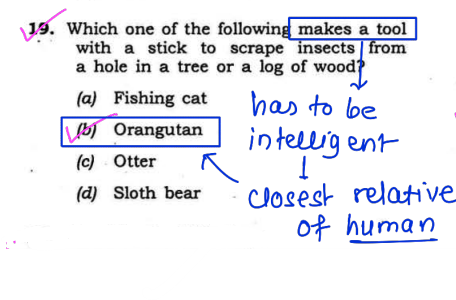
Similarly, look at the following question and its remarks:
UPSC isn’t expecting you to know such trivial details. All you have to do is keep calm and read these questions carefully.
In the above question, “making a tool” can be done only by an intelligent being; hence, Shri Krushna chose the closest relative to humans—the Orangutan.
So, let’s get to the crux of it—standard resources and mocks can’t make you feel prepared anymore. Every ranker who qualifies for prelims painstakingly crafts a process for it. And now, it’s your turn.
Civilsdaily Prelims Webinars allow you to access the real work from those who have done it before.
We are bringing you a WEBINAR on the 10th of May at 7 PM, during which Dr. Shri Krushna, IAS 2023, will go through the questions in the UPSC Prelims 2023 Paper and show you how he used common sense, knowledge, and logic to clear the exam with a very safe margin.
It’s time to rewrite your success story — will you seize the opportunity?
Studies show that individuals with schizophrenia are more likely to experience fatal effects from extreme heat compared to those with kidney or heart problems as per Geo Health report.
What is schizophrenia?
As per the National Institute of Mental Health, Schizophrenia is a serious mental illness that affects how a person thinks, feels, and behaves. People with schizophrenia may seem like they have lost touch with reality, which can be distressing for them and their family and friends.
Effects of Extreme Heat as per the Geo Health Report:
SchizophreniaHeat-Related Deaths: GeoHealth in 2023 revealed that an extreme heat event in British Columbia in 2021 led to more fatalities among individuals with schizophrenia compared to those with kidney and heart diseases.
Mental Health Conditions: People with mental health conditions, including schizophrenia, anxiety, and bipolar disorder, were identified as being at higher risk of succumbing to heat-related deaths during extreme heat events.
Impact of Extreme Heat Event: British Columbia experienced an eight-day extreme heat event in 2021, with temperatures soaring as high as 40 degrees celsius, significantly above the average temperature of around 20 degrees celsius. The region recorded approximately 740 excess deaths during this heat wave.
Researchers analyzed the data based on various medical conditions, including heart disease, schizophrenia, chronic kidney disease, dementia, depression, Parkinson’s disease, and osteoporosis.
Higher Risk of Schizophrenia: Contrary to expectations, the study reported a 200% increase in the prevalence of schizophrenia diagnoses during the extreme heat event in 2021 compared to a summer without recorded heat waves.
Key challenges for treating Schizophrenia:
Dysfunction of the Hypothalamus: The dysfunction of the hypothalamus, a structure deep in the brain responsible for maintaining bodily homeostasis, may contribute to increased vulnerability to heat stress among individuals with schizophrenia.
Impact of Antipsychotic Medications: Certain antipsychotic medications prescribed for schizophrenia can interfere with the functioning of the hypothalamus, potentially raising body temperature. This side effect, when combined with high ambient temperatures, can lead to fatal outcomes.
Psychotic Symptoms and Anosognosia (unable to be aware of the symptoms): Individuals with schizophrenia often experience psychotic symptoms such as hallucinations, delusions, disorganized thinking, and memory loss. The anosognosia, a condition where individuals are unaware of their illness can further complicate treatment efforts.
Way Forward:
Enhanced Monitoring and Support Systems: Implement enhanced monitoring and support systems for individuals with schizophrenia during extreme heat events.
Education and Awareness Campaigns: Conduct education and awareness campaigns to inform individuals with schizophrenia and their caregivers about the risks of heat-related distress and the importance of staying cool and hydrated during extreme heat events.
Tailored Treatment Plans: Develop tailored treatment plans for individuals with schizophrenia that take into account the potential impact of antipsychotic medications on body temperature regulation.
Mains PYQ
Q Public health system has limitation in providing universal health coverage. Do you think that private sector can help in bridging the gap? What other viable alternatives do you suggest? (UPSC IAS/2015)
The UGC chairperson announced that students with four-year undergraduate degrees can now appear for the National Eligibility Test (NET), an exam that certifies eligibility for lectureship in colleges and universities in India, and PhD programs.
Key Implication of this Announcement:
Lowering of Standards: Allowing students with four-year undergraduate degrees to appear for the National Eligibility Test (NET) and pursue PhD programs without a Master’s degree may lead to concerns about the lowering of academic standards.
Quality of Teaching: Concerns arise regarding the quality of teaching in universities and colleges if fresh undergraduate students are recruited to teach other undergraduate students.
Impact on University Rankings: The decision may have implications for the rankings and reputation of Indian universities, particularly those with prestigious tags like the Institution of Eminence and high NAAC ratings.
Dilutes the perception: Allowing candidates to pursue a PhD in a subject unrelated raises concerns about the diversity and interdisciplinary nature of research.
The decision to broaden access to PhD programs may be aimed at dismantling the perception of PhD as an elite qualification.
However, critics may argue that diluting the entry requirements for PhD programs could undermine the rigor and prestige associated with earning a doctorate.
Impact on Research Culture: Lowering the barriers to entry for PhD programs may have implications for the research culture and scholarly integrity within academic institutions.
Measures to maintain standards for the National Eligibility Test (NET):
Retain Postgraduate Degree Requirement: Maintain the requirement of a postgraduate degree for appearing in the NET to ensure that candidates have a solid foundation in their respective fields of study.
Reintroduce MPhil Programs: Reinstate MPhil programs to provide an intermediary step between postgraduate and doctoral studies. MPhil programs offer an opportunity for students to further develop their research skills and prepare for doctoral-level research.
Enhanced Mentoring and Preparation Period: Implement a structured mentoring program for NET aspirants to help them transition from undergraduate to postgraduate and eventually doctoral-level research.
Specialized Entrance Exams for PhD Programs: Instead of eliminating separate entrance exams for PhD programs, consider introducing specialized entrance exams that assess candidates’ research aptitude, subject knowledge, and suitability for doctoral-level research
Way Forward:
Promote Interdisciplinary Research: Encourage interdisciplinary research by providing opportunities for collaboration and exchange across different academic disciplines.
Maintain Research Standards: Uphold rigorous standards for doctoral research and teaching positions to ensure the quality and integrity of academic programs. Implement quality assurance mechanisms to monitor and evaluate the standards of the NET and PhD programs.
Mains PYQ:
Q The quality of higher education in India requires major improvement to make it internationally competitive. Do you think that the entry of foreign educational institutions would help improve the quality of technical and higher education in the country. Discuss.(UPSC IAS/2015).
A remark by Chairman of Indian Overseas Congress Sam Pitroda on implementing an inheritance tax as a tool of wealth redistribution has sparked massive debates.
The Negative Impact of Inequality:
Growth affected: Inequality harms growth in the medium-to-long run by reducing firm productivity, lowering labor income, and diverting resources away from essential rights like education.
Inequal Opportunity: In unequal countries like India, where one is born greatly influences lifetime outcomes, with almost a third of consumption variation being explained by the place of residence (state, city, or village).
Concentration of Wealth: The richest 1% holding 40% of India’s wealth underscores the vast wealth disparities that exacerbate inequality.
Skewed Distribution of Gains: Research indicates that the gains from India’s growth over the last two decades have disproportionately benefited high-income urban residents, further exacerbating inequality.
What is Inheritance Tax?
An inheritance tax is a tax levied on the assets or wealth passed down from one generation to another upon the death of the owner.
Unlike a wealth tax, which is recurring and applied to all physical and financial assets an individual owns, an inheritance tax is a one-time tax specifically targeting intergenerational transfers of wealth.
How an Inheritance Tax could help reduce Inequality?
The Constitution mandates equality of status and opportunity, obliging the government to take steps to reduce disparities arising from accidents of birth.
Reduction of Wealth Concentration: By taxing large inheritances, an inheritance tax helps to redistribute wealth from the wealthiest individuals and families to the broader society.
Encouragement of Productive Investments: Inheritance taxes can encourage wealthy individuals to invest their wealth in productive activities rather than simply passing it down to heirs.
Incentive for Innovation: Critics may argue that inheritance taxes disincentivize innovation by reducing the incentive to accumulate wealth to pass on to future generations.
Funding for Public Expenditure: Revenue generated from inheritance taxes can be used to fund essential public services and social programs, such as education, healthcare, infrastructure, and poverty alleviation initiatives.
Historical Effectiveness: Historical examples, such as the estate duty in India between 1953 and 1985. It reduced the top 1% personal wealth share from 16% to 6% between 1966 and 1985.
Another approach is the Land Value Tax (LVT): The Land Value Tax (LVT) is a tax system that levies charges on the unimproved value of land. Unlike traditional property taxes, which take into account both the value of the land and the value of any buildings or improvements on the land, the LVT focuses solely on the value of the land itself.
Conclusion: Tackling wealth inequality requires a multifaceted approach that includes measures such as inheritance taxation, wealth taxation, and the Land Value Tax (LVT). These measures not only help to redistribute wealth and promote economic fairness but also contribute to fostering a more inclusive and prosperous society where opportunities are more evenly distributed.
Mains PYQ:
Q Comment on the important changes introduced in respect of the Long term Capital Gains Tax (LCGT) and Dividend Distribution Tax (DDT) in the Union Budget for 2018-2019.
RBI Governor Shaktikanta Das unveiled plans for a pilot program targeting the wholesale segment of Central Bank Digital Currency (CBDC) focusing on commercial papers (CPs) and certificates of deposits (CDs).
What is Central Bank Digital Currency (CBDC)?
CBDC is a legal tender to be issued by the central bank in digital form; like rupee notes or coins, which are in physical form.
It was announced in the Union Budget 2022-23.
Subsequently, the Government amended Section 22 of the RBI Act, 1934 through the Finance Bill 2022. [Ref].
Working of CBDC:
Like fiat currency, it can also be exchanged between people. Simply, put it’s just like rupee (₹) notes but in digital form (e₹).
However, unlike fiat currency that’s usually stored in banks and hence their liability, CBDC is a liability on the RBI’s balance sheet.
That’s why one does not necessarily need to have a bank account to own a digital rupee.
About Commercial Papers (CPs) and Certificates of Deposits (CDs)
Commercial Papers
Certificates of Deposits
Type of Instrument
Unsecured promissory note
Fixed-income financial instrument
Issuer
Large corporations, primary dealers, financial institutions
3 months to 1 year (for SCBs), 1 to 3 years (for financial institutions)
Minimum Investment
Rs. 5 lakh or multiples thereof
Rs. 1 lakh or multiples thereof
Credit Rating Requirement
Minimum credit rating required (e.g., A-2) from recognized rating agencies
Typically issued by highly rated banks and financial institutions
Collateral
Unsecured
Not applicable
Purpose
Short-term funding for corporations
Short to mid-term investment for individuals and institutions
Interest Rate
Typically higher than bonds, fluctuates with market conditions
Typically fixed, higher than savings accounts, fluctuates with market conditions
Investment Eligibility
Individuals, banking companies, corporate bodies (registered or incorporated in India), NRIs, FIIs, etc.
Individuals, banking companies, other corporate bodies, NRIs, FIIs, etc.
Issuing and Paying Agent (IPA)
Only scheduled banks act as Issuing and Paying Agent
Not applicable
Trading
Actively traded in Over-the-Counter (OTC) market, reported on Fixed Income Money Market and Derivatives Association of India (FIMMDA) reporting platform
Not publicly traded
Dematerialized Holding
Can be held in dematerialized form through Securities and Exchange Board of India (SEBI)-approved depositories
Can be issued in dematerialized form through SEBI-approved depositories
Magnetic Resonance Imaging (MRI) revolutionized medical diagnostics, offering non-invasive insights into soft tissues.
The pioneering efforts of Paul Lauterbur and Peter Mansfield led to its commercialization, earning them the Nobel Prize in Medicine in 2003.
What is MRI?
Magnetic resonance imaging (MRI) is a non-invasive diagnostic procedure used to obtain detailed images of soft tissues within the body.
It is particularly valuable for imaging sophisticated structures like the brain, cardiovascular system, spinal cord, joints, muscles, liver, and arteries.
MRI is instrumental in diagnosing and monitoring various conditions, including cancer, neurological disorders (such as Alzheimer’s and stroke), and cardiovascular diseases.
Functional MRI (fMRI) can also assess brain activity by monitoring changes in blood flow.
Working Principle:
MRI utilizes the magnetic properties of hydrogen atoms (one proton with one electron around it), which are abundant in water and fat molecules found throughout the body.
The MRI machine generates a powerful magnetic field, aligning hydrogen atoms within the body.
Radiofrequency pulses are then applied, causing hydrogen atoms to absorb energyand emit signals.
These emitted signals are detected by sensors and processed by a computer to create detailed images of the body’s internal structures.
Components of an MRI Machine:
The MRI machine consists:
Superconducting Magnet: Large magnet (superconducting magnet) that produces a powerful and stable magnetic field.
Gradient Coils: Gradient magnets produce smaller magnetic fields with varying strengths and directions, allowing for precise imaging of specific body areas.
Radiofrequency Coils: This emit radiofrequency pulses to excite hydrogen atoms in the body. The frequency of pulse the ‘excess’ atoms have to absorb is called the Larmor frequency.
Detectors: It capture emitted signals from hydrogen atoms and convert them into image data for analysis.
Advantages of MRI:
High-Resolution Imaging: MRI offers high-resolution imaging with excellent tissue contrast, allowing for accurate diagnosis and treatment planning.
Versatile Viewing Angles: It can visualize structures from various angles without the need for repositioning, providing comprehensive information.
Safety and Non-Invasiveness: MRI scans are non-invasive and do not involve ionizing radiation, making them safe for repeated use.
Enhanced Image Quality: Contrast agents can enhance image quality by highlighting specific tissues or abnormalities.
Limitations of MRI:
High Costs: MRI machines are expensive to purchase and maintain, resulting in high healthcare costs for patients.
Requirement for Patient Stillness: Patients undergoing MRI scans must remain still for extended periods to prevent image distortion, which can be challenging for some individuals.
Discomfort or Anxiety: The strong magnetic fields and loud noises produced during MRI scans may cause discomfort or anxiety for patients.
Limitations with Metallic Implants: Certain metallic implants or objects can interfere with MRI scans, limiting their use in individuals with such implants.
PYQ:
[2020] With the present state of development, Artificial Intelligence can effectively do which of the following?
Bring down electricity consumption in industrial units
Create meaningful short stories and songs
Disease diagnosis
Text-to-Speech Conversion
Wireless transmission of electrical energy
Select the correct answer using the code given below:
Researchers at the Fred Hutchinson Cancer Center in the US have identified specific subtypes of Fusobacterium nucleatum associated with colorectal cancer (CRC) tumors.
These subtypes, particularly Fusobacterium nucleatum animalis (Fna), have been found in relatively higher quantities in CRC tumors.
About Fusobacterium nucleatum
Fusobacterium nucleatum is a species of bacteria commonly found in the human mouth.
It is a gram-negative anaerobic bacterium, meaning it does not require oxygen for growth.
While typically residing in the oral cavity, it has been associated with various diseases and conditions, including periodontal diseases and colorectal cancer.
Association with Colorectal Cancer (CRC):
In cases of colorectal cancer (CRC), Fusobacterium nucleatum has been found within tumors in the gut.
Studies have shown that this bacterium can aid cancer cells in evading the immune system and promoting metastasis, or the spread of cancer to other parts of the body.
Its presence in CRC tumors has led to investigations into its potential role in the development and progression of colorectal cancer.
Impact:
Assisting cancer cells in evading the immune system.
Promoting inflammation and creating an environment conducive to tumor growth.
Facilitating metastasis by interacting with cancer cells and promoting their spread to other tissues.
PYQ:
[2013] Improper handling and storage of cereal grains and oilseeds result in the production of toxins known as Aflatoxins which are not generally destroyed by normal cooking process. Aflatoxins are produced by:
The Agatti Reef is experiencing unprecedented mass coral bleaching.
Why in the news?
Extreme heatwaves along the Indian coast, coupled with marine heatwaves, have triggered Mass Coral Bleaching events in the Lakshadweep Sea.
Heatwaves Toll on Lakshadweep’s Coral:
Researchers from the ICAR-Central Marine Fisheries Research Institute (CMFRI) conducted surveys across various Lakshadweep Islands.
The Degree Heating Week (DHW) indicator in Lakshadweep has soared above 4 °C-weeks, as per the National Oceanic and Atmospheric Administration (NOAA).
This elevation in DHW levels poses a substantial risk of coral bleaching, posing a severe threat to the region’s marine ecosystems.
Should DHW surpass 12 °C-weeks, it could trigger an unprecedented biodiversity crisis, leading to multispecies mortality.
Prolonged marine heatwavessince October 2023 have inflicted substantial stress on the coral reefs, exacerbating bleaching phenomena.
A marine heatwave is characterized by seawater temperatures exceeding a seasonally-varying threshold (often the 90th percentile) for at least 5 consecutive days.
Degree Heating Week (DHW) indicator: It is a measurement used to assess the accumulated thermal stress that corals experience over an extended period, which can lead to coral bleaching. This indicator is expressed in °C-weeks, reflecting the exposure of coral reefs to elevated sea surface temperatures.
Lakshadweep’s Coral Treasure: Agatti Reef
Agatti Island is part of the Lakshadweep archipelago, situated in the Arabian Sea.
The island is surrounded by extensive coral reefs, making it a popular destination for snorkeling and diving enthusiasts.
The coral reefs around Agatti Island are composed of various coral species, including branching corals like Acropora, table corals like Acropora Hyacinthus, and massive corals like Porites.
These corals form intricate reef structures that provide habitat and food for numerous marine organisms.
What causes Coral Bleaching?
When exposed to conditions like heat stress, pollution, or high levels of ocean acidity, the zooxanthellae start producing reactive oxygen species not beneficial to the corals.
So, the corals kick out the colour-giving algae from their polyps, exposing their pale white exoskeleton and leading to coral starvation as corals cannot produce their own food.
Severe bleaching and prolonged stress in the external environment can lead to coral death.
Back2Basics: Corals
Coral are made up of genetically identical organisms called polyps.
These polyps have microscopic algae called zooxanthellae living within their tissues in a mutualistic relationship.
The coral provides the zooxanthellae with the compounds necessary for photosynthesis.
In return, the zooxanthellae supply the coral with organic products of photosynthesis, like carbohydrates, which are utilized by the coral polyps for synthesis of their calcium carbonate skeletons.
Corals are marine invertebrates or animals which do not possess a spine.
They are the largest living structures on the planet.
Each coral is called a polyp and thousands of such polyps live together to form a colony, which grow when polyps multiply to make copies of themselves.
Coral reefs are also called the “rainforests of the seas”.
Types of Coral
Corals are of two types — hard corals and soft corals:
Hard corals extract calcium carbonate from seawater to build hard, white coral exoskeletons. Hard corals are in a way the engineers of reef ecosystems and measuring the extent of hard coral is a widely-accepted metric for measuring the condition of coral reefs.
Soft corals attach themselves to such skeletons and older skeletons built by their ancestors. Soft corals also add their own skeletons to the hard structure over the years. These growing multiplying structures gradually form coral reefs.
Conditions needed for Corals to Flourish
Extensive submarine platforms for the formation of colonies by the coral polyps (not more than 90m below sea level).
High mean annual temperature ranging 20-21 degree Celsius.
Clean sediment-free water because muddy water or turbid water clogs the mouths of coral polyps resulting into their death.
Oceanic salinity ranging between 27-30 ppt.
Ocean currents and waves, as they bring food supply for the polyps.
PYQ:
2014: Which of the following have coral reefs?
Andaman and Nicobar Islands
Gulf of Kachchh
Gulf of Mannar
Sunderbans
Select the correct answer using the code given below:
Q) Appropriate local community-level healthcare intervention is a prerequisite to achieving ‘Health for All’ in India. Explain. (UPSC IAS/2018) Q) To enhance the prospects of social development, sound and adequate health care policies are needed particularly in the fields of geriatric and maternal health care. Discuss. (UPSC IAS/2020)
Note4Students:
Prelims: Right to life; Right to health; Right to die with dignity;
Mains: Judicial Intervention in Health Care sector;
Mentor comments:Death is inevitable, the one certainty in life. When the time comes, and if you have an incurable disease, how would you like to go? Would you prefer your bed in your home, with your loved ones around you? Or would you prefer being all alone in an Intensive Care Unit (ICU) with a tube in every orifice, hooked to machines that measure the functioning of every vital organ in your body, with each malfunctioning organ supported artificially? When facing an incurable illness, the choice between passing away at home surrounded by loved ones or in an ICU on life support is deeply personal (Right to Privacy). Some prefer the comfort and intimacy of home, while others seek every medical intervention, even if alone. There have been long debates on euthanasia and Palliative care for old people to protect their rights. Courts, through various decisions, have recognized the right to die with dignity as a fundamental right and an integral part of the right to life under Article 21.
Let’s learn
—
Why in the News?
Ronald Reagan, the 40th President of the USA, died at 93 in his home surrounded by his family members (2004). However, India’s former PM Atal Bihari Vajpayee died (2018), nine years after a stroke that had left him non-ambulant.
Hence, communicating end-of-life wishes is crucial to ensure one’s final moments align with their values.
What is the difference between Life support System and Palliative Care?
Life support System
Palliative Care System
What is it?
It aims to prolong life by artificially maintaining vital bodily functions.
It focuses on improving quality of life by relieving symptoms, pain, and distress, regardless of prognosis.
Treatment
It involves invasive medical interventions like ventilators, dialysis, and feeding tubes.
It emphasizes comfort-oriented, non-curative treatments to alleviate suffering.
Goals
To sustain life, even if it means prolonging the dying process.
To enhance quality of life and provide comfort, even if it means foregoing life-prolonging treatments.
Timing
Used in critical, end-stage illness when curative treatment is no longer possible.
Can be provided at any stage of a serious illness, even alongside curative treatments.
End-of-Life Practices: West vs. India
West Scenario: Advance directives for common, terminally ill allowed Natural Death by withdrawing life support.
Europe Scenario: Only 10.3% die on life support, others shifted to Palliative Care.
Indian Scenario:
70% of incurable patients die on life support in ICUs, alone.
The remaining 30% die through “Left Against Medical Advice” – ethically questionable. A survey in Pune showed 83% prefer to die at home.
What is the LAMA/DAMA Practice?
Left Against Medical Advice/Discharged Against Medical Advice (LAMA/DAMA) refers to a patient leaving the hospital against the advice and recommendation of their treating healthcare providers.
Its Causes: Financial constraints, Belief in alternative therapies, Dissatisfaction with care, Terminal/advanced illness, and Lack of understanding about the treatment process. It adversely affects patient outcomes, increasing the risk of mortality and the need for readmission.
The practice is considered ethically questionable, as it represents unplanned treatment limitations without a formal shift to palliative care.
Challenges in Indian Context:
ICU Routinisation:
Society has a mistaken belief in prolonging life at all costs and accepts ICU death as normal
In recent years, a lack of adherence to ethical principles and routinization of intensive care deaths has become more common.
Lack of Legal Clarity:
Lack of death literacy and inability to make informed decisions plays a major setback in Indian Society.
Further, the absence of a Legal Framework for End-of-life Care in India creates wider challenges for hospital staff and patients.
The term “Passive Euthanasia” isconsidered a misnomer by ICMR. Withholding or withdrawing life support in futility is not euthanasia but allowing natural death.
Initiatives taken on Palliative Care and Living Wills:
By WHO:
WHO defines health as “physical, social, and mental well-being” beyond just the absence of disease.
World Health Day (April 7) has passed and the theme for 2024 was “My health, my right”.
By India (through Judicial intervention):
SC in 2018 recognized passive euthanasia and the ‘Right to die with dignity’ as a fundamental right subject to guidelines.
India’s Supreme Court (three-member Bench) ruled that the ‘Right to Health’ includes the ‘Right to palliative care’.
SC verdict of 2023 recognizes advance medical directives and withdrawal of life support in futility cases.
Conclusion: The Lancet Commission Report 2022 speaks on the Value of Death and that modern society has become death-illiterate. Therefore, it is much required to bring awareness in our Indian Society on the value system of “dignified death”.
Both Online Mode and Offline Mode (Delhi ORN Centre and Pune Centre)
Our open tests have the highest hit ratios because we follow 2 simple principles, 5 categories, and 80 themes.
1.4 categories of questions
The actual UPSC prelims paper can be said to follow broadly 5 categories – 1. Core, 2. Non-core, 3. Logical, 4. Ultra-hard (Skippable). We are aligning very closely with this distribution.
1. Core: These questions are from core sources like standard books, monthly magazines, and Atomic Notes. You are expected to answer ALL of these questions correctly.
[2023] Consider the following organizations/ bodies in India:
1. The National Commission for Backward Classes
2. The National Human Rights Commission
3. The National Law Commissions
4. The National Consumer Disputes Redressal CommissionHow many of the above are constitutional bodies?
(a) Only one
(b) Only two
(c) Only three
(d) All four
2. Non-core: These questions are 1 level above what is present in core sources. E.g. Political Parties during the freedom movement, Ancient Medieval terms, and terms around Buddhism Jainism.
[2023] Consider the following statements:
1. India has more arable area than China.
2. The proportion of irrigated area is more in India as compared to China.
3. The average productivity per hectare in Indian agriculture is higher than that in China.
How many of the above statements are correct?
(a) Only one
(b) Only two
(c) All three
(d) None
3. Logical: Not solvable by knowledge alone but through logical approach.
[2023] Consider the following statements:
1. Some mushrooms have medicinal properties.
2. Some mushrooms have psychoactive properties
3. Some mushrooms have insecticidal properties
4. Some mushrooms have bioluminescent properties.
How many of the above statements are correct?
(a) Only one
(b) Only two
(c) Only three
(d) All four
4. Ultra-hard (Skippable): Needs to be skipped (if attempted by student, it’s a case of over-attempt. Because knowing what not to attempt is as important as knowing what to attempt.
[2023] Consider the following fauna:
1. Lion-tailed Macaque
2. Malabar Civet
3. Sambar Deer
How many of the above are generally nocturnal or most active after sunset?
(a) Only one
(b) Only two
(c) All three
(d) None
2. 80 most repeated UPSC themes
We are being very precise. We won’t ask you a broad question on Species.
When it comes to high-profile species like tigers, elephants, and other critically endangered species, UPSC is asking for conservation efforts or behavioural patterns. We will ask you something similar. We are this detail-oriented.
This is true for all subjects. For instance, in Economics, detailed questions on inflation, bonds, differentiated banks, etc. are more difficult.
We have 80 detailed themes and our questions will be framed on similar lines.
[CSP2017]Q. The term ‘M-STrIPES’ is sometimes seen in the news in the context of
(a)Captive breeding of Wild Fauna
(b)Maintenance of Tiger Reserves
(c)Indigenous Satellite Navigation System
(d)Security of National Highways
[CSP2020]Q. Among the following Tiger Reserves, which one has the largest area under “Critical Tiger Habitat”?
(a) Corbett
(b) Ranthambore
(c) Nagarjunsagar-Srisailam
(d) Sunderbans
[CSP2021]Q. With reference to Indian elephants, consider the following statements:
1.The leader of an elephant group is a female.
2.The maximum gestation period can be 22 months.
3.An elephant can normally go on calving till the age of 40 years only.
4.Among the States in India, the highest elephant population is in Kerala.
Which of the statements given above is/are correct?
Mains PYQ Relevance: Q) ‘Clean energy is the order of the day.’ Describe briefly India’s changing policy towards climate change in various international fora in the context of geopolitics. (UPSC IAS/2022) Q) Does the right to a clean environment entail legal regulation on burning crackers during Diwali? Discuss in the light of Article 21 of the Indian Constitution and judgments of the apex in this regard. (UPSC IAS/2015) Q) Starting from inventing the ‘basic structure’ doctrine, the judiciary has played a highly proactive role in ensuring that India develops into a thriving democracy. In light of the statement, evaluate the role played by judicial activism in achieving the ideals of democracy. (UPSC IAS/2014)
Prelims: Which of the following are regarded as the main features of the “Rule of Law”? (UPSC IAS/2018) 1) Limitation of powers 2) Equality before law 3) People’s responsibility to the Government 4) Liberty and civil rights Select the correct answer using the codes given below: (a) 1 and 3 only (b) 2 and 4 only (c) 1, 2 and 4 only (d) 1, 2, 3 and 4
Note4Students:
Prelims: Rights to Life (Article 21) and Equality (Article 14); Right to be free of ill effects;
Mains: Judiciary on Environment and Climate Change;
Mentor comments: “Vidya dadati Vinayam” is an ancient Sanskrit phrase meaning knowledge leads to happiness. India is an important piece of the global climate puzzle. It houses close to twenty percent of the world’s population, 2.4% of the world’s land area, and 7%–8% of all recorded species, including over 45,000 species of plants and 91,000 species of animals. A significant responsibility of the fate of India rests on how the Indian Judiciary deals with the increasing climate change-related cases. Now, recently the SC in M K Ranjitsinh & Ors. vs. Union of India & Ors. case ruled that the people have a right to be free from the adverse effects of climate change which should be recognised by Article 14 and Article 21 of the Constitution.This judgement comes with its own set of challenges that we need to consider.
Let’s learn
—
Why in the News?
The Supreme Court of India’s extension of Constitutional Rights to Life and Equality to include protection from Climate Change offers hope after the ecological crisis.
Previous 2021 judgment:
The SC had directed the installation of bird diverters on existing overhead power lines and the undergrounding of power lines in the GIB’s priority habitat areas.
The 2024 order: The SC acknowledged the practical challenges raised by the government and renewable energy companies in implementing the blanket ban on overhead power lines. The SC lifted the ban on overhead power lines for 77,000 sq km but upheld it for a 13,000 sq km core habitat area of the GIB.
Formation of Expert Committee: The SC constituted a 7-member expert committee which is tasked with suggesting conservation measures for endangered GIB by identifying areas where power lines can be constructed and exploring the alternatives for their protection.
The committee has to submit its report to the SC by July 31, 2024, after which the court will take a final decision on the way forward.
Limitations with present order:
To meet India’s climate commitments declared atCOP 26 (2021), it includes net zero carbon emissions by 2070, generation of 500 GW by non-fossil fuel sources and a 50% share of total power generation to renewable energy by 2030. However, it comes with certain challenges as follows:
Inclusion of Problematic Energy Sources: The judgment includes large hydropower and nuclear plants in ‘non-fossil-fuel‘ and ‘renewable’ energy, which have significant negative impacts, the Mega-dams in the Himalayas can cause destabilization, biodiversity loss, and community displacement.
Adverse Impacts of Mega-Renewable Projects: The Court has tried to balance the need for land (and airspace) for solar and wind energy production in Rajasthan and Gujarat, with the imperative of protecting the Great Indian Bustard.
Large solar and wind projects have significant negative impacts, Pavagada Solar Park (Karnataka) took away grazing and agricultural land and destroyed wildlife.
Lack of Environmental Assessment and Clearance: Renewable energy projects are excluded from Environmental Impact Assessment (EIA) and clearance procedures, so their impacts are not assessed.
Continued Investment in Coal: Despite significant investment in renewable energy, the government is not reducing investments in coal. The new coal mining blocks continue to be given a green signal, including in biologically diverse and socially sensitive areas.
Alternatives should have been considered:
Decentralized Renewable Energy Sources: TheRooftop and Decentralized Renewable Energy sources could yield over 600 GW, offering a more sustainable alternative to mega-projects. They have already benefited millions in Indian villages, aligning with provisions for Equality and a Clean Environment.
Efficient Energy Use and Demand Management: Questions should be raised about energy wastage in transmission, inefficient appliance use, and luxury consumption. Demand management and power redistribution could address energy needs more effectively, reducing the necessity for new power production.
Rights of Nature and Earth Jurisprudence: The Court could have considered the growing global movement recognizing the ‘Rights of Nature’, crucial for just climate action. Recognition of the rights of rivers like the Ganga and Yamuna could serve as a model to safeguard nature and habitats against climate-damaging actions.
Incorporating Expert Committee Mandate: The Court could enhance the judgment’s impact by tasking the expert committee to explore alternative, less damaging ways of meeting energy demands, including decentralized renewables and reducing waste/luxury consumption.
Flaws in the Indian Development Model
India’s development model heavily relies on mega-industrial, infrastructural, and extractive projects that cause deforestation and displacement of communities, violating constitutional rights.
The government’s proposal to deforest 130 sq. km of rainforest and take up tribal lands in Great Nicobar violates the Court’s observation of protecting indigenous communities’ traditional lives and cultures.
Way Forward – Need for Transformative Change Organically:
If the Court had taken its observations to their logical conclusion, it could have directed the government to re-examine such destructive projects. This could have provided grounds for a fundamental shift towards real sustainability and justice in tackling climate change.
However, the judgment has reinforced the ecologically flawed, undemocratic, and socially disruptive path promoted by the Government of India.
India’s score in the World Press Freedom Index fell over the last year, from 36.62 to 31.28, according to Reporters Without Borders. In South Asia, India finds itself ranked at 159th, while its neighbor Pakistan stands marginally higher at 152.
Key Highlights of the Report:
Deterioration Since 2014: Press freedom in India has significantly deteriorated since 2014.
Government vs Media Nexus: The government is criticized for maintaining a close relationship with big media families, leading to a lack of independence and critical journalism being labeled as “anti-national and anti-India“.
Self-Censorship: Fear of political backlash has forced journalists to censor themselves, as Modi’s supporters aggressively target critical reporting of the government.
Corporatization of Media: There’s an increasing trend of wealthy businessmen close to Modi owning a majority of mainstream media outlets, which undermines media independence and diversity.
BBC Raids: Recent raids on the BBC offices in India have drawn international criticism and contributed to India’s declining press freedom ranking.
Comparative Analysis: While India’s press freedom declines, neighboring countries like Pakistan and Sri Lanka have improved, although they still lag behind global leaders in press freedom rankings.
India’s Initiative of “Index Monitoring Cell”:
Purpose of the Cell: The Index Monitoring Cell has been set up to work on improving India’s press freedom ranking. It will consist of representatives from various government agencies and credible journalists suggested by the Press Council of India.
Ranking Parameters: The cell will engage with agencies publishing the World Press Freedom Index, like Reporters Without Borders, for a better understanding of the parameters and methodology used for the rankings. This will help formulate an action plan to address the issues identified.
Coordination with State Governments: The cell will coordinate with state governments to appoint nodal officers who can provide regular updates on the state of press freedom and any issues faced by journalists at the local level.
Engagement with Stakeholders: This aims to improve communication and visibility of steps taken to support press freedom and address concerns raised by global media watchdogs.
Reporting Mechanisms: Setting up proper reporting mechanisms is crucial to ensure that the data and information provided to ranking agencies are up-to-date and accurate. This will help in portraying a clearer picture of the press freedom landscape in India.
Conclusion: India needs to enact and strengthen laws to protect the freedom of the Press and ensure journalists’ safety. This includes legislation to prevent harassment, attacks, and threats against journalists, as well as provisions for swift and effective legal recourse in cases of censorship or intimidation.
Mains PYQ
Q What do understand by the concept “freedom of speech and expression”? Does it cover hate speech also? Why do the films in India stand on a slightly different plane from other forms of expression? Discuss. (UPSC IAS/2014)
The India Employment Report (IER) 2024, brought out by the Institute for Human Development (IHD) and the International Labour Organisation (ILO), has attracted widespread attention.
The analysis compares four years — 2000, 2012, 2019, and 2022 — which capture the changes over the past 22 years.
Positives in the IER Report, 2024:
Employment Quality Improvement: The report highlights a robust improvement in employment conditions as indicated by the Employment Condition Index, with an increase in non-farm employment and a decline in agriculture employment, suggesting structural transformation in the economy.
Female Workforce Participation: There has been a significant increase in the female workforce participation rate, albeit mainly in the agricultural sector and in own-account and unpaid family work. The Female workforce participation (FWFP) rate from 24.5% in 2019 to 37.0% in 2023.
Labour Market Resilience Amidst COVID: Despite the global slowdown induced by the pandemic, the labor market in India bounced back well, with wages of casual workers increasing, leading to a reduction in extreme poverty and deprivation.
Unemployment Trends: Unemployment and underemployment rates increased until 2018 but have declined thereafter. The unemployment rate has declined from 6 percent in 2018 to 3.2 percent in 2023.
Challenges as per the IER Report, 2024:
Emerging Employment Challenges: Challenges include a skewed employment pattern towards agriculture, increasing capital and skill-intensive production processes, low women’s participation, and rising educated youth unemployment.
Youth Unemployment Focus: The report emphasizes youth unemployment as a principal challenge, especially among educated youth, who account for a significant portion of total unemployment.
Informal Employment: Despite improvements, the majority of jobs remain informal and of lower productivity, with over 90% of employment being informal and 83% in the informal sector.
Way Forward
Policy Recommendations: Policy measures suggested include making production more employment-intensive, improving job quality, addressing labor market inequalities, enhancing skills training, and generating reliable statistics to better understand labor market dynamics.
Demographic Advantage: India is likely to have a demographic advantage for the next decade, and policy measures are recommended to leverage this advantage for robust economic growth.
Mains PYQ:
Q Besides the welfare schemes, India needs deft management of inflation and unemployment to serve the poor and the underprivileged sections of the society. Discuss.(UPSC IAS/2022)
The war in the Middle East, Russia, and Ukraine, and sanctions by the US have eventually resulted into a fragmented market in the petroleum industry.
Causes of Fragmentation in the Petroleum Industry:
Impact of Sanctions: The sanctions imposed by the US on countries like Venezuela, Iran, and Russia have led to a fragmentation of the petroleum market, with trading relations becoming more regional than global. This fragmentation has reshaped the dynamics of oil supply and demand, with different regions relying on specific suppliers based on geopolitical circumstances and sanctions
Regional Trading Patterns: Trading relations in the petroleum industry have shifted regionally, with the US emerging as a major supplier of LNG and products in Europe, Russia becoming the largest supplier of crude to India, and Iran focusing on exports to China despite Western sanctions. This regionalization of trade has altered traditional market dynamics and diversified supply chains.
Challenges Faced by Oil Companies: International petroleum majors are experiencing solid profits due to higher production and prices of oil and gas. However, they are confronted with the need to reconcile their investment strategies with net zero carbon emission targets. This balancing act poses a significant challenge for oil companies as they navigate between profitability and sustainability goals
Geopolitical Uncertainties: The ongoing conflicts in the Middle East, particularly between Israel and Iran, have added to the complexities of the petroleum market. The region, which holds a significant portion of the world’s petroleum reserves, is facing a mix of warfare, racism, and radicalism, contributing to heightened tensions and uncertainties in the oil industry
AI Industry’s Energy Demand: Increasing energy demand from the artificial intelligence (AI) industry for data centers, cloud storage facilities, and crypto mining. This growing demand for electricity poses a challenge as renewables may not be able to meet the requirements, leading to a dilemma for industry leaders committed to achieving net zero carbon emissions.
What needs to be done?
Diversification of Energy Sources: To mitigate the impact of geopolitical uncertainties and sanctions-induced market fragmentation, there is a need for countries to diversify their energy sources.
Strengthening Regional Cooperation: Regional cooperation agreements and partnerships can help stabilize petroleum markets and ensure energy security.
Promotion of Energy Efficiency: Improving energy efficiency across various sectors, including transportation, manufacturing, and residential buildings, can reduce overall energy consumption and lessen dependence on petroleum products.
Mains PYQ:
Q Discuss the multi-dimensional implications of uneven distribution of mineral oil in the world. (UPSC IAS/2021)
The goal of carbon farming is to mitigate climate change by reducing the amount of carbon dioxide (CO2) and other greenhouse gases in the atmosphere.
BACK2BASICS:
What is meant by Carbon Farming?
Carbon farming is a holistic approach to agriculture that focuses on sequestering atmospheric carbon dioxide (CO2) into the soil and vegetation, thereby mitigating climate change while simultaneously enhancing soil health and agricultural productivity.
It involves implementing regenerative agricultural practices that promote carbon sequestration, such as agroforestry, cover cropping, rotational grazing, conservation tillage, composting, and diverse crop rotations.
Significance of Carbon Farming:
Mitigation of Climate Change: Carbon farming practices such as rotational grazing, agroforestry, conservation agriculture, and integrated nutrient management help sequester atmospheric carbon dioxide into the soil and vegetation, thereby mitigating climate change by reducing greenhouse gas emissions and enhancing carbon storage.
Soil Health Improvement: Carbon farming enhances soil health by increasing soil organic carbon levels, improving soil structure, fertility, water retention, and resilience to drought and extreme weather events. Practices like zero tillage, cover cropping, and crop residue management minimize soil disturbance and enhance organic content.
Biodiversity Conservation: Agroforestry, agroecology, and land restoration practices promote biodiversity conservation by diversifying plant and animal species, providing habitat for wildlife, and restoring degraded ecosystems.
Sustainable Agriculture: Carbon farming promotes sustainable agricultural practices by minimizing environmental impacts, conserving natural resources, and enhancing the long-term productivity and resilience of agricultural systems.
Challenges in Carbon farming:
Water Availability: Carbon farming can be challenging in hot and dry areas. Limited water availability can hinder plant growth and restrict the potential for carbon sequestration through photosynthesis, affecting practices like cover cropping.
Plant Selection: The selection of plant species is crucial, as not all species trap and store carbon in the same amounts or equally effectively. Fast-growing trees and deep-rooted perennial grasses are generally better at carbon sequestration, but may not be suitable for arid environments.
Financial Resources: Small-scale farmers in developing countries may particularly lack the resources to invest in sustainable land management practices and environmental services.
Policy Support: Sufficient policy support is essential for the widespread adoption of carbon farming practices. This includes incentives, subsidies, regulations, and technical assistance to encourage and facilitate the implementation of carbon farming at the local, national, and international levels.
What are some carbon farming schemes worldwide?
Voluntary Carbon Markets: Carbon trading in the agriculture sector has gained importance globally, especially in countries like the U.S., Australia, New Zealand, and Canada. Voluntary carbon markets, such as the Chicago Climate Exchange, provide platforms for incentivizing carbon mitigation activities in agriculture.
Kenya’s Agricultural Carbon Project: Supported by the World Bank, Kenya’s Agricultural Carbon Project exemplifies efforts to address climate mitigation, adaptation, and food security challenges in economically developing countries through carbon farming initiatives.
‘4 per 1000’ Initiative: Launched during the COP21 climate talks in 2015 in Paris, the ‘4 per 1000’ initiative emphasizes the role of carbon sinks, including those created through carbon farming practices, in mitigating greenhouse gas emissions. It underscores the importance of managing the remaining global carbon budget wisely.
The Silver Line for the Indian Government:
Viability of Organic Farming: Grassroots initiatives and agrarian research in India demonstrate the viability of organic farming to sequester carbon. Agroecological practices have the potential to generate significant economic benefits, estimated at $63 billion in value from approximately 170 million hectares of arable land.
Economic Benefits for Farmers: Adoption of sustainable agricultural practices could lead to economic benefits for farmers, including an estimated annual payment of around ₹5,000-6,000 per acre for providing climate services through carbon farming.
Suitability of Agricultural Regions: Regions with extensive agricultural land, such as the Indo-Gangetic plains and the Deccan Plateau, are well-suited to adopt carbon farming practices. These regions have the potential to contribute significantly to carbon sequestration and climate mitigation efforts.
Way forward:
Research and Development: Invest in research and development to identify and promote plant species that are well-suited for carbon sequestration. Develop drought-resistant crops and agroforestry species to enhance carbon farming viability.
Financial Support: Provide Financial assistance and incentives to small-scale farmers in developing countries to invest in sustainable land management practices and adopt carbon farming techniques.
Policy Framework: Develop and implement supportive policy frameworks at local, national, and international levels to encourage the adoption of carbon farming practices. For example setting carbon pricing mechanisms, establishing regulatory standards, and providing technical assistance to farmers.
Mains PYQ
Q Should the pursuit of carbon credits and clean development mechanisms set up under UNFCCC be maintained even though there has been a massive slide in the value of a carbon credit? Discuss with respect to India’s energy needs for economic growth.(UPSC IAS/2014)


![[UPSC Prelims ’24 Webinar] Do this on D-Day | How after 2 Prelims FAILURE, I got 34 marks above Cut-Off using Knowledge + Logic + Common Sense](https://d18x2uyjeekruj.cloudfront.net/wp-content/uploads/2024/05/WhatsApp-Image-2024-05-08-at-4.26.34-PM-1-1568x882.jpeg)