💥UPSC 2026, 2027, 2028 UAP Mentorship (March Batch) + Access XFactor Notes & Microthemes PDF

Search results for: “”

  • SWOT Analysis of Indian Political System

    I bet ki kissi ne isse awesome speaker nahi dekha hoga. Mind blowing speech by the great JP Narayan on India as a democracy. Mentioning 4 important pillars which we miss out –

    1. Competitive elections
    2. Political Freedom
    3. The winners don’t punish the losers
    4. Elected govt is truly in power

    https://www.youtube.com/watch?v=XFjGGZ6iITo

  • Another glass ceiling shattered – Archana Ramasundram, the first Indian woman to head a Paramilitary Force

    58-year-old Archana Ramasundram, a Tamil Nadu cadre IPS officer, will take over as Director General of Sashastra Seema Bal (SSB).


    Who is Archana Ramasundaram?

    1. Archana Ramasundaram is a 1980-batch IPS officer.
    2. She is currently serving as the Director of National Crime Records Bureau.
    3. Sundaram holds an MSc and an MA degree and was awarded the President’s Medal in 1995.

    What is SSB and what’s interesting about her next assignment?

    SSB is a Central Armed Police Force (CAPF) responsible for guarding the country’s frontiers with Nepal and Bhutan. Including SSB, there are 5 CAPFs in India.

    In case you are wondering about the paramilitary forces, let’s define that for you

    Ministry Of Home Affairs adopted a uniform nomenclature of Central Armed Police Forces (formerly known as Paramilitary forces) in March 2011.

    These include – SSB, Central Reserve Police Force (CRPF), Border Security Force (BSF), Central Industrial Security Force (CISF), and Indo-Tibetan Border Police (ITBP).


    Back to the IPS officer, here are few intriguing events related to her life

    #1. The only IPS lady of 1980 batch

    When Archana Ramasundaram made it to the police academy in Hyderabad in the Indian Police Service batch of 1980, she was the only woman in her class. The situation, she says, was ‘awkward’ sometimes because she was the only woman around.

    #2. The Telgi case cracker

    She headed the team that cracked the famous Abdul Karim Telgi case or the fake stamp paper racket.


    #3. Remember the CBI appointment controversy?

    On 8 May 2014, Ramasundaram was appointed the first woman Additional Director of CBI. However, her selection was disputed by the Tamil Nadu government in the Supreme Court on the very day she joined the CBI. On 17 June 2015, she was removed from the CBI and moved to National Crime Records Bureau (NCRB) as Director.

    Need more masala?

    1. A writ petition filed by a journalist in SC alleged that Archana Ramasundaram’s appointment to CBI was not in “accordance with the procedure contemplated under the Delhi Special Police Establishment Act.”
    2. However, the Centre requested the SC to allow her to take charge but the Tamil Nadu government resisted the appeal saying that she was still an officer with the Tamil Nadu government
    3. Tamil Nadu government said that Ramasundaram hadn’t been “formally relieved from her duties as the DGP and Chairperson of Tamil Nadu Uniformed Services Recruitment Board”
    4. She was suspended and charged for ‘deserting office’
    5. Archana Ramasundaram clarified that she’d written to the Chief Secretary that she would be joining the CBI but the government contended that her actions “lacked legal or procedural propriety.”

    Strange turns of events, right?

    But if you are an IAS aspirant and want to read more into the news, here are few pointers for you –

    #1. A strong message by the Government

    The government is no longer going to restrict the top posts for men and the male IPS Officers are no longer going to enjoy monopoly over the apex positions of these forces.

    #2. SSB – The platform for Women Empowerment

    • The appointment of Archana Ramasundaram is not the first time that SSB has been involved in such a bold and yet welcome step.
    • SSB was also the first Paramilitary Force to induct female troops and also the first force to send a female contingent to the Republic Day Parade.
    • Such was the effect of this bold move by SSB that subsequently other Forces too have started inducting women troops and their numbers are steadily increasing. The CRPF too recently accepted a proposal of giving 33% reservation to women for the post of constables.

    #3. Trickledown effect

    • When the upper strata is going to be free from any bias, slowly its effect will go down the ranks and workplaces in Government Offices may become more desirable for Indian Women.
    • Since Kiran Bedi was unjustifiably sidelined for promotion, we have come a long way and now we have appointed a female chief for a paramilitary force.

    #4. The sensitization effect

    • The women officers and constables serving within SSB will somehow not feel the fear of harassment given their minority numbers within the force and the social misconceptions.
    • A female head of the Force will definitely be more considerate towards the position of women within the force.
    • More importantly, this will go a long way in improving the attitude of Force Personnel towards the local women.

    The CAPFs perform a multitude of functions, one of these is maintaining close contact with the Locals. Unfortunately, instances of harassment of local women by the Personnel prove detrimental to this purpose.

    The condition will improve once a female head is appointed who can take such cases more seriously and take the requisite steps.


    Published with inputs from Swapnil | Image Credits - Facebook, Indiatimes
  • Now for some motivation 🙂

    Was watching general stuff and found this gem of stuff.

    R Madhava talks about situational awareness.

    https://www.youtube.com/watch?v=KB7R8QTHJgw

  • LGBT Rights – Transgender Bill, Sec. 377, etc.

    IPC & the need for modernisation


    The promise of criminal law as an instrument of safety is matched only by its power to destroy. It is arguably the most direct expression of the relationship between a state and its citizens.

    Amid the debate on the archaic sedition law that should have no place in democratic India, President Pranab Mukherjee said that the IPC, 1860 requires a thorough revision to meet the needs of the 21st century. Click here to know everything about sedition law

    History:

    • The code was drafted in 1860 on the recommendations of first law commission of India established in 1834 under the Government of India Act 1833 under the Chairmanship of Thomas Babington MacaulayAnswer in comments.>
    • It came into force in British India(but not princely states) during the early British Raj period in 1862
    • After the partition of the British Indian Empire, the Indian Penal Code was inherited by its successor states, the Dominion of India and the Dominion of Pakistan, where it continues independently as the Pakistan Penal Code and later in B’desh also
    • Jammu and Kashmir does not follow IPC but has enacted a separate code known as Ranbir Penal Code (RPC) which is based on IPC

    Some notable points:

    • The IPC replaced Mohammedan Criminal Law, which had a very close relationship with Islam. Thus, the IPC laid the foundation of secularism
    • It was widely appreciated as a state-of-the-art code and was, indeed, the first codification of criminal law in the British Empire
    • Today, it is the longest serving criminal code in the common-law world
    • Today, most of the commonwealth follows the IPC

    Law Commission on IPC:

    • 42nd Report (1971)– Law Commission of India for the first time had recommended the repeal of Section 309 (criminalization of suicide)
    • 172nd Report (2000)– Recommended deletion of Section 377 (criminalization of unnatural sexual offences)
    • 210th Report (2008)– Recommended Humanization and Decriminalization of Attempt to Suicide under Section 309

    Past attempts at amendment:

    • Even though the IPC has been haphazardly amended more than 75 times, no comprehensive revision has been undertaken in spite of the 42nd report of the Law Commission in 1971 recommending it
    • Also the amendment bills of 1971 and 1978 lapsed due to the dissolution of the Lok Sabha
    • As a result, largely the courts have had to undertake this task, with unsatisfactory outcomes at times
    • Most amendments have been ad hoc and reactive, in response to immediate circumstances like the 2013 amendment after the Delhi gangrape case

    Why amend IPC?

    • The philosophical stance and fundamental principles of Macaulay’s code were the product of imperialist policy <designed to meet colonial needs to subjugation and exploitation of India and Indians, sedition law for instance>
    • Some of the concepts underlying the code are either problematic or have become obsolete
    • there are many new offences, which have to be properly defined and incorporated in the code
    • Macaulay had himself favoured regular revision of the code whenever gaps or ambiguities were found or experienced
    • In 1860, the IPC was certainly ahead of the times but has been unable to keep pace since then

    Specific cases or problems:

    1. Sedition law, inserted in 1898: It is legitimate to ask whether we need a law on sedition that we ourselves condemned during the Raj. Learn more about sedition law here
    2. Section 295A, The offence of blasphemy: It should have no place in a liberal democracy
    3. Criminal conspiracy: It can be invoked merely when two people agree to commit an offence without any overt act following the agreement.
      It was added in 1913 by the colonial masters to deal with political conspiracies.
      Kehar Singh etc were convicted and sentenced to death under the offence of conspiracy ,, though none of them participated in the actual crime or were present at the scene of the crime.
    4. Section 149, Unlawful assembly: The principle of constructive liability under this law is pushed to unduly harsh lengths.
      Mere membership of the assembly without any participation in the actual crime is sufficient for punishment.
      Several persons have been sentenced to death and hanged though they were not even present near the scene of the actual crime.
    5. The distinction between “culpable homicide” and “murder” is criticised as the “weakest part of the code”, as the definitions are obscure
    6. Sexual offences under the code reveal patriarchal values and Victorian morality.
    7. Section 377:  Unnatural sexual offences (LGBT right). Want to know about argument of Delhi high court in decriminalizing homosexuality, click here to read about Naz Foundation case


    Contrarian view point of Justice Hegde

    We should not repeal something just because it’s 150 years old.

    On Sedition: He favours the sedition law as some restrictions are needed to stop people from abusing and talking against the country. “I believe in sedition law. I am a patriot. Any patriot cannot go on abusing the country. There are certain parameters.” He points to distinction b/w criticizing the person (prime minister), policies, system v/s abusing the state

    On IPC:  We can not just scrap Indian Penal Code because somebody is involved in a crime (and wants it to be scrapped)

    We can not just ape west. Ground realities in India and west are very different and they demand different levels of freedom of expression and religious freedom.

  • what's everyone studying???

    Bhai/ behno –

    Kaun kaun kya pad raha hai… i just started laxmikanth from the worst section ever- FR and F duties… Bored to death!

  • 6 common mistakes committed during interview preparation

    Hi friends,

    The interview is the third and final leg of UPSC exam. The total marks allotted to interview are 275, however, it plays a crucial role in determining the service you get. Hence, interview preparation should be done cautiously. Your interview preparation should start in the month of January, a month after writing the mains.

    6 Common mistakes committed during the interview preparation:


    • Wait for the Mains results and then decide to prepare for the interview.
    • Spend most of the time only on reading and trying to know all under the sun. Please remember, the  knowledge of the candidate has already been tested in the Mains Exam. The final test is “ABOUT YOUR PERSONALITY AND NOT KNOWLEDGE .” Hence ,gathering information alone won’t suffice.
    • Taking a regional/religious stand (hard core ) in the interview .The requirements of UPSC are to select a candidate who is balanced and neutral.
    • Trying to focus too much on language skills .UPSC expects a person who is balanced, neutral, empathetic and adheres to constitutional values. As long as you can communicate it to them, language is not a problem.
    • Trying to fake or lie to the interview board.
    • Not preparing for the interview. This is the biggest mistake candidates commit,considering it is just out of 275 marks and Mains were for 1750 marks. To become a topper, the interview marks are very crucial.


    Source for asking questions in the interview board:


    1. Current Affairs
    2. DAF


    For further guidance through telephone or mail, please drop me a mail to jebasingh.israel@gmail.com

    I will be more than happy to help you in your preparation,so that you get the best marks and your name appears on the final list.

    All the best  !

  • Wetland Conservation

    Sustainable farming systems receive global recognition

    Four traditional farming systems in Bangladesh and Japan have been designated today by FAO as “Globally Important Agricultural Heritage Systems” for innovation, sustainability and adaptability. Let’s know it in brief.

    Let’s take a glance on 4 traditional farming systems

    Bangladesh’s floating gardens, a unique hydroponics production system constructed with natural grasses and plants, which have been developed in flood areas.

    A trio of sites in Japan: the sustainable river fisheries utilizing Sato-kawa system in Gifu, the Minabe-Tanabe Ume approach to growing apricots on nutrient-poor slopes in Wakayama.

    The Takachihogo-Shiibayama mountainous agriculture and forestry system in Miyazaki which allows agricultural and forestry production in a steep mountainous area.

    These new designations bring the number of Globally Important Agricultural Heritage Systems (GIAHS) systems to a total of 36 sites located in 15 countries in Africa, Latin America, Near East and Asia.

    But first, Let’s know about Globally Important Agricultural Heritage Systems (GIAHS)?

    • It was launched by UN’s Food and Agriculture Organisation (FAO) in 2002 during the World Summit on Sustainable Development in Johannesburg, South Africa.
    • The GIAHS Initiative promotes public understanding, awareness, national and international recognition of Agricultural Heritage systems.
    • The initiative fosters an integrated approach combining sustainable agriculture and rural development.
    • The GIAHS initiative has project interventions in Algeria, Azerbaijan, Bangladesh, Chile, China, Ethiopia, India, Indonesia, Iran (Islamic Republic), Japan, Kenya etc.
    • In these countries, adaptive management approaches will be developed and implemented, to assist national and local stakeholders in the dynamic conservation of their agricultural heritage systems.

    Now, back to main topic of ‘new GIAHS sites’?

    The new GIAHS sites include three in Japan and one in Bangladesh –

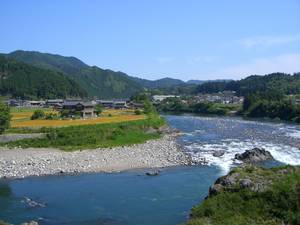
    Japan – Ayu of the Nagara River System

    Ayu of the Nagara River System Japan


    • The Nagara River is one of the cleanest rivers in Japan that provides a number of ecosystem services.
    • Various components of the system such as river, forests and farmlands are closely linked to each other.
    • The sustainable inland fisheries of a specific type of fish (Ayu) benefit from clean waters of the Nagara River which are maintained through upstream forest management.
    • Local communities have lived within this linked ecosystems and have developed their livelihoods and cultural practices.

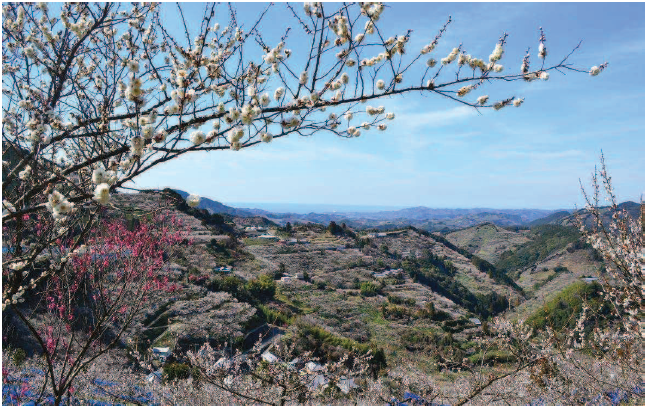
    Japan – Minabe-Tanabe Ume System

    Minabe-Tanabe Ume System Japan


    • Minabe-Tanabe Ume System allows for the production of high-quality Ume (Japanese apricots) and various kinds of fruits on nutrient-poor slopes.
    • Local communities have created a thriving Ume fruit production environment by maintaining upper coppice forests for landslide prevention and maintenance of water, and Japanese honeybee for pollinators.
    • By permitting the production of a diverse range of products, the system ensures stable livelihoods and makes communities more resilient to disasters.

    Japan – Takachihogo-Shiibayama Mountainous Agriculture and Forestry System

    Takachiho・Shiibayama Mosaic view of forests


    • This site is located in a steep mountainous area where flat land is extremely scarce.
    • In this severe environment, local people have established a sustainable system of agriculture and forestry which balances timber production with diverse farming activities.
    • Such as terraced rice growing, shiitake mushroom cultivation, beef cattle raising, or tea cultivation.
    • The forest is maintained as a “mosaic” of conifers and broadleaf trees using traditional practices.

    Bangladesh – Floating garden Agricultural Practices

    Floatingagri


    • Farmers in some parts of Bangladesh where flood waters can remain for a prolonged period of time have developed a unique hydroponics system in which plants can be grown on the water on floating organic bed of water hyacinth, algae and other plant residues.
    • This environmentally friendly traditional cultivation technique utilizes the natural resources of wetlands to grow vegetables and other crops almost all year round.
    • Providing numerous social, economic, agricultural and ecological benefits to the local population.

    If you would like to watch GIAHS 2013 video, it provides an introduction to GIAHS and takes you on a journey through some of the GIAHS sites around the world.


    Source - FAO features | Pic - Floating Gardens
  • MCQs : Polity

    Frankly these are a little on the tougher side given the kind of Polity MCQs asked in the exam but still just to gauge how well The Lord Laxmikanth has been worshipped here we go:

    1. Which of the following features is/are among those constituting the basic structure of the Indian Constitution as identified through various judicial decisions since 1973?
    1. Effective access to justice.
    2. Rule of Law.
    3. The principle of free and fair elections.
    4. Limitations upon the amending power conferred by Article 368.
    5. Social Justice
    Choose the correct alternative using the codes given below:
    (a) 1, 2 and 3 only
    (b) 2 and 5 only
    (c) 1, 3, 4, and 5 only
    (d) 1, 2, 3, 4 and 5

    2. The laws made by the Parliament or the President or any other specified authority for a state while under President’s rule
    (a) are automatically assumed to have been repealed on the date on which the President’s rule is lifted
    (b) cannot be altered by the state legislature after the President’s rule is lifted
    (c) continue to be operative even after the President’s rule
    (d) can be repealed or altered only by the Parliament after the President’s rule is lifted

    3. Consider the following statements:
    1. The constitution does not lay down any qualification for a person to be chosen a member of the state legislature.
    2. The Speaker of a State legislature can resign by writing to the Governor.
    Which of the above statements is/are correct?
    (a) 1 only
    (b) 2 only
    (c) Both 1 and 2
    (d) Neither 1 nor 2

    4. Under the Fifth Schedule of the Indian Constitution, who/which of the following is empowered to declare an area to be a scheduled area?
    (a) State Legislature
    (b) President
    (c) Governor
    (d) Parliament

    5. Consider the following statements:
    1. No civil or criminal proceedings can be instituted against civil servants for anything done in their official capacities.
    2. The Indian Constitution does not grant any immunity to the ministers for their official acts.
    Which of the above statements is/are correct?
    (a) 1 only
    (b) 2 only
    (c) Both 1 and 2
    (d) Neither 1 nor 2

  • Your chance to join us in *EXPLAINING THE NEWS*

    Hello,

    We have seen some amazing level of participation across the forum, stories and blogs @civilsdaily.com

    So much so that we strongly feel that many among you would love to pitch in and help us create more rewarding explainers for the aspiring junta (we hope we are right on that count!)

    Bbbbbbut… what are these explainers?


    Explainers are medium to long form text written with the sole purpose to make a complex piece of news easier to digest! Take a concept (any concept) that you think you know better than most of your peers, pen it down in a (question-answer) format so that it gets everyone else up to speed faster than they could have ever imagined!

    That’s what we all have striven for and that’s where the aha! factor lies. Cool? Here’s a quick guide to get started


    What happens next?


    I think we got way too emotional with the word *awesome* but you get the drift right? Explainer need not necessarily be on current affairs but could be a part of the mainstream theory which just got into limelight courtesy some major event.

    Got it? Get on with your writing hats then!


More posts