💥UPSC 2026, 2027, 2028 UAP Mentorship (March Batch) + Access XFactor Notes & Microthemes PDF

Search results for: “”

  • US Fed Funds Rate will rise in 2016

    It’s status quo. She has not changed the rates.

    With a growth rate of around 3.5% and better and brighter jobs data, the general expectation in early August was that the Federal Funds rate would be hiked in this policy meeting. However, as China devalued the yuan, global markets went into a major turbulence episode. Further, reduction in the Chinese interest rates caused uncontrolled outflows from all asset classes in EMs and showed markets moving to the dollar, like they always do in troubled times.

    A hike in US interest rates, at such a time, could cause further disruptions in an already volatile environment; it is with this view in mind that the Fed has not changed the interest rates in this policy review.

    However, this keeps us in a tentative state of mind and markets till December, which is when the next guidance is scheduled.

    What I attempt in this blog is to try and see where the rates are headed in a medium term outlook, as we move into 2016.

    The Taylor Rule and the Fed Funds Rate

    The Taylor’s Rule is a rule that prescribes the nominal interest rate charged by the Fed be dependent on output gap, divergence of actual inflation from the target and on the equilibrium interest rate in the following fashion.

    it = πt + 0.5 (πt – πt*) + 0.5 (GDPt –GDPt*) + rt*;

    where it is the is the nominal Fed funds rate, πt and πt* are the actual and targeted inflation rates, GDP* is potential output and rt*is the equilibrium real interest rate.

    Is the rule really used by the Fed to set interest rates? As Ben Bernanke said recently, Fed fund rates should be set systematically, not automatically. Using the Taylor’s rule to determine Fed funds rate is too simplistic, given that economic conditions keep changing all the time. Thus, the Fed does not actually set its rates by the Taylor’s rule; however, studies do show correlations between the rate as determined by the rule and the actual Fed fund rates.

    If the Achilles heel of the rule is its simplicity, that perhaps is also its biggest strength. The rule connects movements in economic fundamentals to interest rates, giving us an analytical tool to create a baseline understanding of how rates will move in the future.

    Higher is the inflation as compared to the target inflation (about 2% for the past 4-5 years in the US) and more is the GDP as compared to the potential GDP (that level of GDP at which all labor and capital resources are fully employed), more is the nominal funds rate that the Fed ought to set in order to cool down economic activity. The Fed Funds rate also depends on rt*, the equilibrium real interest rates in the economy. Equilibrium real interest rates are those at which the output and inflation are absolutely at target and monetary policy is said to be neutral. In a recession and low asset prices, the equilibrium real rate required to get the system to a higher growth level would have to be very low. Easier said than computed.

    The following table shows the output gap (OECD data) and core inflation (Bureau of Labor Statistics) for the US from 2009 to 2015. Core inflation was chosen rather than CPI due to the high volatility that oil and food prices have shown in the time period. Under the very simple assumption that the Fed fund rate corresponds closely to the Taylor rate computation, we realize that the equilibrium real interest rates in the US for the said period have been extremely low, in fact negative at times, as many analysts have suggested.

    Year Core inflation (Fed data) Output gap (OECD data) Fed Funds Rate Equilibrium real rate
    2009 1.7 -4.535 0.25 0.97
    2010 1.0 -3.786 0.25 1.64
    2011 1.7 -3.913 0.25 0.66
    2012 2.1 -3.428 0.25 -0.19
    2013 1.8 -3.016 0.25 0.06
    2014 1.7 -2.476 0.25 -0.06
    2015 1.7 -2.363 0.25 -0.12
    2016 (forecast) 1.8 -1.631 0.750.88

    1.38

    -0.120.00

    0.50

    Taylor’s Rule to forecast interest rates

    It may be fruitful to attempt understanding the movement of Fed Funds rate in the next one year using this analysis.

    There are plenty of signs of strengthening in the US. As per OECD forecasts, the output gap will reduce in 2016, indicating better utilization of resources. Unemployment rate is already at around 5.2%, which is lesser than 5.5%, the natural rate of unemployment for the US, at which we assume that labor is almost fully employed. Since January, personal consumption expenditure index has been growing at an average of 2.2%. Real interest rates are bound to rise in the immediate future.

    Even if we assume the same low negative real interest rates for 2016, the Taylor rule calculation tells us that the Fed Funds rate will jump up by 50 bps in the immediate future (Graph shown below). More realistically, if we assume the real interest rates to be 0% or 0.5% in 2016, the corresponding funds rate would jump to 0.88% and 1.38% respectively.

    image002

    Ceteris Paribus, the way the fundamentals are evolving right now, a rate hike over the next one year seems imminent. This is not only because the fundamentals are strengthening; it is also because keeping interest rates unnaturally low beyond the required time-frame can have heavy costs in terms of asset bubble formations. To presume that the Fed will delay internal adjustment to allow a smoother glide path to EMs is just too naive for words.

    Even if the hike has been postponed as of now, directionally the markets will have to get poised for a higher Fed funds rate between 1 to 1.5% in the next one year.
  • 3 Key Points on How to Read Newspapers for IAS Prep

    This article has been written with an assumption that the reader is aware of the basics of the IAS Preparation.


    This post is dedicated to those IAS Aspirants, who in their early stages of euphoria (much like Faizal Khan) set out to conquer all the National Dailies (Hindu, Indian Express, Business Standard, Mint etal.) only to realise that the 3-5 hours spent on Newspapers daily might not be the optimum strategy to cover the IAS syllabus!

    Here are our top 3 recommendations to help you realign your strategy on “How to read newspapers for UPSC”.

    #1. Focus on Issues, not News


    • You do not have to read newspapers for UPSC Prep for the sake of it. You have to read it in a mission mode!
    • Avoid anything on Politics, Sports, Entertainment.
    • Avoid making notes in the first reading – you are likely to find everything important and create a parallel newspress of your own!
    • Remember that newspapers are written with a very specific formula: the who, what, when, where, why, and how always come first.
    • As an IAS Aspirant, you are required to focus on the underlying theme or issue rather than specific newsbytes.
    • But what about Prelims? UPSC tends to ask a few seemingly fact based question, right? Fair Point.

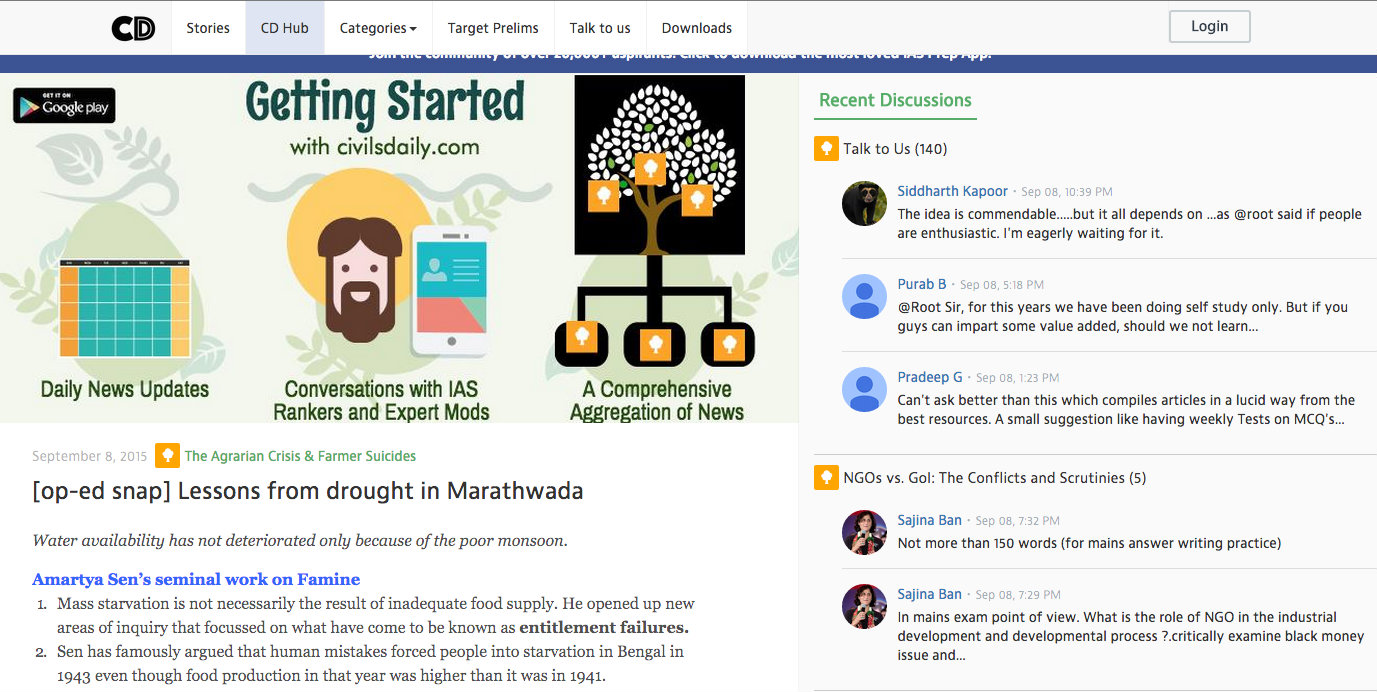
    Along with your Daily Newspaper, Spend 5 minutes on the Civilsdaily’s Android App. We take good care to publish key point summaries of daily news articles which you can bookmark and take offline for revising again and again.


    #2. Make notes of the What, Why and How

    The What: Specifics of the event/news at hand but from a bird’s eye view. A good newspaper makes sure that the headline informs you of the key takeaway.

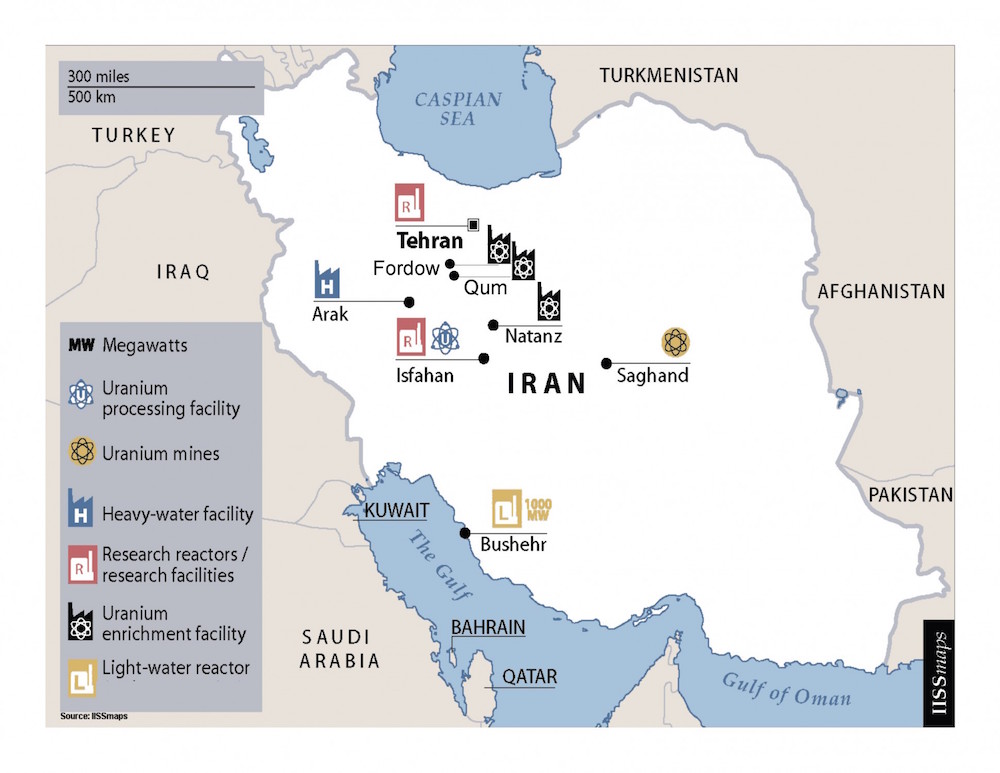
    For eg: IAEA chief heads to Tehran for nuclear talks: IAEA says the visit will focus on clarification of past and present outstanding issues regarding Iran’s nuclear programme

    The Why: Why is this news important? Why did this make into today’s newspaper? What were the events leading upto it?

    The phrase “Past and present outstanding issues” should give you some idea of a possible historical trail of these nuclear talks. This should excite your curiosity and this is where you get the understanding of the issue at hand.

    For your ease of understanding, at Civilsdaily.com, we collate the milestone events and connect them in a single story, such as this: Iran’s Nuclear Program & Western Sanctions.

    The How: This line of reasoning gets you into the technicalities of the news at hand. This is where you get to know about the organisations and the nature of sanctions which are in place.

    Try to know all about IAEA, Uranium enrichment facilities, Nuclear Reactors, the safeguards in place etc. Make some key point notes on them because you are going to encounter them again and again in your IAS Prep.


    #3. Don’t read 5 newspapers! Keep it Simple

    • Sooner or later, every newspaper catches up with the current affairs.
    • The reason why you are recommended to read Hindu or Express is that they focus less on the click-bait and scoppwhoop-ish articles than the other well known brands do.
    • So, do not over sweat on covering a lot of ground – that’s one thing where you can definitely bank on Civilsdaily’s News Story Collections.


    #4. Bonus Point: The Increasing Importance of Current Affairs

    In 2013, the then UPSC chairman D.P. Agrawal was addressing the Kerala State Civil Service Academy and he extolled the importance of Current Affairs.

    He said it was impressive how well students scored in their optional papers — where they put in more effort to raise the overall score at the expense of neglecting their reading of general issues in the country and the world over. The candidates should to be well-read, he said adding that learning by rote had entered the interview process as well.

    This should act as a clarion call for all the aspirants of IAS 2015, 2016 to buckle up and start preparing the current affairs like a PRO.

    Like all good things, newspaper reading takes time and patience but once you bear through the initial few weeks, it will be a very rewarding activity. You will be able to relate static with dynamic, expect developments in a story and develop a sense of relative importance of a news event.


    Want to read more?

  • Climate Change Negotiations – UNFCCC, COP, Other Conventions and Protocols

    Outcome of Paris Climate Summit

    Paris Agreement was recently adopted by 195 countries of UNFCCC, which agreed to take measures to control climate change.

    We had written 4 explainers for a comprehensive coverage and they can be read here – 

    As we move ahead, let’s take a look at this agreement with respect to various dimensions and debates, which are going on in the international sphere.

    When this agreement will enter into force?

    The agreement in Paris will come into effect only after 2020 when the Kyoto Protocol, an existing international mechanism to deal with climate change, comes to an end.

    What is the temperature goal?

    The agreement says that its objective is to keep the global temperature rise below 2 degree Celsius, but pursue efforts to keep it below 1.5 degree Celsius from pre-industrial times.

    It also says that IPCC will come with a special report in 2018 on the impacts of global warming of 1.5 degree Celsius and above pre-industrial levels. <IPCC reports form the scientific basis on which the world is taking climate action>

    Let’s analyse the implications

    • Least Developed Countries (LDCs) and Small Island Developing Countries (SIDCs) were demanding that the rising temperature be kept under 1.5 degree Celsius from pre-industrial times.
    • LDCs fear that cost of adaptation will be high, if the temperature is allowed to risee upto 2 degree Celsius.

    What about Finance and Technology Transfer ?

    Finance

    Developed nations have been asked to provide financial resources, but $ 100 bn mark does not figure in the agreement. $ 100 bn has been shifted to the decision text, which is a list of all decisions taken at the conference.

    Developing countries are also asked to raise financial resources, even as voluntary effort.< This was one of the demands of the developed countries to widen the base of countries who will provide financial resources>

    There has to be a balance between the mitigation and adaptation needs of the developing countries, while allocating financial resources.

    Technology

    The developed countries to abide by their promises to provide technology development and transfer, and capacity building to developing countries.

    Why is it a matter of concern?

    • Paris Agreement is a permanent document, while the decisions of the conference can be modified.
    • This gives a message that developed nations will provide $ 100 bn every year from 2020, but they will not increase it annually, as demanded by developing countries.

    Carbon Neutral, by when?

    The agreement says that, world should peak emissions as soon as possible and achieve a balance between sources and sinks of greenhouse gases (GHGs) in the second half of this century.

    This means that to limit the amount of GHG emitted by human activity to the same levels which can be absorbed naturally such as trees, soil, ocean, etc beginning 2050.

    What happens to INDCs?

    In the run-up to the Paris conference, 186 countries submitted their INDCs, giving information about the climate actions they planned to take until 2025 or 2030. INDCs would henceforth be called only Nationally Determined Contributions.

    Every country needs to communicate NDCs every 5 years. Each NDC has to be progressively more ambitious than the previous one.

    However, NDCs are not legally binding, i.e. the targets set by nations will not be binding under the Paris Climate Agreement. <India, China and South Africa were unwilling to sign up for this condition because they felt that it could hamper economic growth and development>

    What is Global Stocktake?

    • It refers to a proposed a 5-yearly review of the impact of countries climate change actions.
    • It will assess whether the net result of the climate actions being taken was consistent with the goal of keeping the increase in global average temperature from pre-industrial times to within 2 degree Celsius.
    • It is mandatory for every country to participate in the global stocktake, the exercise will not assess whether actions of any individual country are adequate or not.

    The best part of global stocktake is that it will also assess whether developed countries are adequate help to developing countries by providing money and technology.

    Is Differentiation principle at Stake?

    Experts are divided on whether developed countries succeeded in their effort to do away with concept of Common But Differentiated Responsibilities.

    The Paris agreement firmly anchors ‘differentiation’ for developing countries. At many places, differentiation is achieved by having different kind of commitments for developed and developing countries.

    Developed countries are expected to take the lead on mitigation and support, while developing countries are expected to take actions within the context of their sustainable development and poverty eradication imperatives.

    Let’s see what is the other point of view.

    • All parties have to report NDCs every 5 years.
    • There is no differentiation in reporting, inventory of GHGs and progress made in implementation of NDCs.< Inventory is basically a list of all units which release GHGs>
    • The stocktake is universal for aggregate actions and it will happen in 2023 and every 5 years henceforth.
    • Developed countries are asked to take absolute economy-wide emission reduction targets, while developing countries will enhance mitigation efforts, but are encouraged to move towards economy-wide reduction in the light of national circumstances.

    Published with inputs from Pushpendra 
  • Why does Dengue Wreck Havoc in Delhi’s Backyard?


    What is Dengue?

    According to the World Health Organisation, Dengue is a vector-borne disease transmitted by the bite of an infected female Aedes Aegypti mosquito.

    The mosquito becomes infected when it feeds on the blood of a person infected with the virus. After about one week, the mosquito can then transmit the virus while biting a healthy person.

    How many strains of dengue are there?

    There are 4 serotypes of the virus that causes dengue. These are known as DEN-1, DEN-2, DEN-3, DEN-4.

    Infection with one strain will provide life-time protection only against that particular strain. However, it is still possible to become infected by other strains and develop into severe dengue.

    You might not be grilled by UPSC in Mains but in case you are a doctor, this might come in handy during interviews!

    Can it spread from person to person?

    Dengue cannot be spread directly from person to person. However, a person infected and suffering from dengue fever can infect other mosquitoes.

    Where does dengue happen?

    Most cases occur in tropical areas of the world, including the Indian subcontinent, Southeast Asia, Southern China, Taiwan, the Pacific Islands, the Caribbean, Mexico, Africa, Central and South America.

    What are the symptoms of dengue?

    Dengue causes flu-like symptoms and lasts for 2-7 days. Dengue fever usually occurs after an incubation period of 4-10 days after the bite of the infected mosquito.

    High Fever (40°C/ 104°F) is usually accompanied by at least two of the following symptoms: headaches, pain behind eyes, nausea, vomiting, swollen glands, joint, bone or muscle pains and rash.


    What happens in severe dengue?

    Severe abdominal pain, persistent vomiting, bleeding gums, vomiting blood, rapid breathing, fatigue/ restlessness.

    What is the treatment for dengue?

    There is no vaccine or specific medication for dengue fever. Patients should seek medical advice, rest and drink plenty of fluids.

    Paracetamol can be taken to bring down fever and reduce joint pains. However, aspirin or ibuprofen should not be taken since they can increase the risk of bleeding.

    Patients who are already infected with the dengue virus can transmit the infection via Aedes mosquitoes after the first symptoms appear.

    As a precautionary approach, patients can adopt measures to reduce transmission by sleeping under a treated net especially during the period of illness with fever.

    What should I do if I suspect I have dengue?

    If you suspect you have dengue you need to see a doctor immediately. To diagnose dengue fever, your doctor will:

    1. Evaluate your signs and symptoms
    2. Test your blood for evidence of a dengue virus
    3. Review your medical and travel history

    Who spreads dengue and severe dengue?

    Dengue is spread through the bite of the female mosquito (Aedes aegypti). The mosquito becomes infected when it takes the blood of a person infected with the virus. After about one week, the mosquito can then transmit the virus while biting a healthy person.

    The mosquito can fly up to 400 meters looking for water-filled containers to lay their eggs but usually remains close to the human habitation.

    Aedes aegypti is a daytime feeder: The peak biting periods are early in the morning and in the evening before dusk.

    Aedes aegypti has evolved into an intermittent biter and prefers to bite more than one person during the feeding period. This mechanism has made Aedes aegypti a very highly efficient epidemic vector mosquito.

    Where do the mosquitoes breed?

    The mosquitoes thrive in areas close to human population (urban areas).

    The dengue mosquito lays its eggs in water-filled containers inside the house and surrounding areas of dwellings (this includes non-used bottles, containers, discarded waste, tyres etc.which hold water).

    The eggs hatch when in contact with water. Eggs can withstand very dry conditions and survive for months. Female mosquitoes lay dozens of
    eggs up to 5 times during their lifetime.

    Some Technological research areas to control Dengue

    #1. Insecticide-treated materials

    Insecticide-treated materials (ITMs) consist of long-lasting insecticidal nets, curtains and wall hangings. Bednets have proved highly effective in
    preventing diseases transmitted by nocturnally active mosquitoes.

    Insecticide-treated window curtains and sheet covers can also reduce dengue vector densities and transmission.

    In studies in Mexico and Venezuela, ITMs (particularly curtains) were well accepted by the communities as their efficacy was reinforced by
    the reduction of other biting insects as well as cockroaches, houseflies and other pests.

    #2. Lethal ovitraps

    Ovitraps or oviposition traps collect the eggs laid by the mosquitoes which develop into larva, pupa and adult mosquitoes.

    Lethal ovitraps (which incorporate an insecticide on the oviposition substrate), autocidal ovitraps (which allow oviposition but prevent adult
    emergence), and sticky ovitraps (which trap the mosquito when it lands) have been used on a limited basis. Studies have shown that population densities can be reduced with sufficiently large numbers of frequently-serviced traps.

    #3. Genetically-modified mosquitoes

    There are two methods of reducing disease transmission using genetics:

    Population suppression: reduce mosquito population such that it would not be able to sustain pathogen transmission. This includes sterility,
    reduced adult longevity, or decrease larva/pupa survival.

    Population replacement: Reduce inherent ability to transmit the pathogen. Mating will alter the genetic pool of the wild population.

    And now to the main question: What are the reasons for Dengue in Delhi?

    The reason for the temporal shift, say experts, is the erratic weather and rainfall that the country has witnessed this year.

    Many scientists are in agreement that a combination of higher mean temperature in a region and high humidity fosters higher rates of dengue transmission and incidence.

    Usually when it rains, the rainwater flushes away stagnant pools that act as sites for mosquito breeding. This year, we saw rainfall early in the season which was followed by long dry spells during which there has been high humidity, especially in Delhi.

    This has enabled a shift from the usual trend of dengue transmission that we have observed and the virus has struck parts of the country earlier than usual.

    So, are there sufficient resource management in Delhi? or does it again shows a huge mismanagement crisis?

    Published with inputs from Arun
  • 193 Countries Agreed on 17 Sustainable Development Goals. Why?

    UN Secretary-General Ban Ki-moon shares this “good news”.

    After 3 years of negotiations and debate, 193 countries agreed to a set of 17 development goals more bold and ambitious than anything that has come before them.

    But what are Sustainable Development Goals? Where have they evolved from?

    These 17 Sustainable Development Goals (SDGs) – part of a wider 2030 Agenda for Sustainable Development – build on the Millennium Development Goals (MDGs).

    There were 8 MDGs and they are going to expire by the end of this year (2015).


    But why didn’t we just renew them? Why was there a need to re-evaluate and re-program the development goals?

    1. The MDGs as you can see were very focus, concrete, target oriented which was a good thing to begin with, right?
    2. Wrong – The structures and 8 categorisation metrics ended up being so rigid that we left out other more important areas.

    A 2015 UN assessment of the MDGs found they fell short for many people:

    “The assessment of progress towards the MDGs has repeatedly shown that the poorest and those disadvantaged because of gender, age, disability or ethnicity are often bypassed.”

    Okay, fair point. So what do these SDGs look like? What went into the process of coming up with these 17 blocks of SDGs?

    In response to the accusation that the MDGs were too narrow in focus, the SDGs set out to tackle a whole range of issues, from gender inequality to climate change.

    The unifying thread throughout the 17 goals and their 169 targets is the commitment to ending poverty.

    Eradicating poverty in all its forms and dimensions, including extreme poverty, is the greatest global challenge and an indispensable requirement for sustainable development. 


    The consultation process to arrive at these 17 SDGs was one of the most transparent exercise ever to be undertaken in the UN history.

    A million voices formed the part of the process.


    Very quickly then, listing down the goals:

    1) End poverty in all its forms everywhere

    2) End hunger, achieve food security and improved nutrition, and promote sustainable agriculture

    3) Ensure healthy lives and promote wellbeing for all at all ages

    4) Ensure inclusive and equitable quality education and promote lifelong learning opportunities for all

    5) Achieve gender equality and empower all women and girls

    6) Ensure availability and sustainable management of water and sanitation for all

    7) Ensure access to affordable, reliable, sustainable and modern energy for all

    8) Promote sustained, inclusive and sustainable economic growth, full and productive employment, and decent work for all

    9) Build resilient infrastructure, promote inclusive and sustainable industrialisation, and foster innovation

    10) Reduce inequality within and among countries

    11) Make cities and human settlements inclusive, safe, resilient and sustainable

    12) Ensure sustainable consumption and production patterns

    13) Take urgent action to combat climate change and its impacts (taking note of agreements made by the UNFCCC forum)

    14) Conserve and sustainably use the oceans, seas and marine resources for sustainable development

    15) Protect, restore and promote sustainable use of terrestrial ecosystems, sustainably manage forests, combat desertification and halt and reverse land degradation, and halt biodiversity loss

    16) Promote peaceful and inclusive societies for sustainable development, provide access to justice for all and build effective, accountable and inclusive institutions at all levels

    17) Strengthen the means of implementation and revitalise the global partnership for sustainable development


    Published with inputs from Sumer


  • Indradhanush to revamp PSB. Will the 7 steps work?

    The Indradhanush framework for transforming the PSBs represents the most comprehensive reform effort undertaken since banking nationalisation in the year 1970.

    What is the Indradhanush Mission?

    Government of India’s 7 point reforms to revamp public sector banks and its performance.

    Why do we need (yet another scheme) Indradhanush!

    • In the past few years, Public Sector Banks which have got predominant share of infrastructure financing have been sorely affected due to delay caused in approvals and land acquisition so, many large projects have stalled.
    • It resulted in lower profitability for PSBs, mainly due to provisioning for the restructured projects as well as for gross non-performing assets (NPAs).
    • High levels of non-performing assets in state-run banks have made it hard for the government to revive investment or accelerate growth.


    Seven Colours to resurrect PSB?

    1. Appointments: 
      • The Government decided to separate the post of Chairman and Managing Director and there would be another person who would be appointed as non Executive Chairman of PSBs.
      • This approach is based on global best practices and as per the guidelines in the Companies Act to ensure appropriate checks and balances.
      • The selection process for both these positions has been transparent and meritocratic.
    2. Board of Bureau: 
      • The BBB will be a body of eminent professionals and officials, which replace the Appointments Board for appointment of Whole-time Directors as well as non-Executive Chairman of PSBs.
      • They will also constantly engage with the Board of Directors of all the PSBs to formulate appropriate strategies for their growth and development.
    3. Capitalisation:
      • As of now,the PSBs are adequately capitalized and meeting all the Basel III and RBI norms.
      • However, the GOI wants to adequately capitalize all the banks to keep a safe buffer over and above the minimum norms of Basel III.
      • Infusion of 25,000 crore rupees of capital into debt-laden banks in this fiscal in phased manner. Out of this 20,000 crore rupees would be injected in August 2015.
    4. De-Stressing PSBs: 
      • Projects are increasingly stalled/stressed thus leading to NPA burden on banks.
      • In a recent review, problems causing stress in the power, steel and road sectors were examined.
      • Pending policy decisions to facilitate project implementation/operation would be taken up by respective Ministries.
      • Flexibility in restructuring of existing loans wherever the Banks find
        viability.
      • Six new Debt Recovery Tribunals (DRT) to speed up the recovery of bad loans of the banking sector
      • To develop vibrant debt market for PSBs in order to reduce lending pressure on banks. Strengthen asset reconstruction of companies.
    5. Empowerment: 
      • There will be no interference from Government and Banks are encouraged to take their decision independently keeping the commercial interest of the organisation in mind.
      • Banks will build robust Grievances Redressal Mechanism for customers as well as staff so that concerns of the affected are addressed effectively in time bound manner.
      • The Government intends to provide greater flexibility in hiring manpower to Banks.
    6. Framework of Accountability: 
      • A new framework of Key Performance Indicators (KPIs) to be measured for performance of PSBs.
      • Streamlining vigilance process for quick action for major frauds including connivance of staff.
    7. Governance Reforms: 
      • The process of governance reforms started with “Gyan Sangam” – a conclave of PSBs and FIs organized at the beginning of 2015 in Pune.
      • There was focus group discussion on six different topics which resulted in specific decisions on optimizing capital, digitizing processes, strengthening risk management, improving managerial performance and financial inclusion.
      • Next Gyan Sangam will be held between 14 to 16 Jan 2016 to discuss strategy with top level officials.

    Are PSBs now ready to compete and flourish in a fast-evolving financial services landscape, What say?


    Published with inputs from Arun
  • Understanding the IAS Prelims Syllabus for Paper 1


    Know Thy Syllabus

    The Preliminary Examination of Union Public Service Commission for Civil Services Examination is also popularly called CSAT or Civil Services Aptitude Test. In loose colloquial terms, you would usually search it on as IAS Prelims Syllabus! Technically speaking, CSAT is actually the second paper of General Studies that was introduced in 2011.

    It was introduced to end the use of scaling system for varying subjects in the General Studies paper and was a matter of concern for many Civil Services Aspirants.

    But this year in 2015, the UPSC has made the CSAT of only qualifying nature and one needs to only get 33% to get through. Which gets us back to the question of Paper 1 which now assumes a paramount importance in the life and times of a civil service aspirant.


    Few Points before we start on:

    1. Paper 1 comprises 100 questions | 200 marks | 2 hours
    2. There is negative marking  (1/3rd) for each wrongly attempted question
    3. 2013 onwards, IFoS (Forest Services) Pre was combined with CSE Pre. What did this merger do? Excellent question!
      • Saved time for people appearing for both the examination
      • Increased the portion of Enviro & Biodiversity!


    #1. Current Affairs

    Daily news analysis is an integral part of an aspirant’s IAS preparation. A sincere student ends up devoting more than 2 hours everyday to newspapers and still looks out for more help!

    We would suggest that you start with Hindu or Indian Express and keep up with the civilsdaily’s android app for key point summaries. That’s one of the most convenient ways of reinforcing newsbytes. We hand pick news from the most relevant sources and even though this may sound like self promotion, we did perform fairly well in this year’s prelims. Go ahead, read this short analysis.


    #2. History of India

    Start with the Indian National Struggle (everything that led up to our Independence) – This should be the easiest part of the history syllabus. Covering Ancient and Medieval India can be trickier and may make you wonder ki kaash Bangladesh ki Civil Services ke liye likh rahe hote. Wouldn’t have this much of a history to mug up on. 1971 mein to start hi hua tha!

    We would suggest that you focus mainly on the Indian Art & Culture – and for this, the mother of all resources is the ccrt website. Alternatively, do look at the history section @civilsdaily.com – you would benefit with the infographs and pop quizzes that we curate.


    #3. Polity and Governance

    You are broadly supposed to know about the following topics – Constitution, Political System, Panchayati Raj, Public Policy, Rights Issues, etc.

    By and large, most of the syllabus is covered by Laxmikanth’s Indian Polity. You are required to read this book cover to cover and many do this for ~10 times. The reason is that you tend to skip/ ignore some parts of the text in the first few readings which might actually be important for the exam and multiple readings make sure that you get a complete dope of the book.

    No need to go for anything beyond this book unless of course you are bored and want a different storyline to the same articles and rights! We have been keeping up with the dynamic news on this topic at our Stories @Polity.


    #4. India and World Geography

    Stick to the NCERTs of 11th and 12th. If you still feel overwhelmed, go for the 9th and 10th books as well. But keep a tab on current affairs along with these static books and you should be good. We have been keeping up with the dynamic news on this topic at our Stories @Geography.


    #5. Environment and Biodiversity

    Enviro & Biodiversity became important with the merger of IFoS Prelims with CSE Prelims. Since then, aspirants across the country have been looking at the good god above for a one book that can help them sail through.

    The closest bets have been – Shankar IAS’ Enviro Book, Current Affairs from Hindu, Express and this UGC course book by Erach Bharucha. You should also read this blog by Satish Reddy (AIR 97) on how to tackle EnB.


    #6. Indian Economy and Social Development

    You do not really have to go and read the evolution of Planning Commission and other organisations in general to get a hang of what’s buzzing in Indian Economy these days. UPSC wants you to keep a tab on Macroeconomics and many a toppers have suggested that NCERTs of 11th and 12th would do just well. Also, keep up with our stories where we cover the latest news in great depths at Stories @Economics section.

    If you do these few things well, you will be in good stead for your IAS Mains preparation as well. 


  • India’s Bid to United Nations Permanent Seat

    What exactly is United Nations Security Council (UNSC)?

    1. UN Security Council was created following World War II to address the failings of another international organisation, the League of Nations, in maintaining world peace.
    2. It is one of the six principal organs of the United Nations and is charged with the maintenance of international peace and security.

    Then, who holds UNSC’s power?

    1. As of now, there are 15 members on the UNSC. Five of those (mostly powers who emerged victorious in the World War II), including the US, UK, France, China and Russia are permanent members.
    2. These members have the all-important veto power which would mean that a resolution or decision would not be approved. Many a times, veto has been used for their own interests.
    3. The remaining 10 non-permanent members are elected by the General Assembly for two-year terms, starting 1 January.
    4. Five members are replaced each year. India has been elected as a non-permanent member to the UNSC for 7 such terms, the last of which was in 2011-12.

    Okay, so where does India stands in all ?

    India want a permanent membership to the UNSC for two reasons.

    1. First, the veto power, which India could use to defend its interests, say against Pakistan (just like Russia did last year over the civil war in Ukraine).
    2. Second, the sheer prestige associated with permanent membership of a multilateral forum. India’s elevation will also be an acknowledgment of its rise as a global power, ready to play a key role in the council’s objectives of international peace and security.
    3. India also believes that the UNSC, which was constituted in 1945 after the World War II, does not reflect the geopolitical realities—the emergence of a multipolar world order largely thanks to the rise of developing economies like China, Brazil and India.
    4. Also, India is the largest contributor to the UN Peacekeeping Operations (UNPKO), with nearly 180,000 troops serving in 44 missions since it was established.
    5. India is also among the highest financial contributors to the UN, with the country making regular donations to several UN organs like the United Nations Democracy Fund (UNDEF).

    Sounds like a fair ask! So who all support India for this?

    1. Four of the five permanent members have supported India’s bid. China is the only permanent member that has been ambiguous in its support for India, owing to its close ties with Pakistan.
    2. Other member states, like the United Arab Emirates (UAE), Singapore, Malaysia and the whole of the African Union have also endorsed India’s bid.

    And who opposes?

    1. India’s nuclear-armed rival Pakistan has been leading the opposition to its inclusion in the UNSC’s list of permanent members.
    2. Other countries, part of an interest group called the “Uniting for Consensus” (UfC), also curiously called “The Coffee Club”, formed in 1995, are opposed to India (and the G4’s bid) for permanent seats.
    3. Italy, Pakistan, Mexico and Egypt were founder members of the UFC. The list also includes Argentina, South Korea, Spain, Turkey and Indonesia.

    Anyway, What’s the process to get into permanent membership?

    1. The reform of the Security Council can only take place if two-thirds of UN member states vote in favour, along with an affirmative vote from all the permanent members, who enjoy the veto power.
    2. Effectively, even if India secures the support of two-thirds of UN members, who are present and voting, it would still need the five permanent members to not use the veto and thereby, prevent the adoption of the reform process.

    So far, what’s the progress from India’s side?

    1. Recently, the UN General Assembly adopted a negotiating text by consensus for the long- pending Security Council reforms, setting the stage for talks on the issue at its 70th session, boosting India’s bid for a permanent seat in the revamped world body.
    2. India termed as “historic” and “path-breaking” the adoption of the document, saying the decision puts the Inter- Governmental Process formally on an “irreversible text-based negotiations path” and changes the “dynamics” of the negotiations on achieving UNSC reforms.
    3. China, predictably, said that this was a “technical” or “roll-over” decision. Pakistan too joined the chorus. Italy too has made their opposition clear.
    4. It is widely known that majority in the UN security Council do not want the council to be expanded. And they have been using their proxies to scuttle the process. And that will be the game in town in the months to come.
    5. Now, it will be for India, to team up with other like-minded countries across continents (L-69 and G-4 groupings, to begin with), to get the UNGA to push the text-based negotiations towards conclusion in the coming months and years.

    There is no time to sit back and rejoice. The uphill task has just begun. Now, with a text in front of the UNGA, the challenge is to take it forward with optimism.


    Published with inputs from Arun
  • Civilsdaily.com featured on Killerstartups.com

    Read the complete article here: http://killerstartups.com/startup-reviews/civilsdaily-current-affairs

    News Flash: Civilsdaily Gives Current Affairs A Much Needed Overhaul

    Don’t get me wrong, I’m a fan, but there’s a whole lot more going on in the world than Stephen Colbert beginning his tenure at The Late Show.

    Good grief, it’s become difficult to get to real news these days.

    There’s so much content available online that it’s tough to cut through the noise and get to the goods. Even if you do reach “news” sites, the offerings are pretty scant. Soundbites. Breezy writing, more about entertainment than delivering news. And lots and lots of vapid clickbait.

    Civilsdaily looks to put the news back into news. At the moment, this news source can be found on either desktop or for download on Android devices at Google Play.


    Civilsdaily delivers breaking news and daily events in the form of flashcards. Before your mind runs to Flipboard (because the app does bear a useful similarity) Civilsdaily does more than toss out headlines. It provides news cards with a curated list of key point summaries. It shares, you know, details, information – the news instead of the preprogrammed response of so many media outlets.

     To be fair, the Internet has diversified the voices covering the news. Reading or listening options outside the mainstream abound. However, crisp and smart coverage is still lacking. Huge props to Civilsdaily if they can turn a penetrating spotlight back onto current affairs that truly matter.

    The chronology of flashcards makes it much easier to follow stories (just getting started, the focus at the moment is almost entirely on India). No, gleaning stories from all over the web that are related to a topic isn’t the same as keeping a clear view of a developing story. Civilsdaily collects stories on the website for connecting the dots and gaining a better understanding of milestone events in a news cycle.


    Like other news apps, there’s room for discussion, the ability to search news by category, and to receive the latest from your favorite news sources. You’ll get to decide for yourself, of course, but a quick survey shows that, in addition to these common news  elements, the top stories and most discussed stories on Civilsdaily have a gravitas that is both refreshing and hard to come by online.

     So, if you’ve had your fill of mindless lists and excess silly videos, if you’d prefer more news and less attitude in your news – basically, if you’re hungry for a better, on point news source, you’ll want to have a closer look at civilsdaily.com without delay.

More posts