💥Mains Ready By December. Smash Mains & Smash PYQ Admissions Open

Search results for: “”

  • 23 August 2018 | High Relevance vs Low Relevance News

    Reading News for UPSC is utmost important and rising number of questions year on year in UPSC Prelims is a testimony of this

    We are starting a daily series where we will analyze news covered in The Hindu, Indian Express and other newspapers which are important from exam perspective and which are not

    Important news would have been covered in our daily news coverage in form of newscards.

    Unimportant ones will be mentioned here and a short description regarding why it is not relevant for the exam

    Click on news headlines to read the full news

    High relevance news

    World Bank launches world-first blockchain bond

    https://www.civilsdaily.com/news/world-bank-launches-world-first-blockchain-bond/

    Note the name of the bond. Can be asked in prelims.

    SC moots steps to clean up politics

    https://www.civilsdaily.com/news/sc-moots-steps-to-clean-up-politics/

    Make notes about disqualification provisions mentioned & about SC directives. Important for Mains.

    Centre unveils International UDAN 

    https://www.civilsdaily.com/news/centre-unveils-international-udan/

    UDAN was an ambitious scheme of the government and has resulted in increased air traffic as well as connectivity across India. Now its international version would help do the same on a global level. Note the details of the plan. Important for pre as well as mains.

    Low Relevance News

    Quad countries discuss ocean security

    Quad is still in informal stage and talks are going on on various issues.

    This news also covers a part of it. No important details for the exam.

  • 22 August 2018 | Prelims Daily with Previous Year Questions

    Q.1) Trade Receivables Discounting System (TReDS) is an electronic platform which has mechanized the financing of trade receivables of MSMEs from corporate buyers through two or more financiers.

    Which of the following statements about TReDS is/are correct?

    1. It is an initiative undertaken by Ministry of Commerce and Industry to safeguard the interest of micro, small and medium enterprises (MSMEs).
    2. It deals with discounting of both invoices and bills of exchange.

    Select the correct codes from the following options:

    a) All are correct

    b) Only 1

    c) Only 2

    d) All are incorrect

    Inspired by: HAL becomes first PSU to transact on TReDS: RXIL

    Business Standard


    Q.2) Recently the Union government has declared the Kerala floods a “calamity of severe nature”. Consider the following statements about classification of disasters in India:

    1. The state government is entitled to acclaim a calamity as national calamity.
    2. A “calamity of severe nature” receives additional assistance provided from the National Disaster Response Fund (NDRF).
    3. The NDRF is funded through the Contingency Funds of India.

    Which of the given statements is are correct?

    a) All are correct

    b) 1 and 2

    c) 2 and 3

    d) 2 only

    Inspired by: Explained: “Calamity of a severe nature”

    https://www.civilsdaily.com/news/explained-calamity-of-a-severe-nature/

    Q.3) The National Disaster Response Force (NDRF) constituted under National Disaster Management Authority (NDMA). Consider the following subjects about NDRF:

    1. It is a specialised force constituted “for the purpose of specialist response to a threatening disaster situation or disaster” under the Disaster Management Act, 2005.
    2. The ‘nodal Ministry’ in the central government for management of natural disasters is the Ministry of Home Affairs (MHA).
    3. The chairman of NDMA is Home Minister.
    4. The responsibility for disaster management is that of the Union Government.

    Which of the given statements is/are correct?

    a) All are correct

    b) 1 and 2

    c) 2 and 3

    d) 3 and 4

    Inspired by: Explained: “Calamity of a severe nature”

    https://www.civilsdaily.com/news/explained-calamity-of-a-severe-nature/

    Q.4) Consider the impacts of weakening of Indian Rupee.

    1. Imports and Exports become expensive.
    2. GDP increases.
    3. Household consumptions drastically reduce.

    Which of the given statements is/are correct?

    a) 2 only

    b) 3 only

    c) 1 and 3

    d) None of the above

    Inspired by: What does the falling rupee mean for you and economy?

    https://www.civilsdaily.com/news/what-does-the-falling-rupee-mean-for-you-and-economy/

    Q.5) The State Finance Commission (SFC) is a unique institution created by the 73rd and 74th Constitutional Amendments (CAs) to rationalise and systematise State/sub-State-level fiscal relations in India.

    Which of the following statements about SFCs is/are correct?

    1. Article 243I of the Constitution mandates the State Governor to constitute a Finance Commission.
    2. The resources of panchayats and municipalities are augmented on the basis of the recommendations made by the finance commission of the state.

    Select the correct codes from the following:

    1. Only 1
    2. Only 2
    3. Both 1 and 2
    4. None of the above.

    Inspired by: [op-ed snap] Strengthening the federal link

    https://www.civilsdaily.com/news/op-ed-snap-strengthening-the-federal-link/

    For Solutions – Click Here

    Prelims Daily Archive – Click here

  • [Burning Issue] Applications of Biotechnology in India

    Related image

    What is Biotechnology?

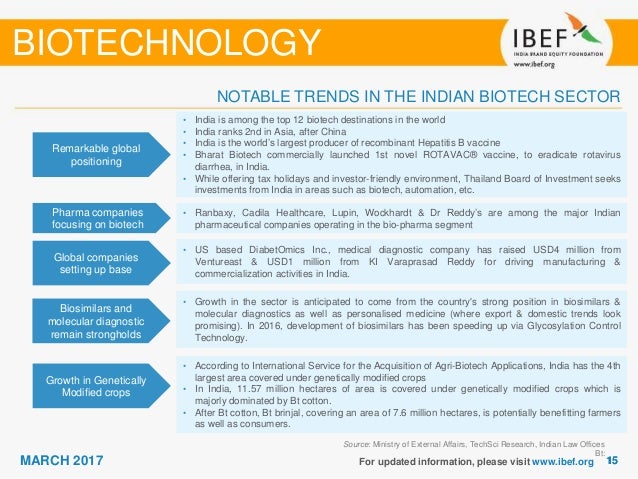
    Biotechnology refers to the industrial use of micro-organism, living plant and animal cells to produce substances useful to the people. It includes the manufacture of antibiotics, vitamins, vaccines, toxic waste disposal systems using microbes etc.

    Biotechnology sector in India

    1. Indian biotechnology sector has crossed the $ 3 billion milestones and is growing at the rate of more than 30% over the last few years.  
    2. There is also a general perspective that India could even achieve the target of attaining $20 billion by 2020.

    Applications of Biotechnology in India

    Image result for applications of biotechnology in india

    Agriculture

    1. Biotechnology revolutionized research activities in agriculture which include tissue culture in plants, the creation of new transgenic plants and animals which eventually used as bio-reactors to produce the drug from their milk, food etc.
    2. Genetic engineering accelerates improvements in plants by increasing the diversity of the gene pool. It has also helped in the production of plants that have
    • a short maturing period
    • higher yield
    • potential to promote food production even in adverse conditions like drought, salinity etc.

    Indian scientists have also come up with an inexpensive algal bio-fertilizer technology for rice.

    Animal husbandry

    1. Biotechnology is used in the production of the physiological system, embryos transfer, health and well-being of animals.
    2. Indian scientists have developed a procedure for producing several identical buffalo by using the nuclear transfer technique.

    Human health

    1. Biotechnology has enabled the production of human insulin through microbes, human growth hormone etc.
    2. Diagnostic kits to diagnose viral infections, hepatitis B etc.

    Industry

    1. In the Industrial sector biotechnology has been used for the production of high fructose corn syrup, sweetening agent for soft drinks, improving the production of alcohol, production of the chemical from agricultural waste etc.

    Environment

    1. Biotechnology applications have been successfully made in the treatment of wastes.
    2. An important achievement was made when the Indian borne Anand Chakraborty designed a bacterium Pseudomonas putida that could feed on oil which is of great economic and environmental importance in the battle against oil slicks.

    Measures taken

    1. The Indian government has been very supportive to the Biotech sector and the National Biotechnology Development Strategy has been approved.
    2. A new patent regime is in place and the regulatory system is being beefed up.
    3. The public involvement in biotech investments has been strengthened through the small business innovation research initiative of the Department of Biotechnology.
    4. The Department of Biotechnology has also committed to spending 30% of its budget on public-private partnership programmes in Biotechnology.  
    5. Biotechnology has also been promoted through emphasizing on higher education, establishing 16 new national level universities, 8 new Indian Institute of Technology and 4 new Indian Institutes of Science, Education and Research etc.
    6. Several new interface programmes to connect academic with industry in order to bridge the knowledge to the market chain.

    Challenges

    1. Companies have not been able to launch new products at a significant pace because of bureaucratic red-tape and multiple regulatory bodies.
    2. Innovative companies face funding constraints since the investors have shied away from early-stage ventures.
    3. Another issue is the lack of trained manpower. While India has a considerable number of graduates and postgraduates in biotechnology and related fields, they are not employable. Thus companies have to invest heavily in their training before incorporating them into the business.
    4. India also suffers from brain drain. Top global biotech companies are able to poach the brightest Indian minds with attractive job profiles and good remuneration.
    5. Lack of manufacturing capacity. Several biotech parks (established through PPPs) are solely focused on providing biotech services and diagnostics rather than pure biotech manufacturing.

    Way forward

    1. India is already facing tough competition from China, Korea, Singapore, and Malaysia in terms of attracting investments. Therefore, it is high time that India should enable better technological and scientific competence, better infrastructure, tax and duty exemptions, better course structure, and easier regulatory procedures in order to remain competitive and spur growth in the industry.
    2. The biotech industry should come up with a concrete action plan to effectively utilize the available infrastructure and resources and focus on strengthening innovation to take the biotech industry to new heights.
    3. The government must promote the domestic biotech industry through steps like venture capital, industry-academia link, entrepreneurship incubation centres etc.

    Practice question

    1. Discuss the various applications of Biotechnology in India and analyse its growth potential with reference to initiatives taken by the government regarding the same
  • 22 August 2018 | High Relevance vs Low Relevance News

    Reading News for UPSC is utmost important and rising number of questions year on year in UPSC Prelims is a testimony of this

    We are starting a daily series where we will analyze news covered in The Hindu, Indian Express and other newspapers which are important from exam perspective and which are not

    Important news would have been covered in our daily news coverage in form of newscards.

    Unimportant ones will be mentioned here and a short description regarding why it is not relevant for the exam

    Click on news headlines to read the full news

    High relevance news

    SC scraps NOTA option for RS polls

    https://www.civilsdaily.com/news/sc-scraps-nota-option-for-rs-polls/

    While SC was at the forefront in giving NOTA an identity, now it has scrapped it from Rajya Sabha voting. Know the reasons. Can be asked in Mains & as a tricky statement in prelims as well.

    Explained: “Calamity of a severe nature”

    https://www.civilsdaily.com/news/explained-calamity-of-a-severe-nature/

    Amidst demands of declaring Kerela Floods aa s national disaster, Centre has declared it as the calamity of severre nature. Know about the term and what all entails after this declaration. Important for Pre as well as Mains.

    NASA’s InSight spacecraft crosses halfway mark to Mars

    https://www.civilsdaily.com/news/nasa-s-insight-spacecraft-crosses-halfway-mark-to-mars/

    Note about Insight mission of NASA and its objectives. Space programs are now also being asked in Mains apart from Prelims.

    What does the falling rupee mean for you and economy?

    https://www.civilsdaily.com/news/what-does-the-falling-rupee-mean-for-you-and-economy/

    An important article explaining the effects of the devaluation of the rupee. Must read for Pre as well as Mains.

    Low Relevance News

    Centre rules out total ban on firecrackers

    The Centre has ruled out a national ban on firecrackers and suggested the production of “green crackers”, community cracker bursting in major cities and a freeze on the production of series crackers or laris as alternative measures to curb pollution during Diwali

    No important points for the exam. The news is also less relevant as the matter is subjudice

  • 21 August 2018 | Prelims Daily with Previous Year Questions

    Q.1) Recently Indian scientist-academician, N Raghuram, has been elected Chair of the International Nitrogen Initiative (INI), a global policy making initiative. Consider the following statements about INI :

    1. It is an international programme under UNEP.
    2. Its key aim is to optimize nitrogen’s beneficial role in sustainable food production.
    3. It holds conference every year.

    Which of the given statements is/are incorrect?

    a) All are correct

    b) 1 and 3

    c) 2 only

    d) 1 only

    Inspired by: N Raghuram elected Chair of International Nitrogen Initiative

    https://www.civilsdaily.com/news/n-raghuram-elected-chair-of-international-nitrogen-initiative/


    Q.2) The UIDAI has announced the phased roll-out of face recognition feature as an additional mode of authentication, starting with telecom service providers for issuance of SIM cards. Consider the following statements about the Live Face Photo verification:

    1. The telecom service providers will have to store the photo captured for face authentication, and ensure that the live photo matches the one in the e-KYC before activating the SIM.
    2. Any shortfall in transactions using face authentication would be charged at Rs 0.20 per transaction.
    3. If SIM is issued through other means without Aadhaar, then these instructions will not apply.

    Which of the given statements is/are correct?

    a) Only 1

    b) 1 and 2

    c) 2 and 3

    d) All are correct

    Inspired by: UIDAI announces phased roll-out of facial recognition

    https://www.civilsdaily.com/news/uidai-announces-phased-roll-out-of-facial-recognition/


    Q.3) Gadgil & Kasturangan Committee report are related to which of the following issues?

    a) Mitigation for Floods and other natural calamities

    b) Conservation of Western Ghats

    c) NDRF and its mandate

    d) Using space technology for effective monitoring of floods

    Inspired by: [op-ed snap] Kerala floods: The prescriptions for the Western Ghats

    https://www.civilsdaily.com/news/op-ed-snap-kerala-floods-the-prescriptions-for-the-western-ghats/


    Q.4) Consider the following statements about African Asian Rural Development Organisation (AARDO):

    1. AARDO was formed in 1962 as a subsidiary under UN-ESCAP.
    2. It is headquartered in Jakarta, Indonesia.
    3. India is one of the founder members of AARDO and is the largest contributor in terms of membership contribution.

    Which of the given statements is are correct?

    a) All are incorrect

    b) 2 and 3

    c) 2 only

    d) 3 only

    Inspired by: [Burning Issue] African Asian Rural Development Organisation (AARDO)

    [Burning Issue] African Asian Rural Development Organisation (AARDO)


    Q.5) The OSIRIS-Rex mission of NASA is related to-

    a) Study of Black Hole

    b) Study of Asteroid

    c) Availability of water on Moon

    d) Life on Mars

    Inspired by: NASA Spacecraft Begins Final Approach to Bennu

    Space.com


    For Solutions – Click Here

    Prelims Daily Archive – Click here

  • [Burning Issue] Double Burden of Malnutrition in India

    Related image

    Double Burden of Malnutrition

    • The increasing income differences have widened the gap between the rich and poor and thus has put India in a position in which it was not before.
    • Malnutrition in India has always been synonymous with undernutrition.
    • But obesity among adults is nearly as big a problem in the country as under-nutrition.
    • Even as under-nutrition continues to remain extraordinarily high in the poorer parts of the country, obesity has reached endemic levels in some of the richer parts of the country
    • Thus the present situation is a perfect example of the paradoxical situation, popularly known as the Double Burden of Malnutrition (DBM).
    • A study by medical journal Lancet has raised concern about this double burden of malnutrition in India.
    • At the same time, a report was also released by the National Nutrition Monitoring Bureau (NNMB) to understand the current nutritional status of urban population in India.
    • India has the second highest number of obese children in the world after China.
    • At the same time, India has the highest number of moderately and severely underweight children and adolescents in the world.
    • The twin problem of high malnutrition and growing obesity may have a common cause: a high proportion of low birth weight babies in India.
    • The stark nutritional divide across the country mirrors the uneven growth and development across the country.

    Lancet Report

    • According to the Lancet, India has the highest number of moderately and severely underweight children and adolescents in the world.
    • In the report, it showed that the prevalence of mild to severe underweight under-20s in India is 22.7% among girls and 30.7% among boys.
    • The number of obese children and adolescents rose from 11 million in 1975 to 124 million in 2016 globally.  
    • In this trend, India will have more obese than underweight children by 2022.  
    • In India deaths due to non-communicable diseases (NCDs) are rising alarmingly.  
    • One in 12 deaths can be prevented with 30 minutes of physical activity 5 days a week.

    NNMB report of India  

    • The states having highest obesity rates are: Rajasthan, Kerala, Gujarat, New Delhi, Tamil Nadu, Puducherry
    • Cases of hypertension, high cholesterol levels, diabetes in urban population are rising.
    • Kerala has the highest prevalence of hypertension as well as high cholesterol in urban men and women while Puducherry has highest prevalence of diabetes.  
    • Only 57% of children between the ages of 1-3 years & 68% of those between 4-6 years consumed adequate amounts of proteins and calories.  
    • 34% of men and 44% of women are overweight in India.
    • 13% of men & 11% of women are underweight in India.  
    • 16% of children were born with low birth weight (LBW) in Urban areas which puts them at risk for infections and even early death.

    Impact of Double Burden of Malnutrition

    • The double malnutrition trap can be particularly dangerous for India, where urban populations are rising, and where people increasingly face a sedentary lifestyle.
    • The World Bank estimated that the annual cost of malnutrition to the world economy is approximately $80 billion.
    • The direct cost to the Indian economy is around $10 billion, and the total costs, direct and indirect, at 2-3% of GDP.
    • It would affect the working conditions of the people.
    • With every case of obesity or malnutrition in children, India is being dragged back in its growth trajectory.
    • The government would need to spend more on health sector which may led to affect other welfare programs.
    • DBM will put pressure on already fragile health systems in India by posing a high risk of chronic diseases such as cardiovascular diseases, diabetes and some cancers (clubbed together as non-communicable diseases, or NCDs).
    • At the same time, we will be losing out on a healthy and well nourished workforce.

    Obesity in India

    Reasons for Obesity

    • Not taking recommended daily intake (RDI) despite improvement in nutritional status  
    • Although cereal consumption has reduced in compared to 3 decades ago but intake of fat, sugar and oil have increased.
    • 63% of men and 72% of women work for 8 hours per day but they lead a sedentary life.  
    • No proper regime of eating, sleeping & doing physical activity is followed.
    • Traditional foods are being replaced with packed & processed foods.  
    • Only 28% of men & 15% of women exercised in the surveyed states.
    • Increasing tobacco & alcohol consumption in men & women.

    Issues related to child obesity 

    • Identification of obesity – in early years is not done as the obese child is often thought of as a healthy child by parents.  
    • Unawareness – about the diet patterns, physical activity habits etc. which leads to developing of an unhealthy environment around children.  
    • Increased income and urbanization – leads to a rise in the consumption of foods high in fats, sugar and salt and low physical activity.  
    • Poor sleep patterns – It also intensifies the effects of genetic risk for obesity  
    • Moderate wasting and stunting – These are also potential risk factors for children becoming overweight or obese.  
    • Major risk of NCDs – such as cardiovascular disease, diabetes, premature death, as well as physical and psychological consequences in childhood.  
    • Economic cost – The annual cost of treating the consequences of obesity will reach a staggering $13 billion in India and $1.2 trillion globally by 2025.

    What Do WHO Guidelines Say:

    • Height-weight measurement – The weight-for-height and their nutritional status of all infants and children aged less than 5 years at primary health-care facilities should be determined to enable comparing with WHO child growth standards.  
    • Counselling – If identified as overweight, counselling should be provided to parents and caregivers on nutrition, eating habits and physical activity including promotion for breastfeeding.  
    • Obesity management plan – If identified as obese, an appropriate management plan should be developed after further assessment by the health worker at the primary health-care level or an adequately trained professional at a referral clinic or local hospital.  
    • Focus on prevention – and not on providing formulated supplementary foods on a routine basis to children who are moderately wasted or stunted until there is a more definitive evidence base.  
    • Tackle obesogenic environment – By preventing high energy intake and inactive behavior and change the social norms in relation to food and physical activity.
    • Improving Public policy formulation such as Hungary does heavy taxation on high salty foods.
    • Regulation of marketing and promotion of unhealthy foods particularly those targeted at children that are high in salt, sugar and fat  
    • Labelling – the role of positive front of pack and standardized global nutrient labelling on packaged foods may help in promotion of healthy foods and lifestyle.

    Malnutrition in India

    Reasons for Malnutrition

    • Extremely low incomes – Many of the rural poor survive at incomes, which are not more than Rs 30 a day. they are unable to afford even two square meals a day.
    • Artificially inflated food prices – The market prices of essential food items are way above actual production costs, primarily on account of supply chain inefficiencies and practices like black marketing, hoarding.
    • Lack of storage facility at centre as well as state level is below standard as a result of which almost 40% of fruits/vegetables and 20% of grains get damaged.
    • With less food in market .the price goes up and the poor finds it difficult to afford it.
    • Neglect of female nutrition – In rural societies, patriarchal norms continues unabated. Thus, young girls, newly married women are overworked and denied access to food, which affects their health and that of their newborns.
    • Failure of government sector schemes – Despite massive government interventions through NFSA, PDS, the benefits have not reached the needy due to leakages, corruption and mistargeting of subsidies.

    Impact of malnutrition

    • Undernourished children have significantly lower chances of survival than children who are well-nourished.
    • They are much more prone to serious infections and to die from common childhood illnesses such as diarrhoea, measles, malaria, pneumonia, and HIV and AIDS.
    • The risk of death increases with the severity of the undernutrition.
    • Nutrition is important to ensure proper brain formation and development, which starts in the womb: development of the brain goes on during early childhood.
    • Evidence suggests that children who are stunted often enrol late in school, complete fewer grades and perform less well in school.
    • This, in turn, affects their creativity and productivity in later life. Iodine deficiency is known to affect a child’s Intelligence Quotient (IQ) adversely.
    • It has also been established that children with deficient growth before age two are at an increased risk of chronic disease as adults, especially if they gain weight rapidly in the later stages of childhood.
    • A low birth weight baby, who is stunted and underweight in its infancy and gains weight rapidly in childhood and adult life, is much more prone to chronic conditions such as cardiovascular disease and diabetes.

    Steps Government is taking to tackle malnutrition

    • Expanded the safety net through ICDS to cover all vulnerable groups (children, adolescent girls, mothers, expectant women).
    • Fortify essential foods with appropriate nutrients (e.g., salt with iodine and/or iron).
    • Popularise low cost nutritious food.
    • Mid-day Meal Programme.
    • Ensure food security through increased production of food grains
    • Improve dietary pattern by promoting production and increasing per capita availability of nutritionally rich food
    • Affecting income transfers (improve purchasing power of landless, rural and urban poor; expand and improve public distribution system)
    • Recently Government has launched the National nutrition mission

    What more is needed

    • Promotion of appropriate infant and young child feeding habits along with timely immunisation.
    • Empower women because they are the best caretakers when it comes to nutrition of their children and they know exactly what is the nutritional requirement of the child.
    • Use of biotechnology with proper safeguards like fortification of grains and promotion of coarse grains and pulses
    • Prevention of anaemia in adolescent girls and pregnant women through nutritional programmes with iron and folic acid and deworming
    • Capacity building of anganwadi workers
    • Child specific growth monitoring cards
    • Introduction of BMI and other index for assessing nutritional status at the anganwadi levels.
    • National health and sanitation committees to monitor nutrition programmes by conducting national health and nutrition days

    Conclusion

    • Tackling obesity benefits the economy and the environment, as healthy and sustainable diets are good for productivity levels and the planet
    • While tackling undernutrition through assurance of adequate nutrition (usually interpreted as dietary calories), we need to ensure that it is also about appropriate nutrition (the right balance of nutrients)
    • Our policy response has to move from “food security” to “nutrition security”.

    There is the need to revisit the existing nutrition action plans to simultaneously address undernutrition and these emerging non-communicable diseases related to obesity

    India is fortunate to have these indicators included in the national health surveys, at a disaggregated enough level to initiate local actions to understand and address this major health challenge

    These guidelines will support achieving the SDGs, the global targets set by the Comprehensive implementation plan on maternal, infant and young child nutrition, and the Global strategy for women’s, children’s and adolescents’ health 2016–2030.

  • 21 August 2018 | High Relevance vs Low Relevance News

    Reading News for UPSC is utmost important and rising number of questions year on year in UPSC Prelims is a testimony of this

    We are starting a daily series where we will analyze news covered in The Hindu, Indian Express and other newspapers which are important from exam perspective and which are not

    Important news would have been covered in our daily news coverage in form of newscards.

    Unimportant ones will be mentioned here and a short description regarding why it is not relevant for the exam

    Click on news headlines to read the full news

    High relevance news

    WHO highlights ways to reduce cancer risk

    https://www.civilsdaily.com/news/who-highlights-ways-to-reduce-cancer-risk/

    Non-communicable diseases are on the rise and especially Cancer & other new age diseases. Know about WHO findings. Data can be quoted in Mains.

    UIDAI announces phased roll-out of facial recognition

    https://www.civilsdaily.com/news/uidai-announces-phased-roll-out-of-facial-recognition/

    Another major technological advancement in Aadhar that will help curb leakages in the system that were happening even after DBT. Important for Pre as well as Mains.

    N Raghuram elected Chair of International Nitrogen Initiative

    https://www.civilsdaily.com/news/n-raghuram-elected-chair-of-international-nitrogen-initiative/

    Note about International Nitrogen Initiative. Can be asked in Prelims.

    Low Relevance News

    Rules revised on IIT foreign student fees

    The Board of Governors of each Indian Institute of Technology (IIT) will now decide what fees foreign students will have to pay to study there, the IIT Council decided

    There will be no change in the fees domestic undergraduate students pay to study in the IITs.

    No important points from exam perspective.

  • 20 August 2018 | Prelims Daily with Previous Year Questions

    Q.1) All India Rural Financial Inclusion Survey (NAFIS) is released by-

    a) NITI Aayog

    b) Central Statistical Office (CSO)

    c) National Sample Survey Organisation (NSSO)

    d) National Bank for Agriculture and Rural Development (NABARD)

    Inspired by: [op-ed snap] From Plate to Plough: Lean year as a foundation

    https://www.civilsdaily.com/news/op-ed-snap-from-plate-to-plough-lean-year-as-a-foundation/


    Q.2) Project Dantak is bilateral road development project carried out by Border Roads Organisation (BRO) in which of the following country?

    a) Nepal

    b) Bhutan

    c) Bangladesh

    d) Myanmar

    Inspired by: [op-ed snap] Sovereignty and sensitivity: on India-Bhutan relations

    https://www.civilsdaily.com/news/op-ed-snap-sovereignty-and-sensitivity-on-india-bhutan-relations/


    Q.3) Rythu Bima Group Life Insurance Scheme is introduced by the Telangana government for all the landholding (pattadar) farmers from August 14, 2018. Consider the following statements about Rythu Bima Scheme:

    1. The eligible beneficiary includes the landholding (pattadar) farmers in the age group of 18-59 years.
    2. It provides an instant aid to families of deceased in case of death of the enrolled farmer, irrespective of the cause either natural or otherwise.
    3. Presently it is the fastest settling insurance scheme for farmers in India.

    Select the correct codes from the following:

    a) All are correct

    b) 1 and 2

    c) Only 1

    d) Only 3

    Inspired by: Rythu Bima providing instant aid to families

    https://www.civilsdaily.com/news/rythu-bima-providing-instant-aid-to-families/

    Q.4) Consider the following statements about use of Petcoke in India:

    1. The use of the Petcoke is banned in and around New Delhi.
    2. The Supreme Court has allowed the use of Petcoke cement and limestone industries.

    Which of the given statements is/are correct?

    a) Only 1

    b) Only 2

    c) Both 1 and 2

    d) None of the above

    Inspired by: Government bans use of petcoke as fuel

    https://www.civilsdaily.com/news/government-bans-use-of-petcoke-as-fuel/


    Q.5) Bhaskar Ramamurthy Committee has been setup by the government for the purpose of-

    a) Restructuring NEET and AIIMS exams

    b) Restructuring JEE exam for IITs

    c) Improvising Research and Development in IITs

    d) Admission to Foreign students in IITs

    Source: India Today


    For Solutions – Click Here

    Prelims Daily Archive – Click here

  • [Burning Issue] African Asian Rural Development Organisation (AARDO)

    About AARDO

    1. AARDO was formed in 1962 as an autonomous inter-governmental organization and has 33 members from Asia and Africa.
    2. It is headquartered in New Delhi.
    3. The main objectives of AARDO are
    • Developing understanding among members for better appreciation of each other’s problems
    • To collectively explore opportunities for coordination of efforts in promoting welfare and eradication of thirst, hunger, illiteracy, disease, and poverty amongst rural people.
    1. AARDO also promotes collaboration with various international organizations for the economic and social welfare of the rural community.
    2. It enjoys observer status in FAO, IFAD, UNCTAD, UNESCO, ICA, CIRDAP and UNDP.

    Functions of AARDO

    1. To hold regional and international conferences, workshops, seminars and meetings to enable the exchange of ideas and experiences among the member countries and to find new areas of collaboration.
    2. To organize and facilitate the conduct of regional, international and in-country training programmes to strengthen the institutional capacity of member countries in sustainable agriculture and rural development and promote networking among these countries.
    3. To initiate research and studies of common interest and disseminate data/statistics and information to member countries.
    4. To provide technical and financial support to its member countries for undertaking pilot projects for experimentation and replication.
    5. To promote dissemination of information on agriculture and rural development through the multi-media approach.
    6. To pursue environment and climate changes in the context of rural development.

    India and AARDO

    1. India is one of the founder members of AARDO and is the largest contributor in terms of membership contribution.
    2. India also provided funds for building for AARDO secretariat in Delhi and also significant financial assistance for maintenance of the building.
    3. It also offered 70 fully paid training scholarships for human resource development programme for AARDO under the Indian Technical and Economic Cooperation Programme (ITEC) to the organization.
    4. In 2016, India and AARDO signed MoU under which capacity building programmes for AARDO member countries for the triennium 2015-2017 had been undertaken.
    5. Recently India and AARDO held a workshop in Kochi that focussed on food security, agriculture, and fisheries.

    Way forward

    Considering the growing competition between India and China in the African continent, an effective coordination and cooperation with AARDO will prove to be an effective driver in bringing the mutually beneficial relationship with several African countries and ensure sustainable development for both.

    Practice Questions

    1. Give a brief account on African Asian Rural Development Organisation (AARDO) and evaluate the relationship between India and AARDO.