💥UPSC 2027,2028 Mentorship (June Batch) + Access XFactor Notes & Microthemes PDF

Search results for: “”

  • [2nd June 2026] The Hindu OpED: IMEC is caught between commerce and geopolitics

    PYQ Relevance[UPSC 2022] How will I2U2 (India, Israel, UAE and USA) grouping transform India’s position in global politics?Linkage: The question focuses on emerging minilateral partnerships involving India, Israel and Gulf countries, which form the geopolitical foundation of IMEC. IMEC is the economic and connectivity manifestation of the same India-Middle East strategic architecture represented by I2U2.

    Mentor’s Comment

    The recent Iran-Israel conflict has renewed attention on the India-Middle East-Europe Economic Corridor (IMEC) by exposing the vulnerability of global trade routes such as the Strait of Hormuz and the Suez Canal. While the conflict strengthens the strategic case for alternative connectivity corridors like IMEC, it has simultaneously delayed the project’s implementation due to growing instability across West Asia.

    What is India-Middle East-Europe Economic Corridor (IMEC)?

    1. It is a planned multimodal transport and infrastructure network designed to connect India, the Arabian Gulf, and Europe. 
    2. Formalised via a Memorandum of Understanding (MoU) signed at the G20 Summit in New Delhi, the initiative aims to create a highly efficient ship-to-rail transit system. 
    3. It acts as a transparent, sustainable, and debt-free alternative to China’s Belt and Road Initiative (BRI) while significantly reducing the global reliance on traditional maritime chokepoints like the Suez Canal.

    How Has the Iran-Israel Conflict Exposed the Vulnerability of Existing Global Trade Routes?

    1. Military Vulnerability: The conflict challenged assumptions regarding technological and military superiority as guarantees of strategic success.
    2. Aircraft Losses: Reports indicate that 42 U.S. aircraft were reportedly lost or damaged during “Operation Epic Fury.”
    3. Missile Defence Stress: More than half of the inventories of Patriot, THAAD and Terminal High Altitude Area Defence interceptors were reportedly expended.
    4. Asymmetric Warfare: Iranian missile and drone capabilities imposed substantial costs on technologically superior adversaries.
    5. Trade Route Fragility: The conflict highlighted how disruptions in strategic chokepoints can generate global economic consequences.
    6. Hormuz Significance: Nearly 20 million barrels of crude oil move through the Strait of Hormuz every day.
    7. Global Share: The strait carries roughly one-third of global seaborne oil supplies.
    8. India’s Exposure: India imports around 88% of its crude oil requirements, making it highly vulnerable to disruptions.
    9. Economic Impact: Even temporary blockades can increase freight costs, insurance premiums, and energy prices globally.

    Why Has IMEC Gained Strategic Importance After the Conflict?

    1. Connectivity Diversification: Provides alternatives to vulnerable maritime chokepoints.
    2. Supply Chain Resilience: Reduces excessive dependence on the Suez Canal and Strait of Hormuz.
    3. Strategic Redundancy: Creates multiple transportation pathways during geopolitical crises.
    4. Economic Security: Enhances reliability of trade flows between India, West Asia and Europe.
    5. Geopolitical Necessity: Demonstrates the need for trade corridors that avoid conflict-prone regions.
    6. Regional Integration: Links major production centres, consumption markets and logistics hubs.

    What is the Structure and Design of IMEC?

    Eastern Corridor

    1. India-UAE Linkage: Connects India to West Asia through maritime routes linked with the UAE.
    2. Gateway Function: Serves as the entry point of the corridor into the Arabian Peninsula.

    Central Corridor

    1. Transit Route: Passes through UAE, Saudi Arabia, Jordan and Israel.
    2. Haifa Terminus: Ends at the Israeli port of Haifa on the Mediterranean coast.
    3. Multimodal Connectivity: Integrates ports, railways, logistics facilities and customs infrastructure.

    Western Corridor

    1. European Connection: Links Haifa to European ports through Mediterranean maritime routes.
    2. Market Access: Facilitates faster movement of goods into European markets.

    Infrastructure Components

    1. Rail Networks: Ensures seamless cargo movement across West Asia.
    2. Ports and Logistics: Strengthens multimodal transport efficiency.
    3. Energy Corridors: Supports electricity transmission and hydrogen trade.
    4. Digital Connectivity: Includes high-speed data cables and digital infrastructure.
    5. Green Transition: Integrates renewable energy and green hydrogen networks.

    How Does IMEC Compare with Other Connectivity Corridors?

    International North-South Transport Corridor (INSTC)

    1. Route Objective: Connects India with Russia and Europe through Iran.
    2. Strategic Purpose: Reduces dependence on the Suez Canal.
    3. Geographic Advantage: Provides shorter transit times to Eurasian markets.

    Belt and Road Initiative (BRI)

    1. Chinese Connectivity Model: Links Asia, Africa and Europe through infrastructure projects.
    2. Land Connectivity: Seeks alternatives to maritime chokepoints.
    3. Strategic Competition: Represents China’s connectivity vision, while IMEC serves as an alternative architecture.

    IMEC Distinction

    1. Multidimensional Design: Integrates trade, energy, digital and logistics connectivity.
    2. West Asian Focus: Traverses economically significant regions of the Arabian Peninsula.
    3. India-Europe Orientation: Establishes a dedicated connectivity route linking India with Europe.

    How Has the Conflict Delayed the Execution of IMEC?

    1. Gaza War Impact: The October 2023 Gaza conflict stalled implementation soon after IMEC’s announcement.
    2. Haifa Disruptions: The corridor’s Mediterranean endpoint became directly affected by regional instability.
    3. Iran-Israel Escalation: Renewed conflict increased uncertainty regarding infrastructure investments.
    4. Port Security Risks: UAE ports such as Jebel Ali and Fujairah faced repeated regional security concerns.
    5. Hormuz Dependency: Disruptions in the Strait of Hormuz affected broader maritime logistics.
    6. Investor Caution: Heightened geopolitical risks increased concerns regarding project viability and timelines.

    How Do Regional Political Divisions Threaten IMEC?

    1. Saudi-UAE Coordination: Successful implementation requires close strategic coordination among Gulf partners.
    2. Emerging Divergences: Differences have emerged regarding regional security and foreign policy priorities.
    3. OPEC Exit Decision: UAE announced plans to leave OPEC’s production framework, indicating policy divergence.
    4. Israel Security Cooperation: Growing defence cooperation between Israel and Gulf states adds complexity to regional diplomacy.
    5. Strategic Trust Requirement: Corridor success depends upon long-term political alignment among participating states.

    What Alternative Pathways Can Strengthen IMEC’s Viability?

    Oman-Centric Entry Routes

    1. Salalah Port: Offers access away from conflict-prone Hormuz waters.
    2. Duqm Port: Provides strategic logistics infrastructure on the Arabian Sea.
    3. Muscat Connectivity: Expands alternative maritime entry options.

    Mediterranean Alternatives

    1. Haifa Supplementation: Reduces excessive dependence on a single terminal.
    2. Egyptian Ports: Utilises established logistics ecosystems.
    3. Suez Economic Zone: Provides industrial and manufacturing support.
    4. Industrial Base: Hosts specialised facilities in green hydrogen, LNG, shipping and advanced manufacturing.

    Flexible Corridor Design

    1. Network Approach: Develops multiple routes rather than a single fixed corridor.
    2. Risk Mitigation: Ensures continuity despite regional disruptions.
    3. Strategic Adaptability: Allows route modifications during crises.

    What Role Can India Play in Advancing IMEC?

    1. Connectivity Leadership: Positions India as a major architect of transcontinental connectivity.
    2. Diplomatic Balancing: Maintains strong relations with Saudi Arabia, UAE, Israel and Europe simultaneously.
    3. Economic Integration: Expands trade access to Europe and West Asia.
    4. Strategic Autonomy: Diversifies supply chains beyond traditional routes.
    5. Infrastructure Cooperation: Encourages investments in logistics, digital and energy networks.
    6. India-Europe Engagement: Strengthened by Prime Minister Narendra Modi’s Europe visit in May 2026 and growing India-Europe connectivity cooperation.

    Conclusion

    The Iran-Israel conflict has reinforced the strategic necessity of IMEC by exposing the vulnerabilities of existing trade routes and energy chokepoints. At the same time, it has highlighted that connectivity projects cannot succeed through infrastructure alone; they require sustained political stability, regional cooperation and strategic trust. The future success of IMEC will depend on its ability to balance commercial objectives with the geopolitical realities of West Asia.
  • Why do cities get polluted in summer

    Why in the News?

    Summer air pollution has emerged as a major concern after the Commission for Air Quality Management (CAQM) revoked all restrictions under the Graded Response Action Plan (GRAP) in March 2026. This marked the end of the winter pollution season in Delhi-NCR. However, persistent pollution episodes during April-May, including 54 days of PM10 exceedances in Delhi, forced authorities to reimpose GRAP Stage-I measures. This highlights that air pollution is no longer a winter-only problem and requires year-round management.

    How does summer air pollution differ from winter pollution?

    Winter pollution is dominated by PM2.5 accumulation

    1. Temperature Inversion: Traps pollutants near the surface.
    2. Low Wind Speeds: Restrict pollutant dispersion.
    3. Basin-like Topography: Especially in Delhi and the Indo-Gangetic Plain, facilitates pollutant accumulation.
    4. Biomass Burning: Adds substantial PM2.5 load during winter months.

    Summer pollution is dominated by PM10 and ozone

    1. Coarse Particulate Matter (PM10): Generated from dust storms, road dust, construction activity, and resuspended dust.
    2. Ground-Level Ozone: Formed through photochemical reactions under strong sunlight and high temperatures.
    3. Stronger Winds: Enhance pollutant dispersion but simultaneously transport dust across regions.
    4. Thunderstorms: Can temporarily improve air quality through atmospheric cleansing.

    Why are Indian cities witnessing pollution episodes during summer

    Meteorological conditions differ from winter but remain conducive to pollution

    1. Higher Temperatures: Accelerate atmospheric chemical reactions.
    2. Intense Solar Radiation: Enhances ozone formation.
    3. Dust Transport: Winds carry dust over long distances.
    4. Regional Variability: Different cities experience different dominant pollutants.

    Evidence from major cities

    1. Delhi: Recorded 54 days exceeding PM10 standards during April–May 2026.
    2. Mumbai: Experienced elevated PM10 and ozone levels due to construction activity, dust, and traffic.
    3. Hyderabad: Reported pollution spikes despite relatively better ventilation conditions.
    4. Kolkata and Chennai: Recorded ozone and PM10 exceedances on multiple days.
    5. Bengaluru: Witnessed increasing summer ozone episodes.

    What causes PM10 spikes during summer months?

    Dust storms emerge as the primary driver

    1. West Asian Dust Transport: Dust originating from subcontinent-adjacent arid regions interacts with local weather systems.
    2. Dust Intrusion: Dust can travel from arid landscapes toward northern India during strong wind events.
    3. Atmospheric Instability: Supports long-range transport of coarse particles.

    Local dust generation worsens pollution

    1. Construction Activities: Release large quantities of coarse dust particles.
    2. Demolition Work: Contributes significantly to suspended particulate matter.
    3. Road Dust Resuspension: Moving vehicles continuously lift deposited dust.
    4. Urban Expansion: Increases exposed surfaces vulnerable to wind erosion.

    Data from Delhi

    1. PM10 Exceedance Days (April-May 2026): 54 days exceeded 24-hour NAAQS limits.
    2. Hourly Exceedances: At least one CAAQMS crossed 180 μg/m³ on 40 days.

    Why does ozone pollution increase during hot weather?

    1. Ozone is a secondary pollutant
      1. No Direct Emission: Ground-level ozone is not emitted directly.
      2. Photochemical Formation: Forms through reactions involving precursor pollutants. Major precursors
        1. Nitrogen Oxides (NOx): Emitted from vehicles and industries.
        2. Volatile Organic Compounds (VOCs): Released from fuels, solvents, paints, industrial processes, and vehicle exhaust.
    2. Meteorological triggers
      1. High Temperature: Accelerates reaction rates.
      2. Strong Sunlight: Provides energy required for ozone formation.
      3. Heatwaves: Create highly favorable conditions for ozone accumulation.
    3. Public health implications
      1. Respiratory Disorders: Causes breathing difficulties.
      2. Lung Irritation: Damages respiratory tissues.
      3. Public Health Risk: Particularly affects children, elderly persons, and individuals with pre-existing respiratory illnesses.

    How do dust storms affect air quality in India?

    Dust storms have regional impacts

    1. PM10 Surges: Produce sudden spikes in particulate pollution.
    2. Cross-Border Influence: Dust can travel across large geographical areas.
    3. Reduced Visibility: Impairs transportation and public safety.

    Indian context

    1. Northern India: Frequently affected due to proximity to desert regions.
    2. Thunderstorm-Associated Dust Events: Strong downdrafts lift and transport loose soil particles.
    3. Pre-Monsoon Season: Experiences maximum dust storm frequency.

    How do human activities worsen summer air pollution?

    1. Construction Activities: Generate large quantities of coarse particulate matter (PM10) through excavation, demolition, and material handling. Construction dust remains a major contributor to urban summer pollution.
    2. Road Dust Resuspension: Heavy vehicular movement lifts deposited dust from roads, significantly increasing PM10 concentrations during dry summer conditions.
    3. Vehicular Emissions: Release particulate matter, nitrogen oxides (NOx), and volatile organic compounds (VOCs). These contribute directly to particulate pollution and indirectly to ozone formation.
    4. Industrial Emissions: Emit NOx, VOCs, and other pollutants that participate in photochemical reactions responsible for ground-level ozone formation.
    5. Poor Dust Management: Inadequate covering of construction materials, unpaved surfaces, and weak enforcement of dust-control norms aggravate particulate pollution.

    What forecasting mechanisms are available for managing summer pollution?

    1. Air Quality Early Warning System (AQEWS)
      1. Origin: Developed following severe dust storm and smog events.
      2. Coverage Expansion: Extended from Delhi to cities such as Jaipur and Mumbai.
      3. Forecast Capability: Provides multi-day pollutant forecasts.
      4. Integrated Weather Information: Supports proactive response measures.
    2. IMD Air Quality Bulletins
      1. Forecast Frequency: Released several times daily.
      2. Coverage: Delhi and approximately 140 Indian cities.
      3. Utility: Facilitates issuance of public advisories and exposure reduction measures.

    What measures can cities adopt to combat summer air pollution?

    1. Forecast-based interventions
      1. Early Warning Systems: Enable advance preparedness. Authorities can use IMD’s weather forecast bulletins to issue local alerts for dust storms, poor air quality and ozone to the citizens.
      2. Public Health Advisories: Reduce citizen exposure during high-pollution episodes.
    2. Dust management measures
      1. Construction Site Monitoring: Ensures compliance with dust-control norms.
      2. Mechanical Road Sweeping: Reduces loose particulate matter.
      3. Dust Suppression Technologies: Minimize resuspension.
      4. Study by Council on Energy, Environment and Water found that simply reducing heavy-vehicle movement at construction sites can lower local PM levels.
      5. Example: The Brihanmumbai Municipal Corporation’s Air Quality Decision Support System (AQDSS) monitors construction sites and has helped authorities take action against more than 1,000 construction sites since October 2025, demonstrating the importance of strict dust-control compliance.
    3. Vehicular emission reduction
      1. Cleaner Transport Systems: Reduce NOx emissions.
      2. Traffic Management: Limits idling emissions.
      3. Public Campaigns: Encourage behavioral change.
      4. Example: Delhi’s “Red Light On, Gaadi Off” Campaign: Encourages drivers to switch off engines at traffic signals to reduce emissions.

    Key Dust-Control Norms in India

    1. Covering of Construction Materials: Sand, soil, cement, and debris must be covered to prevent wind-blown dust.
    2. Anti-Smog Guns and Water Sprinkling: Mandatory at large construction sites to suppress airborne dust.
    3. Green Nets/Wind Barriers: Installed around sites to prevent dust dispersion into surrounding areas.
    4. Covered Transportation: Trucks carrying C&D waste or raw materials must be covered with tarpaulin sheets.
    5. Wheel-Washing Facilities: Vehicles exiting construction sites should pass through wheel-washing systems to prevent mud and dust deposition on roads.
    6. Mechanical Road Sweeping: Regular cleaning of adjoining roads to remove accumulated dust.
    7. Paved Internal Roads: Reduces dust generation from vehicle movement within sites.
    8. Proper C&D Waste Management: Segregation, storage, recycling, and scientific disposal of construction waste.

    CAQM’s Framework for Dust Mitigation in NCR

    1. Mandatory dust management plans for large projects.
    2. Real-time monitoring of construction activities.
    3. Penalties and project shutdowns for repeated violations.
    4. Use of remote sensing and inspection teams for enforcement. 

    Why is a year-round strategy necessary?

    1. Continuous Forecasting: Enables advance warnings for dust storms, ozone episodes, and deteriorating air quality through systems such as AQEWS and IMD forecasts.
    2. Season-Specific Interventions: Requires winter measures for PM2.5 control, summer dust-management measures for PM10 reduction, and targeted NOx-VOC controls for ozone mitigation.
    3. Public Health Protection: Reduces exposure through timely advisories during heatwaves, dust storms, and ozone episodes.
    4. Institutional Preparedness: Ensures mechanisms such as GRAP, municipal action plans, and pollution monitoring systems remain operational throughout the year rather than only during winter.
    5. Integrated Urban Air Quality Governance: Combines forecasting, construction dust regulation, road dust management, cleaner transport, and industrial emission controls into a continuous management framework.

    Conclusion

    The rise of summer pollution episodes demonstrates that India’s air quality challenge extends far beyond winter smog. Dust storms, PM10 pollution, and ground-level ozone have transformed summer into a critical pollution season. Effective air quality governance now requires year-round monitoring, forecasting, dust control, emission reduction, and public health preparedness across all major urban centres.

    PYQ Relevance

    [UPSC 2021] Describe the key points of the revised Global Air Quality Guidelines (AQGs) recently released by the World Health Organisation (WHO). How are these different from its last update in 2005? What changes in India’s National Clean Air Programme are required to achieve these revised standards?

    Linkage: PYQ directly examines air quality management, pollution standards, monitoring mechanisms, and policy interventions for improving urban air quality. The article reinforces the need for continuous air quality management, forecasting systems, dust control measures, and strengthened NCAP implementation to meet national and global air quality standards.

  • The genie of synthetic biology is out, and with it comes power and peril

    Why in the News?

    Advances in synthetic biology, genome sequencing, artificial intelligence, and genome synthesis are rapidly giving humans the ability not only to read DNA but also to design and create new biological systems. This marks a historic shift from understanding life to engineering life.

    What is Synthetic Biology?

    1. Definition: Synthetic biology is the application of engineering principles to biology to design, modify, or create organisms, cells, genes, or biological systems with desired functions.
    2. Objective: Moves beyond studying life to actively engineering biological systems.
    3. Approach: Combines genetics, molecular biology, biotechnology, computer science, artificial intelligence, and engineering.
    4. Applications: Drug development, vaccines, biofuels, industrial chemicals, climate-resilient crops, and environmental remediation.
    5. Significance: Enables scientists to redesign existing life forms or create biological systems that do not exist in nature.

    What is DNA?

    1. DNA (Deoxyribonucleic Acid): The hereditary molecule that stores genetic information in living organisms.
    2. Building Blocks: Consists of four nucleotide bases:
      1. Adenine (A)
      2. Thymine (T)
      3. Guanine (G)
      4. Cytosine (C)
    3. Function: Contains instructions for building and maintaining an organism.
    4. Location: Found in nearly every cell of living organisms.
    5. Importance: Acts as the biological code that determines traits, growth, development, and cellular functions.

    What is a Genome?

    1. Definition: A genome is the complete set of DNA present in an organism.
    2. Contents: Includes:
      1. Genes that code for proteins
      2. Regulatory DNA that controls gene activity
    3. Role: Serves as the complete biological blueprint of an organism.
    4. Human Genome: Contains about 22,000 protein-coding genes.
    5. Significance: Differences in genomes explain biological diversity among species.

    What is the Genomic Revolution?

    1. Definition: The rapid advancement in genome sequencing technologies that has dramatically increased the ability to read and analyse DNA.
    2. Trigger: Massive reduction in sequencing costs and time.
    3. Human Genome Project Comparison:
      1. Took over a decade
      2. Cost nearly $3 billion
      3. Involved thousands of scientists
    4. Today:
      1. Genome sequencing can be completed in hours
      2. Costs have fallen to a few hundred dollars
    5. Major Outcomes:
      1. Mapping evolutionary history
      2. Understanding diseases
      3. Identifying genetic adaptations
      4. Personalized medicine
      5. Genome engineering
      6. Synthetic biology
    6. Significance: The genomic revolution has transformed biology into a data-driven science and laid the foundation for synthetic biology.

    How Has Understanding DNA Transformed Humanity’s Ability to Engineer Life?

    1. DNA as the Language of Life: DNA stores genetic information through four nucleotides, A, T, G, and C, which determine biological structure and function.
    2. Genome as Biological Blueprint: Every cell contains a genome comprising thousands of genes and regulatory sequences.
    3. Protein Synthesis: Genes encode proteins that perform structural, regulatory, metabolic, and physiological functions.
    4. Regulatory Architecture: Complexity arises not merely from gene numbers but from when, where, and how genes are expressed.
    5. Transcription Factors: Specialized proteins switch genes on or off, creating diverse biological outcomes.
    6. Phenylketonuria Example: Understanding genetic disorders has enabled dietary interventions that allow affected individuals to live normal lives.

    Why Does Gene Number Alone Not Explain Biological Complexity?

    1. Limited Difference in Gene Count: Humans possess approximately 22,000 genes, compared with:
      1. Escherichia coli: ~4,300 genes
      2. Fruit fly: ~17,000 genes
      3. Mouse: ~22,000 genes
      4. Water flea (Daphnia): ~31,000 genes
    2. Regulation Over Quantity: Biological complexity depends largely on gene regulation rather than the absolute number of genes.
    3. Expression Dynamics: Variations in timing, location, intensity, and interaction of gene expression create complexity.
    4. Cellular Specialization: Identical genomes produce diverse cell types through differential gene expression.

    How Has the Genomic Revolution Expanded Human Knowledge About Life?

    1. Reconstruction of Evolutionary History
      1. Evolutionary Mapping: Genome sequencing reconstructs the tree of life and evolutionary relationships among organisms.
      2. Complement to Fossils: Genomic evidence fills gaps where fossil records are absent.
      3. Historical Precision: Provides unprecedented accuracy in tracing biological evolution over millions of years.
    2. Understanding Adaptation and Natural Selection
      1. Adaptive Evolution: Genetic variations reveal how organisms adapt to environmental conditions.
      2. Human Diabetes Example: Genes predisposing populations to Type-II diabetes may have evolved under conditions of fluctuating food availability but become maladaptive under modern abundance.
      3. Selection Processes: Genome studies reveal how mutations are preserved or eliminated through natural selection.
    3. Building Comprehensive Cellular Maps
      1. Cellular Atlases: Sequencing enables identification of:
        1. Gene expression patterns
        2. Protein localization
        3. Cellular functions
        4. Regulatory interactions
      2. Big Data Biology: Massive biological datasets are enabling integrated understanding of cellular systems.
      3. Systems Biology: Facilitates comprehensive models of life processes rather than isolated gene studies.

    How Is Artificial Intelligence Accelerating Synthetic Biology?

    1. Computational Design: AI enables analysis of large-scale biological and environmental data.
    2. Genome Engineering: Scientists can increasingly design sections of genomes or entire genomes digitally.
    3. Predictive Biology: AI supports prediction of biological outcomes before laboratory implementation.
    4. Design Optimization: Accelerates identification of desirable genetic traits and functions.
    5. Reduced Costs: Improves accessibility and efficiency of biological engineering.
    6. Current Limitation: Biological systems often resist simplistic in silico predictions, requiring experimental validation.

    What New Possibilities Does Synthetic Biology Create?

    1. Designer Cells
      1. Biomanufacturing: Engineered cells produce chemicals, drugs, fuels, and advanced materials. Example: Genetically modified yeast is used to manufacture insulin and other therapeutic proteins.
      2. Industrial Biotechnology: Supports sustainable production systems. Example: Engineered microbes are used in the production of bioethanol and biodegradable plastics.
      3. Novel Biological Products: Enables creation of compounds not found naturally. 
    2. Engineered Organisms
      1. Genome-Wide Engineering: Modification extends beyond individual genes to entire genomes.
      2. Agricultural Applications: Facilitates development of improved crops and livestock.
      3. Biomedical Applications: Supports advanced therapeutics and regenerative medicine.
    3. Creation of Synthetic Life
      1. Artificial Genomes: Scientists can synthesize complete genomes and insert them into living cells.
      2. Novel Organisms: Opens possibilities for entirely new biological entities.

    Why Was Craig Venter’s Experiment a Historic Turning Point?

    1. Synthetic Genome Creation: In 2010, J. Craig Venter and his team chemically synthesized a complete bacterial genome.
    2. Genome Transplantation: The synthetic genome was inserted into a bacterial cell whose native DNA had been removed.
    3. Digitally Created Life: The experiment represented the first major demonstration of a cell controlled by a synthetic genome.
    4. Biological Watermarking: Non-coding DNA regions contained encoded quotations from:
      1. James Joyce: “To live, to err, to fall, to triumph, to recreate life out of life.”
      2. Richard Feynman: “What I cannot create, I do not understand.”
      3. J. Robert Oppenheimer: “See things not as they are, but as they might be.”
    5. Future Potential: Genome synthesis may eventually allow creation of larger synthetic genomes and engineered organisms.

    How Does Bottom-Up Synthetic Biology Attempt to Recreate the Origin of Life?

    1. Bottom-Up Synthetic Biology: Seeks to construct living systems from scratch using non-living chemical components. Instead of modifying existing organisms, it attempts to recreate the earliest stages through which life may have emerged on Earth.
    2. Scientific Objective: Examines one of biology’s fundamental questions, how non-living molecules transformed into self-replicating living systems approximately 4 billion years ago.
    3. Protocell Construction: Researchers build simplified cell-like structures called protocells, which mimic some characteristics of primitive life forms but are not fully living organisms.
    4. Jack Szostak’s Research: Developed fatty-acid membrane structures that can spontaneously assemble, encapsulate RNA molecules, grow by incorporating surrounding molecules, and divide into smaller daughter structures.
    5. Origin of Life Studies: Such experiments help scientists understand how the first biological cells may have formed before the evolution of complex organisms.
    6. Future Possibilities: Success in creating self-replicating protocells could eventually enable the development of entirely new forms of artificial life designed for specific purposes.
    7. Example: Jack Szostak’s protocell experiments demonstrated that simple fatty-acid vesicles can spontaneously form membrane-bound compartments capable of enclosing RNA and undergoing growth and division, providing a possible model for the earliest stages of life on Earth.

    Why Does Synthetic Biology Create Unique Governance Challenges?

    1. Self-Replicating Systems: Unlike machines, living organisms can reproduce and evolve.
    2. Unpredictability: Biological systems exhibit emergent properties and complex interactions.
    3. Biosecurity Risks: Potential misuse for harmful biological applications.
    4. Ecological Risks: Release of engineered organisms may alter ecosystems.
    5. Ethical Concerns: Raises questions regarding ownership, modification, and creation of life.
    6. Dual-Use Nature: Technologies useful for medicine and industry may also pose security threats.

    How Should Society Balance Innovation and Regulation in Synthetic Biology?

    1. Scientific Freedom: Advances require open research and innovation.
    2. Risk-Based Regulation: Governance frameworks must evaluate risks proportional to applications.
    3. Global Coordination: Biological risks transcend national boundaries.
    4. Responsible Innovation: Ethical oversight should accompany technological development.
    5. Precautionary Principle: Requires anticipation of future risks before deployment.
    6. Adaptive Governance: Regulations must evolve alongside technological progress.

    Conclusion

    Synthetic biology marks a transition from decoding life to designing life. The convergence of genomics, artificial intelligence, and genome synthesis offers unprecedented opportunities in healthcare, agriculture, industry, and environmental sustainability. However, because biological systems can self-replicate and evolve, governance challenges are fundamentally different from those associated with conventional technologies. The future of synthetic biology will depend on balancing scientific innovation with robust ethical, biosafety, and biosecurity safeguards.

    PYQ Relevance

    [UPSC 2021] What are the research and developmental achievements in applied biotechnology? How will these achievements help to uplift the poorer sections of society?

    Linkage: The PYQ examines the transformative potential of biotechnology and its socio-economic applications. With the new advancements, a question on synthetic biology can be asked next. The article extends the biotechnology discourse from genetic modification to genome engineering, synthetic genomes, and artificial life.

  • Remittance anchor the rupee, India’s external balances

    Why in the News?

    The Indian rupee has lost nearly 12% of its value against the U.S. dollar since May 2025, leading to renewed concerns regarding India’s external-sector vulnerability. Many analysts have attributed this trend to weakening foreign investment inflows. But at the same time, India received $138 billion in remittances in 2024, making it the world’s largest remittance recipient by a wide margin. More significantly, remittances have, on average, financed more than the entirety of India’s trade deficit since mid-2013.

    What are Remittances?

    1. A remittance refers to the transfer of money from one party to another, most commonly signifying foreign remittance, which involves cross-border funds transferred between individuals or entities in India and abroad. 
    2. While it technically encompasses domestic wire transfers, the term is primarily used for the money sent home by Non-Resident Indians (NRIs) and migrant workers to support their families or make investments.

    Types of Remittances in India

    The Reserve Bank of India (RBI) and the Foreign Exchange Management Act (FEMA) classify these financial transfers into two main types: 

    1. Inward Remittance: Funds sent from a foreign country into a domestic bank account in India. An example is an NRI working in the United States sending money to their parents living in Mumbai.
    2. Outward Remittance: Funds sent from a local bank account in India to an account located abroad. An example is parents in India sending money to a child studying at a university in Singapore.

    Why Does the Conventional Explanation for Rupee Depreciation Present an Incomplete Picture?

    1. Rupee Depreciation: The rupee has depreciated by nearly 12% against the U.S. dollar since May 2025.
    2. FDI Narrative: Several analysts attribute the depreciation primarily to declining net FDI inflows.
    3. FPI Narrative: Volatile portfolio investments are also cited as a major source of pressure on the rupee.
    4. Negative Net FDI: Net FDI became negative in Q2 FY2025-26 after showing a declining trend since Q2 FY2021-22.
    5. Analytical Gap: Excessive attention to Financial Account flows understates the contribution of remittances recorded under the Current Account.

    If Net FDI Has Turned Negative, Why Has India’s External Position Not Deteriorated More Sharply?

    1. Remittance Cushion: Large remittance inflows continue to provide foreign exchange despite weakening capital flows.
    2. Scale of Inflows: India received approximately $138 billion in remittances during 2024.
    3. CAD Financing: Remittances absorb a substantial portion of the financing burden created by trade deficits.
    4. Exchange-Rate Support: Stable inflows reduce pressure on the rupee and foreign exchange reserves.
    5. External Stability: Remittances offset some of the risks arising from negative FDI and volatile FPI.

    What is the Current Account Deficit (CAD)? (Points Form)

    1. Definition: Current Account Deficit arises when a country’s payments to the rest of the world exceed its receipts through the Current Account of the Balance of Payments.
    2. Components of Current Account:
      1. Trade Balance (Exports-Imports of Goods)
      2. Net Services (IT, tourism, shipping, etc.)
      3. Net Primary Income (interest, dividends, profits)
      4. Net Secondary Income (remittances, gifts, grants)
    3. Cause: Occurs when imports and income outflows exceed exports, services earnings and transfer receipts.
    4. Significance: Indicates the extent to which a country depends on external financing.
    5. Financing Sources: FDI, FPI, external commercial borrowings and foreign exchange reserves.
    6. Impact of High CAD:
      1. Increases external vulnerability.
      2. Creates depreciation pressure on the domestic currency.
      3. Raises dependence on foreign capital inflows.
    7. India-Specific Context: Large remittance inflows generate a surplus under Net Secondary Income (NSI), which helps reduce the CAD and strengthens external-sector stability.

    How Have Remittances Financed More Than the Entire Trade Deficit Since Mid-2013?

    This is due to their immense scale, steady growth, and structural shift toward high-value transfers from advanced economies. In India’s Balance of Payments (BoP), the massive gap created by importing more goods than exporting (the merchandise trade deficit) is largely cancelled out by “invisibles,” where remittances play an anchoring role.

    1. Record Inflows: India received approximately $138 billion in remittances in 2024, making it the world’s largest remittance recipient and generating foreign exchange inflows equivalent to nearly 3% of GDP.
    2. Net Secondary Income Surplus: Remittances constitute the largest component of India’s Net Secondary Income (NSI) surplus in the Current Account.
    3. Trade Deficit Offset: The NSI surplus generated by remittances offsets a substantial portion of the merchandise trade deficit.
    4. Structural Shift in Sources: A growing share of remittances originates from high-income economies, increasing the value and stability of transfers.
    5. Sustained Foreign Exchange Buffer: Consistently positive remittance inflows have enabled them to finance more than the entirety of India’s trade deficit on average since mid-2013.

    What Has Been the Impact of Remittances on India’s External Sector?

    1. Current Account Impact: Net Secondary Income surpluses significantly reduce the Current Account Deficit.
    2. Residual CAD: Remaining deficits become substantially smaller after accounting for remittance inflows.
    3. Financing Burden: Lower CAD reduces the amount that must be financed through FDI, FPI or external borrowing.
    4. External Resilience: Remittances act as the first line of defence against external imbalances and sudden capital-flow reversals.
    5. Exchange Rate Support: Stable foreign exchange inflows reduce pressure on the rupee and forex reserves.

    How Do Remittances Reduce India’s Dependence on FDI and FPI?

    1. Trade Deficit Absorption: Remittance inflows offset a substantial portion of India’s merchandise trade deficit.
    2. CAD Reduction: Net Secondary Income (NSI) surpluses narrow the Current Account Deficit.
    3. Lower External Financing Needs: A smaller CAD requires less financing through FDI, FPI and external borrowing.
    4. Reduced Vulnerability: Lower dependence on volatile capital flows strengthens external-sector stability.
    5. Exchange Rate Support: Stable foreign exchange inflows help moderate pressure on the rupee.

    Are Remittances a More Reliable Source of External Financing Than FDI and FPI?

    1. Scale: Remittances amount to nearly 3% of GDP and exceed net FDI and FPI inflows.
    2. Stability: Household-driven transfers exhibit lower volatility than financial investments.
    3. Continuity: Family obligations sustain flows even during periods of uncertainty.
    4. Predictability: Migrant earnings and savings decisions generate more stable inflows.
    5. Resilience: Remittances rarely experience sudden stops comparable to capital flight.

    Why Do Remittances Strengthen India’s External Position Without Creating Future Liabilities?

    1. Transfer Nature: Remittances are transfers rather than investment claims.
    2. Liability-Free Inflows: Remittances do not require repayment.
    3. No Profit Repatriation: Unlike FDI, remittances do not generate future dividend or profit outflows.
    4. No Exit Risk: Unlike FPI, remittances cannot be withdrawn from domestic financial markets.
    5. Low Vulnerability: Remittances strengthen the external sector without creating future obligations.

    Conclusion

    India’s external resilience is increasingly anchored in remittances rather than volatile capital flows. While FDI and FPI remain important, remittances have financed a substantial share of the trade deficit, reduced the Current Account Deficit and supported the rupee without creating future liabilities. A comprehensive assessment of India’s external-sector health must therefore place remittances alongside, and in some contexts above, conventional measures of foreign capital inflows.

    PYQ Relevance

    [UPSC 2014] How does the Current Account Deficit affect the external stability of an economy?

    Linkage: The PYQ directly examines the relationship between the Current Account Deficit (CAD) and India’s external-sector resilience. The article revolves around the argument that remittances significantly reduce CAD and thereby strengthen external stability.

  • Key Indicators Removed from NFHS-6 Factsheet

    Why in the news?

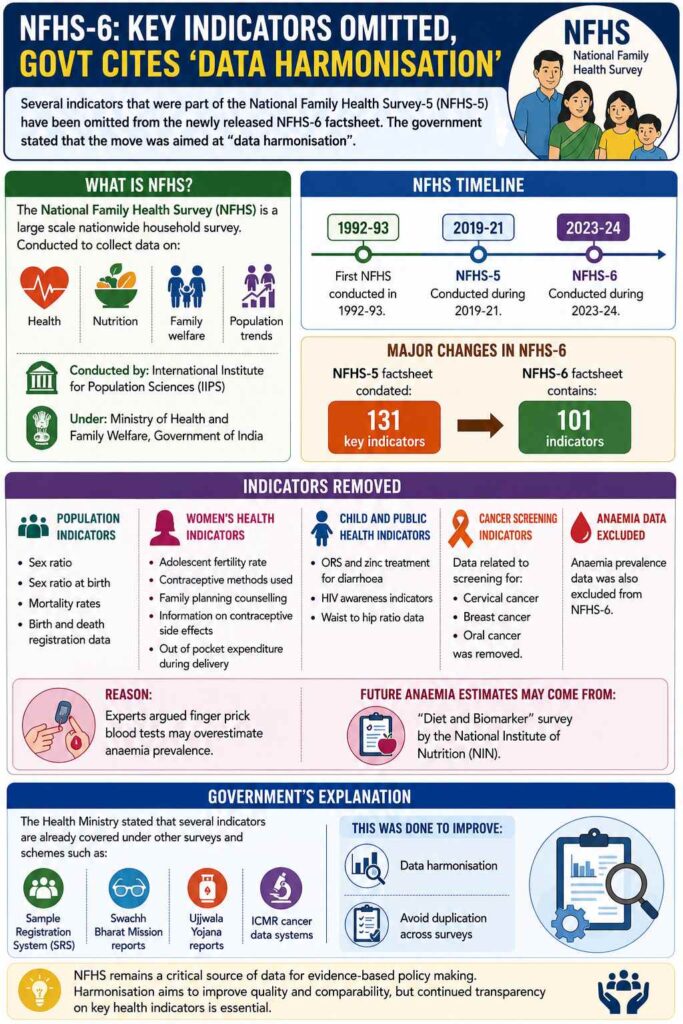
    Several indicators that were part of the National Family Health Survey-5 (NFHS-5) have been omitted from the newly released NFHS-6 factsheet. The government stated that the move was aimed at “data harmonisation”.

    What is NFHS?

    The National Family Health Survey (NFHS) is:

    • A large scale nationwide household survey.
    • Conducted to collect data on:
      • Health
      • Nutrition
      • Family welfare
      • Population trends.
    • Conducted by: International Institute for Population Sciences
    • Under: Ministry of Health and Family Welfare

    NFHS Timeline

    • First NFHS conducted in 1992-93.
    • NFHS-5 Conducted during 2019-21.
    • NFHS-6 Conducted during 2023-24.

    Major Changes in NFHS-6

    • NFHS-5 factsheet contained 131 key indicators.
    • NFHS-6 factsheet contains: 101 indicators.

    Indicators Removed

    Population Indicators

    • Sex ratio
    • Sex ratio at birth
    • Mortality rates
    • Birth and death registration data

    Women’s Health Indicators

    • Adolescent fertility rate
    • Contraceptive methods used
    • Family planning counselling
    • Information on contraceptive side effects
    • Out of pocket expenditure during delivery

    Child and Public Health Indicators

    • ORS and zinc treatment for diarrhoea
    • HIV awareness indicators
    • Waist to hip ratio data

    Cancer Screening Indicators

    Data related to screening for:

    • Cervical cancer
    • Breast cancer
    • Oral cancer
      was removed.

    Anaemia Data Excluded

    • Anaemia prevalence data was also excluded from NFHS-6.
    • Reason: Experts argued finger prick blood tests may overestimate anaemia prevalence.
    • Future anaemia estimates may come from: “Diet and Biomarker” survey by the National Institute of Nutrition.

    Government’s Explanation

    The Health Ministry stated that:

    • Several indicators are already covered under other surveys and schemes, such as:
      • Sample Registration System (SRS)
      • Swachh Bharat Mission reports
      • Ujjwala Yojana reports
      • ICMR cancer data systems.

    This was done to improve:

    • Data harmonisation
    • Avoid duplication across surveys.

    [2024] The total fertility rate in an economy is defined as:

    [A] the number of children born per 1000 people in the population in a year.

    [B] the number of children born to a couple in their lifetime in a given population.

    [C] the birth rate minus death rate.

    [D] the average number of live births a woman would have by the end of her child-bearing age.

  • EU Carbon Border Adjustment Mechanism (CBAM)

    Why in the news?

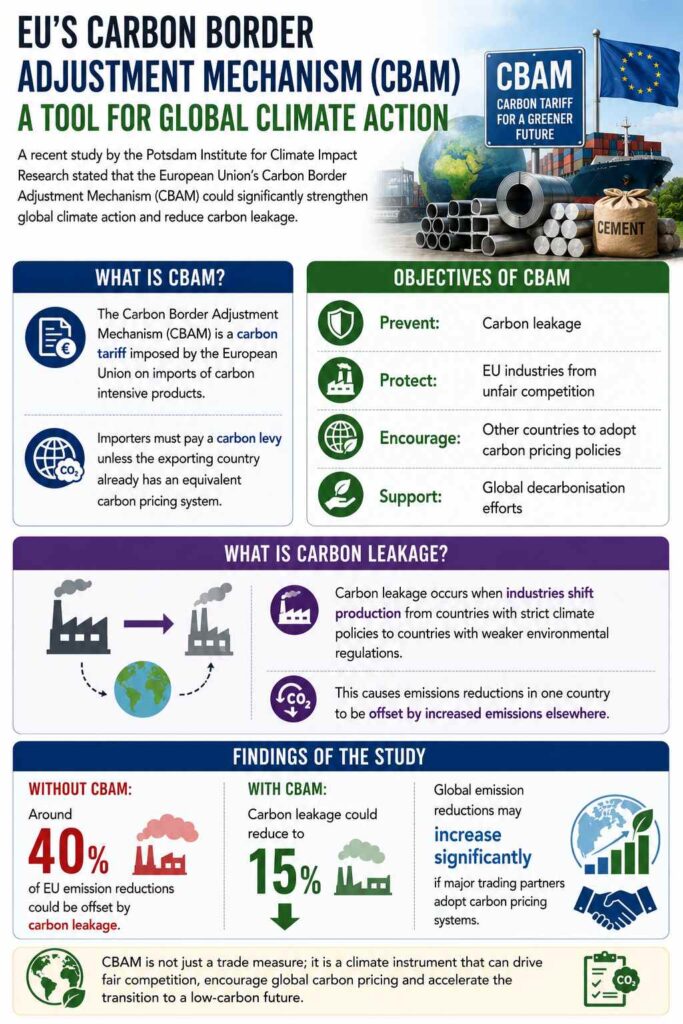
    A recent study by the Potsdam Institute for Climate Impact Research stated that the European Union’s Carbon Border Adjustment Mechanism (CBAM) could significantly strengthen global climate action and reduce carbon leakage.

    What is CBAM?

    The Carbon Border Adjustment Mechanism (CBAM) is:

    • A carbon tariff imposed by the European Union on imports of carbon intensive products.
    • Importers must pay a carbon levy unless the exporting country already has an equivalent carbon pricing system.

    Objectives of CBAM

    • Prevent: Carbon leakage
    • Protect: EU industries from unfair competition
    • Encourage: Other countries to adopt carbon pricing policies
    • Support: Global decarbonisation efforts

    What is Carbon Leakage?

    Carbon leakage occurs when:

    • Industries shift production from countries with strict climate policies to countries with weaker environmental regulations.
    • This causes emissions reductions in one country to be offset by increased emissions elsewhere.

    Findings of the Study

    • Without CBAM, Around 40% of EU emission reductions could be offset by carbon leakage.
    • With CBAM, Carbon leakage could be reduced to 15%.
    • Global emission reductions may increase significantly if major trading partners adopt carbon pricing systems.

    What is Carbon Pricing?

    Carbon pricing means:

    • Putting a monetary cost on carbon emissions to reduce greenhouse gas emissions.
    • Major forms: Carbon tax and Emissions Trading System (ETS)

    Criticism of CBAM

    Critics argue:

    • Developing countries may face higher export costs.
    • It may act as a trade barrier.
    • EU does not provide sufficient:
      • Climate finance
      • Technology support
        for industrial decarbonisation in poorer countries.

    [2023] Consider the following statements:
    Statement-I:Carbon markets are likely to be one of the most widespread tools in the fight against climate change.
    Statement-II:Carbon markets transfer resources from the private sector to the State
    Which one of the following is correct in respect of the above statements?

    [A] Both Statement I and Statement II are correct and Statement II is the correct explanation for Statement I

    [B] Both Statement I and Statement II are correct and Statement II is not the correct explanation for Statement I

    [C] Statement I is correct but Statements II is incorrect

    [D] Statement I is incorrect but Statement II is correct.

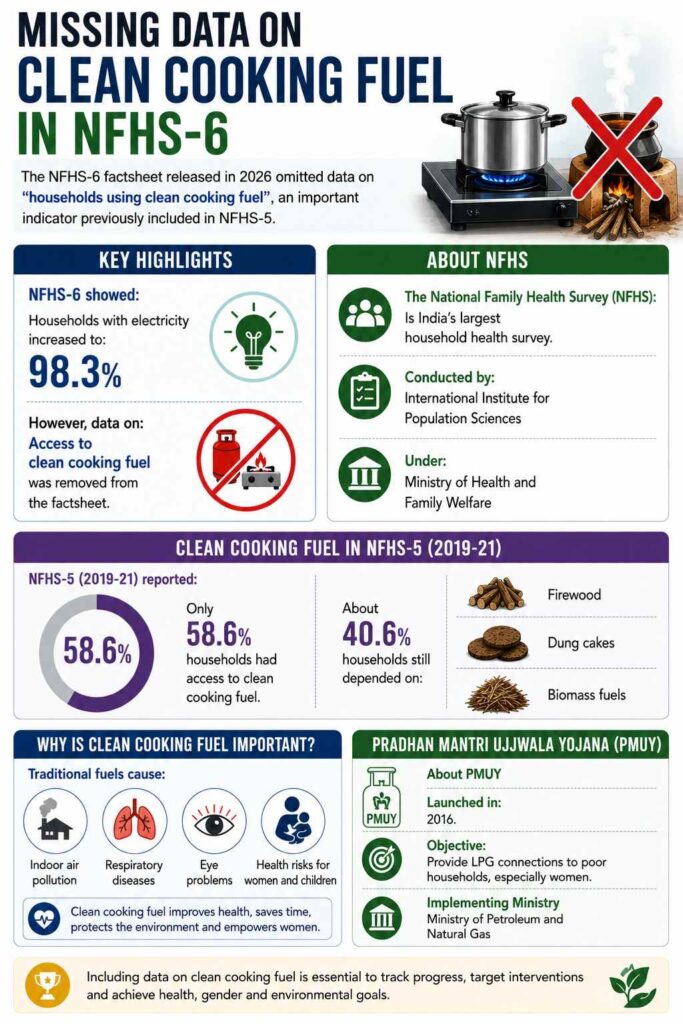
  • Missing Data on Clean Cooking Fuel in NFHS-6

    Why in the news?

    The NFHS-6 factsheet released in 2026 omitted data on “households using clean cooking fuel”, an important indicator previously included in NFHS-5.

    Key Highlights

    • NFHS-6 showed: Households with electricity increased to: 98.3%.
    • However, data on: Access to clean cooking fuel was removed from the factsheet.

    About NFHS

    The National Family Health Survey (NFHS):

    • Is India’s largest household health survey.
    • Conducted by: International Institute for Population Sciences
    • Under: Ministry of Health and Family Welfare

    Clean Cooking Fuel in NFHS-5

    NFHS-5 (2019-21) reported:

    • Only 58.6% households had access to clean cooking fuel.
    • About 40.6% households still depended on Firewood, Dung cakes, and Biomass fuels.

    [2019] Consider the following:
    1. Carbon monoxide
    2. Methane
    3. Ozone
    4. Sulphur dioxide
    Which of the above are released into the atmosphere due to the burning of crop/biomass residue?

    [A] 1 and 2 only

    [B] 2, 3 and 4 only

    [C] 1 and 4 only

    [D] 1, 2, 3 and 4

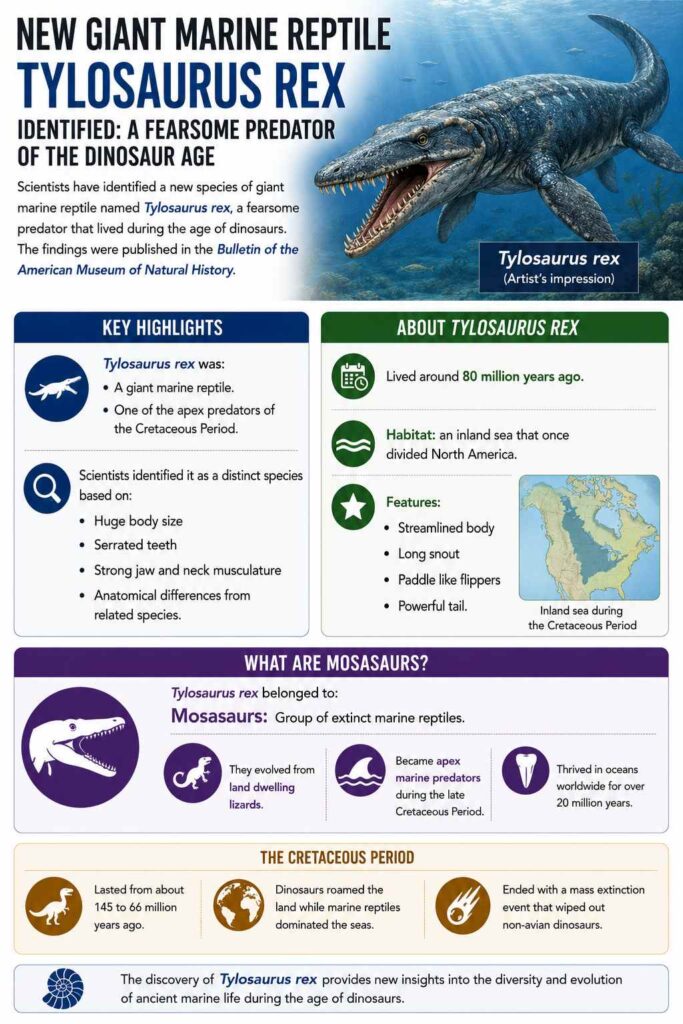
  • Tylosaurus rex – The “T. rex of the Sea”

    Why in the news?

    Scientists have identified a new species of giant marine reptile named Tylosaurus rex, a fearsome predator that lived during the age of dinosaurs. The findings were published in the Bulletin of the American Museum of Natural History.

    Key Highlights

    • Tylosaurus rex was:
      • A giant marine reptile.
      • One of the apex predators of the Cretaceous Period.
    • Scientists identified it as a distinct species based on:
      • Huge body size
      • Serrated teeth
      • Strong jaw and neck musculature
      • Anatomical differences from related species.

    About Tylosaurus rex

    • Lived around 80 million years ago.
    • Habitat: an inland sea that once divided North America.
    • Features:
      • Streamlined body
      • Long snout
      • Paddle like flippers
      • Powerful tail.

    What are Mosasaurs?

    Tylosaurus rex belonged to:

    • Mosasaurs: Group of extinct marine reptiles.
    • They evolved from Land dwelling lizards.
    • Became: Apex marine predators during the late Cretaceous Period.

    [2018] The term “sixth mass extinction/sixth extinction” is often mentioned in the news in the context of the discussion of

    A. Widespread monoculture practices in agriculture and large-scale commercial farming with indiscriminate use of chemicals in many parts of the world that may result in the loss of good native ecosystems.

    B. Fears of a possible collision of a meteorite with the Earth in the near future in the manner it happened 65 million years ago that caused the mass extinction of many species including those of dinosaurs.

    C. Large scale cultivation of genetically modified crops in many parts of the world and promoting their cultivation in other parts of the world which may cause the disappearance of good native crop plants and the loss of food biodiversity.

    D. Mankind’s over-exploitation/misuse of natural resources, fragmentation/loss of natural habitats, destruction of ecosystems, pollution and global climate change.

  • IIP Growth Slows to 4.9% in April 2026

    Why in the news?

    India’s industrial output, measured by the Index of Industrial Production (IIP), grew by 4.9% in April 2026, slower than 5.8% recorded in April 2025. The government also released a revised IIP series with a new base year of 2022-23.

    What is IIP?

    The Index of Industrial Production (IIP) measures:

    • Short term changes in industrial production in India.
    • Published monthly by:
      • Ministry of Statistics and Programme Implementation.

    It is an important indicator of:

    • Industrial performance
    • Economic activity
    • Manufacturing trends

    New IIP Series

    • Base year changed from: 2011-12 to 2022-23.
    • Index value for base year is taken as: 100.
    • New basket includes:
      • 1,042 products
      • 463 item groups.
    • Earlier series had:
      • 839 items
      • 407 item groups.

    Major Changes in the New Series

    The revised IIP has expanded coverage by including:

    • Gas supply
    • Water supply
    • Sewerage activities
    • Waste management activities

    Sectoral Performance

    • Mining and Quarrying: Output contracted by more than 5% in April 2026.
    • Manufacturing Grew by: 6.2%.
    • Manufacturing contributes nearly: 75% of IIP weight.

    [2015] In the ‘Index of Eight Core Industries’, which one of the following is given the highest weight?

    (a) Coal Production

    (b) Electricity generation

    (c) Fertilizer production

    (d) Steel production.

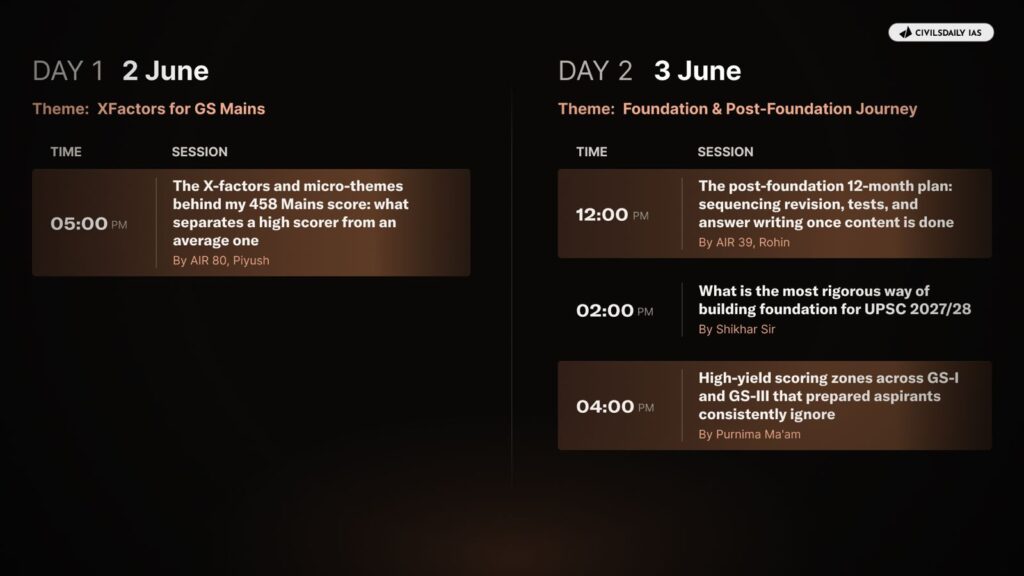
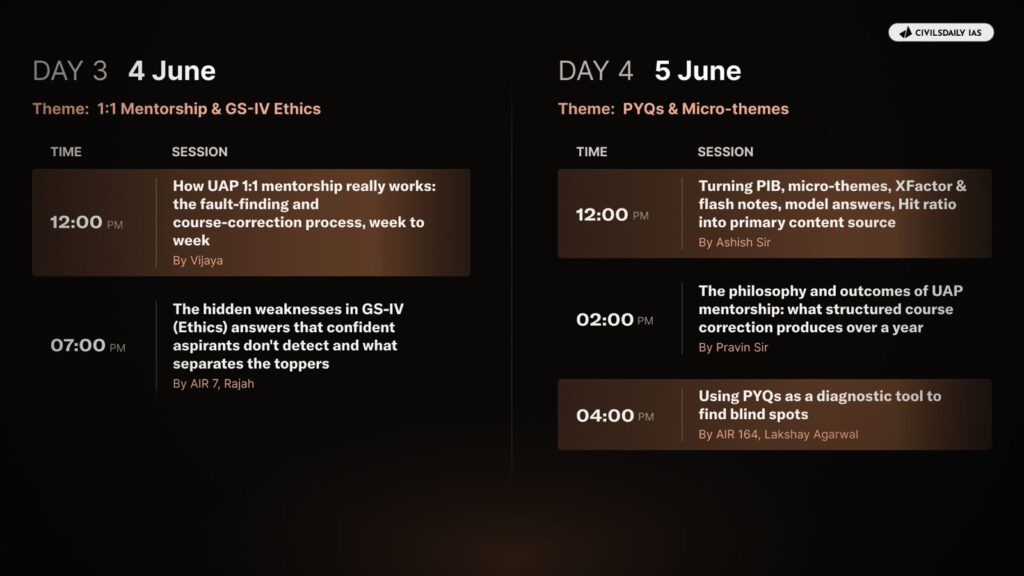
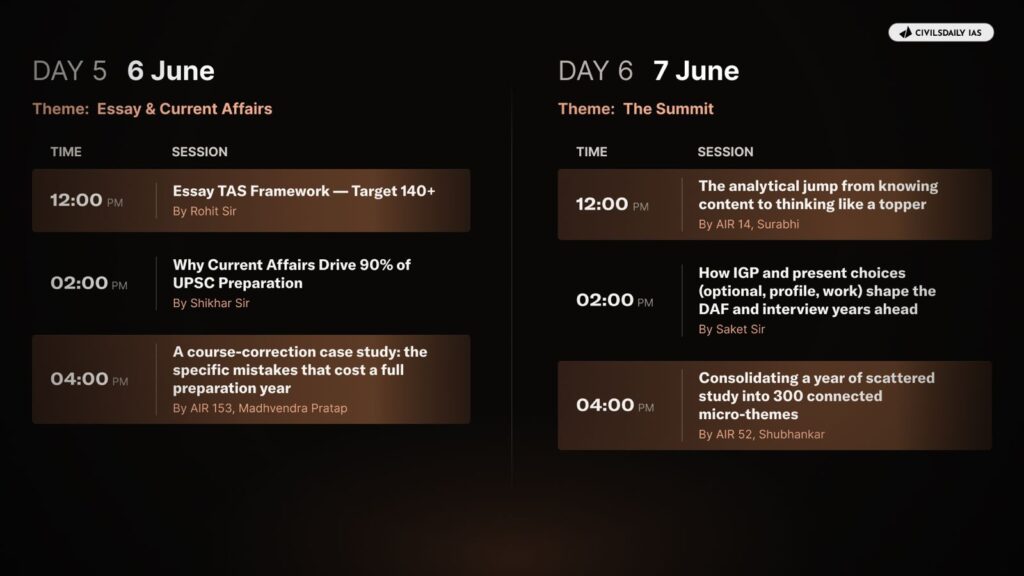
  • 🔴UAP CONCLAVE 2026 | Start Your UPSC Journey with Top Rankers and Expert Mentors | 15 LIVE SESSIONS | Live from 02nd June to 07th June(offline + online)

    🔴UAP CONCLAVE 2026 | Start Your UPSC Journey with Top Rankers and Expert Mentors | 15 LIVE SESSIONS | Live from 02nd June to 07th June(offline + online)

    Register for the session to get complete UPSC 2027 Prep Strategy


    Read about Civilsdaily’s UAP Conclave 2026

    Most UPSC aspirants spend years collecting resources, watching strategy videos, and changing plans.

    Very few understand what actually separates a rank holder from the thousands who remain stuck in the cycle of preparation.

    The UAP Conclave 2026 is designed to bridge that gap.

    Over 6 days, you’ll learn directly from UPSC rankers, mentors, and faculty who have not only cracked the exam but have also mentored hundreds of successful candidates. The focus is not on motivation. The focus is on systems, execution, mistakes, corrections, and the hidden X-factors behind consistent performance.

    What will you learn?

    1. The microthemes and X-factors behind high GS scores

    2. What separates a 450+ GS scorer from an average Mains candidate

    3. How to build a rigorous foundation for UPSC 2027/28

    4. The post-foundation 12-month plan for revision, answer writing, and test practice

    5. High-yield scoring areas in GS-I, GS-III, and Ethics that aspirants often ignore

    6. The actual process behind one-to-one mentorship and course correction

    7. Hidden weaknesses in Ethics answers that toppers identify early

    8. How to use PYQs as a diagnostic tool instead of just a question bank

    9. Converting Current Affairs, PIB, Microthemes, Flash Notes, and Model Answers into a powerful preparation ecosystem

    10. The TAS Framework for Essays and the path to 140+ marks

    11. Why Current Affairs drives almost every stage of UPSC preparation

    12. Real case studies of mistakes that cost aspirants an entire preparation year

    The sessions will be led by Civilsdaily’s in house mentors along with UPSC toppers who scored well in GS and Essay papers. They will be sharing the exact study plans, timelines, and writing methods they used in their own attempts.

    Learn From

    •AIR 7 Rajah Mohaideen
    • AIR 14 Surabhi Yadav
    • AIR 39 Rohin Kumar
    • AIR 52 Shubhankar Dhruv
    • AIR 80 Piyush
    • AIR 153 Madhavendra Pratap
    • AIR 164 Lakshay Agarwal

    Along with:

    • Shikhar Sir
    • Rohit Sir
    • Ashish Sir
    • Purnima Ma’am
    • Prayas Sir
    • Pravin Sir
    • Saket Sir

    Whether you are just starting your UPSC 2027 journey or looking to build a structured roadmap after the Foundation phase, these sessions will help you avoid common mistakes and understand what serious preparation actually looks like.

    By the end of the 6 day event, you will have a much clearer understanding of how to plan your UPSC preparation day by day, how to prioritize your topics using microthemes, and how to approach answer writing in a way that improves your score.

    Live from 02nd June to 07th June.

    Civilsdaily ,2nd floor(206), Apsara Arcade, Pusa Rd Next to Gate No.6 Karol Bagh, Metro, North Extn Area, Rajinder Nagar, New Delhi, Delhi 110060

    Join us, from 02nd June to 07th June.

    See you in UAP Conclave 2026


    Join us for a Zoom session from 02nd June to 07th June. This session is a must attend for you If you are attempting UPSC for the first time or have attempted earlier and now preparing for next year, then it is going to be a valuable session for you too.

    See you in the session”

    Register for the session for a complete in-depth UPSC Mains Prep


    In this Civilsdaily masterclass, you will get:

    1. A 45-minute deep dive on how to plan your UPSC strategy from the start to the end.
    2. How do first-attempt IAS Rankers get the most out of their one year prep?
    3. Insider tips that only the top IAS and IPS rankers know and apply to get rank.

    By the end, you’ll have razor-sharp clarity and a clear path to crack UPSC with confidence and near-perfect certainty. 

    Join UPSC session from 02nd June to 07th June.

    (Don’t wait—the next webinar won’t be until Mid June 26)


    These masterclasses are packed with value. They are conducted in private with a closed community. We rarely open these webinars for everyone for free. This time we are keeping it for 300 seats only.

    Ready to attend the UPSC Webinar?


    Not sure yet?

    We recommend you register here. It takes less than 10 seconds to register.

    • No spam! Once in a while, we’ll only send you high-quality exam-related content. 
    • We will inform you about the upcoming Masterclasses that might benefit you.
    • You can demand one free mentorship call from verified Civilsdaily mentors. 
    • You can always choose to unsubscribe. 

More posts