💥UPSC 2026, 2027, 2028 UAP Mentorship (March Batch) + Access XFactor Notes & Microthemes PDF

Search results for: “”

  • [pib] MnBi2S4: Multiferroic Material for Energy-Efficient Data Storage

    Introduction

    • Researchers have identified a unique mechanism of electric polarization via magnetic ordering in a novel mineral named “MnBi2S4”, which can be useful for energy-efficient data storage.

    About Magnetoelectric Multiferroics

    • This special class of materials is renowned for their rarity and unique properties, capable of exhibiting both magnetism and ferroelectricity simultaneously.
    • They find applications in advanced technology like spintronics, electronic memory devices, actuators, and switches.

    What is MnBi2S4?

    • Also known as mineral gratianite, it belongs to the ternary manganese chalcogenide family.
    • It showcases distinct magnetic structures, including a spin density wave, cycloidal, and helical spin structures.
    • Notably, the latter two spin structures induce ferro-electricity in the material.
    • MnBi2S4 is centro-symmetric and undergoes magnetic ordering at low temperatures (27, 23, and 21.5 Kelvins).

    Significance of the Study

    • This finding highlights the strong coupling between magnetism and electric polarization.
    • The unique mechanism, driven by magnetic frustration, represents a breakthrough in magnetoelectric coupling.
    • If the material can exhibit the same phenomena at room temperature, it could revolutionize data storage by reducing energy consumption during writing processes.
    • Additionally, these findings could aid in the development of a four-state logic memory system, providing additional degrees of freedom for device performance compared to current binary logic systems.
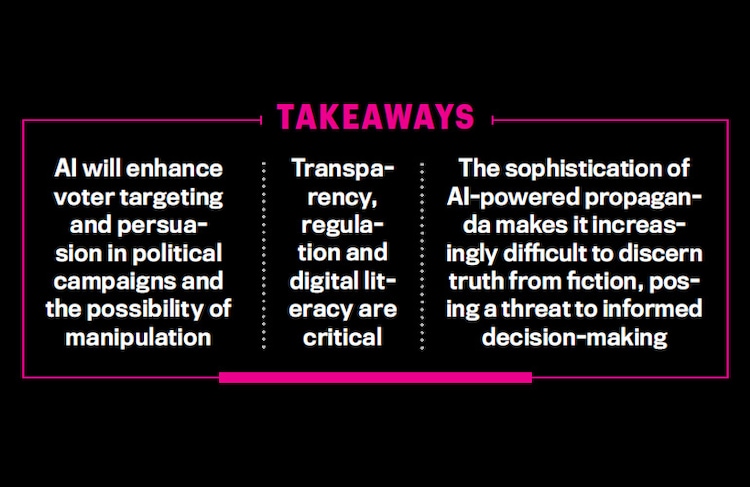
  • With elections in at least 83 countries, will 2024 be the year of AI freak-out?

    Fears grow over AI's impact on the 2024 election | The Hill

    Central Idea:

    The year 2024 is marked by a significant global exercise in democracy, with concerns arising over the impact of AI on elections. However, while efforts to regulate AI and address disinformation are underway, there are potential unintended consequences that may exacerbate existing challenges and concentrate power within the AI industry.

    Key Highlights:

    • Increased global engagement in elections in 2024 prompts worries about AI-driven disinformation.
    • Governments rush to regulate AI to combat disinformation, but unintended consequences may worsen existing issues.
    • Concentration of power within the AI industry may occur due to regulatory requirements, hindering competition and innovation.
    • Ethical and transparency guidelines for AI development face challenges due to differing values and priorities.
    • Democracy faces numerous challenges beyond AI, including political repression, violence, and electoral fraud.

    AI-driven elections, anyone? - India Today

    Key Challenges:

    • Balancing the need to regulate AI with potential unintended consequences that may worsen existing problems.
    • Addressing power concentration within the AI industry without stifling innovation and competition.
    • Establishing ethical guidelines for AI development amidst diverse societal values and priorities.
    • Ensuring meaningful transparency in AI systems through effective auditing mechanisms.
    • Anticipating future risks of AI in electoral processes and formulating proactive regulations.

    Main Terms:

    • AI (Artificial Intelligence)
    • Disinformation
    • Deepfakes
    • Regulation
    • Concentration of power
    • Ethical guidelines
    • Transparency
    • Electoral risks

    Important Phrases:

    • “Ultimate election year”
    • “Digital voter manipulation”
    • “AI bogeyman”
    • “Content moderation”
    • “Watermarking”
    • “Red-teaming exercises”
    • “Existential risks”
    • “Complex adaptive system”
    • “Toothless regulations”

    Quotes:

    • “Democracy has many demons to battle even before we get to the AI demon.”
    • “AI-sorcery may, on the margin, not rank among the biggest mischief-makers this year.”
    • “It is better that these well-intended regulators understand the unintended consequences of rushed regulations.”
    • “Voters in elections beyond 2024 will be grateful for such foresight.”

    Useful Statements:

    • Rushed regulations to combat AI-related electoral risks may exacerbate existing challenges.
    • Power concentration within the AI industry could hinder innovation and ethical oversight.
    • Ethical guidelines for AI development must consider diverse societal values and priorities.
    • Effective auditing mechanisms are crucial for ensuring transparency in AI systems.
    • Proactive regulations are needed to anticipate and mitigate future risks of AI in electoral processes.

    Examples and References:

    • Manipulated videos affecting political leaders’ images in Bangladesh and elsewhere.
    • Concentration of AI investments and influence in a few major companies.
    • Challenges faced by New York’s law requiring audits of automated employment decision tools.
    • Voluntary transparency mechanisms offered by companies like IBM and OpenAI.

    Facts and Data:

    • Close to half of the world’s population engaging in elections in 2024.
    • Three companies received two-thirds of all investments in generative AI in the previous year.
    • New York’s law on auditing automated employment decision tools found to be ineffective.
    • Over 83 elections taking place worldwide in 2024.

    Critical Analysis:

    Efforts to regulate AI in electoral processes must strike a delicate balance between addressing immediate risks and avoiding unintended consequences that may worsen existing challenges. Power concentration within the AI industry poses significant ethical and competitive concerns, while diverse societal values complicate the establishment of universal ethical guidelines. Ensuring transparency in AI systems requires robust auditing mechanisms and proactive regulatory measures to anticipate future risks.

    Way Forward:

    • Proceed cautiously with AI regulations to avoid exacerbating existing challenges.
    • Foster competition and innovation within the AI industry while addressing concerns about power concentration.
    • Engage diverse stakeholders to establish ethical guidelines that reflect societal values and priorities.
    • Implement effective auditing mechanisms to ensure transparency in AI systems.
    • Anticipate future risks of AI in electoral processes and formulate proactive regulations to mitigate them.
  • Recalibrating merit in the age of Artificial Intelligence

    Domains of Artificial Intelligence: Learning AI. - IABAC

    Central Idea:

    The concept of meritocracy, once heralded as a fair system for rewarding individuals based on their abilities and efforts, is facing significant challenges in the era of Artificial Intelligence (AI). While proponents argue for its intuitive fairness and potential for reform, critics point out its divisive consequences and perpetuation of inequalities. The introduction of AI complicates the notion of meritocracy by questioning traditional metrics of merit, exacerbating biases, and polarizing the workforce. Recalibrating meritocracy in the age of AI requires a nuanced understanding of its impact on societal structures and a deliberate rethinking of how merit is defined and rewarded.

    Key Highlights:

    • The critiques of meritocracy by thinkers like Michael Young, Michael Sandel, and Adrian Wooldridge.
    • The evolution of meritocracy from a force for progress to a system perpetuating new inequalities.
    • The disruptive impact of AI on meritocracy, challenging traditional notions of merit, exacerbating biases, and polarizing the workforce.
    • The opaque nature of AI algorithms and the concentration of power in tech giants posing challenges to accountability.
    • The potential for AI to set standards for merit in the digital age, sidelining smaller players and deepening existing inequalities.

    Key Challenges:

    • Reconciling the intuitive fairness of meritocracy with its divisive consequences and perpetuation of inequalities.
    • Addressing the disruptive impact of AI on traditional notions of merit and societal structures.
    • Ensuring transparency and accountability in AI algorithms to uphold the meritocratic ideal.
    • Mitigating the potential for AI to deepen existing socioeconomic disparities and sideline smaller players.

    Main Terms:

    • Meritocracy: A system where individuals are rewarded and advance based on their abilities, achievements, and hard work.
    • Artificial Intelligence (AI): Non-human entities capable of performing tasks, making decisions, and creating at levels that can surpass human abilities.
    • Social Stratification: The division of society into hierarchical layers based on social status, wealth, or power.
    • Biases: Systematic errors in judgment or decision-making due to factors such as stereotypes or prejudices.
    • Tech Giants: Large technology companies with significant influence and control over digital platforms and data.

    Important Phrases:

    • “Dystopian meritocratic world”
    • “Divisive consequences”
    • “Fluidity and contingency of merit”
    • “Hereditary meritocracy”
    • “Opaque nature of AI algorithms”
    • “Data hegemony”

    Quotes:

    • “Meritocracy fosters a sense of entitlement among the successful and resentment among those left behind.” – Michael Sandel
    • “Meritocratic systems are inherently subjective and can reinforce existing inequalities.” – Post-structuralists

    Useful Statements:

    • “The introduction of AI complicates the notion of meritocracy by questioning traditional metrics of merit and exacerbating biases.”
    • “Recalibrating meritocracy in the age of AI requires a nuanced understanding of its impact on societal structures and a deliberate rethinking of how merit is defined and rewarded.”

    Examples and References:

    • Michael Young’s satirical book “The Rise of the Meritocracy” (1958)
    • AI tool predicting pancreatic cancer three years before radiologists can diagnose it
    • The concentration of power in tech giants like Google, Facebook, and Amazon

    Facts and Data:

    • A recent paper published in Nature Medicine showed an AI tool predicting pancreatic cancer in a patient three years before radiologists can make the diagnosis.

    Critical Analysis:

    • The article provides a balanced view of the merits and critiques of meritocracy, incorporating insights from various thinkers and addressing the challenges posed by AI.
    • It highlights the potential for AI to exacerbate existing inequalities and challenges the traditional notion of meritocracy.
    • The critique of meritocracy from multiple perspectives enriches the analysis and provides a comprehensive understanding of its complexities.

    Way Forward:

    • Recalibrating meritocracy in the age of AI requires transparency, accountability, and a reevaluation of how merit is defined and rewarded.
    • Efforts should be made to mitigate the biases inherent in AI algorithms and ensure equitable access to technology.
    • Policies promoting access to education and training, particularly in high-skill fields, can help address the polarization of the workforce and reduce socioeconomic disparities.
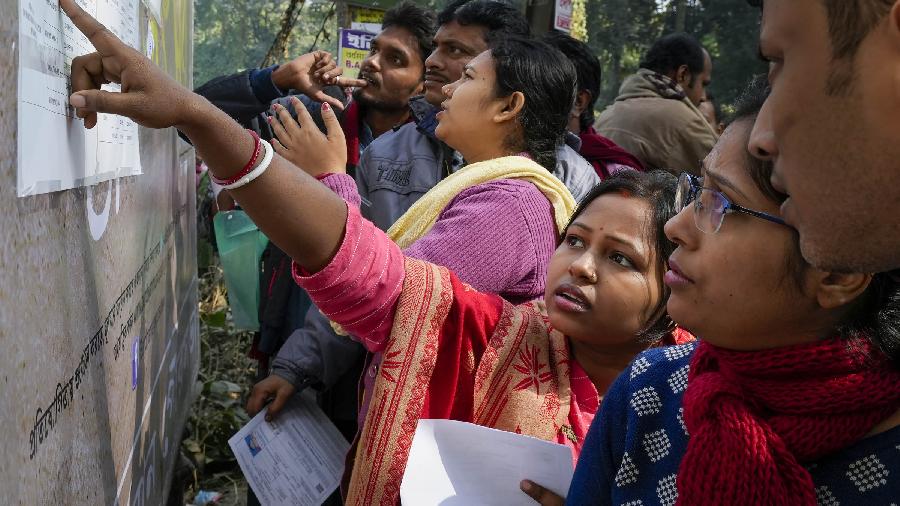
  • A ruling that gives primary school teaching a new slate

    Bratya Basu | Teachers' Eligibility Test exam: Education minister trashes report of question paper leak - Telegraph India

    Central Idea:

    The central idea of the article revolves around the recent Supreme Court ruling in India, which upheld the necessity of specialized qualifications for primary school teaching, emphasizing the significance of Diploma in Education (DEd), Diploma in Elementary Education (DElEd), or Bachelor of Elementary Education (BElEd) degrees over Bachelor of Education (B.Ed). The article highlights the implications of this decision on recruitment policies and the quality of primary education in the country.

    Key Highlights:

    • Different Requirements for Primary Teaching: Teaching young children in primary grades requires specialized skills in foundational literacy and numeracy, which cannot be adequately addressed by the B.Ed degree, designed for teaching older students. The Right to Education Act underscores the importance of appropriate qualifications for primary school teachers.
    • Discrepancies in Qualifications: Despite regulations, there are discrepancies in the qualifications of primary school teachers, with a significant portion holding B.Ed degrees instead of the required DEd, DElEd, or BElEd qualifications.
    • Challenges in Quality: The quality of teacher education programs varies, with government-funded institutions generally performing better than self-financed ones. Concerns exist regarding low mean scores, especially in mathematics, indicating a need for improvement in pedagogical content knowledge.
    • Government Support and Innovation: There is a call for government support and innovation in primary teacher education, including the expansion of successful programs like BElEd and the Integrated Teacher Education Programme (ITEP).

    Key Challenges:

    • Discrepancies in Qualifications: The prevalence of B.Ed holders in primary teaching roles highlights the challenge of aligning qualifications with the specific requirements of primary education.
    • Quality Disparities: Disparities in the quality of teacher education programs, particularly between government-funded and self-financed institutions, pose a challenge to ensuring consistently high standards of teacher preparation.
    • Limited Government Focus: The article criticizes the government’s focus on higher education faculty development rather than primary teacher preparation, potentially neglecting the crucial foundation of education.

    Main Terms:

    • Bachelor of Education (B.Ed)
    • Diploma in Education (DEd)
    • Diploma in Elementary Education (DElEd)
    • Bachelor of Elementary Education (BElEd)
    • Right to Education Act
    • Teacher Eligibility Test (TET)
    • District Institutes of Education and Training (DIETs)
    • Integrated Teacher Education Programme (ITEP)

    Important Phrases:

    • Foundational Literacy and Numeracy (FLN)
    • Teacher Eligibility Test (TET)
    • District Institutes of Education and Training (DIETs)
    • Integrated Teacher Education Programme (ITEP)
    • Pandit Madan Mohan Malaviya National Mission on Teachers & Teaching

    Quotes:

    • “Teaching these competencies has to be learnt by prospective primary schoolteachers, through specialized teacher education for this stage.”
    • “Almost all of us have forgotten how we learned to read or manipulate the number system.”
    • “Better students seem to prefer government-funded institutions.”
    • “The decision to become a teacher can also occur at different stages.”

    Examples and References:

    • The State of Teachers, Teaching and Teacher Education Report.
    • Analysis of Teachers Eligibility Test (TET) data from a particular state.
    • The success of programs like BElEd offered by Delhi University.
    • The announcement of the Integrated Teacher Education Programme (ITEP) and the Scheme of Pandit Madan Mohan Malaviya National Mission on Teachers & Teaching.

    Facts and Data:

    • 90% of teachers have some form of professional qualification.
    • Only 46% of teachers teaching primary grades have the DElEd (or equivalent) qualification.
    • 22% of primary school teachers in private schools have B.Ed degrees.
    • 4% of students enrolled in DElEd already have a B.Ed.
    • Only 14% of qualifying candidates in TET had a mean score of 60% or above.

    Critical Analysis:

    The article effectively critiques the discrepancy between qualifications and the requirements of primary education, highlighting the need for specialized training in foundational literacy and numeracy. It addresses disparities in teacher education quality and government focus, advocating for greater attention to primary teacher preparation. However, it could delve further into the socio-economic factors influencing qualification choices and explore potential solutions in more detail.

    Way Forward:

    • Strengthening government support for primary teacher education programs.
    • Expanding successful models like BElEd and ITEP.
    • Addressing quality disparities between institutions.
    • Implementing section-wise qualifying cut-off marks in TET.
    • Providing pathways for professional development for B.Ed holders aiming for primary teaching roles.
  • 1000-YO Mahavir Statue Found in Tamil Nadu

    mahavir

    Introduction

    • A 1,000-year-old stone statue of Thirthangara Mahavir has been found in Tamil Nadu at at Manavarayanendal near Thiruchuli in Virudhunagar district.

    Features of the Statue

    • There is a triple umbrella above the head of the statue, which has creepers carved on it.
    • It is flanked by sculptures of yakshas.
    • Based on the sculpture technique, it is assumed that the statue might belong to the 11th century AD.

    About Vardhaman Mahavir

    Description
    Birth 540 B.C.
    Birthplace Kundagrama village near Vaishali
    Family Background Belonged to the Jnatrika clan; father Siddharta was the head of the Jnathrika Kshatriya clan, and mother Trishala was a sister of Chetaka, the king of Vaishali.
    Renunciation Renounced home at the age of 30 to become an ascetic.
    Spiritual Practice Practiced austerity for 12 years.
    Attainment of Kaivalya Attained the highest spiritual knowledge called Kaivalya (conquered misery and happiness) at the age of 42.
    First Sermon Delivered his first sermon at Pava.
    Symbol Associated with the symbol of a lion.
    Missions Traveled to various regions including Koshala, Magadha, Mithila, Champa, etc.
    Passing Away Passed away at the age of 72 in 468 B.C. at Pavapuri in Bihar.
    Legacy Founded Jainism as it is known today; contributed significant teachings and principles to the religion.

    Everything you need to know about Jainism

    Description
    Origin Jainism gained prominence in the 6th century B.C. when Lord Mahavira propagated the religion.
    Founder Lord Mahavira, the 24th Tirthankara, is the central figure
    Tirthankaras
    • Jainism recognizes 24 Tirthankaras or great teachers
    • Rishabhanatha being the first and Mahavira the last.
    Meaning of “Jain” “Jain” is derived from “jina” or “jaina,” signifying the “Conqueror” or one who has conquered the inner enemies like attachment, aversion, and delusion.
    Main Principles Jainism emphasizes the Three Jewels or Triratna:

    1. Right Faith (Samyakdarshana),
    2. Right Knowledge (Samyakjnana), and
    3. Right Conduct (Samyakcharita).
    Five Doctrines Ahimsa (non-violence), Satya (truthfulness), Asteya (non-stealing), Aparigraha (non-attachment), and Brahmacharya (chastity) are the fundamental principles of Jainism.
    Concept of God
    • Jainism does not adhere to the concept of a creator God
    • Believes in the existence of liberated souls (Siddhas) who have attained spiritual perfection.
    Major Doctrines
    1. Anekantavada: Jain doctrine of non-absolutism, recognizing that truth can have multiple perspectives or facets.
    2. Syadvada: Jain doctrine stating that all judgments are conditional and true only from certain perspectives, expressed by the term “syat” (may be).
    Sects/Schools Jainism is divided into two major sects:

    1. Digambara (sky-clad) and
    2. Svetambara (white-clad)
    Spread
    • Jainism spread gradually into regions where Brahmanical influence was weak,
    • Received royal patronage from rulers like Chandragupta Maurya
    Literature Jain literature comprises:

    1. Agama (canonical) texts, which include the direct teachings of Mahavira, and
    2. Non-agama (commentaries and elaborations) works, such as the Acaranga Sutra.
    Architecture
    • Temples, caves (layana/gumphas), statues, and ornamental pillars (manastambha), exhibiting intricate designs and religious motifs.
    • Notable Jain architecture in India includes the Dilwara Temples in Mount Abu, Rajasthan, and the Girnar and Palitana Temples in Gujarat.
    • These structures exemplify intricate craftsmanship and religious symbolism.
    Jain Councils Two significant Jain councils were held for compiling and preserving Jain scriptures and teachings:

    1. First Jain Council at Pataliputra (3rd century B.C.) and
    2. Second Jain Council at Vallabhi (512 A.D.)
    Difference from Buddhism
    • Acknowledgment of a permanent self (atman),
    • Acceptance of the varna system,
    • Belief in the concept of a soul (jiva), and
    • Advocacy of extreme asceticism ex. Santhara/Sallekhana
    Thoughts on Rebirth
    Acaranga Sutra: Jainism teaches the doctrine of rebirth (samsara) and various realms of existence (lokas) based on karma, with souls cyclically transmigrating through different life forms.
  • INSAT-3DS launch: The Naughty Boy of ISRO

    Introduction

    • The Indian Space Research Organisation (ISRO) is set to launch its meteorological satellite INSAT-3DS aboard the spacecraft GSLV F14.

    INSAT-3DS: Mission Objectives

    • Continuity of Services: The mission seeks to continue and enhance the services provided by existing operational satellites like INSAT-3D and INSAT-3DR.
    • Meteorological Observations: INSAT-3DS will facilitate advanced meteorological observations, land and ocean surface monitoring, and weather forecasting.
    • Disaster Warning: It will play a critical role in disaster warning systems, aiding in timely alerts and response efforts.
    • Satellite-aided Research and Rescue Services (SAR): Additionally, the satellite will support SAR operations, contributing to enhanced search and rescue capabilities.

    Significance

    • This marks the 16th space mission for the Geosynchronous Satellite Launch Vehicle (GSLV), emphasizing India’s progress in space technology.
    • INSAT-3DS aims to be deployed into the Geosynchronous Transfer Orbit (GTO), funded entirely by the Ministry of Earth Sciences, signifying a significant step in India’s space advancements.
    • After around 18 minutes of launch, the satellite will be injected in a 36,647 km x 170 km elliptical orbit.

    Why called as Naughty Boy?

    • Failure: GSLV F14 has faced challenges in the past, earning the moniker “naughty boy” within the Indian space programme due to its history of encountering problems.
    • Probability: With a failure rate of 40%, GSLV F14 has experienced issues in six out of its fifteen missions to date.
  • Collapse of the Gulf Stream System

    gulf stream

    Central Idea

    • Recent research warns that the Gulf Stream System, known as the Atlantic Meridional Overturning Circulation (AMOC), faces a critical threat of collapse due to unabated global carbon emissions.
    • If left unchecked, this collapse could occur between 2025 and 2095, with a central estimate of 2050.

    What is Gulf Stream System?

    Description
    Origin Begins in the Gulf of Mexico, merging warm waters from the Caribbean Sea and Gulf of Mexico.
    Flow Flows northward along the eastern coast of the United States.
    Current Carries warm waters from the tropics towards higher latitudes.
    Speed and Volume Swift ocean currents with speeds of 2 to 5 miles per hour, transporting 30 million cubic meters per second.
    Function Redistributes heat towards the North Atlantic region, influencing climate and weather patterns.
    Climate Impact Moderates the climate of Western Europe, keeping it relatively warmer than other regions at similar latitudes.
    Interaction with Atmosphere Releases heat and moisture, influencing weather and precipitation.
    Importance for Marine Life Supports diverse marine life, serving as a migratory route for fish and marine mammals.

    Gulf Stream’s Vulnerability

    • Gulf Stream, currently at its feeblest point in 1,600 years, is grappling with the consequences of global heating.
    • Alarming signals of a tipping point were already observed back in 2021.
    • Past collapses during ice ages have triggered rapid temperature shifts of up to 10 degrees Celsius in just a few decades, underlining the immense climatic impact it holds.

    Implications of Collapse

    The potential collapse of Gulf Stream could lead to dire consequences worldwide, including:

    • Disrupted Rainfall Patterns: Billions of people in regions like India, South America, and West Africa, reliant on these patterns for food production, would face food insecurity.
    • Intensified Storms and Colder Temperatures: Europe would experience increased storm activity and colder temperatures.
    • Rising Sea Levels: The eastern coast of North America would be at risk of rising sea levels, posing threats to coastal communities.
    • Endangered Ecosystems: The Amazon rainforest and Antarctic ice sheets could face severe endangerment.
  • Discussions to lower CRR on Green Deposits

    Introduction

    • State Bank of India (SBI) is in talks with the Reserve Bank of India (RBI) to reduce the cash reserve ratio (CRR) requirement on green deposits.

    What are Green Deposits?

    • Definition: Green deposits are fixed-term investments tailored for individuals and entities seeking to support environmentally friendly initiatives.
    • ESG Investing: These deposits align with the principles of Environmental, Social, and Governance (ESG) investing, reflecting a growing trend towards sustainable finance.
    • Utilization: Funds from green deposits are directed towards projects promoting renewable energy, clean transportation, pollution control, green infrastructure, and sustainable water management.

    RBI Framework for Green Deposits

    • Preventing Greenwashing: The RBI’s framework ensures transparency in environmental claims associated with green deposits.
    • Deposit Options: Banks offer green deposits denominated in rupees, with choices between cumulative or non-cumulative options.
    • Applicability: Scheduled commercial banks, small finance banks, non-banking financial companies (NBFCs), and housing finance companies (HFCs) must comply with this framework.
    • Eligibility: Both corporate entities and individual customers can invest in green deposits, contributing to environmentally sustainable initiatives.
    • Allocation: Funds mobilized through green deposits are directed towards sectors such as renewable energy, waste management, and afforestation.
    • Restrictions: Lenders are prohibited from channelling green deposit funds into sectors like fossil fuels, nuclear power, or tobacco.
    • Verification: Independent Third-Party Verification is conducted annually to assess the allocation and impact of funds raised through green deposits.
    • Oversight: Lenders are required to review the impact of funds lent for green finance activities on an annual basis.
    • Penalties: There are no penalties for underutilization of funds raised through green deposits, providing flexibility to financial institutions.

    Distinguishing Green Deposits from Normal Deposits

    • Project Allocation: Green deposits allocate funds to specific environmentally friendly projects, unlike regular deposits.
    • Interest Rates: Interest rates on green deposits are determined by lenders and are currently comparable to those offered on conventional deposits.

    Back2Basics: Cash Reserve Ratio (CRR)

    • Banks are mandated to maintain a certain portion of their deposits and specific liabilities in liquid cash with the RBI.
    • CRR serves as a crucial tool in the RBI’s arsenal for managing liquidity in the economy and acts as a safety net during times of banking stress.
    • Currently, banks are required to uphold 4.5% of their Net Demand and Time Liabilities as CRR with the RBI.
    • Incremental-CRR was introduced on August 10, 2023, as a temporary measure by RBI to absorb surplus liquidity.
    • Banks were required to maintain an I-CRR of 10% on the increase in their Net Demand and Time Liabilities (NDTL) between May 19, 2023, and July 28, 2023.
    • It came into effect from the fortnight starting August 12, 2023.
    • ICRR is employed during periods characterized by excess liquidity in the financial system.
  • Explained: EU’s Digital Services Act (DSA)  

    dsa

    Introduction

    • The Digital Services Act (DSA) was passed by the European Parliament in July 2022, aiming to enhance online safety and transparency for users within the European Union (EU).
    • While initially applying to major platforms like Facebook and TikTok, the DSA now extends its regulations to all platforms except the smallest ones.

    Understanding the Digital Services Act (DSA)

    • Purpose: The DSA seeks to create a safer and more transparent online environment by regulating platforms offering goods, services, or content to EU citizens.
    • Key Provisions:
      1. Removal of Illegal Content: Platforms are required to prevent and remove illegal or harmful content such as hate speech, terrorism, and child abuse.
      2. User Reporting: Platforms must provide users with mechanisms to report illegal content.
      3. Ad Targeting Restrictions: Criteria like sexual orientation or political beliefs cannot be used for targeted advertising, with additional protections for children against excessive or inappropriate ads.
      4. Algorithm Transparency: Platforms must disclose how their algorithms function and influence content display.
    • Stricter Regulations for Large Platforms: Platforms reaching more than 10% of the EU population are subject to additional requirements, including data sharing, crisis response cooperation, and external audits.

    Implications for Non-EU Regions

    • Global Standard: While implemented by the EU, the DSA aims to set a global benchmark for online intermediary liability and content regulation, potentially influencing policies in other regions.
    • Consistency in Policies: Platforms may adopt DSA-compliant changes universally to streamline operations, leading to broader effects beyond the EU.
    • Example of Impact: The DSA’s influence extends beyond the EU, as seen in the standardization of features like USB Type-C ports on devices like the upcoming iPhone 15 series.

    Motivation behind DSA Implementation

    • Addressing Evolving Platform Dynamics: The DSA replaces outdated regulations to address the changing landscape of online platforms, emphasizing the need for improved consumer protection.
    • Tackling Risks and Abuses: Major platforms have become quasi-public spaces, posing risks to users’ rights and public participation, prompting the need for stricter regulations.
    • Fostering Innovation and Competitiveness: By creating a better regulatory environment, the DSA aims to promote innovation, growth, and competitiveness while supporting smaller platforms and start-ups.

    Affected Online Platforms and Compliance Measures

    • Large Platforms: Identified platforms like Facebook, Google, Amazon, and others must comply with DSA regulations.
    • Compliance Initiatives:
      • Google: Enhancing transparency reporting and expanding data access to researchers.
      • Meta: Expanding its Ad Library and providing users with control over personalization.
      • Snap: Offering opt-out options for personalized feeds and limiting personalized ads for younger users.

    Enforcement and Penalties

    • Non-compliant platforms face penalties of up to 6% of their global revenue.
    • The Digital Services Coordinator and the Commission have authority to demand immediate actions from non-compliant platforms.
    • Repeat offenders could face temporary bans from operating in the EU.

    Conclusion

    • The implementation of the Digital Services Act marks a significant step toward enhancing online safety and transparency within the EU.
    • While initially targeting major platforms, its implications extend globally, setting standards for intermediary liability and content regulation.
  • Global Pulse Confederation (GPC) held in New Delhi

    Introduction

    • The Global Pulse Confederation (GPC) has initiated the three-day convention — Pulses 24 — in New Delhi, India.

    About Global Pulse Confederation (GPC)

    Description
    Formation Founded in 2016 through the merger of the Global Pulse Confederation (GPC) and the International Starch Institute (ISI).
    Headquarters Dubai, United Arab Emirates.
    Mission Represents the global pulse industry, aiming to promote the sustainable growth of the pulse industry worldwide.
    Focus Areas
    • Advocating for policies supporting the pulse industry’s interests.
    • Providing resources and support to pulse industry stakeholders.
    • Facilitating research and innovation in pulse production and utilization.
    Membership Open to businesses, organizations, and individuals involved in the pulse industry, including growers, processors, traders, and researchers.
    India’s Connect India, being a major producer and consumer of pulses, actively participates in the GPC and holds membership status, contributing to the organization’s objectives.

    Key Highlights from Pulses 24 Convention

    • Production Growth: Pulses production in India has increased by 60% over the past decade, reaching 270 lakh tonnes in 2024 from 171 lakh tonnes in 2014.
    • Partnership Goals: Mr. Goyal emphasized the partnership between NAFED and GPC, aiming to position pulses as a vital dietary component not only in India but also globally.
    • Minimum Support Price (MSP): The Centre ensures an MSP offering 50% over the actual cost of production to farmers, resulting in attractive returns on investment. Significant increases in MSP for various pulses were highlighted, reaching as high as 117% in masoor and 90% in moong over the past decade.
    • Self-Sufficiency by 2027: India’s progress towards self-reliance in chickpeas and other pulses, with efforts focused on achieving self-sufficiency in all pulses by 2027. Initiatives include the supply of new seed varieties and the expansion of tur and black gram cultivation.
    • Global Knowledge Sharing: GPC president emphasized India’s potential to benefit from the conference by exchanging best practices and technological advancements in pulse cultivation from other countries.
    • Focus on Smallholding Farmers: Pulses are noted for their soil benefits and nutritional value, particularly beneficial for smallholding farmers.
  • [pib] Sangam: Digital Twin Initiative

    sangam

    Introduction

    • Department of Telecommunications (DoT) has introduced the ‘Sangam: Digital Twin’ initiative, inviting Expressions of Interest (EoI) from industry pioneers, startups, MSMEs, academia, innovators, and forward-thinkers.

    What is Digital Twin Technology?

    • A digital twin is a digital representation of a physical object, person, or process, contextualized in a digital version of its environment.
    • Digital twins can help an organization simulate real situations and their outcomes, ultimately allowing it to make better decisions.

    About Sangam: Digital Twin Initiative

    • Context: The initiative aligns with the technological advancements of the past decade in communication, computation, and sensing, in line with the vision for 2047.
    • Proof of Concept (PoC) in Two Stages: The initiative will be distributed in two stages, conducted in one of India’s major cities.
      1. First Stage: An exploratory phase focusing on clarifying horizons and creative exploration to unleash potential.
      2. Second Stage: A practical demonstration of specific use cases, generating a future blueprint for collaboration and scaling successful strategies in future infrastructure projects.
    • Objectives:
      1. Demonstrate practical implementation of innovative infrastructure planning solutions.
      2. Develop a model framework for facilitating faster and more effective collaboration.
      3. Provide a future blueprint for scaling and replicating successful strategies in future infrastructure projects.

    Features

    • Sangam: Digital Twin represents a collaborative leap towards reshaping infrastructure planning and design.
    • It integrates 5G, IoT, AI, AR/VR, AI native 6G, Digital Twin, and next-gen computational technologies, fostering collaboration among public entities, infrastructure planners, tech giants, startups, and academia.
    • Sangam brings all stakeholders together, aiming to translate innovative ideas into tangible solutions, bridging the gap between conceptualization and realization, and paving the way for groundbreaking infrastructure advancements.
  • In news: Nohar Irrigation Project

    nohar

    Introduction

    • The Nohar irrigation project, supplying water to the agricultural fields in Hanumangarh district of Rajasthan, is getting a boost with the repairing of Ferozepur feeder in neighbouring Punjab.

    About Nohar Irrigation Project

    Description
    Location Located in the Nohar region of the Hanumangarh district in the state of Rajasthan, India.
    Purpose To improve irrigation facilities in the region, thereby increasing agricultural productivity and supporting the livelihoods of local farmers.
    Irrigation Methods Canal irrigation and the construction of check dams, reservoirs, and water storage facilities.
    Water Source Indira Gandhi Canal
    Rivers Situated near the Ghaggar-Hakra River

    A seasonal river originating in the Shivalik Hills


    Back2Basics: Indira Gandhi Canal

    Description
    Origin Harike Barrage, Punjab
    History Conceived by hydraulic engineer Kanwar Sain in the late 1940s, construction began in 1960
    Length 612 km

    Longest canal in India

    Rivers Utilizes water from the Sutlej, Beas, and Ravi rivers
    Location Punjab, Haryana, and Rajasthan
    Purpose Irrigation and water supply
    Renaming Renamed from Rajasthan Canal to Indira Gandhi Canal in 1984 after the assassination of Prime Minister Indira Gandhi
  • New Marine Species: Parhyale Odian from Chilika Lake

    Introduction

    • Researchers at Berhampur University in Odisha have made a remarkable discovery, unveiling a new species of marine amphipod from Chilika Lake, Asia’s largest brackish water lagoon on India’s east coast.

    About Parhyale Odian

    • Parhyale odian is a newly discovered species of marine amphipod.
    • It belongs to the genus Parhyale and was found in Chilika Lake, Odisha, India.
    • The species was named after the native language of Odisha, Odia.
    • Its discovery raises the global species count within the genus Parhyale to 16.
    • It is approximately eight millimeters in length and brown in color.
    • Parhyale odian possesses 13 pairs of legs.
    • Its distinguishing feature is a stout robust seta on the surface of the propodus of the male gnathopod.
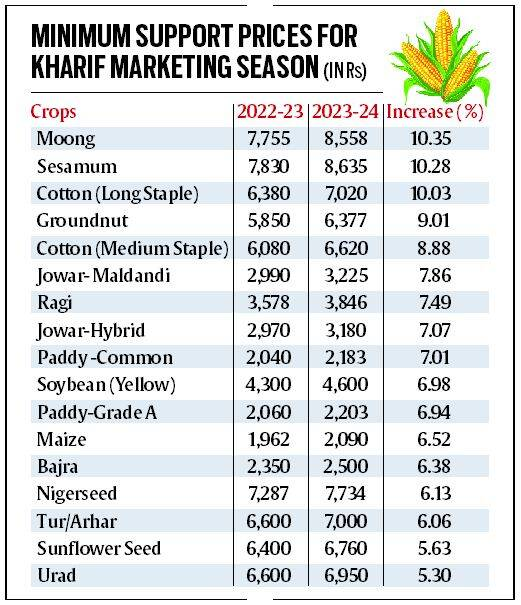
  • The cost of legal MSP is greatly exaggerated

    Centre Sets Minimum Support Price for Kharif Crops

    Central Idea:

    Farmers in India are demanding a legal guarantee for Minimum Support Prices (MSP) to stabilize agricultural commodity prices and ensure their livelihoods. Despite the longstanding demand and political consensus, successive governments have been hesitant to implement this, primarily due to concerns about fiscal costs. However, the actual costs and benefits of such a guarantee are often misunderstood, leading to fear mongering and misconceptions about its implications.

    Key Highlights:

    • Farmers’ demands for a legal guarantee for MSP stem from the need for stability in agricultural commodity prices to protect their incomes.
    • MSP is a mechanism to ensure price stability for essential agricultural commodities, but its implementation is limited, mainly focusing on rice and wheat.
    • Misconceptions about the fiscal costs of MSP guarantee have hindered its implementation, despite political consensus and support from various parties and unions.
    • The cost of procuring agricultural produce is often misconstrued, with the majority being a subsidy to consumers rather than to farmers.
    • A guaranteed MSP offers an opportunity to rectify imbalances in the MSP and procurement system, promoting regional diversification and crop expansion.
    • Neglect of the agrarian economy has led to declining real incomes and wages for farmers, highlighting the urgency of reforming the MSP system.

    Key Challenges:

    • Misunderstanding and fear mongering about the fiscal costs and implications of implementing a legal guarantee for MSP.
    • Limited implementation of MSP, primarily focusing on rice and wheat, leaving other crops and regions underserved.
    • Neglect of the agrarian economy leading to declining real incomes and wages for farmers.
    • Political hesitancy to implement MSP guarantee despite consensus and support from various stakeholders.
    • Lack of comprehensive understanding of the benefits of MSP guarantee in stabilizing agricultural commodity prices and reviving the rural economy.

    Main Terms:

    • Minimum Support Prices (MSP)
    • National Food Security Act (NFSA)
    • Price Stability
    • Market Intervention
    • Agricultural Commodity Prices
    • Fiscal Costs
    • Marketable Surplus
    • Procurement System
    • Agrarian Economy
    • Regional Diversification

    Important Phrases:

    • Legal guarantee for MSP
    • Fear mongering and misconceptions
    • Fiscal requirements
    • Price volatility
    • Market intervention
    • Income protection
    • Regional imbalances
    • Declining real incomes
    • Rural economy revival
    • Comprehensive reform

    Quotes:

    • “A guaranteed MSP may not solve the farmers’ problems. But it offers a good opportunity to rectify the imbalances in the MSP and procurement system.”
    • “Protecting the income of farmers will help revive the rural economy at a time when it’s struggling with deficient demand and rising inflation.”
    • “Misconceptions about the fiscal costs of MSP guarantee have hindered its implementation, despite political consensus and support from various parties and unions.”

    Anecdotes:

    • The article references the fear mongering and misconceptions similar to those observed during the enactment of the National Food Security Act and the National Rural Employment Guarantee Act.
    • It highlights the success of MSP implementation for rice and wheat during the last two years, where market prices were higher than MSP.

    Useful Statements:

    • “Despite political consensus, successive governments have dithered on legalizing this mechanism, primarily due to the fear of excessive fiscal requirements.”
    • “A guaranteed MSP offers an opportunity to rectify the imbalances in the MSP and procurement system, promoting regional diversification and crop expansion.”
    • “Protecting the income of farmers will help revive the rural economy, particularly during times of deficient demand and rising inflation.”

    Examples and References:

    • Reference to the successful implementation of MSP for rice and wheat during the last two years, despite market prices being higher than MSP.
    • Comparison with other countries where similar mechanisms exist to stabilize agricultural commodity prices.
    • Mention of the fear mongering and misconceptions observed during the enactment of previous agricultural legislations like the National Food Security Act.

    Facts and Data:

    • Government procurement of wheat in 2022 was only 19 million tonnes against a target of 44 million tonnes.
    • In 2023, government procurement of rice and wheat was 26 million tonnes against a target of 35 million tonnes.
    • Reference to the cost of procuring agricultural produce being misconstrued, with the majority being a subsidy to consumers rather than to farmers.

    Critical Analysis:

    The article provides a comprehensive analysis of the demands of farmers for a legal guarantee for MSP, highlighting the misconceptions and challenges surrounding its implementation. It emphasizes the importance of rectifying imbalances in the MSP and procurement system to promote regional diversification and crop expansion. However, it could further delve into the specific policy measures needed to address these challenges and provide a more detailed analysis of the potential benefits of implementing a guaranteed MSP.

    Way Forward:

    • Implementing a legal guarantee for MSP to ensure stability in agricultural commodity prices and protect farmers’ incomes.
    • Rectifying imbalances in the MSP and procurement system to promote regional diversification and crop expansion.
    • Addressing misconceptions and fear mongering surrounding the fiscal costs and implications of MSP guarantee through public awareness campaigns and comprehensive policy discussions.
    • Engaging with stakeholders, including farmers’ unions, political parties, and policymakers, to formulate and implement effective MSP policies that address the needs and concerns of all parties involved.
    • Investing in rural infrastructure, storage facilities, and crop diversification programs to strengthen the agrarian economy and revitalize rural communities.
  • Derek O’Brien writes: How BJP government’s Data Fails Rekha, Kavita, and Mohan

    What is an Interim Budget - Oneindia News

    Central Idea:

    The article critiques the recent interim budget session of Parliament, highlighting the discrepancy between the government’s rhetoric and the lived realities of everyday Indians. Through the stories of Rekha, Kavita, and Mohan, it exposes the failure of government schemes like Ayushman Bharat, food subsidies, and employment initiatives to address the fundamental issues facing citizens.

    Key Highlights:

    • The government’s self-aggrandizing adjectives during the budget session are criticized for being unsubstantiated by facts.
    • The article delves into the lives of ordinary Indians to reveal the truth behind government data.
    • Through scenarios, it demonstrates how government schemes often fail to provide adequate healthcare, nutrition, and employment opportunities.
    • The suspension of a senior professor behind a damning health report raises questions about intellectual honesty regarding data.
    • The Global Hunger Index ranking and reports from international organizations highlight India’s challenges in food security.
    • Unemployment rates and the plight of educated youth like Mohan illustrate the failures in job creation and protection.

    Key Challenges:

    • Inadequate investment in healthcare, leading to poor quality and inaccessible services for millions.
    • Subsidized food options lack nutritional value, exacerbating hunger and malnutrition.
    • Job scarcity and lack of protection for workers, pushing individuals to precarious employment or even dangerous situations abroad.
    • Discrepancies between government claims and ground realities, highlighting issues of transparency and accountability.

    Main Terms:

    • Ayushman Bharat scheme
    • NFHS (National Family Health Survey)
    • Global Hunger Index
    • Gig economy
    • Unemployment rate
    • Food subsidies

    Important Phrases:

    • “Data stored with government hospitals under the Ayushman Bharat scheme is riddled with errors.”
    • “The suspension of the IIPS Director shortly after the release of the NFHS report.”
    • “India ranked out of countries in the Global Hunger Index.”
    • “Mohan finds himself among the percent of graduates under years of age who are unemployed.”
    • “A packet of rice costs more while dal costs more than before.”

    Quotes:

    • “The voices of Kavita, Rekha, and Mohan did not find a place in the Prime Minister’s marathon monologue in Parliament.”
    • “Every youth believes that they can cement their job position with hard work and skills.”
    • “Reality gets worse for Indian women like Rekha.”
    • “Three out of four Indians cannot afford a healthy diet.”

    Anecdotes:

    • Rekha’s struggle to access healthcare at a government hospital.
    • Kavita’s dilemma between subsidized but low-nutrient food and higher quality groceries.
    • Mohan’s choice between unemployment at home or precarious work abroad.

    Useful Statements:

    • “The numbers either misidentify the dead, incorrectly record surgery details or entirely leave out beneficiaries from the list.”
    • “Half the country does not turn to government facilities in their time of need.”
    • “A job in a war zone is his only option.”
    • “Mohan has not found employment for months.”

    Examples and References:

    • Global Hunger Index ranking (India ranked out of countries).
    • NFHS data highlighting issues in healthcare access.
    • Mohan’s situation exemplifying unemployment among educated youth.

    Facts and Data:

    • India invests only percent of GDP in healthcare.
    • Three out of four Indians cannot afford a healthy diet.
    • percent of graduates under years of age are unemployed.
    • A packet of rice costs more, while dal costs more than before.

    Critical Analysis:

    The article effectively exposes the gap between government rhetoric and ground realities, emphasizing the human impact of policy failures. By presenting concrete examples and data, it challenges the narrative of progress touted by the government. The suspension of the IIPS Director adds weight to concerns about data integrity and transparency. However, the article could benefit from more analysis on systemic issues contributing to these failures, such as corruption and inadequate social welfare policies.

    Way Forward:

    • Increase investment in healthcare to improve accessibility and quality of services.
    • Reform food subsidy programs to ensure nutritious options for all citizens.
    • Create more employment opportunities through targeted policies and investments in key sectors.
    • Enhance transparency and accountability in data collection and reporting to address systemic issues.
    • Prioritize the voices and needs of ordinary citizens in policymaking process
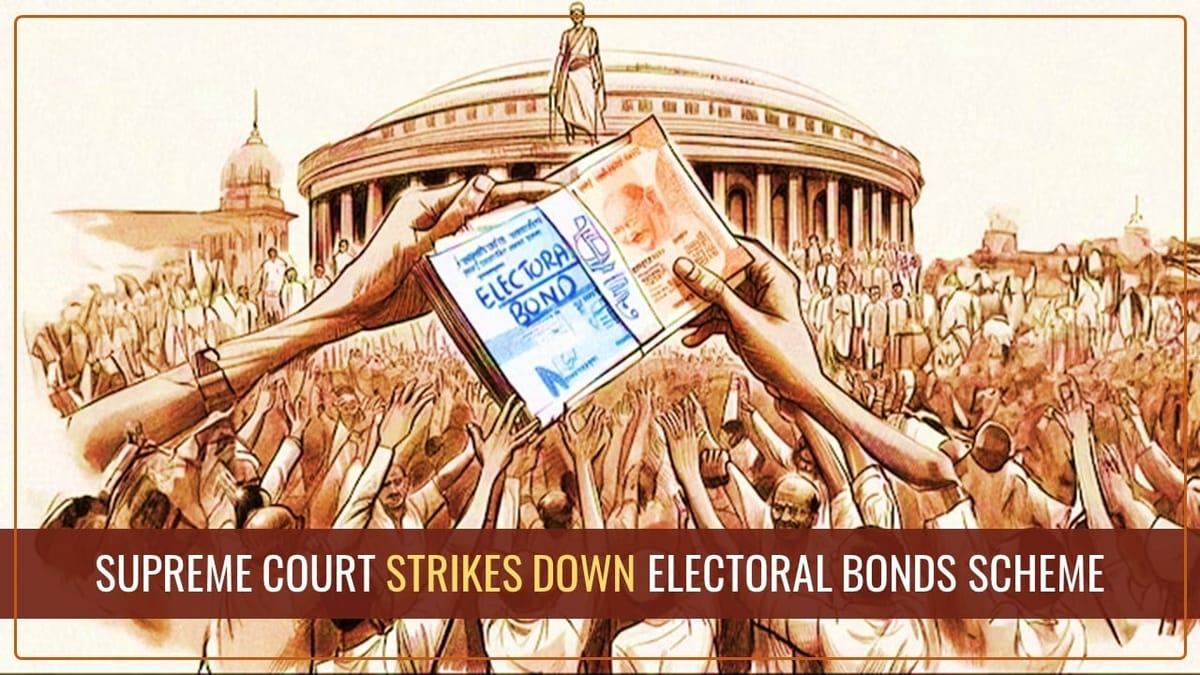
  • The clear message in the Court’s ‘no’ to electoral bonds

    Supreme Court strikes down Electoral Bonds Scheme as 'Unconstitutional'

    Central Idea:

    The Supreme Court’s recent decision to strike down India’s electoral bonds scheme marks a significant victory for transparency in democracy. The judgment highlights the importance of ensuring that political funding is transparent and accountable to the public.

    Key Highlights:

    • The Supreme Court’s ruling on February 15, 2024, declared the electoral bonds scheme unconstitutional due to its lack of transparency.
    • The scheme allowed undisclosed corporate funding of political parties, removing previous limits and potentially enabling influence peddling.
    • Amendments to the Reserve Bank of India Act and other laws to introduce electoral bonds were deemed arbitrary and violative of fundamental rights.
    • The court ordered the State Bank of India to cease issuing electoral bonds and mandated disclosure of all previously issued bonds to the Election Commission.
    • The judgment underscores the importance of judicial review in upholding democratic principles and protecting constitutional rights.

    Key Challenges:

    • The influence of money in elections remains a challenge, including the use of black money and bribery.
    • The lack of independent voting in India’s legislative process allows ruling parties to pass laws without sufficient scrutiny or consultation.
    • Political parties’ resistance to transparency raises concerns about their commitment to serving the public interest.

    Main Terms from the article:

    • Electoral bonds: Instruments for anonymous political donations introduced in India.
    • Transparency: Openness and accountability in political processes and decision-making.
    • Judicial review: The power of courts to assess the constitutionality of laws and government actions.
    • Fundamental rights: Constitutional protections for individual freedoms and equality.
    • Campaign funding: Financial support for political parties and candidates during elections.

    Important phrases for mains answer writing:

    • “Transparency is the basis of campaign funding.”
    • “The judgment restores transparency in political funding.”
    • “The ruling prevents undue influence on the government by corporate donors.”
    • “The power of judicial review is crucial for upholding democracy.”
    • “The price of democracy is eternal vigilance.”

    Quotes for value addition:

    • “The electoral bonds scheme was opaque.”
    • “The judgment prevents crony capitalism from influencing political parties.”
    • “The ruling party bypassed transparency with electoral bonds.”
    • “The power of judicial review is precious.”
    • “We need political parties, but it is up to us to ensure they work for the good of society.”

    Useful Statements:

    • “The Supreme Court’s decision reaffirms the principle that transparency is essential for democracy.”
    • “The ruling highlights the need for robust mechanisms to prevent undue influence on political processes.”
    • “Public scrutiny and vigilance are vital for holding political parties accountable.”
    • “The judgment sets a precedent for upholding constitutional rights in electoral matters.”
    • “Citizens’ engagement is crucial for ensuring that political parties serve the interests of the nation.”

    Examples and References:

    • The case of electoral bonds exemplifies the tension between transparency and political expediency in India’s democracy.
    • Similar challenges with campaign finance transparency have been observed in other democracies worldwide.
    • Instances of corporate influence on policy-making underscore the importance of regulating political funding.
    • Civil society organizations and activists have played a critical role in advocating for transparency in political funding.
    • Past instances of electoral malpractice highlight the need for stronger legal safeguards against undue influence.

    Facts and Data:

    • The Supreme Court’s ruling was issued on February 15, 2024.
    • Electoral bonds were introduced as a means of anonymous political funding.
    • Amendments to various laws facilitated the implementation of the electoral bonds scheme.
    • The Election Commission of India raised concerns about the potential misuse of electoral bonds.
    • The judgment requires the State Bank of India to disclose all previously issued electoral bonds to the Election Commission by March 6, 2024.

    Critical Analysis:

    • The electoral bonds scheme represented a departure from established norms of transparency in political funding.
    • The Supreme Court’s decision underscores the judiciary’s role in upholding democratic principles and constitutional rights.
    • The ruling highlights the challenges of balancing political expediency with the need for transparency and accountability.
    • Political parties’ resistance to transparency raises questions about their commitment to democratic values.
    • The judgment sets a precedent for future legal challenges to electoral practices that undermine transparency and accountability.

    Way Forward:

    • Strengthening legal safeguards to ensure transparency and accountability in political funding.
    • Promoting civic engagement and public awareness to hold political parties accountable.
    • Enhancing mechanisms for independent oversight and regulation of campaign finance.
    • Encouraging broader political reforms to address systemic issues of corruption and undue influence.
    • Emphasizing the importance of upholding democratic principles and constitutional rights in electoral matters
  • Supreme Court Strikes Down Electoral Bonds Scheme

    electoral bond

    Introduction

    • The Supreme Court delivered a groundbreaking unanimous judgment, deeming the electoral bonds scheme “unconstitutional and manifestly arbitrary.”
    • Led by Chief Justice of India (CJI) DY Chandrachud, a five-judge Constitution Bench unanimously struck down the scheme, citing infringement on voters’ right to information and disproportionate restrictions.

    ebs

    Key Reasons for Striking Down Electoral Bonds Scheme

    [A] Violation of Right to Information (RTI)

    • Petitioners argued that the scheme violates Right to Information under Article 19(1)(a) of the Constitution, emphasizing voters’ right to information regarding political party funding.
    • Despite the government’s stance that citizens lack a “right to know” about political contributions, the court upheld voters’ right to such information, citing the inherent connection between money and politics.
    • The court highlighted the “deep association” between money and politics, stressing the need for transparency to prevent quid pro quo arrangements.

    [B] Disproportionate Restrictions:

    • The scheme’s anonymity for donors, aimed at curbing black money, was deemed disproportionate to its goal.
    • Advocates highlighted potential loopholes allowing for cash donations, undermining its efficacy in combating black money.
    • The court emphasized the availability of alternative, less restrictive measures to achieve the scheme’s objectives, such as Section 29C of the Representation of People Act, 1951.

    [C] Privacy vs. Public Interest:

    • While the government argued for donor anonymity to protect privacy rights, advocates stressed the importance of public scrutiny in political funding.
    • The court clarified that donor privacy extends only to genuine forms of public support, rejecting absolute anonymity facilitated by the scheme.

    [D] Unlimited Corporate Contributions:

    • Advocates underscored the adverse impact of unlimited corporate contributions on free and fair elections.
    • The court reinstated the cap on political contributions from companies, citing the need to prevent undue corporate influence in politics.
    • It noted concerns that unlimited contributions could incentivize quid pro quo arrangements, especially by loss-making companies.

    Impact on Key Legal Amendments

    • Representation of the People Act, 1951: The court struck down amendments exempting political parties from disclosing donations above Rs. 20,000, reinforcing the balance between voters’ right to information and donor privacy. (Section 29C)
    • Companies Act, 2013: Amendments allowing unlimited corporate contributions were overturned, restoring the cap on political donations by companies and preserving electoral integrity. (Section 182)
    • Income-tax Act, 1961: Exemptions for political parties to maintain records of donations received via electoral bonds were annulled, safeguarding voters’ right to information. (Section 13A)

    Application of Proportionality Test

    [A] Definition:

    • The proportionality test assesses the balance between competing fundamental rights or interests and the measures taken by the state to achieve its objectives.
    • It involves four criteria: legality, necessity, proportionality in the strict sense, and balancing of interests.

    [B] Government’s Arguments:

    • The government defended the scheme, citing legitimate aims such as tackling black money and protecting donor anonymity.
    • Solicitor General Tushar Mehta argued that the right to information does not extend to information not in the state’s possession.

    [C] Court’s Analysis:

    • Applying the proportionality test, the court scrutinized the balance between competing fundamental rights, emphasizing the necessity of the “least restrictive” methods.
    • It underscored the importance of less intrusive alternatives, such as the electoral trusts scheme, in achieving the scheme’s objectives.

    Why is this a Landmark case?

    • Burden of Proof: The court held that the state must demonstrate that its measures are the “least restrictive” and that no other “equally effective” methods exist to achieve its objectives.
    • Balancing Competing Rights: Unlike previous approaches prioritizing public interest over individual rights, the court’s focus is on balancing competing fundamental rights.
    • Structured Proportionality Test: The verdict applies a structured proportionality test, requiring the state to demonstrate that its actions restricting fundamental rights are proportional to its objectives.
    • Application of Legal Precedents: While the right-to-privacy ruling laid down the law, subsequent cases like Aadhaar (2018) and Demonetization (2023) applied the structured proportionality test. The electoral bonds verdict represents a significant departure in this regard.

    Conclusion

    • The Supreme Court’s verdict reaffirms its commitment to upholding constitutional principles and safeguarding democratic processes.
    • By striking down the electoral bonds scheme and reinstating key legal provisions, the court emphasizes the primacy of transparency and accountability in electoral financing.
  • Dravidian Model of Governance: 10 Achievements of Tamil Nadu

    Dravidian Model of Governance

    Introduction

    • Tamil Nadu CM outlined the achievements of the ‘Dravidian Model’ government of the DMK, presenting them as blueprints for other states to follow.

    Dravidian Model of Governance

    • Contribution to Indian Economy: Tamil Nadu’s contribution of nine percent to the Indian economy showcases the state’s robust economic growth.
    • GDP Ranking: Securing the second position in contributing to the Gross Domestic Product (GDP) of the nation, with a growth rate of 8.19 percent, surpassing the national average of 7.24 percent.
    • Inflation Control: The state has effectively controlled inflation, with rates falling to 5.97 percent compared to the national figure of 6.65 percent.
    • Export Preparedness: Topping the list of the Export Preparedness Index in the country, with a particular focus on leading in the export of electronic goods.
    • Industrial Investment Climate: Creating a favorable climate for industrial investment, elevating Tamil Nadu to the third position in the country from its previous rank of 14.
    • Education: Achieving the second position in the field of education and securing the first place in innovative industries.
    • Empowerment Initiatives: Prioritizing the welfare of women, young people, persons with disabilities, and marginalized communities, leading to significant improvements in their quality of life.
    • Scheme Implementations: Extensive distribution of assistance to people amounting to ₹6,569.75 crore, including initiatives like the Kalaignar Magalir Urimai Thittam, free bus travel for women, and healthcare schemes benefiting millions of citizens.

    Discussion: Fiscal Federalism in India

    Fiscal Federalism: Understanding the Context

    • Overview of Fiscal Federalism: Fiscal federalism delineates the financial powers and responsibilities among different levels of government.
    • Provisions Related to Centre-State Financial Relations: The Indian Constitution elaborates on tax distribution and grants-in-aid, supplemented by the role of the Finance Commission.
      1. Part XII of the Constitution: Details provisions regarding the distribution of taxes, non-tax revenues, borrowing powers, and grants-in-aid.
      2. Article 268 to 293: Specifically address financial relations between the Centre and States.
      3. Finance Commission (Article 280): Constitutional body responsible for recommending tax revenue distribution and fiscal discipline.
    • Challenges with Fiscal Transfers: Despite recommendations to increase devolution, there has been a reduction in financial transfers to states, posing challenges to fiscal autonomy.

    Challenges and Concerns

    • Centralization of Fiscal Powers: The Union government’s increasing control over fiscal powers challenges state autonomy.
    • Erosion of State Tax Autonomy: Implementation of VAT and GST has diminished states’ ability to set tax rates independently.
    • Constraints on State Expenditure Flexibility: Conditional grants limit states’ discretion in allocating funds according to local priorities.
    • Uniform Fiscal Targets Neglecting State Variations: Uniform fiscal targets fail to address the diverse needs of individual states.
    • Impact of GST Implementation: The GST implementation has shifted tax burdens and reconfigured fiscal dynamics among states.

    Steps towards Better Devolution of Finances

    • Re-examining Tax-sharing Principles: Finance Commissions should review tax-sharing principles to align with changing fiscal dynamics.
    • Redesigning Statutory Sharing of Indirect Taxes: Vertical and horizontal devolution mechanisms need re-evaluation to ensure equity and efficiency.
    • Calculating and Allocating Collection Costs: Methods for calculating and allocating collection costs should be devised to enhance tax efficiency.
    • Redesigning Grant Mechanisms: Existing grant mechanisms should be restructured to address evolving fiscal challenges.
    • New Institutional Structures: Establishing formal relationships between the GST Council and Finance Commission can enhance fiscal governance.

    Conclusion

    • Tamil Nadu’s governance model, exemplified by Chief Minister Stalin’s comprehensive overview, underscores the state’s commitment to economic progress, social welfare, and inclusive development.
    • Despite challenges in India’s fiscal federalism, Tamil Nadu’s achievements serve as a beacon of hope, demonstrating the potential for states to thrive under effective governance models.
    • Addressing fiscal imbalances and enhancing cooperative federalism are imperative for ensuring equitable distribution of financial resources and fostering sustainable development across the nation.

More posts