💥UPSC 2026, 2027, 2028 UAP Mentorship (March Batch) + Access XFactor Notes & Microthemes PDF

Search results for: “”

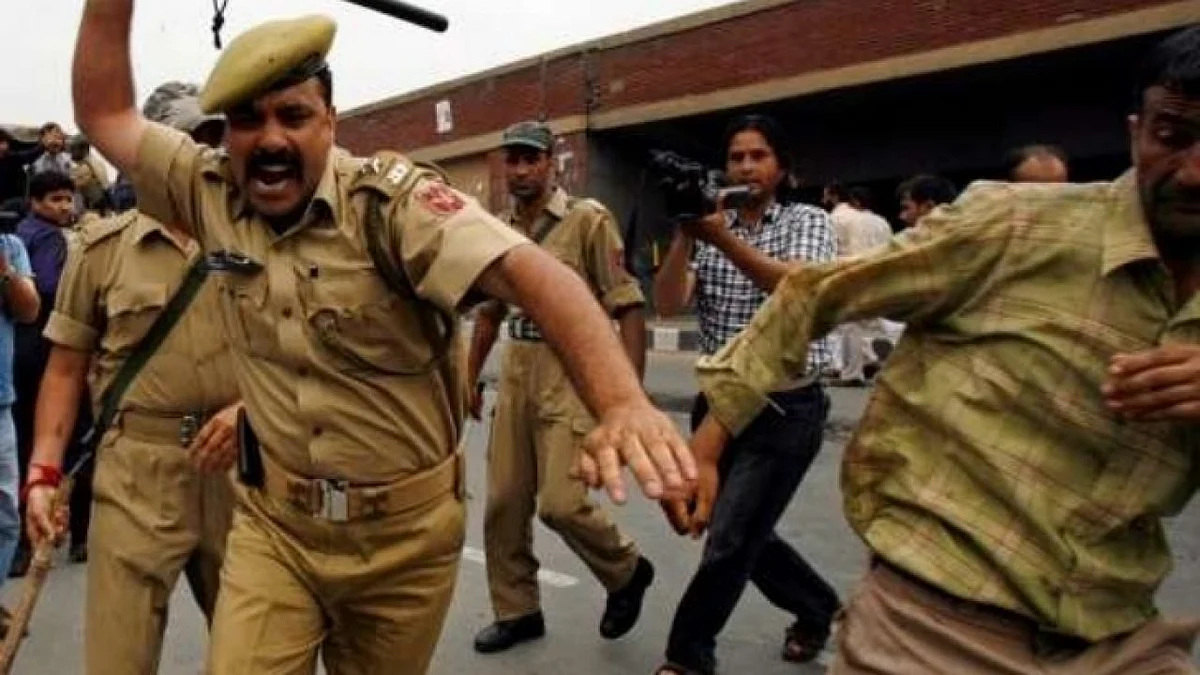
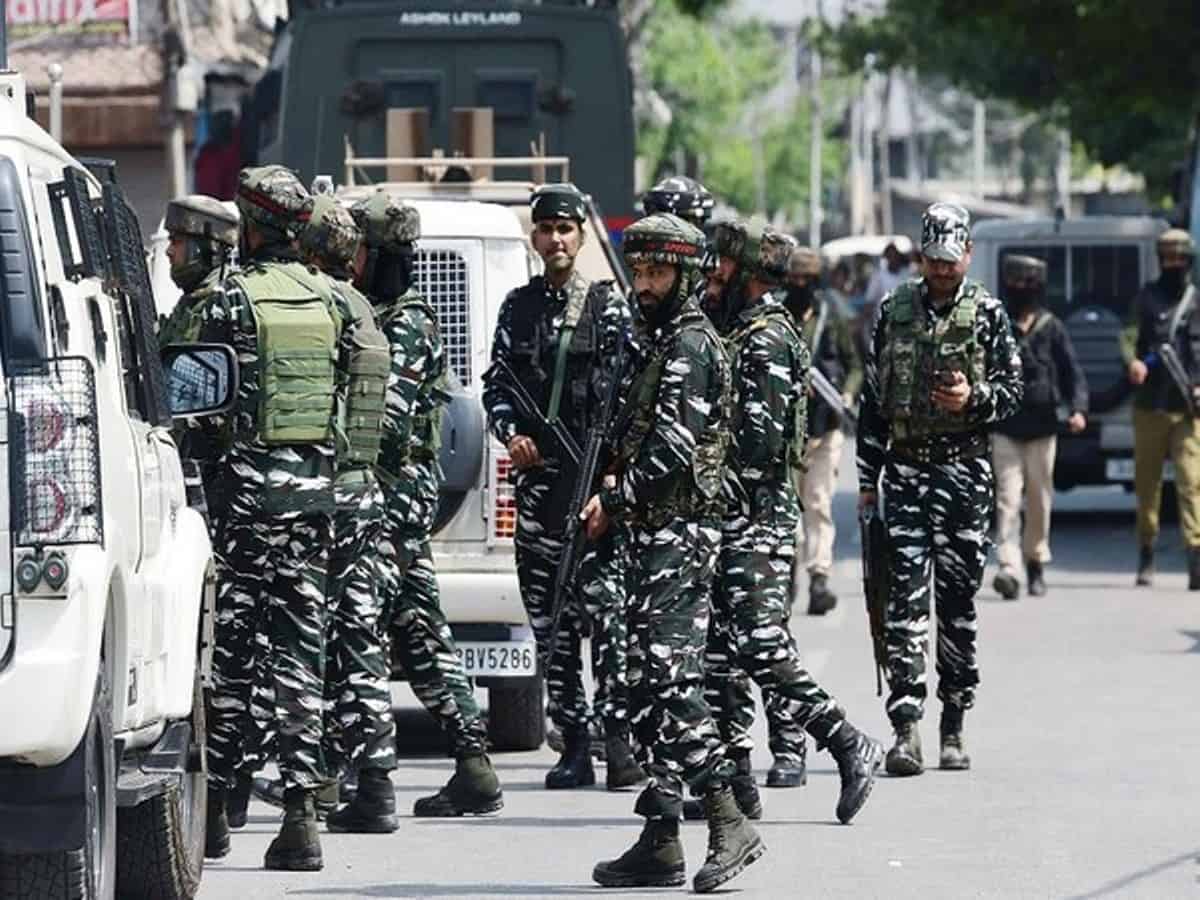
  • The delusion of eliminating ‘the last terrorist’

    Battalion approach is not best of counter-terrorism strategies

    Central Idea:

    The article, written by Shashank Ranjan, a retired Indian Army officer and current faculty member at O.P. Jindal Global University, critiques the counter-terrorism approach in Jammu and Kashmir, emphasizing the need to reevaluate the obsession with the number of terrorists killed. It highlights the historical context of insurgency in the Rajouri-Poonch region and argues that a singular focus on ‘kills’ may be counterproductive in achieving long-term stability.

    Key Highlights:

    • The new year in Jammu and Kashmir began with a terror strike in Rajouri-Poonch, leading to a renewed focus on the number of terrorists killed by security forces.
    • The article questions the efficacy of the current counter-terrorism approach, suggesting that an obsession with numbers may not align with the changing dynamics of insurgency in the region.
    • Ranjan draws attention to the historical success in curbing insurgency in Rajouri-Poonch by addressing the root causes, and how the focus on ‘kills’ might be contributing to the re-emergence of instability.

    Key Challenges:

    • The article highlights the challenges posed by a system that is reluctant to adapt to changing dynamics and continues to prioritize short-term gains and competitive career environments over long-term stability.
    • The gap between the tactical-level operations and people-centric approaches is emphasized, pointing out the lapses that have led to civilian casualties and operational rush for ‘kills.’
    • The reluctance of political initiatives in Jammu and Kashmir is mentioned as a challenge, hindering a comprehensive resolution through a whole-of-government approach.

    Key Terms:

    • Counter-terrorism: Measures and strategies to combat terrorism and insurgencies.
    • People-centric: Approaches and operations that prioritize the well-being and acceptance of the local population.
    • Whole-of-Government Approach: An integrated approach involving all government agencies to address complex issues.

    Key Phrases:

    • “Debatable obsession with the numbers of terrorists killed.”
    • “Misplaced focus of the counter-terrorism approach.”
    • “Tail wagging the dog” – Pursuing goals without regard to the means.

    Key Quotes:

    • “In our undue obsession with the numbers of ‘kills’, we may have been winning the battle by addressing the symptoms, but it has indeed been at the cost of the campaign.”
    • “Chasing numbers was the obvious option in the years when terror-related fatalities in J&K touched a yearly mark of 2,000-plus.”

    Key Statements:

    • “The situational dynamics, unfortunately, never ushered in adjustments in the modus operandi of security forces and assessment methodology of unit performance by the hierarchy.”
    • “Leadership is all about compensating any cost to the soldier, with the leader standing up to bridge the gap between the interests of people and soldiers.”

    Key Examples and References:

    • Refers to the historical success in curbing insurgency in Rajouri-Poonch by addressing root causes.
    • Mentions the unfortunate death of three civilians in Dera ki Gali as a consequence of lapses in people-centric policies.

    Key Facts and Data:

    • Reports declining terror-related fatalities in Jammu and Kashmir, contrasting figures at 134 in 2023 with over 2,000 in earlier years.
    • Highlights the absence of Assembly representation in J&K since 2018.

    Critical Analysis:

    The article critically analyzes the counter-terrorism approach, pointing out the flaws in focusing solely on the number of terrorists killed. It underlines the need for adaptation to changing dynamics, a people-centric approach, and a shift from short-term gains to long-term stability.

    Way Forward:

    • Urges a reevaluation of the current counter-terrorism strategy to align with the evolving dynamics of insurgency.
    • Emphasizes the importance of a people-centric approach and addressing the root causes of conflict.
    • Calls for political initiatives and a whole-of-government approach to achieving comprehensive and lasting stability in Jammu and Kashmir.
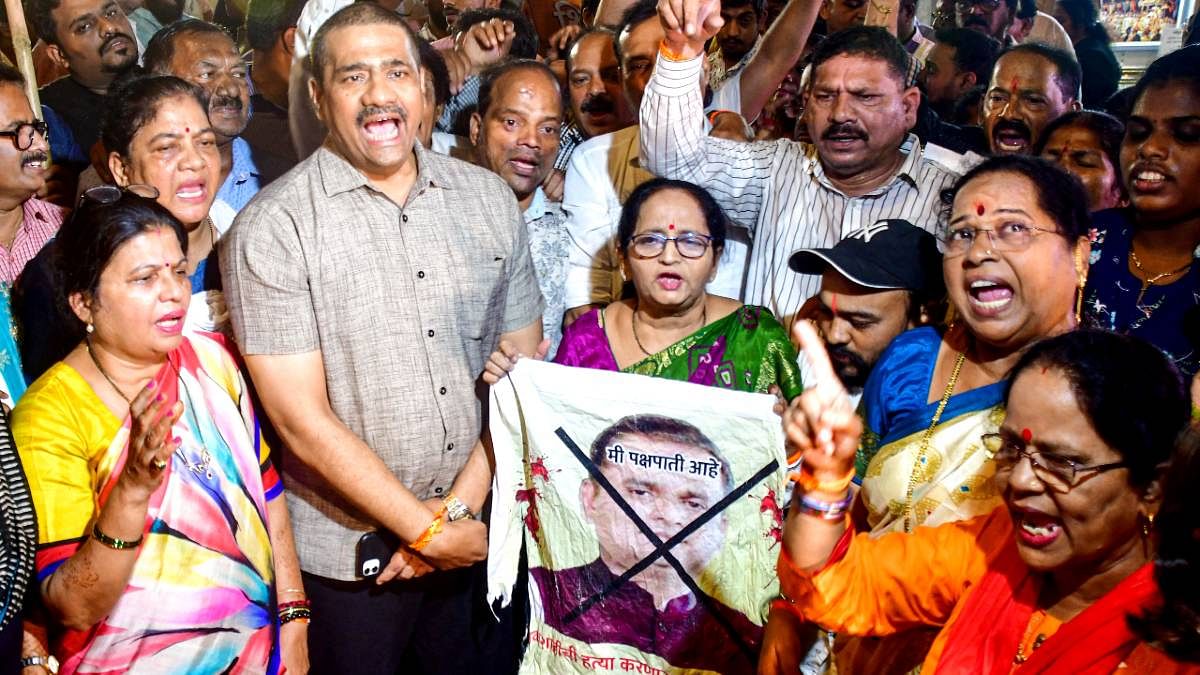
  • A Speaker’s flawed move to determine the real faction

    Uddhav Thackeray slams Maharashtra Speaker's verdict on 'real' Shiv Sena

    Central Idea:

    The article critiques the Speaker of the Maharashtra Assembly, Rahul Narwekar, for his flawed decision in handling the disqualification case of Shiv Sena Members of the Legislative Assembly (MLAs) led by Eknath Shinde. The author emphasizes the Speaker’s erroneous attempt to determine the real Shiv Sena faction and points out the jurisdictional issues and contradictions in the Speaker’s decision.

    Key Highlights:

    • The Speaker’s decision centered on whether the breakaway Shiv Sena MLAs, under Eknath Shinde’s leadership, voluntarily gave up their party membership by voting against the party whip, making them liable for disqualification under the anti-defection law.
    • The article highlights the Speaker’s attempt to prevent disqualification of the Shinde group, presenting a nearly 1,200-page judgment that is deeply flawed.
    • The Speaker erroneously tries to determine the real Shiv Sena faction, a decision beyond his jurisdiction, and quotes irrelevant Supreme Court directions.

    Key Challenges:

    • The Speaker’s decision raises questions about the misinterpretation of the Tenth Schedule and its provisions regarding defection and disqualification.
    • Attempting to determine the real party faction goes against the clear jurisdiction outlined by the Supreme Court and the Election Commission of India.
    • Contradictions in the Speaker’s decision, such as validating appointments by the Shinde group despite the Supreme Court’s findings, pose challenges to the integrity of the anti-defection law.

    Key Terms:

    • Anti-Defection Law: Provisions outlined in the Tenth Schedule of the Constitution that address defection by legislators and the resulting disqualification.
    • Jurisdiction: The official power to make legal decisions and judgments.

    Key Phrases:

    • “Flawed decision in handling the disqualification case.”
    • “Erroneous attempt to determine the real Shiv Sena faction.”
    • “Nearly 1,200-page judgment valiantly tried to avoid disqualification.”

    Key Quotes:

    • “The consequence of this is disqualification.”
    • “The Speaker’s decision is clearly without jurisdiction.”
    • “Parliament did not consider paragraph 15 of the Symbols order as a relevant factor.”

    Key Statements:

    • “The question of which faction is the real Shiv Sena can only be decided by the Election Commission of India.”
    • “The Speaker’s decision goes against the clear enunciation of law by the Supreme Court.”

    Key Examples and References:

    • The Subhash Desai judgment clarifies that the Shiv Sena led by Uddhav Thackeray is the original political party.
    • Parliament did not consider paragraph 15 of the Symbols order as a relevant factor.

    Key Facts and Data:

    • The Tenth Schedule originally allowed legislators to avoid disqualification in case of a split or merger; however, the split provision was omitted in 2003.
    • In Subhash Desai vs Principal Secretary, Governor of Maharashtra & Ors. (2023), the Supreme Court observes a split in the Shiv Sena party.

    Critical Analysis:

    The article critically analyzes the Speaker’s decision, pointing out flaws, contradictions, and the disregard for the clear jurisdiction outlined by the Supreme Court. It highlights the misinterpretation of the Tenth Schedule and its implications for anti-defection cases.

    Way Forward:

    • Emphasizes the need for adherence to the clear enunciation of law by the Supreme Court and the Election Commission.
    • Urges a more precise understanding and application of the Tenth Schedule to prevent future misinterpretations.
    • Advocates for a careful consideration of relevant factors and jurisdictional boundaries in disqualification cases to uphold the integrity of the anti-defection law.
  • Dominate Prelims week 2 – Timetable Out

    Dominate Prelims week 2 – Timetable Out

    I want to attend lecture

    Dominate Prelims Phase 1 will start Tomorrow, Monday the 8th Jan.

    The timetable for the upcoming week is as follows-

    DateLectureFaculty
    15th, MondayEnvironment-Species IJatin Sir
    16th, TuesdayEnvironment-Species IIJatin Sir
    17th, WednesdayArt and Culture IAyush Sir
    18th, ThursdayArt and Culture IIAyush Sir
    19th, FridayActs and PoliciesJatin Sir

    The philosophy of Dominate is as follows – In January Phase 1, we plan to cover 15 High Yielding Topics like Govt Schemes, International Organizations, Species, etc. You can expect up to 50 questions from these 15 themes. With just 5 months to go, your 1st reading should happen RIGHT NOW

    Class tomorrow at 2PM. See your at 8LGF Apsara Arcade.

    After the class, we will continue the discussion on telegram. If we have to ensure we dont miss a single question, we will have to put in more effort beyond the classroom.

    I want to attend lecture

  • Houthi Rebels and Regional Dynamics

    Houthi Rebels

    Introduction

    • The United States and the United Kingdom have initiated military strikes against Houthi groups in Yemen on January 11.
    • This action is a response to the Houthis’ continued aggression towards maritime vessels in the Red Sea, a crucial global trade route.

    Background of the Conflict

    • Houthi Attacks on Shipping: Since November 2023, Houthi forces have targeted ships in the Red Sea and Gulf of Aden, disrupting one of the world’s busiest maritime trade routes.
    • Israeli-Hamas Conflict: The Houthis’ actions are in response to the Israeli military’s bombardment of Gaza following an attack by Hamas on October 7, which resulted in significant casualties.

    Houthi Group and Regional Dynamics

    • Who Are the Houthis?: The Houthis are a Shia militant group engaged in the civil war in Yemen, controlling significant parts of the country, including the capital Sana’a.
    • Regional Rivalries: The conflict reflects long-standing regional rivalries, with Iran backing the Houthis and Saudi Arabia supporting the Yemeni government. The Houthis’ involvement in the Israel-Hamas war is also seen as part of these broader regional dynamics.

    Concerns for Global Trade

    • Impact on World Trade: Approximately 12% of global trade passes through the Red Sea and Suez Canal, making the security of this route critical.
    • Alternative Routes: Due to safety concerns, some ships have been rerouted around the Cape of Good Hope, leading to increased transit times and fuel costs.

    Implications for the Region

    • Operation Prosperity Guardian: Launched by the US, this coalition aims to ensure maritime security in the region, but partner countries have shown reluctance to contribute significantly.
    • Risks of Wider Conflict: There are concerns about the conflict spreading beyond Israel and Gaza, with the potential for unpredictable outcomes in the Middle East.
    • Impact on Yemeni Peace Negotiations: The strikes may affect ongoing peace negotiations in Yemen, mediated by Oman and the United Nations.
  • What happened in Bhutan’s elections?

    Introduction

    • In a significant political development, Tshering Tobgay and the People’s Democratic Party (PDP) emerged victorious in Bhutan’s recent runoff election, marking a pivotal moment in the country’s young democracy.
    • Bhutan’s election not only reflects the evolving political dynamics within but also has broader implications for the region, particularly in terms of Bhutan’s relations with India and China.

    Bhutan’s Democratic Evolution

    • Fair Elections: Unlike some neighbouring countries, Bhutan’s elections have been largely free from tampering or political violence.
    • Monarchy to Democracy: Since transitioning from a monarchy to a parliamentary democracy in 2008, Bhutan has seen its democratic processes evolve, with increased party participation and voter choice.
    • Challenges: Despite progress, concerns about media censorship and discrimination against minorities persist.

    Economic Context of the Elections

    • Economic Challenges: Bhutan faces economic difficulties, including a struggling tourism sector, high youth unemployment, and significant emigration for better opportunities.
    • Tobgay’s Economic Focus: Tobgay’s campaign centred on addressing these economic issues, promising investment and solutions to curb the emigration trend.

    India’s Role and Regional Implications

    • India-Bhutan Relations: India remains Bhutan’s largest donor and ally, playing a crucial role in Bhutan’s economic recovery and infrastructure development.
    • Hydroelectric Potential: Bhutan’s untapped hydroelectric resources present opportunities for energy trade with India.
    • China Factor: Recent years have seen heightened tensions between India and China over Bhutan, especially in the disputed Doklam region.
    • Tobgay’s Pro-India Stance: Tobgay is perceived as pro-India, which aligns with India’s strategic interests in the region. His election has been positively received by Indian Prime Minister Narendra Modi.

     Conclusion

    • Tshering Tobgay’s election victory in Bhutan is a testament to the country’s maturing democracy and its ability to navigate complex economic and geopolitical challenges.
    • As Bhutan continues to balance its relationships with major powers like India and China, Tobgay’s leadership will be pivotal in shaping the nation’s future trajectory, both domestically and in the broader South Asian context.
  • Nashik’s Kalaram Mandir: Religious and Social Significance

    Kalaram Mandir

    Introduction

    • The Kalaram Mandir, located on the banks of the Godavari in Nashik’s Panchavati area, has recently garnered attention with visits from prominent political leaders, including Prime Minister.
    • This temple, steeped in historical, religious, and social significance, has been a focal point for major political and social movements in India.

    Kalaram Mandir’s Legacy

    • Temple’s Name and Idol: The temple gets its name from the black statue of Lord Ram (‘Kala Ram’ means ‘Black Ram’). The sanctum sanctorum houses statues of Ram, Sita, Lakshman, and a black idol of Hanuman.
    • Construction and Features: Built-in 1792 by Sardar Rangarao Odhekar, the temple features 14 steps representing Ram’s years of exile and 84 pillars symbolizing the cycle of rebirth in Hinduism.
    • Historical Significance: The temple is renowned for its association with the epic Ramayana, where Lord Ram, along with Sita and Lakshman, is said to have spent time during their exile.

    Panchavati’s Role in the Ramayana

    • Significance in the Epic: Panchavati, the area where the temple is located, is significant in the Ramayana. It’s believed to be the site where Sita was abducted by Ravan, leading to the epic war in Lanka.
    • Name Origin: The name ‘Panchavati’ is derived from the presence of five banyan trees, making the region auspicious according to the epic.

    Temple as a Site of Social Reform

    • Dalit Satyagraha: In 1930, Dr. B.R. Ambedkar and social activist Pandurang Sadashiv Sane (Sane Guruji) led a historic agitation at the Kalaram Mandir, demanding temple entry rights for Dalits.
    • Ambedkar’s Protest: The protest involved a sit-in outside the temple, with participants singing songs and raising slogans for equality.
    • Continued Relevance: The temple remains a symbol of the struggle for Dalit rights, highlighted by Uddhav Thackeray’s plan to visit on the day of the Ram temple consecration in Ayodhya.

    Political Significance

    • Recent Political Visits: The temple has seen visits from major political figures, reflecting its continued relevance in contemporary politics and social issues.
    • Symbol of Unity and Equality: Leaders visiting the temple often emphasize its role in symbolizing unity and the fight for social justice in India.
  • India’s renewed engagement in Thirty Meter Telescope (TMT) Project

    tmt

    Introduction

    • India’s Department of Science and Technology (DST) has shown a renewed interest in the global scientific endeavor, the Thirty Meter Telescope (TMT) project, as evidenced by their recent visit to Mauna Kea in Hawai’i.
    • This visit marks a significant step in addressing the challenges faced by this ambitious astronomical project.

    Overview of the TMT Project

    • Project Description: The TMT is envisioned as a 30-metre diameter primary-mirror optical and infrared telescope, designed for deep space observations.
    • International Collaboration: It is a joint venture involving the U.S., Japan, China, Canada, and India, with India’s participation approved by the Union Cabinet in 2014.

    Key facts related to TMT

    • Its 30m diameter prime-mirror will allow it to observe wavelengths ranging from ultraviolet to mid-infrared with up to 80 times more sensitivity of today’s largest telescopes.
    • It can deliver images at infrared wavelengths more than 12 times sharper than the famed Hubble Space Telescope and 4 times sharper than James Webb Space Telescope (JSWT).

    Challenges and Controversies

    • Location Issues: Mauna Kea, the proposed site for the TMT, is an inactive volcano considered sacred by local communities. The site has faced opposition due to its cultural and religious significance.
    • Legal Hurdles: The Supreme Court of Hawaii invalidated the construction permits in 2015, although they were later restored in 2018. Despite this, local opposition has continued to impede construction.

    Alternate Site Consideration

    • Plan B: The Observatorio del Roque de los Muchachos (ORM) on La Palma in Spain’s Canary Islands is being considered as an alternative site for the TMT.
    • India’s Stance: As per statements made in 2020, India prefers moving the project to an alternate site, subject to the availability of necessary permits and procedures.

    India’s Role and Contribution

    • Major Contributor: India is expected to play a significant role in the TMT project, contributing hardware, instrumentation, and software worth $200 million.
    • Mirror Production: Of the 492 required mirrors, India will contribute 83, showcasing its capabilities in precision engineering and technology.

    Current Status and Future Prospects

    • Ongoing Discussions: Efforts are being made to reach a consensus that respects the concerns of the local people in Hawai’i.
    • Progress in Component Development: Despite the delay in construction, significant advancements have been made in developing essential components for the TMT.
    • Decision Timeline: A firm decision on the project’s site is anticipated within the next two years, as per Annapurni Subramaniam, director of the Indian Institute of Astrophysics (IIAP).
  • Himalayan Wolf Listed as ‘Vulnerable’ on IUCN Red List

    Himalayan Wolf

    Introduction

    • The Himalayan Wolf (Canis lupus chanco), a distinct lupine species inhabiting the Himalayas, has recently been classified as ‘Vulnerable’ on the International Union for Conservation of Nature (IUCN)’s Red List.
    • This classification highlights the urgent need for conservation efforts to protect this unique predator.

    About Himalayan Wolf

    • Taxonomic Status: Long a subject of taxonomic ambiguity, the Himalayan Wolf has been confirmed as a genetically unique lineage of wolves.
    • Population Estimate: The IUCN Red List estimates the population of mature individuals to be between 2,275 and 3,792, acknowledging the uncertainty of this figure.
    • Geographical Range: The Himalayan Wolf is found across the Himalayan range of Nepal and India and extends across the Tibetan Plateau.
    • Population in India: In the Indian Himalayas, the population is estimated to be between 227 and 378 mature individuals, primarily in Ladakh and the Spiti Valley of Himachal Pradesh, with potential small populations in Uttarakhand and Sikkim.

    Conservation Challenges

    • Habitat Decline: The species faces a continuing decline in habitat quality and extent.
    • Conflict with Livestock: Livestock depredation conflicts are significant, exacerbated by habitat modification and depletion of wild prey.
    • Hybridization Threats: Increasing populations of feral dogs in regions like Ladakh and Spiti pose a threat of hybridization.
    • Illegal Hunting: The Himalayan Wolf is hunted illegally for its fur and body parts, contributing to its declining numbers.

    Conservation Strategies Proposed

    • Habitat and Prey Restoration: Securing and restoring healthy wild prey populations and landscapes, and establishing wildlife habitat refuges.
    • Improved Livestock Management: Enhancing livestock guarding methods, including predator-proof corral pens, sustainable herding practices, and holistic management practices.
    • Feral Dog Population Management: Addressing the growing challenge of feral dogs that threaten the Himalayan Wolf through hybridization.
    • Trans-boundary Conservation Efforts: Collaborative efforts among range countries for research, monitoring, and conservation.
    • Herding/Pasture Management: Improving practices in regions where wolves are heavily dependent on livestock, such as in Ladakh.
    • Inclusion in Conservation Programs: Incorporating the Himalayan Wolf in conservation programs to promote public acceptance and reduce persecution.
  • Kerala’s Operation AMRITH to combat Antimicrobial Resistance

    Introduction

    • The Kerala Drug Control Department launched Operation Amrith (Antimicrobial Resistance Intervention For Total Health), a significant initiative to curb the overuse of antibiotics in the state.

    Operation AMRITH

    • Objective: The initiative aims to optimize antibiotic use by preventing over-the-counter (OTC) sales and ensuring compliance with prescription requirements.
    • Pharmacy Regulations: Pharmacies are required to maintain accurate records of antibiotic sales and display notices stating that antibiotics will not be sold without a doctor’s prescription.
    • Public Participation: The initiative encourages public involvement by allowing individuals to report pharmacies that sell antibiotics without a prescription.

    Enforcement and Compliance

    • Surprise Raids: The program includes conducting surprise checks in retail medical shops to detect OTC sales of antibiotics.
    • Toll-Free Complaint Number: A toll-free number (18004253182) is provided for the public to lodge complaints against medical shops violating the rules.
    • Immediate Action: Complaints are swiftly transferred to relevant zonal offices for verification, followed by immediate departmental action upon confirmation of violations.

    Background and Context

    • Kerala’s AMR Strategy: Kerala was the first state in India to develop a state action plan on AMR, the Kerala Anti-Microbial Resistance Strategic Action Plan (KARSAP), in 2018.
    • Multi-Sectoral Approach: The plan, aligned with India’s National Action Plan on AMR, addresses human, animal, and environmental aspects of AMR containment.
    • Support and Collaboration: The plan was developed with contributions from the Centre for Science and Environment and involves various state departments in its implementation.
    • Surveillance Networks: The Kerala Antimicrobial Resistance Surveillance Network (KARS-NET) monitors AMR in humans, while an integrated plan covers non-human sector surveillance.
    • AMR Laboratory: The Kerala State Pollution Control Board (KSPCB) inaugurated an AMR laboratory for environmental surveillance in August 2023.
    • PROUD Initiative: The Programme on Removal of Unused Drugs (PROUD) is a drug take-back program piloted in Thiruvananthapuram for the proper disposal of unused antibiotics.
  • Webinar by Arvind sir: How to Enrich UPSC Mains Answers Content by Making Effective Notes? | 16th Jan, 7 pm

    Webinar by Arvind sir: How to Enrich UPSC Mains Answers Content by Making Effective Notes? | 16th Jan, 7 pm

    Making effective notes for mains answer content enrichment

    Join Arvind sir’s FREE webinar on 16th Jan, 7 pm

    First 100 will get Civilsdaily’s Mains Toolkit


    There is a direct correlation between the quality of notes you make and the content of your mains answers.

    From day one, your preparation hinges on how you craft your UPSC notes.

    It’s not just note-making; it’s an art that enriches your UPSC Mains answers.

    The key lies in dissecting the UPSC syllabus, and understanding each topic, every keyword.

    Every keyword is an opportunity, a potential question in the making.

    Your notes should be a treasure trove, wholesome and comprehensive for each of these keywords.

    But how do you transform raw information into strategic UPSC notes?

    Arvind Sir’s masterclass will unveil the secrets behind successful IAS rankers’ note-making processes.

    Join us and transform your approach to Mains answer writing – Start like a Topper.

    upsc mains and upsc syllabus

    Read what Arvind Agrawal sir has to say about UPSC Mains and answer writing approach

    Hello UPSC aspirants, I’m Arvind Agrawal, the Mains Program head at Civilsdaily.

    In my journey of mentoring over 100 UPSC rankers, including achievers like AIR 16 and 22, I’ve realized the crucial role of enriched mains answer content.

    The evolution of the UPSC Mains demands not just any content but one that resonates with the keywords in the syllabus, comprehensive and most importantly, usable.

    My experience, particularly in evaluating 1500+ Mains answer copies, has taught me the significant difference between just writing answers and crafting enriched content.

    Many aspirants, despite their hard work, remain confined to the 80s score range in the Mains. This stagnation is often not due to lack of effort but due to ineffective note-making and content enrichment.

    This Tuesday, in my upcoming webinar, I’ll be addressing the heart of this issue.

    We’ll delve deep into understanding the keywords of the syllabus and the art of making comprehensive notes for each one.

    I’ll be sharing with you the insights on how to view note-making through the prism of Mains previous year questions, what a 2-3 page effective note should contain, and strategies for impactful note-making for the Mains exam.

    Moreover, I will be showcasing examples of good and bad notes – a real eye-opener for many. This isn’t just a discussion; it’s a strategic session that could be a turning point in your preparation.

    Whether you are starting fresh or looking to refine your approach, understanding these nuances of note-making can significantly elevate your Mains answers.

    Join me this coming Tuesday for a session that is essential for anyone aiming to break the score barrier in Mains. It’s time to move beyond the conventional and embrace a strategy that aligns with the demands of the UPSC.”

    Attend FREE Webinar on Effective Notes Making and Mains Answer Content Enrichment

    In this masterclass, you will get:

    1. Deep Dive into Keyword Analysis: Arvind Sir will elucidate on identifying and understanding the crucial keywords in the UPSC syllabus, a vital skill that forms the backbone of effective answer writing.
    2. Art of Comprehensive Note-Making: The session will cover strategic methods for creating impactful and concise notes for each syllabus keyword, ensuring that your preparation is thorough and your answers are enriched with relevant content.
    3. Showcase of Good vs. Bad Notes: Arvind Sir will present actual examples of effective and ineffective note-making, providing clear insights into what works and what doesn’t in the context of UPSC Mains preparation.

    Join Arvind sir’s FREE webinar on 16th Jan, 7 pm

    First 100 will get Civilsdaily’s Mains Toolkit

    By the end, you’ll have razor-sharp clarity and a clear roadmap for approaching and qualifying your Mains exam with ease.

    Arvind Agrawal sir

    Registration open! Join now to attend the webinar for FREE

    (Don’t wait—the next webinar won’t be until March 24)


    upsc prelims mains

    These masterclasses are packed with value. They are conducted in private with a closed community. We rarely open these webinars for everyone for free. This time we are keeping it for 300 seats only.

    Fee:

    • Special Access (extra 15 min with Arvind sir) – Free (only for first 100 registrations, register before 15 Jan, 1 pm)
    • Early Access – Rs. 299 (for the next 100 registrations, register before 16 Jan, 1 PM)
    • Late Access – Rs. 499 (for last 100 registrations, register before  16 Jan, Post 1 PM)

    Ready to attend the UPSC Webinar?


    Not sure yet?

    We recommend you register here. It takes less than 10 seconds to register.

    • No spam! Once in a while, we’ll only send you high-quality exam-related content. 
    • We will inform you about the upcoming Masterclasses that might benefit you.
    • You can demand one free mentorship call from verified Civilsdaily mentors. 
    • You can always choose to unsubscribe. 
  • To combat climate challenges, the Finance Commission needs to step up

    India sets new climate target: 45% less emission, 50 per cent electricity  from non-fossil fuel-based- The New Indian Express

    Central Idea:

    The article emphasizes the pivotal role that fiscal federalism, particularly through Finance Commissions (FC), plays in India’s efforts to combat climate change by promoting forest conservation. It highlights the need for the 16th Finance Commission to adopt innovative approaches, such as incorporating climate vulnerability and emission intensity into tax distribution formulas, to align with India’s environmental goals.

    Key Highlights:

    • India actively participates in global initiatives to enhance forest cover, combat climate change, and build community resilience.
    • Finance Commissions have historically allocated funds for forest conservation, evolving from grants to a dedicated share of the central tax pool.
    • The 15th Finance Commission became the world’s largest payment for ecosystem services (PES) system, distributing funds based on both forest cover and density.
    • The 16th Finance Commission, appointed in 2021, is crucial for shaping tax distribution principles for 2026-31, coinciding with India’s commitments under the Paris Agreement.
    • The article suggests incorporating climate vulnerability and emission intensity as key parameters in the tax devolution formula to drive action toward India’s National Determined Contributions (NDCs).

    Key Challenges:

    • Balancing conservation efforts with opportunity costs, which can be substantial and potentially prohibitive.
    • Addressing pollution challenges, especially the need for funds to tackle issues like crop burning and mangrove restoration.
    • Adapting to changing climate patterns leading to forest fires, necessitating innovative solutions and funding.

    Key Terms:

    • Fiscal federalism: The distribution of fiscal responsibilities and resources between different levels of government.
    • National Determined Contributions (NDCs): Commitments made by countries under the Paris Agreement to mitigate climate change.
    • Payment for Ecosystem Services (PES): Systems where individuals or entities are compensated for protecting or enhancing ecosystem services.
    • Tax devolution: The distribution of tax revenues among different levels of government.

    Key Phrases:

    • “Largest payment for ecosystem services (PES) system in the world.”
    • “Tax devolution formula as a tool to align with India’s NDCs.”
    • “Finance Commission evolving from a fiscal arbitrator to an orchestrator of climate readiness.”

    Key Quotes:

    • “The 16th FC can be pivotal in creating a basis for market instruments like National Carbon Market and National Green Credit Market to succeed.”
    • “The Commission needs to metamorphose from a conventional fiscal arbitrator to an orchestrator of India’s climate readiness.”

    Key Statements:

    • “The 15th FC effectively became the largest payment for ecosystem services (PES) system in the world.”
    • “The 16th FC can be pivotal in creating a basis for these market instruments to succeed.”

    Key Facts:

    • India’s commitment to reducing greenhouse gas emissions by 33-35% and building an additional carbon sink of 2.5 to 3 billion tonnes of CO2 by 2030.
    • The role of Finance Commissions in mobilizing and distributing funds to states for forest conservation and combating air pollution.

    Critical Analysis:

    The article underscores the evolving role of Finance Commissions in environmental conservation and suggests innovative approaches for the 16th FC. However, challenges such as balancing conservation with opportunity costs and addressing pollution issues require careful consideration.

    Way Forward:

    The 16th Finance Commission should prioritize incorporating climate vulnerability and emission intensity into tax devolution formulas. It must transform into a key player in India’s climate readiness by aligning economic growth with environmental imperatives, supporting clean energy initiatives, and addressing regional climate challenges.

  • A case diary for the Indian police

    Is there any doubt that India is now a police state? Koi Shaq?

    Central Idea:

    The article by R.K. Raghavan discusses the state of policing in India, focusing on a recent conference in Jaipur attended by high-ranking police officers. It highlights the challenges faced by the police in terms of public trust, federal-state relations, and the need for a more inclusive and technology-driven approach. Raghavan emphasizes the growing importance of law enforcement in the country while acknowledging the persistent issues that hinder the improvement of the police force’s image.

    Key Highlights:

    • The three-day conference in Jaipur centered around contemporary issues in Information Technology for the police.
    • Prime Minister Narendra Modi’s interaction with police officers signals the increasing significance of law enforcement.
    • Despite honest intentions, the police struggle to gain the trust of the majority, and the public’s perception remains negative.
    • The article discusses the discord between the Centre and some Opposition-led States, especially regarding the Indian Police Service (IPS).
    • The author points out the need for a balance between federal governance and state autonomy, particularly concerning the Enforcement Directorate (ED).

    Key Challenges:

    • Lack of public trust and a negative image of the police force.
    • Growing discord between the Centre and Opposition-led States, especially regarding the IPS.
    • Unequal attention and glory given to IPS officers, limiting opportunities for lower-ranking personnel.
    • Politicization of the police force and the challenge of resisting illegal demands from grassroots politicians.

    Key Terms/Phrases:

    • Information Technology (IT)
    • Director General of Police (DGP)
    • Indian Police Service (IPS)
    • Enforcement Directorate (ED)
    • Federal Governance
    • Grassroots Politicians
    • Policing Hierarchy

    Key Quotes:

    • “The police have still to earn the trust and confidence of a majority of the populace.”
    • “The ‘New Delhi-conceived and managed’ Indian Police Service (IPS) is perceived to be ‘a permanent irritant’ to some States.”
    • “It is unfortunate that even seven decades after India’s Independence, citizens do not have a guardian organisation that will reach out to the poorest in the community.”

    Key Statements:

    • “The police force needs to balance federal governance and state autonomy to avoid conflicts.”
    • “The negative public image of the police hinders effective law enforcement.”
    • “There is a need for a major restructuring to bridge the gap between higher and lower ranks within the police force.”

    Key Examples and References:

    • Attacks on ED officers in some places in India pose a danger to relations between New Delhi and States.
    • The article mentions the lack of attention given to the constabulary, as IPS officers tend to hog all the glory.

    Key Facts/Data:

    • The three-day conference in Jaipur took place in the first week of January.
    • The article suggests that high unemployment rates in India drive many individuals to opt for a career in the police force.
    • The negative public perception of the police force persists even after seven decades of India’s Independence.

    Critical Analysis:

    • The article acknowledges the positive shift towards technology adoption within the police force but raises concerns about the unequal distribution of attention and opportunities among ranks.
    • The author highlights the persistent challenges in the relationship between the Centre and Opposition-led States, particularly in the context of federal policing.

    Way Forward:

    • The police force should focus on building trust through transparency and community engagement.
    • There is a need for a restructuring that ensures opportunities for lower-ranking personnel to prove themselves.
    • Policymakers should address the discord between the Centre and States to promote effective law enforcement.

    In summary, R.K. Raghavan’s article underscores the need for comprehensive reforms in India’s police force, considering issues of public trust, federal-state relations, and the need for a more inclusive and technology-driven approach. The author suggests that a balanced and transparent approach can contribute to a positive transformation of the police force in the country.

  • Lord Ram, from ‘mandir’ to the more important ‘rajya’

    Ram Rajya” is Bhagwan Parashu Ram's Contribution to Achieve world Peace – YOGIC CONCEPTS

    Central Idea:

    The article discusses the resolution of the Babri Masjid-Ram Janambhoomi dispute in Ayodhya, emphasizing the significance of mediation in preventing bloodshed. It highlights the positive outcomes, including the absence of violence post the Supreme Court judgment in favor of Hindus. The author, Sriram Panchu, reflects on the factors contributing to the peaceful resolution, such as Muslim forums advocating against similar disputes and the recognition that ending the conflict is in the nation’s interest. The Places of Worship Act 1991 is cited as a crucial legislative tool, and the author stresses the need for its strict implementation to prevent similar disputes.

    Key Highlights:

    • Successful mediation in the Babri Masjid-Ram Janambhoomi dispute avoided violence.
    • Factors contributing to the resolution include Muslim forums discouraging similar conflicts and the national interest in ending the dispute.
    • The Places of Worship Act 1991 played a vital role in preventing such disputes but had an exception for the Ayodhya case.
    • The article mentions the initial hasty end to mediation, but a subsequent agreement was reached with significant support from both Muslim and Hindu parties.
    • The Supreme Court’s acknowledgment of the settlement effort and its decision to grant the disputed land to Hindus are discussed.

    Key Terms:

    • Babri Masjid-Ram Janambhoomi dispute: The longstanding conflict over the Ayodhya site between Hindus and Muslims.
    • Places of Worship Act 1991: Legislation prohibiting the conversion of places of worship with an exception for the Ayodhya dispute.
    • Mediation: A process involving positive communication and negotiation to reach a resolution.

    Key Phrases:

    • “Last of such disputes”: The voiced utterance in Muslim forums that the Ayodhya case should set a precedent for ending similar disputes.
    • “Primordial interest of the nation”: Recognizing that resolving the Ayodhya dispute is crucial for the nation’s well-being.
    • “Basic Structure of the Constitution”: Referring to the Places of Worship Act’s status as a constitutional safeguard against majority decisions.
    • “Maryada Purushottam”: Referring to Lord Ram as the ideal man.

    Key Quotes:

    • “Even though a settlement may ‘seem to pass on the wings of the wind’, it shall return.” – Reference to the return of the settlement effort after the initial hasty end to mediation.
    • “Building a temple and installing a statue and creating an airport and the like is of far less worth than following the dharma of Ram Rajya.” – Emphasizing the importance of embodying Lord Ram’s principles.

    Key Statements:

    • “Building the Ram Temple is a landmark achievement, but not the only important thing here.” – Stresses the importance of preventing similar disputes through the strict implementation of the Places of Worship Act.

    Key Examples and References:

    • Reference to Kashi and Mathura as places with historical temples rebuilt on adjoining land, distinguishing them from Ayodhya.

    Key Facts:

    • The Places of Worship Act 1991 prohibits the conversion of places of worship, except for the Ayodhya dispute.

    Key Data:

    • The Kashi Vishwanath temple was built in 1780, and the Srikrishna Janmasthan in 1982.

    Critical Analysis:

    • The article does not deeply analyze the critique of the Supreme Court’s judgment, leaving room for further exploration of its implications.
    • Specific instances or challenges in implementing the Places of Worship Act are not detailed, limiting a comprehensive understanding.

    Way Forward:

    • Emphasizes the need for strict implementation of the Places of Worship Act to prevent the recurrence of similar disputes.
    • Encourages following the principles of Lord Ram’s governance (Ram Rajya) as a more valuable achievement than building physical structures.
  • Demolition of Delhi’s Sunehri Masjid

    Sunehri Masjid

    Introduction

    • The Indian History Congress (IHC), a prominent body of historians, has recently taken a stand against the proposed demolition of the Sunehri Masjid, a late medieval mosque in New Delhi.
    • Since 1984, the IHC has consistently advocated for the protection of monuments, emphasizing that all structures over 200 years old should be strictly preserved under the Protection of Monuments Act.

    About Sunehri Masjid

    Details
    Location Chandni Chowk, Old Delhi, India
    Built By Mughal noble Roshan-ud-Daula
    Construction Period 1721-1722
    Legend In 1739, Persian invader Nadir Shah, ordered the invasion and plunder of Delhi city while standing in this mosque.
    Dedication Dedicated to Shah Bhik (spiritual mentor of Roshan-ud-Daula)
    Architectural Style Mughal Architecture
    Architectural Features Three golden-domed turrets, slender minarets, stucco decorations
    Educational Role Hosted Madrasa Aminia in 1897, later relocated to Kashmiri Gate in 1917


  • Mumbai Trans Harbour Link: India’s Longest Sea Bridge

    • Prime Minister is set to inaugurate the Mumbai Trans Harbour Link (MTHL), officially named the Atal Setu Nhava Sheva Sea Link.

    Introduction

    • Prime Minister is set to inaugurate the Mumbai Trans Harbour Link (MTHL), officially named the Atal Setu Nhava Sheva Sea Link.
    • This 22 km bridge, conceptualized six decades ago, represents a significant development in India’s infrastructure, promising to transform connectivity and economic prospects in the Mumbai Metropolitan Region.

    Atal Setu: the Mumbai Trans Harbour Link

    • Bridge Specifications: The MTHL is a 22-km-long, six-lane twin-carriageway bridge over the Thane Creek in the Arabian Sea. It connects Sewri in Mumbai to Chirle in Raigad district.
    • Components: The structure comprises a 16.5 km sea link and 5.5 km of viaducts on land at both ends.
    • Project Objective: Aimed at enhancing connectivity within the Mumbai Metropolitan Region, the MTHL is expected to spur economic growth, reduce travel time, and alleviate congestion on existing routes.

    Historical Context and Development

    • Initial Proposal: The concept of a bay crossing was first proposed in 1963 by Wilbur Smith Associates but remained dormant for decades.
    • Revival and Challenges: The project was revived in the late 90s, with the first tenders floated in 2006. After initial interest from Reliance Infrastructure and subsequent withdrawal, the project faced multiple bidding challenges.
    • Funding and Execution: The Mumbai Metropolitan Region Development Authority (MMRDA) partnered with the Japan International Cooperation Agency (JICA) for funding, leading to the commencement of work in early 2018. The project cost totaled Rs 21,200 crore, with a significant loan from JICA.

    Impact of the Mumbai Trans Harbour Link

    • Travel Time Reduction: A study by MMRDA and JICA predicts that the MTHL will cut the average travel time between Sewri and Chirle from 61 minutes to less than 16 minutes.
    • Economic and Connectivity Benefits: The bridge is expected to integrate Navi Mumbai’s economy with Mumbai and improve connectivity to key locations like the Navi Mumbai International Airport, Mumbai Pune Expressway, and the Mumbai-Goa Highway.
    • Vehicle Usage: An estimated 40,000 vehicles are expected to use the link daily in its opening year.

    Concerns and Challenges

    • Accessibility for Commuters: Doubts remain about the bridge’s utility for daily commuters between Mumbai and Navi Mumbai, considering the high toll cost and the distance of landing points from main residential areas.
    • Additional Commuting Costs: The toll fee of Rs 250 for a one-way crossing and the bridge’s landing points being over 10 km from major residential zones like Vashi and Nerul may increase commuting expenses.
    • Lack of Public Transport Options: As of now, there are no announcements regarding public transport facilities, such as dedicated bus lanes, on the bridge.
  • Swachh Survekshan Awards 2023: Surat, Indore are the cleanest cities

    Introduction

    • Surat in Gujarat and Indore in Madhya Pradesh have been jointly recognized as the cleanest cities in India at the Union Urban Affairs Ministry’s annual Clean City Awards 2023.

    About Swachh Survekshan

    • Swachh Survekshan, initiated by the Ministry of Housing and Urban Affairs (MoHUA) in 2016, serves as a competitive framework to promote urban sanitation improvements and citizen participation.
    • Over time, Swachh Survekshan has grown to become the world’s largest urban sanitation survey.
    • In the 2023 edition (SS 2023), emphasis is placed on source segregation of waste, increasing cities’ waste processing capacity, and reducing waste sent to dumpsites.
    • SS 2023 introduces new indicators with added importance, focusing on phased plastic reduction, enhanced plastic waste management, “waste to wonder” parks, and zero-waste events.
    • The ranking of wards within cities is encouraged through SS 2023.
    • The survey assesses cities on dedicated indicators addressing issues such as ‘Open Urination’ (Yellow Spots) and ‘Open Spitting’ (Red Spots).

    Highlights of the Clean City Awards 2023

    • Top Rankings: Surat and Indore shared the top spot, with Navi Mumbai securing the third position in the cleanest cities category.
    • Indore’s Continued Success: Remarkably, Indore has maintained its status as the cleanest city for the seventh consecutive year.
    • Other Top Cities: The list of the top 10 cleanest cities also includes Greater Visakhapatnam, Bhopal, Vijayawada, New Delhi, Tirupati, Greater Hyderabad, and Pune.

    State Rankings and Special Categories

    • Maharashtra Leads: In the state rankings, Maharashtra emerged as the top performer, followed by Madhya Pradesh and Chhattisgarh.
    • Smaller Cities and Cantonnement Boards: In cities with a population of less than one lakh, Sasvad and Lonavala in Maharashtra, and Patan in Chhattisgarh, were top performers. Mhow Cantonment Board in Madhya Pradesh was recognized as the cleanest cantonment board.
    • Cleanest Ganga Towns: Varanasi and Prayagraj in Uttar Pradesh won awards for being the cleanest towns along the Ganga river.

    Awards and Themes

    • Swachh Survekshan Awards: Initiated by the Ministry of Housing and Urban Affairs (MoHUA) in 2016, these awards have become the world’s largest urban sanitation survey.
    • Themes: The 2023 survey focused on the theme “Waste to Wealth,” while the upcoming 2024 survey will emphasize “Reduce, Reuse, and Recycle.”

    Indore’s Journey to the Top

    • Leap in Rankings: Indore’s remarkable journey from ranking 25th in 2016 to consistently holding the top position is noteworthy.
    • Key Factors for Success: The city’s success is attributed to a sustainable system of garbage collection, processing, and disposal, along with citizen participation and innovative sanitation measures.

    Indore’s Sanitation Initiatives

    • Waste Segregation and Disposal: Indore revamped its sanitation and waste collection system, involving NGOs and changing routes for garbage disposal vehicles.
    • Legacy Waste Management: The city efficiently cleared and treated large amounts of legacy waste at the Devguradiya ground.
    • Infrastructure Development: Funds were allocated for constructing transfer stations and treatment plants for waste management.
    • Community Engagement: Efforts were made to build sanitation habits among citizens, including the distribution of free dustbins and imposing fines for littering.
  • Direct Tax Collections cross 80% of 2023-24 target

    Introduction

    • India’s net direct tax collections have achieved a significant milestone, reaching ₹14.7 lakh crore by January 10, which is over four-fifths of the fiscal year’s target.
    • This performance indicates a robust growth of 19.4% compared to the same period in the previous fiscal year, showcasing the country’s strong economic recovery and efficient tax administration.

    Overview of Tax Collection Performance

    • Total Collections: The net direct tax collections stood at ₹14.7 lakh crore, marking an achievement of 80.61% of the budget estimates for the fiscal year 2023-24.
    • Growth Rate: This represents a 19.41% increase over the net collections for the corresponding period of the last year.
    • Gross Collection Growth: The gross direct tax collections rose by 16.77% to ₹17.18 lakh crore, with Personal Income Tax (PIT) inflows increasing by 26.11% and Corporate Income Tax (CIT) by 8.32%.

    Detailed Analysis of Tax Collection

    • Post-Refund Growth: After adjusting for refunds, the net growth in CIT collections was 12.37%, and PIT collections saw a rise of 27.26%.
    • Increase in PIT and STT Receipts: Net of refunds, PIT and Securities Transaction Tax receipts were up by 27.22%.

    What are Direct Taxes?

    • A type of tax where the impact and the incidence fall under the same category can be defined as a Direct Tax.
    • The tax is paid directly by the organization or an individual to the entity that has imposed the payment.
    • The tax must be paid directly to the government and cannot be paid to anyone else.

    Types of Direct Taxes

    The various types of direct tax that are imposed in India are mentioned below:

    (1) Income Tax:

    • Depending on an individual’s age and earnings, income tax must be paid.
    • Various tax slabs are determined by the Government of India which determines the amount of Income Tax that must be paid.
    • The taxpayer must file Income Tax Returns (ITR) on a yearly basis.
    • Individuals may receive a refund or might have to pay a tax depending on their ITR. Penalties are levied in case individuals do not file ITR.

    (2) Wealth Tax:

    • The tax must be paid on a yearly basis and depends on the ownership of properties and the market value of the property.
    • In case an individual owns a property, wealth tax must be paid and does not depend on whether the property generates an income or not.
    • Corporate taxpayers, Hindu Undivided Families (HUFs), and individuals must pay wealth tax depending on their residential status.
    • Payment of wealth tax is exempt for assets like gold deposit bonds, stock holdings, house property, commercial property that have been rented for more than 300 days, and if the house property is owned for business and professional use.

    (3) Estate Tax:

    • It is also called Inheritance Tax and is paid based on the value of the estate or the money that an individual has left after his/her death.

    (4) Corporate Tax:

    • Domestic companies, apart from shareholders, will have to pay corporate tax.
    • Foreign corporations who make an income in India will also have to pay corporate tax.
    • Income earned via selling assets, technical service fees, dividends, royalties, or interest that is based in India is taxable.
    • The below-mentioned taxes are also included under Corporate Tax:
    1. Securities Transaction Tax (STT): The tax must be paid for any income that is earned via taxable security transactions.
    2. Dividend Distribution Tax (DDT): In case any domestic companies declare, distribute, or are paid any amounts as dividends by shareholders, DDT is levied on them. However, DDT is not levied on foreign companies.
    3. Fringe Benefits Tax: For companies that provide fringe benefits for maids, drivers, etc., Fringe Benefits Tax is levied on them.
    4. Minimum Alternate Tax (MAT): For zero-tax companies that have accounts prepared according to the Companies Act, MAT is levied on them.

    (5) Capital Gains Tax:

    • It is a form of direct tax that is paid due to the income that is earned from the sale of assets or investments. Investments in farms, bonds, shares, businesses, art, and homes come under capital assets.
    • Based on its holding period, tax can be classified into long-term and short-term.
    • Any assets, apart from securities, that are sold within 36 months from the time they were acquired come under short-term gains.
    • Long-term assets are levied if any income is generated from the sale of properties that have been held for a duration of more than 36 months.

    Advantages of Direct Taxes

    The main advantages of Direct Taxes in India are mentioned below:

    • Economic and Social balance: The Government of India has launched well-balanced tax slabs depending on an individual’s earnings and age. The tax slabs are also determined based on the economic situation of the country. Exemptions are also put in place so that all income inequalities are balanced out.
    • Productivity: As there is a growth in the number of people who work and community, the returns from direct taxes also increase. Therefore, direct taxes are considered to be very productive.
    • Inflation is curbed: Tax is increased by the government during inflation. The increase in taxes reduces the necessity for goods and services, which leads to inflation to compress.
    • Certainty: Due to the presence of direct taxes, there is a sense of certainty from the government and the taxpayer. The amount that must be paid and the amount that must be collected is known by the taxpayer and the government, respectively.
    • Distribution of wealth is equal: Higher taxes are charged by the government to the individuals or organizations that can afford them. This extra money is used to help the poor and lower societies in India.

    What are the disadvantages of direct taxes?

    • Easily evadable: Not all are willing to pay their taxes to the government. Some are willing to submit a false return of income to evade tax. These individuals can easily conceal their incomes, with no accountability to the law of the land.
    • Arbitrary: Taxes, if progressive, are fixed arbitrarily by the Finance Minister. If proportional, it creates a heavy burden on the poor.
    • Disincentive: If there are high taxes, it does not allow an individual to save or invest, leading to the economic suffering of the country. It does not allow businesses/industries to grow, inflicting damage to them.
  • Eknath Shinde, the ‘real’ Shiv Sena and a new Maharashtra model

    Anti Defection Law - Civilsdaily

    Central Idea:

    The article criticizes the Speaker of the Maharashtra Legislative Assembly, Rahul Narwekar, for his decision to recognize Chief Minister Eknath Shinde, who left the Uddhav Thackeray-led Shiv Sena group, as the legitimate leader of the party. The author argues that the Speaker’s decision, influenced by political affiliations, undermines legislative procedures and regulations, creating legal inconsistencies and setting a concerning precedent for future political maneuvering.

    Key Highlights:

    • Speaker Narwekar’s decision favors Chief Minister Shinde, who defected from the Uddhav Thackeray-led group, causing a split in the Shiv Sena.
    • The article points out three major flaws in the Speaker’s decision, including the misinterpretation of majority support, violation of Supreme Court guidelines on the appointment of a whip, and contradictory handling of the Thackeray camp’s violation of the whip.
    • The Speaker’s political affiliation with the BJP raises concerns about impartiality and adherence to constitutional principles.

    Key Challenges:

    • The Speaker’s decision raises questions about the integrity of legislative procedures and the potential influence of political considerations on constitutional matters.
    • Legal inconsistencies, including the misinterpretation of majority support and the violation of Supreme Court guidelines, create challenges for maintaining the rule of law.
    • The article suggests that the decision might lead to prolonged legal battles and sets a precedent for party splits orchestrated by external political forces.

    Key Terms:

    • Defection: The act of switching allegiance from one political party to another.
    • Whip: An official in a political party responsible for ensuring party members vote in line with party decisions.
    • Constitutional Morality: Adherence to ethical and constitutional principles in decision-making.

    Key Phrases:

    • “Recognition of the split as a textbook example of disregard for legislative procedure.”
    • “Craters, not holes, in the Speaker’s order.”
    • “Political heavyweights absent during the crucial decision.”

    Key Quotes:

    • “To hold that it is the legislature party which appoints the whip would be to sever the figurative umbilical cord…”
    • “The Speaker’s decision is bound to trigger yet another legal battle.”
    • “The BJP has perfected the art of engineering defections.”

    Key Statements:

    • “Speaker Narwekar’s decision may be seen as a mockery of the Constitution.”
    • “The Speaker’s affiliation with the BJP adds to suspicions of bias.”
    • “Legal inconsistencies and violations of Supreme Court guidelines are evident in the decision.”

    Key Examples and References:

    • Chief Minister Shinde’s defection from Shiv Sena and the subsequent split.
    • The Speaker’s acceptance of a new whip in violation of Supreme Court guidelines.
    • The contradiction in handling the Thackeray camp’s violation of the whip.

    Key Facts and Data:

    • Speaker Rahul Narwekar is a member of the BJP.
    • Chief Minister Shinde initially had 16 out of 55 MLAs when he left Shiv Sena.
    • The BJP’s success in engineering defections in Maharashtra is highlighted as a concerning trend.

    Critical Analysis: The article criticizes the Speaker’s decision for favoring the ruling party, creating legal loopholes, and potentially setting a precedent for orchestrated party splits. It emphasizes the need for judicial intervention to uphold constitutional morality and address the flaws in the decision.

    Way Forward:

    • The judiciary should play a proactive role in addressing the legal inconsistencies and potential violations of constitutional principles.
    • Political leaders and legislative bodies should prioritize the adherence to established procedures and guidelines.
    • Public awareness and scrutiny can contribute to holding political figures accountable for decisions that may undermine democratic values.

    In conclusion, the article highlights the importance of upholding constitutional principles in the face of political maneuvering, urging judicial intervention and public vigilance to safeguard the integrity of legislative processes.

More posts