💥UPSC 2026, 2027, 2028 UAP Mentorship (March Batch) + Access XFactor Notes & Microthemes PDF

Search results for: “”

  • A Case for Same-Sex Marriage in India: The Need for Citizen Engagement in Resolving Moral Questions

    Same-Sex

    Central Idea

    • In a recent media conclave held in India, Michael Sandel, a renowned philosopher, emphasized the importance of his ideas on deeper moral questions facing Indian society. His critique of contemporary liberalism, particularly in the context of same-sex marriage, went largely unnoticed. As the Supreme Court of India began hearings on this issue, it is crucial to consider Sandel’s perspective, which challenges the application of a liberal framework of individual rights.

    Concept of Bracketing Moral Issues

    • The concept of bracketing moral issues, as introduced by philosopher Michael Sandel, refers to the act of setting aside personal or societal moral beliefs and perspectives when engaging in public discourse or decision-making processes.
    • It involves temporarily suspending one’s moral convictions and adopting a neutral stance to promote fairness and inclusivity in deliberations.
    • When applied to the context of same-sex marriage, bracketing moral issues would require individuals to put aside their personal moral views on marriage, such as considering it solely as a heterosexual institution, and approach the discussion from a broader perspective that prioritizes equal rights and fairness for all individuals, irrespective of their sexual orientation

    Supreme Court’s Neutrality and Constitutional Morality

    • Neutrality: The Supreme Court of India is expected to maintain a position of neutrality when it comes to moral questions. It is required to approach cases without bias or favoritism towards any particular moral viewpoint, ensuring equal concern for all individuals, irrespective of their social or personal morality.
    • Impartiality: The Court’s neutrality means that it does not take sides on moral issues or make judgments on the desirability or moral worth of certain practices or institutions, such as marriage. Instead, it focuses on the legal rights and protections afforded to individuals within the framework of the Constitution.
    • Constitutional Morality: The concept of constitutional morality refers to interpreting the Constitution in a manner that aligns with its fundamental values and principles. The Supreme Court relies on constitutional morality to guide its decisions and ensure that they are consistent with the spirit of the Constitution, rather than being influenced by personal or societal moral beliefs.
    • Equal Concern for All: The Court’s commitment to equal concern for all individuals means that it strives to treat everyone equally under the law, regardless of their sexual orientation. This principle is essential in cases related to same-sex marriage, as it emphasizes the importance of upholding the rights and dignity of all individuals, irrespective of their sexual identity.
    • Upholding Individual Rights: Neutrality and constitutional morality guide the Supreme Court in protecting and upholding the individual rights of citizens. In the context of same-sex marriage, the Court’s role is to ensure that the rights of individuals to marry and have their relationships recognized are not infringed upon due to their sexual orientation.
    • Balancing Societal Values: The Court faces the challenge of balancing societal values and perceptions surrounding marriage with the principles of equality and individual rights. It must navigate the tensions between recognizing the rights of same-sex couples to marry and the societal understanding of marriage as traditionally heterosexual, while remaining neutral and upholding constitutional morality.
    • Decision-Making Process: The Court’s approach to neutrality and constitutional morality influences its decision-making process. It requires a careful examination of legal and moral principles, considering the impact of the decision on individual rights and societal values, to arrive at a just and balanced outcome.

    Challenges to Neutrality

    • Moral Dilemmas: Neutrality becomes challenging when the Court is faced with cases that involve deep moral and ethical considerations. Same-sex marriage is one such issue where the Court must balance individual rights and societal values.
    • Public Opinion and Backlash: Neutrality can face challenges when public opinion and societal attitudes strongly favor or oppose a particular moral viewpoint. In cases like same-sex marriage, where societal norms and traditional values may be at odds with equal rights for LGBTQ+ individuals, the Court’s neutral stance may face resistance, backlash, or criticism from various sections of society.
    • Judicial Activism vs. Restraint: Neutrality can sometimes be perceived as judicial restraint, where the Court refrains from actively engaging in shaping social or moral norms. However, critics may argue that neutrality should not limit the Court’s ability to address societal issues and promote social justice.
    • Interpretation of Constitutional Morality: The concept of constitutional morality itself can be subject to different interpretations. Different judges may have varying understandings of what constitutes constitutional morality, leading to diverse perspectives on how neutrality should be applied in moral questions.
    • Maintaining Consistency: Consistently applying neutrality across different cases and contexts can be a challenge. The Court must ensure that its decisions do not appear to be arbitrary or influenced by external factors.
    • Balancing Individual Rights and Societal Values: The Court must navigate the delicate balance between protecting individual rights and respecting societal values. Determining the point at which societal values may infringe upon the rights of individuals is a complex task that requires careful consideration and analysis.

    Two primary approaches: equality and intrinsic value in terms of same sex marriage

    1. Equality:
    • Equal Rights: The equality approach argues that denying same-sex couples the right to marry is a form of discrimination. It emphasizes that all individuals, regardless of their sexual orientation, should have equal access to the institution of marriage.
    • Anti-Discrimination: Advocates of equality argue that restricting marriage to heterosexual couples perpetuates unfair and unequal treatment. They believe that marriage should be based on the equal respect and dignity of individuals, regardless of their sexual orientation.
    • Human Rights: The equality perspective frames same-sex marriage as a matter of human rights and civil liberties. It asserts that denying same-sex couples the right to marry infringes upon their fundamental rights to equality, privacy, and freedom of expression.
    • Legal Protection: Recognizing same-sex marriage as a matter of equality would provide legal protections and benefits to same-sex couples, such as inheritance rights, access to healthcare, and parenting rights. It aims to ensure that same-sex couples are afforded the same legal and societal benefits as heterosexual couples.
    1. Intrinsic Value:
    • Social Importance: The intrinsic value approach focuses on the social importance and significance of the institution of marriage. It argues that marriage serves as a foundation for family, procreation, and the stability of society.
    • Cultural and Traditional Values: Proponents of intrinsic value emphasize the cultural and traditional understanding of marriage as a union between a man and a woman. They argue that preserving the traditional understanding of marriage is crucial for maintaining societal values and norms.
    • Stability and Well-being: The intrinsic value perspective asserts that the traditional institution of marriage contributes to stability, social order, and the well-being of individuals and families. It suggests that deviating from this traditional understanding may have societal consequences.
    • Preservation of Honorific Value: Those advocating for intrinsic value argue that the honorific value associated with marriage may be compromised if it is extended to same-sex couples. They contend that the unique significance and cultural meaning of marriage may be diluted or lost if expanded to include non-traditional unions.

    Way ahead: Citizen Initiatives and Engagement

    • Grassroots Mobilization: Citizen initiatives provide a platform for grassroots mobilization, enabling individuals to come together and advocate for social change. Grassroots movements can create awareness, build support, and drive public opinion towards progressive ideas such as same-sex marriage.
    • Public Discourse and Dialogue: Citizen engagement fosters open and inclusive public discourse on moral questions. It encourages individuals from diverse backgrounds to participate in conversations, share their perspectives, and engage in constructive dialogue to find common ground and mutual understanding.
    • Deliberative Democracy: Citizen assemblies or initiatives can embrace the principles of deliberative democracy, where participants engage in thoughtful discussions, consider different viewpoints, and make informed decisions collectively.
    • Education and Awareness: Citizen initiatives provide opportunities for education and raising awareness about LGBTQ+ rights, dispelling stereotypes, and challenging discriminatory attitudes
    • Influencing Policy and Legislation: Citizen engagement can influence policy and legislative processes. By organizing campaigns, lobbying, and working in collaboration with like-minded organizations and individuals, citizens can advocate for legal changes that recognize and protect the rights of same-sex couples to marry.
    • Strengthening Democracy: Citizen initiatives contribute to the overall strengthening of democracy by fostering civic participation, engagement, and active citizenship. By actively participating in discussions and decision-making processes, citizens can shape a more inclusive and equitable society.
    • Learning from International Examples: Learning from successful citizen initiatives in countries like Ireland and Finland, where significant progress has been made on LGBTQ+ rights through citizen engagement, can inspire and inform similar efforts in the context of same-sex marriage in India.

    Conclusion

    • As the Supreme Court of India deliberates on the issue of same-sex marriage, it is essential to recognize the limitations of a purely liberal framework and engage in a broader societal dialogue. Embracing citizen engagement and fostering inclusive conversations will help ensure sustainable and progressive changes that align with the evolving values and aspirations of Indian society.

    Get an IAS/IPS ranker as your 1: 1 personal mentor for UPSC 2024

    Also read:

    Same-sex marriage: Legalizing Would Be A Just Way Forward


  • Exploring the Potential of Regenerative AI in Online Education Platforms

    AI

    Central Idea

    • Salman Khan’s Khan Academy thrived during the global economic crisis of 2008, attracting a large number of learners through its online education videos. Since then, online education has gained significant momentum. Massive Open Online Courses (MOOCs) emerged in 2011, backed by renowned institutions like Stanford University, MIT, and Harvard. India’s SWAYAM platform also gained momentum. However, there are financial challenges and the potential of regenerative AI to address them is huge.

    What are Massive Open Online Courses (MOOCs)?

    • MOOCs, or Massive Open Online Courses, are online courses that are designed to be accessible to a large number of learners worldwide. MOOCs provide an opportunity for individuals to access high-quality educational content and participate in interactive learning experiences regardless of their geographical location or educational background.

    Key aspects of Scaling up MOOCs

    • Partnering with Leading Institutions: MOOC platforms collaborate with renowned universities, colleges, and educational institutions to offer a diverse range of courses. By partnering with reputable institutions, MOOCs gain credibility and access to expertise in various subject areas.
    • Global Reach: MOOC platforms aim to attract learners from around the world. They leverage technology to overcome geographical barriers, enabling learners to access courses regardless of their location. This global reach helps in scaling up MOOCs by reaching a larger audience.
    • Course Diversity: Scaling up MOOCs involves expanding the course catalog to cover a wide array of subjects and disciplines. Platforms collaborate with institutions to develop courses that cater to learners’ diverse interests and learning needs.
    • Language Localization: To reach learners from different regions and cultures, MOOC platforms may offer courses in multiple languages. Localizing courses by providing translations or subtitles helps in scaling up and making education accessible to learners who are more comfortable learning in their native languages.
    • Adaptive Learning: Scaling up MOOCs involves incorporating adaptive learning technologies that personalize the learning experience. By leveraging data and analytics, platforms can provide tailored content and recommendations to learners, enhancing their engagement and learning outcomes.
    • Credentialing and Certificates: MOOC platforms offer various types of credentials and certificates to recognize learners’ achievements. Scaling up MOOCs includes expanding the certification options to provide learners with tangible proof of their skills and knowledge.
    • Supporting Institutional Partnerships: MOOC platforms collaborate with universities and educational institutions to offer credit-bearing courses, micro-credentials, or degree programs.
    • Corporate and Professional Development: MOOC platforms collaborate with organizations to offer courses and programs tailored to the needs of professionals and companies.
    • Technology Infrastructure: Scaling up MOOCs requires robust technology infrastructure to handle the increasing number of learners, course content, and interactions. Platforms invest in scalable and reliable systems to ensure a seamless learning experience for a growing user base.

    Challenges for MOOCs

    • High Dropout Rates: MOOCs often experience high dropout rates, with a significant portion of learners not completing the courses they enroll in. Factors such as lack of accountability, competing priorities, and limited learner support contribute to this challenge.
    • Financial Sustainability: MOOC platforms face financial challenges due to high operating expenses and the practice of offering entry-level courses for free or at low fees. Generating revenue through degree-earning courses can be difficult, as these courses may have limited demand compared to the overall course offerings.
    • Quality Assurance: Maintaining consistent quality across a wide range of courses and instructors can be challenging. Ensuring that courses meet rigorous educational standards, provide effective learning experiences, and offer valid assessments requires ongoing monitoring and quality assurance mechanisms.
    • Limited Interaction and Engagement: MOOCs often struggle to provide the same level of interaction and engagement as traditional classroom settings. It can be challenging to foster meaningful peer-to-peer interactions, personalized feedback, and instructor-student interactions at scale.
    • Access and Connectivity: MOOCs heavily rely on internet access and reliable connectivity. In regions with limited internet infrastructure or where learners face connectivity issues, accessing and participating in MOOCs can be challenging or even impossible.
    • Learner Support: As MOOCs cater to a massive number of learners, providing personalized learner support can be challenging. Addressing individual queries, providing timely feedback, and offering support services can be resource-intensive, particularly for platforms with limited staff and resources.
    • Recognition and Credentialing: While MOOCs offer certificates and credentials, their recognition and acceptance by employers and educational institutions can vary. Some employers and institutions may not consider MOOC certificates as equivalent to traditional degrees or certifications, limiting the value and recognition of MOOC-based learning achievements
    • Technological Requirements: MOOCs rely on technology infrastructure, including online platforms, learning management systems, and multimedia content delivery. Learners need access to suitable devices and internet connections to engage effectively with course materials, which can be a challenge for individuals with limited resources or in underserved areas.

    The Role of Generative AI to address these challenges

    • Personalized Learning: Generative AI algorithms can analyze learner data, including their preferences, learning styles, and performance, to provide personalized learning experiences. AI-powered recommendation systems can suggest relevant courses, resources, and learning paths tailored to each learner’s needs, improving engagement and reducing dropout rates.
    • Intelligent Tutoring and Support: Generative AI can power virtual assistants or chatbots that offer intelligent tutoring and learner support. These AI systems can answer learners’ questions, provide feedback on assignments, offer guidance, and assist with course navigation, creating a more interactive and supportive learning environment.
    • Content Summarization and Adaptation: Generative AI can automate the summarization of voluminous course content, providing concise overviews or summaries. This helps learners grasp key concepts efficiently and manage their study time effectively. AI algorithms can also adapt content presentation based on learners’ proficiency levels, learning pace, and preferences.
    • Adaptive Assessments and Feedback: AI algorithms can generate adaptive assessments that dynamically adjust difficulty levels based on learners’ performance, ensuring appropriate challenge and personalized feedback. This helps in maintaining learner engagement and promoting continuous improvement.
    • Dropout Prediction and Intervention: Generative AI models can analyze learner data to identify patterns and indicators that correlate with dropout behavior. By detecting early signs of disengagement or struggling, AI systems can proactively intervene with targeted interventions, such as personalized reminders, additional support resources, or alternative learning strategies.
    • Enhanced Course Discoverability: Generative AI algorithms can improve the discoverability of courses within MOOC platforms by analyzing learner preferences, search patterns, and browsing behaviors. AI-powered search and recommendation systems can present learners with relevant courses and help them navigate through the extensive course catalog more effectively.
    • Natural Language Processing and Language Localization: Generative AI techniques, such as natural language processing, can facilitate language localization efforts. AI models can assist in translating course content, subtitles, or transcripts into different languages, making MOOCs more accessible to learners from diverse linguistic backgrounds.
    • Continuous Content Improvement: Generative AI can help analyze learner feedback and engagement data to identify areas for content improvement. AI-powered analytics can provide insights into which course elements are most effective or require revision, enabling instructors and course developers to iterate and enhance their offerings

    AI

    Regenerative AI in India’s SWAYAM

    • Personalized Learning Pathways: Regenerative AI algorithms could analyze learner data, such as their preferences, performance, and learning styles, to provide personalized learning pathways on the SWAYAM platform.
    • Adaptive Assessments and Feedback: Regenerative AI can enable adaptive assessments on SWAYAM, where the difficulty level and type of questions dynamically adjust based on learners’ performance and progress. AI algorithms could also generate personalized feedback, highlighting areas of improvement and offering specific recommendations for further learning.
    • Intelligent Tutoring Systems: Regenerative AI-powered virtual assistants or chatbots could assist learners on the SWAYAM platform by answering queries, providing guidance, and offering real-time support.
    • Content Adaptation and Localization: Regenerative AI tools could help adapt and localize course content on SWAYAM to cater to learners from diverse backgrounds and linguistic preferences. AI models could assist in translating course materials, generating subtitles, or providing language-specific explanations to enhance accessibility and inclusivity.
    • Dropout Prediction and Intervention: Regenerative AI algorithms could analyze learner data on SWAYAM to identify patterns or indicators that correlate with potential dropout behavior. Early warning systems could be developed to flag at-risk learners, enabling timely interventions and personalized support to prevent dropouts.
    • Course Discoverability and Recommendations: Regenerative AI-powered recommendation systems could improve the discoverability of courses on SWAYAM. By analyzing learners’ interests, browsing behaviors, and historical data, AI algorithms could suggest relevant courses, facilitate navigation through the platform, and promote learner engagement.

    Conclusion

    • The impact of regenerative AI tools on the economic prospects of online education platforms is yet to be determined. As the demand for online education continues to grow, the integration of AI technologies holds immense potential to address financial challenges, enhance learning experiences, and increase learner retention. The future will reveal the extent to which regenerative AI can support the evolution of online education platforms.

    Get an IAS/IPS ranker as your 1: 1 personal mentor for UPSC 2024

    Also read:

    AI generative models and the question of Ethics
  • (Launched) UAP Super Mentorship Plus 2024 under GVS Pavandatta (AIR 22) | Enrollment Open | Only 12 seats left

    (Launched) UAP Super Mentorship Plus 2024 under GVS Pavandatta (AIR 22) | Enrollment Open | Only 12 seats left

    📢UAP Super Mentorship Plus Prog 2024 by GVS Pavandatta (AIR 22). Now Get an IAS officer your IAS mentor. | 50 Seats Only


    We are introducing one more unparalleled program specifically designed to assist UPSC IAS aspirants like you in adapting to changing UPSC landscape and achieving a top 50 rank in the UPSC exam.

    This ‘Need-As-Per-UPSC-Trends’ program will be led by the highly accomplished GVS Pavandatta, who attained an extraordinary All India Rank of 22 in the UPSC 2022, this program guarantees personalized guidance and proven strategies to maximize your chances of excelling in the exam and securing a top-ranking position.

    Join this unique program and unlock your potential for triumph in the UPSC exam.


    Table of Content


    What is UAP Super Mentorship Program?

    While UPSC has undergone significant changes in its pattern, GVS Pavandatta, with his remarkable feat as AIR-22, will soon launch a super mentorship program designed to accompany aspiring UPSC 2024 candidates on their entire journey.

    With his seasoned guidance, candidates can be assured of staying on the path to certain success, never losing their way amidst the challenges of the UPSC examination.

    Register to get enrolled in UPSC Super Mentorship Program

    UAP Super Mentorship Plus 2024 (Online/ Offline) by AIR-22, GVS Pavandatta IAS’22

    1. Full UPSC Pre & Mains GS Course & Theme-wise + Full Length Mocks
    2. Dedicated Telegram group with CD Mentor, Ranadheer Sir & IAS Ranker, GVS Pavandatta
    3. 4+ Content Enrichment Zoom sessions per month with GVS Pavandatta
    4. Dedicated 1 on 1 mentor calls with Ranadheer Sir basis your progress with the course and target completion
    5. 1 on 1 call with GVS Pavandatta based on your stage of prep and growth needs

    Preparing in this era of competition requires a fundamentally different approach. One has to parallelly work on understanding the demands of the exam, risk-taking abilities, and ‘preparation gaps’. And this is where Super Mentorship under GVS Pavandatta, AIR 22 can create a lot of difference. He is a ranker who has defied all odds and has perfected his exam-tested strategies.

    All of these are now open for his exclusive batch of 50 students for 1 full year.


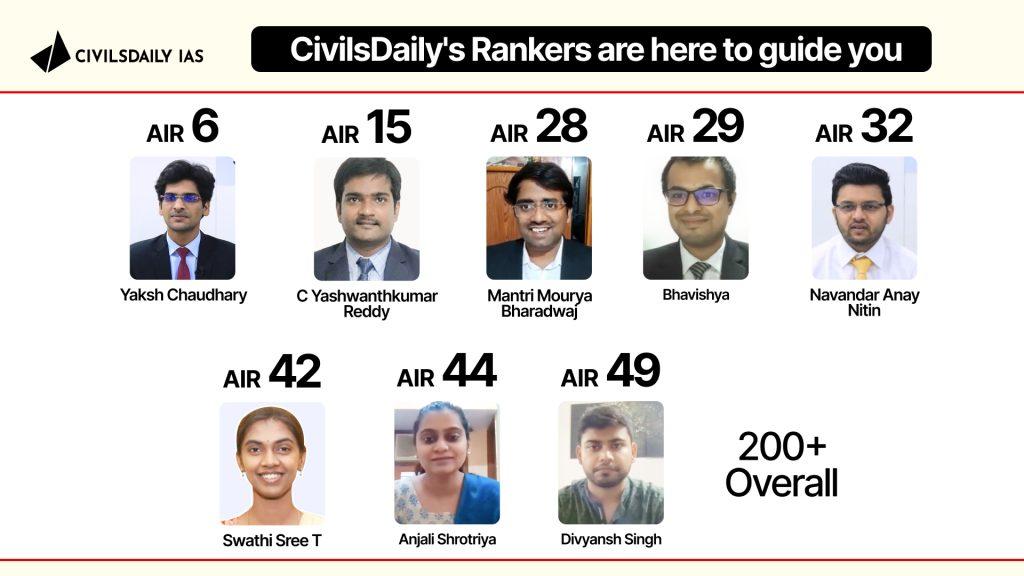
    The immense validation of our program is manifest in our stellar results from UPSC 2022 – 13 of our students ranked in the top 50 and over 250 students found their names in the final list.


    Who should Join this Program?

    It is specifically tailored for those who are seeking expert guidance, comprehensive study resources, and a structured preparation strategy, all bundled with consistent evaluation and feedback.

    • Aiming for a top 50 rank in the UPSC CSE 2024 exam.
    • Adaptive Learners seeking Dynamic approach
    • Aspirants who want to be trend adapters from the very beginning.
    • Those who, despite previous unsuccessful attempts in Prelims or Mains, are determined to ace UPSC-2024.
    • Devoted aspirants who seek productivity, consistency, efficiency, continuous evaluation, and doubt clearance in their UPSC 2024 journey.
    • UPSC 2024 Aspirants who love ‘Integrated Learning‘ under the guidance of a fresh IAS officer.
    • IAS candidates who are comfortable with self-study but need occasional motivation boosters to keep on track

    Key outcomes

    Complete Coverage: With the program’s meticulous planning, you will finish GS and Current Affairs syllabus, including revisions and tests, right on schedule.

    Crystal Clear Understanding: Expect a profound, UPSC-caliber understanding of all concepts, equipping you for both Prelims and Mains.

    Guided Consistency: With Pavandatta, an IAS topper, and dedicated in-house mentors guiding your journey, your preparation will be relentlessly consistent, highly efficient, and optimally effective.

    Mastering MCQs: Under the guidance of Pavandatta (AIR 22) and experienced mentors like Sajal sir and Zeeshan sir, you’ll acquire expert-level MCQ-solving skills, with a sure-shot strategy to crack Prelims with 120+ scores.

    Superior Answer Writing: Learn from the best! Pavandatta and the team will equip you with unmatched answer-writing skills, providing a clear strategy to conquer Mains papers.

    Confident Clearing of Exams: With our program’s backing, you’ll not just clear, but ace the UPSC Prelims and Mains 2024.

    Regular Refinement: Through frequent assessments and feedback from Pavandatta and the team, you’ll continuously refine your strategy and improve your performance.

    Assured Interview Success: Our program doesn’t stop at Mains. We’ll prepare you to confidently face and impress the UPSC interview board.

    Personalized Pathway: Our individualized mentorship ensures that your unique challenges are addressed, and your potential is fully realized.

    Guaranteed Success: With Pavandatta’s proven track record and our program’s comprehensive structure, cracking UPSC 2024 isn’t just a possibility – it’s a certainty. You are preparing not just for the exam but to rank high!


    Program Inclusions:

    The program is a comprehensive package that includes:

    1. Super Mentorship with AIR 22: Personal guidance from a Top 50 ranker, GVS Pavandatta. Three tiered mentorship
    2. Masterclass Lectures: Interactive and comprehensive lessons from our expert faculties.
    3. Ultimate Assessment Program: Regular assessments to measure progress and areas for improvement.

    Masterclass: GS Static Lecture series.

    • Masterclass covers 100 percent static syllabus from basic to advanced.
    • Focus on developing an interest in the subject.
    • Better language & explainers to ensure conceptual clarity
    • Comparative analysis with quick reference tables
    • Flowcharts, Listicles & Mind maps for easy recall
    • Note4Students in every chapter to establish relevance
    • Previous Year Questions to ensure you understand the level of depth required to crack the UPSC Mains.

    UAP: Ultimate Assessment Program

    Comprehensive Assessment Program that includes Test Series for both Prelims and Mains, Current Affairs, and Weekly Answer Writing and Essay Program

    Five Components of UAP:

    1. UPSC Prime Prelims Test Series
    2. Mains Essential Program
    3. Samachar Manthan 2024 – Current Affairs and Answer Writing program by Sajal sir
    4. Dominate Prelims 2024 by Zeeshan sir
    5. Essay Program

    UPSC’22 Top Rankers are now Civilsdaily Super Mentors

    Act now and secure your spot in this prestigious program.

  • Masterclass Alert: Ace the Art of Answer Writing with 30 min Live Practice Sessions: Tackle 16 Challenging Questions from GS 1, 2, 3, and 4 | Join LIVE Sukanya Ma’am | Book Your Seat

    Masterclass Alert: Ace the Art of Answer Writing with 30 min Live Practice Sessions: Tackle 16 Challenging Questions from GS 1, 2, 3, and 4 | Join LIVE Sukanya Ma’am | Book Your Seat

    14th June (Wednesday) 2023 | LIVE Masterclass by Sukanya Ma’am | Art of Mains Answer writing with 30 min LIVE Format


    Supercharge your UPSC Mains GS answer writing preparation with the exceptional session by Sukanya Ma’am. If you have cleared Prelims ’23, don’t miss out on the most important webinar to evaluate your answer writing skills across GS 1, 2, 3, and 4.

    It’s a valuable opportunity to pinpoint your strengths and weaknesses and enhance your performance. And if you couldn’t clear, seize this chance to gain early insights into the art of effective answer writing for the entire GS syllabus. Register now to receive four comprehensive questions each from GS 1, GS 2, GS 3, and GS 4, ensuring holistic practice and success in the UPSC mains exam.


    Register FREE for Sukanya Ma’am’s Answer Writing Masterclass


    Table of Content


    To excel in the UPSC Mains examination of 2023-2024, aspiring candidates can greatly benefit from practicing live answer writing using copies of UPSC 2022 rankers. 

    UPSC’22 Ranker AIR-16 Shishir Kumar Singh

    Rankers Like Shishir Kumar Singh (AIR-16), GVS Pavanadatta (AIR-22) Aaditya Pandey (AIR-48), and IAS Soham Mandhare Mukund Singh Chahar (AIR-273) have achieved exceptional success and have showcased their expertise through their well-crafted answers. By studying their copies, candidates will gain valuable insights into the art of answering questions effectively, thereby enhancing their own writing skills. 

    Join Sukanya Ma’am’s captivating LIVE webinar on Monday, where she’ll demonstrate the art of mastering UPSC Mains answer writing in just 30 minutes in a live format. With a focus on our comprehensive RMPG Test series, she will guide you in deciphering the finest and most likely questions, empowering you to craft exceptional answers that stand out. Don’t miss this impressive opportunity!


    Webinar Details:

    Topic: Practice Live GS Mains Answer Writing in 30 Minutes in a LIVE format & Get 4 Questions from each GS 1, 2, 3 and 4

    Date: 14th June (Wednesday), 2023

    Time: 7 PM onwards

    Mode: Online (Zoom Meeting Link will be sent via registered email address)


    Who should attend this Workshop?

    • Aspirants who are sure to clear UPSC 2023 and want to find & fill critical gaps in their Mains preparation.
    • Aspirants who want to have the right roadmap for Mains’23 Preparation’.
    • UPSC candidates who are doing self-study.
    • UPSC Mains 2023-24 aspirants who want to have a solid grip on Mains exam GS topics.
    • UPSC 2024 aspirants who will be starting from scratch
    • UPSC 2023 Mains aspirants who want to start mains prep at full throttle.
    • Aspirants who are struggling with time management
    • Aspirants who are not able to decipher the pattern and ‘new ways of UPSC’
    • UPSC 2024 aspirants who want effectiveness, efficiency, and consistency in their preparation

    What to expect in this Live Masterclass

    • How to find the finest and the most probable questions from our Test series.
    • How to understand the demand of a question fully and correctly before contemplating an answer for it. 
    • How toppers develop a basic mental framework of the answer before committing anything on the paper
    • It is very difficult to write anything for the examiner. So, what is the best way to introduce as well as conclude your answer?
    • How to focus on Questions’ directives and comply with a minimum but an effective requirement.
    • How to divide the main body of the answer into paragraphs or bullets as required.
    • How long should your introduction and conclusion be? What do toppers practice?
    • Where to and how to apply opinion-based answers!
    • The correct approach to writing a fact-based answer
    • How to maintain ‘accuracy’, ‘brevity’, and ‘Clarity’ in each and every answer
    • How to do a comparative analysis of toppers’ approach. How do they create an on-demand answer and how do they follow the answer writing basic rules- ‘Brainstorming’, ‘Outlining’, ‘Idea/Argume

    You can’t afford such an opportunity to learn UPSC GS Mains answer writing in just 30 min in a live format. Join Masterclass


    What’s RMPG Program?

    RMGP 2023 is a Toppers-guided comprehensive and intensive program for GS Mains. Become UPSC Mains ready with UPSC Rankers, Sukanya ma’am, and mentors by learning the fundamentals and intricacies of Answer Writing, practicing Mains Answer writing, attempting UPSC level tests, getting evaluated by top faculties, and improving under personalized mentorship.

    Talk to IAS IPS rankers for Mains 2023 strategy


    UPSC’22 Top Rankers have to say


    CivilsDaily’s FREE Masterclass package

    Post-webinar we will share important PDFs, timetable framework, and notes.

    • PDF of 4 Questions from RMPG Test Series each from GS 1, 2, 3, and 4
    • Mains 2023-2024 Toolkit
    • Samachar Manthan FREE Module

    Other than this a strategy package will be emailed to you.


    What The Hindu opined about Civilsdaily Mentorship

    best coaching for upsc in delhi

    Register FREE for LIVE Masterclass by UPSC 2022 Rankers’ Mentor and Mains Program Head Sukanya Ma’am

  • Global Nuclear Arsenal Expansion Race

    nuclear arms stockpile

    Central Idea

    • China’s nuclear arsenal: China increased its nuclear arsenal from 350 warheads in January 2022 to 410 warheads in January 2023, according to SIPRI.
    • Potential ICBM parity: SIPRI suggests that depending on how China structures its forces, it could have a comparable number of intercontinental ballistic missiles (ICBMs) to the U.S. or Russia by the end of the decade.
    • Concerns over stated aim: SIPRI’s Weapons of Mass Destruction Programme questions the alignment between China’s expanding nuclear arsenal and its declared goal of maintaining minimum nuclear forces for national security.

    India and Pakistan’s Nuclear Arsenal Growth

    • India’s nuclear arsenal: SIPRI estimates indicate that India’s nuclear arsenal grew from 160 warheads in 2022 to 164 warheads in 2023.
    • Pakistan’s nuclear arsenal: SIPRI estimates that Pakistan’s nuclear arsenal increased from 165 warheads in 2022 to 170 warheads in 2023.
    • Emphasis on longer-range weapons: India seems to be placing growing importance on longer-range weapons capable of reaching targets across China, while Pakistan remains the primary focus of India’s nuclear deterrent.

    Global Nuclear Weapons Inventory

    • Total global inventory: As of January 2023, the global inventory of warheads reached 12,512.
    • Warheads in military stockpiles: Approximately 9,576 warheads were held in military stockpiles for potential use, representing an increase of 86 warheads compared to January 2022.
    • Dominance of Russia and the U.S.: Russia and the U.S. collectively possess nearly 90% of all nuclear weapons.
    • Stability in nuclear arsenals: The size of Russia’s and the U.S.’ nuclear arsenals remained relatively stable in 2022, although transparency regarding nuclear forces declined due to the Ukraine conflict, as noted by SIPRI.

    Reasons for increased stockpile

    • Shifting power dynamics: China’s significant expansion of its nuclear arsenal has implications for global power dynamics, potentially challenging the traditional dominance of the U.S. and Russia in the nuclear arena.
    • Regional security concerns: China’s increased nuclear capabilities raise concerns among neighboring countries, particularly those involved in territorial disputes or security rivalries in the Asia-Pacific region.
    • Global arms race: China’s nuclear arsenal growth may fuel an arms race in the region, leading to increased tensions and instability.

    Nuclear Dynamics in South Asia

    • Strategic rivalry between India and Pakistan: The nuclear arsenals of India and Pakistan continue to expand, reflecting the ongoing strategic competition and deterrence dynamics between the two countries.
    • Escalation risks: The increase in nuclear capabilities in South Asia raises the potential for miscalculation and escalation, heightening the risk of a nuclear conflict in the region.
    • Implications for regional stability: The growth of nuclear arsenals in India and Pakistan has wider implications for regional stability and the effectiveness of non-proliferation efforts.

    Challenges to the Global Disarmament ideals

    • Declining transparency: The decline in transparency regarding nuclear forces in Russia and the U.S., coupled with the overall increase in global warhead stockpiles, poses challenges to nuclear arms control and disarmament efforts.
    • Erosion of trust: The lack of transparency and increased stockpiles undermine trust between nuclear-armed states, making it more difficult to achieve meaningful progress in disarmament negotiations.
    • Need for renewed dialogue: The growing nuclear arsenals underscore the importance of revitalizing international dialogue on disarmament and strengthening existing arms control agreements.

    Legacy issues

    • Notion of Nuclear ‘Haves’ and ‘Have-Nots’: The proponents of disarmaments are themselves nuclear armed countries thus creating a nuclear monopoly.
    • Concept of Peaceful Nuclear Explosion (PNE): conducted for non-military purposes such as mining.

    India’s commitment for de-nuclearization

    • Universal commitment and non-discriminatory framework: India advocates for nuclear disarmament based on principles of equality, non-discrimination, and global security.
    • Working paper on Nuclear Disarmament: India submitted a working paper on Nuclear Disarmament to the UN General Assembly in 2006, presenting its perspectives and proposals for achieving global disarmament.
    • Participation in Nuclear Security Initiatives: India actively engages in the Nuclear Security Summit process and supports efforts to enhance global nuclear security through participation in international conferences organized by the IAEA.
    • Membership in the Nuclear Security Contact Group: India is a member of the Nuclear Security Contact Group, contributing to discussions and initiatives aimed at strengthening international cooperation on nuclear security.
    • Support for Fissile Material Cut-off Treaty (FMCT): India expresses readiness to support negotiations on a Fissile Material Cut-off Treaty, considering it an important step towards disarmament by banning the production of fissile material for nuclear weapons.
    • Concerns regarding the Comprehensive Nuclear-Test-Ban Treaty (CTBT): India has not joined the CTBT due to several concerns, but it remains open to addressing these concerns and exploring possibilities for future accession to the treaty.
    • Leadership in Preventing Weapons of Mass Destruction (WMD) Proliferation: India actively leads efforts to prevent terrorists from acquiring WMDs, piloting an annual UNGA Resolution on “Measures to Prevent Terrorists from Acquiring Weapons of Mass Destruction” since 2002, which receives consensus adoption.

    Way forward

    • Strengthening non-proliferation efforts: The expansion of nuclear arsenals highlights the need for robust non-proliferation mechanisms and adherence to international agreements such as the Treaty on the Non-Proliferation of Nuclear Weapons (NPT).
    • Managing nuclear risks: As the number of nuclear-armed states increases, effective risk management and confidence-building measures become crucial to prevent accidental or intentional use of nuclear weapons.
    • Balancing deterrence and disarmament: The international community faces the challenge of striking a balance between maintaining credible deterrence and pursuing disarmament goals to ensure global security.


    Get an IAS/IPS ranker as your 1: 1 personal mentor for UPSC 2024

  • CoWIN Vaccination Data Breached

    cowin

    Central Idea

    • Data breach reports: The Health Ministry, on Monday, refuted claims of a data breach of COVID vaccination beneficiaries, stating that such reports were baseless and mischievous in nature.
    • Investigation by CERT-In: The Indian Computer Emergency Response Team (CERT-In) has been asked to investigate the alleged data breach issue and submit a report to ascertain the facts.
    • Assurance of data safety: The Ministry maintains that the CoWIN (Covid Vaccine Intelligence Network) portal is completely safe, equipped with adequate safeguards to protect data privacy.

    About CoWIN

    • Development: CoWIN was developed and is owned and managed by the Ministry of Health.
    • Policy decisions: The Empowered Group on Vaccine Administration (EGVAC), chaired by the former CEO of the National Health Authority, oversees this. It includes members from the Health Ministry and MeitY (Ministry of Electronics and Information Technology).

    Evaluation of Alleged Breach

    • CERT-In review results: The review conducted by CERT-In concludes that there was no direct breach of the CoWIN app or database.
    • Data source of Telegram bot: The data accessed by the Telegram bot was sourced from a separate threat actor database, which contained previously breached or stolen data.
    • No direct breach of CoWIN: The Ministry states that it does not appear that the CoWIN app or database itself was directly breached.

    Clarification on CoWIN Data Access

    • Three methods of data access: The Ministry outlines the three ways in which data can be accessed on the CoWIN portal: user access, vaccinator access, and authorized third-party applications.
    • Data sharing with Telegram bot: The Ministry clarifies that data cannot be shared with the Telegram bot without undergoing the one-time password (OTP) authentication process.
    • Limited data collection: CoWIN only collects the year of birth and does not capture a person’s address.

    Unanswered Questions and API Access

    • Uncertainty regarding recent breaches: The Ministry has not explicitly clarified whether the CoWIN database was breached recently or in the past.
    • Lack of insights on bot accuracy: The Ministry’s statement does not offer insight into the accuracy of the Telegram bot’s retrieval of citizens’ data from the CoWIN database.
    • API access without OTP: The Ministry admits the existence of an API that allows data sharing without OTP, but emphasizes that requests are accepted only from trusted whitelisted APIs.

    Concerns and Aadhaar Data

    • Accuracy of Aadhaar details: The accuracy of displaying Aadhaar numbers corresponding to mobile numbers raises concerns, as the government has never publicly acknowledged any breaches of Aadhaar data.
    • Need for clarity: The Ministry’s statement does not provide clarity on how the Telegram bot accurately displayed Aadhaar numbers.
    • Addressing security concerns: The Ministry should address concerns regarding the security of Aadhaar data and provide transparency on its safety measures.

    Future Steps and Data Governance Policy

    • Empowering CERT-In: The Health Ministry has requested a final report from CERT-In to investigate the alleged data breach incident thoroughly.
    • National Data Governance policy: The Ministry highlights the finalization of the National Data Governance policy, which aims to establish a common framework for data storage, access, and security standards across the government.
    • Awaited response from CERT-In: The Ministry is awaiting a response from CERT-In regarding the issue, which will provide further insights into the nature of the breach.

    Assurance and Previous Leaks

    • Assurances of secure infrastructure: Health authorities maintain that CoWIN has state-of-the-art secure infrastructure and has never experienced a security breach.
    • Dismissal of previous claims: Previous claims of data leaks, such as the ‘Dark Leak Market’ incident, were dismissed by health authorities, emphasizing the safety of citizen data.
    • Security measures in place: CoWIN has implemented security measures such as web application firewall, regular vulnerability assessments, and OTP authentication to ensure the protection of data.

    Implications of this data leak

    • Identity theft risks: The leaked data exposes individuals to the risk of identity theft, as sensitive information can be misused for fraudulent activities.
    • Targeted scams and phishing attacks: With access to personal details, scammers may attempt targeted scams and phishing attacks, leading to financial loss and potential harm to individuals.
    • Loss of trust in government systems: The data breach undermines public trust in the government’s ability to safeguard sensitive information, affecting confidence in the vaccination program and other government initiatives.
    • Reputational damage: The incident could tarnish the reputation of the CoWIN platform and associated government agencies, affecting their credibility in managing sensitive data.
    • Impact on future vaccination drive: Concerns about data security may deter individuals from participating in the vaccination program, slowing down efforts to control the spread of COVID-19.
    • Calls for accountability: The data leak prompts demands for accountability from the responsible government agencies and the implementation of stricter measures to protect citizen data.

    Conclusion

    • The data leak incident related to the CoWIN portal raises serious concerns about the privacy and security of individuals’ personal information.
    • While the Ministry of Health maintains that the CoWIN app and database were not directly breached, the access to sensitive data through a Telegram bot raises questions about the integrity of the system.


    Get an IAS/IPS ranker as your 1: 1 personal mentor for UPSC 2024

  • IIT-M generates Hydrogen from Seawater

    hydrogen

    Central Idea

    • Researchers from IIT-Madras have developed components for a cost-effective method of electrolyzing seawater to produce green hydrogen.
    • The current alkaline water electrolyzer technology is energy-intensive, requires an expensive oxide-polymer separator, and uses fresh water.

    Generating Green Hydrogen

    • Instead of using fresh water, the researchers developed an electrolyzer that utilizes alkaline seawater.
    • Carbon-based support material was used for the electrodes to minimize corrosion.
    • Transition metal-based catalysts were designed to catalyze both oxygen and hydrogen evolution reactions, improving the production of hydrogen and oxygen.
    • A cellulose-based separator was developed to allow hydroxide ions to pass through while preventing crossover of oxygen and hydrogen.

    How does Electrolysis take place?

    • The alkaline water electrolyzer involves two half-reactions at the anode and cathode.
    • At the cathode, water dissociates into H+ and hydroxide ions, with H+ ions converting into hydrogen.
    • Hydroxide ions produced at the cathode pass through the separator, and oxygen is generated at the anode.
    • When seawater is used, hypochlorite formation occurs at the anode, causing corrosion and reducing oxygen production. Impurities also affect the hydrogen evolution reaction at the cathode.

    How were the Catalyst and Electrode designed?

    • The carbon-based support material was used for both anode and cathode electrodes to prevent corrosion.
    • The catalyst coating on the support material enhances hydrogen production at the cathode and oxygen production at the anode.
    • Transition bimetals in the catalyst are selective toward oxygen evolution reaction, overcoming the challenge of hypochlorite formation.
    • Despite impurities adsorbed on the cathode, the catalyst promotes hydrogen evolution, increasing hydrogen production.

    What made this device novel?

    • The team developed a cellulose-based separator to separate the anode and cathode.
    • The separator allows hydroxide ions to pass through but minimizes the crossover of hydrogen and oxygen.
    • The separator shows high resistance to degradation in seawater.

    Experimental Results and Performance

    • The assembled electrolyzer achieved a seawater splitting voltage of 1.73 V at 10 mA/sq.cm and 26 degrees C.
    • The optimized parameters enable the electrolyzer to directly use photovoltaic-derived voltage for green hydrogen production.
    • Two prototypes of different dimensions were developed, producing hydrogen at rates of 250 ml/hour and 1 liter/hour.
    • A stack of three cells produced hydrogen at a rate of about 4 liters/hour.

    Back2Basics: Hydrogen Categories

    Production Method Carbon Emissions
    Gray Hydrogen Steam Methane Reforming (SMR) from fossil fuels High emissions
    Blue Hydrogen Steam Methane Reforming (SMR) from fossil fuels with carbon capture and storage (CCS) or carbon capture utilization and storage (CCUS) Reduced emissions compared to gray hydrogen
    Green Hydrogen Electrolysis using renewable energy sources (solar, wind, hydro) No carbon emissions
    Turquoise Hydrogen Methane pyrolysis from fossil fuels with carbon capture and storage (CCS) or carbon capture utilization and storage (CCUS) Reduced emissions compared to gray hydrogen
  • UPSC Prelims 2023 Result Out-Names of 14624 qualified candidates inside

    UPSC Prelims 2023 Result Out-Names of 14624 qualified candidates inside

    🎉Heartfelt congratulations to all those who successfully cleared the challenging UPSC Prelims 2023!


    The Union Public Service Commission (UPSC) has released roll number-wise names of 14,624 candidates who have cleared the UPSC prelims 2023.


    Struggling to clear prelims despite multiple attempts? Don’t lose hope!

    Aaditya, who secured AIR 48, faced similar challenges. He failed twice but never gave up. Through strategic preparation and guidance, he eventually succeeded in clearing the exam.

    Now, he is offering free 1-on-1 sessions at the CD office to assist you in your journey. Don’t miss this opportunity to gain valuable insights and achieve your UPSC goals.

    Civilsdaily Students shine in Prelims 2023


    Candidates who have passed the prelims 2023 exam are qualified for admission to the Civil Services (Main) Examination. They will have to apply online again in a new form (Detailed Application Form ) provided to them. They should fill up the Detailed Application Form (DAF) online and submit the same online.

    We at Civilsdaily are committed to helping you in the process of figuring out your learning personalities and creating the best timetable and suggesting the most relevant strategies for your IAS Prep. 

    Take 5 minutes to fill up this Samanvaya Form. We will arrange a mentor call for you once this is done.


    To those who couldn’t clear the UPSC Prelims 2023..

    If you didn’t make it through the UPSC Prelims 2023, don’t let it discourage you. Use it as an opportunity to learn, grow, and come back stronger. Your journey doesn’t end here!

    We provide you 1) UAP Super Mentorship Plus 2024 under Aaditya Pandey (AIR 48) 2) Dominate Prelims under Zeeshan Sir

    UAP Super Mentorship Plus 2024 under Aaditya Pandey (AIR 48)

    Have queries? Register to talk to our mentors for UPSC Super Mentorship Program

    2) Dominate Prelims under Zeeshan Sir

    Talk 1-1 with our mentors for a year-long program for UPSC Prelims 2024


    Civilsdaily Hall of Fame 2022
  • JATAN: Virtual Museum Software

    jatan

    Central Idea

    • The Union government plans to complete the 3D digitisation of all museums under its administrative control by the end of 2023.
    • The digitisation initiative using JATAN software aims to enhance the conservation and preservation of artefacts.

    What is JATAN Software?

    • JATAN is a virtual museum builder software used in Indian museums.
    • It enables the creation of a digital collection management system and is deployed in several national museums across India.
    • The objective of JATAN is to digitally preserve and document museum objects for the benefit of researchers, curators, and other interested individuals.
    • The software was designed and developed by the Human Centres Design and Computing Group at the Centre for Development of Smart Computing (C-DAC) in Pune.
    • JATAN facilitates the creation of digital imprints of preserved objects and monuments.
    • These digital imprints are integrated into the national digital repository and portal, making them accessible to the public.

    Benefits of 3D Digitisation

    • 3D digitisation offers improved conservation and preservation of artefacts, ensuring their long-term protection.
    • It enhances accessibility and exploration for museum visitors, providing new ways to engage with the collection.
    • The 3D models generated through digitisation can be used in augmented reality, virtual reality, and interactive learning experiences, creating immersive educational opportunities.
    • Furthermore, the digitisation process enables the potential for 3D printing, allowing for replication and detailed study of artefacts.
  • UPSC Prelims Results – Namewise list. CD students shine and the path forward.

    UPSC Prelims Results – Namewise list. CD students shine and the path forward.

    Hi everyone,

    🎉Heartfelt congratulations to everyone who has made it to the list. It is a huge achievement. 14k out of ~10L is a big deal. At CD, nothing gives us more pride than receiving selection messages from you.

    For us, this is a tough time as many students who were absolutely brilliant missed out for some reason or the other. There are 2 learnings with which we are moving forward.

    First, nothing is more painful than acing the GS paper but failing CSAT. And this has been the case with many folks who appeared for the interview as well. This year, we will leave no stone unturned to ensure adequate coverage of maths section, logical reasoning section so you dont have to rely on the comprehension section.

    Second and most important – Prelims paper now requires a fundamentally different approach. While our Dominate Prelims program under Z Sir is the best shot you have to clear prelims, we are revamping it even further to ensure you are not surprised by papers like these.

    Get in touch

    Get in touch

  • Project Akashteer: Indian’s Air Defence Upgrade

    akashteer akash

    Central Idea

    • Reorientation of focus: Indian Army shifts focus from western to northern borders following 2020 standoff with China.
    • Lessons from Ukraine conflict: Insights from ongoing war in Ukraine are influencing transformation of Army Air Defence (AAD).
    • Induction of new systems: New systems are being inducted to enhance air defence capabilities.

    What is Project Akashteer?

    • Networking and automation: Project Akashteer aims to establish networking and automation capabilities similar to Indian Air Force’s system.
    • Comprehensive air defence picture: Project Akashteer focuses on building a comprehensive air defence picture for monitoring, tracking, and engaging air defence assets.
    • Implementation target: The project aims to complete implementation by March 2024 for integration of radars, control centres, and weapons.

    Shifting Focus and New Technology

    • Shift in focus: Indian Army shifts focus from western border to northern borders.
    • Mountainous air defence requirements: The need for lightweight radars and mobile weapon systems to cater to requirements in mountainous regions.
    • Consideration of new threats: Insights from Ukraine conflict prompt consideration of new threats such as UAVs, loitering munitions, swarm drones, and cruise missiles.

    Induction of New Systems

    • Improved Akash surface-to-air missile systems: Contract signed for two regiments of improved Akash systems to enhance air defence capabilities.
    • Collaboration with Israel: Collaboration with Israel for the induction of medium-range surface-to-air missile project.
    • Development of quick reaction systems: Indigenously developing quick reaction surface-to-air missile (QRSAM) to meet critical air defence needs.
    • Exploration of air defence guns: Ongoing efforts to procure air defence guns to strengthen air defence capabilities.

    Challenges and Indigenization

    • Component shortage: Global shortage of components and hardware due to the Ukraine conflict affecting the pace of inductions.
    • Emphasis on indigenization: Focus on promoting indigenization and reducing dependence on imports for air defence systems.
    • Revitalization of modernization: Revival of Army Air Defence modernization with emphasis on indigenous development and procurement.

    Significance of the project

    • Strengthened air defence capabilities: Focus on enhancing air defence capabilities for robust border security.
    • Improved monitoring and coordination: Integration and automation initiatives enhance monitoring, coordination, and situational awareness.
    • Enhanced border preparedness: Contribution to enhanced border preparedness and response capabilities.

    Way forward

    • Continued research and development: Focus on continuous research and development to stay ahead of evolving threats and challenges.
    • International collaboration: Collaboration with international partners to incorporate advanced air defence systems and technologies.
    • Integration of advanced technologies: Integration of technologies like AI and machine learning to enhance air defence operations and effectiveness.
    • Innovation and efficiency: Focus on innovation, efficiency, and effectiveness in future air defence strategies.
  • (Just Launched) Smash Ethics 2024 (Batch 1) with 1-to-1 Mentorship | Score 130+ in Ethics GS-4 | 8 Full Length Tests | Limited Seats

    (Just Launched) Smash Ethics 2024 (Batch 1) with 1-to-1 Mentorship | Score 130+ in Ethics GS-4 | 8 Full Length Tests | Limited Seats

    📢Smash Ethics 2024 (Batch 1) with 1-to-1 Mentorship for a score of 130+ in GS-4 in UPSC Mains | Limited Seats Only


    Talk 1-to-1 to Our Senior IAS Mentor


    Smash Ethics Full Length Tests Timetable


    Table of Content


    The Mains GS Paper 4, also known as Ethics, stands out as the most dynamic among all the papers. It defies a singular approach, requiring a nuanced understanding. Drawing from our extensive experience with over 2000 students, we can confidently state that ethics holds the power to reshape one’s UPSC examination journey. Achieving a strong score in the ethics paper becomes an indispensable prerequisite for securing a coveted position in the final selection and attaining one’s desired service.

    It’s important to note that the ethics paper assesses “ethical competence” rather than mere knowledge of ethics. It’s worth remembering that General Studies Paper 4 presents a unique opportunity to score 130+ marks effortlessly. The key lies in mastering the static content, relating it to current affairs, and effectively conveying it in writing.

    Therefore, excelling in the ethics paper necessitates proficiency in both the art of answer writing and a solid grasp of the static material.

    What is Smash Ethics?

    Civilsdaily’s Smash Ethics Program has emerged as a game-changer for UPSC 2022 toppers, including AIR-16, AIR-22, AIR-48, AIR-49, AIR-218, and AIR-273, among others. This innovative program has revolutionized the way aspirants approach the ethics paper, providing them with a comprehensive and strategic framework to excel in this crucial section. By integrating a diverse range of case studies, model answers, and real-time analysis of ethical dilemmas, the program equips candidates with a deep understanding of ethical concepts and their practical application.

    Additionally, Civilsdaily’s 1-to-1 personalized mentorship and feedback system has played a pivotal role in honing the skills of these toppers, boosting their confidence, and ultimately helping them secure top ranks in the UPSC examination.

    Watch:- Messages of our Hall of Fame Top Rankers

    AIR-16, Shishir Kumar Singh UPSC 2022

    AIR-22, GVS Pavanadatta UPSC 2022

    AIR-48 Aaditya Pandey UPSC 2022

    AIR-49, Sanskriti Somani

    AIR-273, MUKUND SINGH CHAHAR UPSC 2022

    Civilsdaily Hall of Fame 2022

    👉 The Smash ethics program will focus on both the needs of answer writing and static coverage of the syllabus.

    Being the composition paper, it offers maximum returns. With very little effort, one can score good marks. Thorough preparation of this paper also helps in adding the moral dimension to answers in GS Paper-1, 2, and 3 papers and also the essay paper. It also helps in coming across as a person who has the qualities desired of a civil servant in the personality test.

    Enroll in Smash Ethics 2024 Batch 1

    Have any queries? register & you will receive our mentor’s call within 24 hours

    The Hindu has acknowledged CD’s Mains answer writing & Mentorship programs.
    • Shift towards more conceptual questions than direct static questions
    • More current affairs focused
    • Complex case studies
    • Lengthier paper

    Have any queries? Get our mentor’s call in 24 Hrs

    Enroll in Smash Ethics 2024 Batch 1


    Smash Ethics Program Inclusion:

    • Comprehensive Video Lectures covering Paper 4
    • Full syllabus Notes.
    • 8 FLT tests
    • 1-1 Mentorship support after every test
    • Membership of Ethics group (exclusive) on Civilsdaily’s Telegram Group
    • Doubt resolution session on Habitat

    Have any queries? Get our mentor’s call in 24 Hrs


    Here’s what the program includes:

    Video Lectures: 

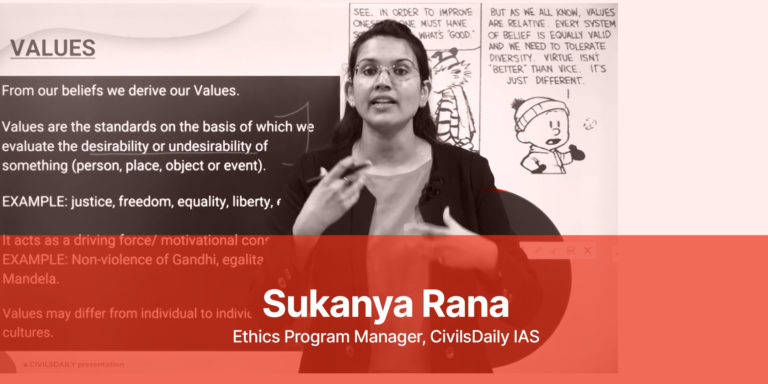
    Structured video lectures of Paper 4 for a concrete understanding of the syllabus. Our novel methodology accompanied by an in-depth explanation ensures comprehensive coverage of every topic in the syllabus. Added to this, we have made sure to add that extra element of fun. Here’s a snapshot of the lecture for you:

    8 FLT Tests:

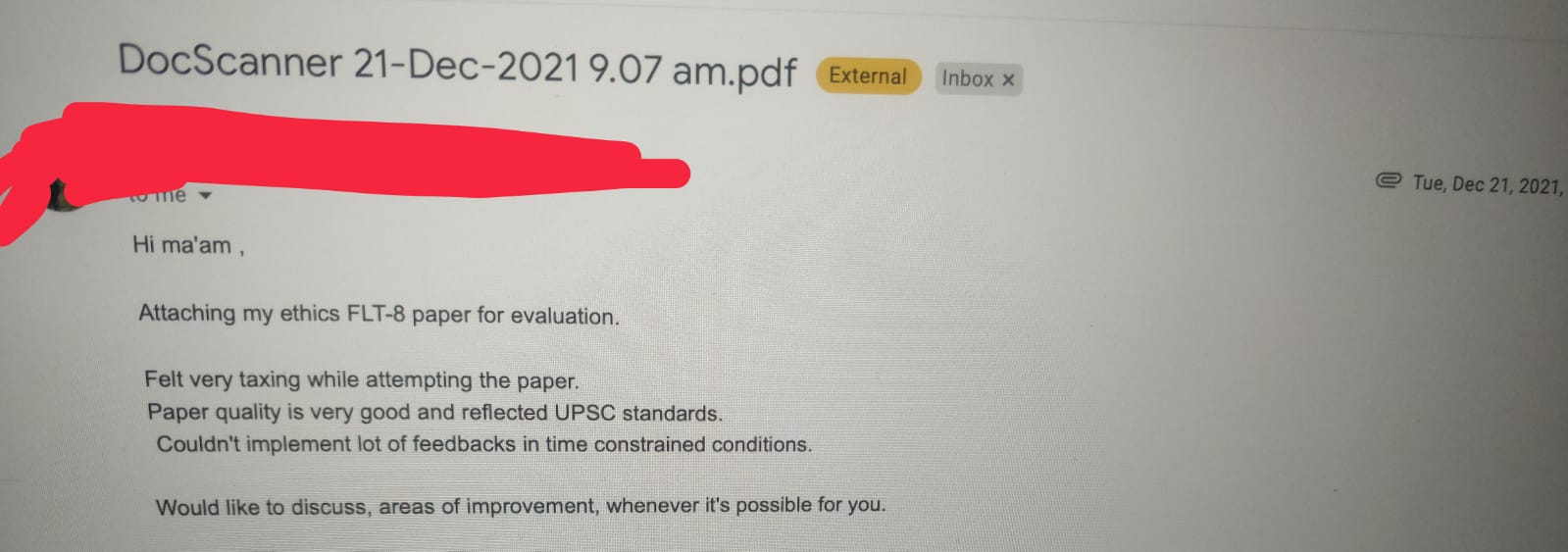
    FLT tests will help to bring together the ideas and concepts to the art of answer writing. Practice full-length tests to evaluate your levels. With every test and discussion on strategies to follow, one can improve with every test. Questions framed are from the most important UPSC relevant themes and papers are based on the latest pattern of UPSC. Get model answers covering all the aspects of a question and providing enriching points to the student.

    1-1 Mentorship support

    A schedule is created where dedicated days are kept to discuss your doubts regarding each test and lecture. Weekly Zoom calls can help boost ideas and discussion on various techniques, also among peers so that one can get a lot of exposure to various answer writing techniques and points to write in the answer. Also, the best answer copy of the week can be taken for discussion so that you can get an idea of how to write better.

    👉Acknowledging the need to ensure the fastest mentorship response, Senior IAS mentors like Partha Sir, and Swatantra Sir, will receive your call.

    Civilsdaily’s Handholding

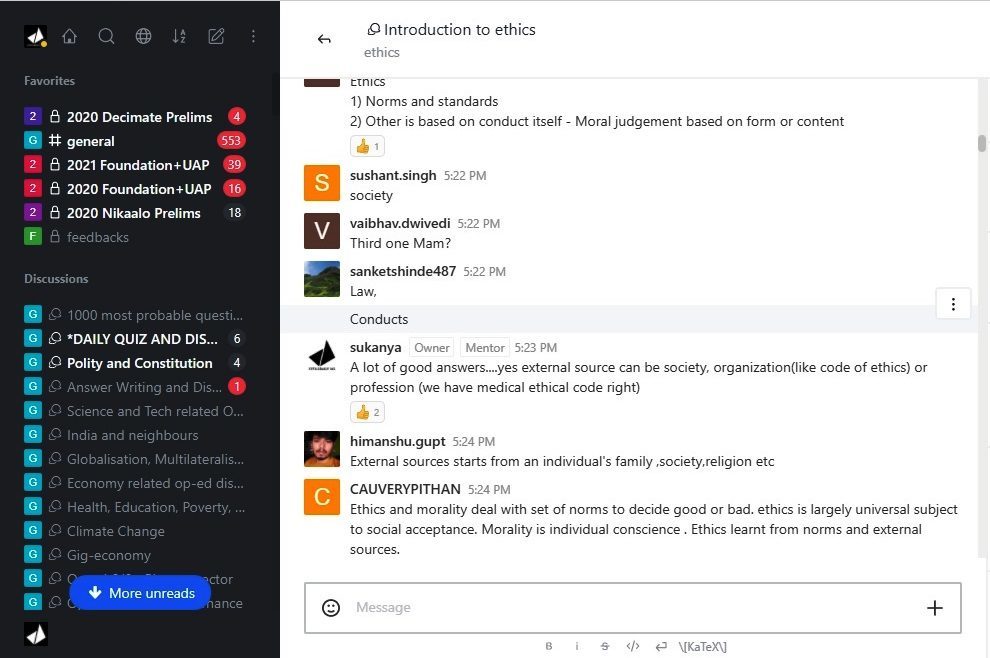
    You’ll be given membership to an exclusive group on Civilsdaily’s Habitat. The group will be headed by Sukanya Ma’am herself. From doubt resolution and discussion will be done by Sukanya ma’am only. Here you can directly connect with ma’am. Habitat is where everything comes together learning, doubt clearing, mentor’s support, and a focused community. You’re going to learn and discuss it like never before.

    Have any queries? receive our mentor’s call as soon as possible


    About the Mentor:

    Sukanya Rana Ma’am:

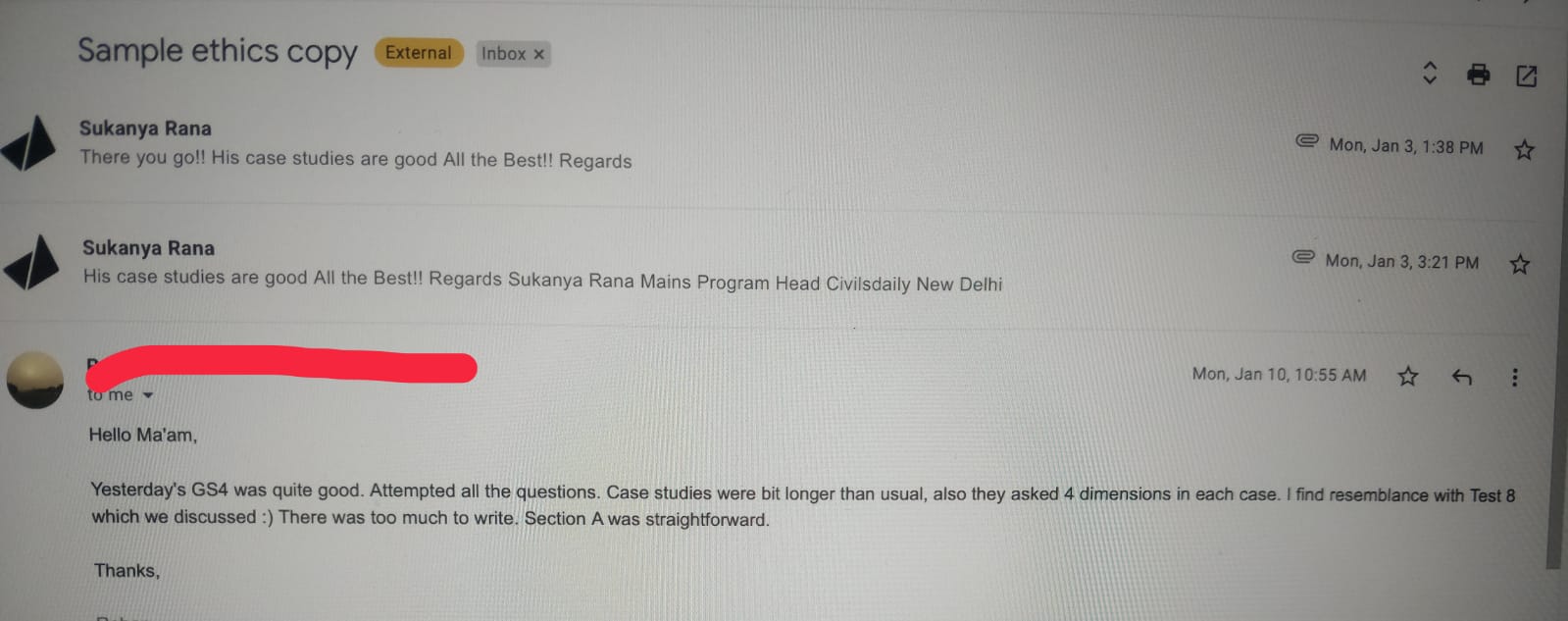
    Sukanya Ma’am has firsthand experience of 4 mains and 2 interviews with UPSC. She has also appeared in the State PCS interview. Before she worked as an officer in a public sector bank and now as a Mentor at Civilsdaily, she aims to guide future aspirants in finding success. Sukanya Ma’am has scored consistently 100+ marks in ethics and in 2019 her marks were 140 in GS 4. In 2020, under her mentorship, many smash mains students were able to secure 120+ marks.

    👉 Acknowledging the need to ensure the fastest mentorship response, Senior IAS mentors like Partha Sir, and Swatantra Sir, will receive your call.


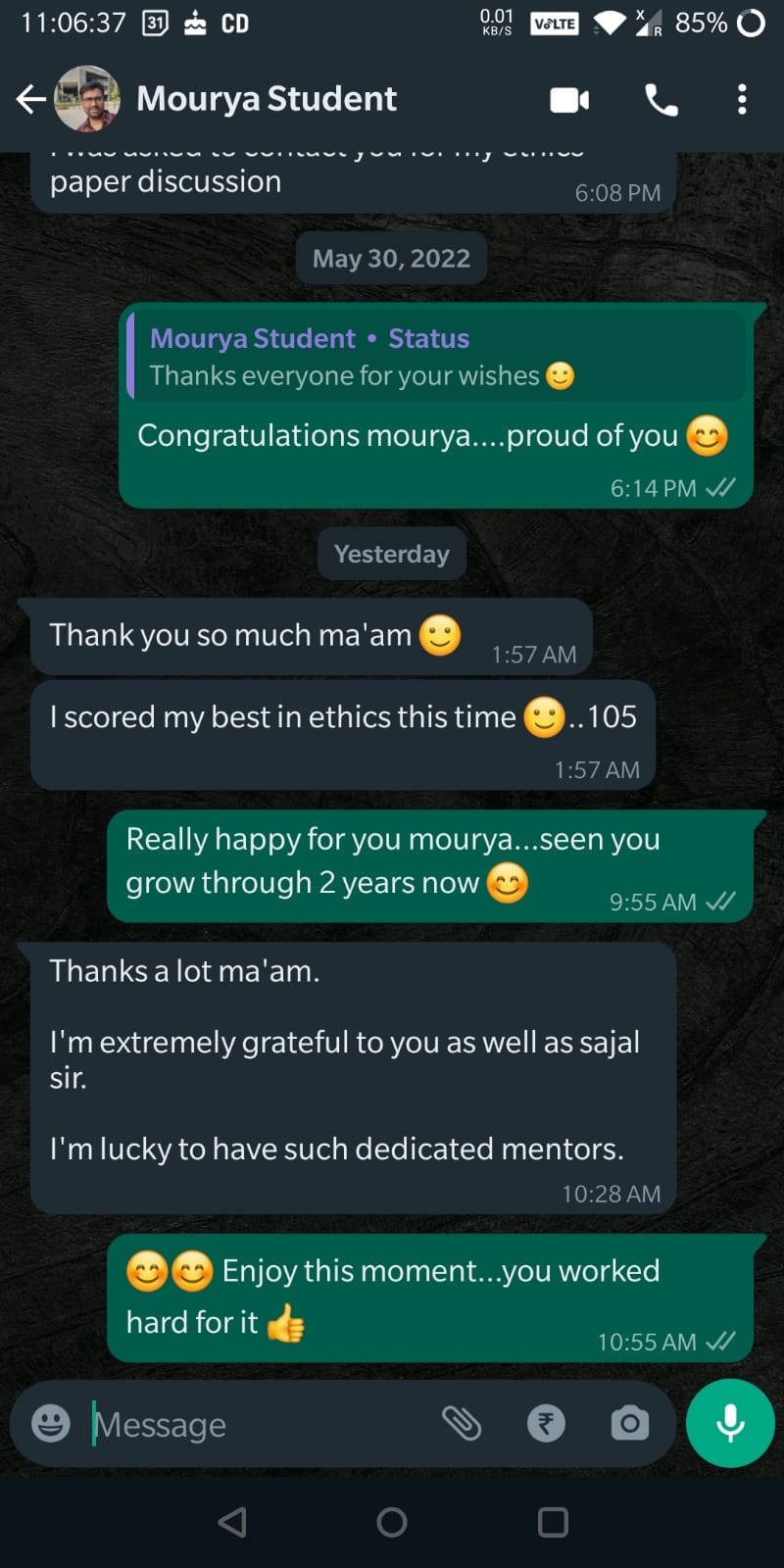
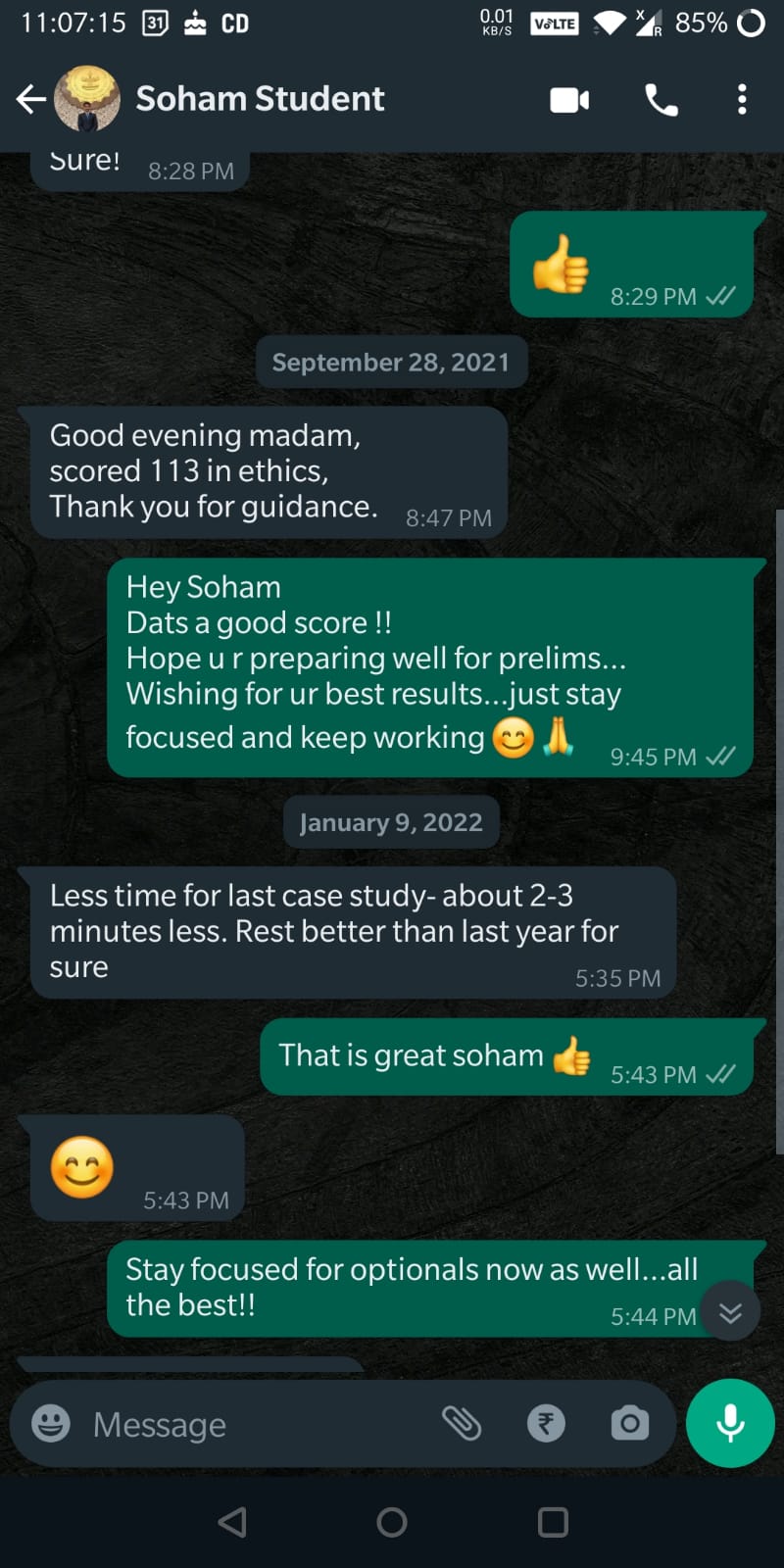
    Student’s Gratitude Messages:

    MANTRI MOURYA BHARADWAJ AIR-28 Roll: 1009473


    Rohan, Top Ranker UPSC-2021.
    Soham Mandre AIR 267 UPSC 2021 Roll: 6629429
    The Hindu has acknowledged CD’s Mains answer writing & Mentorship programs.

    if you have any queries, register & you will receive our mentor’s call as soon as possible

    Wish You All The Best..

  • Fruit Flies: Unveiling their Contributions to Science and Medicine

    fruit

    Central Idea

    • Flies’ negative perception: Fruit flies often considered annoying pests, but their significance in biological and medical science is immense.
    • Economic and environmental importance: Flies, including fruit flies, play crucial roles as pollinators for plants and contribute to decomposition processes.

    Fruit Flies (Drosophila melanogaster)

    • Overview: Fruit or vinegar fly species known for its nuisance during summer.
    • Scientific significance: Drosophila melanogaster is a well-understood animal organism globally and has contributed to numerous Nobel Prize-winning discoveries in physiology and medicine.

    Partnership between Science and Flies

    • Early collaborations with flies: Biologist Thomas Hunt Morgan’s experiments with fruit flies revolutionized evolutionary and genetic research.
    • Discoveries in genetics: Fruit flies provided insights into genetic mutations, inheritance patterns, and the mapping of genes on chromosomes.
    • Understanding biological processes: Studies in fruit flies helped unravel mechanisms of development, gene regulation, and protein synthesis.

    Insights from Drosophila Research

    • Embryo studies: Microscopic examination of Drosophila embryos aided in understanding genetic defects and gene networks that control development.
    • Contribution to genetic medicine: Research on fruit flies helped decipher the genetic code, map DNA structure, and investigate inherited disorders.
    • Remarkable genetic similarity: Fruit flies and humans share striking biological similarities, allowing for the study of human biology and disease in flies.

    Versatility and Applications of Drosophila Research

    • Efficient and cost-effective research: Fruit flies offer a fast and versatile model organism for studying various aspects of human biology and disease.
    • Neuroscience and behavioral research: Fruit flies provide insights into learning, memory, sleep, aggression, addiction, and neural disorders.
    • Broad range of applications: Fruit flies are used to study cancer, aging, development, gut microbiome, stem cells, muscles, and the heart.

    Bridging Knowledge Gaps

    • Complementary to human studies: Fruit flies serve as a bridge to understanding complex human diseases and physiological processes.
    • Insights into neurodegenerative diseases: Although flies cannot fully mimic personality loss in Alzheimer’s disease, they contribute to studying neuronal death and related mechanisms.

    Paradigm for Scientific Discoveries

    • Accelerating research in complex organisms: Knowledge gained from fruit flies can be applied to more complex organisms, expediting scientific progress.
    • Global research community: Over 10,000 researchers worldwide utilize fruit flies for diverse areas of study, enriching our understanding of human biology and disease.

    Shifting Perspectives

    • Appreciating the significance: Fruit flies, despite their annoyance, play a vital role in advancing scientific knowledge and medical breakthroughs.
    • Rethinking flies’ presence: Viewing fruit flies in a different light, recognizing their value in research and their contributions to understanding the world around us.
  • Ram Prasad Bismil: A Revolutionary and a Poet

    ramprasad bismil

    Central Idea: This article revolves around the life, contributions, and legacy of Ram Prasad Bismil, a revolutionary figure in India’s freedom struggle against British colonial rule.

    Ram Prasad Bismil

    • Birth: Ram Prasad Bismil was born on June 11, 1897, in Shahjahanpur district, UP.
    • Revolutionary activities: He actively fought against British Raj and participated in notable events like the Mainpuri Conspiracy of 1918 and the Kakori Train Action of 1925.
    • Founding of Hindustan Republican Association: Bismil established the Hindustan Republican Association (HRA, later known as the Hindustan Socialist RA) and played a pivotal role in the organization.
    • Sacrifice and execution: Bismil was hanged for his revolutionary activities on December 19, 1927, at the age of 30.

    Early life and Arya Samaj connections

    • Upbringing and linguistic influences: Bismil was born into a Rajput Tomar family and learned Hindi from his father, Urdu from a nearby maulvi, and also studied in an English medium school in Shahjahanpur.
    • Association with Arya Samaj: Bismil joined the Arya Samaj during his childhood, becoming a prolific writer and poet. He used pen names such as ‘Agyat’, ‘Ram’, and the well-known ‘Bismil’.
    • Poem “Mera Janm”: At the age of 18, Bismil wrote the poem “Mera Janm” expressing his anger over the death sentence of Arya Samaj missionary Bhai Parmanand.

    Major events associated to Bismil

    (1) Mainpuri Conspiracy

    • Political disillusionment: Bismil became disillusioned with the moderate wing of the Congress Party and rejected negotiation or appeasement with the British.
    • Formation of Matrivedi: Bismil established the revolutionary organization Matrivedi and collaborated with Genda Lal Dixit, who had connections with dacoits and sought to utilize them in the armed struggle.
    • Mainpuri Ki Pratigya: Bismil’s famous poem, “Mainpuri Ki Pratigya,” was widely distributed in pamphlets across the United Provinces. He carried out acts of looting to gather funds for his organization.

    (2) Founding the Hindustan Republican Association

    • Return to Shahjahanpur: After being underground for several years, Bismil returned to Shahjahanpur in February 1920.
    • Formation of HRA: Bismil, along with Ashfaqullah Khan, Sachindra Nath Bakshi, and Jogesh Chandra Chatterjee, founded the Hindustan Republican Association. Later, Chandra Shekhar Azad and Bhagat Singh joined the organization.
    • Release of the manifesto: Bismil played a significant role in penning the manifesto titled “Krantikari,” which was officially released on January 1, 1925. The manifesto called for an organized and armed revolution to establish a federal Republic of United States of India.

    (3) Kakori Train Action

    • Objective and planning: The Kakori Train Action aimed to rob a train carrying treasury bags between Shahjahanpur and Lucknow.
    • Execution of the action: On August 9, 1925, around ten revolutionaries, including Bismil and Ashfaqullah Khan, stopped the train at Kakori station, overpowered the guard, and looted the treasury bags containing approximately Rs 4,600.
    • Consequences and crackdown: The action drew both British outrage and mixed responses from the Indian public. The misfiring of a gun resulted in the accidental killing of a passenger, Ahmad Ali, dampening public support. Subsequently, a violent crackdown led to the arrest of most involved, excluding Chandrashekhar Azad.

    Death and legacy

    • Trial and sentencing: Bismil, along with Ashfaqullah Khan and Rajendranath Lahiri, faced a long trial and were ultimately sentenced to death.
    • Execution and martyrdom: On December 19, 1927, Bismil was executed at the age of 30, leaving behind a legacy of sacrifice and dedication to the cause of freedom.
    • Enduring influence and remembrance: Bismil’s poetry continues to inspire and his call for Hindu-Muslim unity serves as a symbol of communal harmony. He is remembered for his revolutionary spirit and deep concern for society, justice, and equality.
  • Promoting Inclusive Cities through Innovative Technology and ICT

    Inclusive

    Central Idea

    • Persons with disabilities often face numerous challenges when it comes to participating fully in urban life. In order to provide them with equal opportunities to enjoy cultural, economic, and social activities, it is crucial to create an enabling environment with inclusive infrastructure.

    Role of Technology and ICT in  addressing the challenges faced by persons with disabilities

    • Accessibility: Technology and ICT can help create accessible environments by providing innovative solutions that remove barriers and enable equal access for persons with disabilities. For example, assistive technologies such as mobility aids, screen readers, and voice recognition systems can empower individuals with visual or mobility impairments to navigate urban spaces and access information.
    • Communication and Information: Technology and ICT facilitate communication and access to information for persons with disabilities. This includes providing alternative formats for content, such as braille, audio, or captioning, and ensuring websites, applications, and digital platforms are designed to be accessible and inclusive.
    • Assistive Devices and Tools: Technology plays a significant role in the development and advancement of assistive devices and tools that enhance the independence and capabilities of persons with disabilities. These may include prosthetics, smart mobility aids, wearable devices, and specialized software applications that cater to specific needs.
    • Smart Cities and Infrastructure: Technology and ICT enable the development of smart cities and infrastructure, which can be designed with inclusivity in mind. For instance, smart mobility systems, sensor-based navigation aids, and inclusive public transportation systems can greatly enhance the mobility and independence of individuals.
    • Data Collection and Analysis: Technology and ICT enable the collection, analysis, and utilization of data related to disability and accessibility. This data can help policymakers, urban planners, and stakeholders make informed decisions, identify areas for improvement, and develop inclusive policies and interventions.
    • Awareness and Education: Technology and ICT platforms provide avenues for raising awareness about disability rights, accessibility, and inclusive practices. They can also be used for educational purposes, such as online courses, virtual training, and accessible learning materials, to promote inclusive education and capacity building.

    Smart Solutions Challenge and Inclusive Cities Awards

    • Purpose: The Smart Solutions Challenge and Inclusive Cities Awards were established to crowdsource tech-based solutions and innovations that specifically target city-level accessibility and inclusion challenges.
    • Organizers: The National Institute of Urban Affairs (NIUA) in partnership with the United Nations (UN) in India is responsible for hosting and organizing the Smart Solutions Challenge and Inclusive Cities Awards.
    • Participation: The initiative invites individuals, organizations, start-ups, and innovators to participate in the challenge by submitting their technology-based solutions that address the specific needs of persons with disabilities in urban contexts.
    • Solution Areas: The Smart Solutions Challenge focuses on solutions that enhance accessibility, inclusivity, and independent living for persons with disabilities. These solutions may cover a wide range of domains, including but not limited to transportation, mobility, assistive devices, communication, digital platforms, smart infrastructure, and data-driven solutions.
    • Recognition and Support: The Smart Solutions Challenge and Inclusive Cities Awards provide a platform to showcase and recognize the most innovative and impactful solutions. Winning participants receive recognition for their work and may also receive support in the form of funding, mentorship, networking opportunities, or collaborations with relevant stakeholders to further develop and implement their solutions.
    • Localizing Innovations: The initiative emphasizes the importance of localizing innovations to suit the specific needs and challenges of different cities in India. By promoting context-specific solutions, the program aims to ensure that urban areas across the country become more inclusive and accessible for persons with disabilities.

    Government Initiatives and Global Engagement

    • Start-up 20 Engagement Group: As part of its G20 presidency, India initiated the Start-up 20 Engagement Group. This platform provides a global space for collaboration and exchange of ideas among start-ups across G20 member nations.
    • G20 Digital Innovation Alliance (G20-DIA): The Ministry of Electronics and Information Technology launched the G20 Digital Innovation Alliance to showcase innovative solutions and create an alliance of players in the innovation ecosystem.
    • Urban-20 (U20) Engagement Group: The U20 Engagement Group, under the G20 framework, focuses on urban issues and policies. One of the priority themes for the U20 is Catalyzing Digital Urban Futures. This theme emphasizes the effective and inclusive use of data and technology for improving city management and fostering urban development.
    • Development Agenda and Sustainable Development Goals (SDGs): The Government of India has prioritized its development agenda in alignment with the globally agreed SDGs. This includes leveraging technological innovations to achieve sustainable urbanization and address the needs of vulnerable populations, including persons with disabilities.
    • National Institute of Urban Affairs (NIUA): The NIUA, in collaboration with the UN in India, has been actively involved in promoting inclusive cities through initiatives like the Smart Solutions Challenge and Inclusive Cities Awards. These platforms encourage innovation and provide a space for sharing best practices and solutions for enhancing urban accessibility and inclusivity.
    • Global Partnerships and Knowledge Sharing: The government of India actively engages in global partnerships, forums, and collaborations to exchange knowledge, share experiences, and learn from international best practices in inclusive urban development.

    Way ahead: Building an Inclusive and Accessible India

    • Policy and Legislative Framework: Strengthen and enforce existing laws and policies that promote accessibility and inclusivity for persons with disabilities. This includes the Rights of Persons with Disabilities Act, 2016, which provides a legal framework for ensuring equal opportunities, non-discrimination, and accessibility in various areas of life.
    • Awareness and Sensitization: Conduct awareness campaigns and sensitization programs to educate the public, policymakers, and relevant stakeholders about the rights, abilities, and needs of persons with disabilities.
    • Capacity Building: Provide training and capacity-building programs for government officials, urban planners, architects, engineers, and other professionals involved in urban development to enhance their understanding of accessibility standards and inclusive design principles.
    • Accessible Infrastructure: Invest in the development of accessible infrastructure, including accessible transportation systems, buildings, public spaces, and digital platforms. This involves implementing universal design principles, ensuring barrier-free access, and incorporating assistive technologies.
    • Collaboration and Partnerships: Foster collaborations between government agencies, private sector organizations, non-profit organizations, academic institutions, and persons with disabilities themselves.
    • Data and Monitoring: Establish comprehensive data collection mechanisms to gather accurate and up-to-date information on the status of accessibility and inclusion in cities. This data can inform evidence-based decision-making, monitor progress, and identify areas that require further attention and improvement.
    • Empowerment and Employment: Promote inclusive employment opportunities and entrepreneurship for persons with disabilities. This can be achieved through affirmative action policies, skill development programs, mentorship initiatives, and creating an enabling environment that supports their full and meaningful participation in the workforce.
    • Collaboration on a Global Scale: Engage in international collaborations, exchange best practices, and learn from global experiences to accelerate progress towards inclusive urban development.

    Conclusion

    • Inclusive cities are essential for ensuring equal opportunities and participation for persons with disabilities. By embracing the power of technology and fostering global partnerships, India is paving the way for an inclusive and accessible future, empowering individuals to reach their full potential and contributing to a society that celebrates diversity and inclusivity.

    Also read:

    Divyang friendly digital infrastructure in India


  • Central Asia’s Multi-Vectored Foreign Policy: Lessons for Post-Soviet States

    Foreign Policy

    Central Idea

    • China recently hosted the inaugural C+C5 summit in Xi’an, which brought together the leaders of five Central Asian countries. The summit resulted in the signing of the ‘Xi’an Declaration’ and emphasized the Belt and Road cooperation as a new starting point for China-Central Asia relations. However, the central Asian countries have successfully implemented a multi-vectored foreign policy, balancing their engagements with various regional and international powers.

    What is C+C5 summit?

    • The C+C5 stands for China plus Central Asia, indicating the participation of both China and the five Central Asian nations, Kazakhstan, Kyrgyzstan, Tajikistan, Turkmenistan, and Uzbekistan.
    • The purpose of the C+C5 summit is to strengthen the relations and cooperation between China and these Central Asian countries.
    • The first C+C5 summit took place in Xi’an, China, and resulted in the signing of the ‘Xi’an Declaration,’ which outlines the shared vision and goals for China-Central Asia cooperation.

    Foreign Policy

    Facts for prelims

    G7 Summit Hiroshima

    • The 49th annual G7 Summit took place in Hiroshima. Japan hosted the summit in its capacity as the President of the G7.
    • Prime Minister Kishida’s commitment to nuclear disarmament and non-proliferation was evident through the choice of Hiroshima as the host city.
    • Prime Minister Modi attended the summit at the invitation of the Japanese Prime Minister.
    • The participating leaders issued a leaders’ communiqué on the second day of the summit. The communiqué will be adopted officially at the end of the summit on the 21st.
    • Current Members: US, UK, Canada, France, Germany, Italy and Japan

    Complex Regional Dynamics of Central Asian countries

    • Geopolitical Competition: China’s growing influence in Central Asia can be seen as a challenge to Russia’s historical dominance in the region. This geopolitical competition between the two powers shapes the dynamics of China-Central Asia relations.
    • Multi-vector Engagements: Central Asian countries pursue multi-vectored foreign policies, engaging with various regional and international powers. This approach allows them to maintain balanced relations and leverage different partnerships to their advantage.
    • Regional Cooperation Organizations: Central Asian countries are members of various regional cooperation organizations such as the Shanghai Cooperation Organization (SCO) and the Collective Security Treaty Organization (CSTO). These organizations influence the dynamics of regional interactions and shape cooperation initiatives.
    • Economic Interests: China’s economic investments and infrastructure projects in Central Asia, driven by the Belt and Road initiative, have both positive and complex implications for the region. Balancing economic benefits with potential dependencies and competition is crucial for the Central Asian countries.
    • Historical and Cultural Connections: Central Asia shares historical and cultural ties with both China and Russia. These historical connections influence the perceptions, interactions, and priorities of the countries involved, impacting regional dynamics.
    • Balancing Global Engagements: Central Asian countries navigate their relationships with major global powers, including the European Union, the United States, and regional actors such as Turkey. Balancing these engagements is necessary to safeguard their interests and maintain stability in the region.
    • Afghanistan’s Impact: The situation in Afghanistan has implications for regional dynamics in Central Asia. Stability and security concerns in Afghanistan directly affect neighboring countries and influence their interactions with external powers.

    Foreign Policy

    Significance of C+C5: Strengthening China-Central Asia Relations

    • ‘Xi’an Declaration: The C+C5 summit held in Xi’an, China, served as a platform for leaders from China and the Central Asian countries to discuss and strengthen their bilateral relations. The summit resulted in the signing of the ‘Xi’an Declaration,’ which laid out a blueprint for future cooperation.
    • Belt and Road Cooperation: The summit focused on the 10th anniversary of the Belt and Road initiative, emphasizing its role as a new starting point for China-Central Asia cooperation. The Belt and Road initiative aims to enhance connectivity and promote economic development through infrastructure projects.
    • Cultural Silk Road Program: The ‘Cultural Silk Road’ program was discussed during the summit, which aims to enhance cultural cooperation, preserve shared heritage, and promote cultural exchange between China and Central Asian countries.
    • China-Central Asia Summit Mechanism: The establishment of the China-Central Asia Summit mechanism during the summit paves the way for future biennial summits between the participating countries. This institutional framework ensures regular high-level engagement and facilitates ongoing cooperation.

    Foreign Policy

    Successes of a Multi-Vectored Foreign Policy

    • Diversified Economic Ties: Central Asian countries have successfully diversified their economic ties through a multi-vectored foreign policy. By engaging with multiple regional and international partners, they have expanded trade relations, attracted foreign investments, and accessed various markets.
    • Enhanced Diplomatic Influence: A multi-vectored foreign policy allows Central Asian countries to expand their diplomatic influence. By cultivating relationships with different actors, they can assert their interests, advocate for regional stability, and participate actively in international forums.
    • Balancing Regional Security: Central Asian countries have effectively balanced regional security concerns through multi-vectored foreign policies. By cooperating with different security organizations and partners, such as the Shanghai Cooperation Organization (SCO), Collective Security Treaty Organization (CSTO), and Russia, they have successfully managed common security challenges, including terrorism, extremism, and drug trafficking.
    • Preserving Sovereignty: Pursuing a multi-vectored foreign policy allows Central Asian countries to maintain their sovereignty and independence. By engaging with multiple actors, they prevent overreliance on any single power and safeguard their decision-making autonomy in international affairs.
    • Regional Cooperation Initiatives: Central Asian countries have actively participated in regional cooperation initiatives and organizations, such as the SCO and the Central Asia Regional Economic Cooperation (CAREC) program.
    • Improved Resilience and Flexibility: Central Asian countries’ multi-vectored foreign policy has made them more resilient and adaptable in the face of changing geopolitical dynamics. By diversifying their partnerships, they can navigate shifting regional dynamics and respond effectively to evolving challenges and opportunities.
    • Peaceful Coexistence: The success of a multi-vectored foreign policy in Central Asia highlights the region’s ability to maintain peaceful coexistence among major regional and global powers. By pursuing balanced engagements, Central Asian countries contribute to stability, reduce tensions, and promote cooperation between different actors.

    Conclusion

    • The C+C5 summit and the successful implementation of a multi-vectored foreign policy by Central Asian countries highlight the importance of balanced regional engagements. As Georgia and Moldova strive for EU/NATO membership, they should embrace a multi-vectored approach to ensure regional stability and security. Only through this pragmatic path can lasting peace be achieved, despite existing challenges and geopolitical complexities.

    Also read:

    G-7 Japan Summit: Consolidating Approaches for Global Challenges in the Indo-Pacific


  • Prioritizing Adolescent Girls’ Nutrition: Unlocking India’s Full Potential

    Nutrition

    Central Idea

    • India’s future prosperity hinges on the well-being and development of its adolescent girls. The period of adolescence is critical for cognitive growth, making improved access to nutrition during this phase crucial. By addressing any nutrient deficiencies acquired in early developmental stages, we can unlock the full potential of the girl child.

    Ever-growing Nutritional Concerns

    • High Prevalence of Anemia: The National Family Health Survey-5 (2019-21) reveals that a staggering 59.1% of adolescent girls in India are anemic. Anemia not only affects their overall health but also hampers their cognitive development and academic performance.
    • Underweight and Malnourishment: According to NFHS-4 data, over 41.9% of school-going girls in India are underweight. Malnourishment deprives girls of essential nutrients necessary for their growth, development, and overall well-being.
    • Menstruation-Related Nutritional Challenges: The onset of menstruation poses specific nutritional challenges for adolescent girls. The increased nutrient requirements during this phase, coupled with inadequate access to nutritious food and hygiene products, further exacerbate the risk of undernutrition and anemia.
    • Impact on Cognitive Development: Poor nutrition during adolescence can have long-lasting effects on cognitive development, affecting academic performance and limiting educational attainment. This hampers opportunities for employment and economic self-sufficiency later in life.
    • Increased Risk of Chronic Diseases and Pregnancy Complications: Undernourished adolescent girls are at a higher risk of developing chronic diseases and experiencing complications during pregnancy. This not only burdens families and communities with healthcare costs but also leads to financial instability and increased poverty.
    • Impediment to Women’s Labor Force Participation: Adolescent health serves as a significant indicator of women’s long-term participation in the labor force. Improved nutrition during adolescence enhances the prospects of young girls to engage in productive activities, contributing to economic growth and development

    Long-term Consequences of Neglecting Nutrition among adolescent girls

    • Academic Performance and Educational Attainment: Poor nutrition during adolescence can lead to cognitive impairments, affecting academic performance. Malnourished girls may struggle to concentrate, learn, and retain information, ultimately limiting their educational attainment.
    • Economic Self-Sufficiency: Limited educational attainment and reduced job prospects due to undernutrition can impede economic self-sufficiency for adolescent girls. They may face challenges in finding stable employment and earning a sufficient income, perpetuating cycles of poverty and dependence.
    • Health Consequences: Undernourished adolescent girls are at a higher risk of developing chronic diseases, such as diabetes, hypertension, and cardiovascular disorders, later in life. Poor nutrition during this crucial developmental phase also increases the likelihood of experiencing complications during pregnancy
    • Inter-generational Cycle of Malnutrition: Neglecting the nutritional needs of adolescent girls perpetuates an inter-generational cycle of malnutrition. Malnourished girls are more likely to give birth to undernourished babies, continuing the cycle of poor health and nutrition from one generation to the next.
    • Increased Healthcare Burden: The long-term consequences of undernutrition, including chronic diseases and pregnancy complications, impose a significant healthcare burden on both families and communities. The cost of treating and managing these health issues places additional strain on healthcare systems and can lead to financial instability for families.
    • Social Participation and Empowerment: Adequate nutrition plays a vital role in enabling individuals to actively participate in society. Undernourished adolescent girls may face limitations in engaging in social and community activities, including work, politics, and community involvement.

    What needs to do to address these challenges?

    • Policy and Programmatic Interventions: Governments should prioritize nutrition interventions for adolescent girls by developing and implementing policies and programs that specifically target their nutritional needs.
    • Convergence and Collaboration: There should be effective convergence and collaboration among various government departments and stakeholders involved in nutrition and health programs.
    • Awareness and Education: Comprehensive awareness campaigns and nutrition education programs targeted at adolescent girls, their families, and communities should be implemented.
    • Strengthening Health Systems: Health systems should be strengthened to effectively deliver nutrition interventions to adolescent girls. This includes training health workers to provide appropriate counseling, screening for nutritional deficiencies, and ensuring the availability of necessary supplements and treatments.
    • Research and Data: There is a need for continued research and data collection on the nutritional status of adolescent girls. This data should be disaggregated by various parameters such as age, location, and socio-economic background.
    • Empowering Girls: Empowering adolescent girls is essential for their overall development and well-being. This can be done by providing opportunities for education, skill-building, and economic empowerment. Empowered girls are more likely to prioritize their own health and nutrition and become agents of change within their communities.
    • Partnerships and Investments: Public-private partnerships and investments from both domestic and international stakeholders are crucial for scaling up nutrition interventions for adolescent girls.

    Need for the Strategic Modifications and Collaborations

    • Integration of Government Initiatives: Various government initiatives targeting adolescent girls’ nutrition should be integrated and coordinated to ensure comprehensive coverage and avoid duplication. For example, the Scheme for Adolescent Girls (SAG) can be brought under the umbrella of the Prime Minister’s Overarching Scheme for Holistic Nutrition programme (POSHAN) 2.0, facilitating a more cohesive and synergistic approach.
    • Strengthening Awareness and Nutrition Education: Targeted adolescent-oriented schemes, such as the Rashtriya Kishor Swasthya Karyakram (RKSK), should incorporate robust awareness and nutrition education programs. Integration of behavior change communication (BCC) efforts can generate greater demand and promote the adoption of good nutrition practices.
    • Collaborative Efforts for Convergence: Effective convergence and collaborations among relevant departments and stakeholders are crucial. This includes collaboration between the health, education, and women and child development departments to ensure a coordinated approach.
    • Regional Contextualization: Social and Behavior Change Communication (SBCC) efforts should be tailored to the regional context and cultural nuances to ensure better acceptance and uptake of nutrition interventions. Collaboration with local community leaders, influencers, and organizations can help in designing region-specific interventions and strategies.

    Nutrition

    Conclusion

    • Addressing nutrition among girls is not just a health concern but an investment in the nation’s future. We have a responsibility and an opportunity to prioritize the nutritional needs of India’s girls, nurturing a healthier, stronger India where every girl can reach her full potential.

    Also read:

    A reality check on Nutrition programs


  • The Tussle Between Chief Ministers and Governors: Preserving the Sanctity of Legislative Processes

    Governors

    Central Idea

    • Issues have recently surfaced in several states regarding the delay in the passage of Bills, leading to conflicts between Chief Ministers and Governors. This situation poses a challenge for parliamentary democracies, where governments are elected to enact laws that reflect the will of the people. Inability to legislate effectively can potentially result in a breakdown of the democratic system.

    Who is Governor?

    • Parallel to President: The Governors of the states of India have similar powers and functions at the state level as those of the President of India at the Central level.
    • Nominal head: The governor acts as the nominal head whereas the real power lies with the Chief Ministers of the states and her/his councils of ministers.
    • Similar offices: Governors exist in the states while Lieutenant Governors or Administrators exist in union territories including the National Capital Territory of Delhi.
    • Non-local appointees: Few or no governors are local to the state that they are appointed to govern.

    The Role of the Governor in the state

    • Constitutional Head: The Governor serves as the constitutional head of the state and represents the President at the state level.
    • Executive Functions: The Governor appoints the Chief Minister, who is usually the leader of the majority party in the Legislative Assembly. The Governor also appoints other members of the Council of Ministers on the advice of the Chief Minister.
    • Legislative Functions: The Governor summons and prorogues sessions of the Legislative Assembly, and can also dissolve the Legislative Assembly if necessary. The Governor addresses the Legislative Assembly at the beginning of each session, highlighting the government’s policies and priorities.
    • Assenting to Bills: The Governor plays a crucial role in the legislative process by giving or withholding assent to bills passed by the Legislative Assembly. The Governor can also return a bill with recommendations for reconsideration by the Legislative Assembly.
    • Discretionary Powers: The Governor can exercise certain discretionary powers, such as referring a bill to the President if it affects the powers of the High Court or if it involves a matter of public interest. The Governor may also exercise discretion in situations where the Constitution expressly permits independent action.
    • Judicial Functions: The Governor appoints the Chief Justice and other judges of the High Court in consultation with the Chief Justice of India and the state’s Chief minister. The Governor also has the power to grant pardons, reprieves, and remissions of punishment.
    • Diplomatic Functions: The Governor represents the state in its relations with other states in India and performs ceremonial duties as the representative of the state.
    • Emergency Powers: In times of emergency or breakdown of constitutional machinery in the state, the Governor can assume additional powers to maintain law and order and ensure the smooth functioning of the government.
    • Interaction with the Central Government: The Governor acts as a link between the state government and the central government. They communicate state-related matters to the President and seek the President’s advice on various issues

    Constitutional Provision Regarding Governor

    • Article 153: Provides a Governor for each State, and by virtue of Article 154, the executive power of the State shall be vested in the Governor “Shall be exercised by him directly or through officers subordinate to him in accordance with this Constitution”.
    • Article 154(2)(a): Prohibits the Governor from exercising any function “conferred by existing law on any other Authority.
    • Article 163: Categorically provides that “there shall be a council of ministers with the Chief Minister at the head to aid and advise the Governor. except in so far as he is by or under this Constitution required to exercise his function or any of them in his discretion”

    Governors

    Governor’s Power to Assent the Bill

    According to Article 200:

    • Assenting to Bills: When a bill is presented to the Governor, they have three options: to give their assent, to withhold their assent, or to return the bill with recommendations for reconsideration.
    • Returning the Bill: If the Governor decides to return the bill, they can do so with a message to the Legislative Assembly, requesting them to reconsider the bill wholly or partially. However, this provision applies only to bills that are not Money Bills.
    • Timeframe for Reconsideration: The Legislative Assembly has a period of six months to decide whether or not to accept the Governor’s recommendations. If the bill is returned to the Governor and the Legislative Assembly accepts the recommendations, the Governor is obliged to give their assent to the bill.
    • Discretionary Referral to the President: The Governor also has the discretion to refer a bill to the President if they believe that the bill, if enacted, would encroach upon the powers of the High Court. In such cases, the procedure for obtaining the President’s assent is outlined in Article 201 of the Constitution

    Judicial Review over the Governor’s Autonomy

    • Constitutionality of Actions: The judiciary has the authority to review the actions of the Governor and determine whether they are consistent with the provisions of the Constitution. If the Governor acts in a manner that exceeds their constitutional powers or violates constitutional provisions, the judiciary can intervene and declare such actions as unconstitutional.
    • Exercise of Discretionary Powers: The Governor’s discretionary powers, as granted by the Constitution, are subject to judicial review. If the Governor’s exercise of discretion is found to be arbitrary, unreasonable, or against constitutional principles, the judiciary can intervene and provide necessary remedies.
    • Violation of Fundamental Rights: If the actions or decisions of the Governor infringe upon the fundamental rights of individuals or groups, the judiciary can review such violations and ensure that constitutional rights are protected. The courts can examine whether the Governor’s actions are in accordance with the fundamental rights guaranteed by the Constitution and take appropriate measures to safeguard these rights.
    • Compliance with Constitutional Procedures: The judiciary can review whether the Governor has followed the prescribed constitutional procedures in exercising their powers. This includes assessing whether the Governor has properly considered the advice of the Council of Ministers, followed the constitutional provisions regarding assenting to bills, or adhered to procedural requirements in making appointments or taking other actions.
    • Limits on Discretion: Judicial review ensures that the Governor’s discretion is not absolute and subject to constitutional limitations. If the Governor’s actions are found to be beyond their constitutional powers, the judiciary can nullify such actions and provide appropriate remedies.
    • Review of Delayed Actions: If the Governor unduly delays taking action on a bill or any other matter, the judiciary can review such delays to ensure that they are not in violation of constitutional principles. If the delay is deemed unreasonable or unjustified, the courts can intervene and direct the Governor to fulfill their constitutional obligations within a reasonable time frame

    Governors

    Conclusion

    • The issues between Chief Ministers and Governors regarding the passing of Bills highlight the need to preserve the integrity of parliamentary democracy. The Governor’s role is to act on the advice of the Council of Ministers, and their discretion is limited. Judicial review ensures constitutional adherence and protects democratic principles.

    Interesting to read

    Constituent Assembly Debate and Ideal Conduct of Governor


  • [Burning Issue] India and Nepal: Allies in the Himalayan Shadows

    [Burning Issue] India and Nepal: Allies in the Himalayan Shadows

    Central Idea

    The four-day visit by Nepal Prime Minister Pushpa Kamal Dahal, who prefers to be called ‘Prachanda’ (his nom de guerre) was recently completed.

    india nepal

    Hits and Misses of the Visit

    [A] Hits

    • Revised transit treaty: Nepal securing access to Indian inland waterways is a positive development as it will enhance Nepal’s connectivity and trade options.
    • Power export to Bangladesh: The agreement allowing Nepal to export 40 MW of power to Bangladesh through Indian territory and transmission lines opens up new avenues for Nepal’s power sector and strengthens regional energy cooperation.
    • Hydropower projects: The collaboration between Nepal and India’s public-sector companies, NHPC and Satluj Jal Vidyut Nigam, for the development of the Phukot Karnali Hydropower Project and Lower Arun Hydropower Project respectively, indicates cooperation in the renewable energy sector.
    • Infrastructure development: The inauguration of the Gorakhpur-Butwal transmission line, the handing over of the Kurthea-Bijapur railway line, and the establishment of integrated checkposts (ICPs) at various border points are positive steps in improving connectivity and facilitating trade between the two countries.
    • Petroleum infrastructure cooperation: The signing of an MoU for cooperation in petroleum infrastructure indicates a willingness to enhance collaboration in the energy sector.

    [B] Misses

    • Power export agreement duration: Nepal’s desire for a 25-year umbrella agreement to export power to India was not met, as only a ten-year agreement in principle was reached. The signing of a formal agreement has been deferred, which may be seen as a disappointment for Nepal.
    • Airspace access to Bhairahawa Airport: Nepal’s request for Indian airspace access for commercial flights heading to Gautam Buddha International Airport at Bhairahawa was not fully met. The limited access granted for low-altitude flights is considered uneconomical for commercial jetliners, and Nepal feels India has not honored its earlier commitment to review the matter and facilitate commercial flights.
    • Pancheshwar Multipurpose Project: Nepal’s concerns regarding the delay in preparing the detailed project report (DPR) for the Pancheshwar Multipurpose Project have not been addressed satisfactorily. Despite repeated agreements to have the DPR ready, the project has remained pending for 26 years.

    Row triggered by a Mural in New Parliament

    akhand bharat india nepal relations
    • Interpretation of the Mural and Anger in Nepal: The mural in Nepal’s new Parliament building, interpreted as Akhand Bharat or undivided India, has sparked anger and controversy among Nepali political leaders. Nepali leaders argued that it undermines Nepal’s sovereignty and cultural identity, particularly in relation to Lumbini.
    • Historical Tensions, Border Disputes, and Impact on Bilateral Relations: The row over the mural evokes memories of the Kalapani dispute between India and Nepal. Historical tensions and ongoing border disputes contribute to the sensitivity of territorial claims and strain bilateral relations.
    • Perception of Political Statement and Sensitivity of Sovereignty: Some view the mural as a political statement, suggesting India’s territorial ambitions and challenging Nepal’s independence. The controversy highlights the sensitivity of issues related to sovereignty and national identity.
    • Cultural and Historical Significance: Prachanda himself argued that the mural represents cultural and historical aspects and should be seen as shared heritage rather than a political assertion. Respecting the territorial integrity of neighboring countries is essential.

    India Nepal Ties: A Backgrounder

    • Ancient ties: The relationship between India and Nepal goes back to the times of the rule of the Sakya clan and Gautama Buddha.
    • Cultural relations: From 750 to 1750 AD period saw a shift from Buddhism to Hinduism in Nepal and witnessed widespread cultural diffusion.
    • Diplomatic ties: India-Nepal Treaty of Peace and Friendship of 1950 forms the bedrock of the special relations that exist between India and Nepal.
    • In recent years, India’s relations with Nepal have witnessed some ‘lows’. 

    Various facets of India-Nepal ties

    (1) Cultural ties

    • While enjoying their own peculiarities, both India and Nepal share a common culture and ways of life.
    • Religion is perhaps the most important factor and plays a predominant role in shaping the cultural relations between these two countries, marked by a cross country pilgrimage on Char Dham Yatra, Pashupatinath Temple and some Buddhist sites.

     (2) Strategic ties

    • Nepal is a buffer state between India and China.
    • Several Nepali Citizens are also deployed in Indian defence forces as well. Ex. Gorkha Regiment.

    (3) Political ties

    • Constitutional turmoil is not new in Nepal. India has played a vital role in the democratic transition in Nepal against the monarch King Gyanendra.
    • Nepali Congress (NC) is one of the country’s oldest parties which supports relations with India, but the communist parties show a tilt towards China.

    (4) Economic ties

    • Nepal is an important export market for India. India is Nepal’s largest trading partner.
    • Himalayan rivers flowing through Nepal can be used for hydroelectric power projects which will benefit Border States of UP, Bihar and other adjacent areas.
    • Also, Nepal is the largest borrower of Indian Currency in South Asia. Nepal has escalating trade deficit with India.  

    (5) Connectivity

    • The 1950 Treaty of Peace and Friendship was sought by the Nepali authorities in 1949 to provide for an open border and for Nepali nationals to have the right to work in India.
    • The BBIN Motor Vehicles Agreement (MVA) in which Nepal is a partner will permit the member states to ply their vehicles in each other’s territory for transportation of cargo and passengers.

    (6) Multilateral and Regional Fora

    • Both Nepal and India work in tandem in the United Nations, Non-aligned Movement and other international fora on most of the important international issues.
    • Both countries have been deeply engaged in the regional and sub-regional frameworks of SAARC, BIMSTEC and BBIN for enhancing cooperation for greater economic integration.

    China’s role in Nepal – A matter of concern

    • Once considered a buffer state between India and China, Nepal is now showing an inclination towards Beijing.
    • China is trying to stimulate and tempt Nepal with multiple aids, economic growth and acquisition.
    • China has overtaken India as the largest source of foreign direct investment with the annual development assistance being worth $120 million.

    India-Nepal Border Disputes: The Real Spoilsport

    India and Nepal share about an 1800 Km long border. There are 2 major border or territorial disputes:

    (1) Kalapani

    • The Kali River in the Kalapani region demarcates the border between India and Nepal.
    • The Treaty of Sugauli signed by the Kingdom of Nepal and British India (after the Anglo-Nepalese War) in 1816 located the Kali River as Nepal’s western boundary with India.
    • The discrepancy in locating the source of the Kali River led to boundary disputes between India and Nepal, with each country producing maps supporting its own claims.
    nepal

    (2) Susta Region

    • It is about 140 sq. km of land in Uttar Pradesh at the Nepal border in the Terai area. India has control of the territory. Nepal claims this territory.
    • The change of course by the Gandak River is the main reason for disputes in the Susta area.

    Issue of Simultaneous floods in Bihar and Nepal

    • Some of Nepal’s biggest river systems originate in the Himalayan glaciers which then flow into India through Bihar.
    • During the monsoons, these river systems flood causing many problems for Bihar.
    • It is a necessity that there is process-driven coordination between the Centre and the Government of Bihar to handle the flooding in Nepal’s Terai and North Bihar (largely the Mithilanchal region).

    Why Nepal is Important to India?

    • Buffer to China: It acts as a strategic buffer against the aggression of China.
    • Pakistan factor: peddling of FICN, drugs and terrorism through the Indo-Nepal border. It makes the cooperation of Nepal important.
    • Common culture: There are huge Nepali communities in Darjeeling and Sikkim. Many marital relations across the border exist.
    • National Security: There is a lot of interdependence. Gurkha Regiment in Indian Army is known for its valiance.
    • Energy Security: Nepal has the potential of 80 GW of hydroelectricity. But only 600 MW potential is realized so far.

    Major irritants in bilateral ties

    • Nepali nationalism and Anti-India sentiments: Anti-India Sentiment in Nepal is largely politically motivated as it is wrongly perceived as India’s backing to Monarchy.
    • China factor: Nepal’s assent for the ‘One Belt One Region’ (OBOR) initiative of China is viewed by India with suspicion. It has been slowly fallen prey to China’s inroad debt trap policy.
    • India’s perception of Nepal: The reality is that India has ignored the changing political narrative in Nepal for far too long.
    • Open borders: The issue of open borders has also been a point of debate in Nepal in recent years- Nepalese people argue that India is benefiting more from it than Nepal.
    • Madhesis Issue: Madhesis share extensive cross-border ethnic and linguistic links with India. India’s involvement in Nepali politics and the upsurge in Madhesi have deep roots in history and unless resolved.

    Way Forward

    • Dialogues: In the best spirit of friendship, Nepal and India should restart the water dialogue and come up with policies to safeguard the interests of all those who have been affected on both sides of the border.
    • Investments: TheBilateral Investment Promotion and Protection Agreement (BIPPA) signed between India and Nepal needs more attention from Nepal’s side.
    • Sensitization: The onus is on India to rethink on a long-term basis how to recalibrate its relationship with Nepal provided Nepal should not ignore its relations with India.
    • Strengthening Economic Ties: The power trade agreement needs to be such that India can build trust in Nepal.

    Q. Despite having historic affinity, India-Nepal relations has deteriorated in recent times and need to be strengthened. Critically examine.

    Get an IAS/IPS ranker as your personal mentor for UPSC 2024

More posts