💥UPSC 2026, 2027, 2028 UAP Mentorship (March Batch) + Access XFactor Notes & Microthemes PDF

Search results for: “”

  • [Sansad TV] Drones in Defence Sector

    [Sansad TV] Drones in Defence Sector

    In this edition of ‘The Defenders” experts discuss the importance of drones in the Indian defence sector, Indian drone policy and its implications.

    Context

    • As the role of unmanned aerial vehicles (UAVs) continues to grow in all sectors of society, new applications for drones in security and defence continue to emerge.
    • While the possibilities presented by drones in the theatre of war have already been explored, more research is now being undertaken into their potential for improving security.

    What are Drones?

    • Drones, also known as UAVs are aircraft that are flown without a human pilot on board.
    • They can be controlled remotely by a human operator or can be programmed to fly autonomously using onboard computers and sensors.
    • Drones come in a variety of shapes and sizes, ranging from small, hand-held models to larger, more complex aircraft capable of carrying payloads such as cameras, sensors, and weapons.
    • They can be powered by various sources, including electricity, gas, or other fuels, depending on their size and purpose.

    What are the types of Military Drones?

    drone

    There are a few different types of drones used in militaries around the world:

    1. Fixed-wing: They are the fastest military UAV currently deployed worldwide. These drones are designed to take off and land like aeroplanes, using wings instead of rotors for lift.
    2. Single-rotor: They look similar to helicopters and are more durable than other drones. While they can be more efficient than different types of drones, they require more maintenance.
    3. Multirotor: These drones are the most straightforward option that provides the best control over positioning and framing. Because of this, they are the best choice for surveillance and reconnaissance.

    How are Drones changing military warfare?

    Drones have improved military capabilities around the world in many ways. It will also continue to change military warfare through the following:

    • Better Reconnaissance, Surveillance, and Target Acquisition (RSTA): Drones provide real-time information on targets’ positions, terrain, and enemy movements to commanders on the ground.
    • Reduced Cost: Drones are cheaper than conventional aircraft in terms of both price and maintenance.
    • Crew safety: Because drones are unmanned, they also reduce the risk of pilots being injured mid-flight.
    • Faster deployment: Compared to conventional aircraft, drones are faster and easier to deploy. They are easier to operate and don’t need training as extensive as most aircraft. Many drones don’t need a runway, and other types can easily fit in a backpack.
    • Increased flexibility: While the military-industrial complex has developed technology that prioritizes this need, drones are the best example. On top of this, drones can even be fully automated.
    • Improved Situational Awareness: Drones can provide military commanders with real-time video and other intelligence data, giving them a better understanding of the battlefield and enemy movements.

    Combat importance of drones

    As a result, more military forces are looking to use drones to increase their combat and surveillance capacity. These are the most common roles UAVs fulfil:

    • Reconnaissance: Drones can conduct surveillance missions by hovering over an area for an extended period.
    • Command and Control: Drones can relay crucial information on enemy movements, locations, and positions of strategic targets. This information allows commanders to be more efficient and make better decisions when in the field.
    • Combat and Combat Support: Unmanned vehicles play a huge role in performing combat and combat support missions. Built-in targeting software allows operators to hit their targets with greater precision and accuracy.
    • Targeted strikes: UAVs can be used for target practice or for training exercises by operators to improve their accuracy. Drones’ built-in targeting software is customizable to detect and respond to targets automatically.
    • Logistics:  Drones can be used as military-industrial couriers and assist in delivering valuable supplies and equipment. They can also help evacuate injured personnel.
    • Search and Rescue: Drones can be equipped with thermal imaging cameras and other sensors to aid in search and rescue operations, helping to locate lost or injured personnel.
    • Drones as Target Decoys: There are times when a defense strategy may require using drones as target decoys to mislead its opponents and launch an attack from another direction.

    Drone regulation in India

    These rules are built on the premise of trust, self-certification, and non-intrusive monitoring. The policy is designed to usher in an era of super-normal growth while balancing safety and security considerations.

    drone

    Significant applications of Drone Technology

    Drones are a transformative technology. They have been and can be used in various areas such as:

    • Land mapping: The drone technology in the SVAMITVA scheme has helped about half a million village residents to get their property cards by mapping out the areas.
    • Emergency response: Drones are significant for the agencies such as the fire and emergency services wherever human intervention is not safe. It can perfectly save human efforts during disaster management.
    • Distant and remote delivery purposes: Recently, the Ministry of Civil Aviation has approved a project with the Telangana government for using drone technology to deliver vaccines in remote areas.
    • Agriculture: In the agriculture sector, micronutrients, and hazardous pesticides can be spread with the help of drones. It can also be used for performing surveys for identifying the challenges faced by the farmers.
    • E- Commerce: Drones offer a perfect and cost-effective solution for delivery of products by e-com facilitators.
    • Monitoring: The railways are using drones for track monitoring. Telecom companies are using drones for monitoring the tower.
    • Security and defence: Drone system can be used as a symmetric weapon against terrorist attacks. They can be integrated into the national airspace system.

    Threats posed by Drones

    drone

    The operation of drones without any adequate legal backing can pose several security threats.

    • Espionage: Drones can be stealthily used for spying purposes.
    • Terror sponsoring: Procurement of combat drones by non-state actors poses serious threats.
    • Stealth in warfare: Drones can easily escape security checks due to its compact size.
    • Easy available weapons: Given the easy availability of advanced technology to the common man at a reduced cost and the proliferation of information via the Internet, this threat will invariably grow.
    • Destruction of security apparatus: They can be put to destructive use, to slam into critical targets, destroy infrastructure and so on.
    • Smuggling of arms: Incidents of arms being dropped by drones are also there such as the recent Jammu drone attacks.

    Why are drones such stealthy?

    • Radar complicacies: Conventional air defense systems are less effective against drones and military radars are designed to track larger, fast-moving aircraft and cannot always pick up small, slow, low-flying drones.
    • Feasibility of securitization: It is not cost effective to use expensive anti-aircraft systems to shoot down these drones, which are typically cheap and can be easily devised.
    • Eyespoting not possible every time: Currently, border forces in India largely use eyesight to spot drones and then shoot them down. Drones can be easily disguised as bird or any other un-identified flying object.

    India’s vulnerability: Terror sponsoring neighborhood

    • India is always subjected to continuous threats of cross-border terrorism, drug trafficking and arms trafficking from Pakistan. 
    • Sighting of drones near the India-Pakistan border and the Line of Control has been frequent these days. 
    • We often get to hear news about Punjab Police seizing drones that dropped arms consignment, and narcotic drug supplies from Pakistan.
    • There were many drone-dropped arms consignments seized by the Indian police and security forces.

    Way forward

    • As technology advances, security architects and countries have taken cognizance of this fact and are working on the technological as well as policy fronts to counter it.
    • The Defence Research and Development Organisation (DRDO) has developed a detect-and-destroy technology for drones, but it is not yet into mass production.
    • GPS technology can be imbibed and be inbuilt in drones so that they cannot enter in non flying area.
    • For installations such as oil refineries, power stations or military station a ‘mid segment model’ that includes primary and passive detection and soft kill options can be adopted.

    Conclusion

    • Modern drones, in the hands of terrorists, could cause considerable panic and damage if not countered adequately.
    • Though drones pose a sub-tactical threat, it requires a strategic response. Entire threat perception has to be relooked.
    • It is essential to ensure that the security measures are set up in time so as to avoid any untoward occurrence or a major catastrophe.

    Are you an IAS Worthy Aspirant? Get a reality check with the All India Smash UPSC Scholarship Test

    Get upto 100% Scholarship | 900 Registration till now | Only 100 Slots Left

  • NASA’s IBEX spacecraft to study Edge of Solar System

    ibex

    NASA has announced that its Interstellar Boundary Explorer (IBEX) spacecraft is fully operational after the mission team successfully reset it.

    Edge of Solar System: Heliopause

    ibex

    The edge of the Solar System, also known as the heliopause, is the point where the solar wind from the Sun meets the interstellar medium. Here are some key points about the edge of the Solar System:

    • The heliopause is the boundary where the Sun’s solar wind is stopped by the interstellar medium.
    • The Voyager 1 spacecraft crossed the heliopause in 2012, becoming the first man-made object to leave the Solar System.
    • The exact location of the heliopause is not well defined and varies based on the strength of the solar wind and the density of the interstellar medium.
    • The interstellar medium beyond the heliopause is composed of plasma, magnetic fields, and cosmic rays from other stars in the Milky Way galaxy.
    • The edge of the Solar System is being studied by NASA’s Interstellar Boundary Explorer (IBEX) mission, which is mapping the boundary region where the solar wind meets the interstellar medium.

    Interstellar Boundary Explorer (IBEX)

    • IBEX is a small NASA spacecraft designed to map the boundary where winds from the Sun interact with winds from other stars.
    • The spacecraft is about the size of a bus tire and its instruments look towards the interstellar boundary while it is on its nine-day orbit around our planet.
    • It was launched in 2008 and has spent nearly 15 years in space already.

    Purpose

    • The purpose of IBEX is to study the interaction between the solar wind and the interstellar medium and to map the boundary of the solar system.

    Technology

    • IBEX uses two neutral atom imaging cameras to detect energetic neutral atoms that are created at the boundary of the heliosphere.
    • The cameras are mounted on a spinning spacecraft, allowing them to scan the sky and build up a map of the boundary.

    Discoveries

    Since its launch, IBEX has made several important discoveries, including:

    • The first direct measurements of the interstellar wind, which flows into the solar system from the direction of the constellation Scorpius.
    • The discovery of a “ribbon” of energetic neutral atoms that stretches across the sky, which may be caused by the interaction between the solar wind and the interstellar medium.

    Current Status

    • IBEX is still in operation and continues to gather data about the interstellar boundary.
    • Its mission has been extended several times, with the most recent extension running until 2023.

    Significance

    • IBEX’s findings have increased our understanding of the interaction between the solar wind and the interstellar medium.
    • It has helped to refine models of the heliosphere and the solar system’s place in the galaxy.

    Are you an IAS Worthy Aspirant? Get a reality check with the All India Smash UPSC Scholarship Test

    Get upto 100% Scholarship | 900 Registration till now | Only 100 Slots Left

  • Kodaikanal Solar Observatory

    Kodaikanal

    The Kodaikanal Solar Observatory (KoSO) has been observing the Sun for over a century.

    Why in news?

    • Kodaikanal Solar Observatory (KoSO) has been observing the Sun for over a century
    • KoSO has captured images of sunspots and recorded changes in the Sun’s behavior
    • Solar physicists at the Indian Institute of Astrophysics (IIA) and Aryabhatta Research Institute of Observational Sciences (ARIES) have digitized 1.48 lakh solar images captured since 1904

    A Brief History of Kodaikanal Solar Observatory

    • KoSO is one of the world’s oldest observatories studying the Sun.
    • Norman Pogson, astronomer and Government Astronomer of the Madras Observatory, proposed the idea of taking pictures of the Sun using a 20-inch telescope.
    • The Madras Observatory was set up as the private effort of an official of the British East India Company in 1786.
    • The decision to establish a solar observatory was taken in 1893, and Kodaikanal in present-day Tamil Nadu was chosen for its high altitude and dust-free environment.
    • The Solar Physics Observatory opened on April 1, 1899, and was later named KoSO.
    • The Bhavnagar Telescope, named after the Maharaja of Bhavnagar, was one of the more famous instruments at KoSO during the early decades of its operation.
    • A 15cm telescope was used to capture solar images onto a photographic film or plate.
    • Solar magnetic plages and prominences were recorded since 1911, taken on photographic films and plates.

    Solar Observations, One Every Day: How They Are Taken

    • White light images of the Sun have been captured every day since 1904 using a 6-inch telescope
    • Visible light images reveal sunspots on the surface of the Sun.
    • One image is taken daily around 8 am, which has been a fixed routine for over a century now
    • Each observation accompanies the corresponding date and time, which is key for calibration purposes later.
    • These plates or films are sent to the darkroom and developed either the same day or the next day
    • Once the film has been developed, the date and time of observation are written on the plate and entered in the logbook.
    • These plates or films are kept in an envelope with the handwritten date and time of observation and stored carefully in humidity-controlled rooms.

    Arrival of New Technology and the Process of Digitization

    • Between 1904 and 2017, all solar observations were traced onto photographic films and plates
    • A new telescope mounted with CCD cameras has taken over and, since 2017, continued to observe the Sun.
    • Digitization of the records was initiated in 1984 by Prof J C Bhattacharyya, and others continued the effort.
    • In 2018, digitized solar observations for the period 1921-2011 were made available to the scientific community.
    • Raw and calibrated data for the period of 1904 to 2017 were added, and the digitization process is nearly complete.
    • KoSO is now home to a digital repository of a whopping 1.48 lakh solar images adding up to 10 terabyte of data.
    • These include 33,500 white-light images (showing sunspots), 45,000 images of the Ca II K spectral line (which reveals plages), and 70,000 H-alpha photographic plates that show prominences.

    Are you an IAS Worthy Aspirant? Get a reality check with the All India Smash UPSC Scholarship Test

    Get upto 100% Scholarship | 900 Registration till now | Only 100 Slots Left

  • Yaoshang festival begins in Manipur

    yaoshang

    The Yaoshang festival, which is Manipur’s version of Holi, has begun.

    Yaoshang Festival

    • Yaoshang festival is celebrated every year on the full moon of Lamta (February-March) of the Meitei lunar calendar.
    • It begins just after sunset followed by Yaosang Mei thaba, also known as Burning of the Straw Hut.
    • Children visit neighbours to ask for monetary donations, called nakatheng.
    • Yaoshang, unlike Holi, is celebrated with a traditional twist in Manipur.
    • During these five days, Manipur comes alive with sporting events during the day and traditional “thabal chongba” dance in the night.

    Key feature: Thabal Chongba Dance

    • The thabal chongba is a traditional dance of the Meitei, where boys and girls gathered in an open ground and dance in a circle.
    • But these days thabal chongba is performed throughout the month of Lamta.


  • How to start answer writing FROM SCRATCH for UPSC Mains 2024? 10 Best practices our MEP program students followed | LIVE 1-1 Masterclass by Sukanya Ma’am | FREE Strategic Package on registration

    How to start answer writing FROM SCRATCH for UPSC Mains 2024? 10 Best practices our MEP program students followed | LIVE 1-1 Masterclass by Sukanya Ma’am | FREE Strategic Package on registration

    How to start answer writing FROM SCRATCH for UPSC & State PSC Mains 2024?

    According to Dr. Vishwa Shah, “Success does not lie in Results but Efforts, Being the best is not so important, Doing the best is all that matters..”

    When she notices a large number of aspirants around her who are anxious, nervous, or panicked, she joined Civilsdaily’s MEP Program and owned a compact experience and overall strategies which helped her to clear UPSC Mains twice (2020,2022) and cracked GPSC in her 1st attempt (2021) with a Rank of 98. Currently, she is a Probationary Deputy Superintendent of Police.

    Dr. Visha Shah

    According to her, starting answer writing early is the only reality and unavoidable truth behind sure success. However, focusing on small improvements, habits, and changes will eventually lead to bigger things.

    Even with numerous things pending, you can still pass the UPSC and State PSC exams if you prepare in an organized, measured, and progressive manner. Nobody goes into this exam fully prepared. It all depends on how you write it down.

    As a responsible Mentor cum teacher of many students like Dr. Vishwa Shah, Sukanya Ma’am (MEP Program Head) is conducting a FREE LIVE webinar to understand How to start answer writing FROM SCRATCH for UPSC/State PSC Mains 2024

    Date & Time: 11th March 2023 (Saturday), 8:30 P.M

    Ma’am will demonstrate LIVE How to start answer writing FROM SCRATCH for UPSC Mains 2024. She will also discuss, how to enjoy and learn answers writing for the UPSC Mains examination when it can be very confusing and stressful for other candidates.

    What you should expect in 1-1 LIVE with Sukanya Ma’am?

    • What are the 10 best practices my ranker students follow when they start from scratch?
    • Why it’s the very right time to start answer writing for UPSC mains 2024?
    • What are the benefits of attempting more mock tests for the UPSC Mains exam?
    • How state services also need more expertise in answer writing
    • How to connect current affairs and how to insert examples, and illustrations in your answers?
    • How to approach current affairs charged questions in UPSC Mains?
    • How frequently should you practice answer writing for UPSC Mains to become mains writing savvy in a very short time?
    • What are the 753 Rules for Mains answer writing that every topper follows in their preparation phase?

    The workshop will be an opportunity for UPSC & State PSC aspirants for 2023 exam and 2024, who want to clear the Mains exam in just one attempt, to learn from the best and gain a competitive edge in their preparation for the exam.

    The Practical LIVE session will focus on the importance of the Mains exam strategy, covering a wide range of topics such as time management, and effective Answer writing techniques to clear the UPSC Mains exam.


    CivilsDaily’s FREE Webinar package

    Post-webinar we will share important PDFs, timetable framework, and notes.

    Other than this a strategy package will be emailed to you.


    What The Hindu opined about Civilsdaily Mentorship

    best coaching for upsc in delhi

    Register FREE for a 1-1 LIVE UPSC Masterclass by Sukanya Rana Ma’am, CD Mains Program Head.

  • Space Debris: India’s Contribution and Efforts to Tackle the Problem

    Space Debris

    Central Idea

    • Space debris, particularly in Low Earth Orbit (LEO), is becoming an increasingly urgent problem due to the rising number of rocket launches and payloads, as well as anti-satellite missile tests and collisions. On March 7, 2023, ISRO successfully carried out a controlled re-entry for the decommissioned Megha-Tropiques-1 (MT1).

    Space Debris

    ISRO’s controlled re-entry of the decommission

    • Indian Space Research Organisation (ISRO) successfully carried out a controlled re-entry of the decommissioned Megha-Tropiques-1 (MT1) satellite.
    • MT1 was launched over a decade ago with the objective of studying clouds in the tropical regions of the world.
    • As the satellite had reached the end of its operational life, ISRO brought it down in a controlled manner to reduce space debris in the Low Earth Orbit (LEO) and limit the potential risks associated with it.

    Space debris

    • Space debris refers to any human-made object that is in orbit around the Earth but no longer serves any useful purpose. This can include pieces of spacecraft, rocket stages, and other materials that have been left in space after they have completed their missions or have been discarded.
    • Space debris can vary in size, from small paint flecks and bolts to larger objects like satellites and old rocket bodies.
    • There are currently more than 26,000 objects larger than 10 cm in orbit around the Earth, and many smaller objects that are too small to be tracked.

    Space Debris

    Surge in Space Debris

    • Increasing number of payloads: The surging number of rocket launches and the increasing number of payloads carried in recent years have made the space junk problem acute, especially after private companies such as SpaceX launched thousands of satellites to provide Internet access.
    • For instance: In 2022, over 2,160 objects were launched into space, about 300 more than 2021 and 900 more than 2020.
    • Data on fragmented debris: The number of satellites in space has crossed the 10,000 mark, including active and defunct ones still orbiting Earth, and the number of fragmentation debris is hurtling towards the 14,000-mark.
    • Smaller debris poses a bigger challenge: While satellite launches are the reason for the rise in rocket bodies orbiting Earth, fragmented debris are mostly a consequence of collisions and Anti-Satellite (ASAT) missile tests. The fragmented junk poses a bigger challenge as tracking debris smaller than 10 centimetres is tough.

    Countries responsible

    • Russia: Close to 35% originated from the Soviet Union/Russia,
    • US: 31% from the U.S.,
    • China: 29% from China, over 2,700 pieces of debris from a Chinese anti-satellite test in 2007, marked as the single worst contamination of space in history, are still in orbit.
    • India: India’s contribution is 0.5%.
    • India added to the problem in 2019 by testing an ASAT missile which targeted a live satellite in LEO which resulted in 400 pieces of orbital debris
    • While all the trackable debris from India’s test have re-entered Earth in subsequent years, over 50 pieces from a break-up event of the 4th stage of PSLV-C3 in 2001 are still in orbit.

    Space Debris

    The cost of avoiding collision

    • High cost: While debris has the potential to cause serious accidents, the cost of manoeuvres to avoid collisions is high.
    • For instance: In 2022, ISS had to conduct two such collision avoidance manoeuvres due to threats posted by debris from Russia’s ASAT test in 2021.
    • Challenges: Such manoeuvres are costly as they require hours of monitoring, fuel for movement, and also result in loss of data as instruments are turned off during such operations.
    • India’s honest efforts:
    • India conducted 21 such corrections for its satellites in 2022, the highest ever for the country.
    • Also, in 2021, ISRO monitored 4,382 events in LEO and 3,148 events in geostationary orbit (GEO) in which debris or other space objects came close to India’s space assets.

    Conclusion

    • Small debris orbiting Earth pose threats to space assets, the immediate need is that the countries must acknowledge the responsibility. India’s continues efforts towards controlled decommission set the bar high.

    Mains Question

    Q. Discuss the challenges posed by increasing space debris and the potential risks associated with it.


    Are you an IAS Worthy Aspirant? Get a reality check with the All India Smash UPSC Scholarship Test

    Get upto 100% Scholarship | 900 Registration till now | Only 100 Slots Left


  • Budget For The Education Sector

    Budget

    Central Idea

    • The Union Budget 2023 has made nominal increases in the allocation for education, which will not suffice to improve the education sector’s current situation.

    Government Expenditure on Education

    • As per the Economic Survey 2023, the combined expenditure on education by the Centre and States (as a percentage of GDP), has remained stagnant at 2.9% during 2019-20 to 2022-23 (BE).
    • As a percentage of total government expenditure, it slid from 10.7% in 2019-20 to 9.5% in 2022-23 (BE), while the share of education in social services nosedived from 42.5% to 35.5% during the same period.

    Budgetary allocation for School sector

    • Allocation for School Education increases due to new scheme: The school sector has been allocated ₹68,804.85 crores, as against ₹63,449.37 crore last year, largely due to a fresh allocation of ₹4,000 crore for the PM ScHools for Rising India), or PM-SHRI alone.
    • Existing schools suffer due to allocation for new initiatives: This combined with the newly announced Eklavya model residential schools to be opened in every district of India actually brings down the provisions for already existing schools and their activities, leaving them high and dry to deal with rising prices and the pressure of increasing enrolment in government schools.
    • Majority of Indian students attend government schools: Government and government-aided schools are still where the deprived and have-nots go to. Out of about 15 lakh schools, 10 lakh schools are owned and managed by the government, employing about 97 lakh teachers and catering to over 26 crore students.

    Allocation for Higher Education

    • Allocation for higher education has increased: The allocation for higher education has increased from ₹40,828 crore to ₹44,094 crore, with autonomous bodies receiving an average increase of 13.60%. The central universities have benefitted the most with a 22.39% increase.
    • Reduction in Budgetary Support to Indian Institutes of Management: The budgetary support for Indian Institutes of Management has been drastically reduced with most of the allocation meant for loan repayment. The reduction in funding for IIM was expected due to their increased fees. The impact of this on equity in these institutions is uncertain.
    • No provision for HEFA and reduced allocations: There is no provision for Higher Education Funding Agency (HEFA) in this year’s Budget, which means no new loans for infrastructure development in centrally funded institutions. The allocation for world class universities has also been reduced. The allocation for Prime Minister’s Girls’ hostels has been reduced by half.

    Allocation for Research and Innovation Initiatives

    • Reduction in Startup India and Design Innovation Initiatives: The Startup India initiative for higher educational institutions has been reduced and also provisions for the national initiative for design innovation have been reduced.
    • Drastic Reduction in IMPRINT and SPARC Allocations: The allocations for IMPacting Research, INnovation and Technology (IMPRINT) and the Scheme for Promotion of Academic and Research Collaboration (SPARC) have also been drastically reduced.
    • No Allocation for IMPRESS: The Budget does not provide any allocation for Impactful Policy Research in Social Sciences (IMPRESS).
    • National Research Foundation awaits Cabinet Approval: The proposed National Research Foundation has been allotted ₹2,000 crore through the Department of Science and Technology, but this awaits approval from the Union cabinet.

    Conclusion

    • In today’s time, everyone wants to benefit and improve their lives. However, not investing enough in education could harm the growth and improvement of education. Unfortunately, the 2023 budget doesn’t offer anything new to make the sector ultimately effective. The education sector needs more investment to improve the quality of education and provide equal opportunities for all students.
  • Tourism Potential In Border States

    Central Idea

    • India has tremendous tourism potential in its border states, which remains largely untapped due to the remoteness of locations and difficulty of access. The government has made unprecedented efforts to build border infrastructure and announced plans to open villages along the northern border for tourists under the Vibrant Villages Programme. However, encouraging tourism in these areas requires promoting hubs of civilian presence, building necessary infrastructure, and conducting feasibility studies to ensure sustainable development.

    What is Vibrant Villages Programme?

    • Improve infrastructure in villages along India’s border with China: The Vibrant Villages program is a government initiative aimed at improving infrastructure and creating job opportunities in villages situated along the Line of Actual Control (LAC) with China.
    • Overview: The program involves a significant allocation of funds, i.e., Rs 4,800 crore, to upgrade 633 villages situated in five states, Himachal Pradesh, Uttarakhand, Sikkim, Arunachal Pradesh, and the Union Territory of Ladakh. Under the programme, residential and tourist centres will be constructed.
    • Objectives of the program: The program aims to enhance the living conditions of the people residing in the border areas and improve the security situation along the LAC with China.
    • Expected Benefits: The Vibrant Villages program aims to provide better facilities like schools, 24×7 electricity, and more 4G telecommunication towers in the border areas to match what is available in settlements across the LAC.
    • Strategy to enhance security: The Vibrant Villages program is part of the broader Indian government strategy to enhance security along the border with China. The investment in developing infrastructure and creating job opportunities is a crucial step towards improving the living conditions of the people in the border areas and enhancing the security situation along the LAC with China.
    • Program is modelled after Chinese actions on LAC: The program is modelled after the Chinese military and civilian authorities’ actions on their side of the LAC to build permanent population settlements along the border.

    Tourism potential in Border areas

    1. Karakoram:
    • Regular motorcycle expeditions should be organised for civilians in cooperation with India’s major motorcycle manufacturers. Areas such as the Saser Kangri massif could be explored for mountaineering expeditions by small experienced teams in tandem with the armed forces and the Indian Mountaineering Federation.
    1. Areas around Pangong Lake:
    • The area around Pangong Lake and Chushul is a delight for photographers and birdwatchers. In the Changthang wildlife sanctuary, there are wetlands and a thriving population of the Kiang, a wild ass.
    • Lhari Peak is sacred to both Hindus and Buddhists.
    • The Demchok area is home to several hot springs that are popular for naturopathy cures.
    • The nearby villages of Tsaga, Koyul and Hanle can also be further developed.
    • Tourism can be promoted in the Tso Moriri lake area, with a particular focus on home stays.
    1. Mana Pass and Niti Valley in Uttarakhand:
    • It is one of the world’s highest vehicle-accessible passes.
    • The village of Mana is rich in mythology, believed to be the gateway to heaven, and is situated near popular destinations like Hemkund and the Valley of Flowers and the revered Badrinath shrine is located nearby.
    • Tourists can enjoy sailing on the Deo Tal Lake near Mana, while skiing enthusiasts can make use of the nearby slopes. Mount Kamet and other peaks in the Nilang-Jadang valley are also ideal for mountaineering expeditions.
    1. Tourism Potential in Sikkim:
    • In Sikkim, the region around Doka La is ripe for tourism.
    • Pedong, Nathang Valley, Zuluk, Kupup, Baba Harbhajan Mandir and the Yak Gold Course, the highest golf course in the world, are nearby.
    • Conducted tours, including trekking expeditions up to Batang La, could be a start.
    1. Bum La Pass in Arunachal Pradesh
    • In the eastern sector, the Bum La Pass in Arunachal Pradesh is already a well-established tourism hub.
    • There is scope to bring in more tourists all the way up to Zero Point, the site of border personnel meetings with China.
    • Publicity should be given to the memorial built there in honour of Subedar (Baba) Joginder Singh, who was posthumously awarded the Param Vir Chakra for outstanding bravery in the battle near Tongpen La during the India-China war in 1962.
    • Nearby, the Pangateng and Sangetsar lakes are picturesque.
    • Expeditions on the lines of NIMAS’s Winter Bailey Trekking Expedition could attract international tourists to Tawang and the interiors of the State

    What measures should be taken to promote commercial activity in India’s remote border areas?

    1. Transition from Military to Tourism in Remote Areas:
    • Encourage Commercial Activity:
    • Prioritize Tourism
    • Build Infrastructure for Tourism
    1. Developing Border Areas for Sustainable Growth:
    • Establish Civilian Hubs and Home Stays
    • Allocate Border Area Development Programme Funds
    • Install Vital Infrastructure and Sustainable Energy Sources

    Conclusion

    • While developing border areas for security is crucial, conducting feasibility studies before implementing tourism projects is equally important to ensure sustainability. Unplanned construction violates norms and harms the Himalayan belt, so promoting sustainable infrastructure that benefits the local economy is necessary.

    Mains Question

    Q. India’s Border Areas have Tremendous Tourism Potential, but it remains largely untapped due to remoteness and accessibility. What measures should be taken to promote commercial activity in India’s remote border areas?


    Are you an IAS Worthy Aspirant? Get a reality check with the All India Smash UPSC Scholarship Test

    Get upto 100% Scholarship | 900 Registration till now | Only 100 Slots Left


  • Nikaalo Prelims Spotlight || National Income, Inclusive Growth and other Social Sectors related Schemes

    Dear Aspirants,

    This Spotlight is a part of our Mission Nikaalo Prelims-2023.

    You can check the broad timetable of Nikaalo Prelims here

    Session Details

    YouTube LIVE with Parth sir – 1 PM  – Prelims Spotlight Session

    Evening 04 PM  – Daily Mini Tests

    Telegram LIVE with Sukanya ma’am – 06 PM  – Current Affairs Session

    Join our Official telegram channel for Study material and Daily Sessions Here


    9th Mar 2023

    National income, inclusive growth and other social sector related schemes 

    National Income

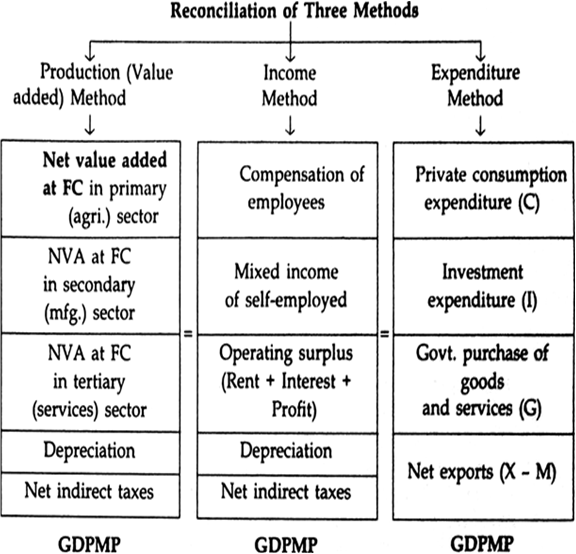
    National income accounting refers to the set of methods and principles that are used by the government for measuring production and income, or in other words economic activity of a country in a given time period.

    The various measures of determining national income are GDP (Gross Domestic Product), GNP (Gross National Product), and NNP (Net National Product) along with other measures such as personal income and disposable income.

    National income accounting equation is an equation that shows the relationship between income and expense of an economy and other categories. It is represented by the following equation:

    Y = C + I + G + (X – M)

    Where

    Y = National income

    C = Personal consumption expenditure

    I = Private investment

    G = Government spending

    X = Net exports

    M = Imports

    The most important metrics that are determined by national income accounting are GDP, GNP, NNP, disposable income, and personal income.

    Methods of measuring National income

    How is equality of three methods? Reconcile three methods of measuring  national income. from Economics National Income Accounting Class 12 Haryana  Board - English Medium


    Issues associated with National Income accounting in India

    (A) Problems in Income Method:

    • Owner-occupied Houses
    • Self-employed Persons
    • Goods meant for Self-consumption
    • Wages and Salaries paid in Kind

    (B) Problems in Product Method:

    • Services of Housewives
    • Intermediate and Final Goods
    • Second-hand Goods and Assets
    • Illegal Activities
    • Consumers’ Service
    • Capital Gains
    • Inventory Changes
    • Depreciation
    • Price Changes

    (C) Problems in Expenditure Method:

    • Government Services
    • Transfer Payments
    • Durable-use Consumers’ Goods
    • Public Expenditure

    Inclusive growth

    • As per OECD (Organisation for Economic Co-operation and Development), inclusive growth is economic growth that is distributed fairly across society and creates opportunities for all.
    • UNDP has described inclusive growth as “the process and the outcome where all groups of people have participated in growth and have benefited equitably from it”.
    • It lessens the fast growth rate of poverty in a country and upsurges the participation of people into the development of the country.

    Salient Features of Inclusive Growth

    • Address the constraints of the excluded and marginalised.
    • Participation from all sections of society
    • Reduction in disparities among per capita incomes between different sectors and sections of society.
    • Non – discriminatory
    • Higher potential of poverty reduction
    • Ensure access of people to basic infrastructure and basic services/capabilities such as basic health and education.
    • Include poor, lagging socio – economic groups and lagging regions as well as they are partners in this growth.

    Dimensions of Inclusive Growth

    1. Equality
    2. Good Governance
    3. Decentralization
    4. Accountability and Transparency
    5. Sustainability
    • Financial Sustainability
    • Social Sustainability
    • Environment Sustainability

    Social Sector related schemes

    The list of schemes can be found here

    https://www.civilsdaily.com/type/govt-schemes/


  • Meeting India’s ‘Carbon Sink’ target

    carbon-sink

    Central idea: India’s commitment to reduce its carbon emissions and increase its carbon sink as part of the Paris Climate Agreement. The Agreement is a legally binding international treaty signed by 196 parties, including India, to limit global warming to well below 2°C.

    What is a carbon sink?

    • A carbon sink is a natural or artificial reservoir that absorbs and stores carbon dioxide (CO2) from the atmosphere.
    • It can be a natural ecosystem such as forests, oceans, or soil, or it can be an artificial system like carbon capture and storage (CCS) technology.
    • Carbon sinks help to reduce the amount of CO2 in the atmosphere and mitigate the negative effects of climate change.

    Methods of Carbon Sinks

    There are two types of carbon sinks:

    (A) Natural Carbon Sinks: These are ecosystems that naturally absorb and store carbon from the atmosphere. The most common natural carbon sinks are:

    • Forests: Trees absorb CO2 through photosynthesis and store it in their trunks, branches, and roots.
    • Oceans: The Ocean absorbs CO2 from the atmosphere, where it dissolves and forms carbonic acid.
    • Soil: Carbon can be stored in soil in the form of organic matter, such as dead plant and animal material, which is broken down by microorganisms.

    (B) Artificial Carbon Sinks: These are human-made technologies that capture and store carbon from the atmosphere. The most common artificial carbon sinks are:

    • Carbon Capture and Storage (CCS): CCS technology captures CO2 emissions from industrial processes, such as power plants, and stores it underground.
    • Direct Air Capture (DAC): DAC technology captures CO2 directly from the air and stores it underground or repurposes it for other uses.

    India’s carbon sink target

    • India has pledged to create an additional carbon sink of 2.5 to 3 billion tonnes of CO2 equivalent by 2030.
    • This will be achieved through afforestation, reforestation, and other land-use changes.

    India’s progress towards its carbon sink target

    • India has already achieved 24.6% of its carbon sink target as of 2017.
    • This was primarily due to afforestation and tree plantation programs, such as the Green India Mission and the National Afforestation Programme.

    Challenges in meeting India’s carbon sink target

    • Unavailability of accurate data: There is a lack of accurate data on the extent and health of India’s forests, which makes it difficult to measure the effectiveness of afforestation and reforestation programs.
    • Conversion of natural forests: The conversion of natural forests to monoculture plantations that have lower carbon sequestration potential can reduce the effectiveness of carbon sinks.
    • Pressure on land: The pressure on land for agriculture and other forms of development can lead to deforestation and the loss of carbon sinks.
    • Lack of funding: Afforestation and reforestation programs require significant funding, which can be a challenge for India.
    • Lack of awareness: Lack of awareness among the public and policymakers about the importance of carbon sinks and the need for their conservation and restoration can hinder efforts to meet India’s carbon sink targets.

    Conclusion

    • India’s commitment to increasing its carbon sink is crucial in mitigating the impacts of climate change.
    • More efforts are needed to ensure the success of afforestation and reforestation programs and to address the challenges facing India’s forests.

    Are you an IAS Worthy Aspirant? Get a reality check with the All India Smash UPSC Scholarship Test

    Get upto 100% Scholarship | 900 Registration till now | Only 100 Slots Left

  • [Burning Issue] Old Pension Scheme Vs New Pension Scheme Debate

    pension

    Context

    • The newly elected Congress Government led by Sukhvinder Singh Sukhu regime has restored the Old Pension Scheme (OPS) for Himachal Pradesh government employees with immediate effect.  Some other states are also in line to implement the same. This has stirred a debate around the two variants of Pension Schemes in India.
    • In this context, this edition of the burning issue will elaborate on the topic of the types of pension schemes in India.

    Background of both the schemes

    About OPS

    • Guaranteed pension sum: OPS is a post-retirement benefit for government area representatives that guaranteed a sum to be paid to the worker after his superannuation.
    • Defined formula: OPS, also known as the “Defined Benefit Scheme,” provided government employees with 50 percent of their basic salary to secure their future. Therefore, the individual would receive a fixed monthly pension payment from the government of Rs 5,000 if the basic salary was Rs 10,000.
    • Dearness allowance: The government tries to find a balance between the salary and the rising cost of living by increasing Dear Allowance twice a year. The increase in DA also allows for a higher salary and, consequently, a higher pension.
    • Fully government payable: The government paid for the Old Pension in its entirety. Every year, the budget for pensions was announced during the Budget announcement. The annual DA increase in the pension was also the responsibility of the federal and state governments.

    About NPS

    • The origin: In 1998, the Union Ministry of Social Justice and Empowerment commissioned a report for an Old Age Social and Income Security (OASIS) project. Its primary objective was targeted at unorganized sector workers who had no old age income security. The New Pension System was proposed by the Project OASIS report; it became the basis for pension reforms.
    • Open to all: NPS is a government-sponsored pension scheme. It was launched in January 2004 for government employees. It was extended to all citizens of India on a voluntary basis from May 2009 and to corporates in December 2011 and to Non-Resident Indians in October 2015.
    • No full contribution from the government: PFRDA is the statutory authority established by an enactment of the Parliament, to regulate, promote and ensure orderly growth of the NPS and pension schemes to which this Act applies. The scheme allows subscribers to contribute regularly to a pension account during their working life.
    • Fund on retirement: On retirement, subscribers can withdraw a part of the corpus in a lump sum and use the remaining corpus to buy an annuity to secure a regular income after retirement.

    Key differences between the two pension schemes

    Points of DifferentiationThe Old Pension SchemeThe New Pension Scheme
    Nature of the schemesOPS offer pensions to government employees on the basis of their last drawn salaryNPS pays the employees for their investments in the NPS Scheme during their employment.
    Amount of pension derived50 per cent of the last drawn salary60% lump sum after retirement and 40% to be invested in annuities for getting a monthly pension
    Benefits in taxesNo tax benefitsThe employee can claim tax deductions of 1.5 lakh under Section 80C of income tax and up to 50,000 on other investments under 80CCD (1b)
    Tax on pensionNo tax on pension60% of the NPS Corpus is tax-free while the remaining 40% is taxable
    Option of InvestmentNo optionTwo choices: Active and Automatic
    Who can avail?Only government employeesAny Indian Citizen between 18-65 years.
    Switching SchemesOPS scheme can be switched to NPSNPS scheme cannot be switched back to OPS in general, but central government employees can switch back to OPS  in case of death and disablement of the employee.

    Pros and cons of OPS

    PROS

    • After retirement, the plan guarantees a steady income for life.
    • Definite formula and pension: Employees were entitled to a pension that was calculated in advance and was equal to fifty percent of their most recent salary under the old plan.
    • DA Benefit: They also benefit from Dearness Relief (DR) revisions twice a year. There was no salary deduction for the fixed payout.
    • GPF benefit: Additionally, the General Provident Fund (GPF) was provided by the OPS.

    CONS

    • Liability remained unfunded: There was no corpus specifically for pension, which would grow continuously and could be dipped into for payments.
    • Usual budgetary allocation: The Union budgetary allocations (Rs 3,86,001 crore in 2020-21) provided for pensions every year; there was no clear plan on how to pay year after year in the future.
    • The burden on working class: The ‘pay-as-you-go’ scheme created inter-generational equity issues — meaning the present generation had to bear the continuously rising burden of pensioners.
    • Far extended pay-outs: Better health facilities would increase life expectancy, and increased longevity would mean extended payouts.

    Pros and cons of NPS

    PROS

    • Flexible– NPS offers a range of investment options and a choice of Pension Funds (PFs) for planning the growth of the investments in a reasonable manner and monitoring the growth of the pension corpus. Subscribers can switch over from one investment option to another or from one fund manager to another.
    • Simple – Opening an account with NPS provides a Permanent Retirement Account Number (PRAN), which is a unique number and it remains with the subscriber throughout his lifetime.
    • Portable– NPS provides seamless portability across jobs and across locations. It would provide a hassle-free arrangement for the individual subscribers while he/she shifts to the new job/location, without leaving behind the corpus build, as happens in many pension schemes in India.
    • Well Regulated– NPS is regulated by PFRDA, with transparent investment norms, regular monitoring and performance review of fund managers by NPS Trust. The account maintenance costs under NPS are the lowest as compared to similar pension products across the globe. While saving for a long-term goal such as retirement, the cost matters a lot as the charges can shave off a significant amount from the corpus over 35-40 years of investment period.
    • The dual benefit of Low Cost and Power of compounding: Till retirement, pension wealth accumulation grows over the period of time with a compounding effect. With the account maintenance charges being low, the benefit of accumulated pension wealth to the subscriber eventually becomes large.
    • Ease of Access: The NPS account is manageable online. An NPS account can be opened through the eNPS portal. Further contributions can also be made online through the eNPS portals of CRAs:

    CONS

    • Deductions from salary: The NPS, in contrast to the OPS, mandates that employees deposit 10% of their base pay in addition to the dearness allowance.
    • The amount of the pension is not set in stone, and there is no GPF benefit.
    • Linked to market returns: The scheme’s major flaw is that it is return-based and linked to the market. Simply put, the payout is speculative.

    Why states are shifting back to OPS?

    • OPS brings state governments some short-term gains:
    • Deferment to contribution: They save money since they will not have to put the 10 per cent matching contribution towards employee pension funds.
    • Low curtailment in salaries: For employees too, it will result in higher take-home salaries, since they too will not set aside 10 per cent of their basic pay and dearness allowance towards pension funds.
    • Old age security: Some government employees are concerned that their pension may not be the same as 50 per cent of their last salary drawn (as in the OPS).
    • Party politics: These moves may be considered convenient by Opposition parties as they struggle to expand their reach in the current environment.
    • States will benefit in the short term, but as pension liabilities rise over time, there will be less room for more productive spending.

    Concerns raised due to this shift

    • Former RBI Governor Raghuram Rajan has expressed his concern over the decision of some states to restart the old pension scheme and suggested that some less costly ways should be found to address the demands of government pensioners.
    • In its latest report titled ‘State Finances: A Study of Budgets of 2022-23’, the central bank reversion to OPS by some States poses a major risk on the “subnational fiscal horizon” and would result in the accumulation of unfunded liabilities in the coming years for them.
    • Punjab’s projected pension outlay during 2022-23 is Rs 15,146 crore. This accounts for almost one-third of Punjab’s tax revenues (OTR) of Rs 45,588 crore.
    • By postponing the current expenses to the future, the report said States risk the accumulation of unfunded pension liabilities in the coming years.
    • Former RBI Governor D. Subbarao has said that the decision of some States to restart the Old Pension Scheme will be decidedly a regressive move and will provide more privilege to government servants at the cost of the larger public, the majority of which has no social safety net,

    Other issues with the Pension system in India

    • Insufficient coverage: Any pension plan leaves a lot of the Indian population out of pocket. The unorganized sector typically includes those who remain uncovered.
    • Insufficient sums: The sums received by those who are covered by various pension plans are insufficient to ensure their continued existence.
    • Insufficient pension amount: The Parliamentary Standing Committee on Rural Development observed that the various components of the National Social Assistance Program (NSAP) provided insufficient assistance. It cost between 200 and 500 rupees per month.
    • Disparate Coverage: In addition, the implicit rate of returns and benefits minus contributions vary among programs, occupations, industries, and other contexts. and as a result, the pension benefits become unequal.
    • Financial viability: The government’s fiscal plan is further strained financially by the pension industry. According to a number of studies, the amount of money spent on pension payments is rising faster than taxes and duties.
    • Ineffective management: The issuance of annual statements and the delays in processing and crediting claims are the subject of criticism. The structure of organizational governance also needs to be improved. Additionally, government regulations prevent retirement benefit systems from being transferred to other industries.

    Way forward

    • Optimize pension schemes: The government can optimize pension schemes by reviewing the benefits and eligibility criteria of the pension schemes. This can help identify areas where the benefits can be reduced without impacting the employees.
    • Increase efficiency in government operations: The government can also work towards increasing efficiency in its operations and reducing the overall workforce. This can help reduce the pension burden and improve the fiscal health of the country.

    Conclusion

    • The fiscal risks involved in the transition of NPS-borne employees to OPS regime are substantive and to a great extent unsustainable keeping in view the existing share of pensionary liability in government expenditure.
    • The hard-won policy gains that have been achieved through bipartisan consensus may be undone by such proposals, which are motivated by short-term political considerations.
    • Political parties must consider the long term rather than just the immediate relief and return and resist the temptation to make such fiscally reckless moves.
  • Money Laundering laws will now cover Cryptocurrency Trade

    crypto

    The government has imposed the Prevention of Money-laundering Act, 2002 on cryptocurrencies or virtual assets as it looks to tighten oversight of digital assets.

    Central idea: The Prevention of Money-laundering Act, 2002, now covers various financial activities related to virtual digital assets, including exchanges between fiat currencies and digital assets, transfer and storage of digital assets, and provision of financial services related to the sale of digital assets by an issuer.

    What are Cryptocurrencies?

    • Cryptocurrencies are digital or virtual currencies that use encryption techniques to secure and verify transactions and control the creation of new units.
    • They operate independently of central banks and financial institutions and use a decentralized ledger technology called blockchain to record transactions.
    • They can be used to make purchases, transfer funds, or as a store of value, and some are designed to facilitate specific use cases, such as smart contracts.
    • Bitcoin is the first and most well-known cryptocurrency, but there are thousands of others, including Ethereum, Ripple, and Litecoin.
    • Cryptocurrencies can be purchased on cryptocurrency exchanges or obtained through mining, a process in which computers solve complex mathematical problems to validate transactions and earn new cryptocurrency units as a reward.

    Why regulate cryptocurrencies?

    • Consumer protection: Cryptocurrencies are highly volatile and can be subject to fraud, scams, and other forms of financial crime.
    • Preventing money laundering and terrorist financing: Cryptocurrencies can be used to anonymously transfer funds, making them potentially attractive to criminals and terrorists.
    • Systemic risk: Cryptocurrencies are not currently part of the traditional financial system, but they could potentially have an impact on it if they were to become more widely adopted.
    • Taxation: Cryptocurrencies can be used to evade taxes or hide assets. Regulation can help ensure that cryptocurrency transactions are properly taxed and that tax evasion is prevented.
    • Market stability: being highly volatile, regulation can help promote market stability and prevent excessive speculation or manipulation of cryptocurrency markets.

    What is the recent move?

    • Indian crypto exchanges will have to report suspicious activity to the Financial Intelligence Unit India (FIU-IND).
    • The move is in line with the global trend of requiring digital-asset platforms to follow anti-money laundering standards similar to those followed by other regulated entities like banks or stock brokers.

    Recent regulatory moves

    • In the Budget for 2022-23, finance ministry had brought a 30% tax on income from transactions in such assets.
    • Also, to bring such assets under the tax net, it introduced a 1% TDS (tax deducted at source) on transactions in such asset classes above a certain threshold.
    • Gifts in crypto and digital assets were also taxed.

    Back2Basics: Prevention of Money Laundering Act (PMLA)

    • PMLA, 2002 is an Act of the Parliament of India enacted by the NDA government to prevent money laundering and to provide for confiscation of property derived from money laundering.
    • It was enacted in response to India’s global commitment (including the Vienna Convention) to combat the menace of money laundering.
    • PMLA and the Rules notified there under came into force with effect from July 1, 2005.
    • The act was amended in the year 2005, 2009 and 2012.


    Are you an IAS Worthy Aspirant? Get a reality check with the All India Smash UPSC Scholarship Test

    Get upto 100% Scholarship | 900 Registration till now | Only 100 Slots Left

  • NASA hands over NISAR satellite to ISRO

    nisar

    The Indian Space Research Organisation (ISRO) has received the NASA-ISRO SAR (NISAR) satellite.

    What is NISAR?

    • NISAR has been built by space agencies of the US and India under a partnership agreement signed in 2014.
    • The 2,800 kilograms satellite consists of both L-band and S-band synthetic aperture radar (SAR) instruments, which makes it a dual-frequency imaging radar satellite.
    • While NASA has provided the L-band radar, GPS, a high-capacity solid-state recorder to store data, and a payload data subsystem, ISRO has provided the S-band radar, the GSLV launch system and spacecraft.
    • Another important component of the satellite is its large 39-foot stationary antenna reflector.
    • Made of a gold-plated wire mesh, the reflector will be used to focus the radar signals emitted and received by the upward-facing feed on the instrument structure.

    Objectives of NISAR

    • Once launched into space, NISAR will observe subtle changes in Earth’s surfaces, helping researchers better understand the causes and consequences of such phenomena.
    • It will spot warning signs of natural disasters, such as volcanic eruptions, earthquakes and landslides.
    • The satellite will also measure groundwater levels, track flow rates of glaciers and ice sheets, and monitor the planet’s forest and agricultural regions, which can improve our understanding of carbon exchange.
    • By using synthetic aperture radar (SAR), NISAR will produce high-resolution images.
    • SAR is capable of penetrating clouds and can collect data day and night regardless of the weather conditions.

    Are you an IAS Worthy Aspirant? Get a reality check with the All India Smash UPSC Scholarship Test

    Get upto 100% Scholarship | 900 Registration till now | Only 100 Slots Left


  • Moon to get its own Time Zone

    moon

    The European Space Agency is planning a universal timekeeping system for the moon.

    Timekeeping on the Moon

    • The Moon has its own day and night cycle, which lasts about 29.5 Earth days.
    • This means that if humans were to live on the Moon, they would need to develop their own timekeeping system.
    • Currently, the time on the Moon is measured using Universal Time Coordinated (UTC), which is the same timekeeping system used on the Earth.
    • However, because the Moon’s day is much longer than Earth’s day, it would be difficult to use UTC for day-to-day activities on the Moon.


    Universal Time Coordinated (UTC)

    • Universal Time Coordinated (UTC) is a time standard used to keep time consistent around the world.
    • UTC is based on International Atomic Time (TAI), which is maintained by atomic clocks around the world.
    • It is the primary time standard used by many countries, international organizations, and scientific research institutions.
    • UTC is expressed as a 24-hour clock and is used to indicate the time offset from Coordinated Universal Time (UTC+0).
    • Time zones are defined as an offset from UTC, with some time zones being ahead of UTC (UTC+1, UTC+2, etc.) and others being behind UTC (UTC-1, UTC-2, etc.).
    • UTC is adjusted periodically to account for changes in the Earth’s rotation, which can cause variations in the length of a day.
    • These adjustments are made through the addition of leap seconds to UTC, which help to keep the time standard synchronized with the Earth’s rotation.


    Why need lunar time zone?

    • The Moon is the Earth’s only natural satellite, and humans have been interested in exploring and colonizing it for many years.
    • With recent advancements in space technology, there is renewed interest in lunar exploration and settlement.

    Proposed Lunar Time Zone

    • To address this issue, scientists and researchers have proposed creating a lunar time zone that would be based on the Moon’s day and night cycle.
    • This would make it easier for lunar settlers to keep track of time and coordinate activities.

    Benefits offered

    • Having a lunar time zone would also make it easier for scientists and researchers to conduct experiments and collect data on the Moon.
    • It would also help to prevent confusion and errors that could arise from using different timekeeping systems on Earth and the Moon.

    Various challenges

    • Time on Earth is precisely tracked by atomic clocks, but synchronizing time on the moon is tricky because clocks run faster there, gaining around 56 microseconds, or millionths of a second, per day.
    • It would also be difficult to establish a consistent time zone for the entire Moon, given that the terrain and lighting conditions vary widely across its surface.
    • Additionally, any timekeeping system on the Moon would need to be able to account for the Moon’s irregular rotation and movement.


    Are you an IAS Worthy Aspirant? Get a reality check with the All India Smash UPSC Scholarship Test

    Get upto 100% Scholarship | 900 Registration till now | Only 100 Slots Left
  • Mastering the science of METHODICAL PYQ ANALYSIS to predict UPSC Prelims questions for 2023 & 2024 Exams | LIVE 1-1 Masterclass by Zeeshan sir | FREE Strategic Package on registration

    Mastering the science of METHODICAL PYQ ANALYSIS to predict UPSC Prelims questions for 2023 & 2024 Exams | LIVE 1-1 Masterclass by Zeeshan sir | FREE Strategic Package on registration

    Concluded Successfully

    Register for Recorded video of UPSC Workshop for UPSC 2023 & 2024 | Make your UPSC Prelims 2023/2024 Prep effective and result oriented


    UPSC has been termed very often as Unpredictable Public Service Commission due to its tendency of shocking aspirants year after year. But do you know there UPSC Prelims questions can be actually predicted?

    Zeeshan sir shared a video recently in which he demonstrated how through methodical PYQ analysis one can predict at least 1/3rd of the paper and themes that will be asked in the paper.

    https://youtu.be/Ori9XcksfEM

    Most of the UPSC aspirants, especially those who are freshers and going to sit for UPSC Prelims 2023 and 2024, have reached out to us for help in Mastering the science of METHODICAL PYQ ANALYSIS to predict UPSC Prelims questions. So we’re going to conduct a detailed Practical LIVE video tutorial to help you choose the right way to analyze PYQs just after finishing the 1st reading!

    Zeeshan sir will demonstrate LIVE how he used the power of METHODICAL PYQ ANALYSIS to predict around 42 questions in UPSC Prelims 2022. And Mastering these techniques, you can predict even more questions for the UPSC Prelims 2024.

    What you should expect in Zeeshan Sir’s LIVE session?

    • What is the science of METHODICAL PYQ ANALYSIS to predict UPSC Prelims questions and What 10 things you must master to secure prelims 2023?
    • How to start analyzing PYQ just after understanding the syllabus and 1st reading of static subjects for UPSC-CSE 2024?
    • What is/are the best sources to read, learn and analyze PYQs?
    • How can you definitely get at least 1/3rd questions/MCQs as per your analysis?
    • Most Authenticate and important UPSC Prelims Hack.
    • How to fill critical gaps in your Prelims preparation?
    • Avoiding pitfalls in your preparation, especially 2.5 months before prelims.
    • Solve Prelims MCQs with elimination techniques
    • How and what topics of current affairs you must revise before the very eve Prelims?

    CivilsDaily’s FREE Webinar package

    Post-webinar we will share important PDFs, timetable framework, and notes.

    Other than this a strategy package will be emailed to you.


    What The Hindu opined about Civilsdaily Mentorship

    best coaching for upsc in delhi

    Register FREE for Recorded video for UPSC Workshop by Zeeshan Hashmi, Senior IAS Faculty, Civilsdaily

  • Green Hydrogen Mission: Five Priorities For The Vision

    Mission

    Central Idea

    • The 2023 Union Budget has allocated ₹19,700 crore for the National Green Hydrogen Mission. This will set in motion a programme that can position India as a green hydrogen (super)power.

    What is Green Hydrogen?

    • Clean and no harmful gas emission: The Green hydrogen is the one produced with no harmful greenhouse gas emissions.
    • Produced by electrolysis of water: It is made by using clean electricity from surplus renewable energy sources, such as solar or wind power, to electrolyse water. Electrolysers use an electrochemical reaction to split water into its components of hydrogen and oxygen, emitting zero-carbon dioxide in the process.
    • Clean energy source: It can serve as an energy source (heavy industry, long-distance mobility, aviation, and power storage) and an energy carrier (as green ammonia or blended with natural gas).
    • Energy intensive process: It is an energy-intensive process for splitting water into hydrogen and oxygen using renewable power to achieve this.

    Mission

    All you need to know about National Green Hydrogen Mission

    • The National Green Hydrogen Mission is a program launched by the government of India to promote the production and use of green hydrogen in the country.
    • It aims to establish India as a leading producer and consumer of green hydrogen. The mission is expected to create demand for 100-125 gigawatts (GW) of renewable energy, 60-100 GW of electrolysers, and an investment opportunity of ₹8 lakh crore, while cutting 50 MMT of annual emissions.

    Why is this important and what will it take?

    • India’s ambitious renewable energy goal for 2030: By 2030, India aims to generate 50% of its electricity from non-fossil fuel sources, while also requiring an industrial energy transition.
    • Industrial sectors contributing to India’s greenhouse gas emissions: Steel, cement, fertilizers, and petrochemicals contribute significantly to India’s industrial greenhouse gas emissions.
    • Green hydrogen’s potential for fuelling industrial growth and reducing emissions: Green hydrogen has the potential to fuel industrial growth and reduce industrial emissions simultaneously.
    • India’s production target for green hydrogen and its requirements: India has set a production target of five million tonnes of green hydrogen by 2030, surpassing that of any other single economy. This target would create a demand for 100-125 GW of renewable energy, 60-100 GW of electrolysers, and an investment opportunity of ₹8 lakh crore, while reducing annual emissions by 50 MMT.
    • India’s advantage as a cost-effective green hydrogen producer: India’s abundance of sunshine and wind energy resources position it well to become one of the world’s most cost-effective green hydrogen producers.

    Mission

    Five Priorities(5Ps): For the vision to convert into reality

    1. Domestic demand is critical: If we are not a big player domestically, we cannot be a major player in the international market. The mission introduces a Strategic Interventions for Green Hydrogen Transition (SIGHT) fund for five years, with ₹13,000 crore as direct support to consume green hydrogen. This will encourage heavy industries to increase demand, offering economies of scale by which suppliers can reduce prices.
    2. India can be an attractive destination for domestic and foreign investment: Green hydrogen production projects announced/underway in India are far fewer compared to others. Green hydrogen is difficult and expensive to transport. The mission envisions green hydrogen hubs to consolidate production, end use and exports. A mission secretariat can ensure project clearance is streamlined and reduce financial risks.
    3. Support and targeted funding: Currently, manufacturers are importing stacks and assembling them. We must become more competitive with targeted public funding in manufacturing the most critical and high-value components of electrolysers in India.
    4. Establish bilateral partnerships to develop resilient supply chains: Globally, about 63 bilateral partnerships have emerged; Germany, South Korea and Japan have the most. Using yen- or euro-denominated loans for sales to Japan or to the EU, respectively, could reduce the cost of capital and help us become export competitive. India must cooperate with like-minded countries on trade, value chains, research and development, and standards
    5. Coordinate with major economies to develop rules for a global green hydrogen economy: In the absence of common global frameworks, attempts for rules and standards are being driven by collectives of private corporations rather than through structured intergovernmental processes. There are already signs of conflicting regulations and protectionist measures in major markets. These put India’s ambitions at risk.

    What is Green Steel?

    • Green steel refers to steel that is produced using sustainable and environmentally friendly methods.
    • Green steel, is produced using renewable energy sources, such as wind and solar power, and by utilizing low-emission technologies that reduce carbon emissions.
    • One of the main ways to produce green steel is through the use of hydrogen instead of coal or natural gas as the reducing agent in the steel-making process.
    • Green steel is seen as a way to reduce the environmental impact of the steel industry, which is responsible for a significant portion of global carbon emissions.
    • Costs of green steel, made from green hydrogen, are currently much higher, but could be reduced with economies of scale and changes in production technologies

    Conclusion

    • India’s G20 presidency is an opportunity to craft rules for a global green hydrogen economy. These rules must address operational threats, industrial competitiveness and strategic threats. India should promote a global network on green hydrogen via which companies could collaborate. Green hydrogen will be a critical industrial fuel of the 21st century. India is well-positioned to show leadership in our collective interest and that of the planet.

    Mains Question

    Q. What is National Green Hydrogen Mission launched by the government of India? Discuss the key priorities of the mission that will they help India achieve its ambitious production target.


    Are you an IAS Worthy Aspirant? Get a reality check with the All India Smash UPSC Scholarship Test

    Get upto 100% Scholarship | 900 Registration till now | Only 100 Slots Left


  • India-Germany Relations: Opportunities and Challenges

    Germany

    Central Idea

    • India and Germany are enhancing their relationship through bilateral talks and collaboration, with Germany showing interest in being a key partner in India’s defence, trade, and clean energy. The recent visit of German Chancellor Scholz to India highlights the importance of India-German cooperation in shaping a new global order.

    India-Germany Relations: Background

    • Freedom struggle: Subhas Chandra Bose, a prominent freedom fighter for Indian independence, made a determined effort to obtain India’s independence from Britain by seeking military assistance from the Axis powers. The Indische Legion was formed to serve as a liberation force for British-ruled India principally made up of Indian prisoners of war.
    • Diplomacy: India maintained diplomatic relations with both West Germany and East Germany and supported their reunification in 1990. Contrary to France and the UK, Germany has no strategic footprint in Asia.
    • Past contentions: Germany condemned India for liberating Goa from Portuguese rule in 1961 and supported Portugal’s dictatorial regime under Salazar against India. It was critical of India for intervening in the 1971 Bangladesh Liberation War. It rejected India’s 1998 nuclear tests.
    • Quest for UNSC: India and Germany both seek to become permanent members of the UNSC and have joined with Japan and Brazil to coordinate their efforts via the G4 collective.
    • Cultural ties: Germany has supported education and cultural programs in India. Germany helped establish the IIT Madras after both governments signed an agreement in 1956 and increased its cooperation and supply of technology and resources over the decades to help expand the institution
    • Trade and investment: Germany is India’s largest trading partner in Europe. Germany is the 8th largest foreign direct investor (FDI) in India.

    Germany

    What is the significance of Chancellor Scholz’s visit to India?

    • Chancellor Scholz’s visit to India is significant as it builds on Germany’s growing political outreach to Asia and highlights India’s importance as a key partner in Germany’s overall strategy for the Indo-Pacific region.
    • The visit aimed to expand cooperation between India and Germany in areas such as defence, trade, clean energy, migration, digital transformation, and the Indo-Pacific.
    • It also assumes greater importance as India holds the G-20 presidency this year and seeks to avoid geopolitics hampering cooperation in the forum.

    India-Germany Cooperation: Opportunities

    • Defence collaboration: Germany could become an important defence partner for India as the country attempts to diversify from its military dependence on Russia. The two countries have discussed co-development of military hardware and tech transfers, and a deal worth $5.2 billion where Germany would jointly build six conventional submarines in India could be underway.
    • Economic ties: India and Germany share strong economic ties, with Germany being India’s largest trading partner in the European Union. Germany is also interested in stability of supply chains and trade routes linking Asia to Europe, given its status as Europe’s economic powerhouse and its reliance on exports.
    • Indo-Pacific region: Germany’s overall strategy for the Indo-Pacific region mentions India as a key partner. Germany has enhanced its political outreach to Asia, including India, as part of this strategy.
    • Multilateral cooperation: Both cooperate in multilateral forums, including as part of the G-4 grouping pushing for United Nations Security Council reform, and as evident in Germany’s invitation to Mr. Modi to attend last year’s G-7 summit.
    • Development projects: A recent agreement on India-Germany triangular cooperation involving development projects in third countries is an important step in enhancing strategic involvement in the region.
    • Security collaboration: The first ever France-India-Germany military exercise drill is slated to take place in 2024 towards enhanced security and defence collaboration.

    Germany

    India-Germany Cooperation: Challenges

    • Different geopolitical priorities: Germany is focused on ensuring stability in the Indo-Pacific region for the sake of trade and economic growth, while India is more concerned with territorial conflicts with neighbouring China.
    • Germany’s economic dependence on China: Germany has strong economic ties with China, making it difficult to completely decouple from the country. This creates a challenge for Germany in trying to balance its economic interests with its security interests.
    • Differences in defence capabilities: India and Germany have different defence capabilities and priorities, which can make it challenging to collaborate effectively on defence projects.
    • Historical baggage: Germany’s colonial past and role in World War II can create challenges in developing closer relations with India, particularly in the context of Germany’s efforts to deepen its involvement in the Indo-Pacific region.

    Germany

    Conclusion

    • Amidst geopolitical shifts and multipolarity, New Delhi’s ties with Berlin could be vital in shaping a new global order. There are high expectations on both sides regarding the potential for deeper collaboration, particularly in the defence sector. However, it will take time and effort to develop the necessary trust and alignment of interests.

    Mains Question

    Q. In recent times, India and Germany have been enhancing their relationship through bilateral talks and collaboration. In light of this, discuss challenges and opportunities that lie ahead?


    Are you an IAS Worthy Aspirant? Get a reality check with the All India Smash UPSC Scholarship Test

    Get upto 100% Scholarship | 900 Registration till now | Only 100 Slots Left


  • 5G: Security Features and Concerns

    5G

    Central Idea

    • With the arrival of 5G technology, all electronic devices will potentially be connected to the internet. Cyber damage scenarios, imagined only in dystopian fiction, could become a reality. A collaborative approach between the government, academia, and businesses is necessary to address these cyber security concerns and ensure that 5G technology is safe and secure for consumers.

    What exactly is 5G?

    • Latest advancement: 5G, or fifth-generation wireless technology, is the latest advancement in mobile communication and internet technology.
    • Higher frequency spectrum: 5G operates on a higher frequency spectrum than 4G, typically between 24 GHz to 90 GHz. This higher frequency range allows for faster data transfer rates and lower latency.
    • MIMO technology: 5G uses a technology called MIMO (Multiple Input Multiple Output) to transmit and receive multiple data streams simultaneously. This allows for greater capacity and faster speeds.
    • Network slicing: It also utilizes network slicing, which enables the creation of multiple virtual networks on a single physical network. This allows for more efficient use of network resources and can improve overall network performance.
    • Applications: 5G technology is expected to enable the development and implementation of emerging technologies such as self-driving cars, virtual and augmented reality, and smart cities.

    Security Features of 5G Technology

    • Security-by-Design Approach: 5G technology is designed with a security-by-design approach that embeds security features from the beginning. This approach ensures that security is an integral part of the technology, rather than an afterthought.
    • Strong Encryption Standards: 5G technology incorporates strong encryption standards that make it extremely difficult for attackers to access and use any information they might obtain. Even if an attacker manages to obtain some information, it will be in an unusable format.
    • Interconnected Device Protection: 5G technology also includes protocols that protect the confidentiality of interconnected devices. These protocols prevent unauthorized access and ensure that data transmitted between devices remains secure and private.

    5G

    What are the Concerns?

    • Inheriting past vulnerabilities: The initial wave of 5G will be built on existing 4G infrastructure, therefore, it will inherit vulnerabilities of the past.
    • Multiplying privacy concerns: More devices connected to the internet increase the scope of cyber-attacks. In a connected network, such attacks can spread like wildfire if not contained in time. Privacy concerns are bound to multiply as the number of devices increases.
    • Concerns about pre-ban imported equipment: A bulk of 5G network components have been imported and manufactured in factories based in China. Imports of such equipment have been banned. However, concern remains about the use of the equipment that was imported before the ban came into effect.
    • For instance, concerns over user privacy: Many countries including the USA and Canada have expressed concerns over protocols used by Huawei and ZTE that compromise the privacy of users.

    What can be done to Ensure 5G Security

    • Collaborative efforts between government, academia, and businesses: Governments should work with industry experts and academia to develop comprehensive security measures and policies that align with the rapidly evolving technological landscape.
    • Ongoing security testing: Telecom companies should perform regular security testing of their 5G infrastructure to identify vulnerabilities and address them before they can be exploited by attackers. Telecom companies and ethical hackers can be invited to test infrastructure.
    • For instance: C-DOT’s 5G alliance focuses on security aspects, it needs to be scaled up as a Center of Excellence involving IITs and CERT-In.
    • Reward mechanisms: Offering incentives to 5G service providers who adhere to high security standards can promote better security practices across the industry.
    • Consumer education: Government agencies like CERT-In can publish easy-to-understand advisories to educate end-users on best practices to protect themselves and their devices from potential security breaches.
    • Greater responsibility: All stakeholders must assume greater responsibility to protect the 5G ecosystem from cyber threats.
    • International cooperation: International cooperation between governments and organizations can help establish global standards and guidelines for 5G security, promoting greater consistency and transparency in security practices.

    Conclusion

    • Consumers are at the heart of the 5G ecosystem and need to be aware of the security challenges. Exciting times await us in 2023. All stakeholders need to prepare for the security challenges of the 5G package.

    Mains Question

    Q. Technology upgrade comes with advantages and challenges. In this light discuss security features concerns related to the implementation of 5G technology?


    Are you an IAS Worthy Aspirant? Get a reality check with the All India Smash UPSC Scholarship Test

    Get upto 100% Scholarship | 900 Registration till now | Only 100 Slots Left


More posts