💥UPSC 2026, 2027, 2028 UAP Mentorship (March Batch) + Access XFactor Notes & Microthemes PDF

Search results for: “”

  • 1st July 2022| Daily Answer Writing Enhancement(AWE)

    Topics for Today’s questions:

    GS-1        Factors responsible for the location of primary, secondary and tertiary industries in various parts of the world including India

    GS-2        Parliament and State legislatures

    GS-3        Agriculture and related issues, e-technology in the aid of farmers

    GS-4       Case Studies

    Question 1)


    Q.1 What are the major factors that influence the location of the fertilizer industry in India? Explain with the help of suitable examples. (15 Marks)


    Question 2)

    Q.2 What are the various instruments available to the legislature to uphold the accountability of the executive in India? (10 Marks)

    Question 3)

    Q.3 Rapid adoption of agri-tech presents an important solution towards addressing the issues and inefficiencies plaguing the agriculture sector in India. Analyse. (10 Marks)

    Question 4)  

    Q.4 The proliferation of social media platforms have empowered the citizens and enabled them to freely share their views, including criticism of the government and its functionaries. However, it has also given rise to serious concerns such as spread of fake news, hate speech, revenge porn etc., which have grown manifold in recent years. Moreover, there are growing issues related to lack of transparency, accountability and rights of users of such social media platforms. In this context, what should be the underlying principles to regulate the social media platforms? Also, suggest a framework to address the associated issues and concerns and make such platforms a safe place for its diverse users. (20 Marks)


    HOW TO ATTEMPT ANSWERS IN DAILY ANSWER WRITING ENHANCEMENT(AWE)?

    1. Daily 4 questions from General studies 1, 2, 3, and 4 will be provided to you.

    2. A Mentor’s Comment will be available for all answers. This can be used as a guidance tool but we encourage you to write original answers.

    3. You can write your answer on an A4 sheet and scan/click pictures of the same.

    4.  Upload the scanned answer in the comment section of the same question.

    5. Along with the scanned answer, please share your Razor payment ID, so that paid members are given priority.

    6. If you upload the answer on the same day like the answer of 11th  February is uploaded on 11th February then your answer will be checked within 72 hours. Also, reviews will be in the order of submission- First come first serve basis

    7. If you are writing answers late, for example, 11th February is uploaded on 13th February , then these answers will be evaluated as per the mentor’s schedule.

    8. We encourage you to write answers on the same day. However, if you are uploading an answer late then tag the mentor like @Staff so that the mentor is notified about your answer.

    *In case your answer is not reviewed, reply to your answer saying *NOT CHECKED*. 

    1. For the philosophy of AWE and payment: 

  • Q.3 Rapid adoption of agri-tech presents an important solution towards addressing the issues and inefficiencies plaguing the agriculture sector in India. Analyse. (10 Marks)

    Mentor’s Comments-

    • Write a short introduction around agri-tech.
    • Discuss how rapid adoption of agri-tech presents an important solution towards addressing the issues and inefficiencies plaguing the agriculture sector in India.
    • Discuss how certain challenges would still remain in order for agri-tech to be successful.
    • Give a brief conclusion.
  • Q.2 What are the various instruments available to the legislature to uphold the accountability of the executive in India? (10 Marks)

    Mentor’s Comments-

    • Explain the need of executive accountability.
    • Mention various instruments available to the legislature to uphold the accountability of the executive.
    • Conclude on the basis of above points.
  • How to prepare for UPSC Exam

    Carrying up a decision to crack the UPSC examination defines an individual’s ambitions and goals. An individual must have wondered that one year is enough for IAS preparation. The answer is yes. One year is sufficient to crack the IAS exam no matter how difficult the UPSC exam is, only if it is prepared with complete devotion. 

    An aspirant must be conscious of all details and important dates related to the exam. One can crack the IAS exam in one year by planning their preparation through an IAS planner. Try to form an accurate timetable that covers all the syllabus and leaves a scope of revision. A candidate can take up to six attempts, and clearing the exam in a go is a step towards a brighter future. One needs to plan every detail according to the weightage of questions and a time limit. One should also keep in mind the syllabus to help create a successful study plan. It’s better to know that no shortcuts are there for you.

    Civilsdaily doesn’t believe in luck or in hard work without the so-called “work smart”. It’s not all about how you work hard but it’s about how you manage your time, resources, and mind to work together for a better output. Now explore what are the ways UPSC dreams start.

    Important Links:

    UPSC IAS Syllabus

    IAS Exam Pattern

    The traditional way to start UPSC preparation from the ‘0’ level:

    • Read UPSC syllabus carefully.
    • Make time table
    • Read newspaper & collect CA magazines
    • Start with NCERT books.
    • Make notes
    • Collect PYQ papers & toppers’ copies
    • Attempt test series
    • Etc.

    Aspirants crowd follow it blindly. And so the ultimate success rate is 0.0053%.

    But a would-be topper’s insight doesn’t follow what crowd chase for.

    How to start UPSC preparation like a topper & acquire a day ‘0’ advantages:

    A topper always..

    • devises his/her own strategy & doesn’t follow toppers’ advice blindly.
    • Steps in the UPSC world by holding a senior IAS mentor’s hand.
    • Focuses on ‘minimum resource but maximum output’ concept.
    • Neither reads all NCERTs nor starts with random one.
    • Doesn’t learn all PYQs but some selectives.
    • Joins the most effective test-series to get his performance evaluated by a personalized mentor
    • Doesn’t read every chapters of a text book
    • Learn not only making note but also how to update it
    • Learns how to write a ‘Rule-of-thumb’ answer
    • Spends time & energy judiciously.
    • ETC.

    The more you think, the more it daunts. let your best foot forward.(CLICK) FILL UP ‘SAMANVAY’ FORM & GET YOUR MENTOR | START YOUR UPSC PREPARATION FROM ‘0’ LEVEL LIKE A TOPPER

    The UPSC preparation takes years of hard work, dedication and patience. It’s not only challenging in terms of lengthy syllabus, but it is also highly unpredictable in nature. It can’t be cracked by just being a bookworm. So, only mere act of beginning is not enough. Beginning to a right direction will decide you’re not going to stay where you are. In this case, the two most important warriors are your own mindset & a mentor’s tips that will lead you from ‘Zero’ to ‘Hero’.

    (CLICK) FILL UP ‘SAMANVAY’ FORM & GET YOUR MENTOR | START YOUR UPSC PREPARATION FROM ‘0’ LEVEL LIKE A TOPPER

    Wish you all the best. 

  • Q.1 What are the major factors that influence the location of the fertilizer industry in India? Explain with the help of suitable examples. (15 Marks)

    Mentor’s Comments-

    • Introduce by giving a brief background on the importance of the fertilizer industry.
    • Mention the location factors, giving examples.
    • Conclude appropriately.
  • How to prepare for UPSC after 12th

    2-3 Years in hand: A proven game-changer for undergraduate UPSC aspirants

    There isn’t a more opportune time to invest your rapt attention in UPSC preparation if you have a couple of years in hand. Preparing for the UPSC exam is not a whimsical fancy. Many toppers even started their UPSC preparation in their penultimate year in school. Because winners start early.

    It will be a game-changer if any undergraduate, with only 2 to 3 years in hand, inculcates the brainchild formulas of toppers’ mentors to crack UPSC.

    When time is short and the way is long, every step must be more on-target.

    So, why tax your brain! Let’s know those formulas right away.

    Syllabus & PYQs

    When the destination is IAS or IPS, the UPSC syllabus and previous year’s question papers go hand in hand. So, don’t wander off, you may lose track. 

    • Bring the syllabus to your fingertip. Because you have to complete the syllabus and not the books.
    • Hook at least 5 years of previous years’ MCQs (Prelims + Mains + Optional)

    According to mentor heads, there are 2 types of syllabus patterns

    • Raw static syllabus
    • and Dynamic syllabus

    In incipient stage, finish the static syllabus at least once. Because static parts boost aspirants’ confidence, besides, it’s the very foundation of grip on current affairs. To finish the static parts, an aspirant may need around 6 months and not more than that.

    Now, start investing time in the dynamic syllabus.

    • Take PYQs, revise chapters accordingly
    • Learn Current affairs and tangle with static questions.

    It’s worth remembering that balancing study is the key to excellence for either the MCQs or writing for mains.

    Another key point to be noted here is ‘Evaluation of preparation’. It’s also an indirect and inseparable part of your UPSC syllabus.

    Civilsdaily’s centralized mentorship is recommended here. 

    Time Management

    Minimum 2 years and maximum 3 years will run short unless and until you become sincere about time management. 

    Have you heard the traditional proverb “An apple a day keeps the doctor away”? 

    Similarly, remember ‘A chapter a day unblocks UPSC doorway’.

    Learn from mentors and act on how to divide time for newspaper reading, answer writing, practice MCQs, etc. every day.

    Running free webinars, and mentorship programs in community-managed platforms of Civilsdaily will help you immensely to learn how to utilize maximum time.

    Resources

    The less the resource, the more your efficiency. Buying multiple books is an obsolete and abandoned path to UPSC preparation.

    Don’t forget you have fresh and solid 2-3 years in hand.

    • Get 2 to 3 sets of essential books for every static subject.
    • To keep pace with CA, Civilsdaily’s Samachar manthan program is beyond praise. 
    • IAS foundation course is even better to choose.
    • Mock Tests series for prelims as well as for mains
    • From the very beginning, get mentors’ advice for optional papers.

    Get acquainted with the booklist over here on CivilsDaily youtube channel

    Self Study vs Mentors’ Guide

    If there is a guide on the unknown path, even the crooked path becomes simpler. When you have 2-3 years in your hand and want to make a gigantic syllabus familiar firsthand, taking a risk may be proven as a fool’s errand.  Let’s understand the difference.

    Self-study, though isn’t an empty vessel always, is very time and energy-consuming.
    Following self-study, almost 75% of aspirants looking for a needle in a haystack.
    Mentors’ guide means saving time and energy and not getting baffled.
    Most of the time, the daily target dies.2. Daily target lives because of guidance. 
    Self-study lacks self-assessment.3. Assessment of leaders

    So, how would you like to react to mentors’ guidance now? Let’s know.

    Final Lines:

    Nothing is more important than the limit of time. From circling the OMR sheet to answer writing and optional interviews, all these won’t be tediously threatening if done under proper guidance especially when there is a bound on time. 

    It’s the aspirants’ choice whether they embrace the very 1st attempt or love to get into a labyrinth of futile attempts.

  • How to start UPSC Preparation from zero level

    Formally-dressed. Self-disciplined. An empowered confident personality with a strong will to serve India. Such degrees of excellence sum up the purpose of an IAS officer. Yes, CSE is used to be the dream of millions of Indian youths. But, achieved by some. Every year millions of aspirants start from zero. But only a few can sit on a DM’s chair & rests are stuck in the labyrinth of the gigantic syllabus. So, a seamless beginning matters.

    Guys, there is a saying, “Well begun is half done.” so, don’t start just for being part of the rate race.  Instead, start in such a way that the passage of your UPSC preparation always leads to LBSNAA, the dreamland of every UPSC aspirant.

    Civilsdaily doesn’t believe in luck or in hard work without the so-called “work smart”. It’s not all about how you work hard but it’s about how you manage your time, resources, and mind to work together for a better output. Now explore what are the ways UPSC dreams start.

    /how-to-start-upsc-preparation-from-zero-level
    how-to-start-upsc-preparation-from-zero-level
    how-to-start-upsc-preparation-from-zero-level
    how-to-start-upsc-preparation-from-zero-level

    The traditional way to start UPSC preparation from the ‘0’ level:

    • Read UPSC syllabus carefully.
    • Make time table
    • Read newspaper & collect CA magazines
    • Start with NCERT books.
    • Make notes
    • Collect PYQ papers & toppers’ copies
    • Attempt test series
    • Etc.

    Aspirants crowd follow it blindly. And so the ultimate success rate is 0.0053%.

    But a would-be topper’s insight doesn’t follow what crowd chase for.

    How to start UPSC preparation like a topper & acquire a day ‘0’ advantages:

    A topper always..

    • devises his/her own strategy & doesn’t follow toppers’ advice blindly.
    • Steps in the UPSC world by holding a senior IAS mentor’s hand.
    • Focuses on ‘minimum resource but maximum output’ concept.
    • Neither reads all NCERTs nor starts with random one.
    • Doesn’t learn all PYQs but some selectives.
    • Joins the most effective test-series to get his performance evaluated by a personalized mentor
    • Doesn’t read every chapters of a text book
    • Learn not only making note but also how to update it
    • Learns how to write a ‘Rule-of-thumb’ answer
    • Spends time & energy judiciously.
    • ETC.

    The more you think, the more it daunts. let your best foot forward.

    The UPSC preparation takes years of hard work, dedication and patience. It’s not only challenging in terms of lengthy syllabus, but it is also highly unpredictable in nature. It can’t be cracked by just being a bookworm. So, only mere act of beginning is not enough. Beginning to a right direction will decide you’re not going to stay where you are. In this case, the two most important warriors are your own mindset & a mentor’s tips that will lead you from ‘Zero’ to ‘Hero’.

    Wish you all the best. 

  • How to clear UPSC in the first attempt

    UPSC CIVIL SERVICE EXAM IS INDEED A HIGH BAR TO CROSS N IMPOSSIBLE ONE. BUT NEVER ASO IT IS ADVISABLE TO START RIGHT FROM THE COLLEGE DAYS . Clearing UPSC in the very first attempt needs some basic requirements. Here are some quick notes.

    1. Understanding the syllabus lucidly
    2. HAVING OWN ALL ROUND STRATEGY
    3. Being firm about choosing optional
    4. CHOOSING THE RIGHT STUDY MATERIAL FROM THE PLETHORA OF AVAILABLE CONTENTS.
    5. UNDERSTANDING CONCEPTS
    6. Practicing writing answers right from the beginning

    At your very first attempt, the above mentioned points, added with consistency and perseverance, will surely lead you through the journey.

    Important Links:

    UPSC exam Pattern

    UPSC Syllabus

    The UPSC Civil Services exam has three basic stages: 

    • The first stage is Prelims which is objective 
    • The second stage is Mains which is a written examination
    • And the third stage is the interview which is a verbal evaluation process

    A candidate has to clear all these 3 stages one by one.

    Out of these, to clear the prelims an aspirant requires the quality of ‘Recognition the Info’. For Mains, every aspirant irrespective of his level of preparation appears for this stage, your preparation should be open-ended and it requires much analysis and an understanding of the underlying trends and ideas. 

    And to perform satisfactorily in the interview, you have to take your communication skill to the next level. Failure, in any of these stages, can threaten the entire selection process.

    Based on our mentoring of 5000+ successful aspirants over the past so many years, we recommend the following strategies for all the 3 rounds:


    1. Cover the whole syllabus at least 2 times:

    The syllabus should be covered exhaustively. No portion should be left for granted, whatever the past trends. UPSC can tilt towards any part of the huge syllabus and hence it’s advisable to be on the safer side. 


    2. Be consistence:

    Consistency of performance is essential. You don’t have to be exceptional every day but as a minimum, you need to be at a level that even on a bad day you get points on the board. So, chart out your own strategy, Formulate your fitting time table, and go ahead.


    3. Analyze PYQs diligently:

    After coverage of a substantial portion of the syllabus, the first attempt of the static part (Prelims & Mains) PYQs must be attempted. That will be your first small step & giant leap for concrete preparation. Past year papers should be like a radar of preparation that provides direction and orientation to your preparation. Apart from enhancing your knowledge base, last year’s papers help in forming your mental outlook. This increases your common sense and helps you in eliminating options in prelims.


    4. Attempt 1 mock test per month:

    After coverage of a substantial portion of the syllabus, a decent number of mock tests must be attempted. The number of mocks should be reasonable. Too many tests would precious energy and too few numbers would go you unprepared. Mocks should be given in an exam-type environment only. Joining only one standard Test Series would be a wise idea. Post Test analysis with a mentor is a must exercise. High performance should not bring elation and poor performance should not bring frustration. Just run the race to continuously improve yourself.


    5. Understanding Prelims & Mains & Revise Properly:

    The actual difference between CSE Prelims and Mains is that while the Prelims focus on recognition (of information) and requires a comprehensive study covering a wide variety of topics, Mains need the ability to recall, analyze and express (ideas and information, including one’s own thoughts) properly which can only be done through an intensive study of the topic. Therefore it is very important to stay focussed and cover in-depth, the topics that you have picked for Mains and in doing so you have to match your skills with the subject at hand. Using the right approach and picking the right parts of the syllabus for the intensive study will not only help manage time but also garner more marks in the end.


    6. Make your own effective notes:

    No syllabus of UPSC can be covered with quality without making proper notes. Besides, you can develop a healthy habit of writing by self-note making. Notes should be made in an appropriate structure so that it becomes easier for the aspirants to memorize and recollect. Notes should neither be too bulky nor extremely short. Hence, the purpose of notes should always be tied in mind. Also never forget to update from time to time.


    7. Avoid exploring new topics before one month:

    Before 30 days of prelims should not be given to cover any new stuff unless it’s excessively and quite important. The month should be kept exclusively for revision. Mains can be taken along with Prelims but a proportion of time should be justified.


    8. CSAT must be taken very seriously:

    Taking it lightly can cost a big toll. The people who are all-out novices to CSAT should maintain it at par with GS. But even the aspirants who are at a comparatively advanced stage should take it seriously. At Least past years’ papers should not be missed anyway.


    9. Prepare Current affairs from Civilsdaily

    However, non-orientation preparation can destroy the entire purpose of Current Affairs. So, it’s important to carve and specify the boundaries. One standard Newspaper, one monthly magazine, the gist of Indian Year Book, Economic Survey, Budget, PIB, and Yojna should be on your platter of Current affairs. Joining an exclusive current affairs course is a good exercise.

    Too much diversity in study materials will mess up your entire preparation and will bring anxiety and stress during the last leg of preparation.


    10. Smart Study under the guidance of an experienced IAS mentor

    Even with numerous things pending, you still have a great chance to crack the UPSC exam. Nobody goes for this exam with the best preparation. It depends on how you put it on that paper. 

    Some aspirants spend an indefinite amount of time researching the “best website” and the ‘best coaching material’, websites for current affairs, etc. as a result, they invest less time actually reading it.  Others have this perfectionist mindset that forces them to make copious notes and compilations from tons of material available in the market. Desist from this. Do your research for a day, but don’t decide on your sources, get a mentor and stick with it. You’ll do just fine.

  • How to prepare for UPSC prelims

    Guys, If anything the most pivotal round in the UPSC exam exists, it’s nothing but the prelims. Because it is such an elimination attack on your confidence, where the dream of many IAS aspirants comes to an end unexpectedly. 90% of candidates encounter failure in UPSC Prelims in their first or second or even the fifth attempt. 

    Important Links:

    IAS Syllabus

    UPSC exam Pattern

    The prelims are the first phase of the Civil Services exam but are not necessarily the easiest. In addition, there is no fixed, deterministic path to success in this highly subjective, uncertain exam. 

    So, the foremost weapon to smash prelims is your confidence. So, don’t forget to enjoy your Preparation. 

    After mentoring 5000+ aspirants, and a thorough analysis of the previous year’s papers, their nature, and the way it keeps on mutating/evolving, Civilsdaily faculties have devised the 7 most effective steps to Start preparing for UPSC Prelims Step by step.

    Step 1: Mock Tests, Mock Tests and Mock Tests

    There are no shortcuts. Only smart work with the most probable questions works for you. And for it one or more than one mock test series for UPSC prelims is the need of time. To clear prelims is not only a challenge but also a mind game, a game to recognize the right. Let’s know how mock tests will help you:

    • Solving tests or mock papers is with the intent to find out the gaps in our preparation
    • How to deal with unfamiliar MCQs by using TIKDAM (Intelligent Guessing)
    • Coming to know about subjective gap.
    • When to start coding on OMR sheet.
    • Remembering topics as per questions
    • The solution of a good test series is always provided with short notes. (Highly effective for quick revision)
    • Tests series give you a chance to gauge your accuracy

    So, for prelims, reading only books, magazines, practicing free All India Mock test, compilation, Etc. is not enough.

    Step 2: Prioritize the basics of the conventional subjects like History, Polity, Economy, Geography.

    Instead of rigorous studies, studying smartly is the ideal way. What does studying smartly mean? It means understanding the nerve of the exams and adjusting to it accordingly. Around 60% questions comes from the basics of social science subjects. So, please don’t touch-and-go with these subjects.

    Step 3: Gauge your first step preparation with the previous years’ questions for static subjects.

    UPSC prelims is not a game of luck. To boost your Prelims preparation, Start doing from the 1st day:

    • Invest 60 days to analyze PYQs for static topics. And whenever you open book, read with those questions perspectives.
    • Don’t forget to prepare previous 7 years’ CSAT papers with multiple time to time revision.
    • Count & take a note of how many questions are coming from a particular chapter of a subjects.

    Step 4: Maintain firm consistency

    Whether it’s UPSC prelims or mains, it’s an exam of consistency & improvement. So, continue your journey with firm consistency. Okay, you got some simple steps to follow:

    • First 60 days, invest time in PYQs, and mark chapters accordingly.
    • Second 60 days, Read those chapters vigorously and make short notes as per PYQs trends.
    • Now you are fully prepared to join test series. Attempt a test and revise from your books and notes.
    • Don’t start new chapters before 1 month of prelims, if it’s not extremely important from exam point of view.

    Step 5: Take Mock Tests with 1-1 personalized mentor’s support.

    If you cover all the points we discuss above, now get in touch with a mentor. Because, only a mentor can point out what you mightn’t even thought before.

  • AIR 6 is LIVE- Webinar at 5pm | Fix your doubts in Mega Session with CD’s (UPSC-2021) Toppers | Rankers’ week | AIR 15 next -Meet, Talk & Ask 1-1 | Register free – Get their notes, resources, and Civilsdaily special Prelims package

    AIR 6 is LIVE- Webinar at 5pm | Fix your doubts in Mega Session with CD’s (UPSC-2021) Toppers | Rankers’ week | AIR 15 next -Meet, Talk & Ask 1-1 | Register free – Get their notes, resources, and Civilsdaily special Prelims package

    Zoom link:

    “Ask Me Anything” session with “UPSC CSE 2021 Topper Yaksh Chaudhary, AIR 6, student of Civilsdaily IAS”

    https://us06web.zoom.us/j/84609437145?pwd=eHV1dGNxVlhKYkloUEJJSFBrdTgrdz09

    Meeting ID: 846 0943 7145
    Passcode: 591410

    Date & Time: Jul 1, 2022 @05:00 PM (Start login 04:45 PM onwards)


    Aspirants, this is huge. Mega sessions (1-1 talk), back to back with UPSC IAS Rankers. Register for FREE and get their notes + CivilsDaily’s special Prelims Packages


    We are bringing to you two toppers who have taken multiple attempts, faced failures, changed strategies, applied, and executed to perfection. To achieve this feat there is a lot of hard work, perseverance, and turmoil which goes behind the making of these toppers and achievers. Due to their accomplishments, these toppers are a goldmine of UPSC prep wisdom.

    This is going to be a Mega session in which you will be talking 1-1 with these toppers. Asking them questions and doubts, getting them resolved. Moreover, these toppers will be sharing their notes, resources, and strategy with you.

    CivilsDaily has also made a special Prelims Package for you aspirants. On registration, you will be getting access to the package.

    AIR 06, UPSC 2021, Yaksh Choudhary will be Online for 1-1 session – on 1st July 2022

    AIR 12, UPSC 2021, Yasharth Shekhar will be coming to CivilsDaily’s Delhi Center – 2nd July 2022, 12 noon

    *You can participate via Zoom (online) as well in this session.

    Register for the Offline attendance, entry will be on the basis of first-come, first served.

    Address: 1 LGF, Apsara Arcade, Pusa Rd, Near Gate No.7 Karol Bagh, Metro station, Karol Bagh, New Delhi| Call or Whatsapp: 888291473

    About our Toppers

    Yaksh Choudhary, AIR 06, UPSC 2021

    Yaksh hails from Amroha, Uttar Pradesh and belongs to a family involved in agriculture. He is an IIT Guwahati alumnus and has been working as an assistant commandant in CRPF. This was Yaksh’s third attempt in UPSC CSE. His optional was Sociology and he had been a college level athlete. He believes trust in the process, studying with interest, understanding, and conceptual clarity are the keys to preparation.


    Yasharth Shekhar, AIR 12, UPSC 2021

    Yasharth Shekhar hails from Lucknow, Uttar Pradesh and becoming an IAS officer is his childhood dream. He is a St. Stephens graduate in Economics. This was his third attempt and his optional was Geography. Yasharth was not able to clear Prelims in his first attempt but he believes there is no shortcut to success and his hard work and dedication got him AIR 12.

    CivilsDaily has also made a special Prelims Package for you aspirants. On registration, you will be getting access to the package.

  • How to Become an IAS Officer After 12th

    If it happens that you have completed your 12th standard. And now the dream of becoming a dynamic IAS or IPS officer does not let you sleep. Trust me, you are made for UPSC.

    Each day, Civilsdaily gets bombarded with queries related to these careers. It’s witnessed that UPSC is dreamed more from the penultimate year of school life. So, if the fire of becoming an IAS or IPS officer started burning inside you, let’s explore those allies which lead you to LBSNAA

    IS IT POSSIBLE TO BECOME AN IAS OFFICER AFTER 12TH?

    Dear, It is not possible to become an IAS officer after 12th standard qualification! To become an IAS officer, you must have Graduate Degree from a recognized University/Institute! But, you can apply for the CSE exam conducted by the UPSC while in your final year of graduation.

    So, the essential eligibility criteria required to sit for the exam is – the candidate must possess Graduate Degree from a recognized University/Institute!

    So technically, 12th passed students can’t appear for this exam right after 12th. They must complete Graduation first. After completing the Graduation program successfully, they may take a shot and CSE and become an IAS officer thereafter!


    YOU CAN PREPARE FOR UPSC AFTER 12TH THOUGH!

    Guys, you have to remember a simple saying- “Winners start early”. To become an IAS officer you have to dream first and that dream transforms into beliefs and beliefs result in action. You cannot change your future, but, you can change your habits, and surely your habits will transform you into an IAS/IPS officer. UPSC is a vast ocean to cross & one can’t cross the sea merely by standing and staring at the water. It’s seen that 90% of toppers start their UPSC preparation in from the very beginning of their college life. They had to focus on 7 components:

    • Direction
    • Discipline
    • Consistency
    • Value addition
    • Evaluation
    • Motivation
    • Mentor

    You mustn’t wait for the opportunity, you should create it. Start cultivating the qualities as soon as you can.

    Acknowledging the need to choose subjects in graduation, to ensure clearing UPSC with your graduation degree, many young IAS and IPS officer advised to start just at the ending of school life. Because, bigger things always start with small steps.

    So, the determined budding aspirants may start UPSC CSE preparation after the 12th though. Well, preparation can be started well before reaching the 12th standard too! You may start off UPSC CSE preparation by focusing on current affairs, making notes (related to current affairs), and reading newspapers daily.

    How to Start Preparation for UPSC after 12th?

    • Adequate time to prepare for civil services. Find out about the life of a civil servant or a diplomat. If possible, talk to an IAS officer and get to know about ground realities straight from the horse’s mouth. Ask yourself, is this what you truly want? If your answer is ‘yes’, go ahead…
    • You are already in the habit of learning, evaluating.
    • Take up a graduation course that involves history and polity. These subjects are of immense importance to the UPSC syllabus.
    • During your graduation, study these subjects well keeping in mind the UPSC syllabus.
    • If you would acquire a level of mastery in these subjects, you can also opt one of them as your optional subject.
    • Also, start reading public administration, economics, etc. You can even study these subjects as your main subject, all depending on your interests and aptitude.
    • Don’t lose touch with basic maths that you learned in school. This is needed for the CSAT paper in the IAS Prelims. Read more about IAS exam pattern.
    • Remember to study like an IAS aspirant and not a bunking college student. 
    • Make use of your college library. Read as many relevant books as possible.
    • Inculcate the habit of reading the daily newspaper and keep abreast of the latest happenings in the country and the world.
    • Work on your interpersonal skills and communication skills. Try to develop a good personality that would help you in the IAS interview later. 
    • Don’t throw away your school NCERT textbooks. These are the basic books to study for the UPSC exam.
    • Learn how to make notes and start doing the same. 
    • Practice previous years IAS question papers.

    That means you won’t lack required time, energy, dedication, devotion, zeal and confidence

    CSE ELIGIBILITY

    IAS EDUCATIONAL QUALIFICATIONS REQUIRED

    • All candidates must have as a minimum one of the following educational qualifications:
    • A degree from a Central, State, or a Deemed university.
    • A degree received through correspondence or distance education.
    • A degree from an open university.
    • A qualification recognized by the Government of India as being equivalent to one of the above

    The following candidates are also eligible, but must submit proof of their eligibility from a competent authority at their institute/university at the time of the main examination, failing which they will not be allowed to attend the exam:

    • Candidates who have appeared in an examination, the passing of which would render them educationally qualified enough to satisfy one of the above points.
    • Candidates who have passed the final exam of the MBBS degree but have not yet completed an internship.
    • Candidates who have passed the final exam of ICAI, ICSI, and ICWAI.
    • A degree from a private university.
    • A degree from any foreign university recognized by the Association of Indian Universities

    AGE LIMIT for IAS Exam

    • The candidate must be between the age of 21-32 years (for the General category candidate) on August 1 of the year of examination. However, age relaxations die to exist for SC, ST, OBC, and Physically Handicapped candidates.
    • For Other Backward Castes (OBC) the upper age limit is 35.
    • For Scheduled Castes (SC) and Scheduled Tribes (ST), the limit is 37 years.
    • The upper age limit is relaxed for certain candidates who are backward with respect to other factors and physically handicapped (PH) people.

    Still Confused about IAS Exam after 12th?

    ‘Every-rose-has-its-thorn’

    Going to college and prepping for UPSC is not an easy task, Because UPSC is no doubt a higher bar to cross. But it can be achieved in the very 1st attempt if the direction of your dream is true.

    Whenever you pick to start their preparation for the UPSC exam, you must be ready to devote ample amount of time towards IAS current affairs. Staying updated with the events of importance across the globe can keep candidates up to date with the developments in nations across the world.

    When an aspirant decides to kickstart their preparation immediately after class 12th exams, they get good amount of time to understand and analyse the paper pattern and its standard. They get to apprehend the details not just of the two written papers but also of the IAS Interview, which is an critical part of the recruitment process.

    Preparing for the UPSC exam is not a whimsical fancy. There isn’t a more opportune time to invest your rapt attention in UPSC preparation if you have a couple of years in hand.

  • How to crack UPSC

    UPSC IS NEVER EVER A TOUGH NUT TO CRACK. And for it need a goal-centric strategy.

    A goal without proper planning remains a mere dream. AND THESE STATEMENT STANDS VERY TRUE IN CASE OF CIVIL SERVICES. IT IS NEVER ONLY LUCK THAT LEADS ONE THROUGH BUT HIS/HER DEDICATION , STRATEGY , PERSEVERANCE. The UPSC exam, being the toughest one in the country, requires more than just preparation. It requires what is called “strategic added preparation”. A ROUND 360 STRATEGY DRAWS A THIN LINE OF DIFFERENCE BETWEEN ASPIRANTS AND SMART ASPIRANTS. The latter becomes more productive with fewer inputs.

    Important Links:

    UPSC Syllabus

    IAS Exam Pattern

    Understand the UPSC’s requirements

    UPSC civil service exam is neither like a board exam like CBSE or ICSE, nor a degree exam like PhD, etc. UPSC demands those talents who can serve the country, and do something for society. You have to be a ‘jack of all trades’ personality. Aside from academic knowledge, this necessitates an individual’s overall development. Even in academics, the emphasis should be on constantly acquiring information and insight into the latest happenings/current affairs in the country and beyond, rather than simply finishing the syllabus.

    The syllabus is the king

    Understanding the actual difference between CSE Prelims and Mains is that while the Prelims focus on recognition (of information) and require a comprehensive study covering a wide variety of topics, Mains need the ability to recall, analyze and express (ideas and information, including one’s own thoughts) properly which can only be done through an intensive study of the topic. Therefore it is very important to stay focussed and cover in-depth, the topics that you have picked for Mains and in doing so you have to match your skills with the subject at hand. Using the right approach and picking the right parts of the syllabus for the intensive study will not only help manage time but also garner more marks in the end.

    Don’t read 10 books 1 time, instead revise 1 book for 10 times

    The UPSC exam cannot be passed simply by being a bookworm.

    A basic funda to have a grip on UPSC preparation is not to read multiple books on the same subject. Instead, read a book multiple times. Besides, limit your other resources also.

    Solve PYQ papers as many times as you can

    After coverage of a substantial portion of the syllabus, the first attempt of the static part (Prelims & Mains) PYQs must be attempted. That will be your first small step & giant leap for concrete preparation. Past year papers should be like a radar of preparation that provides direction and orientation to your preparation. Apart from enhancing your knowledge base, last year’s papers help in forming your mental outlook. This increases your common sense and helps you in eliminating options in prelims.

    Attempt 1 mock test per month

    To find your preparation gaps, one mock test in an interval of 30 days is essential. After coverage of a substantial portion of the syllabus, a decent number of mock tests must be attempted. The number of mocks should be reasonable. Too many tests would precious energy and too few numbers would go you unprepared. Mocks should be given in an exam-type environment only. Joining only one standard Test Series would be a wise idea. Post Test analysis with a mentor is a must exercise. High performance should not bring elation and poor performance should not bring frustration. Just run the race to continuously improve yourself.

    Focus on the 4 pillars: strategy, consistency, Confidence, and Time Management.

    Success does not lie in Results but in Efforts, Being the best is not so important, Doing the best is all that matters. 

    Strategy: don’t follow toppers blindly. Listen to them, understand the ‘pain & aggitate’, and devise your own flexible strategy that actually works for you. 

    Time Management: It’s not enough to be busy, so are the ants. The question is, what are we busy about? Poor time management frequently leads you to stress and frustation. 

    Consistency: The more you remain consistent, the more you can manage your time and energy effectively. It’s not what we do once in a while that shapes our lives. It’s what we do consistently.

    Confidenc: BORROW THE ‘CONFIDENCE OF THE STUPID’

    I once heard the famous quote “….the intelligent people are full of doubts while the stupid one is full of confidence” by Charles Bukowski.

    It can be proven to be great advice.

    • Avoid acting like an intelligent one. It’s not good becoming intelligent and reading with confusion and doubts.
    • Have confidence in what you can learn in your strategies.

    Remember, doubt begets more doubts and confidence begets more confidence.

    Grow the habit of  ‘critical thinking, ‘mark-leaving writing’

    The personality test round is the final stage of the UPSC exam process. The UPSC board interviews the candidate to assess their personality and suitability for a service career. 

    Divideyour answer writing into three sections – Basic, Intermediate and Advanced. 

    Remember: millions of aspirants read the same book, materials. So, developing only a mark-leaving answer writing skill with relevant information can help you to beat cut throat competition.

    Keep a safe distance from social media.

    Yes, there is not restriction on using social media for a UPSC aspirant. But, you should use them and don’t let them use you anyway. All the toppers, in their candid interview, mentioned this.

    Finally, becoming a UPSC hero is not an easy task. Right direction, determination, and the guidance are the warriors for such unpredictable journey. Don’t deprive yourself from the right guidance of experienced IAS mentors.

  • How to become an IAS step by step

    Hi Guys, today we’re going to see the best 10 simple steps to become an IAS. The UPSC exam cannot be passed simply by being a bookworm. The personality test round is the final stage of the UPSC exam process. The UPSC board interviews the candidate to assess their personality and suitability for a service career. Aside from academic knowledge, this necessitates an individual’s overall development. Even in academics, the emphasis should be on constantly acquiring information and insight into the latest happenings/current affairs in the country and beyond, rather than simply finishing the syllabus.

    Step 1: Come out of your comfort zone

    All of your efforts will end in smoke until & unless you come out from your comfort zone. It’s an adamant attitude that can make you an IAS. you may explore many career options but never underestimate IAS dream before them.

    Step 2: Start your IAS journey as soon as possible 

    ‘The opportunity that God sends does not wake up him who is asleep’. If you don’t think about second option, start IAS preparation as sson as possible. Many toppers echoed that they had started their IAS journey while in college.

    Step 3: Get mentally and physically prepared

    You’are not going to sit for a lucrative career. Be fully prepared for spend months after months with books, magazines, etc. you have to revise all your learnings again and again, whenever you get time. Actually it’s a process to train your mind and body to cope with any situation and find solution.

    Besides, you have to bear if failure meets you. Patience is the key here. Because, if you fail in any stage, you have to start from prelims again. So, healthy mind with clamness is required.

    Step 4: Know the syllabus, and exam pattern, and work on the basics

    The most important things are these. 

    IAS Prelims Exam Pattern 2023

    The UPSC IAS prelims exam will consist of two papers. Both papers will be an objective type multiple choice questions exam. This stage of the exam will consist of Paper – I (General Studies) and Paper-II (Aptitude Test). The candidates who qualify for this stage will be considered for the next stage, which will be the mains examination. Check below to know the detailed UPSC prelims exam pattern.

    SubjectExam TypeNo. of QuestionsMarksExam Duration
    Paper I – General StudiesObjective1002002 Hours
    Paper II – Aptitude Test (CSAT)Objective802002 Hours

    Understanding the Scheme for UPSC IAS Prelims Exam 2023

    • General Studies and Aptitude Test will be the two papers under the prelims exam.
    • Paper – I and Paper – II will be of 200 marks each in the exam.
    • In the paper – I (General Studies), each question carries 2 marks.
    • In paper – II (Aptitude Test), each question carries 2.5 marks.
    • Both the papers will be of 2 hours duration each.
    • The question paper will be set in the English language.
    • Paper-II (Aptitude Test) will be qualifying in nature and candidates should score a minimum of 33% in this paper to qualify for the next stage of the examination.

    Know the penalty Scheme in IAS Prelims Exam

    • There will be a negative marking of ⅓ for each wrong answer.
    • If a candidate gives more than one answer, it will be treated as wrong even if one of the given answers is correct. The penalty will be the same as above.
    • Candidate can also get Negative Marks in UPSC IAS Exam in the case of three incorrect answers.
    • If a question is left unanswered, there won’t be a penalty for it.

    IAS Mains Exam Pattern 2023

    The UPSC IAS Mains exam will consist of a compulsory Indian language, English paper, essay, four general papers and two optional subjects. We can now take a look at the detailed UPSC Mains exam pattern.

    PaperSubjectDurationTotal marksTime AllottedNature of paper
    Paper ACompulsory Indian language3 hours3003 hoursQualifying
    Paper BEnglish3 hours3003 hoursQualifying
    Paper IEssay3 hours2503 hoursMerit
    Paper-IIGeneral Studies I3 hours2503 hoursMerit
    Paper IIIGeneral Studies II3 hours2503 hoursMerit
    Paper IVGeneral Studies III3 hours2503 hoursMerit
    Paper VGeneral Studies IV3 hours2503 hoursMerit
    Paper VIOptional I3 hours2503 hoursMerit
    Paper VIIOptional II3 hours2503 hoursMerit

    Key Point to be kept in mind for preparing for UPSC IAS Mains 2023

    • The IAS Mains exam will be an objective type paper. 
    • The Mains exam will contain 9 papers where each paper is for 3 hours and extra 30 minutes will be given to the blind candidates. 
    • The candidates will be tested on the basis of their knowledge and understanding of the subjects. 
    • The questions will be subjective in nature and will be asked in both Hindi and English.
    • The Mains exam is further divided into two types qualifying and merit. 

    Qualifying Papers for IAS Exam:-

    Paper A: (One of the Indian Languages to be selected from the ones included in the 8th Schedule of the Constitution – 300 Marks)

    Paper B: English – 300 Marks

    IAS Mains Exam Marks Distribution

    • To qualify for the test, applicants will have to score a minimum percentage in the qualifying exam.
    • The question papers are prepared to test the candidate’s analytical and interpersonal abilities. The essay style questions will assess the student’s knowledge of the topic and the idea.
    • On the strength of an Indian language, the learners will be tested. Two optional papers will have to be chosen by the candidates.
    • Applicants will be ranked on the basis of opinion, material flow, problem/situation comprehension, viable solutions/strategies, presentation and language.
    • The UPSC IAS Mains exam optional subjects are as follows. Candidates can choose any two for the exam.

    Step 5: Don’t wait for the best preparation

    In the journey of UPSC, there is no definition of the best preparation found. Follow some simple steps:

    When the destination is IAS or IPS, the UPSC syllabus and previous year’s question papers go hand in hand. So, don’t wander off, you may lose track. 

    • Bring the syllabus to your fingertip. Because you have to complete the syllabus and not the books.
    • Hook at least 5 years of previous years’ MCQs (Prelims + Mains + Optional)

    According to mentor heads, there are 2 types of syllabus patterns

    • Raw static syllabus
    • and Dynamic syllabus

    In incipient stage, finish the static syllabus at least once. Because static parts boost aspirants’ confidence, besides, it’s the very foundation of grip on current affairs. To finish the static parts, an aspirant may need around 6 months and not more than that.

    Now, start investing time in the dynamic syllabus.

    • Take PYQs, revise chapters accordingly
    • Learn Current affairs and tangle with static questions.

    It’s worth remembering that balancing study is the key to excellence for either the MCQs or writing for mains.

    Another key point to be noted here is ‘Evaluation of preparation’. It’s also an indirect and inseparable part of your UPSC syllabus.

    Civilsdaily’s centralized mentorship is recommended here. 

    UPSC preparation not a 1 day ending journey rather a year or more long one.So you should and must keep up your health and fitness.But if you are a beginner it is rather advisable for you to consult mentors than decide on own,for easier journey.

    Because, when the is long, more important is neither destination nor path, it’s the company.

  • How to start preparing for UPSC

    Hi aspirants, 

    We are delighted that you have chosen UPSC. It’s not only a lucrative career option but an opportunity also to get empowered & to do something for our society. 

    But the pain is that, a beginner aspirant is usually confused ‘how to start preparing for UPSC’? After mentoring 5000+ aspirants we, the Civilsdaily team, advice you to follow the steps ahead:


    [slide-anything id=’646377′]
    Important Links:

    UPSC Syllabus

    UPSC Exam Pattern


    Don’t spend time, instead invest your time

    It’s not an exam of school or colleges. It’s a journey of life. So, ‘the more you read, the better you perform’ concepts won’t work. You should follow 3 steps:

    • Give at least 60 days to Syllabus & PYQs. Because, these 2 will be the torch bearer through out the whole journey.
    • Never haste to choose your resources. When it’s done, stick to them.
    • Chart out your own strategy. Listen to toppers& get ideas but never follow them blindly. Because, you can’t succeed mere copying others. 

    Decide limited resource

    A goal without proper planning remains a mere dream. Remember, there is a thin line between confidence and arrogance. Again follow 2 simple steps:

    • Read ‘The Hindu’ & ‘Indian Express’ for a week. And decide which one to read. Don’t follow both.
    • Stick to only 2 sets of text book. 1) Basic NCERTs 2) Advanced (Example: M.Laxmikant)

    So, don’t act like an arrogant and cover as many newspaper as you can. Read only 1 consistently and build your confidence.

    Start with elementary books & The subject you like most

    UPSC are not taking PhD exam. Serving as an IAS/IPS means understanding the basic need of our society & resolve them. Considering this, UPSC emphasis more on the basics comprehensively. So, strengthen your basics to the next level. Simple 3 steps to follow:

    • Revise NCERTs for atleast 2 times & then start advanced books
    • Don’t try to cover entire books in a short time. Set weekly strategy & go forward.
    • Always start with the subject/subjects you like most. 

    Reading habits, understanding the needful are the key to success.

    Figure out your optional subject from the very beginning

    Choosing study material is not a simple task. It is always a suitable idea to begin preparation by getting subject fundamentals in place. The best source to get clarity and a good hold on various subjects are the NCERT books (from class VI to class XII). Clearing prelims and sitting for mains never lead to LBSNAA. Again some effective tips:

    • You have to figure out an optional subject from the 1st day of your journey. Make a list & pick maximum 3 subjects. Download PYQs. If you understand 50% questions of a paper, you can go for it.
    • Choose a subject whose notes are easily available in the market.
    • Try to get mentor’s guidance.

    Improve your writing skill by making notes

    UPSC doesn’t want the best answer, It checks 200 words that you write on paper. To the point, relevant and demanding answers are required. No flowery language will be awarded. Beginners. now follow:

    • Don’t write as you wrote in school & college. 
    • Decide a clear structure of writing from the 1st day & stick to the same.
    • Make your own self made cripsy notes on every subjects. Skill of making summary, precis should be developed.

    Finally, starting UPSC preparation is not a difficult task. But Getting an idea to start”, “Thinking to start” and “Making a commitment to start” is one aspect of success. Actually “Starting” what you truly want to do in life, is a completely different ball game. 

    [slide-anything id=’646377′]

  • Bharat New Car Assessment Programme (BNCAP)

    The government is planning a new car assessment programme (NCAP) in India, to be called the Bharat NCAP or BNCAP.

    What is Bharat NCAP?

    • Bharat NCAP is a new car safety assessment programme which proposes a mechanism of awarding ‘Star Ratings’ to automobiles based upon their performance in crash tests.
    • BNCAP standard is aligned with global benchmarks and it is beyond minimum regulatory requirements.
    • The proposed Bharat NCAP assessment will allocate Star Ratings from 1 to 5 stars.
    • The testing of vehicles for this programme will be carried out at testing agencies, with the necessary infrastructure.

    Its implementation

    • BNCAP will be rolled out from April 1, 2023.
    • It will be applicable on type-approved motor vehicles of category M1 with gross vehicle weight less than 3.5 tonnes, manufactured or imported in the country.
    • M1 category motor vehicles are used for the carriage of passengers, comprising eight seats, in addition to driver’s seat.

    Significance of Bharat NCAP

    • BNCAP rating will provide consumers an indication of the level of protection offered to occupants by evaluating the vehicle in the areas of:
    1. Adult occupant protection
    2. Child occupant protection
    3. Safety assist technologies
    • It will serve as a consumer-centric platform, allowing customers to opt for safer cars based upon their Star-Ratings.
    • It will also promote a healthy competition among original equipment manufacturers (OEMs) in India to manufacture safer vehicles.
    • It will ensure structural and passenger safety in cars, along with increasing the export-worthiness of Indian automobiles.
    • It will prove to be a critical instrument in making our automobile industry Aatmanirbhar.

    Why does India need to crash-test vehicles?

    • Indian vehicles have historically not been crash-tested in the country.
    • Despite being home to only 1% of the world’s vehicles, India shoulders 11% of the global road crash fatality burden.

    What about existing testing standards?

    • India’s Central Motor Vehicle Rules (CMVR) mandate a safety and performance assessment, including a basic conformity crash test by agencies like the ARAI and ICAT when vehicles go in for type approvals.
    • However, this does not involve a crash test rating.
    • Many international automakers have been found to sell products in India which score much lower on safety and structural performance parameters.
    • This is done to reduce costs in the price-sensitive Indian market.
    • However, safety is moving up nowadays the list of key purchase criteria in India as well.

    How will a homegrown NCAP help?

    • Global NCAP (GNCAP) crash tests for many best-selling Indian vehicles have dismal ratings, many of them rated zero in a bias.
    • The government hopes that by facilitating these tests by in-house agencies, more automakers will voluntarily undergo safety assessments and build vehicles that hold up to global standards.

    How will it compare with GNCAP?

    • The government wants the two tests to be in congruence with each other.
    • It intends to design the BNCAP to resemble the GNCAP, the global gold standard, as closely as possible, including the speed for crash testing at 64kmph.
    • Central Motor Vehicle rules encompass standards with respect to pedestrian protection and seat belt reminders among others and will be retained in the testing under the BNCAP.
    • The government hopes the move will increase the export-worthiness of Indian automobiles.


    UPSC 2023 countdown has begun! Get your personal guidance plan now! (Click here)

  • Road Safety in India

    The United Nations is holding a high-level meeting on Global Road Safety on June 30 and July 1, 2022 to review the progress and challenges.

    Road Accidents in India: A lookover

    • In spite of several years of policymaking to improve road safety, India remains among the worst-performing countries in this area.
    • Total 1,47,913 lives lost to road traffic accidents in 2017 as per Ministry of Road Transport and Highways statistics.
    • The National Crime Records Bureau (NCRB) figure for the same year is 1,50,093 road accident deaths.

    Why in news?

    • The persistently high annual death toll brings into question the country’s ability to meet Sustainable Development Goal (SDG) 3.6.
    • This aims to halve the fatalities and injuries from road traffic accidents by 2030.

    Lancet’s findings on road safety

    • A new analytical series on road safety worldwide, published by The Lancet, proposes that India and other countries could cut accident-related deaths by 25 to 40%.
    • This is based on evidence that preventive interventions produce good outcomes when applied to four well-known risk factors:
    1. High speed
    2. Driving under the influence of alcohol
    3. Not using proper helmets
    4. Not wearing seat-belts and not using child restraints

    Issues highlighted in developing countries

    • The structural problems linked to unplanned motorisation and urbanisation remain.
    • In India, speedy highway construction takes place without reconciling fast and slow-moving traffic.
    • There is a rampant presence of ramshackle vehicles, wrong-side driving, absence of adequate traffic police forces etc.

    Why are there so many road fatalities in India alone?

    • Weak enforcement of traffic laws: People hardly oblige to traffic rules and find easier to bribe policemen rather than paying hefty challans.
    • Speeding issue: More accidents on the highways have been attributed to higher vehicle speeds and higher volume of traffic on these roads.
    • Engineering bottlenecks: Issues such as gaps in the median on the national highways, untreated intersections, and missing crash barriers are some of the biggest engineering issues.
    • Behavioural issue: Driver violations such as wrong-side driving, wrong lane usage by heavy vehicles, and mass violation of traffic lights, intoxication are the biggest behavioural issues.
    • Lack of Golden hour treatment: Lack of rapid trauma care on highways leads to such high fatalities.

    Various steps taken by India

    • India amended Motor Vehicles Act in 2019, but its implementation by State governments is not uniform or complete.
    • A National Road Safety Board was constituted under the Act, with advisory powers to reform safety.
    • The World Bank has approved a $250 million loan to support for India State Support Programme for Road Safety.

    Issues with implementation

    • The focus of State governments, however, remains conventional, with an emphasis on user behaviour (drivers and other road users), education and uneven enforcement.
    • Low emphasis is placed on structural change such as raising engineering standards for roads, signages, signals, training for scientific accident investigation, raising policing skills and fixing responsibility on government departments for design, creation and maintenance of road infrastructure.

    What can be done to cut death and injury rates?

    • The ambitious amendments to the Motor Vehicles Act in 2019 (MV Act) have not yielded significant results.
    • Major interventions in India, first suggested by the Sundar Committee (2007) and ordered by the Supreme Court in Rajasekaran vs Union of India have not made a dent in the problem.

    Key findings of Sundar Committee

    • The Sundar Committee pointed out that India lacked a technically competent investigation arm that could determine the cause of accidents.
    • There is little clarity on whether the States have formed such units to aid traffic investigation, or whether the insurance industry has pressed for these to accurately determine fault.
    • In the absence of scientific investigation, perceptions usually guide the fixing of liability.

    Solutions provided by the Lancet

    • The Lancet calculated that 17% of road traffic injury-related deaths could be avoided if trauma care facilities improved.
    • This is significant as several accidents take place in rural areas on highways, and victims are taken to poorly-equipped district hospitals or medical college hospitals.
    • While positive user behaviour — slower travel, wearing of helmets, seat belts and so on — could save thousands of lives.
    • In the short term, slowing down traffic, particularly near habitations, segregating slower vehicles, enforcing seat belt and helmet use and cracking down on drunken drivers could produce measurable gains.

    Imbibing road safety: Way forward

    • Road safety education
    • Better road design, maintenance and warning signage
    • Crackdown on driving under influence of alcohol and drugs
    • Strict enforcement of traffic rules
    • Encouraging better road behaviour
    • Ensuring road worthiness of a vehicle
    • Better first aid and paramedic care

    Do you know?

    The ‘golden hour’ has been defined as ‘the time period lasting one hour following a traumatic injury during which there is the highest likelihood of preventing death by providing prompt medical care.


    UPSC 2023 countdown has begun! Get your personal guidance plan now! (Click here)

  • UAPA necessary to act against terrorists: Minister

    A Union Minister has said it was necessary to have certain laws like the Unlawful Activities Prevention Act (UAPA) so that action could be taken against terrorists and those who “behead other people”.

    Unlawful (Activities) Prevention Act (UAPA)

    • The UAPA is aimed at effective prevention of unlawful activities associations in India.
    • Its main objective was to make powers available for dealing with activities directed against the integrity and sovereignty of India
    • It is an upgrade on the Terrorist and Disruptive Activities (Prevention) Act TADA, which was allowed to lapse in 1995 and the Prevention of Terrorism Act (POTA) was repealed in 2004.
    • It was originally passed in 1967 under the then Congress government led by former Prime Minister Indira Gandhi.
    • Till 2004, “unlawful” activities referred to actions related to secession and cession of territory. Following the 2004 amendment, “terrorist act” was added to the list of offences.

    Major feature: Designation of Terrorists

    • The Centre had amended UAPA, 1967, in August 2019 to include the provision of designating an individual as a terrorist.
    • Before this amendment, only organisations could be designated as terrorist outfits.
    • Section 15 of the UAPA defines a “terrorist act” as any act committed with intent to threaten or likely to threaten the unity, integrity, security, economic security, or sovereignty of India or with intent to strike terror or likely to strike terror in the people or any section of the people in India or in any foreign country.
    • The original Act dealt with “unlawful” acts related to secession; anti-terror provisions were introduced in 2004.

    Who makes such designation?

    • The UAPA (after 2019 amendment)seeks to empower the central government to designate an individual a “terrorist” if they are found committing, preparing for, promoting, or involved in an act of terror.
    • A similar provision already exists in Part 4 and 6 of the legislation for organizations that can be designated as a “terrorist organisations”.

    How individuals are declared terrorists?

    • The central government may designate an individual as a terrorist through a notification in the official gazette, and add his name to the schedule supplemented to the UAPA Bill.
    • The government is not required to give an individual an opportunity to be heard before such a designation.
    • At present, in line with the legal presumption of an individual being innocent until proven guilty, an individual who is convicted in a terror case is legally referred to as a terrorist.
    • While those suspected of being involved in terrorist activities are referred to as terror accused.

    What happens when an individual is declared a terrorist?

    • The designation of an individual as a global terrorist by the United Nations is associated with sanctions including travel bans, freezing of assets and an embargo against procuring arms.
    • The UAPA, however, does not provide any such detail.
    • It also does not require the filing of cases or arresting individuals while designating them as terrorists.

    Removing the terrorist tag

    • The UAPA gives the central government the power to remove a name from the schedule when an individual makes an application.
    • The procedure for such an application and the process of decision-making will is decided by the central government.
    • If an application filed by an individual declared a terrorist is rejected by the government, the UAPA gives him the right to seek a review within one month after the application is rejected.
    • The central government will set up the review committee consisting of a chairperson (a retired or sitting judge of a High Court) and three other members.
    • The review committee is empowered to order the government to delete the name of the individual from the schedule that lists “terrorists” if it considers the order to be flawed.
    • Apart from these two avenues, the individual can also move the courts to challenge the government’s order.


    UPSC 2023 countdown has begun! Get your personal guidance plan now! (Click here)

  • What is PSLV Orbital Experimental Module (POEM)?

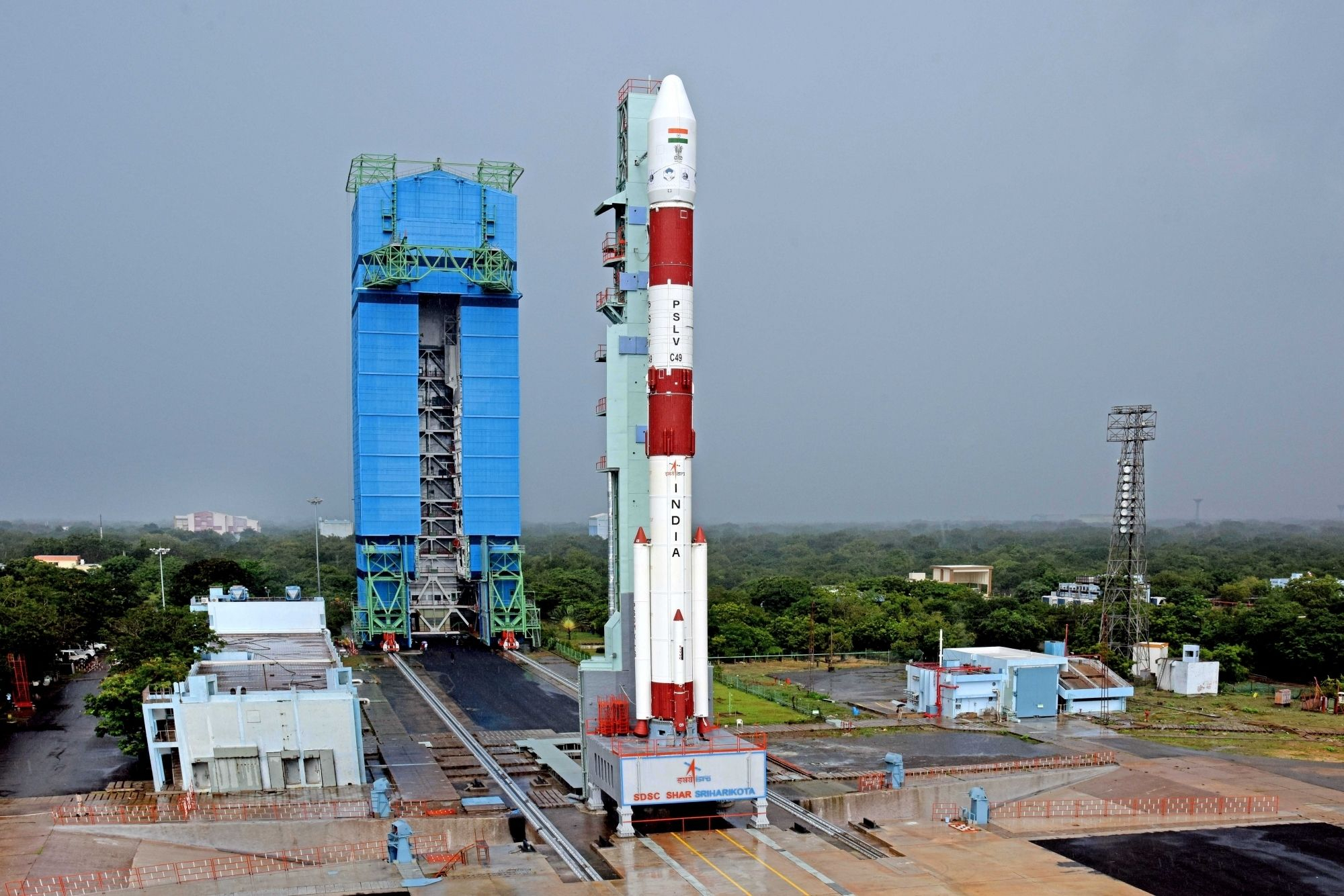
    The ISRO has launched three Singaporean satellites in precise orbit through the PSLV Orbital Experimental Module or ‘POEM’.

    What is POEM?

    • The POEM is a platform that will help perform in-orbit experiments using the final, and otherwise discarded, stage of ISRO’s workhorse rocket, the Polar Satellite Launch Vehicle (PSLV).
    • The PSLV is a four-stage rocket where the first three spent stages fall back into the ocean, and the final stage (PS4) — after launching the satellite into orbit — ends up as space junk.
    • However, in PSLV-C53 mission, the spent final stage will be utilised as a “stabilised platform” to perform experiments.
    • POEM is carrying six payloads, including two from Indian space start-ups Digantara and Dhruva Space.

    Features of POEM

    • POEM has a dedicated Navigation Guidance and Control (NGC) system for attitude stabilisation, which stands for controlling the orientation of any aerospace vehicle within permitted limits.
    • The NGC will act as the platform’s brain to stabilize it with specified accuracy.
    • POEM will derive its power from solar panels mounted around the PS4 tank, and a Li-Ion battery.
    • It will navigate using four sun sensors, a magnetometer, gyros & NavIC.
    • It carries dedicated control thrusters using Helium gas storage. It is enabled with a telecomm and feature.

    Has ISRO repurposed and used PS4 rocket junk earlier?

    • The Indian space agency first demonstrated the capability of using PSLV-C44 as an orbital platform in 2019.
    • It injected Microsat-R and Kalamsat-V2 satellites into their designated orbits.
    • The fourth stage in that mission was kept alive as an orbital platform for space-based experiments.
    • While in that mission, the fourth stage had Li-Ion batteries, solar panels are an addition this time.
    • The latest repurposing and upgrade of the fourth stage of the PSLV rocket involves the stabilization of the orbital platform.


    UPSC 2023 countdown has begun! Get your personal guidance plan now! (Click here)

More posts