💥Join UPSC 2027,2028 Mentorship (July Batch) + XFactor Notes & Microthemes PDF

Search results for: “”

  • Labour codes: what changes for workers and employers

    Introduction

    The four labour codes, Code on Wages, Code on Social Security, Industrial Relations Code, and Occupational Safety, Health and Working Conditions Code, aim to simplify compliance for industries, expand social security to workers, and improve ease of doing business. However, labour being a concurrent subject, implementation depends on states, and concerns have emerged about job security, worker rights, and the impact on collective bargaining.

    Why in the News

    The government has notified the implementation of four labour codes after over five years of deliberation and the consolidation of 29 central labour laws. This marks the first time India will operate under a uniform nationwide wage system and a consolidated social security architecture. While the reforms promise simplified compliance and a push for manufacturing efficiency, trade unions warn of reduced strike power, easier employee termination, and increased precarity for informal workers, making it one of the most debated labour reforms in recent times.

    Labour Codes and the Changing Labour Landscape

    1. Consolidation of 29 laws into four codes to create uniformity and remove overlapping provisions.
    2. Target shift from penal to compliance-based enforcement, especially for small firms and first-time offences.
    3. Push for economies of scale in manufacturing, signalling alignment with global production norms.

    Code on Wages: What changes for employees and employers?

    1. Uniform definition of wages: It ensures consistency in minimum wage calculation across states and sectors.
    2. Mandated national floor wage: It enables states to set minimum wages only above the national baseline.
    3. Time-bound wage payment: within 2 days of resignation/termination and 7 days of completion of the wage period.
    4. Broader coverage for all employees irrespective of industry or wage threshold.
    5. Overtime provisions strengthened: capped at 48 hours weekly, 12 hours daily shift duration permitted with breaks.

    Code on Social Security: Is the social net expanding?

    1. Unified ecosystem of social security: It covers unorganised, informal, gig, and platform workers for the first time.
    2. National Social Security Board: For recommendations, registration, schemes, and funding decisions.
    3. Corporate Co-contribution: Corporates may co-contribute to gig/platform worker benefits but funding split still unclear.
    4. ESIC expansion: Applies to sectors previously exempt; plantation workers included voluntarily.
    5. Formalisation incentive through maternity benefits, gratuity reforms, and inclusion of fixed-term employees.

    Industrial Relations Code: Does it limit collective bargaining?

    1. Stricter strike rules: 60-day notice before strike and prohibition of strike in the next 14 days of conciliation.
    2. Increase in threshold: Threshold for prior permission for layoffs raised from 100 to 300 workers, enabling easier hiring-firing.
    3. Negotiating Union provision: Only unions with 51% membership can negotiate; multi-union negotiation councils for fragmented memberships.
    4. Push for stable industrial climate: It is criticised for shrinking bargaining space for workers.

    OSH Code: Will workplace safety improve?

    1. Standardised norms: Across industries norms for working hours, workplace safety, and facility obligations.
    2. Mandatory free annual health check-ups: For workers in notified industries.
    3. Women allowed in all sectors and night shifts: subject to safety conditions.
    4. Increased accountability for establishments: In case of handling hazardous activities and migrant labour.

    Conclusion

    The labour codes aim to simplify compliance and strengthen India’s labour market to support manufacturing-led growth. However, concerns persist regarding job security, collective bargaining, and implementation across states. Successful outcomes depend on balancing economic flexibility with worker protection and ensuring that reforms lead to formalisation without vulnerability.

    PYQ Relevance

    [UPSC 2024] Discuss the merits and demerits of the four ‘Labour Codes’ in the context of labour market reforms in India. What has been the progress so far in this regard?

    Linkage: Growth driven mainly by labour productivity has led to GDP rising without proportional job creation. This links to the four Labour Codes, which seek higher productivity and flexibility, but face concerns on whether they will create jobs while protecting workers.

  • How can State PSCs be reformed

    Introduction

    Public Service Commissions are constitutional institutions meant to ensure merit-based appointments insulated from political pressures. A century after the Montagu–Chelmsford report envisaged them, State PSCs face credibility challenges due to recruitment irregularities and systemic inefficiencies that affect millions of aspirants.

    Why in the news?

    At the 2025 National Conference of Chairpersons of State Public Service Commissions hosted by Telangana PSC, members acknowledged recruitment controversies and demanded urgent reforms. Aspirant protests in Hyderabad highlighted how even minor delays disrupt youth livelihood prospects. Persistent exam cancellations and unclear syllabi have deepened mistrust despite PSCs’ constitutional mandate of meritocracy.

    Historical evolution of State PSCs :

    1. Montagu-Chelmsford Report :
      1. Recommended statutory recruitment bodies for welfare-oriented administration.
      2. Laid conceptual foundation for PSCs in India.
    2. First Public Service Commission (1926) :
      1. Set up for the Government of India before Independence.
      2. Marked beginning of institutionalised merit-based recruitment.
    3. Constitutionalisation through Article 315:
      1. Provided for separate Public Service Commissions for Union and States.
      2. Ensured autonomy and continuity post-Independence.

    Constitutional structure and organisation :

    1. Appointment and tenure of members: Governor appoints chairperson and members with fixed tenure and protected service conditions.
    2. Constitutional independence: PSCs function autonomously and discharge duties without executive interference.
    3. Role of UPSC in relation to State PSCs: UPSC may advise State PSCs on service matters when requested.
    4. Role of Ministry of Personnel: Helps maintain coherence in administrative policies across States.

    Present functioning and examination framework :

    1. Syllabus review mechanism: Periodic syllabus updates mandated to align with evolving administrative requirements.
    2. Question paper setting and evaluation: PSC sets papers, evaluates answer scripts and prepares selection lists.
    3. Cut-offs and result publication: Merit lists released after evaluation; criteria finalised by the PSC.

    Current challenges and bottlenecks

    1. Irregular recruitment cycles: Long gaps between notification and appointments disrupt careers and spark protests.
    2. Lack of transparency: Limited disclosure on answer keys and evaluation has lowered institutional credibility.
    3. Paper leaks and cancellations: Allegations of malpractice lead to cancellation, delays and erosion of public trust.
    4. Outdated syllabus issues: Poor syllabus revisions fail to reflect new governance themes and legal developments.
    5. Inconsistent standards across States: Divergent evaluation standards hinder mobility and generate inequality.

    Proposed reforms and restructuring measures:

    1. Revised manpower planning: Systematic vacancy forecasting to prevent examination delays.
    2. Fixed examination calendar: Annual, predictable and uniform recruitment schedule across States.
    3. Transparent evaluation policy: Mandatory disclosure of answer keys, normalisation criteria and cut-off logic.
    4. Academic and administrative alignment: Regular syllabus revision to match governance and administrative reality.
    5. Professional expertise induction: Inclusion of subject experts to improve paper quality and evaluation fairness.

    Conclusion

    State PSCs were created to provide equal opportunity in public employment. However, recruitment delays, unclear syllabi and opacity have damaged public trust. Ensuring predictability, transparency and institutional professionalism is essential to protect youth aspirations and restore confidence in constitutional recruitment bodies.

    PYQ Relevance

    [UPSC 2024] What are the aims and objects of the recently passed and enforced Public Examination (Prevention of Unfair Means) Act, 2024? Whether University/State Education Board examinations too are covered under the Act?

    Linkage: The Act directly links to the PSC crisis by targeting leaks, exam fraud and loss of trust in public recruitment. It sets a future-ready template for PSC reforms through transparency, deterrence and integrity in examinations.

  • Guru Tegh Bahadur Ji: Martyrdom Day

    Why in the news?

    On the eve of the 350th Martyrdom Day of Guru Tegh Bahadur Ji, the President of India, Smt. Droupadi Murmu paid tribute to the ninth Sikh Guru, highlighting his supreme sacrifice for the protection of righteousness, humanity and freedom of faith.

    Who was Guru Tegh Bahadur?  

    • Ninth Guru of Sikhism (1621–1675).
    • Youngest son of Guru Hargobind Sahib, the sixth Guru.
    • Known as “Hind di Chadar” (Shield of India) for defending religious freedom.
    • Key teachings recorded in the Guru Granth Sahib, including hymns on detachment, courage, and equality.

    Why is His Martyrdom Significant?

    • Guru Tegh Bahadur opposed forced conversions under Mughal Emperor Aurangzeb.
    • He defended the rights of Kashmiri Pandits, who sought his protection.
    • Arrested and executed in Chandni Chowk, Delhi, on 24 November 1675.
    • His martyrdom represents:
      • Protection of freedom of conscience
      • Defence of pluralism and interfaith harmony
      • Upholding justice and truth

    President of India’s 2025 Message: Key Highlights

    • Tribute to his valour, sacrifice, and principles.
    • Emphasised his role in preserving: Righteousness, Humanity, Truth.
    • Called upon citizens to imbibe his values to strengthen harmony and unity in India.

    Guru Tegh Bahadur’s Contributions  

    • Spiritual Teachings: Advocated nirbhau (fearlessness) and nirvair (compassion). Stressed spiritual liberation through humility and service.
    • Establishment of Sikh Centres: Founded the city of Anandpur Sahib (1665). Travelled widely across the Indian subcontinent, spreading Sikh philosophy.
    • Guru Granth Sahib Contribution: Composed 116 hymns, including shaloks on detachment and moral courage.
    (2009) With reference to the cultural history of medieval India, consider the following statements: 

    1. Siddhas (Sittars) of Tamil region were monotheistic and condemned idolatry. 

    2. Lingayats of Kannada region questioned the theory of rebirth and rejected the caste hierarchy. 

    Which of the statements given above is/are correct? 

    (a) 1 only (b) 2 only (c) Both 1 and 2 (d) Neither 1 nor 2

  • Ultra-Processed Food Epidemic in India

    Why in the news?

    A recent Lancet three-paper series highlights the rapid rise in ultra-processed food (UPF) consumption globally, including India, and its strong link to rising obesity, diabetes, cardiovascular diseases, and premature mortality. The case of an 18-year-old Indian youth with obesity and early-onset metabolic disorders illustrates the growing public health crisis.

    What are Ultra-Processed Foods?

    According to the NOVA classification, ultra-processed foods are:

    • Industrial formulations with multiple chemical and cosmetic ingredients
    • Made using high-fructose corn syrup, hydrogenated oils, flavour enhancers, emulsifiers, preservatives, colours
    • Designed for long shelf life, hyper-palatable taste and convenience
      Examples: Soft drinks, chips, packaged noodles, biscuits, sugary beverages, chocolates, breakfast cereals, frozen pizzas, ready-to-heat meals, chicken nuggets, processed meats.

    Difference from Processed Foods:
    Processed = minimal changes (washing, canning, cooking).
    Ultra-processed = heavy industrial formulations, low nutrients, high calories.

    Note: NOVA is a food classification system developed by the University of São Paulo (Brazil) that categorises foods based on the extent and purpose of industrial processing, not nutrients.

    India’s UPF Consumption – Why It’s a Concern?

    • Huge surge in consumption: Retail sales of UPFs in India jumped from USD 0.9 billion (2006) → USD 38 billion (2019) (approx. 40-fold increase).
    • Rising NCD (Non-Communicable Diseases) burden: As per ICMR–INDIAB (2023): Obesity: 28.6%, Diabetes: 11.4%, Prediabetes: 15.3%, Abdominal obesity: 39.5% and Childhood obesity rising: 2.1% → 3.4% (NFHS).
    A company marketing food products advertises that its items do not contain trans-fats. What does this campaign signify to the customers? (2011)

    1. The food products are not made out of hydrogenated oils. 

    2. The food products are not made out of animal fats/oils. 

    3. The oils used are not likely to damage the cardiovascular health of the consumers. 

    Select the correct answer using the code given below: 

    (a) 1 only (b) 2 and 3 only (c) 1 and 3 only (d) 1, 2 and 3

  • Thermal Power Plants Near Delhi Operating Without FGD

    Why in the news?

    Delhi’s air quality deteriorated sharply in November 2025. A major contributing factor identified is the continued operation of several thermal power plant units within a 300-km radius of Delhi without Flue Gas Desulphurisation (FGD) systems.

    What is FGD?

    Flue Gas Desulphurisation (FGD) is a pollution-control technology used in thermal power plants and industrial units to remove sulphur dioxide (SO₂) from exhaust flue gases before they are released into the atmosphere.

    Status of FGD Installation 

    Thermal Power Plants within 300 km of Delhi

    • Total plants: 11
    • Total units: 35
    • Units with FGD (as of Apr 2025): 13
    • Units without FGD: 22
    • Units currently operating without FGD (Nov 2025): 15
    • Units shut/reserve shutdown: 6

    States & Operators

    • Haryana (HPGCL): Panipat TPS, Yamuna Nagar TPS.
    • Punjab (PSPCL): Guru Hargobind TPS and Ropar TPS.
    • Private: Talwandi Sabo (Vedanta).

    Why SO₂ Emissions Matter?  

    • SO₂ converts into secondary PM2.5, the most harmful pollutant for human health.
    • Causes: Respiratory diseases, Acid rain and Visibility reduction (smog)
    • Travels long distances, affecting entire regions beyond plant boundaries.
    According to the Environmental Protection Agency (EPA), which one of the following is the largest source of sulphur dioxide emissions? (2024)

    (a) Locomotives using fossil fuels 

    (b) Ships using fossil fuels 

    (c) Extraction of metals from ores 

    (d) Power plants using fossil fuels

  • Low-Pressure Area in Bay of Bengal (November 2025) 

    Why in the news?

    According to the India Meteorological Department (IMD), a low-pressure area formed over the Bay of Bengal on November 22, 2025. It is expected to intensify into a depression by November 24 and move west-northwestwards.

    What Has the IMD Reported?  

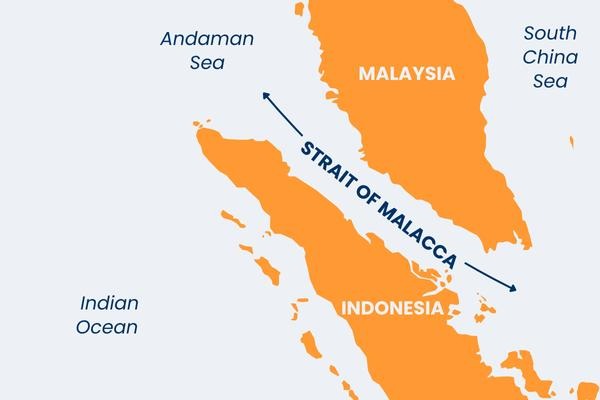
    a) Formation: Low-pressure area formed near the Malacca Strait over the South Andaman Sea. It arose due to a cyclonic circulation.

    b) Likely Path: Expected to move west-northwestwards. Likely to intensify into a depression over southeast Bay of Bengal & adjoining south Andaman Sea by November 24.

    c) Further IntensificationCould intensify further over the southwest Bay of Bengal within 48 hours after formation. IMD is uncertain whether it will develop into a cyclonic storm.

    d) State Impact (Odisha & Coastal Areas): System is far from Odisha coastdry weather Farmers in coastal and southern regions have started harvesting mature paddy in anticipation of possible heavy rains. The State Agriculture Department has not yet issued advisories.

    (2015) In the South Atlantic and South-Eastern Pacific regions in tropical latitudes, cyclone does not originate. What is the reason? 

    (a) Sea surface temperatures are low 

    (b) Inter-Tropical Convergence Zone seldom occurs 

    (c) Coriolis force is too weak 

    (d) Absence of land in those regions

  • Presidential Reference on Governors & State Bills (2025)

     Why in the news?
    Chief Justice of India B.R. Gavai, on November 23, 2025, clarified the Supreme Court’s advisory opinion in the 2025 Presidential Reference regarding timelines for Governors and the President in granting assent to State Bills.

    What is a Presidential Reference?

    • Made under Article 143 of the Constitution.
    • The President can seek the advisory opinion of the Supreme Court on questions of law or matters of public importance.
    • Not binding, but carries high persuasive value.
    • Cannot overrule an existing judgment, but can clarify the law.

    CJI Gavai emphasised that the advisory opinion is not a judicial review judgment.

    Background: 

    Tamil Nadu Governor Case (April 8 Judgment) The April 8, 2025 Supreme Court judgment held:
    • Governors/President must act on pending Bills within 3 months,
    • Or else the Bill would be “deemed to have received assent”.

    This introduced a judicially created timeline not explicitly present in the Constitution. This triggered the Presidential Reference seeking clarity.

    Supreme Court’s Advisory Opinion (November 20, 2025)

    A five-judge Bench led by CJI Gavai issued the following clarifications:

    a) No Mandatory Timeline: The Constitution does not prescribe specific timelines for Governors or the President. Judiciary cannot read timelines into the Constitution.

    b) “Reasonable Period” Standard: Governors and President must act within a “reasonable period”. However, the Court did not define what constitutes “reasonable”.

    c) No Endless Delay: Governors cannot sit indefinitely on Bills. Courts may exercise limited judicial review in extreme delay cases.

    d) Context Matters: Routine Bills → 1 month may be reasonable. Bills related to internal/external emergency → may require more time.

    Key Constitutional Provisions Involved

    Article 200 – Governor’s options on State Bills
    1. Give assent
    2. Withhold assent
    3. Return the Bill (if not a Money Bill)
    4. Reserve the Bill for President’s consideration
    Article 201 – President’s powers over reserved Bills
    • Grant or withhold assent
    • No fixed timeline prescribed
    Article 143 – Presidential Reference
    • Supreme Court gives advisory opinion

    Why is this Important for UPSC Prelims?

    This case clarifies the separation of powers, federalism, and the role of constitutional authorities.

    Prelims often tests:

    • Powers of Governor
    • Assent procedures for Bills
    • Nature of advisory jurisdiction
    • Limits of judicial interpretation

    Other Key Statements by CJI Gavai (Factual Highlights)

    a) Advisory Opinion vs Judgment: Advisory opinion cannot overturn a judgment.

    b) Judiciary–Executive Relations: CJI rejected the idea that “friction” is necessary between judiciary and government.

    c) Judicial Independence: A judge’s independence is not measured by ruling against the government.

    d) High Court Judge Transfers: Transfers made for administrative reasons and sometimes due to complaints after verification.

    e) Personal Note: CJI forgave a lawyer who threw an object at him: “It’s how I was brought up.”

    Which of the following are the discretionary powers given to the Governor of a State? (PYQ 2014)

    1. Sending a report to the President of India for imposing the President’s rule 

    2. Appointing the Ministers 

    3. Reserving certain bills passed by the State Legislature for consideration of the President of India 

    4. Making the rules to conduct the business of the State Government 

    Select the correct answer using the code given below: 

    (a) 1 and 2 only 

    (b) 1 and 3 only 

    (c) 2, 3 and 4 only 

    (d) 1, 2, 3 and 4

  • 🔴[UPSC Webinar for 2026] By Prayas Sir, Civilsdaily | How to Complete Microtheme Loop For Prelims and Mains | Explained With Examples for each GS subject | Join on 14th November at 7PM

    🔴[UPSC Webinar for 2026] By Prayas Sir, Civilsdaily | How to Complete Microtheme Loop For Prelims and Mains | Explained With Examples for each GS subject | Join on 14th November at 7PM

    Register for the session


    Read about Webinar

    Most UPSC aspirants make one crucial mistake, they prepare for Prelims and Mains as two separate exams.

    But the truth is, UPSC doesn’t test you twice, it tests the same understanding in two different formats.

    If you have ever wondered why your Mains content doesn’t help in Prelims, or why Prelims facts don’t convert into Mains ready notes, this session is for you.

    Prayas Sir, Civilsdaily IAS

    What I will cover (practical, no fluff):

    1. Understanding the Microtheme Loop

    • What is a microtheme and how it acts as a bridge between Prelims and Mains.
    • Why most aspirants fail to close the loop between static, dynamic, and analytical dimensions.

    2. GS Wise Explanation with Real Examples
    We will take one microtheme from each paper and see how it appears differently across stages:

    • GS 1: River systems, from Prelims facts to Mains questions on geography, culture, and disaster management.
    • GS 2: Cooperative Federalism, from Article 263 in Prelims to NITI Aayog vs Finance Commission in Mains.
    • GS 3: Green Hydrogen Mission, how to go beyond schemes and use it in Mains energy security context.
    • GS 4: Empathy in Public Service, turning static ethics terms into practical case study material.

    3. How to Build Microtheme Notes

    • The exact note making model that merges Prelims recall with Mains analysis.
    • How to derive microthemes from PYQs instead of random topics.
    • How to link editorials, reports, and government documents under a single microtheme.
    • Creating 360° coverage using one pagers, from keywords to perspectives.

    4. The Prelims to Mains Continuity Method

    • How to use Prelims revision data for Mains enrichment.
    • Daily routine to sync reading, note making, and test practice.
    • How to decide what goes in short notes vs long form Mains notebooks.


    Why attend this session:

    • To stop preparing in fragments and start connecting Prelims and Mains preparation organically.

    • To learn a repeatable system that turns every current affair into both a Prelims and Mains asset.

    • To master microthemes that will anchor your preparation for the next 18 months.

    • To receive a Prelims Microthemes PDF upon registration for structured reference.

    Join us, for a 45 minute live Zoom session on 14th Nov at 7PM.

    See you in masterclass.


    It will be a 45 minute session, post which we will open up the floor for all kinds of queries which a beginner must have. No questions are taboo and Lakshay sir is known to be patiently solving all your doubts.

    Join us for a Zoom session on 14th Nov at 7 PM. This session is a must attend for you If you are attempting UPSC for the first time or have attempted earlier and now preparing for 2026/2027, then it is going to be a valuable session for you too.

    See you in the session”

    Register for the session for a complete in-depth UPSC Prep


    In this Civilsdaily masterclass, you will get:

    1. A 45-minute deep dive on how to plan your UPSC strategy from the start to the end.
    2. How do first-attempt IAS Rankers get the most out of their one year prep?
    3. Insider tips that only the top IAS and IPS rankers know and apply to get rank.

    By the end, you’ll have razor-sharp clarity and a clear path to crack UPSC with confidence and near-perfect certainty. 

    Join UPSC session on 14th Nov, at 7 PM

    (Don’t wait—the next webinar/session won’t be until End Nov’25)


    These masterclasses are packed with value. They are conducted in private with a closed community. We rarely open these webinars for everyone for free. This time we are keeping it for 300 seats only.

    Ready to attend the UPSC Webinar?


    Not sure yet?

    We recommend you register here. It takes less than 10 seconds to register.

    • No spam! Once in a while, we’ll only send you high-quality exam-related content. 
    • We will inform you about the upcoming Masterclasses that might benefit you.
    • You can demand one free mentorship call from verified Civilsdaily mentors. 
    • You can always choose to unsubscribe. 
  • Centre notifies four new Labour Codes

    Why In The News?

    The Centre notified all four Labour Codes, introducing major reforms and replacing 29 outdated labour laws dating back to the 1930s.

    1)Introduction to the Labour Codes Notification:

    • Major Reform Announcement: The Centre notified all four Labour Codes, introducing wide-ranging changes in India’s labour framework.
    • Key Focus Areas: The reforms expand social security to gig workers, ensure gender pay parity, enhance women’s workplace rights, and introduce fixed-term employment.
    • Replacement of Old Laws: The Codes replace 29 fragmented labour laws dating back to the 1930s–1950s.

    2)Government’s Stance:

    • Prime Minister’s View: PM Modi described the reforms as one of the most comprehensive labour transformations since Independence.
    • Worker Empowerment: The government highlights that the Codes aim to ensure universal social security, timely wage payments, and safer workplaces.
    • Simplified Compliance: The reforms are expected to promote ease of doing business through simplified compliance mechanisms.
    • Minister’s Statement: Labour Minister Mansukh Mandaviya said the Codes will formalise employment and make the labour ecosystem globally aligned.
    • State-Level Readiness: Most States have already issued draft rules; the Centre is supporting those still finalising rules.

    3)Key Provisions:

    • Women’s Safety and Rights: Expanded rights, including permission for night shifts and enhanced workplace safety.
    • Health and Social Security: Free annual health check-ups for workers above 40 and nationwide ESIC coverage, including hazardous units.
    • Simplified Procedures: A single registration, licensing, and return system for employers.
    • Wage and Safety Standards: Introduction of a national floor wage and creation of a National OSH Board for uniform safety standards.
    • Fixed-Term Employment: Allows fixed-term workers to receive all benefits equivalent to permanent workers.
    • New Work Categories: Gig workers, platform workers, and aggregators are legally defined for the first time.
    • Universal Account Number: Aadhaar-linked UAN ensures portability and easy access to welfare benefits.
    • Inclusion of Plantation Workers: Plantation workers brought under OSHWC and Social Security Codes.

    4)Responses from Stakeholders:

    Trade Union Concerns:

    • Opposition to Codes: Several central trade unions reject the Labour Codes, labelling them anti-worker and pro-employer.
    • Issues with Timing: CTUs argue implementing the Codes amid rising unemployment and inflation will worsen workers’ hardships.
    • Protest Plans: Unions have announced nationwide protests on November 26 and cite earlier strikes against the Codes.
    • Fear of Exploitation: Trade unions warn the reforms could revive a “master-servant” relationship, reducing worker protections.

    BMS Standpoint: The Bharatiya Mazdoor Sangh supports implementation but seeks amendments to remove perceived anti-worker provisions in OSH and Industrial Relations Codes.

    Industry View: CII praises the reforms as a transformative step towards a modern and simplified labour ecosystem.

    [UPSC 2021] With reference to casual workers employed in India, consider the following statements: 1.All casual workers are entitled to Employees Provident Fund coverage.

    2.All casual workers are entitled to regular working hours and overtime payment.

    3.The government can, by notification, specify that an establishment or industry shall pay wages only through its bank account. Which of the above statements are correct? Options: (a) 1 and 2 only (b) 2 and 3 only* (c) 1 and 3 only (d) 1, 2, and 3


  • Pradhan Mantri Fasal Bima Yojana: Rajasthan farmers’ protests on insurance claims

    Why In The News?

    Farmers in Rajasthan’s Churu district held a ‘Kisan Ekta Tractor March’ demanding pending crop insurance claims, fertiliser availability, transparency in the insurance portal, and inclusion of certain crops in PM Dhan Dhanya Yojana. The protest was postponed after government assurances during late-night negotiations.

    About Pradhan Mantri Fasal Bima Yojana (PMFBY):

    • Launch & Purpose:
      • Launched on 18 February 2016 by the Ministry of Agriculture to provide affordable crop insurance and financial protection against losses from natural calamities, pests, and diseases.
      • Implemented through insurance companies and banks.
    • Objectives:
      • Provide financial assistance for crop loss due to unforeseen events.
      • Stabilise farmer income and ensure continuity in farming.
      • Promote modern agricultural practices.
      • Encourage crop diversification, enhance creditworthiness, and improve agriculture sector competitiveness.
    • Eligibility:
      • All farmers including sharecroppers and tenant farmers growing notified crops in notified areas.
      • Compulsory: Loanee farmers with Seasonal Agricultural Operations (SAO) loans.
      • Voluntary: Non-loanee farmers.
      • Must have insurable interest and valid land ownership/tenure documents.
      • Must not receive duplicate compensation from other sources.
      • Special focus on SC/ST/Women farmers with proportional budget allocation.
    • Benefits:
      • Affordable Premiums:
        • Farmers pay 2% for Kharif, 1.5% for Rabi, and 5% for commercial/horticultural crops.
        • Government provides premium subsidy; pays full premium in NE states, J&K, and Himachal Pradesh.
      • Comprehensive Coverage:
        • Covers natural disasters, pests, diseases, and post-harvest losses (hailstorm, landslide).
        • Excludes losses due to war, nuclear risks, malicious damage, or preventable risks.
      • Timely Compensation:
        • Claims processed within two months of harvest.
      • Technology-Driven Implementation:
        • Uses satellite imaging, drones, and mobile apps for precise loss estimation.
        • NCIP for digital processing; YES-TECH for remote-sensing yield estimation; CROPIC for geotagged crop verification.
    [UPSC 2020] In India, which of the following can be considered as public investment in agriculture?
    1. Fixing Minimum Support Price for agricultural produce of all crops
    2. Computerization of Primary Agricultural Credit Societies
    3. Social Capital development
    4. Free electricity supply to farmers
    5. Waiver of agricultural loans by the banking system
    6. Setting up of cold storage facilities by the governments
    Select the correct answer using the code given below: Options: (a) 1, 2 and 5 only (b) 1, 3, 4 and 5 only (c) 2, 3 and 6 only* (d) 1, 2, 3, 4, 5 and 6