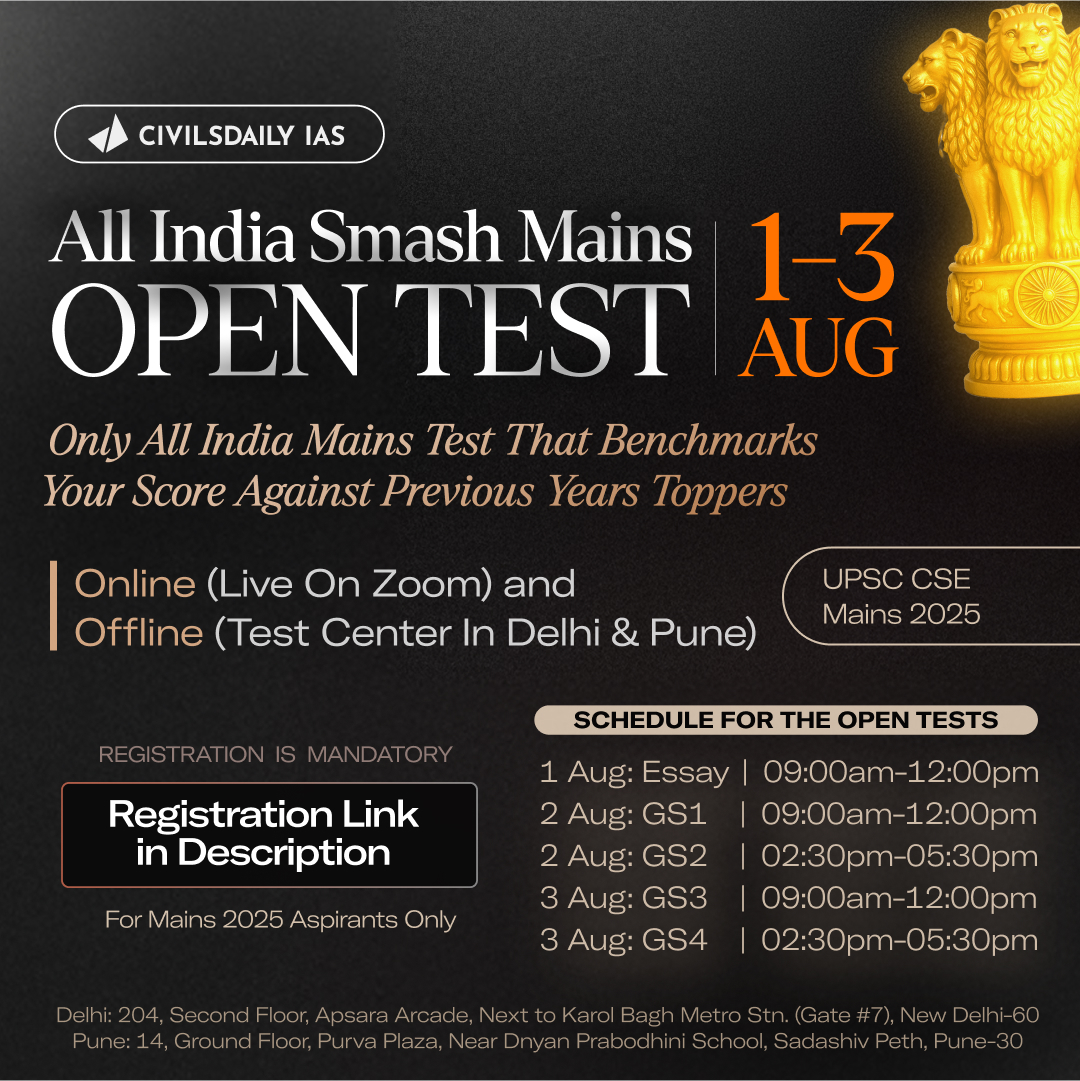
Civilsdaily’sAll India Smash Mains Open Test 2025 is Civilsdaily’s national-level UPSC Mains simulation designed to help aspirants experience the actual pressure, pace, and performance demands of the UPSC Mains Examination. Built to mirror the real exam in structure and intensity, it gives aspirants a clear reality check before the actual test.
Through these tests, aspirants get to refine their answer writing, manage time efficiently, and sharpen their thinking under exam-like conditions. Smash Mains isn’t just about testing knowledge. It’s about fine-tuning your strategy, stamina, and structure.
Success in UPSC Mains is not just about content; it’s about how well you express that content in a structured, crisp, and impactful manner. Civilsdaily understands this. Smash Mains focuses on real-time answer writing practice and strategic exam simulation, not passive preparation.
Conducted in both Offline (Delhi and Pune) and Online (Live on Zoom) mode, Smash Mains gives aspirants the opportunity to test themselves against all Mains 2025 aspirants across India, helping them recalibrate their preparation with actionable insights and feedback.
Mode : Offline (Delhi & Pune), Online (Live on Zoom)
Smash Mains: Key Highlights
1. Your Score Benchmarked Against Real UPSC Toppers + All India Percentile Ranking Aspirants will receive their percentile and rank based on national participation. See exactly where you stand among serious UPSC competitors.
2. 360° Evaluation of Answers Each paper undergoes holistic evaluation with attention to content depth, structure, clarity, and presentation. Expect detailed scorecards for General Studies and Essay papers.
3. Actionable Feedback & Writing Enhancement Our expert mentors offer focused reviews that help you:
A. Spot conceptual gaps
B. Improve answer structure
C. Strengthen argumentation and flow using theme and demand approach
D. Polish language and articulation
4. Full Syllabus Coverage Smash Mains covers the entire UPSC Mains syllabus, with a curated set of questions that test conceptual clarity, current affairs integration, and interdisciplinary approach.
5. Live Discussions & Strategy Sessions Each paper will be followed by mentor-led discussions and strategy breakdowns to help aspirants understand ideal approaches, common pitfalls, and high-impact improvements.
1. Real exam simulation to prepare mentally and strategically 2. National benchmarking of performance 3. Personalized guidance from top mentors 4. Answer writing mastery before the actual Mains 5. Enhanced confidence and exam readiness
The Prime Minister will attend a function in Tamil Nadu marking 1000 years since King Rajendra Chola I’s conquest of the Gangetic plains.
About Rajendra Chola I:
Reign & Dynasty: Ruled from 1014 to 1044 CE, succeeding his father Rajaraja Chola I.
Titles:
Gangaikonda Cholan (“Bringer of the Ganges”) – adopted after his victorious northern campaign.
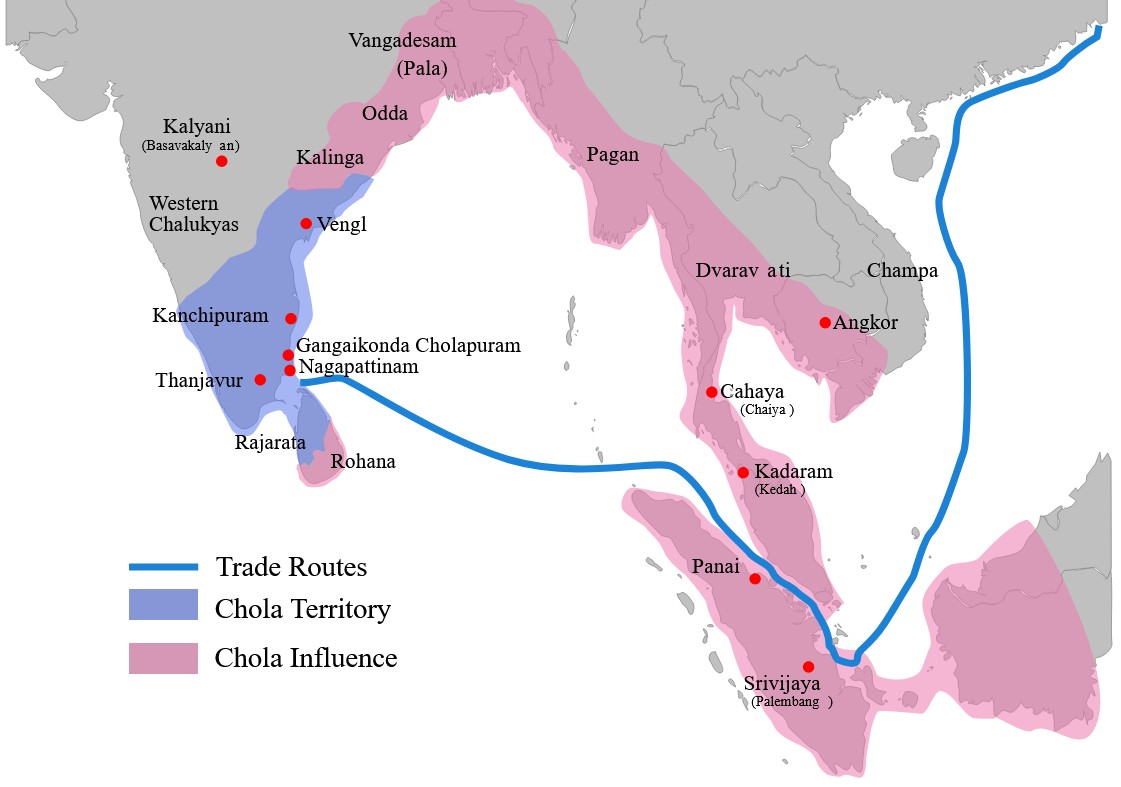
Kadaram Kondan (“Conqueror of Kedah (Malaysia)”) – earned following his Southeast Asian naval expeditions.
Capital Foundation: Established Gangaikonda Cholapuram, shifting the capital from Thanjavur to the Kollidam River area.
Temple Building: Built the Gangaikondacholeshwaram (Shiva) Temple to commemorate his conquests.
Succession: Succeeded by his son, Rajadhiraja I.
Religious Policy:
Devout Shaivite, but practiced religious pluralism—patronised Buddhism, including building stupas in South India and Southeast Asia.
Diplomacy & Trade: Strengthened international ties with Song Dynasty China and Arab merchants.
Administration: Pioneered local self-governance, showcasing notable administrative sophistication.
His Legend:
Northern Conquest: Rajendra led a military campaign to the Gangetic plains, defeating the Pala ruler Mahipala of Bengal and Bihar, and commemorated this victory by bringing Ganga water to his capital.
Overseas Expeditions: He commanded what is considered the largest blue-water navy in Indian history. Successfully conducted naval expeditions to:
Srivijaya Empire (covering parts of modern-day Sumatra, Java, and Malaysia)
Burma, Andaman & Nicobar Islands, Lakshadweep, Maldives, and Pegu Islands
Extracted tribute from Thailand and the Khmer kingdom of Cambodia.
First Indian king to undertake large-scale overseas military campaigns.
Trade and Diplomacy: Established trade and diplomatic links with Song China and Arab merchants.
Administration: Promoted local self-governance, showcasing the Cholas’ administrative efficiency.
Wealth and Power: Under his reign, the Chola Empire became one of the wealthiest and most powerful empires of the time.
[UPSC 2025] Who among the following led a successful military campaign against the kingdom of Srivijaya, the powerful maritime state, which ruled the Malay Peninsula, Sumatra, Java and the neighbouring islands?
The Comptroller and Auditor General of India’s (CAG) audit has flagged ₹573 Crore irregularities in Indian Railways.
About Comptroller and Auditor General (CAG) of India:
Foundation: Established under Article 148 of the Constitution of India.
Independence: A constitutional authority, not subject to executive control.
Appointment: Appointed by the President of India.
Tenure: Holds office for 6 years or until the age of 65 years, whichever is earlier.
Removal: Can be removed by the President in the same manner and on the same grounds as a judge of the Supreme Court of India.
Post-Retirement Bar: Ineligible for further office under the Government of India or any State after demitting office.
Funding: Administrative expenses are charged upon the Consolidated Fund of India, ensuring financial autonomy.
Parliamentary Independence: No minister can represent the CAG in Parliament.
Role: Known as the guardian of the public purse and a key pillar of Indian democracy.
Powers and Functions:
Audits:
Fund Audits: Audits expenditures from the Consolidated Fund of India, State Consolidated Funds, and Union Territory funds.
Other Fund Audits: Audits Contingency Fund and Public Account at both Central and State levels.
Departmental Audits: Reviews profit and loss accounts, balance sheets, and subsidiary accounts of government departments.
Authority Audits: Audits bodies and authorities substantially financed by the government.
Company Audits: Examines accounts of government-owned companies and corporations.
Special Audits: Audits other authorities when requested by the President or Governor.
Parliamentary Role: Acts as a guide, friend, and philosopher to the Public Accounts Committee of Parliament.
Public Accountability: Exposed major scams such as the 2G spectrum and coal block allocation cases.
Sectoral Reviews: Highlighted inefficiencies in defence, railways, and other public enterprises.
Limitations of the office of CAG:
Lack of Real-Time Control: Cannot stop or approve withdrawals from the Consolidated Fund; cheques can be issued without CAG’s prior clearance.
Opaque Appointment: No prescribed qualifications or transparent procedure for selection; appointment is entirely executive-controlled.
Limited Audit Scope:
Excludes certain public entities like Life Insurance Corporation and public sector banks.
Cannot audit public-private partnerships and funds like Prime Minister’s Citizen Assistance and Relief in Emergency Situations Fund and Prime Minister’s National Relief Fund.
Off-budget borrowings (e.g., through National Investment and Infrastructure Fund) remain outside audit scope.
Post-Facto Nature: Audits occur after expenditure, limiting preventive or real-time oversight.
[UPSC 2012] In India, other than ensuring that public funds are used efficiently and for intended purpose, what is the importance of the office of the Comptroller and Auditor General (CAG)?
1. CAG exercises exchequer control on behalf of the Parliament when the President of India declares national emergency/financial emergency.
2. CAG reports on the execution of projects or programmes by the ministries are discussed by the Public Accounts Committee.
3. Information from CAG reports can be used by investigating agencies to press charges against those who have violated the law while managing public finances.
4. While dealing with the audit and accounting of government companies, CAG has certain judicial powers for prosecuting those who violate the law.
Which of the statements given above is/are correct?
Options: (a) 1, 3 and 4 only (b) 2 only (c) 2 and 3 only* (d) 1, 2, 3 and 4
[UPSC 2024] Despite comprehensive policies for equity and social justice, underprivileged sections are not yet getting the full benefits of affirmative action envisaged by the Constitution. Comment.
Linkage: The article explicitly states that “any argument against government control of temple affairs would be striking at the root of social justice”. This question directly addresses “social justice” and the upliftment of “underprivileged sections,” which is the core argument of the article “social justice model” enabled by the regulation of temple funds.
Mentor’s Comment: A political controversy in Tamil Nadu emerged over using temple funds to build colleges. The debate highlights a unique social justice model rooted in colonial-era laws, notably the Tamil Nadu Hindu Religious and Charitable Endowments Act, 1959, which legally permits such use of surplus funds. The issue reflects ongoing tensions between secular governance, social reform, and religious traditions.
Today’s editorial analyses the Issues related to temple funds like to build colleges. This topic is important for GS Paper I (Indian Society) and GS Paper II (Social Justice) in the UPSC mains exam.
_
Let’s learn!
Why in the News?
A political controversy recently erupted in Tamil Nadu over the use of temple funds for building colleges.
What is the origin and evolution of state control over temples in Tamil Nadu?
Colonial Intervention and Legal Frameworks: The British colonial government began regulating temples through laws such as the Madras Regulation VII of 1817 and the Religious Endowments Act, 1863. These aimed at curbing mismanagement and ensuring proper use of temple revenues, though actual control was minimal.
Madras Hindu Religious and Charitable Endowments (HRCE) Act, 1927 & 1951: Post-independence, the Madras HRCE Act, 1951 granted the state direct control over temple administration. It replaced hereditary trustees with government-appointed officers, shifting from oversight to active state involvement in managing temple affairs.
Dravidian Politics and Reformist Push: The Self-Respect Movement and the rise of Dravidian parties (e.g., DMK) advocated for rationalism and secular administration of temples. This reinforced the idea of temples as public institutions, furthering state oversight in their functioning.
Why is using temple funds for education legally and socially justified?
Legal Provision under State Law: The Tamil Nadu Hindu Religious and Charitable Endowments (HR&CE) Act, 1959 allows the use of temple surplus funds for public purposes like education, healthcare, and social welfare, provided the core religious functions are not affected. Eg: The government used temple funds to construct colleges in Tiruvannamalai and Krishnagiri, serving backward districts.
Social Justice and Inclusive Development: Tamil Nadu follows a Dravidian model that sees temples as public institutions capable of promoting equality, education, and empowerment, especially for marginalized communities. Eg: Building a college with temple funds in a remote area helps first-generation learners, aligning with constitutional goals of equity and social upliftment.
Historical and Cultural Precedent: In the pre-colonial and colonial era, temples often served as centres of learning and charity. Using their resources for education today revives that tradition in a modern, secular context. Eg: In the 19th century, temple lands supported gurukuls and feeding centres, a legacy extended now through modern institutions.
How did the Self-Respect Movement shape temple governance?
Challenged Brahminical Control: The movement, led by Periyar E.V. Ramasamy, questioned hereditary priesthood and the dominance of Brahmins in temple administration, pushing for non-Brahmin inclusion in both ritual and managerial roles.
State Intervention in Temple Administration: It laid the ideological foundation for government regulation of temples through legislations like the HR&CE Act, bringing temples under state control to ensure transparency, social equity, and public accountability.
Promotion of Secular and Social Justice Values: The movement emphasized that temple wealth should serve the public good, such as education, healthcare, and social welfare, especially for the oppressed castes, transforming temples into instruments of social reform.
What are the constitutional and legal bases for state intervention in religious institutions in India?
Article 25(2)(a) – Social Welfare and Reform: The Constitution permits the state to regulate or restrict any economic, financial, political, or secular activity associated with religion to promote social welfare and reform.
Article 26 – Regulates While Protecting Rights: While religious denominations have rights to manage their own affairs, the state can impose reasonable restrictions in the interest of public order, morality, and health.
Judicial Precedents and Statutory Laws: Courts have upheld state control over temples (e.g., in Shirur Mutt case) distinguishing between religious practices and secular administration. Laws like the Hindu Religious and Charitable Endowments (HR&CE) Act legally enable such oversight.
Should religious institutions be allowed to function autonomously without state control?
Argument in favour:
Protection of Religious Freedom: Article 26 of the Indian Constitution grants religious denominations the right to manage their own affairs. Autonomy respects the pluralistic ethos of India and avoids state overreach in spiritual matters.
Cultural and Traditional Integrity: Many religious institutions have centuries-old customs and management systems. Autonom y helps preserve these indigenous practices without interference from changing political or administrative interests.
Argument against:
Accountability and Transparency: Without state oversight, there is a higher risk of financial mismanagement, corruption, or exploitation of devotees. State regulation ensures proper audit and governance of temple funds and assets.
Public Interest and Welfare: Religious institutions often hold significant wealth and influence. State control can direct surplus resources towards social welfare, education, and infrastructure, promoting inclusive development beyond the religious community.
Way forward:
Balanced Autonomy with Regulation: Implement a co-governance model where religious institutions retain spiritual autonomy, while the state ensures financial transparency, protection of heritage, and equitable use of public funds.
Strengthen Legal Frameworks: Update existing laws to clearly define the limits of state intervention, ensure community representation in temple boards, and establish robust grievance redressal mechanisms.
Court verdict ends post‑facto clearances, pushing India toward greener growth. UPSC likes to wrap this theme inside a rights question, much like 2015’s Diwali‑crackers case on Article 21; it will ask how judgments such as “Why the Supreme Court Struck Down Post‑Facto Environmental Clearances” reshape governance and balance growth with the right to life. Students often list data on bad air but forget to link it to constitutional hooks or to the broken approval chain flagged under “Institutional and Systemic Challenges,” so answers feel like fact dumps. This article fixes those gaps by walking you through each link in the chain: it shows the EIA gap (“EIA process was undermined”), the legal anchor (“Alembic Pharma 2020”), and the economic cost of inaction (pollution drains 1.3 % of GDP). The result is ready material to weave law, economics, and policy into one clear argument. The standout feature? The table in “Significance of the Verdict” turns big legal ideas into everyday stakes—health, jobs, global image—so readers can lift exact impacts (over 100 mining projects lose their shield) straight into a mains answer without sounding abstract.
PYQ ANCHORING
GS2: Does the right to clean environment entail legal regulations on burning crackers during Diwali? Discuss in the light of Article 21 of the Indian Constitution and Judgement(s) of the Apex Court in this regard.[2015]
MICROTHEMES: Fundamental Rights
India may be the world’s fifth-largest economy, but it’s choking on its own growth. Fourteen of the 20 most polluted cities are in India (IQAir, 2023), with Delhi’s AQI regularly shooting past 400 in winter — turning the air into poison. Pollution isn’t just a health disaster; it’s an economic one too. The Economic Survey (2022–23) says pollution-linked diseases drain 1.3% of India’s GDP every year. The World Bank pegs the broader cost of environmental damage at a staggering $80 billion annually.
Against this grim backdrop, the Supreme Court’s May 16, 2025 verdict struck down the Centre’s move to allow post-facto environmental clearances — calling them “illegal.” It’s a strong reminder that you can’t legalise damage and then pretend it’s green growth.
But the real questions include: Is judicial action enough to plug the holes in environmental governance?And most importantly — who should be held accountable when pollution becomes policy?
Why the Supreme Court Struck Down Post-Facto Environmental Clearances
India’s top court has drawn a clear line: you can’t break environmental laws first and ask for permission later. In a major ruling on May 16, 2025, the Supreme Court junked the Centre’s 2017 notification and 2021 Office Memorandum that allowed retrospective environmental clearances — essentially giving legal cover to projects that had already violated the law.
The Legal Logic Behind the Verdict
EIA Process Was Undermined: The 2006 Environmental Impact Assessment (EIA) rules demand clearance before a project begins. Granting it after the fact guts the whole point — public consultation, screening, and review are meaningless if damage is already done.
Past Judgments Already Said No: In Alembic Pharma (2020) and Common Cause (2017), the Court made it clear — post-facto clearances go against environmental law and the precautionary principle.
Violation of Article 21: The right to a clean and healthy environment is part of your right to life. The Court said that letting polluters off the hook like this tramples that right.
Centre’s U-turns: The government first called the 2017 move a one-time fix — then extended it in 2021 and gave cover to over 100 violators, including big mining firms. The Court called it out for “going out of its way to protect polluters.”
The Constitutional Backbone of the Judgment
Article 21: The Court slammed the idea that pollution control can be an afterthought. Right to life includes the right to breathe clean air — not beg for it after damage is done.
Articles 48A & 51A(g): Both the State and citizens are constitutionally bound to protect the environment. The Centre’s conduct violated this duty.
Article 14: By giving violators a free pass, the government penalized those who actually followed the law. That’s inequality, plain and simple.
Judicial Pragmatism (Article 142): While the Court struck down future misuse, it allowed already-granted clearances to stand temporarily — showing it wasn’t out to create chaos, but restore balance.
Environmental Law Anchors: From the Polluter Pays Principle to Precautionary Principle, the Court reaffirmed that these aren’t abstract ideals — they’re enforceable tools of justice.
This judgment wasn’t just a legal cleanup — it was a loud and clear reminder that sustainable development can’t be built on shortcuts, broken laws, or bureaucratic excuses.
Significance of the Verdict
Impact Area
What Changed
Significance
1. Rule of Law Restored
Post-facto approvals declared illegal.
The Court revived core environmental principles like precaution, public trust, and inter-generational equity. Think of cases like Sterlite or Goa mining — now back under legal scrutiny.
2. EIA Process Strengthened
Prior clearance is now non-negotiable.
This puts public hearings and local community consent back at the center of project approvals — not just rubber stamps.
3. Govt Accountability Upheld
Centre was called out for shielding violators.
Regulatory bodies like the MoEF&CC can’t act like industry lobbyists anymore. Constitutional duties under Articles 48A & 51A(g) must be followed.
4. Real Impact on Key Sectors
Mining, cement, steel & real estate lose the post-facto shield.
Over 100 shady projects (coal, iron ore etc.) now face real scrutiny. No more amnesties for environmental violations.
5. Health & Justice Spotlighted
Right to clean air & water tied to Article 21.
1.6 million pollution-linked deaths (Lancet, 2019) can’t be ignored. This is as much about people’s rights as it is about forests and rivers.
6. Growth Redefined
Verdict supports green over greedy.
With 5.7% of GDP lost to environmental damage (World Bank), this ruling pushes for sustainable economic planning instead of short-term loot.
7. Boost to Global Credibility
Aligns India with SDGs, Rio, and Paris targets.
From EPI’s worst rank (180/180) to climate leadership — this ruling helps repair India’s environmental image on global platforms.
8. People + Judiciary = Change
Civil society warnings echoed in Court.
Groups like CSE and Parliamentary panels had flagged this long ago. The ruling shows what’s possible when watchdogs and the bench work together.
Institutional and Systemic Challenges in Implementing the Supreme Court Ruling//MAINS
Regulatory Capacity Deficits Pollution Control Boards (PCBs) suffer from chronic under-resourcing, limited autonomy, and susceptibility to regulatory capture. The CAG (2022) found that nearly 40% of Environmental Clearance (EC) conditions were inadequately monitored.
Institutional Fragmentation Overlapping mandates between the Ministry of Environment, Forest and Climate Change (MoEF&CC), National Green Tribunal (NGT), and State Pollution Control Boards (SPCBs) create operational ambiguities, as illustrated by the response failures in the Vizag LG Polymers gas leak case.
Inadequate Sanctioning Mechanisms The Environment Protection Act, 1986 provides weak deterrents—maximum penalties often capped at ₹1 lakh—rendering enforcement ineffective. Between 2017–2021, more than 55 industrial projects were regularized without due environmental diligence.
Erosion of Participatory Governance Mechanisms like public consultations—integral to Environmental Impact Assessments (EIAs)—are frequently bypassed or tokenized, particularly in ecologically sensitive and tribal areas. The draft EIA 2020 proposed extensive exemptions, undermining procedural fairness.
Transparency and Data Gaps Lack of real-time, publicly accessible environmental monitoring data hinders accountability and weakens both civil society oversight and institutional response systems.
Policy Conflict: Economic Growth vs Environmental Safeguards The prioritization of “Ease of Doing Business” has often resulted in the dilution of environmental norms, with the draft EIA 2020 perceived as promoting extractive industrialism at the cost of ecological sustainability.
Federal Asymmetry and Norm Evasion State governments, citing developmental prerogatives, have at times circumvented central environmental norms—as seen in infrastructure and mining approvals in Andhra Pradesh and Odisha—posing challenges to regulatory uniformity.
Judicial and Administrative Delay Environmental litigation is characterized by procedural lags, reducing the efficacy of redress mechanisms. NGT rulings, such as in the Bellandur Lake pollution case, face prolonged enforcement timelines, undermining legal deterrence.
Role of Judiciary in Shaping India’s Environmental Jurisprudence
In India, the judiciary has emerged as a vital guardian of the environment, often stepping in where executive agencies falter. Through its interpretations of the Constitution, especially Article 21 (Right to Life), the Supreme Court and High Courts have expanded the scope of environmental protection, introducing doctrines like the “Polluter Pays Principle,” the “Precautionary Principle,” and “Public Trust Doctrine.” These interventions have helped create a robust framework of environmental jurisprudence, even in the absence of stringent legislative mechanisms. Here’s how the judiciary has played a transformative role:
Judicial Role
Explanation
Landmark Examples
Expanding Right to Life (Article 21)
Interpreted ‘life’ to include clean air, safe water, and ecological balance.
Subhash Kumar v. State of Bihar (1991); M.C. Mehta v. Union of India (1987)
Polluter Pays Principle
Makes polluters financially liable for the damage they cause to the environment.
Indian Council for Enviro-Legal Action v. Union of India (1996)
Precautionary Principle
Prevents irreversible environmental harm even in cases of scientific uncertainty.
Vellore Citizens Welfare Forum v. Union of India (1996)
Public Trust Doctrine
Treats natural resources as collective property under state stewardship.
M.C. Mehta v. Kamal Nath (1997)
Enforcement through PILs
Citizens and NGOs can approach courts directly for environmental justice.
Rural Litigation and Entitlement Kendra v. State of UP (1985)
Institutional/Policy Impact
Judicial orders led to new institutions like the National Green Tribunal (NGT) and schemes like Ganga Action Plan revamp.
Constitution of NGT (2010) post M.C. Mehta cases; SC push for Namami Gange
Striking Down Executive Overreach
Reined in arbitrary government orders that diluted environmental norms.
SC Verdict on Post-Facto Clearances (2025); T.N. Godavarman case (Forest Bench)
The Indian judiciary has not only upheld but enriched environmental governance by interpreting constitutional rights dynamically and stepping in as an institutional watchdog. From cleaning rivers to regulating polluting industries, courts have played an indispensable role. Yet, as judicial activism fills governance gaps, it also raises questions about institutional overreach and the need for stronger executive enforcement mechanisms.
Environmental Clearances in India: A Mixed Report Card
Environmental Clearance (EC) was institutionalized through the EIA Notification, 1994, and later strengthened in 2006. While the system was created to ensure that development does not come at the cost of ecology, its implementation in India reveals a complex picture—marked by achievements, serious shortcomings, and institutional contradictions.
Achievements
Legal Framework and Institutional Structure in Place India has a codified, layered EC process: Screening → Scoping → Public Consultation → Appraisal. Example: The Coastal Road Project in Mumbai was stopped mid-way until CRZ (Coastal Regulation Zone) clearance was obtained, showing procedural enforcement.
Empowerment of Civil Society The mandatory public consultation stage allows civil society and local communities to register their objections. Example: In Vedanta’s Niyamgiri Bauxite mining case, the tribal community’s opposition led to the cancellation of EC—one of the strongest examples of public participation shaping outcomes.
Digital Initiatives like PARIVESH Portal Launched by MoEF&CC, it enables online submission, monitoring, and clearance tracking, improving transparency. Example: Real-time status updates for developers and public under the Single Window System.
Judicial Oversight Courts have intervened to check misuse of EC. Example: In Alembic Pharmaceuticals (2020) and Common Cause (2017), the Supreme Court ruled that post-facto clearances are illegal.
Shortcomings
Rampant Use of Post-Facto Clearances Projects started illegally and were later regularized, violating the very essence of EC. Example: Over 100 mining and industrial projects were retrospectively approved between 2017 and 2021, including polluting mines in Jharkhand and Odisha.
Weak Enforcement and Monitoring Even when ECs are granted, compliance with conditions is poorly tracked. Example: CAG Report (2022) found that 40% of projects were not monitored post-clearance.
Erosion of Public Consultation Public hearings are often rushed, poorly advertised, or bypassed in “strategic” projects. Example: The EIA 2020 Draft attempted to dilute public hearings for many categories, leading to massive protests and expert criticism.
Conflict Between Growth and Ecology The EC process is often subordinated to “ease of doing business” goals. Example: The Char Dham Highway project in Uttarakhand bypassed several environmental concerns in the name of national security, despite clear evidence of ecological fragility.
Institutional Capture and Conflict of Interest Expert Appraisal Committees (EACs) are often accused of being too lenient or industry-friendly. Example: A study by CPR (Centre for Policy Research) showed that 90% of all projects seeking clearance between 2014–2019 were approved.
Mixed/Contextual Realities
State-Centre Friction Environmental norms are often diluted at the state level for political or economic reasons. Example: Several states bypass central regulations using state-level environment impact authorities, especially for small-scale mining.
Ecological vs. Livelihood Dilemmas In ecologically sensitive zones, people’s immediate economic needs sometimes conflict with long-term sustainability. Example: Brick kilns in Bihar and stone crushers in Himachal Pradesh provide local employment but worsen air quality.
Way Forward
Codify a Strong EIA Law Finalize a clear, participatory EIA law that mandates early community input and bans post-facto clearances. Learn from Canada’s Impact Assessment Act, where public voice is part of project design.
Fix Pollution Control Boards Grant independence, hire real experts (ecologists, health economists), and boost funding. ₹900 crore isn’t enough for enforcement in a country this size.
Track in Real Time Make CEMS and satellite tools mandatory to monitor emissions and land use. Use platforms like PARIVESH and upcoming tools like NASA-ISRO’s NISAR to catch violations early.
Put People First Make public hearings legally binding, held in local languages, and allow mobile-based complaints. This follows the spirit of the Aarhus Convention on public access and rights.
Make Polluters Pay Amend the Environment Act to impose high fines and jail time for repeat offenders. UK-style liability laws force polluters to restore what they damage.
Green the Judiciary Create fast-track environmental courts and train judges in ecological law. This will speed up stalled cases like the Bellandur Lake pollution mess.
Link Budget to Green Action Tie budget allocations to environmental performance. Encourage green investments using bonds and tax breaks like the EU’s Green Deal playbook.
Follow Global Best Practices Align with UNEP’s Rule of Law framework and draw lessons from US EPA and NEPA for stricter checks and rapid clean-up of damage.
Environmental Clearance (EC) is the official go-ahead from the Government—specifically the Ministry of Environment, Forest and Climate Change (MoEF&CC)—that a proposed project is environmentally safe to begin. It ensures that industrial, infrastructure, or mining activities do not harm the environment or local communities before they even start.
In simpler terms, you can’t build a factory, dam, mine, or highway until you’ve proved that the project won’t damage forests, pollute rivers, displace people unfairly, or disturb fragile ecosystems.
Why is it Needed?
Projects like thermal power plants, cement factories, mining operations, highways, and airports can have massive environmental and social impacts. EC acts like a green gatekeeper, ensuring:
Sustainability in development
Legal compliance with India’s environmental laws
Protection of local communities, especially tribal, rural, and ecologically vulnerable groups
Legal Backbone: EIA Notification, 2006
The Environmental Impact Assessment (EIA) Notification of 2006 (under the Environment Protection Act, 1986) governs the entire EC process. It breaks down the clearance into a structured four-stage process, making it scientific, participatory, and rule-based.
The 4-Stage EC Process:
Stage
What Happens
Why It Matters
1. Screening
Determines if the project needs detailed environmental scrutiny (based on size, type, and location).
Filters out minor/harmless projects from full EIA.
2. Scoping
Expert Appraisal Committee (EAC) sets the terms of reference for environmental studies.
Ensures the EIA study focuses on real, project-specific risks (e.g., groundwater, deforestation).
3. Public Consultation
Local people and civil society groups give feedback, concerns, or objections in public hearings.
Builds trust, improves transparency, and empowers communities.
4. Appraisal
Based on the EIA report and public feedback, the EAC makes a recommendation to grant or reject clearance.
Final gatekeeping: ensures all voices and data are considered.
India is in the spotlight as recent UNCTAD data reveals a significant decline in net FDI inflows, falling to a 15-year low in FY24, even though gross inflows remain strong.
What are the key reasons behind the global decline in FDI flows, particularly to EMDEs?
Geopolitical Instability: Rising geopolitical tensions such as the Russia-Ukraine war, Middle East conflicts, and US-China rivalries have weakened investor confidence, especially in Emerging Markets and Developing Economies (EMDEs) due to increased risk perception. Eg: After the Ukraine war, many European investors pulled out from Eastern European nations due to security concerns.
Protectionist Policies: Countries have adopted more protectionist measures, including tighter FDI regulations, screening laws, and withdrawal from bilateral investment treaties (BITs), limiting foreign investor access. Eg:India terminated several Bilateral Investment Treaties post-2016, including with the Netherlands and Germany, leading to investor uncertainty.
Supply Chain Realignment: Due to disruptions from the COVID-19 pandemic and rising geopolitical tensions, companies are shifting towards nearshoring and friend-shoring, bypassing many EMDEs. Eg: Several U.S. firms moved manufacturing from China to Mexico or Vietnam rather than to India or African countries.
Why has India experienced a sharp fall in net FDI despite rising gross inflows?
High Repatriation of Earnings: While gross FDI inflows have increased, foreign investors are repatriating more profits, dividends, and disinvestments, leading to a decline in net FDI. Eg: In FY24, gross inflows were around $71 billion, but outflows (disinvestment/repatriation) rose sharply, reducing net FDI to $10.6 billion.
Increased Disinvestment by Foreign Investors: Foreign companies have sold off stakes or exited Indian ventures due to regulatory uncertainties or global consolidation strategies. Eg: Vodafone’s reduction in stake in Vodafone Idea and exits by foreign private equity firms.
Shift in Investment Strategy: There is a growing trend toward private equity and venture capital, which often involves short-term investments and quicker exits compared to traditional FDI. Eg: Start-up funding peaked in 2021–22 but many investors exited via IPOs or mergers within 2–3 years.
How can trade agreements and FTAs boost India’s FDI inflows and global integration?
Market Access and Investor Confidence: Trade agreements and FTAs offer preferential market access, reduce tariff and non-tariff barriers, and provide a stable regulatory environment, encouraging foreign investors. Eg: The India-UAE CEPA (2022) led to a 34% rise in bilateral trade and boosted UAE investments in sectors like logistics and infrastructure.
Integration into Global Value Chains (GVCs): FTAs help India plug into regional and global supply chains, making it a more attractive hub for FDI in manufacturing and exports. Eg: The India-ASEAN FTA improved electronics and automobile component exports, drawing FDI from Japan and South Korea into India.
Legal and Dispute Resolution Frameworks: Comprehensive FTAs often include investment protection clauses and dispute resolution mechanisms, which reduce investor risk and boost inflows. Eg: India’s negotiation of Investment Protection Agreements (IPAs) with the EU has raised interest among European investors in clean energy and pharma.
Why is state-level reform crucial in India’s strategy to enhance FDI inflows?
Ease of Doing Business at Ground Level: State-level reforms simplify land acquisition, labour regulations, and approval processes, making local environments more investor-friendly. Eg: Andhra Pradesh ranked top in the Business Reforms Action Plan (BRAP) 2020 for streamlining industrial approvals and digitizing services.
Sector-Specific Policy Innovation: States can tailor sectoral incentives, infrastructure, and skill policies to attract targeted FDI in areas like textiles, electronics, or renewable energy. Eg: Tamil Nadu’s Electric Vehicle Policy attracted investments from Ola Electric and Hyundai in the EV sector.
Healthy Inter-State Competition: Reform-oriented states create competitive pressure, encouraging others to improve investment climates, creating a national uplift in FDI appeal. Eg: Gujarat’s proactive approach in renewable energy prompted states like Rajasthan to fast-track their solar park approvals.
Way forward:
Institutionalize Competitive Federalism: Strengthen the ranking framework for states based on FDI-related reforms (like BRAP), and link a portion of central incentives or grants to reform performance.
Build State-Capacity for Investor Facilitation: Enhance training for state-level bureaucrats, establish single-window clearance systems, and promote public-private dialogue platforms to address investor concerns proactively.
Mains PYQ:
[UPSC 2014] Though 100 percent FDI is already allowed in non news media like a trade publication and general entertainment channel, the Government is mulling over the proposal for in creased FDI in news media for quite some time. What difference would an increase in FDI make? Critically evaluate the pros and cons.
Linkage: Evaluating the “pros and cons” necessitates an understanding of the challenges and opportunities associated with foreign investment inflows, reflecting a part of India’s FDI challenge in attracting and managing capital effectively. This question directly related to the implications of increasing FDI in a specific sector.
The U.S. has designated The Resistance Front (TRF), which claimed responsibility for the Pahalgam terror attack (April 2025), as a Foreign Terrorist Organization (FTO) and Specially Designated Global Terrorist.
What is the impact of the U.S. designating TRF as an FTO on global counterterrorism?
Legitimizes India’s concerns: The U.S. acknowledgment of TRF’s role in the Pahalgam terror attackstrengthens the global consensus on cross-border terror threats.
Links to Lashkar-e-Taiba (LeT): The U.S. designation of TRF as a front/proxy of LeT exposes the continued existence of banned groups under new names.
Strengthens international action: The move could help India push for sanctions against TRF at the UN’s 1267 Sanctions Committee, boosting transnational legal cooperation.
Why is Pakistan’s claim about LeT being defunct questionable?
TRF’s Linkage with LeT: The U.S. designation of The Resistance Front (TRF) as a “front and proxy” for Lashkar-e-Taiba (LeT) proves that LeT continues to operate under new aliases, despite Pakistan’s claims of dismantling the group. Eg: TRF claimed responsibility for the 2025 Pahalgam attack, showing LeT’s continued operational role.
Continued Terror Activities: Despite LeT’s inclusion in the U.S. Foreign Terrorist Organization (FTO) list since 2001, it has repeatedly executed attacks in India, reflecting its persistent capabilities. Eg: The 2008 Mumbai attacks and later cross-border infiltrations have been linked to LeT-trained cadres.
International Endorsement Missing: Pakistan’s claim lacks credible global validation. Instead, it has been seen shielding TRF at the UN Security Council (UNSC), undermining its own narrative. Eg: TRF’s name was excluded from the UNSC resolution on the Pahalgam attack, reportedly due to Pakistani lobbying.
How does the U.S. response post-Pahalgam reveal contradictions in its policy?
Mixed messaging: While designating TRF is a positive step, claims by the Trump administration about mediating a ceasefire and nuclear de-escalation dilute India’s counter-terror narrative.
Diplomatic inconsistency: Praise for Pakistan’s military chief shortly after India clarified its stance reflects a lack of consistent pressure on Pakistan to curb terrorism.
Missed opportunity at UNSC: The U.S. initially allowed TRF to be left out of the UNSC resolution, showing conflicting priorities between diplomacy and counterterrorism.
What blocks India’s effort to sanction the TRF at the UNSC?
Veto Power Politics: The UN Security Council’s 1267 Committee requires unanimous consent among P-5 members for sanctions. Some permanent members, especially China and the U.S., have previously withheld support or yielded to Pakistan’s pressure, blocking India’s proposals. Eg: TRF’s name was omitted from the UNSC resolution on the 2025 Pahalgam attack.
Pakistan’s Diplomatic Shielding: Pakistan continues to lobby against designations of terror outfits like TRF, masking them as defunct or rebranded groups, and frames them as indigenous resistance, making it harder for India to gain international consensus.
How should India strengthen its anti-terror diplomacy? (Way forward)
Build Strategic Alliances and International Pressure: India should deepen counter-terrorism cooperation with key countries like the U.S., France, and the UK, while mobilizing regional blocs (e.g., QUAD, BRICS) to collectively push for sanctioning terror groups at global forums like the UNSC 1267 Committee.
Pursue Legal and Diplomatic Action Proactively: India must file strong dossiers with evidence linking terror fronts like TRF to banned outfits like LeT and pursue timely extraditions of wanted terrorists through bilateral treaties and Interpol. Eg: The extradition request for Tahawwur Hussain Rana reflects India’s resolve to hold perpetrators accountable.
Mains PYQ:
[UPSC 2024] Terrorism has become a significant threat to global peace and security’. Evaluate the effectiveness of the United Nations Security Council’s Counter-Terrorism Committee (CTC) and its associated bodies in addressing and mitigating this threat at the international level.
Linkage: The article explicitly mentions India’s hope that the U.S. designation of TRF will facilitate its designation at the UNSC under the 1267 Committee for sanctions, directly aligning with the question’s focus on international counter-terrorism mechanisms. This question directly pertains to the global challenge of terrorism and the role of international bodies like the UN Security Council.
Gujarat has launched India’s first Tribal Genome Sequencing Project to map tribal genetic data, contributing to the national Genome India Project (GIP).
About the Gujarat Tribal Genome Project:
Launch & Duration: Announced in Gujarat’s 2025–26 budget; spans5 years under Gujarat Biotechnology Research Centre (GBRC).
Target Population: Focuses on genome sequencing of tribal communities forming ~15% of Gujarat’s population (~1 crore).
Objective: Addresses under-representation in Genome India Project (GIP), which had only ~100 tribal samples from Gujarat.
Sample Size: Involves 4,158 individuals, including 378 trio families, to create a 2,000-sample reference genome panel.
Data Collection: Includes blood, stool, genealogical, physiological, and lifestyle information.
Key Features:
Precision Medicine Applications
Early Detection: Enables screening for sickle cell anaemia, G6PD deficiency, BRCA-linked cancers.
Gene-Trait Mapping: Explores genetic links to traits like agility and archery.
Genomic Sampling Protocol
Filtering: Uses SNP genotyping to remove closely related samples.
Sequencing: Conducts Whole Genome Sequencing (WGS) on 2,000 diverse samples via Illumina NovaSeq 6000.
Data Security: Employs double encryption for privacy and anonymity.
About the Genome India Project (GIP):
Launch: Initiated in January 2020 by the Department of Biotechnology (DBT).
Structure: Multi-institutional consortium involving top Indian research bodies.
Objectives
Diversity Mapping: Decode genetic variation across Indian population.
Reference Panel: Build Single Nucleotide Polymorphism (SNP) -based haplotype database for Indian genomes.
Biobank Creation: Establish DNA reserves for research and therapy development.
Key Achievements
Sequencing Scale: 10,074 genomes sequenced from 99 ethnic groups.
Data Storage: Securely stored at Indian Biological Data Centre (IBDC), Faridabad.
Insights: Revealed rare traits aiding affordable diagnostics and predictive tools.
Significance
Global Impact: Offers India-specific insights to global genomics research.
Healthcare Value: Enables evidence-based, genetically informed policy and diagnosis.
[UPSC 2017] With reference to agriculture in India, how can the technique of ‘genome sequencing’, often seen in the news, be used in the immediate future?
1. Genome sequencing can be used to identify genetic markers for disease resistance and drought tolerance in various crop plants
2. This technique helps in reducing the time required to develop new varieties of crop plants
3. It can be used to decipher the host-pathogen relationships in crops
Select the correct answer using the code given below:
Options: (a) 1 only (b) 2 and 3 only (c) 1 and 3 only (d) 1, 2 and 3
In a breakthrough, scientists have developed BioEmu—an AI tool that predicts the full range of protein shapes, offering faster and scalable insights into protein dynamics.
What is BioEmu?
Overview: It is a deep learning tool that predicts the equilibrium ensemble of a protein — meaning all the different shapes a protein can naturally take.
It works like diffusion models, starting with random/noisy inputs and learning to rebuild protein shapes.
Training: It was trained on-
AlphaFold structures (millions of predicted proteins)
Molecular dynamics (MD) simulation data (200 ms)
500,000 mutant sequences from lab experiments
Speed: Once trained, BioEmu can quickly create thousands of 3D protein structures on a single GPU in just minutes to hours.
Key Features of BioEmu:
Flexibility Capture: Shows how proteins change shape, fold/unfold, or form hidden binding pockets.
Accuracy:
Detects 83% of large and 70–81% of small shape changes.
Predicts open/closed forms of enzymes like adenylate kinase.
Mutation Analysis: Helps see how mutations affect protein structure and stability.
Fast & Scalable: Much faster than traditional MD simulations; works on thousands of proteins using less computing power.
Snapshots Only: Gives static 3D shapes, not full motion timelines.
Limitations: Can’t handle membrane proteins, drug molecules, or multi-chain complexes.
Why is BioEmu Important?
Improves Protein Modelling: Adds to what AlphaFold does by showing how proteins move, not just what they look like.
Helps Drug Discovery: Finds hidden drug binding sites — speeding up the search for new medicines.
More Accessible: Works on basic hardware, making advanced protein modelling available to more researchers.
Combines with Other Tools: Can be used with molecular dynamics for deeper study.
Future of Research: Encourages students and scientists to learn a mix of AI, biology, and physics.
[UPSC 2020] Which of the following statements are correct regarding the general difference between plant and animal cells?
1. Plant cells have cellulose cell walls whilst animal cells do not.
2. Plant cells do not have plasma membrane unlike animal cells which do.
3. Mature plant cell has one large vacuole vacuoles.
Select the correct answer using the code given below:
Options: (a) 1 and 2 only, (b) 2 and 3 only, (c) 1 and 3 only * (d) 1, 2 and 3
![[UPSC Mains 2025] Registration Open: All India Smash Mains Open Test 2025](https://d18x2uyjeekruj.cloudfront.net/wp-content/uploads/2025/07/Open-Test___thumb-1-1568x882.jpg)