India recently participated in the 88th Codex Executive Committee (CCEXEC88) in Rome (14–18 July 2025), earning praise for leading global millet standards.
About the Codex Alimentarius Commission (CAC):
Established: In 1963 by the Food and Agriculture Organization (FAO) and the World Health Organization (WHO).
Headquarters: Located in Rome, Italy.
Membership:
189 members: 188 countries + the European Union.
Open to all FAO and WHO members state and associate members.
Objectives:
Protect consumer health by ensuring food safety.
Promote fair practices in international food trade.
Harmonize food standards to reduce trade disputes.
Key Functions:
Develops global standards on:
Food safety and hygiene
Food additives, contaminants
Residues of veterinary drugs and pesticides
Labelling and import/export rules
Sets Maximum Residue Limits (MRLs) and general/horizontal standards.
Supports developing countries in enhancing food safety systems.
Structure:
Executive Committee: Streamlines the Commission’s work.
Subsidiary Bodies:
General Subject Committees: Address additives, contaminants, hygiene, etc.
National Millet Mission (2007) to boost production and processing.
Shree Anna Abhiyan: Focus on millet-based product innovation and marketing.
Integration into Public Distribution System (PDS), midday meals, and armed forces’ diets.
[UPSC 2010] As regards the use of international food safety standards as reference point for the dispute settlements, which one of the following does WTO collaborate with?
Options: (a) Codex Alimentarius Commission * (b) International Federation of Standards Users (c) International Organization for Standardization (d) World Standards Cooperation
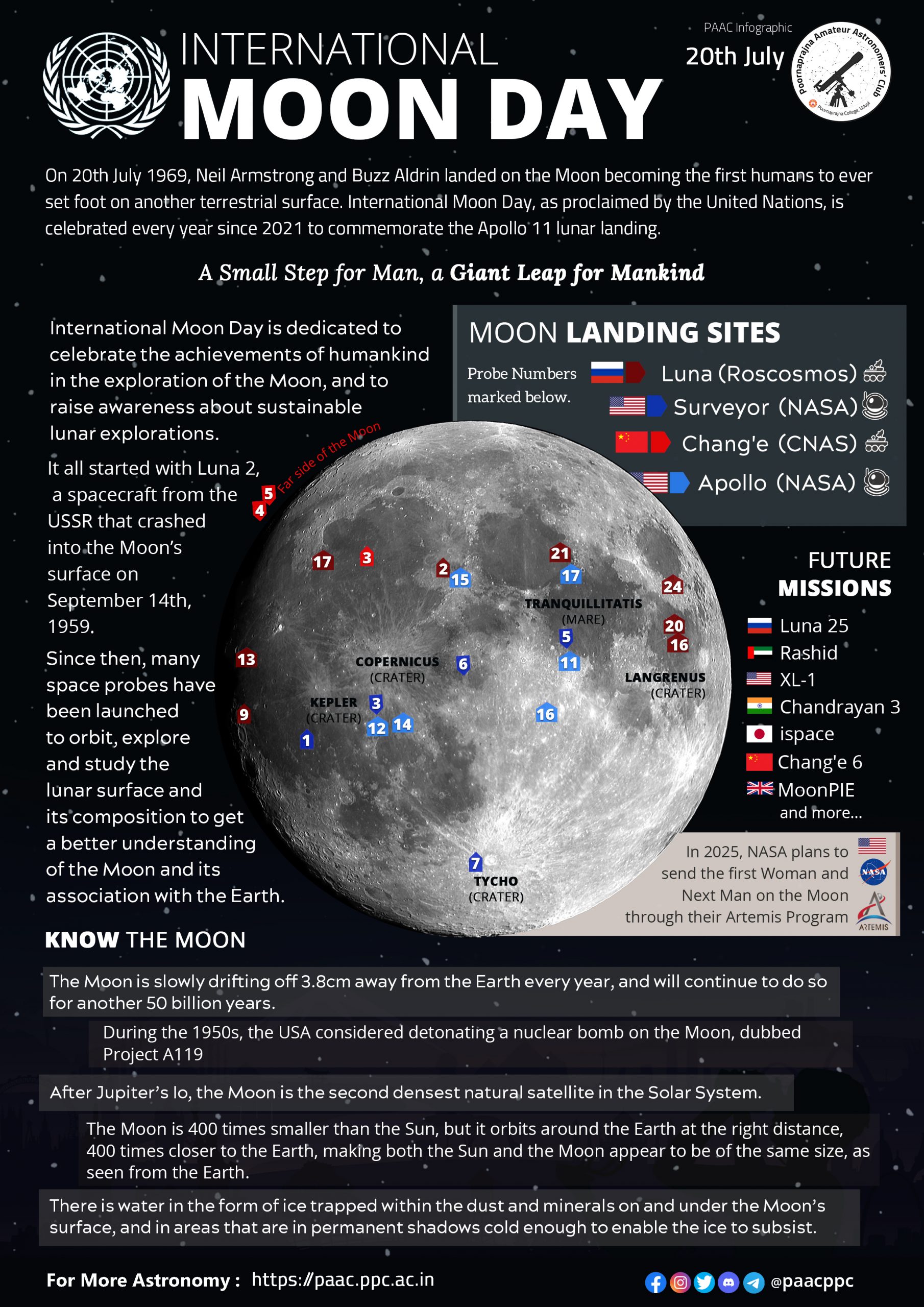
Observed every year on July 20, the International Moon Day marks the historic first human landing on the Moon by the Apollo 11 mission in 1969.
About International Moon Day:
Date & Purpose: Observed annually on July 20 to mark the Apollo 11 Moon landing in 1969.
UN Recognition: Declared by the UN General Assembly in 2021 on the recommendation of COPUOS.
First Observance: Officially celebrated for the first time on July 20, 2022.
Activities: Includes sky-gazing, science outreach, and student competitions to promote space awareness.
Date Controversy: While the lunar module landed on July 20, Neil Armstrong stepped onto the Moon at 2:56 UTC on July 21—yet July 20 remains the official date.
Significance:
Historic Milestone: Celebrates Apollo 11 and humanity’s first step on the Moon by Neil Armstrong and Buzz Aldrin.
Peaceful Space Use: Promotes the Moon as a shared heritage and fosters international cooperation in outer space.
Sustainability Focus: Encourages responsible and eco-friendly exploration of lunar resources.
Global Unity: Reflects the UN’s vision of peaceful space collaboration under themes like “One Moon, One Vision, One Future”.
[UPSC 2009] India has recently landed its Moon Impact Probe on the Moon. Among the following countries, which one landed such probe on the Moon earlier?
Options: (a) Australia (b) Canada (c) China* (d) Japan
Indian scientists from INST Mohali, IIT-Dharwad, and IIT-Kharagpur have developed a low-cost, reusable water filter that removes toxic industrial dyes using a process called piezo-photocatalysis.
About the Light-Induced Water Filter:
Material Used: Built using 3D-printed polylactic acid (PLA) sheets (a biodegradable plastic); Sheets coated with bismuth ferrite (BFO) nanoparticles.
Working: It works in two ways. Together, this is called piezo-photocatalysis.
Photocatalysis: Uses sunlight to break dye molecules.
Piezoelectric effect: Uses vibrations (ultrasound) to work even in the dark.
Reusable: Can be used 5 times with only 3% loss in performance.
Lab tests showed:
99% Congo Red removal
74% Methylene Blue removal (in 90 minutes)
Significance:
Eco-Friendly Solution: Removes harmful dyes without harmful chemicals or electricity.
Cost-Effective: Cheaper and safer than ozone or chemical-intensive treatments.
Green Energy Use: Operates using sunlight and mechanical vibrations—no external power needed.
[UPSC 2015] Though there have been several different estimates of poverty in India, all indicate reduction in poverty levels over time. Do you agree? Critically examine with reference to urban and rural poverty indicators.
Linkage: The article highlights that the World Bank’s report, “India Poverty and Equity Brief: April 2025,” claims India has “almost eradicated extreme poverty” and “significantly reduced consumption inequality since 2011-12”. This directly supports the premise in the PYQ about a reduction in poverty levels.
Mentor’s Comment: The World Bank’s April 2025 report highlights a decline in extreme poverty in India, supported by new HCES datarevealing insights into consumption inequality. The launch of the PMDDKY aims to reform agriculture through district-level planning, despite concerns over falling public investment in agriculture. Emphasis on inclusive participation and localised implementation is crucial for sustainable growth.
Today’s editorial analyses the World Bank’s report “India Poverty and Equity Brief: April 2025”. This topic is important for GS Paper I (Indian Society) and GS Paper II (Social Justice) in the UPSC mains exam.
_
Let’s learn!
Why in the News?
Recently, the release of the World Bank’s report “India Poverty and Equity Brief: April 2025”, which made significant claims about the reduction in poverty and inequality in India.
What are the key findings of the World Bank’s April 2025 report on poverty in India?
Extreme Poverty Has Nearly Been Eliminated: India has made substantial progress in poverty reduction over the past decade. Eg: About 27 crore people were lifted out of extreme poverty between 2011 and 2023, based on the International Poverty Line of $2.15/day (2017 PPP).
Consumption Inequality Has Declined: The gap between the rich and poor in consumption patterns has reduced significantly.
India Among Least Unequal Countries (by Consumption): In terms of consumption distribution, India now ranks among the top four least unequal countries globally. Eg: Both rural and urban households reported increased and more balanced access to milk, eggs, fruits, and vegetables, showing better consumption equity.
How has the HCES data helped understand consumption inequality?
The Household Consumption Expenditure Survey (HCES) 2022–23 data has provided deep insights into consumption inequality in India.
Decline in Consumption Inequality: HCES showed a reduction in the consumption gap between the richest and the poorest households. Eg: The Gini coefficient for consumption dropped to 28.2 in rural areas and 31.9 in urban areas, indicating more equitable spending.
Improved Nutritional Access Across Income Groups: Data showed that low-income households are consuming more nutritious food than before. Eg: Compared to 2011–12, rural poor households now consume more milk, eggs, fruits, and vegetables, narrowing the dietary gap.
Urban-Rural Gap Has Narrowed: Consumption growth in rural India outpaced urban areas, helping to reduce regional inequality. Eg: The monthly per capita consumption rose by over 164% in rural and 146% in urban households (in nominal terms).
Shift Towards Non-Food Expenditure: Rising non-food spending like education, transport, and health among lower-income groups suggests improving quality of life. Eg: In rural areas, non-food items made up 50.3% of total spending, indicating broader access to services.
Policy Targeting Becomes Easier: The disaggregated data helps target welfare schemes better at both the state and district level. Eg: States like Odisha and Chhattisgarh, which showed rising consumption among poor households, can now be used as models for nutrition and cash transfer schemes.
Why is distinguishing between income and consumption inequality important?
Households Smooth Consumption Despite Income Fluctuations: People often use savings, credit, or social networks to maintain consumption when incomes fall temporarily. Eg: A daily wage worker in Uttar Pradesh may lose work during the monsoon, but still manages basic consumption (food, rent) by borrowing from local moneylenders or using savings.
Public Transfers Reduce Consumption Inequality: Government subsidies and welfare schemes help the poor consume more than their income alone would allow. Eg: A family in Odisha earning low wages may still access subsidised food under the Public Distribution System (PDS) and free school meals, narrowing consumption inequality even if income remains low.
Informal Support Influences Consumption: Land, gold, livestock, and informal social support can enhance consumption even when income is unstable. Eg: In Maharashtra, a small farmer with seasonal income can sell stored grain or gold jewellery to fund household expenses during lean months—sustaining consumption better than someone with the same income but no assets.
What are the steps taken by the government?
Expansion of Direct Benefit Transfers (DBT): The government has expanded cash transfer schemes like PM-KISAN, PM-Garib Kalyan Yojana, and Ujjwala 2.0 to ensure income support and reduce consumption inequality. Eg: As of 2024, over 11 crore farmers received ₹6,000 annually under PM-KISAN through DBT.
Strengthening Food Security SystemsThrough the National Food Security Act (NFSA) and One Nation One Ration Card, subsidised food grains are provided to nearly 80 crore beneficiaries, helping smoothen consumption shocks. Eg: NFSA covers 75% of rural and 50% of urban population, ensuring minimum nutrition.
Investment in Social Infrastructure and Welfare: Increased spending on education, health, rural housing (PMAY-G), and employment (MGNREGA) to reduce long-term structural inequality. Eg: In FY 2024-25, the budget for MGNREGA was over ₹86,000 crore, supporting rural livelihoods and stabilising consumption during crises.
Way forward:
Enhance Targeting Through Data-Driven Welfare Delivery: Leverage HCES and SECC data to better identify vulnerable households and customize welfare delivery, especially in nutrition, health, and education. Eg: Use Aadhaar-linked data and digital platforms like PM Gati Shakti to streamline benefit distribution and plug leakages.
Promote Employment-Led Growth in Rural and Urban Areas: Focus on labour-intensive sectors like agro-processing, textiles, and construction, while supporting MSMEs and skilling initiatives to boost income equality and domestic consumption. Eg: Scale up schemes like PM Vishwakarma and Skill India Mission to create sustainable livelihoods.
The Prime Minister Dhan-Dhaanya Krishi Yojana (PMDDKY) was recently approved by the Union Cabinet as a major reform initiative in the agriculture sector. It aims to converge 36 existing schemes across 11 departments to address regional disparities in agricultural productivity.
What are the aims of PMDDKY (Prime Minister Dhan-Dhaanya Krishi Yojana)?
Address productivity disparities: The scheme aims to reduce inter-State and intra-State disparities in agricultural productivity.
Improve productivity & self-reliance: Focus on higher agricultural productivity, value addition, local livelihood creation, and increased domestic production to ensure self-sufficiency.
Holistic development: Enhance outcomes in agriculture and allied sectors through targeted intervention and convergence of schemes.
Private participation: Encourage local public-private partnerships for enhanced implementation and innovation.
Why is scheme convergence under PMDDKY needed?
Eliminates Fragmentation of Efforts: Earlier, agricultural schemes like PM-KISAN, PMFBY, and Soil Health Card Scheme operated in silos. Eg: A farmer receiving income support under PM-KISAN might not be covered under insurance if PMFBY was poorly implemented in that region. Convergence ensures coordinated benefits.
Targets Low Productivity Districts: PMDDKY identifies 100 low-productivity districts using criteria like cropping intensity, credit flow, and yield gaps. Eg: A district with only 70% of national average yield can be provided tailored interventions by combining schemes like RKVY and Micro-Irrigation Fund.
Improves Resource Efficiency: Unified schemes allow for better fund utilisation, avoiding duplication of services or spending. Eg: Instead of running separate capacity-building programs under different departments, single training programs can be run using pooled funds from both Extension Services and Digital Agriculture Initiatives.
Ensures Uniform Implementation Standards: PMDDKY seeks national uniformity while allowing local customization. Eg: While standards for soil health management may be set centrally, implementation can be adapted to local conditions using district-specific plans.
Compensates for Declining Budget Share: Public investment in agriculture is falling (from 3.53% in 2021-22 to 2.51% in 2025-26 of the Central Plan outlay). Eg: Convergence helps make the most of limited resources by integrating multiple schemes under a single implementation umbrella.
How do ‘District Plans’ aid agricultural reform?
Localized Problem Solving: District Plans allow for the identification of region-specific challenges such as water scarcity, pest outbreaks, or poor seed quality. Eg: In Latur district (Maharashtra), which faces frequent droughts, the district plan prioritized micro-irrigation and watershed development, leading to improved water-use efficiency.
Customised Crop Diversification: District-level planning helps align cropping patterns with agro-climatic conditions and market demand, reducing monoculture dependency. Eg: In Koraput district (Odisha), known for tribal farming, the plan introduced millet promotion and value chain linkages, increasing income and nutritional security.
Efficient Use of Resources and Schemes: Integration of multiple schemes under district plans ensures better fund allocation, resource convergence, and monitoring. Eg: In Barabanki district (Uttar Pradesh), convergence of Soil Health Card, PM-KUSUM, and FPO promotion led to more sustainable and solar-powered farming practices.
What challenges may hinder PMDDKY?
Administrative Coordination Across Departments: With 36 schemes under 11 departments converging, bureaucratic silos and lack of inter-departmental coordination can delay execution. Eg: In Jharkhand, similar convergence under NRLM and agriculture failed initially due to poor communication between the Rural Development and Agriculture departments.
Data Gaps and Poor Baseline Assessment: District-level planning requires granular, updated data on land use, cropping patterns, and farmer needs — often missing or outdated. Eg: In Dantewada (Chhattisgarh), poor digital records led to misallocation of subsidies under earlier agri-reform efforts.
Weak Local Institutions: PACS (Primary Agriculture Cooperative Societies) and local self-governments may lack the capacity to implement and monitor complex plans. Eg: In Banda district (U.P.), PACS struggled to handle seed distribution due to lack of trained staff and digital infrastructure.
Limited Private Sector Engagement in Remote Areas: Private partners may hesitate to invest in low-productivity districts due to poor infrastructure or lack of assured returns. Eg: In Kiphire (Nagaland), agri-businesses withdrew from a millet-processing initiative due to transport and power issues.
Farmer Awareness and Participation: Without sustained IEC (Information, Education, Communication) campaigns, farmers may not understand how to benefit from the converged schemes. Eg: In Barmer (Rajasthan), uptake of soil health and credit-linked schemes remained low due to lack of farmer outreach in vernacular languages.
Way forward:
Ensure Adequate and Sustained Funding: Increase the budgetary allocation for agriculture to reverse the current decline (only 2.51% of Central Plan outlay in 2023-24). Sufficient and stable funding will support better implementation of integrated District Plans.
Leverage Technology and Real-Time Monitoring: Implement digital dashboards for tracking the 117 indicators under PMDDKY and promote data-driven decision-making. This will help improve accountability, efficiency, and timely course corrections.
Mains PYQ:
[UPSC 2016] Considering the vulnerability of Indian agriculture to vagaries of nature, discuss the need for crop insurance and bring out the salient features of the Pradhan Mantri Fasal Bima Yojana (PMFBY).
Linkage: The article explicitly states that the PMDDKY will subsume existing Central schemes like the Pradhan Mantri Fasal Bima Yojana (PMFBY). Therefore, a question about PMFBY is directly relevant to understanding a key component of this new “one umbrella scheme” approach.
The issue of pilot mental health has come into focus following the Aircraft Accident Investigation Bureau’s preliminary report on the Air India Boeing 787 incident in Ahmedabad on June 12, 2025.
What are the main mental health issues affecting pilots and flight safety?
Chronic Stress and Fatigue: Long working hours, night shifts, and frequent time zone changes disrupt sleep and increase fatigue, impairing concentration and reaction time. Eg: A 2020 study by the European Cockpit Association found that over 60% of pilots reported fatigue-related performance degradation during flights.
Sleep Deprivation (“Sleep to Order”): Pilots often have to sleep on demand in unfamiliar settings, leading to poor-quality rest and mental exhaustion. Eg: The crash of Colgan Air Flight 3407 (2009) was partly attributed to fatigue from irregular sleep patterns.
Depression and Suicidal Ideation: Isolation, stress, and lack of support can lead to depression, which often remains hidden due to stigma. Eg: The Germanwings Flight 9525 (2015) crash, where the co-pilot deliberately downed the plane, highlighted undiagnosed depression.
Financial and Career Pressure: Burdens like debt from pilot training and job insecurity can lead to anxiety and emotional distress. Eg: During the COVID-19 pandemic, mass layoffs and pay cuts caused increased psychological issues among airline staff globally.
Why is mental health still taboo in aviation?
Fear of Disclosure and Stigma: Pilots avoid seeking help fearing license suspension or job loss, which worsens untreated conditions. Eg: A Harvard study (2016) found that 56% of pilots with depression symptoms had not sought treatment due to career fears.
Who regulates airlines in India?
DGCA (Directorate General of Civil Aviation): Primary regulator of civil aviation in India. Oversees air safety, airworthiness, licensing, operations, and regulation of airlines.
Ministry of Civil Aviation: Responsible for overall policy formulation, promotion of civil aviation, and coordination with other ministries and international bodies.
Airports Authority of India (AAI): Manages airport infrastructure, air navigation services, and ensures airspace safety.
BCAS (Bureau of Civil Aviation Security): Regulates and ensures aviation security standards at airports and airlines.
What are the steps taken by the Indian government?
DGCA Mental Health Guidelines (2021): The Directorate General of Civil Aviation (DGCA) issued formal guidelines requiring airlines to implement Peer Support Programmes (PSPs) and conduct confidential mental health assessments. Eg: Pilots can confidentially report stress or anxiety and receive support without fear of job loss.
What global practices can India adopt for pilot mental health? (Way forward)
Peer Support Programs (PSPs): Establish confidential peer-led counselling services to encourage early intervention. Eg: Germany’s Lufthansa runs a Peer Support Program that offers confidential mental health assistance to pilots.
Non-punitive Medical Disclosure Policies: Allow pilots to self-report mental health issues without fear of losing their license, ensuring safe reintegrationafter treatment. Eg: The U.S. FAA’s HIMS program supports pilots with substance or mental health conditions to return to flying duties safely.
Mandatory Mental Health Training & Awareness: Introduce regular mental health education, anti-stigma campaigns, and stress management workshops for flight crew. Eg: Australia’s CASA mandates mental health modules in pilot training and encourages a wellness culture in aviation.
Mains PYQ:
[UPSC 2022] The increase in life expectancy in the country has led to newer health challenges in the community. What are those challenges and what steps need to be taken to meet them.
Linkage: This question directly addresses “health challenges in the community” and “steps needed to meet them,” which aligns perfectly with the detailed discussion in the article “Pilot Mental Health: Addressing a Taboo Topic” regarding the often-overlooked and taboo subject of pilot mental health.
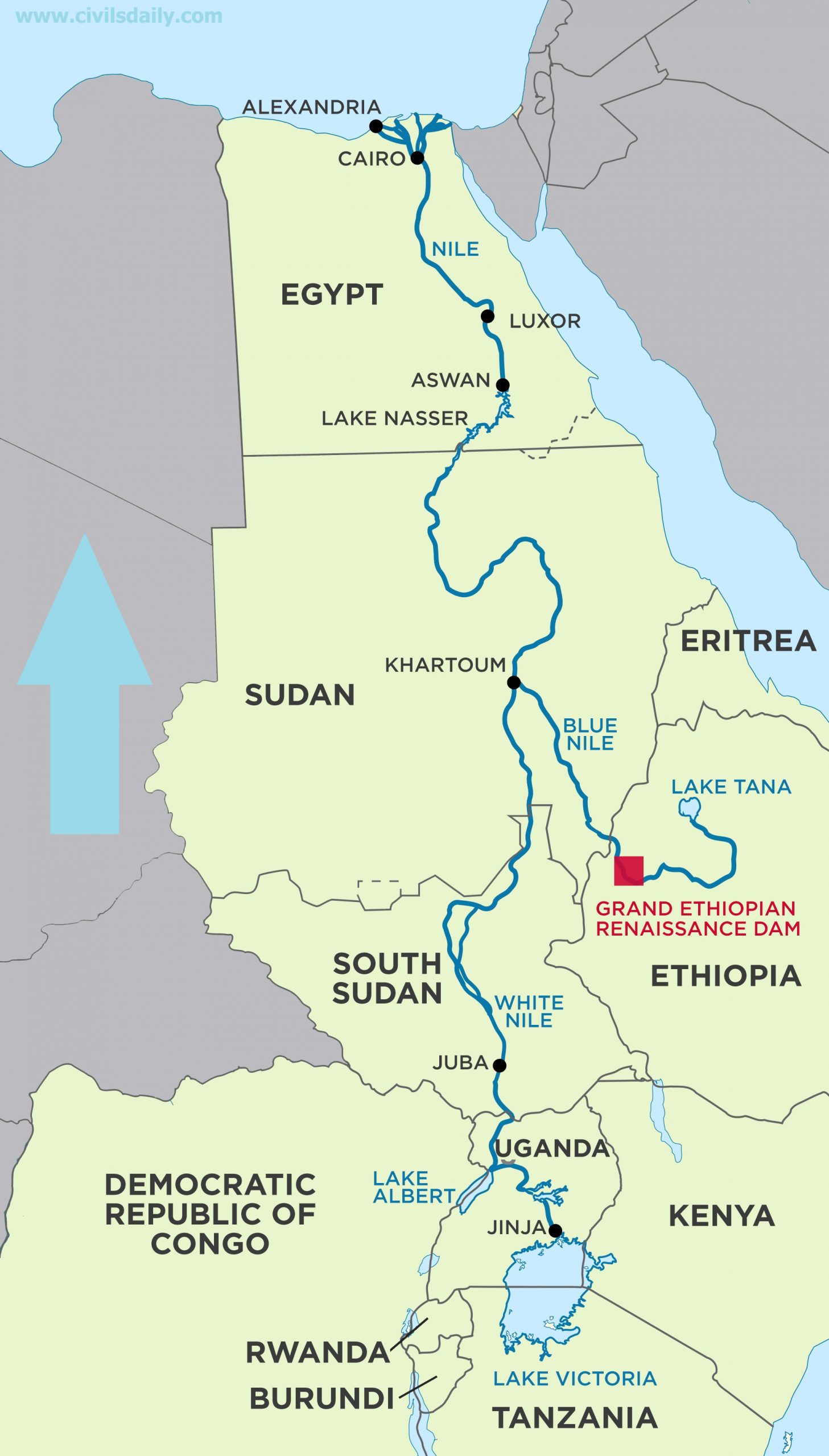
The completion of Ethiopia’s Grand Ethiopian Renaissance Dam (GERD) has reignited tensions over Nile water rights, with Egypt and Sudan fearing reduced water flows.
About Grand Ethiopian Renaissance Dam (GERD):
Overview: Gravity dam on the Blue Nile near Ethiopia–Sudan border.
Construction Timeline: Under construction since 2011, led by Ethiopian Electric Power Corporation.
Capacity: Set to become Africa’s largest hydropower plant with 6.45 GW output.
Reservoir Size: Holds 74 billion cubic metres; filling may take 5–15 years.
Key Features: 145 m tall dam, 16 turbines, and a supporting saddle dam.
Purpose: Aims to power Ethiopia (65% population lacks electricity) and export surplus to neighbouring countries.
Disputes Around GERD:
Egypt’s Concern: Fears reduced water flow; Relies 90% on Nile; demands a binding filling agreement.
Sudan’s Worry: Concerns over flood risks and water regulation.
Ethiopia’s Stand: Asserts sovereign rights; began filling without consensus.
Stalled Talks: Tripartite negotiations have failed; Egypt warns of possible conflict.
Back2Basics: Nile River
Overview: North-flowing, longest river in Africa at ~6,650 km.
Drainage Basin: Covers 11 countries—Tanzania, Uganda, Rwanda, Burundi, DRC, Kenya, Ethiopia, Eritrea, South Sudan, Sudan, and Egypt.
Main Tributaries:
White Nile: Recognized as the headstream, its most remote source is the Kagera River in Burundi, flowing through Rwanda into Lake Victoria. It officially begins at Jinja, Uganda, where it exits Lake Victoria.
Blue Nile: Originates from Lake Tana in Ethiopia and merges with the White Nile at Khartoum, Sudan. Supplies over 80% of total Nile flow by the time it reaches Egypt.
Lifeline Status: Vital for Egypt and Sudan’s drinking water, irrigation, and energy needs.
[UPSC 2008] Ogaden region has been a source of conflict between which countries?
Options: (a) Morocco and Algeria (b) Nigeria and Cameroon (c) Angola and Zambia (d) Ethiopia and Somalia*
India‑Bangladesh ties shift from warmth to worry, trade to tension, diplomacy to dilemmas. UPSC usually throws a big‑picture question that links neighbourhood politics with wider security, just as it asked in 2017 about China’s trade surplus turning into military clout; a similar mains prompt could use “The 2025 Flashpoint: From Cooperation to Confrontation” to test how you weigh trade bans against strategic fallout. Many aspirants stumble because they list facts but miss the chain of cause‑and‑effect across subheads like “Key Aspects of India‑Bangladesh Trade Relations” and “Impact of Geopolitical Issues on India’s Trade with Neighbours,” leaving answers scattered and shallow. This article fixes that by walking you through the logic—first it shows why Dhaka’s China tilt alarms Delhi (see “Geopolitical Realignment Toward China and Pakistan”), then it maps the spill‑over into anti‑India sentiment and Northeast security worries (under “Implications for India”). The most special part is its blueprint for solutions in “Using Multi‑Vector Diplomacy to Reset India‑Bangladesh Ties,” which turns theory into ready‑to‑use policy ideas—like pairing UPI payments with border haats or talking to both BNP and grass‑roots groups—so you can plug gaps that UPSC loves to probe.
PYQ ANCHORING
GS 2: ‘China is using its economic relations and positive trade surplus as tools to develop potential military power status in Asia’, In the light of this statement, discuss its impact on India as her neighbor.[2017]
MICROTHEMES: Groupings involving Immediate and Extended neighbours
India and Bangladesh have historically shared a strong and multifaceted relationship, particularly flourishing since the Awami League came to power under Sheikh Hasina in 2009. This partnership has brought political goodwill, strategic cooperation, and deep economic ties. India became Bangladesh’s second-largest trading partner, exporting machinery, vehicles, and raw materials, while importing garments, fish, and jute products from its neighbour.
Beyond trade, the two countries collaborated on key infrastructure and connectivity projects such as the Akhaura–Agartala rail link, the India-Bangladesh power grid, the Maitree Setu bridge, and cross-border energy pipelines. These projects not only enhanced economic integration but also helped stabilise India’s Northeast by improving connectivity and fostering people-to-people ties.
The 2025 Flashpoint: From Cooperation to Confrontation
In 2025, the bilateral relationship took a sharp turn when India imposed trade restrictions on Bangladeshi goods, notably readymade garments. This marked a clear shift from cooperation to confrontation, triggered by growing unease over Bangladesh’s internal political developments and its external alignments.
Three key developments prompted India’s reaction:
1. Geopolitical Realignment Toward China and Pakistan: The interim Bangladeshi government, led by Mohammed Yunus, has been perceived by India as pivoting towards China and Pakistan. A notable flashpoint was Yunus’s invitation to China to access India’s Northeast through Bangladesh—a move seen in Delhi as a direct challenge to India’s strategic interests.
2. Provocative Comments About Northeast India: Yunus described India’s Northeast as “landlocked” and implied that Bangladesh served as its essential gateway. This narrative was interpreted as undermining Indian sovereignty and portraying Bangladesh as a leverage-holding power over a geopolitically sensitive region.
3. Democratic Backsliding in Dhaka: India was also alarmed by domestic political developments. The interim regime banned the Awami League and indefinitely postponed elections—moves that India saw as undemocratic. The trade restrictions were also intended as a signal of disapproval and an assertion of normative pressure.
Implications for India: More Than Just Trade
The diplomatic rupture has wider ramifications for India:
1. Rising Anti-India Sentiment in Bangladesh: Trade restrictions may be perceived within Bangladesh as punitive and politically motivated, potentially fuelling anti-India rhetoric, particularly among nationalist and radical segments.
2. Security Instability in the Northeast: Any political or economic instability in Bangladesh could spill over into Indian territory in the form of refugee influx, cross-border tension, or even radicalisation in sensitive areas like Assam and Tripura.
3. Loss of Diplomatic Influence: By limiting economic engagement, India also risks reducing its soft power and losing valuable diplomatic space. In a region where influence often rides on connectivity and aid, such restrictions can narrow India’s options for dialogue.
Key Aspects of India-Bangladesh Trade Relations// PRELIMS
1. Trade & Economic Exchange
In 2023–24, bilateral trade stood at $14.01 billion.
India’s main exports: electricity, cotton yarn, refined petroleum.
Bangladesh’s top exports: garments (e.g., men’s suits), textile scraps, and even some aircraft components.
Both countries view each other as critical trade partners.
2. Investment & Infrastructure
Indian investments in Bangladesh are steadily growing, especially in energy and infrastructure.
Initiatives like the Protocol on Inland Waterways Trade and Transit (PIWTT) and access to Chittagong and Mongla Ports are enhancing regional connectivity.
3. Security & Strategic Cooperation
Joint efforts include managing borders, tackling cross-border crime, and regular military exercises like SAMPRITI and MILAN.
Both nations align on sub-regional maritime goals, including Indo-Pacific cooperation and ocean economy development.
4. Cultural & People-to-People Ties
Institutions like the Indira Gandhi Cultural Centre and Indian Cultural Centre in Dhaka promote cultural and educational exchange.
5. Emerging Trends
Trade and investment are on a steady rise, deepening economic interdependence.
This growing interlinkage contributes to shared prosperity and regional stability.
Impact of Geopolitical Issues on India’s Trade with Neighbours
India’s trade with its neighbours is deeply intertwined with regional geopolitics. While geography offers natural trade advantages, political tensions often override economic logic. Border disputes, shifting alliances, and domestic instability in neighbouring countries routinely disrupt trade flows, stall infrastructure projects, and limit market access. The following table highlights how geopolitical issues have directly impacted India’s trade with each of its key neighbours.
Rise in tariffs, curbs on Chinese investments, non-tariff barriers
Post-Galwan, India banned 200+ Chinese apps, restricted Chinese firms in infrastructure and telecom sectors. Imports slowed, especially in electronics and machinery.
Pakistan
Cross-border terrorism, Pulwama attack, no MFN status
Complete trade suspension; loss of cross-border trade routes
After Pulwama (2019), India withdrew MFN status and imposed 200% duty; Pakistan responded by suspending all trade ties.
Bangladesh
Shift in foreign policy, tilt towards China, election-related tensions
Imposition of trade restrictions, loss of access routes
In 2025, India restricted readymade garment imports over Dhaka’s perceived China tilt and comments on Northeast India.
Nepal
Map dispute (Kalapani-Lipulekh), growing Chinese presence
Strain on bilateral infrastructure and logistics cooperation
2020 map row led to tensions; projects like India-Nepal railway and hydro deals slowed; pro-China tilt in Kathmandu affected trust.
Sri Lanka
Chinese debt trap diplomacy, strategic port control (Hambantota)
Reduced Indian influence in maritime trade routes, delay in key Indian projects
Chinese control of Hambantota port raised Indian security concerns; India lost competitive edge in some logistics and energy projects.
Myanmar
Political instability post-coup, Chinese influence
Connectivity projects disrupted; security risks for trade corridors
India’s Kaladan Multi-Modal Transit project slowed down; insurgency spillovers affected border trade via Mizoram and Manipur.
Afghanistan
Taliban takeover, lack of direct land access via Pakistan
India lost major export market; stalled infrastructure and trade deals
After 2021 Taliban takeover, Indian wheat and pharma exports halted; access blocked as Pakistan denied land route.
Need Of Multi-Vector Diplomacy For India //MAINS
Multi-vector diplomacy simply means not putting all your eggs in one basket when dealing with another country. Instead of relying on just one type of connection (like only government-to-government talks or only trade), you build many kinds of relationships at the same time — with:
Government (ruling and opposition),
Businesses and traders,
People and culture,
Universities and tech sectors,
Media, youth, and civil society.
So, even if one door closes, you still have other doors open to keep the relationship strong.
India‘s Experience with Multi Vector diplomacy
India has repeatedly practised “multi-vector diplomacy,” using several parallel channels (security, economy, technology, people-to-people) and partnering with rival blocs at the same time. Below are headline-worthy examples from the last few years.
What India Did
Why It Counts as Multi-Vector
Kept the Russia lifeline open—cheap oil, strategic trade- even while deepening its “Comprehensive Global Strategic Partnership” with the United States (iCET tech pact, critical-minerals supply chains, joint fighter-jet engines).
Shows India’s willingness to ring-fence energy & defence ties with Moscow while courting U.S. tech and investment—two opposite “vectors” managed simultaneously.
Sits in the Quad and hosts the Shanghai Cooperation Organisation (SCO).Quad summits (2021-24) shape Indo-Pacific rules with the U.S., Japan & Australia.India chaired the 2023 SCO summit—an organisation led by China & Russia—and refused to sign the BRI clause while pushing digital payments and counter-terror statements.
Demonstrates the “two chairs, one table” tactic—maritime security with the West, continental security with Eurasia—without choosing sides.
Championed BRICS expansion in 2023 & 2024and launched the Voice of Global South Summits during its G-20 presidency.
Runs with a China- and Russia-heavy club (BRICS) while positioning itself as spokesperson for 100+ developing countries—two very different coalitions, one Indian bridge.
Middle-East balancing act:Joined the I2U2 mini-lateral (India, Israel, UAE, U.S.) on food & green-energy corridors.Votes variously at the U.N.—backing a Gaza cease-fire in Dec 2023, abstaining on an HRC arms-embargo vote in Apr 2024—while remaining a top defence-tech partner of Israel.
Keeps defence tech flowing from Israel, gains Gulf capital for food-energy projects, and preserves goodwill in the Arab street—three vectors in one theatre.
Crisis-manager in Sri Lanka—co-chaired the Paris creditors’ platform with Japan & France, gave ~$4 billion credit lines, and rolled out UPI digital payments there.
Engages finance (debt relief), development (credit & fuel), and fintech (UPI link)—showing how India mixes soft-power tools with hard cash to keep China at bay.
Signed on to the India–Middle East–Europe Economic Corridor (IMEC) while still pushing the older International North-South Transport Corridor (via Iran-Russia).
Bets on both a U.S./Saudi-led supply route and an Iran-Russia route, diversifying geography as well as partners.
Using Multi-Vector Diplomacy to Reset India-Bangladesh Ties
Vector
What India Should Do
Why It Works
Political Engagement
Engage not just the ruling party (Awami League), but also BNP, emerging parties, reformist groups, and local influencers.
Prevents over-dependence on one regime and ensures continuity in ties despite leadership changes.
People-to-People Ties
Scale up border haats, youth exchanges, cultural scholarships, tourism, and education links.
Builds public goodwill, which cushions political friction and generates long-term trust.
Trade + Transit + Tech
Bundle trade deals with digital payments (UPI), logistics upgrades, and cross-border power grid projects.
Deepens economic interdependence, making disruption costly for both sides.
Soft Power Diplomacy
Offer India’s digital stack, language training, medical support, media collaboration, and disaster management capacity.
Offers Bangladesh value China can’t replicate—culturally aligned, people-centric development tools.
Regional Multilateralism
Use BBIN, BIMSTEC and SAARC-like forums to promote joint projects and regional rules.
Shifts the conversation from bilateral blame-games to shared regional goals and norms.
When a relationship feels stuck, don’t push harder in one direction—open more lanes. Multi-vector diplomacy gives India the tools to engage with Bangladesh across society, not just state, ensuring that ties are resilient, not reactive.
Conclusion
Geography may make neighbours, but smart diplomacy makes them partners. India’s trade with its neighbours has often been hostage to shifting politics, border tensions, and third-party influence. To insulate economic ties from such volatility, India must adopt a broader, multi-vector diplomatic approach—engaging not just governments but also opposition parties, civil society, and regional platforms. In a geopolitically sensitive neighbourhood, resilience in trade will come not from rigid alliances but from flexible, layered diplomacy.
#BACK2BASICS: India–Bangladesh Relations: A Test Case of Neighbourhood Diplomacy
India and Bangladesh share more than a 4,000-km border — they share history, culture, rivers, language, and bloodshed during the 1971 Liberation War. Since then, the relationship has been described as both “tested” and “transformational.” While cooperation has grown in trade, connectivity, and security, sensitive issues like migration, water-sharing, and border tensions continue to stir political emotions on both sides.
Key Pillars of the Relationship
Area
Cooperation/Developments
Historical Ties
India supported Bangladesh’s independence in 1971, hosting over 10 million refugees and intervening militarily.
Trade & Economic Cooperation
India is Bangladesh’s second-largest trade partner. Bangladesh is India’s biggest trade partner in South Asia. Trade crossed $18 billion (2022).
Connectivity & Infrastructure
Projects like BBIN (Bangladesh-Bhutan-India-Nepal), cross-border railways (Kolkata–Khulna), and waterways revive pre-Partition connectivity.
Energy Cooperation
India supplies 1,160 MW electricity to Bangladesh. Adani’s power export deal, and a growing clean energy focus signal deeper energy diplomacy.
Security & Counterterrorism
Bangladesh has cracked down on anti-India insurgents. Joint efforts on border management, terror control, and intelligence-sharing have improved.
Cultural & People-to-People Ties
Exchange of language, films, tourism, and festivals reinforces soft power and cultural proximity.
Irritants & Contentious Issues
Issue
Explanation
Teesta Water Sharing
Long-pending treaty over sharing Teesta river water is stalled due to opposition from West Bengal government.
Illegal Migration
Assam and border states raise concerns over illegal migration; politicised in domestic Indian politics, especially around NRC-CAA debates.
Border Killings
Despite coordination, incidents of civilian killings by BSF remain a sore point. India claims anti-smuggling action; Bangladesh calls for restraint.
China Factor
Bangladesh has growing defence and infrastructure ties with China, creating strategic anxiety for India.
Rohingya Issue
Bangladesh seeks stronger Indian support for Rohingya repatriation from its territory to Myanmar. India walks a fine line to balance regional ties.
Recent High Points
Maitri Setu (Friendship Bridge) opened in Tripura to boost Northeast–Bangladesh connectivity.
Joint River Commission revived; cooperation on over 50 shared rivers being negotiated.
India supplied COVID vaccines under Vaccine Maitri and extended credit lines for infrastructure projects.
Way Forward
Finalise Teesta and other water-sharing deals transparently and equitably.
Expand regional trade zones and speed up CEPA to deepen economic interdependence.
Engage Bangladesh more actively in BIMSTEC and Indo-Pacific strategies.
Jointly tackle border crimes through tech-based surveillance and people-friendly protocols.
Respect domestic political sensitivities, particularly in West Bengal and Dhaka, to avoid diplomatic frictions.
Counterbalance China’s influence through timely delivery of projects and concessional funding.
Conclusion
India–Bangladesh relations represent the most stable and promising bilateral equation in South Asia, but they require constant nurturing. From liberation partners to strategic partners, the two countries have come a long way — and with political will, they can emerge as a model for regional cooperation in a turbulent neighbourhood.
SMASH MAINS MOCK DROP
In the context of recent downturns in India–Bangladesh relations, critically analyse how India’s trade policy and geopolitical responses to shifting alignments in its neighbourhood can either deepen regional stability or fuel strategic anxieties. Can multi-vector diplomacy offer a sustainable path forward?
![[pib] INS Nistar Diving Support Vessel](https://d18x2uyjeekruj.cloudfront.net/wp-content/uploads/2025/07/nistar.jpg)