💥UPSC 2026, 2027, 2028 UAP Mentorship (March Batch) + Access XFactor Notes & Microthemes PDF

Search results for: “”

  • Over 19,000 Seamounts discovered

    seamount

    Central Idea: Scientists have reported finding 19,325 new seamounts after poring through new high-resolution data. A study had already mapped 24,000 seamounts across the world’s oceans.

    Why study this?

    • The recent discovery of new seamounts was made possible by advancements in altimetry for gravity-field mapping, which improved spatial coverage.
    • The CryoSat-2, Envisat, Jason-1 geodetic missions, and the SARAL satellite developed by India and France contributed to these advancements.

    What are Seamounts?

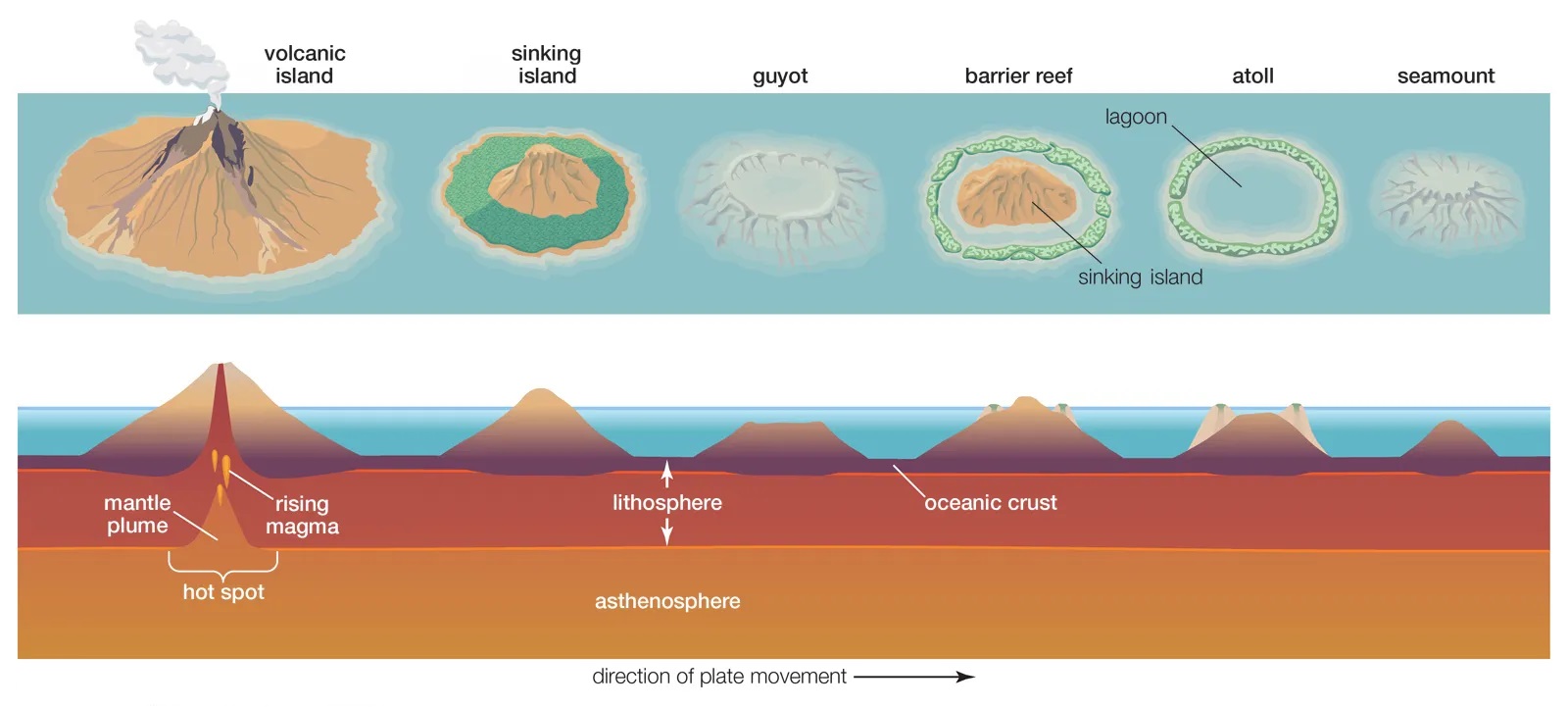
    • Seamounts are underwater mountains formed through volcanic activity.
    • They are recognised as hotspots for marine life.
    • Most seamounts are formed near mid-ocean ridges, intraplate hotspots, and oceanic island chains with volcanic and seismic activity called island arcs.
    • They can be active, extinct or dormant volcanoes.

    Importance of Seamounts

    • Seamounts provide information about the mantle’s composition and how tectonic plates evolve as they are formed when molten rock comes up from below the tectonic plates.
    • Oceanographers study seamounts to understand their influence on how water circulates and absorbs heat and carbon dioxide.
    • Seamounts are home to diverse biological communities as they can cause localised ocean upwelling, which brings nutrient-rich water from deep within the ocean to the surface.

    How were they mapped?

    • Surveyors map seamounts using either echo sounders or multibeam sonar on ships for topographic mapping or using satellite altimetry for gravity-field mapping.
    • The hi-res maps produced by multibeam sonar mapping are often incomplete, whereas the low-res maps produced by satellite altimetry have better coverage.


     

    Get an IAS/IPS ranker as your personal mentor for UPSC 2024 | Schedule your FREE session and get the Prelims prep Toolkit!

  • What is Ningaloo ‘Hybrid’ Solar Eclipse?

    ningaloo

    A ‘hybrid’ solar eclipse called the Ningaloo Eclipse recently happened on April 20, 2023.

    Ningaloo ‘Hybrid’ Solar Eclipse

    • It was a rare astronomical event that occurred on April 20, 2023.
    • The Moon passed directly between the Sun and the Earth, casting a shadow on a narrow strip of land in Western Australia.
    • It was a “hybrid” eclipse, starting as an annular eclipse and transitioning into a total eclipse.
    • The path of the eclipse crossed over the Ningaloo Reef, a world heritage site in Western Australia.
    • It offered a unique opportunity to view the eclipse against the backdrop of the reef and the Indian Ocean.

    How rare are such events?

    • During a solar eclipse, the Moon passes between the Sun and Earth, casting a shadow on Earth’s surface.
    • However, solar eclipses do not occur every month because the Moon’s orbit is tilted by about 5 degrees relative to Earth’s orbit around the Sun.
    • Therefore, the Moon’s shadow usually misses Earth, but occasionally the alignment is just right for a solar eclipse to occur.
    • In the case of the Ningaloo Hybrid Solar Eclipse, the alignment was such that the Moon was at the right distance from Earth to create both an annular and a total eclipse as it moved across the Sun.
    • This type of eclipse is quite rare, occurring only about once every 400 years.

    Back2Basics:

    ningaloo

    Get an IAS/IPS ranker as your personal mentor for UPSC 2024 | Schedule your FREE session and get the Prelims prep Toolkit!

  • Darwin’s Theory of Evolution: Exclusion From Indian School and College Curricula

    Evolution

    Central Idea

    • The recent exclusion of Darwin’s theory of evolution from Indian school and college curricula has prompted concerns among scientists and educators, as it is one of the most firmly established theories in science that explains the origin of all forms of life and rescues the explanation from the belief in an intelligent designer.

    What is Darwin’s theory of evolution?

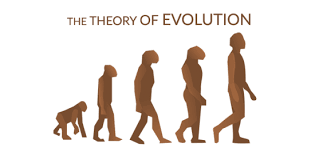
    Charles Darwin’s theory of evolution is one of the most influential scientific theories ever proposed. The main ideas behind Darwin’s theory of evolution include:

    • Variation: Within a population, there is variation in traits among individuals.
    • Inheritance: Some of these traits are passed on from parents to offspring.
    • Overproduction: Most populations produce more offspring than can survive to maturity.
    • Natural selection: Individuals with traits that are advantageous for survival and reproduction in their particular environment are more likely to survive and pass on their traits to their offspring, while those with less advantageous traits are less likely to survive and reproduce.
    • Adaptation: Over time, the frequency of advantageous traits in a population will increase, resulting in a better match between the organisms and their environment, known as adaptation.
    • Common descent: All living organisms share a common ancestor that lived in the distant past.

    Evolution

    Facts for prelims: Scientists and theories

    Scientist Theory Key Points
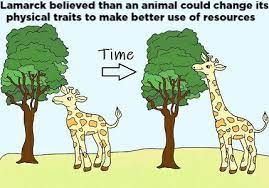
    Jean-Baptiste Lamarck Theory of Inheritance of Acquired Characteristics Organisms change and evolve during their lifetimes based on the environmental needs, and these changes can be passed on to their offspring. For example, giraffes developed longer necks by stretching their necks to reach higher branches, and these longer necks were passed on to their offspring.
    Thomas Malthus Theory of Population Populations tend to increase faster than the food supply, leading to competition for resources. Only the individuals with advantageous traits survive, while others perish. This concept of “survival of the fittest” became an important part of Darwin’s theory.
    Charles Darwin Theory of Natural Selection Organisms with advantageous traits have a greater chance of surviving and reproducing, passing on those traits to their offspring. Over time, this leads to the development of new species through the process of speciation. Darwin’s theory also emphasized the importance of variation, competition, and adaptation in the evolutionary process.
    Alfred Russel Wallace Theory of Evolution by Natural Selection Similar to Darwin’s theory, Wallace’s theory emphasized the role of natural selection in the development of new species. However, Wallace also proposed that natural selection could result in the divergence of species into separate branches, which could eventually become new genera or families.
    Hugo de Vries Mutation Theory Mutations, or sudden genetic changes, are the driving force behind evolution rather than gradual changes over time. De Vries also proposed the concept of “species-polymerism”, where multiple species could arise from a single ancestral species through mutations.
    Stephen Jay Gould Theory of Punctuated Equilibrium Evolutionary change occurs in rapid bursts (punctuations) followed by long periods of stability (equilibrium). This theory challenges the traditional view of evolution as a slow, gradual process. Gould also emphasized the role of contingency or chance events in shaping evolutionary history.

    Why must students and teachers in school concern themselves with Darwin’s theory?

    • Understanding the origin of human beings and other forms of life: Darwin’s theory of evolution is one of the most firmly established theories in science that explains the origin of human beings and all other forms of life in the world.
    • Challenging the belief in an intelligent designer: Darwin’s theory rescues the explanation of the origin of life from the belief that an ‘intelligent designer’ (read: god) built them the way they are and put them in their place.
    • Encouraging critical inquiry and embracing critique: The teaching of Darwin’s theory offers possibilities of confronting science’s own troubled history and requires caution alongside curiosity, creativity and imagination.
    • Understanding the historical and contemporary world of science: The teaching of Darwin’s theory can help students understand that science is rarely the story of a lone man, and it is shaped by the social and cultural beliefs of its times.
    • Enhancing scientific literacy: Understanding Darwin’s theory of evolution is crucial for enhancing scientific literacy, as it is an essential component of biology and a cornerstone of modern science.

    Criticisms: Darwin’s theory of evolution

    • Lack of transitional fossils: Some critics argue that there is a lack of transitional fossils, which are intermediate forms of species between ancestral and descendant forms. They claim that the absence of such fossils undermines the validity of the theory of evolution.
    • Incomplete explanation of variation: While Darwin’s theory of natural selection explains how variation arises in a population, it does not fully explain the source of the variation. Some critics argue that the theory does not account for genetic mutations or other mechanisms that can generate variation.
    • Lack of empirical evidence for macroevolution: While the theory of evolution is well-supported by empirical evidence for microevolution (small-scale changes within a species), critics argue that there is insufficient empirical evidence to support macroevolution (large-scale changes between species).
    • The origin of life: Critics argue that Darwin’s theory does not explain how life originated in the first place.
    • Complexity of living organisms: Critics argue that the complexity of living organisms cannot be explained solely by natural selection and that there must be some other explanation for the diversity and complexity of life.

    Conclusion

    • Science is a messy affair that requires caution alongside curiosity, creativity, and imagination. The teaching of Darwin’s theory must offer possibilities of confrontation without underplaying its strengths. While Darwin must remain in our textbooks, the way it is taught must change to include other influences that have shaped the theory and the consequent use of the theory by others and himself.

    Mains Question

    Q. What is Darwin’s theory of evolution? As the theory is being dropped from the school textbooks, discuss why must students and teachers in school concern themselves with Darwin’s theory?

    Get an IAS/IPS ranker as your personal mentor for UPSC 2024 | Schedule your FREE session and get Prelims prep Toolkit!

  • Moving Beyond Vande Bharat: Performance of Indian Railways

    Vande Bharat

    Central Idea

    • The Indian Railways has been in the news lately, with the launch of Vande Bharat trains and their successive introduction in different parts of the country. However, amid the publicity surrounding these new trains, the larger picture and serious issues confronting the Indian Railways are being overlooked. This article aims to evaluate the performance of the Indian Railways, especially in the freight and passenger sectors, and highlights the need for more relevant metrics.

    Facts for prelims: Vande Bharat Express

    Vande Bharat Express

    • Vande Bharat Express, also known as Train 18, is a semi-high-speed, fully air-conditioned train in India that runs on electric traction. It is named after the country’s national slogan “Vande Mataram” and was designed and manufactured by the Integral Coach Factory in Chennai, India.
    • The train is equipped with modern amenities such as Wi-Fi, an infotainment system, and a GPS-based passenger information system, among others.
    • It has a maximum speed of 180 km/h and is considered to be one of the fastest trains in India.
    • It is designed to be an energy-efficient and eco-friendly train, and is expected to provide a comfortable and safe travel experience to passengers.

    Performance and prospect of the Indian Railways, especially in the freight and passenger sectors

    1. Investment in Indian Railways: Since the merger of the Railway Budget with the General Budget in 2017, there has been a shift towards ramping up investments in the Indian Railways. The Annual Plan outlay for the Railways has increased from ₹1,09,935 crore in 2016-17 to ₹2,60,200 crore in the Budget for 2023-24, an increase of 137%. While this unprecedented level of investment is welcome, it must translate into concrete progress towards capacity building, and not just be limited to inputs.
    2. Freight Sector:
    • Rail share of freight traffic: The National Rail Plan 2030 (NRP) aims to raise the rail share in freight traffic vis-à-vis roadways from 27% to 45% by 2050. However, the rail share of freight carried reduced from 51.5% in 2008-09 to 32.4% in 2018-19 for leads over 300 km.
    • Commodity diversification: Almost the entire increase in volume of traffic carried by rail over the decade 2008-09 to 2018-19 has been in short lead traffic (leads up to 300 km) and 55% of the increase was through the transport of just one commodity, viz. coal. As yet, there is no evidence of higher levels of traffic being achieved concurrently with diversification of commodities carried or an increase in rail share vis-à-vis road transport.
    • Average speed of goods trains: The NRP aims to raise the average speed of goods trains to 50 kilometres per hour from the present 25 kmph, which is expected to increase efficiency and reduce transportation costs.
    • Tariff rates for freight: The NRP also calls for a concurrent reduction in tariff rates for freight by up to 30%.
    1. Passenger Sector: Punctuality is a crucial operational index for passenger trains. While published statistics of punctuality usually are above 90%, these figures are arrived at with a dose of adjustment and only the destination arrival time is considered irrespective of the fact that a train might have been off schedule en route at all the important intermediate stations. The Indian Railways should aim to be at least within five minutes (without any adjustment) of the scheduled time.

    Vande Bharat

    Facts for prelims (Conceptual): Why freight trains are switching to aluminium wagons?

    • Consume less energy and reduce carbon emissions: Aluminium trains consume less energy and the metal is recyclable. It is estimated that switching to aluminium will save 1,500 tonnes of carbon emissions a year.
    • Lighter as compared to steel: They are lighter by up to 30% compared to stainless steel coaches. These coaches, being lighter than stainless steel ones, are preferred for higher speed systems.
    • Less time to manufacture: Aluminium trains take less time to manufacture and thus can help speed up capacity for production.
    • Low haulage cost and high payload capacity: They offer low haulage cost and higher payload, better fuel efficiency and lower pollution levels.
    • Expected to improve freight transportation: The new metal trains will help the Railways hike its share in overall freight transportation from the current 18%.

     Need for an annual report

    • Report on the lines of the annual Economic Survey: Government should consider tabling an annual report on the performance of the Railways in Parliament on the lines of the annual Economic Survey prepared by the Finance Ministry ahead of the General Budget.
    • Not just for publicity pamphlet but a resource for policymakers: This report, unlike a publicity pamphlet like the Indian Railways Year Book, should be an internal performance audit that should serve as a valuable resource for policymakers, serious students and also researchers in the field of rail transport.

    Way ahead

    • International standards in punctuality: If stations in the Indian Railways network can be remodelled to international standards, perhaps it is time to aim for international standards in punctuality of trains as well.
    • Evolve an index of punctuality: It is high time to move away from the traditional concept of destination punctuality and evolve an index of punctuality that will also reflect the punctuality at select intermediate stations, at least for all mail/express trains.
    • Passenger experience: The focus should be to improve overall passenger experience, not merely statistics.
    • Other areas for assessment: There are several other areas that need critical analysis, such as financial performance, physical performance, safety, organizational/human resource issues, project execution, customer relations, and the effect of the dedicated freight corridors on the Indian Railways system capacity.

    Indian Railways

    Conclusion

    • The Indian Railways is the prime transporter and the largest public undertaking in the country, and it is crucial that its performance is evaluated using relevant metrics. While the introduction of Vande Bharat trains is a success story, it must not be the only focus. The focus should be on improving overall passenger experience and performance in the freight sector, and not merely on statistics.

    Mains Question

    Q. The consecutive introduction of Vande Bharat trains is a success story so far. In this backdrop Evaluate the performance of Indian railways and suggest measures to further improve the passenger experience.

    Get an IAS/IPS ranker as your personal mentor for UPSC 2024 | Schedule your FREE session and get Prelims prep Toolkit!

  • Nikaalo Prelims Spotlight || Government schemes- II


    Dear Aspirants,

    This Spotlight is a part of our Mission Nikaalo Prelims-2023.

    You can check the broad timetable of Nikaalo Prelims here

    Session Details

    YouTube LIVE with Parth sir – 7 PM  – Prelims Spotlight Session

    Evening 04 PM  – Daily Mini Tests

    Join our Official telegram channel for Study material and Daily Sessions Here


    28th Apr 2023

    Government schemes- I

    Kindly refer to schemes compilation.

  • SC modifies judgement on Eco-Sensitive Zones

    eco

    Central idea

    • The Supreme Court modified its judgment on mandatory eco-sensitive zones (ESZs) around protected forests, national parks, and wildlife sanctuaries across the country.
    • The court has now made it clear that ESZs cannot be uniform across the country and has to be “protected area-specific.”

    What are the Eco-sensitive Zones (ESZs)?

    • Eco-Sensitive Zones (ESZs) or Ecologically Fragile Areas (EFAs) are areas notified by the MoEFCC around Protected Areas, National Parks and Wildlife Sanctuaries.
    • The purpose of declaring ESZs is to create some kind of “shock absorbers” to the protected areas by regulating and managing the activities around such areas.
    • They also act as a transition zone from areas of high protection to areas involving lesser protection.

    How are they demarcated?

    • The Environment (Protection) Act, 1986 does NOT mention the word “Eco-Sensitive Zones”.
    • However, Section 3(2)(v) of the Act, says that Central Government can restrict areas in which any industries, operations or processes or class of industries, operations or processes shall be carried out or shall not, subject to certain safeguards.
    • Besides Rule 5(1) of the Environment (Protection) Rules, 1986 states that central government can prohibit or restrict the location of industries and carrying on certain operations or processes on the basis of certain considerations.
    • The same criteria have been used by the government to declare No Development Zones (NDZs).

    Defining its boundaries

    • An ESZ could go up to 10 kilometres around a protected area as provided in the Wildlife Conservation Strategy, 2002.
    • Moreover, in the case where sensitive corridors, connectivity and ecologically important patches, crucial for landscape linkage, are beyond 10 km width, these should be included in the ESZs.
    • Further, even in the context of a particular Protected Area, the distribution of an area of ESZ and the extent of regulation may not be uniform all around and it could be of variable width and extent.

    Activities Permitted and Prohibited

    • Permitted: Ongoing agricultural or horticultural practices, rainwater harvesting, organic farming, use of renewable energy sources, and adoption of green technology for all activities.
    • Prohibited: Commercial mining, saw mills, industries causing pollution (air, water, soil, noise etc), the establishment of major hydroelectric projects (HEP), commercial use of wood, Tourism activities like hot-air balloons over the National Park, discharge of effluents or any solid waste or production of hazardous substances.
    • Under regulation: Felling of trees, the establishment of hotels and resorts, commercial use of natural water, erection of electrical cables, drastic change of agriculture system, e.g. adoption of heavy technology, pesticides etc, widening of roads.

    What was the recent SC judgment?

    • On June 3, 2022, the apex court had ordered a 1-km buffer zone for protected areas to act as a “shock absorber.”
    • However, the Centre and several states, including Kerala, had returned to the apex court seeking modification of the judgment, saying the direction affected hundreds of villages in the peripheries of forests.

    Impact of the Judgment

    • Earlier judgement would have certainly hampered the day-to-day activities of the citizens residing in ESZs.
    • It would also prevent villagers from reconstructing their houses, the government from constructing schools, dispensaries, anganwadis, and other basic structures for the improvement of the life of the villagers.
    • The court also noted that it would be impossible for forest departments to conduct eco-development activities around national parks and sanctuaries.

    Try this PYQ

    With reference to ‘Eco-Sensitive Zones’, which of the following statements is/are correct?

    1. Eco-Sensitive Zones are the areas that are declared under the Wildlife (Protection) Act, 1972
    2. The purpose of the declaration of Eco-Sensitive Zones is to prohibit all kinds of human activities, in those zones except agriculture.

    Select the correct answer using the code given below:

    (a) 1 only

    (b) 2 only

    (c) Both 1 and 2

    (d) Neither 1 nor 2


    Post your answers here.


    Get an IAS/IPS ranker as your personal mentor for UPSC 2024 | Schedule your FREE session and get the Prelims prep Toolkit!

  • [pib] Cabinet approves the Policy for the Medical Devices Sector

    medical device

    Central idea: The Union Cabinet, chaired by Hon’ble Prime Minister, approved the National Medical Devices Policy, 2023.

    National Medical Devices Policy, 2023

    • The Policy, 2023 aims to facilitate an orderly growth of the medical device sector to meet the public health objectives of access, affordability, quality, and innovation.
    • The policy lays down a roadmap for accelerated growth of the medical devices sector to achieve various missions.

    Objectives

    • The policy aims to make the industry competitive, self-reliant, resilient, and innovative.
    • It focuses on meeting the healthcare needs of not only India but also the world.
    • It aims to accelerate the growth of the medical devices sector.
    • It takes a patient-centric approach to meet the evolving healthcare needs of patients.
    • It provides support and directions to the medical devices industry to achieve these goals.

    Strategies to Promote Medical Device Sector

    The medical devices sector will be facilitated and guided through a set of strategies that cover six broad areas of policy interventions:

    Key measures and actions

    1. Regulatory Streamlining Enhance ease of doing research and business, balance patient safety with product innovation, create a Single Window Clearance System for licensing of medical devices, enhance the role of Indian Standards like BIS, and design a coherent pricing regulation.
    2. Enabling Infrastructure Establish and strengthen large medical device parks and clusters equipped with world-class common infrastructure facilities in proximity to economic zones with requisite logistics connectivity.
    3. Facilitating R&D and Innovation Promote research and development in India, establish centres of excellence in academic and research institutions, innovation hubs, and support for startups.
    4. Attracting Investments in the Sector Encourage private investments, funding from venture capitalists, and public-private partnerships, in addition to existing schemes and interventions like Make in India, Ayushman Bharat program, Heal-in-India, and Start-up mission.
    5. Human Resources Development Ensure a steady supply of skilled workforce across the value chain by leveraging available resources in the Ministry of Skill Development and Entrepreneurship, supporting dedicated multidisciplinary courses for medical devices in existing institutions, and developing partnerships with foreign academic/industry organizations to develop medical technologies.
    6. Brand Positioning and Awareness Creation Create a dedicated Export Promotion Council for the sector under the Department, initiate studies and projects for learning from best global practices of manufacturing and skilling system, promote more forums to bring together various stakeholders for sharing knowledge, and build strong networks across the sector.


    Medical devices sector in India: A quick recap

    • The medical devices sector in India is an essential and integral part of the Indian healthcare sector.
    • The sector has contributed significantly to the domestic and global battle against the COVID-19 pandemic through the large-scale production of medical devices & diagnostic kits.

    Growth potential in India

    • The market size of the medical devices sector in India is estimated to be $11 billion (approximately, ₹ 90,000 Cr) in 2020, and its share in the global medical device market is estimated to be 1.5%.
    • The Indian medical devices sector has enormous potential to become self-reliant and contribute towards the goal of universal health care.

    Current initiatives in this sector

    • The Government of India has initiated the implementation of the PLI Scheme for medical devices.
    • It supports for setting up of four Medical devices Parks in the States of Himachal Pradesh, Madhya Pradesh, Tamil Nadu, and Uttar Pradesh.


    Get an IAS/IPS ranker as your personal mentor for UPSC 2024 | Schedule your FREE session and get the Prelims prep Toolkit!

  • India’s sustainable jet fuel may get ASTM certified in 2023

    fuel

    Central idea

    • The Indian Institute of Petroleum (IIP) has developed sustainable aviation fuel (SAF) using home-grown technology from cooking oil and oil-bearing plants.
      • SAF is also being produced from non-petroleum-based renewable feedstocks, municipal solid waste, woody biomass, fats/greases/oils, and other feedstocks.

    About ASTM certification

    • ASTM International is an international standards organization that develops and publishes technical standards for a wide range of materials, products, systems, and services.
    • It was formerly known as the American Society for Testing and Materials and is based in the United States.
    • The organization has over 30,000 members from more than 140 countries, including scientists, engineers, and industry professionals.
    • The standards cover industries such as construction, petroleum, medical devices, and consumer products.

    SAF under ASTM Certification

    • Two of ASTM standards related to aviation fuel are ASTM D4054 and ASTM D7566.
    • ASTM D4054 sets the requirements for qualifying aviation turbine fuels.
    • ASTM D7566 sets the requirements for certifying fuels for use in commercial aviation.

    Present use of SAF

    • The Indian Air Force received provisional certification in November 2021 to use SAF on their test flights, subject to case-by-case approval by the aircraft manufacturer concerned.
    • However, it is yet to be internationally certified for use in commercial airlines in India.

    SAF production in India

    • The Mangalore Refinery and Petrochemicals Ltd is setting up the first SAF plant, which is expected to come online by early 2025.
    • However, two more SAF plants are expected to be set up by other refineries, probably by 2025-26.
    • The Mangalore Refinery can produce 20 tonnes of SAF per day, meaning about 7,000 tonnes per year.
    • However, to achieve even a per cent of blending of SAF in India, around 60,000 tonnes per year are required.

    Way forward

    • Demand for bio-jet fuel must be increased through a national policy, along the lines of the National Biofuel Policy, for it to be commercially scaled and to accelerate production.
    • A nodal agency to implement this policy should be formed to bring together energy, transportation and agriculture sectors together under one roof.
    • Mapping the sources of the various feedstock could aid this policy.


    Get an IAS/IPS ranker as your personal mentor for UPSC 2024 | Schedule your FREE session and get the Prelims prep Toolkit!

More posts