The President of India has nominated Harsh Vardhan Shringla, Ujjwal Nikam, C. Sadanandan Master, and Meenakshi Jain to the Rajya Sabha.
About Nominated Members to the Rajya Sabha:
Number and Tenure: The President of India nominates 12 members to the Rajya Sabha for a six-year term.
Purpose of Nomination: This provision is meant to honor individuals with exceptional contributions in the fields of arts, literature, science, and social service.
Constitutional Basis: This right is granted to the President under the Fourth Schedule, in accordance with Articles 4(1) and 80(2) of the Constitution of India.
Constitutional Provisions for Nominated Members:
Article 80(1)(a): Provides for nomination of 12 members to the Rajya Sabha by the President.
Article 80(3): Specifies that the nominees must have special knowledge or practical experience in one or more of the following fields: Literature; Science; Art; Social service.
Composition of the Rajya Sabha:
Total Strength: The current strength of the Rajya Sabha is 245 members, comprising:
233 elected members representing States and Union Territories
12 nominated members by the President
Permanent Nature: The Rajya Sabha is a permanent body and is not subject to dissolution.
Biennial Retirement: One-third members retire every two years, and elections are held to fill the vacant seats.
Powers and Privileges of Nominated Members:
Equal Rights in House Proceedings: Nominated members enjoy all powers, privileges, and immunities of an elected Member of Parliament.
Participation in Proceedings: They can take part in all debates, discussions, and committees in the House.
Voting Rights Exceptions:
They cannot vote in the election of the President of India.
They can vote in the election of the Vice President.
Political Affiliation Provision: According to Article 99, a nominated member is given six months to join a political party after being nominated.
[UPSC 2014] Consider the following statements:
1. The Chairman and the Deputy Chairman of the Rajya Sabha are not the members of that House. 2. While the nominated members of the two Houses of the Parliament have no voting right in the presidential election, they have the right to vote in the election of the Vice President.
Which of the statements given above is/are correct?
Options: (a) 1 only (b) 2 only* (c) Both 1 and 2 (d) Neither 1 nor 2
The National Board for Wildlife (NBWL) has granted approval for diverting 142.76 hectares of forest land in Sharavathi Valley Lion-Tailed Macaque Wildlife Sanctuary, Karnataka.
About Lion-Tailed Macaque:
Scientific Classification: The Lion-Tailed Macaque (Macaca silenus), also known as the Wanderoo or Bearded Monkey, is an primate species endemic to the Western Ghats of India.
Distribution: It is found primarily in the states of Karnataka, Kerala, and Tamil Nadu.
Physical Characteristics: Recognized by a silver-white mane surrounding a black face and a lion-like tuft at the end of its tail, the body is covered in glossy black fur, and both sexes look similar.
Habitat and Behaviour
Preferences: The species inhabits tropical evergreen rainforests, and is also found in monsoon forests and shola-grassland ecosystems.
Habitat: It is arboreal (tree-dwelling) and diurnal (active during the day).
Elevation Range: Typically lives at altitudes between 600 and 1,800 metres above sea level.
Human Avoidance: Known for being shy, it tends to avoid human contact, staying high in the forest canopy.
Social Structure: Lives in social groups of 8 to 20 individuals, usually led by a dominant male.
Behaviour:
Dietary Habits: Primarily frugivorous, eating fruits, but also consumes leaves, stems, flowers, buds, fungi, and occasionally insects and small animals.
Communication System: Possesses a rich vocal communication system with over 17 distinct vocalizations.
Territorial Behavior: Males use loud calls to mark territory and warn intruders.
Conservation Status:
IUCN Status: Classified as Endangered on the IUCN Red List.
Legal Protection: Appendix I of CITES; Schedule I of the Indian Wildlife (Protection) Act, 1972.
Population and Conservation Efforts:
Population: It is estimated at around only 2,500 individuals.
Key Protected Area: The Sharavathi Valley Lion-Tailed Macaque Wildlife Sanctuary in Karnataka hosts the largest known population in any protected area, with around 700 individuals.
Ecological Importance:
Serves as an indicator species for rainforest health.
Plays a vital role in seed dispersal, contributing to forest regeneration.
The Standing Committee of the National Board for Wildlife (SC-NBWL) has decided to review and revise the 2011 guidelines on the declaration of Eco-Sensitive Zones (ESZs) around wildlife sanctuaries and national parks.
What are Eco-Sensitive Zones (ESZs)?
Overview: ESZs, also called Ecologically Fragile Areas (EFAs), are areas notified by the Ministry of Environment, Forest and Climate Change (MoEFCC) around Protected Areas (PAs) like national parks and wildlife sanctuaries.
Purpose:
Act as “shock absorbers” to protect areas by regulating potentially harmful activities.
Serve as transition zones from highly protected to less protected ecosystems.
Help conserve biodiversity, maintain landscape connectivity, and prevent fragmentation of habitats.
N4S: India’s human development story: progress, paradoxes, and inclusive AI crossroads. UPSC usually frames these themes as broad, thought‑provoking mains questions that fuse data with ethics—think GS 1 (2023) on “human development versus economic growth” and GS 3 (2014) on “capitalism and inclusive growth.” Aspirants often stumble because they quote HDI numbers but miss deeper threads such as widening gaps shown under “Persistent and Widening Inequalities,” or they forget to interlink technology with equity outlined in “Human Development in the Age of AI.” This article fixes those blind spots by walking you through each phase in “Evolution of Human Development in India,” backing every claim with crisp figures (life expectancy 72 years; top 1 % owns 40 % wealth) and ready‑to‑lift policy nuggets (“Aspirational Districts Programme,” “Ayushman Bharat,” “BharatNet”). The most special bit is the fresh “AI Can Worsen Inequality” lens, which shows exactly how algorithmic bias or English‑heavy datasets can derail progress—and also hands you counter‑ideas for answers (e.g., inclusive AI skilling pilots in Tamil Nadu). So, while reading these tight subheads and bracketed examples, you will find the perfect bridge between hard data and big‑picture analysis that the UPSC examiner secretly wants.
PYQ ANCHORING
GS 1: Why did human development fail to keep pace with economic development in India? [2023]
GS 3: Capitalism has guided the world economy to unprecedented prosperity. How ever, it often encourages shortsightedness and contributes to wide disparities between the rich and the poor. In this light, would it be correct to believe and adopt capitalism driving inclusive growth in India? Discuss.[2014]
MICROTHEMES: Population and associated issues, Inclusive Growth
Human development, as defined by UNDP, is about more than income — it’s about expanding people’s real freedoms, choices, and capabilities. India has made visible progress: in the 2025 Human Development Report, it climbed to rank 130, with rising life expectancy, education years, and per capita income.
But behind this progress lies a growing paradox — while national averages improve, inequality deepens. The top 1% of Indians now control over 40% of the country’s wealth (Oxfam, 2023), while millions still lack access to quality education, healthcare, and digital infrastructure.
Is India growing, but not developing equally? Can rising HDI numbers mask falling social mobility? And in the age of AI and acceleration, who is being left behind?
Evolution of Human Development in India
Phase
Key Features
Milestones & Initiatives
Post-Independence (1950s–1980s)
Focus on building a welfare state with state-led planning and social justice.
Community development programs, expansion of primary healthcare, emphasis on universal education.
Economic Liberalisation Era (1991–2010)
Shift towards growth-led development; human development linked to market reforms.
Rise in income levels, investment in private education/health, National Rural Health Mission (NRHM, 2005).
Rights-Based Approach (2005–2015)
Introduction of legal entitlements to welfare and human development.
Right to Education (RTE), MGNREGA, Food Security Act, expansion of school enrolment.
Digital Public Goods & Targeted Delivery (2015–Present)
Use of technology to improve reach and efficiency of welfare delivery.
Aadhaar, UPI, Ayushman Bharat, Jan Dhan Yojana, e-Shram, rise in life expectancy (72 years), and school years (13 years – HDR 2025).
Human Capital Push with Future-Readiness (Ongoing)
Focus on skilling, education reform, and tech-based learning.
National Education Policy (NEP) 2020, Skill India, PMKVY, National Digital Health Mission.
India in HDR 2025: Growth, Development, and Inequality
1. Improvement in Human Development Index (HDI)
India’s HDI Rank (2023): Improved from 133 to 130 out of 193 countries.
HDI Score: Increased from 0.676 to 0.685, placing India in the medium human development category.
Key drivers of improvement:
Life expectancy: Now at 72 years (up from 58.6 in 1990).
Mean years of schooling: Increased to 13 years (reflecting gains in education).
Gross National Income (GNI) per capita (PPP): Rose to USD 9,046.
2. Persistent and Widening Inequalities
Income Inequality: Remains stark — top 1% owns over 40% of national wealth (Oxfam, 2023), while a large share of the population lacks access to basic services.
Gender Gaps: Women continue to face limited access to AI-driven tools and job opportunities, despite equal qualifications — reinforcing the existing development divide.
Regional Disparities: Southern and western states perform much better on HDI indicators compared to eastern and northeastern regions.
Digital Divide: Access to AI, internet, and tech-skilling is heavily skewed toward urban, male, and English-speaking populations — risking exclusion of large segments from AI-enabled growth.
3. Human Development in the Age of AI: A Double-Edged Sword
AI as a tool of empowerment: India is positioning itself as an AI hub, with growing innovation and talent.
But… HDR 2025 warns that without inclusive policies, AI may deepen existing inequalities:
Those without access to education or digital tools risk being left behind.
AI models trained on data from high-HDI countries may not align with India’s social realities.
Youth, women, and informal workers are especially vulnerable to automation without adequate skilling.
Major Inequality Challenges in India // MAINS
The Human Development Report (HDR) 2025 shines a spotlight on India’s central paradox: while the country’s Human Development Index (HDI) has improved — now ranked 130 out of 193 countries — the benefits of progress remain unequally shared. The report notes that inequality alone reduces India’s HDI by nearly 30.7%, exposing how top-heavy economic growth masks deep divides in wealth, education, gender, geography, and access to technology.
The table below breaks down these inequality challenges across key dimensions, supported by data and policy examples from HDR 2025 and official Indian sources like PLFS, NFHS, and the Economic Survey.
Inequality Type
Nature and Persistence
Examples / Policy Responses
Income inequality
India’s HDI is reduced by ~30.7% due to inequality (HDR 2025). The top 1% and 10% command a lion’s share of income, while poverty reduction hasn’t translated into equitable growth. Wealth remains tightly concentrated.
Gini coefficient fell from ~0.472 (2014–15) to ~0.402 (2022–23) (SBI). 82 million filed income tax returns by 2023. Policies like MGNREGA, Jan-Dhan Yojana, LPG subsidies, and universal DBT target income gaps from below. Progressive taxation and expanded PDS also play redistributive roles.
Regional disparity
Stark east–west and rural–urban divides persist. Sikkim’s per capita income in 2024 is 3× the national average, while Bihar’s is just one-third. Health, education, and infrastructure outcomes mirror these gaps.
The Aspirational Districts Programme (NITI Aayog) focuses on lagging districts. Increased Finance Commission devolution to poorer states, infrastructure schemes (PMGSY, rural electrification), and targeted Smart Cities in Tier-2/3 towns aim to reduce disparities.
Gender gaps
Despite better schooling and health outcomes, female labour force participation remains abysmal (20–25%). Women continue to face wage gaps, limited asset ownership, and underrepresentation in leadership.
Beti Bachao Beti Padhao, Janani Suraksha Yojana, Ujjwala Yojana, and scholarships for girls target education and health. One-third reservation for women in legislatures (2023 amendment), Maternity Benefit Act, and Mudra loans for SHGs aim to economically and politically empower women.
Caste & social inequalities
Scheduled Castes, Scheduled Tribes, and OBCs lag in health, literacy, and jobs. PLFS (2023–24) shows only ~32.2% SC women work, compared to ~46.7% ST women. Social stigma and exclusion remain barriers to equality.
Constitutionally mandated reservations in education and public employment (SC: 15%, ST: 7.5%, OBC: 27%). Special schemes like SCSP/TSP budgets, scholarships, skill training, and PM Adi Adarsh Gram Yojana. Anti-discrimination protection via SC/ST Act.
Digital divide
95.2% of villages have 3G/4G, but digital use remains urban-heavy. Rural tele-density is ~59% vs urban ~134%. Gender, income, and education affect digital access. The divide hampers e-services, education, and financial inclusion.
Under Digital India, BharatNet has fiber-enabled over 2.13 lakh gram panchayats. Internet users rose from ~252 million (2014) to ~954 million (2024). Programs like PM-WANI, Common Service Centres, eGramSWARAJ, and start-up incentives for smaller towns aim to bridge the gap.
How AI Can Worsen Inequality in India
Area of Concern
How AI Exacerbates Inequality
Examples / India Context
Access to Opportunity
AI tools (e.g., in education, hiring, healthcare) often require digital access, literacy, and connectivity — all of which are skewed toward urban, male, upper-income users.
AI-driven skilling platforms benefit tech-savvy students, but large sections of rural India (especially women, SC/ST groups) lack smartphones, stable internet, or training (HDR 2025).
Job Displacement
AI and automation threaten low-skill, repetitive jobs (e.g., in BPOs, logistics, retail), which are a major source of employment for the lower middle class and urban poor.
India’s ITES and service sectors, employing lakhs in entry-level roles, may see significant automation without corresponding reskilling programs.
Algorithmic Bias
AI trained on global/narrow datasets may misinterpret Indian names, dialects, behaviors — leading to unfair screening in jobs, credit, or welfare.
Reports show AI-based job shortlisting in private firms discriminating against non-English resumes or women candidates. Biases against SC/ST names in financial screening tools also feared.
Language and Regional Exclusion
Most AI models are English-trained, underrepresenting India’s vast linguistic and cultural diversity. This limits usability for non-English users.
Chatbots, health apps, and educational AI tools often lack voice/text support for major Indian languages like Bhojpuri, Santali, or Manipuri.
Widening Education Divide
AI-powered adaptive learning and test-prep benefit urban private school students but bypass government school systems still lacking basic tech infrastructure.
AI tools like Khan Academy and Byju’s serve paying users. Meanwhile, 60%+ government schools still lack computers or internet (U-DISE, 2022–23).
Way Forward
Recommit to universal, quality public services — health, education, social protection.
Invest in AI for development, not just for growth — make it inclusive and accountable.
Bridge regional and rural-urban divides through targeted resource transfers.
Empower local governance and decentralised planning.
Align budgeting with human development priorities (Green/SDG budgeting).
#BACK2BASICS: About Human Development Index (HDI) and Human Development Report (HDR)// PRELIMS
The HDI, introduced in the UNDP’s 1990 Human Development Report, is a composite index measuring average achievement in three key dimensions:
Health – measured by life expectancy at birth.
Education – measured by mean years of schooling and expected years of schooling.
Standard of Living – measured by Gross National Income (GNI) per capita (PPP $).
The HDI serves as a multi-dimensional alternative to GDP, emphasizing “human well-being” over mere economic output. The HDR is an annual flagship publication by UNDP that evaluates progress on HDI and related indices like the Gender Inequality Index (GII) and Multidimensional Poverty Index (MPI). It offers an analytical snapshot of development progress and inequality, and in 2025, focuses on the transformative power and risks of Artificial Intelligence (AI) in shaping human progress.
Key Highlights from HDR 2025: India’s Human Development at a Crossroads
1. What the Data Shows
Area
Key Finding
HDI Rank
India improved from 133 (2022) to 130 (2023) among 193 countries; HDI value rose from 0.676 to 0.685, approaching the “High Human Development” threshold (0.700).
Life Expectancy
Reached a record 72 years — up from 67.7 (2022), and a significant leap from 58.6 in 1990.
Education
Expected years of schooling rose to 13 years, mean years to 6.9 — reflecting the impact of RTE Act, NEP 2020, and Samagra Shiksha Abhiyan.
Income Growth
GNI per capita (PPP) jumped to $9,046, up 4× since 1990 ($2,167).
Poverty Reduction
135 million people exited multidimensional poverty between 2015–16 and 2019–21 (NITI Aayog MPI).
Gender Inequality
GDI at 0.874; India ranks 102nd on the Gender Inequality Index (GII) — highlighting continued gender gaps.
AI Capacity
India hosts 20% of global AI researchers — up from nearly 0% in 2019; also leads in self-reported AI skills.
Inequality Impact
India’s HDI drops to 0.475 when adjusted for inequality — a 30.7% loss, among the highest globally.
2. Why HDI Matters for India
Beyond GDP: Offers a multidimensional lens to assess real human well-being — vital for India’s $5 trillion economy vision.
SDG Alignment: HDI overlaps with SDGs on health, education, equity (Goals 1, 3, 4, 5, 10).
Policy Targeting: MPI helps pinpoint sectoral gaps for more precise interventions.
Gender Lens: Tracks women-centric development under the G20 theme of Women-Led Development.
Human Capital Planning: Links education, skills, and health to economic productivity.
Centre–State Competition: Enables HDI-linked rankings, fostering cooperative federalism (e.g., NITI’s Human Development Dashboard).
Global Image: HDI performance influences investment, credit ratings, and soft power.
AI & Inclusion: Brings AI into the HDI conversation, pushing for inclusive digital development.
Framework for Redistribution: Anchors debates on taxation, welfare, and inequality correction.
3. India’s Human Development Initiatives
Health & Nutrition:Ayushman Bharat, Poshan Abhiyaan improved healthcare access and outcomes.
Livelihood & Finance:MGNREGA, Jan Dhan Yojana provide income security and financial inclusion.
AI for Development: States like Tamil Nadu and Telangana deploy AI for skilling; UNDP supports inclusive AI training.
Digital Infrastructure:IndiaAI Mission, Aadhaar, UPI, DigiLocker, and BharatNet scale digital access.
Monitoring Progress:SDG India Index tracks HDI-aligned goals; AI for Good and GPAI link India to global standards.
4. Persistent Challenges
High Inequality Drag: India loses 30.7% of its HDI due to inequality — one of South Asia’s worst.
Gender Gaps Persist: Women’s FLFPR rose to 41.7% (2023–24), but gaps in income, literacy, and leadership remain.
Learning Outcomes Lag: ASER reports low comprehension despite high enrolment.
Jobless Growth: Over 90% of India’s workforce remains in the informal sector (PLFS).
Urban–Rural Divide: Disparities in basic services, infrastructure, and access continue.
Digital Divide: Uneven access to devices and AI skews tech-driven benefits.
Weak Health Systems: Doctor–population ratio below WHO norms; large inter-state gaps.
Slow Progress Pace: Global and Indian HDI growth rates are among the lowest since 1990.
Global Comparison: India still trails BRICS peers — Brazil (89), China (75), Russia (59).
SMASH MAINS MOCK DROP
India’s rising Human Development Index masks deep-rooted structural inequalities in income, gender, and digital access. In the context of the 2025 Human Development Report, critically examine how technology—particularly Artificial Intelligence—can both bridge and widen these gaps. Suggest policy measures to ensure inclusive human development in the digital age.
[UPSC 2023] Why did human development fail to keep pace with economic development in India?
Linkage: The report says that India’s low scores in areas like women’s jobs and health show a deep problem that is slowing down the country’s progress. Even though the economy is growing, women are still left behind in key areas. That’s why the report’s low ranking is a strong warning.
Mentor’s Comment: The World Economic Forum’s Global Gender Gap Report 2025 has brought renewed attention to India’s poor performance in gender equality, ranking it 131 out of 148 countries. Despite being a global economic and digital power, the report highlights serious structural deficits in India, especially in women’s health, economic participation, and decision-making roles.
Today’s editorial analyses the World Economic Forum’s Global Gender Gap Report 2025 for India. This topic is important for GS Paper II (Social Justice) in the UPSC mains exam.
_
Let’s learn!
Why in the News?
Recently, India was ranked very low in the World Economic Forum’s Global Gender Gap Report 2025, showing that there are serious and long-standing inequalities between men and women, especially in jobs and economic roles.
Why is India’s low gender gap ranking seen as a structural failure?
Low Global Ranking in Gender Gap: According to the Global Gender Gap Report 2025, India ranks 131 out of 148 countries, reflecting persistent inequality in key areas such as economic participation and health. This ranking indicates a structural issue beyond isolated policy failures.
Poor Female Labour Force Participation: India ranks 143rd in economic participation and opportunity, with women earning less than one-third of what men do. Female labour force participation remains below 25%, revealing systemic barriers to employment despite rising educational levels.
What health barriers limit women’s economic participation in India?
High Anaemia Prevalence: Nearly 57% of women aged 15–49 suffer from anaemia (NFHS-5), which weakens physical capacity, affects cognitive ability, and reduces safe maternal outcomes, ultimately restricting their ability to work or study.
Gendered Gaps in Healthcare Access: Women, especially in rural and low-income groups, face inadequate access to reproductive health, preventive care, and nutrition, leading to poor health outcomes and lower life expectancy than men.
Neglect of Women’s Health in Policy: Public health systems often fail to prioritise women’s specific needs, with underfunded primary care, weak maternal services, and poor sanitation, resulting in chronic health issues that hinder long-term workforce participation.
How does unpaid care work hinder gender equality and growth?
Limits Women’s Workforce Participation: Indian women perform nearly seven times more unpaid domestic work than men (Time Use Survey), leaving little time for formal employment or skill development. For instance, many women drop out of jobs after childbirth due to lack of childcare support.
Undervalued in National Economy: Despite its economic value, unpaid care work is invisible in GDP calculations and often excluded from policy priorities. Countries like Uruguay have tried to measure and integrate care work into development plans to promote inclusive growth.
Worsens Gender Inequality in Decision-Making: The burden of care responsibilities keeps women out of leadership roles and policy spaces, reinforcing their marginalisation in public and private institutions. Low representation of women in budget committees leads to underfunding of women-centric welfare schemes.
Note: The Time Use Survey, conducted by the National Statistical Office (NSO) in India (latest available: 2019), provides valuable data on how individuals allocate time to various activities over a 24-hour period.
Which global models can India adopt for care economy reforms?
Uruguay’s Approach: The National Integrated Care System ensures universal access to services like childcare, eldercare, and disability assistance, aiming to reduce the unpaid care burden and promote professionalisation of care work.
South Korea’s Model: Through expansive public investment in care services, including care vouchers and subsidised facilities, South Korea has enhanced female workforce participation and addressed the care gap in ageing and young populations.
Nordic Countries’ Example: Nations like Sweden and Norway offer state-supported childcare, generous parental leave, and policies that promote shared caregiving roles, fostering strong welfare systems and improving gender equity.
What are the demographic risks of excluding women from the workforce?
Rising Dependency Ratio: When women are excluded, fewer people contribute economically while more depend on them, especially as India’s population ages. Eg: By 2050, nearly 20% of Indians will be senior citizens, increasing the burden on a shrinking working population.
Shrinking Labour Force: Low female participation limits the potential of India’s large youth base, reducing the nation’s demographic dividend. Eg: India’s female labour force participation was just 24% in 2023, compared to over 60% in many developing nations.
Stagnant Economic Growth: Without women’s inclusion, GDP growth slows, and the country may miss massive income gains. Eg: McKinsey Global Institute estimated India could add $770 billion to its GDP by 2025 by closing gender gaps.
What are the demographic risks of excluding women from the workforce?
Beti Bachao Beti Padhao (BBBP): Launched in 2015, this scheme aims to improve the child sex ratio, ensure education for girls, and raise awareness against gender discrimination.
Pradhan Mantri Matru Vandana Yojana (PMMVY): This maternity benefit scheme provides financial support to pregnant and lactating women for their first childbirth, promoting nutrition and health.
Mahila Shakti Kendra (MSK): MSKs offer support services at the grassroots level, including skill training, employment guidance, legal aid, and digital literacy to empower rural women.
Way forward:
Invest in Women-Centric Infrastructure: Enhance public spending on healthcare, childcare, and eldercare services, especially at the primary level, to support women’s well-being and free up time for economic participation.
Institutionalize Gender-Responsive Policies: Implement gender budgeting, time-use surveys, and inclusive labour reforms to recognize unpaid care work and promote women’s entry into the formal workforce.
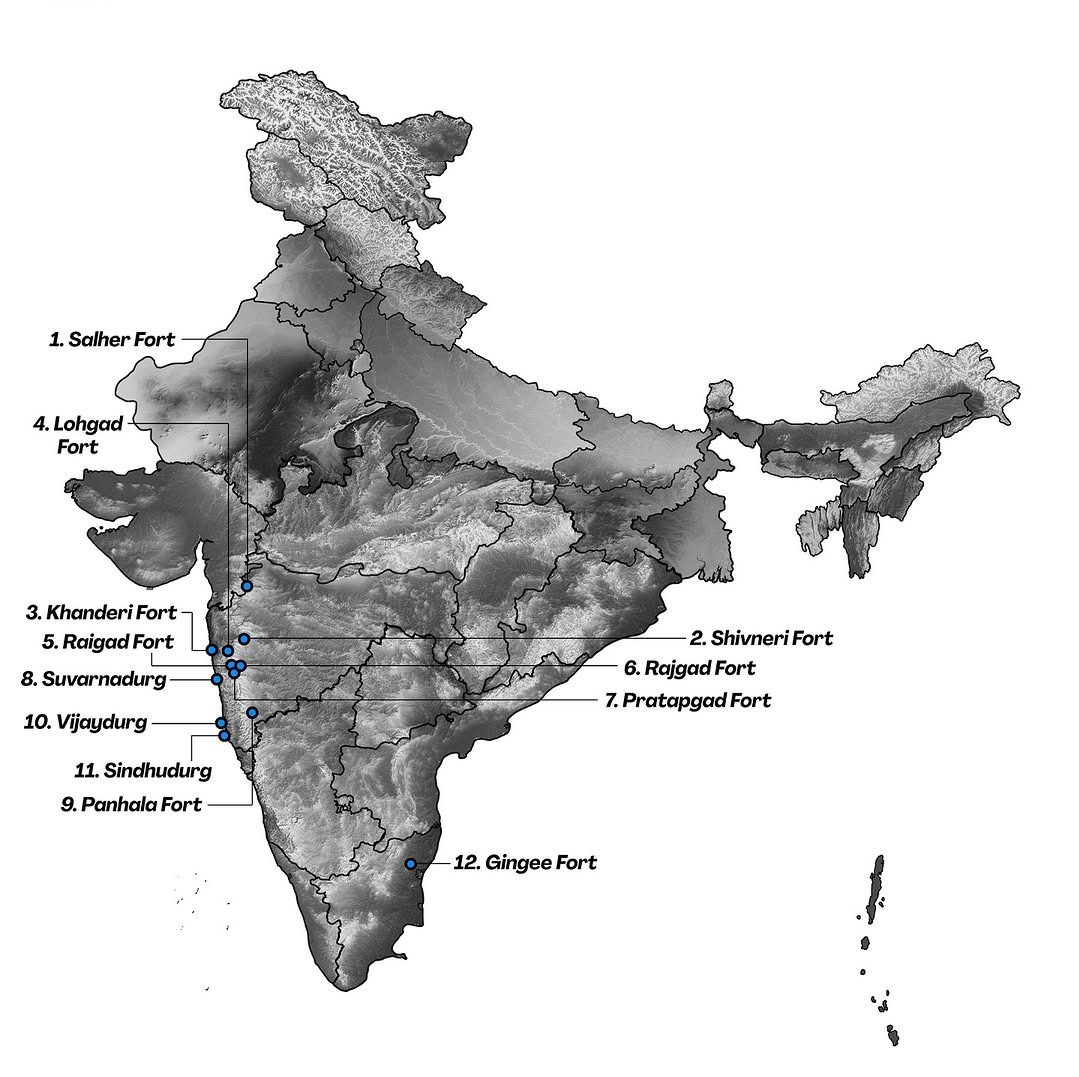
The ‘Maratha Military Landscapes’ of India have been inscribed on the UNESCO World Heritage List under the cultural category during the 47th session of the World Heritage Committee held in Paris.
AboutMaratha Military Landscapes:
Overview: A network of 12 forts showcasing the Maratha Empire’s military architecture and strategic fortification from the 17th to 19th centuries.
Time Period: Developed between 1670 CE (Shivaji’s era) and 1818 CE (end of Peshwa rule).
Geographical Spread: 11 forts in Maharashtra and 1 in Tamil Nadu (Gingee Fort), covering hill, coastal, forest, plateau, and island terrains.
The Department of Telecommunications (DoT) has launched an expanded Sanchar Mitra Scheme to engage engineering students as digital ambassadors for promoting telecom literacy, digital safety, and citizen engagement.
What is the Sanchar Mitra Scheme?
Launching Body: An initiative by the Department of Telecommunications (DoT), Government of India.
Primary Aim: To engage student volunteers as “Sanchar Mitras” or digital ambassadors to spread awareness about telecom-related issues.
Purpose:
Bridge the communication gap between citizens and the telecom ecosystem.
Promote safe and informed use of telecom services.
Encourage public participation in India’s digital transformation.
Implementation Status:
Piloted in select institutions.
Now being scaled up for nationwide rollout.
Key Features and Highlights:
Target Audience: It primarily targets students from engineering and technical backgrounds such as telecommunications, computer science, electronics, and cybersecurity.
Selection of Volunteers: Students will be nominated as Sanchar Mitras in consultation with DoT field units and educational institutions.
Training Modules: Volunteers will be trained to conduct grassroots campaigns on cyber fraud prevention, EMF radiation concerns, and responsible digital behavior.
Training Institutions: Training will be delivered by the National Communications Academy–Technology (NCA-T) and the Media Wing of the DoT.
Core Pillars: The scheme is structured around three key pillars: Connect, Educate, and Innovate.
Tech Awareness Promotion: Sanchar Mitras will promote awareness on emerging telecom technologies like 5G, 6G, AI, and cybersecurity.
Community Outreach: Students will engage with communities, NGOs, and schools to foster a culture of informed digital citizenship.
Strategic Alignment: It aligns with India’s strength in the “Four Ds”: Democracy, Demography, Digitisation, and Delivery.
[UPSC 2010] Which among the following do/does not belong/belongs to the GSM family of wireless technologies?
Options: (a) EDGE (b) LTE (c) DSL* (d) Both EDGE and LTE
The Ministry of Heavy Industries (MHI) has launched E-Truck Incentive Scheme to provide financial incentives for electric trucks (e-trucks) under the PM E-DRIVE initiative.
What is E-Truck Incentive Scheme?
Overview: It is a dedicated scheme to provide financial incentives for electric trucks under the broader PM E-DRIVE initiative.
First-of-its-Kind Support: This is the first direct government support specifically for electric trucks to promote clean, efficient, and sustainable freight mobility.
Target Vehicle Categories: It targets N2 and N3 category trucks, as per Central Motor Vehicle Rules (CMVR):
N2: GVW above 3.5 tonnes up to 12 tonnes
N3: GVW above 12 tonnes up to 55 tonnes
Incentive for Articulated Vehicles: For articulated vehicles, the incentive applies only to the puller tractor of the N3 category, not the trailer.
Warranty Requirements:
Battery: 5 years or 5 lakh km, whichever comes first
Motor & Vehicle: 5 years or 2.5 lakh km
Incentive Details:
Based on Gross Vehicle Weight (GVW)
Maximum support capped at ₹9.6 lakh per e-truck
Incentives are given as upfront discounts, reimbursed to Original Equipment Manufacturers (OEMs) through the PM E-DRIVE portal
Deployment Goal: It aims to support the deployment of 5,600 electric trucks across India.
1,100 trucks reserved for Delhi, with ₹100 crore allocated due to high pollution levels
Mandatory Scrappage Clause: To qualify, applicants must scrap an old diesel truck via scrappage centres approved by the Ministry of Road Transport and Highways (MoRTH).
Sectoral Impact: It is expected to benefit sectors like steel, ports, cement, and logistics by reducing fuel costs and improving air quality.
About PM E-DRIVE Scheme:
Overview: It stands for Prime Minister’s Electric Drive Revolution in Innovative Vehicle Enhancement, launched by the Ministry of Heavy Industries in September 2024.
Long-Term Goal: To to foster an EV ecosystem, reduce carbon emissions, and help India achieve Net Zero emissions by 2070.
Budget Allocation: It has a total outlay of ₹10,900 crore for two years, aimed at accelerating India’s electric mobility transition.
Scope and Coverage: It supports multiple vehicle categories: Two-wheelers; Three-wheelers; Electric trucks; Electric buses and Electric ambulances.
Demand Incentive: It provides direct demand incentives to buyers through OEMs, lowering the upfront cost of EVs.
Category-wise Allocation:
₹3,679 crore: For two-wheelers, three-wheelers, ambulances, and trucks
₹500 crore: Specifically for electric ambulance procurement
₹4,391 crore: To procure 14,028 electric buses in 9 major cities (Delhi, Mumbai, Kolkata, Chennai, Ahmedabad, Surat, Bangalore, Pune, Hyderabad)
Charging Infrastructure: ₹2,000 crore allocated to build 72,300 public charging stations nationwide, including:
Fast chargers for four-wheelers, buses, two-wheelers, and three-wheelers
Digital E-Voucher System:
Incentives claimed through Aadhaar-authenticated e-vouchers
Signed digitally by both buyer and dealer for transparency
Vehicle Scrappage Mandate: Scrapping of old vehicles is mandatory to claim certain incentives, especially for electric trucks, promoting fleet modernization.
[UPSC 2025] Consider the following types of vehicles:
I. Full battery electric vehicles II. Hydrogen fuel cell vehicles III. Fuel cell electric hybrid vehicles
How many of the above are considered as alternative (powertrain) vehicles?
Options: (a) Only one (b) Only two (c) All the three* (d) None
Mizoram Governor has imposed Governor’s Rule in the Chakma Autonomous District Council (CADC) due to prolonged political instability and repeated leadership changes.
About Autonomous District Councils (ADCs):
Basis: They are local self-governing institutions established under the Sixth Schedule of the Indian Constitution.
Coverage: ADCs are constituted in tribal areas of the northeastern states—Assam, Meghalaya, Tripura, and Mizoram (ATM2).
Purpose: These councils aim to provide autonomy to tribal communities to preserve their culture, customs, and govern their local affairs.
Notification: Each tribal area notified under the Sixth Schedule is declared an autonomous district, governed by its respective ADC.
Objective: The primary objectives of ADCs are to promote tribal self-governance, ensure local development, and protect tribal identity and rights.
Key Features of ADCs
Legal Status: ADCs are formed through constitutional provisions under the Sixth Schedule and are not governed by state laws.
Council Composition: Each ADC comprises up to 30 members, of which 26 are elected by adult suffrage and 4 are nominated by the Governor.
Tenure: The tenure of an ADC is 5 years from the date of its constitution.
Scope of Authority: ADCs have legislative, executive, and limited judicial powers specific to the needs of tribal communities.
Applicability of Laws: State and Central laws do not automatically apply in ADC areas unless explicitly extended by the Governor.
Powers and Functions of ADCs:
Law-Making Powers: ADCs can enact laws on land management, agriculture, and forest use (excluding reserved forests).
Customary Regulations: They can regulate inheritance, marriage, divorce, and social customs, and appoint traditional chiefs and headmen.
Local Administration: It oversee services such as primary education, dispensaries, roads, markets, and fisheries.
Judicial Functions: Councils can establish village courts to try civil and criminal cases involving tribal members, with sentencing powers up to five years.
Regulation of Trade: They may regulate money lending and trade by non-tribals, subject to Governor’s approval.
Revenue Sources: It can levy taxes on professions, trades, animals, vehicles, markets, ferries, and public infrastructure like roads and schools.
Autonomy and Limitations:
Degree of Autonomy: ADCs enjoy substantial legislative and administrative autonomy within their territorial jurisdiction.
Non-Applicability of General Laws: Parliamentary and State laws apply only when directed by the Governor, ensuring self-rule.
Governor’s Oversight: Despite autonomy, the Governor retains discretionary powers and can approve, modify, or annul council decisions.
Financial Constraints: ADCs often face limited revenue generation, which restricts their developmental effectiveness.
Administrative Challenges: Operational issues include leadership instability, shortage of trained personnel, and state-level interference in council functions.
[UPSC 2015] The provisions in Fifth Schedule and Sixth Schedule in the Constitution of India are made in order to:
Options: (a) protect the interests of Scheduled Tribes * (b) determine the boundaries between States (c) determine the powers, authority and responsibilities of Panchayats (d) protect the interests of all border States
The International Criminal Court (ICC) has issued arrest warrants for senior Taliban leaders in Afghanistan over the persecution of women, a crime against humanity.
About the International Criminal Court (ICC):
Established: 2002 under the Rome Statute (1998); headquartered at The Hague, Netherlands.
Nature: First permanent international court to try individuals for grave crimes.
Jurisdiction over 4 core crimes:
Genocide
Crimes against humanity
War crimes
Crime of aggression
Members: 124 States Parties
NON-members: India, China, USA, Russia, Israel, Ukraine
Structure:
Office of the Prosecutor – investigates and prosecutes cases.
18 Judges – elected for 9 years.
Assembly of States Parties – governs ICC administration.
Recent U.S. domestic policies on universities, companies, and immigration are causing short-term economic pain for India. However, they also offer long-term strategic opportunities. These changes may indicate the end of Pax Americana.
Why do U.S. policy shifts offer both risks and opportunities for India?
Opportunities for India:
Manufacturing Opportunity: As U.S.–China tensions disrupt global supply chains, India can attract companies looking to diversify production. Eg: Apple shifting iPhone assembly to India reflects the country’s growing role as a China+1 manufacturing hub.
Chance to Implement Bold Domestic Reforms: With reduced global dependence, India can focus on strengthening its internal systems through deregulation, decentralisation, and investment in human capital. Eg: A proposed 180-day plan calls for cutting compliance burdens, empowering state governments, and granting autonomy to top institutions like IITs and IIMs.
Higher Education and Innovation Ecosystem: As American universities face political and financial pressure, India can position its institutions as global research and innovation leaders. Eg: Granting “poorna swaraj” (full autonomy) to institutions like IISc, Ashoka, and IITs can help them climb global university rankings and drive home-grown R&D.
Risks for India:
Decline in Remittances and Student Enrolment: Stricter U.S. immigration and visa policies can reduce the flow of Indian students and workers, affecting remittances and global exposure. Eg: H-1B visa tightening under Trump led to fewer Indian tech workers entering the U.S., impacting remittancesand brain circulation.
Disruption to Exports and Supply Chains: Protectionist trade measures and tariffs can disrupt India’s export-dependent sectors like software, pharmaceuticals, and electronics.
What impact has U.S. research and immigration had on India’s growth?
Skilled Immigration: Indian immigrants in the U.S. contribute significantly to tech and scientific advancement, creating reverse knowledge flow to India. Over 70% of H-1B visas (2022) were granted to Indians, many of whom later founded companies or returned with expertise. Eg: Infosys, Wipro, and TCS have benefited from U.S.-trained professionals in leadership and innovation roles.
High Remittances Fueling Economic Stability: Indian diaspora in the U.S. contributes a major share of remittance inflows, supporting India’s foreign exchange reservesand rural economy. According to the World Bank (2023), the U.S. contributed over $23 billion in remittances to India, nearly 25% of India’s total remittance receipts.
Advancing Indian R&D and Education: U.S. federal funding has indirectly boosted India’s scientific growth through collaborations and return migration. The National Institutes of Health (NIH) funded research contributed to 99% of new drugs approved between 2010–2019. Eg: Indian researchers trained in U.S. labs or funded via U.S.-India Science and Technology Forum (USISTEF)have driven innovation in biotech, vaccines, and AI in India.
What does a weakening Pax Americana mean for India’s strategy?
Pax Americana refers to the period of relative global peace and stability under the dominance of the United States, particularly after World War II.
Push for Strategic Autonomy and Multipolar Engagement: As U.S. dominance declines, India must strengthen ties with multiple global powers while maintaining independence in foreign policy. India’s active role in BRICS, QUAD, and IMEC reflects efforts to diversify strategic partnerships and avoid overdependence on any one nation.
Accelerated Domestic Reforms for Economic Resilience: With global uncertainty, India needs internal strength through deregulation, decentralisation, and investment in infrastructure and skills. PLI schemes, Digital Public Infrastructure, Make in India, and self-reliance efforts show a move toward economic resilience.
Enhanced Role in Global Governance and Norm Setting: A weakening U.S. opens space for India to shape the global agenda in climate change, digital governance, and international trade. India’s G20 presidency and promotion of Digital Public Infrastructure as a global good underline its leadership in global norm-setting.
What are the key reforms that can boost India’s global economic standing? (Way forward)
Simplification: Simplifying regulations for employers by reducing compliance burdens, redundant filings, and removing criminal penalties in business laws can foster a more business-friendly environment. A focused 180-day plan to cut red tape would significantly improve ease of doing business and attract global investors.
Decentralisation: Decentralising power to States and cities by transferring funds, functions, and personnel empowers local governments to drive regional economic development. This enhances capacity for targeted innovation and creates globally competitive manufacturing ecosystems.
Autonomy: Empowering higher education and research institutions like IITs, IISc, and IIMs through full autonomy allows them to innovate, form global collaborations, and improve their position in international rankings.
Mains PYQ:
[UPSC 2018] How would the recent phenomena of protectionism and currency manipulations in world trade affect the macroeconomic stability of India?
Linkage: The rise of protectionism, which can be associated with policies like “Make America Great Again” mentioned in the article, signifies a shift in global trade dynamics. This question asks about the impact of such phenomena on India’s macroeconomic stability, underscoring the need for India to adapt and strengthen its economy in response to these global changes.
The Indian government recently claimed that India is among the world’s most equal societies, citing a Gini Index of 25.5 from the World Bank’s Poverty and Equity Brief, which would place India as the fourth most equal country globally. However, this claim has sparked debate and criticism from economists and inequality researchers.
What is the Gini Index?
The Gini Index (or Gini coefficient) is a statistical measure of inequality within a population. It is commonly used to measure income or wealth inequality, but can also be applied to consumption inequality.
What are the flaws in using consumption-based Gini to measure inequality?
Underestimates Real Inequality: Consumption is usually smoother than income because high earners tend to save more rather than spend proportionately. This leads to an underestimation of inequality. Eg: A billionaire may consume modestly while saving most income, appearing similar to a middle-class consumer in surveys, but with vastly different wealth.
Poor Cross-Country Comparability: India uses consumption-based data while most other countries use income-based Gini, making international comparisons misleading. Eg: India’s Gini of 25.5 (consumption-based) appears more equal than OECD countries, but income-based Gini (62) shows much higher inequality.
Low survey participation: Surveys often miss the richest due to non-response or sampling issues, failing to reflect the real inequality they contribute to. Eg: The richest 1% earn disproportionately more, but their low survey participation leads to underreported inequality.
Why is the World Inequality Database seen as more reliable?
Uses Income and Wealth Tax Data: Unlike consumption surveys, WID incorporates income tax and wealth tax data, which captures the top 1% of earners often missed in surveys. Eg: WID shows India’s income Gini Index rose from 52 in 2004 to 62 in 2023, revealing growing inequality missed by consumption-based metrics.
Captures Extreme Disparities: WID focuses on distributional national accounts, helping identify disparities between the top 10% and bottom 50%, which Gini often misses. Eg: In 2023-24, the top 10% in India earned 13 times more than the bottom 10%, a gap accurately captured by WID.
Global Comparability and Peer Review: WID data is transparent, methodologically standardised, and peer-reviewed by global economists, making it a trusted source for cross-country comparison. Eg: Countries like France and the US use WID for policy framing on progressive taxation and redistribution.
What are the alternatives to the Gini Index that better reflect extreme disparities?
Palma Ratio: The Palma Ratio compares the income share of the top 10% to that of the bottom 40%, focusing directly on income inequality between the rich and poor. Eg: In countries like South Africa, the Palma Ratio highlights stark disparities that are often missed by the Gini Index.
Theil Index (Generalized Entropy Measures): The Theil Index allows for decomposition of inequality within and between population groups like rural vs urban. Eg: In Brazil, it has been used to analyze racial and regional disparities more precisely than the Gini Index.
What are the policy risks of underestimating inequality?
Misguided Policy Design: When inequality is underestimated, governments may prioritize growth-focused policies without ensuring inclusive development. This can lead to insufficient investment in social protection, health, and education for marginalized groups.
Widening Socioeconomic Gaps: Underestimating inequality allows elite capture of resources and opportunities, worsening wealth concentration. This can deepen inter-generational poverty, especially for rural, low-caste, and female-led households.
Social and Political Instability: Failure to address real inequality can fuel public discontent, protests, and even extremism. It undermines trust in institutions and weakens democratic legitimacy over time.
What are the policy risks of underestimating inequality?
Misguided Policy Priorities: Underestimating inequality leads to policies focused only on aggregate growth, neglecting equity. Eg: India’s high GDP growth often overshadowed poor social investment in rural health and education, worsening human development gaps.
Weak Targeting of Welfare Schemes: If inequality is not accurately measured, social protection may miss the truly needy. Eg: Exclusion errors in schemes like PDS or PM-KISAN arise because top income groups are not properly excluded due to lack of granular data.
Rising Social Unrest and Distrust: Ignoring inequality can result in resentment, protests, and political instability. Eg: Farmer protests in India reflected deeper rural-urban income divides and perceived neglect of smallholder concerns.
Way forward:
Improve Data Collection Methods: Strengthen surveys by combining consumption data with income tax records, and ensure better representation of top income groups to capture true inequality.
Adopt Comprehensive Inequality Metrics: Use alternative indicators like the Palma Ratio or income shares of top 10% vs bottom 50%, alongside the Gini Index, for a more accurate assessment.
Design Inclusive Policy Frameworks: Align fiscal policies, welfare schemes, and tax reforms with accurate inequality data to target marginalized groups effectively and reduce social and regional disparities.
Mains PYQ:
[UPSC 2024] Despite comprehensive policies for equity and social justice, underprivileged sections are not yet getting the full benefits of affirmative action envisaged by the Constitution. Comment.
Linkage: This question critically examines the effectiveness of current policies intended to reduce inequality and promote social justice. It suggests that, despite official claims or stated objectives, the intended benefits are not effectively reaching the marginalised groups, thereby raising doubts about the actual progress in reducing inequality. It reflects the broader issue of implementation challenges in governance.
Why Civilsdaily’s UPSC Mentorship Program Is Unique? UAP is NOT your regular course. This isn’t just a program, it’s an ecosystem built to deliver ranks. The core of UAP is – Fault Finding & Course Correction. While other mentorships feel like blackboxes-random calls, vague advice, zero accountability & mere doubt solving-ours is a precision system built to spot your faults and fix them fast. No fluff, no guesswork. Real mentorship means real corrections.
We follow 5 steps: The Approach → Weekly Targets → Note-Building → Testing → Test Discussions. Every step sharpens you. Every step pulls you closer to the list. From crafting your strategy to squeezing out every last mark in Mains, UAP goes all in. In 2023, AIR 2 came from UAP. Many cleared in their first attempt. Others cracked it in their final shot.
What’s common? Grind, Focus, Clarity, and UAP. This alone is a strong enough reason why UAP is a unique program.
The heart of the Civilsdaily is the Ultimate Assessment Program (UAP). For years, aspirants have enrolled here because they couldn’t find such depth and passion towards quality content and Mentorship anywhere. Their search for Mentorship inevitably ends at Civilsdaily.
What You Need to Crack UPSC-CSE in One Attempt
To succeed in UPSC-CSE in a single attempt, it’s essential to have a well-structured, strategic approach. Here’s a breakdown of the key program inclusions that will help you achieve that:
Goal Setting: The Foundation of Preparation Every month, you’ll have a clear timeline of what needs to be covered and by when. This ensures consistent progress, avoids burnout, and keeps you on the right track throughout your preparation.
Assessment-Based Approach A comprehensive strategy that focuses on covering the entire syllabus in the shortest time possible, while still allowing room for multiple revisions. This approach ensures you stay on top of every subject while reinforcing your understanding.
Concise & Comprehensive Notes Access to crisp, ranker-recommended notes on relevant micro themes, based on trends from previous years’ questions (PYQs). These notes will help you focus on high-priority topics without getting overwhelmed.
Practical & Effective Revision Strategy A tailored revision plan focused on one goal: qualifying both Prelims and Mains. This strategy ensures you’re not just learning but retaining information effectively for the exams.
Mastering the Theme & Demand of Mains Questions Understand how to approach Mains questions with the right “Theme-Demand” analysis. Build a ready reference of “Intro-Body-Conclusion” structures for repeated themes, helping you develop muscle memory for answering questions efficiently.
Sharp Feedback from Mentors Consistent, detailed feedback on every mock test you attempt for Prelims and Mains. The goal is to make all your mistakes during the mocks, so you go into the final exam fully prepared and confident.
By mastering these elements, you’ll build the skills, mindset, and preparation necessary to clear UPSC-CSE in one attempt.
Schedule a 1-1 call with Civilsdaily’s Mentorfor focused UPSC Prep
Secondly, Let’s Understand Why Traditional Methods Fall Short
Relying solely on traditional methods attending 1:many classes, reading model answers, and taking a few mock tests-often creates the illusion that this is the core of Prelims and Mains preparation. In reality, these approaches make up only about 10% of a comprehensive strategy. When your goal is to secure a rank in the least number of attempts, the stakes are even higher. Here’s how UAP Mentorship elevates your preparation to the next level:
Personalized Study Plan: Sit down with a mentor to craft a detailed, fortnightly study schedule that covers the syllabus systematically. After each cycle, attempt a mock test to evaluate your progress and identify areas for improvement.
Expert Feedback: Practicing mocks is great, but imagine receiving sharp, actionable feedback from a mentor who has guided toppers like AIR 2, 22, 48, and others. Learn how to gain those crucial extra marks for each question and unlock the X-factor in your preparation.
Mapping Mains Themes: Solving Prelims and Mains PYQs is just the beginning. With UAP, you’ll work with mentors to map the UPSC syllabus onto key Mains themes, using PYQs to prioritize your revision efforts efficiently.
Crafting Concise Notes: Already created your Mains revision notes? Let’s take it further by refining them into concise one-pagers for each theme, complete with updated examples and multiple dimensions for deeper understanding.
Actionable Evaluation: Receiving an evaluated mock test copy is crucial-but what’s next? With UAP, we provide clear, actionable points to work on before you attempt your next mock, ensuring continuous improvement.
If you’re relying on outdated methods, UAP Mentorship might not be for you. But if you’ve tried those approaches and seen their limitations, now’s the time to level up. Apply for UAP Mentorship and experience the difference in your UPSC preparation journey.
What is the Ultimate Assessment Program (UAP)?
UAP is far from your typical course-it’s a complete ecosystem designed to handle every aspect of your UPSC preparation, from refining your strategy to significantly boosting your rank. In 2023, AIR 2 was one of the top ranks produced by UAP, alongside several other rankers. Many of these aspirants cleared the exam in their first attempt, while others succeeded in their final or second-to-last attempts.
These aspirants not only cleared Prelims with ease but also scored 400+ marks in their GS Mains papers. If your goal is to secure a top rank-be it IAS, IPS, or IFS-scoring 400+ in Mains is essential. To make your rank “interview-proof,” you should aim for nothing less than 450+. This is where UAP truly stands out.
UAP cuts through the overwhelming chaos of conventional preparation, bringing intense focus and clarity to your journey. With UAP, you’re not just preparing for an exam-you’re setting yourself up for success. The result? Your name on the final list next year.
Our program goes beyond generic study plans and superficial guidance. We believe that every aspirant is unique, and so are the challenges they face. Our mentorship is focused on providing personalized support that ensures you remain focused, disciplined, and efficient in your preparation.
Three Pillars of UAP
1. Mentorship:
Each student will be assigned a dedicated mentor who will track your progress, understand your strengths and weaknesses, and design a roadmap specific to your needs. Your mentor will provide continuous monitoring, regular check-ins, and feedback, helping you stay on track with your goals. Whether it’s time management, overcoming distractions, or mastering specific subjects, our mentors will be there to guide you.
Year-long Mentorship that’s all encompassing
Ensure you hit your next milestone
Subject strategy, target setting – providing base schedule.
Post test discussion
Phases of Mentorship
One-on-one mentor calls every week to provide the target and planner for the first 2 months. Mentor calls will thereafter be held every 10 days after that.
Weekly Report Card
Macro-strategy & macro targets for every three months
Test-related 1-on-1 detail disucssion.
Philosophy: Every Student Is A Batch
2. Core Programs:
Five Core Programs that are industry standards in themselves:
Samachar Manthan
Prelims Test Series
Mains Test Series
Essay Test Series
Dominate Prelims Crash Course
3. Pre-Acceleration Phase
We combine the knowledge and best practices from all rankers and present the learning in the prep acceleration sessions. This includes
ܳDedicated Monthly CA Test: Focus on Risk-Taking, Logical Problem Solving
Monthly CA Magazines (News, Op-Ed,PIB, Govt. Reports)
ܳDetailed Explainations
ܳAll India Rankings
2. Samachar Manthan:
Civilsdaily is renowned for its Samachar Manthan Program, an intensive current affairs initiative that will ensure you are fully prepared to tackle the dynamic aspects of the UPSC syllabus. With expert analysis, structured explanations, and discussions on major national and international issues, you’ll be equipped to handle both Prelims and Mains questions related to current affairs with confidence.
ܳ Weekly News Analysis (Video + Notes)
ܳ Mains Level Q&A Evaluation To Compliment The Lectures
ܳ Checked Copy Discussion On Phone/In-Person
3. Mains TS
Mock tests are crucial for success, and our test series is designed to simulate the actual exam environment. From day one, you’ll have access to a structured test series, including:
With detailed feedback on every answer you write, ensuring you develop a strong, exam-oriented answer writing style.
Custom Test Plans tailored to your progress, providing just the right amount of challenge to improve performance steadily.
Civilsdaily’s 1.5-Year Mentorship Program for UPSC CSE 2026 is your ticket to success in this prestigious exam. Limited seats are available, ensuring each student gets personalized attention and mentorship. Enroll today to kickstart your journey toward becoming a future civil servant.
Schedule a 1-1 call with Civilsdaily’s Mentorfor focused UPSC Prep
[UPSC 2019] Empowering women is the key to control population growth”. Discuss
Linkage: The PYQ’s focus on “Empowering women” directly reflects this crucial aspect of granting individuals, particularly young women, the choice and control over their bodies and lives. The article further elaborates that true empowerment means equipping adolescents, especially girls, with the skills, education, and opportunities.
Mentor’s Comment: The World Population Day 2025 has reignited global and national discussions on youth empowerment, reproductive rights, and falling fertility rates. With the theme “Empowering young people to create the families they want in a fair and hopeful world”, the UN highlights the need for informed reproductive choices and access to health, education, and economic opportunities, especially for India’s large youth population. The day also coincides with the release of the UNFPA’s State of World Population Report 2025, which warns that the real fertility crisis lies not in declining birth rates, but in the unmet reproductive goals due to financial, social, and infrastructural constraints.
Today’s editorial analyses the youth empowerment, reproductive rights, and falling fertility rates. This topic is important for GS Paper I (Indian Society) in the UPSC mains exam.
_
Let’s learn!
Why in the News?
Recently, World Population Day 2025 has brought renewed attention to global and national debates on empowering youth, ensuring reproductive rights, and addressing the challenges of declining fertility rates.
Why is youth empowerment essential for harnessing India’s demographic dividend?
India’s youth population is a major economic asset: With over 371 million people aged 15–29, India has the world’s largest youth population. If equipped with quality education, skills, health, and family planning services, this segment can become a powerful engine of economic growth and innovation.
Youth empowerment boosts national productivity and employment: Empowered youth can significantly reduce unemployment and enhance social outcomes. According to the World Bank and NITI Aayog, unlocking youth potential could increase India’s GDP by up to $1 trillion by 2030.
Empowerment ensures participation in nation-building: By promoting reproductive autonomy, gender equality, and economic independence, youth, especially young women, can participate in decision-making and shape their futures, contributing meaningfully to sustainable development.
What barriers hinder reproductive autonomy and fertility choices in India?
Limited access to family planning services and information: A significant share of the population lacks access to modern contraceptives, comprehensive sexual and reproductive health education, and counselling. Eg: According to the UNFPA State of World Population Report 2025, 36% of Indian adults faced unintended pregnancies, while 30% had unmet reproductive goals, reflecting systemic gaps in reproductive healthcare access.
Socio-cultural norms and gender inequality: Patriarchal attitudes, early marriages, and taboos around women’s reproductive rights often prevent young women from making independent fertility decisions. Eg: Though child marriage rates have declined, they remain high at 23.3% (NFHS-5, 2019–21), indicating how cultural practices continue to limit women’s reproductive autonomy.
Economic insecurity and structural barriers: Financial constraints, lack of housing, quality childcare, and secure employment inhibit couples from achieving their desired family size. Eg: A UNFPA survey found that 38% of Indian respondents cited financial limitations and 22% housing constraintsas major reasons for not fulfilling fertility aspirations.
How have schemes tackled child marriage and women’s empowerment?
Promoting girls’ education to delay early marriages: Schemes like Project Udaan in Rajasthan focused on keeping girls in secondary school using government scholarships, reducing the incidence of child marriage and teenage pregnancy.
Enhancing reproductive health awareness and services: Programmes such as Udaan and Advika improved access to modern contraceptives and sexual and reproductive health education, thereby strengthening reproductive agency among young women.
Empowering adolescents through life skills and leadership training: The Advika programme in Odisha helped prevent child marriage by providing life-skills training, leadership development, and child protection awareness across thousands of villages.
Fostering economic independence and employment: Project Manzil, implemented in Rajasthan, aligned skill training with young women’s aspirations and connected them to gender-sensitive workplaces, empowering over 16,000 women with employment and negotiation power.
Engaging communities to shift social norms: Behaviour change strategies under projects like Manzil worked to challenge harmful gender norms and involved families and communities, leading to reduced resistance against girls’ education and work.
Why should population discourse focus on rights and gender equity over fertility panic?
Respecting reproductive autonomy prevents coercion: Framing falling fertility as a “crisis” can lead to target-driven pronatalist policies that pressure women to reproduce, threatening their right to bodily autonomy. Eg: In countries like Hungary and Iran, such policies have led to restrictions on abortion and contraception, undermining women’s freedom.
Empowering women yields long-term social gains: Promoting gender equality, economic participation, and education for women improves both fertility decisions and broader development outcomes. Eg: Nordic countries like Sweden focus on workplace equality and parental leave, ensuring women can choose when and whether to have children.
Inclusive policy design avoids harmful stereotyping: Fertility panic often ignores the needs of those who want children but face barriers, while blaming those who are voluntarily childfree. Eg: The UNFPA’s 2025 report shows that 40% of respondents globally had to forgo childbearing due to financial and structural obstacles, not personal choice.
What can India learn from global responses to fertility decline?
Focus on enabling choices, not coercion: Countries like South Korea have spent billions on pronatalist incentives, but results remained limited until recent societal support systems (e.g., childcare, housing, and financial aid) improved. India must prioritize voluntary reproductive agency over target-driven incentives.
Promote gender equity in workforce and caregiving: Fertility policies that reinforce traditional gender roles have backfired. Instead of pressuring women to bear more children, countries like Sweden have boosted fertility by promoting gender-equal parenting, paternal leave, and women’s employment, which India can emulate.
Way forward:
Invest in rights-based reproductive health systems: Ensure universal access to quality contraceptives, safe abortion, maternal care, and infertility services, while safeguarding individuals’ reproductive autonomy through accurate health education and gender-sensitive policies.
Shift from fertility targets to gender equity: Focus on empowering women through education, economic independence, and childcare support, instead of promoting pronatalist incentives that risk reinforcing patriarchal norms and limiting personal choices.
Recently, a span of a 40-year-old bridge collapsed in Vadodara, Gujarat, on July 9, sending multiple vehicles into the Mahisagar river and resulting in the death of 18 people.
What causes recurring public infrastructure failures in India?
Ageing and outdated infrastructure: Many structures like the Morbi suspension bridge (2022) in Gujarat had exceeded their intended lifespan, yet continued to be in use without adequate upgrades.
Overuse and overload beyond design capacity: Bridges and roads originally designed for lower traffic volumes now face high urban and industrial load, as seen in the Indrayani pedestrian bridge collapse in Pune (2024) due to overloading.
Neglect and poor maintenance: Lack of routine inspections and maintenance led to incidents like the Vadodara bridge collapse (2024), where locals had raised concerns that were ignored by authorities.
Institutional inefficiency and under-resourcing: Municipal and local bodies often remain understaffed and underfunded, unable to monitor and maintain growing infrastructure needs, especially in peri-urban areas.
Lack of accountability and transparency: Even after fatal accidents like the Mizoram railway bridge girder collapse (2023), failure analysis reports are rarely made public, limiting systemic learning and corrective action.
What is Peri-urban infrastructure?
Peri-urban infrastructure refers to the basic facilities and services (like roads, bridges, water supply, drainage, electricity, etc.) found in the transitional zones between urban and rural areas.
Why is peri-urban infrastructure more prone to collapse?
Unregulated and informal urban expansion: Peri-urban areas often develop without proper zoning laws, building codes, or infrastructure planning. This results in substandard construction, making infrastructure vulnerable to collapse. In many Indian outskirts, flyovers and water systems are built around unplanned colonies, lacking load assessment.
Jurisdictional ambiguity and poor coordination: Peri-urban regions often fall between urban and rural governance structures, leading to confusion in responsibility for maintenance and oversight. In Delhi NCR’s fringes, conflicts between municipal bodies and panchayats delay repair and auditing of key infrastructure.
Low visibility and weak political prioritization: These areas lack media attention and political pressure seen in core urban centres, resulting in deferred maintenance. In Hyderabad’s outer zones, repeated complaints about weakening culverts were ignored until seasonal floodingcaused failure.
How can AMRUT and UIDF improve asset upkeep?
Focused maintenance and retrofitting: AMRUT 2.0 prioritizes the retrofitting of old urban infrastructure such as pipelines, water supply, and sewerage systems. Eg: In cities like Agra and Pune, AMRUT funding has helped upgrade outdated drainage systems to prevent floodingand infrastructure degradation.
Targeted financial support for smaller cities: UIDF provides low-cost loans to Tier-2 and Tier-3 cities that often lack budgetary resources for upkeep. Eg: In peri-urban areas of Madhya Pradesh, UIDF enabled the repair of worn-out roads and bridges strained by rapid population growth.
Promotion of digital monitoring and audits: Both schemes encourage the use of geo-tagging and digital tracking tools to monitor asset health and schedule timely repairs. Eg: Cities like Bhubaneswar and Surat use AMRUT-linked dashboards to track infrastructure health and flag issues before failures occur.
What gaps delay audits and accountability post-collapse?
Jurisdictional overlap between agencies: Multiple departments—urban development, public works, and local bodies—often share responsibility for infrastructure. This leads to confusion over which authority must initiate audits after a collapse. Eg: After a flyover collapse in Hyderabad, delays occurred as both the GHMC and state PWD passed the responsibility to each other.
Political interference and blame-shifting: In high-profile accidents, inquiries are sometimes delayed or diluted due to political pressures or attempts to shield influential contractors. Eg: In the Kolkata Vivekananda flyover collapse (2016), early accusations were politicized, stalling a clear and prompt audit process.
Way forward:
Establish a unified statutory audit authority: Create a dedicated, independent body responsible for conducting post-collapse audits across all public infrastructure, ensuring timely investigations, clear jurisdiction, and mandatory public disclosure of findings.
Implement real-time digital monitoring systems: Use GIS mapping, IoT sensors, and AI-based predictive maintenance tools to track structural health and alert authorities proactively, minimizing risks and improving accountability.
Mains PYQ:
[UPSC 2014] Explain how Private Public Partnership arrangements, in long gestation infrastructure projects, can transfer unsustainable liabilities to the future. What arrangements need to be put in place to ensure that successive generations’capacities are not compromised?
Linkage: The article highlights several incidents of catastrophic public infrastructure failures in India, such as a 40-year-old bridge collapse in Vadodara, a pedestrian bridge collapse in Pune, and a metro pillar collapse in Bengaluru. This PYQ is highly relevant as it directly addresses the critical themes of long-term infrastructure management, potential liabilities, and ensuring future capacity.
Recently, the Supreme Court of India has intervened in the ongoing Special Intensive Revision (SIR) of electoral rolls in Bihar, urging the Election Commission (EC) to consider documents like Aadhaar, EPIC, and ration cards as valid identity proof.
Why did the SC question Aadhaar’s exclusion from voter ID documents?
Widespread Use for Identity Verification: The Court noted that Aadhaar is one of the most widely used and accepted documents for establishing identity in India. It questioned why Aadhaar, considered essential for obtaining various official documents, was excluded while documents like caste certificates were included.
Relevance to Identity, Not Citizenship: The Court emphasized that the Special Intensive Revision (SIR) process is about verifying identity, not citizenship. Since Aadhaar serves that purpose effectively, its exclusion lacked justification.
Non-Exclusivity of Document List: The Court highlighted that the Election Commission’s list of 11 acceptable documents was not exhaustive, and in the interest of justice, Aadhaar, EPIC, and ration cards should also be considered valid for voter registration.
What issues surround the timing and conduct of the SIR in Bihar?
Short and Rigid Timelines: The Supreme Court noted that the 30-day deadlines for citizens to verify and submit documents were too short, raising concerns about procedural fairness.
Unclear Classification of SIR: The Court observed that the Bihar SIR was neither “summary” nor “special” as defined under Section 21 of the Representation of the People Act, 1950, making the exercise appear legally ambiguous.
Why is Aadhaar controversial in proving voter citizenship?
Not a Proof of Citizenship: The Aadhaar Act clearly states that Aadhaar is meant for identity verification, not citizenship confirmation. It can be issued to non-citizens who are residents, which makes it unreliable as evidence for voting eligibility.
Risk of Inclusion Errors: Using Aadhaar may result in non-citizens being wrongly enrolled as voters due to data inaccuracies or misuse, thereby compromising the integrity of the electoral rolls.
High Dependence Among Marginalised Groups: In regions like Bihar, 87% of people have Aadhaar, but few possess documents like passports or matriculation certificates. If Aadhaar is excluded, vulnerable citizens risk disenfranchisement, raising concerns about equity and access.
What are the issues related to the Adhaar Card and NPR in India?
Overlap of Purpose and Confusion on Citizenship: While Aadhaar is officially a tool for identity verification and welfare delivery, and NPR is for creating a register of residents, their perceived linkage with citizenship screening (especially post-CAA debate) has led to widespread fear and confusion. Eg: During the 2020 NPR update, several states (e.g., West Bengal, Kerala) halted implementation, citing concerns over its potential use for citizenship determination.
Privacy and Data Security Concerns: Both Aadhaar and NPR involve massive collection of personal data, but the legal and technological safeguards for privacy and misuse remain inadequate. Aadhaar has faced leaks, while NPR has been criticised for seeking sensitive demographic data without clear purpose. Eg: In 2018, UIDAI acknowledged multiple cases where Aadhaar data was accessible through public domains or appswithout authorisation.
Exclusion due to Documentation Gaps: Aadhaar and NPR can inadvertently exclude individuals lacking proper documentation—especially the poor, migrants, or marginalised groups—from public services or the voter list. Eg: Reports from Jharkhand revealed cases where lack of Aadhaar linkage led to denial of PDS rations, contributing to hunger-related deaths.
Way forward:
Strengthen Legal Safeguards and Clarity: Enact clear legislative guidelines to distinguish the roles of Aadhaar, NPR, and citizenship documentation, ensuring they are not misused for exclusionary practices. A robust data protection law must accompany these measures.
Promote Inclusion and Transparency: Ensure all government identity and registration drives are conducted with public awareness, grievance redressal mechanisms, and opt-out provisions for vulnerable groups, to prevent exclusion and build trust in institutions.
Mains PYQ:
[UPSC 2014] Two parallel run schemes of the Government viz. the Adhaar Card and NPR, one as voluntary and the other as compulsory, have led to debates at national levels and also litigations. On merits, discuss whether or not both schemes need run concurrently. Analyse the potential of the schemes to achieve developmental benefits and equitable growth.
Linkage: This PYQ directly relates to the essence of the statement “Consider Aadhaar, EPIC, ration card as proof” by focusing on the Aadhaar Card and the debates and implications surrounding its use as a governmental tool.
The United Nations Environment Programme (UNEP), in its latest Frontiers 2025 report titled The Weight of Time, has warned that increased river and coastal flooding caused by climate change could unearth dangerous legacy pollutants from water bodies.
About Legacy Pollutants:
Definition: Legacy pollutants refer to toxic substances like heavy metals and persistent organic pollutants (POPs) that continue to remain in the environment even decades after their use has been banned or restricted.
By-products: Produced from incineration, metal smelting, and waste burning.
Persistence: These substances are highly resistant to environmental degradation and accumulate in riverbeds, lakes, estuaries, and other sediment-rich ecosystems.
Health Hazards: Even at low exposure levels, legacy pollutants can cause: Neurotoxicity (nervous system damage), Immunotoxicity (immune disruption), Hepatotoxicity (liver damage), Reproductive toxicity (infertility, birth defects), Carcinogenicity (various cancers), Endocrine disruption etc.
Sources:
Past industrial practices, use of banned agricultural chemicals, and obsolete pesticide stockpiles.
Improperly managed chemical landfills, which still hold an estimated 4.8–7 million tonnes of POP waste globally.
Key Highlights of Frontiers 2025: The Weight of Time (UNEP):
Retreat of Toxins: Climate change-induced flooding can unearth and redistribute toxic legacy pollutants from contaminated sediments into the environment and food chain.
How? Floodwaters re-suspend heavy metals and POPs trapped in sediment.
Case Studies Cited:
Hurricane Harvey (Texas, 2017): Released mercury and carcinogenic chemicals from flood-induced sediment dispersal into Galveston Bay.
The National Education Society for Tribal Students (NESTS) and UNICEF India launched TALASH (Tribal Aptitude, Life Skills and Self-Esteem Hub), a first-of-its-kind national initiative for holistic development of tribal students in Eklavya Model Residential Schools (EMRSs).
About the TALASH Initiative:
Overview: TALASH (Tribal Aptitude, Life Skills and Self-Esteem Hub) is a national programme launched by the National Education Society for Tribal Students (NESTS) in partnership with UNICEF India.
Target Group: It is aimed at the holistic development of tribal students studying in Eklavya Model Residential Schools (EMRSs) across the country.
Objectives: The initiative fosters self-awareness, emotional resilience, life skills, and career clarity among tribal youth.
Focus: It is the first national initiative in India designed specifically for tribal students.
Broader Policy: TALASH aligns with the National Education Policy 2020, promoting inclusive, equitable, and competency-based education.
Coverage Goal: Over 1,38,336 students across 28 States and 8 Union Territories are expected to benefit.
Implementation: By the end of 2025, TALASH aims to be implemented in all EMRSs nationwide.
Key Features of TALASH:
Psychometric Assessments:
Inspired by NCERT’s ‘Tamanna’, TALASH offers aptitude tests to help students discover their interests, abilities, and potential.
Based on the results, students receive Career Cards suggesting suitable career options.
Career Counselling: The platform offers structured career guidance to help students make informed decisions aligned with their strengths and aspirations.
Life Skills & Self-Esteem Modules: TALASH teaches communication, problem-solving, emotional regulation, and self-confidence through interactive modules.
E-Learning for Teachers:
A dedicated online portal provides training and resources to teachers to help them mentor students effectively.
So far, 189 teachers from 75 EMRSs have been trained to lead school-level sessions.
[UPSC 2017] With reference to ‘National Skills Qualification Framework (NSQF)’, which of the statements given below is/are correct?
1. Under NSQF, a learner can acquire the certification for competency only through formal learning.
2. An outcome expected from the implementation of NSQF is the mobility between vocational and general education.
Select the correct answer using the code given below:
Options: (a) 1 only (b) 2 only* (c) Both 1 and 2 (d) Neither 1 nor 2
Researchers from Birbal Sahni Institute of Palaeosciences (BSIP), Lucknow, have found strong evidence that the Kashmir Valley, now cool and temperate, was once a warm, humid subtropical region.
About the Study on Fossils:
Site of Fossil Discovery: The fossils were recovered from the Karewa sediments of the Kashmir Valley, known for preserving ancient plant remains.
Analysis: Researchers used CLAMP (Climate Leaf Analysis Multivariate Program) to analyze fossil leaf shape, size, and margins to estimate past temperature and rainfall patterns.
Coexistence Approach: It was also used, comparing fossil plants with their modern relatives to reconstruct the region’s ancient climate.
Key Findings:
Past Climate Type: The Kashmir Valley once had a warm, humid subtropical climate, very different from the cool, Mediterranean-type climate it experiences today.
Vegetation Evidence: Fossilized leaves showed diverse subtropical plant types no longer found in the region’s current vegetation.
Role of Tectonic Uplift: The tectonic uplift of the Pir Panjal Range was identified as a key factor that blocked the Indian summer monsoon from entering the valley.
Climatic Transition: This led to gradual drying of the region and a shift from subtropical forests to temperate ecosystems.
Impact of Mountain-Building: The study shows that mountain-building (tectonic uplift) can directly affect climate patterns by altering monsoon routes.
Relevance to Climate Change: The findings provide insight into natural climate shifts over millions of years, helping contextualize modern climate change.
Ecological Vulnerability: It also highlights the fragility of mountain ecosystems like the Himalayas, which are vulnerable to both natural and human-induced environmental changes.
Back2Basics:
Karewa Sediments: They are plateau-like terraces in the Kashmir Valley, made up of lacustrine (lake) and fluvio-glacial deposits; They are known to preserve ancient fossils, especially of plants.
Subtropical Climate: A warm and humid climate with moderate to high rainfall, supporting dense vegetation. Ex: Climate of northeastern India.
Mediterranean-Type Climate: Characterized by mild, wet winters and hot, dry summers; Ex: Current climate of parts of the Kashmir Valley.
[UPSC 2025] Which of the following are the evidence of the phenomenon of continental drift?
I. The belt of ancient rocks from Brazil coast matches with those from Western Africa. II. The gold deposits of Ghana are derived from the Brazil plateau when the two continents lay side by side. III. The Gondwana system of sediments from India is known to have its counterparts in six different landmasses of the Southern Hemisphere.
Options: (a) I and III only (b) I and II only (c) I, II and III * (d) II and III only
Union Home Minister recently highlighted that 83% of issues discussed in Zonal Council meetings have been resolved, reaffirming their role as effective platforms for intergovernmental cooperation.
What are Zonal Councils?
Establishment: They are statutory bodies established under the States Reorganisation Act, 1956; they are not constitutional bodies.
Purpose: Their main goal is to promote cooperation and coordination among states, union territories, and the central government.
Basis for Zoning: Zones were drawn based on natural divisions, cultural and linguistic affinity, river systems, and security needs.
Zonal Division: India is divided into five zones—Northern, Central, Eastern, Western, and Southern—with a separate Zonal Council for each:
Central Zonal Council: Chhattisgarh, Uttarakhand, Uttar Pradesh, Madhya Pradesh
Eastern Zonal Council: Bihar, Jharkhand, Odisha, West Bengal
Western Zonal Council: Goa, Gujarat, Maharashtra, Dadra & Nagar Haveli, Daman & Diu
Southern Zonal Council: Andhra Pradesh, Karnataka, Kerala, Tamil Nadu, Puducherry
Note:
North-Eastern Council (NEC)(separate body): Assam, Arunachal Pradesh, Manipur, Tripura, Mizoram, Meghalaya, Nagaland, Sikkim (added in 2002)
The union territories of Andaman and Nicobar Islands and Lakshadweep are NOT members of any of the Zonal Councils. However, they are presently special invitees to the Southern Zonal Council.
Composition and Structure of Zonal Councils:
Chairperson: Each Zonal Council is chaired by the Union Home Minister.
State Representation: The Chief Ministers of all states in the respective zone are members of the Council.
Additional Members: Each state nominates two additional ministers; administrators of union territories also participate.
Vice-Chairperson Role: The role of Vice-Chairperson rotates annually among the Chief Ministers.
Standing Committees: These are formed with Chief Secretaries of states and meet ahead of full sessions to finalize the agenda.
Functions and Responsibilities:
Cooperation & Consensus: Promote interstate and Centre-state cooperation through dialogue and consensus-building.
Key Issues Addressed: Economic and social planning, Border disputes, Inter-state transport, Linguistic minority concerns etc.
Advisory Role: While the councils’ recommendations are advisory, they play a vital role in dispute resolution and coordinated policy formulation.
Recent Developments and Significance:
Leadership in NEC: In 2018, the Union Home Minister became the Chairperson of the North Eastern Council, signaling a push for broader integration.
Revitalization under Modi Government: Zonal Councils have evolved into dynamic, action-oriented platforms rather than passive advisory bodies.
Strengthening Federalism: These councils now actively contribute to cooperative federalism, resolve disputes, and accelerate regional development.
Efficacy in Implementation: With 83% of agenda issues resolved, Zonal Councils demonstrate increasing political will and effectiveness in addressing regional challenges.
[UPSC 2013] Which of the following bodies is/are not mentioned in the Indian Constitution?
1. National Development Council 2. Planning Commission 3. Zonal Councils
Select the correct answer using the codes given below.
Options: (a) 1 and 2 only (b) 2 only (c) 1 and 3 only (d) 1, 2 and 3