💥UPSC 2026, 2027, 2028 UAP Mentorship (March Batch) + Access XFactor Notes & Microthemes PDF

Search results for: “”

  • Nikaalo Prelims Spotlight || Biotechnology

    Dear Aspirants,

    This Spotlight is a part of our Mission Nikaalo Prelims-2023.

    You can check the broad timetable of Nikaalo Prelims here

    Session Details

    YouTube LIVE with Parth sir – 1 PM  – Prelims Spotlight Session

    Evening 04 PM  – Daily Mini Tests

    Join our Official telegram channel for Study material and Daily Sessions Here


    29th Mar 2023

    Biotechnology

    What is Biotechnology?

    Biotechnology refers to the industrial use of micro-organism, living plant and animal cells to produce substances useful to the people. It includes the manufacture of antibiotics, vitamins, vaccines, toxic waste disposal systems using microbes etc.

    Biotechnology sector in India

    1. Indian biotechnology sector has crossed the $ 3 billion milestones and is growing at the rate of more than 30% over the last few years.  
    2. There is also a general perspective that India could even achieve the target of attaining $20 billion by 2020.

    Applications of Biotechnology in India
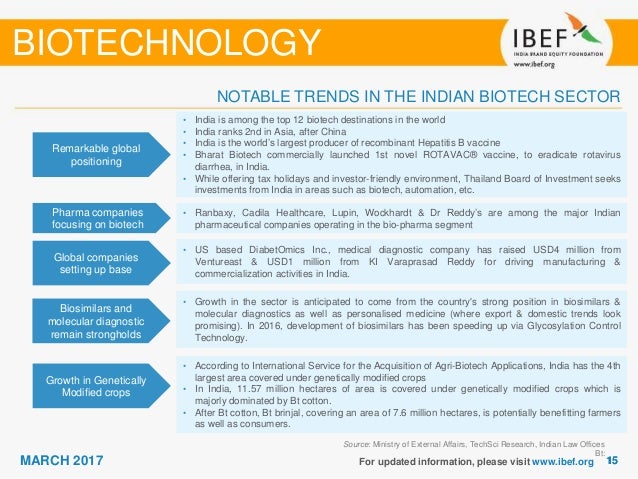
    Image result for applications of biotechnology in india

    Agriculture

    1. Biotechnology revolutionized research activities in agriculture which include tissue culture in plants, the creation of new transgenic plants and animals which eventually used as bio-reactors to produce the drug from their milk, food etc.
    2. Genetic engineering accelerates improvements in plants by increasing the diversity of the gene pool. It has also helped in the production of plants that have
    • a short maturing period
    • higher yield
    • potential to promote food production even in adverse conditions like drought, salinity etc.

    Indian scientists have also come up with an inexpensive algal bio-fertilizer technology for rice.

    Animal husbandry

    1. Biotechnology is used in the production of the physiological system, embryos transfer, health and well-being of animals.
    2. Indian scientists have developed a procedure for producing several identical buffalo by using the nuclear transfer technique.

    Human health

    1. Biotechnology has enabled the production of human insulin through microbes, human growth hormone etc.
    2. Diagnostic kits to diagnose viral infections, hepatitis B etc.

    Industry

    1. In the Industrial sector biotechnology has been used for the production of high fructose corn syrup, sweetening agent for soft drinks, improving the production of alcohol, production of the chemical from agricultural waste etc.

    Environment

    1. Biotechnology applications have been successfully made in the treatment of wastes.
    2. An important achievement was made when the Indian borne Anand Chakraborty designed a bacterium Pseudomonas putida that could feed on oil which is of great economic and environmental importance in the battle against oil slicks.

    Measures taken

    1. The Indian government has been very supportive to the Biotech sector and the National Biotechnology Development Strategy has been approved.
    2. A new patent regime is in place and the regulatory system is being beefed up.
    3. The public involvement in biotech investments has been strengthened through the small business innovation research initiative of the Department of Biotechnology.
    4. The Department of Biotechnology has also committed to spending 30% of its budget on public-private partnership programmes in Biotechnology.  
    5. Biotechnology has also been promoted through emphasizing on higher education, establishing 16 new national level universities, 8 new Indian Institute of Technology and 4 new Indian Institutes of Science, Education and Research etc.
    6. Several new interface programmes to connect academic with industry in order to bridge the knowledge to the market chain.

    Challenges

    1. Companies have not been able to launch new products at a significant pace because of bureaucratic red-tape and multiple regulatory bodies.
    2. Innovative companies face funding constraints since the investors have shied away from early-stage ventures.
    3. Another issue is the lack of trained manpower. While India has a considerable number of graduates and postgraduates in biotechnology and related fields, they are not employable. Thus companies have to invest heavily in their training before incorporating them into the business.
    4. India also suffers from brain drain. Top global biotech companies are able to poach the brightest Indian minds with attractive job profiles and good remuneration.
    5. Lack of manufacturing capacity. Several biotech parks (established through PPPs) are solely focused on providing biotech services and diagnostics rather than pure biotech manufacturing.

    Way forward

    1. India is already facing tough competition from China, Korea, Singapore, and Malaysia in terms of attracting investments. Therefore, it is high time that India should enable better technological and scientific competence, better infrastructure, tax and duty exemptions, better course structure, and easier regulatory procedures in order to remain competitive and spur growth in the industry.
    2. The biotech industry should come up with a concrete action plan to effectively utilize the available infrastructure and resources and focus on strengthening innovation to take the biotech industry to new heights.
    3. The government must promote the domestic biotech industry through steps like venture capital, industry-academia link, entrepreneurship incubation centres etc.

  • How to manage India’s Solar PV waste problem?

    solar pv

    Central idea: India is rapidly expanding its solar photovoltaic (PV) sector, but effective waste management strategies for this sector are still lacking. This article explores the challenges and gaps in solar PV waste management in India.

    solar

    Solar PV Waste in India

    • India has the world’s fourth-highest solar PV deployment, and the installed solar capacity was nearly 62 GW in November 2022.
    • A 2016 report by the International Renewable Energy Agency estimates that India could generate 50,000-3,25,000 tonnes of PV waste by 2030 and more than four million tonnes by 2050.
    • India’s solar PV installations are dominated by crystalline silicon (c-Si) technology, which mainly consists of a glass sheet, an aluminium frame, an encapsulant, a backsheet, copper wires, and silicon wafers.
    • A typical PV panel is made of c-Si modules (93%) and cadmium telluride thin-film modules (7%).

    Hazards posed by PV waste

    Some of the hazards of solar PV waste are:

    • Environmental pollution: The accumulation of solar PV waste in landfills can lead to environmental pollution, as the waste contains hazardous materials such as lead, cadmium, and other toxic chemicals. Incinerating the encapsulate also releases sulphur dioxide, hydrogen fluoride, and hydrogen cyanide into the atmosphere.
    • Health hazards: Improper handling and disposal of solar PV waste can lead to health hazards for workers and people living near the waste disposal sites. The toxic chemicals in the waste can cause respiratory problems, skin irritation, and other health issues.

    Economy behind PV waste

    • Financial losses: Improper management of solar PV waste can lead to financial losses for the companies involved in waste collection and treatment. The lack of suitable incentives and schemes in which businesses can invest leads to a small market for repurposing or reusing recycled PV waste in India.
    • Resource depletion: The disposal of solar PV waste leads to the loss of valuable resources such as silicon, silver, and other critical materials, which can lead to resource depletion.

    Recovery and Recycling of PV Waste

    • As PV panels near expiration, some portions of the frame are extracted and sold as scrap; junctions and cables are recycled according to e-waste guidelines; the glass laminate is partly recycled, and the rest is disposed of as general waste.
    • Silicon and silver can be extracted by burning the module in cement furnaces.
    • According to a 2021 report, approximately 50% of the total materials can be recovered.

    Challenges particular to India

    • India faces challenges in the collection, storage, recycling, and repurposing of PV waste.
    • Only about 20% of the waste is recovered in general, and the rest is treated informally, leading to pollution of the surroundings.
    • Gaps in PV Waste Management-
    1. Generalized as e-waste: The clubbing of PV waste with other e-waste could lead to confusion, and there is a need for specific provisions for PV waste treatment within the ambit of e-waste guidelines.
    2. Hazards are ignored: PV waste is classified as hazardous waste in India, and there is a need for pan-India sensitisation drives and awareness programmes on PV waste management.

    Why does India need to act now?

    • Considering the rate at which these panels are being installed around the country, India is expected to generate an enormous amount of waste over the next 20 years.
    • India is expected to become one of the top five leading photovoltaic waste producers worldwide by 2050.
    • Therefore, India needs to install clear policy directives, well-established recycling strategies, and greater collaboration, so that it doesn’t find itself caught unprepared against a new problem in the future.

    Key recommendations

    Policymakers should:

    • Introduce a ban on dumping of waste modules by different entities in the landfills.
    • Formulate a dedicated PV module waste management regulation.
    • Introduce incentives like green certificates to provide a level-playing field and encourage recycling and mineral recovery by the industry.

    Industries should:

    • Improve the PV module design to minimise the waste at the disposal stage. This can include sustainable design with reduced use of toxic minerals or adopting a ‘design to disassemble’ approach.
    • Invest in the second-life use of sub-standard modules to delay waste creation.
    • Collaborate with research institutes to develop recycling techniques and support pilot demonstrations.
    • Conceptualise new business models to manage and finance the waste disposal.

    Way forward

    • India needs to pay more attention to domestic R&D efforts as depending on a single module type will dis-uniformly deplete certain natural resources.
    • It is important to boost capacity for recycling and recover critical materials.
    • This can be achieved by-
    1. Formulating specific provisions for PV waste treatment,
    2. Pan-India sensitisation drives, and awareness programmes,
    3. Promoting domestic R&D efforts, and
    4. Providing appropriate infrastructure facilities and adequate funding.


  • [Sansad TV] Mudda Aapka: Victory over Left-Wing Extremism

    [Sansad TV] Mudda Aapka: Victory over Left-Wing Extremism

    Central idea

    • In the last eight years, there has been a historic success in curbing Left Wing Extremism violence and the credit for this goes to the CRPF.
    • Union Home Minister has informed that there has been a 76 per cent decline in the incidents of LWE violence in the country and the fight against Naxalities is in the final stages.
    • In 2022, the number of deaths of civilians and security forces drastically reduced, with only 98 deaths as compared to 1005 deaths in 2010.

    Left vs. Right: Behind the Political Dichotomy

    • In politics, left refers to people and groups that have liberal views.
    • That generally means they support progressive reforms, especially those seeking greater social and economic equality.
    • The far left is often used for what is considered more extreme, revolutionary views, such as communism and socialism.
    • Collectively, people and groups, as well as the positions they hold, are referred to as the Left or the left wing.

    Being ‘Right’ means

    • The word right, in contrast, refers to people or groups that have conservative views.
    • It generally means they are disposed to preserve existing conditions and institutions.
    • They often want to restore traditional ones and limit change.
    • The far right is often used for more extreme, nationalistic viewpoints, including fascism and some oppressive ideologies.

    People and groups, as well as their positions, are collectively referred to as the Right or the right wing.

    Confused between Maoists and Naxalities?

    • Usually, people confuse themselves over Maoists and Naxalities and cannot exactly trace the difference between the two terminologies.
    • Media seems to be confused with the terms and uses Maoists and Naxalities quite inter-changeably. 
    • This creates confusion in the readers’ minds over the actual meaning of individual terms. 

    The actual difference between the terms is as follows: 

    • The difference between Maoists’ struggle and the Naxalite movement is that both trace their origin to the Naxalbari uprising of 1967.
    • But while the Naxalite movement thrives on the original spirit of Naxalbari; the Maoist struggle is an outcome of the 1967 uprising.
    • Maoists work with an agenda and use weapons to achieve their aims. 
    • Naxalism focuses on mass organisations while the Maoism relies mainly on arms.

    (1) Naxalism

    • Naxalism originated as a rebellion against the marginalisation of the poor forest dwellers and gradually against the lack of development and poverty at the local level in rural parts of eastern India.
    • It began in 1967 with an armed peasant uprising in Naxalbari village of Darjeeling district in West Bengal.
    • The term ‘Naxal’ came from the name of the village. 
    • The origin of the Naxals was a result of the split that took place in the Communist Party of India (Marxist) in 1967.
    • It led to the formation of Communist Party of India (Marxist and Leninist).

    (2) Maoism

    • Maoism originated in China as a form of communist theory derived from the teachings of Chinese political leader Mao Zedong.
    • Maoists were the loyal believers of the Chairman Mao’s philosophy that “Power flows from the barrel of the gun.”
    • When the Communist Party of India (Marxist-Leninist) was born out of the Naxalbari uprising, a section of communist rebels retained a distinct identity.
    • Along with Marxism and Leninism, a new concept, which is of Maoism, started emerging in India.
    • Around 1966, Maoist Communist Centre (MCC) was formed in West Bengal.

    History and evolution

    left
    • Russian Revolution: Naxalism in India, like any other leftist movement around the globe, draws its ideological basis from the Russian revolution.
    • Overthrowing Tsarist Regime: Lenin successfully fought against the Czarist Rule through a combination of the peasant movement and an armed struggle.
    • Marxian ideology of class struggle: The prime intent was to bestow power in the hands of the exploited and marginalized and enforce societal control over governance and nation building.
    • Neo-Marxism: After the success of the Lenin-led revolution in Russia, the intellectual class in many countries got inspired. Prominent amongst them were Fidel Castro and Mao Zedong.

    Root cause of origin in India

    • Corporate exploitation: Since Eastern India is rich in natural resources including forests, minerals and mines, tribal face exploitation and harassment from government and corporate bodies targeting to extract those resources.
    • Tribal alienation: Tribal communities have been systematically alienated from their traditional rights over natural resources after independence.
    • Livelihood losses: Tribal livelihood is at stake due to depletion of natural resource base.
    • Forceful displacement: Forceful displacement from their homeland destroys their traditional governance system.
    • Absence of governance: In such exploited areas, the absence of governance becomes a self-fulfilling prophecy since the delivery systems are extinguished through killings and intimidation.
    • Foreign provocations: Many of LWE outfits are supported by external forces inimical to India and the Maoists consider such alliances as strategic assets.

    Other factors:

    1. Oppression and HR violations by Security Forces e.g. AFSPA
    2. Violation of Constitutional Protections under PESA and FRA
    3. Prevalence of Acute Poverty

    Impact of LWE

    • Romanticism without a cause: Some sections of society, especially the younger generation, have romantic illusions about the Maoists, arising out of an incomplete understanding of their ideology of Class –Struggle.
    • Extreme violence: Their doctrine glorifies violence as the primary means to overwhelm the existing socio-economic and political structures.
    • Destruction of governance mechanism: LWEs aims at creating a vacuum at the grassroots level of the existing governance structures by killing lower-level government officials, police personnel of the local police stations and the people’s representatives of the PRIs.
    • Radicalization of youths: After creating a political and governance vacuum, they coerce the local population to join the movement.
    • Urban-Maoism: Many extremists have facilitated mass mobilization in semi-urban and urban areas through ostensibly democratic means often led by well-educated intellectuals.

    Outcomes of perpetrating LWE

    The Leftist organizations skilfully use state structures and legal processes to further the Maoist agenda and weaken the enforcement regime through:

    1. Recruitment of ‘professional revolutionaries’
    2. Raising funds for the insurgency
    3. Creating urban shelters for underground cadres
    4. Providing legal assistance to arrested cadres and
    5. Mass- mobilization by agitating over issues of relevance/ convenience

    Govt initiatives for LWE-affected areas

    • Aspirational Districts: The MHA has been tasked with the monitoring of the Aspirational district’s programme in 35 LWE affected districts.
    • HRD measures: Building of schools under the Eklavya model.
    • Road Connectivity Project for LWE affected areas (RRP-II): This aims for improving road connectivity in LWE affected States. Under this, 9279 km of roads and 392 bridges are sanctioned.
    • Naxal Surrender Policy: It aims to wean away misguided youth and hardcore naxalites who have strayed into the fold of the naxal movement and cannot find a way back.
    • National Policy Action Plan: To address Left Wing Extremism approved in 2015, has development as one of the most important component.

    SAMADHAN doctrine: It encompasses the entire strategy of government from short-term policy to long-term policy formulated at different levels. SAMADHAN stands for-

    • S- Smart Leadership
    • A- Aggressive Strategy
    • M- Motivation and Training
    • A- Actionable Intelligence
    • D- Dashboard Based KPIs (Key Performance Indicators) and KRAs (Key Result Areas)
    • H- Harnessing Technology
    • A- Action plan for each Theatre
    • N- No access to Financing

    Way forward

    • Indian counterinsurgency has to work with a dual objective of defeating the insurgents militarily and fully quell the insurgent impulses.
    • This will need institutional overhauls.
    • States must do more to synergize their efforts by launching coordinated operations, thereby denying Maoists any space for manoeuvrability.
    • On parallel grounds, it is also important to segregate the population from the insurgents both operationally and ideologically.
    • The conflict over the distribution of resources can be mended with economic development.


    <h5 style="text-align: center;">Are you an IAS Worthy Aspirant? Get a reality check with the All India Smash <strong>UPSC Scholarship Test</strong></h5>
    <h5 style="text-align: center;"><a href="http://www.bit.ly/cd_DI"><img class="alignnone wp-image-699674" src="https://d18x2uyjeekruj.cloudfront.net/wp-content/uploads/2023/02/click-here-2-300x86.png" alt="" width="130" height="37" /></a></h5>
    <p style="text-align: center;">Get <strong>upto 100%</strong> Scholarship | 900 Registration till now | Only <strong><span style="color: #ff0000;">100 Slots Left</span></strong></p>
  • Saudi Arabia set to become SCO member

    saudi-sco

    Saudi Arabia’s cabinet decided to join the Shanghai Cooperation Organization, as Riyadh builds a long-term partnership with China despite US security concerns.

    What is SCO?

    • The SCO is primarily a geopolitical and security organisation with limited infrastructures to pursue economic integration.
    • The group accounts for about one-third of the world’s land and exports trillions of dollars annually.
    • It is governed by consensus, which limits the scope of major cooperation between its member states.
    • It also functions more as a venue for discussion and engagement where high-level dignitaries from across the region can gather to confer, rather than an alliance like the EU, whose members have a common currency, or NATO.

    Its establishment

    • The SCO was founded in June 2001 by the leaders of Kazakhstan, Kyrgyzstan, Tajikistan, Uzbekistan, Russia and China.
    • The genesis of the grouping can be traced back to the post-soviet era in 1996 when these countries, termed ‘Shanghai Five’, came together
    • Earlier, it focused on regional security to work on regional security, reduction of border troops, and terrorism.
    • Its particular focus has been on “conflict resolution”, which provided early successes between China and Russia, and then within the Central Asian Republics.

    Structure of SCO

    • The organisation has two permanent bodies —
    1. SCO Secretariat based in Beijing and
    2. Executive Committee of the Regional Anti-Terrorist Structure (RATS) based in Tashkent.
    • The SCO Secretary-General and the Director of the Executive Committee of the SCO RATS are appointed by the Council of Heads of State for a term of three years.
    • But the venue of the SCO council meetings shifts between the eight members (including India and Pakistan).

    Members of SCO

    • Apart from the above-mentioned countries— Kazakhstan, Kyrgyzstan, Tajikistan, Uzbekistan, Russia and China.
    • India and Pakistan are also members of this organisation, both included in 2017.
    • The SCO also has four observer states — Afghanistan, Belarus , Iran and Mongolia — which may be inducted at a later date.
    • And “Dialogue Partners” —Armenia, Azerbaijan, Cambodia, Nepal, Sri Lanka, Turkey Egypt, Qatar as well as Saudi Arabia.

    Main goals

    The main goals of the SCO, as adopted in its Charter in St. Petersburg in 2002, is:

    1. Strengthening mutual trust and neighbourliness among the member states;
    2. Promoting their effective cooperation in politics, trade, economy, research and technology and culture, as well as in education, energy, transport, tourism, environmental protection, and other areas;
    3. Making joint efforts to maintain and ensure peace, security and stability in the region; and
    4. Moving towards the establishment of a democratic, fair and rational new international political and economic order.”

    Why did Saudi Arabia join SCO?

    • Saudi Arabia could benefit in several ways, such as increased trade and economic cooperation with member states, particularly with China and Russia.
    • It could also gain a stronger voice in regional security issues and access to the SCO’s anti-terrorism framework.
    • Additionally, Saudi Arabia could help the organization expand its influence in the Middle East and increase its strategic weight in global affairs.
    • This is definitely a result of straining its ties with Washington.


  • What is Model Code of Conduct?

    model

    The Election Commission of India announced the date for Karnataka Assembly elections.  Hence the model code of conduct comes into the picture.

    Model Code of Conduct

    • It is a set of guidelines issued by ECI to regulate political parties and candidates before elections.
    • The rules range from issues related to speeches, polling day, polling booths, portfolios, content of election manifestos, processions and general conduct so that free and fair elections are conducted.

    When does it come into effect?

    • According to the PIB, a version of the MCC was first introduced in the state assembly elections in Kerala in 1960.
    • It was largely followed by all parties in the 1962 elections and continued to be followed in subsequent general elections.
    • In October 1979, the EC added a section to regulate the ‘party in power’ and prevent it from gaining an unfair advantage at the time of elections.
    • The MCC comes into force from the date the election schedule is announced until the date that results are out.

    Restrictions imposed under MCC

    The MCC contains eight provisions dealing with general conduct, meetings, processions, polling day, polling booths, observers, the party in power, and election manifestos.

    For Governments

    • As soon as the code kicks in, the party in power whether at the Centre or in the States should ensure that it does not use its official position for campaigning.
    • Hence, no policy, project or scheme can be announced that can influence the voting behaviour.
    • The code also states that the ministers must not combine official visits with election work or use official machinery for the same.
    • The ruling government cannot make any ad-hoc appointments in Government, Public Undertakings etc. which may influence the voters.
    • Political parties or candidates can be criticised based only on their work record and no caste and communal sentiments can be used to lure voters.

    For Political Parties

    • The party must also avoid advertising at the cost of the public exchequer or using official mass media for publicity on achievements to improve chances of victory in the elections.
    • The ruling party also cannot use government transport or machinery for campaigning.
    • It should also ensure that public places such as maidans etc., for holding election meetings, and facilities like the use of helipads are provided to the opposition parties on the same terms and conditions on which they are used by the party in power.

    Campaigning

    • Holding public meetings during the 48-hour period before the hour fixed for the closing of the poll is also prohibited.
    • The 48-hour period is known as “election silence”.
    • The idea is to allow a voter a campaign-free environment to reflect on events before casting her vote
    • The issue of advertisement at the cost of public exchequer in the newspapers and other media is also considered an offence.
    • Mosques, Churches, Temples or any other places of worship should not be used for election propaganda. Bribing, intimidating or impersonation of voters is also barred.

    Is it legally binding?

    • The fact is the MCC evolved as part of the ECI’s drive to ensure free and fair elections and was the result of a consensus among major political parties.
    • It has no statutory backing. Simply put, this means anybody breaching the MCC can’t be proceeded against under any clause of the Code..
    • The EC uses moral sanction or censure for its enforcement.

    What if violated?

    • The ECI can issue a notice to a politician or a party for alleged breach of the MCC either on its own or based on a complaint by another party or individual.
    • Once a notice is issued, the person or party must reply in writing either accepting fault and tendering an unconditional apology or rebutting the allegation.
    • In the latter case, if the person or party is found guilty subsequently, he/it can attract a written censure from the ECI — something that many see as a mere slap on the wrist.
    • However, in extreme cases, like a candidate using money/liquor to influence votes or trying to divide voters in the name of religion or caste, the ECI can also order registration of a criminal case under IPC or IT Act.
    • In case of a hate speech, a complaint can be filed under the IPC and CrPC; there are laws against the misuse of a religious place for seeking votes, etc.

    Using powers under Art. 324

    • The Commission rarely resorts to punitive action to enforce MCC, there is one recent example when unabated violations forced EC’s hand.
    • During the 2014 Lok Sabha polls, the EC had banned a leader and now party president from campaigning to prevent them from further vitiating the poll atmosphere with their speeches.
    • The Commission resorted to its extraordinary powers under Article 324 of the Constitution to impose the ban.
    • It was only lifted once the leaders apologised and promised to operate within the Code.

    What if given Statutory Backing?

    • Both the ECI and several independent experts, believe that giving statutory backing to the MCC would only make the job of the Commission more difficult.
    • This is because every alleged offence will then have to go to an appropriate court, and right up to the Supreme Court.
    • Given the flaws of our legal system, election petitions filed decades ago are still pending before many High Courts — it is anybody’s guess what that situation might lead to.
  • Dalai Lama’s Succession and Chinese Intervention

    dalai lama

    The Dalai Lama has named a US-born Mongolian boy as the tenth Khalkha Jetsun Dhampa, the head of the Janang tradition of Tibetan Buddhism and the Buddhist spiritual head of Mongolia.

    Do you know?

    “Rinpoche” is a title used in Tibetan Buddhism, which is given to a highly respected teacher or lama. It literally means “precious one” and is used to indicate respect and reverence for the person. The title is often given to senior lamas or to those who are considered to be reincarnations of past masters.

    Who is the Dalai Lama?

    • The Dalai Lama (a title) is the spiritual leader of Tibetan Buddhism.
    • He is believed to be the reincarnation of the previous Dalai Lama and is regarded as an important figure not only in Tibet but also around the world.
    • The Dalai Lama is traditionally both the political and spiritual leader of Tibet, but after China’s occupation of Tibet in 1950, he went into exile in India and since then has been primarily a spiritual leader.
    • The current and 14th Dalai Lama is Tenzin Gyatso, who was born in Tibet in 1935 and has been in exile in India since 1959.

    Brief Outline of Tibetan Buddhism

    • Tibetan Buddhism became the predominant religion in Tibet by the 9th century AD, evolving from the Mahayana and Vajrayana traditions of Buddhism and incorporating many tantric and shamanic practices.
    • It has four major schools: Nyingma, Kagyu, Sakya, and Gelug, with the Janang school being one of the smaller schools that grew as an offshoot of the Sakya School.
    • Since 1640, the Gelug School has been the predominant school of Tibetan Buddhism, and the Dalai Lama belongs to this school.

    Hierarchy and Reincarnation in the Tibetan Buddhist Tradition

    • The cycle of birth, death, and rebirth is one of Buddhism’s key beliefs.
    • Tibet’s hierarchical system seemingly emerged in the 13th century, and it was around this time that the first instances of “formally recognizing the reincarnations of lamas” can be found.
    • The Gelug School developed a strong hierarchy and instituted the tradition of succession through reincarnation, with the fifth Grand Lama of the school being conferred the title of Dalai Lama.
    • Several procedures/tests are followed to recognize Tulkus (recognized reincarnations).

    Key issue: Chinese interference

    • The announcement of the boy’s reincarnation has brought attention back to the larger question of the 14th Dalai Lama’s own reincarnation.
    • The issue of his reincarnation has deep ramifications on international politics, with China seeking to control the succession and take control over Tibet in the cultural sphere.

    What lies ahead?

    • The question of the Dalai Lama’s reincarnation is set to continue for the foreseeable future.
    • The Dalai Lama himself has not provided a definitive answer regarding what will happen, although he has suggested that there may be no Dalai Lama after him.
    • The question of his reincarnation continues to hold great political implications due to his symbolic authority and importance to millions of Tibetans across the world.
  • Z-Morh tunnel to be ready in April

    tunnel

    The crucial Z-Morh tunnel that connects Gagangir and Sonamarg on the Srinagar-Leh highway will be inaugurated next month in April.

    What is Z-Morh tunnel?

    • Z-Morh tunnel, also known as the Zoji-Morh Tunnel, is an under-construction tunnel located in the Indian state of Jammu and Kashmir.
    • The tunnel is being constructed at an elevation of 11,578 feet and is expected to provide all-weather connectivity to the Kashmir Valley.

    Location

    • The Z-Morh tunnel is located on National Highway 1D, which is the only road that connects the Kashmir Valley to the rest of India.
    • The tunnel is being constructed in the Zoji-Morh region, which is a high-altitude mountain pass located on the Srinagar-Leh Highway.

    It’s Construction

    • The Z-Morh tunnel is being constructed at a length of 6.5 km and is expected to be completed at a cost of around Rs. 2,000 crore.
    • The tunnel will have a two-lane carriageway and will be constructed using the latest tunnelling technology.
    • The project is being executed by the National Highways and Infrastructure Development Corporation Limited (NHIDCL).

    Significance

    • The tunnel is expected to provide all-weather connectivity to the Kashmir Valley, which is currently cut off from the rest of India for several months during the winter season due to heavy snowfall and avalanches.
    • The tunnel will also reduce the travel time between Srinagar and Leh by around four hours, as it will eliminate the need to cross the Zoji-Morh pass.


  • Public Policy Education: Essential For Developing Effective Policies

    Central Idea

    • Government policies play a crucial role in determining the future of a country. They not only impact economic growth and public welfare but also improve the ease of living for citizens. Unfortunately, there is a lack of interest in public policy education in India, with only a small percentage of policymakers having formal education in public policy and administration.

    Public policy education

    • Public policy education refers to the study and teaching of the principles, theories, and methods involved in the development, implementation, and evaluation of policies that address societal issues.
    • This field of education aims to equip students with the knowledge and skills necessary to analyze, create, and manage public policies effectively.

    How the government policies, economic growth, and public welfare are closely interconnected?

    • Government policies: Governments create and implement policies to guide economic activities, maintain social order, and promote the welfare of their citizens. These policies cover a wide range of areas, such as fiscal and monetary policy, trade policy, education, healthcare, social security, and infrastructure development. The effectiveness of these policies can have a direct impact on economic growth and public welfare.
    • Economic growth: Economic growth is the increase in a country’s output of goods and services over time, usually measured by the growth rate of gross domestic product (GDP). A growing economy typically leads to higher employment, increased income, and improved living standards for citizens. Government policies play a crucial role in stimulating or hindering economic growth by influencing factors such as investment, consumption, trade, and innovation.
    • Public welfare: Public welfare refers to the overall well-being of a society, encompassing aspects such as income distribution, access to essential services, health, education, and environmental quality. Government policies can significantly impact public welfare by determining the allocation of resources, setting priorities, and providing social safety nets.

    Paucity of Programs

    • As per the All-India Council for Technical Education, there are 3,182 institutions with an approved intake of 4.22 lakh in business management programs, but only about 130 universities that offer public administration programs and only 29 institutes that offer public policy programs.
    • The batch size of public policy courses is 20-60, and there are few jobs available for people pursuing such courses, which disincentivizes educational institutions and students from choosing public management courses.

    Lack of Exposure to Public Management

    • Most civil servants undergo departmental induction training programs that focus on the role they play in their department and not much on how to make good public policies.
    • Consequently, very few civil servants have exposure to public management before joining service, which is critical for developing effective policies.

    Suggestions to boost public policy education in India

    1. Public Management as a Compulsory Subject in UPSC:
    • Public management should be a compulsory subject for the UPSC civil service examination, either as a substitute for one optional subject or an additional paper. This will incentivize universities and private institutions to offer public policy education, research, and case studies at the graduate or post-graduate level, leading to a major boost in public policy education.
    • Additionally, civil servants who join government would have formal education in public management before they enter service, and even those who do not make it to government jobs would develop better understanding and sensitivity towards complexities involved in public management, making them better citizens and effective private sector managers.
    1. Larger Component of Public Policy in Induction Training: Existing training institutions of the government should have a larger component of public policy as part of their induction training. Moreover, a case study bank for training should also be established.
    2. Specialized Positions of Public Policy Analysts: The government can create certain specialized positions of public policy analysts to be picked up from the market directly, thereby creating new job avenues for the graduates of public policy programs.

    Conclusion

    • The lack of formal education in public management has led to governance lagging behind private sector management in terms of efficiency and effectiveness. Public policy education is essential for developing effective policies that spur economic growth, public welfare, and improve ease of living for citizens.

    Mains Question

    Q. What is public policy education, and why is it important for policymakers in India to have formal education in public policy and administration? Suggest measures to boost public policy education in India.


  • Digital Public Infrastructure (DPI): New Backbone of India’s Economy

    DPI

    Central Idea

    • India’s digital public infrastructure (DPI) is a unique marvel of our times that has brought together the government, regulators, private sector, volunteers, startups, and academia to create a superstructure that delivers consistent, affordable, and across-the-board value to citizens, government, and corporate sector alike.

    What is India’s digital public infrastructure (DPI)

    • India’s digital public infrastructure (DPI) refers to the collection of technological systems, platforms, and services that enable the Indian government, businesses, and citizens to interact digitally.
    • The DPI is often referred to as the India Stack, which was built through a unique partnership between the government, regulators, the private sector, selfless volunteers, startups, and academia/think tanks.
    • India Stack includes a number of building blocks such as Aadhaar (a biometric identification system), e-KYC (electronic know your customer), UPI (Unified Payments Interface), and DigiLocker (a cloud-based document storage system).

    DPI

    DPI in India

    • India, first country to develop all three foundational DPIs: India through India Stack became the first country to develop all three foundational DPIs digital identity (Aadhar), real-time fast payment (UPI) and a platform to safely share personal data without compromising privacy (Account Aggregator built on the Data Empowerment Protection Architecture or DEPA)
    • Techno-legal regulatory frameworks in India: Techno-legal regulatory frameworks are used to achieve policy objectives through public-technology design.
    • For example: India’s DEPA offers technological tools for people to invoke the rights made available to them under applicable privacy laws. Framed differently, this techno-legal governance regime embeds data protection principles into a public-technology stack.
    • DPI most feasible model: DPI has emerged as the most feasible model due to its low cost, interoperability and scalable design, and because of its safeguards against monopolies and digital colonisation.

    Aadhaar and the private sector

    • Rebirth of Aadhaar: Prime Minister Narendra Modi’s vision enabled Aadhaar to become the rocket ship for launching good governance in India. Currently, over 1,700 Union and State government schemes use Aadhaar.
    • Aadhaar and the private sector: After the Supreme Court’s affirmation of privacy rights, Aadhaar is gradually being opened to the private sector. Aadhaar holders can voluntarily use their Aadhaar for private sector purposes, and regulated entities can store Aadhaar numbers using secure vaults. These changes are leading to the next leapfrogging of India Stack.
    • Three changes: The next leapfrogging of the India Stack, with a dynamic political executive and inspired volunteers, will happen with three changes, voluntary usage of Aadhaar for private sector purposes, sharing of Aadhaar data between government departments, and the creation of a new private sector-friendly UIDAI.

    DigiYatra and DigiLocker

    • India Stack’s greenfield market innovation potential can unlock various services such as DigiYatra, which offers a free biometric-enabled seamless travel experience through facial recognition systems, and DigiLocker, which has 150 million users and six billion stored documents.
    • Plans are afoot to expand DigiLocker to many countries around the world.

    Facts for prelims

    Initiative Description Launched by
    DigiLocker Cloud-based document storage platform for citizens Ministry of Electronics and Information Technology
    DigiYatra Digital travel experience initiative for air travellers Ministry of Civil Aviation
    DigiSeva Digital service delivery platform for government services Ministry of Electronics and Information Technology
    DigiGaon Digital village initiative to provide digital infrastructure Ministry of Electronics and Information Technology
    DigiShala Digital classroom initiative to promote digital education Ministry of Human Resource Development
    DigiPay Digital payments platform for government services National Payments Corporation of India
    DigiSaksham Digital literacy initiative to empower citizens Ministry of Electronics and Information Technology
    DigiDhan Digital payments and financial inclusion initiative Ministry of Electronics and Information Technology
    DigiSangrah Digital repository of cultural resources for citizens Ministry of Culture
    DigiMuseums Digital initiative to showcase Indian museums online Ministry of Culture

    Impact of unified payment interface (UPI)

    • The unified payment interface UPI which is breaking records under the visionary leadership at the National Payments Corporation of India
    • UPI has now crossed eight billion transactions per month and transacts a value of $180 billion a month, or about a staggering 65% of India’s GDP per annum.

    DPI

    Conclusion

    • India’s Digital Public Infrastructure (DPI) can be seen as India’s second war for independence, this time for economic freedom from the daily struggles of transactions and bureaucracy. DPI has emerged as the new backbone of India’s economy, propelling it towards the goal of achieving a $25 trillion economy by the 100th year of India’s political independence. With the convergence of ChatGPT and India Stack, we can only imagine the tremendous progress and innovations that could spark a new era of economic growth and development, much like the Cambrian explosion in evolutionary history.

    Mains question

    Q. What is India’s digital public infrastructure (DPI)? Explain the building blocks of the India Stack and their significance.

  • Healthcare: Remarkable Progress But The Gaps Needs to be Addressed

    Central Idea

    • The Indian healthcare system has overcome many challenges and has made significant progress, but there are still many tough health challenges that need to be addressed. There is need to bridge the gap between the services available in metropolitan and Tier-II and Tier-III cities, provide healthcare insurance to the unorganised middle class, and use Artificial Intelligence and digital technology to improve healthcare services.

    Overcoming past challenges

    • The Indian healthcare system has overcome seemingly insurmountable problems, including high maternal and infant mortality rates, and low hospital delivery rates.
    • The National Family Health Survey (NFHS-5) results show that even in the so-called BIMARU states, hospital deliveries have soared to 89 per cent.

    Current Health Challenges

    • Five interrelated challenges: The current macro picture shows at least five interrelated challenges that are pervading the population, including non-communicable diseases (NCDs), obesity, and chronic respiratory diseases.
    • NCDs: The proportion of deaths due to NCDs has increased from around 38 per cent in 1990 to 62 per cent in 2016.
    • Obesity: Obesity has increased from 19 per cent to 23 per cent between NFHS-4 and NFHS-5. Awareness about leading healthy lives will save millions from illness and decelerate premature death.

    Current state of healthcare in India

    1. Infrastructure:
    • The state of infrastructure matters. Since 2018, governments at the Centre as well as the state have been trying to bolster primary healthcare by establishing health and wellness centres.
    • But there are still huge variations between states, and some states have better arrangements than others. States must step up efforts to improve infrastructure in the healthcare sector.
    1. Bridging the gap in hospital services:
    • In urban areas, the challenge is to bridge the gap in hospital services between large urban agglomerations and Tier-II and Tier-III cities.
    • Large hospital chains provide only 4-5 per cent of the beds in the private sector.
    • Standalone hospitals and nursing homes provide 95 per cent of private hospital beds but are unable to provide multi-specialty, leave alone tertiary and quaternary care.
    • The gaps between services available in the metros and big cities and in districts must be bridged.
    1. Health Insurance Coverage:
    • Low health insurance penetration and the very high personal outgo on healthcare remain a challenge.
    • But over the past three years, more than four crore Indians have bought health insurance.
    • From 2018, the Ayushman Bharat insurance scheme for 10 crore poor families has been undertaken to provide insurance against hospitalisation for up to Rs 5 lakh per year per family.
    • Nearly 74 per cent of Indians are either covered or eligible for health insurance coverage.
    1. Use of Artificial Intelligence and digital technology:
    • An emerging concern is the use of Artificial Intelligence (AI) and digital technology to improve healthcare services.
    • Surgery assisted by robots, the use of genetic codes, clinical decision support systems, and telemedicine can help in making healthcare more accessible and efficient.

    Conclusion

    • India has shown how the impossible can be achieved, but the healthcare system needs to overcome various challenges to fully redeem its advantage of having the youngest population. The government needs to step up efforts in improving infrastructure, bridging the gap in hospital services, and providing health insurance coverage for the unorganized middle class. It is also essential to regulate the use of AI and digital technology in the healthcare sector to ensure accountability and prevent malpractice.

    Are you an IAS Worthy Aspirant? Get a reality check with the All India Smash UPSC Scholarship Test

    Get upto 100% Scholarship | 900 Registration till now | Only 100 Slots Left


More posts
