💥UPSC 2026, 2027, 2028 UAP Mentorship (March Batch) + Access XFactor Notes & Microthemes PDF

Search results for: “”

  • Centre rules out an increase in MSP for Cotton

    While cotton farmers in several States have demanded an increase in the minimum support price (MSP) of the crop, the Centre has said that it is watching the cotton production scenario and decide accordingly.

    What is MSP?

    • The MSP assures the farmers of a fixed price for their crops, well above their production costs.
    • MSP, by contrast, is devoid of any legal backing. Access to it, unlike subsidized grains through the PDS, isn’t an entitlement for farmers.
    • They cannot demand it as a matter of right. It is only a government policy that is part of administrative decision-making.
    • The Centre currently fixes MSPs for 23 farm commodities based on the Commission for Agricultural Costs and Prices (CACP) recommendations.

    Fixing of MSPs

    • The CACP considered various factors while recommending the MSP for a commodity, including the cost of cultivation.
    • It also takes into account the supply and demand situation for the commodity; market price trends (domestic and global) and parity vis-à-vis other crops; and implications for consumers (inflation), environment (soil and water use) and terms of trade between agriculture and non-agriculture sectors.

    What changed with the 2018 budget?

    • The Budget for 2018-19 announced that MSPs would henceforth be fixed at 1.5 times of the production costs for crops as a “pre-determined principle”.
    • Simply put, the CACP’s job now was only to estimate production costs for a season and recommend the MSPs by applying the 1.5-times formula.

    How was this production cost arrived at?

    • The CACP projects three kinds of production cost for every crop, both at the state and all-India average levels.
    • ‘A2’ covers all paid-out costs directly incurred by the farmer — in cash and kind — on seeds, fertilizers, pesticides, hired labor, leased-in land, fuel, irrigation, etc.
    • ‘A2+FL’ includes A2 plus an imputed value of unpaid family labor.
    • ‘C2’ is a more comprehensive cost that factors in rentals and interest forgone on owned land and fixed capital assets, on top of A2+FL.

    How much produce can the government procure at MSP?

    • The MSP value of the total production of the 23 crops worked out to around Rs 10.78 lakh crore in 2019-20.
    • Not all this produce, however, is marketed. Farmers retain part of it for self-consumption, the seed for the next season’s sowing, and also for feeding their animals.
    • The marketed surplus ratio for different crops is estimated to range differently for various crops.
    • It ranges from below 50% for ragi and 65-70% for bajra (pearl millet) and jawar (sorghum) to 75% for wheat, 80% for paddy, 85% for sugarcane, 90% for most pulses, and 95%-plus for cotton, soybean, etc.
    • Taking an average of 75% would yield a number of just over Rs 8 lakh crore.
    • This is the MSP value of production that is the marketable surplus — which farmers actually sell.

    Nature of MSP

    • There is currently no statutory backing for these prices, nor any law mandating their enforcement.

    Farmers demand legalization

    • Legal entitlement: There is a demand that MSP based on a C2+50% formula should be made a legal entitlement for all agricultural produce.
    • Private traders’ responsibility: Some say that most of the cost should be borne by private traders, noting that both middlemen and corporate giants are buying commodities at low rates from farmers.
    • Mandatory purchase at MSP: A left-affiliated farm union has suggested a law that simply stipulates that no one — neither the Government nor private players — will be allowed to buy at a rate lower than MSP.
    • Surplus payment by the govt.: Other unions have said that if private buyers fail to purchase their crops, the Government must be prepared to buy out the entire surplus at MSP rates.
    • Expansion of C2: Farm unions are demanding that C2 must also include capital assets and the rentals and interest forgone on owned land as recommended by the National Commission for Farmers.

    Government’s position

    • The PM has announced the formation of a committee to make MSP more transparent, as well as to change crop patterns — often determined by MSP and procurement.
    • The panel will have representatives from farm groups as well as from the State and Central Governments, along with agricultural scientists and economists.

    Back2Basics: Cotton Cultivation in India

    • Cotton, a semi-xerophyte, is grown in tropical & sub-tropical conditions.
    • A minimum temperature of 15C is required for better germination at field conditions.
    • The optimum temperature for vegetative growth is 21-27C & it can tolerate temperature to the extent of 43C but temperature below 21C is detrimental to the crop.
    • Cotton is grown on a variety of soils ranging from well-drained deep alluvial soils in the north to black clayey soils of varying depth in central region and in black and mixed black and red soils in south zone.
    • It is semi-tolerant to salinity and sensitive to water logging and thus prefers well-drained soils.

    Sowing season

    • The sowing season of cotton varies considerably from tract to tract and is generally early (April-May) in northern India.
    • Sowing is delayed as its proceeds down south (monsoon based in southern zone).


    Click and get your FREE Copy of CURRENT AFFAIRS Micro Notes

    (Click) FREE 1-to-1 on-call Mentorship by IAS-IPS officers | Discuss doubts, strategy, sources, and more

  • Uncontrolled Re-entries of Satellites

    satellite

    Many dignitaries have signed an open letter published by the Outer Space Institute (OSI) calling for both national and multilateral efforts to restrict uncontrolled re-entries of Satellites back to earth.

    About Open Space Institute (OSI)

    • OSI is a conservation organization that seeks to preserve scenic, natural and historic landscapes for public enjoyment, conserve habitats while sustaining community character, and help protect the environment.
    • It uses policy initiatives and ground-level activism to help accomplish its goals.

    What are the stages of a rocket launch?

    • Rockets have multiple stages.
    • Once a stage has increased the rocket’s altitude and velocity by a certain amount, the rocket sheds it.
    • Some rockets jettison all their larger stages before reaching the destination orbit; a smaller engine then moves the payload to its final orbit.
    • Others carry the payload to the orbit, then perform a deorbit manoeuvre to begin their descent.
    • In both cases, rocket stages come back down — in controlled or uncontrolled ways.

    What is an uncontrolled re-entry?

    • It is the phenomenon of rocket parts falling back to earth in unguided fashion once their missions are complete.
    • In an uncontrolled re-entry, the rocket stage simply falls.
    • Its path down is determined by its shape, angle of descent, air currents and other characteristics.
    • It will also disintegrate as it falls.

    How many satellites are there in space?

    • The Soviet Union launched the first artificial satellite in 1957.
    • Today, there are more than 6,000 satellites in orbit, most of them in low-earth (100-2,000 km) and geostationary (35,786 km) orbits, placed there in more than 5,000 launches.
    • The number of rocket launches have been surging with the advent of reusable rocket stages.

    Why is this hazardous?

    • As the smaller pieces fan out, the potential radius of impact will increase on the ground.
    • Some pieces burn up entirely while others don’t.
    • But because of the speed at which they’re travelling, debris can be deadly.
    • If re-entering stages still hold fuel, atmospheric and terrestrial chemical contamination is another risk.

    Why are we discussing this?

    • The OSI letter cited examples of parts of a Russian rocket in 2018 and China’s Long March 5B rockets in 2020 and 2022 striking parts of Indonesia, Peru, India and Ivory Coast, among others.
    • Many news reports have focused on Chinese transgressions of late, but historically, the US has been the worst offender.
    • Parts of a SpaceX Falcon 9 that fell down in Indonesia in 2016 included two “refrigerator-sized fuel tanks”.


    Damage control mechanism for uncontrolled re-entry

    • There is no international binding agreement to ensure rocket stages always perform controlled re-entries nor on the technologies with which to do so.
    • The Liability Convention, 1972 requires countries to pay for damages, not prevent them.
    • These technologies include wing-like attachments, de-orbiting brakes, and extra fuel on the re-entering body, and design changes that minimise debris formation.


    Click and get your FREE Copy of CURRENT AFFAIRS Micro Notes

    (Click) FREE 1-to-1 on-call Mentorship by IAS-IPS officers | Discuss doubts, strategy, sources, and more

  • [pib] Vainu Bappu Observatory

    vainu

    The several stellar discoveries of the 40-inch telescope at the Vainu Bappu Observatory in Kavalur, Tamil Nadu, were highlighted at the celebration of its 50 years of its operation.

    Vainu Bappu Observatory

    • The Vainu Bappu Observatory is an astronomical observatory owned and operated by the Indian Institute of Astrophysics.
    • It is located at Kavalur in the Javadi Hills, near Vaniyambadi in Tirupathur district in Tamil Nadu.
    • The 40-inch telescope was installed in 1972 and started producing important astronomical discoveries soon after.
    • More than a generation of astronomers were trained at this telescope as well.

    Significant feats achieved by VBO

    The telescope set up by Professor Vainu Bappu has played a significant role in astronomy with major discoveries like-

    1. Presence of rings around the planet Uranus,
    2. New satellite of Uranus,
    3. Presence of an atmosphere around Ganymede which is a satellite of Jupiter
    4. Discovery and study of many ‘Be stars’, Lithium depletion in giant stars, optical variability in Blazars, the dynamics of the famous supernova SN 1987A and so on.


    Click and get your FREE Copy of CURRENT AFFAIRS Micro Notes

    (Click) FREE 1-to-1 on-call Mentorship by IAS-IPS officers | Discuss doubts, strategy, sources, and more

  • (register for recorded session) UPSC 2024 Preparation from zero level: Step-by-Step strategy & resources | Webinar by Zeeshan Hashmi, Mentor of UPSC toppers

    (register for recorded session) UPSC 2024 Preparation from zero level: Step-by-Step strategy & resources | Webinar by Zeeshan Hashmi, Mentor of UPSC toppers

    Concluded successfully | Zeeshan sir shared PDF notes (GS And Current Affairs), and Imp Lecture videos.

    To get recorded video + Webinar PDF , register here

    Click and Learn Why to start UPSC 2024 Prep Today

    Srushti Jayant Deshmukh, Tina Dabi, and Satyam Gandhi

    What is common in these toppers?

    It’s an early start. All these toppers started at least 1.5 years before the Prelims.

    UPSC 2024 is almost 18 months away and it is the right time when you should start your preparation.

    Aspirants, to triumph over UPSC 2024 battle and become an IAS in your first attempt, all you need is to become the Master of your time and take the early mover advantage.

    UPSC is such a race where you needn’t run fast to win, You need to pace slow, steady and absolutely early.

    Zeeshan Hashmi, Senior IAS mentor

    If you have made up your mind for UPSC 2024 as your first and final attempt, don’t waste a single minute. Zeeshan sir’s 18 month Rock-Steady strategies will get you started towards success.

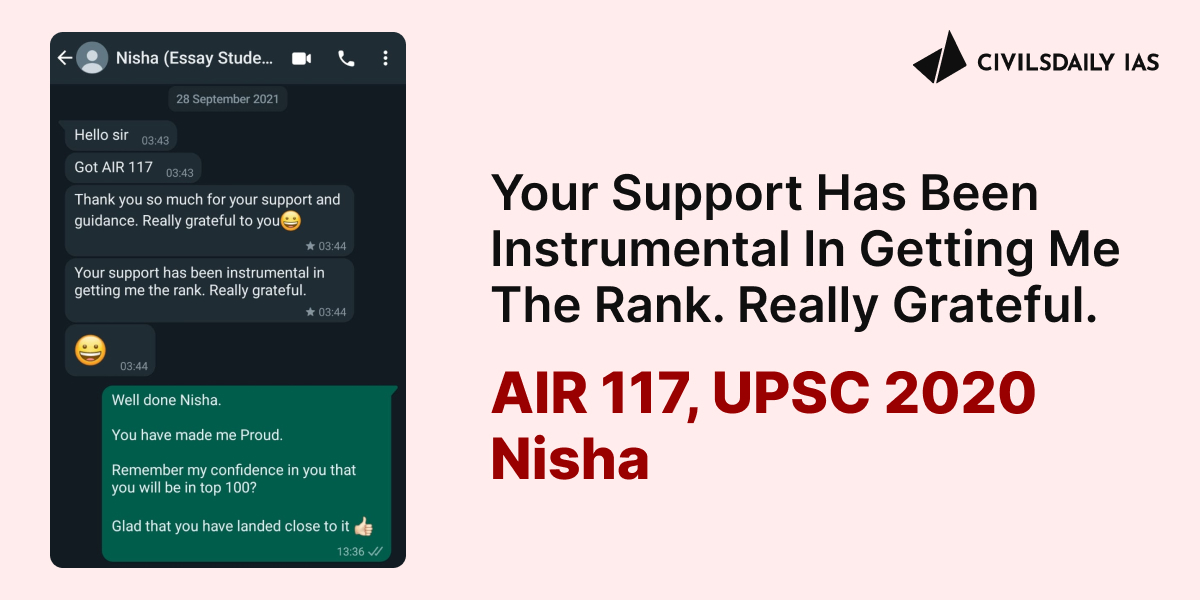
    AIR 117, Nisha was Zeeshan sir’s student

    Webinar Details:

    • 24th December (Saturday) at 7 PM
    • Zoom link will be emailed to you post-registration

    Key takeaways: absolute clarity on a number of issues

    1. Trend analysis of UPSC based on the previous 10 years’ CSE exam, Understanding the expectations of UPSC, and devising an evolving adaptive strategy for UPSC 2024 Prelims and Mains.

    2. What should be your approach for the next 18 months even if you have just started the preparation? Strategy for the next 1 week, 1 month, 3 months, and like that, will be shared with you.

    Feedback on Zeeshan sir’s mentorship by AIR 65, Pranav (from Quora: https://qr.ae/pvH4yA)

    3. How to cover the UPSC syllabus? The syllabus, and not the books, must be completed. Focussing on the essentials first.

    4. Time management You just need to invest effectively 5 hours per day for UPSC success. How to effectively manage preparation time? Make a timetable and set targets. Learn from the UPSC guru Sajal sir himself.

    5. Managing UPSC preparation with a serious time crunch; job – working professionals, college students, and family (especially for homemaker aspirants)

    6. Building a strong foundationNCERT, current affairs, and standard books. How and which one to focus more on? Best sources for GS and Current Affairs.

    7. Breaking the inertia towards answer writing, and attempting mock tests. When and how to attempt tests and start mains answer writing?

    8. Do’s and Dont’s; and breaking the myths around UPSC. Eg. Aspirants from rural or non-engineering backgrounds are at a disadvantage.

    9. How to take notes and organize information/content for UPSC prelims and Mains answers? Making notes of case studies, schemes, examples, etc. Basically the skill of taking notes. What topics necessitate notes and which do not?

    10. UPSC Hacks and tricks like Tikdams that worked for UPSC rankers. A PDF will be shared with you all.

    11. Revision techniques that are common, standard, and used frequently. What exactly are they?

    12. How to take full advantage of the FREE CivilsDaily’s Preparatory Package and personalized mentorship session

    Other than this you will get clarity on

    • Why Start Now?
      • Reduced vacancies – Extremely high competition. Due to the separation of the Railway services exam, the vacancies for UPSC CSE will get reduced. And the cut-off for prelims and mains is going to go up.
      • More opportunities to make improvements in preparation. Beginners are prone to making mistakes in the first attempt but due to lack of time, they can’t make amends. But if you have ample time you can make it in one go.
    • A huge UPSC syllabus and long journey require an aspirant to develop a mindset. That takes time for first-timers.
      • Answer writing notes revision everything could be started eyes and plan with surgical precision if started early
      • You get more time to unlearn certain habits which might be detrimental to UPSC prep and build new habits.
    • How to prepare?
      • First, the dynamic nature of the gigantic syllabus must be acknowledged.
      • Second, Complete coverage of the syllabus with a smart technique and a minimum number of sources.
      • Third, Segregate the syllabus, identifying the core areas of the CSE.
      • Fourth, Follow 3R: Revise, Revise and Revise
      • Fifth, Most importantly how to improvise & customize your preparation plan as per your own strength and weakness
    • Advantages of the early beginning:  
      • How to set your goals and build your habit. Habit formation, after all, takes time and effort
      • Having sufficient time, how to re-schedule your planning.
      • If you think you’re a fainted heart, better start IAS preparation soon. It makes you stone-hearted.

    Our on-demand UPSC Seminar will help you with 6 key components of your UPSC 2024 preparation-

    1. Direction – Strategy and plan
    2. Discipline – Timetable
    3. Consistency – Monitoring
    4. Value addition – Notes and material
    5. Evaluation – Of UPSC prep on a regular basis
    6. Motivation – Managing the highs and lows of aspirants

    What The Hindu opined about Civilsdaily Mentorship

    Karishma Nair, AIR 14 was also Sajal sir’s student
    AIR 65, Pranav mentored under Sajal sir for UPSC 2020
    best coaching for upsc in delhi

  • India’s Path to Prosperity through Formal Employment

    prosperity

    Context

    • Mass prosperity for massive populations is hard. India’s large remittances from a small population overseas and IT sectors employability reinforce that our mass prosperity strategy should be human capital and formal jobs.

    Click and get your FREE Copy of CURRENT AFFAIRS Micro Notes

    prosperity

    Why human capital formation is effective tool for mass prosperity?

    • Disproportionate contribution of IT employees: A strong case for human capital-driven productivity is our software employment — 0.8 per cent of workers generate 8 per cent of GDP.
    • Remittance by NRIs: This case is reinforced by remittances from our overseas population of less than 2 per cent of our resident population crossing $100 billion last year.
    • Shift towards formal employment: A World Bank report suggests that the qualitative shift during the previous five years from low-skilled, informal employment in Gulf countries (dropped from 54 per cent to 28 per cent) to high-skilled formal jobs in high-income countries (increased from 26 per cent to 36 per cent) is significant.
    • Remittances are higher than FDI: Our rich forex remittance harvest roughly 25 per cent higher than FDI and 25 per cent less than software exports is fruit from the tree of human capital and formal jobs.

    prosperity

    Limitations of Fiscal and monetary policy

    • Credit availability is bigger issue: Monetary policy is, at best, a placebo, painkiller, or steroid especially since credit availability is a bigger problem in India than credit cost.
    • Source of finance is important than expenditure: Global experience suggests where governments spend money (pensions, interest, salaries, education, healthcare, roads, etc) and how this spending is financed (taxes or debt) matters more than how much is spent (about Rs 80 lakh crore in India this year).
    • Fiscal policy tends to overshoot: Covid made enormous fiscal and monetary policy demands, but the bigger the binge, the bigger the hangover. Western central banks are struggling to shrink their balance sheets because they used what Harvard’s Paul Tucker calls “unelected power” to chase goals outside their mandate, administer medicine with poorly understood side effects, and speed down highways with no known return paths.
    • India avoided the fiscal and monetary trap: Rich-country borrowing rates have risen by 300 per cent plus and inflation hurts the poor the most. India avoided these fiscal and monetary policy excesses. This prudence now combines with previous structural reforms (GST, IBC, MPC, UPI, DBT, NEP, etc) and a reform “tone from the top” to create a fertile habitat for productive citizens and firms.

    prosperity

    What should be the strategy in next fiscal year for employment generation?

    • Targeting the job creation: The Finance Bill must target productivity and continuity by legislating human capital and formal job reforms previously proposed.
    • NEP should be implemented in 5 years: It should reduce the implementation glide path for the powerful National Education Policy 2020 from 15 years to five years.
    • Abolishing the licensing: It should abolish separate licensing requirements for online degrees and freely allow all our 1,000-plus accredited universities to launch online learning.
    • Accelerating apprentices: It should accelerate growing our 0.5 million apprentices to 10 million by allowing all universities to launch degree apprentice courses under tripartite contracts with employers under the Apprentices Act.

    What are the other steps that can be taken through next budget?

    • Notify labour code: It should notify the four labour codes for all central-list industries while appointing a tripartite committee to converge them into one labour code by the next budget.
    • Universal enterprise number: It should continue EODB reforms by designating every enterprise’s PAN number as its Universal Enterprise Number.
    • Remove the factory act: It should explore manufacturing employment by abolishing the Factories Act this painful Act accounts for 8,000 of the 26,000 plus criminal provisions in employer compliance and require all employers to comply under each state’s Shops and Establishment Act (like Infosys, TCS, and IBM India do).
    • Ensuring better compliances by employer: It should create a non-profit corporation (like NPCI in payments) that will operate an API-driven National Employer Compliance Grid and enable central ministries and state governments to rationalise, digitise and decriminalise their employer compliances.
    • Making EPFO contribution optional: Making employees’ provident fund contributions optional but raising employer PF contributions from the current 12 per cent to 13 per cent. It should notify a previous budget announcement to create employee choice in their contributions to health insurance (ESIC or insurance companies) and pensions (EPFO or NPS).
    • Subsidy to high wage employer: Most importantly, it should link all employer subsidies and tax incentives to high-wage employment creation (a difficult-to-fudge and easy-to-measure effectiveness metric for this public spending is employer provident fund payment).

    Conclusion

    • Experience and evidence now firmly suggest the odds of mass prosperity in the planet’s most populous nation rise from possible to probable by anchoring our strategy in human capital and formal jobs rather than fiscal or monetary policy.

    Mains Question

    What are the limitations of Fiscal and monetary policy in mass welfare of people? What are the possible strategies for creation of mass prosperity in India?

    (Click) FREE 1-to-1 on-call Mentorship by IAS-IPS officers | Discuss doubts, strategy, sources, and more

  • UPSC interview 2022 schedule out | Enroll here for a 1-1 DAF session and mock interview with senior bureaucrats

    The Last Hurdle between you & LBSNAA. Check out Transcend: IGP below | Mock interviews at CivilsDaily starting from 30th December. Book your slot now.

    *CLICK👉Enroll here for a 1-1 DAF session and schedule your mocks


    Based on the results of the Civil Services (Main) Examination,2022 declared by the Union Public Service Commission on 6th Dec 2022, the Commission has decided to commence the Personality Tests (Interviews) for the Civil Services (Main) Examination, 2022 on Monday, 30.01.2023.

    Below is the P.T. schedule for 1026 candidates, indicating their Roll Number, Date, and Session of the interview from 30.01.2022 to 10.03.2023.

    Program inclusion

    1. Mock interview and detailed analysis + feedback
    2. Most important issues coverage – current and structural
    3. Personalized mentorship
    4. DAF analysis and one-on-one sessions with mentors
    5. DAF-based personalized questionnaire
    6. Transcend Habitat group membership
    best coaching for upsc in delhi
  • Day 4| Daily Answer Wars| CD WarZone

    Topics for Today’s question:

    GS-2         Effect of policies and politics of developed and developing countries on India’s interests; Important International institutions

    Question:


    HOW TO ATTEMPT ANSWERS IN DAILY ANSWER WARS (DAW)?

    1. Daily 1 question either from General Studies 1, 2, 3 or 4 will be provided via live You Tube video session.
    2. You can write your answer on an A4 sheet and scan/click pictures of the same.
    3. The answer needs to be submitted by joining the telegram group given in the link below.

      https://t.me/cdwarzone

    *In case your answer is not reviewed, reply to your answer saying *NOT CHECKED*. 

    1. For the philosophy of Daily Answer Wars and payment: 
  • Genetically modified Crops and Transgenic Technology Needs Precautions

    Crops

    Context

    • The Supreme Court’s Technical Expert Committee and two unanimous reports of multi-party parliamentary standing committees have recommended that genetically modified (GM) Herbicide Tolerant (HT) crops should be banned in India.

    Click and get your FREE Copy of CURRENT AFFAIRS Micro Notes

    Why transgenic technology is worrisome?

    • Uncontrollable and irreversible: Transgenic technology, unlike other technologies, is uncontrollable and irreversible after environmental release.
    • Self-propagation and proliferation: Living Modified Organisms (LMOs), as the Cartagena Protocol on Biosafety refers to Genetically Modified Organisms (GMOs), propagate themselves and proliferate.
    • Long term assessment is necessary: This process cannot be reversed. Therefore, any deliberate environmental release has to be only after thorough, independent, peer-reviewed assessment of long-term implications.
    • Precaution is necessary: The precautionary principle is a cornerstone because of the unpredictability and time lag of serious outcomes manifesting in highly complex living systems, and their irreversibility. To draw a parallel, not a single one of 330 invasive species (for example, lantana, parthenium) in India has yet been eliminated, despite estimated damage of Rs 8.3 trillion by just 10 of them!

    Reality check on GM crops

    • Less countries adopted GM technology: More than 25 years after their introduction, GM crops are still globally grown in just 29 out of 172 countries. Moreover, 91 per cent of GM crop area continues to be in just five countries (USA, Brazil, Argentina, Canada, India).
    • BT cotton demand is declining: Most countries of Europe and Japan, Israel, Russia, Malaysia etc., do not grow GM crops. In China, a first adopter, Bt cotton area has been declining and non-GM hybrid technology is used for rapeseed/mustard.
    • Heavy focus on two traits only: Only two traits are present in over 85 per cent of GM crops grown herbicide tolerance (HT, where crop plants are modified to withstand large amounts of toxic weed-killing chemicals), and/or insect resistance (pesticidal toxin, usually Bt, is produced inside the plant).

    crops

    Negative impact of HT crops

    • Damage to ecology: HT crops result in not only ecological damage, but human health impacts for consumers. Like tobacco, once declared safe, the effects take long to manifest.
    • Honey production will be affected: Beekeepers say that HT mustard will affect honey production and contaminated honey will damage exports.
    • Human health will be affected: As regards human health, probable carcinogenicity, neuro-toxicity, reproductive health problems, organ damage etc. have been documented by independent research on GM crops and associated herbicides, once claimed by developers and regulators to be “safe”.
    • Campaign against release of GM crops: Like thousands of doctors in other countries, over 100 eminent Indian doctors have conveyed their concerns asked that no HT food crops be released and the planted GM mustard be uprooted before flowering.

    crops

    What is the issues vis-e vis DMH-11 Mustard crop?

    • Proponent says Mustard is not a HT crop: It is claimed that DMH-11 is not an HT crop as the use of the Bar gene which confers an herbicide tolerance trait is essentially for the pollination control technology in creating hybrids, and glufosinate herbicide will only be used during seed production.
    • Opponent says it’s a HT crop: The reality is that by virtue of the Bar gene being present in both parental lines, and thereby also in all their hybrid offspring, this GM mustard can withstand application of a toxic weedkiller, glufosinate, including in farmers’ fields.  It should therefore have been assessed as an HT crop.
    • Government failed to prevent illegal use of HT cotton: If governments, for over 10 years, have been aware of the illegal planting of herbicide tolerant cotton and rampant illegal use of glyphosate on such HT cotton, and have been unable or unwilling to stop this, what “regulatory process” will now prevent farmers in search of low-cost weeding options from spraying glufosinate on herbicide tolerant mustard?

    What are the observations of SC and parliamentary Committee?

    • Absence of regulatory protocol: The ongoing litigations in the Supreme Court are about serious shortcomings in our regulatory regime. Minutes of meetings of the regulatory body GEAC and the “guidelines and protocols” on the regulator’s website reflect an absence of regulatory protocols for HT crops.
    • Inadequate bio testing: And yet a crop with an HT trait is being released in the environment! The technical expert committee (TEC) appointed by the SC and the unanimous multi-party reports of two parliamentary standing committees have exposed serious lapses and inadequacies in bio-safety testing.
    • Against the release of GM crops: They all advised that herbicide tolerant crops, which GM Mustard is, should not be released in Indian conditions.
    • Government panel recommended the ban: Even the government-nominated experts in the TEC asked for a ban on HT crops. The government, surely, cannot call them unscientific.
    • No independent participant in testing: Testing on GM mustard has been done with test protocols evolved by the crop developer, and most tests were done by the applicant. No independent health expert participated in the committees that looked at GM mustard safety.
    • No biosafety data: To this day, biosafety data of GM mustard has not been posted on the regulator’s website for independent scrutiny.

    Crops

    Conclusion

    • GM crop transgenic technology comes with mixed baggage. Government must strike the balance between biodiversity concern and welfare of farmers. Outright ban or permission without credible data and scrutiny must be avoided.

    Mains Question

    Q. What are the worrisome aspects of transgenic technology? What are the observations of Supreme court and parliamentary committee regarding GM crops?

    (Click) FREE 1-to-1 on-call Mentorship by IAS-IPS officers | Discuss doubts, strategy, sources, and more


  • World Ayurveda Congress: Aligning traditional medicine with modern medicines

    modern

    Context

    • Prime Minister Narendra Modi commended the recent growth of traditional medicine (TM), and Ayurveda in particular, while addressing the World Ayurveda Congress 2022 (WAC) earlier this month. Noting the lag in evidence despite considerable research, he gave a clarion call “to bring together medical data, research, and journals and verify claims (benefit) using modern science parameters”.

    Click and get your FREE Copy of CURRENT AFFAIRS Micro Notes

    All you need to know about World Ayurveda Congress (WAC)

    • Platform by World Ayurveda foundation: The World Ayurveda Congress (WAC) is a platform established by World Ayurveda Foundation to propagate Ayurveda globally in its true sense.
    • Platform to connect various stakeholders in medicine: World Ayurveda Congress (WAC) is a platform to connect Ayurveda practitioners, medicine manufacturers, enthusiasts and academicians.
    • What is the mandate: World Ayurveda Congress (WAC) & Arogya Expo monitors progress and initiate missions and collect feedbacks.

    modern

    World Ayurveda Congress (WAC), 2022

    • 9th edition of WAC held at Panjim, Goa: The 9th edition of World Ayurveda Congress (WAC) & Arogya Expo was organized at PANJIM, GOA.
    • Organised by Ministry of AYSUSH on the principle of whole government approach (WGA): The WAC organised by the Ministry of AYUSH on the ‘Whole Government Approach’ (WGA) to foster and strengthen the research ecosystem for AYUSH systems.
    • What is Whole System Approach (WSA): The concept of WGA is in consonance with the “Whole System Approach” (WSA). WSA encompasses integrated and network participation of several stakeholders (including patients and the community) for better solutions (treatment outcomes) in a challenging and complex situation. IM is an important component of WSA in the current context.
    • Active Participation: The event witnessed the active participation of more than 40 countries and all states of India.
    • PM’s vision: To transform the healthcare system of the country and to develop a healthy society, there is a need to think holistically and integrate the Traditional medicine (TM) and modern medicine system (MM).

    World Ayurveda Foundation (WAF)

    • Aim of WAF: WAF is an initiative by Vijnana Bharati aimed at global propagation of Ayurveda, founded in 2011.
    • Objective and core principle: The objectives of WAF reflect global scope, propagation and encouragement of all activities scientific and Ayurveda related are the core principles.
    • Focus Areas: Support to research, health-care programmes through camps, clinics and sanatoriums, documentation, organization of study groups, seminars, exhibitions and knowledge initiatives to popularize Ayurveda in the far corners of the world are the broad latitudes of focus at WAF.

    modern

    What is Traditional Medicine?

    • According to WHO: The WHO describes traditional medicine as the total sum of the “knowledge, skills and practices indigenous and different cultures have used over time to maintain health and prevent, diagnose and treat physical and mental illness”.
    • Culmination of multiple ancient practices: Its reach encompasses ancient practices such as acupuncture, ayurvedic medicine and herbal mixtures as well as modern medicines.
    • Percentage of people use traditional medicine: of According to WHO estimates, 80% of the world’s population uses traditional medicine.

    Traditional medicine in India

    • It is often defined as including practices and therapies such as Yoga, Ayurveda, Siddha that have been part of Indian tradition historically, as well as others such as homeopathy that became part of Indian tradition over the years.
    • Ayurveda and yoga are practised widely across the country.
    • The Siddha system is followed predominantly in Tamil Nadu and Kerala.
    • The Sowa-Rigpa System is practised mainly in Leh-Ladakh and Himalayan regions such as Sikkim, Arunachal Pradesh, Darjeeling, Lahaul & Spiti.

    How TM modalities (such as Ayurveda or homoeopathy) can scientifically align with MM for a better outcome?

    • Remarkable success in treating neurological diseases: A recently established Department of IM in NIMHANS continued to show remarkable success in treating difficult neurological diseases with a team of Ayurvedic and MM physicians and carefully planned and monitored IM strategy.
    • CRD projects: Modern rheumatology practice in the Centre for Rheumatic Diseases (CRD) model includes critical elements of TM and Ayurveda, which have shown unequivocal evidence in CRD research projects
    • Evaluation based on other protocols: Several controlled protocols-based evaluations of standardised Ayurvedic drugs and other TM modalities (such as diet, exercise, yoga, and counselling), often in conjunction with MM, in arthritis patients, were completed.
    • Sustained clinical improvement in patients suffering from active Rheumatoid arthritis (RA): RA is a severely painful crippling lifelong autoimmune condition, mostly seen in women, and universally acknowledged as difficult to treat. Supervised and monitored IM intervention (including Ayurvedic drugs) over several years showed a consistently superior and sustained clinical improvement in patients suffering from active RA.

    modern

    Relationship between AYUSH and Modern medicines

    • AYUSH systems include Ayurveda, Homeopathy, Unani, Siddha, and other TM.
    • AYUSH systems and MM differ radically in several ways or so it seems.
    • Modern scientific research in Ayurveda is often at variance with classical Ayurveda.
    • Unlike MM, TM has at its core a personalised approach. MM is dominantly reductionist.
    • The ambitious futuristic programme of TM and IM by AYUSH is well-intended and in the right direction.

    Conclusion

    • TM and Ayurveda need to respond to the new world order, which has changed substantially recently. It is reasonably certain that MM and TM in the current format will continue to treat several medical disorders and altered health states. But evidence-based medicine will become the new mantra. Also, informed and empowered patients and people will continue to make the right choices.

    Mains question

    Q. What is World Ayurveda congress? What is tradition medicines? How Traditional medicines can align with modern medicines to treat several serious medical disorders.

    (Click) FREE 1-to-1 on-call Mentorship by IAS-IPS officers | Discuss doubts, strategy, sources, and more

More posts