💥UPSC 2026, 2027, 2028 UAP Mentorship (March Batch) + Access XFactor Notes & Microthemes PDF

Search results for: “”

  • Seminar for Marathi aspirants by IPS, Amol Murkut | Career guidance session on how to prepare for government competitive exams including MPSC and UPSC | Register now

    Seminar for Marathi aspirants by IPS, Amol Murkut | Career guidance session on how to prepare for government competitive exams including MPSC and UPSC | Register now

    Marathi Seminar by IPS, Amol Murkut sir | Career guidance session on how to prepare for government competitive exams including MPSC and UPSC | Register & Get Value-added Free notes for MPSC & UPSC

    *Click here to read what will be discussed in this Seminar

    Guys, Every year millions of candidates start and sit for various Govt. job exams. As vacancies are few and aspirants are many, only a minuscule number of candidates can get through these exams.

    Apart from that Government Job vacancies have also dwindled in recent years. So, be it MPSC, UPSC, or any other Govt. job exam every aspirant needs experts’ guidance with some sort of motivation.

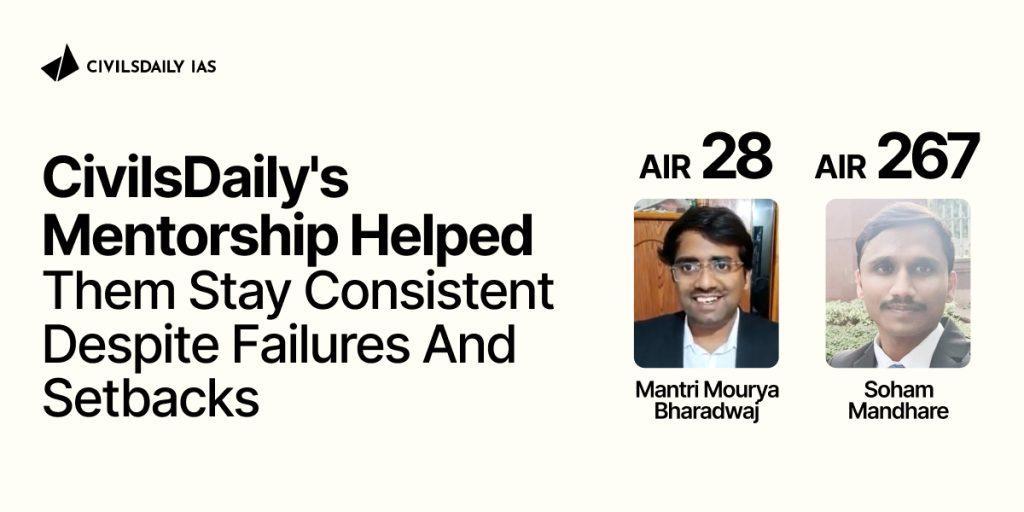
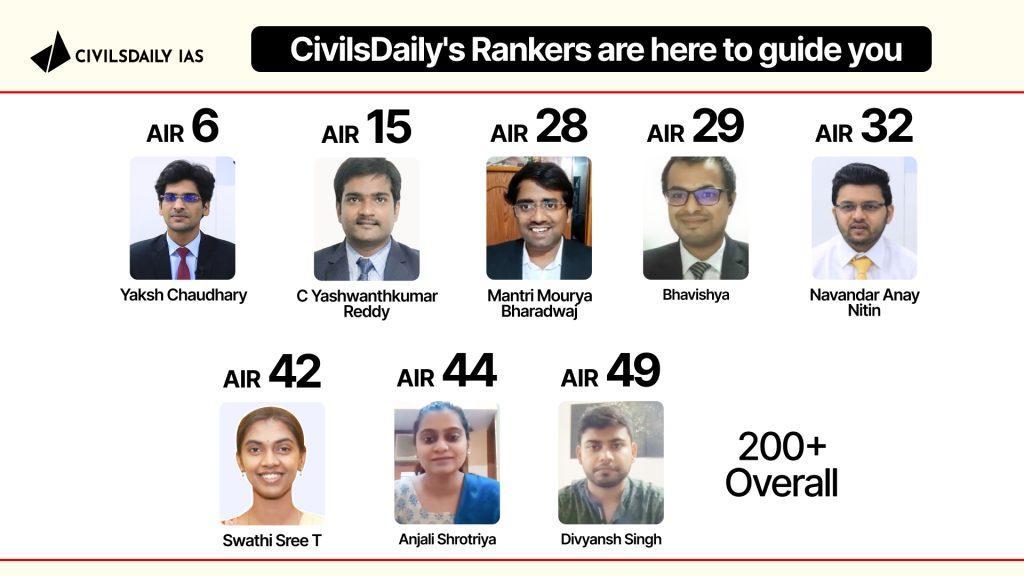
    Civilsdaily’s Mentorship Students are today’s UPSC Rankers

    Success is nothing but more than a few simple disciplines practiced every day

    Amol Murkut, IPS

    The journey to the final job offer is very long, especially in today’s time. Have you ever thought about what you would do if finally you find that you faced only failure? What will be the consequences if you choose any other profession just leaving Govt job preparation? Can you easily succeed soon?

    Make hay while the sun shines, the proverb means that we must not let any opportunity slip, but make prompt and full use of it whenever it comes. 

    Opportunities do not always come. If we miss one opportunity, we may miss it forever and suffer consequences. Therefore, we must always take full and prompt advantage of any opportunity that may come our way.

    Acknowledging the need for the removal difficulties of Freshers/unsuccessful students, Dr. Amol Murkut, IPS officer and Super mentor in Civilsdaily is conducting a need of the hour Career guidance session on how to prepare for government competitive exams including MPSC and UPSC. Registration is absolutely free. 

    Details of the Seminar

    Date5th December (Monday)

    Time: 11 am

    Mode: Online/offline (zoom link will be shared with you all)

    Speakers: Amol Murkut, IPS

    Get FREE PDF notes on registration. Register now

    Venue:

    • Offline – CivilsDaily IAS, Pune center
      • (Address: Civilsdaily IAS, First floor, 518, Ramprasad, opposite Radhika Bhel, Sadashiv Peth, Pune, Maharashtra 411030)
    • Online- Zoom link will be emailed to you.

    Post-seminar CivilsDaily will share a special Preparatory Package both for UPSC & MPSC candidates.

    You are also entitled to a personalized intensive mentorship session by a senior IAS mentor wherein you can avail of a personalized study plan, schedule, and doubt resolution session.

    This is for you if you are:

    1. A UPSC/MPSC beginner – confused about the syllabus, prioritizing subjects, making timetables & targets, or just getting started.
    2. A working professional or college student who will be attempting UPSC 2023 with a job. Facing a serious time crunch and mismanagement in UPSC preparation.
    3. A veteran or aspirant trying to improve your rank in UPSC 2023 attempt.

    Strategic planning will help you fully uncover your options, set priorities for them, and define the methods to achieve them.

    Key takeaways of the Seminar

    This is going to be an interactive 1-1 session with Senior mentors and an IPS officer. You will get ample time and opportunity to discuss this with Amol sir. These points will be discussed.

    1. What is the basic but mostly required strategy to crack any Government job is your first attempt? How to make a plan for the day. Day-to-day time management.

    2. Dealing with negative emotions such as despair and stress. How did Soham study when he was feeling down?

    3. His sources for current events, and strategy 

    4. Should an aspirant participate in a study group and prepare? Soham responds.

    6. What practices did Soham altogether avoid what was popular among other aspirants?

    7. What shall be the macro plan for the next coming months

    8. Revision Cycle strategy

    9. Different approach of Prelims and mains and Integrated Preparation of both for MPSC and UPSC – 2023, 24.

    10. Answer Writing Strategy 

    11. Importance of hobby

    12. Essay approach: what things work.

    13. How toppers prioritize momentum mover content and content over structure. ‘How to fix your static answer writing structure, improved with the current affairs?

    14. Whether your answers ought to reflect the editorial standards of The Hindu! What should be the foolproof strategy of note-making from current affairs? What points ought to be included in your notes?

    15. How to create a basic conceptual framework of the current affairs answer before committing anything to paper. Implications of overstretching your imagination.

    16. What is the difference between ‘Opinion-based current affairs’ & ‘Current issues with Fact-based’ questions will also be discussed thoroughly in this webinar.

    17. How to enhance writing patterns, where to take mock regularly, and how many mock tests are optimal?

    Civilsdaily Mentorship is acknowledged by The Hindu
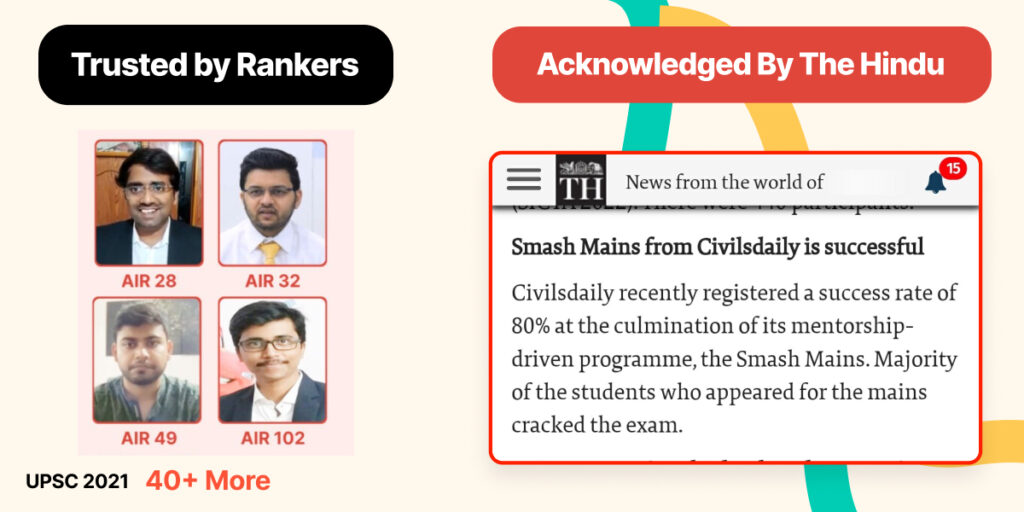
    Some of our Ranker from Maharashtra

  • Shivaji Maharaj and the Agra escape

    Shivaji Maharaj

    Click and get your FREE Copy of CURRENT AFFAIRS Micro Notes

    Context

    • Recently, Maharashtra Tourism Minister Mangal Lodha triggered a controversy by equating Chhatrapati Shivaji Maharaj’s legendary Agra escape to Chief Minister Eknath Shinde’s defection from the Uddhav Thackeray-led camp in Maharashtra. His comments drew sharp criticism from political parties and other organisations that venerate Shivaji as a Maratha icon, with no parallel in the past or present.

    Brief Political background of the issue

    • Eknath Shinde’s “revolt” against party leadership and CM Uddhav Thackeray in June this year led to the fall of the coalition government of the Shiv Sena, NCP, and the Congress. He has since taken the reins of Maharashtra as its CM.

    Shivaji Maharaj

    Who was Chhattrapati Shivaji Maharaj?

    • Chhatrapati Shivaji Maharaj (1630-1680): He was born on 19th February, 1630 at Shivneri Fort in District Pune in the present-day state of Maharashtra. He was born to a general Shahaji raje who served different Deccan Sultans over the course of his life and Jijabai, as known to be an influential and determined woman who was an embodiment of self-respect and virtue.
    • Founder of an Independent Maratha kingdom: Shivaji Maharaj was keen on expanding his father’s fiefdom of modern-day Pune into an independent Maratha state. He carved out an independent Maratha kingdom from various Deccan states in the 17th century. At the time of his death, he held around 300 forts over an area that stretched across the Konkan coast, from Surat to near Goa, and was overlooked by the strategic Western Ghats.
    • Contemporary kingdoms and power struggle: At this point of time, several Sultanates (mainly Bijapur, Golkonda and Ahmadnagar) and the Mughals were vying for the control of the Deccan. As Mughal power grew, these Sultanates would become tributaries to the Mughal Empire (while often continuing to bicker among themselves) with the rulers and ruling clans being given positions in the Mughal court.
    • Lifetime conflicts and fights for Swaraj: His conflict with the Adil Shahi Sultanate of Bijapur began when he was only 16. He would spend the rest of his life fighting various opponents, and in the process, laying the foundation for the Maratha Empire which would stretch across large parts of the Indian subcontinent and rule till the 19th Century.
    • Importance of forts in his times: Early in his life, he realised that the key to holding power in the Deccan (or for that matter, many places in India in that era) was to capture and hold important forts. Thus, his strategies would be centred around taking control of forts in strategic locations, often on hilltops. He also repaired and built new forts as his sphere of control increased.

    How is Shivaji Maharaj remembered?

    • An inspiration to fight against the colonial rule: Shivaji remained a Maratha folk legend until two centuries after his death. It was the British Raj and the subsequent anti-colonial movement that marked his increasing stature in history and as a pan Indian hero.
    • From a folk hero to a Pan India hero: Nationalist historians saw him as an example of an local Indian ruler who was able to successfully resist and defeat the powerful and oppressive “outsiders” (Muslim rulers, including both Mughals and the Deccan Sultans). Thus, Shivaji rose from being a folk hero to a nationalist icon, seen as a proto-nationalist himself.
    • Tales of his bravery and just rule used to infuse motivation: Tales of his bravery were told to galvanise a population that was enduring emasculation and injustices under its British overlords. Over the 19th and 20th centuries, the narrative around Shivaji Maharaj emphasised on both his military heroism and his just rule.

    Shivaji Maharaj

    Shivaji Maharaj and the Mughals

    • Meteoric rise: Shivaji Maharaj’s meteoric rise posed challenges to the suzerainty of the Mughals. His first direct encounter with the Mughals was during Aurangzeb’s Deccan campaigns of the 1650s. As Aurangzeb went North to fight for the Mughal throne, Shivaji Maharaj was able to seize further territory.
    • Swift and smart warfare tactics beyond understanding of the Mughals: His tactics against the Mughals were adapted to the specific nature of his force and the flabby Mughal armies. Using swift cavalry attacks, he would raid and pillage Mughal strongholds. While on the rare occasion he would engage in battle to actually capture and hold Mughal positions, most often, he would simply cause much menace, raid the treasury, and leave with the Mughals in terror and disarray.
    • Well know Seize of Surat: Famously, in 1664, he attacked the port of Surat (now in Gujarat) and plundered one of the richest and busiest commercial towns of Mughal India while the local governor hid in a nearby fort.
    • Posed a greatest challenge to Aurangzeb and subsequent treaty of Purandar: As the legend of Shivaji and the physical sphere of his influence grew, Aurangzeb sent a 100,000-strong, well-equipped army under Raja Jai Singh I to subdue him in 1665. After putting up a valiant fight, Shivaji was besieged in the Purandar hill fort.

    The chronology of the great escape

    • Taken to Agra after purandar treaty: He was taken to Aurangzeb’s court in Agra in 1666. He presented Aurangzeb with various gifts, but he felt slighted at the treatment he received in return, and made his displeasure clear in open court.
    • Kept under strict House arrest: Aurangzeb put him under house arrest in Agra. Far away from home and help, Shivaji realised he needed to escape to save himself and his territories. He began to plot a plan to return home and keep up his fight against the Mughals.
    • The perfect plan of escape: The story of Shivaji’s subsequent escape is now part of common lore. The popularly told story involves an elaborate plan, under which he began daily distribution of alms to brahmans. The alms would be sent from his home in Agra in large, covered baskets.
    • The final escape right under the nose of Mughals: After some time, the Mughal guards became lax about checking the contents of the baskets that daily left his house. One day, Shivaji slipped into one of the baskets, and put his young son, Sambhaji, in another basket. It was in these covered baskets that Shivaji and his son left Agra, right under the noses of the Mughals.
    • Smart and swift movement in disguise from the Mughal territory: From there, he would traverse across Mughal territory, living incognito until he reached the safer lands closer to home. Some versions of this story say that he took the disguise of a wandering ascetic while others say he had a number of different disguises. His exact path is not known, though folktales and songs memorialising Shivaji often mention different towns and places he crossed.
    • Embarrassed Aurangzeb regarded him as a king: Aurangzeb was livid and embarrassed. But he chose not to start an immediate conflict with Shivaji again. Instead, he offered Shivaji the title of Raja and guaranteed his authority in the Maratha lands as long as he acknowledged the supremacy of the Mughals and maintained truce.

    Shivaji Maharaj

    Coronation of Shivaji Maharaj to Chhatrapati and the ideal rule

    • By 1669, Shivaji had regrouped and raised an effective army. Using his old guerilla tactics, he would swiftly descend into static Mughal and Bijapuri strongholds, looting and pillaging the shocked Mughals.
    • During this time, Aurangzeb was occupied with Pathan revolts in the North-West corner of his Empire. Shivaji deftly regained his lost positions in the Konkan coast. In 1674, he crowned himself Chhatrapati, officially creating an independent Maratha kingdom.
    • The next six years were spent expanding his rule and forging new political norms, replacing the prevailing Indo-Persian court culture. He promoted the use of Marathi and Sanskrit in his courts and created an elaborate administrative system with a council of ministers known as “Ashta Pradhan.”

    Conclusion

    • Chhatrapati Shivaji Maharaj is not just a name or a person but to many he is an idea, a life and inspiration for today and tomorrow, which has no parallel in the past or the present.
    • Protection of the Swarajya and welfare of his subjects were the motives that pushed Shivaji Maharaj to escape from Agra. Comparing his love for his subjects with the political exigencies and manoeuvers of present-day politicians will be an injustice to the astuteness of Chhatrapati Shivaji Maharaj.

    Mains question

    Q. Chhatrapati Shivaji Maharaj is considered as the king of the people; Discuss how he is remembered today and what qualities make him stand tall and different from those of the past and present?

    (Click) FREE1-to-1 on-call Mentorship by IAS-IPS officers | Discuss doubts, strategy, sources, and more

  • North East as Gateway to Indo-Pacific Strategy

    Indo-Pacific

    Click and get your FREE Copy of CURRENT AFFAIRS Micro Notes

    Context

    • India’s ‘Look East’ and ‘Act East’ policies have moved into the phase of Indo-Pacific policy and strategy. But what we in the national capital interpret as the ‘Indo-Pacific’ is different from the perceptions of this policy in North-eastern and eastern India.

    What is Indo-pacific?

    • The Indo-Pacific is geographic region interpreted differently by different countries.
    • For India, the geography of the Indo-Pacific stretches from the eastern coast of Africa to Oceania whereas, for US, it extends up to the west coast of India which is also the geographic boundary of the US Indo-Pacific command.

    Indo-Pacific

    Importance of North-East

    • Security of India: The Northeast which comprises seven ‘sisters’ or States and one ‘brother’, Sikkim, has been witnessing transformation as it heads towards better security conditions and development
    • Geography and Biodiversity: North-eastern Indian States are blessed with a wide range of physiographic and ecoclimatic conditions and the geographical ‘gateway’ for much of India’s endemic flora and fauna.
    • Siliguri corridor only connecting link: North-East is home to 3.8% of the national population and occupies about 8% of India’s total geographical area. Siliguri corridor, a narrow strip of land in West Bengal, popularly known as “chicken’s neck” connects this region to the rest of mainland India.

    Present condition of north east

    • Improved security: Security conditions have improved significantly since 2017. However, the core issues behind the insurgency have remained unresolved.
    • Serious non-traditional threats: A notable contrast in security assessments of the authorities and others came to the fore. The official perspective was that the pernicious phenomena of smuggling, drug trafficking, transnational border crime, insurgent activity, and the influx of refugees (from Myanmar) represented serious non-traditional threats.
    • Chinese hand in nefarious activities: China was viewed as a ‘constant player’ behind these nefarious activities. This has necessitated vigilance and strict action by the Assam Rifles and other security agencies.
    • Sensitive border management: The insensitive handling of those engaged in lawful exchanges with the neighbouring countries. A balanced view indicates that considerable scope exists for more effective and people-sensitive border management in the future.

    Development as priority in North East

    • Rising road infrastructure: The Northeast is on the right path to concentrate on economic development. More is awaited through improvement in roads linking north-eastern towns and job creation for thousands of graduates produced by local universities.
    • Hub of medical tourism: Manipur needs to be promoted as the hub of medical tourism for other Indian States and neighbours such as Myanmar.
    • Investment needs to increase: The State’s research and development facilities to leverage the region’s biodiversity should be expanded. Accelerated development requires increased investment by Indian corporates and foreign investors as well as better management.
    • Blueprint for economic development: Strategic and business community to contribute to crafting a concrete blueprint for leveraging opportunities relating to commerce, connectivity, and human capital development.

    Cultural diplomacy from North east

    • Showcasing the culture of north east: An ambitious endeavour by 75 artists from nine countries highlighted the region’s ‘unity in diversity’ through music, dance, drama, and cuisine.
    • Education, tourism and trade: Clearly, expanding the reach of cultural diplomacy and people-to-people cooperation through greater educational exchanges, tourism, and trade is desirable.
    • Regional cooperation through cultural exchange: Harsh Vardhan Shringla, former Foreign Secretary, aptly stressed that the “shared culture, history and mutual social threads that tie the region with India also an important component towards fostering regional cooperation”.

    Indo-Pacific

    Cultural dimension to Indo-Pacific

    • Geo-cultural dimension: At Kolkata, intellectuals and performers in the cultural domain from India, the U.S., Japan, Thailand, Sri Lanka, and Bangladesh reflected on the Indo-Pacific construct’s cultural dimensions. Moving beyond geopolitics and geo-economics, neighbors should focus on “the geo-cultural dimension” of the Indo-Pacific.
    • Expanding people to people cooperation: Diplomats from the region agree on the importance of expanded people-related cooperation which would lead to wider acceptance of the Indo-Pacific and consolidation of the Quad.

    Conclusion

    • While implementing India’s Indo-Pacific strategy, voices from Northeast and eastern India must be heard. Thus, beyond ‘Look East’ and ‘Act East’ lies ‘Think and Relate East’, especially within our own country.
  • India’s Central bank digital currency (CBDC) in detail

    digital

    Click and get your FREE Copy of CURRENT AFFAIRS Micro Notes

    Context

    • The Reserve Bank of India (RBI) has launched the first pilot of the retail digital rupee, also known as e₹-R, on December 1, 2022. The digital token that represents legal tender will be issued in the same denominations as paper currency and coins. The RBI’s pilot on the digital rupee will test the robustness of the new system. Let’s understand it in detail.

    digital

    The first pilot project of retail digital rupee

    • Allowed banks: Initially, only four banks- State Bank of India, ICICI Bank, Yes Bank and IDFC First Bank in four cities have been allowed to offer e₹-R. The scope of the pilot will be increased gradually to include more banks, users and locations.
    • Transaction: People will get e₹-R from banks and will be able to make transactions via their digital wallets. The digital rupee can be stored on mobile phones or devices.

    What is a Central bank digital currency (CBDC)?

    • Like fiat currency in digital form: CBDC is a legal tender issued by the central bank in digital form. Like rupee notes or coins, which are in physical form. Like fiat currency, it can also be exchanged between people. Simply, put it’s just like rupee (₹) notes but in digital form (e₹). You can also exchange e₹ for physical currency notes.
    • Unlike fiat currency no need to have account: However, unlike fiat currency that’s usually stored in banks and hence their liability, CBDC is a liability on the RBI’s balance sheet. That’s why you don’t necessarily need to have a bank account to own a digital rupee.

    Why do we need CBDC?

    • Cost efficient management: CBDC will cut the cost related to physical cash management. India spent ₹4,984.80 crore on printing money in FY22 and ₹4,012.10 crore a year before that. These expenses are borne by people, businesses, banks and the RBI. e₹ cuts all kinds of printing, storage, transportation and replacement and settlement costs. Though the RBI will invest a significant amount in building CBDC infrastructure, subsequent marginal operating costs will be very low.
    • Boost to digital economy and financial inclusion: It’ll fulfil the higher cash requirement of the country. The government will be able to make money available in areas where it’s a challenge to provide physical cash. Also, it’ll boost India’s digital economy, enhance financial inclusion, and make the financial system efficient.
    • People will have money in uncertain times: Since e₹ is the central bank money, in any uncertain situation like COVID-19, it’ll save people’s savings. Banks only insure deposits up to Rs 5 lakh. In case of defaults, people could lose their savings.
    • Multiple saving and transaction options: e₹ will provide you with other options like e-wallets, mobile banking, and UPI to make payments.
    • Much safer payment option: e₹ is a safe central bank instrument, with direct access to the RBI money for payment and settlement. It is an electronic version of cash, whose main use case is retail

    digital

    Will CBDC replace UPI?

    • Not expected to substitute but supplement payment option: The CBDC-based payment system is not expected to substitute other modes of existing payment options. It will supplement by providing another payment avenue to people.
    • India already has a sound payment system: UPI uses your money deposited with banks but with CBDC, the money becomes the liability of RBI India already has a sound payment system, with payment products like RTGS, NEFT and UPI, etc., coupled with an exponential increase in digital transactions.

    No interest on e₹? but why?

    • No interest on digital money: According to the RBI, if it starts paying interest on digital money, it could lead to a massive disintermediation in the financial system, in which banks will lose deposits, and thus hurt their credit creation capacity in the economy.
    • Rationale behind No interest on digital rupee: Banks may be compelled to increase deposit rates, which will increase their costs of funding and decrease net interest income. Ultimately, the cost will be passed on to borrowers.
    • CBDC will be attractive payment option without interest: If there is no interest, CBDC can still be attractive as a medium of payment, even while its attractiveness as a savings instrument diminishes. Also, banks would restrain themselves from distributing CBDCs if they find it as a threat to bank deposits, which can hamper credit flows and the adoption of CBDCs.

    digital

    How will CBDC be different from crypto?

    • CBDC is Algorithm based unlike crypto mining: The central bank will be issuing CBDCs based on algorithm-driven processes, rather than mining through competitive reward methods. These algorithms will have energy efficiency and environmental friendliness as their core principles, unlike private crypto mining.
    • Less energy consumption unlike crypto: Therefore, issuance and management of CBDCs are expected to have much lesser energy consumption vis-à-vis more energy-intensive processes normally associated with the mining and distribution of private cryptocurrencies.
    • Legal consumer protection: Unlike private cryptos wherein any individual can compete to mine and create the cryptocurrency, only the central bank can issue the CBDC and can simply opt for conversion of the bank’s existing balances to CBDC balances. So, CBDCs will provide the public with the benefits of virtual currencies, while ensuring consumer protection by avoiding the damaging social and economic consequences of private virtual currencies.

    Why India needs a digital rupee?

    • Online transactions: India is a leader in digital payments, but cash remains dominant for small-value transactions.
    • High currency in circulation: India has a fairly high currency-to-GDP ratio.
    • Cost of currency management: An official digital currency would reduce the cost of currency management while enabling real-time payments without any inter-bank settlement.

    Conclusion

    • e₹-R is a digital token that has real value like rupee notes or coins. CBDC will make transactions and currency exchange smoother, and it’ll boost financial inclusion. The RBI’s pilot on the digital rupee will test the robustness of the new system.

    Mains question

    Q. What is central bank digital currency? Why do we need CBDC? It is said that digital rupee is different from crypto currency. Discuss.

    (Click) FREE1-to-1 on-call Mentorship by IAS-IPS officers | Discuss doubts, strategy, sources, and more

  • [Burning Issue] CCUS Policy Framework of NITI Aayog

    [Burning Issue] CCUS Policy Framework of NITI Aayog

    Context

    • A report titled ‘Carbon Capture, Utilisation, and Storage (CCUS) Policy Framework and its Deployment Mechanism in India’ has been released by NITI Aayog.
    • The report explores the importance of technology as an emission reduction strategy to achieve deep decarbonization from the hard-to-abate sectors. This edition of Burning Issue will highlight the key aspects of this report.   

    What is CCUS?

    • The International Energy Agency (IEA) defines Carbon Capture, Utilization and Storage (CCUS) as a group of technologies for capturing CO2 from large and stationary CO2 emitting sources, such as fossil fuel-based power plants and other industries.
    • CCUS also involves the transport of the captured CO2 (typically by pipeline and in certain situations through shipping, rail or trucks also) to sites, either for utilization in different applications or injection into geological formations or depleted oil & gas fields for permanent storage and trapping of the CO2.

    Significance of CCUS technologies

    CCUS can contribute to decarbonization and transition to clean energy systems in various ways:

    • Hard-to-abate sectors: CCUS offers the only known technology for the decarbonization of hard-to-electrify CO2-intensive sectors such as steel, cement, oil & gas, petrochemicals & chemicals, and fertilizers.
    • Creation Low carbon hydrogen economy: CCUS is expected to play a major role in enabling the hydrogen economy in India, through the production of blue hydrogen based on the utilization of our rich endowments of coal.
    • Removal of the CO2 stock from the atmosphere: The race towards net zero and containing global temperature within 1.5 degrees from pre-industrial levels is not possible without the removal of excess CO2 from the atmosphere through Direct Air Capture (DAC).
    • Sustenance of existing emitters: Existing thermal power plants and industrial plants (such as steel and cement production facilities) can be retrofitted with CO2 capture infrastructure.

    Need for CCUS in India

    • Growing CO2 emissions: India is the 3rd largest emitter of CO2 in the world after China and the US, with estimated emissions of 2.6 gigatonnes per annum (gtpa) in 2019. With rapid economic growth, infrastructure and industrial development, as well as a growing population, the total CO2 emissions are expected to cross 4 gtpa by the year 2030.
    • Sustainable solutions for the decarbonization of sectors -The decarbonization challenge for India is to identify scalable and economically sustainable solutions for the decarbonization of sectors that contribute to 70% of emissions. CCUS has a critical role to play, especially for India to accomplish net zero by 2070.
    • Enabling clean and green energy generation: CCUS also has a role to play in enabling clean and green baseload power and ensuring the sustenance and non-stranding of our over 210 GW of coal and lignite-based thermal power plants.
    • Limit global temperature rise- The International Energy Agency points out that reaching net zero without CCUS is virtually impossible. The Intergovernmental Panel on Climate Change (IPCC) also concludes that without CCUS, it would not be possible to stabilize the CO2 concentration in the atmosphere between 450 – 750 ppmv (parts per million by volume) and limit global temperature rise between 1.5 to 2 degrees Celsius above pre-industrial levels.
    • Fulfill commitments of the Paris Agreement and ‘Panchamrit Strategy’-As a signatory of the Paris Agreement 2015, India has committed to reducing emissions by 50% by the year 2050 and reaching net zero by 2070. Given the sectoral composition and sources of CO2 emissions in India, CCUS will have an important and integral role to play in ensuring India meets its stated climate goals, through the deep decarbonization of energy and CO2 emission-intensive industries such as thermal power generation, steel, cement, oil & gas refining, and petrochemicals.
    • Enabling sunrise sectors- CCUS can enable the production of clean products while utilizing our rich endowments of coal, reducing imports and thus leading to a strong Indian economy. CCUS also has an important role to play in enabling sunrise sectors such as coal gasification and the nascent hydrogen economy in India.

    Current usage of CCUS in India

    • Presently carbon capture in India is confined to certain industries/applications where carbon capture is part of the process, viz., the manufacture of urea. India’s urea production is about 24 mtpa, where captured CO2 is utilized in the ammonia-to urea conversion process.
    • CO2 is also captured as part of the gas conditioning process in the gasifiers of Reliance Industries Limited in Jamnagar (10 mtpa of petcoke gasification capacity) and JSPL in Angul (2 mtpa of coal gasification capacity), but the CO2 is largely released to the atmosphere and not utilized or stored.
    • While there are few pilot-scale carbon capture projects (viz. IOCL R&D’s amine and biological enzyme-based carbon capture plant and Tata Steel Jamshedpur’s pilot-scale carbon capture plant for capturing 5 tonnes per day CO2 from Blast Furnace gases), there are no commercial-scale dedicated CCUS projects in India.

    Carbon Capture and Storage Technologies

    CO2 capture technologies separate carbon dioxide from gas streams that are released from industrial processes such as power plants, chemical production, cement production or steel making. There are three different broad categories of technologies for capturing CO2: Post-combustion capture, Pre-combustion and Oxy-fuel combustion.

    • Cryogenic separation for CO2 capture is similar to the conventional distillation process, except that it involves the separation of components from a gaseous mixture (instead of liquid) based on the difference in their boiling points.
    • In the adsorption-based CO2 capture process, the CO2 molecules selectively adhere to the surface of the adsorbent material and form a film. This is possible because of the difference in diffusivities and heat of adsorption values for the feed gas stream components.
    • Solvent-based CO2 capture processes have been used for over half a century for processing natural (sour) gas, combustion flue gas and Fischer-Tropsch (FT) synthesis products. The fundamental principle on which solvent-based CO2 capture technologies work is the ‘selective absorption’ of CO2 over the other gaseous constituents.
    • Microalgae-Based Carbon Capture– The basic philosophy behind the process of carbon capture by microalgae is the use of CO2 as a nutrient for the cultivation of microalgae. The selected strains of microalgae can be cultivated in ponds. The CO2 will be absorbed by the microalgae and the resulting gas will leave the cultivation system.

    Utilization of the carbon captured

    • Green urea: Green urea can be produced from the captured CO 2 and cost-competitive green hydrogen, from renewable energy-based electrolysis of water. Green urea can replace/complement the traditional LNG/NG-based production and import of ammonia and urea.
    • Food and beverages applications: CO2 is utilized in F&B applications such as carbonated drinks, dry ice, and modified atmosphere packing; however, the scales are much lower compared to green urea.
    • Building materials (concrete and aggregates): There is a large market for aggregates and concrete in a developing country like India, providing a pathway for utilizing CO2 for producing building materials through concrete curing and aggregate formation. In these applications, CO2 is injected in a liquid state without any conversion, thus reducing energy requirements.
    • Chemicals (methanol and ethanol): Conversion of CO2 to methanol and ethanol from CO2 is proven at a commercial scale in different parts of the world.
    • Polymers (including bio-plastics): The conversion of CO2 to polymers presents another possible CO2 utilization route.

    Storage of the carbon captured

    • Storage in oil wells– The injection of CO2 for Enhanced Oil Recovery has been studied and applied for years, especially in North America. CO2 is miscible with crude oil which helps in recovering oil not possible by secondary methods. This also helps in permanently storing CO2 in oil reservoirs, thus making CO2 EOR a sustainable option for abating CO2.
    • Storage in coal seams- The CO2 injected is accumulated in the coal cleats in a dense gas phase. This CO2 is adsorbed and absorbed in the coal. Since CO2 has a higher affinity for coal than CBM, it pushes the coal bed methane toward production wells, thus enhancing its primary recovery. Similar to CO2 EOR, ECBMR can help in permanently storing CO2 and the recovered methane can also help offset the cost of carbon capture.
    • Storage in Deep Saline Aquifers– Captured CO2 can be permanently stored in deep saline aquifers. Unlike EOR and ECBMR, injection of CO2 in deep saline aquifers has no economic benefit. Deep saline aquifers are spread across very large areas and thus have the potential to store very large quantities of CO2.
    • CO2 Storage in Basalts– Recently studies have been carried out to learn about the CO2 storage potential of basaltic rocks. Basaltic rock constitutes divalent cations of Ca, Mg, and Fe. They can react with the CO2 dissolved in water to form stable carbonate minerals and thus can offer a safe CO2 sequestration method for an extended period.

    Policy framework for India

    Key Risks Associated with CCUS

    • Technical Risks– such as Reservoir Suitability for CO2 Flooding for EOR and the extent of CO2 abatement possible through EOR depend on the comparative performance and cost-effectiveness of CO2.
    • Financial Risks– Cost of Capture The main cost driver in the CCUS value chain is the capture cost. In industrial processes such as natural gas processing and gasification, carbon capture is part of the process itself and hence there is no additional cost of carbon capture. However, in the case of thermal power plants and other industrial processes, there are significant capital and cash costs, leading to financial risks for the entire CCUS value chain.
    • Loss of Storage Site– Complications during CO2 injection may lead to the stoppage of operations at CO2 storage sites. Although reservoir management should provide adequate warning of such occurrences, there are technical risks in Carbon Capture Utilization and Storage (CCUS) – Policy Framework and Deployment Mechanism in India CCUS Policy Framework for India estimating/predicting the final capacity of a new storage site with certainty.

    Promoting the Adoption of CCUS Technologies in India: The Way Forward

    • The envisaged CCUS policy needs to adopt a multi-pronged approach to promote the adoption of CCUS technologies in India. The key elements of the approach need to incentivize the following: i) Technology transfer:
    • Technology transfer, Assimilation and Adoption– Carbon capture, CO2 sequestration and CO2 EOR technologies are already demonstrated at a commercial scale in different parts of the world and particularly in the US for nearly 50 years. Hence the focus for India should be on technology transfer, assimilation and adoption of such proven technologies (TRL 8 and 9), rather than reinventing the wheel.
    • Promoting R&D in novel technologies: While carbon capture technologies and technologies for CO2 EOR and sequestration are well developed and implemented at a commercial scale, technologies for the utilization of CO2 are relatively less developed.
    • Private sector participation: Private sector participation is quintessential to promote the transfer and commercialization of existing CCUS technologies and also push the envelope for the development of new and emerging technologies in both capture and utilization.
    • Carbon Capture Finance Corporation (CCFC)– It is proposed that the Government of India set up a financial institution for the promotion and development of CCUS projects in India. The financial institution, which can be called the “Carbon Capture Finance Corporation (CCFC)” shall provide tax and cash credits for carbon capture projects in India.
    • Promoting Coal Gasification Projects with CCUS-Coal gasification (with CCUS) is an important and strategic sector for ensuring the future energy and materials security of India and reducing import-dependence for critical chemicals and commodities. It is recommended to set up a special purpose organization to drive and promote coal gasification in India, including the production of blue hydrogen to enable the hydrogen economy.

    Conclusion

    • Carbon Capture Utilization and Storage (CCUS) has an important and critical role to play for India to halve CO2 emissions by 2050 and accomplish net zero by 2070.
    • Energy transitions take decades and hence it is important to implement the framework and policy instruments for CCUS to become a reality in India and make a meaningful contribution to decarbonization in India.

    Click and get your FREE Copy of CURRENT AFFAIRS Micro Notes

    (Click) FREE1-to-1 on-call Mentorship by IAS-IPS officers | Discuss doubts, strategy, sources, and more

  • We are the most transparent institution: Supreme Court

    The Supreme Court has said that it had become a “fashion” for its former judges to comment on earlier decisions of the Collegium when they were part of it while adding that the apex court was the “most transparent institution”.

    What is Collegium System?

    • The Collegium of judges is the Indian Supreme Court’s invention.
    • It does not figure in the Constitution, which says judges of the Supreme Court and High Courts are appointed by the President and speaks of a process of consultation.
    • In effect, it is a system under which judges are appointed by an institution comprising judges.
    • After some judges were superseded in the appointment of the CJI in the 1970s, and attempts made subsequently to effect a mass transfer of High Court judges across the country.
    • Hence there was a perception that the independence of the judiciary was under threat. This resulted in a series of cases over the years.

    Evolution: The Judges Cases

    • First Judges Case (1981) ruled that the “consultation” with the CJI in the matter of appointments must be full and effective.
    • However, it rejected the idea that the CJI’s opinion, albeit carrying great weight, should have primacy.
    • Second Judges Case (1993) introduced the Collegium system, holding that “consultation” really meant “concurrence”.
    • It added that it was not the CJI’s individual opinion, but an institutional opinion formed in consultation with the two senior-most judges in the Supreme Court.
    • Third Judges Case (1998): On a Presidential Reference for its opinion, the Supreme Court, in the Third Judges Case (1998) expanded the Collegium to a five-member body, comprising the CJI and four of his senior-most colleagues.

    The procedure followed by the Collegium

    Appointment of CJI

    • The President of India appoints the CJI and the other SC judges.
    • As far as the CJI is concerned, the outgoing CJI recommends his successor.
    • In practice, it has been strictly by seniority ever since the supersession controversy of the 1970s.
    • The Union Law Minister forwards the recommendation to the PM who, in turn, advises the President.

    Other SC Judges

    • For other judges of the top court, the proposal is initiated by the CJI.
    • The CJI consults the rest of the Collegium members, as well as the senior-most judge of the court hailing from the High Court to which the recommended person belongs.
    • The consultees must record their opinions in writing and it should form part of the file.
    • The Collegium sends the recommendation to the Law Minister, who forwards it to the Prime Minister to advise the President.

    For High Courts

    • The CJs of High Courts are appointed as per the policy of having Chief Justices from outside the respective States. The Collegium takes the call on the elevation.
    • High Court judges are recommended by a Collegium comprising the CJI and two senior-most judges.
    • The proposal, however, is initiated by the Chief Justice of the High Court concerned in consultation with two senior-most colleagues.
    • The recommendation is sent to the Chief Minister, who advises the Governor to send the proposal to the Union Law Minister.

    Does the Collegium recommend transfers too?

    • Yes, the Collegium also recommends the transfer of Chief Justices and other judges.
    • Article 222 of the Constitution provides for the transfer of a judge from one High Court to another.
    • When a CJ is transferred, a replacement must also be simultaneously found for the High Court concerned. There can be an acting CJ in a High Court for not more than a month.
    • In matters of transfers, the opinion of the CJI “is determinative”, and the consent of the judge concerned is not required.
    • However, the CJI should take into account the views of the CJ of the High Court concerned and the views of one or more SC judges who are in a position to do so.
    • All transfers must be made in the public interest, that is, “for the betterment of the administration of justice”.

    Loopholes in the Collegium system

    • Lack of Transparency: Opaqueness and a lack of transparency, and the scope for nepotism are cited often.
    • Judges appointing Judge: The attempt made to replace it with a ‘National Judicial Appointments Commission’ was struck down by the court in 2015 on the ground that it posed a threat to the independence of the judiciary.
    • Criteria: Some do not believe in full disclosure of reasons for transfers, as it may make lawyers in the destination court chary of the transferred judge.

    Way ahead

    • In respect of appointments, there has been an acknowledgment that the “zone of consideration” must be expanded to avoid criticism that many appointees hail from families of retired judges.
    • The status of a proposed new memorandum of procedure, to infuse greater accountability, is also unclear.
    • Even the majority opinions admitted the need for transparency, now Collegiums’ resolutions are now posted online, but reasons are not given.


    Click and get your FREE Copy of CURRENT AFFAIRS Micro Notes

    (Click) FREE1-to-1 on-call Mentorship by IAS-IPS officers | Discuss doubts, strategy, sources, and more

  • Remittances to India set to cross record $100-billion mark in 2022

    India is expected to receive a record $100 billion in remittance in 2022, the top recipient this year, the World Bank has said.

    What are Remittances?

    • A remittance is a non-commercial transfer of money by a foreign worker, a member of a diaspora community, or a citizen with familial ties abroad, for household income in their home country or homeland.
    • The World Bank defines it as “the sum of worker’s remittances, compensation of employees, and migrants’ transfers as recorded in the IMF Balance of Payments.
    • Workers remittances are current transfers by migrant who are considered residents in the source.
    • Remittances are a vital source of household income for low- and middle-income countries.

    India’s total remittances to grow

    • Remittances to India are money transfers from non-resident Indians (NRIs) employed outside the country to family, friends or relatives residing in India.
    • In its Migration and Development Brief, the World Bank has said India’s remittance will grow 12 per cent from 7.5 per cent last year, resulting in $100 billion flow as compared to $89.4 billion in 2021.
    • It attributed the feat to the large share of Indian migrants earning relatively high salaries in the US, UK and East Asia.

    Key points from the report by World Bank

    • Highly-skilled Indian migrants living in wealthy nations such as the US, UK, and Singapore were sending more money home.
    • Remittances to low and middle-income countries have grown by 5% in 2022 to around $626 billion – around half the rate of growth seen in 2021.
    • The amount of money sent back home by migrants around the world has grown by 5% in 2022.
    • Other top recipient countries for remittances include Mexico, China, Egypt and the Philippines.
    • Domestic and International shocks have affected countries like Pakistan, Bangladesh, and Sri Lanka for whom remittances earned by migrants are expected to drop this year
    • Barring India and Nepal, other south Asian countries saw a decline of more than 10% in their remittances from 2021, due to the end of government incentives introduced during the pandemic

    Why is remittance to India so high this year?

    • Upskilling: There has been a gradual shift in destinations for Indian migrants aided by a structural shift in qualifications.
    • Work from home: Indian migrants in high-income countries benefited from work-from-home and large fiscal stimulus packages.
    • Easing of pandemic: As the pandemic eased, the wage hikes and “record-high employment conditions” helped migrants send money home despite high global inflation.
    • Inflation control in India: The price support policies kept inflation at bay in India.
    • Crude oil dynamics: Demand for labour increased with higher oil prices, which in turn increased remittances for Indian labourers.

    Significance of remittances

    • Stable source of funds: Remittance flows tend to remain relatively stable through the business cycle, thereby having the potential to support households in the face of economic adversity.
    • Economic lifeline: In countries affected by political conflict, they are often an economic lifeline to the poor.
    • Labour contribution: While migrant remittances contribute to the development of their home country, and also to the host country by filling the gap between labour demand and supply and making a positive net fiscal contribution.
    • Globalization: In this way, remittances represent globalization with a human face, contributing to the spread of global interdependence at all levels – social, economic and political.

    Issues with Remittances

    • Fear of currency depreciation: It causes the rupee to weaken against the dollar, which in return impacts the businesses exposed to foreign exchange, and the economy overall.
    • Accuracy of data: A key challenge for policymakers, researchers and investors interested in remittance flows concerns the accuracy and consistency of available data.
    • Accounting inconsistencies: The varied nature of remittance transactions makes the compilation process complex, resulting in a systemic problem of under-reporting of flows and data asymmetries between host and recipient countries.
    • No formal registration in India: The main source of data on remittances is the World Bank, which combines national balance of payments data compiled by the IMF with country information.
    • Ignoring informal flows: A large share of remittances is believed to flow through informal channels, which are often more convenient and cheaper than formal ones.
    • Hawala transactions: In addition, Hawala (an international network of money brokers) and Hundi (a form of credit instrument) systems operate in parallel to formal remittance channels.

    Way forward

    • Promoting labour mobility: India should aim to increase remittances to say 10% of GDP. The Philippines’ model of promoting labour mobility should be replicated in India.
    • Reducing the costs involved: Both the cost of recruitment of such workers and the cost of sending remittances back to India should come down.


    Click and get your FREE Copy of CURRENT AFFAIRS Micro Notes

    (Click) FREE1-to-1 on-call Mentorship by IAS-IPS officers | Discuss doubts, strategy, sources, and more

  • ‘French Baguette’ gets UNESCO heritage status

    Baguette

    Baguette the staple French bread has been inscribed into the UN’s list of intangible cultural heritage (ICH).

    What is a Baguette?

    • The baguette is a long and thin loaf made of flour, water, salt and yeast, and is consumed as a staple in France.
    • Some believe that it was invented by August Zang, a baker and an entrepreneur from Vienna in 1839, who introduced the world to the taste of crusty bread with softer insides, using a steam oven.
    • It gained its official name in 1920.
    • The history of the bread is uncertain, some also believe that Napoleon Bonaparte ordered thin sticks of bread for consumption by his soldiers as they could be carried from one place to another more conveniently.

    Why did France nominate it for the UN list?

    • About 10 billion baguettes are consumed every year in France by a population of 67 million.
    • It drew attention to the steady decline in the number of bakeries in the country as around 20,000 of them have closed down since 1970.
    • In March 2021, France nominated the baguette as its candidate for consideration within the UNESCO ICH list.
    • In 1970, there were 55,000 artisanal bakeries (one for every 790 residents) compared with 35,000 today (one for every 2,000), often in favour of baguettes produced industrially.

    Back2Basics: UNESCO Intangible Cultural Heritage (ICH)

    • ICH means the practices, representations, expressions, knowledge, skills – as well as the instruments, objects, artefacts and cultural spaces associated with them that communities, groups and, in some cases, individuals recognize as a part of their cultural heritage.
    • Furthermore, its importance is not in the cultural manifestation itself, but in the wealth of knowledge, know-how and skills that are transmitted from one generation to the next.
    • The adoption of the Convention for the Safeguarding of the ICH by the General Conference of UNESCO in 2003 was a crucial step towards preserving intangible heritage.
    • UNESCO’s list of Intangible Cultural Heritage of Humanity was established in the year 2008.

    Criteria for the selection

    • There are three criteria for an intangible cultural heritage to be inscribed in the United Nations list.
    • The entity must-
    1. be recognized by communities, groups and, in some cases, individuals as part of their cultural heritage,
    2. be transmitted from generation to generation and be constantly recreated by communities and groups in response to their environment, their interaction with nature and their history and
    3. provide them with a sense of identity and continuity, thus promoting respect for cultural diversity and human creativity

    India’s ICH on the UNESCO list

    • Sangeet Natak Akademi is the nodal organisation which looks after this function, and files nominations of intangible cultural entities from India, for evaluation by the international body.
    • ICG from India include Kolkata’s Durga Puja (2021), Kumbh Mela (2017), Navroz (2016), Yoga (2016), traditional brass and copper craft of utensil-making among coppersmiths of Punjab (2014), Sankirtana, a ritual musical performance of Manipur (2013), and the Buddhist chanting of Ladakh (2012).
    • Before 2011, the list included Chhau dance, Kalbelia folk songs and dance of Rajasthan, and Mudiyettu, a dance drama from Kerala (2010), Ramman, a religious festival and theatre performance of Garhwal in the Himalayas (2009), and Kutiyattam or Sanskrit theatre, and Vedic chanting (2008).
    • Ramlila, a traditional performance of Ramayana, was also included in 2008.
    • This year, India nominated Garba, a traditional dance form that originated in the state of Gujarat, for inscription on UNESCO’s ICH list.


    Click and get your FREE Copy of CURRENT AFFAIRS Micro Notes

    (Click) FREE1-to-1 on-call Mentorship by IAS-IPS officers | Discuss doubts, strategy, sources, and more

  • DigiYatra Initiative for facial recognition technology at Airports

    digiyatra

    The centre has introduced paperless entry at select airports to make air travel hassle-free under the DigiYatra initiative.

    What is DigiYatra?

    • DigiYatra envisages that travellers pass through various checkpoints at the airport through paperless and contactless processing.
    • This means, passengers won’t need to carry their ID card and boarding pass.
    • This would rather use facial features to establish their identity, which would be linked to the boarding pass.
    • With this technology, the entry of passengers would be automatically processed based on the facial recognition system at all checkpoints – including entry into the airport, security check areas, aircraft boarding, etc.

    Implementation strategy

    • In the first phase, the initiative will be launched at seven airports, starting with three — Delhi, Bengaluru, and Varanasi.
    • It will then be followed by four airports namely Hyderabad, Kolkata, Pune, and Vijayawada by March 2023.
    • Subsequently, the technology will be implemented across the country.

    How is it being implemented?

    • The project is being implemented by the DigiYatra Foundation — a joint-venture company whose shareholders are the Airports Authority of India (26% stake) and Bengaluru Airport, Delhi Airport, Hyderabad Airport, Mumbai Airport and Cochin International Airport.
    • These five shareholders equally hold the remaining 74% of the shares.

    How can people avail the DigiYatra facility?

    • For availing the service, a passenger has to register their details on the DigiYatra app using Aadhaar-based validation and a self-image capture.
    • In the next step, the boarding pass has to be scanned, and the credentials are shared with airport authorities.
    • At the airport e-gate, the passenger has to first scan the bar coded boarding pass and the facial recognition system installed at the e-gate will validate the passenger’s identity and travel document.
    • Once this process is done, the passenger can enter the airport through the e-gate.
    • The passenger will have to follow the normal procedure to clear security and board the aircraft.


    Click and get your FREE Copy of CURRENT AFFAIRS Micro Notes

    (Click) FREE1-to-1 on-call Mentorship by IAS-IPS officers | Discuss doubts, strategy, sources, and more

More posts