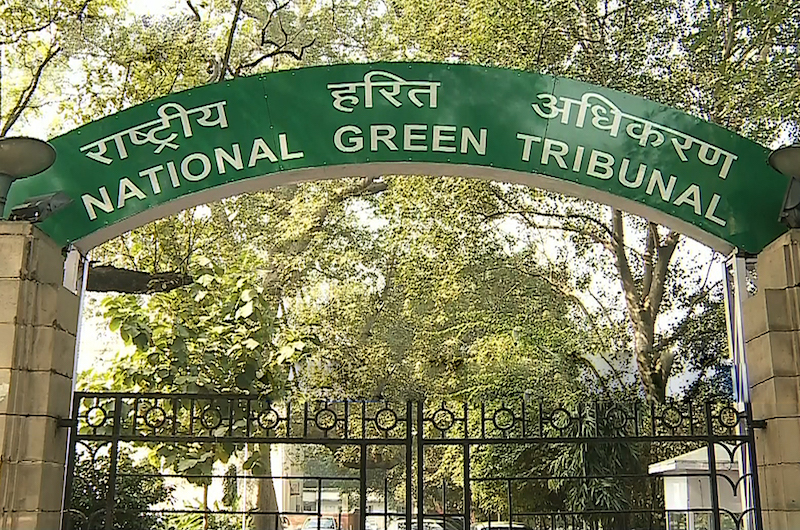
Why in the News?
The National Green Tribunal (NGT) has raised concerns over environmental safeguards in the ₹81,000-crore Great Nicobar mega project. The project has drawn attention due to large-scale forest diversion and its strategic significance as a proposed economic and defence hub.
What is the Great Nicobar Island Development Project?
- Mega Infrastructure Project: Envisions integrated development of Great Nicobar Island as a strategic economic and defence hub at India’s southernmost tip.
- Project Cost: Estimated investment of about ₹81,000 crore aimed at long-term maritime and regional development.
- Core Components: Includes a transshipment port at Galathea Bay, a dual-use international airport, a greenfield township, and power infrastructure.
- Strategic Objective: Strengthens India’s maritime presence near major Indo-Pacific shipping routes and supports blue economy goals.
- Scale of Development: Covers nearly 166 sq km area involving land reclamation and major infrastructure expansion.
- Institutional Framework: Implemented through island development planning with environmental clearances subject to regulatory review.
How does the Great Nicobar project reshape India’s strategic and maritime governance priorities?
- Strategic Location: Strengthens India’s maritime presence near the Malacca Strait, a key global shipping lane; positions India in Indo-Pacific logistics competition.
- Transshipment Capacity: Facilitates cargo transfer from large to smaller vessels; reduces dependence on foreign ports such as Singapore and Colombo.
- Defence Integration: Supports dual-use infrastructure with a military-civilian airport near INS Baaz, ensuring enhanced regional surveillance capability.
- Economic Hub Objective: Promotes integrated development through shipping, logistics and energy infrastructure to strengthen blue economy outcomes.
- Example: Proposed transshipment port at Galathea Bay designed for large-scale maritime trade handling.
What governance challenges arise from large-scale development in ecologically fragile island ecosystems?
- Forest Diversion: Involves diversion of approximately 130 sq km of forest land from a 910 sq km island ecosystem.
- Deforestation Scale: Requires felling of nearly one million trees, raising compliance concerns under environmental clearance norms.
- Land Reclamation: Includes reclamation of around 166 sq km project area for infrastructure expansion.
- Institutional Oversight: Raises questions on adequacy of environmental impact assessments and monitoring frameworks.
- Example: Expansion activities around Galathea Bay intersect with ecologically sensitive zones.
How does the project test environmental regulatory institutions and accountability mechanisms?
- Regulatory Scrutiny: NGT intervention strengthens judicial review of environmental decision-making processes.
- Clearance Process: Examines whether cumulative ecological impacts were fully assessed before approval.
- Precautionary Principle: Tests application of environmental jurisprudence balancing development and ecological risk.
- Administrative Accountability: Requires periodic compliance reporting and transparent monitoring frameworks.
- Example: NGT observations questioning safeguards indicate institutional check on executive decisions.
What are the ecological and biodiversity implications of the proposed development?
- Biodiversity Loss: Threatens habitat of endemic species including Nicobar megapode and other island fauna.
- Protected Areas Impact: Project proximity to biosphere reserve and national parks intensifies conservation concerns.
- Ecosystem Fragility: Mixed evergreen forests and coastal ecosystems face fragmentation risk.
- Marine Ecology: Port development affects nesting sites and coastal biodiversity patterns.
- Example: Galathea Bay identified as ecologically sensitive with species nesting grounds.
How does the project raise questions about social justice and indigenous rights governance?
- Indigenous Communities: Potential implications for vulnerable tribal groups residing in island regions.
- Livelihood Disruption: Infrastructure expansion may alter traditional ecological dependence and local settlements.
- Consultative Governance: Tests adequacy of consent and participatory decision-making mechanisms.
- Development vs Rights: Balances national strategic goals with constitutional protections for tribal communities.
- Example: Concerns raised regarding impacts on indigenous settlements in project vicinity.
What economic and infrastructure outcomes are expected, and what risks remain?
- Infrastructure Integration: Ensures integrated development through airport, port, township and power plant.
- Logistics Efficiency: Promotes India’s emergence as a regional shipping hub.
- Investment Scale: ₹81,000 crore investment indicates long-term economic planning.
- Implementation Risk: High ecological and regulatory costs may delay or reshape execution timelines.
- Example: Planned airport area approximately 8.45 sq km and transshipment port around 7.66 sq km.
Conclusion
The Great Nicobar mega project represents a critical governance test where strategic economic ambitions intersect with ecological fragility and constitutional environmental commitments. Its long-term success will depend not merely on infrastructure delivery but on the credibility of regulatory safeguards, ecological accountability and inclusive decision-making mechanisms.
PYQ Relevance
[UPSC 2024] What role do environmental NGOs and activists play in influencing Environmental Impact Assessment (EIA) outcomes for major projects in India? Cite four examples with all important details.
Linkage: This PYQ is directly relevant as the Great Nicobar Island Development Project has faced scrutiny over the adequacy of its Environmental Impact Assessment (EIA) and safeguards. It highlights how environmental activism, regulatory oversight, and institutional accountability influence approval and modification of large infrastructure projects.
Why in the News?
A special bench of the National Green Tribunal has declined to interfere with the environmental clearance granted to the ₹80,000 crore Great Nicobar Mega Infrastructure Project, citing its strategic importance and the presence of adequate safeguards.
About Great Nicobar Island
- The southernmost island of the Nicobar group
- Located in the southeastern Bay of Bengal
- Area: ~910 sq km
- Largely covered with tropical rainforest
- Ecologically sensitive and sparsely populated
About the Great Nicobar Mega Project
- Total project area: 166 sq km
- Forest diversion: 130 sq km
- Trees to be felled: Nearly 1 million
Major Components:
- International transshipment port
- Integrated township
- Civil and military airport
- 450 MVA gas and solar based power plant
Key Environmental Issues Raised
- Violation of the Island Coastal Regulation Zone notification 2019
- Development in prohibited ICRZ areas
- Insufficient baseline environmental data
- Threat to endemic biodiversity and coral reefs
- The NGT relied on findings of a High Powered Committee constituted after its 2023 order.
NGT’s Key Observations
- No part of the project falls in prohibited ICRZ areas as per committee findings
- Environmental clearance contains adequate safeguards
- Strategic importance of the project cannot be ignored
- Balanced approach required between ecology and development
About Island Coastal Regulation Zone ICRZ
- Notified under Environment Protection Act 1986
- Regulates development in coastal areas of Andaman and Nicobar and Lakshadweep islands
- Categorises areas such as ICRZ IA and IB with varying restrictions
| [2017] Which of the following is geographically closest to Great Nicobar?
(a) Sumatra
(b) Borneo
(c) Java
(d) Sri Lanka |
Why in the News?
The National Green Tribunal, Principal Bench, New Delhi, dismissed an appeal challenging the cancellation of environmental clearance for sand mining in the Dhasan River in Jhansi district.
About Dhasan River
- A right bank tributary of the Betwa River
• Betwa River is a tributary of the Yamuna
• Flows through the Bundelkhand region of Madhya Pradesh and Uttar Pradesh
• Known as Dasharna in the ancient period
- Originates in Begumganj tehsil, Raisen district, Madhya Pradesh
• Forms the south eastern boundary of Lalitpur district, Uttar Pradesh
Infrastructure
- Lehchura Dam is built across the Dhasan River
• Primarily an irrigation dam
• Supplies water through the Dhasan Canal System (DCS) for agricultural use
Prelims Pointers
- Dhasan is a right bank, not left bank tributary
• Flows through Bundelkhand, a drought prone region
• Ancient name Dasharna is important for history culture linkage
• Sand mining issues fall under NGT jurisdiction
| Which of the following is/are the possible consequence/s of heavy sand mining in riverbeds? [2018]
1. Decreased salinity in the river
2. Pollution of groundwater
3. Lowering of the water-table Select the correct answer using the code given below:
(a) 1 only (b) 2 and 3 only (c) 1 and 3 only (d) 1, 2 and 3 |
Note4Students
From UPSC perspective, the following things are important:
Prelims level: National Green Tribunal
Why in the News?
The National Green Tribunal (NGT) has taken suo motu cognizance of the alarming rise in the number of Himalayan glacial lakes due to rising temperatures, highlighting the growing risk of natural disasters like floods and landslides.
Central Water Commission’s (CWC) report on Glacial Lakes
- Glacial lakes in the Himalayas have expanded by 10.81% in 13 years due to glacier melting caused by rising temperatures.
- Between 2011 and 2024, India’s glacial lakes grew by 33.7%, highlighting the escalating threat.
- The NGT noted that 67 lakes in India saw a surface area increase of over 40%, marking them as high-risk for GLOFs.
- Key areas of expansion include Ladakh, Himachal Pradesh, Uttarakhand, Sikkim, and Arunachal Pradesh.
|
About National Green Tribunal (NGT):
| About |
Establishment:
• Formed in 2010 under the National Green Tribunal Act as a statutory body.
• Aimed at addressing environmental issues and ensuring speedy implementation of decisions.
• Known for making significant decisions, including addressing air pollution in Delhi and cancelling coal block clearances.
Composition:
• Headquartered in Delhi.
• Chaired by a retired Supreme Court judge.
• Includes Judicial Members and Expert Panel.
Benches:
• Principal bench in Delhi.
• Additional benches in Bhopal, Pune, Kolkata, and Chennai. |
| Powers and Functions of NGT |
• Empowered to decide on cases related to various environmental laws and hear civil cases concerning environmental issues.
• Responsible for enforcement of:
– The Water (Prevention and Control of Pollution) Act, 1974
– The Air (Prevention and Control of Pollution) Act, 1981
– The Environment (Protection) Act, 1986, and more.Exceptions:
• Not authorized to hear cases under:
– The Indian Forest Act, 1927
– The Wildlife (Protection) Act, 1972
– State laws related to the protection of trees, forests, etc.
Governing Principles:
• Governed by principles of natural justice, not bound by the Indian Evidence Act.
• Applies the principles of sustainable development, precautionary approach, and the polluter pays principle.
Review and Challenge:
• NGT orders can be reviewed under Rule 22 of NGT Rules.
• Orders can be challenged before the Supreme Court within ninety days. |
| PYQ:
[2018] How is the National Green Tribunal (NGT) different from the Central Pollution Control Board (CPCB)?
1. The NGT has been established by an Act whereas the CPCB has been created by an executive order of the Government.
2. The NGT provides environmental justice and helps reduce the burden of litigation in the higher courts whereas the CPCB promotes cleanliness of streams and wells and aims to improve the quality of air in the country.
Which of the statements given above is/are correct?
(a) 1 only
(b) 2 only
(c) Both 1 and 2
(d) Neither 1 nor 2 |
Note4Students
From UPSC perspective, the following things are important:
Prelims level: Central Pollution Control Board, NGT
Why in the News?
The National Green Tribunal (NGT) has instructed the Central Pollution Control Board (CPCB) to submit a fresh report on the generation and treatment of electronic waste by states and Union territories (UTs).
About Central Pollution Control Board (CPCB):
|
Details |
| Constitution |
Established in September 1974 under the Water (Prevention and Control of Pollution) Act, 1974. |
| Additional Powers |
- Empowered under the Air (Prevention and Control of Pollution) Act, 1981.
- Also works under the provisions of the Environment (Protection) Act, 1986.
|
| Nodal Ministry |
Functions under the Ministry of Environment, Forest and Climate Change. |
| Main Objective |
- To promote the prevention, control, and abatement of water and air pollution across India.
- Collects and disseminates technical and statistical data on water and air pollution.
|
| Key Programs |
- National Air Monitoring Programme (NAMP)
- National Water Quality Monitoring Program (NWQMP)
- Oversees the National Air Quality Index (NAQI) to provide real-time data on air quality.
|
| Initiatives |
- Graded Response Action Plan (GRAP)
- Clean Air Campaign
|
PYQ:
[2018] How is the National Green Tribunal (NGT) different from the Central Pollution Control Board (CPCB)?
1. The NGT has been established by an Act whereas the CPCB has been created by an executive order of the Government.
2. The NGT provides environmental justice and helps reduce the burden of litigation in the higher courts whereas the CPCB promotes cleanliness of streams and wells and aims to improve the quality of air in the country.
Which of the statements given above is/are correct-?
(a) 1 only
(b) 2 only
(c) Both 1 and 2
(d) Neither 1 nor 2 |
Note4Students
From UPSC perspective, the following things are important:
Prelims level: Banni Grasslands
Mains level: Not Much
The National Green Tribunal (NGT) ordered all encroachments to be removed from Gujarat’s Banni grasslands.
Banni Grasslands
- Banni Grasslands form a belt of arid grassland ecosystem on the outer southern edge of the desert of the marshy salt flats of Rann of Kutch.
- They are known for rich wildlife and biodiversity and are spread across an area of 3,847 square kilometers. Two ecosystems, wetlands and grasslands, are juxtaposed in Banni.
- They are currently legally protected under the status as a protected or reserve forest in India.
- Wildlife Institute of India (WII) has identified this grassland reserve as one of the last remaining habitats of the cheetah in India and a possible reintroduction site for the species.
- The region hosts a nomadic pastoralist community, the Maldharis, whose livelihoods depend on this protected shrub-savanna.
Answer this PYQ in the comment box:
Q.Which one of the following is the correct sequence of ecosystems in the order of decreasing productivity?(CSP 2014)
(a) Oceans, lakes, grasslands, mangroves
(b) Mangroves, oceans, grasslands, lakes
(c) Mangroves, grasslands, lakes, oceans
(d) Oceans, mangroves, lakes, grasslands
What is the recent NGT verdict?
- The court also said the Maldharis will continue to hold the right to conserve the community forests in the area, granted to them as per the provisions in Section 3 of Forest Rights Act, 2006.
- NGT highlighted that the lack of coordination between the forest department and the revenue department lead to the problem of encroachment.
- The grassland was first declared a “protected forest” in May 1955, using the nomenclature of the Indian Forest Act, 1927.
- Since then, the actual transfer of the land from the Revenue department to the Forest department has not been completed.
Back2Basics: National Green Tribunal
- The NGT has been established in 2010 under the National Green Tribunal Act 2010.
- It works for:
- effective and expeditious disposal of cases relating to environmental protection
- conservation of forests and other natural resources including enforcement of any legal right relating to environment and
- giving relief and compensation for damages to persons and property and for matters connected therewith or incidental thereto
- It is not be bound by the procedure laid down under the Code of Civil Procedure, 1908, but shall be guided by principles of natural justice.
- The Tribunal’s dedicated jurisdiction in environmental matters shall provide speedy environmental justice and help reduce the burden of litigation in the higher courts.
- The Tribunal is mandated to make and endeavour for disposal of applications or appeals finally within 6 months of filing of the same.
- Initially, the NGT is proposed to be set up at five places of sittings and will follow circuit procedure for making itself more accessible.
- New Delhi is the Principal Place of Sitting of the Tribunal and Bhopal, Pune, Kolkata and Chennai shall be the other four place of sitting of the Tribunal.
Note4Students
From UPSC perspective, the following things are important:
Prelims level: Various waterfalls mentioned in the newscard
Mains level: NA

The Kerala government recently gave the go-ahead for the proposed 163-megawatt (MW) Athirappally Hydroelectric Project.
Information about some of India’s tallest waterfalls is provided in the B2b section. Kindly pen them down along with their respective states. They can be asked in the match the pair type question.
Athirappally Waterfalls
- The famous Athirappally Waterfalls is located on the Chalakudy River in Thrissur district of Kerala.
- It originates from the upper reaches of the Western Ghats at the entrance to the Sholayar ranges.
- It is the largest waterfall in Kerala, which stands tall at 80 feet and is nicknamed “The Niagara of India”.
- Controversy about a state-proposed hydroelectric dam on the Chalakudy River above the waterfalls began in the 1990s and continued through 2021.
Issues with the Hydel project
- A number of families belonging to the Kadar tribal group are facing displacement here.
- The dam will also affect irrigation and tourism possibilities in the downstream parts of the Chalakudy River.
- The falls and its surroundings are part of a crucial biodiversity-rich region coming under the Ecologically Sensitive Zone 1 of the Western Ghats.
- The Ghats themselves are a UNESCO World Heritage Site and are one of the eight “hottest hot-spots” of biological diversity in the world.
Back2Basics: Waterfalls in India
- Vajrai Falls (560m): Satara, Maharashtra
- Kunchikal Falls (455m): Shimoga, Karnataka
- Barehipani Falls (390m): Odisha
- Nohkalikai Falls (340m): East Khasi, Meghalaya
- Dudhsagar Falls (310m): Karnataka, Goa