💥Join UPSC 2027,2028 Mentorship (July Batch) + XFactor Notes & Microthemes PDF

Archives: Stories

  • Delhi Full Statehood Issue

    source

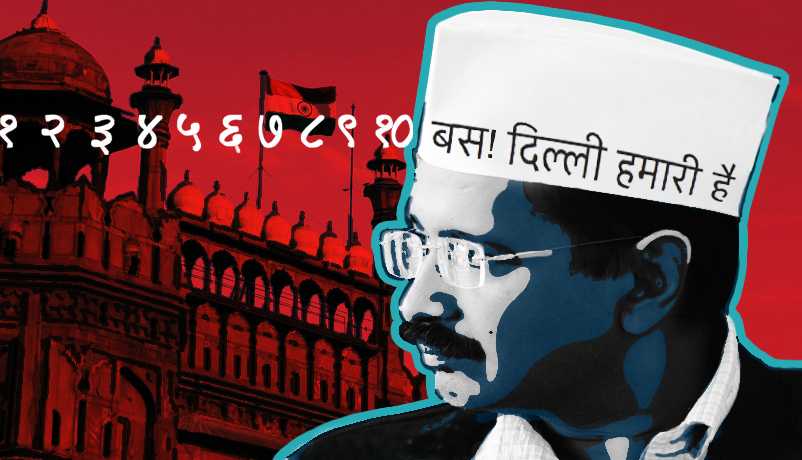
    Should Delhi be given statehood?

    • Why in news?
    • Background
    • What is the present status of Delhi?
    • Arguments favoring statehood in Delhi
    • Why not to give statehood?
    • The way ahead

    Why in news?

    Recently Supreme Court has sought more clarity on the scope and boundaries of the relationship between the Delhi government and the Centre as at times, both the Centre and Delhi government contest each other’s right to administer and govern the National Capital and demands have been raised to give statehood to Delhi.

    Background

    The elected governments have time and again felt crippled in decision-making as the assembly does not have powers like other state assemblies. All political parties that have been in power in Delhi have lamented this and raised the demand for full statehood for the national capital.

    What is the present status of Delhi?

    • Presently, Delhi enjoys the character of a special Union Territory that has some unique institutions like an elected Legislative Assembly and a High Court.
    • In 1991, the Parliament, through the 69th amendment, introduced Article 239AA (Special Provisions with respect to Delhi) and conferred the right upon the people of the NCT of Delhi to elect their own legislature and government to make laws under certain entries of the state list of the Seventh Schedule of the Constitution and execute these laws respectively.
    • This amendment, however, did not confer full statehood upon Delhi and powers with respect to public order, land and police remained with the Union government.

    Argument favoring statehood to Delhi

    • Two power centres create confusion

    In the current system, power is divided between the chief minister and the Central government through the LG. This dual control creates an inherent tension between the two power centres.

    • Union government exercises immense authority

    Though Delhi Assembly is given the powers to govern and make laws on all but three subjects – public order, police and land but the Union government has been violating this constitutional provision and has been exercising authority on several subjects.

    • Law & order should be the state government’s responsibility

    Delhi Police reports to the Union Home ministry and this ties their hands in ensuring maintenance of law and order in the capital. To avoid the tussle, the Centre can create and deploy a central police force for guarding its buildings and for diplomatic duties. For law and order duties, Delhi’s elected government must be in full command.

    • Delhi’s land cannot be under Centre’s control

    The Delhi government cannot decide on its own the use that the city’s land should be put to. This leads to conflict at times.

    • Delhi does not have its own officers

    Each state of India has its own Public Service Commission that recruits bureaucrats to run the state government’s administrative machinery. Delhi, being a Union territory, does not have a cadre of officers of its own and is part of a common cadre shared with other UTs.

    • It is argued that if Delhi had its own cadre, like all states have, the impasse between the offices of the CM and the LG would not have arisen.
    • National capitals all over the world have sufficient powers
    • Experts say even if some national capitals like Washington DC, London and Paris are not states, all of them have a governance structure that gives the local government legislative, financial and administrative powers. Delhi has none of these.
    • As Delhi expands, clarity over jurisdiction of the local government will become increasingly imperative.
    • Some experts have argued that the assembly should be dissolved and the Centre be given full charge of the national capital. However, the abolition of an assembly once created will mean taking away the democratic rights of the people.

    Why not to give the statehood?

    • Delhi is different than other UTs because as the nation’s capital, it must reflect the best that the country offers. And that is only possible if land-use, zoning plans and building regulations are managed in consonance with the standards expected of a capital city. Parallels cannot be drawn with state capitals like Mumbai, Bangalore or Chennai (although that is constantly being done).
    • Statehood would bring land allocation under the city government, whose concern for the country’s capital would yield to satiating local demands.
    • In the national capital, the protection of dignitaries and the maintenance of public order are the highest priorities. The upkeep of maximum standards of security is how the safety of the capital is judged. An attack on a Union minister or diplomat would guarantee an ‘unsafe’ tag not just for Delhi but the country. So, police cannot be kept solely in the hands of state government.
    • An important point against the grant of statehood to the Delhi is the inability of its city government to bear the cost of police salaries and the pension liabilities of all city government employees, which are today borne entirely by the Centre.
    • It would weaken the case for delegation of authority under various statutes which is feasible and a necessity.

    What’s the way ahead

    • Full statehood will definitely bring better opportunities for the residents of Delhi and financial increments for the government’s budget but not without its own share of responsibilities like provision of top security infrastructure for law & order and internal security
    • From the point of view of the citizens of Delhi, what matters is that systems are transparent and day-to-day work is attended to. This does not need statehood—only good governance

    References:

  • BREXIT

    What has happened?

    A referendum – a vote in which everyone of voting age can take part was held to decide whether the UK should leave or remain in the European Union and Leave won. <what is the difference b/s referendum and plebiscite?>

    What is this UK, Britain, Ireland, Republic? What’s going on? Is Scotland a separate country?


    Without going into the history- 

    • Full name is United Kingdom of Great Britain and Northern Ireland i.e Great Britain plus N.I.
    • Great Britain – It contains 3 somewhat autonomous regions – England, Wales and Scotland
    • Republic of Ireland separated from northern Ireland and UK in 1920s and is a separate country now <Belfast is capital of which Ireland and what is the capital of Wales and Scotland?>

    But why this referendum

    Conservative govt led by David Cameron had promised this referendum if they won the general election and as they won this referendum was held

    What is European Union?

    • It is an economic and political partnership involving 28 European countries <latest country to join EU?>
    • It is a single market (common market) allowing goods and people to move around, basically as if the member states were one country. So basically any French citizen can travel to Germany and work there without visa.
    • You can visit whole of EU with a single visa <no internal borders>

    I had to take a separate visa to travel to London. How about that?

    • So this common visa thing is applicable only to countries that are party to Schengen area <where is Schengen btw?>
    • There are 26 Schengen countries (22 EU + 4 Non EU)
    • 4 Non EU – Iceland, Norway, Switzerland, Liechtenstein <btw Liechtenstein is a double land locked country. Look in the map and find out which other country is doubly landlocked, There’s only one other>
    • 6 EU not party – Bulgaria, Croatia, Cyprus, Ireland, Romania and the UK.

    So as UK is not party to Schengen, you had to take Visa.

    What about euro? I had to use pound in UK. Isn’t the Euro currency of EU?

    • Euro currency is used by Eurozone countries. Eurozone is subset of EU. Only 19 EU countries are part of it. Obviously UK is not party to it. 
    • Euro is also used by 4 other European countries – Vatican, Andorra, San Marino, Monaco

    Any history ? How did EU begin?

    • It grew out of a desire for peace in a war-torn and divided continent. It started in 1951 with European Coal and steel community of 6 countries by treaty of Paris <France, Germany, Italy, the Netherlands, Belgium and Luxembourg>
    • 1957 – European Economic Community (EEC) or common market was formed by treaty of Rome,
    • 1973 – Britain, Denmark and Ireland joins the EEC <total 9 countries now>
    • 1992 – Maastricht treaty was signed and comes into force in 1993. Formal beginning of EU
    • 2002 – Euro replaces national currency in eurozone

    What does EU do?

    • Eu oversees co-operation among its members in diverse areas, including trade, the environment, transport and employment
    • Common security and foreign policy
    • coordinates policy on asylum, immigration, drugs and terrorism <that’s why so much concern over migration fro middles east and north Africa>
    • EU policies on workers’ rights and other social issues <UK not part of this social chapter either>
    • Promotes human rights, give aid to agriculture, fisheries etc

    Okay, sounds great but how does it all work?

    EU works through 4 main institutions

    1. European Commission – All powerful bureaucracy of member states <each country, one representative>, propose laws, implement laws, job is to promote European interest, not the interest of member countries, HQ in Brussels <where is Brussels>
    2. European Council – It’s a political body, leaders meet here
    3. European Parliament – Directly elected MPs <MEPs> vote on almost all the issues now days. It sits in Strasbourg <where is Strasbourg?>
    4. European court of rights – name explains everything <where is its headquarters?

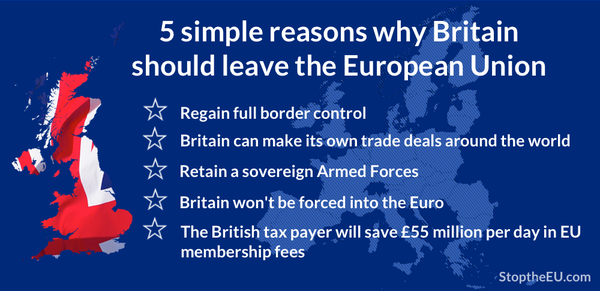
    Why do Brits want to leave EU?

    1. Sovereignty – that Britain ceded its sovereignty, right to pass its own laws to bureaucrats sitting in Brussels <Doesn’t India lose its sovereignty by being member of UN?>
    2. Regulations – That Brussels imposed too many regulations that hurt British business interest
    3. Money – Billions of pounds of entry fee with very little to show in return <Britain don’t have many farmers to get agriculture subsidies>
    4. Open borders/ migration – even though Britain is not part Schengen, workers from rest of the EU can come their freely and work there. Large numbers from eastern europe came just to claim British benefits, social security and all <so called welfare tourism>
    5. Ever Closer Union – detested the idea of United states of Europe <closer political union, confederation sort of thing>

    Why did Cameron want UK to stay in EU?

    1. Single market – much easier to sell things while being member of single market
    2. Security
    3. Britain’s status in the world is enhanced as part of EU

    How is single market different from free trade area?

    • In FTA there are no tariffs except on some negotiated goods and services but in single market, even labour mobility is free
    • In Single market, you impose common tariffs on all imports, it;s like a single country for the purpose of trade and commerce
    • There are common standards etc. <environment, labour, quality etc.>

    What is European free trade association (EFTA)?

    • It is FTA of 4 European countries -Iceland, Norway, Switzerland, Liechtenstein <do you recall they are all part of Schengen>
    • All of them have signed FTA with EU. Britain can sign similar FTA with EU now

    What happens now?

    • Britain would negotiate its exit <under Lisbon treaty>, But the fear is of contagion. Eurosceptic parties of other countries would also press for similar referendums.  
    • Plus as Scotland has voted overwhelmingly in favour of stay (68%), there would be fresh demand for referendum on Scottish independence. Similarly is the case with northern Ireland.

    Impact on India

    • No direct impact but expect turbulence in stock and forex market. Panicky investors may withdraw their hot money out of India
    • On positive side, India can sign FTA with Britain
  • Coastal Zones Management and Regulations

    Shailesh Nayak Committee has recently relaxed norms under coastal regulation zones. It has proposed for allowing housing infrastructure and slum redevelopment activities, tourism, ports and harbor and fisheries-related activities in coastal regulation zone.

    source

    CRZs have been in news at times. Objections have been raised various times to broad the scope of activities that are permitted at these places.

    India has a long coastal line which makes these areas important for the country. Let’s understand this thing in a better way:

    • What are CRZs?
    • Classification of CRZ in India
    • What are the activities permitted and prohibited in these areas?
    • Why are CRZs important for India?
    • Objectives of the Coastal Regulation Zone Notification, 2011
    • Achievements of CRZ rules, 2011
    • Drawbacks of CRZ rules, 2011
    • Shailesh Nayak committee on review of coastal regulation zone notification
    • Analysis of new recommendations

    What are CRZs?

    • Coastal Regulation Zones (CRZ) are classified as the region between the outer limits of territorial waters (12 nautical miles) and a specified inward distance (inland) from the high tide line along coasts.
    • These zones are recognised as fragile ecosystems and as such are accorded protection against unregulated human activities such as construction, sand mining etc.
    • As per the notification, the coastal land up to 500m from the High Tide Line (HTL) and a stage of 100m along banks of creeks, estuaries, backwater and rivers subject to tidal fluctuations, is called the Coastal Regulation Zone(CRZ).

    Classification of CRZ in India

    For regulation of developmental activities, the coastal stretches within 500m of HTL on the landward side are classified into four categories, viz.

    • Category I (CRZ-I)
    • Category II (CRZ – II)
    • Category III (CRZ-III)
    • Category IV (CRZ-IV)

    Category I (CRZ -I):

    a) Areas that are ecologically sensitive and important, such as national parks/marine parks, sanctuaries, reserve forests, wild habitats, mangroves, corals/coral reefs, areas likely to be inundated due to rise in sea level consequent upon global warming and such areas as may be declared by the authorities.

    b) Areas between the Low Tide Line and High Tide Line

    Category II (CRZ -II):

    The area that have already been developed up to or the shoreline.

    Category III (CRZ -III):

    Areas that are relatively undisturbed and those which do not belong to either Category I or II. These include coastal zone in the areas (developed and undeveloped) and also areas within Municipal limits or in other legally designated urban areas which are not substantially built up.

    Category IV (CRZ-IV):

    Coastal stretches in the Andaman and Nicobar Islands, Lakshadweep and small islands, except those designated as CRZ I, CRZ II and CRZ III.

    What are the activities permitted and prohibited in these areas?

    CRZ I: Regulations

    No new constructions shall be permitted within 500m of the HTL.
    CRZ II: Regulations

    • Buildings shall be permitted neither on the seaward side of the existing road or on the seaward side of the existing and proposed road
    • Reconstruction of the authorized building to be permitted subject to the existing FSI/FAR norms and without change in the existing use
    • The design and construction of buildings shall be consistent with the surrounding landscape and architectural style 

    CRZ III: Regulations

    • The area up to 200m from the HTL is be earmarked as ‘No Development Zone’.
    • No construction shall be permitted in this zone except for repairs of existing authorized structures not exceeding existing FSI, existing plinth area and existing density.
    • However, the following uses may be permissible in this zone-agriculture, horticulture, gardens, pastures, parks, play fields, forestry and salt manufacture from sea water.

    Why are CRZs important for India?

    • India has a long coastline of 7516 km, ranging from Gujarat to West Bengal, and two island archipelagos (Andaman Island and Lakshadweep).
    • Our coastal ecosystems provide protection from natural disasters such as floods and tsunamis.
    • Coastal waters provide a source of primary livelihood to 7 million households.
    • Our marine ecosystems are a treasure trove of biodiversity, which we are only beginning to discover and catalogue.
    • Thus, our coastline is both a precious natural resource and an important economic asset, and we need a robust progressive framework to regulate our coast.

    Objectives of the Coastal Regulation Zone Notification, 2011

    The main objectives of the Coastal Regulation Zone Notification, 2011 were:

    • To ensure livelihood security to the fishing communities and other local communities living in the coastal areas;
    • To conserve and protect coastal stretches and;
    • To promote development in a sustainable manner based on scientific principles, taking into account the dangers of natural hazards in the coastal areas and sea level rise due to global warming.

    Achievements of CRZ rules, 2011

    • It widens the definition of CRZ to include the land area from HTL to 500 m on the landward side, as well as the land area between HTL to 100 m or width of the creek, whichever is less, on the landward side along tidal influenced water bodies connected to the sea.
    • The concept of a ‘hazard line’ has been introduced.
    • Clearances for obtaining CRZ approval have been made time-bound. Further, for the first time, post-clearance monitoring of projects has been introduced
    • Introduction of the Coastal Zone Management Plans, which will regulate coastal development activity and which are to be formulated by the State Governments or the administration of Union Territories.
    • The 2011 Notification also lists out certain measures that have to be taken to prevent pollution in the coastal areas/coastal waters.

    Drawbacks of CRZ rules, 2011

    • Although the no-development zone of 200 metres from the HTL is reduced to 100 metres, the pro­vision has been made applicable to “traditional coastal communities, including fisher-folk”, thereby giving the chance for increased construction on the coast and higher pressure on coastal resources
    • Disallowing Special Economic Zone(“SEZ”) projects in the CRZ
    • There are no restrictions for expansion of housing for rural communities in CRZ III

    Shailesh Nayak committee on review of coastal regulation zone notification

    The main recommendations of this new committee are:

    • Need to demarcate precisely: There exists ambiguities in key baseline data, including the demarcation of high and low tide lines and the coastal zone boundary, which has affected the preparation of Coastal Zone Management Plans.
    • Shift in Governance: Transferring control of development in the CRZ-II zone, the existing built-up area close to the shoreline, from the Environment Department to State Town Planning authorities, as proposed, would mark a radical shift in governance.
    • Construction Activities: Proposed lightly regulated tourism in “no development zones”. Construction and other activities could be taken up in CRZ-III zones just 50 m from the high tide line in densely populated rural areas under State norms (with the responsibility to rescue and rehabilitate during natural calamities left to local authorities) could be based on an over-estimation of the capacity in such bodies.
    • Pollution Control: The plan should be to identify specific areas for such activity, assess its environmental impact, demarcate the area under the State’s management plans, and fix responsibility for enforcement, particularly for pollution control.
    • Make it participatory: Involving the local communities in the betterment of these areas has yet not been achieved and incorporating a community-based approach should be made a priority.

    Analysis of new recommendations

    The recommendation by committee has tried to establish a balance between development and coastal conservation. However there are certain areas of concern-

    • The demarcation of high tide and low tide lines and coastal zone boundary affected the coastal zone management plans which are crucial for CRZ.
    • The transfer of developmental control of CRZ 2 from environmental department to town planning committee encourages local participation but it may disturb the whole system of governance.
    • Construction and other activities in CRZ 3 which is in the densely populated zone will hazards human settlement.
    • The proposed lightly tourism activity in the “No development zone” would suffocate further biodiversity conservation.

    Way ahead

    The new recommendations have tried to address issues such as time-bound clearances, enforcement measures, special provisions for specific coastal stretches etc. There is a significant change in the new notification but there is always need for further improvement.

  • Forest Conservation Efforts – NFP, Western Ghats, etc.

    Also Read: Evolution of Forest Rights in India from 1856 to 2006 | In Depth Analysis of FRA & Its Issues

    The environment ministry came out with a draft National Forest Policy (NFP). The policy has been prepared by the Bhopal-based Indian Institute of Forest Management (IIFM) and is aimed at facilitating ecologically responsible behaviour among stakeholders.

    source

    The proposed NFP is going to be third such document after India’s independence with first in 1952 followed by the second in 1988.


    Why is there a need for Forest Policy?

    • Forests and trees constitute nearly one fourth of the geographic area of the country.
    • Protection of this vast and valuable resource, improving and increasing the forest and tree cover requires adequate investment keeping in view the pressures on these forests, and the ecosystem services that they provide to the nation.
    • Large tracts of forest area in the country have degraded due to immense biotic pressure and lack of adequate investment.
    • The crux of the problem in India’s existing forest policy — the Forest Policy of 1988 — has been that it made the forest department the manager of the forests and the people lost their rights over it.
    • But as the Uttarakhand forest fires showed recently, a few hundred forest officials and a few thousand employees of the department can do nothing when a calamity strikes. They need community support in such emergencies.

    Key highlights

    • Less forest on hilly areas: Although the policy continues with the national goal of maintaining a minimum of one-third of the geographical area under forest or tree cover, Hills and mountainous regions may not be required to maintain two-thirds of the geographical area under forest cover.
    • Board to monitor management of forests: The policy states that a National Board of Forestry and State Boards of Forestry are to be established to ensure monitoring of the spread of the forest areas and management of forest cover.
    • Technology to minimize damage to forests: The policy states that forest land diversion projects related to mining, quarrying, construction of dams, roads and other linear infrastructure need to adopt special caution. Use of state-of-the-art technology which causes minimum pollution and damage should be promoted.
    • Green tax on citizens: The draft National Forest Policy (NFP) proposes the levy of a green tax for facilitating ecologically responsible behaviour and supplementing financial resources essential to address forestry woes.
    • Undermines FRA 2006: NFP ignores Forests Rights Act, 2006, which empowers local gram panchayats, especially in tribal areas close to India’s forests, and proposes a joint forest management-like mechanism to enhance agro-forestry.
    • New Mission: The policy proposes to launch a new Community Forest Management Mission, bringing government, community and private land under the new proposed management system.
    • Provisions for responsible tourism: It calls for developing “sound ecotourism models” with the focus on conservation while supplementing the livelihood needs of local communities.
    • Climate change to emerge as important factor in policy: It states that Climate change concerns should be effectively factored into all the forest and wildlife areas management plans and community ecosystem management plans.
    • Purchase of wildlife corridors: The draft policy indicates that CAMPA funds from diversion of forest land by industry are to be used for purchasing wildlife corridors from people.
    • Maintaining Urban forest: The policy also asks for management plans for city forests, parks, garden and woodlands to nurture and sustain urban health, clean air and related benefits.
    • Supports the Government Vermin Policy: In a nod to the Union government’s controversial decision to declare certain animals as “vermin” and implicitly sanctioning the slaughter of nilgai, wild pigs and monkeys in certain States, the forest policy recommends mitigating human-wildlife conflicts by taking up habitat enrichment, providing adequate and timely compensation in case of injury or loss of human life, property, crop damage or livestock casualties and developing teams of well-equipped and trained forest personnel.

    Significance of the policy

    • The policy recommendation for the launch of a national forest streams revival programme in a mission mode to tackle intensifying water crisis in India in the last few decades is a good step.
    • The levy of a green tax for facilitating ecologically responsible behaviour, supplementing financial resources essential to address forestry woes will act as a step to mitigate the effects of pollution.
    • Besides specifying how to manage forests, the draft policy said, “Other ecosystems such as alpine meadows, grasslands, deserts, marine and coastal areas should be protected and managed as well” and this will help to make it comprehensive.
    • It calls for developing sound ecotourism models with the focus on conservation while supplementing the livelihood needs of local communities which is a commendable move.

    Criticism of the policy

    • NFP ignores Forests Rights Act, 2006, which empowers local gram panchayats, especially in tribal areas close to India’s forests, and proposes a joint forest management-like mechanism to enhance agro-forestry. This move will bring back the forest department as the final authority over using forest resources instead of forest dwellers and communities dependent on them.

    Way forward

    • After facing much criticism from the Civil society the centre has withdrawn the draft policy recently. The criticism is not misplaced as the draft policy proposes to dilute the Forests Rights Act (FRA), do away with requirement of having two-third geographical area of mountainous and hill regions under forests, and for allowing industry to have commercial plantations on the forest land , increase the power of the forest bureaucracy and keep local communities out of the decision-making process.
    • While devising a new policy, the ministry must not only focus on increasing the forest area and bettering the quality of the forests but also ensure that the connection between forest-dependent communities and forests is not lost.

    References:

  • Port Infrastructure and Shipping Industry – Sagarmala Project, SDC, CEZ, etc.

    India has a coastline spanning 7516.6 kilometers, forming one of the biggest peninsulas in the world.


    According to the Ministry of Shipping, around 95 per cent of India’s trading by volume and 70 per cent by value is done through maritime transport. It is serviced by 13 major ports, 200 notified minor and intermediate ports. The total 200 non-major ports are in the following States:-

    Maharashtra (48); Gujarat (42); Tamil Nadu (15); Karnataka (10); Kerala (17); Andhra Pradesh (12); Odisha (13); Goa (5); West Bengal (1); Daman and Diu (2); Lakshadweep (10); Pondicherry (2); and Andaman & Nicobar (23).


    source

    Present situation of Indian Ports

    • The development of port infrastructure in India is not on par with other ports across the world. China’s 10th largest port is 50% bigger than India’s largest, all of India’s 12 ports that are officially classified as “major” carry less traffic between them than the single port-city of Singapore.
    • Colombo can handle more container traffic than all of India’s ports put together — With something like three-quarters of that being transshipment of containers from India, because India’s ports are too shallow to accommodate big container vessels. For a country with a long maritime tradition, this is a pathetic state of affairs.
    • Indian ships account for a tiny part of the country’s trade: About 15%, compared to the international norm of 40%. It has no civilian shipyards to compare with the world’s best. The two or three private ones that look to build commercial vessels are deep in debt and short of orders; most Indian ship-owners prefer to look to foreign yards, because of better quality and assurance on delivery schedules. In short, India’s maritime business needs a booster shot.

    What’s the reason for such situation?

    • The cost-inefficiency and non-competitiveness of the cargo has resulted in higher through-port and transport costs.
    • Shipping lines avoid touching ports in India because of the long waiting time. The capacity of various ports including Mumbai has already been exhausted and now capacities of other ports like JNPT are on the verge of exhaustion.
    • The turnaround time at ports in India is one of the biggest handicaps logistics service providers have to deal with. The major reason for the poor turnaround time at Indian ports is that they are not comparable to global standards.
    • There are 12 types of different taxes that Ships have to pay at our Ports
    • Three-quarters of Traffic Which Colombo port handles consists of transshipment of containers from India, because India’s ports are too shallow to accommodate big container vessels. This is the reason why Colombo Port handles more ships than all of India’s ports put together.
    • Governance issues: Major ports managed by Central govt. while minor ports by state govt. So skewed distribution of traffic, , lack of coordination in port traffic management and non-uniform tariff,resulting in suboptimal utilization of port infra.
    • Political pressure, lack of autonomy, absence of incentives, excessive bureaucracy, and hierarchical rigidities are contributors to the current state of the Indian ports
    • Inadequate dredging and container handling facilities
    • Many major ports are affected by silting and require frequent dredging
    • Except for Bombay and Madras, other ports do not have the facility of night navigation and pilots. This hampers working round the clock

    Steps taken by Government to improve the situation

    • The government has launched Sagarmala and its prime objective is to “promote port-led direct and indirect development and to provide infrastructure to transport goods to and from ports quickly, efficiently and cost-effectively.”
    • Under this plan, a comprehensive and integrated planning for Sagarmala for the entire coastline shall be prepared within six months which will identify potential geographical regions to be called Coastal Economic Zones (CEZs).
    • Government has proposed Central Ports Act 2016 to replace major port trusts act 1963 to give more power and autonomy to the major sea ports. Under the proposed act the Major ports will be able to lease land for port-related use for up to 40 years, and for non-port related activities up to 20 years
    • Government has given SEZ status to JNPT port
    • Passing of National Water ways Act 2015 and Coastal shipping agreement with Bangladesh which will give boost to coastal and inland waterways.
    • Port led industrialization and modernization of adjacent situated areas has been envisaged as mechanism for enhancing indigenous manufacturing potential and creating employment opportunities
    • Government has allowed 100% FDI for port development projects
    • 100% income tax exemption from income tax is extended to companies investing in port infrastructure. Further, a 10-year tax holiday has been given to enterprises engaged in the business of developing, maintaining and operating ports, inland waterways and inland ports.
    • Government has proposed to work towards converting 12 public port trusts in India into corporations under the Companies Act to bring greater efficiencies in operations, raise funds for growth and compete better with their private sector counterparts.
    • The Centre recently gave its ‘in-principle’ approval to set up the country’s13th major port at Enayam in Tamil Nadu

    What more should be done?

    As India eyes resurgence in port-led activities in the country the above mentioned problems faced by Indian ports, indicate the need for the Central government to undertake measures to facilitate trade through Indian ports, either in terms of building and maintaining infrastructure for handling desired capacities or undertaking relevant policy and regulatory reforms. These Reforms should include

    • In terms of infrastructure, it is important to maintain draft to serve bigger vessels, ensure mechanisation of ports through introduction of new equipment and procedures, build new facilities, upgrade existing facilities and automate systems/procedures.
    • In terms of policy and regulatory reforms, it is important to streamline tariff determination by TAMP along with a provision for periodic revisions, ensure transparent and effective contractual arrangements in PPPs, implement strengthened communication platforms for seamless information flow among stakeholders, strengthen system integration, ensure paperless clearance of procedures and transactions, develop user information portals
    • We also need corporatization of our major ports.
    • More major Sea ports should be built

    There is also need to improve the road connectivity between the ports and Hinterland.

  • Social Media: Prospect and Challenges

    The term social media is being used quite often by everyone and has become a popular topic of conversation, debates and controversies.

    “The social networking phenomenon continues to gain steam worldwide, and India represents one of the fastest growing markets at the moment”.

    This reflects the emergence of social media in India in upcoming time…so here is presenting a brief article on social media: prospects and challenges.


    • Introduction
    • What is social media?
    • Types of social media
    • Implications and uses
    • Challenges before social media
    • Prospects of social media in India
    • Concerns about privacy
    • Way ahead

    Introduction:

    • Social Media is the latest form of media available to the audience of varied groups. It is a form of electronic communication through which users share information, ideas, personal messages, videos and pictures and other content through it instantly.
    • The major reason behind its popularity is that the users are given a free service to create a virtual social world where they exchange photographs, play games, become friendly, fall in love, split, fight, argue and quarrel at many times without having met physically.
    • But, on the other side it is an encroachment to someone’s privacy which can lead to different type of illegal activities by using the information such as name, location, and email addresses.
    • Social media provides us a platform to express ourselves without any restrictions which is becoming a major challenge as it may infringe the fundamental rights of privacy of a human being.

    Various forms of social media

    • Social Networks– Services that allow you to connect with other people of similar interests and background.  Usually they consist of a profile, various ways to interact with other users, ability to set up groups, etc. The most popular are Facebook and Linkedin
    • Bookmarking Sites – Services that allow you to save, organize and manage links to various websites and resources around the internet.  Most allow you to “tag” your links to make them easy to search and share.  The most popular are Delicious and StumbleUpon.
    • Social News– Services that allow people to post various news items or links to outside articles and then allows it’s users to “vote” on the items.  The voting is the core social aspect as the items that get the most votes are displayed the most prominently.  The community decides which news items get seen by more people.  The most popular are Digg and Reddit.
    • Media Sharing– Services that allow you to upload and share various media such as pictures and video.  Most services have additional social features such as profiles, commenting, etc.  The most popular are YouTube and Flickr.
    • Microblogging– Services that focus on short updates that are pushed out to anyone subscribed to receive the updates.  The most popular is Twitter.
    • Blog Comments and Forums – Online forums allow members to hold conversations by posting messages.  Blog comments are similar except they are attached to blogs and usually the discussion centers around the topic of the blog post.  There are many popular blogs and forums like RSS Feeds.

    Implications and uses of social media:

    • Social media serve as a superior medium to stay connected with friends and family, to meet new people, and make new friends.
    • It seems to be the most effective form of communication as feedback is instant.
    • It is like a boon to introverts as they find a safer zone to initiate conversations.
    • It is an upcoming media to integrate people and follow the principle of many voices one world.

    Effect on Function & Performance of government 

    • Accountability and transparency in Government
    • Various deals, decision by representative are Instantly getting shared on Social media
    • It is helping people decide that what things are actually done by Government
    • It is also causing swift actions by government
    • Making representative more closer through Digital interface
    • Democratising effect

    Effect on Governance and Institutions

    • It is providing voice to the people
    • Office delays, and Bureaucratic red tapism, absenteeism has been affected.
    • Recent protest on free speech has also caused judicial activism thus prudent judiciary in even of infringement of rights
    • It also helps political leader during election campaign for propagating manifesto
    • Cost of dissemination of information, expenditure of government has been reduced Vis a Vis to other forms of Information.

    Challenges before Social Media:

    • The misuse of one’s personal information, hacking of accounts, morphing of personal photographs, addiction of social networking sites, spam and viruses are most high-flying problems faced due to social media.
    • Some other prospective challenges are illiteracy, reach and accessibility of internet, lack of censorship on social media, need of regulatory body to govern the social media.
    • The most worrying aspect to the social media is the fact that it cannot be controlled and therefore it goes without saying that its consequences can also be dangerous and uncontrollable for all those who use it recklessly and in an irresponsible manner.
    • Frequent networking on sites like Facebook could also generate negative feelings like inadequacy, envy, jealousy or even aggressive behavior.

    Concerns about privacy:

    • Most networking sites do not really protect an individual’s privacy. A simple example is that of photos being posted on such sites without taking permission from all the people concerned.
    • There is no authenticity of the data posted nor can everything be taken on its face value.

    Prospects of social media in India:

    • There has been a remarkable increase in the internet connectivity in India. There has been successful penetration of personal computers even in the small cities and towns in the country. We all witness the intense mobile penetration in all nooks in India.
    • Seeing the high number of youth in the country who are tech friendly, it can be said that there is a bright prospect of social media in India.

    Way ahead:

    • Social media in India has to meet other challenges apart from illiteracy, reach and accessibility that are revenue generation.
    • There has been a rapid increase in social networking sites, microblogging, media sharing and bookmarking sites. India is lucrative market and social media is certainly gaining opportunities to deepen its roots resulting into a strong foothold in India.
    • There is need to regularize the social media. Some agency must be deputed to monitor the anti-social activities taking place on virtual world of social media. Laws relating to cyber crime should be made more stringent. There should be a separate policing department for cyber crimes.
    • There is a need of extensive research study for finding ways to regularize crime against social media.

    Social Media, with all its benefits and the potential for more, is definitely a boon, however misuse or irresponsible usage can have negative effects on individuals and society, especially the young impressionable minds. We need to guard against the negative impact of the social media, which ought to be used in the correct manner for creative or productive purposes so that it is progressive to mankind and society at large, rather than regressive.


    References:

  • Nuclear Diplomacy and Disarmament

    Here’s what we are going the explain in this writeup:

    • The Backstory
    • What is the Missile Technology Control Regime (MTCR)?
    • What does India need to do to get in?
    • Does joining the MTCR make getting missile technology easier?
    • Does the MTCR actually stop the spread of missile technology?
    • Are there any sanctions for breaking MTCR rules?
    • Does the MTCR actually stop the spread of missile technology?
    • Why does India want to be in the Nuclear Suppliers Group (NSG)?
    • Why does the US want India in the NSG?
    • Why doesn’t Pakistan want India in?
    • And what is China’s problem?
    • Why then did China go along with the NSG waiver in 2008?
    • Why does India want to join Proliferation control regimes?
    • Why is India’s Bid for NSG being criticized?

    source

    The Backstory

    • Since 2008, India has been pushing forward to become an NSG member, where decisions are consensus based and not based on majority votes
    • It has also been looking for membership of other groups such as MTCR
    • India recently became the Member of MTCR, however its bid for getting membership of NSG was not successful because of opposition from China and 12 other NSG members

    #1. All about MTCR

    What is the Missile Technology Control Regime (MTCR)?

    Established in April 1987, it is a voluntary association of 35 countries and 4 “unilateral adherents” that follow its rules: Israel, Romania, Slovakia, Macedonia.

    The group aims to slow the spread of missiles and other unmanned delivery technology that could be used for chemical, biological and nuclear attacks.

    The regime urges members, which include most of the world’s major missile manufacturers, to restrict exports of missiles and related technologies capable of carrying a 500 kg payload at least 300 km, or delivering any type of weapon of mass destruction.

    How does one become a member of MTCR?

    • Prospective members must win consensus approval from existing members. United States policy had been that members that are not recognised nuclear-weapon states — including India — must eliminate or forgo ballistic missiles able to deliver a 500 kg payload at least 300 km
    • The US, however, made an exception in 1998 for Ukraine, permitting it to retain Scud missiles and, in October 2012, South Korea was allowed to keep ballistic missiles with an 800-km range and 500-kg payload that could target all of North Korea
    • For India, the US have waived these terms, allowing it retain its missile arsenal

    Does joining the MTCR make getting missile technology easier?

    • There are no special concessions for MTCR members. But India hopes its MTCR membership will be one more reason for the US to consider exporting Category 1 UAVs, Reaper and Global Hawk, which have been key to counter-terrorism efforts in Afghanistan, Pakistan, Somalia and Yemen
    • These drones have so far been sold to only one country, the UK, though unarmed versions have also been made available to Italy and South Korea
    • The US has been rethinking rules on exports, aware that competitors in Israel, Russia and China are working on similar products — and India wants to be at the head of the queue when the Reaper and the Global Hawk go on the market

    Are there any sanctions for breaking MTCR rules?

    • Rule breakers can’t be punished.
    • However, US law mandates sanctions for companies and governments that export MTCR-controlled items. The sanctioned entity can’t sign contracts, buy arms and receive aid for two years or more.

    Does the MTCR actually stop the spread of missile technology?

    • Yes and no. North Korea, Iran and Pakistan acquired ballistic missile technology from China. But then, China began to feel the pinch of US technology sanctions — and announced, in November 2000, that it would stop exporting ballistic missile technology.
    • Four years later, it applied for MTCR membership — but has been denied entry because of suspicion that some companies in the country are secretly supplying technology to North Korea.
    • Many others dropped missile programmes because of MTCR pressure: Argentina abandoned its Condor II ballistic missile programme (on which it was working with Egypt and Iraq) to join the regime. Brazil, South Africa, South Korea and Taiwan shelved or eliminated missile or space launch vehicle programmes. Poland and the Czech Republic destroyed their ballistic missiles.

    It is possible China may now seek some kind of bargain, whereby it is given entry to the MTCR in return for letting India get into the NSG, where it wields a veto.

    What after MTCR?

    • Admission to the MTCR would open the way for India to buy high-end missile technology
    • It will also make India’s aspiration to buy state-of-the-art surveillance drones such as the U.S. Predator, made by General Atomics.

    #2. All about NSG

    Why does India want to be in the Nuclear Suppliers Group (NSG)?

    Following India’s 1974 nuclear tests, the US pushed for setting up a club of nuclear equipment and fissile material suppliers.

    The 48-nation group frames and implements agreed rules for exporting nuclear equipment, with a view to controlling the spread of nuclear weapons; members are admitted only by consensus.

    India has been trying, since 2008, to join the group, which would give it a place at the high table where the rules of nuclear commerce are decided — and, eventually, the ability to sell equipment.

    Many countries that initially opposed its entry, like Australia, have changed stance; Mexico and Switzerland are the latest to voice support. India’s effort has been to chip away at the resistance, leaving only one holdout — China. But until China accepts India’s entry, there is no hope of membership.

    Why does the US want India in the NSG?

    The answer lies in the US effort to strengthen the global nuclear non-proliferation regime, whose centrepiece is the 1968 Nuclear Non-proliferation Treaty, or NPT.

    The NPT defines “nuclear weapons states” as those that tested devices before January 1, 1967 — which means India cannot ever be one.

    India — like Israel and Pakistan — thus refused to sign the treaty. From 2005, though, President George W Bush’s administration sought ways to deepen strategic cooperation with India.

    Nuclear energy was a key means to strengthen cooperation, but since India wasn’t a member of the NPT, technology couldn’t be shared. Then, a way forward was found — the US-India Civil Nuclear Agreement.

    India agreed to separate its civilian and military nuclear programmes, and put the civilian part under International Atomic Energy Agency safeguards.

    India also changed its export laws to line up with the NSG, MTCR, Wassenaar Arrangement, and Australia Group — the 4 key nuclear control regimes.

    The US agreed to shepherd India’s entry into these regimes, which meant India would for all practical purposes be treated like an NPT member, even though it wasn’t one.

    Why doesn’t Pakistan want India in?

    The Pakistani argument is that giving India easy access to fissile material and technology for its civilian nuclear programme means it would have that much more material for its military nuclear programme.

    Thus, Pakistan says, the move to give India NSG membership is fuelling a nuclear arms race.

    But this argument falls apart because Pakistan is resolutely opposed to a key international agreement called the Fissile Material Cut-Off Treaty (FMCT), which would cap the military nuclear stockpiles of all countries. The FMCT ought to put an end to Pakistan’s fears, but Islamabad has refused to sign.

    Why has China opposed India’s Bid for NSG?

    Chinese diplomats say Beijing wants NSG entry to be norm-based , in other words, whatever rules govern Indian entry should apply to others too.

    Norm-based entry would, presumably, help Pakistan gain entry, something many in the NSG are certain to resist because of the country’s record as a proliferator of nuclear-weapons technology to Iran, Libya and North Korea.

    Why then did China go along with the NSG waiver in 2008?

    Geopolitics!

    The 2008 one-time waiver allowed nuclear commerce between NSG members and India — the agreement that now allows Westinghouse, and its competitors in France or South Korea, to bid to set up civilian reactors in India.

    The waiver came only after President Bush rang President Hu Jintao and called in a favour. Back then, US-China relations were riding high — on the back of surging trade, and a common vision of how the international order should be structured.

    Today, President Barack Obama and President Xi Jinping are at odds over Chinese muscle-flexing in the South China Sea. The odds of a phone call changing the state of play are next to zero.

    Why does India want to join Proliferation control regimes?

    • India’s membership of the NSG and other proliferation control regimes notably the Missile Technology Control Regime (MTCR), the Australia Group, and the Wassenaar Arrangement is important in order to shatter the myth of it being an “outlier” to the non-proliferation regime as also to facilitate its trade, both imports and exports, of nuclear, missile and other related sensitive technologies.
    • Membership of these regimes will enhance India’s status in this critical area from merely an adherent to a rule maker.
    • It will also enable India to ensure that these regimes perform their mandated role of promoting non-proliferation effectively and not hurt its commercial interests.

    Why India’s recent NSG bid is being criticized?

    • Many experts believe that after the clean waiver of 2008 and the 2011 amendment of the NSG rules (that non-NPT countries would not be entitled to the transfer of the reprocessing and enrichment technology), there is not much merit in seeking a membership of the NSG.
    • The worst outcome of this aggressive bidding was that at NSG forum India’s nuclear regime got hyphenated with Pakistan. It has taken a great deal of effort on the part of successive governments in India to kill the idea of that hyphenation.
    • It suits China ideally to put India in the same bracket as Pakistan. However for India it is diminishing to get itself compared with rogue state like Pakistan who have a dismal track record with respect to Nuclear Proliferation.

    References: