💥Join UPSC 2027,2028 Mentorship (July Batch) + XFactor Notes & Microthemes PDF

Subject: Agriculture

  • What are the major factors responsible for making rice-wheat system a success? In spite of this success how has this system become bane in India?

    The rice-wheat system emerged as the backbone of Indian agriculture after the Green Revolution. It led to food self-sufficiency, but over-time it has become ecologically and economically unsustainable.

    Major Factors Responsible for the Success of the Rice-Wheat System

    Assured Irrigation- Expansion of canal irrigation and tube wells in Punjab and Haryana.

    MSP and Procurement Support through FCI and PDS gave farmers assured income.

    Favourable Agro-climatic Conditions- alluvial soil, flat terrain and suitable climate of the Indo-Gangetic plains favoured rice-wheat double cropping.

    Mechanisation – Availability of tractors, combine harvesters, threshers, storage facilities and rural roads reduced labour costs and increased efficiency.

    Input Subsidies- Heavy subsidies on electricity, fertilisers and water made cultivation economically attractive.

    Institutional Credit Availability- Access to cooperative banks, KCC and PSBs enabled farmers to invest in modern inputs.

    Export potential – Eg- High demand for Indian Basmati Rice in international markets.

    However, this system has become bane for India

    Excess Use of Fertilizers leads to nutrient imbalances and soil degradation. Eg-Punjab uses 244 kg/ha of fertilizers vs the national average of 140 kg/ha.

    Deteriorating Soil Health

    N:P:K imbalance 7.7:3.1:1.

    Over 30% of Indian soils is degraded

    Groundwater Depletion: Eg- Punjab’s water table dropping 50 cm annually (Central Ground Water Board).

    Decreasing Productivity: Wheat yields have stagnated at 3.5-4 tonnes/ha due to resource depletion and climate change (ICAR, 2023).

    Pollution from Residue Burning: over 20 million tonnes of paddy straw burned annually (SAFAR).

    Increased Fiscal Burden due to high MSP and fertilizer subsidies. Eg- fertilizer subsidies exceeding in 2024-25.

    Reducing agro-biodiversity – focus on only two crops has displaced millets, pulses and oilseeds.

    Neglect of nutri-cereals and pulses has contributed to hidden hunger and malnutrition.

    Climate Vulnerability – Rice-wheat system is highly sensitive to heatwaves, erratic rainfall and declining water availability.

    Way Forward

    Diversification to Millets, Pulses & Oilseeds

    Efficient Water ManagementDrip irrigation, System of Rice Intensification (SRI)

    Soil Health Restorationorganic fertilizers, bio-compost, and crop rotation

    Stubble Management AlternativesHappy Seeder, bio-decomposers, and straw recycling

    Climate-Resilient Varieties

    Rationalise MSP to break the monoculture cycle.

    Crop diversification is key for doubling farmers’ income and nutritional security.

  • Suggest measures to improve water storage and irrigation system to make its judicious use under depleting scenario.

    India has 18% of the world’s population but only 4% of the freshwater resources. As per NITI Aayog “Composite Water Management Index”, 60 Cr people are experiencing high to extreme water stress.

    ~85% of India’s freshwater is used in agriculture (FAO).

    Groundwater depletion:

    1,006 blocks are over-exploited or critical (CGWB, 2023).

    Punjab and Haryana – ~1 metre annual groundwater decline.

    Per capita water availability fell from 1,820 m³ (2001)1,486 m³ (2025).

    “Day Zero” in cities like Chennai, Bengaluru, and Shimla

    By 2030, water demand could outstrip supply by twofold. (NITI Aayog)

    21 cities could exhaust groundwater by 2030. (NITI Aayog)

    The World Resources Institute ranks India 13th among the 17 most water-stressed nations globally

    2024 Annual Groundwater Quality Report – that 70% of India’s water sources are contaminated

    World Bank projects that climate-induced water scarcity could reduce India’s GDP by up to 12% by 2050

    Measures to improve water management

    Enhancing Water Storage Infrastructure

    Renovation Traditional Water Bodies – Example: Mission Kakatiya (Telangana) and Kudimaramath (Tamil Nadu).

    Farm-Level Storage – Promote farm ponds, percolation tanks, check dams, and contour bunds through MGNREGA. Eg- jalyukta Shivar of Maharashtra

    Rainwater Harvesting – Mandatory rooftop harvesting in water-stressed cities. Eg- Chennai Model

    Interlinking of Rivers – Eg- Projects like Ken-Betwa Link can ease water shortages in Bundelkhand.

    Use recharge wells to replenish aquifers through Atal Bhujal Yojana

    Dam Modernisation to enhance water storage capacity

    Improving Irrigation Efficiency

    Micro-Irrigation Expansion through PMKSY-PDMC. Eg- Drip saves 30-50% water; sprinkler saves 25-35%.

    Canal Modernisation- Improves efficiency from .

    Precision Farming – Use of sensors, fertigation, controlled irrigation for sustainable agriculture and optimal water use.

    Remote Sensing & GIS for Water Accounting – Monitor aquifers, rainfall-runoff, and canal leakages.

    Increase Capital Investment in Irrigation Systems and Fast-track AIBP projects

    Strengthening Community-Led Measures – Eg- Pani Panchayats in Odisha.

    Demand-Side Management

    Crop Diversification – Shift from water-intensive crops (paddy, sugarcane) to millets, pulses, oilseeds, horticulture. Example: Haryana’s Mera Pani Meri Virasat.

    Water Budgeting at Village Level through Gram Sabhas. Eg- Pani Foundation villages in Maharashtra.

    Water Pricing – Rational, volumetric pricing to reduce wastage.

    Water Users Associations (WUAs) – Participatory Irrigation Management for equitable distribution and canal maintenance.

    Incentivise Water Saving – Eg- Punjab’s Pani Bachao Paise Kamao for reducing groundwater usage.

    Implementing Mihir Shah Committee recommendations of One Water Approach by merging CGWB and CWC into a National Water Commission (NWC) is essential to achieve a water-secure economy.

  • What are the salient features of the National Food Security Act, 2013? How has the Food Security Bill helped in eliminating hunger and malnutrition in India?

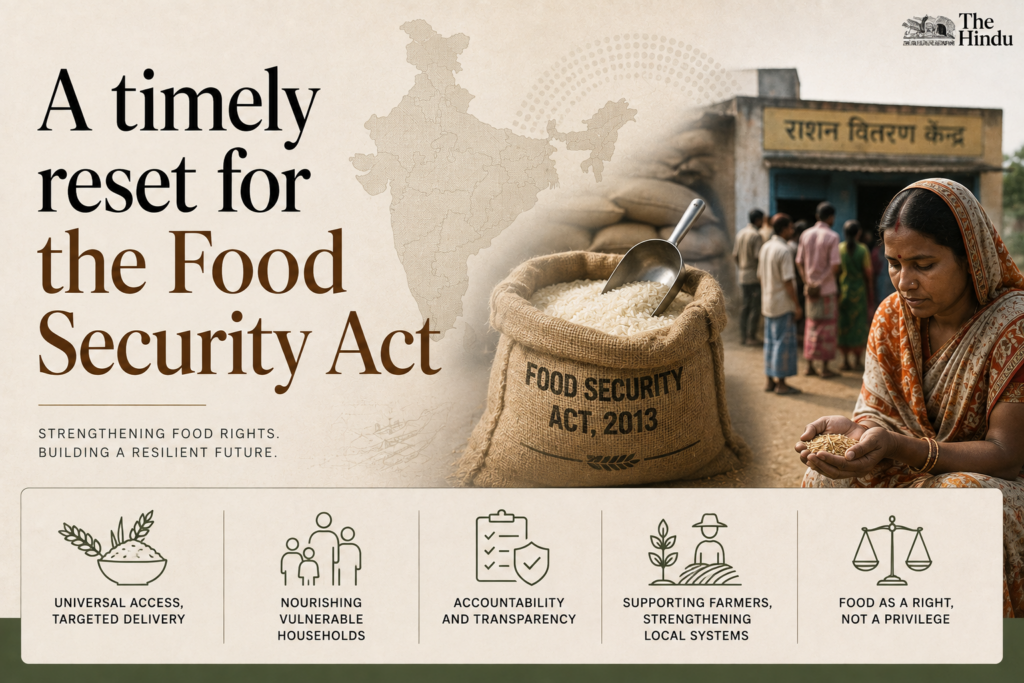
    NFSA marks a paradigm shift in the approach to food security from welfare to rights based approach. It is the world’s largest food transfer programme and social safety net, accounting for around 50% of India’s overall social assistance budget.

    Salient Features of the National Food Security Act (NFSA), 2013

    Legal entitlement to food for 75% of rural and 50% of urban population81 crore people).

    Targeted Public Distribution System (TPDS) supplies 5 kg of foodgrains per person per month at highly subsidized prices:

    Antyodaya Anna Yojana (AAY) households receive 35 kg per family per month.

    Life-cycle approach:

    Pregnant & lactating women: Free meals + (PMMVY).

    Children: ICDS & Mid-Day Meal/PM-POSHAN.

    State-wise coverage is determined by the NITI Aayog by using the NSS Household Consumption Survey data.

    Identification of eligible households is done by States/UTs

    Food security allowance: If foodgrains are not supplied, beneficiaries receive compensation.

    Grievance redressal mechanisms at state and district levels including State Food Commissions.

    Role of NFSA in eliminating hunger and malnutrition in India

    Reduced out-of-pocket spending on staple foods has improved dietary diversity by ‘crowding in’ the consumption of nutrient-dense foods

    Fortified rice under NFSA covers 291 districts (Phase II) and over 65% of NFSA households

    Malnourishment in children under 5 years has reduced (NHFS-5)

    Stunting – from 38.4% to 35.5%,

    Wasting – 21.0% to 19.3% and

    Underweight – 35.8% to 32.1% .

    Malnutrition among women aged 15-49 years has also reduced from 22.9% to 18.7%.

    Food Security during COVID under Pradhan Mantri Garib Kalyan Anna Yojana

    Regular PDS supply has reduced seasonal hunger in tribal belts of Jharkhand, Odisha, Chhattisgarh

    ICDS covers an 90 million children, 11 million pregnant women, and 2 million adolescent girls

    However, despite these steps there are few challenges

    As per study by Crisil using a ‘thali index’, up to 50% of rural and 20% of urban Indians cannot afford two balanced meals a day

    Fiscal Burden – Food subsidy budget @ 2.1 lakh cr in 2025-26

    Even with PDS support, food deprivation remained 40% in rural and 10% in urban areas

    Diversion – Eg- 28% of allocated foodgrains fail to reach beneficiaries as per HCES 2022-23.

    Inclusion and exclusion errors due to faulty beneficiary identification.

    Corruption at Fair Price Shops (FPS) – Issues of under-weighing, overcharging etc

    Persistent triple burden of malnutrition

    Way Forward

    Shanta Kumar Committee Recommendations on Revamping of PDS

    Direct Procurement by States

    Private Sector Involvement in procurement, storage, and distribution

    Diversify the food basket – Include millets, pulses, edible oil and iodised salt

    Nutrition Education and Behavior Change through nudge theory. Eg- POSHAN Abhiyaan’s Jan Andolan people’s movement approach

    Involvement of Civil Society – Eg- Akshaya Patra Foundation’s centralized kitchens model

    Strengthening Life-cycle Approach to Nutrition– Eg- Karnataka’s “Mathrupoorna” scheme provides one full meal to pregnant women.

    To realise SDG 1,2,3,and 12, the focus needs to shift from Food Security to Nutritional Security

  • How did land reforms in some parts of the country help to improve the socio-economic conditions of marginal and small farmers?

    Land reform refers to the systematic alteration of laws, regulations, and practices governing land ownership, distribution, and use to achieve social and economic justice.

    Impact of land reforms on socio-economic conditions of Farmers

    Abolition of Zamindari

    States like Kerala, West Bengal, Karnataka eliminated intermediary rights, transferring ownership to actual cultivators.

    Increased security, reduced exploitation, and improved bargaining power.

    West Bengal’s Operation Barga (1978) registered sharecroppers and guaranteed them 75% share in output when they used their own inputs.

    Raised incomes of more than 1.5 million tenant farmers.

    Land ceiling laws and redistribution of surplus land in states such as Kerala and West Bengal improved access to land for landless labourers and marginal farmers.

    Punjab and Haryana undertook extensive land consolidationmodern machinery, improved cropping intensity, and raised productivity.

    Ownership titles enabled farmers to access Kisan Credit Card, cooperative banks, and PSB loans

    Reduction in rural poverty and inequality

    Rural poverty fell sharply in Kerala and West Bengal post-tenancy reforms.

    States with stronger reforms saw better literacy, nutrition, and health outcomes.

    Empowerment of women – States like Kerala recognized women’s rights in land inheritance.

    Major Challenges

    Land Reforms is ‘state subject’ – Lack of political will and uniformity in implementation

    Legal loopholes – In Uttar Pradesh, Bihar and Madras there was no limit on the size of the lands that could be declared to be under the ‘personal cultivation’ of the zamindar

    Fragmented Landholdings – Average operational holding has fallen to 0.74 ha (NABARD), making consolidation challenging.

    Inadequate Institutional Capacity – Revenue departments face deficits in manpower, technology, and coordination.

    Despite legal provisions, women hold only 11-13% of operational holdings due to inheritance barriers.

    High Land Litigation – Over two-thirds of civil cases in lower courts involve land disputes

    Land reform 2.0 based on modernisation of records (DILRMP), redistribution of land and land leasing reforms is essential to realise the objective of ‘Doubling Farmers Income’.

  • What are the present challenges before crop diversification? How do emerging technologies provide an opportunity for crop diversification?

    A cropping pattern is the distribution of various crops within a specific area at a given time. Presently, rice and wheat account for 75% of overall foodgrain production and 37% of net-sown area.

    Challenges Before Crop Diversification

    94% of the total agri and allied sector output is outside MSP support.

    Input constraints – Limited HYV seeds, overdependence on chemical fertilizers. Eg- Seed replacement rate is 35-45% (over 90% in USA)

    Input Subsidy Bias – Subsidies for power, urea, canal water favour water-intensive crops, making alternatives less attractive.

    Low income trap limits farmers ability to invest in High Value crops and Technology.

    High monsoon dependence – About 55% of cultivable land is rainfed – increasing risk and limiting diversification.

    Fragmented landholdings – 86% Small and marginal farmers – restrict mechanisation.

    Shift to commercial crops – Expansion of cotton (Deccan belt) and sugarcane (Punjab-Haryana, Krishna-Godavari basin) crowds out food crops.

    Human factors – Population pressure, subsistence farming, and low risk appetite hinder diversification.

    Institutional weaknesses – Defective land tenure, and poor processing for perishables. Eg- Only 13% mandis digital.

    Market Uncertainty – Lack of assured markets for pulses, oilseeds, millets, fruits, and vegetables limits farmers’ ability to shift.

    Infrastructural gaps – Eg- cold storage can accommodate only 11% of total produce.

    Role of Emerging Technologies in promoting Crop Diversification

    Precision Agriculture – Drones, IoT sensors, GIS enable farmers to manage diverse crops with accurate irrigation, nutrition, and pest control.

    Biotechnology – Stress-tolerant and climate-resilient varieties encourage diversification. Eg- Drought Tolerant High-Yielding Chickpea Variety “SAATVIK (NC 9)”

    Micro-Irrigation – Drip and sprinkler systems make cultivation of horticulture, vegetables, and spices viable even in dry regions.

    Protected Cultivation Technologies – Eg- Polyhouses and shade nets allow off-season vegetables, flowers, and exotics.

    Digital Platforms like e-NAM, agritech apps, FPO digital platforms provide real-time prices and reduce market risk for alternative crops.

    Cold-Chain Technologies support high-value horticulture diversification. Eg: Apple packhouses.

    Biofertilisers improve soil health and make pulses, oilseeds, and millets more viable in rainfed regions.

    Climate-Smart Advisory Systems – AI-based weather advisories, satellite-based crop monitoring help farmers shift to climate-resilient crops.

    Financial inclusion under JAM and DBT under PM KISAN increases capital investment and promotes diversification to high value crops

    When science meets scale, when innovation becomes inclusive, when technology drives transformation, the foundation for great achievements is laid – PM Modi


  • How and to what extent would micro-irrigation help in solving India’s water crisis?

    Micro irrigation is a water-efficient irrigation technique that delivers water directly to plant roots using drip or sprinkler systems, reducing water wastage.

    18% of the world’s population but only 4% of global freshwater resources.

    ~85% of India’s freshwater is used in agriculture (FAO).

    Groundwater depletion:

    1,006 blocks are over-exploited or critical (CGWB, 2023).

    Punjab and Haryana – ~1 metre annual groundwater decline.

    Per capita water availability fell from 1,820 m³ (2001)1,486 m³ (2025).

    Role of Micro-Irrigation in Solving India’s Water Crisis

    Significant Water Saving – saves around 30-50% water compared to flood irrigation.

    Higher Water Use Efficiency (WUE)

    Sprinkler Irrigation – 75%

    Drip Irrigation – 90%

    Higher Yields: Eg- increases yields by 45% for wheat, 20% for gram, and 40% for soybean.

    Reduced Water Loss through evaporation, runoff, and deep percolation

    Lower Fertilizer Use: Through fertigation, fertilizers are applied directly to the plant roots along with water

    Reduced Groundwater Extraction – Eg- Drip in sugarcane in Maharashtra reduced water use by 22-25%.

    Improves Climate Resilience – Provides controlled irrigation during dry spells.

    Micro-irrigation can double irrigation coverage using existing water resources (NITI Aayog).

    Limitations of micro-irrigation

    Low Adoption – micro-irrigation covers only 7.6% of the net sown area

    High Initial CostEg- Drip irrigation costs .

    Regular maintenance needs to avoid clogging, leakage, and damage is technically difficult for farmers.

    Technical Knowledge Gap: lack of know-how to correctly install, operate, and maintain micro-irrigation systems.

    Social and Cultural Barriers: Traditional farming practices and resistance to change.

    Regional imbalance – Eastern and northern states lag.

    Not Suitable for all crops– Eg-Flood irrigation is preferred for water-intensive crops like paddy

    Government Initiatives

    PMKSY “Per Drop More Crop” – subsidies up to 55%.

    Micro-Irrigation Fund under NABARD – 10000 Cr

    Andhra Pradesh Micro-Irrigation Project (APMIP)

    Micro-irrigation is critical for achieving equitable, efficient and sustainable irrigation management. (“Vision for Sujalam Bharat”)

  • What are the major challenges of Public Distribution System (PDS) in India? How can it be made effective and transparent ?

    The PDS (started in 1960s) is a government-run food security mechanism that provides subsidised foodgrains to eligible households through a network of Fair Price Shops.

    Major challenges of the PDS

    Weak supply chain management – Storage Losses due to poor warehousing and handling. Eg- 40% of the food wasted (1.5 lakh crore or 1% of the GDP)

    Open ended procurement leads to overflowing of FCI godowns

    Diversion – Eg- 28% of allocated foodgrains fail to reach beneficiaries as per HCES 2022-23.

    Inclusion and exclusion errors due to faulty beneficiary identification.

    Corruption and ghost beneficiaries – Over 47 million bogus ration cards cancelled between 2013-2021

    Corruption at Fair Price Shops (FPS) – Issues of under-weighing, overcharging etc

    Fiscal Burden – Food subsidy budget @ 2.1 lakh cr in 2025-26

    PDS is cereal-centric, ignoring dietary diversity. Leads to triple burden of malnutritionundernutrition, obesity, micronutrient deficiency.

    Technology issues – Internet failure, biometric mismatch and device malfunction under e-PoS / Aadhaar authentication.

    Way Forward

    Shanta Kumar Committee Recommendations on Revamping of PDS

    Direct Procurement by States

    Private Sector Involvement in procurement, storage, and distribution

    Diversify the food basket – Include millets, pulses, edible oil and iodised salt for nutritional security.

    Strengthen grievance redressal – Set up toll-free helplines, social audits and citizen charters at FPS level.

    Community monitoring – Involve self-help groups, local bodies and civil society in supervision.

    Periodic updating and verification of ration cards.

    Universal PDS similar to Tamil Nadu’s model.

    Optimise buffer stock norms to reduce food grain wastage.

    The PDS remains a vital tool for India’s food security and realise SDG 1,2,3,and 12

  • What are the main bottlenecks in upstream and downstream process of marketing of agricultural products in India ?

    Agricultural marketing refers to the entire process involved in moving farm produce from the farmer to the final consumer. In India, this system faces bottlenecks at both upstream (farm-level) and downstream (market-to-consumer) stages.

    Fragmented Landholdings – 86% small and marginal farmers with low production volumes make aggregation difficult.

    Poor First-Mile Connectivity – About 25% rural habitations lack pucca road connectivity – increases spoilage of perishables.

    Lack of On-Farm Storage leads to distress sales. Eg- 166 MMT storage capacity gap (FAO)

    Inadequate Primary Processing – Minimal grading, sorting, cleaning, and drying at the farm level

    High Post-Harvest Losses – Losses of 6-18% in fruits & vegetables due to poor handling.

    Weak Farmer Institutions – FPO/cooperatives have limited capacity for aggregation and marketing

    Limited Access to Information – Farmers lack real-time data on prices, demand and arrivals.

    High Input & Transport Costs makes farm-to-mandi movement expensive. Eg- logistics cost is 14% of GDP

    Demand and supply gap due to Cobweb Phenomenon (Economic Survey) – Crop production depends on prices in previous periods rather than present demand

    63% of agricultural households sold their crops to local markets and only 7.2% sold to APMCs.

    APMC operating in monopolised silos limit free inter-state movement and competition. Eg- Licensing barriers and cartelisation

    Dominance of Intermediaries leads to low price realisation. Eg- Farmers get only 25-30% of final price in perishables.

    Inadequate Market Infrastructure – Mandis lack grading, sorting, storage, and drying yards. Only 10% of mandis meet required norms (Dalwai Committee).

    Low Digital Integration – Only about 1500 mandis integrated with e-NAM (2024).

    Quality & SPS Compliance Gaps – Inadequate testing infrastructure impacts domestic sales and exports. Eg- EU rejecting Mango consignment

    Organised retail remains concentrated in metro and Tier-1 cities, with limited rural coverage

    Low investment – Private investment <1% Agri-GDP.

    Way Forward

    Strengthening FPOs to enhance collective bargaining and direct market access for farmers. Eg- Sahyadri FPO in Maharashtra – increased incomes by 30%

    Cold-Chain-as-a-Service (CCaaS) – IoT-based cold storage + logistics integration to reduce post-harvest losses

    MSP 2.0 based on 3 D’s – Decentralisation, Diversification and Digital Procurement.

    Rural Agri-Logistics Nodes under Gati Shakti Framework to develop cold chains, aggregation centers near farm gates.

    Legal Reforms – Eg- adoption Model contract farming Act by states

    Strengthening supply chain management is key to ‘Doubling Farmers Income’.

    Agriculture Inputs

  • What is Integrated Farming System ? How is it helpful to small and marginal farmers in India ?

    Integrated farming system refers to the integration of multiple components of agriculture in a single farm unit to enhance productivity, sustainability and resilience while optimising resource use.

    Integrated Farming System (IFS)

    Multi-enterprise model: crop farming + dairy + poultry + fisheries + horticulture + composting + agroforestry.

    Agro Ecological approach – Biodiversity Conservation

    Waste-to-wealth through nutrient and energy recycling.

    Closed nutrient loop – Minimises external inputs

    System-based planning: farm as an ecosystem

    Benefits of IFS for small and marginal farmers

    Economic Benefits

    Lower input cost: Use of on-farm manure, biogas slurry and feed reduces market dependency.

    Income SecurityMultiple income sources reduce climate and market vulnerability. Eg- crop loss can be offset by milk/poultry/fish income.

    Doubling Farmers income – Eg- paddy cultivation + fish farming + poultry in Tamil Nadu saw income rise by over 100%. (ICAR study)

    Better credit worthiness: Regular income improves repayment capacity and access to formal finance.

    Livelihood & Social Security

    Year-round employment: Continuous work across livestock, cropping, fisheries, and horticulture.

    Family labour utilisation: Eg- women and elderly in backyard poultry, dairy and nurseries

    Nutrition security: Access to milk, eggs, vegetables, fruits and fish

    Stable livelihood prevents rural-urban distress migration.

    Women empowerment: Dairy, poultry and SHGs bring direct income to rural women.

    Environmental Benefits

    Improves soil health and carbon content: Organic manure + crop rotation + green manure.

    Water efficiency: Eg- Pond-field-livestock integration allows reuse of water and nutrients.

    Enhanced Biodiversity by offering homes for a variety of plant and animal species. Eg- Agroforestry

    Reduces pollution: Minimizes chemical runoff and stubble burning through recycling.

    Challenges in IFS

    Small and Marginal Land Holdings (86%) restricts integration of enterprises like ponds or livestock.

    High Initial Investment requirement in biogas units, sheds and fish ponds require capital.

    Limited Knowledge & Skills at village level – IFS demands multi-disciplinary expertise.

    Lack of Market Linkages and assured procurement channels for surplus milk, fish, vegetables

    Policy Gaps – Schemes operate in silos rather than landscape-based integrated planning.

    Way Forward

    Promote climate and region-wise IFS models (dryland, coastal, hill).

    Financial Support – low-interest loans + integrated crop-livestock insurance.

    Rural Agri-Logistics Nodes under Gati Shakti Framework to develop cold chains, aggregation centers

    Extension Support through Krishi Sakhis, FPOs and Agri-Startups for training and backward-forward linkages.

    Raising R&D Investment to 1% of GDP

    Budget 2025-26 emphasised Agriculture as the ‘first engine’ for India’s development journey. IFS can be the backbone of this journey.

  • What are the direct and indirect subsidies provided to farm sector in India? Discuss the issues raised by the World Trade Organization(WTO) in relation to agricultural subsidies.

    The total government subsidy for food and fertilizers for the fiscal year 2025-26 is budgeted at It constitutes around 2% of India’s GDP and 21% of farmer’s income.

    Direct subsidies –

    These involve direct budgetary support or cash transfers to farmers and agricultural institutions.

    Income support schemes –

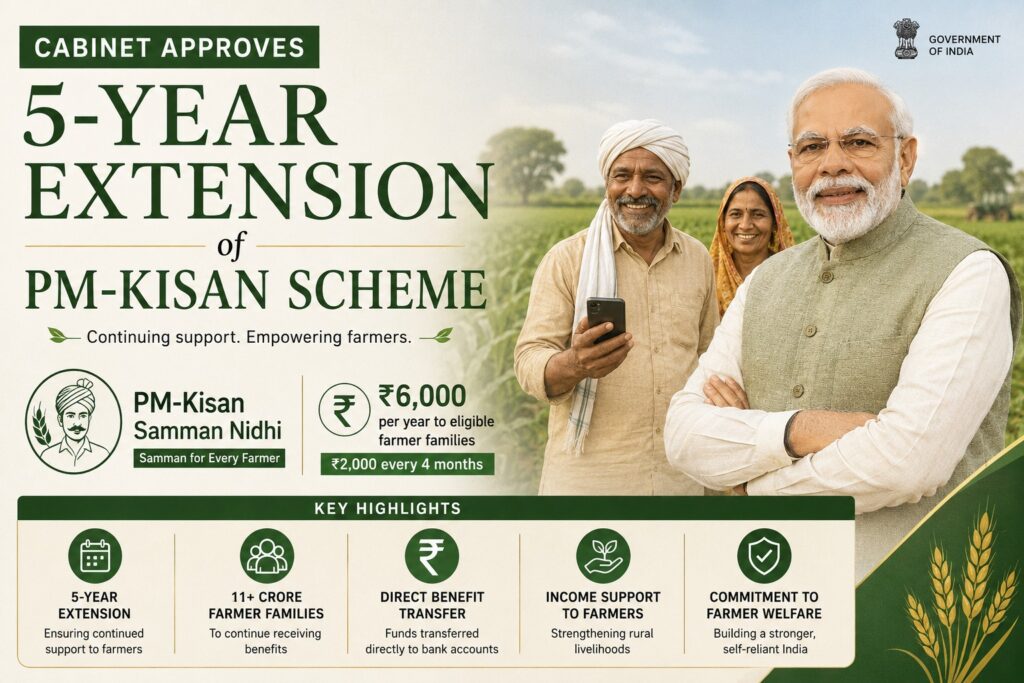
    PM-KISAN

    Raythu bandhu Scheme of Telangana

    MSP For 23 crops to ensure Income Security

    Interest subvention through Kisan Credit Cards – KCC)

    Crop insurance premium subsidy under PMFBY (Pradhan Mantri Fasal Bima Yojana)

    Indirect subsidies to the farm sector

    These reduce production costs or guarantee revenue without direct cash payment:

    Fertiliser subsidy – Subsidised urea, DAP and other fertilisers under the Nutrient Based Subsidy

    Subsidy on agricultural infrastructure

    PM-KUSUM – Subsidy for Solar Pumps

    PMFBY – Subsidy for Micro Irrigation

    Agriculture Infrastructure Fund (AIF) – Credit-linked subsidy for cold storage

    Gramin Bhandaran Yojana – Support for rural godowns and storage

    Power & irrigation subsidy

    Free or highly subsidised electricity for irrigation pumps

    Subsidised canal and micro-irrigation schemes (Eg- PMKSY)

    Seed and mechanisation subsidy – Eg- Sub Mission on Agriculture Mechanisation

    Research & Extension services – Funding to ICAR, Krishi Vigyan Kendras (KVKs)

    Issues raised by WTO regarding India’s agricultural subsidies

    Subsidy Classification by WTO

    Green BoxAllowed (non-trade distorting). Eg- extension, infrastructure

    Blue Box – Production-limiting subsidies

    Amber BoxTrade-distorting subsidies. (10% of output) Eg- MSP, input subsidies

    Trade-distorting support – MSP, fertiliser, power & irrigation subsidies classified as Amber Box. May exceed 10% de-minimis limit for developing countries

    WTO decision (Nairobi, 2015) prohibits export subsidies. India’s sugar export incentives were challenged & ruled WTO-inconsistent

    Transparency issues – Allegations of under-reporting or delayed reporting of subsidies

    Environmental concerns – overuse of fertilisers and groundwater, causing Soil degradation, Groundwater depletion and Ecological stress

    The sustainable path for ensuring farmer welfare remains protected includes gradual shift towards Green-Box-compliant support such as direct income transfers, infrastructure creation, R&D, crop insurance and climate-resilient agriculture.