💥Crack UPSC In 1st Attempt | Admission Open | Ultimate Assessment Program 2027/2028

Subject: Agriculture

  • Irrigation In India – PMKSY, AIBP, Watershed Management, Neeranchan, etc.

    Neeranchal National Watershed Project

    As a part GS-3 – Irrigation systems, We need to focus on relevant projects/schemes launched in 2015-16. We will try to bring all such important projects/schemes. One such project is, “Neeranchal” for the Watershed Component of the Pradhan Mantri Krishi Sinchayi Yojana (PMKSY), Let’s see it in brief!

    What is a watershed?

    A watershed also known as drainage basin is an extent or an area of land where surface water from rain, melting snow or ice converges to a single point at a lower elevation, usually the exit of the basin, where the waters join another waterbody, such as a river, lake etc.


    What is watershed management?

    • Watershed management is an adaptive, comprehensive, integrated multi-resource management planning process that seeks to balance healthy ecological, economic, and cultural/social conditions within a watershed.
    • Watershed management serves to integrate planning for land and water; it takes into account both ground and surface water flow, recognizing and planning for the interaction of water, plants, animals and human land use found within the physical boundaries of a watershed.

    What are the objectives of Neeranchal?

    • The Neeranchal Project will support PMKSY to improve watershed management practices and demonstrate measurable results in selected sub-watersheds
    • It will introduce new hydrological approaches and innovative tools for community participation with a more integrated watershed planning process
    • Pilot new field practices that will improve conservation outcomes, water availability, agricultural yields and climate resilience, and scale up a more effective monitoring and evaluation system to track performance
    • The project will be implemented by the Ministry of Rural Development over a six-year period (2016-21)

    Let’s first learn about Pradhan Mantri Krishi Sinchai Yojana (PMKSY)

    • PMKSY is a central scheme that aims at providing irrigation facilities to every village in the country by converging ongoing irrigation schemes
    • The vision of extending the coverage of irrigation ‘Har Khet Ko Paani’ and improving water use efficiency ‘More crop per drop’ in a focused manner
    • With end to end solution on source creation, distribution, management, field application and extension activities
    • A dynamic annual fund allocation methodology mandates states, to allot more funds to irrigation sectors for becoming eligible to access funds under this scheme, is being considered

    The Pradhan Mantri Krishi Sinchayee Yojana programme should concentrate on 2 important things –

    • First, it should quickly put to use 20–40 million ha of unutilised irrigation potential created in major, medium and minor irrigation projects
    • Second, it should provide better quality power rations to farmers during the time of peak irrigation demand.
    • Madhya Pradesh has done precisely this and multiplied the state’s irrigated area quickly, at small incremental cost, delivering double-digit agricultural growth

    What about funding ?

    • The Government of India and the World Bank have signed a US$ 178.50 million credit for the Neeranchal National Watershed Project to improve watershed management in rural rainfed areas
    • The credit will support the watershed activities of the PMKSY in selected states of Andhra Pradesh, Telangana, Chhattisgarh, Gujarat, Jharkhand, Madhya Pradesh, Maharashtra, Odisha and Rajasthan
    • It will cover about 400 sub-watersheds of about 5,000 ha each and reach approximately 482,000 farmer households and two million people
    • The credit is from the International Development Association (IDA) – the World Bank’s concessionary lending arm with a maturity of 25 years, including a 5 year grace period

    [IDA – International financial institution which offers concessional loans and grants to the world’s poorest developing countries. The IDA is a member of the World Bank Group]

    Concerns that will be addressed by Neeranchal-

    • Bring about institutional changes in watershed and rainfed agricultural management practices in India
    • Build systems that ensure watershed programmes and rainfed irrigation management practices are better focused, and more coordinated, and have quantifiable results
    • Devise strategies for the sustainability of improved watershed. management practices in programme areas, even after the withdrawal of project support
    • Through the watershed plus approach, support improved equity, livelihoods, and incomes through forward linkages, on a platform of inclusiveness and local participation


     What are the benefits?

    • Lead to reducing surface runoff of rainwater
    • It will increase recharge of groundwater and better availability of water in rainfed areas
    • It resulting in incremental rainfed agriculture productivity, enhanced milk yield and increased cropping intensity through better convergence related programmes in project areas
    • It will strengthen and provide technical assistance to enhance delivery capacity
    • This is an area development programme and all people living in the project area will be benefitted

    What are the challenges ahead?

    • Enhanced participation of communities, building stronger capacities and systems to plan, implement, monitor and post-project sustainability of local institutions and assets
    • These challenges, if not resolved, can result in implementation delays, slow disbursements and benefits

    Want to read more?

    Published with inputs from Arun
  • Pulses Production – Subramanian Committee, Eco Survey, etc.

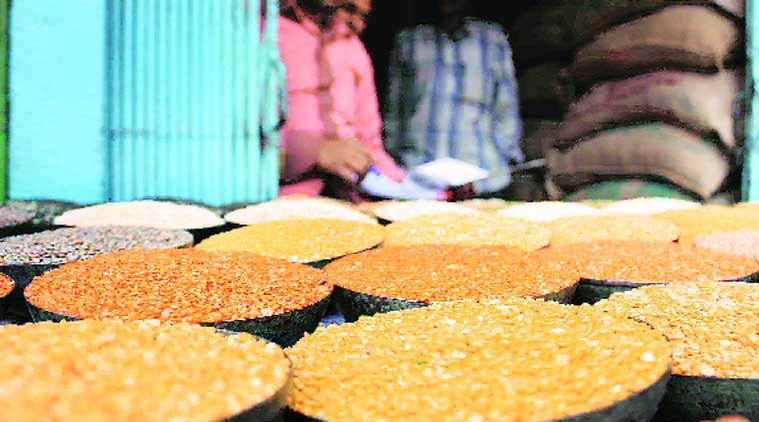
    Pulses are important source of protein, high in fibre content and provide ample quantity of vitamins and minerals. India having the largest shares about 25% production, about 33% acreage and about 27% consuming of total pulses of the world.

    Although India is the highest producer of pulses in the world, its domestic demand outstrips domestic production. The shortfall is met from imports. In last 1 year prices of pulses have increased sharply which has made pulses unaffordable for the common man.

    In this article We will explain why despite India being the largest producer of pulses, the price of pulses have increased so rapidly and we will also discuss steps taken by government in this regard and why those steps have not achieved intended results.

    • What Factors caused increase in prices of pulses in recent years?
    • Government steps in recent years to curb pulse prices
    • Why government steps have failed to reduce prices?
    • Will creating buffer stock for pulses would be able to curb pulses price?

    source

    What factors caused increase in prices of pulses in recent years?

    • Draught: Successive back to back drought i.e failure of crops in 3 successive seasons biggest reason for current price increase in pulses
    • Low MSP: Low production of pulses due to Lower MSP prices for pulses in comparison to wheat and rice and even this low target for pulses procurement is not realized by the government, all these factors disincentives farmers towards pulse production.
    • Grown in only Marginal Land: Since pulses could be grown in marginal land, a trend has developed in India where pulses are only grown in marginal and arid lands and mostly by small farmers, all this has led to low productivity for pulse crop. Only 15% of the 25 million hectares area sown annually for pulses in India is irrigated, compared to 60% for paddy and 90-95% for wheat and sugarcane
    • Limited option of import: Option of import are limited in case of pulses since its production is restricted to few countries in Africa and Asia and even there due to lack of local demand, the production of pulses are low.
    • Rise in demand: Rise in rural income due to MNREGA and better functioning of PDS has increased demand for protein rich food including pulses in last few years.

    Steps taken by Government in recent years to curb pulse prices

    • Banned exports and future trade in pulses.
    • Created buffer stock for pulses
    • Government has signed agreement with Mozambique under which India will encourage greater production of pulses in Mozambique with an assurance that it will be purchased by India at a mutually-agreed price.
    • Allowed import of pulses at zero duty.
    • Government has imported 50000 tonnes of pulses and also subsidized the domestic cost of transport, handling and milling through a price stabilization fund.
    • Imposing essential commodities act and cracking down on hoarders and black marketer through imposition of stock holding limit.
    • Government has increased MSP price of 2 pulse crops i.e. Arhar and masur by Rs 250 per quintal.
    • Inclusion of cluster demonstrations in rice fallows for pulses cultivation in rabi season from 2015-16 under BGREI (Bringing Green Revolution in Eastern India) scheme in order to increase production of pulses in Eastern India in states of Assam, Bihar, Chhattisgarh, Jharkhand, Odisha, Eastern U.P. and West Bengal
    • A special programme for demonstration of new varieties of pulses through Krishi Vigyan Kendra (KVKs) has been taken up from Rabi 2015-16 in order to increase availability of seeds of new varieties of pulses and promote adoption of new varieties

    Why government steps failed to reduce prices?

    • Firstly steps taken against stockers are discouraging them to further invest in warehouses and cold storage. In the absence of stockiest, market prices of pulses collapse, discouraging farmers from growing them in current season.
    • Secondly by suspending future and forward market in pulses, the government has simply shot the messenger. Forward and future market give signal about likely future prices and if harnessed they could actually help the government take preventive measures.
    • Thirdly government imported just 7000 tonnes to tame prices, whereas overall consumption is 3.3 to 4 million tones.
    • Fourthly the government announced MSP norms in November 2015 , which had a limited impact on Pulse production in 2016, since by that time farmers had already made decision regarding which crop they will sow in rabi season.

    Will creating buffer stock for pulses help curb the rising pulses price?

    • Creation of buffer stock of 150000 tonnes from both domestic production and imports could reduce fluctuations in prices as the accumulated reserve could be released in market whenever price of pulses spikes
    • It could also increase production of pulses, since The Food Corporation of India, National Agricultural Cooperative Marketing Federation of India, Small Farmers’ Agribusiness Consortium and other agencies would be engaged in purchasing the crop from farmers.
    • The payment for these purchases would be made from the price stabilisation fund created by the government. This will encourage farmers to take up pulses production on a larger scale and will enable India to help achieve self-sufficiency in pulses in a few years
    • However buffer stock alone would not be able to curtail price in the long run, alongside this step the government has to take number of other steps which include

    source

    The Way forward?

    1. Create a crop-neutral incentive structure for farmers, which at present are skewed in favour of rice, wheat & sugarcane. This could be done by rapidly increasing MSP for pulses in next few years.
    2. Greater public investment in providing irrigation facilities in areas under pulse production could increase productivity of pulses
    3. Augment seed availability of pulses
    4. More allocation should be done on scientific research related to pulses varieties so that better varieties of pulses could be developed

    References:

  • Food Safety Standards – FSSAI, food fortification, etc.

    Food Safety Regulations in India and the Way Forward

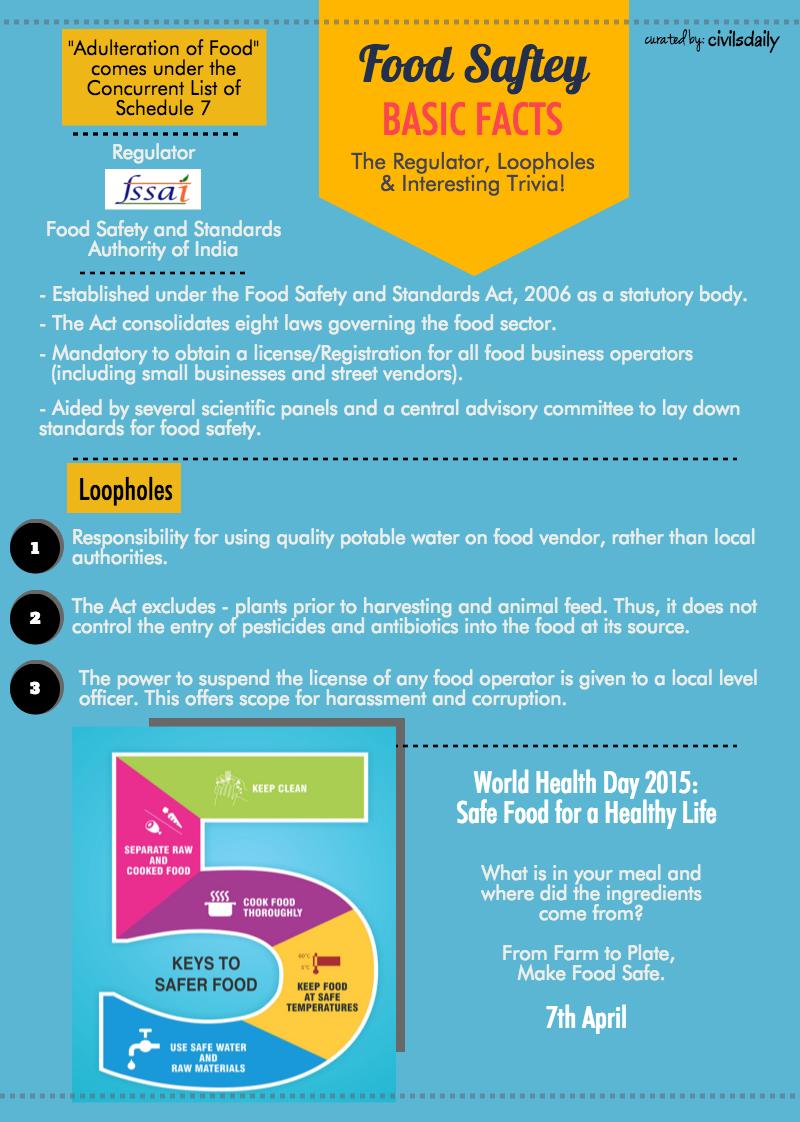
    From junk food bans to street food regulations, FSSAI has been in news all the year round and most notoriously for the Maggie ban! UPSC does not necessarily goes for the most hot topic in news which is the Maggie ban in this context but this whole episode opens up a hitherto unknown organisation to us – The FSSAI.

    And what must a worthy IAS aspirant do? Study the ins and outs of this organisation – food safety regulations – its latest victories and controversies! And that’s not it, one more reason which makes this topic important is the declaration of the World Health Day’s 2015 theme – Food Safety.

    So, what all have been the cases of FSSAI activism this year? For starters, these guys banned junk food in Delhi school canteens!

    1. Acting on a public interest writ petition, the Delhi HC had earlier directed FSSAI to regulate sale of foods high in salt, fats and sugar in and around 50 metres of schools.
    2. Court also directed CBSE to consider including the adherence to these guidelines while giving affiliation to the schools.
    3. The draft guidelines suggested creation of a canteen policy and education program to inform students and parents of link between ‘High in fats, salt & sugar’ (HFSS) foods and non-communicable diseases like obesity, hypertension, diabetes etc.

    But what was the need to do this? Glad you wondered!

    A study published in the noted medical journal Lancet says India is just behind US and China in this global hazard list of top 10 countries with highest number of obese people.

    Fair enough, what about the street food that we devour?

    This is where CSE came in and presented a case for regulation on the street food. They want the agencies to:

    1. Strengthen the implementation and enforcement of the Food Safety and Standards Act (FSS) .
    2. Improve food testing laboratory infrastructure and skills.
    3. The Food Safety and Standards Authority of India (FSSAI) should set maximum residual limits for antibiotic residues in chicken etc.
    4. Set a national level disease surveillance and public alert system.


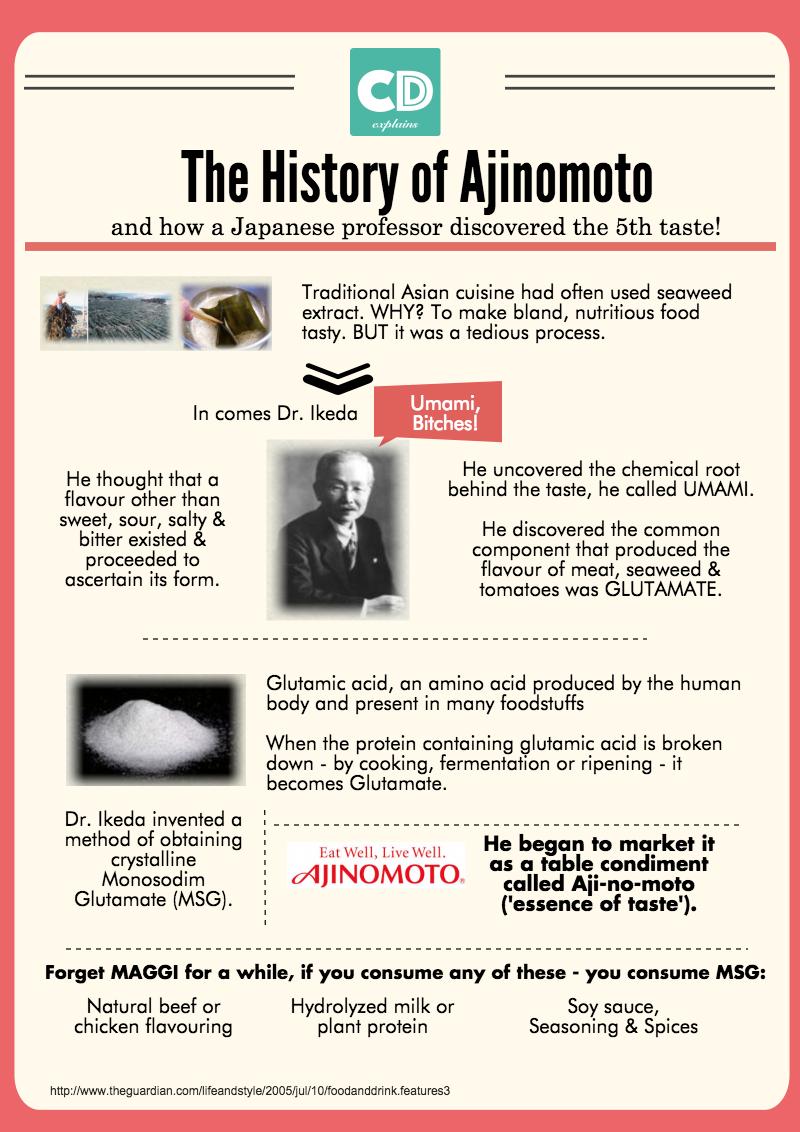
    All this is well and fine but you probably still want to know what happened with the Maggi case? More particularly, what was the issue with MSG (Ajinomoto)!

    Here’s all that we could find on the MSG/ Ajinimoto issue. UPSC Might not ask a direct question but can probably check you on a quick objective (IAS 2016) or you can use this as a quick criticism point on FSSAI’s propensity to escalate issues!

    Some major criticisms that came in the way of FSSAI:

    1. It is time we wake up and work on a science-based approach and move forward rapidly.
    2. If we have periodical evaluation in aviation for pilots, why not for analysts who test our food?
    3. Ideally, scientists should be involved in monitoring at every stage, including sampling protocols, setting standards, and testing and simulation.
    4. The state labs are short of analytical personnel and ill-equipped to perform to capacity as compared to private labs which are approved by FSSAI.


    Published with inputs from Sumer.