💥Crack UPSC In 1st Attempt | Admission Open | Ultimate Assessment Program 2027/2028

Subject: Agriculture

  • What are the major challenges of Public Distribution System (PDS) in India? How can it be made effective and transparent ?

    The PDS (started in 1960s) is a government-run food security mechanism that provides subsidised foodgrains to eligible households through a network of Fair Price Shops.

    Major challenges of the PDS

    Weak supply chain management – Storage Losses due to poor warehousing and handling. Eg- 40% of the food wasted (1.5 lakh crore or 1% of the GDP)

    Open ended procurement leads to overflowing of FCI godowns

    Diversion – Eg- 28% of allocated foodgrains fail to reach beneficiaries as per HCES 2022-23.

    Inclusion and exclusion errors due to faulty beneficiary identification.

    Corruption and ghost beneficiaries – Over 47 million bogus ration cards cancelled between 2013-2021

    Corruption at Fair Price Shops (FPS) – Issues of under-weighing, overcharging etc

    Fiscal Burden – Food subsidy budget @ 2.1 lakh cr in 2025-26

    PDS is cereal-centric, ignoring dietary diversity. Leads to triple burden of malnutrition – undernutrition, obesity, micronutrient deficiency.

    Technology issues – Internet failure, biometric mismatch and device malfunction under e-PoS / Aadhaar authentication.

    Way Forward

    Shanta Kumar Committee Recommendations on Revamping of PDS

    Direct Procurement by States

    Private Sector Involvement in procurement, storage, and distribution

    Diversify the food basket – Include millets, pulses, edible oil and iodised salt for nutritional security.

    Strengthen grievance redressal – Set up toll-free helplines, social audits and citizen charters at FPS level.

    Community monitoring – Involve self-help groups, local bodies and civil society in supervision.

    Periodic updating and verification of ration cards.

    Universal PDS similar to Tamil Nadu’s model.

    Optimise buffer stock norms to reduce food grain wastage.

    The PDS remains a vital tool for India’s food security and realise SDG 1,2,3,and 12

  • What are the main bottlenecks in upstream and downstream process of marketing of agricultural products in India ?

    Agricultural marketing refers to the entire process involved in moving farm produce from the farmer to the final consumer. In India, this system faces bottlenecks at both upstream (farm-level) and downstream (market-to-consumer) stages.

    Fragmented Landholdings – 86% small and marginal farmers with low production volumes make aggregation difficult.

    Poor First-Mile Connectivity – About 25% rural habitations lack pucca road connectivity – increases spoilage of perishables.

    Lack of On-Farm Storage leads to distress sales. Eg- 166 MMT storage capacity gap (FAO)

    Inadequate Primary Processing – Minimal grading, sorting, cleaning, and drying at the farm level

    High Post-Harvest Losses – Losses of 6-18% in fruits & vegetables due to poor handling.

    Weak Farmer Institutions – FPO/cooperatives have limited capacity for aggregation and marketing

    Limited Access to Information – Farmers lack real-time data on prices, demand and arrivals.

    High Input & Transport Costs makes farm-to-mandi movement expensive. Eg- logistics cost is 14% of GDP

    Demand and supply gap due to Cobweb Phenomenon (Economic Survey) – Crop production depends on prices in previous periods rather than present demand

    63% of agricultural households sold their crops to local markets and only 7.2% sold to APMCs.

    APMC operating in monopolised silos limit free inter-state movement and competition. Eg- Licensing barriers and cartelisation

    Dominance of Intermediaries leads to low price realisation. Eg- Farmers get only 25-30% of final price in perishables.

    Inadequate Market Infrastructure – Mandis lack grading, sorting, storage, and drying yards. Only 10% of mandis meet required norms (Dalwai Committee).

    Low Digital Integration – Only about 1500 mandis integrated with e-NAM (2024).

    Quality & SPS Compliance Gaps – Inadequate testing infrastructure impacts domestic sales and exports. Eg- EU rejecting Mango consignment

    Organised retail remains concentrated in metro and Tier-1 cities, with limited rural coverage

    Low investment – Private investment <1% Agri-GDP.

    Way Forward

    Strengthening FPOs to enhance collective bargaining and direct market access for farmers. Eg- Sahyadri FPO in Maharashtra – increased incomes by 30%

    Cold-Chain-as-a-Service (CCaaS) – IoT-based cold storage + logistics integration to reduce post-harvest losses

    MSP 2.0 based on 3 D’s – Decentralisation, Diversification and Digital Procurement.

    Rural Agri-Logistics Nodes under Gati Shakti Framework to develop cold chains, aggregation centers near farm gates.

    Legal Reforms – Eg- adoption Model contract farming Act by states

    Strengthening supply chain management is key to ‘Doubling Farmers Income’.

    Agriculture Inputs

  • What is Integrated Farming System ? How is it helpful to small and marginal farmers in India ?

    Integrated farming system refers to the integration of multiple components of agriculture in a single farm unit to enhance productivity, sustainability and resilience while optimising resource use.

    Integrated Farming System (IFS)

    Multi-enterprise model: crop farming + dairy + poultry + fisheries + horticulture + composting + agroforestry.

    Agro Ecological approach – Biodiversity Conservation

    Waste-to-wealth through nutrient and energy recycling.

    Closed nutrient loop – Minimises external inputs

    System-based planning: farm as an ecosystem

    Benefits of IFS for small and marginal farmers

    Economic Benefits

    Lower input cost: Use of on-farm manure, biogas slurry and feed reduces market dependency.

    Income Security – Multiple income sources reduce climate and market vulnerability. Eg- crop loss can be offset by milk/poultry/fish income.

    Doubling Farmers income – Eg- paddy cultivation + fish farming + poultry in Tamil Nadu saw income rise by over 100%. (ICAR study)

    Better credit worthiness: Regular income improves repayment capacity and access to formal finance.

    Livelihood & Social Security

    Year-round employment: Continuous work across livestock, cropping, fisheries, and horticulture.

    Family labour utilisation: Eg- women and elderly in backyard poultry, dairy and nurseries

    Nutrition security: Access to milk, eggs, vegetables, fruits and fish

    Stable livelihood prevents rural-urban distress migration.

    Women empowerment: Dairy, poultry and SHGs bring direct income to rural women.

    Environmental Benefits

    Improves soil health and carbon content: Organic manure + crop rotation + green manure.

    Water efficiency: Eg- Pond-field-livestock integration allows reuse of water and nutrients.

    Enhanced Biodiversity by offering homes for a variety of plant and animal species. Eg- Agroforestry

    Reduces pollution: Minimizes chemical runoff and stubble burning through recycling.

    Challenges in IFS

    Small and Marginal Land Holdings (86%) restricts integration of enterprises like ponds or livestock.

    High Initial Investment requirement in biogas units, sheds and fish ponds require capital.

    Limited Knowledge & Skills at village level – IFS demands multi-disciplinary expertise.

    Lack of Market Linkages and assured procurement channels for surplus milk, fish, vegetables

    Policy Gaps – Schemes operate in silos rather than landscape-based integrated planning.

    Way Forward

    Promote climate and region-wise IFS models (dryland, coastal, hill).

    Financial Support – low-interest loans + integrated crop-livestock insurance.

    Rural Agri-Logistics Nodes under Gati Shakti Framework to develop cold chains, aggregation centers

    Extension Support through Krishi Sakhis, FPOs and Agri-Startups for training and backward-forward linkages.

    Raising R&D Investment to 1% of GDP

    Budget 2025-26 emphasised Agriculture as the ‘first engine’ for India’s development journey. IFS can be the backbone of this journey.

  • What are the direct and indirect subsidies provided to farm sector in India? Discuss the issues raised by the World Trade Organization(WTO) in relation to agricultural subsidies.

    The total government subsidy for food and fertilizers for the fiscal year 2025-26 is budgeted at It constitutes around 2% of India’s GDP and 21% of farmer’s income.

    Direct subsidies –

    These involve direct budgetary support or cash transfers to farmers and agricultural institutions.

    Income support schemes –

    PM-KISAN

    Raythu bandhu Scheme of Telangana

    MSP For 23 crops to ensure Income Security

    Interest subvention through Kisan Credit Cards – KCC)

    Crop insurance premium subsidy under PMFBY (Pradhan Mantri Fasal Bima Yojana)

    Indirect subsidies to the farm sector

    These reduce production costs or guarantee revenue without direct cash payment:

    Fertiliser subsidy – Subsidised urea, DAP and other fertilisers under the Nutrient Based Subsidy

    Subsidy on agricultural infrastructure

    PM-KUSUM – Subsidy for Solar Pumps

    PMFBY – Subsidy for Micro Irrigation

    Agriculture Infrastructure Fund (AIF) – Credit-linked subsidy for cold storage

    Gramin Bhandaran Yojana – Support for rural godowns and storage

    Power & irrigation subsidy

    Free or highly subsidised electricity for irrigation pumps

    Subsidised canal and micro-irrigation schemes (Eg- PMKSY)

    Seed and mechanisation subsidy – Eg- Sub Mission on Agriculture Mechanisation

    Research & Extension services – Funding to ICAR, Krishi Vigyan Kendras (KVKs)

    Issues raised by WTO regarding India’s agricultural subsidies

    Subsidy Classification by WTO

    Green Box – Allowed (non-trade distorting). Eg- extension, infrastructure

    Blue Box – Production-limiting subsidies

    Amber Box – Trade-distorting subsidies. (10% of output) Eg- MSP, input subsidies

    Trade-distorting support – MSP, fertiliser, power & irrigation subsidies classified as Amber Box. May exceed 10% de-minimis limit for developing countries

    WTO decision (Nairobi, 2015) prohibits export subsidies. India’s sugar export incentives were challenged & ruled WTO-inconsistent

    Transparency issues – Allegations of under-reporting or delayed reporting of subsidies

    Environmental concerns – overuse of fertilisers and groundwater, causing Soil degradation, Groundwater depletion and Ecological stress

    The sustainable path for ensuring farmer welfare remains protected includes gradual shift towards Green-Box-compliant support such as direct income transfers, infrastructure creation, R&D, crop insurance and climate-resilient agriculture.

  • Explain the changes in cropping pattern in India in the context of changes in consumption pattern and marketing conditions.

    A cropping pattern is the distribution of various crops within a specific area at a given time. In recent times, cropping patterns have seen visible transformation due to changing dietary habits and market demands.

    Changing Cropping Pattern due to Changing Consumption Pattern

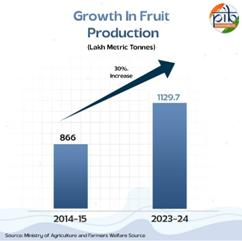
    In 2022-23, fruits and vegetables accounted for 28.3% of the Gross Value Output, surpassing cereals – due to changing diet, health awareness, Middle-class expansion and urbanisation.

    Growth of organic farming due to increasing awareness about the health impacts of chemicals. Eg- organic food market growing @ CAGR 20%

    Higher consumption of chips, juices, and packaged foods has increased cultivation of crops like potato, maize, tomato and sugarcane.

    Rising dairy and meat consumption has led to increased cultivation of fodder crops such as maize, sorghum and green fodder.

    Focus on nutri-cereals under Millet Mission and International Year of Millets (2023) is increasing area under millets. (from 12 million hectares in 2013 to 15 million hectares in 2021)

    Regional Diversification Patterns

    Punjab-Haryana: Slow movement away from rice-wheat monoculture

    Maharashtra, Karnataka, TN: Shift to horticulture & pulses

    Eastern India: Expansion of vegetables + aquaculture

    Changing Cropping Pattern due to Changing Marketing Conditions

    Expansion of e-NAM (1.77Cr farmers registered)- Better price discovery and wider market access are encouraging crop diversification.

    Better price Discovery – Eg- horticulture crops give 3-4 times higher income than cereals.

    Export-oriented agriculture – High demand for basmati rice, spices, tea, coffee, cotton and fruits. Eg- tea Plantations in Assam and WB

    Growth of contract farming -Eg- PepsiCo in potatoes, ITC in maize encourage cultivation of commercial crops through assured buy-back.

    Improved storage and logistics infrastructure like cold storage, Kisan Rail support high-value and perishable crops.

    Demand from industries has increased cultivation of sugarcane (ethanol), oilseeds (biodiesel), cotton and silk.

    Rise of e-commerce and food processing sector- Eg- Platforms like Blinkit, BigBasket, and FPIs have promoted commercial and market-led cropping patterns.

    Shift to high-value crops can be a key driver of doubling farmers’ income and nutritional security.

  • How does e-Technology help farmers in production and marketing of agricultural produce?

    e-Technology in agriculture refers to the use of digital tools, ICT platforms, mobile apps, and online services to bridge the information gap and connect farmers to modern markets.

    Role of e-Technology in Agricultural Production

    Access to real-time information – Provides timely weather forecasts, pest alerts, and irrigation advisories. Eg- Kisan Suvidha app.

    Digital nutrient management – Soil Health Card and digital soil maps guide fertilizer application – reduce input costs and improve productivity.

    Precision farming – Drones, IoT sensors, and mobile-linked devices help farmers optimise water, fertilizers, and pesticides

    Information on scientific practices like seed treatment methods, crop-specific guidance etc. Eg- Farming Leader channel on Youtube

    ICT tools, KVK portals, and helplines provide remote crop advisory, enabling timely decisions. Eg- m-Kisan app

    Facilitates crop monitoring through remote sensing technologies, drones etc. Eg- Drone Didi initiative

    Financial inclusion under JAM and DBT under PM KISAN increases capital investment and promotes diversification to high value crops

    Role of e-Technology in Agricultural Marketing

    Access to transparent price information – e-NAM, Agmarknet display mandi prices – help farmers avoid distress sales.

    Direct linkages with buyers through online bidding reduces dependence on middlemen.

    Wider market reach – Eg- e-NAM integrates 1,500+ mandis – allows inter-state trade and better price realization.

    Digital payments – UPI-linked systems ensure quick, direct payments.

    Improved post-harvest logistics – Apps provide information on transport availability, storage, cold-chain, and warehouse booking. Eg- e-NWR

    Branding – Social media and e-commerce platforms help farmers directly sell processed or organic produce to consumers. Eg- BigBasket

    When science meets scale, when innovation becomes inclusive, when technology drives transformation, the foundation for great achievements is laid – PM Modi

  • Elucidate the importance of buffer stocks for stabilizing agricultural prices in India. What are the challenges associated with the storage of buffer stock? Discuss.

    PDS is the world’s largest food transfer programme and social safety net, accounting for around 50% of India’s overall social assistance budget. Buffer Stock is the foundational pillar of this system.

    Buffer Stock Norms

    Introduced during the 4th Five Year Plan (1969-74).

    Fixed by cabinet committee on Economic Affairs on quarterly basis

    In 2025, rice and wheat stocks in Central Pool stands at 736 Lakh MT against buffer stock norm of 411 Lakh MT

    Importance of Buffer Stocks for Stabilising Agricultural Prices in India

    Supports farmers through MSP procurement: Prevents distress sales during bumper harvests.

    Controls consumer prices through Open Market Sale Scheme. Eg- In 2022-23, FCI released 34.82 lakh tonnes of wheat.

    Ensures food security: ensures uninterrupted supply for NFSA, ICDS, PM-POSHAN (Cover 81 crore people)

    Checks hoarding: Strategic release of stocks curbs artificial scarcity and black-marketing. Eg- Release of Pulses by NAFED

    Acts as a safety net during supply disruptions and emergencies. Eg- during COVID.

    Inter-state distribution stability: Ensures consistent supply to deficit states.

    Market confidence: Adequate stocks signal stability and prevent panic buying

    Export of extra produce: Eg- Surplus wheat from buffer stocks was exported to Africa in 2021

    Challenges Associated with the Storage of Buffer Stock

    Excessive stocking by FCI increases carrying costs. Eg- Central pool rice stocks 4 times the buffer

    Heavy reliance on CAP (cover-and-plinth) storage leads to high wastage. (40% of total food)

    High transport costs due to concentration of procurement in limited states. Eg- 60% godowns in 5 states.

    Overstocking results in rotting and quality deterioration. Over 6 lakh tonnes of foodgrains rotted in FCI godowns

    High Storage Cost – Eg- FCI’s annual storage cost for buffer stocks reached

    Pilferage and Theft due to poor security measures and leakages in the distribution network.

    Regional procurement imbalances: Eg- Eastern and NE states remain under-procured

    Lack of Modern Technology – lack silos, temperature control, and humidity monitoring. Only 20% of buffer stock stored in modern silos

    Environmental concerns: Excess procurement of rice strains groundwater, fertiliser use, and stubble burning.

    Way Forward

    Technological Integration: Eg- blockchain for transparent and secure buffer stock management.

    Expansion of modern silos equipped with temperature and humidity control. (Shanta Kumar Committee)

    Rural Agri-Logistics Nodes under Gati Shakti Framework to develop cold chains, aggregation centers

    Expanding FCI Private Entrepreneurs Guarantee (PEG) Scheme to involve the private sector in creating modern godowns.

    Revision of Buffer Stock Norms based on actual requirement and demand patterns. (Ashok Gulati Committee)

    Strengthening storage is essential for a more efficient, resilient grain management system.

    Agriculture Marketing and supply chains

  • What are the major challenges faced by Indian irrigation system in recent times? State the measures taken by the government for efficient irrigation management.

    The agriculture sector utilizes approximately 78% of India’s total usable water resources. However, 45% of agricultural land is rainfed.

    Major challenges faced by Indian Irrigation system

    P – Political Factors

    Political populism – Eg- power and irrigation subsidies in Punjab

    Inter-State Water Disputes – Conflicts such as the Cauvery Water Dispute and the Satluj Yamuna Link Canal hinder efficient water distribution and irrigation planning.

    Prioritization of Large-Scale Projects – Political support often favors large-scale projects that benefit influential farmers and regions.

    E – Economic Factors

    Declining Public Investment since the 1980s, with a shift toward input subsidies rather than capital investment. (Economic Survey)

    High Cost of Irrigation Infrastructure

    85% farmers have <2 ha, making modern irrigation systems uneconomical

    S – Social Factors

    Weak Water Users Associations (WUAs) – lack capacity and resources.

    Uneven Irrigation Distribution – Northern & coastal regions have better irrigation, while central and western India suffer inadequate supply.

    T – Technological Factors

    Low Water Use Efficiency (WUE) – Flood irrigation (~70%) leads to evaporation, runoff, and seepage losses.

    Aging & Poorly Maintained Canal Systems – Unlined canals cause 40-50% seepage losses.

    Low adoption of technology – Eg- micro-irrigation covers only 7.6% of the net sown area

    L – Legal / Governance Factors

    Weak Enforcement of Water Governance Rules (Mihir Shah Committee)

    E – Environmental Factors

    Groundwater Depletion – Eg- Punjab’s water table declines by ~1 meter annually.

    Poor drainage leads to salinization and reduced soil fertility, especially in canal-irrigated regions.

    Climate Change Impact – Eg- glacial retreat in the Himalayas threatens long-term river flows.

    Government Measures for Efficient Irrigation Management

    PM Krishi Sinchayee Yojana (PMKSY) – Promotes micro-irrigation (drip/sprinkler) through subsidies.

    Components: Har Khet Ko Pani, Per Drop More Crop, Watershed Development.

    Micro-Irrigation Fund (NABARD) – Dedicated fund of to expand drip and sprinkler systems.

    Atal Bhujal Yojana (Atal Jal) – Focus on groundwater management in water-stressed districts through community participation.

    Accelerated Irrigation Benefits Programme (AIBP) – Financial assistance for completion of long-pending major and medium irrigation projects.

    Participatory Irrigation Management (PIM) by strengthening Water Users Associations (WUAs).

    Bureau of Water Use Efficiency under Ministry of Jal Shakti – To improve water use efficiency by 20%

    State level initiatives

    Mission Kakatiya, Telangana – Restoration of 46,531 minor irrigation tanks

    Jalyukt Shivar Abhiyan, Maharashtra – watershed development, farm ponds, desilting of streams.

    Crop Diversification Initiatives

    Mission for Integrated Development of Horticulture (MIDH)

    Increase in MSP for Pulses and Millets. Eg- 60% for Ragi

    PM KUSUM: Promotes the use of solar-powered pumps for micro-irrigation

    Timely and efficient implementations of government programmes is essential for achieving equitable, efficient and sustainable irrigation management. (“Vision for Sujalam Bharat”)

  • Explain the role of millets for ensuring health and nutritional security in India.

    Millets (Shree Anna) are emerging as a critical pillar of India’s strategy to achieve nutrition security, dietary diversification and climate-resilient food systems

    Role of millets

    Food Security

    Drought and heat resistant

    Requires less water and fertiliser – Ideal for tribal, arid and semi-arid regions

    Rich Nutritional Profile

    High in iron, calcium, zinc, magnesium and phosphorus

    Higher protein and dietary fibre than rice and wheat

    Low glycaemic index, suitable for diabetics and obese populations

    Tackling Malnutrition & Hidden Hunger

    Addresses micronutrient deficiency among women and children (anaemia, stunting and wasting)

    Can strengthen ICDS, Mid-Day Meal and POSHAN Abhiyaan

    Versatile: Can be used in traditional and modern dishes. Eg- in biscuits, noodles, bakery

    Promotes Dietary Diversity – Reduces over-dependence on rice-wheat centric diets

    Supports Public Health

    Prevents non-communicable diseases like diabetes, hypertension and heart disease

    Strengthens immunity due to high antioxidant content

    Aligned with international commitments

    SDG-2 – Zero Hunger

    International year of millets (2023)

    Challenges

    Perceived as “poor person’s food”

    Lack of Awareness of health benefits.

    High Cost than rice/wheat – less accessible to low-income groups.

    Decline in Cultivation Area:Reduced from 35 to 15 million hectares

    PDS Challenge:Replacing 20% rice/wheat requires 10.8 million tonnes of millets.

    Way Forward

    Demand-Side Strategies

    Consumer Awareness Campaigns: Eg- Eat Right India

    Gluten-Free Exports: Eg- millet products like pasta and flour.

    Supply-Side Strategies

    Revive Traditional Practices: Eg-Barahnaja in Uttarakhand.

    Strengthen Market Linkages through FPOs and cooperatives

    Special Agribusiness Zones (SABZ)

    Enhancing millet production and consumption is key for Swasth Bharat, Samruddh Bharat

  • What were the factors responsible for the successful implementation of land reforms in some parts of the country? Elaborate.

    Land reforms in India aimed to eliminate feudal structures, secure tenancy rights, redistribute surplus land, and modernise agrarian relations.

    Components of land reforms

    Abolition of Intermediaries

    Tenancy Reforms

    Ceiling on Land Holdings

    Land Consolidation

    Factors behind successful implementation of land reforms in some parts of the country

    Strong Political Will and Ideological Commitment to land redistribution and tenancy reforms

    Kerala – Communist government

    West Bengal – Left Front

    Decentralised and proactive bureaucracy, especially in West Bengal, where Block Development Offices played a central role in implementing Operation Barga.

    Robust Panchayati Raj Institutions ensured identification of beneficiaries, resolution of disputes, and monitoring of redistribution.

    Social Movements and Mass Mobilisation led by Kisan Sabhas, Bhoodan–Gramdan, and left-oriented peasant unions created strong grassroots pressure.

    Clear and Unambiguous Land Legislation such as J&K’s Big Landed Estates Abolition Act, 1950 – faced fewer legal loopholes

    States where landlord dominance in Governance was weaker (Kerala, West Bengal) had less resistance and fewer litigations compared to states like Bihar or UP.

    Kerala’s high literacy enabled better awareness of legal rights and reduced manipulation by landlords.

    Strong Monitoring – Periodic reviews, political oversight, and public reporting in TN ensured transparency and discouraged corruption or collusion with landowners.

    Major Challenges

    Land Reforms is ‘state subject’ – Lack of political will and uniformity in implementation

    Legal loopholes – In Uttar Pradesh, Bihar and Madras there was no limit on the size of the lands that could be declared to be under the ‘personal cultivation’ of the zamindar

    Fragmented Landholdings – Average operational holding has fallen to 0.74 ha (NABARD), making consolidation challenging.

    Inadequate Institutional Capacity – Revenue departments face deficits in manpower, technology, and coordination.

    Despite legal provisions, women hold only 11-13% of operational holdings due to inheritance barriers.

    High Land Litigation – Over two-thirds of civil cases in lower courts involve land disputes

    Land reform 2.0 based on modernisation of records (DILRMP), redistribution of land and land leasing reforms is essential to realise the objective of ‘Doubling Farmers Income’.

    Environment

    Conservation Efforts