💥Mains Ready By December. Smash Mains & Smash PYQ Admissions Open

Subject: Basic Sciences

  • Metal-Organic Frameworks (MOFs) wins Chemistry Nobel Prize, 2025

    Why in the News?

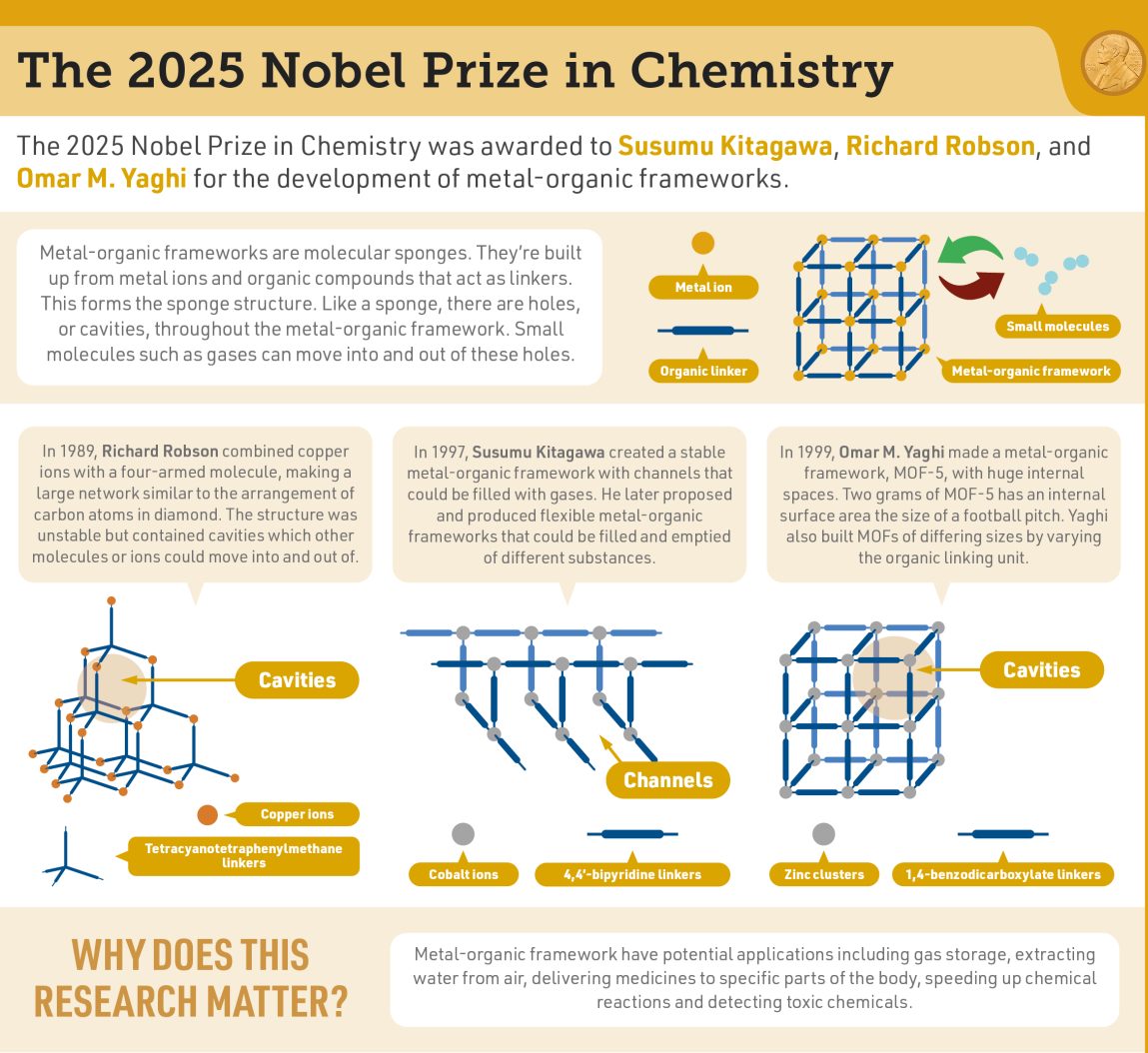
    The 2025 Nobel Prize in Chemistry has been awarded to Richard Robson, Susumu Kitagawa, and Omar Yaghi for pioneering the creation of metal–organic frameworks (MOFs).
    Metal-Organic Frameworks (MOFs) wins Chemistry Nobel Prize, 2025

    What are Metal–Organic Frameworks (MOFs)?

    • Overview: They are crystalline materials composed of metal ions linked by organic molecules, forming a three-dimensional porous network capable of selectively trapping and storing gases, vapours, or liquids.
    • Structure: Metal ions serve as nodes or connectors, while organic ligands (carbon-based linkers) create scaffold-like frameworks with very high surface area and controllable pore size.
    • Porosity: MOFs possess some of the highest porosity among solids, often exceeding 7,000 square metres per gram, enabling the storage of large volumes of gases within minimal material.
    • Flexibility: Organic linkers can be chemically modified, allowing custom design for specific interactions, such as selective gas capture or catalysis.
    • Thermal and Chemical Stability: Advanced MOFs remain stable up to 300–400°C and can withstand diverse chemical environments, suitable for industrial and environmental use.
    • Bonding Principle: Based on coordination chemistry, MOFs combine metal rigidity with organic flexibility, enabling precise control over molecular architecture.
    • Functionality: Their open channels permit easy adsorption and desorption, making MOFs reusable, durable, and efficient for a range of scientific and industrial applications.

    Applications of MOFs:

    • Water Harvesting: Capture moisture from arid air and release it upon heating — enabling portable water generation in desert regions.
    • Carbon Capture: Their selective pores allow efficient CO capture and storage, aiding climate change mitigation.
    • Hydrogen and Methane Storage: Act as solid sponges essential for fuel cells and clean energy systems.
    • Pollutant Filtration: Remove PFAS (Per- and Polyfluoroalkyl Substances), heavy metals, and organic contaminants from water sources.
    • Food Preservation: Absorb ethylene gas emitted by fruits, slowing ripening and extending shelf life.
    • Catalysis and Sensing: Serve as heterogeneous catalysts and chemical sensors for trace-level detection in industrial settings.
    • Clean Energy Systems: Integrated into batteries, fuel cells, and supercapacitors for energy storage due to high conductivity and surface area.

    Scientific Development:

    • Richard Robson (University of Melbourne, 1970s): He pioneered the idea of linking metal atoms and ligands into extended frameworks, though early models were fragile.
    • Susumu Kitagawa (Kyoto University): Built porous coordination polymers, the first to demonstrate that gases could diffuse through molecular cavities—a defining MOF feature.
    • Omar Yaghi (University of California, Berkeley, 1990s): Created robust, heat-resistant MOFs, standardised synthesis techniques, and coined the term “Metal–Organic Framework” in a 1995 Nature paper.
      • Breakthrough Achievement: Yaghi’s team designed copper- and cobalt-based MOFs stable up to 350°C, capable of hosting guest molecules without collapse.
    [UPSC 2024] With reference to Direct Air Capture, an emerging technology, which of the following statements is/are correct?

    I. It can be used as a way of carbon sequestration.

    II. It can be a valuable approach for plastic production and in food processing.

    III. In aviation, it can be a source of carbon for combining with hydrogen to create synthetic low-carbon fuel.

    Select the correct answer using the code given below.

    (a) I and II only (b) II only (c) I, II, and III* (d) None of the above statements is correct


  • Physics Nobel Prize for Quantum Tunneling

    Why in the News?

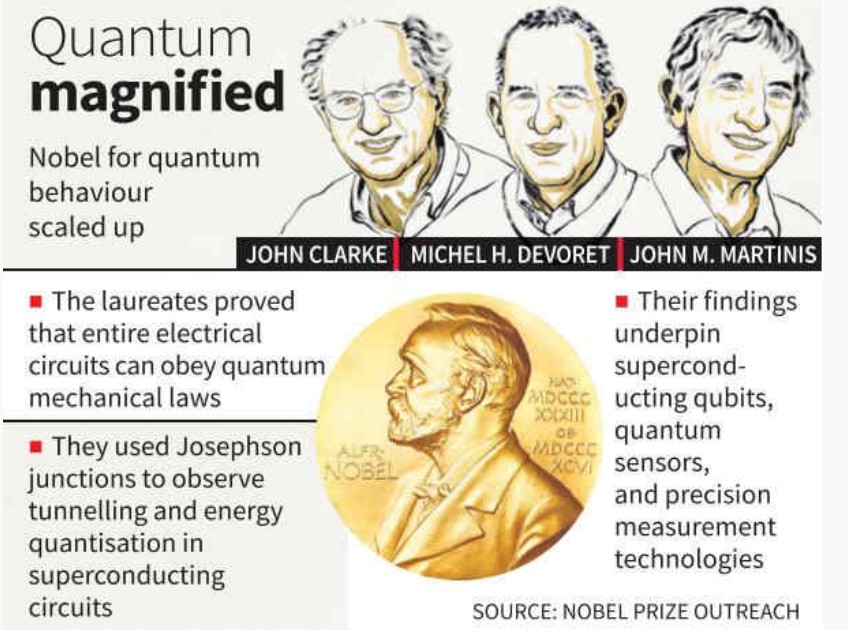
    The 2025 Nobel Prize in Physics has been awarded to John Clarke, Michel Devoret, and John Martinis for their discovery of macroscopic quantum mechanical tunnelling and energy quantisation in an electric circuit.

    nobel

    Discovery of Macroscopic Quantum Effects:

    • Essence of the Discovery: John Clarke, Michel Devoret, and John Martinis proved that quantum effects—tunnelling and energy quantisation—can occur in macroscopic electrical circuits, not just in atoms or particles.
    • Experiments (UC Berkeley, 1984–85): Demonstrated that superconducting circuits, visible to the naked eye, act as quantum systems when isolated from external disturbances.
    • Observed Phenomena:
      • Macroscopic Quantum Tunnelling: Electric current “jumps” through an insulating barrier even when classical physics predicts no flow.
      • Energy Quantisation: The circuit holds only discrete energy levels, behaving like an artificial atom that exchanges energy in fixed quanta.
    • Scientific Breakthrough: First experimental proof that quantum mechanics governs engineered large-scale systems, forming the foundation of quantum computing.

    The Josephson Junction:

    • Structure: Two superconductors separated by a thin insulating layer, allowing the passage of Cooper pairs paired electrons that move as a single quantum entity.
    • Mechanism: Though insulators block current in classical systems, Cooper pairs tunnel through the barrier, producing a supercurrent without resistance.
    • Key Berkeley Findings:
      • The phase difference across the junction behaved as a quantum variable, showing discrete energy states.
      • Spontaneous tunnelling of current produced measurable voltage, confirming macroscopic quantum tunnelling.
    • Outcome: The Josephson junction became the first laboratory model of macroscopic quantum behaviour and the prototype for superconducting qubits used in today’s quantum computers.

    Significance:

    • Redefined Quantum Boundaries: Established that quantum laws are universal, applying from electrons to circuits of billions of atoms when quantum coherence is preserved.
    • Foundation for Quantum Computing: Provided the conceptual basis for superconducting qubits, now central to Google, IBM, and TIFR quantum processors.
    • Technological Impact: Enabled innovations in quantum sensors, precision metrology, and quantum communication through microwave-to-optical conversion.
    • Philosophical Insight: Resolved the scale question of how large a system can remain quantum,  proving that superconducting isolation preserves coherence even at macroscopic levels.
    • Legacy: Bridged the quantum–classical divide, converting a theoretical boundary into experimentally verified reality, launching the modern quantum technology era.
    [UPSC 2022] Which one of the following is the context in which the term “qubit” is mentioned?

    Options:  (a) Cloud Services b) Quantum Computing* (c) Visible Light Communication Technologies (d) Wireless Communication Technologies


  • SARAL tool to simplify Scientific Research Papers

    Why in the News?

    The Anusandhan National Research Foundation (ANRF), India’s newest science funding agency, has launched a digital tool called SARAL (Simplified and Automated Research Amplification and Learning) to make scientific research more accessible.

    What is Anusandhan National Research Foundation (ANRF)?

    • Establishment: Created under the ANRF Act, 2023, replacing the Science and Engineering Research Board (SERB).
    • Nature: Acts as India’s apex science funding and policy-making body.
    • Mission & Objectives: 

      • Raise India’s R&D spending from 0.7% to 2% of GDP by 2030.
      • Mobilise 70% private sector participation in research funding.
      • Promote interdisciplinary research across sciences, technology, health, agriculture, humanities, and social sciences.
      • Align research with Viksit Bharat 2047 and the National Education Policy (NEP).
    • Structure:

      • Chairperson: Prime Minister of India (ex-officio).
      • Vice Presidents: Union Ministers of Science & Technology and Education.
      • Member Secretary: Principal Scientific Advisor.
      • Guided by a Governing Council and Executive Council for policy and funding.

    About SARAL:

    • Developer: Created by IIIT Hyderabad under the guidance of the Anusandhan National Research Foundation (ANRF).
    • Purpose: Designed to make complex research papers accessible to students, professionals, and the general public.
    • AI Use: Generates summaries in multiple formats such as slides, videos, posters, and podcasts.
    • Language Support: Available in 11 Indian languages, ensuring wider inclusivity in science communication.
    • Workflow: Users upload research papers (LaTeX, arXiv links, PDFs); AI divides into sections (Introduction, Methodology, Results, Discussion, Conclusion); it produces editable slides and video summaries.
    • Significance:
      • Democratises science by converting research into layman-friendly outputs.
      • Enhances science communication and outreach.
      • Builds awareness of cutting-edge research across disciplines.
    [UPSC 2015] Which of the following statements is/are correct regarding National Innovation Foundation-India (NIF)?

    1. NIF is an autonomous body of the Department of Science and Technology under the Central Government.

    2. NIF is an initiative to strengthen the highly advanced scientific research in India’s premier scientific institutions in collaboration with highly advanced foreign scientific institutions.

    Select the correct answer using the code given below:

    (a) 1 only* (b) 2 only (c) Both 1 and 2 (d) Neither 1 nor 2


  • [pib] Siphon-Based Thermal Desalination System

    Why in the News?

    Researchers at the Indian Institute of Science (IISc) have developed a siphon-based thermal desalination system that overcomes siltation issues, offering a low-cost and scalable solution.

    About Siphon-Based Thermal Desalination System:

    • Overview: Developed by Indian Institute of Science (IISc) researchers to overcome the inefficiencies of conventional solar stills.
    • Purpose: Designed as a low-cost, scalable, and sustainable freshwater solution for off-grid and water-stressed regions.
    • Working: 

      • Principle: Works on siphonage, where a fabric wick draws salty water and gravity maintains continuous flow.
      • Innovation: A grooved metallic surface flushes away salt deposits before crystallization, preventing clogging.
      • Process: Salty water evaporates as a thin film on a heated surface and condenses just 2 mm away on a cooler surface, ensuring high efficiency.

    Key Features:

    • High Efficiency: Generates >6 liters of freshwater per sq. m per hour under sunlight — several times more than conventional solar stills.
    • Multistage Design: Uses stacked evaporator–condenser pairs to recycle heat and boost output.
    • Salt Resistance: Handles up to 20% salinity without clogging, making it effective even for brine treatment.
    • Affordable Materials: Built from aluminum and fabric, keeping costs low.
    • Energy Flexibility: Operates on solar power or waste heat, adaptable to different settings.
    • Scalable Applications: Useful for villages, disaster zones, and island communities.
    • Sustainability: Offers a clean, low-maintenance desalination method without reliance on complex machinery.
    [UPSC 2008] Where was the first desalination plant in India to produce one lakh liters of freshwater per day based on low-temperature thermal desalination principle commissioned?

    Options: (a) Kavaratti * (b) Port Blair (c) Mangalore (d) Valsad


  • Desert Soilification Technology

    Why in the News?

    For the first time, researchers at the Central University of Rajasthan (CUoR) have successfully grown wheat in arid land of western Rajasthan using desert soilification technology.

    What is Desert Soilification Technology?

    • Overview: It is an innovative biotechnological method that transforms barren desert sand into soil-like material capable of supporting agriculture.
    • Technology: It uses bioformulations and polymers to bind loose sand particles, improve soil texture, and enable water retention.
    • Utility: It is designed to combat desertification, enhance agricultural productivity in arid zones, and ensure sustainable land use.
    • How does it work?
      • Polymer-based Bioformulation: Natural polymers and microbial formulations are applied to desert sand.
      • Cross-Linking of Sand Particles: Bio-polymers create a structural network, binding sand grains together into a soil-like matrix.
      • Water Retention: The cross-linked structure traps water, drastically reducing irrigation needs and preventing rapid percolation of water through sandy soil.
      • Microbial Boost: Introduced beneficial microbes stimulate plant growth, improve soil fertility, and enhance stress resistance of crops.
      • Soil-like Properties: The modified sand mimics fertile soil — enabling nutrient retention, microbial colonization, and sustainable cropping.

    Key Features:

    • Sand-to-Soil Conversion: Cross-links sand particles into a soil-like structure, creating porosity and root-holding capacity.
    • Water Retention Efficiency: Increases moisture-holding ability of sand, thereby reducing irrigation requirements by 30–40%.
    • Microbial Boost: Bioformulation stimulates beneficial soil microbes, enhancing nutrient cycling and crop stress resistance.
    • Crop Versatility: Tested successfully with wheat, bajra, guar gum, chickpea, and is now being expanded to millets and green gram.
    • Low Input Agriculture: Reduces number of irrigation cycles (3–4 vs 5–6 in normal wheat farming).
    • Climate Resilience: Provides a sustainable model for food production in water-stressed and desertified regions.
    • Scalability: Can be replicated in other arid ecosystems beyond Rajasthan (potential use in Middle East, Africa).
    [UPSC 2023] Which one of the following best describes the concept of ‘Small Farmer Large Field’?

    (a) Resettling war-displaced people on shared cultivable land

    (b) Marginal farmers group to coordinate farm operations *

    (c) Marginal farmers lease land collectively to a corporate

    (d) A company funds and guides farmers to grow required crops


  • What is Uranium Enrichment?

    Why in the News?

    Iran’s supreme leader recently said Tehran has limited uranium enrichment to 60% U-235 and will not pursue further enrichment to ~90% (weapons grade).

    About Uranium Enrichment:

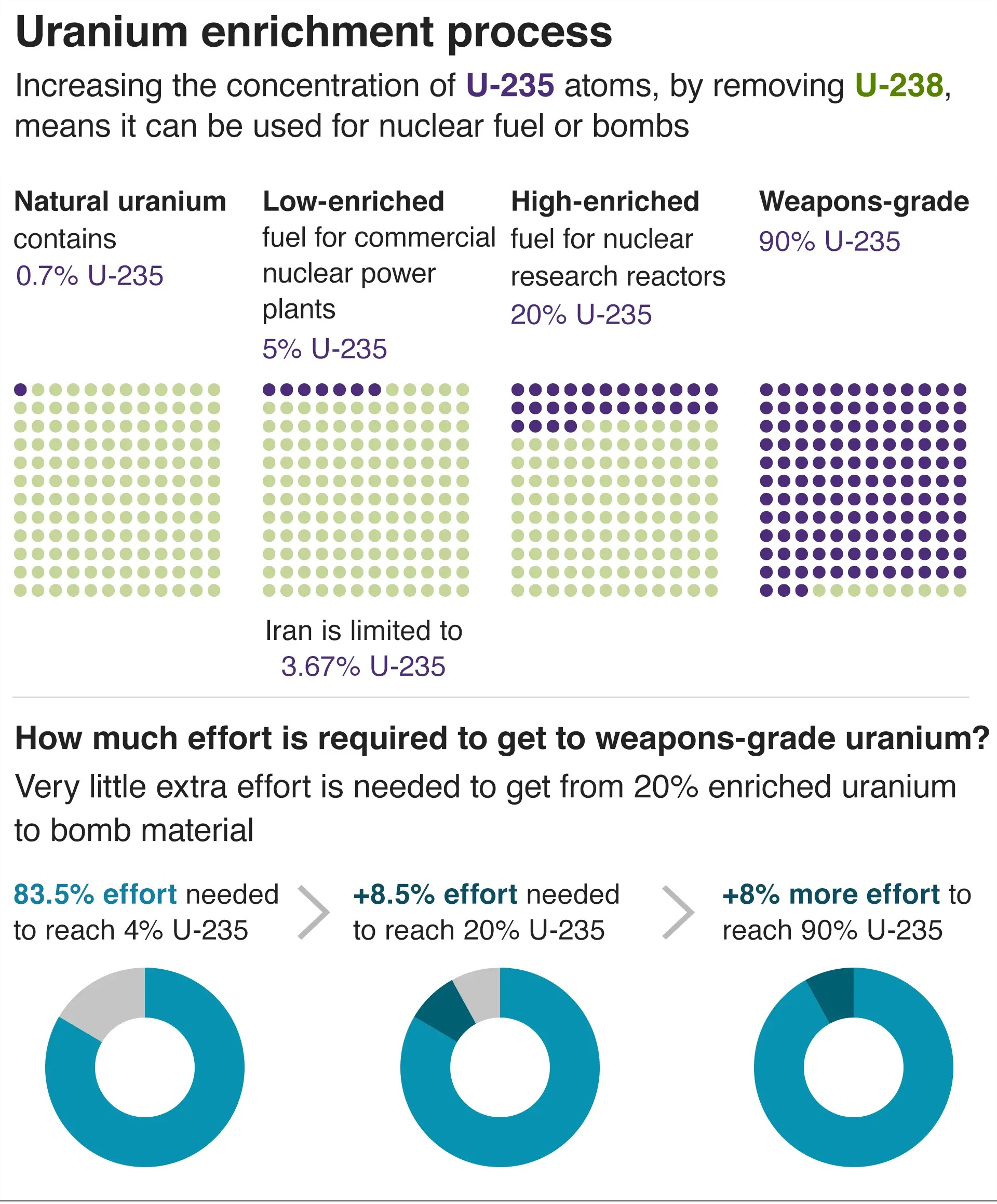
    • What is it: The process of increasing the proportion of U-235 isotope in uranium samples. Natural uranium has only 0.7% U-235, while the rest is mostly U-238.
    • Types of Enrichment:
      • Low-Enriched Uranium (3–5%): Used in civilian nuclear power reactors.
      • Highly Enriched Uranium (HEU, >20%): At 90%+ enrichment, uranium becomes weapons-grade, usable for efficient nuclear weapons.
    • Methods: Physical separation methods such as gas centrifuges, requiring advanced infrastructure and technology.
    • Implications:
      • Low enrichment: Controlled power generation.
      • High enrichment: Proliferation risks, shorter path to nuclear weapons capability.

    What is Uranium Enrichment?

    Controversy about Iran’s Pursuit:

    • Declared Program: Iran enriches uranium to 60% U-235, claiming peaceful purposes, but insists it will not pursue 90%+ enrichment.
    • Global Concerns:
      • Civilian irrelevance: 60% has no reactor use, only shortens the “breakout time” to weapons-grade.
      • IAEA Monitoring: International Atomic Energy Agency reports show significant 60% stockpiles, heightening suspicion.
    • Geopolitical Context:
      • Joint Comprehensive Plan of Action (2015) capped enrichment at 3.67% but collapsed after U.S. withdrawal in 2018.
      • Western governments see 60% enrichment as undermining trust, while Iran argues it is a deterrence and bargaining tool.
    • Strategic Dimension: Keeps Iran on the nuclear threshold, enabling leverage in negotiations and projecting deterrence without overt weaponisation.
    [UPSC 2023] Consider the following statements:

    Statement-I: India, despite having uranium deposits, depends on coal for most of its electricity production.

    Statement-II: Uranium, enriched to the extent of at least 60%, is required for the production of electricity.

    Which one of the following is correct in respect of the above statements?

    (a) Both Statement-I and Statement-II are correct and Statement-II is the correct explanation for Statement-I

    (b) Both Statement-I and Statement-II are correct and Statement-II is not the correct explanation for Statement-1

    (c) Statement-I is correct but Statement-II is incorrect *

    (d) Statement-I is incorrect but Statement-II is correct


  • Delhi to witness Artificial Rain through Cloud Seeding

    Why in the News?

    The Delhi government is planning to trial cloud-seeding to trigger artificial rain to combat air pollution ahead of winters.

    About Cloud Seeding:

    • About: It is a microclimate management technique aimed at altering precipitation patterns by dispersing substances into clouds to stimulate rainfall or snowfall.
    • Why it is used: It is used to mitigate hail, disperse fog, and either induce precipitation or prevent it from occurring in subsequent days.
    • Techniques include:
      • Static Cloud Seeding: Chemicals are introduced into cold clouds already containing supercooled water droplets, encouraging the formation of ice crystals.
      • Hygroscopic Cloud Seeding: Salts are sprayed into the base of warm clouds to act as condensation nuclei, increasing the number and size of water droplets.
      • Dynamic Cloud Seeding: This method involves boosting vertical air currents to enhance moisture passage through the clouds, leading to more rain.
    • Common Cloud Seeding Chemicals:
      • Silver iodide (AgI): Preferred for its ice-like crystalline properties.
      • Potassium iodide (KI): Functions similarly to silver iodide.
      • Dry ice (solid CO): Used to rapidly cool cloud droplets, aiding rain formation.
      • Liquid propane: Used in specific cloud types, effective at higher temperatures.
      • Sodium chloride and calcium chloride: Used in hygroscopic (warm) cloud seeding methods.
      • Bismuth tri-iodide (BiI): Sometimes used based on experimental or environmental considerations.
    • Dispersion methods range from aircraft and ground-based generators to newer approaches like drones delivering electric charges or infrared laser pulses.

    Limitations: 

    • Concerns persist regarding the potential accumulation of seeding agents in sensitive ecosystems, although detailed studies have shown negligible impacts.
    • The chemicals used, such as silver iodide, may potentially damage the environment and cause health issues like iodine poisoning in high concentrations
    [UPSC 2025] Artificial way of causing rainfall to reduce air pollution makes use of:

    (a) silver iodide and potassium iodide *

    (b) silver nitrate and potassium iodide

    (c) silver iodide and potassium nitrate

    (d) silver nitrate and potassium chloride


  • Thunderbird Reactor and Cold Fusion Research (2025)

    Why in the News?

    Cold fusion reaction, once dismissed after failed 1989 claims, is back in discussion as US-based researchers report neutron production from their small “Thunderbird Reactor.”

    Thunderbird Reactor and Cold Fusion Research (2025)

    What is Cold Fusion Reaction?

    • Overview: A proposed way to achieve nuclear fusion at room temperature, unlike conventional fusion which needs extremely high heat (100 million °C or more).
    • How it started: In 1989, two chemists, Martin Fleischmann and Stanley Pons, said their palladium-heavy water experiment created more heat than normal chemistry allows.
    • Problem: Other scientists could not reproduce the result. No clear evidence of fusion products (like neutrons or helium) was found. The claim was dismissed, but the idea stayed alive.
    • Why interest remains: If proven, cold fusion could provide limitless, clean, and cheap energy. Research in this area is now called Low-Energy Nuclear Reactions (LENR).

    About the Thunderbird Reactor (2025)

    • Inception: Scientists led by Curtis Berlinguette, University of British Columbia, published in Nature (Aug 2025).
    • Why built: Not to make electricity, but to test if chemistry can affect nuclear reactions.
    • How it works:
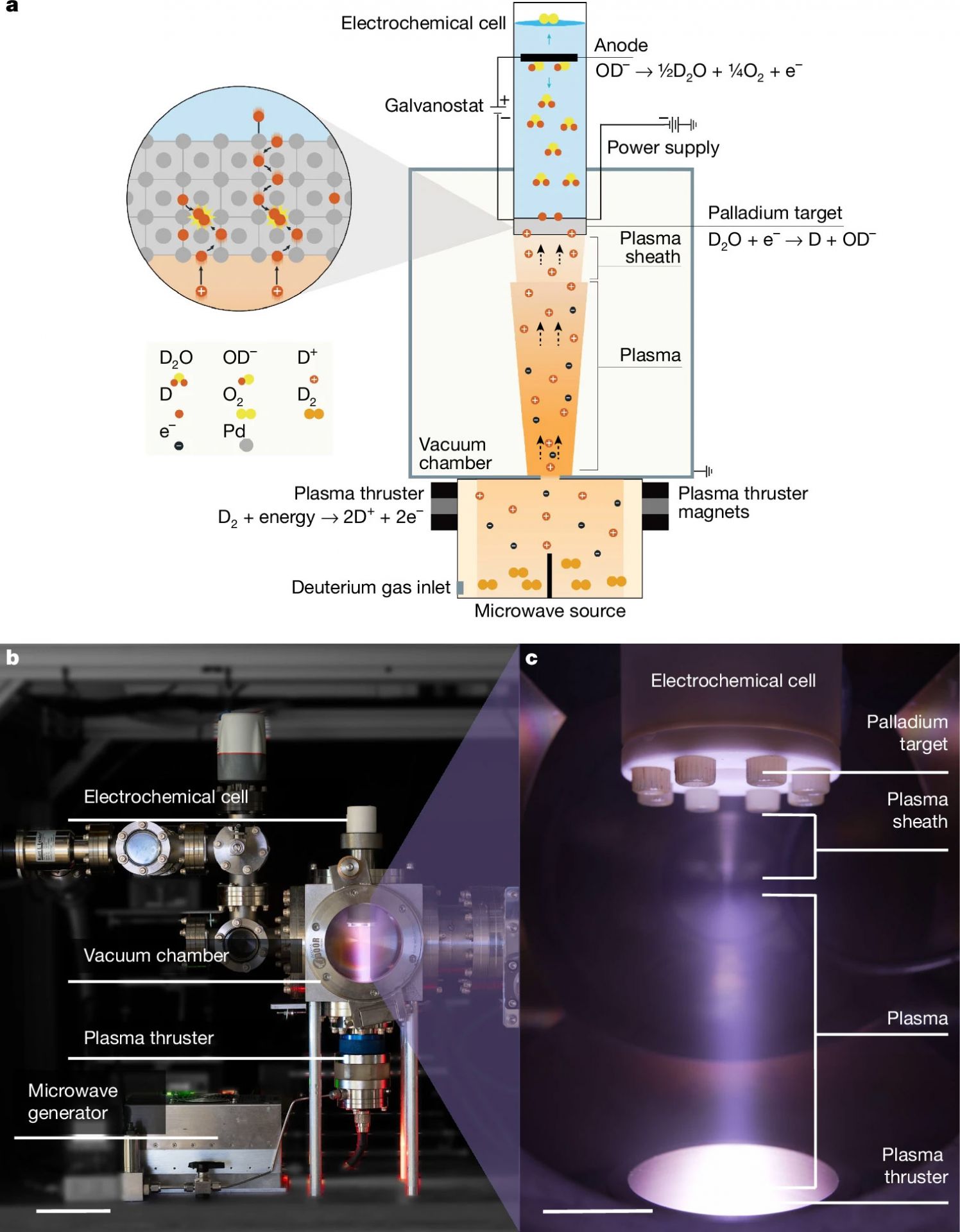
      • A plasma thruster shoots deuterium ions (a form of hydrogen) at a palladium metal target.
      • At the same time, an electrochemical cell pushes more deuterium into the palladium.
      • This builds up a very high density of deuterium inside the metal, making fusion more likely.
      • A neutron detector checks if fusion really happens.

    Key Findings:

    • Neutrons detected: When deuterium ions hit palladium, about 130–140 neutrons per second were observed (much higher than background levels).
    • Electrolysis boost: Adding extra deuterium through electrolysis increased the neutron count further.
    • Energy output: The reaction only produced a tiny amount of power (one-billionth of a watt) while consuming 15 watts of electricity. No net energy gain yet.
    [UPSC 2016] India is an important member of the ‘International Thermonuclear Experimental Reactor’. If this experiment succeeds, what is the immediate advantage for India?

    Options: (a) It can use thorium in place of uranium for power generation

    (b) It attain a global role in satellite-navigation

    (c) It can drastically improve the efficiency of its fission reactors in power generation

    (d) It can build fusion reactors for power generation*


  • [pib] Prototype Fast Breeder Reactor (PFBR)

    Why in the News?

    The Bharatiya Nabhikiya Vidyut Nigam Limited (BHAVINI) 500 MWe Prototype Fast Breeder Reactor (PFBR) at Kalpakkam, Tamil Nadu, is scheduled to achieve criticality in March 2026 and reach full power generation by December 2026.

    What is a Fast Breeder Reactor (FBR)?

    • A Fast Breeder Reactor (FBR) is a type of nuclear reactor that generates more fuel than it consumes, essentially “breeding” more nuclear material to power itself and future reactors.
    • It does this by using high-energy, or “fast,” neutrons to convert abundant, non-fissile uranium (U-238) into fissile plutonium (Pu-239) for fuel.

    About India’s Prototype Fast Breeder Reactor (PFBR):

    • Design began: 1980s as prototype for future 600 MWe FBRs.
    • Timeline: Construction began in 2004, faced delays; cost escalated from ₹3,500 crore to ₹7,700 crore.
    • Capacity: 500 MWe, sodium-cooled fast breeder reactor.
    • Predecessors: It builds on India’s earlier reactors: KAMINI and Fast Breeder Test Reactor (FBTR).
    • Technology: Completely indigenous, designed by Indira Gandhi Centre for Atomic Research (IGCAR).
    • Fuel: Uranium-Plutonium mixed oxide (MOX); later stages to use Thorium-232 to breed fissile U-233.
    • Burnup: 100 GWd/t, reactor life ~40 years.
    • Coolant: 1,750 tonnes of liquid sodium; pool-type design with high thermal inertia.
    • Construction agencies: Uranium-Plutonium mixed oxide (MOX) fuel fabricated by BARC Tarapur; reactor equipment by BHEL.
    • Site: Kokkilamedu, near Kalpakkam (next to Madras Atomic Power Station).

    Significance in India’s Nuclear Programme:

    • PFBR is the second stage of India’s three-stage programme:
      • Stage 1: Pressurised Heavy Water Reactors (PHWRs) using natural uranium.
      • Stage 2: Fast Breeder Reactors producing plutonium and U-233 from thorium.
      • Stage 3: Thorium-based U-233 fuel cycle.
    • Enables closed fuel cycle: recovery and recycling of fissile and fertile material from spent nuclear fuel (SNF).
    • Enhances energy security by optimally utilising limited uranium and vast thorium reserves.
    • Reduces radioactive waste through recycling.
    [UPSC 2024] With reference to radioisotope thermoelectric generators (RTGs), consider the following statements:

    1. RTGs are miniature fission reactors.

    2. RTGs are used for powering the onboard systems of spacecrafts.

    3. RTGs can use Plutonium-238, which is a by-product of weapons development.

    Which of the statements given above are correct?

    Options: (a) 1 and 2 only (b) 2 and 3 only* (c) 1 and 3 only (d) 1, 2 and 3


  • How are Soaps and Detergents manufactured?

    Why in the News?

    This newscard is an excerpt from the original article published in ‘The Hindu’.

    About Soap:

    • Composition: Soap is sodium (Na) or potassium (K) salt of fatty acids derived from vegetable oils or animal fats.
    • Formula: Solid soaps are RCOONa, liquid soaps are RCOOK.
    • Function: Cleansing agent due to dual hydrophilic (water-attracting) and hydrophobic (oil-attracting) nature.
    • History: Used since 2800 BC in Mesopotamia and ancient India (soap nuts, bark, flowers). Became mass-produced during the Industrial Revolution, initially a luxury.

    Soap-Making Process

    • Raw Materials: Oils such as coconut, olive, palm, sunflower provide triglycerides.
    • Hydrolysis: Oils hydrolysed with hot water under pressure → fatty acids + glycerin.
    • Saponification: Fatty acids react with sodium hydroxide (NaOH) → soap (RCOONa) + water.
    • Processing: Soap dried into noodles, blended with perfumes, colours, fillers, additives.
    • Shaping: Extruded, cut, and stamped into bars.
    • Quality: Total Fatty Matter (TFM) indicates quality; higher TFM = better cleansing.
    • Production Scale: Modern automated lines make 600–700 soaps per minute.

    Ecological Impact of Soap

    • Biodegradability: Traditional soaps are biodegradable and safer for the environment.
    • Detergents: Synthetic alternatives developed during World War I oil shortages; more efficient but harmful.
    • Pollution: Surfactants and phosphates in detergents cause nutrient pollution and persist in ecosystems.
    [UPSC 2002] Consider the following statements:

    Assertion (A) Synthetic detergents can lather well in hard water.

    Reason (R): Synthetic detergents form soluble calcium and magnesium salts with hard water.

    Which one of the following is correct in respect of the above statements?

    Options:

    (a) Both A and R are individually true and R is the correct explanation of A *

    (b) Both A and R are individually true but R is not a correct explanation of A

    (c) A is true but R is false

    (d) A is false but R is true