💥Mains Ready By December. Smash Mains & Smash PYQ Admissions Open

Subject: Basic Sciences

  • COCO 4.9 Ocean Circulation Model

    Why in the News?

    Researchers used the COCO (Center for Climate System Research Ocean Component) 4.9 ocean model to predict how tritium from Fukushima’s 30-year wastewater release will spread across the Pacific under current and future climates.

    Tap to read more about the Fukushima Disaster.

    About COCO 4.9 Ocean Circulation Model:

    • Purpose: Computer-based ocean simulator to study how seawater moves, mixes, and changes over time.
    • Method: Divides oceans into layers and grids; calculates current flows and mixing patterns.
    • Resolution: Can run in low detail (large grid blocks) or high detail (small swirling eddies).
    • Climate Link: Can model impacts of warming oceans, altered currents, and changing circulation.
    • Fukushima Application: Created a “virtual Pacific Ocean” to track tritium spread over decades.

    Utility in Nuclear Waste Disposal:

    • Predicts where, how fast, and how much nuclear contaminants will disperse.
    • Maps dispersion pathways for radioactive materials like tritium.
    • Estimates arrival times to different ocean regions.
    • Models long-term concentrations under various climate scenarios.

    Key Findings – Fukushima Study

    • Tritium levels projected well below natural background radiation across the Pacific.
    • Global warming may speed up some currents, but levels remain undetectable.
    • Tritium’s natural 12-year half-life ensures minimal long-term impact.


    [UPSC 2024] With reference to radioisotope thermoelectric generators (RTGs), consider the following statements:

    1. RTGs are miniature fission reactors. 2. RTGs are used for powering the onboard systems of spacecrafts. 3. RTGs can use Plutonium-238, which is a by-product of weapons development.

    Which of the statements given above are correct?

    Options: (a) 1 and 2 only (b) 2 and 3 only* (c) 1 and 3 only (d) 1, 2 and 3


  • Maryam Mirzakhani New Frontiers Prize

    Why in the News?

    Indian mathematician Dr. Rajula Srivastava has received the Maryam Mirzakhani New Frontiers Prize for her groundbreaking work in harmonic analysis and number theory.

    About the Indian Laureate: Dr. Rajula Srivastava

    • Affiliation: Hausdorff Center for Mathematics, University of Bonn and Max Planck Institute of Mathematics, Germany.
    • Field of Work:
      • Dr. Srivastava studied how to break down complex mathematical functions into simpler parts using advanced math tools.
      • She worked on finding how close certain numbers can get to specific points on curved shapes in higher dimensions.

    About the Maryam Mirzakhani New Frontiers Prize:

    • Purpose: Recognises early-career women mathematicians (within two years of PhD completion) for outstanding research contributions.
    • Named After: Maryam Mirzakhani — first woman and first Iranian to win the Fields Medal; known for her work on geometry and Riemann surfaces.
    • Objective: To honour Mirzakhani’s legacy, encourage more women in mathematics, and elevate early-career contributions.
    • Established: November 2019 by the Breakthrough Prize Foundation.
    • Prize Amount: $50,000, may be shared by multiple recipients in a year.
    • Eligibility: Women mathematicians who have:
      • Recently completed their PhD (within 2 years)
      • Shown exceptional promise and innovation in mathematical research.

    Other Important Prizes in Mathematics:

    • Fields Medal: Awarded every four years to mathematicians under 40, the Fields Medal is the most prestigious global mathematics award, established in 1936, and presented by the International Mathematical Union to recognize outstanding contributions to the field.
    • Abel Prize: Instituted by the King of Norway in 2001, the Abel Prize is an annual international award recognizing lifetime achievement in mathematics, often considered the closest equivalent to the Nobel Prize in the discipline.
    • Wolf Prize in Mathematics: Awarded annually since 1978 by the Wolf Foundation in Israel, the Wolf Prize honours exceptional achievements across all branches of mathematics and is ranked just below the Fields and Abel Prizes in prestige.
    [UPSC 2016] A recent movie titled The Man Who Knew Infinity is based on the biography of

    Options: (a) S. Ramanujan* (b) S. Chandhrashekhar (c) S. N. Bose (d) C. V. Raman


  • Bacterial cause behind Mass Starfish Deaths

    Why in the News?

    Since 2013, over 5 billion starfish have died along North America’s Pacific coast due to a wasting disease now linked to Vibrio pectenicida, a cholera-related bacterium.

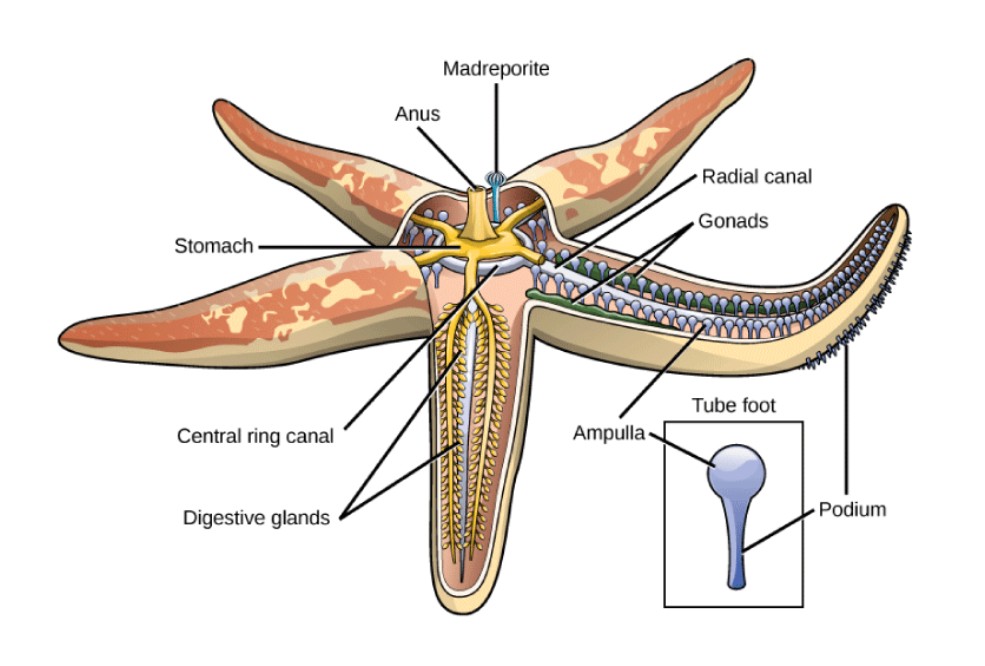
    Bacterial cause behind Mass Starfish Deaths

    About Starfish (Sea Stars):

    • Taxonomy: Belong to phylum Echinodermata; exclusively marine organisms.
    • Species: Brisingida, Forcipulatida, Velatida, Valvatida, Spinuloside
    • Body Structure:
      • Radial symmetry (adults), bilateral symmetry (larvae)
      • Calcareous exoskeleton for protection
      • Water vascular system for respiration and circulation
    • Unique Features:
      • Regeneration: Can regrow lost limbs
      • No blood or brain: Seawater circulates nutrients
      • Eyespots: At arm tips, help sense light
      • Tough skin: Made of calcium carbonate
    • Feeding: Carnivorous, detritivorous, and scavengers

    Reasons for Mass Deaths (2013–2025):

    • Causal Agent: Identified in 2025 as Vibrio pectenicida, a bacterium related to cholera-causing strains.
    • Symptoms: Limb detachment; Tissue disintegration; Melting into a pile of gunk.
    • Most Affected Species: Sunflower sea stars, which saw a 90% population decline.
    • Geographical Spread: Along the Pacific coast from Alaska to Mexico.
    • Ecological Consequences:
      • Starfish are keystone predators, especially of sea urchins.
      • Their decline led to urchin population explosions, which overgrazed kelp forests.
      • Resulted in biodiversity loss and reduced carbon sequestration.
    [UPSC 2012] Vultures which used to be very common in Indian countryside some years ago are rarely seen nowadays. This is attributed to:

    (a) the destruction of their nesting sites by new invasive species disease among them (b) a drug used by cattle owners for treating their diseased cattle persistent and fatal (c) scarcity of food available to them (d) a widespread, persistent and fatal disease among them


  • [pib] 10 years of Winter Fog Experiment (WiFEX)

    Why in the News?

    The Winter Fog Experiment (WiFEX) at Delhi’s IGI Airport, has marked 10 years of pioneering research on dense winter fog in North India.

    [pib] 10 years of Winter Fog Experiment (WiFEX)

    About Winter Fog Experiment (WiFEX):

    • Purpose: It is a long-term, open-field research project dedicated to studying winter fog—a major hazard in North India.
    • Launch: Initiated in 2015 at Indira Gandhi International Airport, New Delhi.
    • Lead Institution: Managed by the Indian Institute of Tropical Meteorology (IITM) under the Ministry of Earth Sciences.
    • Supporting Agencies: Supported by the India Meteorological Department (IMD) and the National Centre for Medium Range Weather Forecasting.
    • Objective: To understand fog variability, dynamics, and microphysics, and to improve fog forecasting across the Indo-Gangetic Plain.

    Key Features:

    • Network: Began at Indira Gandhi International Airport; expanded to Jewar Airport (Noida) and Hisar (Haryana).
    • Instruments Used: Includes micrometeorology towers, ceilometers, and high-frequency sensors.
    • Data Collected: Covers temperature profiles, humidity, wind, turbulence, soil heat flux, and aerosol concentrations.
    • Scientific Goal: To model the full fog life cycle and develop operational forecasting systems.
    • Next Phase – WiFEX-II:
      • Will provide localized, runway-specific fog forecasts.
      • Will expand to more airports for real-time winter decision-making.

    Outcomes:

    • Forecasting Model: A high-resolution fog prediction model with 3-km resolution and 85% accuracy for very dense fog (visibility <200 metres).
    • Operational Benefits: Reduced flight delays and diversions; enhanced runway safety.
    • Research Insights: Clarified the role of air pollution, urban heat islands, and land-use changes in fog formation.
    • Significance:
      • Aviation Planning: Helps airlines, pilots, and passengers manage winter fog disruptions.
      • Science-Policy Link: Demonstrates successful collaboration between scientific institutions and public policy to address climate and aviation challenges.
    [UPSC 2014] Photochemical smog is a resultant of the reaction among-

    Options: (a) NO2, O3 and peroxyacetyl nitrate in the presence of sunlight ** (b) CO2, O2, and peroxyacetyl nitrate in the presence of sunlight (c) CO, CO2, and NO2 at low temperature (d) high concentration of NO2, O3 and CO in the evening


  • How Heat led to Protocells formation on Earth?

    Why in the News?

    A new Nature Physics study suggests that warm volcanic rock surfaces may have concentrated organic molecules in watery cracks, triggering life-like chemistry—offering a clue to how protocells formed without membranes before life began.

    What are Protocells?

    • Overview: Protocells are primitive, cell-like bubbles believed to be early precursors of real biological cells. They were not fully alive but provided a space for early chemical interactions.
    • Lack of Complexity: These structures lacked complex parts like organelles or DNA systems but could hold important molecules like RNA and amino acids together.
    • Membrane Role: Protocells often formed simple membranes or boundaries, which allowed molecules to stay enclosed and interact more easily—helping early reactions like protein synthesis happen.
    • Importance: Although not living, they offered a model of how basic chemistry could evolve into biology, bridging the gap between non-living and living systems.

    History of Formation of Protocells:

    • Early Earth Conditions: Over 3.5 billion years ago, Earth’s surface had warm water pools and volcanic cracks filled with organic molecules made by natural processes like lightning.
    • Compartmentalization: The first step toward life was concentrating useful molecules in one place, so they could start reacting—this led to the idea of bubble-like protocells.
    • Old Theories: In the 1920s, Oparin and Haldane proposed that life began in a “primordial soup” with spontaneous chemical reactions in early Earth’s oceans.
    • Modern Insights: Newer research suggests cracks in volcanic rock or hydrothermal vents created temperature gradients and water flows that helped form protocells—no complex membranes were needed.

    Key Findings in the 2025 Study:

    • Lab Setup: Scientists created a 170-micrometre chamber with a warm top (40°C) and cool bottom (27°C), simulating early Earth rock cracks.
    • DNA Test: They added DNA and a protein-making kit (PURExpress). Only in the warm-cool chamber did the DNA make green fluorescent protein (GFP), showing real protein synthesis.
    • Molecule Gathering: Essential items like DNA, magnesium, and phosphate ions gathered more at the bottom—up to 70 times more concentrated than at the top.
    • Cell-Like Behavior: Even without a membrane, the system kept useful molecules inside while letting waste escape, mimicking real cell selectivity.
    • Big Implication: This experiment supports the idea that life could start in simple natural environments using just heat, flow, and basic chemicals—long before full cells appeared.
    [UPSC 2018] Consider the following statements:

    1. The Earth’s magnetic field has reversed every few hundred thousand years.

    2. When the Earth was created more than 4000 million years ago, there was 54% oxygen and no carbon dioxide.

    3. When living organisms originated, they modified the early atmosphere of the Earth. Which of the statements given above is/are correct?

    Options: (a) 1 only (b) 2 and 3 only (c) 1 and 3 only * (d) 1, 2 and 3


  • [pib] Breakthrough in Altermagnets Study

    Why in the News?

    Researchers at S N Bose National Centre for Basic Sciences (SNBNCBS) have discovered a novel transport behaviour in chromium antimonide (CrSb), a member of the emerging class of magnetic materials called altermagnets.

    What are Altermagnets?

    • Definition: Altermagnets are a new class of magnetic materials that combine properties of ferromagnets (which show external magnetism) and antiferromagnets (which don’t).
    • Unique Feature: They don’t attract metals like fridge magnets but still have active internal magnetic behavior, useful in advanced technology.
    • Use in Spintronics: These materials are ideal for spintronics, a technology that uses electron spin (not just charge) to make faster and energy-efficient devices.
    • No Magnetic Interference: Altermagnets do not create external magnetic fields, so they are stable and safe for nearby electronics.
    • Energy Efficient: Their structure helps reduce heat and energy loss, which is perfect for modern low-power gadgets.
    • Scientific Rarity: Very few altermagnets are known, making each discovery important for materials science.
    • Potential Applications: They could help build smaller memory chips, faster processors, and even support quantum computing.
    • Internal Action: Think of them as “quiet magnets” — they work inside devices without magnetic noise.

    Recent Discovery- Chromium Antimonide (CrSb):

    • Indian Breakthrough: Indian scientists found CrSb, a new altermagnet, showing rare direction-dependent conduction.
    • Directional Behavior: CrSb acts as an n-type material when current flows along its layers, and as a p-type when current flows across them.
    • First of its Kind: This is the first time an altermagnet has shown such dual conduction behavior in different directions.
    • Device Simplification: Since CrSb can behave as both p-type and n-type, it can reduce circuit size and eliminate the need for doping.
    • Eco-friendly Material: CrSb is made from non-toxic, common elements, making it ideal for sustainable electronics.
    • Potential Applications:
      • Future Potential: CrSb could be used in solar cells, batteries, and processors to make them greener and more efficient.
      • Environment-Friendly Tech: CrSb enables low-cost and eco-friendly electronics without sacrificing performance.
    [UPSC 2021] Magnetite particles, suspected to cause neurodegenerative problems, are generated as environmental pollutants from which of the following? 1. Brakes of motor vehicles 2. Engines of motor vehicles 3. Microwave stoves within homes 4. Power plants 5. Telephone lines Select the correct answer using the code given below.

    Options: (a) 1, 2, 3 and 5 only (b) 1, 2 and 4 only* (c) 3, 4 and 5 only (d) 1, 2, 3, 4 and 5


  • Botrytis Fungus and Wine-Making

    Why in the News?

    Scientists have found that Botrytis cinerea, the fungus used in high-end sweet wines, cannot be cloned because none of its nuclei carry a full set of chromosomes, a rare genetic trait among fungi.

    About Botrytis Fungus:

    • Overview: Botrytis cinerea, also called noble rot, is a fungus that infects ripe grapes and causes them to shrivel while concentrating sugar and flavour.
    • Fungal Classification: It belongs to the ascomycetes group and produces spores in sac-like structures known as asci, each containing eight ascospores.
    • Role in Winemaking: Under controlled vineyard conditions, Botrytis infection is desirable, as it enhances the sweetness and aroma of wine.
    • How is Wine Made Using It?
      • Effect on Grapes: The fungus dehydrates the grapes, which increases the sugar content and concentrates flavours naturally.
      • Harvesting Method: Grapes affected by Botrytis are hand-harvested, making the process labour-intensive and expensive.
      • Wine Varieties Produced: It is used to produce premium dessert wines such as Sauternes (France), Tokaji Aszú (Hungary), and Trockenbeerenauslese (Germany), known for their complex flavours and high value.

    Significance of Recent Findings:

    • Cloning Discovery: A recent study in Science found that Botrytis cannot be cloned, as no single nucleus contains a full set of chromosomes.
    • Unique Genome Structure: The chromosomes are distributed across multiple nuclei, which is unprecedented in any known fungus, animal, or plant.
    • Scientific Impact: This challenges conventional genetics and may lead to new insights in genome organisation and fungal evolution.
    • Dual Importance: Botrytis is now seen not only as a key player in winemaking but also as a genetic curiosity in modern science.
    [UPSC 2009] In the context of alternative sources of energy, ethanol as a viable bio-fuel can be obtained from:

    (a) Potato (b) Rice (c) Sugarcane* (d) Wheat


  • National Statistics Day

    Why in the News?

    June 29 is observed annually as National Statistics Day in India to commemorate the birth anniversary of Prasanta Chandra Mahalanobis, hailed as the Father of Indian Statistics.

    About National Statistics Day:

    • Purpose: National Statistics Day is observed on June 29 each year to commemorate the birth anniversary of P.C. Mahalanobis and highlight the value of statistics in national development.
    • First Observance: It was first celebrated in 2007, following a government resolution to raise awareness about the role of statistics in socio-economic planning.
    • Objectives: It aims to emphasise the use of statistical tools in governance, policy-making, and development planning.
    • Organizers: Events are led by the Ministry of Statistics and Programme Implementation (MoSPI) and the Indian Statistical Institute (ISI).
    • Annual Themes: Each year features a dedicated theme focusing on a statistical challenge or development goal.
    • Events and Outreach: Celebrations include seminars, exhibitions, competitions, and lectures across institutions.
    • Commemorative Status: Though not a public holiday, it is a nationally recognized observance.

    Who was P.C. Mahalanobis?

    • Background: He was born on June 29, 1893, in Kolkata, into a Brahmo Samaj family.
    • Education: He studied at Presidency College and later at King’s College, Cambridge.
    • Legacy Title: He is hailed as the Father of Modern Statistics in India and was known as “The Professor”.
    • Institution Builder: He founded the Indian Statistical Institute (ISI) and helped set up India’s Planning Commission.
    • His Major Contributions:
      • National Sample Survey (NSS): Launched in 1950, it enabled the systematic collection of household data for policymaking.
      • Mahalanobis Distance: Introduced in 1936, it remains a widely used statistical tool for identifying outliers in data.
      • Applied Statistics: He applied statistical methods to flood control in Bengal and Odisha, offering cost-effective solutions.
      • Planning Vision: Mahalanobis played a key role in drafting the Second Five-Year Plan, focusing on industrialisation and state-led growth.
      • Academic Promotion: He started the journal Sankhya, modeled on Biometrika, to foster statistical research in India.
      • Infrastructure Vision: His early proposal led to the Hirakud Dam project, completed in 1957.
      • Balanced Approach: Though viewed as pro-Soviet during the Cold War, he was admired for his intellectual integrity.
    [UPSC 2016] A recent movie titled The Man Who Knew Infinity is based on the biography of:

    (a) S. Ramanujan (b) S. Chandhrashekhar (c) S. N. Bose (d) C. V. Raman


  • What are Black Boxes?

    Why in the News?

    Authorities have recovered the black box from the crash site of the recent incident in Ahmedabad.

    black box

    About Black Boxes:

    • Purpose: Black boxes are essential flight data recording devices used in aircraft to aid in accident investigation and flight safety analysis.
    • Development: Australian scientist David Warren in 1954, developed the first practical FDR after investigating mid-air explosions.
    • Color and Visibility: Despite the name, black boxes are painted bright orange with reflective material to make them easily visible after a crash.
    • Two Main Types: Aircraft typically have two black boxes:
      1. Cockpit Voice Recorder (CVR) and
      2. Digital Flight Data Recorder (DFDR).
    • Single Unit: Some aircraft integrate both functions into a single combined unit.
    • How does it work?
      • Cockpit Voice Recorder (CVR): The CVR records cockpit audio, including pilot conversations, radio transmissions, alarm sounds, and background noises like engine hum or warning tones.
      • Digital Flight Data Recorder (DFDR): The DFDR logs key flight performance data, including altitude, airspeed, direction, engine parameters, and system operations, capturing thousands of data points per second.
      • Installation Location: Black boxes are usually installed in the tail section of the aircraft, as this area is statistically more likely to remain intact in a crash.
      • Recording Capacity: The CVR records the last 2 hours of cockpit audio on a continuous loop, while the DFDR stores up to 25 hours of flight data.
      • Durability and Protection: Black boxes use solid-state memory chips housed in crash-survivable casings that can endure high-impact forces, extreme temperatures (up to 1,100°C), and deep-sea pressure.
      • Underwater Locator Beacons (ULBs): Each black box includes a beacon that emits signals for up to 30 days, aiding search teams in locating the devices in the event of a water crash.

    Use of Black Boxes in India:

    • Regulation in India: In India, aircraft crash investigations are conducted by the Aircraft Accident Investigation Bureau (AAIB) under the Ministry of Civil Aviation, using black box data as primary evidence.
    • Recent Development (April 2025): India established its first dedicated Flight Recorders Laboratory in New Delhi, strengthening the country’s capability to analyze crash data independently and efficiently.
    [UPSC 2025] GPS-Aided Geo Augmented Navigation (GAGAN) uses a system of ground stations to provide necessary augmentation.  Which of the following statements is/are correct in respect of GAGAN?

    I. It is designed to provide additional accuracy and integrity.

    II. It will allow more uniform and high-quality air traffic management.

    III. It will provide benefits only in aviation but not in other modes of transportation.

    Options: (a) I, II and III (b) II and III only (c) I only (d) I and II only*


  • Science behind right AC Temperature

    Why in the News?

    The Union Ministry of Power is considering a policy to restrict the temperature range of new air conditioners (ACs) in India to between 20°C and 28°C.

    Important Facts and Keywords related to ACs:

    • Efficiency Ratings: ACs have ratings like SEER (Seasonal Energy Efficiency Ratio) or EER (Energy Efficiency Ratio). A higher rating means the AC uses less power to cool the same space.
    • Inverter Technology: Some ACs use inverter compressors, which adjust speed instead of turning on and off repeatedly. This saves energy and keeps the room temperature more stable.
    • Humidity Control: ACs also help by removing moisture from the air. This keeps humidity around 40–60%, which feels more comfortable and prevents mold.
    • Cooling Capacity: ACs are measured in tons. A “ton” of cooling comes from the amount of heat needed to melt 1 ton (~2,000 pounds) of ice in 24 hours.

    How do Air Conditioners Work?

    • Basic Idea: Air conditioners (ACs) work like a heat-moving machine. They take heat from inside your room and push it outside, making the room cooler. They do this using a special fluid called a refrigerant, and a system called the vapour-compression cycle.
    • Main Parts and What They Do:
      • Evaporator: This part is inside your room. The refrigerant, which is very cold here, absorbs heat from the indoor air and turns into a gas. It also removes moisture, so your room feels less humid.
      • Compressor: This is outside the house. It squeezes the refrigerant gas, making it very hot (about 90°C) and high-pressure. This part uses the most electricity in the AC.
      • Condenser: The hot gas then flows through the condenser coil outside. It releases heat into the outdoor air and turns back into a liquid.
      • Expansion Valve: This part lowers the pressure of the liquid refrigerant, making it cold again before it goes back to the evaporator to repeat the cycle.
    • Refrigerant: The refrigerant is a specially designed gas that changes state easily at low temperatures and pressures, making it ideal for absorbing and releasing heat rapidly. Modern refrigerants like R-32 or R-410A are more energy-efficient and environmentally safer than older ones like CFCs and HCFCs.

    Why limit AC Temperature settings?

    • Energy Efficiency Data: According to the Bureau of Energy Efficiency (BEE), setting an AC to 24°C instead of a lower setting can save 6% electricity per 1°C increase.
    • National Impact: If adopted widely, this temperature setting could help India save 20 billion units of electricity annually.
    • Health Risks at Low Temperatures: Temperatures below 18°C are linked to hypertension, asthma, and respiratory infections, especially among children, the elderly, and people with weakened thermoregulation.
    • Evidence from Global Studies: Research in Japan, the UK, and New Zealand shows that slightly warmer indoor settings lead to better respiratory and cardiovascular health.
    • WHO Recommendation: The World Health Organization advises 18°C as the minimum safe indoor temperature in temperate climates.
    • Thermal Comfort Standards: Guidelines like ASHRAE-55 and ISO 7730 suggest optimal indoor temperatures between 20°C and 24°C for lightly clothed people, with adjustments based on local climate and culture.

    Global Cooling Trends and the Need for Regulation:

    • Global AC Usage Growth: As of 2022, there were an estimated 2 billion air conditioners in use worldwide, with residential units tripling since 2000, especially in India and China.
    • Access Gap in Asia-Pacific: Despite this growth, 43% of the Asia-Pacific population still lacks access to adequate cooling solutions.
    • Environmental Impact: Air conditioning significantly increases electricity use and carbon emissions, especially in countries with fossil fuel-dependent grids.
    • India’s AC Load Projection: By 2030, India’s total connected AC load is expected to reach 200 gigawatts, requiring urgent demand management strategies.
    • Consumer Awareness Tools: Initiatives like default settings at 24°C and energy labelling empower consumers to make informed energy-efficient choices.
    • Benefits of Regulation: A regulated temperature range can help lower energy consumption, reduce peak power demand, and support public health.
    [UPSC 2003] Consider the following statements:

    1. Steam at 100°C and boiling water at 100°C contain the same amount of heat.

    2. Latent heat of fusion of ice is equal to the latent heat of vaporization of water.

    3. In an air-conditioner, heat is extracted from the room-air at the evaporator coils and is rejected out at the condenser coils.

    Which of these statements is/are correct?

    Options: (a) 1 and 2 (b) 2 and 3 (c) Only 2 (d) Only 3*