💥Mains Ready By December. Smash Mains & Smash PYQ Admissions Open

Subject: Basic Sciences

  • Pyrite

    Why in the News?

    Scientists have discovered the oldest known evidence of fire making by prehistoric humans in England. The findings include heated clay, heat shattered flint handaxes and pieces of iron pyrite, which can generate sparks when struck against flint.

    About Pyrite

    • Pyrite is a brass yellow mineral with a bright metallic lustre.
      • Chemical composition: Iron sulfide (FeS₂).
      • It is the most common sulfide mineral found on Earth.
      • The name is derived from the Greek word pyr meaning fire, as pyrite emits sparks when struck by metal or flint.
      • Nodules of pyrite found in prehistoric burial mounds suggest its early use in fire making.
      • Commonly known as “Fool’s Gold” due to its superficial resemblance to gold.

    Distinguishing Pyrite from Gold

    • Pyrite is much lighter than gold.
      • It is harder than gold and cannot be scratched with a fingernail or a pocket knife.
      • Gold is soft, malleable and can be easily scratched.

    Occurrence

    • Found worldwide in diverse geological settings.
      • Occurs in sedimentary deposits, hydrothermal veins and as a constituent of metamorphic rocks.

    Uses of Pyrite

    • Source of iron and sulfur.
      • Used in the manufacture of sulfuric acid.
      • Used to produce iron sulfate.
      • Iron sulfate applications include nutritional supplements, ink, lawn conditioner, water treatment and flocculation, and moss control.
      • Iron sulfate derived from pyrite is used in the treatment of iron deficiency anemia.
      • Some varieties contain microscopic gold and can be mined as a gold ore.

    Prelims Pointer

    • Pyrite’s ability to produce sparks made it an important material for early human fire technology.
    Ilmenite and rutile, abundantly available in certain coastal tracts of India, are rich sources of which one of the following? (2023)

    (a) Aluminium 

    (b) Copper 

    (c) Iron 

    (d) Titanium

  • [2nd December 2025] The Hindu OpED: The new action plan on AMR needs a shot in the arm

    PYQ Relevance

    [UPSC 2014] Can overuse and free availability of antibiotics without Doctor’s prescription, be contributors to the emergence of drug-resistant diseases in India? What are the available mechanisms for monitoring and control? Critically discuss the various issues involved.

    Linkage: This PYQ directly mirrors the article’s focus on antibiotic misuse, OTC access, and weak regulatory control driving AMR. It lets you use NAP-AMR 2.0 to show gaps in surveillance, stewardship, and One Health governance, exactly what the exam tests.

    Mentor’s Comment

    AMR is now a major threat to India’s health, food systems, and environment. Resistance has moved beyond hospitals into water, soil, and livestock. NAP-AMR 2.0 is timely and shows a stronger, more accountable approach. This analysis helps you clearly understand what worked, what failed, and what must change.It also builds GS2 and GS3 depth through governance, science, environment, and One Health linkages.

    Introduction

    India has released its National Action Plan on Antimicrobial Resistance (NAP-AMR 2.0) for 2025-29, signalling a renewed commitment to containing AMR, a challenge that affects human health, livestock, agriculture, the environment, and food systems. Unlike the first plan (2017), which saw uneven adoption across States, the second plan attempts structural reform through higher accountability, stronger surveillance, private-sector engagement, multi-departmental integration and One Health alignment.

    Why in the news?

    The launch of NAP-AMR 2.0 marks a significant turning point because AMR has now expanded beyond hospitals into soil, water, livestock, markets and food systems, making it a full-spectrum health and environmental challenge. 

    How did the first NAP-AMR evolve and where did it fall short?

    1. Significant early progress: Brought AMR into national consciousness, encouraged multi-sectoral participation, improved laboratory networks, and strengthened stewardship.
    2. One Health recognition: Placed AMR within the interface of human health, animals and environment.
    3. State-level stagnation: Most States undertook only individual activities; only a few (Kerala, MP, Delhi, AP, Gujarat, Sikkim, Punjab) created formal AMR action plans.
    4. Weak institutional execution: Multisectoral One Health structures were missing in most States.
    5. Uneven governance: Human health, veterinary systems, pharmaceuticals and waste management lie under different jurisdictions, causing weak coordination.
    6. Monitoring deficiencies: Surveillance, regulatory oversight, environmental contamination monitoring and antibiotic stewardship remained fragmented.

    What makes NAP-AMR 2.0 more mature and implementation-focused?

    1. Shift to national priorities: Moves beyond intent; outlines clear responsibilities across levels of governance.
    2. Private sector engagement: Recognises that a major share of India’s health care and veterinary services is provided privately.
    3. Scientific strategy: Emphasises innovation, rapid diagnostics, alternatives to antibiotics, and improved environmental monitoring.
    4. One Health deepening: Stronger coordination across food safety, waste management, agriculture, environment and human/animal health.

    What new governance mechanisms does the NAP-AMR 2.0 introduce?

    1. Higher accountability: Greater role for national supervision through a dedicated Coordination and Monitoring Committee.
    2. State-level innovation: Recommends every State establish a One Health inter-ministerial AMR committee, along with State AMR cells.
    3. Integrated reporting framework: Aligns State reporting with national structures for uniform monitoring.
    4. Technical backbone: Calls for a national follow-up mechanism and a multi-departmental coordinating structure.

    Where do administrative and operational gaps persist?

    1. Funding limitations: NITI Aayog’s earlier financial grant-based system did not generate adequate incentives.
    2. Weak incentive design: No system for rewarding State performance or penalising poor progress.
    3. Fragmented responsibility: Human health, veterinary systems, agriculture, pharmaceuticals and waste sectors work under separate ministries and State departments.
    4. Lack of real-time accountability: No statutory notification requiring States to inform the Centre of AMR progress.
    5. Dependence on central push: States often wait for Union-level initiatives rather than proactively building AMR infrastructure.

    What financial and institutional reforms does the article highlight as essential?

    1. Mandatory funding channels: Conditional grants through the National Health Mission (NHM) for surveillance and laboratory systems.
    2. Administrative energy: Once funding becomes compulsory, States respond faster.
    3. Scientific backbone: Need for a sustainable, long-term national centre for AMR control and accountability.
    4. International relevance: Without a Centre-backed national AMR programme, India cannot engage in meaningful global AMR governance.

    Conclusion

    The NAP-AMR 2.0 offers an opportunity to anchor India’s AMR response on a stronger scientific and institutional foundation. But success will require coordinated State participation, financial backing, and accountable governance, not just policy intention. A central AMR Centre, integrated surveillance, and enforceable incentives could finally convert national plans into ground-level action across health systems, veterinary services, agriculture, food safety and environmental management.
  • Project 17A | Delivery of ‘Taragiri’  

    Why in the News?

    • Taragiri, the fourth Nilgiri-class (Project 17A) indigenous stealth frigate, was delivered to the Indian Navy on 28 Nov 2025 by Mazagon Dock Shipbuilders Ltd (MDL), Mumbai.

    About Taragiri (Yard 12653)

    • Third P17A ship built by MDL.
    • Named after the erstwhile INS Taragiri (Leander-class), which served 1980–2013.
    • Represents major strides in Aatmanirbhar Bharat, with 75% indigenous content.
    • Over 200 MSMEs involved; employment generated:
      • ~4,000 direct, 10,000+ indirect.

    Project 17A (P-17A) 

    • Follow-on of P17 Shivalik-class frigates.
    • Total ships: 7
      • 4 at MDL, 3 at GRSE.
    • Aim: Advanced stealth, multi-mission, blue-water capability.
    With reference to Agni-IV Missile, which of the following statements is/are correct? (2014)

    1. It is surface-to-surface missile. 

    2. It is fuelled by liquid propellant only. 

    3. It can deliver one-tonne nuclear warheads about 7500km away. 

    Select the correct answer using the code given below: 

    (a) 1 only (b) 2 and 3 only (c) 1 and 3 only (d) 1, 2 and 3 only

  • Vitamin B12 Deficiency & Skin Manifestations 

    Why in the news?

    According to a study published in Canad­ian Family Physician, Vitamin B12 deficiency often shows early dermatological symptoms—such as pigmentation, dryness, and inflammation—before neurological or hematological complications appear.

    What is Vitamin B12?

    • Water-soluble vitamins are essential for: Red blood cell formation, Nerve function, DNA synthesis and Cell growth and repair

    Why Skin Shows Early Signs?

    • B12 deficiency → reduced RBC production → low oxygen delivery to skin → visible skin changes.
    • Weak immunity and impaired nerve function further worsen dermatological issues.
    High-Risk Groups

    More prone to Vitamin B12 deficiency:

    • Vegetarians/vegans
    • Adults > 50 years
    • Individuals with:
      • Gastritis, Crohn’s disease, celiac disease
    • Those taking:
      • Antacids (PPIs/H2 blockers)
      • Metformin
    • People with poor nutrient absorption
    Consider the following pairs: Vitamin : Deficiency disease (2014)

    1. Vitamin C : Scurvy 

    2. Vitamin D : Rickets 

    3. Vitamin E : Night Blindness 

    Which of the pairs given above is/are correctly matched? 

    (a) 1 and 2 only (b) 3 only (c) 1, 2 and 3 only (d) None

  • Auramine O Adulteration in Food: A Persistent Food-Safety Challenge in India

    Why in the News?

    • Recent inspections by state food-safety departments and laboratory analyses by academic institutions have once again detected the presence of Auramine O — a banned industrial dye — in sweets, savoury items, and brightly coloured chickpeas sold in public.

    What is Auramine O?

    • A synthetic bright yellow industrial dye.
    • Uses: textiles, leather, printing inks, paper, microbiological staining.
    • Not permitted as food colour in India, USA, EU, or most countries.
    • IARC Classification: Possibly carcinogenic to humans (Group 2B).

    Why is Auramine O Harmful?

    • Toxicological risks:
      • Liver & kidney damage
      • Spleen enlargement
      • Mutagenic effects
      • Potential carcinogenicity
      • Organ lesions even at low doses

    How Does Auramine Enter the Food Chain?

    • Cheap industrial dyes are sold informally in markets.
    • Used by small vendors to mimic:
      • Saffron
      • Turmeric
      • Approved synthetic colours
    • Usage spikes during festivals when brightly coloured sweets/snacks are in demand.
    • Lack of awareness and cost pressure lead to misuse.

    Commonly Adulterated Food Items

    • Bright yellow chickpeas
    • Laddus, peda, halwa
    • Namkeen, mixtures
    • Pickles and condiments

    Regulatory Framework – India

    Food Safety and Standards Act (2006)

    • Defines adulteration.
    • Penalties: fines + imprisonment (for injury/death).

    FSSAI Initiatives

    • Sampling & crackdown during festive seasons.
    • Seizures of illegal dyes and prosecution.
    • New order: bold, larger nutritional information on labels.
    • Awareness programs for:
      • Micro and small enterprises
      • Street vendors


    Consider the following statements: (2018)

    1. The Food Safety and Standards Act, 2006 replaced the Prevention of Food Adulteration Act, 1954. 
    2. The Food Safety and Standards Authority of India (FSSAI) is under the charge of Director General of Health Services in the Union Ministry of Health and Family Welfare. 

    Which of the statements given above is/are correct? 

    1. 1 only 
    2. 2 only 
    3. Both 1 and 2 
    4. Neither 1 nor 2
  • Quantum Clocks and the Cost of Timekeeping

    Why in the News?

    A new study in Physical Review Letters finds that in quantum clocks the main cost of timekeeping comes from measurement rather than the clockwork itself, reshaping ideas in quantum metrology.

    What are Quantum Clocks?

    • Concept: Quantum clocks are timekeeping devices based on microscopic quantum systems whose transitions – atomic jumps, tunnelling events, or energy-level shifts – act as clock ticks.
    • Quantum Nature: Unlike classical clocks, their evolution is probabilistic, allowing temporary backward ticks due to quantum fluctuations while still needing a mechanism to mark irreversible flow of time.
    • Irreversibility Requirement: A functional clock must create a permanent record distinguishing past from future, despite underlying reversible quantum dynamics.
    • Role of Measurement: Their precision depends on both internal quantum transitions and the classical measurement system used to read them, since measurement converts quantum events into usable time signals.
    • Double Quantum Dot Model: In setups using double quantum dots (DQDs), a single electron tunnels between two nanoscale sites; each tunnelling event forms a discrete tick.
    • Quantum Dot Basis: Quantum dots – recognised by the 2023 Nobel Prize in Chemistry – can confine single electrons precisely, enabling well-resolved quantum transitions.
    • Entropy and Precision: The clock’s internal entropy rises with precision; at equilibrium (equal forward and backward ticks), entropy is zero and the system loses its ability to mark time.

    Recent Findings and Implications:

    • New Demonstration (2025): A Physical Review Letters study built a working quantum clock using a double quantum dot and separately measured entropy from the clockwork and from the measurement process.
    • Key Result: The entropy generated by measurement (via DC sensing and RF reflectometry) was nine orders of magnitude higher than the entropy needed for the electron-tunnelling clock itself.
    • Zero-Entropy Clockwork Still Works: Even when the quantum system produced no entropy, continuous measurement still created an irreversible classical record, allowing timekeeping.
    • Core Insight: The arrow of time in quantum clocks arises mainly from the classical measurement interface, not from the quantum dynamics.
    • 2023 Theoretical Link: Supports earlier findings that quantum measurement is inherently invasive and energy-costly, and that increasing measurement frequency does not always improve accuracy.

    Implications:

    • Thermodynamic Cost: Extracting information from any quantum system has an energy and entropy cost, affecting quantum sensing, quantum metrology, and clock design.
    • Application Outlook: Ultra-precise atomic clocks may be improved by lower-entropy measurement systems, leading to more efficient next-generation timekeeping.
    • Quantum Technologies: Insights are crucial for scalable quantum computers, where reading qubits must be precise yet thermodynamically minimal.
    • Conceptual Implication: Suggests that the microscopic arrow of time emerges from creating readable, irreversible records, rather than solely from quantum evolution itself.
    [UPSC 2022] Which one of the following is the context in which the term “qubit” is mentioned?

    Options: (a) Cloud Services (b) Quantum Computing* (c) Visible Light Communication Technologies (d) Wireless Communication Technologies


  • ‘DRISHTI’ System for AI Freight Wagon Safety

    Why in the News?

    Indian Railways is deploying an AI system called DRISHTI (AI-Based Freight Wagon Locking Monitoring System) to spot unlocked or tampered freight wagon doors in motion, developed with IIT Guwahati to improve freight safety.

    About the DRISHTI System:

    • Overview: It is an Artificial Intelligence system developed by the Northeast Frontier Railway with IIT Guwahati TIDF to monitor wagon door-locking integrity.
    • Primary Objective: Detects unlocked, tampered, or improperly sealed wagon doors automatically during train movement to improve freight security.
    • Technology Framework: Uses AI-enabled cameras, computer vision, and machine-learning algorithms to analyse door-locking mechanisms in real time.
    • Operational Value: Ensures cargo safety without halting trains, addressing pilferage, tampering, and human-error-based sealing failures.
    • Current Status: Undergoing successful trials for nearly ten months on selected freight rakes, with high anomaly-detection accuracy.

    Key Features:

    • Real-Time Monitoring: Continuously tracks door position and locking condition using AI-powered imaging units.
    • Anomaly Detection: Flags tampering, loose locks, or improper sealing; sends immediate alerts to control rooms.
    • Non-Intrusive Operation: Functions during full-speed train movement, avoiding delays or stoppages.
    • Automated Alerts: Provides instant notifications for rapid operator response and incident verification.
    • Reduced Manual Checks: Minimises reliance on manual sealing inspections, improving safety and resource efficiency.
    • Data Integration: Compatible with freight-management platforms for audit trails, analytics, and tracking transparency.
    • Scalable Architecture: Designed for phased expansion across national freight routes after successful field validation.
    • Indigenous Innovation: Fully developed in India, supporting the Atmanirbhar Bharat goal in transport and logistics technology.
    • Safety and Efficiency Gains: Enhances wagon security, reduces theft, supports predictive maintenance, and improves overall freight reliability.
    [UPSC 2025] Consider the following statements:

    I. Indian Railways have prepared a National Rail Plan (NRP) to create a future-ready railway system by 2028.

    II. ‘Kavach’ is an Automatic Train Protection system developed in collaboration with Germany.

    III. ‘Kavach’ system consists of RFID tags fitted on track in station section.

    Which of the statements given above are not correct?

    (a) I and II only * (b) II and III only (c) I and III only (d) I, II and III


  • [pib] India’s First MWh-Scale Vanadium Redox Flow Battery at NTPC NETRA 

    Why in the News?

    The Union Ministry of Power has inaugurated India’s largest and first MWh-scale Vanadium Redox Flow Battery (VRFB) of 3 MWh capacity at NETRA, NTPC’s R&D Centre in Greater Noida.

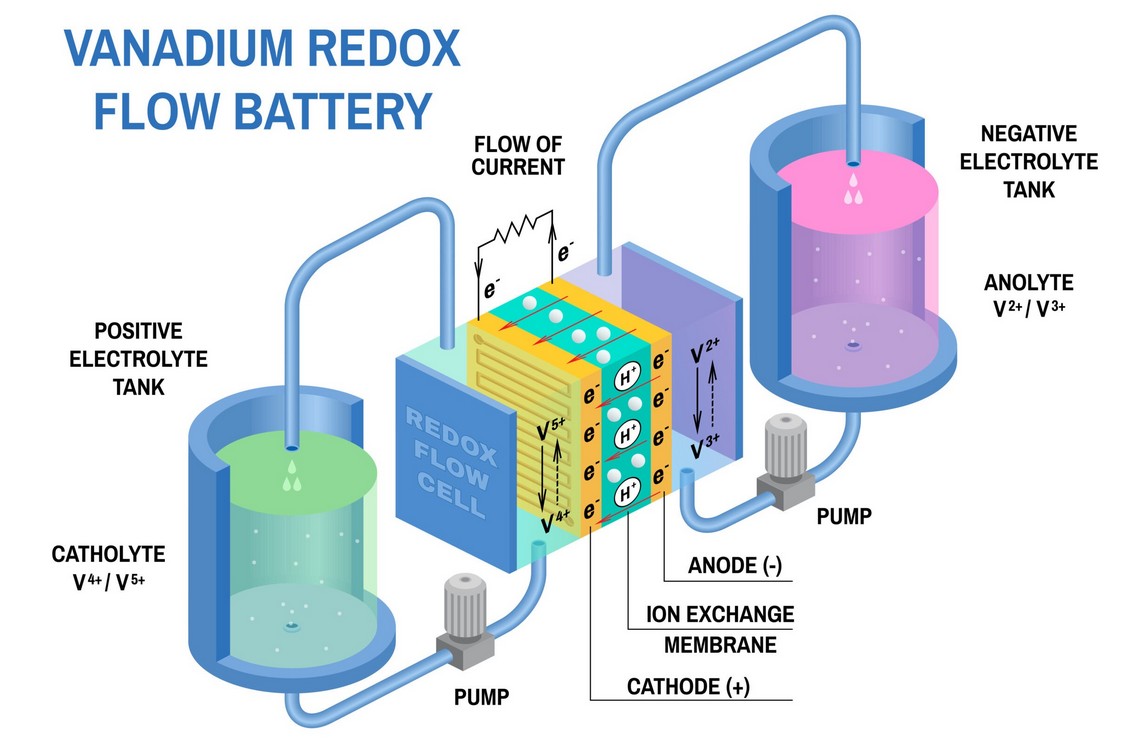
    About the Vanadium Redox Flow Battery (VRFB):

    • Overview: A rechargeable flow battery that stores energy in liquid electrolytes containing vanadium ions in different oxidation states.
    • Core Principle: Uses the same element vanadium for both electrolytes, preventing cross-contamination and extending operational life.
    • Working Mechanism: Energy is stored through oxidation and reduction reactions of vanadium ions, where electrons are exchanged between two electrolyte tanks.
    • Cell Design: Electrolytes circulate through a cell stack separated by an ion-selective membrane that enables ion movement while stopping mixing.
    • Scalability: Energy capacity depends on electrolyte volume, while power output depends on cell stack size, allowing flexible scaling.
    • Application Focus: Ideal for stationary, grid-scale energy storage, renewable energy integration, and backup power systems.

    Benefits over Conventional Batteries:

    • Independent Scalability: Energy and power can be scaled separately, perfect for large utility storage and renewable grids.
    • Extended Lifespan: Can endure thousands of cycles since vanadium electrolytes don’t degrade or mix.
    • Full Discharge Safety: Can be fully discharged (100%) without damaging capacity, unlike lithium-ion batteries.
    • High Safety Level: Uses non-flammable, water-based electrolytes, eliminating risk of fire or explosion.
    • Eco-Friendly: Recyclable and non-toxic electrolytes reduce environmental impact and support circular use.
    • Long-Duration Storage: Provides 6–10+ hours of continuous energy, ideal for stabilizing solar and wind supply.
    • Low Maintenance: Fewer mechanical parts and no thermal runaway risk ensure long-term durability.
    • Fast Response: Reacts quickly to grid fluctuations, improving power quality and reliability.

    Limitations:

    • High Initial Cost: Requires expensive vanadium electrolyte and specialized components, leading to higher upfront installation costs than lithium-ion systems.
    • Low Energy Density: Stores less energy per unit volume, making it unsuitable for mobile or space-constrained applications like electric vehicles.
    • Complex Infrastructure: Needs large storage tanks, pumps, and control systems, which increase operational complexity and land requirements.
    [UPSC 2025] In the context of electric vehicle batteries, consider the following elements:

    I. Cobalt II. Graphite III. Lithium IV. Nickel

    How many of the above usually make up battery cathodes?

    (a) Only one (b) Only two (c) Only three* (d) All the four


  • Arsenic Toxicity in Rice Cultivation

    Why in the News?

    A recent study has revealed that the composition of microbial communities in rice paddies critically determines the buildup of arsenic compounds in rice grains.

    Arsenic Toxicity in Agriculture:

    • Overview: Arsenic (As) is a potent carcinogen and phytotoxin, bioaccumulating in rice and posing severe health and agronomic risks in Asian paddies.
    • Mechanism in Flooded Fields: Under anaerobic conditions, microbes convert arsenic into soluble, bioavailable forms that rice roots readily absorb.
    • Toxic Compounds: Organic forms like dimethylarsinic acid (DMA) and dimethylated monothioarsenate (DMMTA) cause straighthead disease, producing sterile, erect panicles and yield losses up to 70 %.
    • Speciation vs. Concentration: Toxicity depends on arsenic speciation, not total soil As levels, even low-As soils may cause poisoning.
    • Geographic Hotspots: Severe in West Bengal, Bihar, and Bangladesh, where arsenic-laden groundwater is used for irrigation.

    About Soil Age and Microbial Composition:

    • Research Insight: Study by Peng Wang (Nanjing Agricultural University) shows soil age dictates microbial dominance and arsenic behaviour.
    • Young Soils (< 700 yrs): Dominated by arsenic-methylating bacteria that convert inorganic As into toxic organic forms (DMA, DMMTA).
    • Old Soils (> 700 yrs): Rich in demethylating archaea that detoxify As by breaking down methylated compounds.
    • Global Microbiome Survey: Across 801 paddy soils, identified 11 methylators and 6 demethylators as key toxicity predictors.
    • Risk Threshold: When methylator: demethylator ratio > 1.5, probability of straighthead disease rises sharply.

    How does Microbial balance govern Arsenic toxicity?

    • Biological Equilibrium: Arsenic toxicity depends on balance between methylating bacteria (risk) and demethylating archaea (detoxification).
    • Environmental Triggers: Flood duration, oxygen, temperature, and hydrological shifts can tilt this balance toward higher toxicity.
    • Mitigation Measures: Mid-season drainage, silicon fertilisation, and microbial community management restore redox balance and reduce As uptake.
    [UPSC 2013] Which of the following can be found as pollutants in the drinking water in some parts of India?

    1. Arsenic 2. Sorbitol 3. Fluoride 4. Formaldehyde 5. Uranium

    Select the correct answer using the codes given below.

    Options: (a) 1 and 3 only (b) 2, 4 and 5 only (c) 1, 3 and 5 only* (d) 1, 2, 3, 4 and 5


  • Anna Mani and her contributions in India’s Atmospheric Research

    Anna Mani and her contributions in India’s Atmospheric Research

    Why in the News?

    The National Book Trust has released a book on highlighting physicist Anna Mani’s pioneering ozone and pollution studies in Pune decades before “climate change” entered discourse.

    Who was Anna Mani (1918–2001)?

    • Overview: Indian physicist and meteorologist from Peermade, Kerala; pioneered India’s meteorological instrumentation and atmospheric science.
    • Alma mater: Studied physics at Presidency College, Chennai (1939); trained at Imperial College, London; joined IISc Bengaluru under C.V. Raman, publishing five crystallography papers.
    • Professional Career: Joined the India Meteorological Department (IMD) in 1948; later headed its Instruments Division; earned the title “Weather Woman of India.”

    Key Contributions:

    • Meteorological Instrumentation: Designed and standardized 100+ weather instruments, including India’s first pyranometers and sunshine recorders, ending dependence on imports. Established the Regional Instrumentation Centre, Pune, for nationwide calibration.
    • Measurement Infrastructure: Created a national network of solar, wind, and radiation observatories; introduced WMO-grade calibration; data later used for India’s first Wind Energy Atlas.
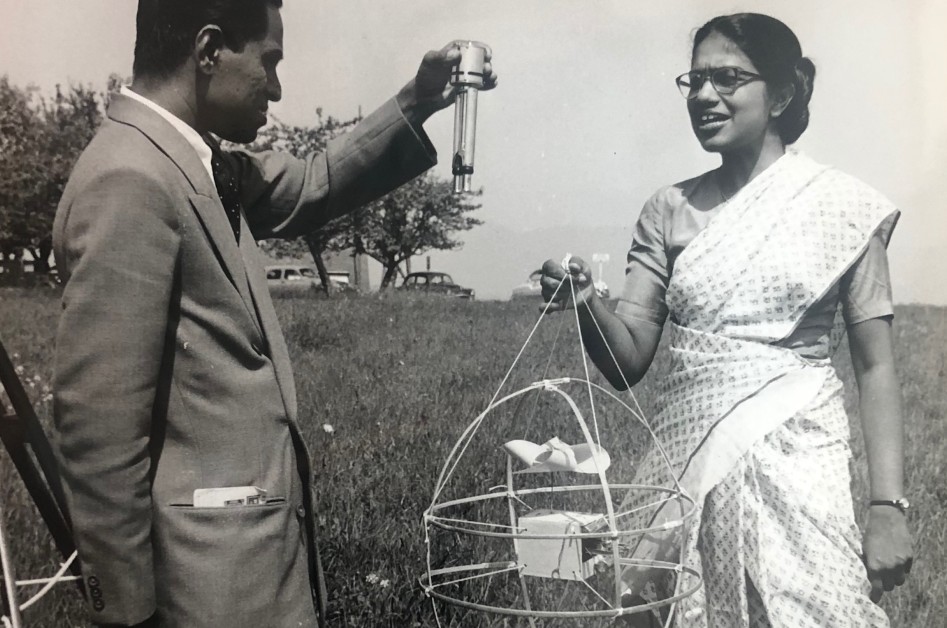
    • Ozone & Atmospheric Research: In 1964, developed India’s first ozonesonde balloon measuring ozone up to 35 km; integrated into the WMO Global Ozone Mapping Programme. Her studies on ground-level ozone and urban aerosols anticipated modern air-pollution science.
    • Instrument Design & Ethics: Innovated with glass and Teflon components to remove chemical errors in ozonesondes; upheld the credo “wrong measurements are worse than none.” Her Pune lab became a model of scientific precision.
    • Publications: Authored “Handbook for Solar Radiation Data for India” (1980) and “Wind Energy Resource Survey in India” (1992), both still reference standards for renewable-energy studies.
    • Environmental Vision: Warned early about CFC emissions and ozone depletion; connected industrialization to atmospheric alteration, foreshadowing the Anthropocene concept.
    • Legacy: Her datasets form India’s earliest continuous record of ozone, radiation, and aerosol change, anchoring present-day climate-model validation and policy research.