💥Join UPSC 2027,2028 Mentorship (July Batch) + XFactor Notes & Microthemes PDF

Subject: Conservation & Mitigation

1. Conservation Progs.
2. Worldwide initiatives
3. Mitigation Strategies
4. Conventions and Protocols

  • Asiatic Caracal spotted at Ramgarh in Rajasthan’s Jaisalmer

    Why in the News?

    The elusive Asiatic Caracal (Caracal caracal schmitzi) has been rediscovered at Ramgarh, Jaisalmer, reaffirming its survival in the Thar Desert after years of uncertainty.

    Asiatic Caracal spotted at Ramgarh in Rajasthan's Jaisalmer

    About Asiatic Caracal:

    • Scientific Name: Caracal caracal schmitzi, the Asiatic subspecies of the globally distributed caracal species.
    • Distribution: Native to Africa, Middle East, Central Asia, Pakistan, and historically across northwestern and central India, now restricted mainly to Rajasthan and Gujarat.
    • Indian Population: Fewer than 50 individuals survive in India, with small, fragmented groups in the Thar Desert, Ranthambhore landscape, and Kutch region.
    • Habitat: Prefers semi deserts, savannahs, scrublands, steppes, dry forests, and open arid terrains; uses grassland scrub mosaics for hunting and denning.
    • Ecology: A shy nocturnal mesopredator feeding on rodents, hares, birds, and occasionally small ungulates; known for vertical leaps up to 3 metres to strike flying prey.
    • Legal Protection: Listed in Schedule I of the Wildlife Protection Act 1972 and categorised as Least Concern globally but critically sparse within India.
    • Threats: Habitat loss from land conversion, solar parks, linear infrastructure, hunting, and misclassification of grasslands as wastelands reducing viable habitat.
    • Conservation Status in India: Included in the 2021 Species Recovery Plan by National Board for Wildlife (NBWL) and MoEFCC, with urgent need for grassland restoration, monitoring, and community based protection.
    [UPSC 2019] Question: Consider the following statements:

    1. Asiatic lion is naturally found In India only.

    2. Double-humped camel is naturally found in India only.

    3. One-horned rhinoceros is naturally found in India only.

    Which of the statements given above is / are correct?

    Options: (a) 1 only* (b) 2 only (c) 1 and 3 only (d) 1, 2 and 3


  • [17th November 22] The Hindu Op-ed: Delhi’s air, a ‘wicked problem’ in need of bold solutions

    PYQ Relevance

    [UPSC 2021] Describe the key points of the revised Global Air Quality Guidelines (AQGs) recently released by the WHO. How are these different from its last update in 2005? What changes in India’s National Clean Air Programme are required to achieve these revised standards?

    Linkage: This PYQ directly links to Delhi’s recurring “severe” AQI episodes and the article’s emphasis on PM2.5 toxicity, life-expectancy loss, and structural regulatory failure. It is relevant because achieving WHO’s revised AQGs requires stronger, coordinated, long-term reforms, precisely what the article argues India’s NCAP currently lacks.

    Mentor’s Comment

    Delhi’s air crisis has again reached “public health emergency” levels, revealing the chronic and structural nature of India’s most persistent environmental challenge. This article breaks down Dr. Shashi Tharoor’s analysis of Delhi’s air pollution as a “wicked problem,” expands it with UPSC-relevant framing, and provides a structured, exam-oriented guide with value additions, PYQs, micro-themes, and practice questions.

    Introduction

    Delhi’s annual winter pollution has evolved from a seasonal inconvenience into a chronic public health emergency. Air Quality Index (AQI) levels routinely breach the 400+ “severe” category, shortening life expectancy by up to 10 years in highly exposed regions. The article argues that Delhi’s air crisis is a “wicked problem”, a complex mix of geographical, meteorological, and man-made factors requiring bold, holistic, and long-term solutions.

    Why in the News 

    Delhi’s air quality has once again plunged into the “severe” category post-Diwali, with AQI values exceeding 400 and triggering health alarms across NCR. What is striking is the persistence: for over a decade, seasonal pollution spikes have recurred despite policies, committees, bans, and monitoring systems. The article highlights the worsening public health impact, including a 10-year reduction in life expectancy, and shows that despite years of institutional attention, the crisis remains structurally unchanged, making this year’s episode another stark reminder of policy failure.

    Delhi’s Air Pollution as a Wicked Problem

    1. Complex Interactions: Combines geographical, meteorological, and human-made factors.
    2. Valley-like Topography: Delhi is landlocked with restricted air flow.
    3. Temperature Inversions: Trap pollutants close to the ground in winter.
    4. No Single Villain: Emissions arise from vehicles, industries, agriculture, construction, and households simultaneously.

    What Makes the Crisis Structurally Persistent?

    1. Chronic Health Emergency: PM2.5 toxicity linked to asthma, chronic obstructive pulmonary disease (COPD), strokes, cancers, anxiety, depression, and DNA damage.
    2. Reduced Life Expectancy: Exposure reduces life expectancy by up to 10 years in consistently high-PM areas.
    3. Population Movement: People relocate away from Delhi despite career opportunities due to health concerns.
    4. Elderly & Children at Risk: Respiratory illnesses sharply rise during winter.

    Why Are the Existing Measures Not Working?

    1. Weak Enforcement: BS-VI vehicles, dust-control norms, and industrial regulations remain poorly enforced.
    2. Rapid Urbanisation: Construction adds 27% of PM emissions; monitoring is patchy.
    3. Outdated Technology: Many industries in NCR still use old boilers and furnaces.
    4. Vehicular Emissions Rising: Over 3 crore vehicles in NCR; old diesel vehicles persist.

    Who Are the Major Contributors Highlighted in the Article?

    1. Stubble Burning: Seasonal crop residue burning in Punjab & Haryana adds massive smoke plumes.
    2. Firecrackers: Diwali and wedding fireworks spike PM levels.
    3. Waste Burning: Municipal waste, rubber, and plastic burning persists due to weak surveillance.
    4. Industries: Brick kilns, factories, and outdated machinery emit sulphur dioxide, nitrogen oxides, and PM.

    Structural Reforms Advocated to Address the Air Pollution Crisis

    1. System-wide Pollution Control Plan: Not piece-meal bans; requires unified regional strategy.
    2. Relocating Polluting Industries: Move red-category industries away from dense areas.
    3. Urban Design Changes: Create green lungs, redesign mobility, and improve public transport.
    4. Electric Mobility Transition: Incentivise EV adoption and shared mobility.
    5. Agricultural Alternatives: Support farmers with smoke-free residue management.
    6. Firecracker Alternatives: Scale up “green crackers”; enforce bans with political will.

    Conclusion

    Delhi’s air pollution demands collective regional action, technological upgrade, and political resolve. Seasonal, reactive measures have repeatedly failed; the crisis is structural and chronic. Treating it as a “wicked problem” requires system-wide transformation in transport, agriculture, industry, and governance, with long-term investment in cleaner technologies and behavioural change. The window for incrementalism has closed.

  • Researchers to study rare Dolphin-Fisher kinship in Ashtamudi Lake

    Why in the News?

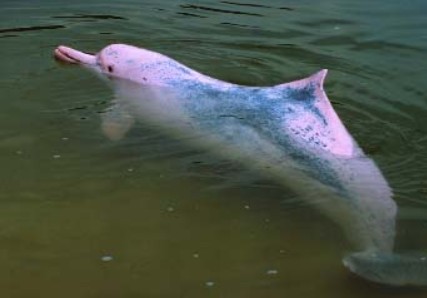
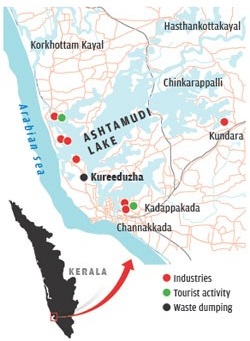
    In Ashtamudi Lake, Kerala, artisanal fishers and Indo-Pacific humpback dolphins (Sousa plumbea) engage in a rare and sophisticated form of human–wildlife cooperative hunting.

    Researchers to study rare Dolphin-Fisher kinship in Ashtamudi Lake

    Unique Dolphin-Fisher in Ashtamudi Lake:

    • Cooperative Hunting: Dolphins herd fish towards artisanal fishers standing in shallow water.
    • Signals: Dolphins give tail-slaps or rolls to signal fishers to cast nets.
    • Mutual Benefit: Fishers get high catches; dolphins feed on escaping fish, forming a rare human–wildlife cooperation system.
    • Documentation: First studied by University of Kerala researchers; Similar systems studied in Brazil and Myanmar.
    • Expected Outcomes: Insights into animal culture, evolution of cooperation, and improved sustainable fishing practices.

    About Indo-Pacific Humpback Dolphins (Sousa plumbea):

    • Distribution: Found from East Africa to India, the Middle East and western Indochina, with major populations along India’s west coast.
    • Appearance: Identified by a large hump under the dorsal fin, dark grey plumbeous body, white mottling, and occasional pink shading; adults grow up to 2.8 m, newborns 97–108 cm.
    • Identification Traits: Long slender beak, dorsal fin perched on a mid-back hump, adults darken with age and often show shark-related scars.
    • Habitat: Prefer shallow waters (<20 m) within 1.5 km of shore; commonly near estuaries, river mouths, bays and nearshore fish concentrations.
    • Group Behaviour: Groups of 50–100 reported in India; shy but often seen during dolphin-watching trips.
    • Diet: Feed mainly on mullet, mackerel, sardines, pomfret and other schooling fish; sometimes exploit fishing nets, increasing entanglement risk.
    • Conservation Status: Vulnerable (IUCN), Appendix I (CITES), NOT LISTED under India’s Wildlife Protection Act (only Ganges and Snubfin dolphins are listed).
    • Colour Variation: Pinkish tint comes from superficial blood vessels used for thermoregulation; calves are dark grey.

    Researchers to study rare Dolphin-Fisher kinship in Ashtamudi Lake

    About Ashtamudi Lake:

    • Location: A brackish estuarine lake in Kerala covering 5,700 hectares; designated a Ramsar Site (2002).
    • Name Origin: “Ashtamudi” refers to its eight channels, forming a gateway to the Kerala backwaters.
    • Hydrology: Fed mainly by the Kallada River; empties into the Arabian Sea via Neendakara estuary.
    • History: Once the ancient port of Quilon mentioned by Ibn Battuta.
    • Flora: Mangroves include Avicennia officinalis, Bruguiera gymnorrhiza, Sonneratia caseolaris; region hosts rare plants like Syzygium travancoricum and Calamus rotang.
    • Fauna: Supports 57 bird species (6 migratory, 51 resident).
    • Sustainable Fishery: Home to India’s first MSC-certified clam fishery (2014).
    • Livelihood & Ecology: Vital for traditional fisheries, estuarine biodiversity, and local livelihood systems.
    [UPSC 2012] Which one of the following is not a lagoon?

    Options: (a) Ashtamudi lake (b) Chilka lake (c) Preiyar lake * (d) Pulicat lake


  • Supreme Court reserves verdict on defining Aravalli Hills and Ranges

    Why in the News?

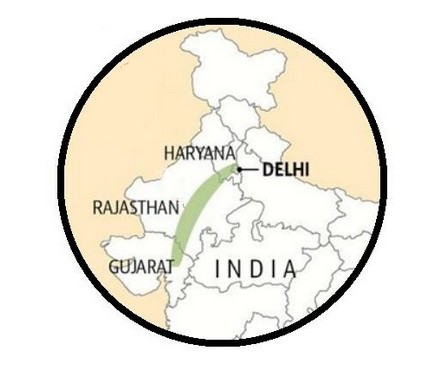
    The Supreme Court has reserved its verdict on the definition of the Aravalli Hills and Ranges, a critical environmental issue impacting Delhi, Haryana, Rajasthan, and Gujarat.

    About the Aravallis:

    • Geology: The Aravalli Range is one of the oldest fold mountain ranges in the world, formed during the Proterozoic era.
    • Spread: It stretches for about 692 km, from Gujarat to Delhi, passing through Rajasthan and Haryana.
    • State-Wise Coverage: Around 80% of the range lies in Rajasthan, with the rest spread across Haryana, Delhi, and Gujarat.
    • Highest Peak: The tallest point is Guru Shikhar in Mount Abu, Rajasthan, with an elevation of 1,722 meters.
    • Natural Barrier Function: Acts as a green wall, preventing the spread of the Thar Desert into eastern Rajasthan and the Gangetic plains.
    • River Origins: Important rivers such as the Banas, Sahibi and Luni originate from the Aravallis.
    • Minerals: Rich in minerals like copper, zinc, lead, and marble.
    • Biodiversity: Home to 300+ bird species and key wildlife such as leopards, hyenas, jackals, wolves, civets, and Nilgai.
    • Prehistoric Significance: Contains cave art and tools from the Lower Palaeolithic period.

    About the Aravalli Case: Quick Backgrounder

    • Supreme Court Review: The Court is deciding on a uniform, legally enforceable definition of the Aravalli Hills and Ranges across Delhi, Haryana, Rajasthan, and Gujarat.
    • Case Origin: Stems from the long-running M.C. Mehta vs Union of India (2008) matter on illegal mining, encroachment, and ecological degradation in the Aravallis.
    • Judgment: The Court held Aravalli lands to be forest areas under the Forest (Conservation) Act, 1980, restricting non-forest activities.
    • Existing Legal Protection: Notifications under the Punjab Land Preservation Act, 1900 were upheld for safeguarding ecologically sensitive land.
    • Expert Committee (2024): SC directed MoEF&CC to set up a panel to develop a scientific definition for consistent protection across states.

    Proposed Legal Definitions of Aravalli Hills and Ranges

    (more…)

  • India recorded the highest GHGs emissions for 2024

    Why in the News?

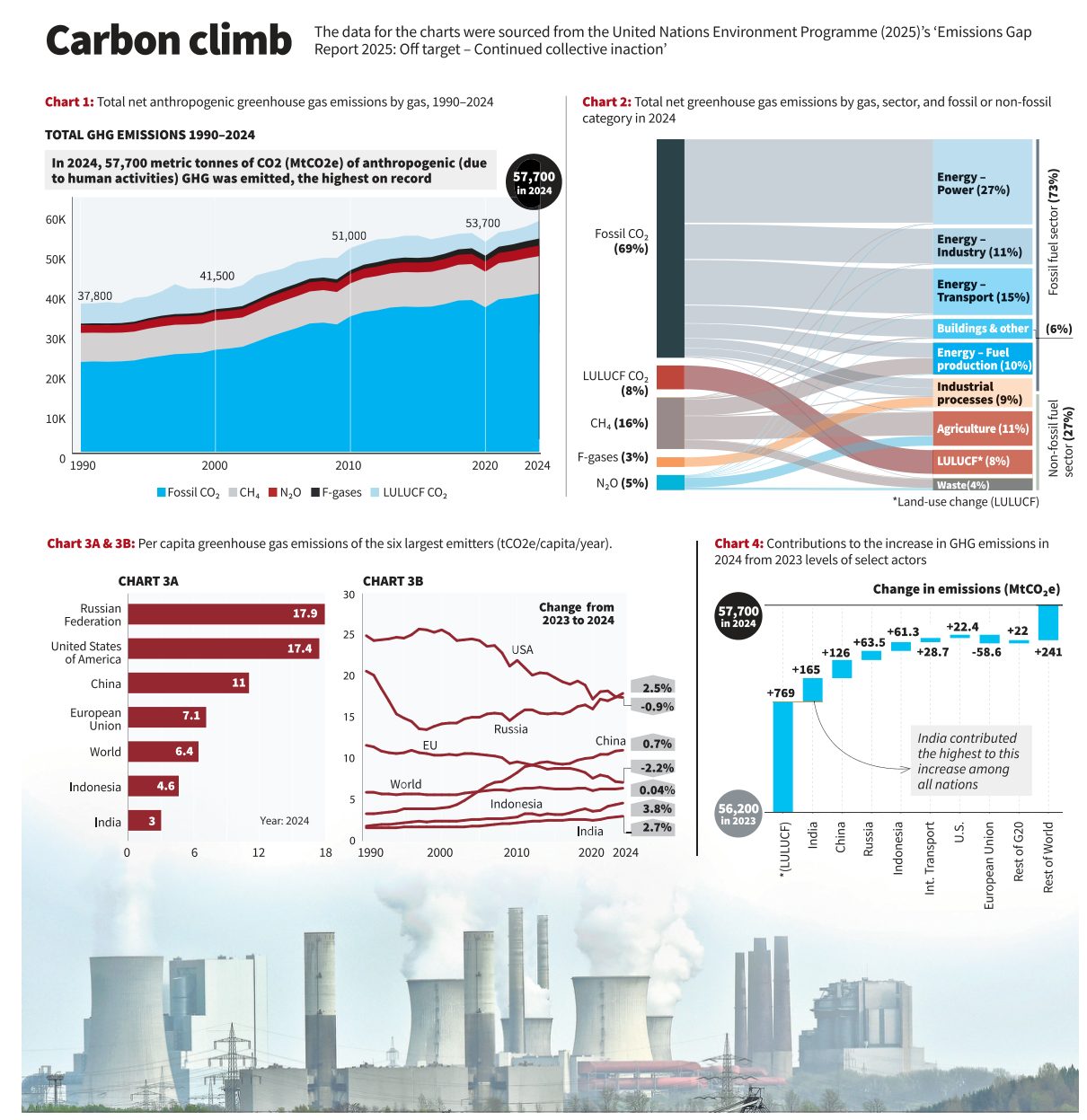
    The United Nations Environment Programme’s (UNEP) 2024 Emission Gap Report (“Off Target”) released before COP30, says India saw the world’s largest rise in greenhouse gas emissions in 2024, adding 165 MtCO₂e.

    India recorded the highest GHGs emissions for 2024

    About the Emission Gap Report:

    • Overview: It is an annual flagship publication by UNEP that measures the gap between current national emission pledges (NDCs) and the cuts required to meet the Paris Agreement goals of limiting global warming to 1.5°C or 2°C.
    • Purpose: Evaluates global progress, national commitments, and policy effectiveness, recommending actions to close the “emissions gap.”
    • Scope: Assesses emissions from energy, land use, and industry, comparing policy trajectories with required emission reduction pathways.

    Key highlights of the 2024 Edition- “Off Target”:

    • Core Message: Warns that the world remains far off track to achieve the 1.5°C limit.
    • Global Emissions: Hit a record 57.7 gigatonnes CO equivalent (GtCOe) in 2024, a 2.3% rise from 2023.
    • Warming Projections:
      • Current policies → ~2.8°C by 2100.
      • Full NDC implementation → only 2.3–2.5°C limit.
    • G20 Role: Account for 77% of global emissions, led by China, USA, India, EU, Russia, and Indonesia.
    • NDC Submission: Only 64 countries (63% of global emissions) updated their NDCs by 2024; most G20 nations off-track for 2030–2035 goals.
    • Sectoral Breakdown:
      • Fossil fuels – 69% of total emissions.
      • Methane – 16%.
      • Land-use change – significant share of increase.
    • Temperature Outlook: Predicts a temporary overshoot of 1.5°C by the early 2030s without rapid global action.

    India-Specific Findings:

    • Emission Growth: India saw the largest absolute rise in 2024, +165 MtCOe, the world’s highest single-country increase.
    • Growth Rate: 3.6%, second only to Indonesia (4.6%).
    • Per Capita Emissions: 3 tCO₂e, less than half the global average (6.4 tCO₂e).
    • Global Ranking: 3rd-largest emitter, after China and the USA.
    • NDC Commitments: Aims to reduce emission intensity by 45% (2005–2030) and achieve 50% non-fossil energy capacity by 2030.
    • Progress: Overachieved by 15% on emission intensity but has not submitted an updated 2025 NDC.
    • COP30 Outlook: India’s rapid emission rise and missed NDC update may invite scrutiny, though low per capita emissions and developmental equity support its climate position.
    [UPSC 2024] Consider the following statements:
    I. Carbon dioxide (CO₂) emissions in India are less than 0.5 t CO2/capita.
    II. In terms of CO2 emissions from fuel combustion, India ranks second in Asia-Pacific region.
    III. Electricity and heat producers are the largest sources of CO2 emissions in India.
    Which of the statements given above is/are correct?
    (a) I and III only (b) II only (c) II and III only * (d) I, II and III


  • Clean air is not a privilege: Right to life begins with right to breathe

    Introduction

    Clean air is the first vaccine every child deserves. Yet, Delhi’s smog-choked skies and the government’s mechanical emergency responses have normalized a crisis that is eroding the right to life. The article captures how the denial, data manipulation, and ritualized policy measures have made air pollution a silent epidemic. It emphasizes that the right to breathe, embedded in Article 21, must move from rhetoric to enforceable action.

    Why in the News?

    In an unprecedented moment, hundreds of parents and citizens assembled at India Gate, not under any organization or political banner because their children could not breathe. This spontaneous protest symbolized a moral and civic awakening against the state’s apathy toward air pollution. Despite annual rituals of emergency plans, Delhi’s air quality remains among the world’s worst, turning the illusion of improvement into a cycle of helplessness.

    Why air pollution is no longer just an environmental issue

    1. Public Health Emergency: Pollution is now seen as a health crisis, not merely an environmental one. Respiratory illnesses have become endemic; every paediatrician in Delhi treats pollution-linked diseases daily.
    2. Missing Pillar in Policy Response: Despite its virulence, pollution lacks the same national urgency as communicable diseases. The Ministry of Health and Family Welfare plays a negligible role, leaving air quality in bureaucratic limbo.
    3. Denial and Normalization: Official classifications such as “very poor” mask the true toxicity levels. Citizens have adapted to smog-filled days as normal.

    How policy responses remain performative and cyclical

    1. Emergency Measures: Governments announce recurring “emergency” actions, smog guns, sprinklers, and odd-even traffic rules, once pollution peaks. These actions are reactive, not preventive.
    2. Illusion of Control: Each year’s Graded Response Action Plan (GRAP) triggers cosmetic responses without structural outcomes. Air quality monitors become symbolic instruments of denial.
    3. Absence of Data Transparency: Public access to real-time, verifiable air quality data remains limited. This creates a gap between recorded pollution levels and lived citizen experience.

    Why governance and accountability are failing

    1. Diffuse Responsibility: No single authority is answerable for air quality. Pollution control boards, municipal bodies, and ministries work in silos, diluting accountability.
    2. Lack of Continuous Governance: Pollution action is episodic, spiking in winter and fading later. There is need for “clean air by design” through governance that is transparent, continuous, and health-centred.
    3. Absence of Traceable Budgets: Public funds spent on air quality improvements lack traceability, leading to unmeasured outcomes and misplaced priorities.

    What citizens are demanding at the grassroots

    1. Unified Public Platform: Protesters demanded a platform like “Arogya Setu for Air”, a citizen-led app guiding mask use, indoor safety, and pollution alerts.
    2. Independent Accountability Body: They sought an autonomous Public Health and Air Quality Commission, answerable to Parliament, to set standards and audit outcomes.
    3. Moral Mobilization: Parents, not activists, led the movement shifting the tone from environmental advocacy to public outrage over children’s health and state indifference.

    How the right to breathe links to constitutional and moral rights

    1. Article 21 of the Constitution: The Right to Life includes the right to clean air and water. Citizens at India Gate invoked this right directly, marking a legal and moral inflection point.
    2. State’s Moral Duty: The silence of the state is described as corrosive, a betrayal of its constitutional duty.
    3. Justice and Equity Dimension: Air pollution disproportionately affects children, the elderly, and the poor, converting environmental degradation into a social justice issue.

    Conclusion

    India’s pollution crisis is not a matter of policy deficiency but moral and institutional inertia. The right to breathe must be treated with the same seriousness as epidemic control. Clean air governance must shift from symbolic emergency actions to continuous, accountable, and health-first systems. The movement at India Gate represents the awakening of civic morality, a reminder that the right to life begins with the right to breathe.

    PYQ Relevance

    [UPSC 2021] Describe the key points of the revised Global Air Quality Guidelines (AQGs) recently released by the WHO. How are these different from its last update in 2005? What changes in India’s National Clean Air Programme are required to achieve these revised standards?

    Linkage: This PYQ directly aligns with the article’s call for health-centric air governance and accountability in implementation. This highlights how India’s NCAP must evolve beyond reactive emergency plans to meet WHO’s stricter 2021 air quality benchmarks.

  • Air quality beyond AQI: The case for measuring indoor pollutants

    Introduction

    Indoor air pollution remains largely unmonitored and unregulated in India despite high exposure levels. Pollutants from construction dust, household fuels, cleaning agents, and aromatic disinfectants accumulate indoors and degrade air quality. Recognising this, researchers from BITS Pilani have developed India’s first IAQ scale (Indoor Air Quality scale), capable of measuring multiple indoor pollutants and providing a health-based score for residential and commercial buildings.

    Their findings published in the Royal Society of Chemistry Journal establish benzene as the most dangerous indoor pollutant and call for inclusion of IAQ standards in building codes and smart city frameworks.

    Why in the News?

    This is the first India-specific scientific model for assessing indoor air pollution beyond the conventional AQI framework.

    1. First-of-its-kind IAQ Scale: Developed by BITS Pilani researchers, enabling precise measurement of multiple indoor pollutants.
    2. Major Data Insight: Indoor air can be two to five times more polluted than outdoor air.
    3. Policy Gap: There are no formal regulations or monitoring frameworks for indoor air quality in India.
    4. Health Implications: The study links poor IAQ to headaches, fatigue, respiratory diseases, and cardiovascular risks, especially in women and infants.
    5. Call to Action: The research advocates IAQ standards in building codes and smart city designs, a potential policy game changer.

    Understanding the New Indoor Air Quality (IAQ) Scale

    1. Comprehensive Measurement: Unlike air purifiers, which track only particulate matter and humidity, the IAQ scale captures a wider range of pollutants including PM2.5, PM10, CO, benzene, and volatile organic compounds (VOCs).
    2. Pan-India Modelling: The model integrates Indian demographic data, age groups, geography, income, and housing patterns, to derive a weighted IAQ score.
    3. Weighted Parameters: Exposure time (25.9%), ventilation efficiency (9.8%), and enclosure size (4.4%) form key components of the health-based index.
    4. Scoring System: IAQ scores range from 22 (severe pollution) to 100 (healthy indoor air).

    Health Implications of Poor Indoor Air Quality

    1. Sick Building Syndrome: Poor IAQ triggers headaches, fatigue, and irritation, often observed in modern buildings with poor ventilation.
    2. Chronic Diseases: Prolonged exposure causes asthma, COPD, bronchial allergies, and cardiovascular disorders.
    3. High-Risk Groups: Women and infants face higher vulnerability due to longer indoor exposure and cooking-related emissions.
    4. Toxic Emissions: Indoor combustion from fuels, incense, and construction residues increases carbon monoxide and benzene concentration.

    Major Pollutants of Concern

    • Benzene:
      1. Most dangerous indoor pollutant identified in the study.
      2. Emitted by aromatic disinfectants, fuels, and solvents.
      3. Long-term exposure is linked to leukaemia, anaemia, and cancer.
      4. Recognised carcinogen by the World Health Organisation (WHO).
    • Carbon Monoxide (CO):
      1. Generated from gas stoves, oil-burning furnaces, and charcoal grills.
      2. Causes poisoning and oxygen deprivation.
      3. Accumulates in poorly ventilated rooms, leading to long-term toxicity.

    Unexpected Sources and Indoor Traps

    1. Aromatic Disinfectants: Release benzene and toxic VOCs during use.
    2. Incomplete Combustion: Burning incense sticks in closed rooms emits carbon monoxide.
    3. Organic Waste Decay: Produces methane and foul-smelling gases; methane is 80 times more potent than carbon dioxide over 20 years.
    4. Poor Waste Segregation: Creates landfill-like conditions indoors, compounding toxicity.

    Simple Household Interventions for Cleaner Indoor Air

    1. Enhanced Ventilation: Open windows during low-pollution hours and use exhaust fans while cooking.
    2. Segregation of Waste: Keep dry and wet waste separate to prevent methane buildup.
    3. Regulated Burning: Reduce incense burning and switch to non-toxic cleaning products.
    4. Natural Fresheners: Avoid synthetic air fresheners; use herbal or essential oil-based alternatives.
    5. Lifestyle Measures: Routine cleaning, minimal use of chemical cleaners, and proper ventilation improve long-term air quality.

    Conclusion

    Indoor air pollution, though invisible, represents one of the most persistent and under-addressed public health risks in India. The IAQ scale developed by BITS Pilani researchers provides a data-backed pathway to integrate indoor air monitoring into policy, urban design, and smart city missions. Addressing this silent crisis through ventilation norms, IAQ regulations, and public awareness will mark a major leap toward holistic environmental governance and citizen well-being.

    PYQ Relevance

    [UPSC 2021] Describe the key points of the revised Global Air Quality Guidelines (AQGs) recently released by the World Health Organisation (WHO). How are these different from its last update in 2005? What changes in India’s National Clean Air Programme are required to achieve these revised standards?

    Linkage: The WHO’s revised AQGs (2021) set stricter limits for PM 2.5 and NO2, highlighting the need for India’s NCAP to adopt health-based indoor and outdoor air quality standards, aligning with the emerging Indoor Air Quality (IAQ) scale developed by BITS Pilani.

  • What’s the plan to relocate forest tribes?

    Introduction

    The Union Ministry of Tribal Affairs has drafted a new policy framework titled “Reconciling Conservation and Community Rights” to ensure that any relocation from tiger reserves aligns with the Forest Rights Act, 2006 (FRA) and ensures community consent, accountability, and post-relocation monitoring. This follows increasing complaints from Scheduled Tribes that relocations are being conducted without proper consent, despite the FRA granting them rights to reside within traditional habitats.

    What is the significance of the new policy framework?

    1. Institutional reform: The framework proposes a National Framework for Community-Centric Conservation and Relocation involving both the Environment and Tribal Affairs Ministries.
    2. Integration of agencies: Suggests joint procedural standards, timelines, and accountability mechanisms across ministries.
    3. Centralized database: Recommends creation of a National Database on Conservation-Community Interface (NDCCI) to record data on relocations, compensation, and post-relocation outcomes.
    4. Independent audits: Mandates annual independent audits by empanelled agencies to ensure FRA compliance and voluntary consent in relocation projects.

    Why was this policy needed now?

    1. Implementation gaps: Multiple representations from States and tribal groups highlighted “serious concerns” about non-implementation of FRA in tiger reserves.
    2. Violation of rights: Tribes alleged coercion into relocation despite the FRA allowing habitation within reserves.
    3. Poor monitoring: The Ministry noted lack of data and follow-up on families relocated from reserves since 2007.
    4. Scale of issue: Over 1,566 villages have been relocated from tiger reserves since 2007, affecting 55,000 families; another 94,000 families remain within reserve areas.

    What safeguards does the framework propose?

    1. Voluntary relocation: Relocation only if consent is obtained at both Gram Sabha and household levels.
    2. Right to reside: Reaffirms that forest-dwelling communities cannot be relocated without exercising FRA rights to remain in traditional habitats.
    3. Scientific validation: Any relocation must be justified through demonstrable ecological necessity.
    4. Ethical relocation: Proposes “voluntary, scientifically justified, and dignity-based” resettlement, monitored by the NDCCI and independent auditors.

    How does the framework address inter-ministerial coordination?

    1. Collaborative approach: Establishes a joint mechanism between the Ministry of Environment, Forest and Climate Change (MoEFCC) and Ministry of Tribal Affairs (MoTA) for approval, execution, and evaluation of relocations.
    2. Defined accountability: Ensures that both ministries share equal responsibility in monitoring and redressal of rights violations.
    3. State participation: State governments to designate nodal officers to ensure compliance with FRA provisions before any relocation.

    What challenges remain on the ground?

    1. Administrative inertia: State agencies often bypass FRA provisions, citing wildlife protection laws.
    2. Inadequate consultation: Many Gram Sabhas report incomplete or manipulated consent processes.
    3. Livelihood uncertainty: Compensation often delayed or inadequate, leading to impoverishment post-relocation.
    4. Social dislocation: Tribes such as the Jenu Kuruba in Karnataka allege forced displacement without restoration of ancestral land rights.

    How does this align with India’s conservation policy?

    1. Balancing dual goals: The framework emphasizes that tiger conservation and tribal rights are not mutually exclusive.
    2. Legal synchronization: Seeks to harmonize FRA (2006) with Wildlife Protection Act (1972) and National Tiger Conservation Authority (NTCA) directives.
    3. Ethical conservation: Shifts focus from coercive protectionism to participatory conservation involving local communities.

    Conclusion

    The proposed framework is a crucial step toward redefining India’s conservation ethics by embedding human rights into environmental protection. Its success will depend on genuine participation of tribal communities, transparent auditing, and strict accountability from both central and state authorities. Only then can India achieve inclusive conservation that respects both its people and its tigers.

    PYQ Relevance

    [UPSC 2025] Does tribal development in India centre around two axes, those of displacement and of rehabilitation? Give your opinion.

    Linkage: It directly aligns with the issue of forest tribe relocation, where development often entails displacement for conservation followed by inadequate rehabilitation efforts. This highlights the need for a rights-based, consent-driven framework ensuring dignity and livelihood security for displaced tribal communities.

  • Panel seeks higher protection for Rhesus Macaque under Wildlife Act

    Why in the News?

    The Standing Committee of the National Board for Wildlife (SC-NBWL) chaired by Union Environment Minister has recommended reinstating the Rhesus Macaque (Macaca mulatta) under Schedule II of the Wildlife (Protection) Act, 1972.

    rhesus

    Back2Basics: Schedule II of the Wildlife (Protection) Act, 1972

    • Objective: Provides legal protection to species requiring conservation monitoring but not critically endangered.
    • Protection Scope: Hunting, capture, or trade prohibited except under extraordinary conditions such as disease or threat to human life.
    • Legal Provision: Section 11 authorises Chief Wildlife Wardens to grant permissions for justified exceptions.
    • Penalties: Imprisonment up to 3 years, or fine up to ₹25,000, or both; slightly lower than Schedule I provisions.
    • Species Included: Assamese macaque, Indian fox, Himalayan black bear, Indian cobra, large Indian civet, etc.
    • Distinction from Schedule I: Offers near-equivalent protection but allows limited regulation and control measures.
    • Authority: Central Government empowered under Section 61 to amend species inclusion or exclusion

    About Rhesus Macaque:

    • Scientific Name: Macaca mulatta, a species of Old World monkey native to South, Central, and Southeast Asia.
    • Distribution: Widest-ranging non-human primate, found in India, Nepal, Bhutan, Bangladesh, China, and Afghanistan.
    • Physical Traits: Brown or grey fur; body length 47–53 cm, tail 20–23 cm, weight 5–8 kg; strong sexual dimorphism.
    • Habitat: Highly adaptable; lives in forests, grasslands, riverine zones, agricultural lands, and even urban settlements.
    • Behaviour: Diurnal, semi-terrestrial, and social; organised in matrilineal troops (20–200 members) with complex vocal and gestural communication.
    • Diet: Omnivorous, feeds on fruits, seeds, roots, cereals, and occasionally invertebrates; uses cheek pouches for temporary food storage.
    • IUCN Status: Least Concern, due to wide distribution and high adaptability.
    • Legal Reclassification: Previously listed under Schedule II of the WPA, 1972, offering stringent protection against hunting, cruelty, illegal trade, and exploitation. After the 2022 amendments, it was shifted to Schedule IV (mid-level protection category with lesser punishments).
    • Scientific Relevance: Extensively used in biomedical research, instrumental in developing polio, rabies, smallpox vaccines, and in HIV/AIDS and neuroscience studies.
    • Human Conflict: Increasing crop raids, urban aggression, and food theft; declared vermin in Himachal Pradesh (2019) for selective culling in non-forest zones.

    How is the Culling of Vermin allowed in India?

    • Definition: Animals declared harmful or nuisance-causing, legally permitted for hunting to safeguard life, crops, or property.
    • Legal Provision: Section 62 of the Wildlife (Protection) Act, 1972 empowers the Central Government to declare species (excluding Schedule I) as vermin for specific regions and timeframes.
    • Earlier Classification: Schedule V (pre-2022) listed vermins such as rats, fruit bats, and common crows.
    • 2022 Amendment: Schedule V removed; Centre can now issue direct notifications declaring vermin status.
    • Declaration Process:
      • State government submits request citing local damage or risk.
      • MoEFCC evaluates ecological and administrative justification.
      • Centre issues notification for specified region and duration.
    • Examples:
      • Wild boar (Uttarakhand, Kerala, Goa)
      • Nilgai (Bihar, Uttar Pradesh)
      • Rhesus macaque (Himachal Pradesh, 2019)
      • Fruit bats and crows (select farming regions)
    • Legal Consequence: Once notified, the species loses protection, and hunting incurs no penalty during the declared period.
    • Ecological and Ethical Concerns: Risks of ecosystem imbalance and animal cruelty; experts advocate contraception, relocation, and scientific management instead.
    [UPSC 2022] If a particular plant species is placed under Schedule VI of the Wildlife Protection Act, 1972, what is the implication?
    Options: (a) A licence is required to cultivate that plant. *
    (b) Such a plant cannot be cultivated under any circumstances.
    (c) It is a Genetically Modified crop plant.
    (d) Such a plant is invasive and harmful to the ecosystem.


  • Senna spectabilis removed from 1,963 hectares of land in Mudumalai TR

    Why in the News?

    The Tamil Nadu Forest Department has successfully removed Senna spectabilis, a highly invasive tree species, from 1,963 hectares of the Mudumalai Tiger Reserve (MTR).

    Senna spectabilis removed from 1,963 hectares of land in Mudumalai TR

    Mudumalai Tiger Reserve

    • Location: Situated in Nilgiris District, Tamil Nadu, at the tri-junction of Tamil Nadu, Kerala, and Karnataka.
    • Area: Covers 321 sq. km, forming part of the Nilgiri Biosphere Reserve, India’s first biosphere reserve.
    • Terrain: Undulating landscape ranging from 960–1266 m elevation.
    • Rivers: The Moyar River flows through the reserve, supporting rich biodiversity.
    • Vegetation: Includes evergreen, moist and dry deciduous forests, teak, bamboo, and grasslands (vayals).
    • Flora: Contains wild relatives of cultivated plants like rice, turmeric, and ginger.
    • Fauna: Home to tigers, elephants, gaurs, sambars, leopards, blackbucks, wild dogs, and 8% of India’s bird species.
    • Boundaries: Shares borders with Bandipur Tiger Reserve (Karnataka) and Wayanad Wildlife Sanctuary (Kerala).
    • Cultural Note: The Oscar-winning documentary “The Elephant Whisperers” was filmed at the Theppakadu Elephant Camp inside MTR.

    About Senna spectabilis:

    • Origin: A fast-growing deciduous tree native to tropical America, introduced in India as an ornamental and shade plant.
    • Issues: Reaches 15–20 metres, produces thousands of seeds annually, spreading rapidly.
    • Invasive Impact: Dense canopy suppresses native trees and grasses, causes food scarcity for herbivores, and reduces biodiversity.
    • IUCN Status: Listed as ‘Least Concern’ but ecologically harmful in Indian forests.

    How was the eradication achieved?

    • Method: Threefold strategy- debarking mature trees, uprooting saplings with weed pullers, and mechanically clearing seedlings.
    • Duration: Large trees dry up in about 18 months after debarking.
    • Post-Removal Use: Felled trees used for paper production.
    • Objective: Restore native flora, improve wildlife forage, and ensure long-term ecosystem recovery.
    [UPSC 2018] Why is a plant called Prosopis juliflora often mentioned in news?

    Options: (a) Its extract is widely used in cosmetics.

    (b) It tends to reduce the biodiversity in the area in which it grows. *

    (c) Its extract is used in the synthesis of pesticides.

    (d) None of the above.