Odisha has emerged as a model for community-led groundwater conservation under the initiative ‘Jal Sanchay, Jan Bhagidari’, transforming monsoon rainfall into a sustainable source of groundwater recharge through rooftop rainwater harvesting and aquifer recharge structures.
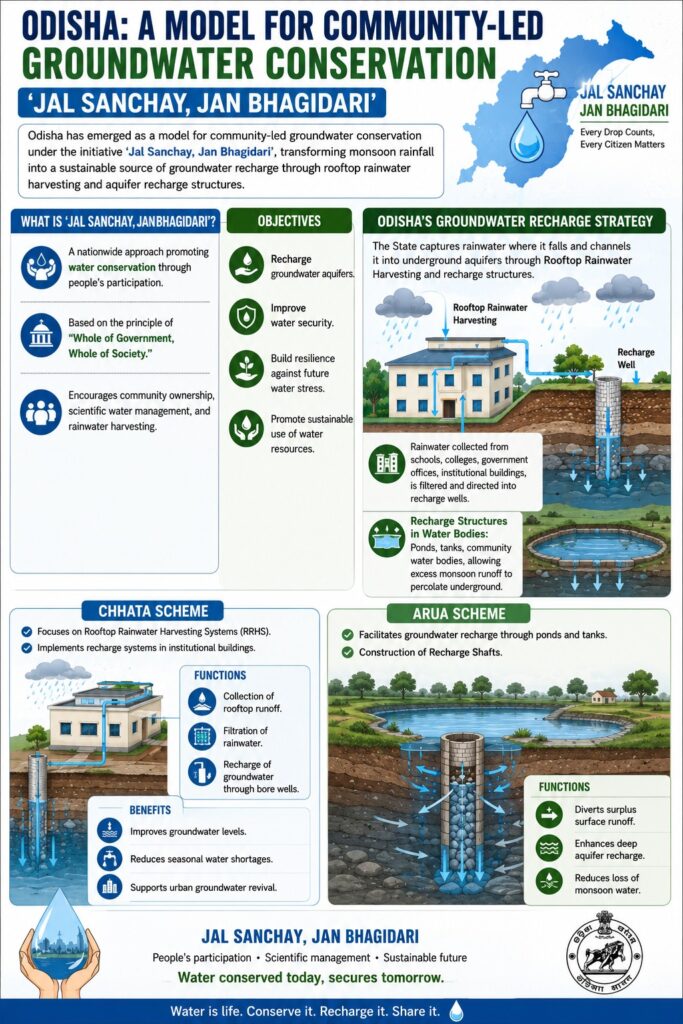
What is ‘Jal Sanchay, Jan Bhagidari’?
A nationwide approach promoting: Water conservation through people’s participation.
Based on the principle of “Whole of Government, Whole of Society.”
Encourages Community ownership, Scientific water management, and Rainwater harvesting.
Objective
Recharge groundwater aquifers.
Improve water security.
Build resilience against future water stress.
Promote sustainable use of water resources.
Odisha’s Groundwater Recharge Strategy
The State captures rainwater where it falls and channels it into underground aquifers through Rooftop Rainwater Harvesting
Rainwater collected from: Schools, Colleges, Government offices, Institutional buildings, is filtered and directed into recharge wells.
Recharge Structures in Water Bodies: Ponds, Tanks, Community water bodies, allowing excess monsoon runoff to percolate underground.
CHHATA Scheme
Focuses on Rooftop Rainwater Harvesting Systems (RRHS).
Implements recharge systems in institutional buildings.
Functions
Collection of rooftop runoff.
Filtration of rainwater.
Recharge of groundwater through bore wells.
Benefits
Improves groundwater levels.
Reduces seasonal water shortages.
Supports urban groundwater revival.
ARUA Scheme
About: Facilitates groundwater recharge through ponds and tanks.
Construction of Recharge Shafts.
Functions
Diverts surplus surface runoff.
Enhances deep aquifer recharge.
Reduces loss of monsoon water.
[2022] Which one of the following has been constituted under the Environment (Protection) Act, 1986?
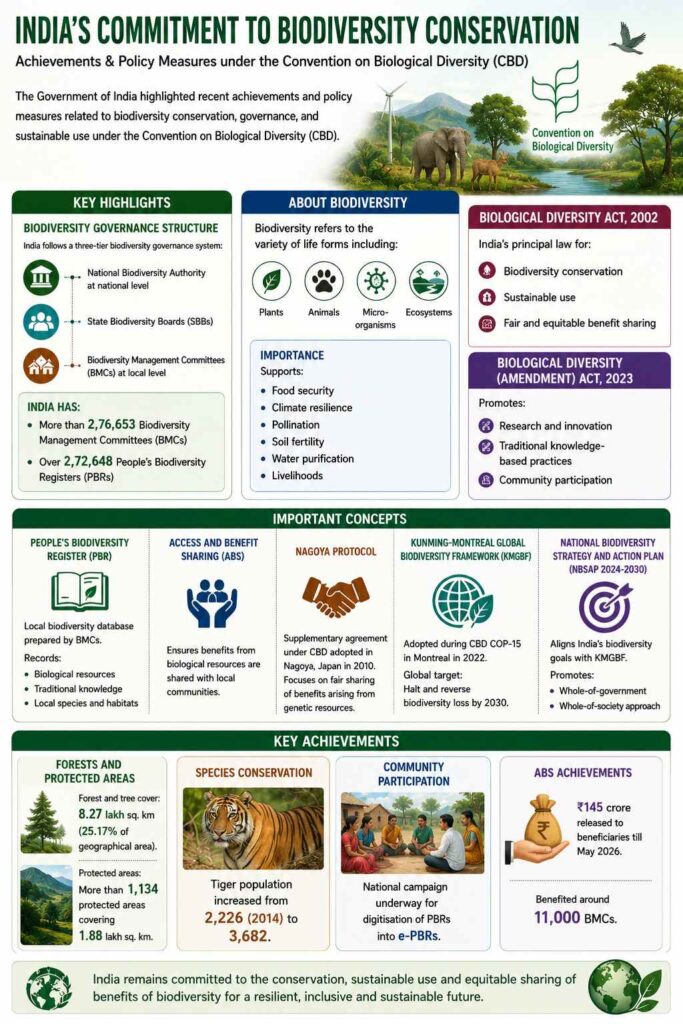
The Government of India highlighted recent achievements and policy measures related to biodiversity conservation, governance, and sustainable use under the Convention on Biological Diversity (CBD).
Biodiversity Governance Structure
India follows a three-tier biodiversity governance system:
National Biodiversity Authority at national level
State Biodiversity Boards (SBBs)
Biodiversity Management Committees (BMCs) at local level.
India has:
More than 2,76,653 Biodiversity Management Committees (BMCs)
Over 2,72,648 People’s Biodiversity Registers (PBRs).
Note: Biodiversity Management Committees (BMCs) are local-level statutory bodies in India, mandated by the Biological Diversity Act of 2002.
About Biodiversity
Biodiversity refers to the variety of life forms including:
Plants
Animals
Microorganisms
Ecosystems.
Biological Diversity Act, 2002
India’s principal law for:
Biodiversity conservation
Sustainable use
Fair and equitable benefit sharing.
Biological Diversity (Amendment) Act, 2023
Promotes:
Research and innovation
Traditional knowledge-based practices
Community participation.
Important Concepts
People’s Biodiversity Register (PBR)
Local biodiversity database prepared by BMCs.
Records:
Biological resources
Traditional knowledge
Local species and habitats.
Access and Benefit Sharing (ABS)
Ensures benefits from biological resources are shared with local communities.
Nagoya Protocol
Supplementary agreement under CBD adopted in Nagoya, Japan in 2010.
Focuses on fair sharing of benefits arising from genetic resources.
Kunming-Montreal Global Biodiversity Framework (KMGBF)
Adopted during CBD COP-15 in Montreal in 2022.
Global target:
Halt and reverse biodiversity loss by 2030.
National Biodiversity Strategy and Action Plan (NBSAP 2024-2030)
Aligns India’s biodiversity goals with KMGBF.
Promotes:
Whole-of-government
Whole-of-society approach.
Key Achievements
Forests and Protected Areas
Forest and tree cover: 8.27 lakh sq. km (25.17% of geographical area).
Protected areas: More than 1,134 protected areas covering 1.88 lakh sq. km.
Species Conservation
Tiger population increased from: 2,226 (2014) to 3,682.
Community Participation
National campaign underway for digitisation of PBRs into e-PBRs.
ABS Achievements
₹145 crore released to beneficiaries till May 2026.
Benefited around 11,000 BMCs (Biodiversity Management Committees).
[2023] Consider the following statements: 1. In Biodiversity the India, Management Committees are key to the realization of the objectives of the Nagoya Protocol. 2. The Biodiversity Management Committees have important functions in determining access and benefit sharing, including the power to levy collection fees on the access of biological resources within its jurisdiction. Which of the statements given above is/are correct?
Cyclone Dana highlighted how Odisha’s mangroves protected coastal communities, strengthening the case for nature-based coastal defence over seawalls. This has renewed attention on India’s continued preference for spending ₹2,641 crore on hard infrastructure despite evidence that mangroves and other coastal ecosystems provide long-term, cost-effective protection to nearly 250 million coastal residents.
Why Are India’s Coastal Regions Becoming Increasingly Vulnerable to Climate Change?
Rising sea levels: The Arabian Sea and Bay of Bengal are experiencing accelerating sea-level rise, threatening low-lying coastal districts, deltas, and island territories.
Intensifying cyclones: Climate change is increasing both the frequency and intensity of cyclones along India’s coast, the eastern seaboard (Odisha, Andhra Pradesh, West Bengal) is particularly exposed.
Saline intrusion: Saltwater intrusion into freshwater aquifers and agricultural land is degrading livelihoods. This directly affects food security and drinking water in coastal communities.
Storm surges: Storm surges linked to cyclonic events are intensifying. These cause disproportionate damage to ecologically fragile coastal landscapes and displacing communities.
Compound risk: These interacting hazards do not operate independently. They multiply threats along India’s coastline, making the fragile coastal landscape both physically and economically vulnerable.
Large Population Exposure: Nearly 250 million people living along India’s coastline face direct impacts of climate-related coastal risks.
Why Are Mangroves, Seagrasses and Coral Reefs Considered Natural Coastal Defences?
Coral Reefs: The First Line of Defense
Natural Breakwaters: Coral reefs sit furthest out in the ocean and absorb up to 97% of incoming wave energy before it can reach the shore.
Friction and Depth: The jagged, complex structures of coral skeletons create immense bottom friction, forcing waves to break early and lose their destructive power
Seagrass Meadows(The Middle Buffer): Reduce coastal erosion, trap sediments and support marine biodiversity.
Erosion Control: Located in the shallow waters between reefs and the shore, seagrasses act as underwater carpets that anchor the seabed with their roots.
Sediment Trapping: Their long blades slow down water currents, forcing suspended sand and organic particles to drop to the seafloor, which actively builds up the underwater terrain.
Mangroves: The Intertidal Shield
Storm Surge Mitigation: Mangrove forests act as the final, dense barrier against extreme weather, capable of reducing storm surge heights by up to 66%.
Energy Dissipation: Their massive networks of tangled prop roots and thick trunks create a dense obstacle course that rapidly saps the remaining power of waves and incoming floods.
How Does Ecosystem-based Adaptation (EbA) Strengthen Climate Resilience?
EbA uses biodiversity and ecosystem services to help people adapt to climate change. This reduces climate impacts while sustaining ecosystems that support fisheries, agriculture, and tourism.
Climate Risk Reduction: Uses biodiversity and ecosystem services to help people adapt to climate change.
Livelihood Protection: Supports fisheries, agriculture and tourism-dependent communities.
Long-Term Sustainability: Maintains ecosystem functions while reducing climate vulnerabilities.
Cost Effectiveness: Avoids repeated expenditure on expensive hard infrastructure maintenance.
Disaster Risk Reduction: Reduces losses from cyclones, flooding and coastal erosion.
Nature-based Solutions: Integrates conservation and restoration into adaptation planning.
What Evidence Demonstrates the Effectiveness of Ecosystem-based Adaptation?
Bhitarkanika Mangroves During Cyclone Dana
Cyclone Protection: Mangroves in Odisha’s Bhitarkanika quietly protected communities from cyclone impacts.
Natural Buffer: Reduced climate impacts while strengthening ecosystem health and livelihoods.
Global Evidence
Protection Capacity: A healthy hectare of coastal habitat protects more people per hectare than almost any other natural asset.
Sundarbans Example
Mangrove Restoration: Around 18,000 women restored 4,600 hectares of mangroves.
Cyclone Mitigation: Restoration reduced impacts of Cyclones Amphan and Yaas.
Livelihood Benefits: Strengthened local economic opportunities and social outcomes.
Kerala Example
Seawall Consequences: Armouring and erosion-control measures protected specific sites.
Adjacent Damage: Accelerated erosion in neighbouring areas, illustrating unintended consequences of hard infrastructure.
Why Does India Continue to Prefer Seawalls and Embankments?
Seawalls are massive, heavy-duty structures built directly parallel to the shoreline where the sea meets the land. They are designed as a last line of defence to protect high-value coastal areas, like cities and roads, from intense wave action. Embankments are raised earthen ridges or mounds constructed along rivers, lakes, or low-lying coastlines. They focus on holding back water from flat, expansive areas rather than fighting heavy, crashing ocean waves.
Engineering Bias: Adaptation planning strongly favours hard infrastructure such as seawalls, groynes, embankments and tetrapods.
Political Visibility: Seawalls and embankments provide visible and immediate outputs, making them attractive for governments.
Institutional Preference: Existing planning, procurement and budgeting systems are designed around construction-based projects.
Administrative Familiarity: Engineers and local authorities are more experienced with hard infrastructure than ecosystem restoration.
Perceived Certainty: Seawalls provide tangible and measurable protection, whereas ecosystem benefits are often viewed as less predictable.
What does India’s coastal adaptation spending pattern reveal about institutional bias toward hard infrastructure?
Hard protection dominance: Coastal States spent ₹2,641 crore on hard protection measures over the last decade. This reflects a stark preference for engineered measures such as seawalls, groynes, embankments, and tetrapods.
National Coastal Mission decline: Budget fell from ₹195 crore in 2022-23 to just ₹50 crore in 2024-25.
PSL and visibility bias: Fragile institutional mandates, weak monitoring, and a preference for visible infrastructure often leave ecosystem-based interventions buried within broader sectoral programmes rather than recognised as adaptation in their own right.
Reporting gap: Adaptation benefits of coastal ecosystems are rarely assessed or recorded separately, making India’s coastal EbA portfolio appear much weaker than it is.
What Prevents Ecosystem-based Adaptation from Becoming Mainstream Policy?
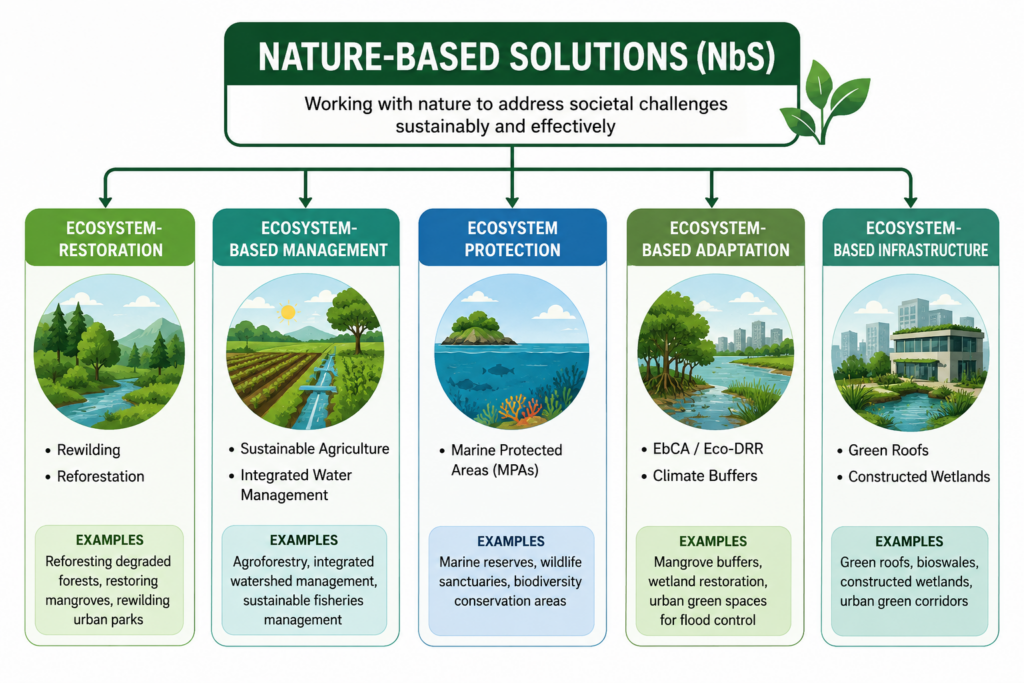
Fragmented Terminology: EbA overlaps with Nature-based Solutions (NbS), Coastal Adaptation (EbCA), Ecosystem-based Disaster Risk Reduction (Eco-DRR) and related concepts.
Classification Challenges: Similar interventions are recorded under conservation, restoration or management categories instead of adaptation.
Weak Monitoring: Limited mechanisms exist to measure adaptation outcomes.
Institutional Fragmentation: EbA interventions remain dispersed across multiple schemes and sectors.
Inadequate Recognition: Policymakers often fail to identify adaptation benefits generated by ecosystem restoration.
Limited Financing: Absence of dedicated adaptation financing restricts scale and replication.
Why Does Classification of Ecosystem-based Adaptation Matter?
Policy Recognition: Enables clear identification of adaptation actions.
Monitoring Frameworks: Facilitates tracking and evaluation of adaptation outcomes.
Financing Access: Strengthens eligibility for climate adaptation funding.
Evidence Generation: Supports measurement of climate resilience benefits.
Policy Integration: Ensures ecosystem restoration becomes part of mainstream adaptation planning.
How Does the Mangrove Initiative for Shoreline Habitats and Tangible Incomes (MISHTI) Reflect the Potential of EbA?
MISHTI is a dedicated central government scheme in India aimed at reviving and expanding the country’s mangrove cover while generating sustainable livelihoods for coastal communities. Announced during the Union Budget 2023-24 and officially launched on World Environment Day (5 June 2023), it serves as a core part of India’s strategy to build a nature-based “bio-shield” against climate change.
Programme Objective: Targets restoration of 540 sq km of mangroves across nine States.
Climate Resilience: Enhances natural protection against coastal hazards.
Livelihood Support: Generates economic opportunities linked to ecosystem restoration.
Current Limitation: Primarily framed as a restoration programme rather than a climate adaptation initiative.
What Policy Reforms Are Needed to Mainstream Ecosystem-based Adaptation?
Policy Integration: Embeds EbA within coastal planning and adaptation frameworks.
Dedicated Financing: Expands budgetary support for ecosystem-based interventions.
Outcome Monitoring: Develops indicators for adaptation benefits.
Institutional Coordination: Harmonises fragmented schemes and programmes.
Climate Accounting: Recognises ecosystem restoration as an adaptation investment.
Natural Capital Approach: Treats ecosystems as strategic climate-resilience assets.
Conclusion
The choice before India is not merely between two adaptation techniques but between two development pathways. While seawalls offer localised and short-term protection, mangroves and other coastal ecosystems provide durable climate resilience, biodiversity conservation and livelihood security. Mainstreaming Ecosystem-based Adaptation will be critical for protecting India’s 250 million coastal residents in an era of accelerating climate change.
Value Addition
Nature-based Solutions (NbS)
Definition: Nature-based Solutions (NbS) is an umbrella concept defined by the International Union for Conservation of Nature (IUCN) as actions to protect, sustainably manage, and restore natural or modified ecosystems. These actions address societal challenges, such as climate change, food security, water security, human health, and disaster risk, while simultaneously providing human well-being and biodiversity benefits.
India’s NDC 2022 references NbS for carbon sequestration through forests.
Ecosystem-based Adaptation (EbA)
Definition: Use of biodiversity and ecosystem services to help people adapt to adverse impacts of climate change.
Key Features
Ecosystem conservation
Ecosystem restoration
Climate risk reduction
Community participation
Livelihood enhancement
Disaster resilience
Ecosystem-based Coastal Adaptation (EbCA)
EbCA is a subset of Ecosystem-based Adaptation (EbA). It focuses specifically on helping coastal communities adapt to the long-term, gradual changes brought by climate change.
The Core Strategy: It uses coastal biodiversity and ecosystem services to help human societies adapt to climate pressures.
Primary Targets: Sea-level rise, coastal erosion, saltwater intrusion into agricultural land, and changing ocean temperatures.
Example: Dynamically planting salt-tolerant mangrove species along an eroding coastline. As sea levels rise, the mangroves naturally trap sediment, raising the land.
Ecosystem-based Disaster Risk Reduction (Eco-DRR)
Eco-DRR focuses on using ecosystems to reduce the immediate impact, frequency, and severity of sudden natural disasters.
The Core Strategy: It manages and restores ecosystems to act as physical shock absorbers against extreme physical hazards.
Primary Targets: Sudden disasters like cyclones, tsunamis, massive storm surges, and flash floods.
Example: Protecting an offshore coral reef. When a cyclone strikes, the reef acts as a natural breakwater, absorbing up to 97% of the wave energy before it crashes into coastal towns, directly reducing casualties and property destruction.
Ecological Bio-Shields:
A bio-shield is a dense strip of vegetation planted along a coast to act as a barrier against natural hazards.
Casuarina trees, mangroves, and coastal palms are frequently used together to create multi-tiered, living walls that trap flying debris and slow down incoming water.If
Integrated Coastal Zone Management (ICZM):
India’s ICZM project (World Bank-assisted) aimed to address coastal erosion, pollution, and habitat loss through integrated planning.
EbA mainstreaming is its natural evolution.
PYQ Relevance
[UPSC 2022] Explain the causes and effects of coastal erosion in India. What are the available coastal management techniques for combating the hazard?
Linkage: The PYQ examines coastal vulnerability and compares different coastal protection approaches, including structural and ecosystem-based measures. The article extends the PYQ by assessing whether ecosystem-based solutions such as mangroves can provide more sustainable and cost-effective coastal protection than conventional seawalls and embankments.
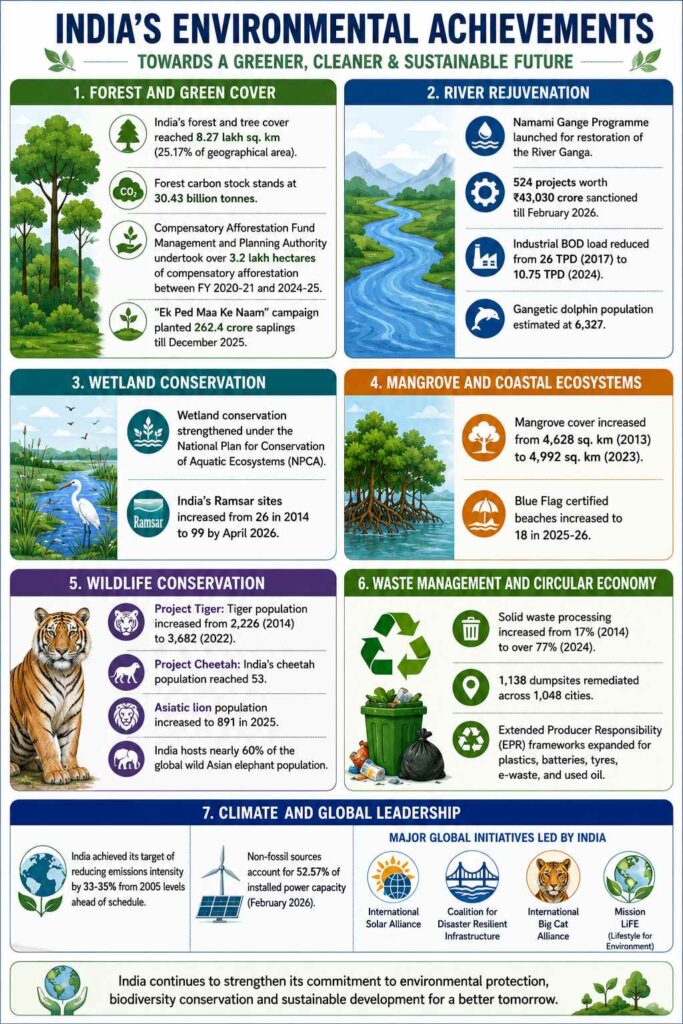
The Government of India highlighted major achievements in environmental protection, biodiversity conservation, climate action, and sustainable development over the last 12 years.
Forest and Green Cover
India’s forest and tree cover reached 8.27 lakh sq. km (25.17% of geographical area).
Forest carbon stock stands at 30.43 billion tonnes.
Compensatory Afforestation Fund Management and Planning Authority undertook over 3.2 lakh hectares of compensatory afforestation between FY 2020-21 and 2024-25.
“Ek Ped Maa Ke Naam” campaign planted 262.4 crore saplings till December 2025.
River Rejuvenation
Namami Gange Programme launched for restoration of the River Ganga.
524 projects worth ₹43,030 crore sanctioned till February 2026.
Industrial BOD load reduced from 26 TPD (2017) to 10.75 TPD (2024).
Gangetic dolphin population estimated at 6,327.
Wetland Conservation
Wetland conservation strengthened under the National Plan for Conservation of Aquatic Ecosystems (NPCA).
India’s Ramsar sites increased from 26 in 2014 to 99 by April 2026.
Mangrove and Coastal Ecosystems
Mangrove cover increased from 4,628 sq. km (2013) to 4,992 sq. km (2023).
Blue Flag certified beaches increased to 18 in 2025-26.
Wildlife Conservation
Project Tiger: Tiger population increased from 2,226 (2014) to 3,682 (2022).
Project Cheetah: India’s cheetah population reached 53.
Asiatic lion population increased to 891 in 2025.
India hosts nearly 60% of the global wild Asian elephant population.
Waste Management and Circular Economy
Solid waste processing increased from 17% (2014) to over 77% (2024).
1,138 dumpsites remediated across 1,048 cities.
Extended Producer Responsibility (EPR) frameworks expanded for plastics, batteries, tyres, e-waste, and used oil.
Climate and Global Leadership
India achieved its target of reducing emissions intensity by 33-35% from 2005 levels ahead of schedule.
Non-fossil sources account for 52.57% of installed power capacity (February 2026).
Major global initiatives led by India:
International Solar Alliance
Coalition for Disaster Resilient Infrastructure
International Big Cat Alliance
Mission LiFE
[2025] Consider the following statements: Statement I: Circular economy reduces the emissions of greenhouse gases. Statement II: Circular economy reduces the use of raw materials as inputs. Statement III : Circular economy reduces wastage in the production process. Which one of the following is correct in respect of the above statements?
[A] Both Statement II and Statement III are correct and both of them explain Statement I
[B] Both Statement II and Statement III are correct but only one of them explains Statement I
[C] Only one of the Statements II and III is correct and that explains Statement I
[D] Neither Statement II nor Statement III is correct
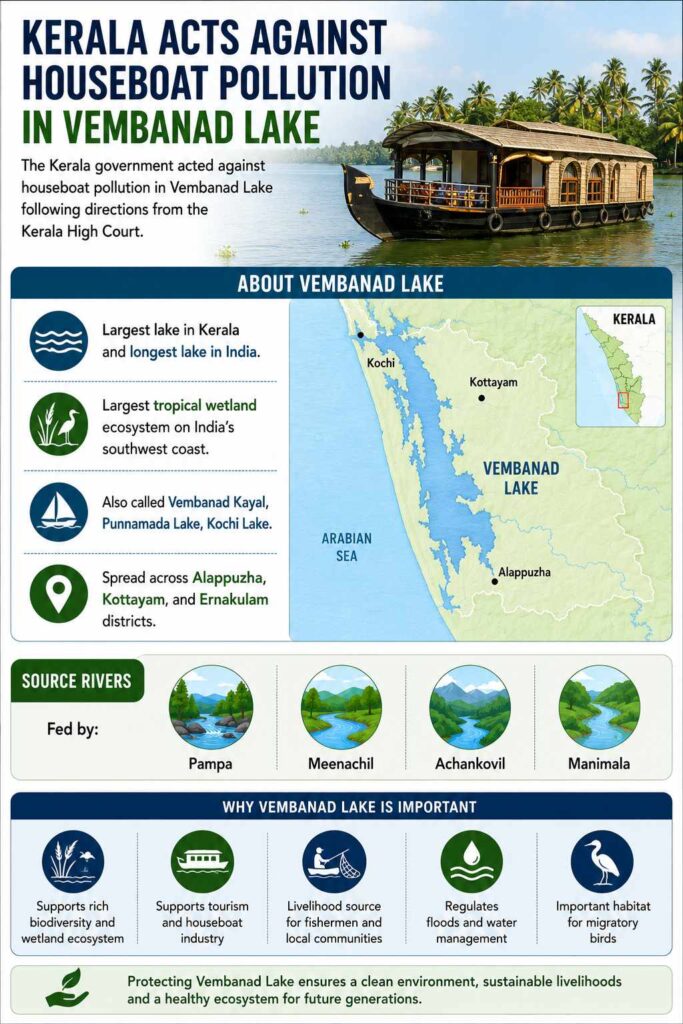
The Kerala government acted against houseboat pollution in Vembanad Lake following directions from the Kerala High Court.
About Vembanad Lake
Largest lake in Kerala and longest lake in India
Largest tropical wetland ecosystem on India’s southwest coast
Also called Vembanad Kayal, Punnamada Lake, Kochi Lake
Spread across Alappuzha, Kottayam, and Ernakulam districts
Source Rivers
Fed by:
Pampa
Meenachil
Achankovil
Manimala
Ecological Importance
Ramsar Site since 2002
Supports fisheries, biodiversity, flood control, and groundwater recharge
Part of National Wetlands Conservation Programme
Agriculture
Famous for below sea-level farming in the Kuttanad region
Tourism and Culture
Major part of Kerala backwaters tourism
Known for houseboats and inland water transport
Hosts Nehru Trophy Snake Boat Race in August
[2022] Consider the following pairs : Wetland/Lake Location 1. Hokera Wetland: Punjab 2. Renuka Wetland: Himachal Pradesh 3. Rudrasagar Lake: Tripura 4. Sasthamkotta Lake: Tamil Nadu How many pairs given above are correctly matched?
The Ministry of Environment, Forest and Climate Change released insights from India’s first national report on the Nagoya Protocol related to Access and Benefit Sharing (ABS), highlighting India’s progress in ensuring equitable sharing of benefits arising from biological resources.
About the Nagoya Protocol
Adopted Under: Convention on Biological Diversity (CBD)
Objective: To ensure Fair and equitable sharing of benefits arising from the utilisation of genetic resources and associated traditional knowledge.
What is Access and Benefit Sharing (ABS)?
ABS means: Users of biological resources must share benefits with:
Local communities
Indigenous groups
Traditional knowledge holders
Benefits can include:
Monetary compensation
Technology transfer
Community development
Conservation support
Key Findings of the Report
Large-Scale Implementation Between 2017 and 2025: 12,830 ABS approvals granted.
India’s Global Contribution
India issued:
3,556 Internationally Recognised Certificates of Compliance (IRCCs)
Around 60% of global issuance.
Revenue Generated: ₹216.31 crore realised by: National Biodiversity Authority (NBA)
Community Benefit: ₹139.69 crore disbursed to benefit claimers and local communities.
[2023] Consider the following statements: 1. In Biodiversity the India, Management Committees are key to the realization of the objectives of the Nagoya Protocol. 2. The Biodiversity Management Committees have important functions in determining access and benefit sharing, including the power to levy collection fees on the access of biological resources within its jurisdiction. Which of the statements given above is/are correct?
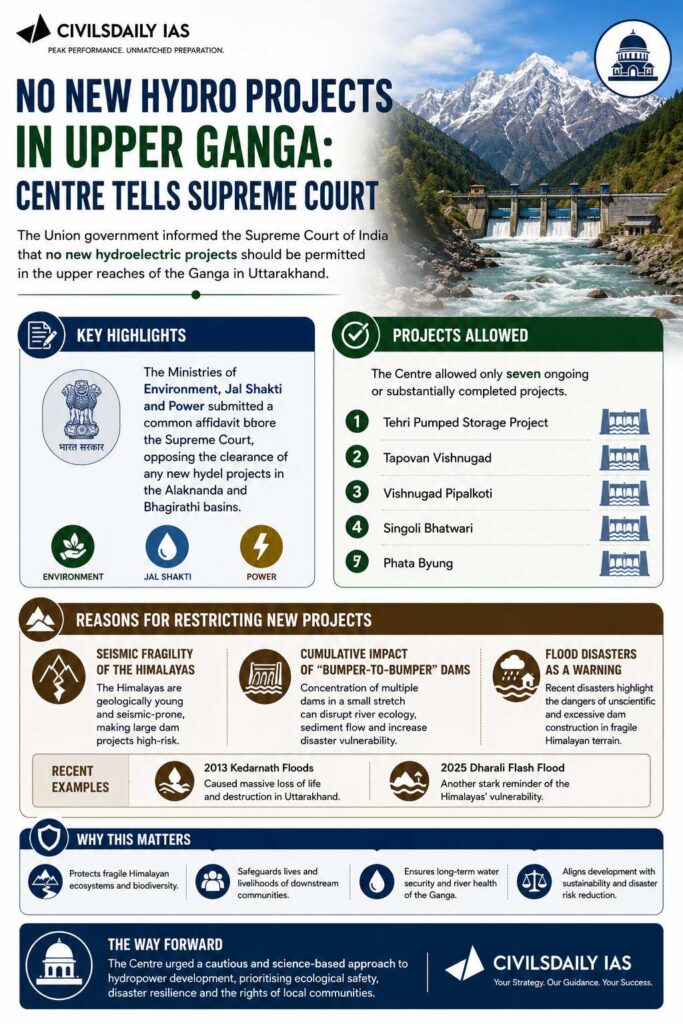
The Union government informed the Supreme Court of India that no new hydroelectric projects should be permitted in the upper reaches of the Ganga in Uttarakhand.
Key Highlights
Ministries of:
Environment
Jal Shakti
Power
Submitted a common affidavit opposing new hydel projects in the Alaknanda and Bhagirathi basins.
Projects Allowed
The Centre allowed only seven ongoing or substantially completed projects, including:
Tehri Pumped Storage Project
Tapovan Vishnugad
Vishnugad Pipalkoti
Singoli Bhatwari
Phata Byung
Reasons for Restricting New Projects
The government cited:
Seismic fragility of the Himalayas
Cumulative impact of “bumper-to-bumper” dams
Flood disasters such as:
2013 Kedarnath floods
2025 Dharali flash flood
Background
The case originated after the 2013 Kedarnath disaster.
The Supreme Court had asked expert committees to study the impact of hydropower projects in Uttarakhand.
[2009] The Dul Hasti Power Station is based on which one of the following rivers?
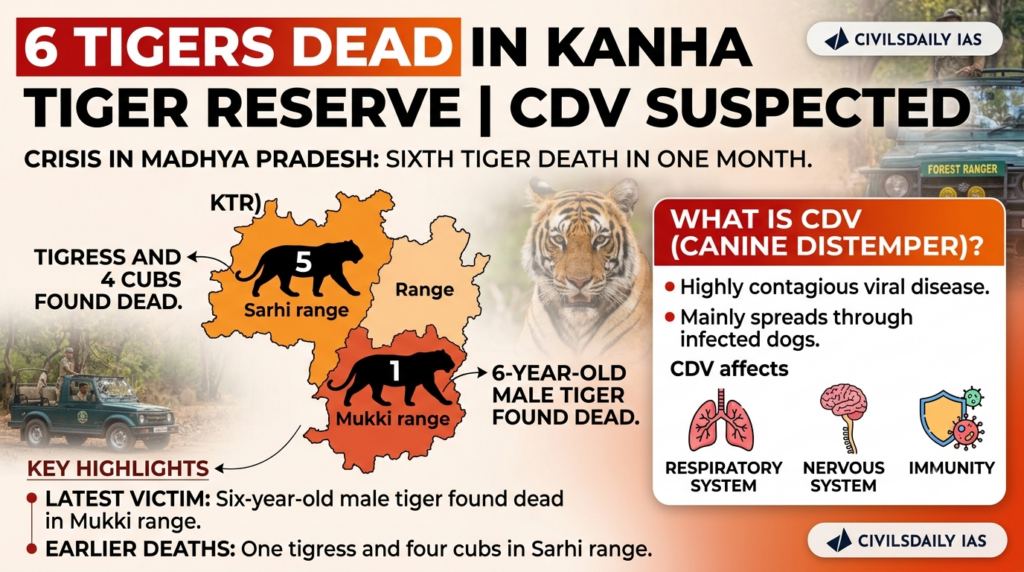
A sixth tiger has died in Madhya Pradesh’s Kanha Tiger Reserve within a month, with authorities suspecting infection by the Canine Distemper Virus (CDV).
Key Highlights
Latest victim:
Six-year-old male tiger
Found dead in Mukki range of KTR
Earlier deaths: One tigress and four cubs in Sarhi range
What is CDV (Canine Distemper)?
Highly contagious viral disease.
Mainly spreads through infected dogs.
Affects:
Respiratory system
Nervous system
Immune system
Why is it a Concern?
Virus may be spreading across different ranges of the reserve.
Stray dogs entering buffer and core forest areas are suspected carriers.
Role of Authorities
The National Tiger Conservation Authority (NTCA) and Union government have sought reports from State officials regarding the tiger deaths.
About Kanha Tiger Reserve
Located in Madhya Pradesh.
One of India’s major tiger reserves.
Part of the Project Tiger network.
Consider the following statements about National Tiger Conservation Authority (NTCA): 1.It was constituted under Biodiversity act, 2002. 2.It is a statutory authority to implement Project Tiger. Which of the statements given above is/are correct? [A] 1 only [B] 2 only [C] Both 1 and 2 [D] Neither 1 nor 2
Officials of the Directorate of Revenue Intelligence (DRI) seized two live Indian Red Sand Boa snakes in Warangal, Telangana, during an operation against illegal wildlife trade.
Key Highlights
The operation was conducted by the Hyderabad zonal unit of DRI.
Officials acted on intelligence regarding illegal sale of live snakes in the grey market.
Two live snakes were recovered from the suspect’s bag during an undercover decoy operation.
About Indian Red Sand Boa
Scientific name: Eryx johnii
Non-venomous burrowing snake species found in India.
Often targeted in illegal wildlife trade due to superstitions and false medicinal beliefs.
Legal Protection
The species is protected under: Schedule I of the Wild Life (Protection) Act, 1972
Significance of Schedule I
Provides the highest level of legal protection.
Hunting, possession, and trade are prohibited.
Action Taken
The snakes and accused were handed over to the Forest Range Officer, Warangal.
Further investigation is underway to identify possible wildlife trafficking networks.
[2017] In India, if a species of tortoise is declared protected under Schedule I of the Wildlife (Protection) Act, 1972, what does it imply? [A] It enjoys the same level of protection as the tiger. [B] It no longer exists in the wild, a few individuals are under captive protection; and not it is impossible to prevent its extinction. [C] It is endemic to a particular region of India. [D] Both (b) and (c) stated above are correct in this context.
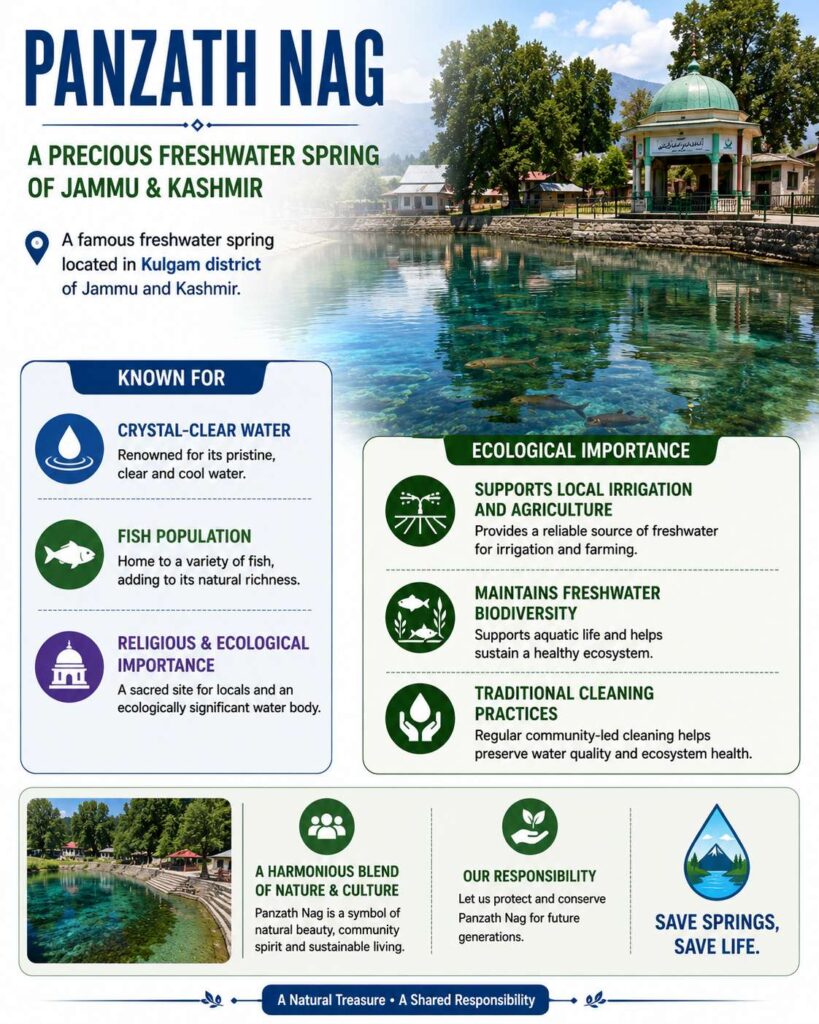
Hundreds of people participated in the traditional fishing and spring-cleaning festival at Panzath Nag in Kashmir.
About Panzath Nag
A famous freshwater spring located in Kulgam district of Jammu and Kashmir.
Known for:
Crystal-clear water
Fish population
Religious and ecological importance
Ecological Importance
Supports local irrigation and agriculture.
Maintains freshwater biodiversity.
Traditional cleaning helps preserve water quality and ecosystem health.
[2014] Every year, a month-long ecologically important campaign/festival is held during which certain communities/tribes plant samplings of fruit-bearing trees. Which of the following are such communities/tribes? (a) Bhutia and Lepcha (b) Gond and Korku (c) Irula and Toda (d) Sahariya and Agariya