💥Join UPSC 2027,2028 Mentorship (July Batch) + XFactor Notes & Microthemes PDF

Subject: Conservation & Mitigation

1. Conservation Progs.
2. Worldwide initiatives
3. Mitigation Strategies
4. Conventions and Protocols

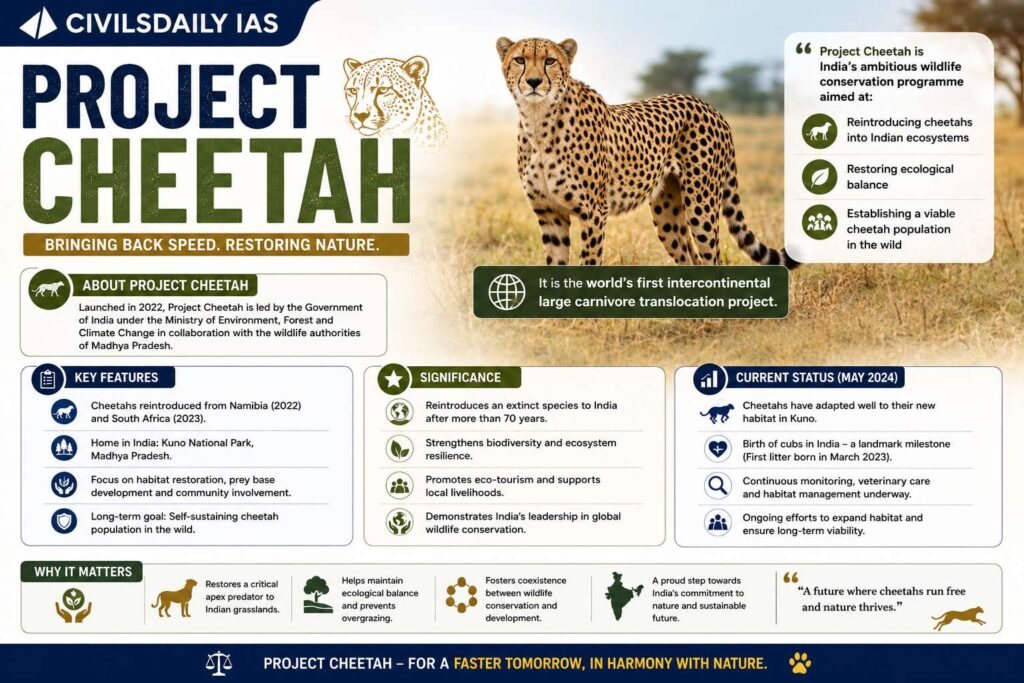
  • International Big Cat Alliance (IBCA) Summit 

    Why in the News

    India will host the first International Big Cat Alliance (IBCA) Summit in June 2026, with participation from around 95 countries. The summit is expected to adopt the Delhi Declaration on global big cat conservation.

    About International Big Cat Alliance (IBCA)

    • A global alliance for big cat conservation
    • Launched by Narendra Modi in 2023
    • Conceived and led by India

    Objective

    • Promote:
      • Conservation of big cats
      • Habitat protection
      • Research and innovation
      • International cooperation

    Big Cats Covered under IBCA

    • Lion, Tiger, Leopard, Snow Leopard, Cheetah, Jaguar, and Puma. 
    [2020] Consider the following statements: 
    1 Asiatic lion is naturally found in India only. 
    2 Double-humped camel is naturally found in India only. 
    3 One-horned rhinoceros is naturally found in India only. 
    Which of the statements given above is/are correct? 
    (a) 1 only (b) 2 only (c) 1 and 3 only (d) 1, 2 and 3
  • Industrial heat pumps and the case for cleaning industrial heat

    Why in the News?

    Industrial heat remains one of the least discussed yet most carbon-intensive segments of India’s energy economy. Nearly half of India’s final energy consumption comes from industry, and a large share of it is still dependent on fossil-fuel-based boilers and steam systems. There is now a  shift in the climate debate away from only “future technologies” such as green hydrogen and carbon capture towards a commercially available solution already capable of reducing emissions, improving air quality, cutting energy costs, and enhancing worker safety.

    Why is industrial heat emerging as a major policy and climate concern?

    1. Energy Consumption: Industry accounts for nearly half of India’s final energy consumption in 2025. A major share remains dependent on fossil fuels.
    2. Emission Intensity: Industrial process steam alone emits around 182 million metric tonnes of CO₂ annually in India.
    3. Air Pollution: Industrial heating systems emit nearly 595 kilotonnes of SO₂, 520 kilotonnes of particulate matter, and 516 kilotonnes of NOx.
    4. MSME Dependence: MSMEs rely heavily on conventional thermal systems such as boilers, thermal fluid heaters, dryers, evaporators, and hot-water systems.
    5. Sectoral Concentration: Emissions are concentrated in textiles, food processing, chemicals, pharmaceuticals, and paper sectors.
    6. Public Health Burden: Fossil-fuel-driven air pollution caused nearly 1.72 million premature deaths in India in 2022. Industrial heat systems are major contributors.
    7. Energy Security Risks: Dependence on imported fossil fuels increases industrial vulnerability to global energy shocks and price volatility.

    How do Industrial Heat Pumps (IHPs) function and why are they considered transformative?

    Industrial Heat Pumps (IHPs) are high-capacity, electrified systems that upgrade low-temperature waste heat from industrial processes, such as wastewater or exhaust gases, into useful, higher-temperature heat (up to 160 degree celsius or more). They are crucial for industrial decarbonization, replacing fossil-fuel boilers to significantly reduce greenhouse gas emissions.

    1. Heat Recovery Mechanism: Heat pumps capture low-grade heat and upgrade it into usable process heat using electricity.
    2. No Direct Combustion: Unlike boilers, heat pumps do not generate heat by burning fuel.
    3. Efficiency Advantage: Industrial heat pumps typically achieve a Coefficient of Performance (COP) of 3-5, producing 3-5 units of heat for every unit of electricity consumed.
    4. Electricity Optimization: Heat pumps require lower electricity input compared to direct electric resistance heating.
    5. Waste Heat Utilisation: Systems recover waste heat from effluents, evaporators, drying streams, and industrial exhausts.
    6. Dual Utility: Heat pumps simultaneously provide heating and cooling/dehumidification in industrial operations.
    7. Temperature Suitability: Technology is particularly viable for low-to-medium temperature industrial applications.

    What are conventional industrial thermal systems?

    Conventional industrial thermal systems are established, widely used technologies designed to generate, transfer, and manage heat for manufacturing processes. These systems primarily rely on fossil fuels, electricity, or steam to achieve high temperatures required for applications like melting, drying, curing, and distilling. The most common conventional systems include:

    1. Steam Heating Systems (Boilers): Boilers are the most mature industrial heating method. They use fuel combustion (natural gas, oil, coal) or electricity to heat water, creating steam that is transported through pipes to heat exchangers.
    2. Fuel Combustion Heating Systems: These systems burn fuel (natural gas, oil) directly or indirectly to generate high temperatures.
      1. Direct-Fired: Burners heat the product directly.
      2. Indirect-Fired: Hot combustion gases pass through heat exchangers to heat air or products without direct contact.
    3. Thermal-Fluid (Hot Oil) Systems: These systems circulate specialized oil or synthetic heat transfer fluids in a closed loop, rather than water. They can reach temperatures up to 350 degree celsius while operating at low pressure.
    4. Electric Heating Systems: These systems convert electrical energy into heat using resistance elements (coils, rods) or electromagnetic fields

    Why are conventional industrial thermal systems considered inefficient?

    1. Boiler-Centric Design: Conventional systems prioritize peak heat requirements rather than optimized heat demand.
    2. Steam Losses: High-pressure steam generation results in energy dissipation when diverted to lower-temperature applications.
    3. Oversized Infrastructure: Many boilers are oversized, manually operated, and function below optimal efficiency.
    4. Combustion Dependence: Industrial heating remains dependent on coal, biomass, furnace oil, diesel, and gas combustion.
    5. Embedded Energy Waste: Large quantities of energy are lost in maintaining vessel temperatures and heating surfaces rather than directly heating products.
    6. Fragmented MSME Systems: Small-scale industries lack integrated thermal optimization systems.

    How can Industrial Heat Pumps improve industrial competitiveness and MSME efficiency?

    1. Energy Savings: Heat pumps can reduce overall industrial energy use by 40-60% in suitable applications.
    2. Modular Deployment: Systems can be deployed selectively without replacing the entire industrial heating infrastructure.
    3. Brownfield Compatibility: Heat pumps integrate into existing MSME clusters without requiring complete industrial redesign.
    4. Cost Reduction: Electrified heating lowers operational fuel expenditure over time.
    5. Operational Stability: Combined heating and cooling improves process stability in textile printing and food processing.
    6. Scalability: MSMEs can adopt modular retrofits rather than capital-intensive boiler replacement.
    7. Fuel Diversification: Electrification reduces exposure to volatile coal and fuel prices.

    What role can Industrial Heat Pumps play in India’s decarbonisation strategy?

    1. Emission Reduction: Heat pumps reduce direct industrial combustion emissions.
    2. Electrification Pathway: They support transition from fossil-fuel heating to renewable-electricity-based industrial systems.
    3. Climate Commitments: Industrial heat electrification supports India’s net-zero and Nationally Determined Contribution (NDC) targets.
    4. Green Manufacturing: Cleaner production enhances export competitiveness amid emerging carbon border adjustment mechanisms.
    5. Renewable Integration: Renewable electricity improves the carbon efficiency of heat pump systems.
    6. Distributed Decarbonisation: Heat pumps provide decentralized emission reduction opportunities across MSME clusters.

    How does industrial heat electrification strengthen public health and worker safety?

    1. Heat Exposure Reduction: Heat pumps reduce excessive workplace thermal stress.
    2. Occupational Safety: Lower ambient industrial temperatures reduce risks of heat exhaustion, cardiovascular strain, kidney disease, and reduced cognitive performance.
    3. Air Quality Improvement: Electrified systems reduce harmful particulate and gaseous emissions.
    4. Worker Productivity: Improved thermal comfort enhances workplace efficiency.
    5. Urban Pollution Reduction: Cleaner industrial clusters contribute to improved regional air quality.
    6. Integrated Cooling: Simultaneous cooling and dehumidification improve factory-floor conditions.

    What are the major barriers to large-scale deployment of Industrial Heat Pumps in India?

    1. High Initial Costs: Capital expenditure remains a major challenge for MSMEs.
    2. Electricity Reliability: Heat pumps require stable and affordable electricity supply.
    3. Technology Awareness: Industrial operators often lack technical awareness and performance confidence.
    4. Legacy Infrastructure: Existing industrial systems are designed around combustion-based thermal processes.
    5. Financing Constraints: MSMEs face limited access to green credit and concessional finance.
    6. Grid Emissions: Benefits reduce if electricity generation remains coal-dominated.

    What policy measures can accelerate adoption of Industrial Heat Pumps?

    1. Green Finance: Low-interest loans and blended finance mechanisms can reduce adoption barriers.
    2. MSME Modernisation: Cluster-based retrofitting programs can improve scale economies.
    3. Carbon Pricing: Emission pricing mechanisms can improve competitiveness of cleaner technologies.
    4. Energy Audits: Mandatory industrial heat mapping can identify waste heat recovery opportunities.
    5. Renewable Integration: Dedicated renewable power supply for industrial clusters can enhance decarbonisation benefits.
    6. Standards and Certification: Performance benchmarks can improve market confidence.

    Conclusion

    Industrial heat represents one of the most significant yet under-addressed sources of emissions in India’s economy. Industrial Heat Pumps provide a technologically mature and energy-efficient pathway for reducing fossil fuel dependence in low-to-medium temperature industrial processes. Their significance extends beyond climate mitigation to include air quality improvement, MSME modernization, occupational safety, and industrial competitiveness. 

    PYQ Relevance

    [UPSC 2022] Do you think India will meet 50 percent of its energy needs from renewable energy by 2030? Justify your answer. How will the shift of subsidies from fossil fuels to renewables help achieve the above objective? Explain

    Linkage: The Industrial Heat Pump (IHP) debate directly links industrial decarbonisation with renewable-energy-based electrification of manufacturing processes. This topic is particularly important for Prelims as well where key aspects of IHPs can be asked or their comparison with conventional thermal systems. The topic integrates GS-3 themes of energy transition, industrial growth, climate mitigation, energy efficiency, MSME modernization, and sustainable infrastructure.
  • “‘Ecocide’: How international law falls short in addressing the environmental toll of war “

    Why in the News?

    The debate on recognising “ecocide” as an international crime has intensified amid allegations that Israel’s military operations in Gaza and southern Lebanon caused severe environmental destruction. This includes contamination of water bodies, destruction of farmland, and long-term ecological degradation. The issue has acquired global significance because existing international humanitarian law (IHL) largely treats environmental damage as secondary to human suffering during war.

    What is “ecocide” and how did the concept evolve?

    1. Definition: Ecocide refers to severe or widespread destruction of ecosystems causing long-term environmental harm and affecting human survival.
    2. Historical origin: The term gained prominence during the Vietnam War after the United States used Agent Orange and chemical defoliants that devastated forests and ecosystems.
    3. Stockholm Conference (1972): The issue received international attention during the United Nations Conference on the Human Environment held in Stockholm.
    4. Vietnam precedent: Vietnam became the first country in 1990 to codify ecocide within domestic law.
    5. National legal developments: Countries such as Russia, Ukraine, Belarus, Kazakhstan, Kyrgyzstan, Tajikistan, Georgia, Armenia, and several others incorporated ecocide-related provisions into domestic legislation.
    6. Emerging legal philosophy: The concept reflects a transition from anthropocentric law focused solely on humans to ecocentric approaches recognising intrinsic environmental value.

    Why has “ecocide” emerged as a major issue in international law?

    1. Conflict-linked ecological destruction: Military operations in Gaza and southern Lebanon reportedly caused destruction of agricultural land, contamination of water systems, and large-scale ecological degradation.
    2. Global legal debate: International lawyers and environmental groups renewed demands for including ecocide under the Rome Statute governing the International Criminal Court (ICC).
    3. Shift in legal thinking: Traditional international law protected the environment only indirectly through civilian protection provisions. Current advocacy seeks recognition of environmental harm as an independent international crime.
    4. Growing scale of wartime damage: Modern warfare increasingly affects ecosystems through chemical contamination, destruction of forests, targeting of infrastructure, and long-term pollution.
    5. Climate-security linkage: Environmental destruction during conflict aggravates food insecurity, displacement, health crises, and climate vulnerability.

    How does ecocide differ from existing international crimes?

    1. Anthropocentric framework: Existing international criminal law focuses primarily on harm caused to humans rather than harm caused directly to ecosystems.
    2. Rome Statute limitation: The Rome Statute criminalises environmental damage only when linked to war crimes and when damage is “widespread, long-term and severe.”
    3. High evidentiary threshold: Current provisions require proving excessive environmental damage relative to anticipated military advantage.
    4. Indirect protection: Environmental harm is prosecuted mainly through civilian suffering, public health impacts, or destruction of civilian objects.
    5. Ecocide framework: Proposed ecocide laws seek independent criminal liability for severe environmental destruction irrespective of direct human casualties.
    6. Expanded accountability: The proposal aims to hold political leaders, military commanders, corporations, and non-state actors accountable for large-scale ecological harm.

    What protections does international humanitarian law currently provide?

    1. Geneva Conventions: International Humanitarian Law (IHL) prohibits warfare methods causing “widespread, long-term and severe” damage to the natural environment.
    2. Additional Protocol I (1977): Article 35 and Article 55 restrict warfare techniques expected to cause extensive environmental destruction.
    3. Environmental Modification Convention (ENMOD), 1976: Prohibits deliberate environmental manipulation techniques such as triggering floods, earthquakes, or weather modification as weapons.
    4. Customary international law: Requires proportionality and distinction principles during armed conflict to minimise environmental damage.
    5. Precautionary obligations: States must avoid unnecessary destruction of civilian infrastructure linked to environmental survival, including water and agricultural systems.
    6. Legal ambiguity: Existing laws lack clear definitions for terms such as “long-term,” “widespread,” and “severe.”

    Why is enforcement of environmental protection during war weak?

    1. Jurisdictional limitations: The International Criminal Court (ICC) can prosecute only member states or cases referred by the United Nations Security Council (UNSC).
    2. Political constraints: Major military powers often resist expansion of international criminal liability.
    3. Proof-related challenges: Establishing direct causation between military action and long-term ecological damage remains difficult.
    4. State sovereignty concerns: Countries fear that ecocide provisions could restrict military operations and economic activities.
    5. Absence of universal recognition: Ecocide is not yet formally recognised as the fifth international crime under the Rome Statute.
    6. Weak accountability mechanisms: International environmental law lacks strong punitive enforcement compared to trade or security regimes.

    What are the major international efforts toward recognising ecocide?

    1. Stop Ecocide movement: International campaigns advocate inclusion of ecocide under the Rome Statute alongside genocide and crimes against humanity.
    2. Independent Expert Panel (2021): Legal experts proposed a draft definition of ecocide as “unlawful or wanton acts committed with knowledge of substantial likelihood of severe environmental damage.”
    3. European developments: The Council of Europe adopted a convention on environmental crime strengthening penalties for severe ecological damage.
    4. European Union initiatives: The European Union revised environmental crime directives to strengthen liability for ecological destruction.
    5. International Union for Conservation of Nature (IUCN): Supported discussions on recognising ecocide as an international crime.
    6. Small island states’ advocacy: Climate-vulnerable nations increasingly support stronger environmental accountability frameworks.

    How does ecocide intersect with climate change and human security?

    1. Food security risks: Conflict-related environmental destruction damages agricultural productivity and food systems.
    2. Water insecurity: Bombing of infrastructure contaminates freshwater resources and sanitation systems.
    3. Public health consequences: Toxic exposure, air pollution, and ecosystem collapse generate long-term health crises.
    4. Forced displacement: Environmental degradation accelerates migration and refugee crises.
    5. Biodiversity loss: Warfare destroys habitats and accelerates species extinction.
    6. Climate vulnerability: Environmental damage weakens ecosystem resilience against climate change impacts.

    What are India’s interests and concerns regarding ecocide law?

    1. Strategic balancing: India supports environmental protection while remaining cautious about expanding international criminal jurisdiction.
    2. Climate justice dimension: Developing countries seek equitable environmental obligations considering historical responsibility.
    3. Military implications: Broad ecocide definitions may affect counter-insurgency and border security operations.
    4. Global South perspective: Concerns exist regarding selective application of international criminal law against weaker states.
    5. Environmental diplomacy: India increasingly participates in climate governance, biodiversity protection, and sustainable development negotiations.

    Conclusion

    The ecocide debate highlights the growing need to treat environmental destruction during war as a serious international crime. Existing international law provides limited protection due to weak enforcement and high legal thresholds. Recognising ecocide can strengthen environmental accountability, climate justice, and global peace frameworks.

    PYQ Relevance

    [UPSC 2020] How does the draft Environment Impact Assessment (EIA) Notification, 2020 differ from the existing EIA Notification, 2006?

    Linkage: The ecocide debate directly relates to environmental accountability, environmental governance, and limits of existing legal frameworks. Both topics examine how law balances development, conflict, sovereignty, and environmental protection.

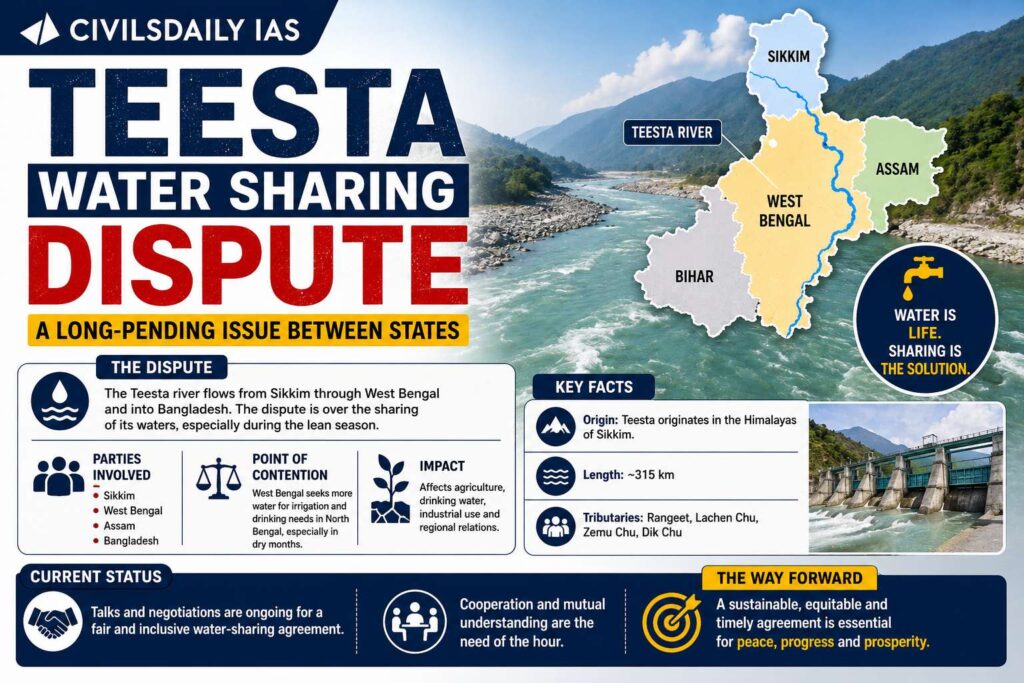
  • Teesta Water Sharing Dispute 

    Why in the News

    Bangladesh has urged India to reconsider the long pending Teesta water sharing agreement following political changes in West Bengal. Bangladesh also indicated that the issue may be discussed with China during high level talks in Beijing.

    About the Teesta River

    • Origin: Eastern Himalayas near the Pauhunri glacier
    • Flows through: Sikkim, West Bengal, and Bangladesh
    • Tributary of the Brahmaputra River

    Nature of the Dispute

    • Both India and Bangladesh depend on Teesta waters for:
      • Irrigation
      • Agriculture
      • Livelihoods
    • Bangladesh seeks a larger share of dry season flow

    2011 Proposed Agreement

    • India and Bangladesh reached an in principle agreement during PM Manmohan Singh’s visit
    • Agreement could not be finalised due to objections from West Bengal government

    Key Issues Involved

    • Water sharing during lean season
    • Role of States in international river agreements
    • Federal coordination between:
      • Union Government
      • State Government

    China’s Role

    • Bangladesh discussing Teesta River Comprehensive Management and Restoration Project with China
    • Reflects strategic dimension of regional water diplomacy
    [2017] With reference to river Teesta, consider the following statements 
    1 The source of river Teesta is the same as that of Brahmaputra but it flows through Sikkim. 
    2 River Rangeet originates in Sikkim and it is a tributary of river Teesta. 
    3 River Teesta flows into Bay of Bengal on the border of India and Bangladesh. 
    Which of the statements given above is/are correct? 
    a)  1 and 3 only b) 2 only c) 2 and 3 only d) 1, 2 and 3 
  • What does the latest ruling mean for Forest Rights Act?

    Why in the News?

    The Allahabad High Court’s ruling striking down the District Level Committee’s (DLC) rejection of forest rights claims is significant because it reaffirms that the Forest Rights Act (FRA), 2006 overrides inconsistent court orders and administrative actions. This is not a routine judicial review; it exposes a recurring pattern where authorities have issued eviction orders and denied grazing rights despite FRA protections. The ruling is a corrective intervention against institutional non-compliance. 

    What is the whole case?

    This Allahabad High Court ruling, delivered by the Lucknow Bench in April 2026, is a landmark judgment reinforcing the legal supremacy of the Forest Rights Act (FRA), 2006, over previous laws and inconsistent administrative decisions. 

    The case centered on the Tharu community in Uttar Pradesh’s Lakhimpur Kheri district, whose forest rights claims were rejected by the District Level Committee (DLC) in 2021.

    Context of the Case

    1. The Petitioners: 107 members of the ‘Tharu’ community, a designated Scheduled Tribe, filed for individual and community forest rights (including rights to collect minor produce).
    2. The Impugned Order: The DLC in 2021 rejected these claims based on a 2000 interim order from the Supreme Court (issued under the old Forest Conservation Act, 1980), ignoring that the FRA was enacted later in 2006 to rectify historical injustice.
    3. The Ruling: The bench quashed the 2021 rejection order and directed a fresh, fair, and prompt rehearing of the claims. 

    Which rights are recognised under the Forest Rights Act (FRA), 2006?

    1. Individual Forest Rights (IFR): Recognises land rights for cultivation (up to 4 hectares); ensures livelihood security for forest dwellers.
    2. Habitation Rights: Recognises rights over homestead and habitation areas; ensures protection from displacement.
    3. Community Rights (CR): Recognises access to minor forest produce (MFP), grazing grounds, water bodies; ensures economic sustenance.
    4. Ownership of MFP: Grants ownership, collection, use, and disposal rights over non-timber forest produce; ensures income generation (e.g., bamboo, tendu leaves).
    5. Community Forest Resource (CFR) Rights: Empowers Gram Sabha to protect, regenerate, conserve, and manage forests; ensures decentralized forest governance.
    6. Grazing and Pastoral Rights: Recognises traditional grazing routes and seasonal migration; supports pastoral communities.
    7. Habitat Rights (PVTGs): Recognises habitat and territorial rights of Particularly Vulnerable Tribal Groups; ensures cultural and livelihood protection.
    8. Rights over Traditional Knowledge: Protects intellectual property and cultural practices related to biodiversity; prevents exploitation.
    9. Development Rights: Allows diversion of forest land (up to 1 hectare) for basic infrastructure (schools, roads, anganwadi); ensures rural development.
    10. Rights against Eviction: Prohibits eviction until recognition process is complete; ensures due process and tenure security.
    11. Rehabilitation Rights: Recognises rights of displaced forest dwellers; ensures resettlement and compensation.
    12. Governance Rights (Gram Sabha): Recognises Gram Sabha as authority for claims verification and forest management; ensures participatory democracy.

    Why was the Allahabad High Court’s ruling significant for FRA enforcement?

    1. Judicial Supremacy of FRA: Reaffirms that FRA overrides inconsistent laws and prior court orders; ensures statutory protection of forest dwellers.
    2. Invalidation of DLC Decision: Nullifies rejection of Tharu tribal claims; exposes procedural violations in claims adjudication.
    3. Systemic Non-Compliance: Highlights repeated disregard of FRA across states; indicates institutional failure in implementation.
    4. Legal Clarification: Reinforces that rights recognition must precede eviction; prevents arbitrary displacement.
    5. Precedential Value: Establishes enforceable precedent for similar disputes nationwide.

    What legal principles govern eviction under the FRA, 2006?

    1. Recognition Before Eviction: Ensures no eviction until claims are fully adjudicated; protects tenure security.
    2. Due Process Requirement: Mandates transparent verification of claims through Gram Sabha and committees.
    3. Statutory Protection: Recognizes forest rights notwithstanding conflicting laws; strengthens tribal safeguards.
    4. Penal Consequences: Provides punishment for officials violating FRA provisions.
    5. Judicial Reinforcement: Uttarakhand High Court (Jan 2026) ordered halt on eviction till claims resolution.

    How have administrative and judicial actions diluted FRA provisions?

    1. Eviction Orders: Authorities issued eviction notices under forest laws despite pending FRA claims.
    2. Misinterpretation of Law: Courts and officials overlooked FRA’s overriding clause; applied older conservation laws.
    3. Case Evidence: Madras High Court dismissed claims in Asaripallam (2014) citing encroachment, ignoring FRA eligibility.
    4. Repeated Violations: Similar dismissals in Perambalur (2017), Tuticorin (2020), Sivagangai (2021), Theni (2022).
    5. Institutional Bias: Preference for conservation-centric approach over rights-based framework.

    Does the FRA allow grazing rights in forest areas?

    1. Recognition of Grazing Rights: FRA explicitly recognizes traditional grazing rights in forests.
    2. Conflict with Wildlife Laws: Tamil Nadu Forest Act invoked to restrict grazing citing wildlife protection.
    3. Judicial Contradictions: Madras High Court initially banned grazing; later restricted it to protected areas.
    4. Legal Hierarchy Principle: FRA, as a central law, overrides conflicting state provisions.
    5. Recent Clarification: Allahabad HC reaffirmed that grazing rights cannot be arbitrarily denied.

    Has the FRA been effectively superseded in practice?

    1. De Facto Dilution: Administrative actions have overridden FRA despite its legal supremacy.
    2. Contradictory Orders: Eviction and denial of rights continue despite statutory protections.
    3. Weak Enforcement Mechanisms: Lack of accountability for violations undermines implementation.
    4. Gram Sabha Marginalization: Reduced role in decision-making weakens community participation.
    5. Governance Gap: Persistent gap between legal framework and field-level execution.

    Conclusion

    The ruling underscores the tension between conservation governance and rights-based legislation. Effective FRA implementation requires administrative accountability, judicial consistency, and empowerment of Gram Sabhas.

    PYQ Relevance

    [UPSC 2016] Rehabilitation of human settlements is one of the important environmental impacts which always attracts controversy while planning major projects. Discuss the measures suggested for mitigation.

    Linkage: The PYQ directly relates to FRA provisions on rehabilitation, displacement safeguards, and rights over land and habitat. It highlights the rights vs development/conservation conflict, central to FRA implementation.

  • India’s Forest Carbon Storage Could Double

    Why in the News

    • A study published in Environmental Research: Climate suggests that India’s forests could nearly double carbon storage by 2100 under current emission trends.

    Key Findings

    • Vegetation carbon increase:
      • 35 percent under low emissions
      • 62 percent under medium emissions
      • 97 percent under high emissions
    • Growth pattern:
      • Similar till about 2030
      • Rapid increase after 2050

    Key Drivers

    1. Increased Rainfall

    • More moisture availability
    • Enhances vegetation growth

    2. Higher Atmospheric CO2

    • Improves photosynthesis
    • Increases water-use efficiency

    3. Time Lag Effect

    • Forest response is delayed:
      • About 2 years (low and medium emissions)
      • About 4 years (high emissions)

    Regional Trends

    Highest Increase

    • Desert and semi-arid regions: Rajasthan, Gujarat, and Western Madhya Pradesh

    Moderate Increase

    • Trans-Himalayas
    • Gangetic plains
    • Deccan Plateau

    Lower Increase

    • Western Ghats
    • Himalayas

    Reason:

    • Ecological saturation
    • Climatic limitations

    Important Institution

    • Forest Survey of India: Official body for forest and tree cover data. 
    Consider the following statements: (2019)
    1. As per the Law, the Compensatory Afforestation Fund Management and Planning Authority (CAMPA) exists at both National and State levels.
    2. People’s participation is mandatory in the compensatory afforestation programmes carried out under the Compensatory Afforestation Fund Act, 2016. 
    Which of the statements given above is/are correct?
    (a) 1 only(b) 2 only(c) Both 1 and 2(d) Neither 1 nor 2
    In the context of mitigating the impending global warming due to anthropogenic emissions of carbon dioxide, which of the following can be potential sites for carbon sequestration? (2017)
    1. Abandoned and uneconomic coal seams.
    2. Depleted oil and gas reservoirs.Subterranean deep saline formations. 
    Select the correct answer using the code given below:
    (a) 1 and 2 only(b) 3 only(c) 1 and 3 only(d) 1, 2 and 3
  • State of India’s Bats Report  

    Why in the News?

    • First-ever national assessment “State of India’s Bats (2024–25)” highlights threats, neglect, and data gaps in bat conservation in India.

    Key Findings

    • Total bat species in India: ~135
    • 16 species endemic (found only in India)
    • 7 species threatened (IUCN Red List)
    • 35 species:
      • Not assessed / data deficient
    • Indicates serious knowledge gap

    About the Report

    • Title: State of India’s Bats (2024–25)
    • Led by:
      • Nature Conservation Foundation
      • Bat Conservation International
    • Contributors: 36 experts and 27 institutions
    [2024] Consider the following statements : 
    Statement-I : The Indian Flying Fox is placed under the “vermin” category in the Wild Life (Protection) Act, 1972. 
    Statement-II : The Indian Flying Fox feeds on the blood of other animals. 
    Which one of the following is correct in respect of the above statements? 
    a) Both Statement-I and Statement-II are correct and Statement-II explains Statement-I 
    b) Both Statement-I and Statement-II are correct, but Statement-II does not explain Statement-I 
    c) Statement-I is correct, but Statement-II is incorrect 
    d) Statement-I is incorrect, but Statement-II is correct
  • [14th April 2026] The Hindu OpED: Parched again: On Bengaluru’s drinking water woes

    Why in the News?

    Bengaluru is facing an acute groundwater crisis driven by over-extraction, weak recharge systems, and rising urban demand. The issue reflects a deeper structural imbalance between natural resource availability and urban growth patterns.

    Why is Bengaluru facing acute groundwater stress despite overall state-level improvement?

    1. Over-extraction: Groundwater withdrawal at 378% in Bengaluru East Taluka exceeds sustainable limits; Karnataka average at 66%.
    2. Hydrogeological Constraints: Crystalline rock formations store limited water and recharge slowly.
    3. Urban Demand Concentration: High-density zones like tech parks and apartments increase per-capita consumption.
    4. Surface Water Dependence: Increasing reliance on Cauvery water, involving high economic and infrastructural costs.

    How has unplanned urbanisation aggravated the crisis?

    1. Loss of Recharge Zones: Built-up areas prevent rainwater percolation; example: concretisation of urban landscapes.
    2. Sealing of Land: Preference for grey infrastructure reduces groundwater replenishment.
    3. Demand-Supply Mismatch: Rapid population growth without proportional infrastructure expansion.
    4. Ecological Degradation: Decline in lakes and wetlands disrupts natural hydrological cycles.

    What are the governance and policy gaps in water management?

    1. Fragmented Management: Lack of integration between pipeline supply, groundwater, and wastewater systems.
    2. Inefficient Distribution: High transmission losses in pipeline networks.
    3. Regulatory Failure: Weak enforcement against over-extraction of groundwater.
    4. Project Inefficiency: Government scheme (775 MLD supply to 110 villages) achieved only partial coverage.

    What are the socio-economic implications of the crisis?

    1. Tanker Economy Dependence: Citizens rely on expensive private water tankers.
    2. Inequality in Access: Vulnerable populations face disproportionate water stress.
    3. Rising Costs: High cost of Cauvery water expansion passed to consumers.
    4. Urban Vulnerability: Expansion of crisis to new areas like Koramangala and Hebbal indicates systemic risk.

    What measures have been taken and why are they insufficient?

    1. Treated Wastewater Use: BWSSB using sewage water to recharge lakes.
    2. Infrastructure Projects: Partial success in water supply expansion schemes.
    3. Short-term Focus: Lack of long-term aquifer management strategies.
    4. Absence of Integration: No unified approach to water cycle management.

    Why is the ‘Sponge City’ model critical for Bengaluru?

    1. Rainwater Capture: Restores lake-well connectivity to absorb monsoon runoff.
    2. Recharge Enhancement: Increases groundwater replenishment capacity.
    3. Urban Planning Integration: Aligns land-use with hydrological capacity.
    4. Reduced Surface Sealing: Encourages permeable surfaces and green infrastructure.

    Conclusion

    Bengaluru’s crisis reflects a governance failure rather than a resource deficit. Sustainable urban water management requires integration of supply systems, strict regulation, and a shift towards nature-based solutions like the sponge city model.

    PYQ Relevance

    [UPSC 2024] The world is facing an acute shortage of clean and safe freshwater. What are the alternative technologies which can solve this crisis?

    Linkage: Technologies addressing real-world crises like freshwater scarcity are frequently tested in Prelims (concepts) and Mains (application-based analysis). The Bengaluru water crisis exemplifies this trend, linking urban governance failure with the need for alternative technologies like wastewater recycling, desalination, and aquifer recharge.

  • Kashmir Scientists Cultivate Rare Morel Mushrooms 

    Why in the News?

    • Scientists at Sher-e-Kashmir University of Agricultural Sciences and Technology (SKUAST), Srinagar successfully cultivated Morel mushrooms (Morchella) in controlled conditions for the first time.
    • Considered a major scientific breakthrough due to the mushroom’s complex growth requirements.

    About Morel Mushrooms (Morchella)

    • Scientific name: Morchella
    • Local name (Kashmir): Kangaech
    • Type: Rare edible wild mushroom
    • Habitat:
      • High-elevation forests
      • Appears during short rainy season
    • Market Price: ₹15,000 to ₹40,000 per kg (one of the world’s most expensive mushrooms)

    Why Morels Are Expensive

    • Naturally grows in very specific environmental conditions
    • Short harvesting window
    • Difficult to locate in dense forests
    • Labour-intensive collection
    • High global demand in gourmet cuisine

    Cultivation Methods Achieved

    • Polyhouse cultivation (Controlled environment)
    • Open-field cultivation (Natural conditions simulation)
    [2022] With reference to ‘Gucchi’ sometimes mentioned in the news, consider the following statements: 
    1 It is a fungus. 
    2 It grows in some Himalayan forest areas. 
    3 It is commercially cultivated in the Himalayan foothills of north-eastern India. 
    Which of the statements given above is/are correct? 
    (a) 1 only (b) 3 only (c) 1 and 2 (d) 2 and 3
  • Global concerns vs national interest: Why India lost interest in hosting COP 33

    Why in the News?

    India’s decision to step back from hosting Conference of the Parties (COP) 33 of the United Nations Framework Convention on Climate Change (UNFCCC)  marks a significant shift from its earlier proactive climate diplomacy stance. This is notable because India had emerged as a key voice of the Global South under the Paris framework. Yet it is now showing hesitation amid growing dissatisfaction with inequitable climate burdens, stalled climate finance, and pressure to adopt emissions pathways misaligned with its developmental needs. 

    Why did India initially show interest in hosting COP33?

    1. Climate Leadership: Positioned India as a leading voice of the Global South in climate negotiations, especially post-Paris Agreement.
    2. Diplomatic Visibility: Enhanced India’s global stature by hosting a major multilateral platform.
    3. Policy Influence: Enabled shaping of negotiation agendas, especially on climate finance and equity.
      1. International Solar Alliance (ISA): India successfully pushed solar energy as a central solution for developing countries, leading to a global coalition focused on affordable solar deployment.
      2. Climate Justice Narrative: India consistently emphasized “climate justice” and equity, ensuring that historical responsibility of developed nations remained part of COP discussions.
      3. CBDR Principle Reinforcement: During negotiations, India defended the principle of Common But Differentiated Responsibilities (CBDR), resisting attempts to dilute obligations of developed countries.
      4. Climate Finance Pressure: India played a key role in pushing developed nations to commit to the $100 billion annual climate finance target, keeping finance at the core of COP agendas.
      5. Lifestyle for Environment (LiFE): India introduced the LiFE initiative, shifting discourse from only industrial emissions to sustainable consumption patterns globally.
      6. Coal Phase-down Language (COP26): India influenced the final Glasgow text by changing “phase-out of coal” to “phase-down”, reflecting developmental concerns of emerging economies. 
    4. Continuity of Engagement: Built upon India’s increasing activism in global climate discourse.

    What factors led to India losing interest in hosting COP33?

    1. Shifting Global Context: Reflects a recalibration where national interests increasingly outweigh symbolic global leadership roles.
    2. Inequitable Burden Sharing: Highlights dissatisfaction with developed countries not fulfilling climate finance commitments.
      1. $100 Billion Climate Finance Gap: Developed countries failed to fully deliver the promised $100 billion annually by 2020, creating trust deficits in negotiations.
      2. COP15: Copenhagen Accord: Initial finance commitments were non-binding, shifting burden of action onto developing countries without assured support.
      3. Mitigation Pressure vs Finance Deficit: Countries like India are pushed for net-zero targets, while finance and technology transfer remain inadequate.
      4. Adaptation Funding Imbalance: Majority of funds directed toward mitigation, while vulnerable nations face shortages for adaptation needs (e.g., climate-resilient infrastructure).
      5. Loss and Damage Delays: COP27: Despite agreement on a fund, actual disbursement mechanisms remain unclear, delaying support to vulnerable nations.
      6. High Cost of Green Transition: Developing countries bear higher relative costs for transitioning energy systems without concessional finance. 
    3. Developmental Constraints: Emphasizes India’s need to prioritize economic growth, energy access, and poverty alleviation.
    4. Geopolitical Tensions: Indicates complications arising from global political dynamics affecting consensus-building.
    5. Negotiation Fatigue: Suggests diminishing returns from hosting without tangible gains in policy outcomes.

    How has the Paris Agreement framework influenced this shift?

    The Paris Agreement is a legally binding international treaty adopted in 2015 (COP21) under the UNFCCC, aiming to limit global warming to well below 2°C-preferably 1.5°C-compared to pre-industrial levels. It operates on a five-year cycle of increasingly ambitious climate actions (NDCs) submitted by countries.

    1. Universal Commitments: Ensures all countries undertake climate actions, increasing pressure on developing nations like India.
    2. Equity Dilution: Weakens earlier differentiation between developed and developing countries under CBDR (Common But Differentiated Responsibilities).
    3. Increased Accountability: Subjects countries to greater scrutiny without guaranteed financial or technological support.
    4. Implementation Challenges: Creates domestic pressure due to ambitious targets not matched by international assistance.

    What is the significance of the IPCC AR7 angle in the debate?

    The IPCC Seventh Assessment Report (AR7) cycle, which began in July 2023, will produce three working group reports and a synthesis report scheduled for completion by late 2029. It focuses on climate science, impacts, and mitigation, with key additions including a Special Report on Cities, a methodology report on Carbon Dioxide Removal (CDR), and increased representation from the Global South.

    1. Upcoming Assessment Report: The IPCC’s Seventh Assessment Report (AR7) is expected to shape future climate policy directions.
    2. Scientific Pressure: Likely to push for stricter emission reduction pathways globally.
    3. Policy Implications: May constrain policy flexibility for developing countries.
    4. Strategic Timing: Hosting COP33 before AR7 could place India in a difficult negotiating position without clarity on future frameworks.

    How do developing countries perceive current climate negotiations?

    1. Equity Concerns: Argue that historical emitters must bear greater responsibility.
    2. Finance Deficit: Highlight the failure of developed countries to deliver promised $100 billion annually.
    3. Policy Imbalance: Emphasize that mitigation burdens are disproportionately shifted to developing economies.
    4. Adaptation Needs: Stress insufficient focus on adaptation and resilience for vulnerable regions.

    What are the broader implications for global climate governance?

    1. Fragmentation Risk: Signals weakening consensus in multilateral climate negotiations.
    2. Rise of Nationalism: Reflects prioritization of domestic economic interests over global commitments.
    3. Global South Assertion: Indicates stronger bargaining by developing nations.
    4. Institutional Challenges: Questions effectiveness of COP platforms in delivering equitable outcomes. 

    PYQ Relevance

    [UPSC 2021] Describe the major outcomes of the 26th session of the Conference of the Parties (COP26) to the United Nations Framework Convention on Climate Change (UNFCCC). What are the commitments made by India in this conference?

    Linkage: The PYQ tests understanding of global climate governance under UNFCCC, including COP outcomes, climate finance, equity, and India’s negotiation stance. It directly connects to India’s evolving stance in climate negotiations influencing its COP33 position.