đŸ’„Join UPSC 2027,2028 Mentorship (July Batch) + XFactor Notes & Microthemes PDF

Subject: Conservation & Mitigation

1. Conservation Progs.
2. Worldwide initiatives
3. Mitigation Strategies
4. Conventions and Protocols

  • Assessing India’s Progress in Air Quality Improvement

    Introduction

    • Ambitious Goals: The National Clean Air Programme (NCAP) aims to reduce particulate matter concentrations by 40% by 2026 in 131 Indian cities.
    • Mixed Results: An analysis by Respirer Living Sciences and Climate Trends reveals varied progress among cities, with only a few meeting targeted declines in PM 2.5 levels.

    About National Clean Air Programme (NCAP)

    Details
    Launch Launched by the Ministry of Environment, Forests and Climate Change (MoEFCC) in January 2019.
    Objective To create a national framework for air quality management with a time-bound target for reducing air pollution.
    Targets Aims to reduce the concentration of PM10 and PM2.5 particles by at least 20% in five years, using 2017 as the base year.
    Coverage Focuses on 132 non-attainment cities identified by the Central Pollution Control Board (CPCB).
    Non-attainment Cities Cities that have consistently fallen short of the National Ambient Air Quality Standards (NAAQS) for over five years.
    NAAQS Pollutants Includes PM10, PM2.5, SO2, NO2, CO, NH3, Ozone, Lead, Benzene, Benzo-Pyrene, Arsenic, and Nickel.
    Current Standards Annual average prescribed limits are 40 ”g/m3 for PM2.5 and 60 ”g/m3 for PM10.
    Revised Targets (2022) Updated target of a 40% reduction in particulate matter concentration by 2026.
    Improvement Assessment Requires a 15% or more reduction in annual average PM10 concentration and at least 200 clean air quality days starting from 2020-21.

    Particulate Matter Reduction: Varied City Performances

    • Inconsistent Declines: Among 49 cities with consistent data over five years, 27 showed a decline in PM 2.5, but only four met or exceeded targets.
    • Notable Increases in Pollution: Cities like Delhi, Navi Mumbai, Mumbai, Ujjain, Jaipur, Visakhapatnam, and Pune have seen marginal declines or increases in PM 2.5 levels.

    Success Stories and Regional Disparities

    • Significant Reductions: Cities like Varanasi, Agra, and Jodhpur reported substantial declines in PM 2.5 and PM 10 levels.
    • Uttar Pradesh’s Progress: Except for Jodhpur, cities achieving the 2026 reduction targets are predominantly from Uttar Pradesh.
    • Indo-Gangetic Plain’s Pollution: The IGP remains a hotspot for high PM 2.5 levels, with 18 of the top 20 polluted cities located in this region.

    Factors Influencing Pollution Levels

    • Annual Variations: Pollution levels can vary significantly within a year, with northern and eastern Indian cities peaking during winter.
    • Air Quality Monitoring Infrastructure: The number and distribution of continuous ambient air quality monitors significantly impact the accuracy of pollution data.
    • Geographical and Meteorological Influences: The study acknowledges the need for further research to understand the impact of emissions, geography, and weather on pollution levels.

    NCAP’s Progress and Future Outlook

    • Noteworthy Efforts: The NCAP has made progress in reducing pollution in some cities, but the overall effectiveness remains unclear.
    • Enhanced Monitoring: The addition of new air quality monitoring stations is expected to provide a clearer picture of pollution levels and aid in mitigation efforts.

    Conclusion

    • Persistent Pollution Challenges: Despite some successes, many urban areas continue to struggle with rising pollution levels.
    • Commitment to Environmental Goals: The NCAP’s revised target reflects India’s commitment to ambitious environmental objectives.
    • Need for Comprehensive Strategies: Effective air quality management requires a combination of robust monitoring, targeted policy interventions, and public awareness to achieve sustainable improvements in air quality.
  • Rethinking Tree Plantation Strategies in India: A Call for Policy Revision

    tree plantation

    Introduction

    • National and International Commitments: Tree planting by state forest departments is propelled by India’s National Forest Policy, global restoration commitments, and central government initiatives like the Green India Mission.
    • Forest Cover Targets: The emphasis on forest cover in financial allocations by the Finance Commission further motivates states to increase forested areas.

    Geographical and Ecological Context

    • Tropical Dry Forest Biome: Over three-fifths of India, spanning from the Shivaliks in the north to the Eastern Ghats in Tamil Nadu, falls under this biome.
    • Sparse Tree Cover and Drought-Prone Areas: This region, characterized by sparse tree cover and less than 1,000 mm of annual rainfall, is susceptible to drought.
    • Dependence of Rural Population: These landscapes are crucial for cattle grazing and support endangered fauna like wolves, striped hyenas, and blackbucks.

    Recent Trends in Forest Cover Expansion

    • Significant Increase in Andhra Pradesh and Telangana: Between 2006 and 2015, these states collectively added significant forest cover, further augmented by Telangana through schemes like Haritha Haram.
    • Satellite Imagery and Dense Plantations: To be detected by satellite, dense plantations of fast-growing species like teak, eucalyptus, and bamboo are favored over natural sparse canopy.

    Consideration for Tree Plantation

    • Site Selection: Choose appropriate locations such as public parks, schools, and degraded lands for tree plantation. Focus on areas with adequate sunlight, proper drainage, and enough space for the tree to grow.
    • Native Tree Species: Opt for planting native tree species as they are well-adapted to the local climate and support the region’s biodiversity. Some popular choices in India include neem, banyan, peepal, mango, and teak.
    • Planting Season: The ideal time for tree plantation in most parts of India is during the monsoon season (June to September). This period provides sufficient rainfall, which helps with the establishment and growth of newly planted trees.

    Challenges and Impacts of Current Tree Planting Practices

    • Questionable Forest Cover Targets: The 33% forest cover target lacks a scientific basis, as does the 26 million hectares target under the 2011 Bonn Challenge.
    • Negative Ecological Consequences: Excessive tree planting can lead to the loss of biodiverse grasslands and scrub ecosystems, impacting pastoral communities and water availability in river basins.

    Recommendations for Policy Revision

    • Recognition of Varied Ecosystems: The 15th Finance Commission’s acknowledgement of diverse forest canopy densities is a positive step, but it overlooks the importance of grasslands and open scrub ecosystems.
    • Alternative Restoration Approaches: Restoring degraded lands to their original grassland or scrub states with native trees is more beneficial than creating monoculture plantations.
    • Revising National Forest Policy Targets: It’s crucial to update the target forest cover to promote the conservation of grasslands and open ecosystems in their natural state.
    • Beyond Satellite Imagery for Monitoring: Restoration programs should not solely rely on satellite imagery, as tree cover alone is not a comprehensive indicator of ecosystem health.

    Conclusion

    • Need for Holistic Approaches: A top-down policy approach focused on tree planting can lead to long-term ecological imbalances and wasteful expenditures.
    • Balancing Ecological and Economic Goals: Revising tree plantation strategies and forest policies is essential to achieve ecological balance and protect diverse ecosystems, while also meeting economic objectives.
    • Incentivizing Conservation of Diverse Landscapes: Policies should incentivize the preservation of varied landscapes, including grasslands and scrublands, recognizing their ecological and economic value.
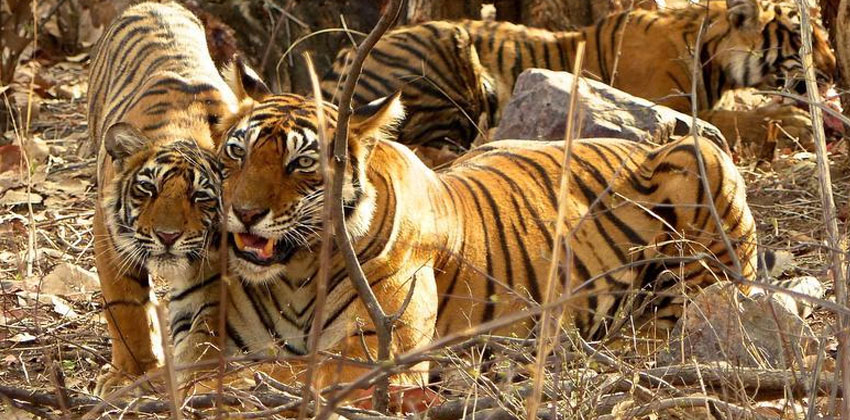
  • Revival of the tiger: A joint effort, a cultural renaissance

    International Tiger Day 2022: Who says Tiger can't be seen in Jim Corbett?  These Three Tiger Families are Pride of CTR – Corbett National Park

    Central Idea:

    The article highlights the success of Corbett Tiger Reserve (CTR) in India in managing and conserving its tiger population, emphasizing the importance of a balanced approach involving wildlife protection, community engagement, and ecological sustainability.

    Key Highlights:

    • CTR, spanning 1288.31 sq.km, has shown significant progress in tiger conservation, recording the highest density of wild tigers globally, from 231 to 260 in four years.
    • The richly-forested, highly-biodiverse landscape attracts various enthusiasts and researchers.
    • The article acknowledges the unsung heroes among the forest staff and local communities who contribute to the reserve’s ecosystem.
    • Grassland and water management practices, strategic wildlife corridors, and addressing human-wildlife conflicts are vital aspects of CTR’s holistic approach.

    Key Challenges:

    • Human-wildlife conflicts, particularly with tigers and elephants, pose a formidable challenge.
    • Ensuring the safety and security of the forest staff, who face risks while patrolling the reserve.
    • Balancing the economic dependence of local communities on tiger-related tourism with the risks posed by wild animals.

    Key Terms:

    • Tiger Conservation Plan
    • Core and buffer zones
    • Biodiversity
    • Grassland management
    • Wildlife corridors
    • Human-wildlife conflict
    • Eco Development Committees (EDCs)

    Key Phrases:

    • “An unforgettable sight: the dread and danger lurking in the treacherous gaze of a stalking tiger.”
    • “A delicate balance of forest flora and fauna is crucial for a healthy forest ecology.”
    • “The rising incidence of human-elephant and tiger-human conflict poses a formidable challenge.”
    • “Living with Tigers initiative aims at creating awareness and behavioral changes among local communities.”

    Key Quotes:

    • “A glimpse of the peerless king of the jungle in all his majesty is truly captivating.”
    • “The only way ahead is by enjoining forest conservation upon all local stakeholders.”
    • “The revival of the tiger since 1973 has meant a cultural renaissance and revival of our conservation ethics and values.”

    Key Examples and References:

    • The success of the beehive-fencing project to guard crops against wild elephants.
    • The “Living with Tigers” initiative promoting awareness and behavioral changes among school children and villagers.
    • The economic dependence of Ramnagar district on tiger-related tourism.

    Key Facts:

    • CTR covers 1288.31 sq.km and recorded 260 tigers in 2022.
    • 27 different kinds of grasslands are present at CTR.
    • The beehive-fencing project resulted in the creation of “Corbee Honey,” managed by local Eco Development Committees.

    Critical Analysis:

    The article acknowledges the complexity of human-wildlife conflicts as “wicked problems,” requiring unique solutions. It emphasizes the need for a collaborative, engaging, and socio-culturally-sensitive approach in addressing conservation challenges.

    Way Forward:

    • Continue efforts to balance economic benefits of tiger-related tourism with wildlife conservation.
    • Scale up successful initiatives like the beehive-fencing project and “Living with Tigers” awareness program.
    • Strengthen community engagement for long-term conservation efforts.
    • Promote sustainable practices for wildlife protection, grassland management, and water conservation.

    In essence, the article underscores the success of CTR in tiger conservation and the imperative of a comprehensive approach involving ecological sustainability, community engagement, and innovative solutions to address ongoing challenges.

  • Tiger Sightings in Buxa National Park

    buxa

    Introduction

    • Camera traps in the Buxa National Park, West Bengal captured images of a tiger, reigniting hopes among forest officials and experts.
    • The last sighting before December 2021 was 23 years ago, indicating the tiger’s absence from the reserve for decades.

    Buxa Tiger Reserve: Geography and Ecology

    Details
    Location Alipurduar district, West Bengal, India. Near the Bhutan border.
    Establishment Created in 1983 as a tiger reserve; declared a national park in January 1992.
    Area Total area of approx. 760 sq km (core area: 390 sq km, buffer zone: 370 sq km).
    Ecological Significance Part of the Eastern Himalayan subregion, known for its unique biodiversity.
    Geographical Connectivity Shares a northern boundary with Bhutan. Connected with Bhutanese forests, Kochugaon forests, Manas Tiger Reserve, and Jaldapara National Park.

    Reasons for the Tiger’s Return

    • Habitat Improvement: Efforts to reduce human interference, expand grasslands, and increase the prey base have created a more suitable habitat for tigers.
    • Conservation Measures: The introduction of chital (spotted deer) as prey and the creation of watering holes have been part of these efforts.

    Conservation Initiatives and Future Plans

    • Tiger Augmentation Project: Launched in 2018, this project involves the state forest department, Wildlife Institute of India, and the National Tiger Conservation Authority.
    • Village Relocation: Plans to relocate villages from the core area aim to reduce human presence and further improve the habitat.
    • Expert Insights: Scientists note the importance of habitat connectivity between Bhutan and Buxa and the reduction of human disturbances as key factors in attracting tigers back to Buxa.
  • Kyrgyzstan declares Snow Leopard as National Symbol

    Snow Leopard

    Central Idea

    • Kyrgyzstan, a Central Asian country, has declared the snow leopard as its national symbol.

    About Snow Leopard

    Details
    Habitat Mountainous regions of Central and Southern Asia; in India: western and eastern Himalayas.
    Indian Geographical Range Western Himalayas (J&K, Ladakh, Himachal Pradesh, Uttarakhand) and Eastern Himalayas (Sikkim, Arunachal Pradesh).
    Project Snow Leopard (2009) Aims to strengthen wildlife conservation in the Himalayan high altitudes, involving local communities.
    Conservation Status IUCN Red List: Vulnerable

    CITES: Appendix I

    Wildlife (Protection) Act, 1972 (India): Schedule I

    India’s Conservation Efforts Flagship species for high altitude Himalayas.

    Part of GSLEP Programme since 2013.

    Himalaya Sanrakshak community programme (2020).

    National Protocol on Snow Leopard Population Assessment (2019)

    SECURE Himalaya project (GEF-UNDP funded).

    Listed in 21 critically endangered species for recovery by MoEF&CC.

    Conservation breeding at Padmaja Naidu Himalayan Zoological Park.

    GSLEP Programme Inter-governmental alliance of 12 snow leopard countries (India, Nepal, Bhutan, China, Mongolia, Russia, Pakistan, Afghanistan, Kyrgyzstan, Kazakhstan, Tajikistan, and Uzbekistan), focusing on ecosystem value awareness.
    Living Himalaya Network Initiative WWF’s initiative across Bhutan, India (North-East), and Nepal for conservation impact in the Eastern Himalayas.

    Significance of the Snow Leopard

    • The snow leopard symbolizes the health and stability of mountain ecosystems, which cover a significant portion of the global territory.
    • The snow leopard has been a totem animal in ancient Kyrgyz culture, associated with the legendary figure Manas.
    • The harmony between humans and nature, symbolized by the snow leopard, is portrayed in Chyngyz Aitmatov’s novel “When Mountains Fall.”
  • Understanding the Psychology and Impact of Plastic Consumption  

    plastic

    Central Idea

    • Pervasiveness of Plastic: Plastic, with its beneficial properties like durability, has become a ubiquitous part of modern life.
    • Environmental Impact: Approximately 50% of plastic is used only once before being discarded, contributing to significant environmental issues, including ocean pollution.

    Psychological Aspects of Plastic Use

    • Consumer Behavior Influence: The omnipresence of plastic shapes consumer choices and behaviors, influenced by marketing strategies, packaging design, and product aesthetics.
    • Packaging and Brand Perception: Packaging plays a crucial role in plastic use, with visual appeal and brand image significantly impacting consumer preferences.
    • Color Psychology in Packaging: The use of color in packaging design evokes specific emotions and expectations, influencing purchasing decisions.

    Convenience Factor and Limited Alternatives

    • Role of Convenience: Plastic packaging’s ability to keep products fresh and hygienic has been a key driver of its market dominance.
    • Lack of Economical Alternatives: The absence of affordable alternatives for food packaging often leaves consumers with no choice but to opt for plastic-wrapped items.

    Pro-Environmental Behavior (PEB) and Plastic Use

    • Understanding PEB: Limiting plastic use and purchase is an example of pro-environmental behavior, influenced by awareness, knowledge, and values.
    • Factors Influencing PEB: Concern about plastic, knowledge of its effects, and the perceived commitment of others to address its impact play roles in shaping PEB.

    Market Trends and Social Influences

    • Impulsive Buying and Social Media: The growth of social media and peer pressure have been linked to increased compulsive buying behaviors, often leading to increased plastic consumption.
    • Influence of Social Norms: Social norms promoting consumption have led to an increase in plastic use, despite its environmental costs.

    Stages of Behavioral Readiness in Plastic Consumption

    Five Stages of Readiness include-

    1. Pre-contemplation,
    2. Contemplation,
    3. Preparation,
    4. Action, and
    5. Maintenance.

    Role of Storytelling and Marketing in Plastic Awareness

    • Emotional Engagement: Storytelling in marketing can emotionally engage customers with the lifecycle of plastic items, enhancing environmental awareness.
    • Positive and Negative Impacts: Marketing power can influence consumer behavior both positively and negatively in the context of plastic use.
    • Objective vs. Subjective Knowledge: Understanding the specifics of an issue (objective knowledge) versus personal belief or awareness (subjective knowledge) influences behavior.
    • Barriers to Action: Lack of personal connection, gradual environmental impact, moral disengagement, and immediacy issues are barriers to taking action against plastic pollution.

    Way forward

    • Role of Education and Design: Knowledge is crucial, but behavioural change also depends on product design that encourages environmentally friendly choices.
    • Supplier and Retailer Responsibility: Minimizing packaging, using recyclable materials, and clear recycling instructions are key steps.
    • Policy Initiatives: Policies raising awareness of plastic pollution’s effects can facilitate a sustainability-focused behavioural shift.
    • Emergence of Sustainable Brands: As consumers increasingly look to brands for sustainable options, there is a growing market for environmentally conscious products.

    Conclusion

    • Critical Role of Habit Change: Altering consumer habits is essential for environmental protection, requiring a multifaceted approach involving education, policy, and market innovation.
    • Sources: Insights drawn from the Sustainability and Consumer Behaviour Report 2022 by Deloitte United Kingdom and research by Mittali Tyagi, PhD Scholar at Manav Rachna International Institute of Research and Studies.
  • Self-pollination in Field Pansy Flower  

    Field Pansy Flower

    Central Idea

    • Researchers have found that a flower species in Paris, the field pansy (Viola arvensis), is evolving rapidly, exhibiting reduced nectar production and smaller flower sizes.
    • This study aims to understand the impact of these evolutionary changes on plant-pollinator interactions.

    Changing Nature of Field Pansy

    • Decreased Nectar and Size: The wild pansy variety in Paris showed a 20% reduction in nectar production and a 10% decrease in flower size.
    • Comparative Analysis: Scientists compared current flower growth with seeds from 20-30 years ago, observing notable changes.
    • Adaptation to Pollinator Decline: The evolution towards self-pollination in field pansies is attributed to the decreasing availability of insect pollinators.
    • Experimental Design: The study employed the “resurrection ecology” method, planting seeds from the 1990s and 2000s alongside their 2021 descendants.

    Implications of Self-Pollination and Evolutionary Shifts

    • Contrast with Angiosperm Convention: The move towards self-pollination deviates from the typical reliance of angiosperms on insects for pollination.
    • Long-Term Coevolution: The traditional plant-insect relationship, involving nectar production for pollination, has evolved over 100 million years.
    • Genetic Analysis: Population genetics analysis revealed a 27% increase in selfing rates, with consistent trait shifts across studied populations.

    Concerns and Potential Consequences

    • Short-Term Benefits, Long-Term Risks: While self-pollination may offer short-term advantages, it poses long-term survival threats to plants amid environmental changes.
    • Feedback Loop Risks: Reduced nectar production could lead to further declines in pollinator populations, creating a detrimental eco-evolutionary feedback loop.
    • Network Degradation: The study highlights the degradation of plant-pollinator networks, as observed in previous research.
  • Rediscovery of Namdapha Flying Squirrel in Arunachal Pradesh


    Namdapha Flying Squirrel

    Central Idea

    • The Namdapha flying squirrel, missing for 42 years, has been sighted again in Arunachal Pradesh.
    • This rare species was last documented in 1981 in the Namdapha Tiger Reserve.

    Namdapha Flying Squirrel

    Details
    Species Name Namdapha Flying Squirrel (Biswamoyopterus biswasi)
    Type Arboreal, nocturnal flying squirrel
    Endemic Region Arunachal Pradesh, Northeast India
    Habitat Tall Mesua ferrea jungles, often on hill slopes in the catchment area of the Dihing River, northeastern India
    First Discovery Known from a single specimen collected in Namdapha National Park in 1981
    Physical Description – Reddish, grizzled fur with white above

    – Pale grey crown, orangish patagium, white underparts

    Genus Significance Was the sole member of its genus until the discovery of other species like Biswamoyopterus laoensis (2013) and Biswamoyopterus gaoligongensis (2018)
    Conservation Status IUCN Status: Critically Endangered

    Wildlife Protection Act Status: Schedule I

    Threats Threatened by poaching and possibly habitat destruction
  • Fewer migratory birds in Sultanpur National Park this season

    Sultanpur National Park

    Central Idea

    • The Sultanpur National Park has observed a 20-30% decrease in the number of migratory birds this season, as reported by forest department officials.
    • Estimates show a reduction in bird numbers, with current figures ranging between 8,000 to 10,000, compared to the expected 15,000.

    About Sultanpur National Park

    • Sultanpur NP is located at Sultanpur village on Gurugram-Jhajjar highway, 15 km from Gurugram, Haryana and 50 km from Delhi.
    • It was a bird sanctuary, ideal for birding and bird lookers. Its area covers approximately 142.52 hectares.
    • Migratory birds start arriving in the park in September. Birds use the park as a resting place till the following March-April.
    • During summer and monsoon months the park is inhabited by many local bird species.
    • In April 1971, the Sultanpur Jheel inside the park (an area of 1.21 sq. km.) was accorded Sanctuary status under section 8 of the Punjab Wildlife Preservation Act of 1959.
    • The status of the park was upgraded to National Park in July 1991 under the Wildlife (Protection) Act, 1972.

    Significance of the NP

    • Spanning 1.42 sq km, it is recognized as a national park, wildlife sanctuary, and a Ramsar site since 2021.
    • It is one of the few NPs in the small state of Haryana.
    • Another NP in Haryana is Kalesar National Park.

    Important Fauna at the Park

    • Mammals: Blackbuck, Nilgai, Hog deer, Sambar, Leopard etc.
    • Birds: Siberian Cranes, Greater Flamingo, Demoiselle Crane etc.

    Annual Migratory Patterns

    • Typical Arrival: Migratory birds usually begin arriving in the first week of October.
    • Annual Visitation: By the end of January each year, around 22,000 birds visit Sultanpur Park. However, this year’s numbers are anticipated to be much lower.

    Possible Reasons for Reduced Migration

    • Temperature Changes: Wildlife experts suggests that milder winters in regions like Siberia, Central Asia, and Europe might be influencing migration patterns.
    • Food Availability: If migratory birds continue to find sufficient food in their native regions, they may not feel compelled to migrate.
    • Local Climate Impact: The local temperature at Sultanpur Park has not dropped significantly to align with the birds’ migratory patterns.
    • Effect of Smog: Smog and air pollution could also be contributing factors to the altered migratory behavior.
  • An uphill struggle to grow the Forest Rights Act

    Forest Rights Act, 2006 | IASbaba

    Central idea

    The Forest Rights Act (FRA) aims to rectify historical injustices faced by forest communities, addressing issues through individual and community forest rights. Implementation challenges, political opportunism, and bureaucratic resistance hinder the FRA’s potential to democratize forest governance. Despite recognizing past injustices, the FRA’s full realization faces obstacles.

    Key Highlights:

    • The Forest Rights Act (FRA) and its Aim: The FRA, enacted in 2006, seeks to rectify historical injustices faced by forest-dwelling communities due to colonial forest policies.
    • Acknowledgment of Injustices: It recognizes the disruption caused by the colonial takeover of forests, imposition of eminent domain, and subsequent injustices post-Independence.
    • Addressing Issues through Recognition: The FRA tackles ‘encroachments,’ access, and control by recognizing individual and community forest rights, fostering decentralized forest governance.

    Key Challenges:

    • Implementation Hurdles: Challenges include political opportunism, forester resistance, bureaucratic apathy, and a distorted focus on individual rights.
    • Concerns in Individual Rights Recognition: Shabby recognition of individual forest rights, especially in ‘forest villages,’ remains a concern.
    • Obstacles in Community Rights Recognition: Slow and incomplete recognition of community rights to access and manage forests (CFRs) faces opposition from the forest bureaucracy.

    Key Terms and Phrases:

    • Defining Concepts: Individual Forest Rights (IFRs), Community Forest Rights (CFRs), ‘Forest encroachments,’ Eminent domain, ‘Grow More Food’ campaign, Net Present Value fees, Wildlife (Protection) Act 1972, Forest (Conservation) Act 1980.

    Key Quotes:

    • Highlighting the Lag in Delivering Promises: “17 years after it was enacted, the FRA has barely begun to deliver on its promise of freeing forest-dwellers from historic injustices.”
    • Opposition to CFRs: “The forest bureaucracy vehemently opposes CFRs as it stands to lose its zamindari (control).”

    Key Statements:

    • FRA’s Remarkable Aspects: The FRA stands out for acknowledging historical injustices and providing redress through the recognition of individual and community forest rights.
    • Lacunas in Implementation: Implementation challenges include political misrepresentation, bureaucratic hindrance, and slow recognition of community rights.

    Key Examples and References:

    • State Recognition of CFRs: Maharashtra, Odisha, and Chhattisgarh are highlighted as states recognizing CFRs, with Maharashtra enabling their activation through de-nationalizing minor forest produce.

    Key Facts and Data:

    • Scale of Challenge: Estimates indicate that 70%-90% of the forests in central India should be under CFRs, emphasizing the magnitude of the challenge in implementing community rights.

    Critical Analysis:

    • Addressing Issues in Individual Rights Focus: The article critiques the distorted focus on individual rights, digital processes causing hardships, and the forest bureaucracy’s opposition to community rights.
    • Importance of Understanding FRA’s Intent: Emphasizes the need for a deeper understanding of the FRA’s intent to address historical injustices and democratize forest governance.

    Way Forward:

    • Comprehensive Recognition: To realize the FRA’s potential, there is a need for comprehensive recognition of both individual and community forest rights.
    • Appreciation of Intent: Political leaders, bureaucrats, and environmentalists must appreciate the spirit and intent of the FRA to ensure meaningful implementation and address historical injustices.