đŸ’„Join UPSC 2027,2028 Mentorship (July Batch) + XFactor Notes & Microthemes PDF

Subject: Economics

  • Fixing the rules of economy

    The article discusses the three fundamentals which need an examination to fix the issues faced by the economy. 

    Re-examining the fundamentals

    • India has an incomes crisis: incomes of people in the lower half of the pyramid are too low.
    • The solutions economists propose are: free up markets, improve productivity, and apply technology.
    • These fundamentals of economics must be re-examined when applied to human work.

    Three solutions and issues with them

    1) Freeing up the markets

    • It is suggested that markets should be freed up for agricultural products so that farmers can get higher prices; and freed up for labour to attract investments.
    • Without adequate incomes, people cannot be a good market for businesses.
    • In fact, it is the inadequate growth of incomes that has caused a slump in investments.
    • Ironically, the purpose of freeing up markets for labour is to reduce the burden of wage costs on investors just when wages and the size of markets must be increased.

    2) Increasing productivity

    • Productivity is a ratio of an input in the denominator and an output in the numerator.
    • The larger the output that is produced with a unit of input, the higher the productivity of the system.
    • Improvement of ‘productivity’ is key to economic progress.
    • Economists generally use labour productivity as a universal measure of the productivity of an economy.
    • Humans are the only ‘appreciating assets’ an enterprise has. They can improve their own abilities.
    • The values of machines and buildings depreciate over time, as any accountant knows.
    • Whereas human beings develop when they are treated with respect, and are provided with environments to learn.
    • For capital-scarce and human resource-abundant countries, such as many developing countries, the correct ratio of productivity is output per unit of capital.
    • This must be the driver of business as well as national strategies.
    • This was the strategy of ‘Japan Inc.’ to make Japan an industrial powerhouse.
    • This was E.F. Schumacher’s insight also.

    3) Use of technology

    • Schumacher, best known for his seminal idea ‘small is beautiful’ understood where capitalism powered with technology would be heading.
    • In his essay he wrote: “If we define the level of technology in terms of ‘equipment cost per work-place’, we can call the indigenous technology of a typical developing country (symbolically speaking) a ÂŁ1-technology, while that of the modern West could be called a ÂŁ1,000-technology.
    • The current attempt of the ‘developing ‘countries, supported by foreign aid, to infiltrate the ÂŁ1,000-technology into their economies inevitably kills off the ÂŁ1-technolgy at an alarming rate.
    • This results in destroying traditional workplaces at a much faster rate than modern workplaces can be created and producing the ‘dual economy’ with its attendant evils of mass unemployment and mass migration.
    • Schumacher had warned there was a malaise brewing beneath the drive to ‘Westernise’ and ‘technologise’ economies.

    Way forward: Social contract between society and workers

    • Workers provide the economy with the products and services it needs.
    • In return, society and the economy must create conditions whereby workers are treated with dignity and can earn adequate incomes.
    • Good jobs require good contracts between workers and their employers.
    • Therefore, the government should create a good society for all citizens, must regulate contracts between those who engage people to do work for their enterprises, even in the gig economy.
    • Goverment should push innovation in socially more beneficial directions to augment rather than replace less skilled workers.

    Conclusion

    The power balance must shift. Small enterprises and workers must combine into larger associations, in new forms, using technology, to tilt reforms towards their needs and their rights.

  • What is the Purchasing Managers’ Index (PMI)?

    The services sector has PMI has signalled first expansion since February this year.

    Try this PYQ:

    Q.Which of the following brings out the ‘Consumer Price Index Number for Industrial Workers?

    (a) The Reserve Bank of India

    (b) The Department of Economic Affairs

    (c) The Labour Bureau

    (d) The Department of Personnel and Training

    Purchasing Managers’ Index

    • PMI is an indicator of business activity — both in the manufacturing and services sectors.
    • It is a survey-based measure that asks the respondents about changes in their perception of some key business variables from the month before.
    • It is calculated separately for the manufacturing and services sectors and then a composite index is constructed.

    How is the PMI derived?

    • The PMI is derived from a series of qualitative questions.
    • Executives from a reasonably big sample, running into hundreds of firms, are asked whether key indicators such as output, new orders, business expectations and employment were stronger than the month before and are asked to rate them.

    How does one read the PMI?

    • A figure above 50 denotes expansion in business activity. Anything below 50 denotes contraction.
    • Higher the difference from this mid-point greater the expansion or contraction. The rate of expansion can also be judged by comparing the PMI with that of the previous month data.
    • If the figure is higher than the previous month’s then the economy is expanding at a faster rate. If it is lower than the previous month then it is growing at a lower rate.

    What are its implications for the economy?

    • The PMI is usually released at the start of the month, much before most of the official data on industrial output, manufacturing and GDP growth becomes available.
    • It is, therefore, considered a good leading indicator of economic activity.
    • Economists consider the manufacturing growth measured by the PMI as a good indicator of industrial output, for which official statistics are released later.
    • Central banks of many countries also use the index to help make decisions on interest rates.
  • Reinforcing the RBI’s accountability

    Inflation targeting and legal provisions

    • The inflation target, notified in August 2016, is 4%.
    • The upper tolerance level was set at 6% and the lower tolerance level at 2%.
    • Inflation was 6.7% in the January-March quarter, 6.6% in the April-June quarter and 6.9% in the July-September quarter.
    • Breaching limits for any three consecutive quarters constitutes a failure to achieve the inflation target.
    • In such an event, the Reserve Bank of India (RBI) is required to send a report to the Centre, stating the reasons for the failure to achieve the inflation target, the remedial actions it proposes to initiate, and an estimate of the time-period within which it expects to achieve the inflation target through the corrective steps proposed.
    • Through amendments passed by Parliament in 2016, these new provisions were written into the RBI Act.
    • They are aimed at ensuring enhanced transparency and accountability of the central bank.

    Reason given by the RBI for missing the target

    • The normal data collection exercise of the National Statistics Office was disrupted during the lockdown imposed due to the COVID-19 pandemic.
    • The minutes of the Monetary Policy Committee (MPC) meeting after its August policy review suggest that the RBI’s defence for the breach of the 4% inflation target and 6% upper tolerance limit was the handicap of data limitations.

    Issues with the reason given by the RBI

    • The range around the inflation target that the Ministry provided to the RBI is for accommodating constraints and challenges like data limitations.
    • The whole point of the range around the target, the statement emphasised, is that it “accommodates data limitations, projection errors, short-run supply gaps and fluctuations in the agriculture production”.

    Way forward

    • RBI should be made to explain what it plans to do to control inflation.
    • The central bank should be allowed to state expressly what support by way of government policy it needs to meet the inflation target.
    • This can only strengthen the RBI’s hand; it should not let go of the opportunity to reinforce the MPC framework.

    Conclusion

    Transparency can enable more informed decision-making within the government, greater public scrutiny of the RBI’s performance, and an improved inflation-targeting regime. To slack off on it would be to compromise with the credibility, transparency and predictability of monetary policy.

  • What are Bulk Drugs Parks?

    Himachal Pradesh is one of the states vying for the allotment of a bulk drug park under a central government scheme announced earlier this year for setting up three such parks across the country.

    Try this question:

    Q.The drug pricing system in India is an indirect outcome of the growing dependence on China for APIs. Discuss.

    What are Bulk Drugs or APIs?

    • A bulk drug also called an active pharmaceutical ingredient (API), is the key ingredient of a drug or medicine, which lends it the desired therapeutic effect or produces the intended pharmacological activity.
    • For example, paracetamol is a bulk drug, which acts against pain.
    • It is mixed with binding agents or solvents to prepare the finished pharmaceutical product, ie a paracetamol tablet, capsule or syrup, which is consumed by the patient.
    • APIs are prepared from multiple reactions involving chemicals and solvents.
    • The primary chemical or the basic raw material which undergoes reactions to form an API is called the key starting material, or KSM.
    • Chemical compounds formed during the intermediate stages during these reactions are called drug intermediates or DIs.

    Why is India promoting bulk drug parks?

    • India has one of the largest pharmaceutical industries in the world (third largest by volume) but this industry largely depends on other countries, particularly China, for importing APIs, DIs and KSMs.
    • This year, drug manufacturers in India suffered repeated setbacks due to disruption in imports.
    • Factories in China shut down when the country went into a lockdown, and later, international supply chains were affected as the Covid pandemic gripped the entire world.
    • The border conflict between India and China exacerbated the situation.

    What is the Centre’s scheme?

    • The Centre’s scheme will support three selected parks in the country by providing a one-time grant-in-aid for the creation of common infrastructure facilities.
    • The grant-in-aid will be 70 per cent of the cost of the common facilities but in the case of Himachal Pradesh and other hill states, it will be 90 per cent.
    • The Centre will provide a maximum of Rs 1,000 crore per park.
    • A state can only propose one site, which is not less than a thousand acres in area, or not less than 700 acres in the case of hill states.

    What does a bulk park offer?

    • A bulk drug park will have a designated contiguous area of land with common infrastructure facilities for the exclusive manufacture of APIs, DIs or KSMs, and also a common waste management system.
    • These parks are expected to bring down manufacturing costs of bulk drugs in the country and increase competitiveness in the domestic bulk drug industry.

    Why Himachal?

    • Himachal already has Asia’s largest pharma manufacturing hub, that is the Baddi-Barotiwala-Nalagarh industrial belt, and the state produces around half of India’s total drug formulations.
    • Himachal offers power and water at the lowest tariffs in the country, and the state also has an industrial gas pipeline.
    • It jumped nine places in this year’s ease-of-doing-business rankings declared by the Centre last month, securing the seventh position in the country.
  • Index of Eight Core Sector Industries

    The Office of Economic Advisor within the Department for Promotion of Industry and Internal Trade (DPIIT) has released the Index of Eight Core Industries (ICI) for September 2020.

    Try this PYQ:

    Q.In the ‘Index of Eight Core Industries’, which one of the following is given the highest weight?

    (a) Coal production

    (b) Electricity generation

    (c) Fertilizer production

    (d) Steel production

    What is the Index of Core Industries?

    • As the title suggests, this is an index of the eight most fundamental industrial sectors of the Indian economy and it maps the volume of production in these industries.
    • It gives the details of these eight sectors — namely Coal, Natural Gas, Crude Oil, Refinery Products (such as Petrol and Diesel), Fertilizers, Steel, Cement and Electricity.
    • Since these eight industries are the essential “basic” and/or “intermediate” ingredient in the functioning of the broader economy, mapping their health provides a fundamental understanding of the state of the economy.
    • In other words, if these eight industries are not growing fast enough, the rest of the economy is unlikely to either.

    ICI this year

    • This data is to focus on the trend of ICI growth over the past 6 months — that is, since the start of the Covid-19 pandemic and associated lockdowns.
    • A crucial factor in this regard would be the next wave of Covid-19 infections.
    • If there is a surge in the winter months — as is being witnessed in most Europe and the US — then India’s recovery will be dented yet again.
  • What is NAFED?

    The central cooperative NAFED will soon begin importing onions in a bid to tame soaring prices before the festive season.

    UPSC can frame statements based MCQ over the functions of NAFED.

    NAFED

    • National Agricultural Cooperative Marketing Federation of India Ltd (NAFED) is an apex organization of marketing cooperatives for agricultural produce in India.
    • It was founded on 2 October 1958 to promote the trade of agricultural produce and forest resources across the nation.
    • It is registered under the Multi-State Co-operative Societies Act.
    • NAFED is now one of the largest procurement as well as marketing agencies for agricultural products in India.
    • With its headquarters in New Delhi, NAFED has four regional offices at Delhi, Mumbai, Chennai and Kolkata, apart from 28 zonal offices in capitals of states and important cities.

    Functions of the NAFED

    • To facilitate, coordinate and promote the marketing and trading activities of the cooperative institutions, partners and associates in agricultural, other commodities, articles and goods
    • To undertake purchase, sale and supply of agricultural, marketing and processing requisites, such as manure, seeds, fertilizer, agricultural implements and machinery etc.
    • To act as a warehouseman under the Warehousing Act and own and construct its own godowns and cold storages
    • To act as agent of any Government agency or cooperative institution, for the purchase, sale, storage and distribution of agricultural, horticultural, forest and animal husbandry produce, wool, agricultural requisites and other consumer goods
    • To act as an insurance agent and to undertake all such work which is incidental to the same
    • To collaborate with any international agency or a foreign body for the development of cooperative marketing, processing and other activities for mutual advantage in India or abroad

    Now try this PYQ:

    Q.In, India, markets in agricultural products are regulated under the:

    (a) Essential Commodities Act, 1955

    (b) Agricultural Produce Market Committee Act enacted by States.

    (c) Agricultural Produce (Grading and Marking) Act, 1937

    (d) Food Products Order, 1956 and Meat and Food Products Order, 1973

  • [pib] Sardar Sarovar Dam

    The PM has inaugurated dynamic lighting for the Sardar Sarovar Dam.

    Try this PYQ:

    What is common to the places known as Aliyar, Isapur and Kangsabati?

    (a) Recently discovered uranium deposits

    (b) Tropical rain forests

    (c) Underground cave systems

    (d) Water reservoirs

    Sardar Sarovar Dam

    • It is a concrete gravity dam on the Narmada River in Kevadiya near Navagam, Gujarat.
    • Four Indian states, Gujarat, Madhya Pradesh, Maharashtra and Rajasthan, receive water and electricity supplied from the dam.
    • The foundation stone of the project was laid out by then PM Jawaharlal Nehru on 5 April 1961.
    • The project took form in 1979 as part of a development scheme funded by the World Bank to increase irrigation and produce hydroelectricity, using a loan of US$200 million.
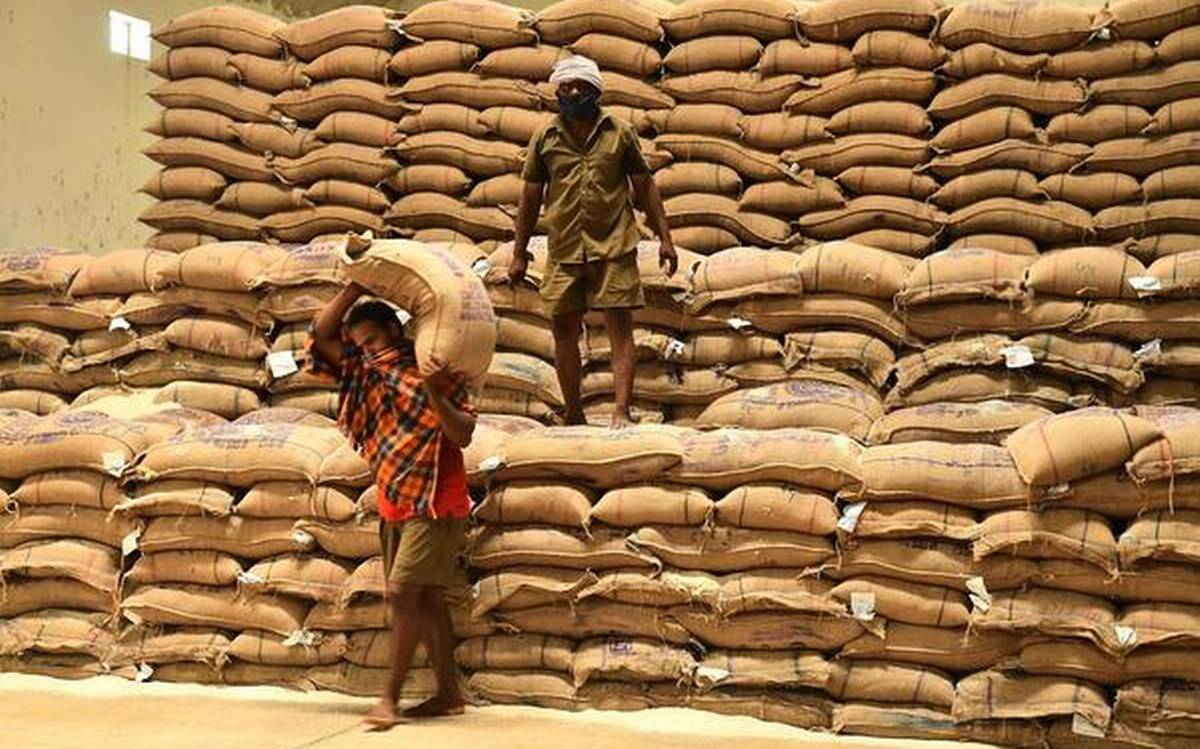
  • Allaying the fears of farmers over MSP regime

    Question of MSP regime while arguing in favour of recently passed agri bills has made the farmers apprehensive of the purpose of the bill. The article argues for allaying the fears of the farmers and explains the salience of the MSP.

    Flawed argument over MSP

    • The recently enacted farm bills have triggered debate on the desirability of the MSP regime.
    • But, the bills do not facilitate a policy to do away with Minimum Support Prices (MSPs).
    • The bills allow free entry to agents who wish to set up markets — whether they be private individuals, producer collectives or cooperatives.
    • This means that the Food Corporation of India (FCI) and other associated agencies can procure in the traditional mandis, or in a new market established under this law — or in their own backyard.
    • So, the argument that if the mandis cease to exist, the procurement will also cease is, in fact, flawed.
    • Supporters of the bills have quoted the Shanta Kumar committee’s figures to argue that MSPs are anyway irrelevant for most of the farmers in the country.
    • This linkage of the farm bills with the MSP only adds to the apprehension that farmers have about the bills.

    Significance of MSP

    • It is true that the procurement has remained confined to only a few crops.
    • But the benefits to the farmers even beyond Punjab and Haryana are certainly not negligible.
    • It is true that only a small fraction benefits directly from the procurement.
    • But one cannot ignore the indirect benefit of this to all foodgrain producers in the country.
    • As the procurement significantly exceeds the PDS requirement, this creates additional demand in the foodgrain market, pushing up the prices.
    • This has been a great help for all the grain producers in the country, especially when the international prices have remained low for a long time now.
    • The RBI’s annual report of 2017-18 on impact of MSP on the food prices conclusively shows that MSP is a leading factor influencing the output prices of the farm produce in the entire country.
    • The issue of MSP is all the more important for rain-fed agriculturists, being deprived of irrigation, they don’t derive benefit from subsidies on electricity and fertiliser as their use is limited.
    • So, at the moment, the only state support these farmers (primarily cotton and pulse producers) have is that of MSPs.

    Conclusion

    The debate on whom and how the state should support is an issue that should be addressed independently of the farm acts. Presenting these acts as an alternative to MSPs will not persuade farmers.

  • [pib] Electricity Access & Utility Benchmarking Report

    NITI Aayog, Ministry of Power, Rockefeller Foundation, and Smart Power India have together launched the ‘Electricity Access in India and Benchmarking Distribution Utilities’ report.

    About the report

    • It is based on a primary survey conducted across 10 states––representing about 65% of the total rural population of India.
    • Aimed at capturing insights from the demand (electricity customers) as well as supply-side (electricity distribution utilities), the report seeks to:
    1. Evaluate the status of electricity access in India across these states and distribution utilities along all dimensions that constitute meaningful access
    2. Benchmark utilities’ capacity to provide electricity access and identify the drivers of sustainable access
    3. Develop recommendations for enhancing sustainable electricity access

    Key findings of the report:

    • As much as 92% of customers reported the overall availability of electricity infrastructure within 50 metres of their premises; however, not all have connections, the primary reason being the distance of households from the nearest pole.
    • Overall, 87% of customers have access to grid-based electricity. The remaining 13% either use non-grid sources or don’t use any electricity at all.
    • The hours of supply have improved significantly across the customer categories to nearly 17 hours per day.
    • Nearly 85% of customers reported to have a metered electricity connection.
    • Access to electricity is observed in 83% of household customers.
    • Considering the overall satisfaction level, a total of 66% of those surveyed were satisfied––74% of customers in urban areas and 60% in rural areas.

    Recommendations made

    The key recommendations provided in the report are in the areas of policy and regulation, process improvement, infrastructure and capacity-building of utilities. Other recommendations included:

    • prioritizing the release of new connections for non-household customers
    • transfer of subsidies or other benefits directly into a customer’s account
    • enhanced technology-driven customer service; ensuring 100% metering of customers
    • segregation of feeder lines
  • Controlling the distorting power of the global capital

    Issues with free trade are making themselves more evident in the aftermath of the Covid pandemic. The article analyses the growing influence of the capital and how it is benefiting the few.

    Issues with free trade

    • Debates about free trade revolves around value of economic growth vs. the values of justice.
    • The Economist (October 5) says “Investor-state dispute-settlement (ISDS) clauses of international trade and investment agreements give foreign investors the right to resort to a secretive tribunal to seek compensation when they are in disagreement with a host government.
    • They threaten governments who want to pass laws that seem self-evidently in their country’s and even the world’s interests.
    • The interests of remote financial investors are considered superior to the rights of local people represented by their own democratically elected governments.
    • TRIPS (the Agreement on Trade-Related Aspects of International Property Rights) is another egregious example.
    • Lobbies of multinational pharma companies want to protect their investors with intellectual monopolies under TRIPS, denying affordable medicines to the world’s poorer people.
    • New business models are throwing more workers into short-term contractual arrangements to make it easier for investors to do business.

    How it is relevant in India

    • The Environmental Impact Assessment (EIA) notification 2020 make it easier for investors to take over lands for projects by debilitating the assessment process which requires that communities be heard.
    • The new labour codes passed by Parliament to simplify regulations have also weakened the rights of workers to be represented by unions.
    •  In India, terms of trade have been stacked against small farmers to keep prices low for consumers.
    • Terms are also against small enterprises in financial markets, and also when they supply to large buyers in global supply chains.
    • The terms of trade are unfair for all workers who are on the supply side of labour markets vis-Ă -vis those who pay them.
    • Small people do not have clout in any market. Those with more money set the terms of trade.

    Governance crisis

    • Capitalism runs on the principle of property rights: Those who own more must have a greater say in the governance of the enterprise.
    • Money is speaking too much in fixing the rules of the game: It influences elections; it controls the media; it powers lobbies for reforms at international and national levels.

    Conclusion

    The way the rules of the economy and trade are made must change to create a more just and resilient world. Voices of the poorest people and their associations must be heard more loudly than the opinions of the rich and their lobbies.