The Delhi High Court is set to physically inspect the Central and Southern parts of Delhi Ridge to assess the extent of afforestation and cutting of trees in the area.
Deforestation in Delhi Ridge:
Over 308 hectares of the ecologically sensitive Delhi Ridge area has been encroached and another 183 hectares “diverted” for “non-forestry purposes”. ( Data by Central Empowered Committee (CEC) report to the Supreme Court, 2023.)
About Delhi Ridge
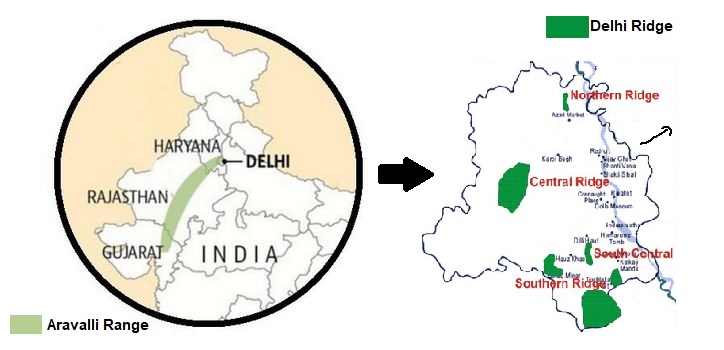
Delhi Ridge is located in the National Capital Territory of Delhi, extending as a northern extension of the ancient Aravalli Range.
Composed primarily of quartzite rocks, it spans approximately 35 kilometres from Tughlaqabad in the southeast to Wazirabad in the north along the Yamuna River.
Ecological Significance:
It acts as the “green lungs” of Delhi, providing crucial ecological services such as carbon sequestration and habitat for wildlife.
It protects Delhi from the hot desert winds originating from Rajasthan to the west.
It supports diverse flora and fauna, making Delhi one of the world’s most bird-rich capital cities.
Efforts are ongoing to maintain biodiversity through biodiversity parks and wildlife sanctuaries like the Northern Ridge Biodiversity Park and Asola Bhatti Wildlife Sanctuary.
Geographical Features
The ridge is believed to be over 1.5 billion years old, making it an ancient geological formation compared to the Himalayas (50 million years old).
It functions as a watershed, dividing the Indus Plain to the west from the Gangetic Plain to the east within the Indo-Gangetic Plain.
Administrative Divisions:
Divided into four main zones: Northern, Central, South-Central, and Southern Ridge.
Each zone has distinct characteristics and faces varying degrees of urban encroachment and conservation efforts.
In May 2024, an explosion at a reactor in a chemical factory within the Dombivli Maharashtra Industrial Development Corporation (MIDC) area caused fatalities and injuries among workers and local residents.
Present Scenario in India
India continues to witness frequent fatal industrial accidents, often due to non-compliance with safety regulations, inadequate inspections, and compromised safety practices.
Recent incidents, such as the Dombivli MIDC chemical factory explosion, highlight the recurring nature of these accidents and their devastating impact on lives and infrastructure.
There is a significant disparity between the number of registered factories and the inspection rates across states like Maharashtra, Gujarat, and Tamil Nadu.
Causes of fatal industrial accidents
Non-compliance with Safety Regulations: Many industrial accidents occur due to the failure of companies to adhere to mandated safety regulations and standards. Examples include improper maintenance of machinery, lack of safety equipment, and inadequate training of personnel in handling hazardous materials.
Inadequate Maintenance and Inspection Practices: Poor maintenance of industrial equipment and facilities can lead to malfunctions and accidents. Insufficient or irregular inspection practices contribute to undetected hazards and safety violations that increase the risk of accidents.
Human Error and Unsafe Practices: Accidents often result from human errors such as negligence, fatigue, or lack of training. Unsafe work practices, including shortcuts taken to save time or reduce costs, can compromise safety standards and escalate the likelihood of accidents.
Need for the right reforms
Strengthening Regulatory Framework: Reforms should focus on updating and strengthening safety regulations to align with international standards and best practices. There is a need to close loopholes and ambiguities in existing laws to enhance clarity and enforceability.
Improving Inspection and Enforcement: Enhancing the capacity and effectiveness of regulatory bodies responsible for inspecting industrial facilities. Increasing the number of qualified inspectors, improving their training, and implementing advanced inspection techniques like digital monitoring and real-time compliance checks.
Promoting Transparency and Accountability: Establishing transparent mechanisms for reporting and investigating industrial accidents to identify root causes and prevent recurrence.
What can be the solution? (Way forward)
Enhanced Regulatory Oversight: Strengthening and strictly enforcing safety regulations and standards across all industries. Regular updates to ensure regulations are comprehensive, up-to-date with technological advancements, and aligned with international best practices.
Improving Inspection and Compliance: Increasing the number of qualified inspectors and improving their training and capabilities.Implementing regular and surprise inspections using modern technologies such as digital monitoring and remote sensing to ensure compliance with safety standards.
Promoting Safety Culture: Encouraging a proactive safety culture within industries through training, awareness programs, and incentives for compliance.
Mains PYQ:
Q What is the significance of Industrial Corridors in India? Identifying industrial corridors, explain their main characteristics. (UPSC IAS/2018)
The Compensatory Afforestation Fund Management and Planning Authority (CAMPA) approved Rs 56 crore for the next phase of the conservation program for the Great Indian Bustard (GIB) and the Lesser Florican for the 2024-2029 period.
Note: Both the Bustard and Lesser Florican are critically endangered, with only 140 Bustards and less than 1,000 Lesser Floricans surviving.
Back2Basics:Compensatory Afforestation Fund Management and Planning Authority (CAMPA)
Details
Establishment
Established by the MoEFCC.
Legal Basis: Compensatory Afforestation Fund Act, 2016.
Objective
Ensure effective utilization of funds for compensatory afforestation, catchment area treatment, wildlife management, and forest resource development.
Background
Created due to the diversion of forest land for non-forest purposes; aimed at mitigating the loss of forest cover through compensatory afforestation.
Structure
National CAMPA Advisory Council: Provides policy advice and ensures inter-ministerial coordination.
State CAMPAs: Manage funds and oversee implementation at the state level.
Fund Utilization
Funds are used for afforestation, forest ecosystem regeneration, wildlife protection, forest infrastructure, and conservation activities.
Key Activities
Afforestation and reforestation
Wildlife management
Forest management
Soil and moisture conservation
Financial Management
Managed by CAMPA at national and state levels;
Funds are non-lapsable and specifically allocated for forestry and wildlife activities.
Monitoring and Reporting
Includes regular audits and progress reports to ensure transparency and accountability in fund utilization and project implementation.
Legal Framework
Governed by the Compensatory Afforestation Fund Act, 2016
CAMPA Guidelines.
Impact and Significance
Crucial for mitigating deforestation impacts, supporting ecological balance, biodiversity conservation, and sustainable forest management.
About Great Indian Bustards
GIBs are the largest among the four bustard species found in India, the other three being MacQueen’s bustard, the lesser florican, and the Bengal florican.
GIBs’ historic range included much of the Indian sub-continent but it has now shrunken to just 10 percent of it.
Among the heaviest birds with flight, GIBs prefer grasslands as their habitats.
GIBs are mainly found in Desert National Park, Rajasthan.
Bustards face major threats, including habitat changes and collisions with power lines.
Protection accorded:
Birdlife International: uplisted from Endangered to Critically Endangered (2011)
Protection under CITES: Appendix I
IUCN status: Critically Endangered
Protection under Wildlife (Protection) Act: Schedule I
What is the GIB Recovery Plan?
The proposal was prepared by the Wildlife Institute of India (WII).
The proposal includes:
Rewilding Bustards bred in ex-situ conservation centres,
Conducting detailed population studies, and
Developing artificial insemination techniques.
Back2Basics: Wildlife Institute of India (WII)
WII is an autonomous institution under the Ministry of Environment, Forest and Climate Change.
It was established in 1982.
It is based in Dehradun, Uttarakhand.
Functions: It offers training programs, academic courses, and advisory in wildlife research and management.
Why such a move?
Indicator Species: The GIB is a key indicator species of grassland habitat, signalling the health of these environments.
Population Decline: The population has declined from around 700 individuals to less than 150 due to habitat loss, predation, and death by overhead power lines.
Supreme Court Order: The Supreme Court recognized the threat from power lines and constituted an expert committee to assess the feasibility of overhead and underground electric lines in the bustard’s habitats.
Conservation Efforts and Achievements
Recovery Plan: Initial efforts began between 2012-2013 with a long-term recovery project, which firmed up in 2016 with a Rs 33.85 crore funding outlay.
Funding and Agreements: The project was funded by the Compensatory Afforestation Fund, with a tripartite agreement in 2018 involving the Environment Ministry, Rajasthan Forest Department, and WII.
In-Situ Breeding: Conservation breeding began in 2019, resulting in a founder population of 40 GIBs at the Ramdevra centre.
Achievements at Breeding Centres
Successful Breeding: Eggs collected from the wild were incubated and chicks were hand-reared. The breeding centres now have a founder population of 40 GIBs.
Scientific Reasoning: Creating a founder population prevents extirpation and captures genetic variability. The goal is to have at least 20 adult birds including 15 females.
Future Plans
Next Phase (2024-2033): The immediate next phase will run until 2029, targeting the upgradation of the CBC at Ramdevra and the development of the Lesser Florican CBC at Sorsan.
Population Surveys: Surveys will be conducted in Rajasthan and other range states to monitor population status.
Release into the Wild: The most important target is releasing captive-bred GIBs into the wild, preceded by soft release in enclosures.
PYQ:
[2020] With reference to India’s Desert National Park, which of the following statements are correct?
1. It is spread over two districts.
2. There is no human habitation inside the Park.
3. It is one of the natural habitats of the Great Indian Bustard.
Select the correct answer using the code given below:
(a) 1 and 2 only
(b) 2 and 3 only
(c) 1 and 3 only
(d) 1, 2 and 3
[2019] Consider the following statements:
As per law, the Compensatory Afforestation Fund Management and Planning Authority exists at both National and State levels.
People’s participation is mandatory in the compensatory afforestation programmes carried out under the Compensatory Afforestation Fund Act, 2016.
Which of the statements given above is/are correct?
(a) 1 only
(b) 2 only
(c) Both 1 and 2
(d) Neither 1 nor 2
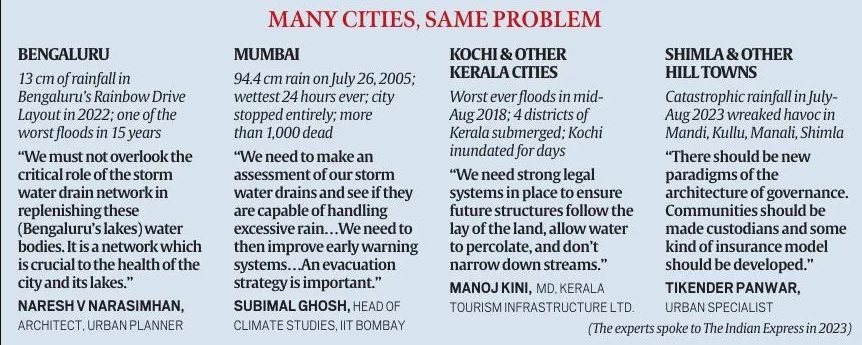
Heavy rain brought Delhi and NCR to a standstill, causing severe water-logging, traffic snarls, power cuts, property damage, and 11 deaths from structural collapses and electrocution.
Climate change and rising temperatures have intensified the overflow of rivers and lakes, snowmelt, storm surges (such as hurricanes and cyclones), and abnormally heavy rains. This, coupled with locational vulnerabilities, has resulted in increased instances of urban flooding.
Principal Reasons Behind Chronic Urban Flooding in Delhi
Unchecked Urban Expansion: Rapid, ill-planned urban growth without considering natural topography and drainage patterns.
Inadequate Drainage Systems: Existing drainage systems are unable to handle high-intensity rainfall, leading to significant runoff.
Concrete Overdevelopment: Excessive construction on low-lying areas and flood plains, leaving little room for water absorption.
Destruction of Water Bodies: Reduction of water bodies that could manage floodwaters, with many converted into real estate.
Neglect of Water in Urban Planning: Lack of a comprehensive water masterplan that integrates water management into urban development.
Present Scenario of Rapid Urbanization in Delhi NCR
Fastest Urban Expansion: Delhi is one of the fastest-growing cities globally, with its geographic size almost doubling between 1991 and 2011.
Population Growth: Predicted to overtake Tokyo as the world’s most populous city by 2030, with an estimated population of 39 million.
Urban Sprawl: Expansion primarily on the peripheries, converting rural areas into urban zones, and rapid urbanization in NCR cities like Ghaziabad, Faridabad, Noida, and Gurugram.
Challenges and Limitations
Topographical Neglect: Building in low-lying areas and on flood plains, disrupting natural drainage and increasing flood risks.
Inadequate Infrastructure: Insufficient desilting of drains, inadequate stormwater management systems, and improper solid waste management.
Lack of a Water Masterplan: Absence of comprehensive planning for clean and wastewater flows, leading to issues like the flooding of new infrastructures like the Pragati Maidan Tunnel.
Reduction of green space and water bodies: Conversion of green spaces and water bodies into concrete developments, further aggravating flood situations.
Inconsistent Urban Planning: No systematic approach to integrating natural water flows and gradients into urban development plans.
Recommendations (Way Forward)
Integrated Urban Planning: Develop a water masterplan that prioritizes water management in urban development.
Protection of Water Bodies: Preserve and restore existing water bodies to manage floodwaters effectively.
Sustainable Development: Implement policies to prevent construction in low-lying and flood-prone areas.
Infrastructure Improvement: Enhance drainage systems, desilting processes, and solid waste management to reduce water logging.
Public Awareness: Increase awareness about the importance of sustainable urban planning and the risks of unchecked urbanization.
Case study: Copenhagen, Denmark has an excellent “Five Finger Plan” that integrates urban infrastructure, transport, and green spaces. The city emphasizes sustainability, public life, and sensitive development. Indian Government can consider this plane.
Mains PYQ:
Q Account for the huge flooding of million cities in India including the smart ones like Hyderabad and Pune. Suggest lasting remedial measures. (UPSC IAS/2020)
A new metal oxide nanocomposite has been developed by The Institute of Advanced Study in Science and Technology (IASST) that can help photocatalytic degradation of organic pollutants like dyes and pharmaceuticals and hence can be used as sustainable technologies for cleaning up the environment.
Understanding Photocatalysis and Metal Oxides
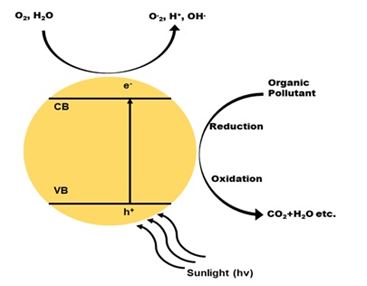
Photocatalysis is a process that uses light to accelerate chemical reactions, particularly useful for degrading harmful substances in water and air.
They facilitate this reaction without being consumed.
When exposed to light, these metal oxides generate electron-hole pairs.
These pairs are highly reactive and can break down pollutants into harmless by-products.
Work Efficiency: The overall efficiency of this process depends on several factors, including the choice of metal oxide, its crystal structure, light intensity, pollutant concentration, pH level, and the amount of catalyst used.
Optimisation: Optimizing these factors is crucial for maximising the degradation rates of pollutants. Adjustments in the type of metal oxide, light parameters, and other conditions can significantly enhance the photocatalytic efficiency.
Breakthrough by IASST: NiTF Composite
The team developed a nanocomposite called NiTF, which stands for Nickel-doped Titanium Dioxide on Fuller’s Earth.
This innovative material combines the photocatalytic properties of titanium dioxide with the adsorption capabilities of Fuller’s earth, a type of natural clay.
What is Fuller Earth?
Fuller’s earth is a term for various clays used as an absorbent, filter, or bleaching agent.
Products labeled fuller’s earth typically consist of palygorskite or bentonite.
Primary modern uses include as absorbents for oil, grease, and animal waste, and as a carrier for pesticides and fertilizers
Testing and Results
The NiTF nanocomposite was tested for its ability to decolorize methylene blue, a common dye.
Methylene blue is a persistent pollutant toxic to aquatic life, harmful to human health, and causes colour pollution in water bodies.
The results were impressive, with the composite achieving a 96.15% decolorization of the dye solution at a pH of 9.0 under visible light within 90 minutes.
Fuller’s earth enhanced the TiO2’s ability to adsorb pollutants, even in the absence of light.
This suggests that the NiTF nanocomposite could be a cost-effective solution for environmental photocatalysis, providing benefits even in low-light conditions.
Potential Applications
Catalysis: The nanocomposite can enhance the efficiency of various chemical reactions.
Energy Storage: It has the potential to improve systems for storing energy.
Sensors: The material can be used to develop highly sensitive detection devices.
Optoelectronics: The nanocomposite can advance technologies that use light for electronic devices.
Biomedical Fields: It can be applied in medical treatments and diagnostics.
Coatings: The material can be used to create protective and functional surfaces.
Renewable Energy: It can facilitate water splitting to produce renewable energy.
PYQ:
[2015] With reference to the use of nanotechnology in the health sector, which of the following statements is/are correct?
Targeted drug delivery is made possible by nanotechnology.
Nanotechnology can largely contribute to gene therapy.
Select the correct answer using the code given below:
(a) 1 only
(b) 2 only
(c) Both 1 and 2
(d) Neither 1 nor 2
Due to Hurricane Beryl sweeping through the Windward Islands, the Indian Men’s cricket team, victorious in the T20 World Cup, finds itself stranded in Barbados.
What do we know about Hurricane Beryl?
Early Category 4 Storm: Hurricane Beryl is the earliest category 4 storm of the Atlantic hurricane season, sustaining winds of at least 130 miles per hour (209 kilometres per hour).
Location and Impact: It is currently affecting the Windward Islands in the southern part of the Lesser Antilles, including Barbados, Grenada, and Trinidad and Tobago.
Forecast: The National Hurricane Centre has issued warnings for life-threatening winds and storm surges in the affected islands, with the potential for violent winds and flash flooding.
Preparations: Local authorities in Barbados have suspended school classes and taken other precautions, such as shutting down the water supply, in anticipation of the hurricane’s impact.
Historical Context: Hurricane Beryl is noted as the strongest storm to impact the Windward Islands since Hurricane Ivan in September 2004.
What are hurricanes and how do they form?
Formation: Hurricanes form over warm ocean waters near the equator where warm, moist air rises from the ocean’s surface, creating low air pressure.
Fuel: They are fueled by the heat and moisture evaporating from the ocean, forming clouds and spinning due to the Earth’s rotation.
Eye Formation: As the storm system intensifies, an eye forms at its centre, with storms rotating counterclockwise north of the equator and clockwise south of it.
Impact of Warming World: Warmer sea surface temperatures due to climate change may lead to slower decay of hurricanes upon landfall, potentially increasing their severity.
Are hurricanes becoming more severe now?
Research Findings: Studies suggest that warmer sea surface temperatures contribute to the slower decay of hurricanes, potentially prolonging their destructive impacts inland.
Record-Breaking Seasons: The 2020 Atlantic Hurricane season has seen a record number of named storms, indicating a trend towards more frequent and intense hurricane activity.
What is the difference between a hurricane and a tropical storm?
No Fundamental Difference: Hurricanes, typhoons, and cyclones are all types of tropical cyclones, named differently based on their location:
Hurricanes: Form over the Atlantic Ocean and the eastern Pacific Ocean.
Typhoons: Form in the Northwest Pacific Ocean.
Cyclones: Form in the Bay of Bengal and the Arabian Sea.
Naming Conventions: The different names signify regional differences but refer to the same meteorological phenomenon of tropical cyclones.
Way forward:
Implementation of Advanced Forecasting Technologies: Invest in state-of-the-art meteorological tools and satellite technology to enhance the accuracy and lead time of hurricane forecasts.
Community Preparedness Programs: Establish comprehensive community outreach programs to educate residents about hurricane risks, evacuation procedures, and emergency shelter locations.
Mains PYQ:
Q Discuss the meaning of colour-coded weather warnings for cyclone prone areas given by India Meteorological Department. (UPSC IAS/2014)
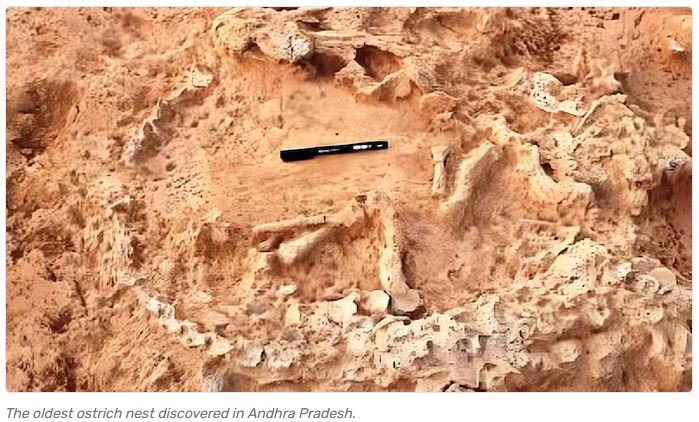
Archaeologists have discovered a 41,000-year-old ostrich nest in Prakasam, Andhra Pradesh.
Prehistoric Ostrich Nest: Details of the Discovery
The nest, identified as the world’s oldest known ostrich nest, measures 9-10 feet in width.
The nest was once home to 9-11 eggs but was capable of holding 30-40 eggs at a time.
Ostriches are mega omnivores, weighing between 90 and 140 kg and standing seven to nine feet tall.
What are Megafauna?
Megafauna generally refers to animals weighing more than 50 kg, though scientific definitions vary.
The term was first used by Alfred Russel Wallace in his 1876 book, “The Geographical Distribution of Animals.”
Megafauna can be classified into:
Megaherbivores (plant-eaters),
Megacarnivores (meat-eaters), and
Megaomnivores (who eat both plants and meat).
Historical Evidence of Megafauna
Early Documentation: Richard Lydekker in 1884 presented the earliest documented evidence of ostriches in the subcontinent, identifying the extinct Struthio asiaticus in the Dhok Pathan deposits in Upper Siwalik Hills, present-day Pakistan.
Discoveries in Maharashtra: Archaeologist S A Sali in 1989 reported ostrich eggshell beads and engraved pieces dating back to 50,000–40,000 years ago at Patne, Maharashtra.
CCMB Research in 2017: Researchers at the Centre for Cellular and Molecular Biology (CCMB) in Hyderabad established the presence of ostriches in Rajasthan, Madhya Pradesh, and Gujarat 25,000 years ago.
Broader Implications and Studies
Biogeographical Dispersion: The presence of ostriches in India is attributed to bio-geographical dispersion from the continental drifting of Gondwanaland.
Late Quaternary Extinctions: The study, titled ‘Late Quaternary extinctions in the Indian Subcontinent,’ established that the disappearance of large animals began around 30,000 years ago, coinciding with the arrival of humans.
Co-Evolution Hypothesis: The study supports the hypothesis that fauna and their resilience to extinction resulted from coevolution with hominins, with geographic isolation and abiotic factors accelerating extinction.
PYQ:
[2018] The term “sixth mass extinction/sixth extinction” is often mentioned in the news in the context of the discussion of:
(a) Widespread monoculture practices in agriculture and large-scale commercial farming with indiscriminate use of chemicals in many parts of the world that may result in the loss of good native ecosystems.
(b) Fears of a possible collision of a meteorite with the Earth in the near future in the manner it happened 65 million years ago that caused the mass extinction of many species including those of dinosaurs.
(c) Large-scale cultivation of genetically modified crops in many parts of the world and promoting their cultivation in other parts of the world which may cause the disappearance of good native crop plants and the loss of food biodiversity.
(d) Mankind’s over-exploitation/misuse of natural resources, fragmentation/loss of natural habitats, destruction of ecosystems, pollution and global climate change.
The Union Minister of Environment, Forest, and Climate Change (MoEFCC) has launched a portal documenting all animal species in India.
The Portal was launched on the 109th Foundation Day of the Zoological Survey of India (ZSI) in Kolkata.
Back2Basics: Zoological Survey of India
The ZSI was set up by British zoologist Thomas Nelson Annandale, in 1916.
It is the premier taxonomic research organisation in India based in Kolkata.
It was established to promote surveys, exploration and research leading to the advancement of our knowledge of various aspects of the exceptionally rich animal life of India.
The ZSI had its genesis as the Zoological Section of the Indian Museum at Calcutta in 1875.
Since its inception, the ZSI has been documenting the diversity and distribution of the fauna of India towards carrying out its mandate of conducting exploration-cum-taxonomic-research programmes.
The ZSI has published an extremely large amount of information on all animal taxa, from Protozoa to Mammalia.
About the Fauna of India Checklist Portal
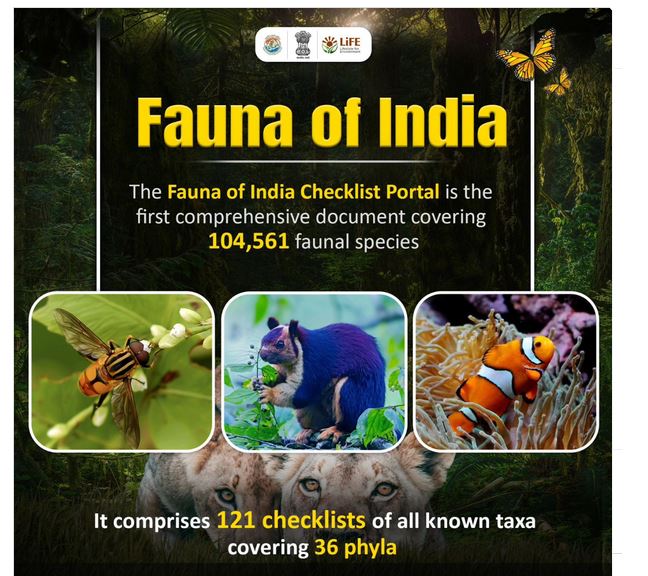
The portal consists of records of more than 100,000 animal species, prepared by over 150 scientists of the Zoological Survey of India (ZSI) over two years.
This checklist is the first comprehensive document on faunal species in India, covering 121 checklists of all known taxa across 36 phyla, including endemic, threatened, and scheduled species.
It is a compilation of all animal species recorded in India since the 1750s, including endemic, threatened, and scheduled species.
It provides essential data for conservation and management efforts, forming the basis for all biological sciences.
Significance of Portal:
With this, India has become the first country to prepare a checklist of its entire fauna, covering 104,561 species, positioning itself as a global leader in biodiversity conservation.
The comprehensive documentation of India’s fauna aligns with Mission LiFE by providing crucial data for biodiversity conservation.
Details from the ZSI Report
A 2023 ZSI report highlights that India is one of the world’s 17 megadiverse nations, hosting around 7-8% of the world’s documented species and containing four of the 34 globally recognised biodiversity hotspots.
The report lists 641 discoveries made by scientists and experts from India during 2023 with Kerala topping the list, followed by West Bengal.
It includes 442 new species globally and 199 newly recorded species in India.
Significant Discoveries in 2023
New Species: The 2023 findings include 112 hymenopterans, 86 arachnids, 47 new fishes, 20 reptiles, and two mammals.
New Mammals: An ibex species found in Himachal Pradesh and Ladakh, named Capra himalayensis, and a new bat species, Miniopterus srinii, was discovered in Kodagu district, Karnataka.
State Rankings: Kerala recorded the highest number of new discoveries with 101, followed by West Bengal with 72, Tamil Nadu with 62, and Arunachal Pradesh and Karnataka with 45 each.
About Mission LiFE
Mission LiFE, or Lifestyle for Environment, is a global mass movement initiated by India to encourage individual and community action towards environmental protection and preservation.
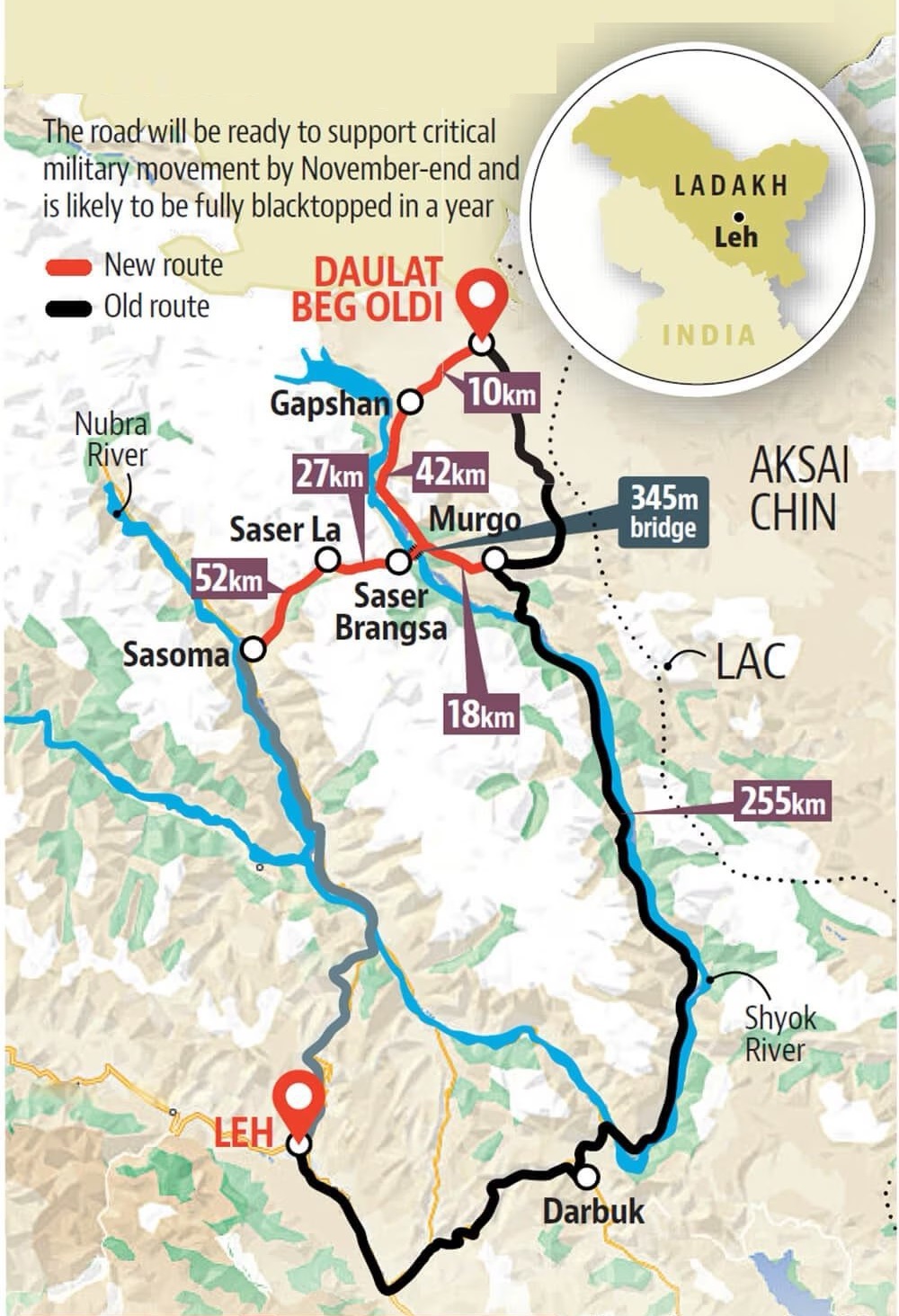
Five soldiers lost their lives when a tank was drowned away by powerful water currents in the Shyok River during a military training exercise in Ladakh.
About Shyok River
The Shyok River is a significant river flowing through the Ladakh region of India and the Gilgit-Baltistan region of Pakistan.
It is a tributary of the Indus River and is known for its length and the rugged terrain it traverses.
The Shyok River spans approximately 550 kilometres in length.
It has a drainage basin covering parts of both India and Pakistan, making it an essential water source for the regions it traverses.
Source and Course:
The river originates from the Rimo Glacier, located to the southeast of the Karakoram Pass.
It flows northwest to enter the Nubra Valley in Ladakh, a region known for its picturesque landscapes and sand dunes.
The river then turns southwest and flows through the disputed region of Gilgit-Baltistan, eventually joins the Indus River near Skardu.
Tributaries:
The Shyok River has several tributaries, the most notable being the Nubra River, which flows through the Nubra Valley.
Other significant tributaries include the Saltoro River, originating from the Siachen Glacier region.
Cultural and Historical Significance:
The river flows through that have been part of ancient trade routes between Central Asia and South Asia.
The Nubra Valley, through which the Shyok flows, is also known for its ancient monasteries and the Bactrian camels, which were used for trade along the Silk Route.
Geographical significance of Shyok River
Strategic Location: The Shyok River flows through the Ladakh region of India and serves as a vital geographical feature due to its proximity to the Line of Actual Control (LAC) between India and China. Its strategic location influences military deployments and infrastructure development in the region, particularly in the context of border disputes and security concerns.
Glacial Melt and Water Resources: Originating from the Rimo Glacier and fed by numerous tributaries, the Shyok River contributes significantly to the water resources of the region. Its flow is crucial for agriculture, hydroelectric power generation, and sustenance of local ecosystems, impacting the livelihoods and socio-economic activities of communities along its banks.
Q) “The most significant achievement of modern law in India is the constitutionalization of environmental problems by the Supreme Court.” Discuss this statement with the help of relevant case laws. (UPSC IAS/2022) Q) Examine the scope of Fundamental Rights in the light of the latest judgement of the Supreme Court on Right to Privacy. (UPSC IAS/2017)
Prelims: Q) The power of the Supreme Court of India to decide disputes between the Centre and the States falls under its (UPSC IAS/2014) (a) Advisory jurisdiction (b) Appellate jurisdiction (c) Original jurisdiction (d) Writ jurisdiction
Note4Students:
Prelims: Supreme Court on Endangered species;
Mains: Landmark Judgements by SC; Judicial Interventions;
Mentor comments: The Supreme Court in M K Ranjitsinh & Ors. v. Union of India & Ors. ruled that people have a right to be free from the adverse effects of climate change which should be recognised by Article 14 and Article 21 of the Constitution. The ruling of the Supreme Court was rendered in response to a writ brought by a government official. The court acknowledged the complex interplay between environmental conservation, social equity, economic prosperity, and climate change. It stressed the need to balance the conservation of endangered species like the Great Indian Bustard (GIB) with the imperative of protecting against climate change.
It appointed an Expert Committee to determine the best way to protect the species. This decision aimed to support India’s renewable energy goals and climate commitments while ensuring environmental protection. However, the effectiveness of court rulings on climate change remains a question, as climate change is a complex, multi-dimensional problem that requires a holistic approach. The court’s decision to defer to the executive on certain matters related to climate change policy has also been criticized by some experts.
Let’s learn
—
Why in the News?
The Apex court’s recent decision on M K Ranjitsinh & Ors. v. Union of India & Ors. to defer to the executive on certain matters related to climate change policy has been questioned by experts.
What was the Supreme Court’s recent Landmark Judgment?
• The Supreme Court in M K Ranjitsinh & Ors. v. Union of India & Ors. ruled that that people have a right to be free from the adverse effects of climate change which should be recognised by Article 14 and Article 21 of the Constitution. • The ruling of the Supreme Court was rendered in response to a writ brought by conservationist and retired government official M K Rnajitsinh, who sought protection for two endangered species namely the Lessor Florican and the Great Indian Bustard. • The court acknowledged the complex interplay between environmental conservation, social equity, economic prosperity, and climate change. • While modifying its earlier order to underground power cables in the Great Indian Bustard’s habitat, the court prioritized transmission infrastructure to enable renewable energy development to address climate change.
Present challenges along the verdict of Supreme Court:
Unresolved questions: The judgment leaves unresolved questions regarding the court’s emphasis on large-scale clean energy as the main pathway to avoiding climate harm and its potential understatement of climate adaptation and local environmental resilience.
Non-clarity: The court did not clarify how the newly recognized right against the adverse effects of climate change will be protected in practice.
Two potential approaches to realizing this right emerge:
The proliferation of court-based climate litigation, which may lead to an incomplete patchwork of protections.
The enactment of climate legislation, which can provide an overarching framework to guide future policy.
The Need for Climate Legislation in India
Absence of an “umbrella legislation” in India : India needs climate legislation that is tailored to its unique context, rather than blindly copying other countries.
Framework climate legislation can set the vision for engaging with climate change across sectors and regions, create necessary institutions, and put in place processes for structured and deliberative governance in anticipation of and reaction to climate change.
Tailoring Climate Legislation to the Indian Context should also:
create a supportive regulatory environment for sustainable cities, buildings, and transport
enable adaptation measures like heat action plans and climate-resilient agriculture
protect key ecosystems like mangroves
consider social equity in achieving these goals
A single, omnibus law covering all these areas may not be feasible given India’s existing legal framework.
Lessons from International Experience:
• Climate laws in many countries, like the UK’s, focus narrowly on regulating carbon emissions, which is ill-suited for India. • Instead, India needs an “enabling law” that stimulates development-focused decisions across sectors towards low-carbon and climate-resilient growth. • An enabling law should be more procedurally-oriented, creating institutions, processes, and standards for mainstreaming climate change across ministries and society (emphasizing both adaptation and mitigation).
Federal Factor:
On Decentralized approach: Many areas relevant to climate action, such as urban policy, agriculture, water, and electricity, fall under the authority of state and local level governments. An Indian climate law must set a framework for coherent national action and decentralize sufficiently to empower states and local governments.
On Fiscal and Governing Policies: The regional states and local governments need to be provided with information and finance to take effective actions. This would enable diverse segments of society to bring their knowledge and expertise to the table in addressing climate change.
The Way Forward:
India should learn from international experience, both in terms of what not to do and what directions to follow.
The country’s climate legislation should be tailored to its unique context of being a developing, highly vulnerable nation still building its infrastructure.

![[1st July 2024] The Hindu Op-ed: Court on climate right and how India can enforce it](https://www.civilsdaily.com/wp-content/uploads/2024/07/1-July-1568x882.jpg)