đŸ’„Join UPSC 2027,2028 Mentorship (July Batch) + XFactor Notes & Microthemes PDF

Subject: Environment

  • Yellowstone NP celebrates its 151st anniversary

    yellow

    Yellowstone National Park, which celebrated its 151st anniversary earlier this week, is widely considered to be the first national park in the world.

    Yellowstone National Park

    • It is a large protected area located primarily in the U.S. state of Wyoming, although it also extends into Montana and Idaho.
    • It was established in 1872 and is widely considered to be the first national park in the world.
    • It spans an area of over 9,000 sq. km comprising lakes, canyons, rivers, iconic geothermal features such as the Old Faithful geyser, and mountain ranges.

    Some key features and attractions of Yellowstone National Park include:

    1. Geothermal features: Yellowstone is famous for its geothermal features, including geysers, hot springs, mud pots, and steam vents. The most famous of these is Old Faithful, a geyser that erupts on a regular schedule.
    2. Wildlife: Yellowstone is home to a diverse array of wildlife, including grizzly bears, wolves, bison, elk, and moose. Visitors can see these animals in their natural habitats throughout the park.
    3. Scenic drives: The park has several scenic drives, including the Grand Loop Road, which takes visitors to many of the park’s major attractions.
    4. Fishing: The park has many rivers and lakes that offer excellent fishing opportunities, including the Yellowstone River.


    Attempt UPSC 2024 Smash Scholarship Test | FLAT* 100% OFF on UPSC Foundation & Mentorship programs

    Get your Rs 10,000 worth of UPSC Strategic Package for FREE | PDFs, Zoom session, Tests, & Mentorship

  • World Wildlife Day- 2023: 50 years of the CITES

    March 3 marks the 50th anniversary of the Convention on International Trade in Endangered Species of Wild Fauna and Flora (CITES) in 1973.

    Why is World Wildlife Day marked?

    • March 3 marks the anniversary of CITES’ establishment.
    • CITES is considered a landmark agreement on conservation that focuses on ensuring the sustainability of endangered species.
    • In 2013, the United Nations General Assembly (UNGA) proclaimed March 3 as the UN World Wildlife Day to celebrate and raise awareness of protecting the world’s wild animals and plants.
    • This was as the Convention on International Trade in Endangered Species of Wild Fauna and Flora (CITES) was signed in 1973 on this day.

    What is the CITES?

    • CITES stands for the Convention on International Trade in Endangered Species of Wild Fauna and Flora.
    • It is as an international agreement aimed at ensuring “that international trade in specimens of wild animals and plants does not threaten their survival”.
    • It was drafted after a resolution was adopted at a meeting of the members of the International Union for Conservation of Nature (IUCN) in 1963.
    • It entered into force on July 1, 1975, and now has 183 parties.
    • The Convention is legally binding on the Parties in the sense that they are committed to implementing it; however, it does not take the place of national laws.
    • India is a signatory to and has also ratified CITES convention in 1976.

    CITES Appendices

    • CITES works by subjecting international trade in specimens of selected species to certain controls.
    • All import, export, re-exports and introduction from the sea of species covered by the convention has to be authorized through a licensing system.
    • It has three appendices:
    1. Appendix I includes species threatened with extinction. Trade-in specimens of these species are permitted only in exceptional circumstances.
    2. Appendix II provides a lower level of protection.
    3. Appendix III contains species that are protected in at least one country, which has asked other CITES Parties for assistance in controlling trade.

    A critical assessment

    • Having wildlife allowed to be traded further legitimises their movement and increases the possibility of their illegal trade.
    • Nearly two-thirds of cases, CITES protections lag after a species is determined to be threatened by international trade a/c to NatGeo.
    • For example, while pangolins were finally added to Appendix I in 2017, an estimated million were trafficked between 2000 and 2013.
    • Its laxity has been questioned, on matters such as the ivory trade being allowed at times despite the convention banning it in 1989.

    Conclusion

    • CITES needs to evolve to address new challenges and work more closely with other international agreements and initiatives.
    • There is a need of continued efforts to protect wildlife and biodiversity and the need for international cooperation and collaboration to achieve this goal.


    Attempt UPSC 2024 Smash Scholarship Test | FLAT* 100% OFF on UPSC Foundation & Mentorship programs

    Get your Rs 10,000 worth of UPSC Strategic Package for FREE | PDFs, Zoom session, Tests, & Mentorship

  • Heatwaves in India: A Serious Concern

    Heatwave

    Central Idea

    • Heat waves have become a major concern for India this year. The scorching summer heat has started prematurely, as per the recent IMD reports. If the record temperatures of the recent past are any indication, the heat wave is likely to become more intense. Rising temperatures lead to several health problems, from dehydration and heat exhaustion to more severe conditions like heatstroke. They also affect the economy and the environment.

    Get your Rs 10,000 worth of UPSC Strategic Package for FREE | PDFs, Zoom session, Tests, & Mentorship.

    What is Heat wave?

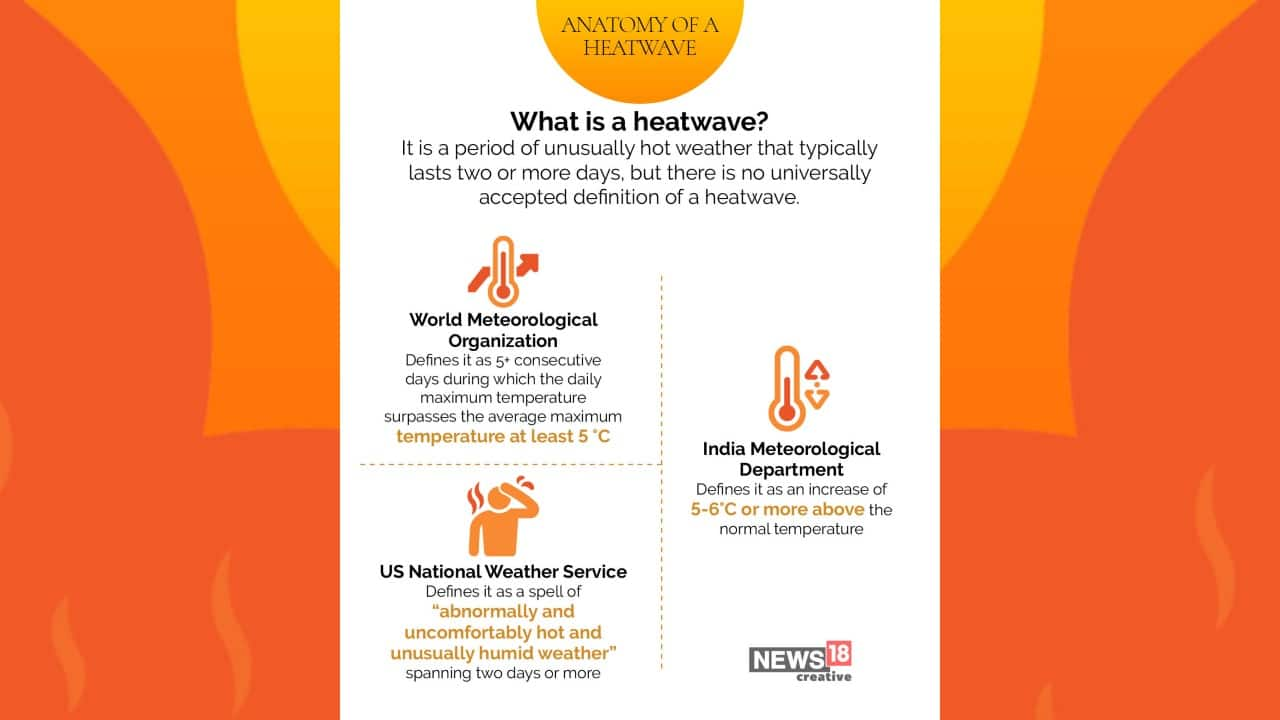
    • A heatwave is a prolonged period of abnormally hot weather.
    • Heatwaves usually last for several days or weeks and can occur in both dry and humid climates. They are characterized by temperatures that are significantly higher than the average for a particular region during that time of year.
    • This is because climate change is causing a rise in global temperatures. As the planet heats up, it leads to more extreme weather events, such as heat waves. Its geography makes India particularly vulnerable to these events.

    Heatwaves in India

    • In India Heat waves typically occur from March to June, and in some rare cases, even extend till July.
    • On an average, five-six heat wave events occur every year over the northern parts of the country.
    • Single events can last weeks, occur consecutively, and can impact large population.
    • Its geography makes India particularly vulnerable to these events.

    Some of the hottest summers on record in recent years that India has experienced

    • In May 2016, Phalodi in Rajasthan registered 51 degrees Celsius, the highest temperature ever recorded in the country.
    • In 2021, India saw its hottest day on May 22, with the temperature touching 48 degrees Celsius in Barmer, also in Rajasthan.
    • In 2022, Jaipur experienced a severe heatwave. Rajasthan’s capital recorded 45 degrees Celsius in April a record for the city for the month.
    • Delhi, Agra, Pilani and Rohtak are among the well-known hot cities in India, where temperatures, of late, have gone up to 43 degrees Celsius in early summer

    Link: Climate change and Heat waves

    • Rising heat waves: Climate change is directly linked to the increase in the frequency, intensity, and duration of heatwaves around the world.
    • More severe and more frequent: As the Earth’s climate continues to warm, heatwaves are becoming more severe and occurring more frequently.
    • Global warming: This is because global warming is causing changes in the atmosphere, such as increased greenhouse gas concentrations, which trap heat and cause temperatures to rise.
    • For instance: Climate change is also causing heatwaves to last longer. A study published in the journal Environmental Research Letters found that heatwaves are lasting an average of 2.5 days longer than they did in the middle of the 20th century.

    Heatwave

    The Socio-economic impact of heat waves

    1. Impact on Health: Heat-related illnesses, such as heat exhaustion and heatstroke, are becoming more common, particularly among vulnerable groups such as the elderly, children, and outdoor workers.
    • In addition, heat waves can exacerbate existing health problems, such as respiratory and cardiovascular diseases.
    1. Impact on the environment
    • One of the biggest problems is the depletion of water resources:
    • Water sources are drying up as temperatures rise, leading to crises in many parts of the country.
    • As people try to keep cool, they use more air conditioning, increasing electricity use. This leads to an increase in the use of fossil fuels, which significantly contributes to air pollution.
    1. Impact on agriculture:
    • Impact on environment in turn, leads to agricultural problems, with crops failing and farmers struggling to make a living.
    • Given that around 40 per cent of India’s population is engaged in agriculture, this is a significant concern.
    • Reports are already coming from Punjab and Western Uttar Pradesh that the early heatwave has affected the growth of wheat crops and is expected to negatively affect the crop to the tune of 20 per cent.
    1. Impact on growth:
    • The healthcare costs associated with heat-related illnesses can be significant, particularly for vulnerable groups who may not have access to affordable healthcare.
    • In addition, heat waves can lead to a decrease in worker productivity, which can impact economic growth.

    Heatwave

    What can be done to deal with such problems?

    • Increase public awareness: People need to be educated about the impact of rising temperatures on their health, the environment, and the economy. This can be done through public campaigns, schools, and the media.
    • Increase the use of renewable energy: India has already made significant progress in this area. However, much remains to be done. The government could incentivise individuals and businesses to invest in renewable energy, such as solar panels. This would help reduce the impact of rising temperatures, create new jobs, and stimulate economic growth.
    • Improving water management: This could include introducing more efficient irrigation systems, better rainwater harvesting, and using recycled water for non-potable purposes. This would help to conserve water resources and reduce the impact of rising temperatures on agriculture.
    • Investing in infrastructure that can cope with extreme temperatures: This could include the construction of roads and buildings that are designed to withstand high temperatures, as well as the development of more efficient cooling systems that use less energy.

    Heatwave

    Conclusion

    • The rising heat wave in India is a serious concern that needs to be addressed urgently. The impacts of rising temperatures on human health, the environment, and the economy are significant. However, with the right strategies in place, it is possible to mitigate the impact of rising temperatures and ensure a sustainable future for the country.

    Mains Question

    Q. Climate change is exacerbating the problem of heat waves. In this backdrop discuss its socioeconomic impact and what measures can be done to tackle this problem?

    Attempt UPSC 2024 Smash Scholarship Test | FLAT* 100% OFF on UPSC Foundation & Mentorship programs

  • Policy: Making India Earthquake Prepared

    Policy

    Central Idea

    • The destruction caused by earthquakes in Turkey should be alarming for India. Over the last three weeks, tremors have been felt in Himalayan states. Moreover, geologists have warned of a probable massive earthquake in the Himalayan state. In this context the Delhi High Court asked the state government to file a status report and action plan on the structural safety of buildings in Delhi. Nearly 58 per cent of the Indian landmass is vulnerable to earthquakes and the concerns that have been raised by the court need a policy response instead.

    Get your Rs 10,000 worth of UPSC Strategic Package for FREE | PDFs, Zoom session, Tests, & Mentorship

    How do earthquakes happen?

    • According to the theory of plate tectonics, the Earth’s crust and upper mantle are made of large rigid plates that can move relative to one another.
    • Slip on faults near the plate boundaries can result in earthquakes.
    • The point inside the Earth where the earthquake rupture starts is called the focus or hypocentre.
    • The point directly above it on the surface of the Earth is the epicentre.

    What is missing in India’s policy on earthquake preparedness?

    • Current policy operates primarily at the scale of structural details: Guided by the National Building Codes, this includes specifying dimensions of the structural members columns, beams, etc. and details of the reinforcements that join these elements together.
    • While scientifically sound, this view on earthquake preparedness is myopic:
    1. It ignores the buildings that were constructed before such codes were published in 1962. Such buildings form a large part of our cities.
    2. It assumes infallibility in the processes of enforcement, relying only on penalisation and illegalities.
    3. It treats earthquakes as a problem of individual buildings, as if they exist and behave in complete isolation from their urban context.

    What needs to be done?

    • Preparedness at Building and City Scale through policy: Earthquake preparedness, therefore, needs to act at the scale of building details as well as that of cities. Moreover, we must think about it in the realm of policy and not just legal enforcement.
    • Need for Comprehensive Policy: At the scale of building details, we need to create a system of retrofitting existing structures and enforcing seismic codes with more efficiency. While there has been political talk and piecemeal efforts towards retrofitting, we still lack a comprehensive policy.

    A policy should include two measures

    1. Retrofitting Buildings to Seismic Codes:
    • To create a system of tax-based or development rights-based incentives for retrofitting one’s building up to seismic codes.
    • Such a system of incentives will enable the growth of an industry around retrofitting and will generate a body of well-trained professionals and competent organisations.
    1. Improving Seismic Code Enforcement:
    • By ensuring better enforcement of seismic codes through a similar model. A step forward in this direction was the National Retrofitting Programme launched in 2014.
    • Under the programme, the Reserve Bank of India directed banks to deny loans for any building activity that does not meet the standards of earthquake-resistant design.

    Case study: Japan

    • Japan has invested heavily in technological measures to mitigate the damage from the frequent earthquakes that it experiences.
    • Skyscrapers are built with counterweights and other high-tech provisions to minimise the impact of tremors.
    • Small houses are built on flexible foundations and public infrastructure is integrated with automated triggers that cut power, gas, and water lines during earthquakes.
    • All of this has been a result of cultivating an industry around earthquake mitigation and fostering expertise.

    Criteria for an urban-level policy to generate earthquake vulnerability maps

    1. The percentage of vulnerable structures in the area;
    2. The availability of evacuation routes and distances from the nearest open ground;
    3. Density of the urban fabric;
    4. Location of nearest relief services and the efficiency with which these services can reach affected sites.
    • For example: Flood zone mapping is a good example of such an exercise that has proven to be successful in terms of timely evacuation and efficient implementation.

    Conclusion

    • Governments and policymakers ought to know better than act in a piecemeal manner. Programmes like the ongoing Urban 20 meetings are an excellent opportunity for international knowledge exchange on earthquake preparedness. The Delhi High Court’s directions must act as a reminder for the inclusion of an earthquake preparedness policy in urban renewal programmes such as the Smart Cities Mission. A policy on earthquake preparedness requires a visionary, radical and transformative approach.
  • Case for open and verifiable Forest Cover Data

    forest

    Central idea: From 19.53% in the early 1980s, today India’s total green cover stands at 24.62% ‘on-paper’.

    Defining Forest and Tree Cover

    • The Forest Survey of India (FSI) publishes its biennial State of Forest reports in 1987.
    • A/c to FSI, India counts all plots of 1 hectare or above, with at least 10% tree canopy density, irrespective of land use or ownership, within forest cover.
    • This disregards the United Nation’s benchmark that does not include areas predominantly under agricultural and urban land use in forests.

    How are forests categorized?

    The Forest Survey of India has listed four categories of forests. They are:

    1. Very Dense Forest (with tree canopy density of 70 per cent or above) (added since 2003)
    2. Moderately Dense Forest (tree canopy density of 40 per cent or above but less than 70 per cent)
    3. Open Forest (tree canopy density of 10 per cent or above but less than 40 per cent)
    4. Scrub (tree canopy density less than 10 per cent)

    New category:  NOT a forest (isolated or small patches of trees — less than 1 hectare)

    Satellite imagery used for precision

    • Until the mid-1980s (SFR 1987), the forest cover was estimated through satellite images at a 1:1 million scale.
    • The resolution then improved to 1:250,000, reducing the minimum mappable unit size from 400 to 25 hectares.
    • Since 19.53% in the early 1980s, India’s forest cover has increased to 21.71% in 2021.
    • By 2001, the scale improved to 1:50,000, bringing down the unit size to 1 hectare, and interpretation went fully digital.

    Accounting losses in forest cover

    • Satellite imagery shows decline: The National Remote Sensing Agency (NRSA) estimated declines in India’s forest cover using satellite imagery.
    • Official account on deforestation: While reliable data on encroachment is unavailable, government records show that 42,380 sq. km — nearly the size of Haryana— of forest land was diverted for non-forest use between 1951 and 1980.
    • Reconciled data: The NRSA and the newly established FSI “reconciled” India’s forest cover at 19.53% in 1987. The FSI did not contest the NRSA finding that the dense forest cover had fallen from 14.12% in the mid-1970s to 10.96% in 1981, and reconciled it to 10.88% in 1987.

    What about Total Recorded Forests?

    Ans. Lost some areas due to encroachment, diversion, forest fire etc.

    • In India, land recorded as forest in revenue records or proclaimed as forest under a forest law is described as Recorded Forest Area.
    • These areas were recorded as forests at some point due to the presence of forests on the land.
    • Divided into Reserved, Protected and Unclassed forests, Recorded Forest Areas account for 23.58% of India.

    One-third forest lost!

    • Almost one-third of India’s old natural forests — over 2.44 lakh sq. km (larger than Uttar Pradesh) or 7.43% of India are lost.
    • Even after extensive plantation by the forest department since the 1990s, dense forests within Recorded Forest Areas added up to cover only 9.96% of India in 2021.
    • That is a one-tenth slide since the FSI recorded 10.88% dense forest in 1987.

    Then why is there a net increase in India’s forest cover?

    • Plantations disguise as forest: The loss remains invisible due to the inclusion of commercial plantations, orchards, village homesteads, urban housings etc. as dense forests outside Recorded Forest Areas. Natural forests do not grow so fast.
    • Plantation data unavailable: The FSI provides no specific information on the share of plantations in the remaining dense forests inside Recorded Forest Areas.

    Why are plantations not an alternative to forests?

    Plantations can grow a lot more and faster than old natural forests. This also means that plantations can achieve additional carbon targets faster. However they are cannot be accounted as forests because-

    • Lack of biodiversity: Natural forests have evolved naturally to be diverse and, therefore, support a lot more biodiversity. Simply put, it has many different plants to sustain numerous species.
    • Non-sustainable: Plantation forests have trees of the same age, are more susceptible to fire, pests and epidemics, and often act as a barrier to natural forest regeneration.
    • Low carbon capacity: Natural forests are old and therefore stock a lot more carbon in their body and in the soil.

    How accurate are these estimations?

    • The FSI compares some interpreted data with the corresponding reference data collected from the ground under the National Forest Inventory (NFI) programme.
    • In 2021, it claimed to have established an overall accuracy of 95.79% in identifying forests from non-forests.
    • However, given the limited resources, the exercise was limited to less than 6,000 sample points.

    What led to such decline in forest cover?

    • Agricultural expansion
    • Infrastructure development
    • Mining and industrial activities
    • Illegal logging (for timber)
    • Climate change and natural disasters

    Way forward

    • Aggressive conservation policies and programs: The government needs to strengthen forest conservation policies and programs to promote the sustainable use and management of forests and trees.
    • Community participation and empowerment: Engaging local communities in forest conservation and management can promote sustainable practices and enhance their livelihoods.
    • Sustainable forest management practices: Promoting sustainable forest management practices like agroforestry, silvopasture, and mixed-use landscapes can enhance the productivity and resilience of forests.
    • Use of technology for monitoring and enforcement: Leveraging technology like remote sensing, geographic information systems (GIS), and blockchain can improve the monitoring and enforcement of forest conservation policies and programs.
    • Involving individuals and communities: They play a crucial role in protecting forests and trees by adopting sustainable practices, supporting forest conservation initiatives, and raising awareness about the importance of forests for the environment and people.


    Attempt UPSC 2024 Smash Scholarship Test | FLAT* 100% OFF on UPSC Foundation & Mentorship programs

    Get your Rs 10,000 worth of UPSC Strategic Package for FREE | PDFs, Zoom session, Tests, & Mentorship

  • e-Waste Rules 2022

    e-waste

    Central Idea

    • The burgeoning problem of managing e-waste is a cross cutting and persisting challenge in an era of rapid urbanisation, digitalisation and population growth. In November 2022, the Ministry of Environment and Forests notified a new set of e-waste rules, which will come into force from April 1, 2023. These rules address some of the critical issues but are silent on others.

    Get your Rs 10,000 worth of UPSC Strategic Package for FREE | PDFs, Zoom session, Tests, & Mentorship

    What is e-Waste?

    • e-waste refers to electronic waste, which includes any discarded electronic or electrical device, such as computers, mobile phones, televisions, and refrigerators.
    • These devices contain hazardous substances such as lead, mercury, cadmium, and polyvinyl chloride (PVC) that can pose significant environmental and health risks if not disposed of properly.

    e-Waste

    Key components of e-waste Rules in India

    • Extended Producer Responsibility (EPR): The first set of e-waste Rules was notified in 2011 and came into effect in 2012. An important component of the Rules (2011) was the introduction of EPR. Under EPR compliance, producers are responsible for the safe disposal of electronic and electric products once the consumer discards them.
    • Authorization and product stewardship: E-waste rules 2016, which were amended in 2018, were comprehensive and included provisions to promote authorisation and product stewardship. Other categories of stakeholders such Producer Responsibility Organisations (PRO) were also introduced in these rules.
    • A digitalized systems approach, introduced in the new rules (2022): Standardizing the e-waste value chain through a common digital portal may ensure transparency and is crucial to reduce the frequency of paper trading or false trail i.e., a practice of falsely revealing 100% collection on paper while collecting and/or weighing scrap to meet targets

    e-Waste

    e-waste recycling: Analysis

    • Two important stages of efficient e-waste recycling:
    • 1. Component recovery (adequate and efficient recoveries of rare earth metals in order to reduce dependence on virgin resources) and
    • 2. Residual disposal (safe disposal of the leftover residual during e-waste recycling).
    • Concern: The rules briefly touch upon the two aspects, but do not clearly state the requirement for ensuring the recovery tangent.
    • The new notification does away with PRO and dismantlers: All the responsibility of recycling vests on authorised recyclers; they will have to collect a quantity of waste, recycle them and generate digital certificates through the portal.
    • Concern: Fresh challenges might emerge as companies are no longer required to engage with PROs and dismantlers, who partially ensured double verification in terms of quantity and quality of recycling.
    • Lack of recognition to informal sector: The new rules for e-waste management in India do not recognize the crucial role played by the informal sector, which handles 95% of e-waste in the country. This lack of recognition may be due to the sector’s “illegality
    • Concern: This move could further push e-waste handling into the shadows and make it more difficult to monitor and regulate. This could lead to environmental pollution, health hazards for workers, and inefficient e-waste management.

    Impact on Health

    • Incineration and leaching: Open incineration and acid leeching often used by informal workers are directly impacting the environment and posing serious health risks, especially to child and maternal health, fertility, lungs, kidney and overall well-being.
    • Occupational health hazards: In India, many of these unskilled workers who come from vulnerable and marginalised are oblivious to the fact that that what they know as ‘black plastics’ have far reached occupational health hazards especially when incinerated to extract copper and other precious metals for their market value.
    • Exposures to children: This ‘tsunami of e-waste rolling out of the world’, as described in an international forum on chemical treaties, poses several health hazards for women in this sector as they are left exposed to residual toxics elements mostly in their own households and often the presence of children.
    • Constant contact with organic pollutants: According to a recent WHO report, a staggering 18 million children, some as young as five, often work alongside their families at e-waste dumpsites every year in low- and middle-income countries. Heavy metals such as lead, as well as persistent organic pollutants (POPs), like dioxins, and flame retardants (PBDEs) released into the environment, have also added to air, soil, and water pollution

    e-Waste

    Way ahead

    • In order to ensure maximum efficiency, the activities of the recyclers must be recorded in the system.
    • The authorities should periodically trace the quantity of e-waste that went for recycling vis-Ă -vis the recovery towards the end.
    • Recognising the potential of informal sector in e- waste handling.
    • For instance, ‘Karo Sambhav’, a Delhi-based PRO, has integrated informal aggregators in its collection mechanism. Through this initiative, e-waste is entered in a safe and structured system and the informal sector also has an advantage in terms of financial and legal security.
    • In order to ensure the efficient implementation of the law, stakeholders must have the right information and intent to safely dispose of e-waste.
    • There is need of strengthening reverse logistics, building capacity of stakeholders, improving existing infrastructure, enhancing product designing, rationalising input control and adopting green procurement practices.
    • Provide doorstep collection to consumers.

    Conclusion

    • e-waste recycling and management have become a major environmental challenge in the modern world, as the volume of e-waste generated continues to grow rapidly. Simultaneous efforts needed to increase awareness and improve infrastructure for effective e-waste management. Moreover, robust collection and recycling system and required to meet legislative requirements.

    Mains Question

    Q. What is e- waste? Discuss the set of e-waste rules in India and suggest what needs to be done for effective e- waste management?

    Attempt UPSC 2024 Smash Scholarship Test | FLAT* 100% OFF on UPSC Foundation & Mentorship programs

  • Heat Waves and the anatomy behind

    heat

    The Indian Meteorological Department (IMD) has already started sensing the first signs of heat waves for this summer season.

    What is the news?

    • The IMD warned that the maximum temperatures over northwest, west, and central India would be 3-5° C higher than the long-term average in this week.
    • If the heat waves had played out, they would have been the earliest these regions would have experienced this deadly phenomenon.

    What are Heat Waves?

    • Heatwaves generally occur over India between March and June.
    • IMD declares a heatwave event when the maximum (day) temperature for a location in the plains crosses 40 degrees Celsius.
    • Over the hills, the threshold temperature is 30 degrees Celsius.

    How are they formed?

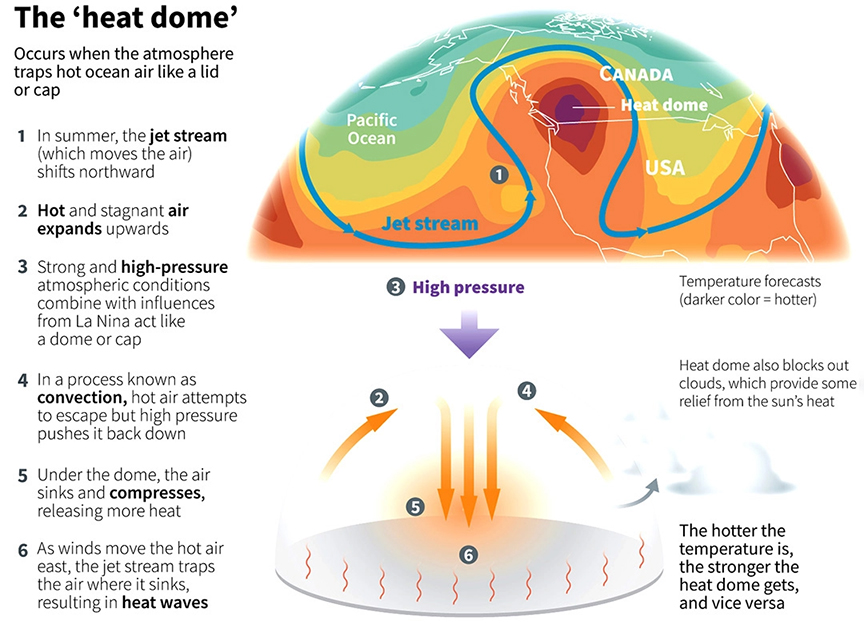
    • Heatwaves form when high pressure aloft (3,000–7,600 metres) strengthens and remains over a region for several days up to several weeks.
    • This is common in summer (in both Northern and Southern Hemispheres) as the jet stream ‘follows the sun’.
    • On the equator side of the jet stream, in the upper layers of the atmosphere, is the high pressure area.
    • Summertime weather patterns are generally slower to change than in winter. As a result, this upper level high pressure also moves slowly.
    • Under high pressure, the air subsides (sinks) toward the surface, warming and drying adiabatically, inhibiting convection and preventing the formation of clouds.
    • Reduction of clouds increases shortwave radiation reaching the surface.
    • A low pressure at the surface leads to surface wind from lower latitudes that brings warm air, enhancing the warming.
    • Alternatively, the surface winds could blow from the hot continental interior towards the coastal zone, leading to heat waves.

    Following criteria are used to declare heatwave:

    To declare heatwave, the below criteria should be met at least in 2 stations in a Meteorological subdivision for at least two consecutive days and it will be declared on the second day.

    (a) Based on Departure from Normal

    • Heat Wave: Departure from normal is 4.5°C to 6.4°C
    • Severe Heat Wave: Departure from normal is >6.4°C

    (b) Based on Actual Maximum Temperature (for plains only)

    • Heat Wave: When actual maximum temperature ≄ 45°C
    • Severe Heat Wave: When actual maximum temperature ≄47°C


    Recent context: El Nino + heat waves

    • The last three years have been La Nina years, which has served as a precursor to 2023 likely being an El Nino
    • The El Nino is a complementary phenomenon in which warmer water spreads west-east across the equatorial Pacific Ocean.
    • As we eagerly await the likely birth of an El Nino this year, we have already had a heat wave occur over northwest India.
    • Heat waves tend to be confined to north and northwest India in El Nino years.

    Why do heat waves occur in the first place?

    • Heat waves are formed for one of two reasons: because warmer air is flowing in from elsewhere or because something is producing it locally.
    • Air is warmed locally when the air is warmed by higher land surface temperature or because the air sinking down from above is compressed along the way, producing hot air near the surface.

    How do different processes contribute to the formation of a heat wave?

    • The direction of air flowing in from the west-northwest, warming in the Middle East, and compression over mountains of Afghanistan and Pakistan cause warm air to enter India.
    • The warming Arabian Sea also contributes to the warming trend.
    • Upper atmospheric westerly winds control near-surface winds, which rotate faster than the planet itself.
    • Additionally, the lapse rate, or the rate at which temperatures cool from surface to upper atmosphere, is declining due to global warming.

    Regional occurrences

    • The other factors that affect the formation of heat waves are the age of the air mass and how far it has traveled.
    • The north-northwestern heatwaves are typically formed with air masses that come from 800-1,600 km away and are around two days old.
    • Heat waves over peninsular India on the other hand arrive from the oceans, which are closer (around 200-400 km) and are barely a day old.
    • As a result, they are on average less intense.
  • India’s Rich Biodiversity Needs Science Based Implementation

    Biodiversity

    Central Idea

    • The sum and variation of our biological wealth, known as biodiversity, is essential to the future of this planet. India currently hosts 17% of the planet’s human population and 17% of the global area in biodiversity hotspots, placing it at the helm to guide the planet in becoming biodiversity champions.

    Get your Rs 10,000 worth of UPSC Strategic Package for FREE | PDFs, Zoom session, Tests, & Mentorship

    What is 30×30 pledge?

    • The importance of our planet’s biodiversity was strongly articulated at the United Nations Biodiversity Conference in Montreal, Canada.
    • On December 19, 2022, 188 country representatives adopted an agreement to halt and reverse biodiversity loss by conserving 30% of the world’s land and 30% of the world’s oceans by 2030, known as the 30×30 pledge.

    Government’s efforts, Programs with potential

    • Green Growth push in Budget: The Union Budget 2023 mentioned Green Growth as one of the seven priorities or Saptarishis. The emphasis on green growth is welcome news for India’s biological wealth as the country is facing serious losses of natural assets such as soils, land, water, and biodiversity.
    • Green India Mission: The National Mission for a Green India aims to increase forest cover on degraded lands and protect existing forested lands.
    • Green Credit Programme: The Green Credit Programme has the objective to incentivize environmentally sustainable and responsive actions by companies, individuals and local bodies.
    • The MISHTI Program: The Mangrove Initiative for Shoreline Habitats & Tangible Incomes (MISHTI) is particularly significant because of the extraordinary importance of mangroves and coastal ecosystems in mitigating climate change.
    • PM-PRANAM: The Prime Minister Programme for Restoration, Awareness, Nourishment, and Amelioration of Mother Earth (PM-PRANAM) for reducing inputs of synthetic fertilizers and pesticides is critical for sustaining our agriculture.
    • Amrit Dharohar scheme: The Amrit Dharohar scheme is expected to encourage optimal use of wetlands, and enhance biodiversity, carbon stock, eco-tourism opportunities and income generation for local communities. If implemented in letter and spirit, Amrit Dharohar, with its emphasis on sustainability by balancing competing demands, will benefit aquatic biodiversity and ecosystem services.
    • For instance: The recent intervention by the Ministry of Environment, Forest and Climate Change to stop the draining of Haiderpur, a Ramsar wetland in Uttar Pradesh, to safeguard migratory waterfowl is encouraging.

    Programs must be science-based

    • Evidence-based implementation: It is critical that these programs respond to the current state of the country’s biodiversity with evidence-based implementation.
    • A science-based and inclusive monitoring programme: A science-based and inclusive monitoring programme is critical not only for the success of these efforts but also for documentation and distillation of lessons learnt for replication, nationally as well as globally.
    • Employing modern concepts of sustainability: New missions and programmes should effectively use modern concepts of sustainability and valuation of ecosystems that consider ecological, cultural, and sociological aspects of our biological wealth.
    • Setting clear boundaries and priorities: With clear system boundaries, prioritisation of the benefits to resource people, and fund-services (rather than stock-flows) as the economic foundation for generating value has enormous potential for multiple sustainable bio-economies.
    • Efficient water use patterns: The future of our wetland ecosystems will depend on how we are able to sustain ecological flows through reduction in water use in key sectors such as agriculture by encouraging changes to less-water intensive crops such as millets as well as investments in water recycling in urban areas using a combination of grey and blue-green infrastructure.
    • Focus must be on ecological restoration: As far as the Green India Mission is concerned, implementation should focus on ecological restoration rather than tree plantation and choose sites where it can contribute to ecological connectivity in landscapes fragmented by linear infrastructure.
    • Choices should be made on evidences of resilience: Choice of species and density should be informed by available knowledge and evidence on resilience under emerging climate change and synergies and trade-offs with respect to hydrologic services.
    • Careful site selection for mangrove initiative: Site selection should also be carefully considered for the mangrove initiative with a greater emphasis on diversity of mangrove species with retention of the integrity of coastal mud-flats and salt pans themselves, as they too are important for biodiversity.
    • Effort in response: In response to these needs, we hope that the National Mission on Biodiversity and Human Wellbeing (Mission to green India’s economy, restore natural capital, and make India a global leader in applied biodiversity science) already approved by PM-STIAC, will be immediately launched by the government.

    Did you know?

    Grey and Blue-Green Infrastructure

    • Grey infrastructure: It refers to traditional man-made infrastructure, such as buildings, roads, and bridges, that are designed to provide human-made services like transportation, water supply, and waste management.
    • Blue-green infrastructure: It is designed to mimic the functions of natural ecosystems, such as wetlands, rivers, and forests, to provide services like stormwater management, water purification, and carbon sequestration.
    • Example: It includes, Rainwater harvesting systems that capture rainwater and recharge groundwater, green roofs that provide insulation and absorb rainwater, Urban parks and green spaces that improve air quality and provide habitat for wildlife, Wetlands and retention ponds that filter pollutants and store excess water during floods
    • Sustainable and resilient: Blue-green infrastructure is often seen as a more sustainable and resilient alternative to traditional grey infrastructure, as it can help to mitigate the impacts of climate change, reduce urban heat island effects, and enhance the quality of life for urban residents

    Prime Minister’s Science, Technology, and Innovation Advisory Council (PM-STIAC):

    • PM-STIAC is a high-level advisory body that provides strategic guidance on science, technology, and innovation to the Prime Minister of India.
    • Advises the Indian Prime Minister on science and technology policy, identifying emerging areas, recommending missions and projects, and enhancing the effectiveness of science and technology to tackle national challenges.
    • The council comprises eminent scientists, technologists, entrepreneurs, and policymakers who are appointed by the Prime Minister.
    • PM-STIAC also serves as a forum for stakeholders from academia, industry, and government to interact and collaborate on science and technology initiatives.

    Local community involvement

    • Efforts must be inclusive: Each of these efforts must be inclusive of local and nomadic communities where these initiatives will be implemented.
    • Traditional practices should be integrated: Traditional knowledge and practices of these communities should be integrated into the implementation plans.

    Conclusion

    • Each of the above-mentioned programs has the potential to greatly improve the state of our nation’s biodiversity if their implementation is based on the latest scientific and ecological knowledge.

    Mains Question

    Q. What is 30×30 pledge? Discuss some of the key programs taken by the government to promote green growth and biodiversity conservation.

    Attempt UPSC 2024 Smash Scholarship Test | FLAT* 100% OFF on UPSC Foundation & Mentorship programs

  • Centre in final stages of notifying Emissions Trading Scheme

    After the passing of the Energy Conservation (Amendment) Bill last December, the Centre is now in the final stages of notifying an Emissions Trading Scheme (ETS).

    Emissions Trading Scheme (ETS)

    • India does not currently have a national Emissions Trading Scheme (ETS). However, there have been some efforts to introduce an ETS in the country.
    • In 2018, the Ministry of Environment, Forest and Climate Change (MoEFCC) released a draft of the National Clean Air Programme (NCAP).
    • It proposed the introduction of a market-based mechanism for reducing air pollution for the first time.
    • The mechanism was not explicitly called an ETS, but it was described as a “cap-and-trade system.”

    Successful example of Carbon Market: EU’s emissions trading system (ETS)

    • Under the EU’s ETS launched in 2005, member countries set a cap or limit for emissions in different sectors, such as power, oil, manufacturing, agriculture, and waste management.
    • This cap is determined as per the climate targets of countries and is lowered successively to reduce emissions.
    • Entities in this sector are issued annual allowances or permits by governments equal to the emissions they can generate.
    • If companies produce emissions beyond the capped amount, they have to purchase additional permit, either through official auctions or from companies.
    • This makes up the ‘trade’ part of cap-and-trade.

    How is carbon price determined?

    • The market price of carbon gets determined by market forces when purchasers and sellers trade in emissions allowances.
    • Notably, companies can also save up excess permits to use later.
    • Through this kind of carbon trading, companies can decide if it is more cost-efficient to employ clean energy technologies or to purchase additional allowances.
    • These markets may promote the reduction of energy use and encourage the shift to cleaner fuels.

    Other such examples

    • China launched the world’s largest ETS in 2021, estimated to cover around one-seventh of the global carbon emissions from the burning of fossil fuels.
    • Markets also operate or are under development in North America, Australia, Japan, South Korea, Switzerland, and New Zealand.

    Significance of Carbon Market

    • The World Bank estimates that trading in carbon credits could reduce the cost of implementing NDCs by more than half — by as much as $250 billion by 2030.
    • Last year, the value of global markets for tradable carbon allowances or permits grew by 164% to a record 760 billion euros ($851 billion).
    • The EU’s ETS contributed the most to this increase, accounting for 90% of the global value at 683 billion euros.
    • As for voluntary carbon markets, their current global value is comparatively smaller at $2 billion.

    What is the progress at UN?

    • The UN international carbon market envisioned in Article 6 of the Paris Agreement is yet to kick off as multilateral discussions are still underway about how the inter-country carbon market will function.
    • Under the proposed market, countries would be able to offset their emissions by buying credits generated by greenhouse gas-reducing projects in other countries.
    • In the past, developing countries, particularly India, China and Brazil, gained significantly from a similar carbon market under the Clean Development Mechanism (CDM) of the Kyoto Protocol, 1997.
    • India registered 1,703 projects under the CDM which is the second highest in the world.
    • But with the 2015 Paris Agreement, the global scenario changed as even developing countries had to set emission reduction targets.

    India’s efforts

    The new Bill empowers the Centre to specify a carbon credits trading scheme.

    • Issuance of credit certificates: Under the Bill, the central government or an authorised agency will issue carbon credit certificates to companies or even individuals registered and compliant with the scheme.
    • Tradable carbon credits: These carbon credit certificates will be tradeable in nature. Other persons would be able to buy carbon credit certificates on a voluntary basis.

    Existing mechanisms

    • Notably, two types of tradeable certificates are already issued in India-
    1. Renewable Energy Certificates (RECs) and
    2. Energy Savings Certificates (ESCs)
    • These are issued when companies use renewable energy or save energy, which are also activities which reduce carbon emissions.

    Lacunas of the bill

    • No clear mechanism: The Bill does not provide clarity on the mechanism to be used for the trading of carbon credit certificates— whether it will be like the cap-and-trade schemes or use another method— and who will regulate such trading.
    • Confusion over nodal agency: The right ministry to bring in a scheme of this nature, pointing out that while carbon market schemes in other jurisdictions like the US, UK are framed by their environment ministries, the Indian Bill was tabled by the power ministry instead of the MoEFCC.
    • Ambiguity over existing certificates: The Bill does not specify whether certificates under already existing schemes would also be interchangeable with carbon credit certificates and tradeable for reducing carbon emissions.
    • Overlapping: The question, thus, is whether all these certificates could be exchanged with each other. There are concerns about whether overlapping schemes may dilute the overall impact of carbon trading.

    Challenges to carbon markets

    • Double counting: of greenhouse gas reductions
    • Quality and authenticity: These parameters of climate projects that generate credits to poor market transparency
    • Greenwashing: Companies may buy credits, simply offsetting carbon footprints instead of reducing their overall emissions or investing in clean technologies.
    • Inefficiency: The IMF points out that including high emission-generating sectors under trading schemes to offset their emissions by buying allowances may immensely increase emissions on net.

    Way forward

    • Alignment with NDCs: The UNDP emphasizes that for carbon markets to be successful, emission reductions and removals must be real and aligned with the country’s NDCs.
    • Transparent financing: It says that there must be “transparency in the institutional and financial infrastructure for carbon market transactions”.


    Attempt UPSC 2024 Smash Scholarship Test | FLAT* 100% OFF on UPSC Foundation & Mentorship programs

    Get your Rs 10,000 worth of UPSC Strategic Package for FREE | PDFs, Zoom session, Tests, & Mentorship

  • Cooling Earth with Moon Dust

    moon

    The article introduces the idea of using Moon dust to cool the Earth and explores the feasibility and potential risks associated with the proposal.

    Moonlight cooling of Earth

    • The idea of using lunar dust to cool the Earth’s temperature is based on a natural phenomenon called “moonlight cooling.”
    • When the Moon’s surface reflects the sun’s rays, it cools down rapidly after sunset.
    • Scientists believe that a thin layer of lunar dust could be used to create a similar effect on the Earth’s surface.
    • The proposal suggests launching a spacecraft to the Moon to collect dust particles, which would then be transported to the Earth’s atmosphere and released.

    Feasibility of the move

    • This is not a new idea. In fact, it has been proposed before as a way to combat global warming, and several studies have been conducted to explore its feasibility.
    • One study published in the journal Earth’s Future estimated that the technique could reduce the Earth’s temperature by 1.5 degrees Celsius, which is a significant amount in the context of climate change.

    Risks and Drawbacks

    • Health concerns: The dust could harm the environment or respiratory health if it is not properly controlled.
    • Threats to aviation: The particles are abrasive and could damage aircraft engines or other machinery if they were to fall to the ground.
    • Feasibility and cost: Collecting enough dust to make a significant impact on the Earth’s temperature would require a significant investment of resources, including launching multiple spacecraft to the Moon.

    Frankenstein’s Monster Analogy

    • The article draws a comparison between the proposed use of moon dust and the story of Frankenstein’s monster, in which a scientist creates a monster that ultimately causes destruction and chaos.
    • The analogy suggests that the use of moon dust could have unintended consequences that are difficult to predict, and that such large-scale climate interventions should be approached with caution.


    Attempt UPSC 2024 Smash Scholarship Test | FLAT* 100% OFF on UPSC Foundation & Mentorship programs

    Get your Rs 10,000 worth of UPSC Strategic Package for FREE | PDFs, Zoom session, Tests, & Mentorship