💥Join UPSC 2027,2028 Mentorship (August Batch) + XFactor Notes & Microthemes PDF

Subject: Federal System

  • Ram Nath Kovind panel for simultaneous Lok Sabha, Assembly polls

    Why in the news? 

    • A high-level committee chaired by former President Ram Nath Kovind has proposed conducting simultaneous elections

    Context

    • It has proposed conducting simultaneous elections for the Lok Sabha and State Assemblies as the initial step.
    • Subsequently, municipal and panchayat elections would be held within 100 days following the general elections.

    What is Simultaneous elections?

    • Simultaneous elections, also known as “One Nation, One Election,” refer to the practice of holding elections for all levels of government – national, state, and local – simultaneously, or within a short period of time.
    • This means that voters would cast their ballots for parliamentary (Lok Sabha), state legislative assembly (Vidhan Sabha), and local government (municipalities, panchayats) elections on the same day or within a closely coordinated timeframe.

    Article 83 (Duration of Houses of Parliament): Article 83 specifies the tenure of the Lok Sabha, the lower house of Parliament. It states that the Lok Sabha’s duration is five years from the date of its first sitting unless dissolved earlier. The President has the authority to dissolve the Lok Sabha before the completion of its five-year term, leading to general elections.

    Article 172 (Duration of State Legislatures): Article 172 deals with the duration of the Legislative Assemblies in the states. It mandates that the Legislative Assembly of a state will continue for five years from the date of its first sitting unless dissolved earlier. Similar to the Lok Sabha, the Governor of a state holds the power to dissolve the Legislative Assembly before the completion of its five-year term, leading to fresh elections.


    Recommendation as per Committee-

    • Synchronization Proposal: The committee proposed a method to synchronize elections by setting an ‘Appointed Date’ after the general elections. State Assemblies formed after this date and before the completion of the Lok Sabha’s term would conclude before subsequent general elections, enabling simultaneous polls.
    • Tenure and Fresh Elections: The committee suggested that if a hung House or a no-confidence motion occurs, fresh elections could be conducted. However, the tenure of the House would only last for the remaining term of the preceding full term.
    • Continuation of New Assemblies: In the case of fresh elections for Legislative Assemblies, the new Assemblies would continue until the end of the full term of the Lok Sabha unless dissolved earlier.
    • Constitutional Amendments: Amendments to Article 83 and Article 172 of the Constitution are recommended to facilitate these changes regarding the duration of Parliament and State legislatures.
    • Implementation of Changes: An implementation group is proposed to oversee the execution of the recommended amendments by the committee.

    Examining the issue of Simultaneous elections:

    • Law Commission’s Action: The 22nd Law Commission, concurrently examining the issue of simultaneous elections, is anticipated to submit its report to the Law Ministry soon. It is likely to recommend simultaneous polls from the 2029 general election cycle.

    Ratification by States-

    • Amendments to Constitution Articles: The committee recommends amendments to Article 324A to enable simultaneous elections in panchayats and municipalities. Amendments to Article 325 are suggested to empower the Election Commission of India (EC) to collaborate with state election authorities in preparing a unified electoral roll and voter ID cards.
    • Article 324A: This article pertains to the recommendations for amendments to enable simultaneous elections in panchayats and municipalities.
      • It implies that changes to Article 324A would empower the Election Commission of India (EC) to conduct elections for local bodies concurrently with state and national elections.
      • The proposed amendment aims to streamline the electoral process and reduce the frequency of elections, aligning with the broader goal of synchronizing all levels of elections.
    • Article 325: It deals with the right to vote and preparation of electoral rolls.
      • The suggested amendments to Article 325 would authorize the Election Commission of India (EC), in consultation with state election authorities, to prepare a unified electoral roll and issue voter ID cards.
      • This amendment seeks to establish a uniform and standardized voter registration process across different levels of elections, ensuring consistency and efficiency in voter identification and participation.

    Significance of “One Nation, One Election”:

    • Governance Efficiency: Conducting elections at all levels simultaneously can streamline the electoral process, reducing the disruptions caused by frequent elections. This leads to more stable governance and allows elected representatives to focus on their duties rather than preparing for elections.
    • Cost Savings: Simultaneous elections can significantly reduce the financial burden associated with conducting multiple elections at different times. It helps in optimizing resources, cutting down on campaign expenses, and minimizing the overall cost to the exchequer.
    • Voter Engagement: Coordinating elections at all levels encourages higher voter turnout by consolidating electoral activities. It simplifies the voting process for citizens and promotes greater participation in the democratic process.
    • Policy Continuity: Simultaneous elections facilitate better policy planning and implementation by ensuring that elected governments at various levels have concurrent tenures. This continuity promotes stability and coherence in policymaking, leading to more effective governance.
    • Reduced Political Polarization: By aligning electoral cycles, simultaneous elections can mitigate the intense political polarization often witnessed during election periods. It fosters a more collaborative political environment and encourages constructive dialogue among political parties.

    Conclusion:

    The proposal for simultaneous elections requires constitutional amendments and careful implementation. Cooperation among states and the Election Commission is essential for its success.


    Mains PYQ-

    Q- Simultaneous election to the Lok Sabha and the State Assemblies will limit the amount of time and money spent in electioneering but it will reduce the government’s accountability to the people’ Discuss.( UPSC IAS/2017) 

  • [12 March 2024] The Hindu Op-ed: Central transfers — arresting the decline in shares of some States

    [12 March 2024] The Hindu Op-ed: Central transfers — arresting the decline in shares of some States

    PYQ Relevance:
    Prelims:
    The Government of India has established NITI Aayog to replace the [UPSC CSE 2015]
    a) Human Rights Commission
    b) Finance Commission
    c) Law Commission
    d) Planning Commission

    Mains:
    1. How have the recommendations of the 14th Finance Commission of India enabled the States to improve their fiscal position? [UPSC CSE 2021]

    2. How is the Finance Commission of India constituted? What do you know about the terms of reference of the recently constituted Finance Commission? Discuss. [UPSC CSE 2018]

    3. Though the federal principle is dominant in our Constitution and that principle is one of its basic features, it is equally true that federalism under the Indian Constitution leans in favor of a strong Centre, a feature that militates against the concept of strong federalism. [UPSC CSE 2014]
    From The Hindu

    Note4Students: 

    Mains: Finance Commission; Centre-State relations;

    Prelims: Recommendations by Finance Commission;

    Mentor comments: The issue of declining shares of some States in central transfers, is particularly affecting southern States like Karnataka and Tamil Nadu, stems from factors like the income distance criterion and changes in population data used for calculations. The income distance criterion, which rewards states further from the highest income state, has led to losses for southern States. To address this issue, we need to reduce the weight of the income distance criterion and limiting cesses and surcharges of the Centre’s gross tax revenues. Overall, today’s debate is over central transfers who need to have a balanced approach that considers various criteria like income distance and population while ensuring equitable distribution among all states.

    Let’s learn. 

    Why in the News?

    The Southern States have been facing a decline in their share out of the resources transferred from the Centre to the States. Considering this situation, there are many issues that the Sixteenth Finance Commission will have to deal with.

    Background:

    • The revenue sharing through the Finance Commission between Centre and the Southern States has fallen over the last two decades.
    • The share of states in combined revenue receipts rose but has since fallen, highlighting the need for fair distribution mechanisms.
    • Additionally, the shift in population data from 1971 to 2011 has impacted tax devolution, with some southern states feeling disadvantaged.
    What is the income distance criterion and how does it affect state shares?
    The income distance criterion in the context of Finance Commission allocations is a measure of the distance between a state’s income and the state with the highest income, calculated based on the average per capita Gross State Domestic Product (GSDP).
    States with lower per capita income receive a higher share to ensure equity among states.

    Significance of this criteria:

    It remains crucial for ensuring fair distribution among states.
    It also plays a significant role in determining the distribution of union taxes to each state, with states further from the highest income state receiving a higher share.

    What are the 3 major challenging observations in Centre-State Tax Devolution?

    1) Issue of share with states in Tax Devolution:

    • Firstly, we need to look at which States have been gaining and which are losing their share over time; the criteria of horizontal distribution which has led to some States steadily losing their share; and what can be done to reverse this trend.
    • In Table 1, the shares of groups of States and those for selected States are shown, for the 12th FC to the 15th FC (final report).
      • Southern States have been on a steady fall in their share, from 19.785% to 15.800%. The northern and eastern States have also lost. The ‘gainer States’ were the hilly, central, and western States including Maharashtra.
      • The low-income States such as Bihar and Uttar Pradesh show, in terms of their overall share, a loss of 0.970% points and 1.325% points.
      • The main reason for the loss to the southern States due to the distance criterion amounted to 8.055% points, although the overall loss was much less at 3.985% points, implying that there was a gain under other criteria.

    2) Issue over the Income Distance:

    • Inconsistency: Table 2 provides a list of the different criteria used by Finance Commissions, from the Twelfth to the Fifteenth.
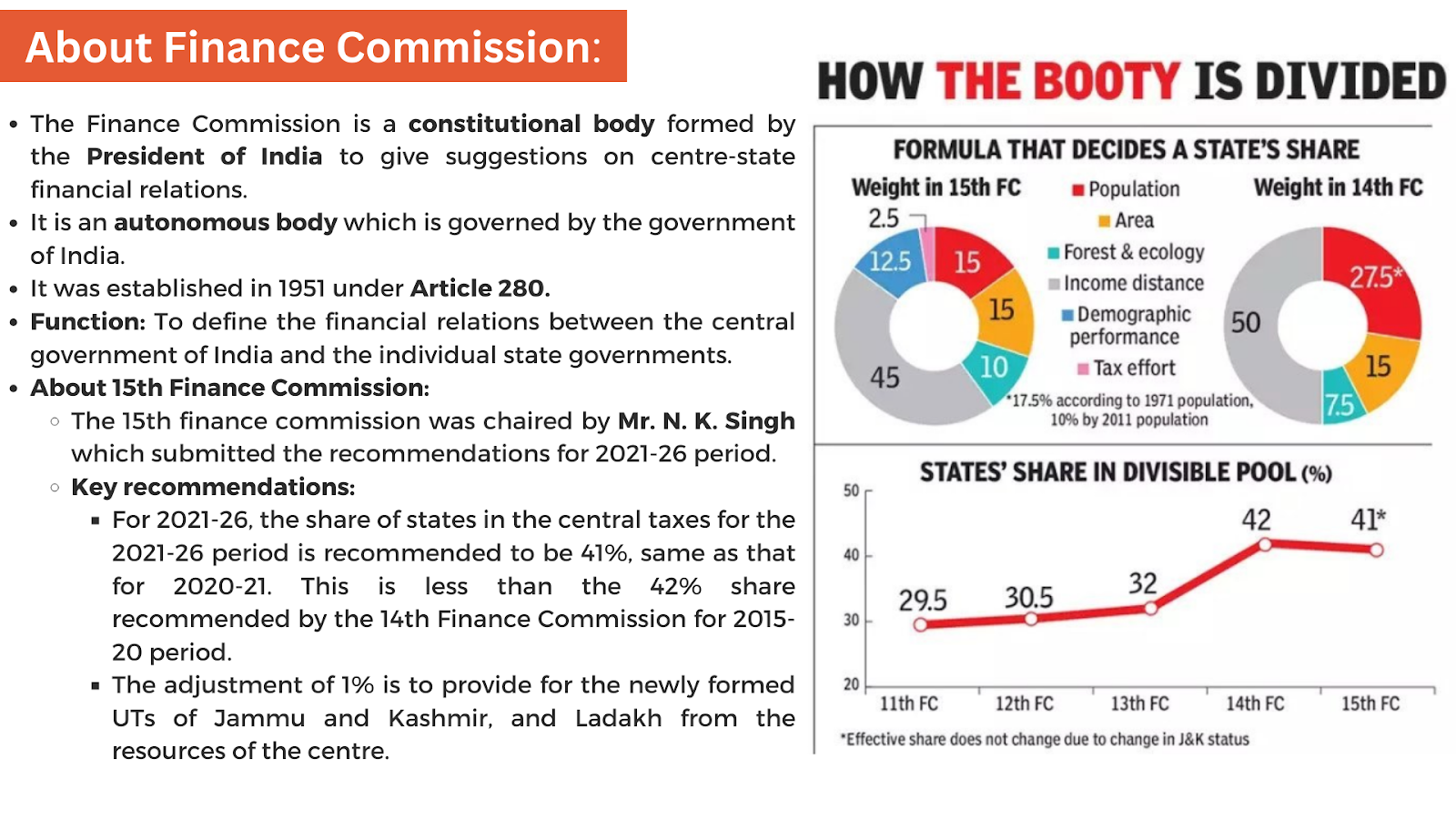
    • Decreasing weight: The distance criterion has been accorded the highest weight amongst these criteria. Its weight was reduced from 50% to 47.5% by the 13th FC and further reduced to 45% by the 15th Fifteenth FC.
    • Hampering equalization: The above two observations challenge the Socio-economic justice principles which has always been regarded as a key principle in governing distribution.

    3) Issue over the Population:

    • Data Updation issue: Until the Fourteenth Finance Commission, the data for the population in 1971 was used. For the Fifteenth Finance Commission, data for the population in 2011 was used.
    • Mismatched data: In order not to penalize States 15th FC showed better performance in reducing fertility rates, and the demographic change criterion was eventually introduced.
    • The joint impact of these two changes has been marginal for all groups of States. For Tamil Nadu, the joint impact was marginally positive.
    Recommendation for Sixteenth Finance Commission:

    Balanced allocation approach: Need to consider reducing the weight of the income distance criterion by 5% to 10% points.
    On Cesses and Surcharges: Need to evaluate and potentially impose an upper limit on cesses and surcharges to safeguard the divisible pool size and states’ revenue shares.

    What steps need to be taken? (Way Forward)

    • Maintain Income Distance Criterion: The income distance criterion is essential for equitable distribution among states and should not be abandoned. We need to consider reducing its weightage while enhancing other criteria to balance allocations.
    • Manage Divisible Pool Size: We need to limit cesses and surcharges to 10% of the Centre’s gross tax revenues to prevent reducing the size of the divisible pool. The increase in states’ share from 32% to 42% by the Fourteenth Finance Commission should not be offset by additional levies.
    • Review Revenue Sharing Trends: Need to analyze the impact of changing criteria on state shares over time to ensure fair and balanced distribution. Further, we also need to address concerns raised by states experiencing declining shares due to existing allocation mechanisms.

    https://www.thehindu.com/opinion/lead/central-transfers-arresting-the-decline-in-shares-of-some-states/article67939930.ece

    https://www.niti.gov.in/sites/default/files/2019-01/Report%20on%20CENTRAL%20TRANSFERS%20TO%20STATES%20IN%20INDIA.pdf

    https://prsindia.org/theprsblog/central-transfers-to-states-role-of-the-finance-commission

    https://timesofindia.indiatimes.com/blogs/economic-policy/can-gsdp-exclude-export-incomes-implications-for-finance-commission-devolution/

  • Punjab-Himachal dispute over the Shanan Hydropower Project

    Shanan Hydropower Project

    In the news

    • A longstanding dispute between Punjab and Himachal Pradesh over the ownership of the Shanan hydropower project has escalated, leading to legal intervention by both parties.
    • As the 99-year-old lease of the project expired on March 2, the Centre has issued orders to maintain status quo until a final decision is reached.

    Shanan Hydropower Project and the Dispute

    • Location: It is located on the Uhl River, a tributary of the Beas River, in Mandi district, Himachal Pradesh, India.
    • British-era Lease: The 110-MW Shanan hydel project was leased to Punjab in 1925 by the then-ruler of Mandi, Raja Joginder Bahadur, under a 99-year lease agreement.
    • Competing Claims: Himachal Pradesh contends that the project should revert to its control upon the expiry of the lease, citing historical and legal grounds for its claim.
    • Economic Significance: The project has significant economic implications for both states, contributing to their power generation capacities and regional development.

    Punjab’s Claims over the Project

    • Historical Ownership: The project historically supplied power to undivided Punjab and Delhi before Independence, and it was allocated to Punjab during the reorganization of states in 1966.
    • Legal Basis: Punjab asserts its legal control over the project under the provisions of the Punjab Reorganisation Act, 1966, reinforced by a central notification issued in 1967.
    • Utilization of Resources: Punjab argues that it has invested in the maintenance and operation of the project, making it a vital component of its energy infrastructure.

    Legal Proceedings and Centre’s Intervention

    • Supreme Court Petition: Punjab has filed a suit in the Supreme Court, seeking a permanent injunction against Himachal Pradesh from disturbing its lawful possession of the project.
    • Interim Status Quo Order: The Centre, invoking its powers under relevant laws, has ordered the status quo on the project’s functioning until a final decision is made, emphasizing the public interest in maintaining stability.
    • Legal Interpretation: The interpretation of historical agreements and legislative acts will be pivotal in determining the rightful ownership of the project.

    Implications and Future Course of Action

    • Interim Measure: The Centre’s order is an interim measure to prevent disruption in the functioning of the Shanan Power House until the dispute is resolved.
    • Legal Framework: Both parties are expected to proceed further within the legal framework to settle the dispute, ensuring adherence to due process and fairness.
    • Regional Cooperation: A collaborative approach between Punjab and Himachal Pradesh, facilitated by federal authorities, could lead to a mutually beneficial resolution and promote inter-state harmony.
  • Resolving Indigenous Issues: Tripartite Agreement in Tripura

    In the news

    • A Tripartite agreement was signed between the Government of India, the government of Tripura, and the Tipraha Indigenous Progressive Regional Alliance (TIPRA).
    • This marks a significant step towards addressing the longstanding issues faced by the indigenous population of Tripura.

    Ethno-Political Demands in Tripura: Historical Context

    • Demographic Shifts: Tripura has witnessed significant demographic changes, with indigenous tribes facing marginalization due to influxes of refugees from East Pakistan.
    • Marginalization of the Locals: This demographic shift has eroded the indigenous population’s socio-political influence and land rights over time.
    • Ethnic Tensions: Ethnic conflicts and insurgency have further exacerbated tensions between indigenous tribes and non-tribal communities, leading to demands for greater autonomy and recognition of tribal rights.
    • Revival of Ethnic Nationalism: In recent years, ethnic nationalism has been resurgent, particularly through the demand of Greater Tipraland, which seeks to unite indigenous tribes under a common identity and advocate for their collective interests.

    Demand for Greater Tipraland

    • Enhanced Autonomy: The core objective of Greater Tipraland is to secure greater autonomy for indigenous tribes within Tripura, allowing them to govern their affairs and preserve their cultural heritage.
    • Recognition of Tribal Rights: TIPRA’s demands include linguistic recognition, economic empowerment, and political representation for indigenous communities, ensuring their rights are safeguarded and respected.
    • Geographical Extent: The proposed Greater Tipraland encompasses not only the Tripura Tribal Areas Autonomous District Council (TTAADC) but also extends to tribal populations residing outside designated tribal areas, including those in neighboring states and Bangladesh.

    Constitutional Framework for Such Demands

    • Constitutional Provisions: Articles 2 and 3 of the Indian Constitution provide the legal framework for the creation of new states and the alteration of state boundaries. TIPRA seeks to leverage these provisions to advocate for the establishment of Greater Tipraland.
    • Regional Representation: Through political advocacy and grassroots mobilization, TIPRA aims to garner support for its demands within the legislative and executive branches of government, both at the state and national levels.
    • Challenges and Opportunities: While constitutional avenues exist for pursuing Greater Tipraland, navigating political complexities and addressing competing interests pose significant challenges. However, TIPRA sees these challenges as opportunities to engage in dialogue and build consensus around its agenda.

    Socio-Political Dynamics

    • Coalition Building: TIPRA’s emergence as a major political force has reshaped Tripura’s political landscape, with alliances and partnerships forming to advance shared objectives, including the pursuit of Greater Tipraland.
    • Opposition Criticism: Opposition parties, such as the Communist Party of India (Marxist), have criticized TIPRA’s demands as politically motivated, highlighting broader ideological divisions and electoral dynamics.
    • Public Support: TIPRA’s demands have garnered widespread public support, particularly among indigenous communities, who see Greater Tipraland as a pathway to empowerment and self-determination.

    Conclusion

    • The demand for Greater Tipraland encapsulates the aspirations of Tripura’s indigenous tribes for self-governance, cultural preservation, and socio-economic empowerment.
    • While challenges remain, the pursuit reflects a broader movement towards inclusive governance and recognition of indigenous rights in India’s northeastern region.
  • Cross-Voting in Rajya Sabha Elections

    cross voting rajya sabha

    In the news

    • Recent Rajya Sabha elections in Uttar Pradesh, Himachal Pradesh, and Karnataka have been marred by instances of cross-voting, prompting concerns over the integrity of the electoral process.

    Why discuss this?

    • Understanding the legal framework governing Rajya Sabha elections and the implications of cross-voting is crucial in addressing these concerns and upholding democratic principles.

    Rajya Sabha Elections and Cross-Voting

    • Constitutional Provision: Article 80 of the Constitution mandates the indirect election of Rajya Sabha representatives by the elected members of State Legislative Assemblies.
    • Historical Context: Rajya Sabha elections were traditionally uncontested until 1998, when cross-voting in Maharashtra marked a departure from this trend.

    Explained: Rajya Sabha Election Process

    Legal Provisions and Precedents

    • Open Ballot System: An amendment to the Representation of the People Act, 1951 in 2003 introduced open ballot voting for Rajya Sabha elections, aimed at curbing cross-voting.
    • Tenth Schedule (Anti-Defection Law): Introduced in 1985, this Schedule disqualifies legislators who voluntarily give up party membership or vote against party instructions. However, it does not apply to Rajya Sabha elections.
    • Court Rulings: The Supreme Court, in cases such as Kuldip Nayar versus Union of India (2006), upheld the open ballot system while clarifying that voting against party candidates in Rajya Sabha elections does not invoke disqualification under the Tenth Schedule.

    Current Challenges and Legal Remedies

    • Cross-Voting Impact: Instances of cross-voting undermine the democratic process and erode electoral integrity.
    • Judicial Intervention: The Supreme Court may initiate suo moto proceedings or review existing judgments to address the issue of cross-voting.
    • Disqualification Criteria: Voting against party lines in Rajya Sabha elections may be considered voluntary defection, warranting disqualification under the Tenth Schedule.

    Way Forward

    • Upholding the Intent: Instances of cross-voting undermine the transparency aimed at by the open ballot system, raising questions about the effectiveness of existing mechanisms.
    • Judicial Intervention: The Supreme Court’s commitment to safeguarding democracy provides hope for addressing cross-voting issues through suo moto Public Interest Litigation or appeals against disqualification rulings.
    • Revisiting Precedents: There is scope for the court to reinterpret its previous rulings in light of evolving circumstances, potentially aligning the consequences of cross-voting with the principles of the Tenth Schedule.
    • Deterrent Measures: Clarifying that cross-voting may constitute grounds for disqualification under the Tenth Schedule could serve as a deterrent against future instances.

    Conclusion

    • Upholding the principles of free and fair elections requires addressing the challenge of cross-voting in Rajya Sabha elections.
    • Judicial intervention and enforcement of existing laws are essential to safeguarding the integrity of the electoral process and preserving democratic norms.

    Try this PYQ from CSP 2020:

    Rajya Sabha has equal powers with Lok Sabha in

    (a) the matter of creating new All India Services

    (b) amending the Constitution

    (c) the removal of the government

    (d) making cut motions


    [wpdiscuz-feedback id=”tescdtxw4r” question=”Please leave a feedback on this” opened=”1″]Post your responses here.[/wpdiscuz-feedback]

  • On Irregularities in Vertical Devolution

    On Irregularities in Vertical Devolution

    Introduction

    • Recent agitations and concerns raised by state governments highlight critical issues in the practice of fiscal federalism in India.
    • Kerala and Karnataka governments, supported by others, have underscored the urgency for the 16th Finance Commission (FC) to address vertical and horizontal inequalities in devolution

    Also read:

    Explained: Financial Devolution among States

    Trends in Vertical Devolution

    • Shrinking Divisible Pool: Historically, the divisible pool consisted mainly of income taxes and excise duties shared with states. However, recent changes have seen the exclusion of certain taxes, like corporation taxes, from the divisible pool, reducing the share available for states.
    • Expansion of Cesses and Surcharges: Despite the GST implementation, new cesses and surcharges continue to be introduced, contributing to the exclusion of an increasing share of gross tax revenue from net proceeds, impacting vertical devolution.
    • Conflicting Data: Discrepancies in government-released information on the quantum of cesses and surcharges have raised concerns about transparency and accurate reporting, which are vital for assessing the true extent of vertical devolution challenges.

    Financial Implications

    • Collection Trends: Disaggregated data analysis reveals a significant rise in the collection of cesses and surcharges over the past decade, with amounts not shared with states but retained solely by the Union government, exacerbating the vertical devolution imbalance.
    • Cumulative Collection: Cumulatively, substantial amounts have been collected as cesses and surcharges, depriving states of their rightful share and necessitating corrective measures to address historical wrongs in vertical devolution.

    Challenges in Tied Transfers

    [A] Nature of Transfers:

    • Central Schemes: The requirement for state contributions to centrally sponsored schemes and central sector schemes places a financial burden on states, undermining their fiscal autonomy and perpetuating a patron-client relationship with the Union government.
    • Conditionalities: Grants provided to states often come with conditionalities, such as labelling requirements, further limiting states’ flexibility in utilizing funds according to their specific needs.
    • Loan Nature: Most capital transfers to states are in the form of loans, adding to states’ debt burdens and constraining their financial freedom.

    [B] Impact on Federal Dynamics:

    • Centralizing Tendency: Imposed conditionalities and the reliance on centrally sponsored schemes reinforce a centralizing tendency, eroding the principles of cooperative fiscal federalism and undermining states’ autonomy in fiscal matters.
    • Substitution of Untied Transfers: The substitution of untied transfers with centrally sponsored schemes introduces rigidity in Union-State relations, hindering effective collaboration and diluting the spirit of cooperative federalism envisioned in the Indian federal structure.

    Scrutiny by Comptroller and Auditor General (CAG)

    • Non-Transfer of Funds: Instances of non-transfer or short transfer of collected amounts, as highlighted by the Comptroller and Auditor General (CAG), raise concerns about the effective utilization of funds and the transparency of financial management practices.
    • Consequences:
      1. Defeat of Collection Logic: The failure to transfer cesses and surcharges to the designated reserve funds undermines the intended purpose of their collection, leading to inefficiencies and potential misappropriation of funds.
      2. Ruse for Fund Diversion: The discrepancies in fund transfers raise suspicions regarding the true intent behind cesses and surcharges, with indications that they may serve as a means to divert funds away from the divisible pool for other government expenditures.

    Deviations from Finance Commission (FC) Recommendations

    [A] Assessment of Union Government’s Claims:

    • Retention of Gross Tax Revenue: While the retention of a portion of gross tax revenue by the Union government has a basis in constitutional provisions, the failure to adhere to FC recommendations on sharing net proceeds raises questions about the government’s commitment to equitable fiscal federalism.
    • Failure in Net Proceeds Sharing: Analysis of the share of central taxes devolved to states against FC-stipulated percentages reveals consistent underperformance by the Union government, indicating a significant deviation from FC recommendations.

    [B] Quantitative Analysis:

    • Shortfalls: Comparisons of actual devolutions with FC-recommended shares highlight substantial shortfalls, amounting to significant cumulative amounts over the years, representing a systemic failure in achieving equitable distribution of resources among states.
    • Cumulative Impact: The cumulative amounts not devolved to states underscore the magnitude of the fiscal imbalance and the urgent need for corrective measures to rectify historical injustices in vertical devolution.

    Way Forward: Reform Agenda for the 16th Finance Commission

    [A] Corrective Measures

    • Compensations to States: Addressing historical wrongs in vertical devolution requires compensatory measures to ensure fair resource distribution among states and rectify past imbalances.
    • Accurate Reporting: Mandating accurate reporting of “net proceeds” in budget documents is essential for transparency and accountability in fiscal management, enabling stakeholders to assess the true extent of resource allocation.
    • Addressing Shortfalls: Providing lump sum untied grants to states to offset past shortfalls in devolution is crucial to restoring states’ fiscal autonomy and promoting cooperative federalism.

    [B] Legislative Action:

    • Limiting Cesses and Surcharges: Enacting legislation to impose strict limits on the collection of cesses and surcharges, with provisions for automatic expiry and prevention of rechristening, is necessary to prevent misuse and ensure transparency in revenue generation.

    Conclusion

    • The stance of the 16th Finance Commission on vertical devolution is pivotal for the survival of fiscal federalism in India, requiring decisive action to address existing challenges and uphold the principles of cooperative federalism.
  • Call for imposing Financial Emergency in Kerala

    In the news

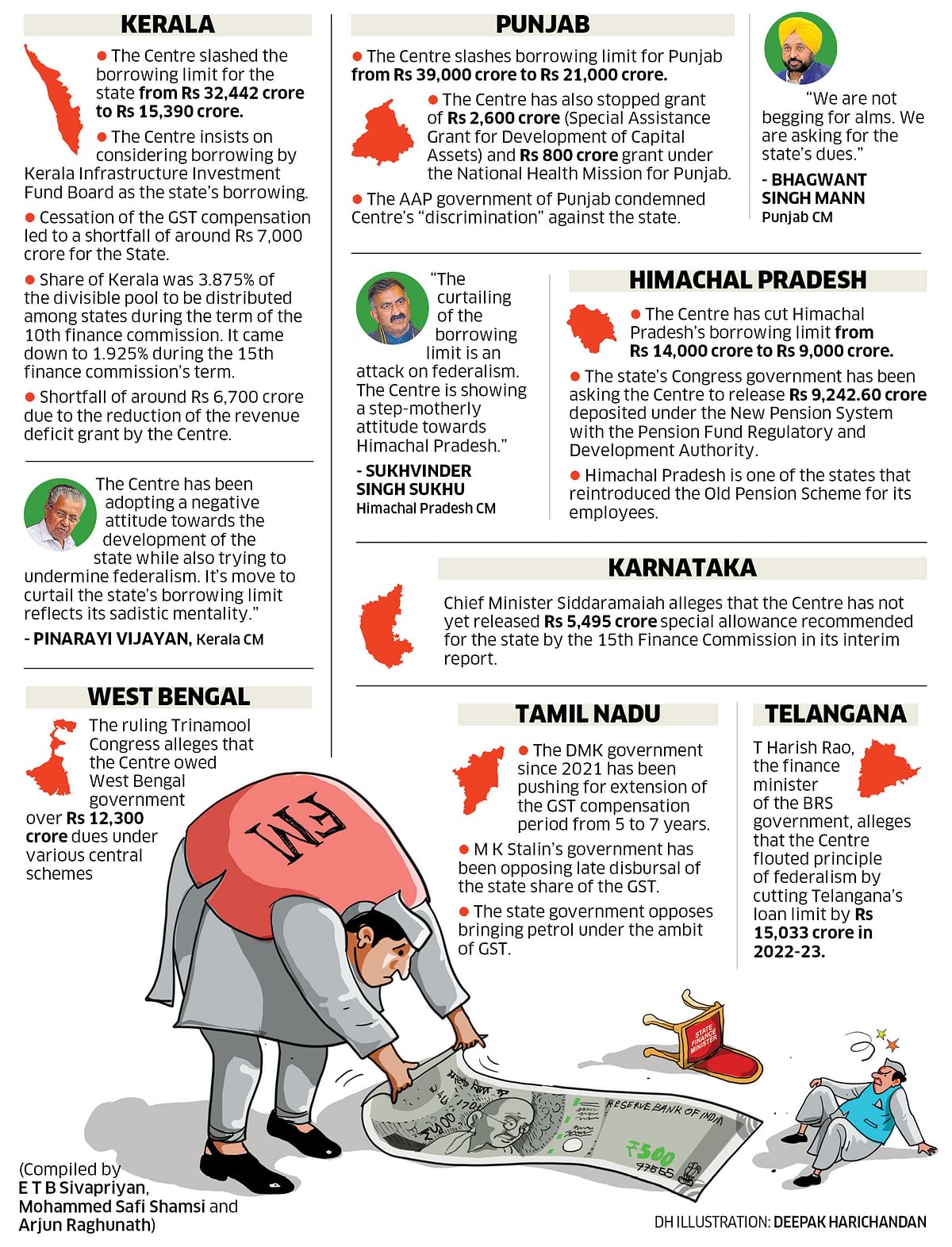
    • The Supreme Court proceeded with hearing a suit filed by the State of Kerala against the Centre for alleged arbitrary interference in its financial matters, following unsuccessful negotiations between the two parties.
    • Earlier, Kerala Governor sought for the Presidential imposition of a financial emergency in the State under Article 360(1) of the Constitution due to dwindling situation of finances in the State.

    What is Financial Emergency?

    • Enshrined in Article 360: It is a vital provision aimed at addressing severe financial crises threatening India’s economic stability.
    • Declaration and Authority: It can be declared by the President upon satisfaction that the financial stability or credit of India or any part of its territory is under threat.
    • CoM Advice: The declaration is made based on the advice of the Council of Ministers, reflecting the collective responsibility of the executive branch.

    Legislative Approval

    • While the President can proclaim a Financial Emergency, its extension beyond two months needs approval from both Houses of Parliament.
    • Once approved, it remains in effect until revoked by the President, allowing for flexible management of financial crises.

    Effects and Implications

    • The Centre’s executive authority expands significantly during a Financial Emergency, enabling it to issue directives to states on financial matters.
    • Centralization of fiscal policies occurs, with the President empowered to reserve money bills passed by state legislatures for consideration.
    • Austerity measures, including salary and allowance reductions for public officials, can be implemented to address economic challenges.

    Judicial Review and Criticism

    • 38th Amendment Act (1975) made the President’s decision final and immune from judicial review.
    • However, the 44th Amendment Act (1978) allowed for judicial scrutiny.
    • This amendment ensured checks and balances within the constitutional framework, preventing unchecked executive authority.

    Historical Context and Usage

    • Financial Emergencies have been sparingly invoked in India’s history, despite facing significant financial crises such as in 1991.
    • The cautious utilization of this provision underscores the importance of aligning its implementation with democratic principles and federalism.

    Conclusion

    • The Supreme Court’s intervention in the Kerala-Centre financial dispute underscores the importance of cooperative federalism in addressing intergovernmental conflicts.
    • The forthcoming hearings aim to reconcile differences and ensure the equitable distribution of resources, fostering harmonious relations between the Centre and states.
  • In news: Appointment of Election Commissioner

    Introduction

    • The impending retirement of Election Commissioner Anup Chandra Pandey on February 14 signals a significant shift in India’s electoral procedures.
    • For the first time, his successor will be selected through a consultative process, departing from past practices of government discretion as per the Chief Election Commissioner and Other Election Commissioners (Appointment, Conditions of Service and Term of Office) Act, 2023.

    EC Appointments: Judicial Imperative

    • Supreme Court Intervention: In March 2023, the Supreme Court intervened to address the longstanding legislative gap surrounding the appointment of Chief Election Commissioner (CEC) and Election Commissioners (ECs).
    • Emphasis on Independence: The Court emphasized the need for an independent Election Commission, paralleling other constitutional bodies with autonomous appointment mechanisms.

    CEC and EC Appointment Act, 2023: Key Provisions

    • Appointment Process: The Law establishes a Selection Committee comprising the Prime Minister, Union Cabinet Minister, and the Leader of the Opposition or the largest opposition party’s leader in the Lok Sabha.
    • Eligibility and Conditions: Eligible candidates must have held or hold positions equivalent to the Secretary to the central government, with salary parity to the Cabinet Secretary.
    • Removal Mechanism: The Law outlines the removal process, retaining the constitutional provision for the CEC’s removal akin to a Supreme Court Judge and ECs’ removal upon the CEC’s recommendation.

    Appointment of the CEC and ECs: Present Mechanism

    [A] Constitutional Provisions:

    • Part XV (Elections) of the Constitution outlines Articles 324-329, governing electoral processes.
    • The Constitution does not prescribe a specific legislative procedure for appointing the CEC and ECs.
    • Article 324 vests the responsibility of overseeing elections in an Election Commission comprising the CEC and other ECs, as determined by the President.
    • President appoints them based on the Union Council of Ministers’ advice, led by the Prime Minister.
    • Law Minister proposes suitable candidates to the Prime Minister, who advises the President on the appointments.

    [B] Removal:

    • Commissioners have the liberty to resign or be removed before completing their term.
    • The removal process for the CEC mirrors that of a Supreme Court judge, necessitating parliamentary action.
    • Removal of any other EC can only occur upon the CEC’s recommendation.

    Current Challenges and Concerns

    • Transparency and Independence: Concerns arise over the potential monopolization of the Selection Committee by ruling party members, undermining diversity and independence.
    • Executive Influence: Equating the salary of Election Commissioners with that of executive officials raises apprehensions regarding government influence.
    • Eligibility Criteria: Restricting eligibility to civil servants may limit diversity and expertise within the Election Commission.
    • Lack of Parity: Disparities in the removal process between the CEC and ECs raise questions about fairness and institutional autonomy.

    Way forward

    • Safeguarding Independence: Upholding the integrity and independence of the Election Commission remains paramount, necessitating robust oversight mechanisms.
    • Addressing Concerns: Mitigating concerns surrounding transparency, executive influence, and eligibility criteria is essential to foster public trust and confidence.
    • Continued Judicial Vigilance: Ongoing judicial oversight is crucial to ensure the effective implementation of electoral reforms and uphold democratic principles.

    Conclusion

    • The transition towards a consultative process for appointing Election Commissioners reflects a significant milestone in India’s electoral governance.
    • While the reform bill marks a commendable step towards enhancing transparency and inclusivity, addressing current challenges and safeguarding institutional independence will be pivotal in fostering public trust and strengthening democratic institutions.
  • Election Symbols Issue in Maharashtra

    Introduction

    • A faction within a political party led by the Maharashtra Deputy CM has been officially recognized as the legitimate group by the Election Commission of India retaining its election symbol.

    Also read:

    How are Symbols allotted to Political Parties in India?

    Election Symbol and its Significance

    • Electoral Impact: Election symbols play a crucial role in shaping the electoral fortunes of political parties, influencing voter perception and identification.
    • Transparency Concerns: The current system of symbol allotment warrants review to ensure transparency and fairness in the electoral process.

    EC’s Powers in Symbol Disputes

    • Legal Framework: Para 15 of the Symbols Order, 1968, empowers the ECI to adjudicate disputes arising from splits within political parties.
    • Test of Majority: The ECI conducts a test of majority, considering all available facts and circumstances, to determine the legitimate faction.
    • Binding Decision: The decision of the ECI is binding on all rival sections or groups emerged after the split, applicable to recognized national and state parties.

    Historical Precedents

    • Pre-1968 Era: Before the Symbols Order, 1968, the ECI addressed disputes through notifications and executive orders under the Conduct of Election Rules, 1961.
    • High-profile Cases: Notable cases include the split of the Communist Party of India (CPI) in 1964 and the first split in the Indian National Congress in 1969.

    Options for Resolution

    • Symbol Freeze: The ECI may freeze the symbol to prevent either faction from using it until a final decision is reached, a process that typically involves lengthy hearings.
    • Legal Proceedings: Parties may resort to legal recourse if internal resolution or EC intervention fails to resolve the dispute.

    Alternate Resolution Mechanisms

    • Majority Test: EC primarily relies on testing the support within the party organization, particularly among elected MPs and MLAs, to determine faction legitimacy.
    • Registration as Separate Party: Splinter groups not recognized by the parent party may register themselves as separate entities and seek national or state party status based on electoral performance post-registration.

    Conclusion

    • The recognition of political factions by the Election Commission underscores the complexities of symbol allotment and intra-party disputes.
    • As the EC navigates these challenges, ensuring procedural fairness and upholding democratic principles remain paramount in fostering trust and integrity in the electoral process.
  • The severe erosion of fiscal federalism

    Fiscal federalism in dire straits?

    Central Idea:

    The article discusses Kerala’s protest against the imposition of a Net Borrowing Ceiling (NBC) by the Central Government, which restricts the state’s ability to borrow funds. It argues that this imposition undermines fiscal federalism and challenges the constitutional authority of the state legislature over financial matters.

    Key Highlights:

    • Kerala Chief Minister Pinarayi Vijayan leads a protest against the Central Government’s imposition of a financial embargo on Kerala.
    • The NBC limits states’ borrowings, including those from state-owned enterprises like the Kerala Infrastructure Investment Fund Board (KIIFB), leading to a severe financial crisis in Kerala.
    • The article questions the constitutionality of including state-owned enterprises’ debt in the state’s total debt, arguing that it encroaches on the state legislature’s authority over financial matters.
    • Kerala’s Fiscal Responsibility Act, 2003, aims to reduce fiscal deficit, demonstrating the state’s commitment to fiscal discipline.
    • The article criticizes the move towards “annihilative federalism,” where the central government’s actions detrimentally affect states’ ability to meet welfare obligations.

    Key Challenges:

    • Balancing fiscal discipline with the need for states to fund development projects and welfare schemes.
    • Addressing the erosion of fiscal federalism and the encroachment of central authority over state finances.
    • Resolving the conflict between the powers of the central government and state legislatures regarding financial matters.
    • Mitigating the impact of borrowing restrictions on states’ ability to fulfill their financial obligations.

    Key Terms:

    • Net Borrowing Ceiling (NBC): Limit imposed on states’ borrowings from all sources.
    • Kerala Infrastructure Investment Fund Board (KIIFB): State-owned body responsible for funding infrastructure projects.
    • Fiscal Responsibility Act: Legislation aimed at reducing fiscal deficit and promoting financial discipline.
    • Fiscal Federalism: Distribution of financial powers and responsibilities between the central government and states.
    • Annihilative Federalism: Central government actions that undermine states’ financial autonomy and welfare obligations.

    Key Quotes:

    • “The wide array of constitutional issues…point at the severe erosion of fiscal federalism in the country.”
    • “The borrowing restrictions are an example of ‘annihilative federalism’ at play.”

    Key Examples and References:

    • Kerala’s protest led by Chief Minister Pinarayi Vijayan against the financial embargo imposed by the Central Government.
    • The inclusion of KIIFB’s debt in Kerala’s total debt, leading to funding constraints for welfare schemes.
    • Comparison of Kerala’s fiscal deficit reduction efforts with the central government’s fiscal deficit estimates.

    Key Facts and Data:

    • Kerala’s fiscal deficit reported to have reduced to 2.44% of the GSDP.
    • Central government’s fiscal deficit estimated to be 5.8% for 2023-2024.

    Critical Analysis:

    The article underscores the tension between central authority and state autonomy in financial matters, highlighting the constitutional ambiguity surrounding the imposition of borrowing restrictions. It argues for a balanced approach that acknowledges states’ fiscal responsibilities while ensuring fiscal discipline.

    Way Forward:

    • Reevaluate the imposition of borrowing restrictions to ensure they do not unduly impede states’ ability to meet financial obligations.
    • Enhance dialogue and cooperation between the central government and states to address fiscal challenges while respecting constitutional principles.
    • Clarify the division of financial powers between the central government and state legislatures to mitigate conflicts and promote fiscal federalism.