💥Join UPSC 2027,2028 Mentorship (July Batch) + XFactor Notes & Microthemes PDF

Subject: Fundamental Rights,DPSP

1. History + Evolution
2. Features
3. Amendments
4. Basic Structure

  • Women-led development in the Rajya Sabha

    Why in the News?

    During the historic passage of the Nari Shakti Vandan Adhiniyam (Women’s Reservation Bill), 2023, the Vice  President reconstituted the panel to include only women, marking a significant milestone for gender representation in the Upper House.

    What specific measures have been recently taken to promote women’s participation in Rajya Sabha? 

    • Reconstitution of the Vice-Chairpersons Panel: The Chairman of the Rajya Sabha reconstituted the panel to include only women during the historic passage of the Nari Shakti Vandan Adhiniyam (Women’s Reservation Bill), 2023.
    • Increased Representation in the Vice-Chairpersons Panel: The practice of nominating four women members (50% of the panel) was introduced, including significant figures like S. Phangnon Konyak and P.T. Usha.
    • Training of Women Officers for House Duties: Women officers of the Secretariat were trained to perform House duties, breaking the stereotype that these tasks were a male domain. Women now largely manage the Table of the House.
    • Introduction of ‘Vahan’ Application: A system to facilitate safe commutation for women officers working late hours was introduced, ensuring their safety during odd hours.
    • Appointment of Women in Key Roles: Women officers were appointed to key positions in human resources, legislative sections, and parliamentary committees.

    What are the key outcomes from Nari Shakti Adhiniyam (2023)?   

    • 33% Reservation for Women in Legislatures: The Bill reserves 33% of seats for women in the Lok Sabha and State Legislative Assemblies, aiming to increase women’s participation in governance.
    • Long-term Impact on Women’s Representation: The Bill ensures that women are better represented in the political process, potentially reshaping the political landscape by empowering women as decision-makers.
    • Women as Key Participants in Development: By providing more opportunities for women in legislatures, it aligns with the goal of women-led development, where women set the agenda for governance and development policies.

    Empowering women not just as beneficiaries but as leaders of development:

    •  Leadership Development Programs: Implement targeted initiatives to cultivate leadership skills among women, enabling them to take active roles in decision-making processes within their communities and organizations.
    • Access to Resources and Opportunities: Ensure women have equitable access to education, financial resources, and training programs, empowering them to drive sustainable development and entrepreneurship.
    • Advocacy and Representation: Promote women’s representation in governance and policy-making, ensuring their voices and perspectives shape development agendas and priorities at all levels.

    Challenges India Faces in Implementing Women-led Development Initiatives:

    • Economic Disparities: Women face significant challenges in accessing financial resources, property rights, and entrepreneurial opportunities, limiting their ability to lead development initiatives.  As per the 2015-16 Agriculture Census, only 13.9% of landowners were women.
    • Political Representation: Despite progress like the Women’s Reservation Bill, women’s political representation at the local and national levels remains below the desired level. Currently, only 82 women serve in India’s Parliament, constituting about 15.2% of the Lok Sabha and 13% of the Rajya Sabha.
    • Safety and Mobility: Ensuring women’s safety and mobility, particularly in public spaces, remains a major challenge. For instance, according to the NCRB report, India recorded over 405,861 cases of crimes against women in 2021, including 32,033 cases of rape.

    Way forward: 

    • Strengthening Legal Frameworks and Enforcement: Enhancing the implementation of existing laws, along with stricter penalties for gender-based violence, will ensure a safer environment for women.
    • Promoting Economic Empowerment and Education: Expanding access to education, financial resources, and skill-building opportunities for women can bridge economic disparities, empowering them to take leadership roles in governance, business, and community development.

    Mains PYQ:

    Q Discuss the desirability of greater representation to women in the higher judiciary to ensure diversity, equity and inclusiveness. (UPSC IAS/2021)

  • [13th September 2024] The Hindu Op-ed: Putting the brakes on ‘bulldozer justice’

    [13th September 2024] The Hindu Op-ed: Putting the brakes on ‘bulldozer justice’

    PYQ Relevance:

    Q ‘Constitutional Morality’ is rooted in the Constitution itself and is founded on its essential facets. Explain the doctrine of ‘Constitutional Morality’ with the help of relevant judicial decisions.(UPSC IAS/2021)

    Q Do you think that Constitution of India does not accept principle of strict separation of powers rather it is based on the principle of ‘checks and balance’? Explain. (UPSC IAS/2019)

    Mentor’s Comment: Presently, in India the issue of punitive demolitions raises significant concerns regarding due process, human rights violations, and the arbitrary exercise of state power, as these actions often target vulnerable communities without legal justification or adherence to established judicial guidelines. In today’s  editorial we will observe why the Supreme Court is considering to formulate pan-India guidelines aims to address these systemic issues by ensuring that demolitions occur only in exceptional circumstances, with proper legal procedures and protections for affected individuals.

    _

    Let’s learn!

    Why in the News?

    SC has called for suggestions to establish pan-India guidelines addressing extra-legal demolitions, due to the concerns over the arbitrary demolition of properties. It undermines the ‘right to housing’ of an individual and violates the Constitutional principles.

    What are the arguments against the use of punitive demolitions?

    • Violation of Due Process: Demolitions are often carried out without following proper legal procedures and justification, undermining the rule of law. For example, Delhi’s Jahangirpuri case, incidents in Nuh (Haryana), and Khargone (Madhya Pradesh).
      • A person’s home cannot be demolished solely based on accusations against them or their family members, as this violates Fundamental Rights and due process.
    • Collective Punishment: Punitive demolitions often affect the individuals for actions they did not commit which is illegal under both national and international law.
      • This exacerbates social inequalities, leading to further marginalization of already vulnerable populations.
    • Human Rights Violations: Reports indicate that demolitions are often accompanied by police violence, which constitutes a violation of human rights and can lead to physical and psychological harm for affected individuals.
    • Political Manipulation: The use of demolitions as a form of political retribution or control undermines democratic principles and can be seen as a tactic to instill fear among communities, particularly in politically sensitive contexts.

    What needs to be the Due Process in Legitimate Demolitions?

    • UN Guidelines: The United Nations Basic Principles and Guidelines on Development-based Evictions and Displacement (2019) provide humanitarian directives, yet court rulings have been inconsistent and piecemeal which needs a comprehensive approach.
    • Exceptional Circumstances: Demolitions should only occur in exceptional cases and must adhere strictly to established legal processes.
    • Need for Proposed Phased Procedures:
      • Pre-Demolition Phase: Provide a reasoned notice with details on land records and resettlement plans, allowing adequate time for responses.
      • During Demolition Phase: Requires the presence of neutral government officials during demolitions.
      • Rehabilitation Phase: Need to establish a swift mechanism for affected persons to challenge demolition decisions and seek remedies such as compensation and restitution.

    Way Forward – Need to affix Personal Liability:

    The widespread demolitions in India highlight a consistent lack of due process and disregard for judicial directives, necessitating the establishment of pan-India guidelines, increased sensitization of law enforcement, and the exploration of personal liability for officials who order forced evictions to ensure accountability and checks on their powers.

    https://www.thehindu.com/opinion/lead/putting-the-brakes-on-bulldozer-justice/article68635215.ece

  • Centre notifies the constitution of the 23rd Law Commission

    Why in the News?

    The Union government has notified the constitution of the 23rd Law Commission of India with effect from September 1.

    Terms of Reference of the 23rd Law Commission:

    • The 23rd Law Commission has been tasked with addressing similar objectives as previous Commissions, such as:
      1. Identifying outdated laws that can be repealed.
      2. Creating Standard Operating Procedures (SoP) for the periodic review of laws.
      3. Identifying laws that are not in harmony with economic needs and suggesting amendments.
    • Like its predecessors, it will examine laws in light of the DPSP and suggest improvements or new legislation to fulfill the objectives outlined in the Preamble of the Constitution.
    • PM’s call for a uniform civil code reflects the need to implement, a Directive Principle outlined in the Constitution.

    About the Law Commission of India:

    Details
    Nature Non-statutory body periodically constituted by the Government of India. It is an Executive Body.
    Establishment
    • First Commission during British India: Established in 1834 under the Charter Act of 1833, chaired by Lord Macaulay, Focused on the codification of laws like the Penal Code and Criminal Procedure Code.
    • First Commission in Independent India: Established in 1955, chaired by M. C. Setalvad, then Attorney-General of India.
    Primary Role
    • Advises the Ministry of Law and Justice on legal reform and reviews existing laws to suggest improvements and draft new legislation.
    • Recommendations are advisory and NOT binding on the government.
    Composition
    • Headed by a Chairperson (usually a retired Supreme Court Judge or Chief Justice of a High Court),
    • 4 full-time members (including a Member-Secretary), ex-officio members (Secretaries of the Departments of Legal Affairs and Legislative Department), and
    • Up to 5 part-time members.
    Tenure 3 years, with provisions for reconstitution or extension as required by the government.
    Key Functions • Undertakes legal research.
    • Review existing laws for reforms.
    • Recommends repeal of obsolete laws.
    • Suggest amendments and new legislations.
    • Examines laws that affect the poor and marginalized.
    Notable Recommendations by 22nd law Commission • Uniform Civil Code.
    • Amendments to the sedition law.
    • Repeal of obsolete laws.
    • Gender equality in personal laws.
    • Improvements in judicial administration.
    Reports Submitted Over 277 reports on various legal issues including the implementation of international conventions, compulsory registration of marriages, etc.
    Recent Activity The 22nd Law Commission is focusing on issues like the Uniform Civil Code and amendments to the sedition law (Section 124A), among other legislative reforms.


    PYQ:

    [2014] The power to increase the number of judges in the Supreme Court of India is vested in:

    (a) the President of India

    (b) the Parliament

    (c) the Chief Justice of India

    (d) the Law Commission

  • Article 370, Article 35A, and J&K’s Statehood

    Why in the News?

    Ahead of assembly elections, many political parties are vowing for restoration of Article 370, Article 35A and Statehood in their manifestoes.

    About Articles 370 and 35(A) of the Indian Constitution

    [1] Article 370: 

    Description
    Provision Granted special autonomous status to the state of Jammu and Kashmir.
    Nature Initially intended as a temporary provision, subject to eventual change or abrogation.
    Powers of State Allowed J&K to have its own Constitution and autonomy over internal matters except defense, foreign affairs, finance, and communications.
    Presidential Order President of India could extend or modify the application of Indian laws to J&K with the concurrence of the state government.
    Autonomy Details Provides a degree of autonomy to the state and permits the state to give some special privileges to its “permanent residents”.
    Emergency Provisions Emergency provisions are not applicable to the state on the grounds of “internal disturbance” without the concurrence of the State.
    State Boundaries Name and boundaries of the State cannot be altered without the consent of its legislature.
    Separate Institutions State has its own constitution, a separate flag, and a separate penal code (Ranbir Penal Code).
    Assembly Duration Duration of the state’s Assembly is 6 years, unlike five in the rest of India.
    Parliamentary Jurisdiction
    • Indian Parliament can pass laws regarding J&K in the matters of defense, external affairs, and communication only.
    • Any other law formed by Union will only be applicable in J&K by presidential order if it concurs with the state assembly.
    Abolishment Condition President may, by public notification, declare that this Article shall cease to be operative but only on the recommendation of the Constituent Assembly of the State.
    Abolishment In August 5, 2019, through a Presidential Order and a resolution passed by the Indian Parliament.
    Impact of Abrogation
    • J&K’s special status was revoked.
    • It was reorganized into two Union Territories: Jammu and Kashmir, and Ladakh.


    [2] Article 35A:  

    Description
    Provision Empowers the J&K legislature to define permanent residents of the state and provide them with special rights and privileges.
    Insertion Added to the Constitution through a Presidential Order in 1954.
    Permanent Residents Defined by the state as those who were state subjects on May 14, 1954, or have been residents for 10 years, and lawfully acquired immovable property.
    Special Rights Permanent residents were given exclusive rights to employment under the state government, acquisition of immovable property in the state, and scholarships.
    Constitutionality Debate Debated on the grounds that it was not added via an amendment procedure.
    Criticism Criticized for being discriminatory and creating a sense of separation from the rest of India.
    Revocation Along with Article 370, Article 35A was effectively nullified on August 5, 2019.


    PYQ:

    [2016] To what extent is Article 370 of the Indian Constitution, bearing marginal note “Temporary provision with respect to the State of Jammu and Kashmir”, temporary? Discuss The future prospects of this provision in the context of Indian polity.

  • On Germany’s electoral architecture 

    Why in the News?

    On July 30, Germany’s constitutional court approved downsizing the Bundestag, citing concerns over financial strain and efficiency due to its unprecedented 736 deputies.

    (Note: The Bundestag is the Lower house of Germany)

    Why has the German Constitutional Court upheld the move to downsize the lower house of parliament?

    • Constitutional Rationale: The court approved the plan to reduce the size of the Bundestag to improve its efficiency and reduce costs, as it had become the world’s largest elected assembly.
      • The court backed the government’s decision to limit the Bundestag to 630 members by removing “overhang” and “balance” seats, which had caused the number of legislators to grow significantly.
    • Legal Compliance: The court’s decision aligns with previous rulings that emphasized the need for electoral equality and the fair representation of political parties in the Bundestag, ensuring that the election system remains constitutionally valid.

    How does a mixed-member Proportional Representation system work?

    • Dual Voting System: In Germany, each voter casts two votes in federal elections:
      1. First Vote: Directly elects a candidate from a local constituency via the first-past-the-post method (299 seats).
      2. Second Vote: Chooses a political party, which determines the distribution of another 299 seats proportionally across Germany’s 16 regions.
    • Seat Allocation: The second vote is crucial as it determines the overall proportion of seats each party holds in the Bundestag. The final seat count for each party is based on a combination of directly elected candidates and the proportion of the second vote.
    • Overhang Seats: If a party wins more direct seats than the proportion of the second vote would allow, these extra seats are known as “overhang seats.” These were traditionally retained, leading to an increase in the total number of seats.

    How does a mixed-member Proportional Representation system work in India?

    • No MMP System in India: India does not use a mixed-member proportional representation system at the national level. The Indian electoral system primarily follows the first-past-the-post method, where the candidate with the most votes in each constituency wins a seat in the parliament.
    • Proportional Representation: In India, proportional representation (Single transferable) is used only in certain cases, such as elections to the Rajya Sabha (the upper house) and the President.

    Types of Proportional Representation:

    • Single Transferable Vote (STV): This system allows voters to rank candidates in order of preference. It is used to elect members of the Rajya Sabha (Council of States) and the President of India.
    • Party-List PR: In this system, voters cast their votes for a party rather than individual candidates. Seats are allocated to each party based on the proportion of votes they receive. A minimum threshold (usually between 3-5%) is often required for a party to gain representation, preventing excessive fragmentation in the legislature.
    • Mixed-Member Proportional Representation (MMP): This combines elements of FPTP and PR, allowing voters to cast two votes—one for a candidate and another for a party. This system aims to balance the benefits of direct representation with proportionality.

    What are balance or overhang seats and why were they deemed Unconstitutional?

    • Overhang Seats: These are additional seats that a party wins when it secures more direct constituency seats than it would be entitled to based on its second vote share. This situation arises due to the mixed-member proportional system.
    • Balance Seats: Introduced to maintain proportionality and fairness, balance seats are given to other parties to offset the overhang seats, ensuring that the overall seat distribution reflects the second vote shares accurately.
    • Unconstitutionality: In 2008, the German Constitutional Court ruled that the increasing number of overhang seats violated the principle of electoral equality. The recent judgment further upheld the move to eliminate these seats to simplify the electoral system and maintain fairness.

    Conclusion: Germany should swiftly implement the downsizing plan, ensuring that the transition to a 630-member Bundestag is smooth and transparent, with clear communication to the public and political parties.

    Mains PYQ:

    Q Critically examine the procedures through which the Presidents of India and France are elected. (UPSC IAS/2022)

  • Use of Regional Languages in High Courts remains limited

    Why in the News?

    A growing movement in India is advocating for use of regional languages in High Court proceedings to make justice more accessible to the common citizen.

    Current Scenario: Regional Languages in High Courts

    • Out of India’s 25 High Courts, only 4Rajasthan, Madhya Pradesh, Uttar Pradesh, and Bihar — are authorized to use Hindi in their proceedings and legal documents.
      • Bihar HC was the last High Court to receive authorization to use Hindi in 1972.
    • A litigant possesses the fundamental right to comprehend and engage in courtroom proceedings, under Article 19 and Article 21.
      • She/ He is entitled to present their case in a language they understand before the magistrate.
    • Additionally, the “Right to Justice” is explicitly recognized under Article 21 of the Constitution.
    • Despite these provisions, the use of regional languages in High Courts remains limited.

    Constitutional Provisions for Regional Languages in Judiciary:

    Provision Details
    Article 348(1) (a) Language of Proceedings
    • English is the official language for proceedings in the Supreme Court, High Courts, and specified tribunals.
    • All records and orders must be in English.
    Purpose Ensures uniformity and consistency in legal proceedings and documentation at the highest judicial levels.
    Scope Applies to the Supreme Court, High Courts, and all authorities mentioned in Article 323A or Article 323B.
    Article 348(2) Use of Other Languages
    • The President may authorize the use of Hindi or any other regional language in addition to English.
    • Authorization is subject to conditions specified by the President.
    Purpose Allows for regional languages to be used in judicial proceedings, making the system more accessible to non-English speakers.
    Scope Can be applied in the Supreme Court, High Courts, and other authorities as mentioned in Article 323A or Article 323B.


    PYQ:

    [2021] Which one of the following in Indian polity is an essential feature that indicates that it is federal in character?

    (a) The Independence of the judiciary is safeguarded.

    (b) The Union Legislature has elected representatives from constituent units.

    (c) The Union Cabinet can have elected representatives from regional parties.

    (d) The Fundamental Rights are enforceable by Courts of Law.

  • [28th August 2024] The Hindu Op-ed: ​Reasonable restrictions: On Telegram CEO Pavel Durov’s Arrest and Content Hosting 

    [28th August 2024] The Hindu Op-ed: ​Reasonable restrictions: On Telegram CEO Pavel Durov’s Arrest and Content Hosting 

    PYQ Relevance:

    Q What do understand by the concept “freedom of speech and expression”? Does it cover hate speech also? Why do the films in India stand on a slightly different plane from other forms of expression? Discuss. (UPSC IAS/2014)

    Q Data security has assumed significant importance in the digitized world due to rising cyber-crimes. The Justice B. N. Srikrishna Committee Report addresses issues related to data security. What, in your view, are the strengths and weaknesses of the Report relating to protection of personal data in cyber space? (UPSC IAS/2018)

    Q What are the different elements of cyber security? Keeping in view the challenges in cyber security, examine the extent to which India has successfully developed a comprehensive National Cyber Security Strategy. (UPSC IAS/2022)

    Mentor comment: Pavel Durov, the CEO of Telegram, was arrested at a Paris airport on August 24, 2024, amid a French investigation into alleged criminal activities facilitated by the platform, including drug trafficking and child pornography. Although Durov himself is not accused of direct involvement in these crimes, his platform’s moderation practices are under scrutiny for failing to adequately address illegal content, raising questions about the responsibilities of tech companies in regulating user-generated content. Durov promotes Telegram as a space for free speech, especially for dissidents and anti-establishment voices. This open approach has led to problems, as the app has also been used for extremist content and illegal activities. Supporters, including Elon Musk, have expressed concern about the implications for tech leaders facing legal issues for content on their platforms.

    Let’s learn!

    __

    Why in the News?

    After Durov’s arrest, Telegram stated it follows EU regulations and maintains moderation practices that meet industry standards.

    • Many worry that Durov’s arrest could discourage free expression online, with critics seeing it as government overreach. 
    What does the Universal Declaration of Human Rights (UDHR) say?
    According to Article 19 of UDHR, “Everyone has the right to freedom of opinion and expression; this right includes freedom to hold opinions without interference and to seek, receive and impart information and ideas through any media and regardless of frontiers”.
    However, this free speech is not absolute and is subject to certain restrictions for public order, morals and public health is something that has been codified in the UDHR. 

    What is the National Cyber Security Policy (2013)?
    It is a policy framework by the Department of Electronics and Information Technology (DeitY).
    It aims at protecting the public and private infrastructure from cyber-attacks.
    The policy also intends to safeguard “information, such as personal information (of web users), financial and banking information and sovereign data”.

    What are the Implications of Pavel Durov’s Arrest for Global Free Speech Debates?

    • Concerns raised: Edward Snowden called Durov’s arrest “an assault on the basic human rights of speech and association”
      • Elon Musk, a vocal proponent of free speech, shared the hashtag #FreePavel and warned that these are “dangerous times” for free expression
    • Backlash from Diverse Groups: The outrage over Durov’s arrest has come from adversaries uniting both Kremlin supporters and opponents in Russia, as well as free speech absolutists worldwide.
      • This unusual coalition highlights the significant role Telegram plays in Russian society as a crucial tool for organizing dissent against the government.
    • Limits Free Speech: According to the Stanford Cyber Policy Center, Durov’s case seems to be a simple matter of breaking the law, as child sexual abuse material, terrorist content, and drug sales are all regulated by criminal law.
    Indian Scenario 

    Current Status: Telegram is not yet banned in India, but its future depends on the outcome of an ongoing investigation.
    The Indian government is investigating Telegram due to its alleged involvement in criminal activities, including exam paper leaks (UGC-NEET paper, etc), extortion, and stock price manipulation.

    Compliance with IT Rules: Telegram has been following India’s Information Technology (IT) Rules, which require it to appoint compliance officers and publish monthly reports.
    Telegram’s lack of a significant physical presence in India complicates effective communication and enforcement of regulations.

    Maintaining balance between Free speech and the responsibility of Tech platforms:

    • Free Speech vs. Responsibility: While Durov defends absolute free speech, the prevalence of illegal activities on Telegram, such as drug trafficking and child exploitation, highlights the need to ensure user safety without infringing on fundamental rights.
    • Need for Responsible Moderation: For Telegram to maintain its position as a free speech advocate, it must prevent the spread of harmful content while respecting users’ Rights to Privacy.
    • Legal Accountability: If Durov is found guilty, it could set a precedent for holding tech executives accountable for the content shared on their platforms. This could lead to stricter regulations and increased accountability while scrutinizing messaging apps globally.
    • Future of Messaging Apps: The outcome of this case may influence how other messaging platforms operate, potentially prompting them to adopt stricter content moderation policies to avoid similar legal challenges.

    Conclusion: The ongoing Telegram issue encapsulates the ongoing struggle to navigate the fine line between protecting free speech and ensuring public safety. As the legal proceedings unfold, the implications for both Telegram and the broader tech landscape will be closely watched.

    https://www.thehindu.com/opinion/editorial/%E2%80%8Breasonable-restrictions-on-durovs-arrest-and-content-hosting/article68573507.ece

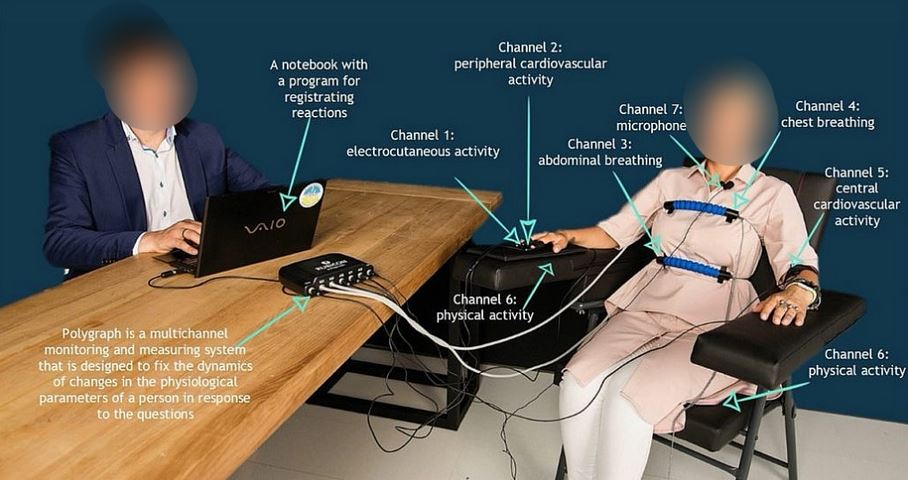
  • What is a Polygraph Test?

    Why in the News?

    The Central Bureau of Investigation (CBI) concluded polygraph tests on the accused in the Kolkata Rape and Murder Case.

    About Polygraph Tests in India

    Details
    Definition A procedure measures physiological responses like blood pressure, pulse, respiration, and skin conductivity while a subject answers questions to detect deception.
    Physiological Indicators Heart Rate and Blood Pressure: Monitored for changes.
    Respiratory Rate: Tracks breathing patterns.
    Galvanic Skin Response (GSR): Measures skin’s electrical conductance, which varies with moisture levels.
    Procedure Sensor Connection: Attached to the chest, fingertips, and arm.
    Baseline Questions: Establish physiological response baselines.
    Control and Relevant Questions: Analyzed to identify deceptive responses by comparing physiological changes.
    Constitutional Provisions Article 20(3): Protects against self-incrimination; necessitates consent for polygraph tests.
    Article 21: Concerns about potential violations of the right to life and privacy due to mental torture aspects of polygraph tests.
    Legal and Judicial Rulings Selvi vs. State of Karnataka (2010): Tests must be voluntary with informed consent.
    D.K. Basu vs. State of West Bengal (1997): Involuntary tests could violate the Right to Life and Privacy.
    Admissibility in Court According to the Indian Evidence Act, 1871, results from polygraph tests are not admissible as evidence in court.
    Guidelines National Human Rights Commission Guidelines (1999): Establish consent and procedural requirements for administering polygraph tests to align with human rights standards.


    PYQ:

    [2018] Right to Privacy is protected as an intrinsic part of Right to Life and Personal Liberty. Which of the following in the Constitution of India correctly and appropriately imply the above statement?

    (a) Article 14 and the provisions under the 42nd Amendment to the Constitution.

    (b) Article 17 and the Directive Principles of State Policy in Part IV.

    (c) Article 21 and the freedoms guaranteed in Part III.

    (d) Article 24 and the provisions under the 44th Amendment to the Constitution.

  • Lok Sabha Speaker constitutes 6 new Parliamentary Committees 

    Why in the News?

    Lok Sabha Speaker has constituted six new Parliamentary Committees, for a tenure of 1year:

    Origin Composition Functions
    Public Accounts Committee (PAC) Established in 1921 under the Government of India Act, 1919
    • 22 members: 15 Lok Sabha + 7 Rajya Sabha;
    • Chairman from the Opposition,
    • Appointed by the LS Speaker.
    Examines public expenditure, scrutinizes CAG reports, and ensures efficient use of public funds.
    Committee on Estimates Traces back to 1921; reconstituted in 1950 (recommended by John Mathai)
    • 30 members,
    • All from Lok Sabha;
    • Elected annually through proportional representation.
    • Minister CANNOT be a member.
    Examines budget estimates, suggests economic efficiencies, and recommends alternative policies.
    Committee on Public Undertakings Established in 1964 based on the Krishna Menon Committee
    • 22 members: 15 Lok Sabha + 7 Rajya Sabha;
    • Chairman appointed by the Speaker,
    • Chosen from Lok Sabha members
    Examines accounts and reports of PSUs, and provides recommendations without interfering in operations.
    Committee on Welfare of OBCs The committee was constituted in June 2012 It comprises 30 members, with 20 from the Lok Sabha and 10 from the Rajya Sabha Focuses on the implementation of policies for OBC welfare, evaluates reservations, and suggests improvements.
    Committee on Welfare of SC/ST N/A The committee consists of 30 members, with 20 elected from the Lok Sabha and 10 from the Rajya Sabha. Ensures implementation of safeguards for SCs and STs, reviews welfare programs, and suggests enhancements.
    Joint Committee on Office of Profit Joint Committee on Office of Profit was established by the Lok Sabha on July 23, 2019 15 members; 10 Lok + 5 from Rajya Sabha. Examines cases of MPs/MLAs holding offices of profit, determine qualification, and maintains legislative integrity.


    PYQ:

    [2018] With reference to the Parliament of India, which of the following Parliamentary Committees scrutinizes and reports to the house whether the powers to make regulations, rules, sub-rules, by-laws, etc., conferred by the Constitution or delegated by the Parliament are being properly exercised by the Executive within the scope of such delegation?

    (a) Committee on Government Assurances

    (b) Committee on Subordinate Legislation

    (c) Rules Committee

    (d) Business Advisory Committee

  • [12th August 2024] The Hindu Op-ed: Parties, serious crimes and the need for judicial clarity

    [12th August 2024] The Hindu Op-ed: Parties, serious crimes and the need for judicial clarity

    PYQ Relevance:Mains: 

    Q) Money laundering poses a serious security threat to a country’s economic sovereignty. What is its significance for India and what steps are required to be taken to control this menace? (2013)

    Q) Discuss how emerging technologies and globalisation contribute to money laundering. Elaborate measures to tackle the problem of money laundering both at national and international levels. (2021)

    Note4Students: 

    Mains: Issues related to Section 70 of the PMLA;

    Mentor comments: Two recent Supreme Court observations in the bail petitions of Delhi CM Arvind Kejriwal and ex-Deputy CM Manish Sisodia highlight significant legal issues. Justice Sanjiv Khanna’s Bench questioned the role of the Aam Aadmi Party (AAP) in a PMLA case involving its leaders, asking if the party itself could be made an accused. This led the Enforcement Directorate to include AAP as an accused in Mr. Kejriwal’s case, marking the first time a political party is implicated under PMLA. This raises serious concerns given the pivotal role of parties in a parliamentary democracy.

    Let’s learn! 

    Why in the News?

    Two Supreme Court Benches questioned the role of political parties under the PMLA, leading to AAP being accused, which raises important constitutional issues.

    About PMLA: 

    The Prevention of Money Laundering Act, 2002 (PMLA) is a significant piece of legislation in India aimed at combating money laundering and related financial crimes. 

    Objectives:
    1. The PMLA is designed to prevent the process of money laundering, which involves concealing the origins of illegally obtained money.
    2. The Act provides for the confiscation of properties derived from or involved in money laundering activities.It establishes mechanisms for the detection and investigation of money laundering offenses.

    Issues related to Section 70 of the PMLA:

    • Application of Section 70 of PMLA to Political Parties: The legal question arises whether political parties can be categorized under the definition of “company” or “association of individuals” as per Section 70 of the PMLA. The law typically applies to bodies corporate or firms, which are transactional entities, unlike political parties.
    • Distinction in Definitions: Section 29A of the Representation of the People Act (RPA), 1951, defines a political party as an association of citizens that calls itself a political party. This specific designation creates a legal distinction between general associations of individuals and political parties, it means political parties may not be intended to fall under the scope of Section 70 of the PMLA.
    • Ejusdem Generis Interpretation: The legal principle of ejusdem generis suggests that “association of individuals” under Section 70 should be interpreted as entities similar to bodies corporate or firms. Since political parties are not engaged in business or transactional activities like these entities, their inclusion under Section 70 is legally questionable.

    Issues related to Policy and criminality

    • Cabinet Decision-Making and Accountability: The cabinet, as the highest decision-making body in a parliamentary democracy, is collectively responsible for policy decisions. The judiciary typically does not examine the motives or correctness of cabinet policies, focusing instead on the process and legality. Charging individual ministers with criminality for collective cabinet decisions undermines the collective principle.
    • Ivor Jennings’ View on Cabinet Role: Constitutional authority Ivor Jennings describes the cabinet as the “directing body of national policy,” emphasizing that it is accountable to the legislature and ultimately to the people, who can disapprove of policies through democratic processes.
    • Policy vs. Criminality in Judicial Interpretation: The observation by the Bench in Mr. Sisodia’s case highlights the difficulty in drawing a line between policy decisions and criminal actions. Criminal charges against individual ministers for decisions made by the cabinet may disrupt the functioning of the cabinet and are legally unsustainable in a parliamentary democracy.

    Way forward: 

    • Clarification through Legislative Amendment: To address the ambiguity surrounding the applicability of Section 70 of the PMLA to political parties, the legislature could consider amending the PMLA to explicitly clarify whether political parties fall under the definition of “association of individuals.” This would provide legal certainty and prevent potential misuse or misinterpretation of the law.
    • Judicial Guidelines on Policy and Criminality: The judiciary could establish clear guidelines on the distinction between policy decisions made by the cabinet and criminal actions taken by individual ministers. These guidelines would help ensure that the cabinet’s collective responsibility is preserved while allowing for accountability in cases of individual misconduct that fall outside the scope of legitimate policy-making.