💥Join UPSC 2027,2028 Mentorship (July Batch) + XFactor Notes & Microthemes PDF

Subject: Fundamental Rights,DPSP

1. History + Evolution
2. Features
3. Amendments
4. Basic Structure

  • How Basic Structure doctrine became one of the strongest safeguards for Indian democracy

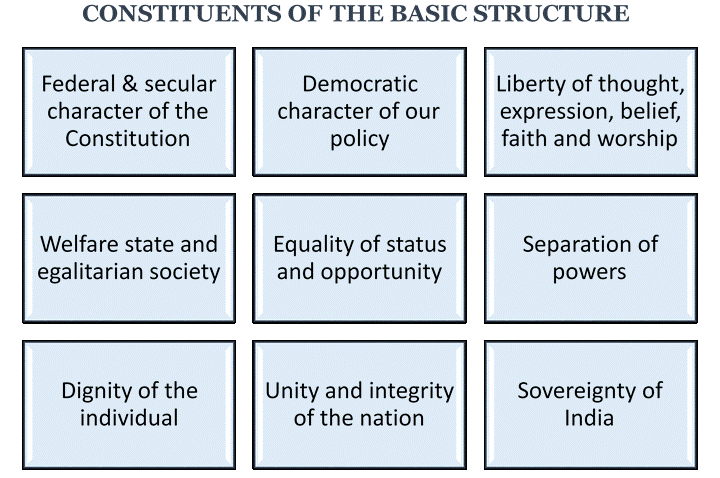
    The Basic Structure Doctrine - UNITED LIBERAL FOUNDATION


    Central Idea:

    The article underscores the significance of the Kesavananda Bharati case in Indian constitutional history, highlighting how it established a crucial safeguard against potential tyranny and dictatorship. The case introduced the concept of the Basic Structure doctrine, asserting that even constitutional amendments passed by a parliamentary majority could be declared unconstitutional if they violated the fundamental principles integral to the Indian Constitution.

    Key Highlights:

    • The Kesavananda Bharati case marked a turning point by introducing the Basic Structure doctrine, preventing the constitutionalization of gross aberrations or tyranny through amendments.
    • The Basic Structure doctrine empowers the judiciary to act as a check against potential misuse of power by the majority, safeguarding democracy.
    • The article traces the evolution of this doctrine from earlier cases, such as Shankari Prasad, Sajjan Singh, and Golaknath, leading up to the Kesavananda Bharati judgment.

    Key Challenges:

    • The Basic Structure doctrine has faced challenges from those seeking to dilute or ignore its significance, posing a threat to the enduring democratic principles it upholds.
    • The potential for misuse or misinterpretation of the Basic Structure doctrine could lead to controversies and confrontations in politics and governance.

    Key Terms:

    • Basic Structure: The fundamental principles and core features of the Indian Constitution that cannot be altered by constitutional amendments.
    • Parliamentary Majority: The voting majority in the Parliament required to pass constitutional amendments.
    • Constitutional Amendments: Changes made to the constitution, often requiring a special majority in the Parliament.

    Key Phrases:

    • “Basic Structure makes it impossible to constitutionalize gross aberrations.”
    • “Anti-majoritarian safeguards”: Mechanisms in place to protect against the potential tyranny of the majority in a democracy.

    Key Quotes:

    • “Even a constitutional amendment can be declared unconstitutional if it violates the Basic Structure.”
    • “The power of amendment… does not include the power to abrogate the Constitution.”

    Anecdotes:

    • The unsavoury episode of Chief Justice A N Ray attempting to unilaterally review the Kesavananda Bharati judgment in 1975 is highlighted, adding drama to the historical significance of the case.
    • The description of Nani Palkhivala’s arguments as “divinity speaking through him” during the case adds a personal touch to the historical narrative.

    Key Statements:

    • “The highest bulwark of such safeguards is the Indian Constitution.”
    • “Long live Basic Structure, despite the attempt of constitutional pygmies to jettison, dilute or ignore it.”

    Key Examples and References:

    • Reference to the Shankari Prasad, Sajjan Singh, and Golaknath cases to illustrate the evolution of the Basic Structure doctrine.
    • Mention of the 24th to 26th constitutional amendments enacted in 1971 to overrule specific judgments and provide context to the Kesavananda Bharati case.

    Key Facts and Data:

    • The Kesavananda Bharati case involved 703 pages of judgment spread over 11 judicial opinions, making it India’s longest argued case with the largest bench.
    • The Golaknath case in 1967 had a 6-5 majority holding the entire Part 3 of the Constitution unamendable.

    Critical Analysis:

    The article presents a critical analysis of the Kesavananda Bharati case, highlighting its significance as a safeguard against potential misuse of power. It underscores the importance of the Basic Structure doctrine in preserving democratic principles and preventing constitutional aberrations.

    Way Forward:

    • Emphasize the continued relevance and importance of the Basic Structure doctrine in maintaining a balance of power in a democracy.
    • Advocate for a nuanced understanding and application of the doctrine to ensure its integrity while addressing any legitimate concerns about its misuse.
  • The idea of one nation, one election is against federalism

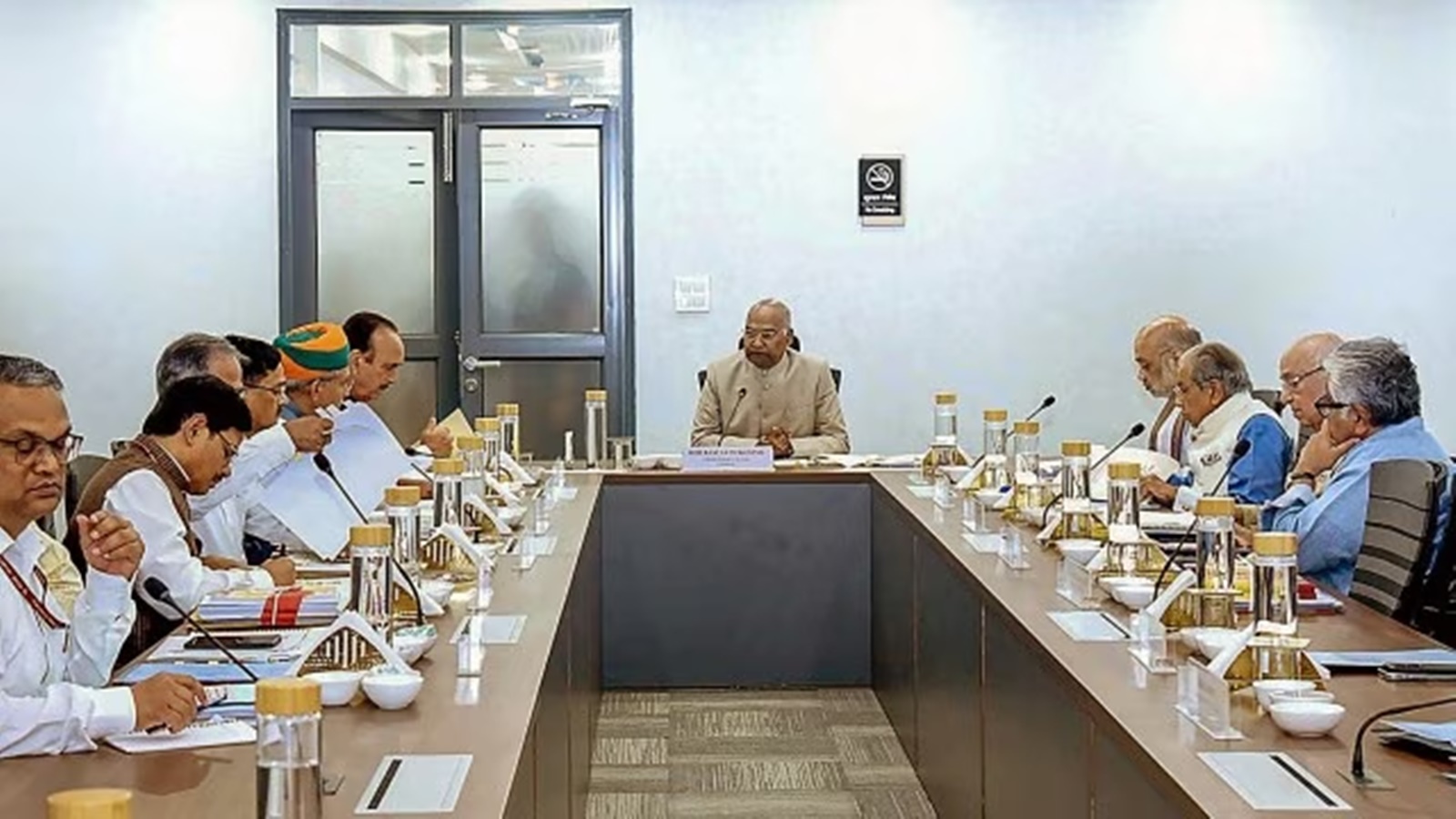
    One Nation, One Election': Panel gets thousands of responses on  simultaneous polls | India News - The Indian Express

    Central Idea:

    The article discusses the formation and potential implications of the ‘High Level Committee on One Nation, One Election’ set up by the Union Government in September 2023. It delves into the reasons for and against the concept, focusing on the financial aspects and governance downtime. The author raises legal concerns, particularly regarding the constitutional autonomy of states, linguistic bias in consultations, and the role of the Election Commission. The looming possibility of a constitutional showdown in the Supreme Court is emphasized, drawing parallels with the U.S. case of Baker v. Carr.

    Key Highlights:

    • Formation of the ‘High Level Committee on One Nation, One Election’ chaired by former President Ramnath Kovind.
    • Reasons supporting the concept include reducing election expenses and minimizing governance downtime caused by the Model Code of Conduct.
    • Opposition argues that democratic processes, including elections and the Model Code of Conduct, are essential for a functioning democracy.
    • Legal concerns raised, citing potential violation of state autonomy and constitutional provisions, particularly as stated in the S.R. Bommai case.
    • The linguistic bias in consultations, with the committee’s website available only in English and Hindi, is highlighted.
    • The Election Commission’s seemingly passive role and lack of involvement in the process are questioned.

    Key Challenges:

    • Constitutional and legal concerns regarding the potential alteration of the duration of State Legislative Assemblies.
    • Linguistic bias in consultations, limiting the inclusivity of the decision-making process.
    • Potential compromise of the Election Commission’s independence and autonomy.
    • Balancing financial considerations with the fundamental principles of democracy.
    • The challenge of ensuring a fair and unbiased decision-making process amid political interests.

    Key Terms and Phrases:

    • One Nation, One Election
    • High Level Committee
    • Model Code of Conduct
    • S.R. Bommai case
    • Constitutional autonomy
    • Governance downtime
    • Baker v. Carr moment
    • Linguistic bias
    • Election Commission
    • Constitutional showdown

    Key Quotes:

    • “The cost of holding free and fair elections… is a price that can never be high.”
    • “The introduction of a common election process would necessarily require alteration of the existing duration of a number of State Legislatures.”
    • “Similar to demonetisation, when the Reserve Bank of India was kept in the dark, the Election Commission seems to be a silent spectator.”

    Key Statements:

    • “The Supreme Court would be called upon to determine the ultimate fate of Indian democracy.”
    • “The potential alteration of the duration of State Legislatures would be anti-federal and unconstitutional.”
    • “The stage is set for a constitutional showdown in the not-too-distant future.”

    Key Examples and References:

    • Baker v. Carr case in the U.S. as a reference for the potential role of the Supreme Court in a constitutional showdown.
    • Comparison with demonetization to highlight concerns about the Election Commission’s apparent lack of involvement.

    Key Facts and Data:

    • The estimated cost of the 2014 general elections was ₹3,870 crore.
    • The High Level Committee’s website is available only in English and Hindi.

    Critical Analysis:

    The article critically examines the potential consequences of One Nation, One Election, questioning its feasibility and highlighting legal and constitutional concerns. It underscores the importance of democratic processes and the need for the Supreme Court to play a pivotal role in preserving India’s constitutional architecture.

    Way Forward:

    • Ensure comprehensive and inclusive consultations in multiple languages to address linguistic bias.
    • Strengthen the autonomy of the Election Commission and ensure its active participation in decision-making processes.
    • Balance financial considerations with the preservation of democratic principles.
    • Address legal concerns, particularly those related to state autonomy and constitutional provisions.
    • Encourage public discourse to raise awareness and engage citizens in the decision-making process.
  • Farsi to be one of India’s nine Classical Languages

    Introduction

    • In a significant move to deepen cultural ties, External Affairs Minister S Jaishankar announced that the Centre has decided to include Farsi (Persian) as one of the nine classical languages in India under the New Education Policy.

    Classical Languages in India

    • As of now, India recognizes six languages as classical, including Tamil (2004), Sanskrit (2005), Kannada (2008), Telugu (2008), Malayalam (2013), and Odia (2014).
    • In addition to these classical languages Pali, Persian, and Prakrit and their works of literature are to be preserved according to India’s National Education Policy-2020.
    • The addition of Farsi (Persian) brings the total to nine classical languages (Needs more clarification).

    Criteria for Classical Language Status

    The Ministry of Culture in the Rajya Sabha outlined the criteria for declaring a language as ‘Classical’:

    • High Antiquity: The language must have a recorded history spanning 1500-2000 years.
    • Valuable Heritage: It should possess a body of ancient literature and texts cherished by generations.
    • Originality: The literary tradition must be unique and not borrowed from another linguistic community.
    • Distinctness: The classical language and its literature should be distinct from modern forms or offshoots.

    Promotion of Classical Languages

    Upon being recognized as a classical language, the HRD Ministry provides various benefits, including:

    • International Awards: Two major international awards for eminent scholars in classical Indian languages.
    • Centre of Excellence: Establishment of a Centre of Excellence for studies in Classical Languages.
    • Professional Chairs: Requesting the University Grants Commission (UGC) to create Professional Chairs for Classical Languages, initially in Central Universities.

    The Eighth Schedule

    The Eighth Schedule of the Indian Constitution outlines the official languages of the Republic of India. It is governed by Articles 344(1) and 351 of the Constitution.

    • Purpose: Originally created to grant representation on the Official Languages Commission and enrich Hindi and English, the official languages of the Union.
    • Medium for Examinations: Candidates appearing for public service examinations have the privilege of using any language from the Eighth Schedule as a medium to answer exam papers.
    • Languages Included: Currently, the Eighth Schedule includes 22 languages, including Assamese, Bengali, Bodo, Dogri, Gujarati, Hindi, Kannada, Kashmiri, Konkani, Maithili, Malayalam, Manipuri, Marathi, Nepali, Odia, Punjabi, Sanskrit, Santali, Sindhi, Tamil, Telugu, and Urdu.

    Chronological Additions

    The chronological additions to the Eighth Schedule are as follows:

    • 1950: Initially included 14 languages.
    • 1967: Sindhi was added through the 21st Constitutional Amendment Act.
    • 1992: Konkani, Manipuri (Meitei), and Nepali were included through the 71st Constitutional Amendment Act.
    • 2003: Bodo, Dogri, Maithili, and Santali were added through the 92nd Constitutional Amendment Act.
    • 2011: The spelling “Oriya” was replaced with “Odia” through the 96th Constitutional Amendment Act.

    Try this PYQ:

    Consider the following languages:

    1. Gujarati
    2. Kannada
    3. Telugu

    Which of the above has/have been declared as ‘Classical Language / Languages’ by the Government?

    (a) 1 and 2 only

    (b) 3 only

    (c) 2 and 3 only

    (d) 1, 2 and 3

    [wpdiscuz-feedback id=”zd3km5etnb” question=”Please leave a feedback on this” opened=”1″]Post your answers here.[/wpdiscuz-feedback]

  • A Speaker’s flawed move to determine the real faction

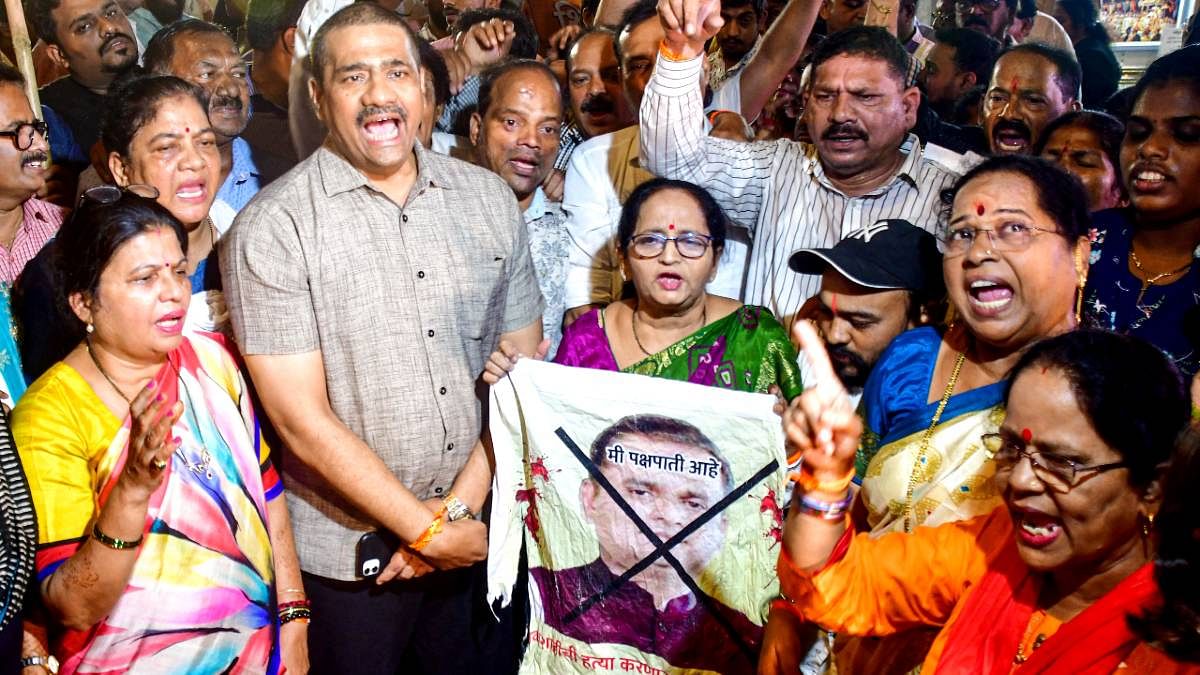
    Uddhav Thackeray slams Maharashtra Speaker's verdict on 'real' Shiv Sena

    Central Idea:

    The article critiques the Speaker of the Maharashtra Assembly, Rahul Narwekar, for his flawed decision in handling the disqualification case of Shiv Sena Members of the Legislative Assembly (MLAs) led by Eknath Shinde. The author emphasizes the Speaker’s erroneous attempt to determine the real Shiv Sena faction and points out the jurisdictional issues and contradictions in the Speaker’s decision.

    Key Highlights:

    • The Speaker’s decision centered on whether the breakaway Shiv Sena MLAs, under Eknath Shinde’s leadership, voluntarily gave up their party membership by voting against the party whip, making them liable for disqualification under the anti-defection law.
    • The article highlights the Speaker’s attempt to prevent disqualification of the Shinde group, presenting a nearly 1,200-page judgment that is deeply flawed.
    • The Speaker erroneously tries to determine the real Shiv Sena faction, a decision beyond his jurisdiction, and quotes irrelevant Supreme Court directions.

    Key Challenges:

    • The Speaker’s decision raises questions about the misinterpretation of the Tenth Schedule and its provisions regarding defection and disqualification.
    • Attempting to determine the real party faction goes against the clear jurisdiction outlined by the Supreme Court and the Election Commission of India.
    • Contradictions in the Speaker’s decision, such as validating appointments by the Shinde group despite the Supreme Court’s findings, pose challenges to the integrity of the anti-defection law.

    Key Terms:

    • Anti-Defection Law: Provisions outlined in the Tenth Schedule of the Constitution that address defection by legislators and the resulting disqualification.
    • Jurisdiction: The official power to make legal decisions and judgments.

    Key Phrases:

    • “Flawed decision in handling the disqualification case.”
    • “Erroneous attempt to determine the real Shiv Sena faction.”
    • “Nearly 1,200-page judgment valiantly tried to avoid disqualification.”

    Key Quotes:

    • “The consequence of this is disqualification.”
    • “The Speaker’s decision is clearly without jurisdiction.”
    • “Parliament did not consider paragraph 15 of the Symbols order as a relevant factor.”

    Key Statements:

    • “The question of which faction is the real Shiv Sena can only be decided by the Election Commission of India.”
    • “The Speaker’s decision goes against the clear enunciation of law by the Supreme Court.”

    Key Examples and References:

    • The Subhash Desai judgment clarifies that the Shiv Sena led by Uddhav Thackeray is the original political party.
    • Parliament did not consider paragraph 15 of the Symbols order as a relevant factor.

    Key Facts and Data:

    • The Tenth Schedule originally allowed legislators to avoid disqualification in case of a split or merger; however, the split provision was omitted in 2003.
    • In Subhash Desai vs Principal Secretary, Governor of Maharashtra & Ors. (2023), the Supreme Court observes a split in the Shiv Sena party.

    Critical Analysis:

    The article critically analyzes the Speaker’s decision, pointing out flaws, contradictions, and the disregard for the clear jurisdiction outlined by the Supreme Court. It highlights the misinterpretation of the Tenth Schedule and its implications for anti-defection cases.

    Way Forward:

    • Emphasizes the need for adherence to the clear enunciation of law by the Supreme Court and the Election Commission.
    • Urges a more precise understanding and application of the Tenth Schedule to prevent future misinterpretations.
    • Advocates for a careful consideration of relevant factors and jurisdictional boundaries in disqualification cases to uphold the integrity of the anti-defection law.
  • Eknath Shinde, the ‘real’ Shiv Sena and a new Maharashtra model

    Anti Defection Law - Civilsdaily

    Central Idea:

    The article criticizes the Speaker of the Maharashtra Legislative Assembly, Rahul Narwekar, for his decision to recognize Chief Minister Eknath Shinde, who left the Uddhav Thackeray-led Shiv Sena group, as the legitimate leader of the party. The author argues that the Speaker’s decision, influenced by political affiliations, undermines legislative procedures and regulations, creating legal inconsistencies and setting a concerning precedent for future political maneuvering.

    Key Highlights:

    • Speaker Narwekar’s decision favors Chief Minister Shinde, who defected from the Uddhav Thackeray-led group, causing a split in the Shiv Sena.
    • The article points out three major flaws in the Speaker’s decision, including the misinterpretation of majority support, violation of Supreme Court guidelines on the appointment of a whip, and contradictory handling of the Thackeray camp’s violation of the whip.
    • The Speaker’s political affiliation with the BJP raises concerns about impartiality and adherence to constitutional principles.

    Key Challenges:

    • The Speaker’s decision raises questions about the integrity of legislative procedures and the potential influence of political considerations on constitutional matters.
    • Legal inconsistencies, including the misinterpretation of majority support and the violation of Supreme Court guidelines, create challenges for maintaining the rule of law.
    • The article suggests that the decision might lead to prolonged legal battles and sets a precedent for party splits orchestrated by external political forces.

    Key Terms:

    • Defection: The act of switching allegiance from one political party to another.
    • Whip: An official in a political party responsible for ensuring party members vote in line with party decisions.
    • Constitutional Morality: Adherence to ethical and constitutional principles in decision-making.

    Key Phrases:

    • “Recognition of the split as a textbook example of disregard for legislative procedure.”
    • “Craters, not holes, in the Speaker’s order.”
    • “Political heavyweights absent during the crucial decision.”

    Key Quotes:

    • “To hold that it is the legislature party which appoints the whip would be to sever the figurative umbilical cord…”
    • “The Speaker’s decision is bound to trigger yet another legal battle.”
    • “The BJP has perfected the art of engineering defections.”

    Key Statements:

    • “Speaker Narwekar’s decision may be seen as a mockery of the Constitution.”
    • “The Speaker’s affiliation with the BJP adds to suspicions of bias.”
    • “Legal inconsistencies and violations of Supreme Court guidelines are evident in the decision.”

    Key Examples and References:

    • Chief Minister Shinde’s defection from Shiv Sena and the subsequent split.
    • The Speaker’s acceptance of a new whip in violation of Supreme Court guidelines.
    • The contradiction in handling the Thackeray camp’s violation of the whip.

    Key Facts and Data:

    • Speaker Rahul Narwekar is a member of the BJP.
    • Chief Minister Shinde initially had 16 out of 55 MLAs when he left Shiv Sena.
    • The BJP’s success in engineering defections in Maharashtra is highlighted as a concerning trend.

    Critical Analysis: The article criticizes the Speaker’s decision for favoring the ruling party, creating legal loopholes, and potentially setting a precedent for orchestrated party splits. It emphasizes the need for judicial intervention to uphold constitutional morality and address the flaws in the decision.

    Way Forward:

    • The judiciary should play a proactive role in addressing the legal inconsistencies and potential violations of constitutional principles.
    • Political leaders and legislative bodies should prioritize the adherence to established procedures and guidelines.
    • Public awareness and scrutiny can contribute to holding political figures accountable for decisions that may undermine democratic values.

    In conclusion, the article highlights the importance of upholding constitutional principles in the face of political maneuvering, urging judicial intervention and public vigilance to safeguard the integrity of legislative processes.

  • The Indian Parliament, a promise spurned

    Parliament session from Jan 31 to Feb 9, Sitharaman to present interim  budget on Feb 1 | India News - The Indian Express

    Central Idea:

    The article reflects on the recent security breach in the Indian Parliament, drawing attention to the historical debate around the choice of a parliamentary government for India. It explores the importance of having a stable government with effective opposition, emphasizing the parliamentary system’s capacity to accommodate diversity. The author questions the handling of the security breach incident and the subsequent suspension of a significant number of opposition members.

    Key Highlights:

    • Security lapse in the Indian Parliament in December 2023.
    • Historical debate on the choice of a parliamentary government in India.
    • Importance of stable government with effective opposition.
    • Challenges faced by the ruling party in accommodating opposition.
    • Critique of the current leadership’s response to the security breach.

    Key Challenges:

    • Grappling with the aftermath of a significant security breach.
    • Balancing the need for a stable government with the necessity of an effective opposition.
    • Managing the paradox of majority endorsement while ensuring constant validation for the common good.
    • Ensuring parliamentary committees address security concerns adequately.
    • Striking a balance between executive authority and parliamentary dignity.

    Key Terms:

    • Parliamentary government
    • Opposition
    • Security breach
    • Westminster system
    • Presidential system
    • Swarajist model
    • Indian orthodoxy
    • Common good
    • Effective representation
    • Stability in governance

    Key Phrases:

    • “Foundational institution of public life.”
    • “Parliamentary form of government.”
    • “Security lapses and pandemonium.”
    • “Doctrinal, ethnic, and cultural pluralisms.”
    • “Dialectics of stable support and effective opposition.”
    • “Insistent demand of the Opposition.”
    • “Suspended members from both Houses.”
    • “Ruling party’s ability to defend its course.”

    Key Quotes:

    • “A parliamentary system marks a better space for minorities.”
    • “The ruling party has not found it easy to face a sustained Opposition.”
    • “It is not the truth that a ruling dispensation upholds that serves its claim to rule but its ability to defend the course it pursues as the truth.”

    Anecdotes:

    • Incident involving Jawaharlal Nehru and Speaker Mavalankar’s refusal to go to the Prime Minister’s chamber.
    • Reference to historical debates within the Constituent Assembly on the form of government for India.

    Key Statements:

    • “The security breach is a breach inflicted on the nation as a whole.”
    • “The ruling party, despite challenges, has to live with the logic of the parliamentary system.”
    • “The suspension of almost the entire Opposition from both the Houses can hardly meet the test of becoming the voice of the nation.”

    Key Examples and References:

    • Two young men with gas canisters causing pandemonium in the Lok Sabha.
    • Historical references to arguments for the presidential, Indian orthodox, and swarajist models.
    • Mention of Jawaharlal Nehru’s sensitivity to the absence of an effective opposition.

    Key Facts and Data:

    • December 2023: Security breach in the Indian Parliament.
    • Suspension of 146 members from both Houses.
    • Reference to the historical debate within the Constituent Assembly.

    Critical Analysis:

    The article critically evaluates the current state of the Indian Parliament, questioning the handling of the security breach and the subsequent suspension of opposition members. It emphasizes the importance of a stable government with an effective opposition, highlighting historical debates on the choice of a parliamentary system. The author critiques the leadership’s response and underscores the need for a balance between executive authority and parliamentary dignity.

    Way Forward:

    • Address the security concerns through parliamentary committees.
    • Foster a more collaborative approach between the ruling party and the opposition.
    • Uphold the principles of parliamentary democracy and the importance of an effective opposition.
    • Prioritize transparency and communication in addressing lapses and challenges.
    • Reaffirm the commitment to diversity, pluralism, and the common good in parliamentary governance.
  • Political Split and Maharashtra Assembly Speaker’s Ruling

    Introduction

    • Maharashtra Assembly Speaker ruled that the ruling faction of a political party was the legitimate and real, having the support of the majority of the party’s MLAs.

    Anti-Defection Law in India

    • Rise of Political Instability: The late 1970s saw rampant floor-crossing by legislators, epitomized by the phrase “Aaya Ram Gaya Ram” after MLA Gaya Lal’s frequent party changes in 1967.
    • Legislative Efforts: Various bills, including the 32nd and 48th Constitution Amendment Bills, were introduced to address defections but lapsed or were not passed.
    • Enactment of the Law: The 52nd Amendment in 1985, under Prime Minister Rajiv Gandhi, introduced the Tenth Schedule to the Constitution, embedding the anti-defection law.

    Features of the Anti-Defection Law

    [A] Disqualification Criteria:

    • Members of Political Parties: Disqualification occurs if a member voluntarily gives up their party membership or defies the party’s directive without prior permission, which is not condoned within 15 days.
    • Independent Members: Disqualification occurs if they join a political party after election.
    • Nominated Members: Disqualification occurs if they join a political party after six months from taking their seat in the House.

    [B] Exceptions:

    • Merger: A member is not disqualified if their original party merges with another party, and at least two-thirds of its members agree to the merger.
    • Presiding Officers: Members who become presiding officers can relinquish party membership and rejoin it after their term without facing disqualification.

    [C] Decision Makin:

    • Deciding Authority: The presiding officer of the respective House is the authority to decide on disqualification matters, subject to judicial review as established in the Kihoto Hollohan case (1991).
    • Rule-making Power: The presiding officer can formulate rules for implementing the Tenth Schedule, subject to the approval of the House.
    • Procedure for Disqualification: The presiding officer acts upon a defection case upon receiving a complaint. The accused member must be given a chance to explain, and the matter can be referred to a committee for inquiry.
    • Position of Speaker: Party whips do not apply to the Speaker. However, questions of disqualification under the law concerning the Speaker or Chairman are decided by a member elected by the House.

    Judicial Interpretations and Election Commission’s Role

    • Key Judgments: The Kihoto Hollohan case (1991) made the Speaker’s decision on defection subject to judicial review. Other significant cases include Ravi Naik vs Union of India and G. Viswanathan Vs. The Hon’ble Speaker, Tamil Nadu, which clarified aspects of voluntary membership relinquishment and expulsion.
    • Election Commission’s Guidelines: The EC resolves intra-party disputes based on majority support in both organizational and legislative wings and may freeze party symbols in unresolved cases.

    Challenges and Criticisms

    • Discriminatory Features: The law is criticized for not differentiating between dissent and defection and for its approach to individual versus group defections.
    • Absence of Time Limit: The lack of a mandated timeframe for decisions on defection cases has led to manipulation and delays.
    • Impact on Democratic Functioning: Critics argue that the law restricts legislators’ freedom and weakens legislative checks on the executive.

    Debate on Repeal or Amendment

    • Arguments for Repeal: Some argue for the law’s repeal, citing its failure to prevent defections and its hindrance to representative democracy.
    • Arguments against Repeal: Proponents believe it ensures government stability, recognizes party systems, and reduces corruption.
    • Suggested Amendments: Recommendations for amendments include limiting the law’s scope, enhancing decision-making processes, and promoting intra-party democracy.

    Expert Recommendations

    • Dinesh Goswami Committee (1990) and Law Commission (170th Report, 1999): Suggested amendments include limiting disqualification and involving the President/Governor and EC in decision-making.
    • Constitution Review Commission (2002): Proposed barring defectors from holding public office and invalidating their votes in toppling governments.
    • Election Commission’s Proposal: Recommended that decisions under the Tenth Schedule should be made by the President/Governor based on the EC’s binding advice.

    Way Forward

    • Amending the Law: Amendments should address existing shortcomings, such as defining “voluntarily giving up membership” and removing distinctions in disqualification criteria.
    • Enhancing Democratic Functioning: Reforms should focus on promoting intra-party democracy and regulating the use of whips.
    • Voter Responsibility: The electorate’s role in holding defectors accountable through the ballot remains crucial.

    Conclusion

    • Navigating Political Stability and Democracy: The anti-defection law seeks to balance political stability with democratic representation and legislative accountability.
    • Adapting to Contemporary Politics: As political dynamics evolve, so must the legal frameworks, ensuring their relevance and effectiveness.
  • AMU’s Minority Status: A Historical and Legal Overview

    amu

    Introduction

    • The Supreme Court’s seven-judge Bench has begun hearing the long-standing dispute over the minority status of Aligarh Muslim University (AMU), a contention that spans nearly six decades.

    AMU’s Establishment

    • Origins: AMU traces its roots to the Muhammadan Anglo-Oriental (MOA) College, founded by Sir Syed Ahmad Khan in 1875 to address Muslims’ educational backwardness.
    • University Status in 1920: The institution gained university status in 1920, transitioning from MOA College to AMU, with a focus on both Western education and Islamic theology.

    Dispute over Minority Status

    • Article 30(1) of the Constitution: It says that all minorities, whether based on religion or language, shall have the right to establish and administer educational institutions of their choice.
    • Initial Legal Challenges: The Supreme Court’s 1967 ruling in S. Azeez Basha vs. Union of India marked the beginning of the legal dispute, questioning the amendments to the AMU Act and the university’s administration.
    • Supreme Court’s 1967 Verdict: The court held that AMU was not established nor administered by the Muslim minority, emphasizing that it was created by a central act for government recognition of its degrees.

    Nationwide Protests and Political Response

    • 1981 Amendment Affirming Minority Status: Following protests by Muslims, the government amended the AMU Act in 1981, explicitly recognizing its minority status.
    • Allahabad High Court’s 2005 Ruling: The High Court overturned AMU’s reservation policy and nullified the 1981 amendment, aligning with the Supreme Court’s 1967 decision.

    Recent Developments and Government Stance

    • Withdrawal of Appeal by NDA Government: In 2016, the NDA government withdrew its appeal in the Supreme Court, stating it could not endorse setting up a minority institution in a secular state.
    • Referral to a Larger Bench: In 2019, a three-judge Bench led by then CJI Ranjan Gogoi referred the matter to a seven-judge Bench for a comprehensive review.

    Current Proceedings in the Supreme Court

    • Composition of the Bench: The case is being heard by a Bench comprising CJI DY Chandrachud and Others
    • Focus of the Hearing: The Bench is set to deliberate on the complex historical, legal, and constitutional aspects surrounding AMU’s minority status.

    Conclusion

    • Significance of the Case: The Supreme Court’s current hearing is crucial in determining the future of AMU’s minority character, a matter deeply intertwined with India’s educational and secular fabric.
    • Implications for Minority Rights: The outcome will have significant implications for minority rights in India, particularly concerning the establishment and administration of educational institutions under Article 30(1) of the Constitution.
  • Supreme Court Overturns Remission in Bilkis Bano Case

    bilkis bano

    Introduction

    • Supreme Court’s Ruling: The Supreme Court struck down the remission granted to 11 men convicted in the 2002 Bilkis Bano Gangrape Case.
    • Gujarat Government’s Action Deemed Illegal: The court declared the Gujarat government’s decision to release the convicts as illegal, citing jurisdictional issues.

    Remission of Sentences: Constitutional Analysis

    Details
    What is Remission? Complete ending of a sentence at a reduced point;

    Nature of the sentence remains unchanged, but the duration is reduced;

    Conditional release; breach of conditions leads to cancellation.

    Constitutional Provisions Article 72: President’s pardoning powers

    Article 161: Governor’s pardoning powers

    President’s pardoning power >>> Governor’s

    Statutory Power of Remission Provided under the Code of Criminal Procedure (CrPC)

    Sections 432 and 433 allow suspension, remission, or commutation of sentences

    Background of Remission System Defined under the Prison Act, 1894;

    Observed in Kehar Singh vs. Union of India (1989) and

    State of Haryana vs. Mahender Singh (2007) cases

    Latest MHA Guidelines Special Remission Guidelines to commemorate 75th year of Independence as part of the Azadi Ka Amrit Mahotsav celebrations.
    Eligibility for Special Remission Women and transgender convicts aged 50+

    Male convicts aged 60+, having completed 50% of their sentence

    Physically challenged convicts with 70% + disability, having completed 50% of their sentence

    Terminally ill convicts who have completed 66% of their sentence

    Poor prisoners detained due to non-payment of fines

    Young offenders aged 18-21 with no other criminal involvement, having completed 50% of their sentence

    Exclusions from the Scheme Convicts with death sentences or life imprisonment;

    Convicts involved in terrorist activities or convicted under specific acts like TADA, POTA, UAPA, etc.

    Convicts of offences like dowry death, counterfeiting, rape, human trafficking, POCSO Act violations, etc.

    Core Issue before the Court

    • Question of Authority: The central issue was whether the Gujarat government had the authority to issue remission orders for the convicts.
    • Jurisdictional Clarification: The crime occurred in Gujarat, but the trial was held in Mumbai. The Supreme Court clarified that the appropriate government for remission decisions is where the sentencing occurred, not where the crime was committed.

    Understanding Remission of Sentences

    • Constitutional and Legal Provisions: Articles 72 and 161 of the Constitution and Section 432 of the CrPC empower the President, Governors, and state governments to remit sentences.
    • Restrictions Under Section 433A of the CrPC: This section imposes limitations on remission for life imprisonment cases, requiring a minimum of 14 years of imprisonment.

    Grounds for Remission

    • Sentence Review Board’s Role: States have a Sentence Review Board to exercise powers under Section 432 of the CrPC.
    • Supreme Court Guidelines: The court mandates due process in remission decisions, considering factors like the crime’s seriousness, co-accused status, and jail conduct.
    • Criteria Established in ‘Laxman Naskar v. Union of India’ (2000): The Supreme Court outlined five specific grounds for considering remission:

    (a) Whether the offence is an individual act of crime that does not affect society.

    (b) The likelihood of the crime being repeated in the future.

    (c) Whether the convict has lost the potentiality to commit a crime.

    (d) The purpose served by keeping the convict in prison.

    (e) Socio-economic conditions of the convict’s family.

    The Bilkis Bano Case Specifics

    • Convict’s Appeal for Remission: A convict appealed to the Supreme Court for premature release under Gujarat’s 1992 remission policy.
    • Supreme Court’s Initial Directive: The court initially directed the Gujarat government to consider Shah’s application as per the 1992 policy.

    Gujarat’s Remission Policy and Its Implications

    • 1992 Policy vs. 2014 Policy: The 1992 policy, under which remission was sought, was invalidated by the Supreme Court in 2012.
    • Gujarat Government’s Argument: The state argued that the 1992 policy was applicable as the conviction occurred in 2008, before the 2014 policy with stricter guidelines was formulated.

    Aftermath of the Remission Grant

    • Public Outrage: The release of the convicts sparked widespread outrage and was perceived as a miscarriage of justice.
    • Bilkis Bano’s Appeal: Bilkis Bano challenged the remission in the Supreme Court, highlighting the heinous nature of the crime and its impact on society.

    Conclusion

    • Restoration of Legal Integrity: The Supreme Court’s decision to overturn the remission restores faith in the legal system’s commitment to justice.
    • Reaffirmation of Jurisdictional Authority: The ruling clarifies the jurisdictional authority in remission cases, reinforcing the importance of due process and legal consistency.
    • Broader Implications: This judgment sets a precedent for future remission cases, emphasizing the need for careful consideration of the crime’s nature and societal impact in such decisions.
  • The Ayes always have it: Why voice votes in Parliament are bad for democracy

    Recording each vote - The Hindu

    Central Idea:

    The article discusses the absence of voting records during the recent Parliament session, highlighting the significance of recorded votes in representing legislators’ stances and fostering transparency in the legislative process. It also explores the impact of the Anti-Defection Law on MPs’ dissent and the increasing use of voice votes, leading to a lack of accountability.

    Key Highlights:

    • 19 bills were passed in the recent Parliament session, but voting records were not made available.
    • The use of voice votes, lacking individual records, is a preferred method for passing legislative motions.
    • The Anti-Defection Law has limited MPs’ ability to dissent, reducing the significance of debates and votes.
    • The scarcity of voting records hampers Opposition parties in communicating their positions to the electorate.

    Key Challenges:

    • Lack of transparency due to the absence of voting records.
    • The impact of the Anti-Defection Law on MPs’ freedom to dissent.
    • Dismissal of division calls during crucial legislative moments.

    Key Terms:

    • Voice vote
    • Anti-Defection Law
    • Division call
    • Legislative transparency
    • Accountability
    • Dissent

    Key Phrases:

    • “A shadow of opacity has fallen over our legislative processes.”
    • “The scarcity of voting records can be a symptom of a deeper problem.”
    • “The impact of the Anti-Defection Law on MPs’ dissent is a matter of concern.”

    Key Quotes:

    • “Transparency defines the measure to which our parliamentarians’ political decisions are traceable, which begets accountability.”
    • “The right to a division, meant to be readily available, has become shrouded in subjective judgement.”

    Key Examples and References:

    • The passage of the Jan Vishwas Bill 2023 and the farm bills through voice votes.
    • Asaduddin Owaisi’s dissent on various bills, illustrating the importance of voting records.
    • Dismissal of division calls during the passage of the Weapons of Mass Destruction Bill and the Electricity Amendment Bill.

    Key Facts:

    • In Modi I, 40 divisions were raised for 180 bills, while in Modi II, only 20 divisions were allowed for 209 bills.
    • Only 15.4% of bills in the BJP’s 10-year tenure have voting records.

    Critical Analysis:

    The article critically examines the impact of voice votes, the Anti-Defection Law, and the dismissal of division calls on legislative transparency and accountability. It emphasizes the need for voting records to ensure a clear representation of MPs’ stances.

    Way Forward:

    • Reevaluate the impact of the Anti-Defection Law on MPs’ dissent.
    • Ensure the availability of voting records to enhance legislative transparency.
    • Address the dismissal of division calls to uphold the right to record votes.
    • Promote a more accountable and transparent legislative process through recorded votes.

    In essence, the article advocates for the restoration of transparency in the legislative process through the provision of voting records and a reconsideration of the Anti-Defection Law’s impact on MPs’ dissent.