💥Join UPSC 2027,2028 Mentorship (July Batch) + XFactor Notes & Microthemes PDF

Subject: Fundamental Rights,DPSP

1. History + Evolution
2. Features
3. Amendments
4. Basic Structure

  • Legislative Development in Election Commission Appointments

    election commissioner

    Central Idea

    • The Rajya Sabha passed a bill that revises the process for appointing the Chief Election Commissioner (CEC) and Election Commissioners (ECs), replacing the Election Commission (Conditions of Service of Election Commissioners and Transaction of Business) Act, 1991.

    Election Commission Appointments Bill:Key Features

    • Appointment Process: The President will appoint the CEC and ECs based on recommendations from a Selection Committee comprising the Prime Minister, a Union Cabinet Minister, and the Leader of Opposition in Lok Sabha.
    • Search Committee Role: A Search Committee led by the Cabinet Secretary will suggest candidates to the Selection Committee.
    • Eligibility Criteria: Candidates must have held a post equivalent to the Secretary to the central government.
    • Salary and Conditions: The CEC and ECs will receive salaries and benefits equivalent to the Cabinet Secretary, a change from the previous equivalence to a Supreme Court judge.

    Constitutional Context

    • Constitutional Provisions: Article 324 of the Constitution allows the President to appoint the CEC and ECs but does not specify the appointment process.
    • Supreme Court Directive: In March 2023, the Supreme Court mandated a selection process involving the Prime Minister, Leader of Opposition, and the Chief Justice of India, until Parliament legislates otherwise.

    Key Issues and Analysis

    • Independence Concerns: The government-dominated Selection Committee could impact the Election Commission’s independence.
    • Validity despite Vacancies: The Selection Committee’s recommendations will be valid even with vacancies, potentially leading to government control in appointments.
    • Salary and Status: Aligning the CEC and ECs’ salary with the Cabinet Secretary, determined by the government, may affect their independence compared to a salary fixed by Parliament.
    • Exclusion of Candidates: Limiting eligibility to senior bureaucrats may exclude other qualified individuals, particularly those with judicial experience.
    • International Practices: The appointment processes for election commissions in countries like South Africa, the UK, the US, and Canada vary, with some involving judicial members or parliamentary approval.

    Concerns over Independence and Selection Process

    • Government Influence: The Bill’s provisions for a government-majority Selection Committee and the acceptance of recommendations despite vacancies could lead to executive dominance in appointments.
    • Salary and Removal Parity: The change in salary equivalence and the lack of parity in the removal process of the CEC and ECs compared to Supreme Court judges raise concerns about the Commission’s independence.

    Goswami Committee (1990) Recommendations

    • Background: The Goswami Committee on Electoral Reforms (1990) made significant recommendations regarding the Election Commission’s functioning.
    • Appointment Process: The Committee suggested that the CEC should be appointed by the President in consultation with the Chief Justice and the Leader of Opposition in Lok Sabha. For ECs, it recommended a similar process but included the CEC in the consultative process.
    • Importance of Independence: The Committee emphasized the need for the Election Commission’s independence from executive influence to ensure free and fair elections.

    Conclusion

    • Ensuring ECI’s Autonomy: While the Bill aims to formalize the appointment process for the CEC and ECs, maintaining the Election Commission’s autonomy and independence is crucial for upholding democratic principles.
    • Need for Deliberation: The concerns raised about the Bill highlight the need for careful consideration to ensure that the Election Commission remains an impartial and effective guardian of electoral integrity in India.
  • SR Bommai Judgment and its Relevance in Article 370 Verdict

    Central Idea

    • The Supreme Court’s reliance on the 1994 SR Bommai judgment was pivotal in upholding the abrogation of Article 370.
    • The SR Bommai case is a landmark judgment interpreting Article 356 of the Constitution, which deals with President’s rule in states.

    SR Bommai Case: An Overview

    • Origin of the Case: The case arose from the dismissal of the Janata Dal-led Karnataka government in 1989 by the Congress-led central government.
    • Governor’s Recommendation: Karnataka Governor P Venkatasubbaiah recommended President’s rule citing the loss of majority by Chief Minister SR SR Bommai and the inability of other parties to form a government.
    • Controversy: The move was controversial, especially as some MLAs later retracted their withdrawal of support, claiming their signatures were obtained by misrepresentation.

    Supreme Court’s Verdict in the Case

    • Judicial Review of President’s Proclamation: The Court unanimously held that the President’s proclamation is subject to judicial review on several grounds, including illegality, malafide, and abuse of power.
    • Parliamentary Approval Requirement: The verdict mandated Parliamentary approval for imposing President’s rule. Without this approval, the dismissed government would automatically be revived after two months.
    • Centre-State Relationship: The ruling emphasized the autonomy of states, stating that greater power at the Centre does not reduce states to mere appendages.

    Impact of the Ruling

    • Scrutiny of Governor’s Conduct: This was one of the first judgments to scrutinize the Governor’s role, especially in the context of frequent impositions of President’s rule.
    • Decrease in President’s Rule Impositions: Research indicates a significant decrease in the frequency of President’s rule post-SR Bommai , from an average of 2.5 times a year (1950-1994) to just over once a year (1995-2021).

    Kashmir Reference in the Article 370 Ruling

    • Key Question: The central question was whether Article 370 could be abrogated while J&K was under President’s rule, which had been in place since 2018.
    • Supreme Court’s Reliance on SR Bommai: The Court used the SR Bommai ruling to validate the President’s actions in J&K, applying the standards set by Justices PB Sawant and Jeevan Reddy for testing the validity of executive orders.

    Conclusion

    • Influence on Federal Dynamics: The SR Bommai judgment continues to influence the balance of power between the Centre and states, ensuring judicial oversight over central interventions in state governance.
    • Relevance in Contemporary Rulings: Its principles, particularly regarding judicial review and the autonomy of states, remain crucial in contemporary constitutional interpretations, as seen in the Article 370 ruling.
  • Protecting Basic Structure from judicial arbitrariness

    1973: Kesavananda Bharati case - Frontline

    Central idea 

    The article reflects on the 50th anniversary of the Kesavananda Bharati case, emphasizing the enduring significance of the “Basic Structure Doctrine” in safeguarding constitutional pillars. It acknowledges debates surrounding its constitutional validity and introduces insights from jurist Dietrich Conrad, highlighting the need for checks and balances on institutional powers.

    Key Highlights:

    • 50th Anniversary of Kesavananda Bharati Case: Marks the establishment of the “Basic Structure Doctrine” by the Supreme Court of India in 1973, consistently upheld but occasionally questioned for its open-ended nature.
    • Dietrich Conrad’s Contribution: Acknowledges the influence of Dietrich Conrad, a German jurist, whose lecture on “Implied Limitation of the Amending Power” laid the foundation for the Basic Structure doctrine in India.
    • Arun Jaitley’s Critique: Former Finance Minister Arun Jaitley’s critique highlights concerns about the doctrine potentially undermining other constitutional mandates.

    Key Challenges:

    • Constitutional Validity Doubts: Doubts raised about the constitutional validity of the Basic Structure doctrine, questioning its open-ended nature and the exclusive powers it grants to the Supreme Court.
    • Potential Undermining of Other Mandates: Criticisms, exemplified by Arun Jaitley’s statement, argue that the doctrine, while upholding judicial independence, may diminish other vital constitutional structures.

    Key Terms and Phrases:

    • Basic Structure Doctrine: Judicial principle recognizing fundamental features of the Constitution, protecting them from amendments or legislative interventions.
    • Implied Limitation of Amending Power: Concept stressing the need for limitations on powers exercised by institutions, anticipating extreme cases of conflict.

    Key Quotes:

    • “The judgment has upheld the primacy of one basic structure — independence of judiciary — but diminished five other basic structures of the Constitution.” – Arun Jaitley
    • “Any amending body… cannot by its very structure change the fundamental pillars supporting its constitutional authority.” – Dietrich Conrad
    • “The basic structure of our Constitution, like a north star, guides and gives a certain direction to the interpreters and implementers of the Constitution when the path ahead is convoluted.” – Chief Justice D Y Chandrachud

    Key Examples and References:

    • Emergency Period: Recognition that the Basic Structure doctrine prevented potential recasting of the Constitution during the Emergency in 1975.
    • Constitutional Pillars: Arun Jaitley’s reference to the primacy of judicial independence but potential diminishment of parliamentary democracy, elected government, etc.

    Key Facts and Data:

    • Kesavananda Bharati Case: Celebrates the 50th anniversary of the case that established the Basic Structure Doctrine.
    • Legislative Interventions during Emergency: Historical context emphasizing the need for checks and balances on parliamentary powers.

    Critical Analysis:

    • Debate on Doctrine’s Validity: Ongoing debate about the constitutional validity of the Basic Structure doctrine, particularly its potential impact on other constitutional mandates.
    • Checks and Balances Necessity: Acknowledgment of the necessity for judicial checks and balances on parliamentary powers, especially in the context of historical abuses during the Emergency.

    Way Forward:

    • Deeper Understanding of Jurisprudential Foundations: Emphasizes the importance of a fuller appreciation of the jurisprudential foundations of legal doctrines, including the Basic Structure doctrine.
    • Reducing Judicial Arbitrariness: Proposes a thoughtful examination of how judicial arbitrariness in deciding the Basic Structure can be minimized, ensuring greater legitimacy and transparency.
    • Public Demand for Transparency: Addresses the contemporary need for transparency in the functioning of democratic institutions, aligning with a changing information age and public demands.
  • Supreme Court makes video on Kesavananda Bharati Verdict

    kesav

    Central Idea

    • The Supreme Court of India released a video in 10 Indian languages, commemorating the 50th anniversary of the Kesavananda Bharati judgment delivered on April 24, 1973.
    • The Kesavananda Bharati vs. State of Kerala case is a cornerstone in Indian constitutional law, redefining the relationship between Parliament and the Constitution.

    Kesavananda Bharati Case (1973)

    • Basic Structure Doctrine: The judgment introduced the basic structure doctrine, asserting that the Constitution has an inherent framework that cannot be altered by parliamentary amendments.
    • 7-6 Decision: The Supreme Court, in a narrow decision, established its authority to invalidate constitutional amendments violating this basic structure.
    • Key Outcomes:
      1. Limitation on Parliamentary Power: The doctrine restricts Parliament’s ability to amend key constitutional features like the separation of powers.
      2. Judicial Review Reinforcement: It built upon the Golaknath v. State of Punjab case, allowing for the review of amendments affecting the Constitution’s basic structure.
      3. Article 31-C and Judicial Review: The Court upheld the constitutionality of Article 31-C’s first provision, stating that amendments implementing Directive Principles, which do not disturb the basic structure, are not subject to judicial review.

    Criticism of the Basic Structure Doctrine

    • Dilution of Parliamentary Powers: Critics argue that the doctrine undermines parliamentary sovereignty and disrupts the separation of powers.
    • Ambiguity Concerns: The doctrine’s perceived vagueness and subjectivity in judicial review have also been points of contention.

    Landmark Cases Involving the Doctrine

    • Indira Gandhi v Raj Narain (1975): The Court applied the Kesavananda doctrine to strike down the 39th Amendment, which sought to immunize the elections of top officials from judicial scrutiny.
    • Minerva Mills Ltd vs. Union of India (1980): The Court invalidated a clause in Article 368, asserting that Parliament’s constituent power had no limitations.
    • P Sambamurthy v State of Andhra Pradesh (1986): The Court struck down part of the 32nd Amendment related to the establishment of an Administrative Tribunal in Andhra Pradesh.
    • L Chandra Kumar v Union of India (1997): The Court nullified a portion of the 42nd Amendment that established administrative tribunals and excluded High Court judicial review.

    Significance of the Judgment and the Doctrine

    • Empowerment of Judicial Review: The doctrine underpins the judiciary’s authority to review and potentially override constitutional amendments by Parliament.
    • Clarification of Article 368: It distinguishes Article 368 as a procedural mechanism for amendment, not a power to alter the Constitution’s core or basic structure.
    • Harmony with Legislative Authority: Justice Shastri emphasized that judicial review is a constitutional duty, not an attempt to undermine legislative power.
    • Checks and Balances System: The Kesavananda Bharati verdict underscored that judicial review serves as a check and balance, ensuring constitutional functionaries remain within their prescribed limits.
  • Ram Madhav writes: Don’t rewrite the Constitution

    Indian Constitution


    Central idea

    On Constitution Day, voices are emerging to replace India’s Constitution, a unique document created through extensive discussion and amendments.

    Comparative Constitutionalism:

    • The comparison with other countries like France, Nepal, Chile, and Uzbekistan highlights India’s distinct process of constitution-making.
    • Critics label the present Constitution as “colonial,” citing similarities with the Government of India Act 1935, but the historical context and unique influences are acknowledged.

    Historical Influences and Unique Drafting Process:

    • Dr. Rajendra Prasad asserted that India wasn’t bound to adhere strictly to global constitutional categories, emphasizing the influence of India’s historical realities.
    • The Nehru Report’s significance in shaping constitutional ideals, serving as a foundation for future constitutional struggles.

    Challenges and Criticisms:

    • The challenge lies in addressing criticisms of the Constitution being “colonial” and responding to calls for a rewrite, balancing historical influences with contemporary needs.
    • Achieving political consensus, as witnessed in the unique drafting process, is a monumental task, especially considering the diverse opinions and interests.

    Back2Basics: The Government of India Act (1935)

    • Under Lord Linlithgow’s leadership, a committee drafted the Government of India Act 1935, which was passed by the British Parliament and implemented.
    • The Act drew from the Simon Commission Report, Round Table Conferences, White Paper of 1933, and Joint Select Committees’ reports to formulate its provisions.

    Provisions of the GoI Act, 1935:

    • All India Federation: Established an All-India Federation comprising British Indian Provinces and Indian States, although its implementation was hindered by lack of princely state participation.
    • Provincial Autonomy: Introduced provincial autonomy where provinces functioned as autonomous units with responsible governments, though governors retained significant powers.
    • Division of Subjects: Introduced three lists—Federal, Provincial, and Concurrent—to delineate legislative authority between the Centre and provinces, aiming to clarify jurisdictional matters:


    Description Example Subjects
    Federal List Subjects of all-India interest requiring uniform treatment across British India. Only the Federal Legislature had the authority to legislate. Defence, Foreign Affairs, Currency, Railways, Taxes on Income
    Provincial List Subjects of local interest where Provincial Legislatures had exclusive jurisdiction. Public Health, Police, Local Government, Agriculture, Education
    Concurrent List Subjects of both Provincial and Federal interest, requiring uniformity across the country. Both levels of government could legislate. Criminal Law, Marriage and Divorce, Bankruptcy, Trusts, Trade Unions

    Key Terms and Phrases:

    • Nehru Report: Draft constitution prepared in 1928 as a response to the challenge posed by Lord Birkenhead, emphasizing fundamental rights and democratic principles.
    • Government of India Act 1935: Considered by some as a “colonial” precursor to the Indian Constitution, but viewed differently by considering historical context.

    Critical Analysis:

    • The article navigates the complexities of assessing India’s Constitution, acknowledging historical influences while defending its efficiency in serving the nation.
    • The challenges of potential rewriting are highlighted, emphasizing the need for political consensus and the unique historical context.

    Way Forward:

    • The way forward involves careful consideration of the Constitution’s strengths, historical foundations, and the feasibility of rewriting in the context of contemporary needs.
    • Any potential rewriting should uphold the principles of a “fair measure of general agreement” among India’s diverse population, echoing the spirit of the Nehru Report.
  • It is high time the colonial institution of the governor is reined in

    The Tussle Between Chief Ministers and Governors: Preserving the Sanctity  of Legislative Processes - Civilsdaily

    Central idea

    The article delves into the persistent constitutional challenges posed by the role of governors in India, emphasizing historical debates, predicting issues realized over time, and proposing judicial and constitutional solutions for effective governance and accountability.

    Key Highlights:

    • Governor’s Constitutional Role: The article highlights the constitutional concerns regarding the role of governors in Indian states, emphasizing their appointed nature and potential overreach in state matters.
    • Recent Instances in Tamil Nadu: Specific instances in Tamil Nadu, where Governor R N Ravi returned bills for assent and delayed decisions, serve as examples of the ongoing issues related to gubernatorial powers.
    • Constitutional Design Critique: The piece delves into the historical debates in the Constituent Assembly, expressing concerns raised by members like Dakshayani Velayudhan about the replication of colonial structures and the centralized nature of power.
    • Unaddressed Predictions: The article points out that predictions made during the Constituent Assembly debates about potential misuse of gubernatorial powers have materialized, with governors often serving as agents of the Union government.

    Challenges:

    • Appointment and Removal Disparities: It highlights the disparities between the appointment and removal processes of the President and the Governor, suggesting a lack of checks and balances for governors’ actions.
    • Perverse Incentives: The piece discusses the perverse incentives for governors, as they are secure in their positions as long as they align with the Union government, potentially leading to undue interference in state affairs.

    Key Phrases:

    • Colonial Legacy of Governors: The article stresses the continuation of the colonial institution of governors, raising questions about its relevance in an independent India.
    • Powers and Accountability: It explores the imbalance in powers and accountability between the President and the Governor, pointing out the governor’s vulnerability to the Union government’s preferences.

    Analysis:

    • Judicial Intervention: The piece acknowledges the increasing judicial intervention to address governors’ conduct but questions the need for repeated court interventions and calls for a more sustainable solution.
    • Constitutional Reform Proposal: While presenting a constitutional reform proposal from “Heads Held High,” the article suggests making governors accountable to state legislatures through election and impeachment, mirroring the President’s accountability to the Union Parliament.

    Way Forward:

    • Viable Alternatives: Instead of outright abolition, the article advocates for viable alternatives such as judicial scrutiny and comprehensive constitutional reforms to bring accountability and balance to the role of governors.
    • State Legislature Accountability: Proposing a way forward, the article suggests a model where governors are made accountable to state legislatures through election and impeachment, akin to the President’s accountability at the national level.
  • Haryana’s 75% Reservation Law for Private Jobs Declared Unconstitutional

    haryana

    Central Idea

    • In a significant verdict, the Punjab and Haryana High Court has invalidated a law passed by the Haryana government in 2020, which reserved 75% of private sector jobs for residents of the state.
    • The court ruled that discriminating against individuals based on their non-residency in the state is unconstitutional, as it violates fundamental rights enshrined in the Indian Constitution.

    Haryana Employment of Local Candidates Act, 2020: The Controversy

    • Origins: Enacted by the Haryana Assembly in November 2020, the law aimed to reserve 75% of jobs in the private sector with monthly salaries under Rs 30,000 (originally Rs 50,000) for Haryana residents.
    • Effective Date: The law received the Governor’s approval on March 2, 2021, and came into effect on January 15, 2022.
    • Key Provisions: All private entities, including companies, societies, trusts, and individual employers with ten or more employees, were covered. The law mandated recruitment through a designated online portal, with provisions for employer exemptions.

    High Court’s Verdict and Rationale

    • Unconstitutional Restrictions: The High Court held that Sections 6 and 8 of the Act, which required employers to submit quarterly reports on local candidates employed and gave authorized officers powers to verify compliance, amounted to an “Inspector Raj.” These provisions placed undue control over private employers, which is permissible for public employment but not for the private sector.
    • Violation of Fundamental Rights: The court found that the law severely impaired an individual’s right to carry on an occupation, trade, or business under Article 19(1)(g) of the Constitution. It emphasized that the State cannot discriminate against individuals based on their non-residency in a particular state.
    • Inspector Raj and Legal Immunity: The court also criticized the Act’s provision under Section 20, which protected authorized or designated officers acting in “good faith.” This provision effectively restricted legal proceedings against such officers, further impinging on employers’ rights.

    Reasons for quashing

    • Article 19(1) (g) Violation: The Act potentially infringes upon Article 19(1)(g), which guarantees the right to carry out any occupation, trade, or business. It may impede this right by mandating job reservations in the private sector, affecting individuals’ occupational freedom.
    • Article 16 Boundaries: The Act’s provision of reservation based on domicile or residence may cross constitutional boundaries. Article 16 ensures equal opportunity in public employment, but the Act extends this to the private sector, a prerogative of Parliament.
    • 50% Reservation Limit: The Act breaches the 50% reservation limit set by the Supreme Court in the Indra Sawhney case. Exceptional circumstances must be proven for such a breach, challenging the equality principle.
    • One Nation Concept: India’s constitutional vision as one nation with equal rights for all is challenged by these laws. Restricting out-of-state citizens’ job opportunities hinders their freedom to reside and work anywhere in India.
    • Economic Implications: The Act could raise operational costs for businesses and exacerbate income inequality among States.

    What Comes Next

    • Supreme Court’s Involvement: The Haryana government, determined to pursue the reservation policy, plans to move the Supreme Court and file a Special Leave Petition (SLP) challenging the High Court’s verdict.
    • Prior Legal Proceedings: The High Court had previously stayed the law on February 3, 2022, but the Supreme Court later set aside this stay, directing the High Court to decide on the law’s validity within four weeks.

    Conclusion

    • The Punjab and Haryana High Court’s ruling, declaring Haryana’s 75% reservation law for private jobs unconstitutional, marks a significant development in the ongoing debate over state-based job reservations in India.
    • The impending Supreme Court battle will determine the fate of this contentious legislation.
  • Sub-Categorization among SCs: Legal Aspects and Implications

    Central Idea

    • In a recent election rally in Telangana, PM made a commitment to explore the sub-categorization of Scheduled Castes (SCs) to identify and uplift the most marginalized among them.
    • This move is seen as an attempt to garner support from the Madiga community, the largest among the SC communities in the state.

    SC Sub-Categorization: Legality Check

    • State-Level Attempts: Over the past two decades, several states, including Punjab, Bihar, and Tamil Nadu, have attempted to introduce reservation laws to sub-categorize SCs within their territories. These efforts have been held up in courts, awaiting a Supreme Court Constitution Bench’s decision.
    • Andhra Pradesh’s Initiative: The issue surfaced when the Andhra Pradesh government formed a commission in 1996, led by Justice Ramachandra Raju, to recommend sub-categorization based on disparities among SC communities. However, the Supreme Court, in 2004, ruled that states did not possess the unilateral authority to sub-categorize communities within the SC and Scheduled Tribes (ST) lists, as these lists are the prerogative of Parliament and the President.
    • Contradictory Rulings: A 2020 judgment by a five-judge Bench, led by Justice Arun Mishra, contradicted the 2004 ruling by stating that determining benefits within the SC/ST lists would not amount to “tinkering” and could be done by states. This discrepancy prompted the referral of the 2020 judgment to a larger Bench.

    Government Initiatives and Legal Opinions

    • Union Government’s Efforts: The 2004 judgment prompted the Union government to explore the possibility of sub-categorization. In 2005, the Attorney-General of India (AGI) opined that sub-categorization was feasible if supported by “unimpeachable evidence” and suggested a constitutional amendment for this purpose.
    • National Commission Recommendations: The National Commission for Scheduled Castes (NCSC) and the National Commission for Scheduled Tribes (NCST) opined that a constitutional amendment was unnecessary. They cited Article 16(4) of the Constitution, which allows states to create special laws for under-represented backward classes.

    Arguments for Sub-Categorization

    • Graded Inequalities: Proponents argue that sub-categorization addresses the graded inequalities within SC communities. It ensures that the more backward communities receive their fair share of benefits, preventing the dominance of relatively advanced communities.
    • Representation at All Levels: The goal is to ensure representation at all levels, including higher positions. However, the most backward SCs lag so far behind that even reserved positions at advanced levels may not benefit them due to a lack of suitable candidates.

    Data Requirement for Sub-Categorization

    • Legal experts emphasize the importance of robust data, including population numbers, socio-economic indicators, and community-specific information.
    • This data would form the basis for reasonable categorization, quota allocation, and policy decisions.

    Conclusion

    • The sub-categorization of Scheduled Castes (SCs) is a complex legal and social issue that remains unresolved, with contradictory Supreme Court rulings and varying opinions among government bodies.
    • While sub-categorization aims to address disparities within SC communities, it raises practical challenges, such as data collection and ensuring meaningful representation.
    • The quest for a fair and legally sound sub-categorization mechanism continues, with the need for comprehensive data and clear legal guidelines at the forefront of the debate.
  • Enhancing representation, for a just electoral system

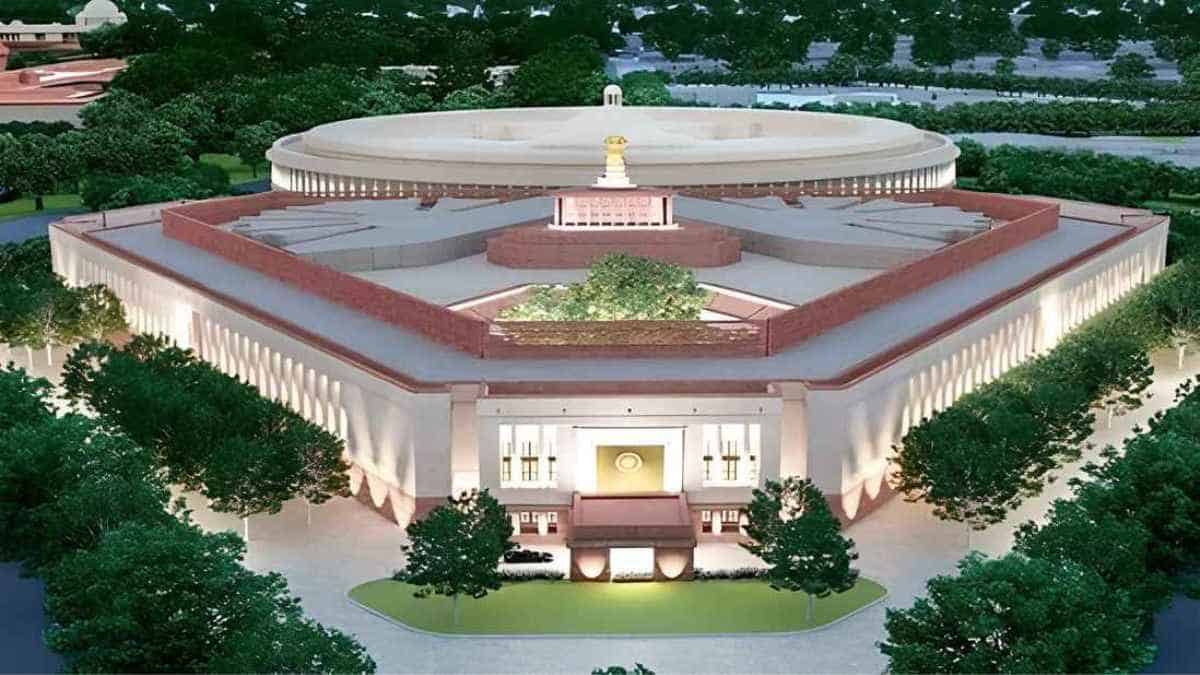
    New Parliament Building of India - Interesting Facts & Controversies

    Central idea

    The article discusses the inadequate representation of citizens by Members of Parliament in India, highlighting challenges of malapportionment and proposing solutions such as delimitation, state reorganization, and local governance empowerment. It emphasizes the need for a more representative and efficient electoral system to strengthen India’s democracy.

    What is Malapportionment?

    • Malapportionment refers to the unequal distribution of representation or political power among different constituencies or districts within a legislative body.
    • It occurs when the number of representatives assigned to a particular area is not proportionate to its population or voting strength.

    Key Highlights:

    • Representation Disparity: The article highlights the disproportionate representation of citizens by Members of Parliament (MPs) in India, compared to the U.S. and other countries.
    • Malapportionment Concerns: Malapportionment, favoring certain states, is discussed as a potential issue in India’s political system.
    • Delimitation Challenge: The potential consequences of delimitation, freezing the number of Lok Sabha seats until 2031, are examined, considering the changing demographics of states.
    • Federalism Promotion: The need for promoting federalism in India’s electoral system is emphasized to give states better representation and a platform to voice their interests.
    • Electoral System Reform: Suggestions for electoral system reforms include reconsidering the Rajya Sabha’s representation method and exploring proportional representation for more equitable outcomes.
    • State Reorganization Proposal: Proposes the idea of creating more states in India, addressing concerns about governance efficiency and democratic accountability.

    Challenges:

    • Representation Deficit: India faces a deficit in adequate representation at various levels of governance, impacting the ability to address critical issues and make effective laws.
    • Malapportionment Risks: The political system in India is at risk of malapportionment, especially with the growing political culture differences between the south, northeast, and the rest of India.
    • Consequences of Delimitation: Delimitation, while necessary, might lead to biases favoring certain regions and political outfits over others.

    Key data from article for mains value addition

    • An average Indian Member of Parliament (MP) represents approximately 2.5 million citizens.
    • In contrast, a U.S. House of Representatives member represents around 700,000 citizens.
    • India has around 4,126 Members of the Legislative Assembly.
    • Proposed increase in parliamentary seats to at least 848 to avoid any state losing seats during delimitation.
    • Potential rise in seats for certain states, e.g., Karnataka by 11%, and for northern states like Uttar Pradesh by 63%.
    • Suggests the potential creation of more states, moving from 29 to 50 or even 75 states.
    • Calls for a New State Reorganization Commission to evaluate the viability of new states.
    • The 2021 Census, delayed and likely to be conducted in 2024, with results potentially published by 2026, provides a window for delimitation.

    Key Phrases for improving your mains score:

    • Malapportionment in the U.S. Senate.
    • Disproportionate allocation of power.
    • Consequences of unleashing delimitation.
    • Historical form of delimitation.
    • Fiscal impact of delimitation on future transfers to States.
    • Promotion of federalism.
    • Electoral system reforms.
    • Proportional representation consideration.

    Analysis:

    • Representation Deficit Impact: Limited representation in India’s democratic setup is identified as a default preference, impacting the effectiveness of governance.
    • Malapportionment Dynamics: India’s heterogeneous political system raises concerns about the potential bias in favor of certain political outfits due to malapportionment.
    • Delimitation Challenges: Delimitation is seen as a potential solution but must be approached cautiously to minimize deleterious consequences.

    Way Forward:

    • Increase in Parliamentary Seats: Proposes a significant increase in the number of seats in Parliament to enhance democratic representation ratios.
    • Consideration Beyond Population: Delimitation should consider factors like geographical determinism, economic productivity, linguistic history, and fairness, not solely based on population.
    • State Reorganization Commission: Suggests the creation of a new State Reorganization Commission to evaluate the socio-economic and administrative viability of potential new states.
    • Empowerment of Local Governance: Advocates for direct elections of mayors in urban areas with enhanced decision-making powers, promoting efficiency and accountability.
    • Focus on Local Democratic Representation: Enhancing local democratic representation is seen as a crucial step to strengthen India’s democracy.

    In essence, the article emphasizes the need for a more representative and efficient electoral system in India, advocating for reforms in delimitation, federalism promotion, state reorganization, and empowerment of local governance.

  • Ethics, parliamentary conduct and the Indian MP

    parliamentary conduct

    Central idea

    The Lok Sabha Ethics Committee is checking if Mahua Moitra took money for asking questions, mixing parliamentary rules with possible law-breaking. Without a clear definition of ‘unethical conduct,’ it shows the challenge of balancing parliamentary norms and legal issues. The case highlights the complex process of handling allegations of misconduct among MPs.

    Key Highlights:

    • Mahua Moitra, a Trinamool Congress MP, faces proceedings from the Lok Sabha Ethics Committee over allegations of receiving money for posing questions in Parliament.
    • Accepting money for parliamentary work is considered a breach of privilege and contempt of the House.
    • Past instances include expulsion of MPs found guilty of accepting money for putting up questions, emphasizing the seriousness of such charges.

    Challenges:

    • Lack of clear definitions for ‘unethical conduct’ places the evaluation of MPs’ actions on the Ethics Committee’s discretion.
    • The term ‘unethical conduct’ remains undefined, and decisions rely on the committee’s judgment.
    • Cases of misconduct, misuse of privileges, and personal indiscretions fall under the purview of the Ethics Committee.

    Concerns:

    • The Ethics Committee examines cases of moral lapses by MPs, ranging from personal misconduct to misuse of official privileges.
    • Legal implications of accepting illegal gratification for parliamentary work might involve criminal investigations, separate from parliamentary proceedings.
    • The scope of investigation by parliamentary committees differs from judicial probes, and evidence evaluation is based on the preponderance of probabilities.


    Prelims focus


    Establishment: Formed in 2000.

    Mandate: Examines complaints related to unethical conduct of MPs.

    Responsibilities: Investigates complaints, recommends action, and formulates a code of conduct.

    Scope: Focuses on behavior that may not have a clear definition, leaving it to the committee’s discretion.

    Decision Authority: Decides whether specific acts are unethical or not.


    Analysis:

    • Past cases include MPs found guilty of unethical conduct, such as bringing companions under false pretenses on official tours.
    • Serious cases of misconduct, violating laws like the Passports Act, are often dealt with by the Committee of Privileges or special committees, not the Ethics Committee.
    • Investigative methods include examining written documents, oral testimonies, expert depositions, and findings are based on a common-sense approach.

    Key Data:

    • The Ethics Committee was established in 2000 to examine complaints related to the unethical conduct of MPs and recommend actions.
    • MPs facing expulsion due to misconduct, such as accepting money for parliamentary work, may still face criminal charges under the Prevention of Corruption Act.

    Key Terms for mains value addition:

    • Breach of privilege and contempt of the House.
    • Unethical conduct, moral lapses, and misuse of privileges.
    • Committee of Privileges, special committees, and the Ethics Committee.
    • Article 105 of the Constitution grants MPs the freedom to speak without disclosing their information sources.

    Way Forward:

    • The Ethics Committee’s role in probing MPs’ conduct necessitates a balance between parliamentary discipline and legal considerations.
    • Clarity in defining ‘unethical conduct’ and guidelines for online submission of questions could enhance transparency.
    • Recognizing the distinction between parliamentary discipline and criminal investigations in handling serious allegations against MPs.