💥Mains Ready By December. Smash Mains & Smash PYQ Admissions Open

Subject: Global Groupings and Conventions

Important International institutions, agencies and fora- their structure, mandate.

  • [pib] India re-elected to Part II of ICAO Council

    Why in the News?

    During the 42nd International Civil Aviation Organization (ICAO) Assembly in Montreal, India was re-elected to Part II of the ICAO Council.

    About the International Civil Aviation Organization (ICAO):

    • Overview: Specialized UN agency created in 1944 through the Chicago Convention (signed 7 December 1944).
    • Headquarters: Montreal, Canada; Membership: 193 states (virtually every UN member).
    • Objectives: Ensure safe and orderly growth of international civil aviation; Standardize aviation rules and regulations across nations.
    • Functions:

      • Formulates Standards and Recommended Practices (SARPs) for global aviation.
      • Promotes air safety, security, efficiency, and environmental protection.
      • Resolves aviation disputes between states.
      • Monitors compliance with international aviation norms.
      • Coordinates global air traffic management and accident investigation standards.
    • Structure:

      • Assembly: Sovereign body, meets every 3 years, includes all 193 members.
      • Secretariat: Headed by Secretary-General.
      • Council: 36 elected members serving 3-year terms; key decision-making body.
      • Bureaus: Air Navigation, Air Transport, Technical Co-operation, Legal, Administration & Services.

    ICAO and India:

    • Membership: Founder member since 1944, uninterrupted presence on ICAO Council for 81 years.
    • Nodal Agency: Directorate General of Civil Aviation (DGCA).
    • Performance: India rated above global average for airworthiness in 2022 ICAO audit.
    • Contributions: Active in policy development, international standards, harmonized and sustainable aviation frameworks.
    • Aviation Growth: One of the fastest-growing markets globally, attracting investments in aircraft manufacturing, MRO (Maintenance, Repair & Overhaul), and skill development.
    • Cultural Role: India hosts International Civil Aviation Day annually (first observed 1994; UN recognition 1996).

    India’s Re-Election to ICAO Council (2025–2028):

    • Significance: Elected to Part II of ICAO Council (states making largest contribution to civil air navigation facilities); India positioned itself as a global aviation hub.
    • Priorities for 2025–2028 Term:
      • Strengthening aviation safety, security, and sustainability.
      • Promoting equitable growth in air connectivity.
      • Advancing technology and innovation in aviation.
      • Supporting ICAO’s “No Country Left Behind” initiative.
  • [30th September 2025] The Hindu Op-ed: SSTC is more than a diplomatic phrase

    PYQ Relevance

    [UPSC 2021] If the last few decades were of Asia’s growth story, the next few are expected to be of Africa’s.” In the light of this statement, examine India’s influence in Africa in recent years.

    Linkage: South-South Cooperation is the foundation of India–Africa engagement. India’s role in Africa through capacity building (ITEC), concessional credit, food security projects, and the India-UN Development Partnership Fund reflects SSTC principles of mutual respect, replicability, and shared growth, positioning India as a partner in Africa’s expected rise.

    Mentor’s Comment

    With only a fraction of time left to achieve the 2030 Sustainable Development Goals, the global community is exploring new models of partnership. South-South and Triangular Cooperation (SSTC) has emerged as a vital mechanism, providing frugal, replicable, and contextually relevant solutions. India, rooted in the philosophy of Vasudhaiva Kutumbakam, has positioned itself as a leader in this space, particularly in food security, digital transformation, and inclusive growth. This article unpacks the significance of SSTC, India’s role, and why this cooperative model is central to a more equitable world order.

    Introduction

    The United Nations Day for South-South and Triangular Cooperation (September 12) commemorates the 1978 Buenos Aires Plan of Action (BAPA), which laid the foundation for solidarity-based cooperation among developing nations. Far from being a mere diplomatic phrase, SSTC today is a lifeline for billions, offering cost-effective, innovative, and scalable models of development at a time when traditional aid flows are shrinking. India, with its rich developmental experience and global outreach, is shaping the SSTC discourse through initiatives like the India-UN Development Partnership Fund, Voice of the Global South Summits, and collaboration with the World Food Programme (WFP).

    Why in the News?

    SSTC has gained renewed significance as the world approaches the 2030 deadline for SDGs with urgency, amid declining international aid and mounting challenges like climate change, conflict, and inequality. For the first time, SSTC is being recognised not merely as supplemental but as a core pathway to equitable and sustainable global development. India’s leadership — from digital public infrastructure exports to food system innovations like Grain ATMs and rice fortification, has transformed it into a hub of replicable global solutions. The 2025 UN Day theme, “New Opportunities and Innovation through SSTC”, underscores this transition, making the issue both timely and transformative.

    India’s Role and Philosophy of Cooperation

    1. Vasudhaiva Kutumbakam: India’s developmental philosophy sees the world as one family, placing emphasis on sovereignty, equality, and mutual respect.
    2. Transition to food surplus: Once a food-deficit nation, India now runs one of the world’s largest food safety nets, offering models for the Global South.
    3. Global leadership: From hosting the Voice of the Global South Summits to securing AU’s membership in the G20, India promotes inclusivity in global governance.

    What is the Relevance of SSTC Today?

    1. Cost-effectiveness: SSTC provides better returns on investment at a time when funding for humanitarian and development sectors is shrinking.
    2. Replicability and relevance: Local innovations like India’s food distribution optimisation or UPI have global application.
    3. Solidarity-based model: Unlike traditional aid, SSTC is grounded in mutual respect and shared learning, crucial for trust-building in the Global South.

    How Has India Contributed to SSTC?

    1. Institutional frameworks: India set up the Development Partnership Administration in its Foreign Ministry to coordinate development partnerships.
    2. Capacity-building: Through the Indian Technical and Economic Cooperation (ITEC) programme, India has trained professionals in 160+ countries.
    3. India-UN Development Partnership Fund: Established in 2017, it has financed 75 transformative projects across 56 developing countries, especially LDCs and SIDS.
    4. Digital diplomacy: Export of Aadhaar, UPI, and digital infrastructure models as low-cost, inclusive tools.

    What Role Has the India-WFP Partnership Played?

    1. Testing ground for innovations: Over 60 years, India served as a laboratory for WFP to pilot globally relevant solutions.
    2. Grain ATMs (Annapurti): Automated grain dispensing machines ensuring efficient access to food.
    3. Supply chain optimisation: Strengthened the PDS through digitalisation.
    4. Women-led Take-Home Ration programme: Empowering communities while tackling malnutrition.
    5. Rice fortification: India’s national initiative to enhance nutrition replicated in countries like Nepal and Laos.

    How Does Triangular Cooperation Add Value?

    1. Linking South-South with North-South: Brings in traditional donors, amplifying resources and best practices.
    2. Inclusive partnerships: Extends beyond governments to involve civil society, private sector, and grassroots communities.
    3. UN Fund contributions: Over the last three decades, 47 governments have funded projects in 70+ countries, benefiting people in 155 nations.

    Conclusion

    SSTC embodies a renewed spirit of partnership, rooted in equality, mutual respect, and innovation. For countries of the Global South, it is not merely a diplomatic mechanism but a pathway to resilience and empowerment. India’s leadership in digital public goods, food security, and inclusive governance has given SSTC tangible models of success. As the 2030 deadline looms, scaling such innovations and ensuring triangular cooperation will be crucial for achieving a sustainable and equitable world order.
  • What is Wassenaar Arrangement?

    Why in the News?

    Protests erupted over Microsoft after allegations that its cloud services (Azure) are aiding Israeli military operations, harming Palestinian civilians, raising concerns under the Wassenaar Arrangement.

    What is Wassenaar Arrangement?

    • Establishment: Created in 1996 as a successor to the Cold War-era COCOM (Coordinating Committee for Multilateral Export Controls).
    • Name Origin: Named after Wassenaar, a suburb of The Hague, where the agreement was reached in 1995.
    • Headquarters: Vienna, Austria.
    • Membership: 42 countries; India joined in 2017. Includes most NATO/EU states and all UNSC P5 except China.
    • Objective: Promote transparency, responsibility, and control in transfers of conventional arms and dual-use technologies.
    • Mechanism: Works through voluntary information-sharing, export license denials, and notifications on controlled transfers.
    • Control Lists:
      • Munitions List: Covers conventional arms including tanks, combat aircraft, UAVs, helicopters, missiles, small arms.
      • Dual-Use List: Covers sensitive technologies and equipment with both civilian and military applications.

    Wassenaar Arrangement and Software:

    • Initial Scope: Designed for hardware exports (equipment, chips, devices).
    • 2013 Expansion: Included “intrusion software” that can bypass or defeat cyber protections.
    • Challenges:
      • Cloud/SaaS blurs what counts as an “export.”
      • Inconsistent interpretations among members for software transfer and access.
      • Grey areas: defensive research exemptions, cross-border data flows, and digital surveillance.
    • Gap: Rapid rise of AI, cloud computing, and biometrics has outpaced WA’s traditional framework.
    • Reform Needs:

      • Broaden lists to explicitly cover cloud, AI, surveillance, and biometric systems.
      • Recognize remote access as exports.
      • Establish technical committees for frequent updates and agile controls.

    Wassenaar Arrangement and India:

    • Membership (2017): Enhanced India’s profile in non-proliferation and arms control, bolstering its case for entry into the Nuclear Suppliers Group (NSG).
    • Export Controls: Aligns India’s SCOMET list (Special Chemicals, Organisms, Materials, Equipment, and Technologies) with global norms.
    • Technology Access: Opens pathways to sensitive dual-use technologies vital for space, defence, and digital industries.
    • Diplomacy: Supports India’s counter-terrorism efforts, including the No Money for Terrorism (NMFT) initiative.
    [UPSC 2011] Recently, the USA decided to support India’s membership in multilateral export control regimes called the “Australia Group” and the “Wassenaar Arrangement”. What is the difference between them?

    1. The Australia Group is an informal arrangement which aims to allow exporting countries to minimize the risk of assisting chemical and biological weapons proliferation, whereas the Wassenaar- Arrangement is a formal group under the OECD holding identical objectives.

    2. The Australia Group comprises predominantly of Asian, African, and North American countries, whereas the member countries of Wassenaar Arrangement are predominantly from the European Union and American continents.

    Which of the statements given above is/are correct?

    Options: (a) 1 only (b) 2 only (c) Both 1 and 2 (d) Neither 1 nor 2 *


  • [pib] Forum for India-Pacific Islands Cooperation (FIPIC)-III Summit

    Why in the News?

    India recently hosted a meeting of foreign ministers of Forum for India-Pacific Islands Cooperation (FIPIC) in New York.

    About Forum for India–Pacific Islands Cooperation (FIPIC):

    • Launch: Established in 2014 during PM Narendra Modi’s visit to Fiji under the Act East Policy.
    • Members: Comprises 14 Pacific Island Countries (PICs) i.e Cook Islands, Fiji, Kiribati, Marshall Islands, Micronesia, Nauru, Niue, Palau, Papua New Guinea, Samoa, Solomon Islands, Tonga, Tuvalu, and Vanuatu.
    • Objectives: Strengthen cooperation in trade, investment, health, agriculture, renewable energy, disaster management, digital connectivity, and climate change adaptation.
    • Summits Held:

      • Suva (2014)
      • Jaipur (2015)
      • Port Moresby (2023)
    • Key Initiatives: $1 million climate fund, Pan-Pacific Islands e-network, visa on arrival, cooperation in space technology, and training of diplomats.
    • Trade: Current bilateral trade is about $300 million annually (exports $200 million, imports $100 million).

    Strategic Importance of FIPIC:

    • Indo-Pacific Outreach: Expands India’s role in maritime governance and regional security.
    • Countering China: Acts as a soft-power tool to balance China’s influence in the Pacific.
    • Maritime Leverage: PICs control vast Exclusive Economic Zones (EEZs) crucial for shipping lanes, fisheries, and seabed resources.
    • Climate Diplomacy: Strengthens India’s leadership with climate-vulnerable PICs under South-South cooperation.
    • Global Forums: PICs often vote as a bloc in UN, WTO, and other multilateral institutions, enhancing India’s diplomatic weight.
  • WTO Agreement on Fisheries Subsidies

    Why in the News?

    The World Trade Organization (WTO) Agreement on Fisheries Subsidies has entered into force on 15 September 2025, three years after adoption in June 2022.

    What is the WTO Agreement on Fisheries Subsidies?

    • Nature: First WTO treaty centred on environmental sustainability, designed to reduce harmful subsidies that drive illegal, unreported, and unregulated (IUU) fishing and overfishing.
    • Core Prohibitions:
      • Subsidies for IUU fishing vessels or operators.
      • Subsidies for fishing in overfished stocks, unless linked to recovery plans.
      • Subsidies for high-seas fishing in areas outside coastal state jurisdiction or Regional Fisheries Management Organizations.
    • Transparency: Members must provide detailed reports on fish stocks, fleets, catch volumes, and subsidies.
    • Transition Period: Two years allowed for developing countries and least developed countries before full implementation.
    • Phased Approach: Called Fish One, to be followed by Fish Two covering overcapacity and fleet subsidies.
    • Global Significance: Contributes to Sustainable Development Goal 14.6, which seeks elimination of harmful subsidies to protect global fish stocks.

    India and this Agreement: 

    • Position: India welcomed the treaty, noting it is one of the lowest fisheries subsidizers despite its large fishing community.
    • Equity Argument: Urged that historic subsidizers and industrial fishing nations take greater obligations, based on polluter pays principle and common but differentiated responsibilities (CBDR).
    • Sector Context: India’s fisheries are dominated by millions of small-scale, traditional fishers dependent on coastal resources, requiring fair treatment.
    • Benefits for India:
      • Curbing IUU fishing by foreign industrial fleets, protecting coastal livelihoods.
      • Allowing space for stock-rebuilding subsidies tied to sustainability.
      • Ensuring fair competition for Indian traditional fishers in global trade.
    [UPSC 2015] The terms ‘Agreement on Agriculture’, ‘Agreement on the application of Sanitary and Phytosanitary Measures’ and ‘Peace Clause’ appear in the news frequently in the context of the affairs of the

    Options: (a) Food and Agricultural Organization (b) United Nations Framework Conference on Climate Change (c) World Trade Organization* (d) United Nations Environment Programme


  • India secures International Seabed Authority (ISA) exploration contract

    Why in the News?

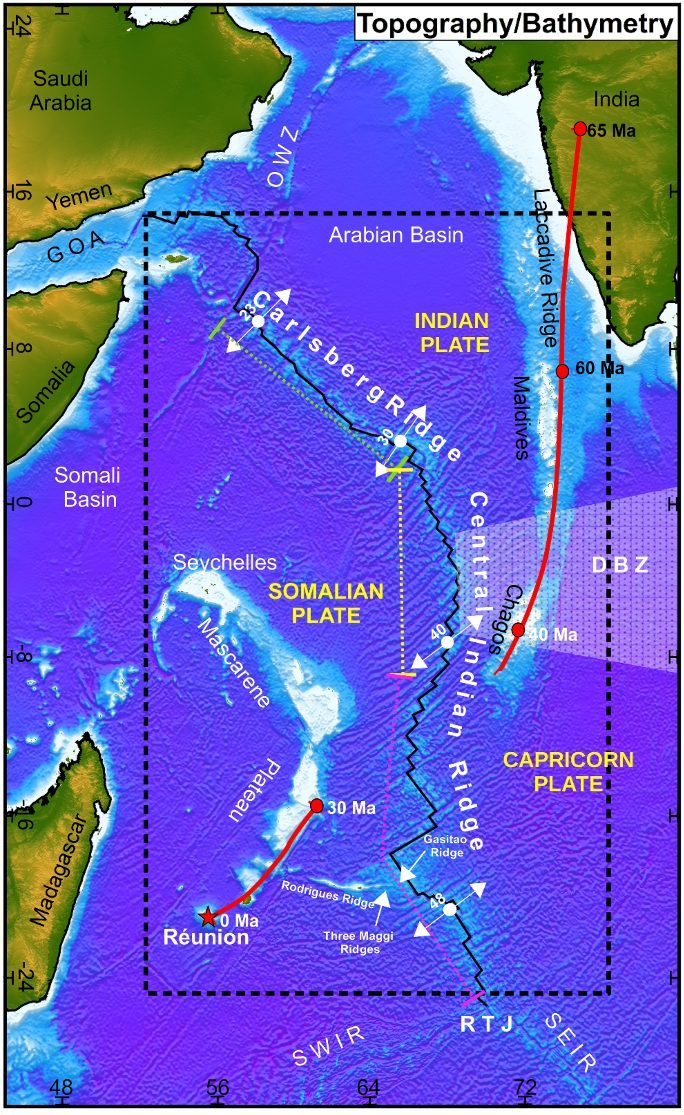
    India has secured the world’s first International Seabed Authority (ISA) licence to explore polymetallic sulphur nodules in the Carlsberg Ridge, northwest Indian Ocean.

    India’s Engagement with ISA:

    • Exploration Contracts:
      1. 2002 – Polymetallic nodules, Central Indian Ocean Basin (valid till 2027).
      2. 2016 – Polymetallic sulphides, Indian Ocean Ridge (valid till 2031).
      3. 2025 – First global licence for polymetallic sulphides in Carlsberg Ridge.
    • Pending Application: Afanasy-Nikitin Seamount (ANS), Central Indian Ocean.
    • Strategic Goals:
      • Secure access to critical minerals (nickel, cobalt, manganese, copper).
      • Balance energy transition needs with environmental safeguards.
      • Counter competing claims (e.g., China in the Indian Ocean).
    • Role in ISA: Active participant in Mining Code negotiations; pushes for sustainable, equitable exploration.

    About International Seabed Authority (ISA):

    • Establishment: Created under UNCLOS (1982) and the 1994 Agreement on Part XI; Based in Kingston, Jamaica.
    • Membership: 168 States (including India) + EU; the US is NOT a member or party to UNCLOS.
    • Mandate:
      • Regulate exploration/exploitation of minerals in the Area (beyond national jurisdictions, ~54% of oceans).
      • Ensure benefits for all humankind.
      • Protect marine environment from mining impacts.
      • Promote marine scientific research.
    • Regulatory Framework: Guided by the Mining Code (licensing, EIA, sustainability standards).
    • Functions:
      • Grants 15-year exploration contracts (extendable).
      • Monitors compliance of contractors.
      • Balances resource use with environmental safeguards.

    About Carlsberg Ridge:

    • Location: A mid-ocean ridge in the northwest Indian Ocean (Arabian Sea region).
    • Extent: Covers ~3,00,000 sq. km, stretching from Rodrigues Island (SW Indian Ocean) to the Owen fracture zone.
    • Tectonic Setting: Boundary between the Indian Plate and the Arabian Plate.
    • Critical Minerals: Deposits contain manganese, cobalt, nickel, copper, vital for clean energy, electronics, and defence.


    [UPSC 2021] Consider the following statements:

    1. The Global Ocean Commission grants licenses for seabed exploration and mining in international waters.

    2. India has received licenses for seabed mineral exploration in international waters.

    3. ‘Rare earth minerals’ are present on the seafloor in international waters.

    Which of the statements given above are correct?

    Options: (a) 1 and 2 only (b) 2 and 3 only* (c) 1 and 3 only (d) 1, 2, and 3


  • [pib] Universal Postal Union (UPU)

    Why in the News?

    At the 28th Universal Postal Congress in Dubai (2025), the Union Minister for Communications has unveiled the Unified Payments Interface (UPI)- UPU Integration Project.

    About Universal Postal Union (UPU):

    • Overview: A UN specialized agency and the primary forum for international postal cooperation.
    • Establishment: Created by the Treaty of Bern (1874). It is the second oldest international organization (after CCNR, 1815).
    • Headquarters: Bern, Switzerland.
    • Membership:

      • 192 member countries (as of 2025).
      • Any UN member state can join automatically.
      • Non-UN states may join with two-thirds approval from members.
      • India is a member since 1876.
    • Structure:

      • Congress: Supreme authority meets every 4 years.
      • Council of Administration (CA): Supervises activities between Congress sessions; studies regulatory and administrative issues.
      • Postal Operations Council (POC): Technical/operational body of 48 elected members.
      • International Bureau: Secretariat providing logistical and technical support.
    • Functions:

      • Coordinates postal policies across nations.
      • Sets rules for international mail exchanges.
      • Makes recommendations to boost global mail, parcel, and financial services.
      • Acts as advisory, mediator, and technical support agency for postal systems.

    Significance of the UPI–UPU Integration:

    • For India:

      • Strengthens India’s global leadership in digital payments innovation.
      • Positions India as a hub for low-cost remittance solutions.
    • For Global Postal System:

      • Adds digital financial services to the traditional postal network, enhancing its relevance in the digital era.
      • Strengthens India–UPU cooperation and demonstrates India’s ability to combine fintech innovation with global multilateral platforms.
    • For Migrants:

      • Enables fast, affordable, and secure cross-border remittances through post offices.
      • Reduces dependence on high-cost traditional remittance channels.
    [UPSC 2004] Match List I with List II and select the correct answer using the codes given below.

    List I (Agency)

    (A) United Nations Development Programme (UNDP) (B) United Nations Environment Programme (UNEP) (C) United Nations Industrial Development Organization (UNIDO) (D) Universal Postal Union (DPU)

    List II (Headquarters) 1. Nairobi 2. Vienna 3. Berne 4. New York

    Options: (a) 2 3 4 1 (b) 4 1 2 3 (c) 2 1 4 3 (d) 4 3 2 1*


  • US to update MTCR export control policies 

    Why in the News?

    The United States is preparing to reinterpret the 1987 Missile Technology Control Regime (MTCR) to expand exports of heavy attack drones, like the MQ-9 Reaper, to partner countries.

    About Missile Technology Control Regime (MTCR):

    • Formation: Established in 1987 by the G-7 countries (Canada, France, Germany, Italy, Japan, UK, USA) to prevent the spread of missiles and UAVs capable of delivering nuclear, chemical, or biological weapons.
    • Membership: Today, 35 countries are members; India joined in 2016.
    • Nature: Not a treaty but a voluntary political understanding where members implement export control guidelines.
    • Coverage:

      • Category I items: Complete missile/UAV systems with ≥500 kg payload and ≥300 km range, major subsystems, and production facilities (exports presumed denied).
      • Category II items: Less sensitive or dual-use components/technologies; exports subject to national discretion under strict licensing.
    • Purpose: To limit missile proliferation while allowing peaceful space and aviation cooperation.

    About the Recent Policy Change on MTCR:

    • US Reinterpretation (2025):

      • Large unmanned aerial vehicles (UAVs) like the MQ-9 Reaper will be treated as “aircraft” instead of missile systems.
      • This removes the “strong presumption of denial” that earlier restricted their export under MTCR.
    • Objective: To make the US the leading drone supplier, countering competition from China, Israel, and Turkiye.
    • Implications:

      • Opens the door for Foreign Military Sales (FMS) of heavy attack drones to partners like Saudi Arabia, India, and Indo-Pacific allies.
      • Still subject to US reviews for regional stability, end-use monitoring, tech security, and human rights compliance.
      • Facilitates India–US space and defence cooperation, lowering barriers for joint ventures and technology partnerships.
    [UPSC 2022] Consider the following:

    1. Asian Infrastructure Investment Bank 2. Missile Technology Control Regime 3. Shanghai Cooperation Organisation

    India is a member of which of the above?

    Options: (a) 1 and 2 only (b) 3 only (c) 2 and 3 only (d) 1, 2 and 3


  • Unmistakable shift (India signalled a change in foreign policy stance at SCO Summit)

    Introduction

    India’s foreign policy has historically oscillated between balancing great power politics and safeguarding its strategic autonomy. The 2025 SCO Summit in China witnessed a landmark moment: Prime Minister Narendra Modi’s first bilateral engagement with Chinese President Xi Jinping since the 2020 military standoff. The visit not only revived dormant dialogues but also underscored India’s shifting posture in a multipolar world marked by U.S. sanctions, instability in West Asia, and contestations within Eurasia.

    Significance of Indian Prime Minister’s Visit to China

    1. Seven-year gap: PM Modi had not travelled to China since 2017, making this a major diplomatic breakthrough.
    2. First bilateral since standoff: Meeting with Xi Jinping was the first since the 2020 military confrontation along the LAC.
    3. Three-year SCO absence: Modi’s return to SCO after three years shows India’s willingness to re-engage with a grouping seen as anti-Western.
    4. Optics of bonhomie: Images with Xi and Putin evoked memories of the inactive Russia-India-China trilateral, signalling recalibration.

    Revival of India-China Bilateral Engagement

    1. Troop disengagement: Both leaders endorsed the normalisation process initiated in October 2024.
    2. Boundary resolution: Agreed to fast-track talks between Special Representatives.
    3. Connectivity revival: Resumption of direct flights and visa facilitation announced.
    4. Economic ties: Leaders stressed on building trade relations to stabilise world commerce.
    5. Mutual trust rhetoric: Modi stressed ties based on “mutual trust, respect and sensitivity”, while Xi used the metaphor of “Dragon and Elephant” coming together.

    External Drivers of India’s Foreign Policy Recalibration

    1. U.S. tariffs and sanctions: American restrictions and mistrust of the Trump administration nudged India to diversify partnerships.
    2. Strategic compulsion: India managed to side-step concerns like China’s support to Pakistan during Operation Sindoor, UNSC/NSG opposition, and shielding of terrorists.
    3. Multipolar optics: India’s engagement at SCO signals balancing between West and Eurasia.

    Key Outcomes of the 2025 SCO Summit

    1. Tianjin declaration: Strong language against cross-border terrorism, including condemnation of the Pahalgam attack (India) and Balochistan attacks (Pakistan).
    2. West Asian crisis: SCO united on humanitarian crisis in Gaza and condemned U.S.-Israeli strikes on Iran.
    3. China’s push: Xi proposed an SCO Development Bank.
    4. India’s push: Modi proposed a Civilisational Dialogue among SCO members.
    5. India’s reservation: Continued opposition to China’s Belt and Road Initiative (BRI) paragraph.

    Missed Diplomatic Opportunities at the Summit

    1. Skipped SCO Plus: Indian Prime Minister did not attend the extended “SCO Plus” Summit, limiting engagement with neighbourhood and Global South leaders.
    2. Regional bonding gap: While optics were strong, substantive regional outreach was diluted.

    Conclusion

    The SCO Summit underscored India’s willingness to recalibrate its foreign policy in a changing world order. Modi’s visit after years of distance marked a thaw with China, greater Eurasian engagement, and assertion of India’s independent foreign policy despite U.S. pressures. However, missed opportunities in broader outreach and unresolved trust deficits with China remain cautionary notes.

    Value Addition

    Shanghai Cooperation Organisation (SCO)

    Historical Background

    1. Successor to: SCO is the successor to the Shanghai Five, formed in 1996 between China, Kazakhstan, Kyrgyzstan, Russia, and Tajikistan.
    2. Formation: Established in 2001 in Shanghai by China, Russia, Kazakhstan, Kyrgyzstan, Tajikistan, and Uzbekistan.
    3. Expansion: India and Pakistan joined as full members in 2017; Iran became a member in 2023.
    4. Observers & Dialogue Partners: Afghanistan, Belarus, Mongolia, and others engage as observers; several countries (e.g., Turkey, Sri Lanka) are dialogue partners.

    Strategic Importance of SCO for India

    1. Geopolitical Balancing: Provides a platform to engage with China and Russia while maintaining ties with the West (Quad, U.S.).
    2. Regional Security: Key forum for counter-terrorism cooperation, especially in light of cross-border terrorism and instability in Afghanistan.
    3. Eurasian Connectivity: Enhances India’s presence in Central Asia, a region rich in energy resources.
    4. Multipolar World Order: Strengthens India’s narrative of strategic autonomy and non-alignment in new form.

    Key SCO Mechanisms

    1. Regional Anti-Terrorist Structure (RATS): Headquartered in Tashkent, focuses on counter-terrorism intelligence sharing.
    2. Economic Cooperation: Proposals for SCO Development Bank, regional trade, and connectivity projects (though India resists BRI-linked initiatives).
    3. Cultural and Civilisational Dialogues: Shared platforms for people-to-people exchanges, education, and cultural diplomacy.

    India’s Challenges within SCO

    1. China Factor: Difficult to expand cooperation given border disputes and China’s Pakistan tilt.
    2. Pakistan Factor: Its membership often leads to diplomatic blockages on issues like terrorism.
    3. BRI Opposition: India consistently refuses to endorse the Belt and Road Initiative, creating friction.
    4. Russia-China Axis: Russia’s growing dependence on China may dilute India’s influence in the bloc.

    Contemporary Relevance

    1. Energy and Trade: Central Asia is crucial for energy diversification; SCO provides a gateway.
    2. Geopolitical Flux: With U.S.-China rivalry and West Asia instability, SCO’s role in Eurasian stability gains importance.
    3. Soft Power Opportunity: India uses SCO to promote civilisational dialogue, yoga, Ayurveda, and cultural diplomacy.

    PYQ Relevance

    [UPSC 2021] Critically examine the aims and objectives of SCO. What importance does it hold for India?

    Linkage: The article directly illustrates the objectives of SCO—counter-terrorism (Tianjin declaration), multipolarity, and Eurasian stability. It highlights India’s balancing act—reviving ties with China, opposing BRI, and pushing for civilisational dialogue. Thus, the SCO Summit outcomes reflect both the scope and constraints of SCO’s importance for India in strategic, economic, and security domains.

  • Integrated Food Security Phase Classification (IPC) and Famine Declaration

    Why in the News?

    The United Nations has officially declared a famine in Gaza based on an Integrated Food Security Phase Classification (IPC) panel assessment.

    About Integrated Food Security Phase Classification (IPC):

    • What It Is: A global standard tool to assess and classify the severity of food insecurity.
    • Established: In 2004 during the Somalia food crisis by FEWS NET (Famine Early Warning Systems Network) and partners.
    • Coordination: Led by the UN Food and Agriculture Organization (FAO).
    • Purpose: Supports early warning, evidence-based decision-making, and coordinated response by governments, UN agencies, NGOs, and donors.
    • Partnership Model: Combines efforts of UN bodies, NGOs, academic institutions, and national governments.

    Key Features of the IPC:

    • Five-Phase Classification System:
      • Phase 1: Minimal
      • Phase 2: Stressed
      • Phase 3: Crisis
      • Phase 4: Emergency
      • Phase 5: Catastrophe/Famine
    • Methodology:
      • Uses convergence of evidence from food access, livelihoods, nutrition, and mortality.
      • Requires technical consensus among analysts for transparency and accuracy.
      • Allows real-time assessments and 6-month forecasts to support timely action.

    What is Famine and How is it Declared?

    • Definition: IPC Phase 5 – the most extreme level of food insecurity.
    • Criteria (All Must Be Met):
      • At least 20% of households face extreme food gaps.
      • At least 30% of children under five suffer acute malnutrition (wasting).
      • Death rate: 2 adults or 4 children per 10,000 people per day.
    • Declaration: Made by UN agencies, national governments, or authorized global bodies.
    • Purpose of Declaration:
      • Mobilize international aid and emergency operations.
      • Trigger food, health, and logistics support.
      • Raise global awareness and funding for urgent interventions.
    • Past Declarations:  Somalia (2011), South Sudan (2017, 2020), Darfur, Sudan (2024)
    [UPSC 2023] Which of the following countries has been suffering from decades of civil strife and food shortages and was in news in the recent past for its very severe famine?

    Options: (a) Angola (b) Costa Rica (c) Ecuador (d) Somalia*