💥Mains Ready By December. Smash Mains & Smash PYQ Admissions Open

Subject: Global Groupings and Conventions

Important International institutions, agencies and fora- their structure, mandate.

  • What are the challenges with the High Seas Treaty

    Introduction

    The High Seas Treaty, formally known as the Biodiversity Beyond National Jurisdiction (BBNJ) agreement, establishes a legal framework to conserve and sustainably use marine biodiversity in areas outside national control. It covers nearly two-thirds of the ocean’s surface. Adopted under the UN Convention on the Law of the Sea (UNCLOS), 1982, it aims to address threats from climate change, overfishing, and pollution through tools like Marine Protected Areas (MPAs) and Environmental Impact Assessments (EIAs). Ratified by over 60 nations in 2024, it will come into effect in January 2026. This makes it one of the most comprehensive global conservation instruments after the Paris Agreement.

    Why in the News? 

    The High Seas Treaty being ratified by 60+ nations represents a historic step in ocean governance, a domain previously beyond formal protection. For the first time, the international community has agreed on a legally binding mechanism to preserve marine life that exists outside any country’s jurisdiction. This is strikingly different from the earlier regime under UNCLOS, which lacked clear provisions for protecting biodiversity.

    What is the High Seas Treaty About?

    1. Biodiversity Beyond National Jurisdiction (BBNJ): Creates an all-inclusive framework to conserve and manage marine biodiversity beyond national boundaries.
    2. Marine Genetic Resources (MGRs): Recognised as a common heritage of humankind, ensuring equitable benefit-sharing between nations.
    3. Area-Based Management Tools (ABMTs): Establishes Marine Protected Areas (MPAs) to safeguard biodiversity and improve climate resilience and food security.
    4. Environmental Impact Assessments (EIAs): Mandates prior assessment of projects with potential cross-border or cumulative ecological impact.
    5. Capacity Building and Technology Transfer: Facilitates scientific collaboration, especially for developing nations, combining modern science and indigenous knowledge.

    Major Challenges with the High Seas Treaty

    1. Uncertainty over Core Principles
      1. Common Heritage vs. Freedom of High Seas: The “common heritage” principle promotes equitable access and benefit-sharing, while “freedom of the high seas” allows unrestricted navigation and resource use.
      2. Partial Application: The treaty applies the “common heritage” principle only partially, especially for MGRs, reflecting a compromise rather than resolution.
      3. Result: Creates ambiguity in rights and responsibilities of states in exploration, research, and benefit distribution.
    2. Ambiguity in Marine Genetic Resources (MGRs) Governance
      1. Undefined Governance Mechanism: Earlier, no clear framework existed for using or sharing MGRs.
      2. Biopiracy Concerns: Developing nations fear exploitation by developed countries, who could monopolize genetic discoveries and profits.
      3. Equity Gap: The lack of clarity risks excluding Global South nations from scientific and commercial benefits.
    3. Implementation and Enforcement Gaps
      1. Jurisdictional Complexity: The high seas lie beyond national boundaries, making monitoring and enforcement difficult.
      2. Institutional Limitations: While UNCLOS provides a broad legal foundation, there’s no dedicated global enforcement body to ensure compliance.
      3. Dependence on Voluntary Reporting: Could weaken accountability, especially in regulating corporate activities.
    4. Financial and Technological Inequities
      1. Unequal Capabilities: Developing countries lack access to marine technologies for monitoring and sustainable use.
      2. Technology Transfer Gap: The treaty mandates capacity-building, but without specific funding mechanisms, commitments may remain rhetorical.
      3. Risk: Could widen the North-South divide in ocean research and benefit sharing.
    5. Balancing Conservation and Development
      1. Sustainable Use vs. Conservation: Striking a balance between environmental protection and economic opportunities (like deep-sea mining or biotechnology) remains contentious.
      2. Unclear Prioritization: Without clear hierarchy between ecological and developmental objectives, policy conflicts may persist.

    Conclusion

    The High Seas Treaty represents a landmark effort to bring order and justice to the global commons. Yet, the true test lies in resolving philosophical ambiguities and ensuring equitable implementation. Without robust funding, technology sharing, and accountability mechanisms, it risks becoming another well-intentioned but weak global accord. For India, aligning its Blue Economy strategy with the treaty’s framework will be key to ensuring both ecological and economic dividends.

    PYQ Relevance

    [UPSC 2022] Discuss global warming and mention its effects on the global climate. Explain the control measures to bring down the level of greenhouse gases which cause global warming, in the light of the Kyoto Protocol, 1997.

    Linkage: Both Kyoto Protocol and High Seas Treaty are UN-backed frameworks aimed at addressing global commons issues, air and ocean respectively.
  • [1st November 2025] The Hindu Op-ed: The case for a board of peace and sustainable security

    PYQ Relevance

    [UPSC 2024] Terrorism has become a significant threat to global peace and security. Evaluate the effectiveness of the United Nations Security Council’s Counter Terrorism Committee (CTC) and its associated bodies in addressing and mitigating this threat at the international level.

    Linkage: The BPSS proposal aligns with the recurring UPSC theme of UN reform and institutional effectiveness. It can serve as an additional point in answers evaluating the effectiveness of the UNSC and its bodies like the CTC.

    Mentor’s Comment

    The United Nations, despite its founding vision to preserve peace, faces a persistent structural crisis, peace agreements fail, transitions stall, and conflicts reignite. In this context, former Foreign Secretary Nirupama Rao’s proposal for a “Board of Peace and Sustainable Security (BPSS)” marks a profound call for institutional reform. This article dissects the argument, structure, and implications of this proposed board through a UPSC-relevant analytical framework.

    Introduction

    The UN Security Council (UNSC), envisioned to prevent conflict and sustain global peace, continues to struggle with institutional paralysis and outdated structures. Across continents, peace efforts collapse because international systems abandon political engagement too early.
    A new institutional vision, a Board of Peace and Sustainable Security (BPSS), is proposed to infuse continuity, coordination, and political strategy into global peace efforts.

    Why in the news?

    As the UN marks its 80th anniversary, its credibility is under intense scrutiny. While conflicts proliferate, peace agreements remain fragile and transitional mechanisms fail. The UNSC’s structural limitations, lack of political continuity, and inability to sustain long-term engagement make reform urgent. The proposed Board of Peace and Sustainable Security aims to fill this vacuum by institutionalising sustained political engagement before, during, and after conflict. This is significant because it represents one of the first major reform ideas that seeks to integrate peacekeeping with political strategy and regional cooperation, without challenging UNSC authority.

    A clearly defined institutional purpose

    1. Institutional void: The UNSC lacks sustained political engagement capacity. The BPSS would institutionalize political accompaniment beyond peace agreements.
    2. Complementary role: It would not replace or challenge the UNSC or Secretary-General but reinforce implementation and coordination.
    3. Mandate: Ensures continuity in peace efforts by reinforcing national and regional ownership of peace processes and reducing relapse into conflict.
    4. Scope: Works on reinforcing national capacities, coordinating peacekeeping with regional organizations, and ensuring peace agreements translate into durable political outcomes.

    Why is reform of the UN system urgent?

    1. Loss of continuity: Peacebuilding institutions within the UN lose momentum due to ad-hoc missions. BPSS seeks to sustain political engagement beyond immediate crises.
    2. Structural inertia: Waiting for comprehensive UNSC reform delays urgent action; thus, pragmatic institutional innovation is required within existing frameworks.
    3. Authority for change: Under Article 22, the UN General Assembly already holds power to create subsidiary bodies like BPSS without requiring Charter amendments.
    4. Reform from within: Instead of replacing the UNSC, BPSS enhances coordination, ensuring peace agreements transition into stable governance systems.

    What will make the Board credible and representative

    1. Rotational membership: Around two dozen member states, elected for fixed terms, representing all regions (Africa, Asia, Europe, Latin America, Caribbean, West Asia).
    2. Avoiding elite capture: The body should represent inclusivity, not hierarchy, ensuring small and middle powers have a say.
    3. Regional linkages: Works with regional hubs (Addis Ababa, Jakarta, Brasilia, New York) to ensure peace processes reflect local ownership.
    4. Consultative participation: Civil society and regional organizations will have a structured role in deliberations, enhancing legitimacy and field coordination.

    How will the BPSS function in practice?

    1. Style of functioning: Not another bureaucratic forum, but a continuing engagement body ensuring follow-through once UN missions end.
    2. Operational continuity: Prevents premature withdrawal of peacekeeping efforts; sustains political engagement through periodic review and coordination.
    3. Integration: Works in coordination with the Secretary-General, Peacebuilding Commission, and UNSC to align peacekeeping with political strategies.
    4. Focus on youth and fragile states: Ensures peace presence remains where political institutions are nascent.
    5. Conflict prevention: Reduces relapse risk by merging early-warning with long-term political strategies and governance support.

    How will the BPSS strengthen sustainable security?

    1. Beyond short-term peacekeeping: Moves from reactive missions to proactive stability frameworks.
    2. Sustainable security concept: Integrates security, governance, and development rather than treating them in silos.
    3. Inclusive approach: Aligns local, regional, and global stakeholders, reflecting the interconnected nature of modern conflicts.
    4. Institutional learning: Retains experience from past missions to inform future interventions.
    5. Principled reform: Sustains political momentum, not episodic intervention, ensuring peace is treated as an ongoing political project.

    Conclusion

    The proposed Board of Peace and Sustainable Security reimagines peace not as an event but as a process requiring sustained political accompaniment. It seeks to anchor peacekeeping within a strategy of governance, development, and institutional resilience. This reform is not just administrative, it represents a return to the original ideals of the UN Charter, adapting them for a multipolar and conflict-prone world. Sustainable peace demands political continuity, inclusivity, and long-term commitment, principles the BPSS embodies.

  • Various Initiatives under International Solar Alliance (ISA)

    Why in the News?

    At the 8th International Solar Alliance (ISA) Assembly, India has launched four global initiatives viz. Solar Upcycling Network for Recycling, Innovation and Stakeholder Engagement (SUNRISE), One Sun One World One Grid (OSOWOG), Global Capability Centre, and the Small Island Developing States (SIDS) Procurement Platform.

    [1] SUNRISE:

    • Overview: Launched by the International Solar Alliance (ISA) to promote a circular economy in solar energy, focusing on recycling and sustainable resource use.
    • Objective: Aims to recover nickel, cobalt, and lithium from retired solar panels, batteries, and components, reducing e-waste and enhancing material efficiency.
    • Global Collaboration: Connects governments, industries, innovators, and recyclers to formulate international standards and best practices for solar waste management.
    • Sustainability Focus: Seeks to make solar power deployment resource-efficient, low-carbon, and environmentally responsible.
    • Economic Impact: Promotes green job creation, industrial diversification, and innovation in clean-energy recycling technologies.

    [2] OSOWOG (One Sun One World One Grid):

    • Overview: A flagship ISA initiative for transnational solar power connectivity, enabling global energy interdependence through solar grid linkages.
    • Goal: Integrate regional grids across Asia, the Middle East, Africa, and Europe to ensure continuous, 24-hour renewable power supply.
    • Benefits: Promotes clean energy trade, enhances grid stability, and lowers renewable power costs through shared transmission infrastructure.
    • Implementation Strategy: Focuses on regulatory harmonisation, cross-border coordination, and interregional feasibility studies for integrated grid operations.
    • Strategic Role: Strengthens India’s leadership in global renewable energy diplomacy and sustainable development cooperation.

    [3] Global Capability Centre (GCC) and ISA Academy:

    • Vision: Conceived as a “Silicon Valley for Solar”, integrating research, innovation, digital learning, and global capacity-building.
    • Operational Model: Functions through STAR-C centres (Solar Technology Application Resource Centres) established across ISA member countries.
    • Training and Learning: The ISA Academy delivers AI-enabled courses in solar finance, engineering, policy, and project management.
    • Capacity Building: Strengthens human capital, fosters technological excellence, and promotes industrial collaboration for scalable solar growth.

    [4] SIDS Procurement Platform

    • Partnership: A joint mechanism between the ISA and World Bank designed for Small Island Developing States (SIDS).
    • Coverage: Involves 16 island nations across the Caribbean, Pacific, and Indian Ocean regions.
    • Mechanism: Facilitates bulk procurement, shared financing, and aggregated demand to lower solar technology deployment costs.
    • Resilience Building: Enhances technical and financial capacity, reducing dependency on imported fossil fuels.
    • Climate and Energy Impact: Supports climate adaptation, strengthens energy security, and promotes sustainable island economies through clean energy access.

    Back2Basics: International Solar Alliance (ISA)

    • Objective: To facilitate affordable solar technology, finance mobilization, and policy support to achieve global energy access and climate goals.
    • Founded: 2015, jointly by India and France, headquartered in Gurugram (Haryana, India).
    • Membership (2025): 98 countries, focused on promoting solar energy deployment in developing and tropical nations.
    • Strategic Focus Areas (2025):
      • Catalytic Finance Hub: Mobilising global investments in solar infrastructure.
      • Global Capability Centre: Providing technical training, digital tools, and policy frameworks.
      • Technology Roadmap: Driving innovation in floating solar, AI-based grid management, green hydrogen, and One Sun, One World, One Grid (OSOWOG) connectivity.
      • Country Engagement: Strengthening regional partnerships for implementation and capacity-building.
    [UPSC 2016] Consider the following statements:
    1. The International Solar Alliance was launched at the United Nations Climate Change Conference in 2015.
    2. The Alliance includes all the member countries of the United Nations.
    Which of the statements given above is/are correct? Options:
    (a) 1 only* (b) 2 only (c) Both 1 and 2 (d) Neither 1 nor 2


  • [24th October 2025] The Hindu Oped: The UN matters, as a symbol of possibility

    PYQ Relevance

    [UPSC 2025] The reform process in the United Nations remains unaccomplished because of the delicate imbalance of East and West and entanglement of the USA vs. Russo-Chinese alliance. Examine and critically evaluate the East-West policy confrontations in this regard.

    Linkage: UN is an important and recurring UPSC theme, often asked through its agencies and reform debates. This question is crucial as it probes the East–West power imbalance that hinders UN reform, echoing the article’s call for a more representative global order.

    Mentor’s Comment

    The article reviews the United Nations (UN) at 80 years, analysing its evolution, global role, and urgent need for institutional reform. It explores India’s position on UNSC restructuring, challenges of multilateralism, and the UN’s normative impact on global governance. For UPSC aspirants, the theme directly links with GS Paper II, international institutions, global order, and India’s diplomacy.

    Introduction

    Formed after World War II to preserve peace and promote human dignity, the UN evolved from a Cold War arena to a forum for cooperative problem-solving. The institution remains indispensable but requires deep reform to stay relevant in a multipolar and interconnected world.

    Reforming the UN: Adapting to a Shifting Global Order

    1. Foundational Context: Established in 1945 as a peace mechanism ensuring collective security, equality of states, and global legal order
    2. Changing Landscape: Transitioned from bipolarity (US–USSR) to unipolarity and now multipolarity marked by fragmented alliances and transnational threats such as climate change and cyber warfare.
    3. Institutional Lag: UNSC composition reflects post-1945 power hierarchy. Exclusion of emerging powers, India, Japan, Germany, Brazil, South Africa, undermines legitimacy and efficiency.
    4. Legitimacy and Representation: Outdated representation erodes the Council’s credibility, weakening enforcement capacity and consensus-building.

    UN’s Humanitarian and Normative Relevance

    1. Humanitarian Operations: UNHCR, WFP, and UNICEF deliver critical relief during conflicts and disasters, providing food, shelter, and protection.
    2. Peacekeeping Mandate: Blue Helmets ensure limited stability in fragile regions, sustaining fragile ceasefires and aiding post-conflict recovery.
    3. Norm Creation: UN conventions and declarations define global standards for human rights, gender equality, and sustainable development.
      The SDGs (2015) frame a universal agenda for inclusive and sustainable growth.
    4. Symbolic Value: Represents a global forum for dialogue, ensuring that multilateralism remains the default mechanism for peace and justice.

    Institutional Weaknesses and Reform Imperatives

    1. Erosion of Liberal Multilateralism: Rising nationalism and protectionism weaken commitment to collective decision-making.
    2. Structural Constraints: Permanent members’ veto power perpetuates paralysis in humanitarian crises.
    3. Financial Fragility: Budgetary shortfalls from delayed dues (notably by major contributors) constrain operational capacity and staffing.
    4. Operational Agility: Requires digitisation, decentralised response mechanisms, and enhanced decision-making authority at field levels.

    India’s Strategic Position in Global Governance

    1. India’s Credentials: World’s largest democracy, major troop-contributor to peacekeeping missions, and growing economic power.
    2. UNSC Reform Advocacy: Demands structural reform ensuring equitable and inclusive representation of developing nations.
    3. Strategic Autonomy: Follows independent policy avoiding bloc alignment while protecting regional and developmental interests.
    4. Vision for Reform: Supports dignity-based multilateralism ensuring sovereignty, cooperation, and equity among nations.

    Mandate for Renewal and Reform

    1. Council Reconfiguration: Expands permanent and non-permanent seats to reflect current geopolitical realities.
    2. Institutional Agility: Enhances crisis responsiveness through digital integration, rapid funding, and empowered missions.
    3. Moral Authority: Restores credibility by reaffirming adherence to international law and ethical neutrality in decision-making.
    4. Member-State Commitment: Ensures predictable funding and sustained political backing from member nations to strengthen UN institutions.

    Conclusion

    The UN remains a vital, evolving institution balancing ideals with realpolitik. Its effectiveness depends on reform, representation, and renewed moral purpose. Relevance in the 21st century rests on its ability to become more inclusive, responsive, and legitimate.

  • International Convention for the Suppression of the Financing of Terrorism (CFT)

    Why in the News?

    Iran has officially ratified the UN International Convention for the Suppression of the Financing of Terrorism (CFT), signalling a major policy shift toward international financial reintegration.

    Why such move by Iran?

    • Economic Isolation: Iran’s blacklisting by FATF in 2020 and U.S.-led sanctions have severely restricted its banking access, trade, and foreign investment.
    • Reformist Agenda: President Pezeshkian’s government seeks economic stabilization through engagement, not confrontation, with Western institutions.
    • Trade Barriers: Even traditional allies like Russia and China face difficulty trading with Iran due to its non-compliance with FATF norms.
    • Diplomatic Leverage: CFT accession signals willingness to reform and could help Tehran negotiate sanction relief or trade facilitation.
    • Political Balance: The government faces domestic opposition from hardliners who fear the law will expose Iran’s support for groups like Hezbollah and Hamas, but reformists view it as essential for economic recovery.

    About the International Convention for the Suppression of the Financing of Terrorism (CFT):

    • Adopted: 1999 by the UN General Assembly; entered into force in 2002.
    • Parties: Ratified by 188 countries including India, making it one of the most widely accepted anti-terror treaties.
    • Objective: To criminalize, prevent, and punish the financing of terrorism and enhance international cooperation against terror-linked financial networks.
    • Definition: Financing terrorism includes collecting or providing funds—directly or indirectly—with intent or knowledge that they will be used for terrorist acts causing death or injury to civilians or non-combatants.
    • Key Provisions:
      • States must criminalize terror financing in domestic law.
      • Freeze, seize, and confiscate assets linked to terrorism.
      • Ban misuse of banking secrecy to block investigations.
      • Facilitate extradition, legal cooperation, and mutual assistance.
      • Ensure political or ideological motives cannot justify terrorist financing.
    • Legal Mechanism: Creates obligations for states to report suspicious transactions and cooperate across jurisdictions for enforcement.

    FATF and CFT: Complementary Global Frameworks

    • CFT (1999): Provides the legal foundation, obligating states to define and criminalize terror financing under international law.
    • FATF (1989): Provides the operational and policy framework, setting 40 detailed recommendations for implementation, monitoring, and compliance.
    • Interaction:
      • FATF requires its members to implement CFT obligations in national systems.
      • CFT establishes criminalization and cooperation, while FATF ensures compliance, enforcement, and evaluation.
    • Iran’s Case:
      • FATF blacklisted Iran for failure to adopt CFT and AML standards.
      • Ratification of CFT is Iran’s first step toward FATF re-evaluation and possible removal from the blacklist.
      • Compliance would enable Iranian banks to restore correspondent relations and resume limited international transactions.
  • UN Global Geospatial Information Management for Asia and the Pacific (UN-GGIM-AP)

    Why in the News?

    India has been elected as Co-Chair of the Regional Committee of the United Nations Global Geospatial Information Management for Asia and the Pacific (UN-GGIM-AP) for a three-year term till 2028.

    About UN-GGIM-Asia and the Pacific (UN-GGIM-AP):

    • Objective: Maximises social, economic, and environmental benefits of geospatial data through regional collaboration, innovation, and policy harmonisation.
    • Overview: It is one of the five regional committees under the UN Committee of Experts on Global Geospatial Information Management (UN-GGIM).
    • Function: Serves as the highest inter-governmental platform in the region for joint decision-making on geospatial data generation, governance, and utilisation.
    • Mandate: Coordinates geospatial policy, promotes data standardisation, and supports applications in sustainable development, disaster management, and environmental monitoring.
    • Establishment: Formed in 1995 as the Permanent Committee on GIS Infrastructure for Asia and the Pacific (PCGIAP); rebranded in 2012 following UN-GGIM’s global launch in 2011.
    • Membership: Comprises 56 national geospatial agencies from across the Asia-Pacific region.
    • Secretariat: Hosted by the UN Economic and Social Commission for Asia and the Pacific (UN-ESCAP) since 2018, providing institutional and technical support.

    India’s Role and Significance:

    • Leadership Role: India elected Co-Chair (2025–2028), reflecting global recognition of its geospatial governance and digital mapping expertise.
    • Strategic Influence: Strengthens India’s position in regional policy formation, data ethics, and standardisation frameworks.
    • Policy Alignment: Complements India’s National Geospatial Policy 2022, Digital India, and PM GatiShakti National Master Plan initiatives.
    • Regional Contribution: India to lead capacity-building, data interoperability, and open-access frameworks for disaster management and climate resilience.
    • Institutional Integration: Links ISRO’s remote sensing and Survey of India’s ground mapping to regional development goals.
    • Global Impact: Positions India as a knowledge hub in geospatial innovation and ensures its active role in defining global spatial data standards for sustainable growth.
    [UPSC 2023]  Consider the following infrastructure sectors :

    1. Affordable housing 2. Mass rapid transport 3. Health care 4. Renewable energy

    On how many of the above does UNOPS Sustainable Investments in Infrastructure and Innovation (S3i) initiative focus for its investments?

    Options: (a) Only one (b) Only two (c) All three* (d) All four


  • Non-Aligned Movement (NAM)

    Why in the News?

    The 19th Non-Aligned Movement (NAM) Mid-Term Ministerial Meeting was recently held in Kampala, Uganda.

    About the Non-Aligned Movement (NAM)

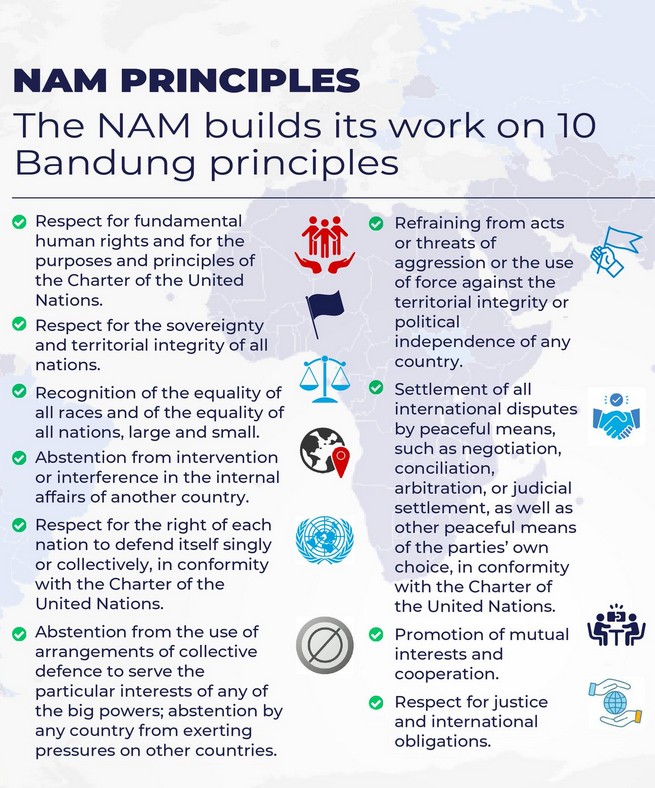
    • Overview: A grouping of states not formally aligned with or against any major power bloc, established to uphold sovereignty, independence, and neutrality during the Cold War.
    • Formation: Founded in 1961 at Belgrade, Yugoslavia, emerging from the 1955 Bandung Conference (Indonesia) which laid down the Ten Principles of Bandung as its ideological foundation.
    • Founding Leaders:
      1. Jawaharlal Nehru (India)
      2. Gamal Abdel Nasser (Egypt)
      3. Josip Broz Tito (Yugoslavia)
      4. Ahmed Sukarno (Indonesia)
      5. Kwame Nkrumah (Ghana)
    • Membership:
      • 120 countries: 53 from Africa, 39 from Asia, 26 from Latin America & the Caribbean, and 2 from Europe.
      • Includes Palestine as a member and 17 observer nations with 10 observer organisations.
      • Represents nearly 60% of UN membership, making it the second-largest intergovernmental bloc after the UN.
    • Structure: NAM functions without a permanent secretariat, charter, or budget, relying on rotational leadership and consensus-driven decision-making.

    Non-Aligned Movement (NAM)

    India’s Contemporary Role in NAM:

    • India advocates for reinvigorating NAM as a platform for South-South cooperation in technology, trade, and climate resilience.
    • It seeks to make NAM relevant in a multipolar world, focusing on digital equity, global governance reforms, and sustainable development.
    • India views NAM not as an anti-West bloc but as a forum of balanced autonomy, promoting strategic non-alignment and global partnership in the 21st century.
    [UPSC 2009] Among the following Presidents of India, who was also the Secretary General of Non-Aligned Movement for some period ?

    Options: (a) Dr. Sarvepalli Radhakrishnan (b) Varahairi Venkatagiri (c) Giani Zail Singh * (d) Dr. Shanker Dayal Sharma


  • The future of the IMEC

    Introduction

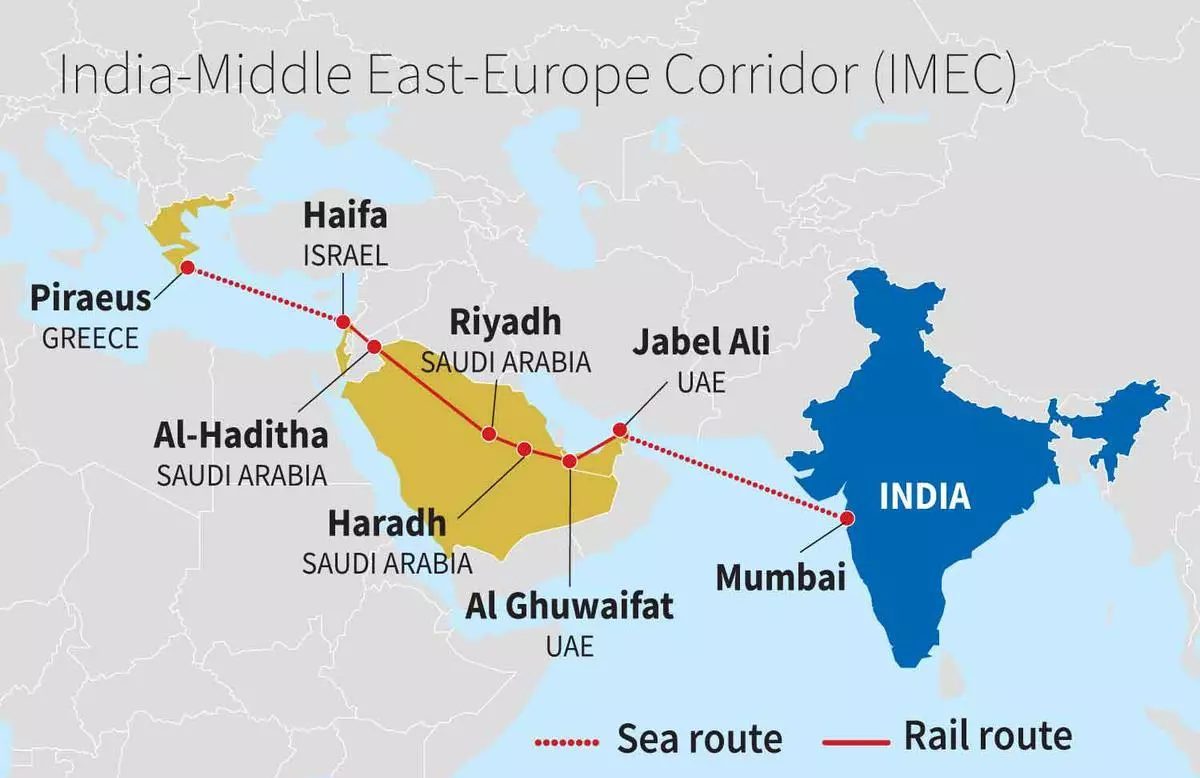
    In an era where connectivity defines power, the India–Middle East–Europe Economic Corridor (IMEC) emerged as a visionary project connecting India’s western ports with Europe via the Arabian Peninsula. Envisaged as a multi-modal corridor encompassing maritime, rail, energy, and digital infrastructure, IMEC sought to integrate economies across continents while promoting peace and prosperity in a historically volatile region.

    However, the optimism that surrounded IMEC’s launch quickly met the harsh reality of geopolitics. The October 7 Hamas attacks and subsequent Israel–Gaza war exposed the fragility of West Asian stability, placing IMEC’s implementation in question. Yet, beyond the uncertainty lies an opportunity for India to reshape its connectivity vision, adapting routes and partnerships to new global dynamics.

    Why in the News

    The IMEC has resurfaced in policy discussions as its viability faces uncertainty amid the deteriorating West Asian security environment. The October 7 Hamas–Israel conflict disrupted regional optimism nurtured by the Abraham Accords and slowed progress on IMEC’s proposed transnational links. At the same time, climate-driven Arctic trade routes and Red Sea disruptions by the Houthis are redrawing global shipping patterns, forcing India and its partners to reconsider IMEC’s configuration. The issue is critical as the corridor represents both an economic and strategic counterweight to China’s Belt and Road Initiative (BRI).

    The Strategic Vision Behind IMEC:

    1. Comprehensive Connectivity: IMEC aims to upgrade maritime routes between India and the Arabian Peninsula and establish high-speed rail links from UAE ports to Haifa, Israel, via Saudi Arabia and Jordan.
    2. Integration with Europe: From Haifa, goods would be shipped to Europe’s Mediterranean ports, ensuring faster, secure, and sustainable trade connectivity.
    3. Beyond Transport: The corridor also includes plans for a clean hydrogen pipeline, electricity cable, and high-speed undersea digital cable, linking energy and digital ecosystems across three continents.
    4. Strategic Objective: IMEC provides a non-Chinese, rules-based alternative to the Belt and Road Initiative (BRI), enhancing India’s strategic outreach and economic influence.

    The Geopolitical Context of 2023:

    1. Favourable Climate: The Abraham Accords (2020) created optimism for regional peace, bringing Israel and several Arab states closer. This atmosphere facilitated multilateral cooperation frameworks such as I2U2 (India, Israel, UAE, U.S.), paving the way for IMEC.
    2. India’s Upward Trajectory: India’s improving ties with Saudi Arabia and the UAE, coupled with strong U.S. relations, allowed it to play a central role in IMEC’s conception.
    3. Global Endorsement: The corridor was launched at the G-20 Summit in Delhi, with support from the EU, France, Germany, Italy, and Saudi Arabia, underscoring India’s emergence as a trusted global partner.

    The Security Setback and Regional Volatility

    1. Conflict Shock: Within weeks of IMEC’s announcement, the Hamas–Israel conflict erupted, reversing the post-Abraham optimism.
    2. Regional Fallout: Israel’s military operations strained ties with Arab countries, undermining cross-border infrastructure cooperation.
    3. Red Sea Disruptions: The Houthi attacks on cargo ships forced rerouting via the Cape of Good Hope, increasing transit time and cost.
    4. Lesson: The events underscore that geopolitical stability remains the cornerstone of connectivity, and corridors like IMEC must remain adaptable to shifting realities.

    Europe’s Changing Maritime Interests

    1. Arctic Openings: Climate change has opened new northern sea routes, shortening Asia–Europe shipping times. Beneficiaries include Russia, the U.S., China, and northern European nations.
    2. Mediterranean Anxiety: Countries like Italy, dependent solely on the Mediterranean, fear economic marginalisation if Arctic routes dominate trade.
    3. Strategic Importance of IMEC: Hence, Mediterranean states see IMEC as a means to sustain their maritime relevance and diversify trade partnerships.
    4. India’s Role: For India, the Mediterranean remains vital, as Arctic routes offer no immediate logistical advantage.

    Why IMEC Still Matters for India

    1. Economic Scale: With $136 billion in annual trade, the EU remains India’s largest trading partner, highlighting the need for resilient connectivity.
    2. Supply Chain Resilience: IMEC offers a secure, shorter route connecting India to Europe while reducing dependence on the Red Sea–Suez chokepoint.
    3. Strategic Leverage: Enhanced engagement with Arab economies can dilute Pakistan’s influence and integrate India deeper into West Asia’s economic architecture.
    4. Innovation Space: As a multi-member initiative, IMEC allows India to propose new routes via Saudi Arabia and Egypt, adapting to political flux.

    Challenges and the Way Forward

    1. Security Dependencies: Ongoing instability in Gaza and Israel poses a persistent threat.
    2. Financial and Political Coordination: Multi-country infrastructure projects face coordination delays, regulatory inconsistencies, and funding constraints.
    3. Need for Parallel Efforts: India must also upgrade domestic ports and logistics infrastructure, including Sagarmala and Dedicated Freight Corridors, to complement IMEC.
    4. Diplomatic Continuity: Sustaining dialogue through I2U2 and G-20 cooperation can help preserve IMEC’s spirit even if its routes evolve.

    Conclusion

    The IMEC’s future will depend not merely on the pacification of West Asia but on the political agility and diplomatic imagination of its members. While the corridor’s physical routes may shift, its strategic essence remains intact, to build resilient, diversified, and sustainable connectivity between India and Europe. For India, IMEC is more than an infrastructure project; it is a statement of intent, to be at the centre of global supply chains and a stabilising power in a fractured world.

    PYQ Relevance

    [UPSC 2018] The China-Pakistan Economic Corridor (CPEC) is viewed as a cardinal subset of China’s larger ‘One Belt One Road’ initiative. Give a brief description of CPEC and enumerate the reasons why India has distanced itself from the same.

    Linkage: While China’s CPEC runs through disputed territory, making India wary, the IMEC shows how India is building its own clean, safe, and cooperative route to connect with Europe. It’s India’s way of staying in the global connectivity game—on its own terms.

  • India to boost solar pumps scheme in Africa, Island nations

    Why in the News?

    The Union Ministry of New and Renewable Energy (MNRE) plans to showcase India’s PM-KUSUM and PM Surya Ghar schemes to several African and island nations through the International Solar Alliance (ISA) platform.

    India’s Global Outreach via International Solar Alliance (ISA):

    • Founded: 2015, jointly by India and France, headquartered in Gurugram (Haryana, India).
    • Membership (2025): 98 countries, focused on promoting solar energy deployment in developing and tropical nations.
    • Mandate: Facilitate affordable solar technology, finance mobilization, and policy support to achieve global energy access and climate goals.
    • Strategic Focus Areas (2025):
      • Catalytic Finance Hub: Mobilising global investments in solar infrastructure.
      • Global Capability Centre: Providing technical training, digital tools, and policy frameworks.
      • Technology Roadmap: Driving innovation in floating solar, AI-based grid management, green hydrogen, and One Sun, One World, One Grid (OSOWOG) connectivity.
      • Country Engagement: Strengthening regional partnerships for implementation and capacity-building.
    • Global Showcasing of Indian Models:
      • India plans to export the PM-KUSUM and PM Surya Ghar models to Africa and island nations facing low electrification and irrigation coverage.
      • Only 4% of Africa’s arable land is irrigated, creating a vast opportunity for solar-powered irrigation and energy access.
    • Significance: ISA serves as the primary vehicle for India’s renewable diplomacy, promoting clean energy cooperation, technology transfer, and South–South collaboration for sustainable development.

    Back2Basics:

    [1] PM-KUSUM Scheme:

    • Full Name: Pradhan Mantri Kisan Urja Suraksha evam Utthaan Mahabhiyan (PM-KUSUM) launched in 2019 by the Ministry of New and Renewable Energy (MNRE).
    • Objective: To promote solar energy use in agriculture, enabling farmers to generate clean electricity, replace diesel pumps, and earn additional income through sale of surplus solar power.
    • Targets:
      • Add 34,800 MW of decentralized solar capacity by March 2026.
      • Total outlay of ₹34,422 crore in Central financial assistance.
    • Structure: Three key components –
      1. Component A: 10,000 MW of decentralized grid-connected solar/renewable plants on barren land.
      2. Component B: 14 lakh standalone solar pumps for irrigation.
      3. Component C: Solarization of 35 lakh existing grid-connected pumps (including feeder-level solarisation).
    • Financial Support: Farmers receive 60% subsidy, 30% institutional loan, and contribute 10% cost.
    • Achievements (as of 2025):
      • 70% completion in standalone solar pumps.
      • Limited progress in grid-connected plants (6%) and pump solarization (16–25%).
      • Scheme likely to be extended beyond 2026 due to delayed infrastructure readiness.
    • Benefits: Reduces input costs, ensures energy self-reliance, lowers carbon emissions, and generates sustainable farmer income through surplus power sales.

    [2] PM Surya Ghar Scheme:

    • Full Name: PM Surya Ghar: Muft Bijli Yojana launched in 2025 as a flagship rooftop solar initiative for residential households.
    • Implementing Agency: Ministry of New and Renewable Energy (MNRE).
    • Objective: To promote rooftop solar installations for one crore households, especially middle-class and economically weaker sections, providing affordable or free electricity.
    • Budget: ₹75,021 crore for implementation till FY 2026–27.
    • Features:
      • Subsidy up to 40% of total installation cost.
      • Annual household savings of up to ₹18,000 through self-generation.
      • Net metering enables sale of surplus power to the grid.
      • Simplified application via national portal; eligibility limited to one household per residence.
    • Impact: Reduces power bills, promotes decentralized renewable energy generation, and contributes to India’s target of 500 GW non-fossil energy capacity by 2030.
    [UPSC 2016] Consider the following statements:

    1. The International Solar Alliance was launched at the United Nations Climate Change Conference in 2015.

    2. The Alliance includes all the member countries of the United Nations.

    Which of the statements given above is/are correct?

    Options: (a) 1 only* (b) 2 only (c) Both 1 and 2 (d) Neither 1 nor 2


  • NATO Pipeline System (NPS)

    Why in the News?

    Poland announced its long-awaited entry into the NATO Pipeline System (NPS) — a strategic move coming 25 years after joining NATO.

    About the NATO Pipeline System (NPS): 

    • Origin: 1950s, Cold War-era logistics backbone, upgraded over decades.
    • Purpose: Ensures continuous supply of aviation fuel, diesel, kerosene & lubricants to NATO forces.
    • Scale: ~10,000 km network across 12 NATO countries; storage ≈ 4.1 million m³.
    • Structure: Connects refineries, depots, airbases, airports & pumping stations.
    • Funding & Oversight: Through NATO Security Investment Programme (NSIP); managed by NATO Support & Procurement Agency (NSPA) under the NATO Petroleum Committee.
    • Member Countries: Belgium, France, Germany, Luxembourg, Netherlands, UK, Italy, Greece, Portugal, Turkey, Norway and Denmark; Poland will become the 13th member after integration.
    • Main System: Central Europe Pipeline System (CEPS) – 5,300 km, est. 1958; moves ≈ 12 million m³ fuel/yr.
    • Other Networks: North European, Turkish, Greek, Portuguese, Italian, Norwegian & Danish systems.
    [UPSC 2025] Consider the following countries:

    I. Austria II. Bulgaria III. Croatia IV. Serbia V. Sweden VI. North Macedonia.

    How many of the above are members of the North Atlantic Treaty Organization?

    (a) Only three (b) Only four* (c) Only five (d) All the six