đŸ’„Join UPSC 2027,2028 Mentorship (July Batch) + XFactor Notes & Microthemes PDF

Subject: History

  • Nagoba Jatara

    The month long Nagoba Jatara recently concluded in Adilabad dist. of AP.

    Nagoba Jatara

    • Nagoba Jatara is a tribal festival held in Keslapur village, Inderavelly Mandal[1] Adilabad district, Telangana, India.
    • It is the second biggest tribal carnival and celebrated by Mesaram clan of Gond tribes for 10 days.
    • Tribal people from Maharashtra, Chhattisgarh, Orissa and Madhya Pradesh belonging to the Mesram clan offer prayers at the festival.
    • It starts in pushya masam. A ceremony of ‘bheting’ is it’s integral part where the new brides are introduced to the clan god during first jatra afer their marriage
    • The few hundred Raj Gond and Pardhan Adivasis, men clad in pure white dhoti-kurta and the pagdi headgear and women in the traditional colourful nau-vari Maharashtrian style saree.
    • The temple for which a new structure is coming up is dedicated to the serpent god, known as Shri Shek to the aboriginal people, and is the centre of all activities during the week long festivities.
  • Liberation of Auschwitz


    • Yesterday on January 27th survivors of the Holocaust and international heads of state marked the 75th anniversary of the liberation of Auschwitz.
    • During the Second World War, the government of Nazi Germany killed approximately 17 million people across Europe in half a dozen camps specifically designated for killings.
    • Of these seven killing centers, the camp at Auschwitz, perhaps the most well known, was the largest in size.

    Why is January 27 an important date in Holocaust history?

    • During the final stages of the Second World War, months before the fall of Nazi Germany, Nazi officials began forcibly moving prisoners between the camps spread across Europe.
    • Called ‘Death Marches’, this forcible displacement on foot over long distances in the bitter cold, with little to no food resulted in many deaths.
    • Some researchers believe that prisoners were moved from camps to prevent the liberation of prisoners held inside these camps and to also remove evidence of crimes against humanity perpetrated by Nazi officials.
    • Prisoners who were very ill and disabled were left to die in the abandoned camps.

    Rescue of Auschwitz

    • Allied forces advanced from the West while soldiers belonging to the Red Army of the Soviet Union began entering concentration camps and killing centers across Europe, liberating survivors.
    • The first camp that the Red Army soldiers liberated was the Majdanek camp in Poland in July 1944.
    • The Army entered Auschwitz on January 27, 1945, finding hundreds of sick, starving and exhausted prisoners, who had somehow survived.
    • In 2005, the UN-designated January 27 as the International Holocaust Remembrance Day.

    What occurred during the liberation of Auschwitz?

    • Along with surviving prisoners, the Red Army also found hordes of items belonging to the prisoners that had been stripped from them by Nazi officials when they first arrived at Auschwitz.
    • The prisoners were so weak after having been starved for prolonged periods of time, that despite medical intervention, many died days after their rescue.
    • Several soldiers in the Red Army and in the Allied troops later gave testimonies concerning the sights that awaited them when they first entered the camps in Auschwitz and elsewhere.
    • Although Nazi officials had destroyed many warehouses and crematoria where property looted from prisoners had been stored and where bodies had been disposed, liberating troops still found evidence of the crimes and brutality perpetrated against the prisoners.

    What made Auschwitz unique?

    • Historical records show that despite attempts by Nazi officials to obliterate prisoners, particularly those at Auschwitz, there were survivors who lived to provide testimony against Nazi officials.
    • Several factors set Auschwitz apart from other camps across Europe.
    • The camp at Auschwitz had originally been built to hold Polish political prisoners but by March 1942, it became one of the main centres for the Nazi’s Final Solution to the Jewish Question.

    Aftermath of the Holocaust

    • Trials were held against Nazi officers and people who worked inside the camps in various capacities and perpetrated crimes against humanity in the camps of Auschwitz and elsewhere in Europe.
    • These individuals included both men and women, many who escaped accountability for their crimes after the fall of Nazi Germany.
    • To evade justice, many SS officers changed their identities and escaped to other parts of Europe, the US and to other parts of the world.
    • The camps at Auschwitz have become an important reminder of the horrors of the Holocaust and in 1947 the government of Poland made the site a state memorial.
    • In 1979, UNESCO added the Auschwitz memorial to its list of UNESCO World Heritage Sites.
  • Nagardhan Excavations


    • Recent archaeological excavations at Nagardhan near Nagpur have provided concrete evidence on the life, religious affiliations and trade practices of the Vakataka dynasty that ruled parts of Central and South India between the third and fifth centuries.
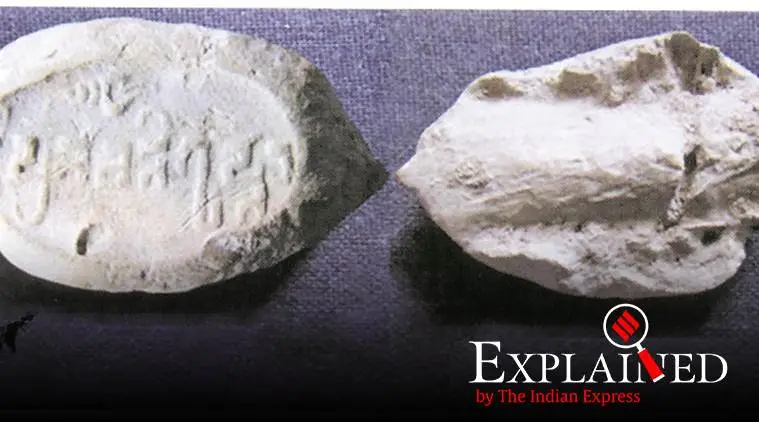
    • After a 1,500 year-old sealing was excavated for the first time, a new study in Numismatic Digest has tried to understand the Vakataka rule under Queen Prabhavatigupta.

    Nagardhan

    • Nagardhan is a large village in Nagpur district, about 6 km south of Ramtek taluka headquarters.
    • Archaeological remains were found on a surface spread over a 1 km × 1.5 km area. The researchers excavated the site during 2015-2018.
    • The existing village sits on top of the ancient habitation. The Nagardhan Fort stands south of present-day Nagardhan village.
    • This was constructed during the Gond Raja period and later renovated and re-used by the Bhosales of Nagpur during the late 18th and 19th centuries.

    Importance of the excavation

    • Very little was known about the Vakatakas, the Shaivite rulers of Central India between the third and fifth centuries.
    • All that was known about the dynasty, believed to hail from the Vidarbha region, was largely through some literature and copperplates.
    • There were assumptions that the excavated site of Nagardhan is the same as Nandhivardhan, the capital city of the eastern branch of the Vakatakas.
    • It was after archaeological evidence from here that Nagardhan was understood to have served as a capital of the Vakataka kingdom.

    The seals so found

    • It is the first time clay sealings have been excavated from Nagardhan.
    • The oval-shaped sealing belongs to the period when Prabhavatigupta was the queen of the Vakataka dynasty.
    • It bears her name in the Brahmi script along with the depiction of a conch.
    • The presence of the conch, scholars say, is a sign of the Vaishnava affiliation that the Guptas held.
    • The sealing was traced on top of a mega wall that researchers now think could have been part of a royal structure at the capital city of the kingdom.

    Who was Queen Prabhavatigupta?

    • The copperplate issued by Queen Prabhavatigupta starts with a genealogy of the Guptas, mentioning the Queen’s grandfather Samudragupta and her father Chandragupta II.
    • These are strong indicators of Vaishnava signatures on the royal seals of the Vakatakas reiterate that Queen Prabhavatigupta was indeed a powerful woman ruler.
    • Since the Vakataka people traded with Iran and beyond through the Mediterranean Sea, scholars suggest that these sealings could have been used as official royal permission issued from the capital city.
    • Besides, these were used on documents that sought mandatory royal permissions.

    Why are the findings on Queen Prabhavatigupta significant?

    • Scholars say Queen Prabhavatigupta was among a handful of women rulers in India to have reigned over any kingdom during ancient times.
    • The Vakataka rulers were known to have forged several matrimonial alliances with other dynasties of their times.
    • One of the key alliances was with Prabhavatigupta of the mighty Gupta dynasty, which was then ruling north India. The Guptas were way more powerful than the Vakatakas.
    • After marrying Vakataka king Rudrasena II, Prabhavatigupta enjoyed the position of Chief Queen.
    • When she took over the Vakataka kingdom, after the sudden demise of Rudrasena II, her stature as a woman Vakataka ruler rose significantly.
    • This is evident from the fact that the sealings were introduced and issued during her period as a ruler, that too from the capital city of Nagardhan.

    Why is the sign of Vaishnava affiliation important?

    • The Vakataka rulers followed the Shaiva sect of Hinduism while the Guptas were staunch Vaishnavites.
    • Excavators say that many religious structures indicating affinity to the Vaishnava sect, and found in Ramtek, were built during the reign of Queen Prabhavatigupta.
    • While she was married into a family that belonged to the Shaiva sect, the queen’s powers allowed her to choose a deity of worship, that is, Lord Vishnu.

    What else has been excavated from Nagardhan so far?

    • Earlier results from the excavations here had traced evidence in the form of ceramics, ear studs of glass, antiquities, bowls and pots, a votive shrine and tank, an iron chisel, a stone depicting a deer, and terracotta bangles.
    • Some terracotta objects even depicted images of gods, animals and humans, along with amulets, scotches, wheels, skin rubbers and spindle whorls.
    • An intact idol of Lord Ganesha, which had no ornaments adorned, too was found from the site.
    • This confirmed that the elephant god was a commonly worshipped deity in those times.
    • On the means of living of the Vakataka people, researchers found animal rearing to be one of the main occupations.
    • Remains of seven species of domestic animals — cattle, goat, sheep, pig, cat, horse and fowl — were traced in an earlier study by the team.
  • Operation Alberich

    The recently released ‘1917’ movie tells the story of two British soldiers during the WWI in Operation Alberich, the strategic retreat in which their troops were taken back to the Hindenburg Line in 1917.

    What was Operation Alberich?

    • Operation Alberich is considered among Germany’s most important operations on the Western Front in 1917, as well as one of its most extreme due to the ‘scorched earth’ policy employed.
    • In World War I (1914-18), the Allied Powers — principally France, the British Empire, Russia, Italy, Japan, and the US (after 1917) — fought and defeated the Central Powers — mainly Germany, Austria-Hungary, and Turkey.
    • The war caused destruction and suffering on unprecedented levels, and only led to a bigger conflict, World War II, two decades later in 1939.
    • The war manoeuvre involved the systematic destruction of 1,500 square kilometres of French territory by the German army after it decided to retreat to a newly constructed defence line.
    • The German army leadership had decided that the war must shift temporarily to the shorter and more easily defensible Hindenburg Line. The Operation took place in February and March 1917.

    Course of action

    • The shortening of the war front was drastic, and is considered the war’s biggest military construction project.
    • The planning for the approximately 130-km Hindenburg Line began in September 1916, and much of it was completed in four months from October — using 5,00,000 tonnes of rocks and gravel, over 1,00,000 tonnes of cement, and 12,500 tonnes of barbed wire.
    • The scorched earth policy, which laid to waste entire villages, roads, and bridges, was meant to destroy anything that the Allies could find useful.
    • The Operation saw the complete evacuation of the area’s civilian population.

    Aftermath

    • The move is regarded as a tactical success for the Germans, as it took the Allies by surprise and delayed their advance, but is criticised for the disproportionate destruction that it caused.
    • It is considered a propaganda disaster for Germany, and was presented by the Allies as an example of “Hun barbarism”.
    • At the Treaty of Versailles, which was signed after the war, the Allies used Alberich to legitimize their claims for punitive reparations from Germany.
  • [pib] Establishment of Chairs named after eminent Women in Universities


    On the occasion of National Girl Child Day, the Ministry of Women and Child Development has set up 10 Chairs in different fields with an aim to carry out research activities to encourage women.

    Chairs named after eminent Women

    • The initiative is called “the Establishment of Chairs in the Universities in the name of eminent women administrators, artists, scientists and social reformers”.
    • It is being launched with the assistance of University Grants Commission (UGC).
    • The main objective is to inspire women to pursue higher education and to achieve excellence in their area of work.
    • The financial implications of the proposal is Rs. 50 lakh per Chair per year and the total expenditure for establishing ten Chairs will be approximately Rs. Rs. 5 crore per annum.
    • The Chairs are to be established for a period of 5 years initially as per the guidelines.

    The chairs proposed by UGC and approved by the Ministry are as under:

    S. No. Subject Proposed name of chair
    1. Administration Devi Ahilyabai Holkar
    2. Literature Mahadevi Varma
    3. Freedom Fighter (North East) Rani Gaidinliu
    4. Medicine & Health Anandibai Gopalrao Joshi
    5. Performing Art Madurai Shanmukhavadivu Subbulakshmi
    6. Forest/Wildlife Conservation Amrita Devi (Beniwal)
    7. Mathematics Lilavati
    8. Science Kamala Sohonie
    9. Poetry & Mysticism Lal Ded
    10. Educational Reforms Hansa Mehta

     Functions of these chairs

    • Academic functions of the Chairs will be to engage in research and, in turn, contribute to the advancement of knowledge in the area of the study, strengthen the role of university/academics in public policy making etc.
    • The University will review the progress of the Chair annually and submit a final report on the activities and outcome of the Chair to the UGC after five years.
    • However, the UGC may undertake the exercise of reviewing the Chair for its continuance, at any stage.
  • Persons in news: Warren Hastings and his Impeachment Case

    Donald Trump’s impeachment trial started in the US Senate. A precedent being discussed is that of the Warren Hastings case — the famous failed attempt by the British Parliament to impeach India’s first governor-general.

    Warren Hastings

    • Warren Hastings, the first governor-general of Bengal (and the first de facto Governor-General of India), is considered among the most significant colonial administrators to have ruled India.
    • First as the governor of Bengal (1772-1774) and then as Governor-General (1774-1785), Hastings strengthened British rule in India and made profound changes in administration.
    • Hastings’s conduct while in office was called into question after he returned to Britain in 1785, most prominently by Edmund Burke, the noted British parliamentarian and philosopher.

    What was his impeachment case?

    • In 1786, impeachment proceedings were initiated against Hastings, probing his alleged mismanagement, mistreatment of natives, and personal corruption while in India.
    • William Pitt, the then British Prime Minister, first defended Hastings, but then joined the chorus against him.
    • Hastings’s argued that ‘Western’ standards of legality could not be applied in the East.
    • But Burke insisted that under the Law of Nature, people in India were entitled to the same protection as those in Britain.
    • In 1795, however, the House of Lords acquitted Hastings, and the impeachment failed.
    • Burke warned that such a verdict would live in “perpetual infamy”, and the trial gave rise to a wider debate on the role of the East India Company in India.

    Back2Basics

    Warren Hastings and his major works

    From 1772, Warren Hastings served as Governor-General of Fort Williams and the regulating act was passed after his arrival.

    Important events under his rule :


    • Hastings abolished the Dual System that had been established by Robert Clive. In the Dual System, the company had Diwani rights (rights to collect revenue) and the Nizam or Indian chiefs had the administrative authority.
    • The judicial powers of the Zamindars were abolished. Civil and criminal courts were established. Two appellate courts were established at Calcutta, one for civil (Sadar Diwani Adalat) and one for criminal (Sadar Nizamat Adalat) cases.
    • Hastings abolished the system of dastaks which were misused by company officials and traders earlier.
    • He implemented several reforms in all walks of administration. The Regulating Act 1773 and Pitts India Act, 1784 were important acts passed during his tenure.


  • [pib] Indian Digital Heritage (IDH) Initiative


    The Union Ministry of Culture and Tourism launched a month-long special exhibition titled Indian Heritage in Digital Space. This special exhibition showcases the adaptation and infusion of technologies being developed under the Indian Digital Heritage (IDH) initiative.

    Indian Digital Heritage (IDH)

    • This initiative is undertaken by the Department of Science and Technology (DST) in the cultural heritage domain of the country.
    • The exhibition demonstrates the outcome of two flagship projects viz., A digital mini-spectacle to showcase the glory of Hampi and Augmented Reality based interactions with physical models of monuments.
    • The goals of these projects are to create digital installations using 3D laser scan data, AR, holographic projections and 3D fabrication,to provide interactive and immersive experiences showcasing the glory of Hampi and five Indian monuments namely Kashi Vishwanath Temple, Varanasi; TajMahal, Agra; Sun Temple, Konark; Ramachandra Temple, Hampi ; and RaniKiVav, Patan .
    • These projections are driven by cutting-edge technologies such as 3D fabrication, Artificial Intelligence, Augmented, Virtual and Mixed Reality, Holographic Projections and Projection Mapping etc.

    ViRaasat

    A special installation named ‘ViRaasat’, consisting of a scaled-down 3D printed replica shall provide a mixed reality experience to visitors for selected monuments, using laser-scanning, 3D modelling and rendering, 3D printing, computer vision and spatial AR.

  • Classical languages in India

    Recently in a Marathi literary festival, a resolution was passed demanding its declaration as a ‘Classical’ language.

    ‘Classical’ languages in India

    Currently, six languages enjoy the ‘Classical’ status: Tamil (declared in 2004), Sanskrit (2005), Kannada (2008), Telugu (2008), Malayalam (2013), and Odia (2014).

    How are they classified?

    According to information provided by the Ministry of Culture in the Rajya Sabha in February 2014, the guidelines for declaring a language as ‘Classical’ are:

    • High antiquity of its early texts/recorded history over a period of 1500-2000 years;
    • A body of ancient literature/texts, which is considered a valuable heritage by generations of speakers;
    • The literary tradition be original and not borrowed from another speech community;
    • The classical language and literature being distinct from modern, there may also be a discontinuity between the classical language and its later forms or its offshoots.”

    How are the Classical languages promoted?

    The HRD Ministry noted the benefits it provides once a language is notified as a Classical language:

    • Two major annual international awards for scholars of eminence in classical Indian languages
    • A Centre of Excellence for studies in Classical Languages is set up
    • The University Grants Commission is requested to create, to start with at least in the Central Universities, a certain number of Professional Chairs for the Classical Languages so declared.
  • Six degrees of Endangerment of a Language

    Recently, The NY Times reported that the “near-extinct” Nepalese language Seke has just 700 speakers around the world. As per the Endangered Languages Project (ELP), there are roughly 201 endangered languages in India and about 70 in Nepal.

    The last year, 2019, was the International Year of Indigenous Languages, mandated by the UN.

    Nepal’s Seke language

    • According to the Endangered Language Alliance (ELA), Seke is one of the over 100 indigenous languages of Nepal.
    • The dialects from these villages differ substantially and are believed to have varying degrees of mutual intelligibility.
    • In recent years, Seke has been retreating in the face of Nepali, which is Nepal’s official language and is considered to be crucial for getting educational and employment opportunities outside villages.

    Degrees of endangerment

    UNESCO has six degrees of endangerment. These are:

    1. Safe, which are the languages spoken by all generations and their intergenerational transmission is uninterrupted;
    2. Vulnerable languages, which are spoken by most children but may be restricted to certain domains;
    3. Definitely endangered languages, which are no longer being learnt by children as their mother tongue.
    4. Severely endangered are languages spoken by grandparents and older generations, and while the parent generation may understand it, they may not speak it with the children or among themselves.
    5. Critically endangered languages are those of which the youngest speakers are the grandparents or older family members who may speak the language partially or infrequently and lastly,
    6. Extinct languages, of which no speakers are left.
  • Person in news: Swami Vivekananda

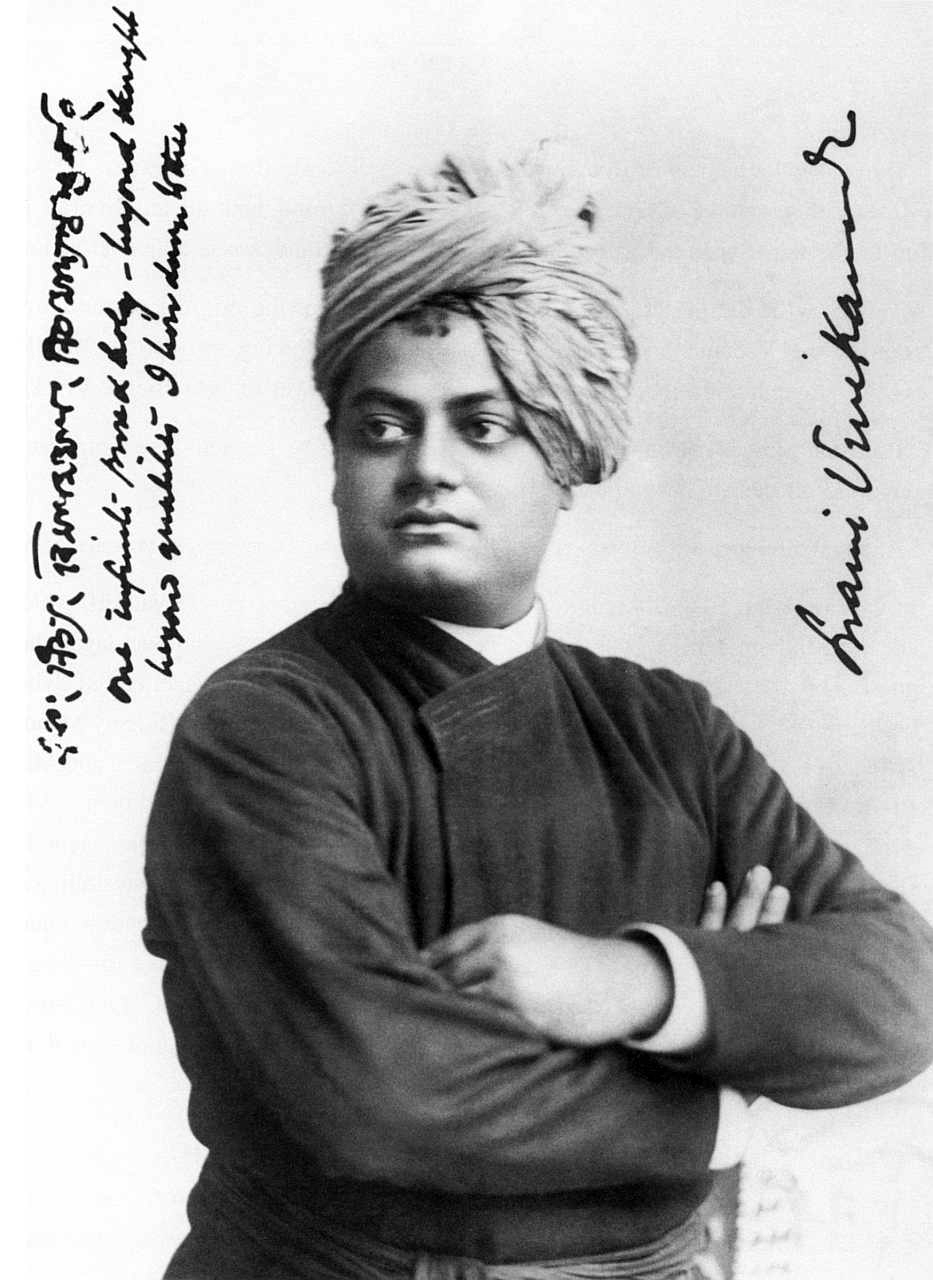
    January 12 is the birth anniversary of Swami Vivekananda, the famous spiritual leader and intellectual from the late 19th century. In his honour, the government of India in 1984 declared his birthday as National Youth Day.

    Swami Vivekananda early life

    • Vivekananda was born in Kolkata on January 12, 1863, as Narendra Nath Datta.
    • From an early age, he nurtured an interest in Western philosophy, history, and theology, and went on to meet the religious leader Ramakrishna Paramhansa, who later became his Guru.
    • He remained devoted to Ramakrishna until the latter’s death in 1886.
    • In 1893, he took the name ‘Vivekananda’ after Maharaja Ajit Singh of the Khetri State requested him to do so, changing from ‘Sachidananda’ that he used before.
    • After Ramakrishna’s death, Vivekananda toured across India, and set after educating the masses about ways to improve their economic condition as well as imparting spiritual knowledge.

    The Chicago address

    • Vivekananda is especially remembered around the world for his speech at the Parliament of the World’s Religions in Chicago in 1893.
    • The speech covered topics including universal acceptance, tolerance and religion, and got him a standing ovation.
    • He began delivering lectures at various places in the US and UK, and became popular as the ‘messenger of Indian wisdom to the Western world’.

    Return to India

    • After coming back to India, he formed the Ramakrishna Mission in 1897 “to set in motion a machinery which will bring noblest ideas to the doorstep of even the poorest and the meanest.”
    • In 1899, he established the Belur Math, which became his permanent abode.

    His legacy

    • Through his speeches and lectures, Vivekananda worked to disseminate his religious thought.
    • He preached ‘neo-Vedanta’, an interpretation of Hinduism through a Western lens, and believed in combining spirituality with material progress.
    • ‘Raja Yoga’, ‘Jnana Yoga’, ‘Karma Yoga’ are some of the books he wrote.
    • An important religious reformer in India, Swami Vivekananda is known to have introduced the Hindu philosophies of Yoga and Vedanta to the West.
    • Subhas Chandra Bose had called Vivekananda the “maker of modern India.”