đŸ’„Join UPSC 2027,2028 Mentorship (July Batch) + XFactor Notes & Microthemes PDF

Subject: History

  • In news: 1946 Royal Indian Navy Mutiny


    Seventy-four years ago on February 18, 1946, some 1,100 Indian sailors or “ratings” of the HMIS Talwar and the Royal Indian Navy (RIN) Signal School in Bombay declared a hunger strike, triggered by the conditions and treatment of Indians in the Navy.

    RIN Mutiny

    • A “slow down” the strike was also called, which meant that the ratings would carry out their duties slowly.
    • The morning after February 18, somewhere between 10,000-20,000 sailors joined the strike, as did shore establishments in Karachi, Madras, Calcutta, Mandapam, Visakhapatnam, and the Andaman Islands.
    • One of the triggers for the RIN strike was the arrest of a rating, BC Dutt, who had scrawled “Quit India” on the HMIS Talwar.
    • The day after the strike began, the ratings went around Bombay in lorries, waving the Congress flag, and getting into scraps with Europeans and policemen who tried to confront them.

    Their demands

    While the immediate trigger was the demand for better food and working conditions, the agitation soon turned into a wider demand for independence from British rule. The protesting sailors demanded:

    • release of all political prisoners including those from Netaji Subhas Chandra Bose’s Indian National Army (INA),
    • action against the commander for ill-treatment and using insulting language,
    • revision of pay and allowances to put RIN employees on a par with their counterparts in the Royal Navy,
    • demobilisation of RIN personnel with provisions for peacetime employment,
    • release of Indian forces stationed in Indonesia, and better treatment of subordinates by their officers

    Upsurge of nationalism

    • The RIN strike came at a time when the Indian nationalist sentiment had reached fever pitch across the country.
    • The winter of 1945-46 saw three violent upsurges: in Calcutta in November 1945 over the INA trials; in February 1946, also in Calcutta, over the sentencing of INA officer Rashid Ali; and, in that same month, the ratings’ uprise in Bombay.
    • This chain of events led to the “mounting fever of excitement affecting the whole political climate”.
    • Soon, ordinary people joined the ratings, and life came to a virtual standstill in both Bombay and Calcutta. There were meetings, processions, strikes, and hartals.
    • In Bombay, labourers participated in a general strike called by the Communist Party of India and the Bombay Students’ Union. In many cities across India, students boycotted classes in solidarity.
    • The response of the state was brutal. It is estimated that over 220 people died in police firing, while roughly 1,000 were injured.

    Significance of the events

    • The RIN revolt remains a legend today. It was an event that strengthened further the determination among all sections of the Indian people to see the end of British rule.
    • Deep solidarity and amity among religious groups was in evidence, which appeared to run counter to the rapidly spreading atmosphere of commuanal hatred and animosity.
    • However, communal unity was more in the nature of organisational unity than a unity among the two major communities.
    • Within months, India was to be devoured by a terrible communal conflagration.

    Final nail in the coffin

    • This revolt was different from the other revolts in the sense that, after 1857 it was the first time that the British realized that the Royal Indian forces were no more obedient to the British commands and were in concurrence with the overall defiant nationalist sentiments prevailing in the entire country.
    • Mutinies are usually confined to a particular station, establishment or ship. However, this was the first instance when the entire service joined the revolt.
    • Most striking feature was that it was directed against the British government and not against superior officers – not a single officer, British or Indian, was harmed.
    • Fearless action by the masses was an expression of militancy in the popular mind. Revolt in the armed forces had a great liberating effect on the minds of people.
    • It displayed that the armed forces no longer obeyed the British authority rather it was the nationalist leaders who held sway over them. The RIN revolt was seen as an event marking the end of British rule.

    Aftermath

    • The leaders realized that any mass uprising would inevitably carry the risk of not being amenable to centralized direction and control. Besides, now that independence and power were in sight, they were eager not to encourage indiscipline in the armed forces.
    • It was immediately after this revolt that PM Atlee dispatched the Cabinet Mission to India, so it is also inferred that the mutiny hastened the process of transfer of power to India.
    • It is also important to mention that the revolt came to an end after the nationalist leaders, Sardar Patel and Mohammad Ali Jinnah on receiving a request to intervene by the British, issued a statement calling upon the mutineers to surrender.
  • Battle of Çanakkale/Gallipoli

    India issued a strong demarche to Turkey over its outspoken President Erdogan’s comments in Pakistan. Erdogan has criticised India’s policy in Jammu and Kashmir and compared it with that of Turkey during World War I.

    Gallipoli campaign

    • The Battle of Çanakkale, also known as the Gallipoli campaign or the Dardanelles campaign, is considered to be one of the bloodiest of World War I, during which the Ottoman army faced off against the Allied forces, leading to the slaughter of tens of thousands of soldiers on both sides.
    • In March 1915, with the war in Europe stalemated in the trenches, Winston Churchill, then Britain’s First Lord of the Admiralty, devised a plan to take control of the Dardanelles.
    • The plan was to capture strategic strait connecting the Sea of Marmara to the Aegean Sea and the Mediterranean Sea, and thus reach Constantinople (today’s Istanbul) at the mouth of the Bosporus.
    • By taking Constantinople, the Allies hoped to break the Turks, who had recently entered the war on the side of Germany.

    The massacre

    • The Allies carried out a heavy naval bombardment of Turkish forts along the shores of the Dardanelles, and when that failed, followed up with what was the biggest amphibious landing in military history at the time.
    • However, what the British and their allies had hoped would be the turning point in the war ended up as a catastrophe.
    • In the nine months upto January 1916, when the Allies called off the campaign and evacuated, more than 40,000 British soldiers had been killed, along with 8,000 Australians. On the Turkish side, some 60,000 had perished.

    Legacy of the battle

    • The battle resulted in a demotion for Churchill and the emergence on the Turkish side of the young military hero, Mustafa Kemal Ataturk.
    • But the legacy of Gallipoli goes far beyond its military aspects — the event is today one of the central pillars of the modern Turkish identity.
    • The campaign is also seen to have seeded Australian and New Zealand national consciousness — April 25, the anniversary of the Gallipoli landings, is observed as ANZAC Day, the day of national remembrance for the war dead.
  • Erstwhile State of Rampur

    Erstwhile royals of the state of Rampur in Uttar Pradesh are fighting over the assets and legacy of Nawab Raza Ali Khan, who acceded to the Indian Union at the time of Independence.  The Supreme Court ended India’s longest-running civil dispute last year, and the process of evaluating the inheritance is currently ongoing.

    The state of Rampur

    • The state of Rampur was founded by Nawab Ali Muhammad Khan, the adopted son of Sardar Daud Khan, the chief of the Rohillas in Northern India.
    • The Rohillas were Afghans who entered India in the 18th century as the Mughal Empire was in decline, and took control of Rohilkhand, at the time known as Katehr.
    • In 1737, Nawab Muhammad Khan received the territory of Katehr from Emperor Muhammad Shah, only to lose everything to Nawab Wazir of Oudh in 1746.
    • Two years later, he assisted Ahmad Shah Durrani in his conquest of India, recovering all his former possessions.
    • Over the next two centuries the Rampur royals, earlier a warring clan, struck deep roots, and with the blessings of the British, began to build one of the richest principalities in the country.

    Patrons of the arts, culture

    • The Rampur royals have played an important role in the socio-cultural history of the Ganga-Yamuna belt.
    • They run the Amir Raza library in Rampur, once known as the official darbar of the Nawab, which is home to some 15,000 manuscripts in Arabic, Urdu, Persian and Turkish, as well as a seventh-century Quran.
    • The library also houses 2,500 specimens of Islamic calligraphy, 5,000 miniature paintings, and 60,000 printed books, besides the extremely rare Persian translation of Valmiki’s Ramayana, which is believed to have been Emperor Aurangzeb’s personal copy.
    • In the 19th century, the royals established courts of law and a standing army, and built irrigation works. In the 20th century, they set up sugar and textile mills.
    • Many Hindus were employed in senior administrative positions in the state. Nawab Raza Ali Khan was known to have written poetry in Bhojpuri for Holi.
    • The Rampur court was also a great patron of the arts, and is known to have patronised Ghalib and Begum Akhtar, as well as the tabla player Ahmad Jan Thirakwa, sarangi player Bundu Khan, sarod player Fida Hussein Khan, been player Wazir Khan, and the kathak dancers Acchan Maharaj and Kalka Prasad.

    After Independence

    • Rampur, under Nawab Raza Ali, was the first kingdom to accede to India in 1949, becoming the only Muslim-majority district in Uttar Pradesh.
    • Soon after accession, the Nawab handed over the official royal residence, the Rampur Qila or Fort, built in 1775, to the Indian government, along with several other properties.
    • In return, the Indian government bestowed two key rights to the Nawab — he was granted full ownership of the properties, and guaranteed succession to the gaddi or rulership of the state based on customary law, which gave exclusive property rights to the eldest son.
    • When Raza Ali Khan died in 1966, he had three wives, three sons, and six daughters.
    • His eldest son Murtaza Ali Khan succeeded him as head of the state, as per custom.
    • The government recognised him as the sole inheritor of all his father’s private properties and issued a certificate to this effect. But his brother challenged this in the civil court.
  • Person in news: Dara Shikoh


    The Ministry of Culture recently set up a panel of the Archaeological Survey of India (ASI) to locate the grave of the Mughal prince Dara Shikoh (1615-59) nearby Humayun’s Tomb complex in Delhi.

    Dara Shikoh’s legacy

    • The eldest son of Shah Jahan, Dara Shikoh was killed after losing the war of succession against his brother Aurangzeb.
    • Dara Shikoh is described as a “liberal Muslim” who tried to find commonalities between Hindu and Islamic traditions.
    • He translated into Persian the Bhagavad Gita as well as 52 Upanishads.

    Antithesis to Aurangzeb

    • Some historians argue that if Dara Shikoh had ascended the Mughal throne instead of Aurangzeb, it could have saved thousands of lives lost in religious clashes.
    • Dara Shukoh was the total antithesis of Aurangzeb, in that he was deeply syncretic, warm-hearted and generous — but at the same time, he was also an indifferent administrator and ineffectual in the field of battle.

    The remains of Dara Shikoh

    • According to the Shahjahannama, after Aurangzeb defeated Dara Shikoh, he brought the latter to Delhi in chains.
    • His head was cut off and sent to Agra Fort, while his torso was buried in the Humayun’s Tomb complex.
    • Italian traveller Niccolao Manucci gave a graphic description of the day in Travels of Manucci, as he was there as a witness to the whole thing. That is the basis of the thesis.
  • Conservation plan for Konark Sun Temple

    A plan to restore and preserve the nearly 800-year-old Konark Sun Temple in Odisha would be drawn up soon. Among the potential choices before the government would be to fill in more sand or to remove all the sand andput in place alternate support.

    Konark Sun Temple

    • Konark Sun Temple is a 13th-century CE Sun temple at Konark about 36 kilometres northeast from Puri on the coastline of Odisha, India.
    • The temple is attributed to king Narasinga Deva I of the Eastern Ganga Dynasty about 1250 CE.
    • Dedicated to the Hindu Sun God Surya, what remains of the temple complex has the appearance of a 100-foot (30 m) high chariot with immense wheels and horses, all carved from stone.
    • Once over 200 feet (61 m) high, much of the temple is now in ruins, in particular the large shikara tower over the sanctuary; at one time this rose much higher than the mandapa that remains.
    • The structures and elements that have survived are famed for their intricate artwork, iconography, and themes, including erotic kama and mithuna scenes.
    • Also called the Surya Devalaya, it is a classic illustration of the Odisha style of Architecture or Kalinga Architecture.
    • Declared a UNESCO world heritage site in 1984 it remains a major pilgrimage site for Hindus, who gather here every year for the Chandrabhaga Mela around the month of February.

    Earlier restoration efforts

    • It had been filled with sand and sealed by the British authorities in 1903 in order to stabilize the structure, a/c to ASI.
    • A scientific study was carried out by the Roorkee-based Central Building Research Institute from 2013 till 2018 to ascertain the temple’s structural stability as well as the status of the filled-in sand.
    • The sand filled in over 100 years ago had settled, leading to a gap of about 17 feet.  However the structure was found to be stable.
  • Explained: Practice of Female Genital Mutilation (FGM)


    Every year, February 6 is observed as the International Day of Zero Tolerance for Female Genital Mutilation (FGM).  As per the WHO, globally, over 200 million girls alive today have suffered FGM in over 30 countries.

    Female Genital Mutilation

    • FGM is the name given to procedures that involve altering or injuring the female genitalia for non-medical or cultural reasons.
    • It is recognised internationally as a violation of human rights and the health and integrity of girls and women.
    • Most girls and women who have undergone FGM live in sub-Saharan Africa and the Arab States, but it is also practiced in some countries in Asia, Eastern Europe and Latin America.
    • According to the United Nations Population Fund (UNFPA), while the exact origins of the practice remain unclear, it seems to have predated Christianity and Islam.
    • It says that some Egyptian mummies display characteristics of FGM.
    • Significantly, the ancient Greek historian Herodotus has claimed that in the fifth century BC, the Phoenicians, the Hittites and the Ethiopians practised circumcision.

    Why is Female Genital Mutilation practiced?

    • Depending on the region, there can be various reasons why FGM is performed. The UNFPA has categorised the reasons into five categories —
    1. psycho-sexual reasons (when FGM is carried out as a way to control women’s sexuality, “which is sometimes said to be insatiable if parts of the genitalia, especially the clitoris, are not removed);
    2. sociological or cultural reasons (when FGM is seen as part of a girl’s initiation into womanhood and an intrinsic part of a community’s cultural heritage);
    3. hygiene and aesthetic reasons (this may be the reason for those communities that consider the external female genitalia as ugly and dirty);
    4. religious reasons (the UNFPA maintains that while FGM is not endorsed by Christianity or Islam, “supposed” religious doctrines may be used to justify the practice);
    5. socio-economic factors (in some communities FGM is a pre-requisite for marriage, especially in those communities where women are dependent on men economically).
    • Other reasons cited by the WHO include- an attempt to ensure women’s premarital virginity since FGM is believed to reduce libido,  and therefore believed to help her resist extramarital sexual acts.
    • FGM may also be associated with cultural ideals of feminity and modesty.

    Economic cost of FGM

    • Beyond the immense psychological trauma it entails, FGM imposes large financial costs and loss of life.
    • In 2018, a study on FGM in India said that the practice was up to 75 per cent across the Bohra Muslim community.
    • The economic costs of treating health complications arising out of FGM amount to roughly $1.4 billion for 2018 for 27 countries where FGM is performed.
    • If the prevalence remains the same, the amount is expected to rise up to $2.3 billion by 2047.

    FGM in India

    • According to the aforementioned study, the reasons for FGM referred to as “Khafd” in India include continuing an old traditional practice, adhering to religious edicts, controlling women’s sexuality and abiding by the rules stated by the religious clergy.
    • It also states that the issue first rose to prominence in India because of two international legal cases on FGM against practising Bohras in Australia and the US.
    • In 2018, a bench of then CJI Dipak Misra referred a petition seeking a ban on FGM among Dawoodi Bohra girls to a five-judge Constitution Bench.
    • The Dawoodi Bohra community, on the other hand, maintained that the practice should be allowed since the Constitution grants religious freedom under Article 25.

    For detailed health risks associated with FGM, navigate to the page:

    Health hazards of FGM

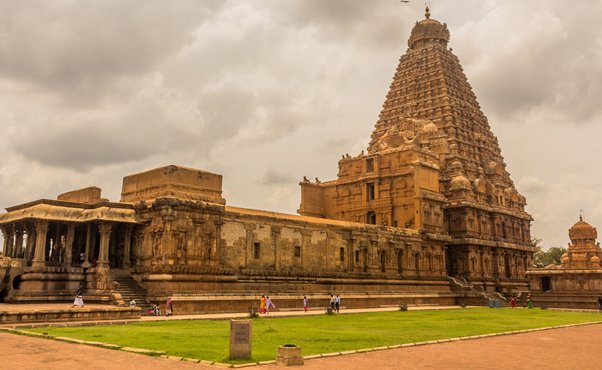
  • Kumbhabishegam at Brahadeeswarar Temple, Thanjavur


    • Tens of thousands of pilgrims thronged Thanjavur in Tamil Nadu’s Cauvery delta to witness the Kumbhabishegam (consecration) ceremony at the Sri Brahadeeswarar Temple.
    • This enormously significant event was held after 23 years — and after the Madras High Court had settled an old argument over the ritual purification process only five days previously.
    • The judgment delivered by the Madurai Bench of the court addressed the struggle for supremacy between the Sanskrit and Tamil traditions.

    Sri Brahadeeswarar Temple and Kumbhabishegam ceremony

    • The Sri Brahadeeswarar Temple (also spelt Brihadisvara, and called Peruvudaiyar Koyil, which translates simply to ‘Big Temple’) is the most famous of the many temples in Thanjavur.
    • The temple, one of the world’s largest and grandest, was built between 1003 AD and 1010 AD by the great Chola emperor Raja Raja I (c. 985-1014 AD).

    Before the High Court

    • The court, in a dispute over which language should be used in the slokas at the kumbhabishegam, agreed with the state government’s affidavit that the ceremony should be in both Sanskrit and Tamil.
    • The Temple committee had demanded that the Kumbhabishegam should be held only in Tamil.
    • The court ruled the choice to be vested with the devotees to seek for their archanas to be performed at their wishes by chanting the manthras either in Tamil or in Sanskrit.
  • Velutheeyam Alloy

    A tri-metal sculpture of Jesus Christ( Healing Christ) in Thiruvalla, Kerala has entered the Universal Records Forum’s (URF) book of world records.

    Velutheeyam

    • The statue was sculpted with an alloy of zinc, copper, and velutheeyam (an alloy of tin and aluminium).
    • A URF team adjudged that the 368-cm tall statue, weighing 2,400 kg, is the largest one of its kind in the world.
    • It took 18 months for sculpting the statue.
  • Indian Institute of Heritage and Conservation

    The Union Govt. has proposed to set up an Indian Institute of Heritage and Conservation under the Ministry of Culture, and develop five archaeological sites as “iconic sites” with onsite museums in Rakhigarhi (Haryana), Hastinapur (Uttar Pradesh), Sivsagar (Assam), Dholavira (Gujarat) and Adichanallur (Tamil Nadu).

    Rakhigarhi

    • Rakhigarhi in Haryana’s Hissar district is one of the most prominent and largest sites of the Harappan civilization.
    • It is one among the five known townships of the Harappan civilization in the Indian subcontinent.
    • In one of the excavations, the skeletal remains of a couple were discovered.
    • Interestingly, of the 62 graves discovered in Rakhigarhi, only this particular grave consisted of more than one skeletal remains and of individuals of the opposite sex together.

    Hastinapur

    • Excavations at Hastinapur, in Meerut district of Uttar Pradesh, were led by Dr B B Lal, who was at the time Superintendent of the Excavations Branch of the ASI.
    • Hastinapur finds mention in the Mahabharata and the Puranas.
    • One of the most significant discoveries made at this site was of the “new ceramic industry”, which was named the Painted Grey Ware, which as per the report represented the relics of the early Indo-Aryans.
    • The sites of Hastinapur, Mathura, Kurukshetra, Barnawa, etc., are identifiable with those of the same name mentioned in the Mahabharata.
    • If that be so, the Painted Grey Ware would be associated with the early settlers on these sites, viz. The Pauravas, Panchalas, etc., who formed a part of the early Aryan stock in India.
    • Such an association may also explain the synchronism between the appearance of the Painted Grey Ware in the Ghaggar-Sutlej valleys and the probable date of the arrival of the Aryans in that area.”

    Sivasagar

    • In Sivasagar, excavations at the Karenghar (Talatalghar) complex between 2000 and 2003 led to the discovery of buried structures in the north-western and north-eastern side of the complex.
    • Among the structural remains found at the site were ceramic assemblages including vases, vessels, dishes, and bowls, etc. Terracotta smoking pipes were also found.
    • Another excavation site in Sivasagar district is the Garhgaon Raja’s palace. Excavation at this site was conducted during 2007-2008.
    • A burnt-brick wall running in north-south orientation was found, along with the remains of two huge circular wooden posts.

    Dholavira

    • Dholavira in Gujarat is located in the Khadir island of the Rann of Kutch, and like Rakhigarhi is one of the sites where the remains of the Harappan civilization have been found.
    • Dholavira is unique because remains of a complete water system have been found here.
    • The people who lived there for an estimated 1,200 years during the Harappan civilization are noted for their water conservation system using rainwater harvesting techniques in an otherwise parched landscape.

    Adichnallur

    • Adichnallur lies in the Thoothukudi district of Tamil Nadu.
    • The urn-burial site was first brought to light during a “haphazard excavation” by a German archaeologist in 1876. Following this, an Englishman Alexander Rae excavated the site between 1889 and 1905.
    • Over the years, the site has gained attention because of three important findings: the discovery of an ancient Tamil-Brahmi script on the inside of an urn containing a full human skeleton, a fragment of a broken earthenware, and the remains of living quarters.
  • Poets quoted in Budget Speech

    Finance Minister has quoted four poets in her Budget speech: Pt. Dinanath Nadim, Avvaiyar, Thiruvalluvar and Kalidas, a sweep from Tamil Nadu to Kashmir, from ancient to contenporary India.

    Dinanath Nadim

    • The Kashmiri nationalist poet Dinanath Nadim was at the centre of Kashmir’s progressive movement, especially in the 1930s, 40s and 50s.
    • Nadim was born in 1916, and passed away in 1988. Nadim wrote in Kashmiri, Hindi and Urdu, and inspired a powerful tradition of Kashmiri poetry.
    • Nadim received the Sahitya Akademi award in 1986 for his opera Shuhul Kull (The Shady Tree).
    • Among his other well known works are Vitasta (Jhelum River), Safar Taa Shehjaar (The Journey And The Shade), Heemaal Taa Naaegrai (Heemaal and Naagraaj), and Bombur Taa Yamberzal (The Bumble Bee And The Narcissus Flower).

    Avvaiyar

    • Avvaiyar translates to “Respected Woman”, and the title was used by several woman poets who contributed to Tamil literature during different periods of time.
    • In the Budget’s section on “Aspirational India”, Sitharaman said, “Our government shall encourage balanced use of all kinds of fertilizers including the traditional organic and other innovative fertilizers.
    • This is a necessary step to change the prevailing incentive regime, which encourages excessive use of chemical fertilisers.”
    • She quoted from Aaathichoodi’s verse 81 which translate to “first tend to till one’s land and then eat. One must eat only after work.”

    Thiruvalluvar

    • Thiruvalluvar is fondly referred to as Valluvar by Tamils. His ‘Tirukkural’, a collection of 1,330 couplets (‘kurals’ in Tamil), are an essential part of every Tamil household.
    • It holds importance in the same way the Bhagavad Gita or the Ramayana are in traditional North Indian Hindu households.
    • He is an essential anchor for Tamils in tracing their cultural roots; Tamils are taught to learn his couplets word-for-word, and to follow his teachings in their day-to-day living.
    • FM quoted Thiruvalluvar: “Pini Inmai Selvam Vilaivu Inbam Emam Ani Enba”, which loosely translates to having the “five jewels” required for a country that is without illness, with wealth, with good crops, with happiness, as well as safety and security.

    Kalidas

    • Kalidas, the legendary Sanskrit scholar, is believed to have lived during the middle of the fourth and early fifth centuries AD, during the reigns of Chandragupta II Vikramaditya and Kumaragupta.
    • Raghuvamsa, from which FM quoted, is one of two long epic poems written by Kalidas.
    • She mentioned the 18th verse: “Surya, the Sun, collects vapour from little drops of water. So does the King. They give back copiously. They collect only for people’s wellbeing.”