China reasserted its claim over Flashpoint Reef (the Scarborough Shoal) in the South China Sea following Philippines’ establishment of defined sea boundaries.
Do you know?
Fiery Cross Reef is a rock located in the Spratly Islands. China first took possession of the feature in 1988.
Mischief Reef is a Low-Tide Elevation (LTE) within the Philippines’ EEZ. It is part of the submerged continental shelf of the adjacent coastal state, which is the Philippines.
About the Flashpoint Reef
It generally refers to Scarborough Shoal, a contested reef in the South China Sea.
Known as Huangyan Dao in China, this reef has become a focal point of territorial disputes between China and the Philippines.
It lies close to the Philippines’ Exclusive Economic Zone (EEZ) but is also claimed by China, which asserts control over nearly the entire South China Sea under its nine-dash line claim.
China took control of the shoal in 2012 after a standoff with the Philippines, despite an international tribunal ruling in 2016 that invalidated China’s claims.
Its significance in the South China Sea
It is strategically located near key shipping lanes that are essential for global trade, with about one-third of global shipping passing through the South China Sea.
Its proximity to the Philippines, Vietnam, and China makes it an ideal location for military outposts, providing control over surrounding waters and a base for monitoring activities in the region.
Control over Scarborough Shoal could allow China to extend its air and naval reach, reinforcing its influence and deterrence capabilities over other Southeast Asian nations.
The South China Sea, including Scarborough Shoal, is believed to hold vast reserves of oil and natural gas—up to 11 billion barrels of oil and 190 trillion cubic feet of natural gas.
This reef is strategically important due to its proximity to rich fishing grounds and potential undersea mineral resources.
PYQ:
[2011] Southeast Asia has captivated the attention of global community over space and time as a geostrategically significant region. Which among the following is the most convincing explanation for this global perspective?
(a) It was the hot theatre during the Second World War
(b) Its location between the Asian powers of China and India
(c) It was the arena of superpower confrontation during the Cold War period
(d) Its location between the Pacific and Indian oceans and its preeminent maritime character
Philippine forces conducted combat exercises in the South China Sea to practice retaking the Loaita Island in the disputed waters.
About Loaita Island:
Loaita Island, also known as Kota Island, has an area of 6.45 hectares and is the 10th largest of the naturally-occurring Spratly Islands.
The island is administered by the Philippines as part of Kalayaan, Palawan, and is also claimed by China, Taiwan, and Vietnam.
Loaita Island fringes the Loaita Bank, which includes shoals and reefs, and its western side features calcarenite outcrops visible at low tide.
The island is covered with mangrove bushes, coconut palms, and other small trees.
On May 22, 1963, a sovereignty stele was rebuilt on Loaita Island by South Vietnam, marking its claim.
The Philippines has stationed soldiers on the island since 1968, and the island contains minimal structures serving as shelters for the soldiers.
China also reasserted its claim over Flashpoint Reef (the Scarborough Shoal) in the South China Sea following Philippines’ establishment of defined sea boundaries.
About the Flashpoint Reef
Flashpoint Reef generally refers to Scarborough Shoal (part of the
Spratly Islands), a contested reef in the South China Sea.
Known as Huangyan Dao in China, this reef has become a focal point of territorial disputes between China and the Philippines.
Flashpoint Reef lies close to the Philippines’ Exclusive Economic Zone (EEZ); which asserts control over the entire South China Sea under its nine-dash line claim.
China took control of the shoal in 2012 after a standoff with the Philippines, despite an international tribunal ruling in 2016 that invalidated China’s claims.
Do you know?
Fiery Cross Reef is a rock located in the Spratly Islands. China first took possession of the feature in 1988.
Mischief Reef is a Low-Tide Elevation (LTE) within the Philippines’ EEZ. It is part of the submerged continental shelf of the adjacent coastal state, which is the Philippines.
PYQ:
[2018] Consider the following pairs:
Regions sometimes Country mentioned in news
Catalonia — Spain
Crimea — Hungary
Mindanao — Philippines
Oromia — Nigeria
Which of the pairs given above are correctly matched?
Present an account of the Indus Water Treaty and examine its ecological, economic and political implications in the context of changing bilateral relations. (UPSC CSE 2016)
Q) With reference to the Indus river system, of the following four rivers, three of them pour into one of them which join the Indus direct. Among the following, which one is such river that joins the Indus direct? (UPSC CSE 2021)
a) Chenab b) Jhelum c) Ravi d) Sutlej
Mentor’s Comment: The Indus Water Treaty was signed in 1960 after extensive negotiations facilitated by the World Bank. It has successfully governed water sharing between India and Pakistan for over six decades, surviving numerous conflicts between the two nations.
The IWT has survived multiple conflicts between India and Pakistan, including three wars and ongoing military tensions. Pakistan has consistently raised objections to hydropower projects initiated by India, particularly the Kishanganga and Ratle river developments, claiming they violate the treaty’s provisions.
However, recent tensions have prompted India to reconsider its obligations under this long-standing agreement. Today’s editorial discusses several critical aspects related to India’s recent formal notice to Pakistan regarding the treaty.
_
Let’s learn!
Why in the News?
Indian Government has issued a formal notice to Pakistan requesting modifications to the Indus Water Treaty, citing “fundamental and unforeseen changes“.
Overview of the IWT and Recent Developments:
The Indus Waters Treaty (IWT), signed in 1960 between India and Pakistan, governs the allocation and management of water resources from the Indus River system. This treaty allows India unrestricted use of the eastern rivers (Sutlej, Beas, and Ravi) while allocating the western rivers (Indus, Jhelum, and Chenab) primarily to Pakistan. However, recent tensions have prompted India to formally request modifications to the treaty, raising significant geopolitical implications.
What prompted India to seek modifications to the Indus Waters Treaty?
Demographic Changes: Increasing population pressures necessitate greater water resource management.
Environmental Issues: The need for sustainable practices and clean energy development to meet emission targets.
Security Concerns: The impact of persistent cross-border terrorism on water management and treaty implementation.
Disputes over Hydropower Projects: Tensions have arisen over India’s hydroelectric projects on rivers like Kishanganga and Ratle, which Pakistan claims violate the treaty. India believes these projects comply with the agreement.
Perceived Imbalance: India feels the treaty disproportionately favors Pakistan, which receives about 80% of the Indus river system’s water, while India manages only 20%. This perceived imbalance has led to calls for a fairer distribution of resources.
How does the proposed modification process work under the treaty?
India has issued a formal notice to Pakistan that requires a reassessment of the treaty’s obligations as follows:
According to Article XII (3), any modifications to the treaty must be made through a duly ratified treaty concluded between the two governments.
Once a formal notice is issued, Pakistan has a specified period (typically three months) to respond to the request for renegotiation. The outcome of this response will determine the next steps in the modification process.
If Pakistan agrees to negotiate, both countries will enter discussions aimed at revising the treaty. This process is expected to address various concerns raised by India, including demographic changes, environmental issues, and security threats.
If Pakistan does not accept India’s proposal for modification, India retains the option to call for the termination of the treaty, although this would likely escalate tensions further.
The IWT also includes a graded Dispute Resolution Mechanism, which operates at three levels:
Level 1: Initial discussions occur at the level of the Permanent Indus Commission (PIC), where both parties can clarify any questions regarding planned projects. Level 2: If differences remain unresolved, they escalate to involve a Neutral Expert, who provides technical advice. Level 3: Finally, if disputes persist, they can be taken to a Court of Arbitration for binding resolution.
What implications could this modification have for India-Pakistan relations?
Diplomatic Strain and Increased Tensions: Pakistan may view India’s request as a threat to its water rights, leading to escalated tensions and potential conflicts over water resources.
The process of negotiating modifications could be challenging due to historical mistrust, making it hard for both countries to reach a consensus.
Water Scarcity Concerns: Modifying the treaty could either improve or worsen water security for both nations. Pakistan, which relies heavily on the Indus system, may feel particularly vulnerable, increasing the risk of conflict.
Geopolitical Ramifications: Changes to the treaty might destabilize the region, potentially leading to increased militarization or conflict, especially given both countries’ nuclear capabilities.
International Involvement: The World Bank and other international bodies may need to intervene if negotiations fail, complicating the situation and potentially drawing in other regional powers.
Way Forward: India’s request for modifications to the Indus Waters Treaty signals a significant shift in its approach to water resource management with Pakistan. As both countries face mounting pressures from changing demographics, environmental challenges, and security concerns, the future of this treaty may hinge on their willingness to engage in constructive dialogue and negotiate terms that reflect current realities.
According to NITI Aayog CEO, India should join the Regional Comprehensive Economic Partnership (RCEP) and the Comprehensive and Progressive Agreement for Trans-Pacific Partnership (CPTPP).
What are the implications of India joining RCEP and CPTPP?
Enhanced Trade Opportunities: Joining RCEP and CPTPP could significantly boost India’s trade by providing access to larger markets, particularly in Asia-Pacific regions.
These agreements encompass a wide range of goods and services, potentially increasing India’s exports, especially from its Micro, Small & Medium Enterprises (MSMEs), which account for 40% of exports.
Integration into Global Supply Chains: Participation in these trade blocs would facilitate India’s integration into global supply chains, allowing it to benefit from the ‘China plus one’ strategy that many countries are adopting to diversify their supply sources away from China.
This could enhance India’s manufacturing sector and attract foreign investment.
Regulatory Alignment: Being part of these agreements would necessitate aligning India’s regulatory frameworks with international standards, which could improve the business environment and attract more foreign direct investment (FDI).
How does India’s current tariff structure affect its competitiveness in global trade?
India’s current tariff structure is characterized by relatively high average tariffs compared to other major economies. For instance:
Average Tariffs: India has an average applied tariff of approximately 13.8%, which is higher than that of China (9.8%) and the U.S. (3.4%) but lower than some other countries when considering trade-weighted averages.
High Bound Tariffs: Many of India’s bound tariff rates on agricultural products are among the highest globally, ranging from 100% to 300%, creating significant barriers for foreign exporters.
What are the risks associated with joining RCEP, particularly concerning competition with China?
Increased Competition with China: One of the primary risks of joining RCEP is the potential for increased competition with Chinese firms, which may have cost advantages due to economies of scale and established supply chains.
Pressure on Domestic Industries: Opening up to international competition might pressure local industries, particularly in sectors where they are less competitive compared to their counterparts in member countries.
This could lead to job losses and require significant adjustments within certain sectors.
Easy geopolitical Impact on the economy: Increased reliance on trade agreements may expose India to external economic fluctuations, particularly if global demand shifts or if geopolitical tensions impact trade dynamics within these blocs.
Way forward:
Selective Tariff Reductions and Safeguards for Sensitive Sectors: India should negotiate phased tariff reductions and secure safeguards for vulnerable sectors like agriculture and small manufacturing.
This approach would protect local industries while allowing gradual integration into RCEP and CPTPP markets.
Strengthening Domestic Industries and MSMEs: India can boost competitiveness by enhancing MSME support through targeted subsidies, infrastructure improvements, and technology upgrades. Strengthening these sectors will help India leverage new market access and build resilience against foreign competition.
Mains PYQ:
Q Evaluate the economic and strategic dimensions of India’s Look East Policy in the context of the post-Cold War international scenario. (UPSC IAS/2016)
The second meeting of the India-CARICOM Joint Commission took place virtually on November 6. The first meeting was held in Georgetown, Guyana on June 2, 2015.
About Caribbean Community (CARICOM):
Details
Establishment
Established in 1973 under the Treaty of Chaguaramas.
Main Objectives
• Promote economic integration and cooperation among member states.
• Ensure equitable sharing of integration benefits.
• Coordinate foreign policy among member states.
Membership
15 Full Members: Antigua and Barbuda, The Bahamas, Barbados, Belize, Dominica, Grenada, Guyana, Haiti, Jamaica, Montserrat, Saint Kitts and Nevis, Saint Lucia, Saint Vincent and the Grenadines, Suriname, Trinidad and Tobago. Associate Members: Anguilla, Bermuda, British Virgin Islands, Cayman Islands, Turks and Caicos Islands. Observers: Aruba, Colombia, Dominican Republic, Mexico, Puerto Rico, Venezuela.
Leadership
Chairmanship rotates every 6 months among the Heads of member states.
Administrative Structure
CARICOM Secretariat in Georgetown, Guyana, serves as the main administrative body, led by the Secretary-General.
Caribbean Court of Justice (CCJ)
Established in 2007, the CCJ acts as the final appellate court for CARICOM members and addresses regional trade disputes.
Key Initiatives
• Single Market and Economy (CSME)
• Coordination in foreign policy
• Development cooperation
• Cultural exchange and integration
Significance
CARICOM serves as a vital platform for regional collaboration, enhancing economic growth, political stability, and cultural unity among Caribbean nations.
According to a joint report by the UN and the Intergovernmental Authority on Development (IGAD), at least 65 million people are food insecure in the Horn of Africa.
Food Insecurity in Horn of Africa Region:
Of the 65 million affected, 36 million reside in IGAD member states: Djibouti, Eritrea, Ethiopia, Kenya, Somalia, South Sudan, Sudan, and Uganda.
Main Causes:
Extreme weather and climate change are primary drivers of food insecurity, leading to severe conditions.
Conflict has also destroyed infrastructure and sources of food and income, worsening the situation.
About theHorn of Africa:
Details
Location
A peninsula in northeastern Africa, extending into the Arabian Sea.
Geographical Composition
Comprises the countries of Djibouti, Eritrea, Ethiopia, and Somalia.
Population
Approximately 115 million people.
Area
Covers about 2 million square kilometers.
Geographical Features
Includes mountains, plateaus, deserts, and coastlines. Significant areas include the Ethiopian Plateau, Ogaden Desert, and Eritrean and Somalian coasts.
Historical Name
Known as Bilad al Barbar or Berber Land in ancient times.
Significance
Known for diverse landscapes and unique biodiversity.
Strategic importance due to proximity to oil-producing regions in the Middle East.
Key Bodies of Water
Lies to the south of the Gulf of Aden and along the southern boundary of the Red Sea.
Grand Renaissance Dam: Under construction by Ethiopia on the Nile River, impacting regional water dynamics.
Shipping Routes
Major shipping routes pass through the Red Sea, with Djibouti serving as a critical maritime hub for international trade.
Climate
Characterized by a mix of arid, semi-arid, and temperate climates, influencing agriculture and livelihoods in the region.
Geopolitical and strategic importance for India:
The Horn of Africa is located near the Middle East, a region vital for global oil production.
Around 40% of Middle Eastern oil flows through the Red Sea shipping lanes adjacent to the Horn, making it a critical point for energy security.
Djibouti and the surrounding areas control access to the Bab el Mandeb Strait, which links the Red Sea to the Gulf of Aden and is one of the world’s busiest maritime chokepoints.
Several countries, including the US, France, and China, have established military bases in Djibouti to secure their interests in this strategic region.
China’s presence in Djibouti and other Horn of Africa nations aligns with its “string of pearls” strategy, which aims to secure military and economic footholds around India.
The Horn region serves as a gateway to Africa for Indian investments in infrastructure, energy, and mining sectors.
The region, particularly Somalia, poses threats from Pirates and terrorist groups like Al-Shabaab.
PYQ:
[2016] Consider the following statements:
The India-Africa Summit
held in 2015 was the third such Summit
was actually initiated by Jawaharlal Nehru in 1951
Which of the statements given above is/are correct?
(a) 1 only
(b) 2 only
(c) Both 1 and 2
(d) Neither 1 nor 2
New Delhi’s enthusiastic reception of Trump 2.0 will be moderated by apprehensions about his social media posts and harsh stance on trade and tariffs.
Trump 2.0 Impact on India-U.S. Trade Relations:
Trade Negotiations and Free Trade Agreement (FTA): Trump is likely to pick up negotiations for an India-U.S. Free Trade Agreement (FTA), a process that began during his first term but was shelved after his loss in 2020. This could provide opportunities for greater market access and trade partnerships.
Focus on Tariffs: Trump’s administration has been vocal about reducing trade tariffs. This could lead to pressure on India to lower its tariffs, as it did during Trump 1.0 when counter-tariffs were imposed, and India lost its Generalized System of Preferences (GSP) status.
U.S. Military and Technology Access: India is likely to benefit from increased access to U.S. military hardware and technology. Trump’s administration has historically supported closer defense ties with India, which could be further solidified in his second term, benefiting India’s defense capabilities.
Energy Deals and Trade: Trump could encourage India to increase purchases of U.S. oil and liquefied natural gas (LNG), as seen with previous deals like the Driftwood LNG plant. This could bolster trade, while also positioning the U.S. as a key energy partner for India.
Note: The Generalized System of Preferences (GSP) is a U.S. trade program that grants duty-free access to certain goods from developing countries to promote economic growth.
Implications for India’s Foreign Policy (Russia and Iran):
Relations with Russia: Trump’s pro-Russia stance suggests that India will face less pressure to distance itself from Moscow.
While previous U.S. administrations have criticized India’s defense ties with Russia, Trump may adopt a more pragmatic approach, focusing on other strategic aspects like defense cooperation without pressing India on Russian relations.
Iran Policy: Trump’s previous sanctions against Iran caused India to reduce its oil imports from Iran. Under Trump 2.0, India is likely to face fewer sanctions-related pressures, as Trump has historically shown a less critical stance on countries like Iran compared to other U.S. leaders.
India could therefore maintain or revive its ties with Iran without facing significant U.S. backlash.
Challenges from Trump’s Domestic Policies (Immigration and Technology Transfer):
Immigration and H-1B Visa Policy: Trump’s tough stance on immigration and H-1B visas could pose challenges for India, especially in terms of its highly skilled workforce.
India’s tech sector relies heavily on H-1B visas, and stricter immigration policies under Trump 2.0 could limit opportunities for Indian professionals to work in the U.S., affecting India’s IT and services sector.
Technology Transfer: Trump has shown a preference for protectionist policies, which may slow down the transfer of advanced technologies to India.
This could impact India’s aspirations to become a global hub for high-tech industries, particularly in sectors like artificial intelligence, cybersecurity, and defence technology.
Increased Focus on U.S. Jobs: Trump’s focus on bringing jobs back to the U.S. may result in policies that prioritize domestic industries over foreign collaborations, limiting the scope for Indian companies in certain sectors and creating trade tensions.
Way forward:
Strengthen Bilateral Trade Negotiations: India should actively engage in FTA negotiations with the U.S., seeking mutually beneficial terms that address tariff concerns, market access, and defense collaboration, while also ensuring safeguards for sensitive sectors like technology and agriculture.
Diversify Technology and Energy Partnerships: India can focus on diversifying its sources of technology transfer and energy imports, strengthening ties with other global players in these sectors to mitigate potential risks from Trump’s protectionist policies and ensuring sustainable growth in high-tech industries and energy security.
Mains PYQ:
Q What is the significance of Indo-US defence deals over Indo-Russian defence deals? Discuss with reference to stability in the Indo-Pacific region. (UPSC IAS/2020)
PYQ Relevance: Q) The question of India’s Energy Security constitutes the most important part of India’s economic progress. Analyze India’s energy policy cooperation with West Asian Countries. (UPSC CSE 2017) Q) In what ways would the ongoing US-Iran Nuclear Pact Controversy affect the national interest of India? How should India respond to its situation? (UPSC CSE 2018) Q) “What introduces friction into the ties between India and the United States is that Washington is still unable to find for India a position in its global strategy, which would satisfy India’s National self-esteem (UPSC CSE 2019)
Mentor’s Comment:The United States is a dominant global power with the largest economy and military. Its foreign policy decisions significantly shape international relations, impacting everything from trade agreements to military alliances and conflict resolutions.
The U.S. has been instrumental in establishing and maintaining key international organizations like the United Nations, NATO, and the World Bank, which play crucial roles in global governance and stability.
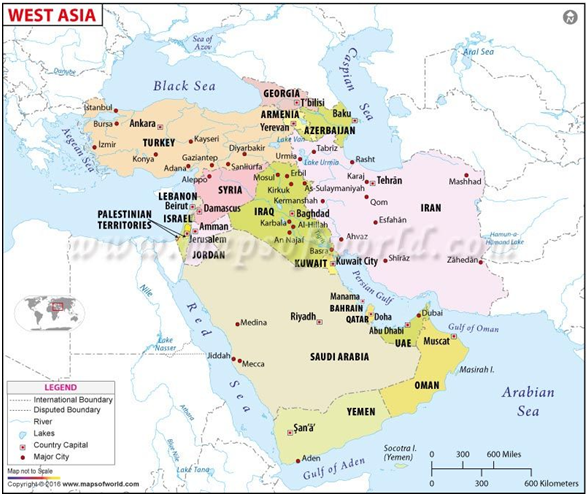
Donald Trump’s second term as President of the United States following his recent electoral victory refers to the anticipated policies and implications on global geopolitics especially in present West Asian crises.
Today’s editorial discusses the implications of Donald Trump’s return to the U.S. presidency for the Middle East, particularly in light of recent conflicts and his previous foreign policy actions.
_
Let’s learn!
Why in the News?
Donald Trump’s return to the presidency is making headlines for several reasons, reflecting both the implications of his policies and the broader impact on U.S. society and global geopolitics.
Trump’s Past Foreign Policy Record in West Asia:
Pro-Israel Stance: Trump’s first term was characterized by strong support for Israel, including: Moving the U.S. embassy to Jerusalem; Recognizing Israel’s annexation of the Golan Heights; Withdrawing from the Iran nuclear deal.
Abraham Accords: Initiated normalization between Israel and several Arab nations, aimed at countering Iran.
What changes can be expected in U.S. foreign policy towards Israel and Palestine under Trump?
Strong Support for Israel: Trump is likely to continue robust Military and Diplomatic support for Israel. For example, he may endorse Israeli military actions in Gaza, similar to his previous encouragement for Israel to “finish the job” against Hamas during conflicts.
Trump may recognize sovereignty by reaffirming policies like recognizing Jerusalem as Israel’s capital and supporting Israeli claims over territories such as the Golan Heights.
Limited Engagement with Palestinians: The USA is expected for a continuation of the previous administration’s approach, which involved cutting funding to the Palestinian Authority and sidelining Palestinian voices in peace negotiations.
For example, a New Peace initiative (one-sided) is likely to favor Israeli interests, similar to the “Peace to Prosperity” plan released in 2020, which was criticized for not adequately addressing Palestinian rights.
Regional Relations and Normalization: Trump may push for more Arab nations to normalize relations with Israel, building on agreements with countries like the UAE and Bahrain by expanding Abraham Records. This could further isolate the Palestinian cause.
Secondly, we can expect an aggressive policy towards Iran, including sanctions and military support for Israel against Iranian influence, like Trump’s previous withdrawal from the Iran nuclear deal.
Domestic Politics and UN Considerations: While maintaining strong ties with Israel, we must remember that Trump may prioritize domestic concerns over international engagement, reflecting a growing isolationist sentiment within the USA’s Republican Party (particularly among Arab and Muslim communities).
How will Trump’s policies affect U.S.-Iran relations and Regional stability?
Resuming Aggressive Policies: Trump is likely to reintroduce stringent economic sanctions on Iran, which previously led to a significant drop in Iranian oil exports.
Expect increased military readiness and potential strikes against Iranian nuclear facilities, similar to the targeted killing of General Qasem Soleimani in 2020.
Nuclear Program Implications: U.S. support for Israeli military actions against Iran could provoke retaliatory measures from Tehran.
For example, Iran may respond to renewed sanctions by further advancing its nuclear program, moving closer to weapons capability.
Shifts in Regional Alliances: Increased backing for Israel may lead to more aggressive actions and proxy conflicts against Iranian interests, heightening conflicts in Gaza and Lebanon.
Economic Consequences for Iran: Renewed sanctions could lead to further currency depreciation in Iran and increased public discontent due to economic instability. Iran may boost military spending, straining its economy further.
Did you Know? Trump’s plans under “Project 2025” include significant rollbacks on climate change initiatives, stricter immigration enforcement, and potential restrictions on abortion and LGBTQ+ rights.
What implications does Trump’s “America First” policy have for India-U.S. engagement?
Economic and Trade Policies: Trump’s protectionist “America First” agenda may lead to higher tariffs on Indian goods, particularly in textiles, pharmaceuticals, and automobiles. This could strain trade relations, as India relies heavily on exports to the U.S.
Stricter Immigration policy changes to H-1B visa regulations could significantly impact India’s IT sector, raising costs for Indian firms that depend on access to the American labor market.
Strengthened Defense Ties: Trump is expected to maintain strong defense cooperation with India through frameworks like the Quad (with Japan and Australia), and with India’s security needs against China. India may benefit from increased U.S. support in countering Chinese actions in the Indo-Pacific region.
Hence, Trump’s policies may create opportunities, but they also pose challenges due to potential economic friction from protectionist measures and immigration restrictions.
Relations with Russia: Trump’s pro-Russia stance suggests that India will face less pressure to distance itself from Moscow.
While previous U.S. administrations have criticized India’s defense ties with Russia, Trump may adopt a more pragmatic approach, focusing on other strategic aspects like defense cooperation without pressing India on Russian relations.
Way Forward: India might need to navigate a complex landscape as it balances its longstanding ties with Russia against growing relations with the U.S., especially if Trump adopts a less confrontational stance towards Russia compared to previous administrations.
Q) In what ways would the ongoing US-Iran Nuclear Pact Controversy affect the national interest of India? How should India respond to its situation? (UPSC CSE 2018) Q) The question of India’s Energy Security constitutes the most important part of India’s economic progress. Analyze India’s energy policy cooperation with West Asian Countries. (UPSC CSE 2017)
Prelims
Q) Which of the following is not a member of ‘Gulf Cooperation Council’? (UPSC CSE 2016) a) Iran b) Saudi Arabia c) Oman d) Kuwait
Mentor’s Comment:Iran’s geographical position between the Persian Gulf and the Caspian Sea makes it a crucial link for India to access Central Asia and the Middle East. This is particularly important given India’s limited land connectivity to these regions due to tensions with Pakistan.
Strategically, Iran possesses one of the largest reserves of crude oil and natural gas in the world. Strengthening ties with Iran can help India secure its energy needs, especially as it seeks to diversify its sources of oil imports.
Security wise, both countries share concerns about regional stability, particularly regarding extremist groups.
Today’s editorial discusses the recent developments in the relationship between India and Iran, particularly in light of their interactions during the BRICS summit held in Kazan, Russia.
_
Let’s learn!
Why in the News?
The present 16th BRICS Summit (October 22-24, 2024) meeting marked the first interaction between Indian PM Narendra Modi and Iranian Prez Masoud Pezeshkian, since Pezeshkian took office following the death of former President Ebrahim Raisi.
What were the key discussions? • On Bilateral Ties: Both leaders reviewed the full spectrum of India-Iran relations, emphasizing the potential for deeper cooperation across various sectors, particularly in connectivity and trade. • On Strategic Projects: The leaders discussed critical initiatives such as the Chabahar Port and the International North-South Transport Corridor (INSTC), which are vital for enhancing trade links with Central Asia and supporting Afghanistan’s reconstruction efforts. • On Regional stability: Given the ongoing conflict in West Asia, both leaders acknowledged India’s unique position to advocate for peace and de-escalation. Modi expressed concerns over escalating violence and emphasized the need for dialogue.
History of Strong Civilization Ties: • Common Origins: Both civilizations are believed to have originated from a common Indo-Iranian ancestry, with linguistic and cultural exchanges dating back to prehistoric times. Historical trade routes facilitated exchanges between the Indus Valley Civilization and ancient Persia, with goods such as silver, copper, and precious stones being traded across the Persian Gulf. • Cultural Interactions: The spread of Buddhism from India to Persia significantly influenced Iranian culture. Later, Sufism fostered spiritual ties, leading to deep cultural exchanges in literature and philosophy. Persian literature became highly influential in India during the Mughal-Safavid Period. • Modern Diplomatic Relations: India and Iran formalized their relationship with a friendship treaty in 1950. The recent collaborations focus on energy security and regional stability, highlighted by projects like the development of Chabahar Port, which enhances connectivity between India, Iran, and Afghanistan.
How does the inclusion of Iran in BRICS impact India’s strategic interests?
Economic Opportunities: Iran’s membership can boost bilateral trade through initiatives like the Chabahar Port, enhancing India’s access to Central Asia.
Strengthened ties may facilitate oil imports from Iran, helping India diversify its energy sources.
Geopolitical Dynamics: BRICS provides a platform for India to promote a multipolar world, and balance Western dominance in global affairs.
Including Iran could foster dialogue and reduce tensions in the Middle East, benefiting India’s regional interests.
Complex Relationships: India must manage its relationship with Iran while maintaining ties with Western allies, which BRICS dynamics could complicate.
Iran’s inclusion may enhance China’s leverage in the region, posing challenges for India’s strategic positioning.
What are the potential economic benefits for India from strengthened ties with Iran through BRICS?
Increased Trade Opportunities: A Preferential Trade Agreement (PTA) could boost trade in various sectors, enhancing exports of Indian goods like agriculture and machinery to Iran.
Iran serves as a gateway for India to reach Central Asian markets via the Chabahar Port, facilitating trade routes that bypass Pakistan.
Energy Security: Strengthening ties may allow India to resume importing oil from Iran, helping meet its growing energy needs.
Potential projects like the Iran-Oman-India gas pipeline could provide India with a direct source of natural gas, diversifying its energy supply.
Infrastructure Development: India’s investment in Chabahar Port enhances connectivity to Afghanistan and Central Asia, offering an alternative route for trade.
This corridor aims to streamline trade between India, Iran, and Russia, reducing transit times and improving trade efficiency.
How does the BRICS summit reflect shifting geopolitical alliances and the future of multilateralism?
Challenge to U.S.-led order: The expansion of BRICS, including new members like Iran, signals a desire among emerging economies to create a more balanced multipolar world that reduces reliance on Western powers.
Geopolitical Fragmentation: The inclusion of countries with differing agendas, such as India’s ties with the West and Russia-China’s anti-Western stance, complicates the bloc’s unity and effectiveness.
This fragmentation may lead to a division of global politics into competing alliances, potentially undermining existing multilateral platforms like the G20.
Focus on South-South Cooperation: BRICS emphasizes cooperation among developing nations in trade and sustainable development, enhancing economic ties and addressing common challenges.
Conclusion: India and Iran can achieve a lot together. There is recognition that too much time has already been lost. India’s ability to de-hyphenate ties and engage independently with nations that are adversarial to each other, such as Iran and Israel, could be useful in driving the ties.
Two earthquakes struck Iran sparking rumours of a nuclear test.
However, the Comprehensive Nuclear-Test-Ban Treaty Organization (CTBTO) in Vienna swiftly refuted these claims using its International Monitoring System (IMS) designed to detect nuclear tests.
About International Monitoring System (IMS):
IMS is a global monitoring network established by the CTBTO to detect nuclear explosions anywhere in the world.
It is a global network of over 300 monitoring facilities across 89 countries, using seismic, infrasound, hydroacoustic, and radionuclide technologies to detect nuclear explosions worldwide.
The CTBTO shares IMS data with member-states in near real-time, ensuring access to accurate, verified data.
Over 16 gigabytes of data are transmitted daily from IMS stations to the CTBTO’s International Data Centre (IDC) in Vienna.
Analysts use this IMS data to distinguish natural events (like earthquakes) from nuclear explosions.
Created to implement the Comprehensive Nuclear-Test-Ban Treaty (CTBT), opened for signature in 1996.
Purpose of the CTBT
Aims to ban all nuclear explosions worldwide, regardless of purpose (military or civilian).
Key Elements of the CTBT
• Total Ban on Nuclear Tests: Prohibits all nuclear explosions.
• Verification Mechanisms: Establishes a global monitoring network and allows for on-site inspections.
• Distant Monitoring by IMS: Employs technologies for monitoring compliance.
Signature and Ratification
Signed by 183 states and ratified by 164; has not entered into force as eight specific states among 44 Annex-2 states have yet to ratify.
Key Non-Ratifying States
The states that have not ratified the treaty include United States, China, Iran, Egypt, Israel, India, Pakistan, and North Korea.
Compliance Verification
CTBT establishes a global monitoring network of over 300 facilities for detection and verification, along with provisions for on-site inspections.
Significance
Plays a crucial role in global efforts toward nuclear disarmament and non-proliferation, fostering international cooperation and stability.
PYQ:
[2018] What is/are the consequence/consequences of a country becoming the member of the ‘Nuclear Suppliers Group’?
It will have access to the latest and most efficient nuclear technologies.
It automatically becomes a member of “The Treaty on the Non-Proliferation of Nuclear Weapons (NPT)”.
Which of the statements given above is/are correct?
(a) 1 only
(b) 2 only
(c) Both 1 and 2
(d) Neither 1 nor 2
[2011] Recently, the USA decided to support India’s membership in multilateral export control regimes called the “Australia Group” and the “Wassenaar Arrangement”. What is the difference between them?
The Australia Group is an informal arrangement which aims to allow exporting countries to minimize the risk of assisting chemical and biological weapons proliferation, whereas the Wassenaar Arrangement is a formal group under the OECD holding identical objectives.
The Australia Group comprises predominantly Asian, African and North American countries whereas the member countries of Wassenaar Arrangement are predominantly from the European Union and American Continents.
Which of the statements given above is/are correct?