💥Join UPSC 2027,2028 Mentorship (July Batch) + XFactor Notes & Microthemes PDF

Subject: International Relations

  • Strategy and Foreign Affairs for India in 2024

    Central Idea

    • Contradiction in Global Aspirations: Despite calls for peace, 2023 witnessed the continuation and emergence of significant conflicts, notably between Russia and Ukraine, and in the Gaza Strip.
    • China’s Stance: Amidst its economic challenges, China’s aggressive posture remains a concern for the West and India, adding to the global tension.

    2023: Strategic Realities and Challenges

    Crisis in the Middle East: The Hamas attack disrupted efforts to normalize Israel-Arab relations, leading to a devastating response from Israel and derailing the reconciliation process.

    1. Stress in India-US Ties: Allegations of an Indian official’s involvement in an assassination plot have strained relations, with India promising to investigate if provided with information.
    2. Russia-Ukraine War Fatigue: The prolonged conflict sees the West grappling with funding challenges, while Russia, despite sanctions, maintains resilience, partly due to its closeness with China.
    3. India’s Maldives Challenge: The new government’s request for India to withdraw military personnel and terminate agreements reflects its proximity to China, complicating India’s strategic position.
    4. China, the Biggest Worry: The ongoing border standoff and China’s influence in the region, including its ties with Russia and the Maldives, continue to be India’s primary strategic concerns.
    5. G20 and Global South Positioning: India’s leadership in the G20 and its role in uniting the Global South reflect its aspiration to continue the legacy of Non-Alignment adapted to modern realities.
    6. Engagement in Kabul: India’s cautious engagement with the Taliban and coordination for consular services indicate a nuanced approach to Afghanistan, balancing security and diplomatic needs.

    2024: Anticipating Challenges and Opportunities

    • Impact of Lok Sabha Elections: The election outcome will significantly influence India’s foreign policy, with a stronger mandate potentially leading to more assertive stances, while a weaker mandate might reflect coalition compulsions.
    • US & Canada Relationships: Navigating the complexities arising from the assassination plot allegations and maintaining robust ties with both nations will be crucial for India.
    • New Government in Pakistan: The post-election scenario in Pakistan might offer a window for re-engagement, depending on the political dynamics and India’s strategic choices.
    • Outcome in Bangladesh: India’s interest in the continuation of Sheikh Hasina’s government reflects security and connectivity priorities, with the opposition viewed with caution.
    • Continuing Deadlock with China: The border standoff and its potential escalation will be a critical factor in India’s security and diplomatic strategy, especially in an election year.
    • West Asia Dynamics: India’s evolving stance in the Israel-Hamas conflict and its implications for its position in the Global South will be closely watched, with a focus on balancing relations and principles.
    • Future of the War in Ukraine: India’s balancing act between its economic interests and international pressures, especially in its relationship with Russia, will continue to be a delicate matter.
    • Trade Pacts and Tech Partnerships: Finalizing trade agreements and enhancing tech partnerships with the West will be key areas of focus, with potential major developments expected in 2024.

    Conclusion

    • Balancing Act: India’s foreign policy in the coming years will involve navigating a complex array of global conflicts, bilateral tensions, and internal political dynamics.
    • Strategic Posture: The outcomes of various global and regional conflicts, along with India’s own electoral politics, will shape its strategic and foreign policy posture, reflecting a blend of continuity and change.
  • India-Oman to sign FTA in Jan 2024

    oman

    Central Idea

    • India and Oman are rapidly progressing in their negotiations for a Comprehensive Economic Partnership Agreement (CEPA), expected to be signed in January 2024.
    • The second round of talks was recently concluded in Muscat, indicating both countries’ eagerness to finalize the deal.

    India-Oman Trade Relations

    • Export Destination: Oman is India’s third-largest export destination in the Gulf Cooperation Council (GCC), making the FTA crucial for enhancing Indian exports.
    • Current Trade Dynamics: Over 80% of Indian goods currently enter Oman with an average import duty of 5%, and the FTA aims to reduce these barriers.

    Potential Benefits of the FTA

    • Boost in Exports: The agreement is expected to significantly increase Indian exports in various sectors, including gasoline, iron and steel, electronics, and machinery.
    • Key Export Sectors: Sectors like motor gasoline, iron and steel products, electronics, machinery, textiles, plastics, boneless meat, essential oils, and motor cars are likely to benefit from duty elimination.

    Economic Context and Strategic Importance

    • Oman’s Economy: With a GDP of about USD 115 billion and a higher per capita income compared to India, Oman presents a market for diversified and higher-value Indian goods and services.
    • Bilateral Trade Growth: India-Oman bilateral trade reached USD 12.39 billion in 2022-23, with Indian exports and imports showing significant growth.
    • Oman’s Position: Oman’s strategic location in the Arabian Gulf region, with key ports along the Arabian Sea and the Gulf of Oman, is of utmost importance to India.
    • Historical Ties: The longstanding connection between Oman’s ruling family and India has fostered strong bilateral relations, with a significant Indian community contributing to these ties.

    India-Oman Strategic Partnership

    • Defense and Security: The partnership, strengthened by a MoU signed in 2005, includes joint exercises and cooperation in maritime security.
    • Trade and Commerce: Bilateral trade and joint ventures are key pillars of engagement, with significant Indian investment in Oman.

    Future Collaborations and Regional Stability

    • Space and Rare Earth Metals: Prospects for cooperation in space exploration and rare earth metals exploration are on the horizon.
    • Connectivity Projects: Oman could play a crucial role in India’s proposed connectivity corridors and infrastructure projects in West Asia.

    Conclusion

    • Shared Interests: The deepening India-Oman relationship, marked by shared interests and mutual respect, positions Oman as India’s gateway to West Asia.
    • Broader Engagement: As India seeks to expand its global outreach, particularly in West Asia, Oman’s strategic importance and balanced foreign policy make it a key ally in the region.
  • Review of ASEAN- India Trade in Goods Agreement (AITGA)

    asean

    Central Idea

    • India seeks to modernize the ASEAN India Trade in Goods Agreement (AITGA) to reduce the significant trade deficit with ASEAN nations in February 2023 with a target to complete the revamp by 2025.

    About ASEAN-India Trade in Goods Agreement (AITGA)

    Details
    Signing Date August 13, 2009, w.e.f. January 1, 2010.
    Objectives Eliminate tariffs and liberalize trade in goods.

    Facilitate economic integration between ASEAN and India.

    Key Features Gradual reduction and eventual elimination of tariffs

    Measures to facilitate trade and customs efficiency

    Member Countries ASEAN Members: Brunei, Cambodia, Indonesia, Laos, Malaysia, Myanmar, Philippines, Singapore, Thailand, Vietnam and India.
    Economic Impact Growth in trade between India and ASEAN countries – Diversification of trade basket.
    Recent Developments Discussions on reviewing and upgrading the agreement.
    Challenges Concerns over trade imbalances.

    Potential impact on certain domestic industries in India.

    Strategic Significance Part of India’s “Act East” policy.

    Step towards broader regional economic integration.

    Need for review

    • Significant Trade Partner: ASEAN countries, including Indonesia, Malaysia, the Philippines, Singapore, Thailand, Brunei, Vietnam, Laos, Myanmar, and Cambodia, accounted for 11.3% of India’s global trade in 2022-23.
    • Existing Trade Imbalance: The current trade deficit with ASEAN stands at $43.57 billion, a substantial increase from $7.5 billion per annum when the pact was first implemented.
    • Trade Statistics: In 2022-23, India’s exports to ASEAN were valued at $44 billion against imports of $87.57 billion.
    • Rebalancing Trade: The primary goal is to address the disproportionate benefits that have favored ASEAN since the agreement’s implementation in 2010.
    • Modernization of the Agreement: The focus is on updating the FTA to reflect current global trade dynamics and include new elements like product-specific rules and trade remedies.

    Key Areas of Negotiation

    • Rules of Origin (ROO): Modifications in ROO are planned to increase market access for Indian products and prevent the rerouting of goods, particularly from China, through ASEAN countries.
    • Trade Remedies: A new chapter on trade remedies will aim to protect domestic industries from unfair trade practices and import surges.
    • Exclusion of New Areas: The agreement will not expand to cover additional areas like labor, environment, MSMEs, or gender to avoid complicating the pact.

    Challenges and Industry Perspectives

    • Need for Concessions: While India seeks to balance the trade deficit, concessions may be necessary to ensure mutual benefits.
    • Sectoral Focus: Industries such as chemicals, plastics, minerals, leather, textiles, and gems and jewellery are identified for potential growth in exports.

    Conclusion

    • Strategic Approach: India’s efforts to modernize the AITGA reflect a strategic approach to enhance trade relations while protecting domestic interests.
    • Balancing Act: The challenge lies in negotiating terms that benefit both India and ASEAN members, fostering a more equitable trading environment.
    • Long-Term Implications: Successful negotiations could significantly impact India’s trade dynamics, potentially reducing the trade deficit and strengthening economic ties with ASEAN nations.
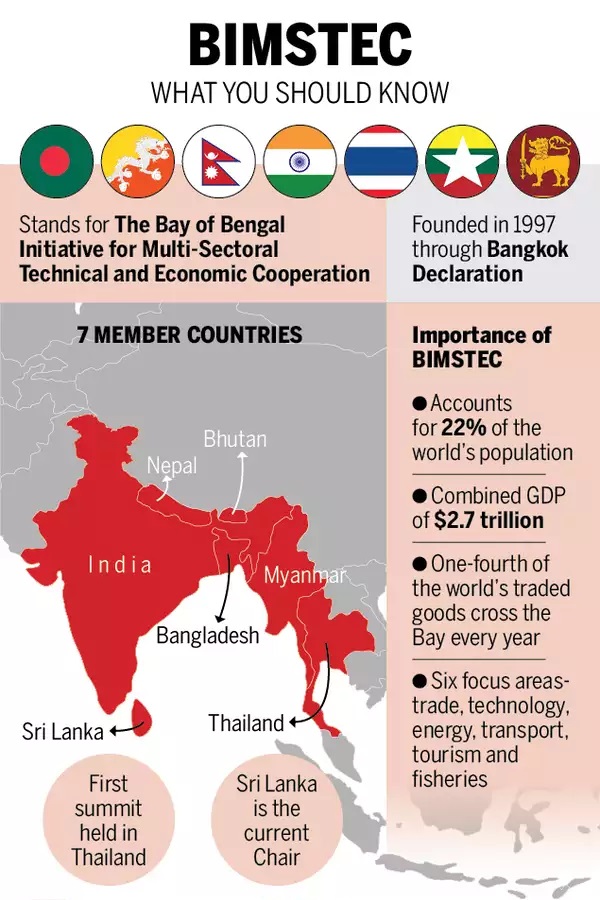
  • The evolving role of the Colombo Security Conclave

    Colombo Security Conclave

    Key Highlights:

    • The Colombo Security Conclave (CSC) aims to promote a safe, secure, and stable Indian Ocean, with India playing a leadership role.
    • The CSC’s revival in 2020, after a standstill since 2014, reflects India’s evolving strategic vision for the Indian Ocean.
    • India seeks to institutionalize its role in the region, addressing security challenges and emerging threats through the CSC.
    • China’s growing influence in the Indian Ocean is a significant factor driving the CSC’s revival, with Beijing investing in the Belt and Road Initiative (BRI) and establishing a presence in key locations.

    Key Challenges:

    • Domestic political changes in member-states can impact the CSC’s effectiveness, as seen with the Maldives’ absence from a recent meeting.
    • The nationalist and pro-China sentiments in member-states may hinder collaboration, affecting the CSC’s ability to address regional challenges.
    • Despite concerns about China’s actions in the Indian Ocean, some regional countries may not view China as a threat, limiting the CSC’s collective response.

    Key Terms/Phrases:

    • Colombo Security Conclave (CSC)
    • Indian Ocean
    • Belt and Road Initiative (BRI)
    • Maritime security
    • Regional collaboration
    • Extra-regional powers
    • Indo-Pacific
    • National Security Adviser (NSA)

    Key Quotes:

    • “The lack of capacity of island nations to secure the seas and counter transnational threats has continued to motivate India.”
    • “China’s outreach to the Indian Ocean is to control crucial sea lines of communication and trade, limiting India’s influence.”

    Key Statements:

    • “The CSC offers India an opportunity to institutionalize its role, shape the regional security architecture, and better address existing and emerging threats.”
    • “The strategic accommodation and flexibility of the CSC contribute to the security of the Indian Ocean.”

    Key Examples/References:

    • China’s naval capabilities, defense relationships, and infrastructure projects in the Indian Ocean.
    • Maldives’ absence from a recent CSC meeting due to preferences for a close relationship with China or nationalist sentiments.

    Key Facts/Data:

    • The CSC was revived in 2020, with the inclusion of Mauritius, Seychelles, and Bangladesh.
    • China’s investments in the Indian Ocean include the Belt and Road Initiative projects and control of Sri Lanka’s Hambantota port.

    Critical Analysis:

    • The vulnerability of the CSC to domestic political changes highlights challenges in maintaining consistent regional collaboration.
    • The balance between addressing security concerns and managing relationships with China is crucial for the CSC’s success.

    Way Forward:

    • Strengthen institutional mechanisms within the CSC to mitigate the impact of domestic political changes.
    • Continue to focus on the five pillars of cooperation, addressing maritime security, counter-terrorism, cyber-security, humanitarian aid, and disaster relief.
    • Enhance efforts to build trust among member-states and address concerns related to nationalist and pro-China sentiments.
  • In news: Mediterranean Sea

    Central Idea

    • Iranian Revolutionary Guards has warned that the Mediterranean Sea could be closed if the US and its allies continued to commit “crimes” in Gaza.

    About Mediterranean Sea

    Details
    Location Between Europe, Africa, and Asia
    Size Approximately 2.5 million square kilometers
    Depth Average depth 1,500 meters ; Calypso Deep in the Ionian Sea, over 5,000 meters deep
    Climate Predominantly Mediterranean climate with hot, dry summers and mild, wet winters
    Bordering Countries Europe: Spain, France, Monaco, Italy, Malta, Slovenia, Croatia, Bosnia and Herzegovina, Montenegro, Albania, Greece, Cyprus, Turkey

    Asia: Turkey, Cyprus, Syria, Lebanon, Israel

    Africa: Egypt, Libya, Tunisia, Algeria, Morocco

    Major Water Bodies Connected Connected to the Atlantic Ocean by the Strait of Gibraltar; links to the Black Sea via the Dardanelles Strait
    Islands and Archipelagos Includes several islands and archipelagos like Sicily, Sardinia, Corsica, Cyprus, and the Balearic Islands


  • Project PRAYAS to help Indian youth migrate abroad

    Central Idea

    • The International Organisation for Migration (IOM) introduced Project PRAYAS (Promoting Regular & Assisted Migration for Youth and Skilled Professionals) to facilitate secure and regular migration for Indian workers and students.

    What is Project PRAYAS?

    Details
    Project Name Project PRAYAS
    Introduced By International Organization for Migration (IOM)
    Partnership Ministry of External Affairs, India
    Objective To facilitate secure and regular migration for Indian workers and students
    Key Focus Enhancing coordination between state and central governments

    Addressing India’s growing role in international migration

    Providing policy recommendations for migration governance

    IOM’s Role Promoting humane and orderly migration as a United Nations agency
    Significance Represents a consolidation of state-level efforts for well-managed international migration
    Focus Areas and Activities Conducting comprehensive studies on migration trends

    Launching awareness programs for safe and orderly migration processes


    Back2Basics: International Organisation for Migration (IOM)

    Details
    Establishment 1951
    Initial Purpose To assist in the resettlement of people displaced by World War II
    Current Role Providing services and advice on migration to governments and migrants, including various displaced persons
    Type Intergovernmental Organization
    Membership 173 member states, 8 observer states
    Headquarters Geneva, Switzerland
    Key Objectives Promote humane and orderly migration Emergency response

    Link migration with development Health and support for migrants

    Facilitate managed labor migration Counter human trafficking

    UN Relationship Became a related organization of the United Nations in 2016
    India and IOM India has been a member of IOM since 1992.
  • Bab El-Mandeb: A Strategic Choke Point

    Bab El-Mandeb

    Central Idea

    • The war between Israel and Hamas in October raised concerns about Hezbollah’s involvement, but the focus shifted when the Houthis in Yemen expanded the conflict to the Red Sea.
    • Despite tensions, Hezbollah and Israel avoided full-scale war, with Israel concentrating on Gaza.

    Houthi Involvement and Shift in Tactics

    • Initial Actions: The Houthis, aligned with Iran, initially targeted Israel in solidarity with Palestinians, using drones and missiles, which were intercepted.
    • Change in Strategy: Later, they shifted focus to attacking commercial ships in the Red Sea, threatening global shipping routes.

    Understanding the Houthis

    • Background: The Houthis, known formally as Ansar Allah, are a Shia militia group in Yemen, named after their late leaders Badr al-Din al-Houthi and Hussein al-Houthi.
    • Iranian Support: They receive direct support from Iran and have significant military capabilities, including drones and ballistic missiles.

    Strategic Importance of Bab el-Mandeb Strait

    • Geographical Significance: The Strait of Bab el-Mandeb is a crucial maritime chokepoint, connecting the Red Sea with the Gulf of Aden and the Indian Ocean.
    • Impact on Global Shipping: Houthi actions near the strait have led to a significant decrease in Red Sea traffic and increased shipping costs.

    Global and Regional Consequences

    • Effect on Israel: Israel’s southern port traffic, particularly in Eilat, has been severely impacted.
    • Broader Trade Implications: Approximately 12% of global maritime trade passes through the strait. Disruptions here could exacerbate inflationary pressures worldwide.
    • Alternative Routes: Shipping companies are rerouting around Africa, significantly increasing travel time and costs.

    International Response

    • US Naval Task Force: The U.S. has established a naval force to counter the Houthi threat.
    • Arab World’s Stance: Many Red Sea countries, including Egypt, have not joined the U.S. task force, reflecting regional discontent with U.S. policies.
    • Potential Offensive Measures: The U.S. has not ruled out bombing Houthi targets in response to continued attacks on shipping lanes.

    Conclusion

    • Continued Houthi Threat: The Houthis vow to persist in their actions as long as Israel’s conflict with Gaza continues.
    • Challenges for Global Trade: The situation underscores the fragility of global shipping routes and the potential for regional conflicts to have far-reaching economic impacts.
    • Need for Diplomatic Solutions: This complex scenario highlights the importance of diplomatic efforts to resolve regional tensions and protect vital maritime trade routes.
  • How India chooses its Republic Day chief guest?

    Republic Day

    Central Idea

    • France’s President Emmanuel Macron is set to be the chief guest for India’s 75th Republic Day celebrations.
    • The invitation extended by Prime Minister Narendra Modi signifies a high diplomatic honor and reflects the strong ties between India and France.

    Honor of Republic Day Chief Guest

    • Ceremonial Significance: Being the chief guest at India’s Republic Day is a top diplomatic honor, involving participation in various ceremonial activities.
    • Activities and Protocol: The chief guest receives a guard of honor, attends a presidential reception, lays a wreath at Rajghat, and is honored with a banquet and lunch.
    • Symbolism and Friendship: As per Ambassador Manbir Singh, the visit symbolizes participation in India’s pride and reflects the friendship between the two nations.

    Selection Process for the Chief Guest

    • Advance Planning: The process begins about six months prior, with the Ministry of External Affairs (MEA) playing a central role.
    • Key Considerations: The decision is driven by political, commercial, military, and economic interests, aiming to strengthen ties with the invitee’s country.
    • Historical Factors: The Non-Aligned Movement’s legacy has also influenced past selections, with an emphasis on mutual support and nation-building.

    Procedure Post-Selection

    • Approval and Discretion: After MEA’s selection, approvals are sought from the Prime Minister and President, followed by discreet confirmation of the invitee’s availability.
    • Official Communications and Planning: Post-confirmation, official communications and detailed planning for the visit and ceremonies are undertaken.

    Challenges and Contingencies

    • Potential for Unplanned Events: Organizers prepare for various contingencies, including health issues or weather disruptions.
    • Protocol Challenges: Incidents like the one recounted by Ambassador Singh, involving the ADC of a chief guest, highlight the importance of strict adherence to protocol.

    Broader Implications of the Visit

    • Ceremonial and Strategic Importance: The role of the Republic Day chief guest blends ceremonial honor with strategic diplomacy, playing a key role in India’s international relations and foreign policy.
    • Media Coverage and Perception: The visit is closely monitored by international media, influencing perceptions of the guest’s nation.
    • Cultural and Diplomatic Impact: The hospitality and ceremonies reflect India’s traditions and culture, enhancing diplomatic relations.
    • Beyond Ceremonial Significance: The visit of the chief guest holds potential for opening new avenues in international relations and advancing India’s global interests.
  • World Bank sets up task force for MDB Reform Plan

    Central Idea

    About World Bank

    Details
    Establishment July 1944, during the United Nations Monetary and Financial Conference at Bretton Woods, New Hampshire, USA.
    Initial Purpose To help rebuild European nations devastated by World War II;

    Later expanded to include global development and poverty reduction.

    Components – International Bank for Reconstruction and Development (IBRD)

    – International Development Association (IDA)

    – International Finance Corporation (IFC)

    – Multilateral Investment Guarantee Agency (MIGA)

    – International Centre for Settlement of Investment Disputes (ICSID)

    Membership 189 member countries as of 2021.
    Headquarters Washington, D.C., United States.
    Main Functions Provides loans, credits, and grants; offers technical expertise and policy advice; researches development issues.
    Funding Through issuance of bonds in the international financial markets and earnings from its investments.
    Governance Led by a President, with a Board of Governors and a Board of Executive Directors.
    India’s Involvement – Founding member since 1944.

    – First loan approved in 1949 for Indian Railways.


    Understanding Multilateral Development Banks

    • Definition and Membership: MDBs are financial institutions with multiple country members, both developed and developing, that provide financing and technical assistance for development projects.
    • Operational Focus: Their operations span various sectors, including transport, energy, and urban infrastructure, with developed countries contributing to the lending pool and developing countries primarily borrowing for development projects.

    Rationale behind Proposed Reforms

    • Addressing Global Challenges: The climate crisis and other global issues require mechanisms for global-scale action, particularly in emerging markets and developing economies (EMDEs).
    • Aligning with National Priorities: The expert group recommends that MDBs align more closely with the developmental priorities of individual nations.
    • Enhancing Private Sector Engagement: A shift is suggested towards greater private sector involvement in MDB operations, moving away from the culture of limited interaction between private and sovereign financing arms.

    Key Aspects of the Proposed Reforms

    • Coordination and Stakeholder Involvement: The panel emphasizes the need for greater coordination among stakeholders, including national governments, to develop unified goals and policies.
    • Addressing Coordination Failures: The reforms aim to resolve multiple coordination failures among domestic and international stakeholders, both public and private.
    • Changing Perception and Practices: The current perception of MDBs as bureaucratic and risk-averse is seen as a barrier to private sector involvement, which is crucial for ramping up financing.

    MDBs’ Traditional Lending in Countries like India

    • Role in India’s Development: MDBs have been instrumental in financing key infrastructure projects in India, often with longer gestation periods.
    • World Bank’s Commitments: Since its establishment in 1944, the World Bank has committed $97.6 billion to India, with significant portions in public administration, agriculture, and transport.
    • Asian Development Bank’s Involvement: Formed in 1969, the ADB has committed $59.7 billion to India, focusing on transport, energy, and urban infrastructure.
    • Asian Infrastructure Investment Bank’s Financing: The AIIB, established in 2016, has approved $9.9 billion in financing for India, with a focus on transport, energy, and economic resilience.
    • European Investment Bank’s Contributions: Since 1958, the EIB has committed Euro 4.5 billion to India, primarily in the transport and energy sectors.

    Conclusion

    • Implications of the Recommendations: The proposed shift in MDB operations could lead to more effective and targeted development financing, aligning closely with the specific needs and priorities of individual countries.
    • Potential for Enhanced Global Impact: By addressing coordination challenges and increasing private sector engagement, MDBs could play a pivotal role in meeting global development goals and addressing critical challenges like the climate crisis.
  • US launches ‘Operation Prosperity Guardian’ to secure Red Sea

    red sea

    Central Idea

    • US Defense Secretary Lloyd Austin announced the creation of Operation Prosperity Guardian to protect Red Sea commerce.
    • This follows missile and drone attacks by Yemen’s Iran-aligned Houthis.

    Operation Prosperity Guardian

    • Countries Involved: The U.K., Bahrain, Canada, France, Italy, Netherlands, Norway, Seychelles, and Spain are participating.
    • Joint Patrols: These nations will conduct joint patrols in the southern Red Sea and the Gulf of Aden.

    Houthi Rebels’ Stance

    • Continued Aggression: Houthi rebels declared their intention to persist with attacks on Red Sea shipping.
    • Rebels’ Claims: They claim the US-led coalition aims to protect Israel and militarize the sea.
    • Attacks Beyond Yemen: Houthis have targeted vessels in key shipping lanes and launched attacks towards Israel.
    • Recent Drone Attack: Prior to Austin’s announcement, Houthis claimed a drone attack on cargo vessels in the region.

    Significance of the Operation

    • Impact on Suez Canal Traffic: About 12% of global shipping traffic through the Suez Canal is affected by the unrest.
    • Rerouting and Economic Consequences: Shipping firms are diverting routes, leading to increased costs and delays.

    About Red Sea

    Details
    Location Between Africa (Egypt, Sudan, Eritrea, Djibouti) and Asia (Saudi Arabia, Yemen).
    Connection Connects to the Indian Ocean via the Bab el Mandeb strait and the Gulf of Aden.
    Length Approximately 2,250 km long.
    Width Varies from 355 km at its widest point to 20 km at the Strait of Tiran.
    Maximum Depth About 7,254 feet (2,211 m) in the central median trench.
    Unique Features – One of the world’s saltiest bodies of water.

    – Notable for its rich ecosystem, including extensive coral reefs.

    Climate Generally hot and arid; surrounding desert and high evaporation rates contribute to its high salinity.
    Economic Importance Major shipping route; oil-rich region with significant petroleum deposits on the sea’s borders.