Amid mounting domestic and foreign policy challenges in Male, Mohamed Muizzu appears to be seeking reconciliation with India.
Economic Difficulties in Maldives
Debt Burden: Maldives faces severe economic strain with a debt-to-GDP ratio of 110% and significant debt servicing obligations, including around $512 million annually in 2024 and 2025.
Foreign Reserves: Foreign reserves are critically low at $622 million, insufficient to cover debt maturities and sustain imports amid rising inflation.
Dependence on Imports: Heavy reliance on imports for essential goods exacerbates economic vulnerabilities, particularly amidst food and fuel inflation.
Revenue Generation: The government struggles with low domestic revenue generation capacity, further complicating fiscal management and debt sustainability.
Diversification Efforts: Efforts to diversify economic partnerships beyond traditional allies like India and China reflect a strategy to mitigate economic dependencies and attract diverse investments.
What do the ties between India and China imply?
Geopolitical Competition: India and China’s engagements in countries like the Maldives reflect a broader competition for influence in the Indian Ocean region. Both countries strategically invest in infrastructure and security partnerships to enhance their regional foothold.
Economic Leverage: China’s substantial investments in the Maldives, including infrastructure projects under the Belt and Road Initiative (BRI), provide economic leverage but also raise concerns about debt sustainability and strategic dependencies.
Strategic Alignment: While India emphasizes developmental assistance and strategic partnerships focused on security and governance, China’s engagements often prioritize infrastructure development and economic cooperation, reflecting different strategic priorities.
Regional Stability: Both India and China play pivotal roles in ensuring stability and security in the Indian Ocean region. Their respective approaches influence regional dynamics and perceptions among neighbouring countries regarding economic partnerships and security alignments.
India’s stand
Balanced Approach: India continues to engage with the Maldives despite geopolitical shifts and maintains a stance of constructive diplomacy, offering economic support and emphasizing mutual respect.
Long-term Engagement: Inviting President Muizzu to Prime Minister Modi’s swearing-in signals India’s commitment to long-term bilateral relations and stability in the Indian Ocean region.
Strategic Importance: India views the Maldives as crucial for maritime security and regional stability, underpinning its continued diplomatic efforts and economic assistance.
Conclusion: India can increase its economic assistance to the Maldives through grants, concessional loans, and capacity-building initiatives aimed at improving fiscal management and revenue generation capabilities. And focus on projects that enhance infrastructure resilience, promote sustainable development, and support economic diversification efforts beyond traditional sectors.
Mains PYQ:
Q Discuss the political developments in Maldives in the last two years. Should they be of any cause of concern to India? (UPSC IAS/2013)
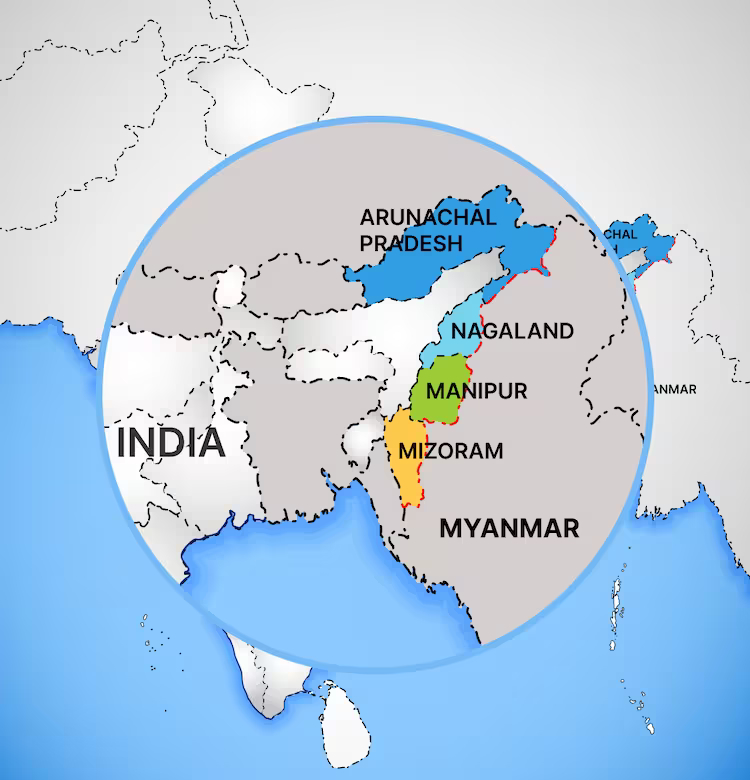
Three years after the 2021 coup, Myanmar’s military continues to kill, maim, and displace its people. India maintains formal relations despite the violence.
India-Myanmar Ties
Formal Relations with Junta: Despite the military coup in February 2021, India has maintained formal relations with the Myanmar junta.
Justification of Policy: Indian foreign policy scholars argue that engaging with the junta is necessary to protect India’s strategic interests in Myanmar.
Lack of Engagement with Pro-Democracy Forces: The Narendra Modi government has not actively engaged with Myanmar’s pro-democracy resistance.
How India Can Step Out of China’s Shadow
Values vs. Interests: India’s Myanmar policy should integrate progressive values with strategic interests, leveraging democratic principles to better align national interests with regional influence because India’s foreign policy for East Asia is based on very narrow strategic interests.
Federal Democracy as a Model: India can leverage its credentials as the largest federal democracy to influence Myanmar’s democratic resistance, which aims to replace the military-drafted constitution with a federal one.
Capacity-Building and Knowledge Exchange: India can support Myanmar’s pro-democracy forces through programs that promote federal cooperation, distinguishing itself from China.
Weapons Sales and Humanitarian Outreach
Halt Weapon Sales: India should stop selling weapons to the Myanmar military, as these are used against civilians. Reports indicate ongoing sales of military hardware and supplies by Indian state-owned manufacturers to the junta.
Humanitarian Corridors: India should open cross-border humanitarian corridors in regions affected by the conflict, such as Sagaing Region, Chin State, and northern Rakhine State.
Revoking Border Fencing Plans: The suspension of the Free Movement Regime along the India-Myanmar border should be lifted to facilitate humanitarian aid.
Collaboration with Aid Networks: India should work with local and international NGOs to deliver emergency aid, ensuring it is not controlled by the junta.
Detention of Asylum Seekers
Halt Deportations: The Modi government should stop deporting asylum seekers from Myanmar. Over 115 asylum seekers have been deported from Manipur alone.
Adherence to International Principles: India should adhere to the principle of non-refoulement, which discourages deporting refugees back to a country where they face persecution or death.
Humane Treatment: Asylum seekers should be treated as refugees in need of humanitarian assistance rather than illegal immigrants. The government should release detained Chin refugees in Assam and provide humane shelter.
Conclusion: India should actively support Myanmar’s pro-democracy forces by leveraging its federal democratic model and providing capacity-building and knowledge exchange programs.
Mains PYQ:
Q Cross-border movement of insurgents is only one of the several security challenges facing the policing of the border in North-East India. Examine the various challenges currently emanating across the India-Myanmar border. Also, discuss the steps to counter the challenges. (UPSC IAS/2019)
Shortly after Hasina commenced her two-day state visit to India, External Affairs Minister S. Jaishankar convened with her to discuss several bilateral matters.
Bangladesh’s Prime Minister Sheikh Hasina’s Visit to India
Purpose of Visit: To boost bilateral ties between India and Bangladesh.
Sheikh Hasina will hold talks with Prime Minister Narendra Modi.Meetings with President Droupadi Murmu and Vice President Jagdeep Dhankhar.
Bilateral cooperation in security, trade, commerce, energy, connectivity, science and technology, defence, and maritime affairs. Potential agreements in various sectors to enhance cooperation.
India-Bangladesh Relations and the Teesta Water Dispute
Bilateral Relations:
Strategic Importance: Bangladesh is a key partner under India’s “Neighbourhood First” policy.
Trade: Bangladesh is India’s largest trade partner in South Asia. India is the second biggest trade partner of Bangladesh in Asia.
Connectivity: The Maitri Setu bridge over river Feni in Tripura and the Chilahati-Haldibari rail link are notable projects.
Development Partnership: Bangladesh is India’s largest development partner with significant commitments under the Line of Credit.
Border Cooperation: Active cooperation on police matters, anti-corruption activities, combating illicit drug trafficking, fake currency, and human trafficking.
Teesta Water Dispute:
Controversy: The sharing of Teesta River water has been a contentious issue between India and Bangladesh, affecting bilateral relations.
Current Status: Discussions and negotiations are ongoing to reach a mutually acceptable agreement.
Way Forward
Enhanced Bilateral Cooperation: Continue to strengthen ties through regular high-level visits and dialogues.
Resolution of Teesta Dispute: Focus on finding a fair and sustainable solution to the Teesta water-sharing issue to improve relations.
Economic Integration: Expand trade and investment opportunities to boost economic ties.
Infrastructure Development: Further develop connectivity projects to enhance trade and people-to-people exchanges.
Security Cooperation: Strengthen cooperation on security issues, including counter-terrorism and border management.
Cultural and Educational Exchanges: Promote cultural and educational exchanges to build stronger people-to-people ties.
Mains PYQ:
Q Critically examine the compulsions which prompted India to play a decisive role in the emergence of Bangladesh.(UPSC IAS/2013)
Q How will I2U2 (India, Israel, UAE and USA) grouping transform India’s position in global politics? (UPSC IAS/2022)
Q Indian and USA are two large democracies. Examine the basic tenets on which the two political systems are based.(UPSC IAS/2018)
Mentors’ comment: Over the past eight decades, the relationship between the United States and the Kingdom of Saudi Arabia has seen numerous highs and lows, from the 1973 oil embargo to the 2018 assassination of Jamal Khashoggi. Nonetheless, two iconic moments stand out in this history: the first is the meeting between U.S. President Franklin D. Roosevelt and Saudi King Abdul Aziz Al-Saud on Valentine’s Day 1945 aboard a U.S. cruiser, marking the start of seven decades of a steadfast bilateral relationship, grounded in a crucial “oil-for-security” arrangement. The second is the fist-bump on July 15, 2022, in Riyadh between U.S. President Joe Biden and Saudi Crown Prince Mohammed bin Salman (MbS), symbolizing a more balanced and largely transactional partnership.
Let’s Learn!
Why in the News?
Riyadh and Washington are approaching a new and enhanced phase in their relationship, provisionally named the Strategic Alliance Agreement (SAA).
Strategic Alliance Agreement (SAA): A move towards Reconciliation
Rumoured Agreement: Rumors suggest a new and enhanced U.S.-Saudi relationship is on the horizon, tentatively called the Strategic Alliance Agreement (SAA).
Objectives: This agreement aims to align MBS’s domestic and regional ambitions with the White House’s goal of securing a significant diplomatic achievement for President Biden’s re-election campaign.
Components of the SAA
Bilateral Component: The SAA is expected to formalize the current alliance into a strategic defense pact, similar to the U.S.-Japan treaty, and include advanced military support such as F-35 fighters and nuclear technology for peaceful purposes.
Regional Component: Regionally, Saudi Arabia seeks a ceasefire in Gaza and progress towards a two-state solution to the Israel-Palestine conflict. In return, the U.S. wants Saudi Arabia to recognize Israel and limit its ties with Beijing and Moscow.
Global Component: The global aspect would likely involve cooperation on international security and economic initiatives.
Economic Underpinnings
Economic Significance: While the U.S. is no longer reliant on Saudi oil, the economic aspects of the SAA are expected to be substantial.
Aligning with MBS’s Vision: The agreement would likely ensure significant participation of American companies in Saudi projects under MBS’s Vision 2030.
Strategic Motivations
Countering Chinese Influence: China’s increasing influence in Saudi Arabia, marked by President Xi Jinping’s 2022 visit, has prompted the U.S. to strengthen its ties with Riyadh.
Saudi Arabia’s Importance: Despite the changing dynamics, Saudi Arabia remains crucial due to its religious significance, economic strength, and MBS’s leadership.
Challenges to the SAA
Mistrust and Policy Inconsistencies: A decade of growing mistrust between the U.S. and Saudi Arabia, exacerbated by perceived U.S. inaction and policy inconsistencies, poses a significant challenge.
Gaza Conflict: The ongoing Gaza conflict makes it politically challenging for Saudi Arabia to reconcile with Israel, a key condition for U.S. Senate approval of the SAA.
Regional Dynamics
Recent Events: Recent regional events, including the Hamas attack on Israel and Saudi Arabia’s diplomatic moves, can be viewed through the SAA lens.
Potential Outcomes: The quest for the SAA is a race against time, with potential outcomes ranging from a full agreement reinforcing U.S. influence to a region remaining in turmoil.
India’s Perspective
Significant Stakes: India has significant stakes in the region and needs to monitor the emerging SAA closely.
Enhancing Stability: A successful SAA could enhance regional stability, create economic opportunities, and support India’s strategic interests, including the India-Middle East-Europe Economic Corridor.
Independent Policy: India should continue to pursue its “Act West” policy independently of the developments in the U.S.-Saudi relationship.
Conclusion: The potential Strategic Alliance Agreement (SAA) between the U.S. and Saudi Arabia represents a significant shift in international relations, reflecting evolving geopolitical dynamics and mutual strategic interests. This agreement could solidify a more transactional and pragmatic partnership, balancing regional stability and global security concerns.However, significant challenges remain, including deep-seated mistrust and the complex geopolitical landscape shaped by ongoing conflicts and rivalries.
Russia’s President Vladimir Putin concluded his recent visit to Pyongyang with a significant agreement: both Russia and North Korea pledged to provide swift military aid in the event of armed aggression against either nation.
Historical Context
Post-World War II Context: The Soviet Union aimed to establish a communist regime in Korea.USSR provided Significant military aid provided to North Korea’s founder, Kim Il Sung, during the Korean War. Post-war support from the USSR and China included substantial military and other aid to North Korea.
1961 Russo-North Korea Treaty: The Treaty of Friendship, Cooperation, and Mutual Assistance included a mutual defence agreement.
Post-Soviet Union Period: Relations deteriorated after the Soviet Union dissolved in 1991, voiding the treaty.
Early 2000s Reconnection: Under Putin, Russia moved closer to North Korea despite not supporting its nuclear ambitions initially. Supported sanctions against North Korea aimed at curbing nuclear capabilities.
Post-2022 Dynamics: After Russia’s invasion of Ukraine, Russia faced international isolation. Russia and North Korea solidified their alliance against the Western liberal order.
What the Pact Says
Scope of Cooperation: Cooperation on a wide range of issues, including mutual military support and unspecified technological assistance.
Mutual Defense Provision: Under Article 4 of the Pact in case of armed invasion, the other side shall provide military and other assistance without delay, following Article 51 of the UN Charter and respective national laws.
Technological Assistance: Crucial for North Korea, which currently has nuclear weapons but lacks advanced missile guidance systems and other technologies for long-range nuclear weapons.
Strategic Implications
Direct Threat to South Korea and Japan: Both countries perceive the pact as a security threat due to North Korea’s nuclear capabilities and the added Russian security umbrella.
Potential Arms Race: Japan is revisiting its pacifist stance and enhancing military capabilities, while South Korea is considering new defence strategies, potentially including arms exports.
Strengthening of US Alliances: South Korea and Japan are likely to deepen their alliances with the United States in response to heightened regional security concerns.
NATO and Global Security: The pact raises alarms among NATO allies and other global stakeholders, prompting reassessments of security strategies and commitments.
Nuclear Proliferation Concerns: Increased collaboration between Russia and North Korea could lead to advancements in North Korea’s nuclear and missile capabilities, impacting global non-proliferation efforts.
Global Strategic Repercussions: The pact sets a precedent for authoritarian regimes aligning against Western liberal orders, influencing geopolitical strategies and alliances beyond Asia.
Way forward:
Enhanced Diplomatic Engagement and Dialogue: Engage in robust diplomatic efforts to mitigate tensions and enhance transparency regarding the intentions behind the Russia-North Korea pact. Encourage multilateral dialogues involving key stakeholders such as the United States, South Korea, Japan, and other concerned parties to foster mutual understanding and reduce the likelihood of miscalculation.
Reinforcement of Regional Security Mechanisms: Strengthen existing regional security mechanisms, particularly alliances with the United States underpinned by treaties such as the Mutual Defense Treaty with Japan and the mutual defence commitments with South Korea.
Mains PYQ:
Q What is the significance of Indo-US defence deals over Indo-Russian defence deals? Discuss with reference to stability in the Indo-Pacific region. (UPSC IAS/2020)
International attention is urgently needed to address the worsening mental health crisis among Rohingya refugees in India.
About Rohingya Sufferings
Trauma and Mental Health: Rohingya refugees in Delhi experience severe trauma, including anxiety, dissociative episodes, and depression, often due to past experiences in Myanmar and ongoing re-traumatization from living conditions and violence in India.
Living Conditions: Rohingya refugees live in shanty-like huts prone to accidental and intentionally set fires, leading to constant fear and re-traumatization.
Discrimination and Legal Status: Officially labelled as “illegal immigrants,” Rohingya refugees face severe discrimination in India. They are denied full access to education, healthcare, legal services, and formal employment opportunities.
Detention and Deportation: Fear of arbitrary detention and deportation is widespread, despite many having UNHCR refugee cards. At least 500 Rohingya, including women and children, are detained in centres across India without criminal charges, some for decades.
Civil Society and Funding: Civil society organizations working with Rohingya refugees face funding challenges due to cancelled FCRA licenses. Many support programs have shut down or reduced operations, leaving few UNHCR-supported organizations to cautiously continue their work.
About unsolved Tibetan issue
The Tibetan issue in India is a complex and contentious topic with historical, cultural, and political implications.
Historical Background
Pre-20th Century: Tibet recognized itself as an autonomous nation under Chinese protection, while China claimed formal incorporation into its borders during the Yuan Dynasty.
20th Century: The relationship between Tibet and China became increasingly strained, culminating in the 1950 Chinese invasion of Tibet and the subsequent annexation of the region.
Ongoing Challenges
Tibetan Independence Movement: The Tibetan independence movement continues to push for greater autonomy and recognition of Tibet as a sovereign nation.
Chinese Censorship and Suppression: The Chinese government maintains strict control over information and suppresses any dissent or opposition to its rule in Tibet.
Current Situation
Declining Refugee Numbers: Over the last seven years, the Tibetan refugee community in India has dropped by 44 percent, from around 150,000 in 2011 to 85,000, according to Indian government data.
Economic Uncertainty: Many Tibetans face economic uncertainty due to limited job opportunities and restrictions on property ownership and bank credit.
Lack of Recognition: Tibetans are not officially recognized as refugees in India, instead being designated as “foreigners” under Indian law.
No National Refugee Law: India has no national refugee law, and its policies are not in accordance with international standards.
Way forward:
Implement National Refugee Law: Advocate for the establishment of a comprehensive national refugee law in India that aligns with international standards, ensuring legal recognition, protection, and access to basic rights and services for all refugees, including Rohingya and Tibetans.
Enhance Mental Health Support: Develop and fund specialized mental health programs for refugees, focusing on trauma-informed care. This includes training local healthcare providers, increasing access to mental health services, and creating safe spaces for refugees to receive consistent psychological support.
Mains PYQ:
Q Refugees should not be turned back to the country where they would face persecution or human right violation”. Examine the statement with reference to the ethical dimension being violated by the nation claiming to be democratic with an open society. (UPSC IAS/2021)
Q Refugees should not be turned back to the country where they would face persecution or human rights violation”. Examine the statement with reference to the ethical dimension being violated by the nation claiming to be democratic with an open society. (UPSC IAS/2021)
Q How far are India’s internal security challenges linked with border management, particularly in view of the long porous borders with most countries of South Asia and Myanmar? (UPSC IAS/2013)
Mentors comment: India, commemorating World Refugee Day (June 20), boasts a millennia-old legacy of asylum, from ancient Jews and fleeing Zoroastrians to modern refugees like East Bengalis, Tibetans, Sri Lankan Tamils, Nepalis, Afghans, and Rohingyas. Having faced a significant refugee crisis at independence, India empathetically supports refugees, acknowledging their plight and affirming its commitment to aiding their resettlement and recovery.
Let’s learn!
Why in the News?
The global refugee crisis continues to escalate, with over 43.4 million refugees worldwide driven by ongoing conflicts.
About World Refugee Day • After the UN (United Nations) defined refugee rights in 1951, Africa established a day to honour them in 1970. • Later, acknowledging the worldwide refugee crisis, the UN General Assembly took a global approach in 2000, designating June 20th as World Refugee Day. • The Refugee Convention, 1951 defines who is a refugee, their rights, and the legal obligations of states towards them. • This day has become a powerful tool to raise awareness, build support, and celebrate the contributions of refugees everywhere.
India’s Historical Role in Refugee Protection
Long-standing Asylum Tradition: India has a long history of providing asylum, from ancient times with Jewish and Zoroastrian refugees to more recent instances involving East Bengalis, Tibetans, Sri Lankan Tamils, Nepalis, Afghans, and Rohingyas.
Partition Legacy: The partition of India in 1947, which caused one of the largest refugee crises in history, has ingrained a deep awareness of the plight of refugees in the national consciousness.
Issues related to Rohingya Sufferings
Trauma and Mental Health: Rohingya refugees in Delhi experience severe trauma, including anxiety, dissociative episodes, and depression, often due to past experiences in Myanmar and ongoing re-traumatization from living conditions and violence in India.
Living Conditions: Rohingya refugees live in shanty-like huts prone to accidental and intentionally set fires, leading to constant fear and re-traumatization.
Discrimination and Legal Status: Officially labelled as “illegal immigrants,” Rohingya refugees face severe discrimination in India. They are denied full access to education, healthcare, legal services, and formal employment opportunities.
Detention and Deportation: Fear of arbitrary detention and deportation is widespread, despite many having UNHCR refugee cards. At least 500 Rohingya, including women and children, are detained in centres across India without criminal charges, some for decades.
Civil Society and Funding: Civil society organizations working with Rohingya refugees face funding challenges due to cancelled FCRA licenses. Many support programs have shut down or reduced operations, leaving few UNHCR-supported organizations to cautiously continue their work.
About unsolved Tibetan issue
The Tibetan issue in India is a complex and contentious topic with historical, cultural, and political implications.
Ongoing Challenges
Tibetan Independence Movement: The Tibetan independence movement continues to push for greater autonomy and recognition of Tibet as a sovereign nation.
Chinese Censorship and Suppression: The Chinese government maintains strict control over information and suppresses any dissent or opposition to its rule in Tibet.
Current Situationof Tibetans
Declining Refugee Numbers: Over the last seven years, the Tibetan refugee community in India has dropped by 44 percent, from around 150,000 in 2011 to 85,000, according to Indian government data.
Economic Uncertainty: Many Tibetans face economic uncertainty due to limited job opportunities and restrictions on property ownership and bank credit.
Lack of Recognition: Tibetans are not officially recognized as refugees in India, instead being designated as “foreigners” under Indian law.
No National Refugee Law: India has no national refugee law, and its policies are not in accordance with international standards.
IndianMigrants’ Rights in GCC countries: Vulnerabilities of Migrant Workers: Migrant workers in GCC countries face systemic vulnerabilities due to the Kafala system, tying their legal status to employers who control their accommodation, wages, and freedom of movement. Lack of independent legal status and dependency on employers make them susceptible to exploitation, poor living conditions, and arbitrary deportations. Living Conditions and Safety: Many migrants live in crowded and substandard accommodations, which exacerbate risks during emergencies such as fires, as seen in the Mangaf tragedy. Safety standards in workplaces and living spaces often fall short, posing significant risks to migrants’ health and well-being. Legal Protections and Access to Justice: Legal protections for migrant workers vary, with some categories like domestic workers often excluded from labor laws and protections. Limited access to justice and the ability to organise or unionise further restrict their ability to advocate for improved rights and conditions.
Need for Legislation
Lack of Formal Framework: Despite its history, India has not signed the UN Refugee Convention or its 1967 Protocol and lacks a domestic asylum framework.
Private Member’s Bill: In February 2022, a Private Member’s Bill was introduced in the Lok Sabha to establish a comprehensive Refugee and Asylum law, addressing these gaps. This Bill aimed to formalize the recognition and rights of asylum seekers and refugees, in line with international principles such as non-refoulement.
Current Legislative Landscape
General Foreigner-related Laws: Without a dedicated refugee law, refugees in India are subject to various general foreigner-related laws, leading to inconsistent and ad hoc management.
Need for Comprehensive Law: A comprehensive National Asylum Law is needed to provide clear guidelines for asylum seekers, ensure access to essential services, and enable refugees to rebuild their lives.
Judicial Support and International Responsibility
Supreme Court Affirmation: The Supreme Court of India has affirmed the rights of all individuals in India, including refugees, under Articles 14, 20, and 21 of the Constitution.
Landmark Cases: Landmark cases, such as the “National Human Rights Commission vs. the State Of Arunachal Pradesh & Anr” have highlighted the need for proper asylum procedures and protection against forcible eviction.
Framework for Refugee Rights: A formal refugee rights framework would reduce reliance on inconsistent judicial rulings and arbitrary decisions by government officials.
Way Forward
International Cooperation: Addressing the global refugee crisis requires international cooperation, and India must play its part domestically and on the world stage.
Enacting a National Asylum Law: Enacting a National Asylum Law would reinforce India’s commitment to humanitarian values and democratic principles, positioning the country as a leader in refugee protection.
Alignment with Vision of Vishwaguru: Upholding these values aligns with India’s vision of being a Vishwaguru, contributing to global humanitarian efforts and embodying the ideals articulated by leaders like Jawaharlal Nehru.
PM Modi was placed at centre stage for a group photograph at the G-7 Outreach Summit held in Italy.
This marks India’s 11th participation in the G7 Summit and PM Modi’s fifth consecutive attendance.
About G-7 (Group of Seven)
The G7 is an informal bloc of industrialized democracies comprising the United States, Canada, France, Germany, Italy, Japan, and the United Kingdom (UK).
It convenes annually to address global economic governance, international security, and more recently, issues related to artificial intelligence (AI).
Formation and Expansion:
Originally formed as the Group of Six in 1975 by the United States, France, Italy, Japan, the UK, and West Germany, with Canada joining in 1976.
It was formed as a result of the oil crisis to stabilize global economic policies and international relations.
The group’s formation coincided with the challenges of the Cold War era, aiming to address economic concerns such as inflation and recession exacerbated by the OPEC oil embargo.
Key statistics about G7 countries:
Wealth: They control 60% of the global net wealth.
Growth: They drive 46% of the global GDP.
Population: They represent 10% of the world’s population.
Russia’s Joining and Suspension
Russia joined in 1998, transforming it into the G8, aimed at enhancing its international prestige and fostering closer ties with Western nations.
Russia was suspended in 2014 following its annexation of Crimea, leading to ongoing tensions and challenges with both Russia and increasingly, China.
Functioning of the G7
Unlike formal institutions like the United Nations or NATO, the G7 lacks a charter and secretariat.
Its presidency rotates annually (Canada in 2025), responsible for setting the agenda and logistical arrangements for the summit.
Policy initiatives are crafted by ministers and envoys known as Sherpas, who prepare discussions and agreements before the annual gathering.
Non-member countries are occasionally invited to participate in G7 meetings.
Why G7 needs India?
Economic Significance and Democratic Stability: India’s regular participation in G7 meetings highlights its economic importance and stable democratic framework.
Rising Economic Power: With India poised to become the world’s fourth-largest economy, its involvement in global issues is increasingly crucial.
Leadership in the Global South: Modi’s initiatives, such as the Voice of the Global South Summit, have bolstered India’s global standing.
G20 Presidency: India’s recent presidency of the G20 demonstrated its ability to build consensus on contentious global issues.
Neutrality and Strategic Partnerships: India’s neutral stance on Western concerns over China’s actions in the South China Sea and its economic policies enhances its partnership with G7 nations.
Balancing with Russia and the West: As the West confronts Russia over Ukraine, India’s neutral stance positions it as a key ally while maintaining diplomatic balance.
Divergence within G7
Geopolitical Tensions: The G7 nations often face disagreements and tensions over geopolitical matters, such as responses to Russian aggression, conflicts in regions like Ukraine, and strategic alliances with emerging economies.
Economic Policies: Economic policies and trade relations are frequent topics of debate within the G7. Issues include trade tariffs, market regulations, financial stability, and economic cooperation in the face of global economic challenges.
Climate Change: Addressing climate change and achieving environmental sustainability are critical concerns for the G7. Discussions typically focus on climate action commitments, renewable energy investments, and international cooperation on climate policies.
Security and Defense: Security and defence cooperation, including responses to global terrorism, cybersecurity threats, and military alliances, are important agenda items for the G7.
Technology and Innovation: Managing technological advancements, including AI regulation, digital governance, cybersecurity standards, and technological innovation policies, is another area of focus.
Social Issues: Social issues such as gender equality, human rights, immigration policies, and global development aid are also part of the G7 agenda, reflecting broader societal concerns and international commitments.
PYQ:
[2020] In which one of the following groups are all four countries members of G20?
The 46th Antarctic Treaty Consultative Meeting (ATCM-46), held in Kochi, Kerala last month, brought attention to the ongoing debate regarding Antarctic tourism.
Highlights of the 46th Antarctic Treaty Consultative Meeting (ATCM-46) in Kerala
Focus on Developing a Regulatory Framework: ATCM-46 emphasized the need for a comprehensive, flexible, and dynamic framework for regulating tourism and non-governmental activities in Antarctica. A new working group was established to lead this effort over the next year, highlighting a renewed commitment to addressing tourism challenges in the region.
Recognition of Environmental Concerns: The meeting acknowledged the significant environmental impacts of increasing tourism, including disruptions to wildlife, ecosystem damage, and pollution. There was a consensus on the urgency of mitigating these impacts through stronger regulatory measures and enhanced monitoring programs.
India’s Proactive Stance: India played a crucial role in emphasizing the importance of monitoring tourism impacts on Antarctic research, conservation, and the environment. India supported measures against constructing tourism-related structures with significant environmental impacts and showcased its commitment by enacting its own Antarctic Law in 2022 to regulate activities and protect the Antarctic environment.
Gaps in the Regulatory Framework
Lack of Specific Regulations: The current governance framework for Antarctic tourism is fragmented and lacks specific regulations. The Antarctic Treaty (1961) prioritises peaceful use and scientific research, while the Madrid Protocol offers broad environmental guidelines but lacks detailed tourism regulations.
Self-Regulation by IAATO: The International Association of Antarctica Tour Operators (IAATO), a self-regulatory industry body, is primarily responsible for the day-to-day management of tourism. Many believe that IAATO’s guidelines are inadequate to address the growing environmental pressures.
Consensus Rule Limitations: The requirement for unanimous agreement from all consultative parties often slows down decision-making and allows national interests to impede progress. This has resulted in non-binding guidelines rather than comprehensive regulation.
Failed to make consensus on tourism: Discussions on tourism regulation have been ongoing since the 1960s. A proposed tourism annexe in 1991 failed to gain consensus, leading to the current reliance on IAATO’s self-regulation. Despite the increasing frequency of discussions since a 2004 expert meeting, comprehensive regulation has remained elusive.
India’s Stand on Tourism Issues
Emphasis on Monitoring: India has consistently emphasised the importance of monitoring the impacts of tourism on Antarctic research, conservation, and the environment. This was highlighted at ATCM 44 (2022) and reinforced at ATCM-46.
Opposition to Environmental Impact: India supported Resolution 5 (2022), which advised against building tourism-related structures with significant environmental impacts. This stance reflects India’s commitment to minimising the environmental footprint of tourism in Antarctica.
Call for Comprehensive Debate: Between ATCM 44 and ATCM 45, India continued to call for a comprehensive debate on Antarctic tourism, stressing the need for governance action.
Enactment of Antarctic Law: Despite the lack of international consensus, India took proactive steps by enacting its own Antarctic Law in 2022. This law aims to regulate activities and safeguard the Antarctic environment from the impacts of tourism.
Focus on Sustainable Future: At ATCM-46, India advocated for a multi-pronged approach to ensure a sustainable future for Antarctic tourism. This includes strengthening environmental protection, implementing robust monitoring programs, and fostering international cooperation to preserve Antarctica’s pristine wilderness.
Conclusion: Countries need to work together to create a robust international regulatory framework that addresses the unique challenges of Antarctic tourism. This involves building on the efforts initiated at ATCM-46 and ensuring that the newly established working group develops comprehensive, binding regulations that all parties can agree upon and implement.
Mains PYQ:
Q The states of Jammu and Kashmir, Himachal Pradesh and Uttarakhand are reaching the limits of econological carrying capacity due to tourism. Critically evaluate.(UPSC IAS/2015)
India emphasized that only proposals acceptable to both Russia and Ukraine can lead to peace as it decided to disassociate from the final document issued on June 16 at the conclusion of the Peace Summit in Switzerland.
What is a Joint Communique on a Peace Framework?
The Joint Communique on a Peace Framework is a formal document issued at the conclusion of the Peace Summit in Switzerland, held on June 16, 2024. This communique outlines the collective stance and proposed guidelines for achieving peace in the ongoing Russia-Ukraine conflict.
Key Highlights of the Ukraine Peace Summit in Switzerland
Attendance and Endorsement: More than 80 countries attended the summit and endorsed the “Joint Communique on a Peace Framework.” The communique emphasized the protection of Ukraine’s territorial integrity, based on Ukraine’s peace formula and the UN charter.
Non-Endorsing Countries: India, Saudi Arabia, South Africa, Thailand, Indonesia, Mexico, and the United Arab Emirates did not sign the communique. Brazil maintained an observer status, and China declined the invitation altogether.
India’s Participation and Stance: India attended the summit but chose not to endorse the final document. India’s stance is rooted in the belief that any peace proposal must be acceptable to both Russia and Ukraine for it to be sustainable. The Ministry of External Affairs (MEA) emphasized India’s commitment to understanding different perspectives to find a lasting resolution through dialogue and diplomacy.
Why did India Refuse?
Neutrality and Balanced Approach: India maintains a policy of neutrality and balanced diplomacy, avoiding taking sides in the Russia-Ukraine conflict to preserve its diplomatic relations with both nations.
Mutually Acceptable Solutions: India believes that any peace proposal must be acceptable to both Russia and Ukraine to be sustainable, emphasizing dialogue and practical engagement between the conflicting parties.
Strategic and Diplomatic Considerations: By not endorsing the communique, India retains its potential role as a trusted mediator, protecting its strategic ties with Russia and considering broader geopolitical concerns such as food and energy security.
Conclusion: India’s decision reflects its stance on neutrality, advocating for peace proposals acceptable to both Russia and Ukraine while preserving diplomatic relations and strategic interests amid global geopolitical dynamics.
Mains PYQ:
Q What is the significance of Indo-US defence deals over Indo-Russian defence deals? Discuss with reference to stability in the Indo-Pacific region.(UPSC IAS/2020)
![[20th June 2024] The Hindu Op-ed: Blueprints beyond borders, for solace and shelter](https://www.civilsdaily.com/wp-content/uploads/2024/06/20-June-1568x882.jpg)