Shortly after a fatal fire claimed the lives of 49 migrant workers, predominantly Indians, in the Mangaf area of Al Ahmadi municipality, Kuwait
About the Gulf Cooperation Council (GCC)
It is a regional intergovernmental organization that aims to promote economic, political, and cultural cooperation among its member states.
The GCC was established in 1981 and currently consists of six Arab countries: Bahrain, Kuwait, Oman, Qatar, Saudi Arabia, and the United Arab Emirates. The council’s main headquarters is located in Riyadh, Saudi Arabia.
What is the Kafala system?
The Kafala system is a sponsorship system used in several Gulf Cooperation Council (GCC) countries, including Saudi Arabia, Qatar, Kuwait, Bahrain, Oman, and the United Arab Emirates. It governs the legal status of migrant workers, particularly those from other countries in Asia and Africa, who come to work in these countries. It binds migrant workers to a specific employer, known as the “kafeel,” who is responsible for the worker’s visa and legal status.
Note: sponsorship by local sponsor or employer in West Asian countries
Migrants’ Rights in GCC countries:
Vulnerabilities of Migrant Workers: Migrant workers in GCC countries face systemic vulnerabilities due to the Kafala system, tying their legal status to employers who control their accommodation, wages, and freedom of movement. Lack of independent legal status and dependency on employers make them susceptible to exploitation, poor living conditions, and arbitrary deportations.
Living Conditions and Safety: Many migrants live in crowded and substandard accommodations, which exacerbate risks during emergencies such as fires, as seen in the Mangaf tragedy. Safety standards in workplaces and living spaces often fall short, posing significant risks to migrants’ health and well-being.
Legal Protections and Access to Justice: Legal protections for migrant workers vary, with some categories like domestic workers often excluded from labor laws and protections. Limited access to justice and the ability to organize or unionize further restrict their ability to advocate for improved rights and conditions.
India’s Relationship with GCC Countries:
Economic Dependence and Migrant Workforce: India has a significant economic relationship with GCC countries, with millions of Indian migrants working across sectors such as construction, healthcare, and services. Remittances from GCC countries contribute significantly to India’s economy, highlighting the mutual economic interdependence.
Diplomatic and Policy Engagements: India engages diplomatically with GCC countries to safeguard the interests and welfare of its migrant workers, advocating for better working conditions, legal protections, and safety measures. Bilateral agreements and negotiations focus on labour rights, remittance flows, and crisis management during emergencies affecting Indian migrants.
What India can do? (Way forward)
Diplomatic Engagement and Advocacy: Strengthen diplomatic ties with GCC countries to advocate for better working conditions, legal protections, and safety measures for Indian migrants.
Consular Services and Support: Enhance consular services and support networks in GCC countries to provide timely assistance, legal aid, and emergency relief to Indian migrant workers.
Skill Development and Empowerment: Collaborate with GCC governments and employers to ensure skill development programs for Indian migrants, enhancing their employability and negotiating power.
Mains PYQ:
Q Indian Diaspora has an important role to play in South-East Asian countries’ economy and society. Appraise the role of the Indian Diaspora in South-East Asia in this context. (UPSC IAS/2017)
Since President Lai Ching-te took office in Taiwan, China has reacted strongly to his pro-independence remarks by using sophisticated tactics against his Democratic Progressive Party.
Background of the China-Taiwan issue
The conflict has its roots in the Chinese Civil War (1927-1950) between the Nationalist Party (Kuomintang) and the Communist Party of China. After the Communist victory in 1949, the Nationalist government retreated to Taiwan, establishing the Republic of China (ROC) there, while the Communist Party proclaimed the People’s Republic of China (PRC) on the mainland.
China claims Taiwan as a breakaway province that must eventually be reunified with the mainland, while Taiwan sees itself as a distinct, democratic entity. This dispute over Taiwan’s political status is at the heart of the ongoing tensions between China and Taiwan.
The strategic importance of Taiwan lies in its location in the “first island chain” in the western Pacific, as well as its dominance in the global semiconductor industry. Control over Taiwan would enhance China’s ability to project power in the region and potentially threaten US interests, while Taiwan’s independence is seen as crucial by the US and its allies
What Are the Coercive Measures China Has Imposed on Taiwan?
Military Pressure: China’s People’s Liberation Army Eastern Theater Command (PLA ETC) conducts regular training drills and simulated invasion scenarios to demonstrate its military capability. These include 3D animation videos depicting missile attacks on Taiwan, aiming to intimidate and exert psychological pressure.
Grey-Zone Warfare: Continuous sorties by PLA fighter jets, UAVs, and strategic fighters over and around Taiwan. These operations are designed to wear down Taiwan’s defence forces through sustained pressure and intelligence gathering.
Economic Coercion: China suspended preferential tax rates for 134 chemical imports from Taiwan, which were previously granted under the Economic Cooperation Framework Agreement (ECFA). This move was a retaliation against pro-independence statements by Taiwan’s new president, Lai Ching-te, and Taipei’s restrictions on over 2,000 Chinese imports.
China’s Ideology and Political Tactics
Cognitive Warfare: Deployment of ideological narratives within Taiwan to influence public opinion. For instance, Chinese citizens dropped fliers via drones on Kinmen Island, promoting messages against Taiwan’s independence and framing it as a dead end.
Propaganda: These cognitive warfare tactics aim to initiate public discussions and garner attention for the Chinese cause, leveraging social media to propagate Beijing’s ideological stance.
Carrots and Sticks Approach(Political Tactics)
Carrots: Favorable treatment towards Taiwan’s opposition party, the Kuomintang (KMT), which holds relatively pro-mainland views. The KMT engages with Communist Party of China (CPC) officials, maintaining communication and collaboration that the DPP lacks. The KMT’s interactions with CPC officials have sometimes led to investigations under Taiwan’s ‘anti-infiltration law’.
Sticks: Coercive economic measures targeting Taiwan’s Democratic Progressive Party (DPP) to seek political concessions. The suspension of preferential tax rates for Taiwanese chemical imports is one such tactic.
Conclusion: Taiwan must navigate China’s multifaceted ‘grey-zone’ tactics through resilience in defense, strategic alliances, and international advocacy to safeguard its sovereignty and democratic identity amid escalating pressures.
Mains PYQ:
Q South China Sea has assumed great geopolitical significance in the present context. Comment. (UPSC IAS/2016)
A weak performance by green and left-wing parties, coupled with gains by the far-right, could lead the EU to adopt a more protectionist stance and a less environmentally focused foreign policy.
What happens in the EU parliament?
Legislative Role and Trade Agreements: The European Parliament must approve all EU free trade agreements. For instance, it is currently involved in negotiations with Southeast Asian countries such as Indonesia, Thailand, and the Philippines. This approval process ensures that any trade agreement aligns with EU standards and regulations.
Policy Shifts Due to Election Results: The recent gains by far-right factions in the European Parliament could shift legislative priorities. For example, a more nationalist Parliament may prioritize protectionist policies over liberal trade agreements, potentially imposing tariffs or restrictions on imports from Southeast Asia, as seen with past tariffs on Cambodian and Myanmar rice.
Influence on Environmental and Human Rights Policies: With the Greens and Liberals losing seats, the European Parliament may place less emphasis on environmental sustainability and human rights. This shift could affect initiatives like the Just Energy Transition schemes with countries like Vietnam and Indonesia, which rely on EU support for their green agendas. Reduced focus on these areas could hinder such cooperative efforts.
Changes in the Commission
Commission Presidency and Coalition Dynamics: Ursula von der Leyen, the incumbent European Commission President from the centre-right European People’s Party (EPP), faces a challenging re-election. She needs to secure 361 votes from Members of the European Parliament (MEPs).
Shift in Policy Focus: The composition of the new Commission will significantly influence EU policy directions. If von der Leyen allies with the Greens, there could be an intensification of green policies and environmental initiatives, such as the European Green Deal.
Leadership and Foreign Policy Changes: The departure of EU foreign policy chief Josep Borrell opens the field for new candidates vying to lead the European External Action Service (EEAS). The new leadership could reshape the EU’s foreign policy approach, with potential changes in emphasis on development cooperation and international relations, including those with Southeast Asia. This could affect ongoing initiatives like the Just Energy Transition partnerships with countries like Vietnam and Indonesia.
Pivot to South Asia
Strategic Partnership and Economic Interests: Southeast Asia is an increasingly important economic partner for the EU. The region’s growing markets and economic dynamism offer significant trade opportunities. For instance, the EU is negotiating free trade agreements with countries like Indonesia, Thailand, and the Philippines, which could enhance trade flows and economic cooperation. Strengthening ties with Southeast Asia helps the EU diversify its trade partners and reduce reliance on traditional markets.
Environmental and Green Transition Initiatives: Southeast Asia is a crucial region for the EU’s global environmental goals. The EU has invested in green transition initiatives, such as the Just Energy Transition schemes in Vietnam and Indonesia, providing over €20 billion in concessional loans and investments. These initiatives support Southeast Asian countries in adopting sustainable energy practices and combating climate change.
Geopolitical and Security Considerations: Southeast Asia’s strategic location and geopolitical significance make it a vital region for the EU’s foreign policy. By engaging more deeply with Southeast Asia, the EU can strengthen its influence in a region where other major powers, such as China and the United States, are also vying for influence.
Conclusion: The EU’s evolving policies and leadership will shape its economic, environmental, and geopolitical engagement with Southeast Asia, highlighting the region’s strategic importance and potential for cooperation.
Mains PYQ:
Q Africa was chopped into states artificially created by the accident of European competition. Analyse. (UPSC IAS/2013)
PYQ Relevance: Q The judicial systems in India and the UK seem to be converging as well as diverging in recent times. Highlight the key points of convergence and divergence between the two nations in terms of their judicial practices. (UPSC IAS/2020)
Q Why did the Industrial Revolution first occur in England? Discuss the quality of life of the people there during the industrialization. How does it compare with that in India at present times? (UPSC IAS/2015)
Let’s learn!
Mentor comment: The UK’s upcoming elections are marked by widespread disillusionment and uncertainty. Labour leads amid economic woes and political divisions but lacks clear solutions. The Conservatives, grappling with internal turmoil, face low expectations. The outcome will impact India-UK relations, particularly in trade, immigration, and strategic partnerships, amid Brexit’s aftermath and domestic challenges like NHS funding and economic recovery.
Why in the News?
Rishi Sunak called a general election six months early, making the announcement in the rain, symbolizing the current pessimism in Britain.
Party-Dynamics in UK:
In the UK, the dominant parties in elections are:
1.Conservative Party (Led by Rishi Sunak): Historically, the Conservative Party, under the leadership of Rishi Sunak, has emphasized strengthening economic and trade ties with India. They have shown interest in forging closer partnerships in various sectors, including technology, defense, and education. The Conservative Party’s immigration policies, including visa regulations, can affect Indian nationals wishing to study, work, or immigrate to the UK.
2. Labour Party (Led by Keir Starmer): The Labour Party has also sought to enhance relations with India, focusing on areas such as trade, investment, and cultural exchange. However, the party has faced criticism from some sections of the Indian diaspora for its stance on issues like Kashmir and immigration policies. Labour’s approach to visa regulations and its stance on international affairs can impact its relationship with India.
Labour Party’s Contributions for India’s Freedom:
Support for Indian Self-Government: The Labour Party, especially under leaders like Clement Attlee, expressed support for Indian self-government and independence. Attlee, who later became Prime Minister, was sympathetic to Indian aspirations for freedom and worked towards granting independence. Cabinet Mission Plan: In 1946, the Labour government sent the Cabinet Mission to India to discuss and negotiate the transfer of power. The mission proposed a plan for India’s constitutional future, advocating for a united but decentralized India with significant autonomy for provinces. Although the plan did not ultimately succeed, it demonstrated Labour’s commitment to finding a peaceful resolution to India’s struggle for independence. Indian Independence Act: In 1947, the Labour government passed the Indian Independence Act, which provided the legal framework for India’s partition and independence. The act received support from Labour members of parliament and was instrumental in facilitating the end of British colonial rule in India.
Labour’s Challenge
Leading Polls but Facing Issues: Labour is leading in the polls but is aware of the challenges: a weak economy, a strained social contract, and political division.
Lack of Solutions: Labour recognizes it currently lacks real solutions to these problems.
Reflecting on Grievances: No party offers optimism; Britain is reflecting on past grievances.
Self-Inflicted Problems
Economic and Global Uncertainties: Britain’s weak economy and global uncertainties contribute to the current despair.
Brexit’s Impact: Much of this despair is due to Brexit, which failed to address migration issues and did not deliver economic benefits.
Funding Shortfalls: There is insufficient funding for the National Health Service (NHS), education, and addressing the cost-of-living crisis, with nearly 3% of the population relying on food banks.
Conservative Party Issues
Unpopularity and Internal Chaos: The Conservatives, in power for 14 years, are unpopular due to internal chaos and frequent leadership changes.
Frequent Leadership Changes: Since 2019, the party has had three Prime Ministers, four Chancellors, four Foreign Secretaries, and five Home Secretaries.
Low Expectations: The party is not expecting to win another term.
Why UK elections matter to India?
Trade and Economic Relations: The UK is an important trading partner for India, and the outcome of the elections could influence future trade agreements and economic cooperation between the two countries. Diaspora Concerns: The large Indian diaspora in the UK has significant political and economic influence. Their interests and concerns, including immigration policies, are often considered in the UK’s political landscape, which can impact India-UK relations. Strategic Partnerships: India and the UK share strategic interests in areas such as defense, security, and counter-terrorism. The political leadership in both countries plays a crucial role in shaping and maintaining these partnerships. Diplomatic Engagement: The stance of the UK government on international issues, including India’s relations with its neighbors and global affairs, can influence diplomatic engagements between the two countries. Immigration Policies: Immigration policies proposed or implemented by the UK government can directly affect Indian nationals, including students, professionals, and families, leading to implications for bilateral ties and people-to-people exchanges.
Labour’s Campaign
Lack of Optimism: Unlike in 1997, Labour’s current campaign lacks optimism and focuses on ending Conservative chaos.
Challenges for Keir Starmer: Keir Starmer’s Labour faces challenges as the UK exits a shallow recession and remains divided over Brexit and immigration.
International Tensions: International tensions, particularly with Russia and China, dominate discussions without the financial means to increase defense spending.
Domestic Issuesin UK
Economic Concerns and Public Services: Britain’s problems are mainly domestic, including economic concerns, an overburdened NHS, and public services affected by migration and Brexit.
NHS Promises: Both Labour and Conservatives pledge to protect the NHS but lack concrete solutions.
Brexit Stance: There is little difference between the parties on key issues, particularly Brexit.
Brexit Regret
Growing Regret: More people regret Brexit now than support it, but Starmer has ruled out rejoining the EU or restoring free movement.
Similar Brexit Stances: Labour’s stance on Brexit is similar to the Conservative hardline approach, despite the economic impact.
Migration Rhetoric: Starmer avoids sounding soft on migration due to toxic rhetoric surrounding the issue.
Scandals and Public Distrust
Major Scandals: Two major scandals are prominent: the Post Office miscarriage of justice and the infected blood scandal.
Bipartisan Involvement: Both scandals involve Labour and Conservative governments, with denial and obfuscation by politicians and civil servants.
Compensation and Distrust: The new government will face compensation costs and a distrustful electorate.
Conclusion: Britain faces a critical juncture marked by economic stagnation, social division, and disillusionment exacerbated by the Brexit fallout. To navigate forward, leaders must prioritize rebuilding trust, addressing NHS and social care crises, fostering economic stability, and healing societal rifts. Effective governance and genuine solutions are imperative to restore optimism and tackle pressing domestic challenges.
The outcomes of the June 6-9 European Parliament elections, where approximately 51% of over 370 million eligible voters across 27 EU nations participated, indicated an increase in support for right-wing and far-right parties, resulting in losses for predominantly left-leaning and liberal parties.
What is the European Parliament?
The European Parliament is one of the core institutions of the European Union (EU), where Members of the European Parliament (MEPs) are directly elected by citizens of the 27 member states.
It provides democratic legitimacy to EU activities and consists of 720 seats allocated based on degressive proportionality, meaning smaller states elect more MEPs than their populations would warrant.
Functions of the European Parliament:
The Parliament has three main functions: adopting and amending EU legislation along with the Council of the EU, supervising the functioning of other EU institutions (especially the European Commission), and sharing authority over the EU budget with the Council.
It also ratifies international agreements and plays a crucial role in shaping the EU’s direction on various issues such as climate change, migration, and international relations.
Major Players in the New European Parliament:
MEPs are affiliated with Europe-wide political groups based on commonalities in ideology. Major groups include the European People’s Party (EPP), Progressive Alliance of Socialists and Democrats (S&D), Renew Europe, Greens/European Free Alliance (Greens/EFA), European Conservatives and Reformists (ECR), Identity and Democracy (ID), and the Left Group (GUE/NGL).
The EPP and S&D have traditionally been the two major groups, but the Parliament has become more fragmented over time, leading to issue-based coalitions.
In the latest elections, the EPP emerged as the largest group, but right-wing and far-right parties made significant gains.
Impact on EU’s Position on Hot-Button Issues like Immigration:
The European Parliament reflects broader political trends across Europe, with right-wing parties gaining traction from issues such as increased immigration, national identity, and scepticism towards certain EU policies.
This shift towards the Right has pressured many centre-right parties to adopt harder positions on immigration, likely leading to increased support for tighter border controls and stricter immigration and asylum rules.
Impacts of election result:
The election results may influence the EU’s direction on key issues like climate change, migration, and international relations.
The rise of right-wing and far-right parties could lead to shifts in policy priorities and a more conservative stance on certain issues.
In national politics, the results may impact the stability of governments and the position of leaders like Emmanuel Macron, who called for snap polls in response to his party’s poor performance in the European elections.
Conclusion: The European Parliament election results signal a rise in right-wing parties, impacting EU policies on immigration and other key issues. National politics may also face repercussions, affecting leadership stability.
Mains PYQ:
Q Critically examine the procedures through which the Presidents of India and France are elected.(UPSC IAS/2022)
Q How will the I2U2 (India, Israel, UAE and USA) grouping transform India’s position in global politics? (UPSC IAS/2022)
Q Quadrilateral Security Dialogue (Quad) is transforming itself into a trade bloc from a military alliance, in present times Discuss. (UPSC IAS/2020)
Mentors comment: A year after Prime Minister Narendra Modi’s state visit to the United States, marked by promising announcements of strategic cooperation, progress in the U.S.-India relationship has fallen short of expectations due to various internal and external factors. As Indian and U.S. leaders prepare to meet at the G-7 outreach summit and for bilateral discussions in Delhi, the dynamics of the relationship warrant careful examination.
Let’s learn …
Why in the News?
A year ago, Prime Minister Narendra Modi’s state visit to the U.S. marked a significant moment in U.S.-India relations, with announcements on strategic and high-tech cooperation.
India-US Relations: One-Year Review
iCET Initiative: The U.S.-India initiative on Critical and Emerging Technology (iCET) was a highlight, aiming to usher in a new phase in bilateral ties.
Slow Progress: However, a year later, the relationship’s progress has been slower than anticipated due to various external and internal factors.
Current Engagement: As Modi engages with U.S. President Joseph Biden at the G-7 outreach summit in Italy, it’s crucial to examine the “good, the not-so-good, and what could become ugly” in the relationship.
Significance of the ties
Historical turn-around: Last September marked 25 years since the turnaround in ties post-Pokhran, initiated by Prime Minister Atal Bihari Vajpayee’s speech in 1998, calling India and the U.S. “natural allies.”
Strategic Strengthening: Strategic ties have strengthened over the years, with dialogues in numerous areas including climate change, green energy, critical and emerging technologies, and outer space.
Growing Trust: Over the past decade, strategic trust has grown, marked by foundational agreements, military exercises, interoperability, coordination on maritime operations, and significant military hardware purchases.
De-hyphenation and Engagement: The de-hyphenation of U.S.-India ties with Pakistan, silence on Jammu-Kashmir issues, India’s increased engagement with the Quad, and shared concerns over China’s aggression have brought Delhi and Washington closer.
Contention: India’s neutrality over Russia
Despite thriving bilateral engagement, some areas remain work in progress:
Russia’s War in Ukraine: Multilateral cooperation on global conflicts, such as Russia’s war in Ukraine, remains a major area of difference. The U.S. frames the war in terms of international rule of law and humanitarian principles, while India considers the disruption to the Global South, including food, fertilizer, and energy security.
Compromises and Delays: The U.S. has compromised by withdrawing objections to India’s continued purchase of Russian oil and exports, while India has delayed the annual India-Russia summit for two years.
Moral Stance: U.S. support for Israel’s actions in Gaza and continued civilian casualties has somewhat mitigated its moral stance.
What led to the recent souring of ties?
Logistical Challenges in the South China Sea: On multilateral fronts, particularly concerning China’s threats against Taiwan and the South China Sea, India-U.S. cooperation at the Quad has faced logistical challenges:
Decline of R-Day Invitation: President Biden’s decision to decline the invitation for India’s Republic Day in 2024 meant the Quad Summit was foregone and rescheduled after the U.S. elections in November.
Others:
Gaza Impact: Planned visits by U.S. National Security Adviser Jake Sullivan were cancelled due to the Gaza crisis, affecting the iCET review and other high-level visits.
Manipur: There has been no Indian Ambassador in Washington for months, and ties with U.S. Ambassador to India Eric Garcetti are strained over comments on Manipur and human rights.
Tensions over ‘Terrorist’s Assassin Plots’
Assassination Plot: The attempted assassination of Khalistani separatist and U.S. citizen Gurpatwant Singh Pannun in New York, allegedly ordered by Indian security officials, remains a significant issue:
Impact on Relations: The plot in the U.S. and the killing of Canadian citizen Hardeep Singh Nijjar have caused discomfort in U.S.-India relations.
Public Accountability: Concerns over India’s alleged involvement in the killing of foreign citizens in friendly countries have impacted the relationship.
Public Demand: The U.S. demand for India to publicly account for the plot is a non-starter, but India’s theory of “rogue actors” will not suffice either.
Escalation Potential: The issue is expected to escalate as more details emerge during the trial in New York and Canada.
Future Prospects
Adjusting to Realities: The Indian government must adjust to new coalition realities after the general election results and engage with the U.S. before it enters “lame-duck” season.
Possible Presidency: A possible Trump presidency in November might resolve some issues but introduce more uncertainty.
Necessary Engagement: The opportunity for a Biden-Modi meeting and Sullivan’s visit to Delhi for the iCET review is crucial for a necessary restart in the relationship, a year after it seemed to have reached “warp speed.”
Conclusion
The India-U.S. relationship is at a crucial juncture, with significant potential for growth but also substantial challenges to overcome.The future path of U.S.-India relations will depend on both countries’ ability to navigate complexities, foster trust, and prioritize mutual interests for a stable and prosperous partnership.
On May 21, 2024, ITLOS issued an advisory opinion for COSIS, clarifying UNCLOS obligations for climate change mitigation and marine pollution control.”
About International Tribunal for the Law of the Sea (ITLOS)
The International Tribunal for the Law of the Sea (ITLOS) is an independent judicial body established by the United Nations Convention on the Law of the Sea (UNCLOS) to adjudicate disputes arising out of the interpretation and application of the Convention.
Commission of Small Island States on Climate Change and International Law (COSIS)
It was established in 2021. COSIS was formed as an association of small island states, which are particularly vulnerable to the impacts of climate change. COSIS aims to address and mitigate the unique challenges that small island states face due to climate change.
It seeks to leverage international law to advocate for stronger climate action and protection measures.
New Elements in the ITLOS Advisory Opinion on Climate Change
Broad Interpretation of Obligations: The ITLOS extended its interpretation of obligations under UNCLOS to include not just parties to the COSIS Agreement but all states, emphasizing that climate change mitigation responsibilities apply universally.
Recognition of GHG Emissions as Marine Pollution: The Tribunal explicitly recognized anthropogenic greenhouse gas emissions, especially carbon dioxide, as a form of marine pollution under Article 194(1) of UNCLOS, necessitating measures to prevent, reduce, and control these emissions.
Adoption of the 1.5°C Temperature Goal: The Opinion aligned necessary climate actions with the more ambitious 1.5°C global temperature goal, reflecting the latest scientific consensus and international climate commitments, thus raising the standard for state obligations under UNCLOS.
Legal Significance
Principle of Prevention and Collective Interest: The Opinion embraces the principle of prevention, typically applied bilaterally, in a collective context for addressing climate change.
Stringent Due Diligence Obligation: The ITLOS describes the obligation to take necessary measures to mitigate climate change as a due diligence obligation. However, the standard of conduct is stringent due to the high risks of serious and irreversible harm to the marine environment from GHG emissions.
General Obligation to Mitigate Climate Change: While the Opinion outlines a general obligation under Article 194(1) of the UNCLOS, it is somewhat general in nature, allowing for measures that gradually reduce GHG emissions over time. This underscores that states do not have unrestricted discretion in their climate actions.
Equity and State Capabilities: The Opinion incorporates the principle of equity, recognizing that the necessary measures for GHG reduction are subject to states’ means and capabilities. This acknowledges differences in states’ capacities to address climate change and ensures that obligations are realistic and fair.
Political Influence Despite Lack of Legal Force: Although the advisory opinion lacks binding legal force, it holds substantial political influence as an authoritative judicial pronouncement. This can guide future legal interpretations and state actions in international climate change law.
Conclusion: ITLOS plays a critical role in the interpretation and application of the law of the sea, providing a judicial forum for resolving maritime disputes and offering authoritative guidance on emerging global issues like climate change. The recent advisory opinion underscores the Tribunal’s capacity to address complex and pressing environmental challenges, contributing to the evolving landscape of international environmental law.
Mains PYQ:
Q Describe the major outcomes of the 26th session of the Conference of the Parties (COP) to the United Nations Framework Convention on Climate Change (UNFCCC). What are the commitments made by India in this conference? (UPSC IAS/2021)
India joined a meeting of foreign ministers from the BRICS group, which was held in Russia. This meeting was the first one after BRICS expanded in 2023 to include Egypt, Ethiopia, Iran, Saudi Arabia, and the UAE became as full-time members.
What is BRICS?
Details
Members
BRICS (Brazil, Russia, India, China, South Africa)
Origin
Coined by economist Jim O’Neill in 2001 as BRIC, formalized as BRICS in 2010
Formation
First meeting of BRIC Foreign Ministers in 2006
South Africa’s Inclusion
Invited to join BRIC in December 2010
Global share of BRICS
Population: 41%
GDP: 24%
Global trade: 16%
Chairmanship
Rotated annually among members, following sequence B-R-I-C-S
India’s Hosting
Hosted the 2021 BRICS Summit
Key Initiatives
New Development Bank (NDB) established in 2014: Approved 70 infrastructure and sustainable development projects
Contingent Reserve Arrangement signed in 2014: Aims to forestall short-term balance of payments pressures and strengthen financial stability
Customs agreements signed for trade facilitation
BRICS Remote Sensing Satellite Constellation initiated in 2021: Involves six existing satellites developed by members
Objective of BRICS
The primary objectives of BRICS (Brazil, Russia, India, China, and South Africa) are to promote economic cooperation, development, and influence in world affairs.
Key goals include fostering economic growth and cooperation among member nations, creating institutions for development financing, and strengthening political coordination and dialogue on international issues.
BRICS-11 Expansion
BRICS celebrated its 15th summit by adding six new members, growing from five to eleven countries. This move aims to boost its global influence.
New members include Egypt, Iran, Saudi Arabia, UAE, Ethiopia, and Argentina, expanding BRICS’ reach across different regions.
These countries full membership commenced on January 1, 2024.
Challenges within BRICS
No Unified Vision: BRICS lacks a clear and unified vision for addressing global issues, hindering coordinated action.
Bilateral Conflicts: Tensions between member countries, such as China-India border disputes and Russia’s conflicts, undermine cohesion and collaboration within BRICS.
Economic Disparities: Economic inequality among member nations, with China dominating the group economically, poses challenges to equitable decision-making and cooperation.
Trade Imbalances: Trade imbalances among member states hinder intra-BRICS trade and economic integration efforts.
Heterogeneity: Cultural, linguistic, and political diversity among member nations limit the development of common strategies and objectives.
Limited Institutional Framework: BRICS lacks robust institutional mechanisms for effective coordination and implementation of collective initiatives.
PYQ:
[2014] With reference to a grouping of countries known as BRICS, consider the following statements:
The First Summit of BRICS was held in Rio de Janeiro in 2009.
South Africa was the last to join the BRICS grouping.
Which of the statements given above is/are correct?
New Caledonia, France’s Pacific island territory, is under a state of emergency due to deadly riots.
About New Caledonia
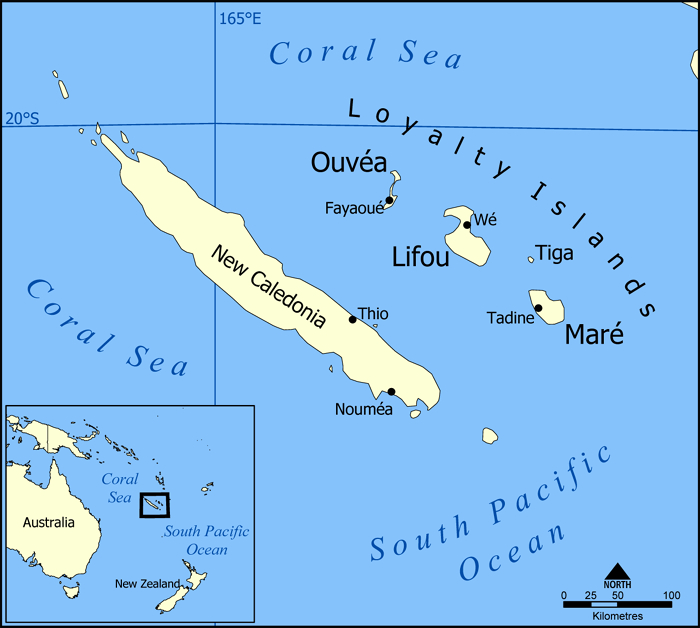
New Caledonia is a French overseas territory in the Pacific.
It enjoys a large degree of autonomy but depends heavily on France for matters like defence and education.
It includes the island of New Caledonia where the capital, Noumea, is located, the Loyalty Islands; the Belep Islands; and the Ile des Pins.
New Caledonia’s lagoons were designated a UNESCO World Heritage site in 2008.
The Crisis: A Quick Recap
New Law: The French government passed a law that has upset people in New Caledonia.
Vote Reforms: Now, French citizens who lived on the island for 10 years or more can vote. The government says it’s fairer this way.
Resistance from Indigenous people: The locals, especially the Kanak community, feel this gives too much power to French settlers and stops them from gaining independence.
How did France occupy this territory?
Exploration: British explorer James Cook named the island New Caledonia in 1774 after the Latin name for Scotland.
French Annexation: France annexed it in 1853 and New Caledonia became a French overseas territory in 1946.
Fewer Locals: France brought in lots of French people. Now, the original Kanak people are only 40% of the population, while others, like the Caldoches and newer French arrivals, make up the rest.
Why are the people protesting?
There were similar fights in the 1990s, leading to promises of more power for locals.
In 2018, 2020, and 2021, they voted on whether to be independent from France. But many boycotted the last vote, saying it wasn’t fair because of the pandemic.
Why is it significant for France?
France sees New Caledonia as important for keeping power in the region.
It wants to stay strong in the Pacific to stand up to other big powers, like China.
PYQ:
[2014] Explain how the foundations of the modern world were laid by the American and French revolutions.
In March, India and the U.S. settled their last lingering WTO poultry dispute, marking the end of seven trade disputes resolved since Prime Minister Modi’s U.S. visit.
What is ‘Litigotiation’?
‘Litigotiation’ is a blend of “litigation” and “negotiation,” referring to a strategic process where legal disputes are managed through a combination of courtroom litigation and settlement negotiations.
This approach recognizes that most legal disputes do not end with a court verdict but rather with a negotiated settlement reached during the litigation process.
Trade dispute on poultry products between India and USA at the WTO
Indian Scenario: India had prohibited the import of various agricultural products from the US because of concerns related to Avian Influenza.
U.S. argued: The U.S. challenged India’s import restrictions on poultry products, which were imposed due to concerns about avian influenza (bird flu) potentially transmitting to humans.
It argued that India deviated from internationally recognized standards that were set by the World Organization for Animal Health (formerly OIE) and failed to provide scientific justifications for its measures, violating the WTO’s Sanitary and Phytosanitary (SPS) Agreement.
The dispute was initiated by the U.S. in 2012 and remained unresolved for over a decade, making it the oldest of the seven trade disputes between India and the U.S. In 2015, India lost a long-pending dispute over poultry imports from the US at the WTO.
The recent settlement allowed India to avoid a yearly $450 million claim.
In exchange, India agreed to reduce tariffs on select U.S. products such as cranberries, blueberries, frozen turkey, and premium frozen duck meat, marking a significant diplomatic breakthrough.
What are the standards set by the World Organization for Animal Health?
The Terrestrial Animal Health Code
First published in 1968, provides standards for the improvement of terrestrial animal health and welfare and veterinary public health worldwide.
These standards should be used by Veterinary Services to set up measures for the early detection, reporting, and control of pathogenic agents, including zoonotic agents, and preventing their spread.
The Aquatic Animal Health Code
Introduced in 1995, provides standards for the improvement of aquatic animal health and welfare worldwide.
These standards should be used by Aquatic Animal Health Services to set up measures for the prevention, early detection, reporting, and control of pathogenic agents in aquatic animals (amphibians, crustaceans, fish, and mollusks).
Implementation of the recommendations in the Aquatic Code ensures the safety of international trade in aquatic animals and aquatic animal products.
About WTO:
The World Trade Organization (WTO) is an intergovernmental organization that regulates and facilitates international trade among its member nations. It was established in 1995 and has 164 member countries, representing over 98% of global trade and global GDP.
Conclusion: The India-U.S. settlement underscores the power of diplomatic negotiations in resolving complex trade disputes, fostering stronger bilateral ties, and promoting a more stable and cooperative international trade environment.
Mains PYQ:
Q WTO is an important international institution where decisions taken affect countries in a profound manner. What is the mandate of WTO and how binding are their decisions? Critically analyse India’s stand on the latest round of talks on Food security. (UPSC IAS/2014)
![[13th June 2024] The Hindu Op-ed: Britain’s summer of discontent](https://www.civilsdaily.com/wp-content/uploads/2024/06/13-June-1568x882.jpg)
![[11 June 2024] The Hindu Op-ed: From warp speed to reset, the state of India-US ties](https://www.civilsdaily.com/wp-content/uploads/2024/06/11-June-1568x882.jpg)