China has imposed export controls and licensing requirements on key lithium-ion battery components and technology, raising concerns for India’s electric vehicle (EV) sector, which is highly import-dependent.
China dominates the midstream processing stage of EV battery supply chains.
Impact on India’s EV Sector
1. Supply Chain Vulnerability
India depends almost entirely on imports for lithium
Heavy reliance on Chinese processing → risk of disruptions
2. Rising Battery Costs
Restrictions may increase prices of: Lithium, Cobalt, and Nickel.
Leads to higher EV prices
3. Slower EV Adoption
Increased costs → reduced affordability
Could delay India’s EV transition targets
Government Response (India)
National Critical Mineral Mission: Ensures long-term supply security
Covers full value chain: Exploration → Mining → Processing → Recycling
Domestic Mining & Auctions: 46 critical mineral blocks auctioned
Overseas Acquisition: Khanij Bidesh India Limited (KABIL)
Lithium exploration in Catamarca
Recycling Push: ₹1,500 crore incentive scheme for: Battery recycling and Recovery from waste (fly ash, tailings, etc.).
[2025] In the context of electric vehicle batteries, consider the following elements: 1. Cobalt 2. Graphite 3. Lithium 4. Nickel How many of the above usually make up battery cathodes? (a) Only one (b) Only two (c) Only three (d) All the four
Iran has deployed the Sejjil missile in active combat for the first time during “Wave 54” strikes against U.S. and Israeli positions, marking a major escalation in the Iran–US-Israel conflict (2026).
What is the Sejjil Missile?
An indigenously developed, two-stage Medium-Range Ballistic Missile (MRBM)
Also known as Sajjil / Ashura
Represents Iran’s shift from liquid-fuel → solid-fuel missile technology.
Evasive Maneuverability
Nicknamed “dancing missile”
Capable of mid-course manoeuvres, making interception difficult for systems like: Iron Dome and Arrow Missile Defence System.
[2023] Consider the following statements: Ballistic missiles are jet-propelled at sub-sonic speeds throughout their flights, while cruise missiles are rocket-powered only in the initial phase of flight. Agni-V is a medium-range supersonic cruise missile, while BrahMos is a solid-fuelled intercontinental ballistic missile. Which of the statements given above is/are correct? (a) 1 only (b) 2 only (c) Both 1 and 2 (d) Neither 1 nor 2
Amid the ongoing Iran–US-Israel conflict (2026), major Gulf producers like Qatar, Kuwait, and Bahrain have invoked force majeure on oil and gas exports due to shipping disruptions and attacks on infrastructure.
What is Force Majeure?
Force majeure is a contractual clause that allows a party to suspend or cancel its obligations without penalty when extraordinary events make performance impossible.
Origin: French term meaning “superior force”
Common in international trade, energy contracts, and maritime law
Examples of Force Majeure Events
Wars and armed conflicts
Natural disasters (earthquakes, floods)
Pandemics (e.g., COVID-19)
Government actions or sanctions
[2024] Consider the following statements: Statement-I: Sumed pipeline is a strategic route for Persian Gulf oil and natural gas shipments to Europe. Statement-II: Sumed pipeline connects the Red Sea with the Mediterranean Sea. Which one of the following is correct in respect of the above statements? (a) Both Statement-I and Statement-II are correct and Statement-II explains Statement-I (b) Both Statement-I and Statement-II are correct, but Statement-II does not explain Statement-I (c) Statement-I is correct, but Statement-II is incorrect (d) Statement-I is incorrect, but Statement-II is correct
The U.S. government recently launched two Section 301 investigations against India and other countries to examine alleged excess industrial capacity and the use of forced labour in supply chains. The move comes amid an evolving U.S. tariff regime following a U.S. Supreme Court ruling that upheld presidential authority under the International Emergency Economic Powers Act (IEEPA) to impose tariffs.
What is Section 301 of the Trade Act of 1974?
It is designed to address unfair foreign practices affecting U.S. commerce.
Section 301 may be used to respond to unjustifiable, unreasonable, or discriminatory foreign government practices that burden or restrict U.S. commerce.
What are Section 301 investigations and why are they significant?
Legal Framework: Section 301 of the Trade Act of 1974 authorizes the U.S. government to investigate foreign policies that burden or restrict U.S. commerce.
Trade Enforcement Tool: Enables unilateral responses such as tariffs, trade restrictions, or sanctions against countries found violating fair trade norms.
Historical Precedent: The provision was extensively used during the U.S.-China trade war, leading to tariffs on hundreds of billions of dollars worth of goods.
Strategic Leverage: Functions as an instrument to pressure countries into policy changes in industrial subsidies, labour standards, or market access.
What allegations has the U.S. made against India and other economies?
Excess Industrial Capacity: Investigates whether countries maintain production capacities exceeding domestic demand, enabling dumping in global markets.
Example: Sectors such as steel, petrochemicals, and other heavy industries.
Forced Labour Concerns: Examines whether goods entering U.S. markets involve labour exploitation or inadequate labour compliance mechanisms.
Trade Distortion: Considers whether state subsidies or policy support distort global markets and harm American manufacturers and workers.
What is the current tariff and trade policy context in the United States?
Supreme Court Ruling: The U.S. Supreme Court (February 20) upheld the president’s authority under the International Emergency Economic Powers Act (IEEPA) to impose tariffs on trading partners.
Reciprocal Tariffs: Earlier U.S. tariffs imposed on imports were reduced for India from 26% to 25% in August 2025.
Temporary Tariff Relief: The U.S. imposed a 10% tariff on imports for a 150-day period under Section 122 of the Trade Act.
Potential Escalation: The U.S. administration indicated that additional tariffs could be imposed after the temporary period ends.
What sectors and industries are under scrutiny?
Petrochemicals and Heavy Industries: Investigations focus on sectors where production capacity significantly exceeds domestic demand.
Steel and Aluminium: Existing tariffs already apply to these sectors in several markets.
Automobile Components: The U.S. previously imposed 50% tariffs on auto components, affecting exporters including India.
Textiles and Apparel: Industry groups highlight concerns due to existing uncertainty in global trade and supply chains.
How significant is India-U.S. trade in this context?
Trade Surplus: India recorded a $58 billion surplus in trade with the U.S. in 2025.
Export Dependence: The U.S. remains one of India’s largest export markets, making tariff risks economically important.
Strategic Partnership: The trade friction contrasts with the broader India-U.S. strategic partnership in technology, defence, and supply chain resilience.
How have Indian industries responded to the investigation?
Engineering Sector Concerns: The Engineering Export Promotion Council of India noted that the investigation could lead to new tariffs after the 150-day tariff pause.
Textile Industry Uncertainty: The Confederation of Indian Textile Industry highlighted rising uncertainty due to West Asian geopolitical tensions and unclear U.S. tariff policies.
Moderate Response: Industry bodies expect investigations to be long and drawn-out processes, implying no immediate impact.
How has the Indian government responded?
Limited Public Response: The Indian government has not yet issued a detailed public statement.
Trade Negotiation Context: The issue may intersect with broader India-U.S. trade negotiations.
Diplomatic Engagement: The development may require consultations through bilateral trade dialogues and WTO frameworks.
Implications for India
Export Competitiveness: Possible U.S. tariffs under Section 301 could reduce competitiveness of Indian exports such as steel, textiles, auto components, and engineering goods in the U.S. market.
Trade Surplus Pressure: India’s $58 billion trade surplus with the U.S. may face scrutiny, increasing pressure for market access concessions or tariff reductions.
Supply Chain Compliance: Investigations into forced labour and industrial practices may require stronger labour standards, traceability, and ESG compliance in export supply chains.
Sectoral Vulnerability: Key export sectors like petrochemicals, steel, aluminium, and engineering goods could face additional trade barriers.
Impact on MSMEs: Export-oriented MSMEs integrated into global value chains may face reduced demand if tariffs increase.
Trade Negotiation Leverage: The U.S. may use the investigation as leverage in bilateral trade negotiations with India.
Conclusion
The U.S. investigations into India under Section 301 reflect a broader shift toward assertive trade enforcement and supply chain scrutiny. While the immediate impact remains uncertain, the development signals potential tariff risks and trade policy tensions between two strategic partners. Managing the issue will require diplomatic engagement, supply chain transparency, and strategic trade negotiations.
PYQ Relevance
[UPSC 2018] What are the key areas of reform if the WTO has to survive in the present context of ‘Trade War’, especially keeping in mind the interest of India?
Linkage: The U.S. Section 301 investigations and tariff threats reflect the unilateral trade measures and weakening of multilateral trade rules, which is central to debates on WTO reforms and global trade governance.
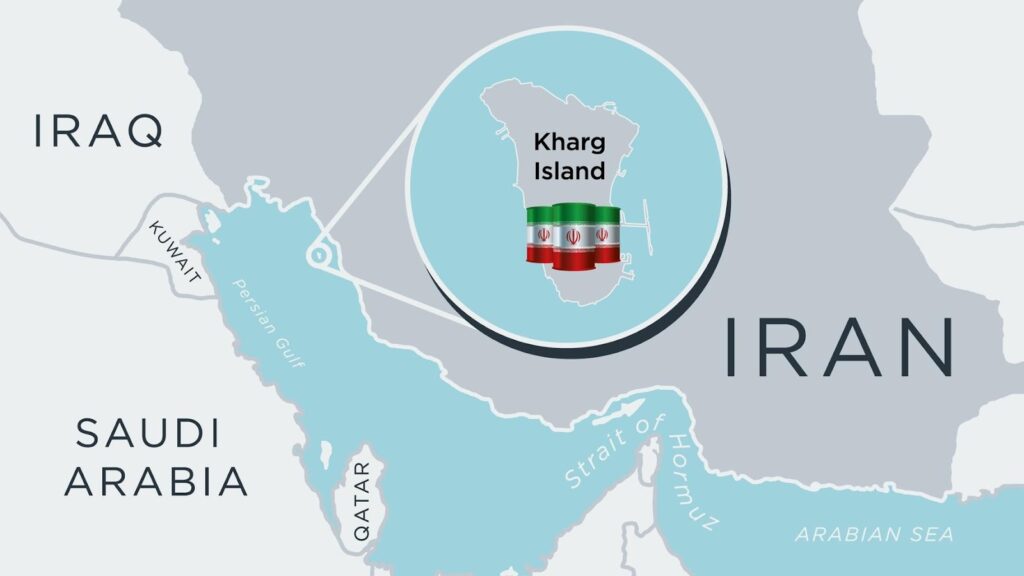
The United States launched airstrikes on military targets on Kharg Island during the ongoing US–Israel conflict with Iran. Although oil infrastructure was not targeted, the attack raises fears of disruption in global oil supply and a potential spike in crude prices.
What is Kharg Island?
A small 8-km-long coral island in the Persian Gulf.
Located about 50 km off Iran’s mainland coast.
Serves as Iran’s primary oil export hub.
Why Kharg Island is Strategically Important
Iran’s Main Oil Export Terminal: About 90% of Iran’s crude oil exports pass through Kharg Island. Pipelines from major Iranian oil fields terminate here before exports.
Massive Oil Infrastructure: Key facilities on the island include:
Falat Iran Oil Company producing around 500,000 barrels per day.
Kharg Petrochemical Company.
Large oil storage and LNG shipping facilities.
Suitable Geography for Large Tankers: Much of Iran’s coastline is too shallow for very large crude carriers (VLCCs). Kharg lies near deep waters, allowing large oil tankers to dock easily.
Oil Trade Through Kharg
Normally ≈1.5 million barrels of oil per day exported through the island.
Iran reportedly increased exports to ≈3 million barrels/day before the strike anticipating conflict.
About 18 million barrels of oil stored there as reserve capacity.
Why the Attack Matters
Impact on Oil Prices: If Kharg’s oil infrastructure were destroyed, 90% of Iran’s exports could stop. Global crude prices could surge towards $150 per barrel.
Strategic Signalling: The U.S. targeted military sites but avoided oil infrastructure, possibly to:
Avoid a major global energy shock.
Signal restraint while warning Iran against disrupting shipping.
Risk to Shipping Routes: The U.S. Navy plans to escort oil tankers through the Strait of Hormuz, which carries a large share of global oil trade.
[2012] To meet its rapidly growing energy demand, some opine that India should pursue research and development on thorium as the future fuel of nuclear energy. In this context, what advantage does thorium hold over uranium? Thorium is far more abundant in nature than uranium. On the basis of per unit mass of mined mineral, thorium can generate more energy compared to natural uranium. Thorium produces less harmful waste compared to uranium. Select the correct answer using the code given below: (a) 1 only (b) 2 and 3 only (c) 1 and 3 only (d) 1, 2 and 3
The Government of India has introduced calibrated changes to its Foreign Direct Investment (FDI) policy for Land Bordering Countries (LBCs) to boost investment in key manufacturing sectors such as electronics components and rare earth magnets.
Background: Press Note 3 (PN3) – 2020
In April 2020, India introduced Press Note 3 (2020).
It mandated prior government approval for investments from countries sharing land borders with India.
Countries Covered
China
Pakistan
Bangladesh
Nepal
Myanmar
Bhutan
Afghanistan
Reason: Prevent opportunistic takeovers of Indian companies during the COVID-19 economic slowdown, particularly by Chinese investors.
Key Changes in the FDI Policy (2026)
Automatic Route for Small Indirect Ownership: Investments will be allowed under the automatic route if beneficial ownership from LBCs is below 10%.
This mainly benefits global private equity and venture capital funds with minor Chinese stakes.
Faster Approval Process: Investment proposals from LBCs in certain sectors must now be processed within 60 days.
Investment in “Specified Sectors”: Allowed sectors include:
Electronic components manufacturing
Electronic capital goods
Polysilicon and wafer manufacturing
Advanced battery components
Rare earth magnets and processing.
However, these investments must ensure Indian majority ownership (at least 51%).
Pakistan Exception: Investments from Pakistan will continue to require government approval and remain restricted.
Why the Policy Was Relaxed
The change follows recommendations from: NITI Aayog and Economic Survey 2023-24.
These reports argued that Chinese capital and technology could help India strengthen export competitiveness, particularly in electronics manufacturing.
Who Benefits?
Global Investment Funds: Funds like private equity and venture capital firms with minor Chinese ownership can invest without lengthy approvals.
Manufacturing Sector: Industries that depend on imported inputs such as: Electronics components, Rare earth magnets, and Semiconductor materials.
Indian Firms: Joint ventures with foreign companies while maintaining majority Indian control.
[2021] Consider the following: Foreign currency convertible bonds Foreign institutional investment with certain conditions Global depository receipts Non-resident external deposits Which of the above can be included in Foreign Direct Investments? (a) 1, 2 and 3 (b) 3 only (c) 2 and 4 (d) 1 and 4
PYQ Relevance[UPSC 2024] “The West is fostering India as an alternative to reduce dependence on China’s supply chain and as a strategic ally to counter China’s political and economic dominance.” Explain this statement with examples.Linkage: India-Canada cooperation on critical minerals, technology, and supply-chain diversification reflects the broader global strategy of reducing dependence on China and strengthening strategic partnerships with India.
Mentor’s Comment
India-Canada relations have witnessed a significant diplomatic reset after a prolonged period of political tensions. The recent visit of Canadian Prime Minister Mark Carney to India signals a shift from ideological disagreements toward pragmatic cooperation focused on economic partnerships, critical minerals, technology, and energy security. The developments highlight how middle powers are restructuring partnerships in response to shifting global supply chains and geopolitical fragmentation.
How does the diplomatic reset reflect a shift from political disagreements to pragmatic cooperation?
Pragmatic Diplomacy: Focuses bilateral engagement on economic outcomes rather than ideological disputes that previously strained ties.
Leadership Change: Transition from Justin Trudeau to Mark Carney enables recalibration of relations.
Strategic Engagement: Builds on earlier interactions between Narendra Modi and Canadian leadership during meetings in Kananaskis (G7 outreach) and Johannesburg (BRICS context).
Outcome-oriented diplomacy: Prioritizes agreements, investments, and technological collaboration rather than symbolic dialogue.
Why is economic cooperation emerging as the central pillar of India-Canada relations?
Trade Diversification: Reduces dependence on traditional markets amid global trade tensions.
Supply Chain Resilience: Addresses disruptions caused by tariff policies of Donald Trump and geopolitical conflicts affecting global trade networks.
Economic Complementarity: Combines Canada’s resource wealth with India’s manufacturing and technological capacities.
CEPA Negotiations: Establishes a framework for deeper trade integration through the Comprehensive Economic Partnership Agreement.
How does cooperation on critical minerals reshape strategic supply chains?
Critical Mineral Security: Strengthens supply chains for minerals required for semiconductors, batteries, and advanced technologies.
MoU on Critical Minerals: Enables collaboration in exploration, extraction, and processing of rare minerals.
China Dependency Reduction: Diversifies supply away from concentrated sources currently dominated by China.
Technology Collaboration: Aligns mineral supply chains with India’s electronics manufacturing and digital economy ambitions.
What role does technology and innovation partnership play in strengthening bilateral ties?
Technology Collaboration: Establishes an MoU under the Australia-Canada-India Technology and Innovation Partnership.
Research Cooperation: Expands academic and scientific collaboration between institutions.
AI and Semiconductor Cooperation: Strengthens joint work in emerging technologies.
Strategic Tech Alignment: Aligns with initiatives such as the Pax Silica coalition, which includes India and over ten other countries focusing on semiconductor supply chains.
How does energy cooperation shape the future trajectory of India-Canada relations?
Uranium Supply Agreement: Commercial contract between India’s Department of Atomic Energy and Canada’s Cameco for uranium ore concentrates.
Nuclear Energy Expansion: Supports India’s strategy to increase nuclear energy share in its energy mix.
Energy Security: Reduces dependence on volatile fossil fuel imports.
Policy Alignment: Complements India’s Sustainable Harnessing and Advancing Nuclear Energy for Transforming India (SHANTI) Bill, 2025, enabling long-term nuclear capacity growth.
How does the partnership address global geopolitical and economic disruptions?
Supply Chain Fragmentation: Responds to geopolitical conflicts affecting global logistics.
Economic Security: Recognizes resource access as a key determinant of strategic autonomy.
Indo-Pacific Engagement: Enhances Canada’s engagement with Indo-Pacific economies.
Strategic Middle Power Alignment: Strengthens cooperation among democratic economies facing global power competition.
Conclusion
The India-Canada diplomatic reset reflects a broader shift in international relations toward economic pragmatism and strategic supply-chain partnerships. Cooperation in critical minerals, technology, and nuclear energy demonstrates how middle powers are adapting to geopolitical fragmentation. Sustained progress will depend on insulating economic engagement from domestic political disruptions and translating agreements into long-term institutional partnerships.
Escalating conflict in West Asia, particularly around the Strait of Hormuz, has raised fears of a global oil supply disruption. The strait is a critical energy chokepoint, and instability threatens oil flows to Asia and Europe. Amid this crisis, Russian crude, earlier stranded due to Western sanctions after the Ukraine war, has regained demand. Estimates indicate Russia earned about $160 million per day in additional oil revenue in 2025 due to market volatility. India, the second-largest buyer of Russian oil after China, has also increased imports despite U.S. pressure, reflecting the tension between energy security and geopolitical alignment.
How has the West Asian conflict reshaped global oil supply dynamics?
Strait of Hormuz disruption: Ensures vulnerability of global oil trade since the strait carries a significant portion of world petroleum exports connecting the Persian Gulf to global markets.
Energy supply uncertainty: Facilitates price volatility due to fears that escalating tensions may block shipping routes or disrupt tanker movements.
Regional instability: Supports supply constraints as attacks on oil infrastructure and shipping vessels increase risk premiums in oil markets.
Strategic chokepoint importance: Strengthens the geopolitical value of maritime corridors that transport energy to Asia and Europe.
Why has Russia emerged as the major beneficiary of the oil supply crunch?
Revenue gains: Generates approximately $160 million per day in additional revenue in 2025, benefiting from volatility linked to Strait of Hormuz disruptions.
Demand recovery: Ensures renewed demand for Russian crude that had earlier accumulated in offshore storage due to sanctions.
Price advantage: Facilitates discounted oil sales that remain attractive to major importers such as India and China.
Sanctions resilience: Strengthens Russia’s ability to maintain export volumes despite restrictions imposed by Western countries after the Ukraine conflict.
How have Western sanctions shaped Russia’s oil trade patterns?
Sanctions restrictions: Limits Russian oil exports through price caps and financial restrictions imposed by the United States and European partners.
Alternative buyers: Encourages Moscow to redirect oil exports toward Asian markets including India and China, which continue purchasing discounted crude.
Shadow fleet expansion: Enables transportation of sanctioned oil through a network of tankers operating outside traditional regulatory systems.
Market reorientation: Strengthens Russia’s dependence on non-Western markets for sustaining energy revenues.
How has India’s oil import strategy evolved amid the crisis?
Import diversification: Supports energy security by purchasing crude from multiple suppliers including Russia, Iraq, Saudi Arabia and the United States.
Russian crude dependence: Facilitates high volumes of imports due to discounted prices offered after sanctions.
Temporary import decline: Ensures partial reduction in Russian imports due to compliance concerns with Western sanctions.
Recent import rebound: Strengthens Russian supply share again as geopolitical disruptions tighten global oil availability.
What risks does the Strait of Hormuz crisis pose to global energy security?
Shipping vulnerability: Increases risk of tanker attacks or blockades in a corridor that carries a large share of global oil shipments.
Price escalation: Drives upward pressure on international crude benchmarks due to perceived supply shortages.
Strategic competition: Intensifies geopolitical rivalry among major powers seeking control over energy routes.
Energy security challenges: Forces importing countries to secure alternative supply chains and maintain strategic petroleum reserves.
Conclusion
The West Asian conflict and disruptions around the Strait of Hormuz have reshaped global energy markets. Instead of weakening Russia, the crisis has enabled Moscow to capitalize on higher prices and renewed demand for its crude oil. For energy-importing countries such as India, the situation highlights the complex balancing act between securing affordable energy supplies and navigating geopolitical pressures.
PYQ Relevance
[UPSC 2018] In what ways would the ongoing US-Iran Nuclear Pact Controversy affect the national interest of India? How should India respond to this situation
Linkage: The current Strait of Hormuz tensions and Russia’s oil resurgence similarly highlight how West Asian geopolitical conflicts affect India’s energy security, oil imports, and foreign policy balancing.
The 11th edition of Exercise LAMITIYE-2026 is being conducted from 10 to 22 March 2026 at the Seychelles Defence Academy, strengthening defence cooperation between India and Seychelles.
Key Highlights
First Tri-Services Edition
For the first time, the exercise includes personnel from: Indian Army, Indian Navy, and Indian Air Force
Conducted with the Seychelles Defence Forces.
Objective
Enhance interoperability and joint operational capability between the armed forces of both countries.
Focus on sub-conventional operations in semi-urban environments, especially relevant to United Nations Peacekeeping missions.
[2024] Which of the following statements about ‘Exercise Mitra Shakti-2023’ are correct? This was a joint military exercise between India and Bangladesh. It commenced in Aundh (Pune). Joint response during counter-terrorism operations was a goal of this operation. Indian Air Force was a part of this exercise. Select the answer using the code given below: (a) 1, 2 and 3 (b) 1 and 4 (c) 1 and 4 (d) 2, 3 and 4
A KC‑135 Stratotanker crashed in western Iraq, killing all six crew members during the ongoing regional conflict.
Incident Details
The aircraft belonged to the United States Air Force.
The crash occurred during operations linked to Operation Epic Fury.
A second aircraft involved in the mission landed safely.
About the KC-135 Aircraft
Introduced over 60 years ago for aerial refuelling missions.
Typical crew: pilot, co-pilot, and boom operator.
Can carry additional crew or up to 37 passengers depending on the mission.
Plays a key role in extending the operational range of fighter and bomber aircraft.
[2025] With reference to India’s defence, consider the following pairs: Dornier-228: Maritime patrol aircraft IL-76: Supersonic combat aircraft C-17 Globemaster III: Military transport aircraft How many of the pairs given above are correctly matched? (a) Only one (b) Only two (Dornier-228 and C-17 Globemaster III are correctly matched) (c) All the three (d) None