💥Mains Ready By December. Smash Mains & Smash PYQ Admissions Open

Subject: International Stories of Key Importance

  • Paris Olympics: All You Need to Know

    Why in the News?

    The Paris Olympics has began and will run from July 26 to August 11, 2024.

    Some lesser known facts about Olympics:

    • The Olympic Games originated in ancient Greece in 776 BC in Olympia.
    • Held every 4 years, they featured athletic competitions among representatives of various city-states.
    • The modern Olympics were revived by Baron Pierre de Coubertin of France.
    • The first modern Olympic Games were held in Athens, Greece, in 1896.
    • The Olympic Rings represent the union of the 5 inhabited continents (Africa, Americas, Asia, Europe, and Oceania).
    • The Winter Olympics were introduced in 1924 in Chamonix, France and it features sports practiced on snow and ice, like skiing, ice skating, and ice hockey.
    • The Olympic Torch Relay was introduced in the 1936 Berlin Games.
    • The number of participating countries has grown from 14 in the 1896 Games to over 200 in recent editions.
    • Women were first allowed to compete in the 1900 Paris Olympics.
    • The Paralympics, for athletes with disabilities, were first held in Rome in 1960.

    About Paris Olympics

    • The Paris Olympics, officially known as the Games of the XXXIII Olympiad, will be held in Paris, France.
    • This event, commonly referred to as the 2024 Summer Olympics, is an international multi-sport competition featuring athletes from around the world.
    • Sports include: Athletics, Aquatics, Archery, Badminton, Basketball, Boxing, Canoeing, Cycling, Equestrian, Fencing, Football, Golf, Gymnastics, Handball, Hockey, Judo, Modern Pentathlon, Rowing, Rugby Sevens, Sailing, Shooting, Skateboarding, Sport Climbing, Surfing, Table Tennis, Taekwondo, Tennis, Triathlon, Volleyball, Weightlifting, and Wrestling.

    India’s Participation: 

    India is set to participate in various sports at the Paris Olympics 2024, with several medal prospects across disciplines.

    Athletes and Key Events
    Athletics
    • Neeraj Chopra (Javelin Throw): Defending Olympic gold medallist, aiming for another podium finish.
    • Key Events: Track and field events with several athletes competing in sprints, long jump, and discus throw.
    Badminton
    • PV Sindhu (Singles): Two-time Olympic medallist, aiming for her third medal.
    • Satwiksairaj Rankireddy/Chirag Shetty (Doubles): Top doubles pair, strong medal contenders.
    • Ashwini Ponnappa/Satwiksairaj Rankireddy: Promising mixed doubles pair with several international wins.
    Boxing
    • Mary Kom (Flyweight): Veteran boxer and former Olympic medallist.
    • Amit Panghal (Flyweight): Strong contender in the men’s category.
    • Lovlina Borgohain (Welterweight): Bronze medallist from Tokyo, aiming for a higher podium finish.
    Shooting
    • Manu Bhaker (10m Air Pistol, 25m Pistol): Young and promising shooter with several international accolades.
    • Saurabh Chaudhary (10m Air Pistol): Consistent performer and medal hopeful.
    Wrestling
    • Vinesh Phogat (50kg): Experienced wrestler and strong medal prospect.
    • Antim Panghal (53kg): Young talent with significant potential.
    Weightlifting Mirabai Chanu (49kg): Silver medallist from Tokyo, aiming for gold in Paris.
    Hockey
    • Men’s Team: After winning bronze in Tokyo, the team aims for gold.
    • Women’s Team: Strong contenders with improving performance over recent years.
    Table Tennis
    • Manika Batra: Leading Indian player with potential for a breakthrough performance.
    • Sharath Kamal: Veteran player with considerable international experience.
    Archery
    • Deepika Kumari: Leading female archer with multiple international medals.
    • Atanu Das: Strong contender in men’s archery events.
    Gymnastics Dipa Karmakar: Known for her Produnova vault, aiming for a comeback and podium finish.


    PYQ:

    [2021] Consider the following statements in respect of the Laureus World Sports Award which was instituted in the year 2000 :​

    1. American golfer Tiger Woods was the first winner of this award.​

    2. The award was received mostly by ‘Formula One’ players so far.​

    3. Roger Federer received this award maximum number of times compared to others.​

    Which of the above statements are correct?

    (a) 1 and 2 only

    (b) 2 and 3 only

    (c) 1 and 3 only

    (d) 1, 2 and 3

  • Niger struggles with Security, Economic Crises

    Why in the News?

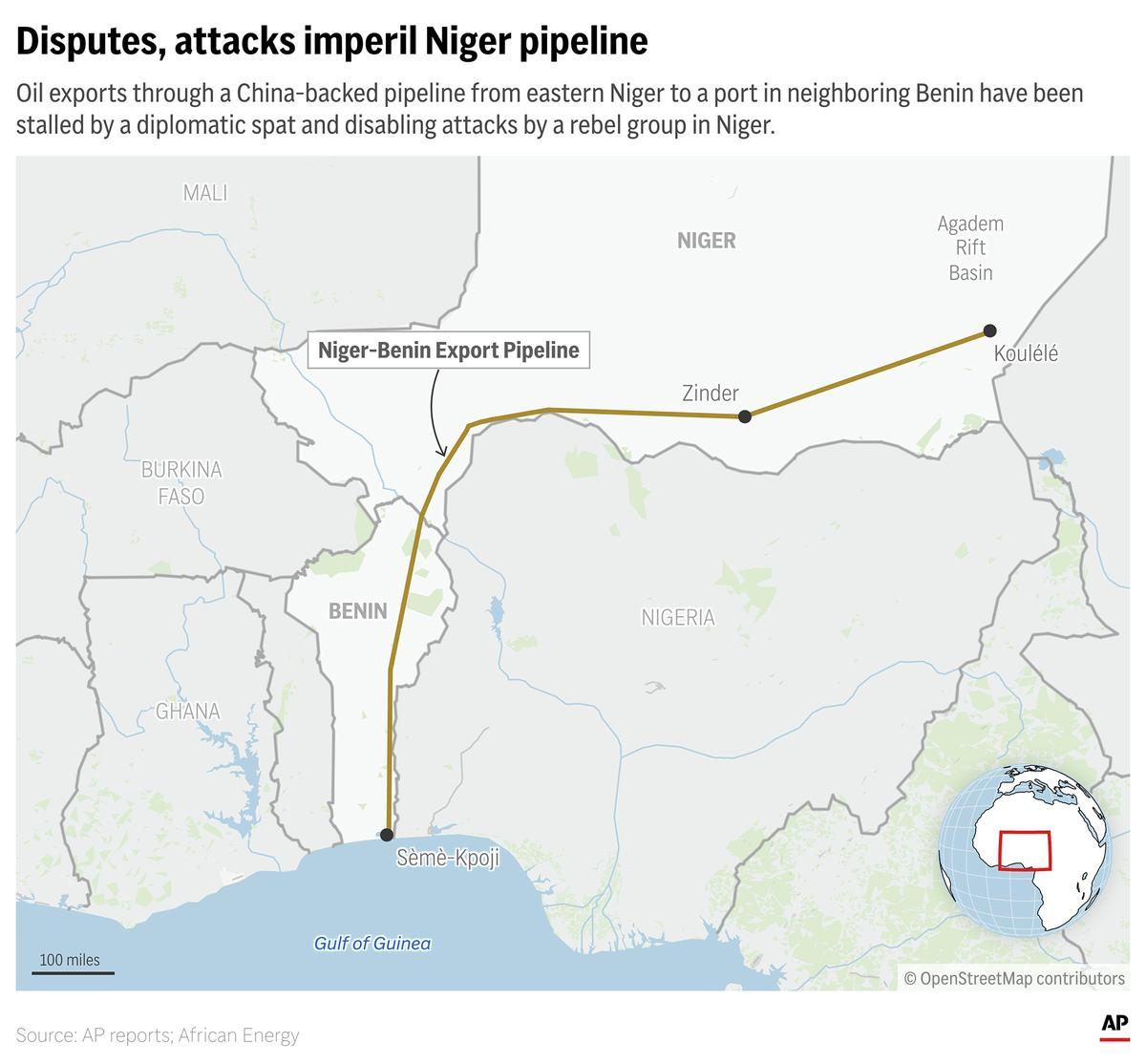
    • The China-backed Niger-Benin Export Pipeline that would make Niger an oil-exporting country is being threatened by an internal security crisis and a diplomatic dispute with neighboring Benin.
      • These issues arose after last year’s coup that toppled Niger’s democratic government.

    About Niger

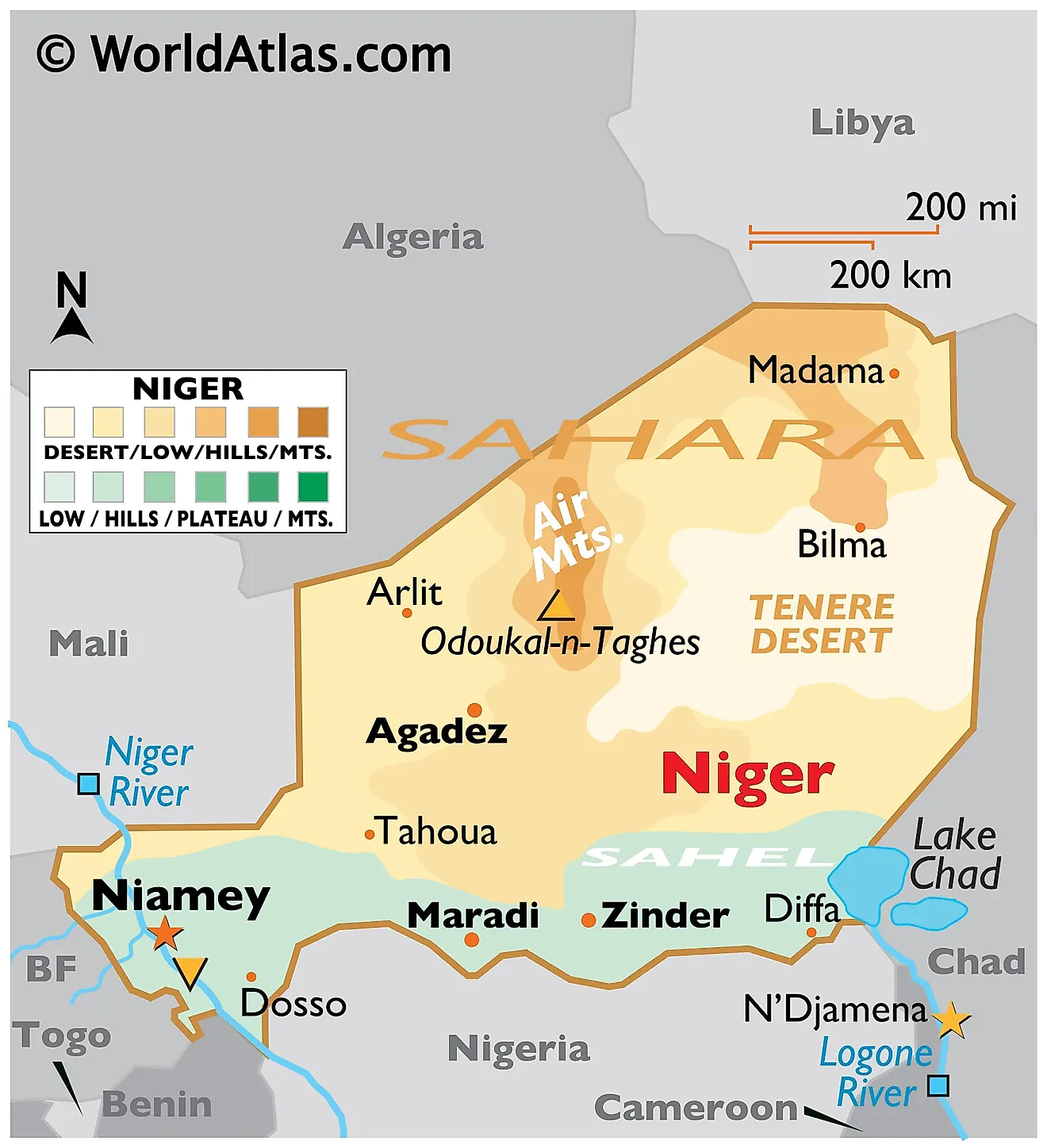
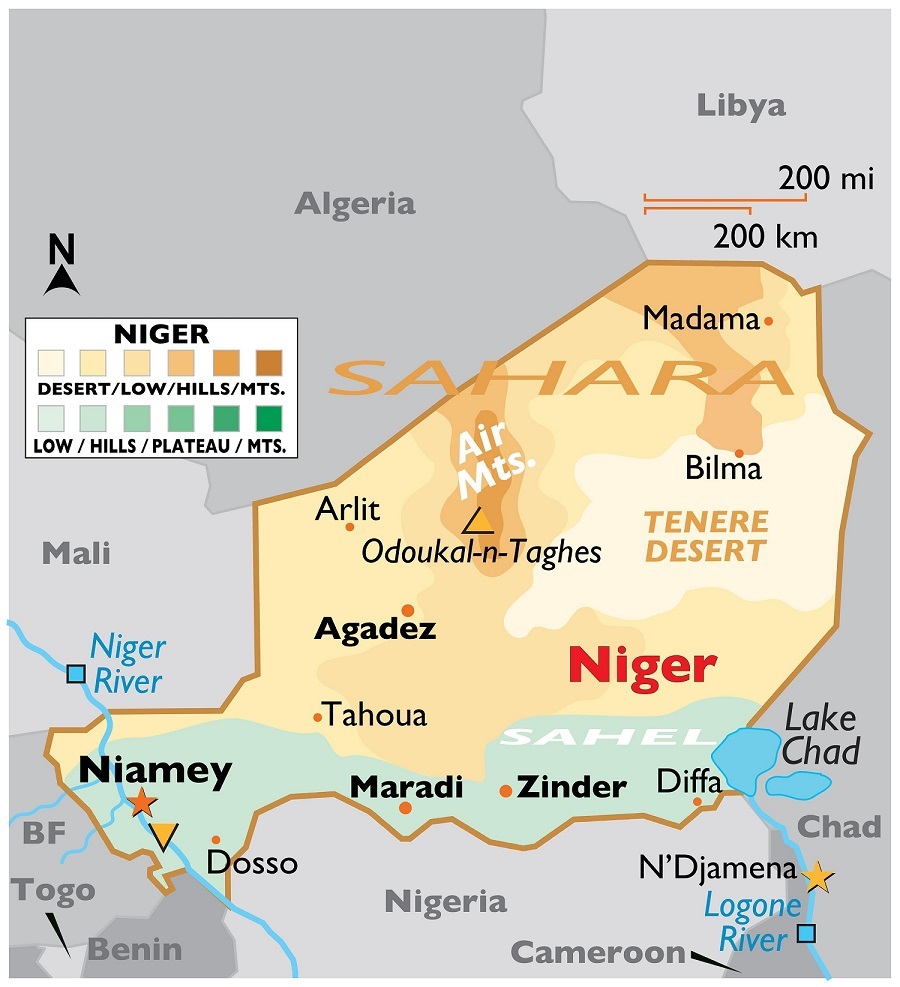
    • Niger, located in West Africa, is a landlocked country known for its vast desert landscapes and significant cultural heritage.
    • The northern region of Niger is dominated by the Sahara Desert, comprising more than half of the country.
    • The central part of Niger is characterized by the Sahel, a semi-arid transition zone between the Sahara
    • The Aïr Mountains, located in the northern central part are a significant mountain range with the highest peak, Mont Idoukal-n-Taghès (2,022 m).
    • The Niger River is the country’s primary water source.
    • Lake Chad is a significant body of water shared with Nigeria, Chad, and Cameroon. Its size keep on fluctuating.

    About Niger Benin Export Pipeline

    • The 1,930-kilometer pipeline runs from Niger’s Chinese-built Agadem oil field to the port of Cotonou in Benin.
    • It was designed to help Niger achieve an almost 5x increase in oil production through a $400 million deal with China’s state-run national petroleum company.
    • The pipeline faces significant challenges, including a recent diplomatic disagreement with Benin.
    • These issues threaten to strain Niger’s economy, heavily reliant on external support now withheld after a coup.


    PYQ:

    [2018] Which of the following has/have shrunk immensely/dried up in the recent past due to human activities?

    1. Aral Sea
    2. Black Sea
    3. Lake Baikal

    Select the correct answer using the code given below:

    (a) 1 only

    (b) 2 and 3

    (c) 2 only

    (d) 1 and 3

  • Places in News: Niger, Ivory Coast and Pacific Island States

    Why in the News?

    Details

    Niger

    • Turkish delegation visited to strengthen military cooperation with the junta, shifting alliances to Turkey and Russia.
    Geography: Landlocked in West Africa, bordered by Algeria, Libya, Chad, Nigeria, Benin, Burkina Faso, and Mali. Population ~26.3 million; capital Niamey.

    Key Points:

    • Gained independence from France in 1960.
    • Political instability with coups and a military junta in 2023.
    • It faces significant challenges including desertification, water scarcity, and economic development issues.
    • It is one of the world’s poorest nations despite having large uranium reserves.

    Ivory Coast

    • Recent discoveries have revealed substantial oil reserves estimated at six billion barrels, potentially making Ivory Coast a net oil exporter by the end of the decade.
    • The Baleine field, operated by Eni, aims to reach significant production levels by 2026.
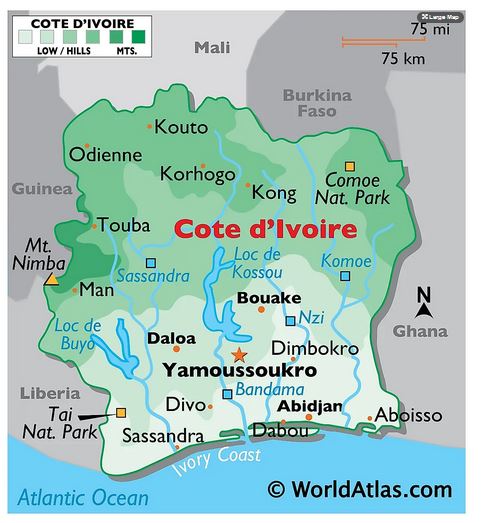
    Geography: Located on the southern coast of West Africa; bordered by Liberia, Guinea, Mali, Burkina Faso, Ghana, and the Gulf of Guinea. Population ~30.9 million; capital Yamoussoukro.

    Key Points:

    • Gained independence from France in 1960.
    • Experienced political instability, now relatively stable since 2016.
    • Fast-growing economy dependent on cocoa, coffee, and expanding into gold mining and oil refining.
    • Abidjan is a major hub for West African economic activities.

    Pacific Island States

    • Participated in a summit with Japan expressing concerns over military build-ups and the need for regional peace and security.
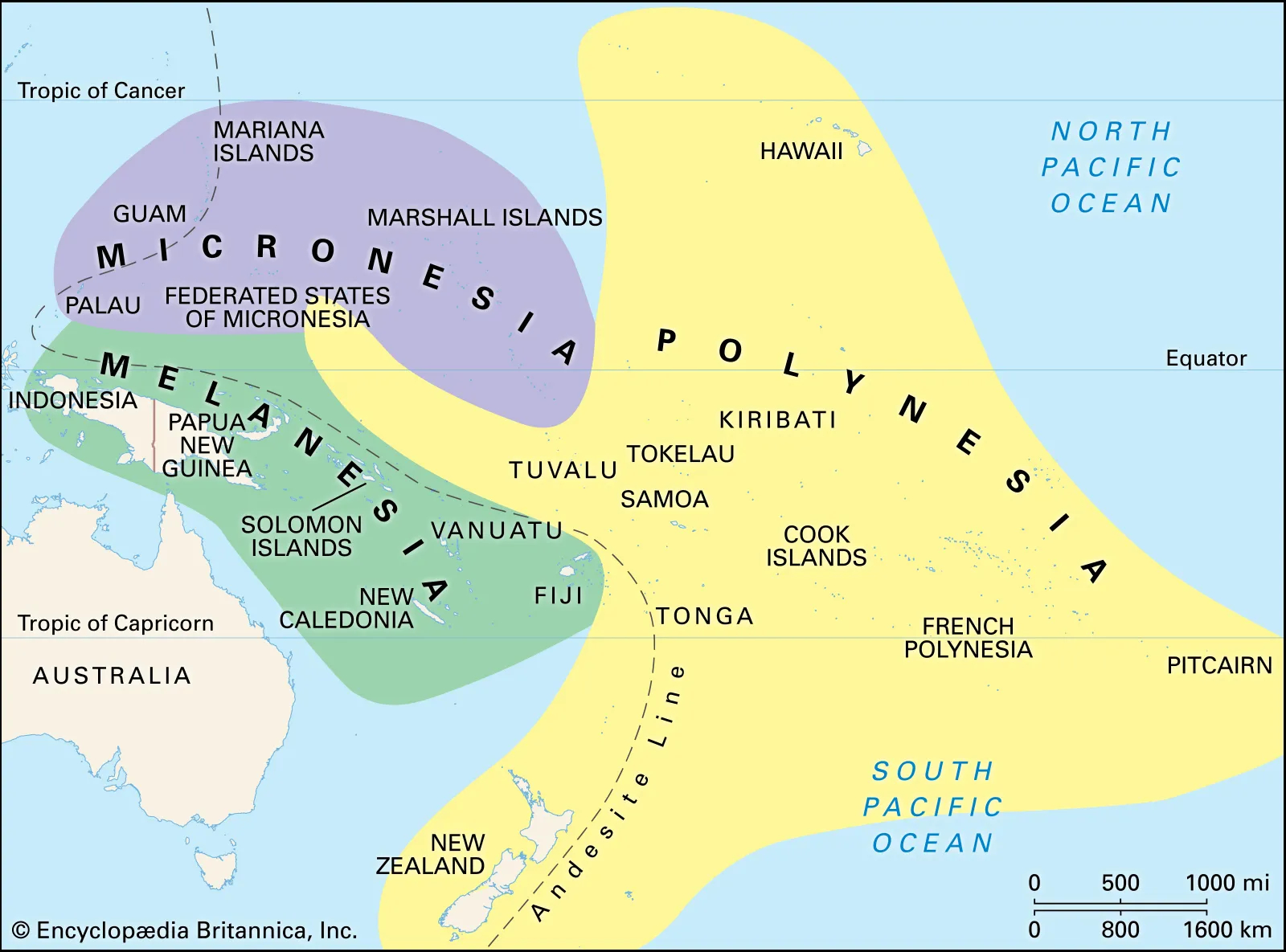
    • Geography: Vast region in the Pacific Ocean, categorized into Melanesia, Micronesia, and Polynesia; diverse climates and ecosystems.
    • They face challenges such as climate change impacts, biodiversity loss, and varying levels of development.
    • Economic activities include tourism, agriculture (especially coconut and palm oil), and fishing.
    • These islands play a crucial role in global biodiversity and climate resilience efforts.


    PYQ: 

    [2022] Consider the following pairs:

    Region often mentioned in the news: Country

    1. Anatolia: Turkey
    2. Amhara: Ethiopia
    3. Cabo Delgado: Spain
    4. Catalonia: Italy

    How many pairs given above are correctly matched?

    (a) Only one pair

    (b) Only two pairs

    (c) Only three pairs

    (d) All four pairs

    [2018] Consider the following pairs:

    Towns sometimes mentioned in news: Country

    1. Aleppo: Syria

    2. Kirkuk: Yemen

    3. Mosul: Palestine

    4. Mazar-i-Sharif:  Afghanistan

    Which of the pairs given above are correctly matched?

    (a) 1 and 2

    (b) 1 and 4

    (c) 2 and3

    (d) 3 and 4

  • State of Economic Emergency in Argentina

    Why in the News?

    Argentina faces one of the world’s highest inflation rates and a decade-long economic stagnation.

    • The International Monetary Fund’s (IMF) earlier decision to release $4.7 billion from a $57 billion bailout package to Argentina, despite missed targets, raised eyebrows.

    IMF’s Controversial Decision:

    • The IMF dispersed $4.7 billion, including overdue and advanced payments, to bolster President Milei’s nascent government.
    • This move contradicted IMF guidelines requiring adherence to economic conditions, signaling geopolitical influence and strategic support.

    Argentina’s Economic Struggles

    • Persistent fiscal deficits and chronic inflation have plagued Argentina, with historical inflation averaging 190% from 1944 to 2023.
    • The government defaulted on sovereign debt nine times, exacerbating economic instability.
      • Since 2009, fiscal deficits persisted, reaching 4.4% of GDP in 2023, fueled by overspending and reliance on the inflation tax.
    • Milei’s administration targets fiscal reform to eliminate large deficits, contrasting with past failed attempts like the Austral Plan.
      • Alfonsín launched the Austral Plan, an austerity program that implemented a new currency (the austral), wage and price controls, and currency devaluations.

    IMF and its Bailout

    • The IMF is an international organization (190 member countries) that provides loans, technical assistance, and policy advice to member countries.
    • Established in 1944 to promote international monetary cooperation, exchange rate stability, balanced economic growth, and poverty reduction.
    • Hq: Washington, D.C.
    • An IMF bailout, or an IMF program, is a loan package provided to financially troubled countries.
      • Bailout programs have specific terms and conditions that borrowing countries must meet to access the funds.

    Types of IMF Bailout Packages:

    Description Duration Conditionality
    Stand-by Arrangements Short-term lending programs for countries with temporary balance of payments problems. 1-2 years Specific macroeconomic policies for stabilization
    Extended Fund Facility Medium-term lending programs to address balance of payments difficulties from structural weaknesses. Longer-term Extensive conditionality and significant reforms
    Rapid Financing Instrument Loan program providing quick financing for countries with urgent balance of payments needs. Flexible Fewer conditions and shorter application process


    PYQ:

    [2016] With reference to the International Monetary and Financial Committee (IMFC), consider the following statements:

    1. IMFC discusses matters of concern affecting the global economy and advises the International Monetary Fund (IMF) on the direction of its work.

    2. The World Bank participates as an observer in IMFC’s meetings.

    Which of the statements given above is/are correct?

    (a) 1 only

    (b) 2 only

    (c) Both 1 and 2

    (d) Neither 1 nor 2 


  • The spectre of neo-fascism that is haunting Europe 

    Why in the news?

    Before France’s UEFA Euro 2024 opener, Kylian Mbappé warned against extremist power, saying he doesn’t want to represent a country that opposes his values. Marcus Thuram urged against supporting Marine Le Pen’s party.

    Who is Kylian Mbappé?

    Kylian Mbappé is a French professional footballer who plays as a forward for Paris Saint-Germain (PSG) and the French national team. 

    Differences between Neo-Fascism and Ultra-Right

    • Neo-Fascism revives fascist principles, emphasising extreme nationalism, authoritarianism, and racial supremacy. 
    • Ultra-Right encompasses broader right-wing ideologies, focusing on nationalism, conservatism, and anti-immigration without necessarily adhering to fascist roots. 
    • Neo-fascists often seek to mainstream their image, while ultra-right movements vary widely in intensity and focus on cultural and economic issues.

    Key characteristics of Neofascism:

    • Ultra-nationalism: Extreme patriotism and loyalty to one’s country
    • Racial supremacy: Belief in the superiority of certain races over others
    • Populism: Appealing to the interests and concerns of ordinary people, especially against a perceived elite establishment
    • Authoritarianism: Favoring or enforcing strict obedience to authority at the expense of personal freedom
    • Nativism: Promoting the interests of native inhabitants against those of immigrants
    • Xenophobia: Intense or irrational dislike or fear of people from other countries
    • Opposition to liberal democracy: Rejecting the principles of liberal democracy such as individual rights, political pluralism and the rule of law

    The spectre of the Ultra-Right and Neo-Fascism   

    • Rise of the Ultra-Right in Europe: The ultra-right and neo-fascism are gaining significant traction across Europe. The recent European Union (EU) elections saw substantial gains for ultra-right parties, indicating a shift in political dynamics.
    • Impact on French Politics: Kylian Mbappé and Marcus Thuram’s comments highlight the concerns about the rise of extremist parties in France. Marine Le Pen’s National Rally (RN) party has seen increasing support, posing a challenge to traditional political structures. Emmanuel Macron called for a snap parliamentary election in response to RN’s success, hoping to rally moderate and progressive voters.
    • European Context: The spectre of nationalism and fascism is reminiscent of pre-World War II Europe. Timothy Garton Ash noted the irony of Europe celebrating liberation from fascism while facing a resurgence of similar ideologies.

    Effect of the Growth of the Far Right Over the African and Asian Region

    • Anti-Immigration Sentiment: The far-right’s rise is partly driven by opposition to immigration from Africa and Asia. This sentiment is a legacy of colonialism and has been exacerbated by recent socio-economic challenges.
    • Integration Challenges: Prominent French footballers of African and Arab descent, like Kylian Mbappé and Karim Benzema, symbolize the integration issues within French society. Benzema’s quote, “If I score, I’m French… if I don’t, I’m an Arab,” underscores the conditional acceptance faced by immigrants and their descendants.
    • Policy Implications: Far-right governments may implement stricter immigration policies, affecting migrants and refugees from Africa and Asia. These policies could lead to increased xenophobia and social divisions.

    How French Elections Could Turn Out to Be a Change Point in Both French and European History

    • Potential Shift in Political Power: The success of the RN in the French elections could signify a major shift in political power. If the RN wins the upcoming elections, it could lead to a reconfiguration of French politics, with far-reaching implications for Europe.
    • Influence on European Politics: A far-right victory in France could embolden similar movements across Europe. The trend seen in Italy, Sweden, Germany, Spain, and other countries suggests a broader European shift towards the far-right.
    • Long-Term Implications: The rise of the ultra-right could lead to significant changes in EU policies, particularly regarding immigration, national sovereignty, and international relations. Historical patterns suggest that while such political waves eventually stabilize, the impacts of this shift could be long-lasting and transformative for Europe.

    Conclusion: Need to Implement policies to reduce socio-economic disparities, focusing on marginalized communities, and creating opportunities for employment, education, and social mobility. Invest in social welfare programs to alleviate poverty and economic insecurity, which are often exploited by far-right movements to garner support.


    Mains PYQ:

    Q  ‘In the context of the neo-liberal paradigm of development planning, multi-level planning is expected to make operations cost-effective and remove many implementation blockages.” Discuss. (UPSC IAS/2019)
  • What we know about North Korea’s new ballistic missile test  

    Why in the news?

    North Korea has announced that it has successfully tested a new tactical ballistic missile designed to carry a “super-large warhead”.

    About the Recent Hwasongpho-11 Da-4.5 Test

    • North Korea announced the successful test of a new tactical ballistic missile, Hwasongpho-11 Da-4.5, capable of carrying a “super-large warhead.”The test was conducted with a simulated heavy warhead to verify flight stability and accuracy.
    • The test violates UN prohibitions on North Korea testing ballistic projectiles and is part of their ongoing efforts to advance nuclear capabilities. North Korea’s military plans another launch of the same missile type in July to test the “explosion power” of the super-large warhead.

    South Korea’s Reaction

    • Dismissal as Deception: South Korea’s Joint Chiefs of Staff spokesperson, Colonel Lee Sung-jun, dismissed the test as likely “deception,” questioning the success of the inland test-fire.
    • Artillery Drills: South Korea’s military conducted artillery drills near the Military Demarcation Line in response.
    • Military Pact Suspension: These drills resumed following North Korea’s launch of balloons carrying garbage into South Korea, which led to the suspension of a military pact with Pyongyang.
    • Concerns Over Russia Ties: South Korea is increasingly worried about North Korea’s warming relations with Russia, suspecting North Korea of supplying ballistic missiles and artillery shells to Russia, despite both countries denying these allegations.

    Geopolitical Implications on the Indo-Pacific Region

    • Increased Tensions: North Korea’s missile tests exacerbate tensions in the Indo-Pacific region, raising security concerns among neighbouring countries and global powers.
    • Regional Arms Race: The tests could prompt an arms race, with countries like South Korea and Japan potentially enhancing their military capabilities in response.
    • US and Allies’ Response: The United States and its allies in the region may increase military presence and conduct joint exercises to counter North Korea’s missile advancements.
    • Impact on Diplomacy: The tests complicate diplomatic efforts to denuclearize the Korean Peninsula and might lead to further sanctions and isolation of North Korea.
    • China’s Role: China’s influence in the region and its relationship with North Korea could be pivotal in addressing the security challenges posed by these missile tests.

    Way forward ( What can India do?)

    • Strengthen Regional Alliances and Diplomatic Engagements: India should enhance its collaboration with key regional players like Japan, South Korea, and ASEAN countries to ensure collective security and stability in the Indo-Pacific region.
    • Enhance National Defense Capabilities: India should focus on bolstering its own defense infrastructure and capabilities to prepare for any potential threats arising from the increased militarization in the region.

    Mains PYQ: 

    Q The new tri-nation partnership AUKUS is aimed at countering China’s ambitions in the Indo-Pacific region. Is it going to supersede the existing partnerships in the region? Discuss the strength and impact of AUKUS in the present scenario. (UPSC IAS/2021)

  • IMF | Overlords of the developing world

    Why in the news?

    Once again, mass protests in Kenya, where at least 30 people were fatally shot by police, highlight opposition to an IMF-supported finance Bill proposing essential goods tax hikes.

    Bretton Woods Conference of 1944

    • The Bretton Woods Conference was held in 1944 in New Hampshire, USA. It established the International Monetary Fund (IMF) and the World Bank.
    • The IMF was designed to aid economic development and promote monetary cooperation and stability globally.
    • Criticism: It has been criticized for reflecting and perpetuating power dynamics favouring Western financial interests, with voting rights disproportionately allocated based on financial contributions rather than equal representation.

    Functions of IMF and Recent Challenges Faced by Developing Countries

    • Functions: The IMF aims to provide financial assistance and policy advice to member countries facing balance of payments problems.

    Challenges:

    • Austerity Measures: IMF loans often come with conditions such as austerity measures (like tax hikes and spending cuts) that can be unpopular and detrimental to social services and economic stability.
    • Dependency: Many developing countries face criticism for being overly dependent on IMF loans, which come with stringent conditions that may not always align with local priorities.
    • Public Backlash: There is often a public and political backlash against IMF policies perceived as imposing Western economic ideologies without adequate consideration for local contexts.

    SAP (Structural Adjustment Programs) and Its Impacts

    • Definition: SAPs are economic policies imposed by the IMF and World Bank on developing countries in exchange for loans.

    Impacts:

    • Economic Restructuring: SAPs typically involve privatization, deregulation, and liberalization policies aimed at restructuring national economies towards export-led growth.
    • Social Consequences: They often lead to job losses, reduced public spending on health and education, and increased poverty and inequality.
    • Criticism of SAPs: SAPs have been criticized for exacerbating social inequalities and benefiting Western financial interests over local populations.

    Way forward: 

    • Policy Transparency: The IMF could enhance transparency in its loan conditions and negotiations, ensuring that the terms and impacts of loans are clearly communicated to the public and local stakeholders.
    • Local Consultation: Before implementing major policy changes or austerity measures, the IMF could mandate extensive consultation with local governments, civil society organizations, and affected communities to ensure that proposed measures align with local economic priorities and social needs.

    Mains PYQ: 

    Q The World Bank and the IMF, collectively known as the Bretton Woods Institutions, are the two inter-governmental pillars supporting the structure of the world’s economic and financial order. Superficially, the World Bank and the IMF exhibit many common characteristics, yet their role, functions and mandates are distinctly different. Elucidate. (UPSC IAS/2013)

  • In great power rivalry across Eurasia, an opening for India 

    Why in the News?

    The significant upheaval caused by the increasing interdependence of European and Asian theatres is accompanied by the rise of influential middle powers. India can seize this opportunity to enhance its national power.

    Complex and Deepening Interconnections between European and Asian Security:

    • Asia’s Active Role in European Geopolitics: Unlike the colonial era, Asian states now actively influence the balance of power in Europe. Both Russia and Western Europe are engaging Asia to shape the narrative on the Ukraine war.
    • Asian Arms Supply to Europe: Asia has emerged as a major supplier of arms in European conflicts, with North Korea supplying ammunition to Russia and South Korean arms flowing to Ukraine.
    • Asian Agency in Great Power Dynamics: Putin’s visit to North Korea and Vietnam highlights the increased agency of Asian states in leveraging great power rivalries for their own strategic benefits.
    • Impact on Western Alliances: The increasing agency of Asian countries like North Korea and South Korea affects the dynamics of Western alliances, with the US seeking stronger ties with South Korea and Japan in response to Russia’s actions.

    Scope for a Strategic Window:

    • Increased Asian Maneuverability: Countries like Vietnam are skillfully balancing their relationships with China, the US, and Russia, enhancing their strategic autonomy and influence in the region.
    • Western Dilemmas: The US is facing challenges in balancing its strategic focus between Europe and Asia, with debates on whether to prioritize the Ukraine conflict or the challenge posed by China.
    • Europe’s Defence Responsibilities: Both Biden and Trump agree on the need for Europe to take greater responsibility for its own defense, urging Eurasian nations to balance Russia and China.
    • Opportunities for Middle Powers: Middle powers like India have a unique opportunity to enhance their national power and military capabilities through strategic partnerships with the US and its allies. This includes modernizing India’s defense industrial base and expanding arms production, crucial for achieving strategic autonomy.

    Way forward: 

    • Engage with Key Allies: India should Deepen strategic partnerships with the US, Japan, Australia, and South Korea to enhance security cooperation and joint defense initiatives. 
      • These partnerships can provide India with access to advanced military technology and training, as well as opportunities for joint exercises and intelligence sharing.
    • Leverage International Platforms: India must actively participate in international platforms like the Quad and the Coalition for Disaster Resilient Infrastructure (CDRI) to strengthen India’s role in regional security and disaster resilience efforts.

    Mains question for practice: 

    Q Discuss the complex and deepening interconnections between European and Asian security in the current geopolitical landscape. How can India leverage these dynamics to enhance its national power?  15M 

  • It’s time for India to reclaim its voice on Tibet

    Why in the News? 

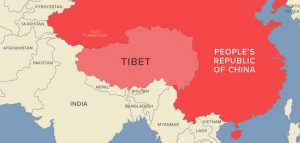
    A U.S. lawmaker delegation’s visit to Dharamshala closely followed the passage of the ‘Promoting a Resolution to the Tibet-China Dispute Act’ in Congress, awaiting Biden’s approval.

    About the delegation on ‘Promoting a Resolution to the Tibet-China Dispute Act’ 

    • Legislative Background: The U.S. Congress passed the ‘Promoting a Resolution to the Tibet-China Dispute Act,’ emphasizing support for Tibetan autonomy and human rights. 
      • The delegation’s visit to Dharamshala, India, followed this legislative action to underscore U.S. commitment to Tibetan freedom.
    • Delegation Composition and Purpose: The delegation included bipartisan U.S. lawmakers who were co-authors of the Act, invited by the Central Tibetan Administration.
      • Their visit aimed to advocate for restarting dialogue between the Dalai Lama’s representatives and Beijing, stalled since 2010.
    • India’s Diplomatic Calculus: Hosting the U.S. delegation amidst ongoing tensions with China signals India’s nuanced diplomacy in managing its relations with both nations. 
      • It reflects India’s stance on Tibet as sensitive, balancing its traditional policy of non-interference with growing international scrutiny.
    • Geopolitical Implications: The delegation’s visit raises geopolitical questions about India’s sovereignty and diplomatic independence in the face of U.S.-China strategic competition.
      • It underscores India’s role in regional stability and global human rights discourse, impacting its strategic partnerships and international standing.

    Challenges and weaknesses involved        

    • Diplomatic Sensitivities: India faces challenges in balancing its historical support for Tibetan refugees with its current diplomatic relations with China, a crucial economic and strategic partner. 
      • Hosting U.S. lawmakers advocating for Tibetan autonomy could strain India-China relations, given Beijing’s sensitivity to international interference on Tibet-related issues.
    • Domestic Perception and Political Messaging: Allowing U.S. lawmakers to publicly advocate for Tibetan independence in India could be perceived domestically as compromising India’s stance on sovereignty and non-interference in internal matters. 
      • There is a risk of domestic backlash or political opposition questioning the government’s handling of sensitive foreign policy issues, particularly regarding Tibet and China.
    • Impact on Bilateral Relations: The visit and the Act may lead to diplomatic friction between India and China, potentially affecting bilateral cooperation in various domains, including trade, defense, and regional stability. 
      • China’s response to perceived foreign interference on Tibet could escalate tensions, impacting broader regional dynamics and India’s strategic autonomy.

    Future Scope (Way forward):

    • International Advocacy and Diplomatic Engagement: The U.S. delegation’s visit and advocacy for the Tibet-China Dispute Act highlight ongoing international interest and support for Tibetan autonomy. 
      • The future scope involves continued diplomatic engagement by global stakeholders to advocate for human rights and autonomy for Tibetans, potentially influencing China’s policies.
    • India’s Strategic Positioning: India may explore a nuanced approach to balance its historical support for Tibetan refugees with its current diplomatic relations with China. 
      • Future scope includes India asserting its stance on Tibet in international forums while managing bilateral relations with China to avoid escalation and maintain regional stability.

    Mains question for practice: 

    Q The recent visit of a delegation of U.S. lawmakers to Dharamshala, closely following the passage of the ‘Promoting a Resolution to the Tibet-China Dispute Act’ in the U.S. Congress, has brought forth significant diplomatic challenges and implications for India.15M

    Mains PYQ: 

    Q “The USA is facing an existential threat in the form of China, that is much more challenging than the erstwhile Soviet Union.” Explain. (UPSC IAS/2021)

  • ICC issues arrest warrants for Russian defence leaders 

    Why in the news?

    On Monday, June 24, the International Criminal Court (ICC) issued arrest warrants for former Russian Defence Minister Sergei Shoigu and current Chief of Staff of the Armed Forces Valery Gerasimov for “alleged international crimes” related to the Ukraine war.

    Who are the Russian leaders and what effect does the move have on them?

    • Sergei Shoigu: Former Russian Defence Minister, key ally of Putin, led the invasion of Ukraine in February 2022, removed from his post in May 2024.
    • Valery Gerasimov: Current Chief of Staff of the Armed Forces, Deputy Defence Minister since November 2012, seen as the most powerful man in the government after Putin and Shoigu.
    • Impact on Shoigu and Gerasimov: Both have suffered reputational damage since the war began, criticized by Russian nationalists for failing to swiftly win the war against Ukraine.

    What do the ICC charges say?

    • Charges Against Shoigu and Gerasimov: Directing attacks at civilian objects, causing excessive incidental harm to civilians or damage to civilian objects.
    • Responsibility: The two officials bear individual criminal responsibility for their actions, ordering the commission of crimes, and failing to exercise proper control over their forces.
    • Specific Acts: Missile strikes against Ukrainian electric infrastructure, constituting multiple acts against a civilian population.

    What is ICC?

    • Establishment: Headquartered in The Hague, Netherlands, established under the 1998 Rome Statute.
    • Purpose: Investigates and tries individuals charged with genocide, war crimes, crimes against humanity, and the crime of aggression.
    • Membership: 123 countries are party to the Rome Statute, including Britain, Japan, Afghanistan, and Germany. The USA, India, and China are not members.
    • Function: Prosecutes heinous offences when a country’s own legal system fails to act, unlike the ICJ which deals with inter-state disputes.
    • Jurisdiction: Limited to offences occurring after July 1, 2002, committed in a country that ratified the agreement or by a national of a ratifying country, or cases referred by the UN Security Council.

    Does ICC have the power to prosecute Russia?

    • Russia’s Stance: Kremlin spokesman Dmitry Peskov stated that any decision of the ICC was “null and void” due to Russia not being an ICC member.
    • Effect on Leaders: Putin and other leaders risk arrest if they travel to a state party to the ICC, which is obliged to arrest them under international law. This deepens Russia’s isolation from the West.
    • Ukraine’s Position: Ukraine is not a State Party to the Rome Statute but has accepted ICC’s jurisdiction over alleged crimes occurring on its territory under Article 12(3) of the Statute. This requires Ukraine to cooperate with the ICC without delay or exception.

    Conclusion: The ICC’s charges against Russian leaders highlight significant legal and geopolitical challenges, deepening Russia’s isolation and emphasizing the need for global accountability in addressing war crimes and international conflicts.

    Mains question for practice: 

    Q In light of the recent arrest warrants issued against Russian leaders, discuss the effectiveness and limitations of the ICC in prosecuting individuals from non-member states.15M