Russia’s President Vladimir Putin concluded his recent visit to Pyongyang with a significant agreement: both Russia and North Korea pledged to provide swift military aid in the event of armed aggression against either nation.
Historical Context
Post-World War II Context: The Soviet Union aimed to establish a communist regime in Korea.USSR provided Significant military aid provided to North Korea’s founder, Kim Il Sung, during the Korean War. Post-war support from the USSR and China included substantial military and other aid to North Korea.
1961 Russo-North Korea Treaty: The Treaty of Friendship, Cooperation, and Mutual Assistance included a mutual defence agreement.
Post-Soviet Union Period: Relations deteriorated after the Soviet Union dissolved in 1991, voiding the treaty.
Early 2000s Reconnection: Under Putin, Russia moved closer to North Korea despite not supporting its nuclear ambitions initially. Supported sanctions against North Korea aimed at curbing nuclear capabilities.
Post-2022 Dynamics: After Russia’s invasion of Ukraine, Russia faced international isolation. Russia and North Korea solidified their alliance against the Western liberal order.
What the Pact Says
Scope of Cooperation: Cooperation on a wide range of issues, including mutual military support and unspecified technological assistance.
Mutual Defense Provision: Under Article 4 of the Pact in case of armed invasion, the other side shall provide military and other assistance without delay, following Article 51 of the UN Charter and respective national laws.
Technological Assistance: Crucial for North Korea, which currently has nuclear weapons but lacks advanced missile guidance systems and other technologies for long-range nuclear weapons.
Strategic Implications
Direct Threat to South Korea and Japan: Both countries perceive the pact as a security threat due to North Korea’s nuclear capabilities and the added Russian security umbrella.
Potential Arms Race: Japan is revisiting its pacifist stance and enhancing military capabilities, while South Korea is considering new defence strategies, potentially including arms exports.
Strengthening of US Alliances: South Korea and Japan are likely to deepen their alliances with the United States in response to heightened regional security concerns.
NATO and Global Security: The pact raises alarms among NATO allies and other global stakeholders, prompting reassessments of security strategies and commitments.
Nuclear Proliferation Concerns: Increased collaboration between Russia and North Korea could lead to advancements in North Korea’s nuclear and missile capabilities, impacting global non-proliferation efforts.
Global Strategic Repercussions: The pact sets a precedent for authoritarian regimes aligning against Western liberal orders, influencing geopolitical strategies and alliances beyond Asia.
Way forward:
Enhanced Diplomatic Engagement and Dialogue: Engage in robust diplomatic efforts to mitigate tensions and enhance transparency regarding the intentions behind the Russia-North Korea pact. Encourage multilateral dialogues involving key stakeholders such as the United States, South Korea, Japan, and other concerned parties to foster mutual understanding and reduce the likelihood of miscalculation.
Reinforcement of Regional Security Mechanisms: Strengthen existing regional security mechanisms, particularly alliances with the United States underpinned by treaties such as the Mutual Defense Treaty with Japan and the mutual defence commitments with South Korea.
Mains PYQ:
Q What is the significance of Indo-US defence deals over Indo-Russian defence deals? Discuss with reference to stability in the Indo-Pacific region. (UPSC IAS/2020)
International attention is urgently needed to address the worsening mental health crisis among Rohingya refugees in India.
About Rohingya Sufferings
Trauma and Mental Health: Rohingya refugees in Delhi experience severe trauma, including anxiety, dissociative episodes, and depression, often due to past experiences in Myanmar and ongoing re-traumatization from living conditions and violence in India.
Living Conditions: Rohingya refugees live in shanty-like huts prone to accidental and intentionally set fires, leading to constant fear and re-traumatization.
Discrimination and Legal Status: Officially labelled as “illegal immigrants,” Rohingya refugees face severe discrimination in India. They are denied full access to education, healthcare, legal services, and formal employment opportunities.
Detention and Deportation: Fear of arbitrary detention and deportation is widespread, despite many having UNHCR refugee cards. At least 500 Rohingya, including women and children, are detained in centres across India without criminal charges, some for decades.
Civil Society and Funding: Civil society organizations working with Rohingya refugees face funding challenges due to cancelled FCRA licenses. Many support programs have shut down or reduced operations, leaving few UNHCR-supported organizations to cautiously continue their work.
About unsolved Tibetan issue
The Tibetan issue in India is a complex and contentious topic with historical, cultural, and political implications.
Historical Background
Pre-20th Century: Tibet recognized itself as an autonomous nation under Chinese protection, while China claimed formal incorporation into its borders during the Yuan Dynasty.
20th Century: The relationship between Tibet and China became increasingly strained, culminating in the 1950 Chinese invasion of Tibet and the subsequent annexation of the region.
Ongoing Challenges
Tibetan Independence Movement: The Tibetan independence movement continues to push for greater autonomy and recognition of Tibet as a sovereign nation.
Chinese Censorship and Suppression: The Chinese government maintains strict control over information and suppresses any dissent or opposition to its rule in Tibet.
Current Situation
Declining Refugee Numbers: Over the last seven years, the Tibetan refugee community in India has dropped by 44 percent, from around 150,000 in 2011 to 85,000, according to Indian government data.
Economic Uncertainty: Many Tibetans face economic uncertainty due to limited job opportunities and restrictions on property ownership and bank credit.
Lack of Recognition: Tibetans are not officially recognized as refugees in India, instead being designated as “foreigners” under Indian law.
No National Refugee Law: India has no national refugee law, and its policies are not in accordance with international standards.
Way forward:
Implement National Refugee Law: Advocate for the establishment of a comprehensive national refugee law in India that aligns with international standards, ensuring legal recognition, protection, and access to basic rights and services for all refugees, including Rohingya and Tibetans.
Enhance Mental Health Support: Develop and fund specialized mental health programs for refugees, focusing on trauma-informed care. This includes training local healthcare providers, increasing access to mental health services, and creating safe spaces for refugees to receive consistent psychological support.
Mains PYQ:
Q Refugees should not be turned back to the country where they would face persecution or human right violation”. Examine the statement with reference to the ethical dimension being violated by the nation claiming to be democratic with an open society. (UPSC IAS/2021)
Q Refugees should not be turned back to the country where they would face persecution or human rights violation”. Examine the statement with reference to the ethical dimension being violated by the nation claiming to be democratic with an open society. (UPSC IAS/2021)
Q How far are India’s internal security challenges linked with border management, particularly in view of the long porous borders with most countries of South Asia and Myanmar? (UPSC IAS/2013)
Mentors comment: India, commemorating World Refugee Day (June 20), boasts a millennia-old legacy of asylum, from ancient Jews and fleeing Zoroastrians to modern refugees like East Bengalis, Tibetans, Sri Lankan Tamils, Nepalis, Afghans, and Rohingyas. Having faced a significant refugee crisis at independence, India empathetically supports refugees, acknowledging their plight and affirming its commitment to aiding their resettlement and recovery.
Let’s learn!
Why in the News?
The global refugee crisis continues to escalate, with over 43.4 million refugees worldwide driven by ongoing conflicts.
About World Refugee Day • After the UN (United Nations) defined refugee rights in 1951, Africa established a day to honour them in 1970. • Later, acknowledging the worldwide refugee crisis, the UN General Assembly took a global approach in 2000, designating June 20th as World Refugee Day. • The Refugee Convention, 1951 defines who is a refugee, their rights, and the legal obligations of states towards them. • This day has become a powerful tool to raise awareness, build support, and celebrate the contributions of refugees everywhere.
India’s Historical Role in Refugee Protection
Long-standing Asylum Tradition: India has a long history of providing asylum, from ancient times with Jewish and Zoroastrian refugees to more recent instances involving East Bengalis, Tibetans, Sri Lankan Tamils, Nepalis, Afghans, and Rohingyas.
Partition Legacy: The partition of India in 1947, which caused one of the largest refugee crises in history, has ingrained a deep awareness of the plight of refugees in the national consciousness.
Issues related to Rohingya Sufferings
Trauma and Mental Health: Rohingya refugees in Delhi experience severe trauma, including anxiety, dissociative episodes, and depression, often due to past experiences in Myanmar and ongoing re-traumatization from living conditions and violence in India.
Living Conditions: Rohingya refugees live in shanty-like huts prone to accidental and intentionally set fires, leading to constant fear and re-traumatization.
Discrimination and Legal Status: Officially labelled as “illegal immigrants,” Rohingya refugees face severe discrimination in India. They are denied full access to education, healthcare, legal services, and formal employment opportunities.
Detention and Deportation: Fear of arbitrary detention and deportation is widespread, despite many having UNHCR refugee cards. At least 500 Rohingya, including women and children, are detained in centres across India without criminal charges, some for decades.
Civil Society and Funding: Civil society organizations working with Rohingya refugees face funding challenges due to cancelled FCRA licenses. Many support programs have shut down or reduced operations, leaving few UNHCR-supported organizations to cautiously continue their work.
About unsolved Tibetan issue
The Tibetan issue in India is a complex and contentious topic with historical, cultural, and political implications.
Ongoing Challenges
Tibetan Independence Movement: The Tibetan independence movement continues to push for greater autonomy and recognition of Tibet as a sovereign nation.
Chinese Censorship and Suppression: The Chinese government maintains strict control over information and suppresses any dissent or opposition to its rule in Tibet.
Current Situationof Tibetans
Declining Refugee Numbers: Over the last seven years, the Tibetan refugee community in India has dropped by 44 percent, from around 150,000 in 2011 to 85,000, according to Indian government data.
Economic Uncertainty: Many Tibetans face economic uncertainty due to limited job opportunities and restrictions on property ownership and bank credit.
Lack of Recognition: Tibetans are not officially recognized as refugees in India, instead being designated as “foreigners” under Indian law.
No National Refugee Law: India has no national refugee law, and its policies are not in accordance with international standards.
IndianMigrants’ Rights in GCC countries: Vulnerabilities of Migrant Workers: Migrant workers in GCC countries face systemic vulnerabilities due to the Kafala system, tying their legal status to employers who control their accommodation, wages, and freedom of movement. Lack of independent legal status and dependency on employers make them susceptible to exploitation, poor living conditions, and arbitrary deportations. Living Conditions and Safety: Many migrants live in crowded and substandard accommodations, which exacerbate risks during emergencies such as fires, as seen in the Mangaf tragedy. Safety standards in workplaces and living spaces often fall short, posing significant risks to migrants’ health and well-being. Legal Protections and Access to Justice: Legal protections for migrant workers vary, with some categories like domestic workers often excluded from labor laws and protections. Limited access to justice and the ability to organise or unionise further restrict their ability to advocate for improved rights and conditions.
Need for Legislation
Lack of Formal Framework: Despite its history, India has not signed the UN Refugee Convention or its 1967 Protocol and lacks a domestic asylum framework.
Private Member’s Bill: In February 2022, a Private Member’s Bill was introduced in the Lok Sabha to establish a comprehensive Refugee and Asylum law, addressing these gaps. This Bill aimed to formalize the recognition and rights of asylum seekers and refugees, in line with international principles such as non-refoulement.
Current Legislative Landscape
General Foreigner-related Laws: Without a dedicated refugee law, refugees in India are subject to various general foreigner-related laws, leading to inconsistent and ad hoc management.
Need for Comprehensive Law: A comprehensive National Asylum Law is needed to provide clear guidelines for asylum seekers, ensure access to essential services, and enable refugees to rebuild their lives.
Judicial Support and International Responsibility
Supreme Court Affirmation: The Supreme Court of India has affirmed the rights of all individuals in India, including refugees, under Articles 14, 20, and 21 of the Constitution.
Landmark Cases: Landmark cases, such as the “National Human Rights Commission vs. the State Of Arunachal Pradesh & Anr” have highlighted the need for proper asylum procedures and protection against forcible eviction.
Framework for Refugee Rights: A formal refugee rights framework would reduce reliance on inconsistent judicial rulings and arbitrary decisions by government officials.
Way Forward
International Cooperation: Addressing the global refugee crisis requires international cooperation, and India must play its part domestically and on the world stage.
Enacting a National Asylum Law: Enacting a National Asylum Law would reinforce India’s commitment to humanitarian values and democratic principles, positioning the country as a leader in refugee protection.
Alignment with Vision of Vishwaguru: Upholding these values aligns with India’s vision of being a Vishwaguru, contributing to global humanitarian efforts and embodying the ideals articulated by leaders like Jawaharlal Nehru.
India emphasized that only proposals acceptable to both Russia and Ukraine can lead to peace as it decided to disassociate from the final document issued on June 16 at the conclusion of the Peace Summit in Switzerland.
What is a Joint Communique on a Peace Framework?
The Joint Communique on a Peace Framework is a formal document issued at the conclusion of the Peace Summit in Switzerland, held on June 16, 2024. This communique outlines the collective stance and proposed guidelines for achieving peace in the ongoing Russia-Ukraine conflict.
Key Highlights of the Ukraine Peace Summit in Switzerland
Attendance and Endorsement: More than 80 countries attended the summit and endorsed the “Joint Communique on a Peace Framework.” The communique emphasized the protection of Ukraine’s territorial integrity, based on Ukraine’s peace formula and the UN charter.
Non-Endorsing Countries: India, Saudi Arabia, South Africa, Thailand, Indonesia, Mexico, and the United Arab Emirates did not sign the communique. Brazil maintained an observer status, and China declined the invitation altogether.
India’s Participation and Stance: India attended the summit but chose not to endorse the final document. India’s stance is rooted in the belief that any peace proposal must be acceptable to both Russia and Ukraine for it to be sustainable. The Ministry of External Affairs (MEA) emphasized India’s commitment to understanding different perspectives to find a lasting resolution through dialogue and diplomacy.
Why did India Refuse?
Neutrality and Balanced Approach: India maintains a policy of neutrality and balanced diplomacy, avoiding taking sides in the Russia-Ukraine conflict to preserve its diplomatic relations with both nations.
Mutually Acceptable Solutions: India believes that any peace proposal must be acceptable to both Russia and Ukraine to be sustainable, emphasizing dialogue and practical engagement between the conflicting parties.
Strategic and Diplomatic Considerations: By not endorsing the communique, India retains its potential role as a trusted mediator, protecting its strategic ties with Russia and considering broader geopolitical concerns such as food and energy security.
Conclusion: India’s decision reflects its stance on neutrality, advocating for peace proposals acceptable to both Russia and Ukraine while preserving diplomatic relations and strategic interests amid global geopolitical dynamics.
Mains PYQ:
Q What is the significance of Indo-US defence deals over Indo-Russian defence deals? Discuss with reference to stability in the Indo-Pacific region.(UPSC IAS/2020)
A weak performance by green and left-wing parties, coupled with gains by the far-right, could lead the EU to adopt a more protectionist stance and a less environmentally focused foreign policy.
What happens in the EU parliament?
Legislative Role and Trade Agreements: The European Parliament must approve all EU free trade agreements. For instance, it is currently involved in negotiations with Southeast Asian countries such as Indonesia, Thailand, and the Philippines. This approval process ensures that any trade agreement aligns with EU standards and regulations.
Policy Shifts Due to Election Results: The recent gains by far-right factions in the European Parliament could shift legislative priorities. For example, a more nationalist Parliament may prioritize protectionist policies over liberal trade agreements, potentially imposing tariffs or restrictions on imports from Southeast Asia, as seen with past tariffs on Cambodian and Myanmar rice.
Influence on Environmental and Human Rights Policies: With the Greens and Liberals losing seats, the European Parliament may place less emphasis on environmental sustainability and human rights. This shift could affect initiatives like the Just Energy Transition schemes with countries like Vietnam and Indonesia, which rely on EU support for their green agendas. Reduced focus on these areas could hinder such cooperative efforts.
Changes in the Commission
Commission Presidency and Coalition Dynamics: Ursula von der Leyen, the incumbent European Commission President from the centre-right European People’s Party (EPP), faces a challenging re-election. She needs to secure 361 votes from Members of the European Parliament (MEPs).
Shift in Policy Focus: The composition of the new Commission will significantly influence EU policy directions. If von der Leyen allies with the Greens, there could be an intensification of green policies and environmental initiatives, such as the European Green Deal.
Leadership and Foreign Policy Changes: The departure of EU foreign policy chief Josep Borrell opens the field for new candidates vying to lead the European External Action Service (EEAS). The new leadership could reshape the EU’s foreign policy approach, with potential changes in emphasis on development cooperation and international relations, including those with Southeast Asia. This could affect ongoing initiatives like the Just Energy Transition partnerships with countries like Vietnam and Indonesia.
Pivot to South Asia
Strategic Partnership and Economic Interests: Southeast Asia is an increasingly important economic partner for the EU. The region’s growing markets and economic dynamism offer significant trade opportunities. For instance, the EU is negotiating free trade agreements with countries like Indonesia, Thailand, and the Philippines, which could enhance trade flows and economic cooperation. Strengthening ties with Southeast Asia helps the EU diversify its trade partners and reduce reliance on traditional markets.
Environmental and Green Transition Initiatives: Southeast Asia is a crucial region for the EU’s global environmental goals. The EU has invested in green transition initiatives, such as the Just Energy Transition schemes in Vietnam and Indonesia, providing over €20 billion in concessional loans and investments. These initiatives support Southeast Asian countries in adopting sustainable energy practices and combating climate change.
Geopolitical and Security Considerations: Southeast Asia’s strategic location and geopolitical significance make it a vital region for the EU’s foreign policy. By engaging more deeply with Southeast Asia, the EU can strengthen its influence in a region where other major powers, such as China and the United States, are also vying for influence.
Conclusion: The EU’s evolving policies and leadership will shape its economic, environmental, and geopolitical engagement with Southeast Asia, highlighting the region’s strategic importance and potential for cooperation.
Mains PYQ:
Q Africa was chopped into states artificially created by the accident of European competition. Analyse. (UPSC IAS/2013)
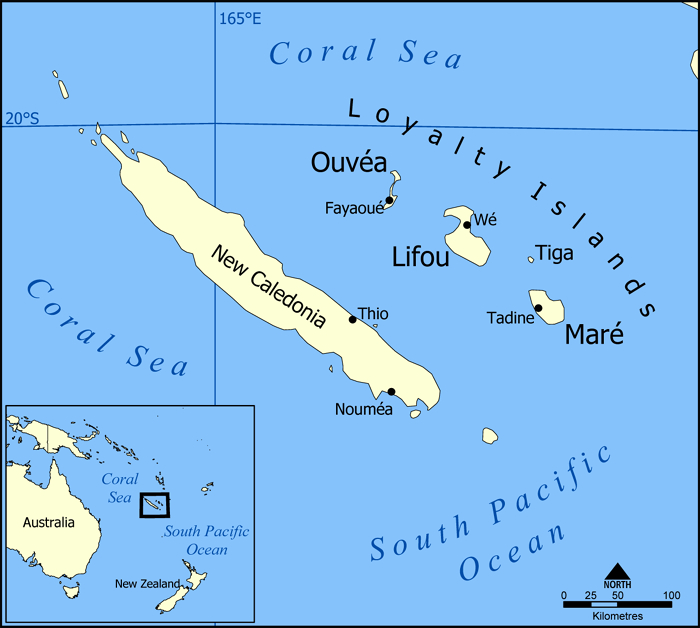
New Caledonia, France’s Pacific island territory, is under a state of emergency due to deadly riots.
About New Caledonia
New Caledonia is a French overseas territory in the Pacific.
It enjoys a large degree of autonomy but depends heavily on France for matters like defence and education.
It includes the island of New Caledonia where the capital, Noumea, is located, the Loyalty Islands; the Belep Islands; and the Ile des Pins.
New Caledonia’s lagoons were designated a UNESCO World Heritage site in 2008.
The Crisis: A Quick Recap
New Law: The French government passed a law that has upset people in New Caledonia.
Vote Reforms: Now, French citizens who lived on the island for 10 years or more can vote. The government says it’s fairer this way.
Resistance from Indigenous people: The locals, especially the Kanak community, feel this gives too much power to French settlers and stops them from gaining independence.
How did France occupy this territory?
Exploration: British explorer James Cook named the island New Caledonia in 1774 after the Latin name for Scotland.
French Annexation: France annexed it in 1853 and New Caledonia became a French overseas territory in 1946.
Fewer Locals: France brought in lots of French people. Now, the original Kanak people are only 40% of the population, while others, like the Caldoches and newer French arrivals, make up the rest.
Why are the people protesting?
There were similar fights in the 1990s, leading to promises of more power for locals.
In 2018, 2020, and 2021, they voted on whether to be independent from France. But many boycotted the last vote, saying it wasn’t fair because of the pandemic.
Why is it significant for France?
France sees New Caledonia as important for keeping power in the region.
It wants to stay strong in the Pacific to stand up to other big powers, like China.
PYQ:
[2014] Explain how the foundations of the modern world were laid by the American and French revolutions.
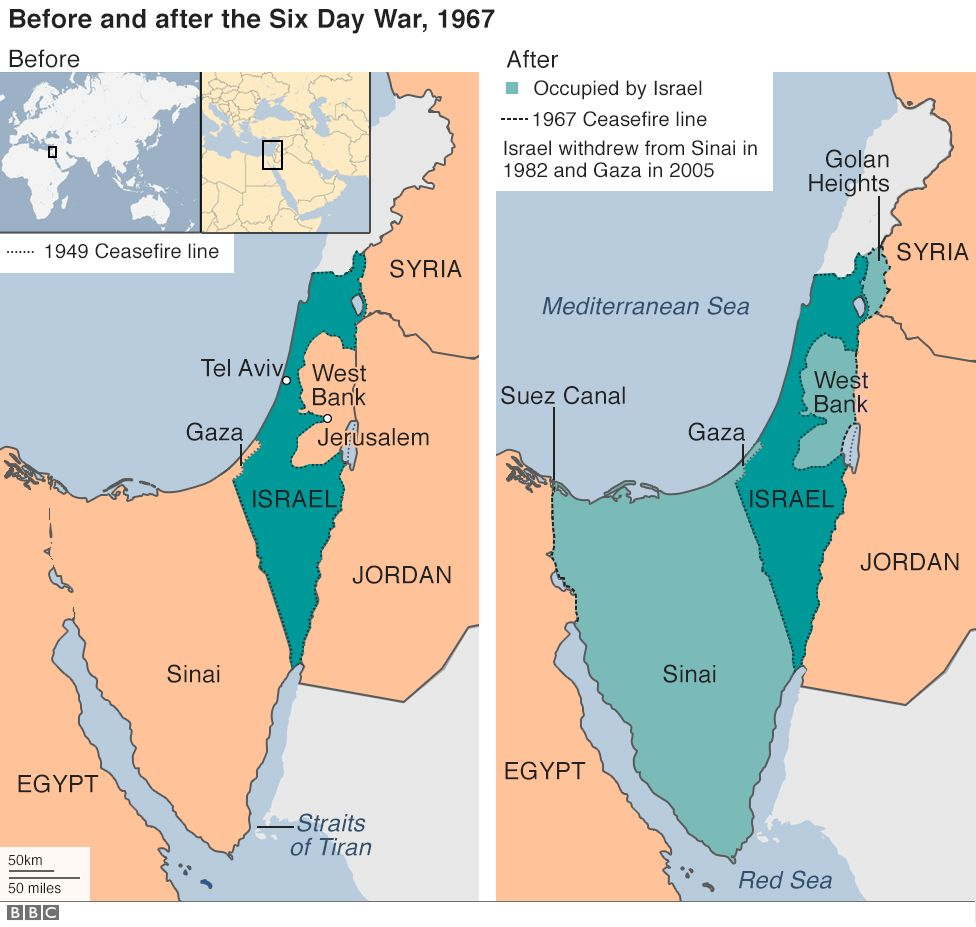
Fifty-seven years have elapsed since the Six-Day War ( June 5 to June 10, 1967) fought between Israel and its Arab neighbors.
Causes of the War
Historical Tensions: Rooted in the establishment of Israel in 1948, which resulted in the displacement and death of thousands of Palestinian Arabs, creating a massive refugee crisis.
Egypt-Israel Relations: Particularly hostile due to territorial and water disputes, exacerbated by Egyptian President Gamal Abdel Nasser’s aggressive stance against Israel.
Cold War Influences: Military build-up in Israel and Arab states along Cold War lines, with Israel supported by the US and Arab states by the Soviet Union.
Provocations: Egypt’s naval blockade of the Straits of Tiran in May 1967, cutting off Israel’s maritime access to the Red Sea and mobilizing forces in the Sinai Peninsula.
Outbreak of the War
On June 5, 1967, Israel launched a pre-emptive airstrike on Egyptian airfields, swiftly gaining air superiority and neutralising the Egyptian Air Force.
Israel’s ground forces advanced into the Sinai Peninsula and Gaza Strip, territories occupied by Egypt.
Jordan and Syria entered the war, attacking Israel from the east and north, but were quickly repelled.
Impacts of the War
Territorial Gains for Israel: In less than a week, Israel captured the Sinai Peninsula and Gaza from Egypt, the Golan Heights from Syria, and the West Bank and East Jerusalem from Jordan.
Geopolitical Shift: The defeat was a major blow to Arab nations, establishing Israel’s military and geopolitical dominance in the region.
Emergence of Palestinian Nationalism: The war spurred the rise of Palestinian nationalism and the Palestine Liberation Organization (PLO) emerged as a significant political entity.
Continued Conflict: Ongoing tensions and conflicts in the region, including the 1973 Yom Kippur War, are direct results of the 1967 war and subsequent Israeli occupation of key territories.
Unresolved Refugee Crisis: The plight of Palestinian refugees displaced during and after the war remains unresolved, continuing to fuel regional instability.
Conclusion: The Six-Day War was thus a pivotal event that not only redefined territorial boundaries but also reshaped political dynamics and set the stage for ongoing conflicts in the Middle East.
Mains PYQ:
Q “India’s relations with Israel have, of late, acquired a depth and diversity, which cannot be rolled back.” Discuss. (UPSC IAS/2018)
South Korea has suspended the 2018 peace agreement and announced the possibility of resuming propaganda broadcasts in North Korea following Pyongyang’s release of thousands of balloons filled with trash and human waste into the South.
Inter-Korean Peace Agreement, 2018
The 2018 inter-Korean peace agreement refers to several agreements and declarations made between North and South Korea to reduce military tensions and improve diplomatic relations. Key elements of the agreement included:
Ceasefire Maintenance: Maintaining and reinforcing the Korean Armistice Agreement.
Demilitarization: Implementing measures to reduce military tensions, such as dismantling guard posts in the Demilitarized Zone (DMZ).
Family Reunions: Facilitating family reunions for those separated by the Korean War.
Economic Cooperation: Pursuing economic projects and infrastructure development.
Propaganda Halt: Both sides agreed to cease propaganda broadcasts and leaflet drops across the DMZ.
Why did South Korea suspend the 2018 agreement?
Recent Provocations: North Korea’s recent aggressive actions, including GPS signal jamming, missile launches, and the release of balloons carrying trash and human waste, pose a threat to South Korean security and civilian safety.
Lack of Trust: The ruling People Power Party (PPP) in South Korea cited a significant erosion of trust between the two Koreas. Senior PPP official Choo Kyung-ho emphasized that mutual trust needs to be restored for any agreements to be honoured.
Calls for Apology: South Korea demands an immediate apology from North Korea for these provocations, highlighting the need for accountability and reparations for the damages caused.
North Korea emboldened by Russian support
Military Assistance: The US has warned that Russia is aiding North Korea in developing advanced weapons technologies, such as hypersonic missiles, in exchange for artillery shells amid Russia’s ongoing war in Ukraine.
Diplomatic Shield: As a permanent member of the UN Security Council, Russia provides a diplomatic shield for North Korea, stalling efforts to pass new resolutions condemning North Korean actions. This backing allows Pyongyang to act more aggressively without significant international repercussions.
Escalated Danger of Conflict
The situation on the Korean Peninsula poses an escalated danger of conflict due to several factors:
Aggressive Posturing: North Korea’s recent actions, including missile tests and aerial provocations, signal an aggressive stance that could lead to military confrontations.
Policy Shift: Analysts believe Kim Jong Un may be deviating from the defensive policies of his predecessors, adopting a more aggressive strategy aimed at altering the status quo on the peninsula.
International Alliances: North Korea’s alignment with Russia, and possibly other authoritarian states like China and Iran, suggests a willingness to use military force to achieve geopolitical goals, challenging the US-led liberal world order.
Military Preparedness: The South Korean military and its allies need to stay vigilant as North Korea tests the South’s air defences and military response times, indicating a higher readiness for potential conflict.
Way forward:
Engage in Multilateral Talks: Revitalize dialogue with key stakeholders, including the United States, China, Japan, and Russia, to address North Korea’s actions and find diplomatic solutions.
Leverage International Organizations: Utilize platforms like the United Nations to garner international support and pressure North Korea to comply with international norms.
Mains PYQ:
Q Evaluate the economic and strategic dimensions of India’s Look East Policy in the context of the post-Cold War international scenario. (UPSC IAS/2016)
The Russia-Ukraine war persists with no end in sight. Russia’s nuclear drills and plans to station weapons in Belarus escalate Global tensions and are deeply concerning.
What is the NPT and how does it address Russia’s actions?
The NPT (Nuclear Non-Proliferation Treaty) is a multilateral agreement aimed at limiting the spread of nuclear weapons through three pillars: non-proliferation, disarmament, and peaceful use of Nuclear energy.
It defines Nuclear Weapon States (NWS) as those that had manufactured and detonated a nuclear explosive device before 1967, with all other states considered non-nuclear weapon states (NNWS).
The NPT has addressed Russia’s actions in several ways:
Russia, as a NWS, is obligated under Article VI to pursue negotiations in good faith on effective measures relating to nuclear disarmament. However, Russia’s invasion of Ukraine has increased the salience of nuclear weapons in ways that threaten to erode this bargain.
The NPT’s 2022 Review Conference specifically condemned overt nuclear threats, and the Treaty on the Prohibition of Nuclear Weapons (TPNW) called for nuclear deterrence to be delegitimized.
The NPT requires NNWS to accept International Atomic Energy Agency (IAEA) safeguards on all nuclear materials on their territories. However, the IAEA has found several states, including Russia, in non-compliance with their safeguards agreements.
The NPT’s review process, where state parties convene every five years to review the implementation of the Treaty, has been unable to reach a consensus on condemning Russia’s nuclear threats due to Russia’s objections.
The Shift in Nuclear Policy of Russia:
Criticism by Western countries: The international community has expressed concern over Russia’s nuclear rhetoric, calling for accountability. Western states and allies condemn Russia’s actions and seek to address them through initiatives like the United Nations and the NPT (Treaty on the Non-Proliferation of Nuclear Weapons) to uphold norms and deter irresponsible behaviour.
Changing Nuclear Threshold and Policy: Russia appears to be considering lowering the threshold for nuclear weapon use, which could set a dangerous precedent.
Traditionally, Nuclear Weapons were reserved for existential threats, but Russia is now signalling a potential first-use policy even for non-existent threats.
Erosion of Mutually Assured Destruction (MAD): For decades, the principle of Mutually Assured Destruction (MAD) deterred the use of nuclear weapons. Russia’s current stance threatens this principle, suggesting that nuclear weapons could be used in conflicts that do not directly jeopardize National survival.
What are the consequences of Russia’s nuclear rhetoric for Global Security?
It has raised the risk of nuclear escalation and use, as Russia has purposefully increased the level of risk to discourage Western support for Ukraine and instill fear. Russia’s actions may encourage other nuclear-armed states, like Iran and North Korea, to adopt similar tactics.
This undermines the long-standing separation between Conventional and Nuclear warfare.
Undermined Strategic Stability and the Global Nuclear Order: Russia’s actions have broken down nuclear guidelines and norms, advocating for nuclear use against Ukraine and NATO. This has contributed to the return of nuclear arms competition on the global stage.
It has caused alarm and fear among Russia’s neighbors, who worry that if Russia is not stopped in Ukraine, it may turn aggression against other territories. Small countries like Moldova, Georgia, and even Russia’s allies like Kazakhstan fear becoming Putin’s next target.
It has required the international community to respond with strong deterrence and accountability measures. The West has emphasized that Russian nuclear use would have devastating consequences.
Holding Russia accountable through multilateral initiatives is crucial to upholding norms and deterring further irresponsible behaviour.
Way forward:
Strengthen International Diplomatic Engagement: Initiate high-level dialogues involving all nuclear-armed states to reinforce commitments to non-proliferation treaties and discourage the lowering of nuclear use thresholds.
Revise and Reinforce Security Assurances: Provide renewed and clear security assurances to non-nuclear states to discourage them from pursuing nuclear weapons. Revisit agreements like the Budapest Memorandum to ensure their effectiveness and credibility.
Mains PYQ:
Q (UPSC IAS/2022)
(a): Russia and Ukraine war has been going on for the last seven months. Different countries have taken independent stands and actions keeping in view their own national interests. We are all aware that war has its own impact on the different aspects of society, including human tragedy. What are those ethical issues that are crucial to be considered while launching the war and its continuation so far? lllustrate with justification the ethical issues involved in the given state of affair.
(b): Write short notes on the following in 30 words each:
White House National Security Adviser Jake Sullivan will visit Saudi Arabia to discuss a Civil Nuclear Cooperation Agreement, aiming to foster Israeli-Saudi normalization.
What is a Civil Nuclear Cooperation Agreement?
A civil nuclear cooperation agreement, often referred to as a “123 Agreement” after Section 123 of the U.S. Atomic Energy Act of 1954, sets the terms under which the United States can engage in significant nuclear cooperation with other countries.
This includes the transfer of nuclear materials, technology, and information. Such agreements are designed to ensure that the cooperation is for peaceful purposes and to prevent nuclear proliferation.
They require the partner country to adhere to nine nonproliferation criteria, including physical security measures, safeguards, and a commitment not to use the technology for nuclear weapons development. Additionally, these agreements must be reviewed and approved by the U.S. Congress.
Why does Saudi Arabia want a US nuclear cooperation agreement?
Saudi Arabia’s interest in a Nuclear Cooperation Agreement with the U.S. is driven by two primary motivations:
Energy Diversification and its Vision 2030: Crown Prince Mohammed bin Salman’s Vision 2030 plan aims to diversify the Saudi economy and reduce its reliance on oil.
Part of this vision includes developing renewable energy sources, and nuclear energy is seen as a key component.
Strategic Considerations: There is also speculation that Saudi Arabia seeks to develop nuclear expertise as a hedge against Iran’s nuclear capabilities. The Saudi leadership has indicated that if Iran were to develop nuclear weapons, Saudi Arabia might consider doing the same.
This potential for nuclear proliferation is a concern for arms control advocates and some U.S. lawmakers.
How would the US benefit from such a deal?
Strategic Gains: The agreement could be a component of a broader effort to normalize relations between Saudi Arabia and Israel, thereby enhancing regional stability and security. This would bolster U.S. efforts to counter Iranian influence in the Middle East and build a coalition of allies in the region.
Commercial Opportunities: U.S. nuclear companies could secure lucrative contracts to build and operate nuclear power plants in Saudi Arabia. This would provide a significant boost to the U.S. nuclear industry, which faces competition from Russian and Chinese firms.
Geopolitical Influence: Strengthening ties with Saudi Arabia would reinforce U.S. influence in the Gulf region at a time when China is seeking to expand its presence. This would help maintain the U.S. strategic foothold in one of the world’s most geopolitically significant areas.
What are some likely hurdles to it?
Several challenges could impede the realization of a U.S.-Saudi nuclear cooperation agreement:
Gaza Conflict: The ongoing conflict in Gaza, particularly the high Palestinian casualties resulting from Israeli military actions, complicates Saudi willingness to normalize relations with Israel.
Nonproliferation Concerns: There are substantial concerns about the potential for nuclear proliferation. Ensuring that Saudi Arabia complies with stringent nonproliferation standards and does not pursue nuclear weapons capabilities will be a critical and contentious issue.
Congressional Approval: Any agreement would need to pass through the U.S. Congress, where it could face opposition from lawmakers worried about proliferation risks and regional security dynamics. Congressional scrutiny could delay or block the agreement.
Need of high Technical and Operational Details: Negotiating the specifics of nuclear technology transfer, including whether Saudi Arabia would be allowed to enrich uranium on its soil, and ensuring robust safeguards to prevent misuse of nuclear materials, are complex issues that require careful handling.
Way Forward:
Need for Strict Safeguards: Establish stringent nonproliferation safeguards within the agreement, ensuring that Saudi Arabia adheres to international standards and commits to using nuclear technology solely for peaceful purposes.
Need Regular Inspections: Implement a robust regime of regular inspections by the International Atomic Energy Agency (IAEA) to monitor Saudi nuclear facilities and ensure compliance with the agreement.
Mains PYQ:
Q In what ways would the ongoing US-Iran Nuclear Pact Controversy affect the national interest of India? How should India respond to its situation? (15) (UPSC IAS/2018)
![[20th June 2024] The Hindu Op-ed: Blueprints beyond borders, for solace and shelter](https://www.civilsdaily.com/wp-content/uploads/2024/06/20-June-1568x882.jpg)