💥Join UPSC 2027,2028 Mentorship (July Batch) + XFactor Notes & Microthemes PDF

Subject: Modern History

  • In news: Foundation Day of the INC

    inc

    A political party recently marked the  138th foundation day of Indian National Congress (INC) on December 28.

    How the INC was founded?

    • The INC came into being on December 28, 1885.
    • The English bureaucrat Allan Octavian Hume is credited as the founder of the organisation.
    • On that day, 72 social reformers, journalists and lawyers congregated for the first session of the INC at Gokuldas Tejpal Sanskrit College, Bombay.
    • Stated objectives of INC included-
    1. First, the fusion into one national whole of all the different elements that constitute the population of India.
    2. Second, the gradual regeneration along all lines, spiritual, moral, social, and political, of the nation thus evolved; and
    3. Third, the consolidation, of, the union between England and India.

    Real motive behind: ‘Safety Valve’ Theory

    • At that point, the aim of this group was not to demand independence from the ongoing colonial rule but to influence the policies of the British government in favour of Indians.
    • Its objective is often described as providing a “safety valve” as the time, through which Indians could air out their grievances and frustration.
    • As Mr. Hume explained, the: Congress organization was ‘only one outcome of the labours of a body of cultured men, mostly Indians, who hound themselves together to labour silently for the good of India.’

    Transformation towards freedom movement

    Ans. Famous for 3P’s: Prayers, Protest and Petitions

    • The party’s work continued, to shift the colonial administrators’ attitudes and policies on the rights and powers allowed to Indians.
    • The members frequently protested issues of British colonialism, such as the Bengal famine and the drain of wealth from India.
    • However, these protests were at this point usually limited to prayers, petitions and protests, including writing letters to the authorities.
    • As the British rule continued, there grew differences in what the party’s functioning should be like.

    Strength of INC

    • Diverse participation: One of the biggest strengths of the party, which helped it appeal to a broad section of Indian society, was having members who held different ideological positions.
    • Pan-India organization: Its popularity grew across every corner of India.

    Early criticism of INC

    • Non-effective: Hume and the party were criticised, by the British for attempting to change the existing systems that favoured them and by some Indians for not achieving significant results.
    • Elite-organization: The party largely consisted of educated, upper-class people who were likely to have studied abroad.

    Splits and reconvening

    • In Surat in 1906, the divisions between the ‘moderates’ led by Gopal Krishna Gokhale and Surendranath Banerjea, and the ‘extremists’ led by Bal Gangadhar Tilak came to the fore and there was a split.
    • While Tilak and Lala Lajpat Rai wanted the Congress to boycott the visit of the Prince of Wales in protest against the Bengal Partition a year prior, the moderates opposed any such move.
    • But by 1915, the Bombay session saw these two groups coming together again as one.
    • The pattern of splits and eventual cohesion continued well after Indian independence, even after the party came to completely dominate successive general elections under PM Jawaharlal Nehru.

    Important sessions of INC

        Year     Session President Importance  
        1885 Bombay W C Banerjee First session
        1888 Allahabad George Yule First English President of INC
        1896 Calcutta Rahimtullah M. Sayani National song ‘Vande Mataram’ sung for the first time
        1906 Calcutta Dadabhai Naoroji Dadabhai Naoroji coined the term Swaraj.
        1907 Surat Rash Behari Ghosh Party splits into extremists and moderates
        1911 Calcutta Bishan Narayan Dar National Anthem ‘Jana Gana Mana’ sung for the first time
        1916 Lucknow Ambica Charan Mazumdar Reunion of Congress and Lucknow Pact, Joint session with the Muslim league
        1917 Calcutta Annie Besant First Woman President of the INC
        1919 Amritsar Motilal Nehru Jallianwalla Bagh Massacre took place
        1924 Belgaum M K Gandhi Only session where MK Gandhi was the President
        1925 Kanpur Sarojini Naidu First Indian Woman President of INC
        1927 Madras M A Ansari Independence Resolution was put forward
        1928 Calcutta Session, Motilal Nehru All India Youth Congress formed
        1929 Lahore Jawaharlal Nehru Poorna Swaraj Resolution @ 26th January, Civil Disobedience Movement launched
        1931


    Karachi Sardar Vallabhbhai Patel A resolution on Fundamental Rights and National Economic Progress was passed. Gandhi-Irwin pact was endorsed and  Gandhiji was nominated to represent INC in the second round table conference
        1936 Lucknow Jawaharlal Nehru Idea of Socialism was imbibed
        1938 Haripura Subhas Chandra Bose National Planning Committee set up under Nehru, Haripura Resolution passed, which demanded Poorna Swaraj, including the princely states as well.
        1940 Ramgarh Abul Kalam Azad He was the longest-serving President of INC during British rule.

    Quit India Movement started in 1942

        1946 Meerut J.B. Kripalani Last session before Indian independence


    Try this PYQ:

    Q.Consider the following statements

    1. The first woman President of the Indian National Congress was Sarojini Naidu.
    2. The first Muslim President of the Indian National Congress was Badruddin Tyabji.

    Which of the statements given above is/are correct?

    (a) 1 only

    (b) 2 only

    (c) Both 1 and 2

    (d) Neither 1 nor 2


    [wpdiscuz-feedback id=”txs06h4ihh” question=”Please leave a feedback on this” opened=”1″]Post your answers here.[/wpdiscuz-feedback]


    Click and get your FREE Copy of CURRENT AFFAIRS Micro Notes

    (Click) FREE 1-to-1 on-call Mentorship by IAS-IPS officers | Discuss doubts, strategy, sources, and more

  • In news: Ratnagiri Prehistoric Geoglyphs

    geoglyph

    Experts and conservationists have raised concerns over the proposed location for a mega oil refinery in Barsu village of Maharashtra’s Ratnagiri district.

    What are geoglyphs?

    • Geoglyphs are a form of prehistoric rock art, created on the surface of laterite plateaus.
    • They are made by removing a part of the rock surface through an incision, picking, carving or abrading.
    • They can be in the form of rock paintings, etchings, cup marks and ring marks.

    Ratnagiri’s geoglyphs

    • Clusters of geoglyphs are spread across the Konkan coastline in Maharashtra and Goa, spanning around 900 km.
    • Porous laterite rock, which lends itself to such carving, is found on a large scale across the entire region.
    • Ratnagiri district has more than 1,500 pieces of such art, also called “Katal shilpa,” spread across 70 sites.
    • The figures depicted in the geoglyphs include humans and animals such as deer, elephant, tiger, monkey, wild boar, rhinoceros, hippopotamus, cattle, pig, rabbit, and monkey.
    • Moreover, they also include a high number of reptilian and amphibian creatures such as tortoises and alligators, aquatic animals such as sharks and sting rays, and birds like peacocks.

    Why are they significant?

    • Tourism potential: Ratnagiri’s prehistoric sites are among three Indian attractions that may soon become World Heritage Sites. The other two include Jingkieng Jri, the living root bridge in Meghalaya, and Sri Veerabhadra Temple in Andhra Pradesh’s Lepakshi.
    • Evolution of art: The geoglyph clusters also are examples of advanced artistic skills, showing the evolution of techniques of etching and scooping in rock art.


    Click and get your FREE Copy of CURRENT AFFAIRS Micro Notes

    (Click) FREE 1-to-1 on-call Mentorship by IAS-IPS officers | Discuss doubts, strategy, sources, and more

  • In news: Goa Liberation Day

    goa

    The President of India tweeted her greetings to the nation on December 19, marking Goa Liberation Day, which is celebrated annually to mark the success of ‘Operation Vijay’ undertaken by the Indian armed forces to defeat Portuguese colonial forces and liberate Goa in 1961.

    What is the news?

    • Goa was liberated 15 years after India attained freedom.
    • Last year PM Modi accused Nehru as guilty of leaving satyagrahis in the dismay, refusing to send the Indian Army to liberate Goa, even after 25 of them were shot dead by the Portuguese Army.

    Goa’s Colonization: A backgrounder

    • Goa became a Portuguese colony in 1510, when Admiral Afonso de Albuquerque defeated the forces of the sultan of Bjiapur, Yusuf Adil Shah.
    • The next four and a half centuries saw one of Asia’s longest colonial encounters — Goa found itself at the intersection of competing regional and global powers.
    • It received a religious and cultural ferment that lead eventually to the germination of a distinct Goan identity that continues to be a source of contestation even today.
    • By the turn of the twentieth century, Goa had started to witness an upsurge of nationalist sentiment opposed to Portugal’s colonial rule, in sync with the anti-British nationalist movement.

    Beginning of freedom movement

    • Tristao de Braganza Cunha, celebrated as the father of Goan nationalism, founded the Goa National Congress at the Calcutta session of the Indian National Congress in 1928.
    • In 1946, the socialist leader Ram Manohar Lohia led a historic rally in Goa that gave a call for civil liberties and freedom, and eventual integration with India.
    • This event became a watershed moment in Goa’s freedom struggle.
    • At the same time, there was a thinking that civil liberties could not be won by peaceful methods, and a more aggressive armed struggle was needed.
    • This was the view of the Azad Gomantak Dal (AGD), whose co-founder Prabhakar Sinari is one of the few freedom fighters still living today.
    • Finally, Goa was liberated on December 19, 1961 by swift Indian military action that lasted less than two days.

    Recognition of Goa

    • The Supreme Court of India recognized the validity of the annexation and rejected the continued applicability of the law of occupation.
    • In a treaty with retroactive effect, Portugal recognized Indian sovereignty in 1974.
    • Under the jus cogens rule, forceful annexations including the annexation of Goa are held as illegal since they have taken place after the UN Charter came into force.

    Why was Goa left un-colonized?

    As India moved towards independence, however, it became clear that Goa would not be free any time soon, because of a variety of complex factors.

    • No immediate war: Then PM Nehru felt that if he launched a military operation (like in Hyderabad) to oust the colonial rulers, his image as a global leader of peace would be impacted.
    • Trauma of Partition: The trauma of Partition and the massive rupture that followed, coupled with the war with Pakistan, kept the Government of India from opening another front.
    • Internationalization of the issue: This might have led the international community to get involved.
    • No demand from within: It was Gandhi’s opinion that a lot of groundwork was still needed to raise the consciousness of the people, and the diverse political voices emerging within be brought under a common umbrella.

    Nehruvian dilemma

    • India’s global image: Nehru was headed in shaping India’s position in the comity of nations.
    • Trying peaceful options: He was trying to exhaust all options available to him given the circumstances that India was emerging from.
    • Portuguese obsession: Portugal had changed its constitution in 1951 to claim Goa not as a colonial possession, but as an overseas province.
    • Portugal in NATO: The move was apparently aimed at making Goa a part of the newly formed North Atlantic Treaty Organisation (NATO) military alliance. Hence the collective security clause of the treaty would be triggered.
    • Weak indigenous push: Nehru saw it prudent to pursue bilateral diplomatic measures with Portugal to negotiate a peaceful transfer while, at the same time, a more ‘overt’ indigenous push for liberation.

    Why did Nehru wait until December 1961 to launch a full-scale military offensive?

    India could no longer be seen to delay the liberation of Goa because:

    • Portuguese offensive against Satyagrahis: The firing incident also provoked a sharp response from the Government of India, which snapped diplomatic and consular ties with Portugal in 1955.
    • India as torchbearer of de-colonization: India got itself firmly established as a leader of the Non Aligned World and Afro-Asian Unity, with decolonization and anti-imperialism as the pillars of its policy.
    • Criticisms from African nations: An Indian Council of Africa seminar on Portuguese colonies organized in 1961 heard strong views from African as this was hampering their own struggles against the ruthless regime.
    • Weakening Colonialism: The delegates were certain that the Portuguese empire would collapse the day Goa was liberated.


    Click and get your FREE Copy of CURRENT AFFAIRS Micro Notes

    (Click) FREE 1-to-1 on-call Mentorship by IAS-IPS officers | Discuss doubts, strategy, sources, and more

  • India’s experience under colonial rule: A study by Dylan Sullivan and Jason Hickel

    colonial

    Context

    • A recent study of India’s experience under colonial rule by Dylan Sullivan and Jason Hickel concludes that data from the Census of India reveal that between 1880 and 1920 approximately 100 million Indians died due to British policy in India. Their method is to calculate the excess mortality, being the difference between the actual deaths and the deaths that may be expected.

    Click and get your FREE Copy of CURRENT AFFAIRS Micro Notes

    What are assumptions made by their study?

    • Mortality rate before colonial rule: Before colonial rule, the mortality rate of India is unlikely to have been very different from that of contemporary England.
    • Deaths due to colonial policies during the period of 1880-1920: The resulting estimates for excess deaths during 1880-1920 are 50 million in the first case and 160 million in the second one, respectively. The authors settle for the midway figure of approximately 100 million for the deaths caused in India due to colonial policy.
    • Figure is greater than deaths from famine in other countries: For perspective, they point out that this figure is greater than the death from famine in “the Soviet Union, Maoist China, North Korea, Pol Pot’s Cambodia, and Mengistu’s Ethiopia”. In their view, this provides a direct assessment of the consequences of the Raj for India.

    Study quantifying the impact of colonial rule in India

    • Change in national income as a basis to quantify impact of colonial rule is non-existent: Attempts to quantify the impact of colonial rule in India have mostly relied on the change in national income. But reliable income data for the nineteenth century are almost non-existent. Population figures, though, are available from the time of the first Census of India in 1871.
    • Steady rise in mortality rate: The mortality rate in British India is seen to rise steadily after 1881, recording an increase of close to 20% by 1921. As it is unusual for the mortality rate of a country to rise continuously due to natural causes, this suggests that the living conditions worsened during this period.
    • Mortality rate dipped in last census in British India but famine is not recorded: The mortality rate dipped in 1931, which was the last census conducted in British India, but the last famine recorded in the country was yet to come. It took place in Bengal in 1943, in the last five years of the close to two centuries of British colonial rule.

    colonial

    How recurring famines are recorded?

    • British arguments for the empire: Arguments include “English forms of land tenure, the English language, banking, the common law, Protestantism, team sports, the limited state, representative assemblies, and the idea of liberty”, have been advanced by the Harvard historian Niall Ferguson.
    • No mention of the famines: There is no mention of the famines which started almost at the onset of rule by the East India Company in Bengal, the de-industrialisation of India in the nineteenth century, the drain of wealth, or the worsening food security as India’s peasants were forced to grow commercial crops for export so that Britain could balance its trade.
    • Population explosion but the life expectancy increased: The belief that British policy in India caused repeated famines is bolstered by the fact that there has not been a single famine since 1947. This is despite a population explosion following a sharp fall in death rates. The decline in the mortality rate surely signals improved living conditions. The Census shows that in the 1950s, life expectancy at birth of Indians increased by more than it did in the previous seventy years.

    Census as a double-edged sword

    • Worsening gender inequality in India after 1947: It points to a worsening gender inequality in India. A simple indicator of this would be the ratio of females to males in the population. It is believed that in the absence of factors that lower the life chances of women, including foeticide, this ratio would tend to one. The Census of India shows that we have not attained that level in our recorded history, except in pockets within the country.
    • Trend in gender inequality: While this is disturbing in itself what is more so is that this ratio has steadily declined after 1947. After declining for four decades from 1951 it started inching up in 1991. But in 2011, it was yet lower than what it was in 1951.
    • Life expectancy faster for man than women: So, even though life expectancy increased soon after Independence, in the early years at least it increased faster for men than it did for women.

    Conclusion

    • The Census of India not only helps understand the perils of British rule, but also flags the roadblocks lying ahead. As India chants Vasudhaiva Kutumbakam at the G-20, implying that the nations of the world are a family, it behooves us to ensure that all the persons in our own family enjoy the same freedoms.

    Mains Question

    Q. According to the census of the time discuss the impact of colonial rule in India. The Census of India not only helps understand the perils of British rule, but also flags the roadblocks lying ahead. Discuss.

    (Click) FREE1-to-1 on-call Mentorship by IAS-IPS officers | Discuss doubts, strategy, sources, and more

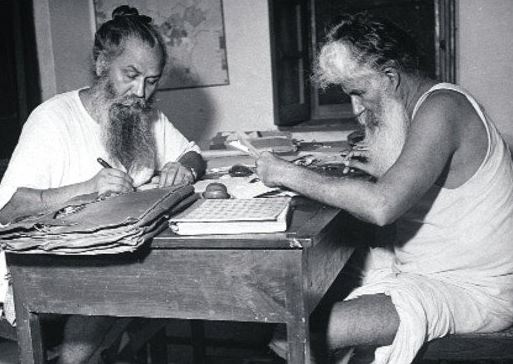
  • [pib] 150th birth anniversary of Sri Aurobindo’s

    aurobindo

    PM will participate in a program commemorating Sri Aurobindo’s 150th birth anniversary.

    Sri Aurobindo (1872 –1950)

    • Sri Aurobindo Ghose was a philosopher, yogi, maharishi, poet, and Indian nationalist.
    • He was also a journalist, editing newspapers such as Vande Mataram.
    • He joined the Indian movement for independence from British colonial rule, until 1910 was one of its influential leaders.

    Major activities                

    • Aurobindo studied for the Indian Civil Service at King’s College, Cambridge, England.
    • After returning to India he took up various civil service works under the Maharaja of the Princely state of Baroda.
    • He became increasingly involved in nationalist politics in the Indian National Congress and the nascent revolutionary movement in Bengal with the Anushilan Samiti.
    • He was arrested in the aftermath of a number of bombings linked to his organization in a public trial where he faced charges of treason for Alipore Conspiracy.
    • However, Sri Aurobindo could only be convicted and imprisoned for writing articles against British colonial rule in India.


    Try this PYQ:

    Q. What was the main reason for the split in the Indian National Congress at Surat in 1907?

    (a) Introduction of communalism into Indian politics by Lord Minto

    (b) Extremists’ lack of faith in the capacity of the moderates to negotiate with the British Government

    (c) Foundation of Muslim League

    (d) Aurobindo Ghosh’s inability to be elected as the President of the Indian national Congress


    [wpdiscuz-feedback id=”3p7o9675ds” question=”Please leave a feedback on this” opened=”1″]Post your answers here.[/wpdiscuz-feedback]


    Click and get your FREE Copy of CURRENT AFFAIRS Micro Notes

    (Click) FREE 1-to-1 on-call Mentorship by IAS-IPS officers | Discuss doubts, strategy, sources, and more

  • Is it Jawaharlal Nehru’s fault?

    Nehru

    Context

    • Jawaharlal Nehru has recently come under criticism for declining to accept the Kashmir Maharaja’s initial offer to accede to India in September 1947, several weeks before the tribal invasion. Even great statesmen make occasional mistakes and Nehru was no exception. However, a careful examination of the historical background shows that Prime Minister Nehru cannot be faulted in this case.

    Click and get your FREE Copy of CURRENT AFFAIRS Micro Notes

    Background: Jammu and Kashmir’s Maharaja Hari Singh and his stand on accession

    • Stand against accession with either India or Pakistan: Maharaja Hari Singh of Jammu and Kashmir was one of the few princely rulers who had held out against accession to either India and Pakistan before the partition of British India.
    • Lord Mountbatten visit and assurance: a couple of months prior to the partition, the Viceroy, Lord Mountbatten, visited Srinagar in an attempt to persuade the Maharaja to opt for one or the other of the two states, offering him an assurance from Sardar Patel that India would raise no objection if the ruler were to opt for Pakistan.
    • Maharaja evaded discussion and hopes for an independent state: The Maharaja entertained his guest in regal style but evaded any discussion on the political issue, pleading a stomach ailment. Hari Singh evidently hoped that, with the lapse of British paramountcy, he would become the ruler of an independent and sovereign state.

    How Maharaja’s hope of a sovereign state got dashed?

    • Uprising assisted by Pakistan: An uprising in Poonch assisted by Pakistani elements.
    • Economic sanctions by Pakistan: an undeclared economic embargo imposed by the Pakistani authorities. Since Kashmir’s main trade exchanges in those days were with Pakistan, the unofficial embargo resulted in great hardship.

    How Maharaja revised his position on accession?

    • Decided to talk on terms of accession and a message to Nehru: Maharaja asked Justice Mehr Chand Mahajan, his prime minister-designate, to convey to Nehru the terms on which he was prepared to accede to India.
    • Nehru urging Maharaja to induct Sheikh Abdullah into state government: Nehru had been urging the Maharaja to induct Sheikh Abdullah, the leader of the secular National Conference, into the state government in order to ensure popular support for the administration.
    • Reluctant to have immediate administrative reforms Maharaja refused: The Maharaja was not agreeable to introducing immediate reforms in the administration of the state. The Maharaja indicated that he was not prepared to do so, at least at this stage.
    • Nehru reiterated to associate Abdullah with the governance of the state: When Mahajan conveyed these terms to Nehru in the third week of September, the latter reiterated that Abdullah should be freed from prison and associated with the governance of the state.

    Nehru

    Why did Nehru insist on bringing Sheikh Abdullah into the administration?

    • He anticipated the armed intervention by Pakistan and armed rebellion: Nehru anticipated armed intervention by Pakistan in Kashmir and foresaw that this could be repulsed only by a government that enjoyed popular support.
    • A letter to Sardar patel before a month before tribal invasion: He set out his views in a letter to Sardar Patel on September 27, 1947, nearly a month before the tribal invasion. This remarkable letter has not received the attention it deserves.
    • Anticipating the demand of the time, he confirmed his way: Nehru, therefore, concluded that the only acceptable course was for the Maharaja to seek the cooperation of Sheikh Abdullah and the National Conference while acceding to India. This was the only effective way of countering Pakistani designs.

    Interesting: Nehru’s letter to Sardar Patel a month before tribal invasion assisted by Pakistan

    • “The Muslim League in the Punjab and the NWFP are making preparations to enter Kashmir in considerable numbers. The approach of winter is going to cut off Kashmir from the rest of India,” he wrote. “I understand that the Pakistan strategy is to infiltrate into Kashmir now and to take some major action as soon as Kashmir is more or less isolated because of the coming winter. I rather doubt if the Maharaja and the State forces can meet the situation by themselves without some popular help… Obviously the only major group that can side with them is the National Conference under Sheikh Abdullah’s leadership.”

    Nehru

    Rest is the story of accession

    • Nehru’s assessment confirmed and Maharaja agreed to his advice: Nehru’s assessment of Pakistan’s plans to invade Kashmir were confirmed within three weeks. It was only at this stage that the Maharaja heeded Nehru’s advice. He inducted Sheikh Abdullah into the government and acceded to India. This had momentous consequences for the defence of Kashmir against the invaders.
    • Resistance against Pakistani invaders: The normal administrative machinery had broken down and responsibility for maintaining law and order had been taken over by National Conference volunteers. Abdullah and his followers organised the popular resistance against the Pakistani invaders.
    • Advance of raiders and then Indian troops were airlifted to assist and protect the state: With the advance of the raiders towards Srinagar, the Maharaja’s administration had virtually collapsed. By the time Indian troops were airlifted to Srinagar on October 27, 1947, the Maharaja had departed to Jammu for safety. The first batches of Indian troops who had been airlifted to Srinagar had arrived without transport vehicles.

    Conclusion

    • Far from being a blunder, Jawaharlal Nehru’s insistence on linking accession to the installation of a popular government in Jammu and Kashmir bears testimony to his foresight and statesmanship.
  • Shivaji Maharaj and the Agra escape

    Shivaji Maharaj

    Click and get your FREE Copy of CURRENT AFFAIRS Micro Notes

    Context

    • Recently, Maharashtra Tourism Minister Mangal Lodha triggered a controversy by equating Chhatrapati Shivaji Maharaj’s legendary Agra escape to Chief Minister Eknath Shinde’s defection from the Uddhav Thackeray-led camp in Maharashtra. His comments drew sharp criticism from political parties and other organisations that venerate Shivaji as a Maratha icon, with no parallel in the past or present.

    Brief Political background of the issue

    • Eknath Shinde’s “revolt” against party leadership and CM Uddhav Thackeray in June this year led to the fall of the coalition government of the Shiv Sena, NCP, and the Congress. He has since taken the reins of Maharashtra as its CM.

    Shivaji Maharaj

    Who was Chhattrapati Shivaji Maharaj?

    • Chhatrapati Shivaji Maharaj (1630-1680): He was born on 19th February, 1630 at Shivneri Fort in District Pune in the present-day state of Maharashtra. He was born to a general Shahaji raje who served different Deccan Sultans over the course of his life and Jijabai, as known to be an influential and determined woman who was an embodiment of self-respect and virtue.
    • Founder of an Independent Maratha kingdom: Shivaji Maharaj was keen on expanding his father’s fiefdom of modern-day Pune into an independent Maratha state. He carved out an independent Maratha kingdom from various Deccan states in the 17th century. At the time of his death, he held around 300 forts over an area that stretched across the Konkan coast, from Surat to near Goa, and was overlooked by the strategic Western Ghats.
    • Contemporary kingdoms and power struggle: At this point of time, several Sultanates (mainly Bijapur, Golkonda and Ahmadnagar) and the Mughals were vying for the control of the Deccan. As Mughal power grew, these Sultanates would become tributaries to the Mughal Empire (while often continuing to bicker among themselves) with the rulers and ruling clans being given positions in the Mughal court.
    • Lifetime conflicts and fights for Swaraj: His conflict with the Adil Shahi Sultanate of Bijapur began when he was only 16. He would spend the rest of his life fighting various opponents, and in the process, laying the foundation for the Maratha Empire which would stretch across large parts of the Indian subcontinent and rule till the 19th Century.
    • Importance of forts in his times: Early in his life, he realised that the key to holding power in the Deccan (or for that matter, many places in India in that era) was to capture and hold important forts. Thus, his strategies would be centred around taking control of forts in strategic locations, often on hilltops. He also repaired and built new forts as his sphere of control increased.

    How is Shivaji Maharaj remembered?

    • An inspiration to fight against the colonial rule: Shivaji remained a Maratha folk legend until two centuries after his death. It was the British Raj and the subsequent anti-colonial movement that marked his increasing stature in history and as a pan Indian hero.
    • From a folk hero to a Pan India hero: Nationalist historians saw him as an example of an local Indian ruler who was able to successfully resist and defeat the powerful and oppressive “outsiders” (Muslim rulers, including both Mughals and the Deccan Sultans). Thus, Shivaji rose from being a folk hero to a nationalist icon, seen as a proto-nationalist himself.
    • Tales of his bravery and just rule used to infuse motivation: Tales of his bravery were told to galvanise a population that was enduring emasculation and injustices under its British overlords. Over the 19th and 20th centuries, the narrative around Shivaji Maharaj emphasised on both his military heroism and his just rule.

    Shivaji Maharaj

    Shivaji Maharaj and the Mughals

    • Meteoric rise: Shivaji Maharaj’s meteoric rise posed challenges to the suzerainty of the Mughals. His first direct encounter with the Mughals was during Aurangzeb’s Deccan campaigns of the 1650s. As Aurangzeb went North to fight for the Mughal throne, Shivaji Maharaj was able to seize further territory.
    • Swift and smart warfare tactics beyond understanding of the Mughals: His tactics against the Mughals were adapted to the specific nature of his force and the flabby Mughal armies. Using swift cavalry attacks, he would raid and pillage Mughal strongholds. While on the rare occasion he would engage in battle to actually capture and hold Mughal positions, most often, he would simply cause much menace, raid the treasury, and leave with the Mughals in terror and disarray.
    • Well know Seize of Surat: Famously, in 1664, he attacked the port of Surat (now in Gujarat) and plundered one of the richest and busiest commercial towns of Mughal India while the local governor hid in a nearby fort.
    • Posed a greatest challenge to Aurangzeb and subsequent treaty of Purandar: As the legend of Shivaji and the physical sphere of his influence grew, Aurangzeb sent a 100,000-strong, well-equipped army under Raja Jai Singh I to subdue him in 1665. After putting up a valiant fight, Shivaji was besieged in the Purandar hill fort.

    The chronology of the great escape

    • Taken to Agra after purandar treaty: He was taken to Aurangzeb’s court in Agra in 1666. He presented Aurangzeb with various gifts, but he felt slighted at the treatment he received in return, and made his displeasure clear in open court.
    • Kept under strict House arrest: Aurangzeb put him under house arrest in Agra. Far away from home and help, Shivaji realised he needed to escape to save himself and his territories. He began to plot a plan to return home and keep up his fight against the Mughals.
    • The perfect plan of escape: The story of Shivaji’s subsequent escape is now part of common lore. The popularly told story involves an elaborate plan, under which he began daily distribution of alms to brahmans. The alms would be sent from his home in Agra in large, covered baskets.
    • The final escape right under the nose of Mughals: After some time, the Mughal guards became lax about checking the contents of the baskets that daily left his house. One day, Shivaji slipped into one of the baskets, and put his young son, Sambhaji, in another basket. It was in these covered baskets that Shivaji and his son left Agra, right under the noses of the Mughals.
    • Smart and swift movement in disguise from the Mughal territory: From there, he would traverse across Mughal territory, living incognito until he reached the safer lands closer to home. Some versions of this story say that he took the disguise of a wandering ascetic while others say he had a number of different disguises. His exact path is not known, though folktales and songs memorialising Shivaji often mention different towns and places he crossed.
    • Embarrassed Aurangzeb regarded him as a king: Aurangzeb was livid and embarrassed. But he chose not to start an immediate conflict with Shivaji again. Instead, he offered Shivaji the title of Raja and guaranteed his authority in the Maratha lands as long as he acknowledged the supremacy of the Mughals and maintained truce.

    Shivaji Maharaj

    Coronation of Shivaji Maharaj to Chhatrapati and the ideal rule

    • By 1669, Shivaji had regrouped and raised an effective army. Using his old guerilla tactics, he would swiftly descend into static Mughal and Bijapuri strongholds, looting and pillaging the shocked Mughals.
    • During this time, Aurangzeb was occupied with Pathan revolts in the North-West corner of his Empire. Shivaji deftly regained his lost positions in the Konkan coast. In 1674, he crowned himself Chhatrapati, officially creating an independent Maratha kingdom.
    • The next six years were spent expanding his rule and forging new political norms, replacing the prevailing Indo-Persian court culture. He promoted the use of Marathi and Sanskrit in his courts and created an elaborate administrative system with a council of ministers known as “Ashta Pradhan.”

    Conclusion

    • Chhatrapati Shivaji Maharaj is not just a name or a person but to many he is an idea, a life and inspiration for today and tomorrow, which has no parallel in the past or the present.
    • Protection of the Swarajya and welfare of his subjects were the motives that pushed Shivaji Maharaj to escape from Agra. Comparing his love for his subjects with the political exigencies and manoeuvers of present-day politicians will be an injustice to the astuteness of Chhatrapati Shivaji Maharaj.

    Mains question

    Q. Chhatrapati Shivaji Maharaj is considered as the king of the people; Discuss how he is remembered today and what qualities make him stand tall and different from those of the past and present?

    (Click) FREE1-to-1 on-call Mentorship by IAS-IPS officers | Discuss doubts, strategy, sources, and more

  • Who was Srimanta Sankardeva?

    sankardeva

    ‘Gurujana’ a musical tribute to 15th–16th century Assamese polymath Srimanta Sankardeva was recently released by the PIB.

    Srimanta Sankardeva (1449–1568)

    • Sankardeva was a 15th–16th century Assamese polymath; a saint-scholar, poet, playwright, dancer, actor, musician, artist social-religious reformer and a figure of importance.
    • He is widely credited with building on past cultural relics and devising-
    1. New forms of music (Borgeet)
    2. Theatrical performance (Ankia Naat, Bhaona),
    3. Dance (Sattriya)
    4. Literary language (Brajavali)

    Literary works

    • He has left extensive literary trans-created scriptures (Bhagavat of Sankardev), poetry and theological works written in Sanskrit, Assamese and Brajavali.

    Political influence

    • The Bhagavatic religious movement he started, Ekasarana Dharma and also called the Neo-Vaishnavite movement, influenced two medieval kingdoms – Koch and the Ahom kingdom.
    • His influence spread even to some kingdoms as the Matak Kingdom founded by Bharat Singha, and consolidated by Sarbananda Singha in the latter 18th century endorsed his teachings.
    • The assembly of devotees he initiated evolved over time into monastic centers called Sattras, which continue to be important socio-religious institutions in Assam and to a lesser extent in North Bengal even today.


    Click and get your FREE Copy of CURRENT AFFAIRS Micro Notes

    (Click) FREE1-to-1 on-call Mentorship by IAS-IPS officers | Discuss doubts, strategy, sources, and more


  • Buddhist Nyingma Sect finds ‘reincarnation’ of famous Rinpoche

    In a significant development in Tibetan Buddhist circles, the Nyingma sect has identified a boy from Spiti in Himachal Pradesh as the reincarnation of the late Taklung Setrung Rinpoche, a scholar known for his knowledge of Tibetan Tantric school.

    About the Nyingma Sect

    • Nyingma (literally ‘old school’) is the oldest of the four major schools of Tibetan Buddhism.
    • It is founded on the first lineages and translations of Buddhist scriptures from Sanskrit into Tibetan in the eighth century, during the reign of King Trisong Detsen (r. 710–755).
    • Nyingma traditional histories consider their teachings to trace back to the first Buddha Samantabhadra (Güntu Sangpo) and Indian mahasiddhas such as Garab Dorjé, Śrī Siṃha and Jñānasūtra.
    • Traditional sources trace the origin of the Nyingma order in Tibet to figures associated with the initial introduction of Buddhism in the 8th century, such as Padmasambhava, Yeshe Tsogyal, Vimalamitra, Vairotsana, Buddhaguhya and Shantaraksita.

    Who is a Rinpoche?

    • Rinpoche is an honorific term used in the Tibetan language.
    • It literally means “precious one”, and may refer to a person, place, or thing—like the words “gem” or “jewel”.
    • The word consists of rin (value), po (nominalizing suffix) and chen (big).
    • The word is used in the context of Tibetan Buddhism as a way of showing respect when addressing those recognized as reincarnated, older, respected or an accomplished Lamas or teachers of the Dharma.
    • It is also used as an honorific for abbots of Buddhist monasteries.


    Click and get your FREE Copy of CURRENT AFFAIRS Micro Notes

    (Click) FREE1-to-1 on-call Mentorship by IAS-IPS officers | Discuss doubts, strategy, sources, and more

  • Who was Guru Tegh Bahadur?

    November 24, is commemorated as the Shaheedi Divas of Guru Tegh Bahadur, the ninth guru of the Sikhs, who stood up against forcible conversions by the Mughals, and was executed on the orders of Aurangzeb in 1675.

     Guru Tegh Bahadur (1621–1675)

    • Guru Tegh Bahadur was the ninth of ten Gurus of the Sikh religion. He was born at Amritsar in 1621 and was the youngest son of Guru Hargobind.
    • His term as Guru ran from 1665 to 1675. One hundred and fifteen of his hymns are in Guru Granth Sahib.
    • There are several accounts explaining the motive behind the assassination of Guru Tegh Bahadur on Aurangzeb’s orders.
    • He stood up for the rights of Kashmiri Pandits who approached him against religious persecution by Aurangzeb.
    • He was publicly executed in 1675 on the orders of Mughal emperor Aurangzeb in Delhi for himself refusing Mughal rulers and defying them.
    • Gurudwara Sis Ganj Sahib and Gurdwara Rakab Ganj Sahib in Delhi mark the places of execution and cremation of his body.

    Impact of his martyrdom

    • The execution hardened the resolve of Sikhs against religious oppression and persecution.
    • His martyrdom helped all Sikh Panths consolidate to make the protection of human rights central to its Sikh identity.
    • Inspired by him, his nine-year-old son, Guru Gobind Singh Ji, eventually organized the Sikh group into a distinct, formal, symbol-patterned community that came to be known as Khalsa (Martial) identity.
    • In the words of Noel King of the University of California, “Guru Teg Bahadur’s martyrdom was the first-ever martyrdom for human rights in the world.
    • He is fondly remembered as ‘Hind di Chaadar’.

    Try this PYQ:

    Q.Consider the following Bhakti Saints:

    1. Dadu Dayal
    2. Guru Nanak
    3. Tyagaraja

    Who among the above was/were preaching when the Lodi dynasty fell and Babur took over?

    (a) 1 and 3

    (b) 2 only

    (c) 2 and 3

    (d) 1 and 2


    [wpdiscuz-feedback id=”mfdveeenps” question=”Please leave a feedback on this” opened=”1″]Post your answers here.[/wpdiscuz-feedback]


    Click and get your FREE Copy of CURRENT AFFAIRS Micro Notes

    (Click) FREE1-to-1 on-call Mentorship by IAS-IPS officers | Discuss doubts, strategy, sources, and more