đŸ’„Join UPSC 2027,2028 Mentorship (July Batch) + XFactor Notes & Microthemes PDF

Type: Prelims Only

  • Global Geological And Climatic Events

    Earth’s first landmass emerged in Singhbhum: Study

    Note4Students

    From UPSC perspective, the following things are important:

    Prelims level: Emergence of landmass on Earth

    Mains level: Not Much

    A new study has challenged the widely accepted view that the continents rose from the oceans about 2.5 billion years ago.

    About Singhbhum

    • Singhbhum district of Jharkhand is part of the Chhota Nagpur Division.
    • It is one of the leading producers of copper in India.

    First landmass to emerge

    • The study suggests that the earliest continental landmass to emerge may have been Jharkhand’s Singhbhum region.
    • Scientists have found sandstones in Singhbhum with geological signatures of ancient river channels, tidal plains and beaches over 3.2 billion years old.
    • They somewhat represent the earliest crust exposed to air.

    Studying the sandstones

    • The research studies a sedimentary rock, called granite. They tried to find their age and in which conditions they have formed.
    • They found the age by analysing the uranium and lead contents of tiny minerals.
    • These rocks are 3.1 billion years old, and were formed in ancient rivers, beaches, and shallow seas.
    • All these water bodies could have only existed if there was continental land.
    • Thus, they inferred that the Singhbhum region was above the ocean before 3.1 billion years ago.

    How did they analyse?

    • The researchers studied the granites that form the continental crust of Singhbhum region.
    • These granites are 3.5 to 3.1 billion years old and formed through extensive volcanism that happened about 35-45 km deep inside the Earth.
    • This process continued on-and-off for hundreds of millions of years until all the magma solidified to form a thick continental crust in the area.
    • Due to the thickness and less density, the continental crust emerged above surrounding oceanic crust owing to buoyancy.

    Back2Basics: Emergence of Landmass

    • In the beginning, more than 4.6-billion years ago, the world was a ball of burning gas, spinning through space.
    • It took hundreds of millions of years for the first land masses to emerge.
    • About 250-million years ago, long, long after the Earth had formed, all the continents of the time had joined together to form a super-continent called Pangaea.
    • This super-continent broke up about 200-million years ago to form two giant continents, Gondwana and Laurasia.
    • Gondwana comprised what is now Africa, South America, Australia, Antarctica and India.
    • The Indian sub-continent lay off the east coast of Africa, before it broke off and moved north rapidly.

    Isostacy

    • Huge plates of crustal and upper mantle material (lithosphere) “float” on more dense, plastically flowing rocks of the asthenosphere.
    • The “depth” to which a plate, or block of crust, sinks is a function of its weight and varies as the weight changes.
    • This equilibrium, or balance, between blocks of crust and the underlying mantle is called isostasy.
    • The taller a block of crust is, the deeper it penetrates into the mantle because of its greater mass and weight. Isostasy occurs when each block settles into an equilibrium with the underlying mantle.
    • Blocks of crust that are separated by faults will “settle” at different elevations according to their relative mass.


    UPSC 2022 countdown has begun! Get your personal guidance plan now! (Click here)

  • Tribes in News

    Birsa Munda Jayanti to be celebrated as Janjatiya Gaurav Divas

    Note4Students

    From UPSC perspective, the following things are important:

    Prelims level: Birsa Munda

    Mains level: Tribal movement in Colonial India

    The Union Cabinet has decided to declare November 15 as ‘Janjatiya Gaurav Divas’ to mark the birth anniversary of revered tribal leader and freedom fighter Birsa Munda.

    Who was Birsa Munda (1875-1900)?

    • Birsa Munda was an Indian tribal freedom fighter, religious leader, and folk hero who belonged to the Munda tribe.
    • He spearheaded a tribal religious millenarian movement that arose in the Bengal Presidency (now Jharkhand) in the late 19th century, during the British Raj.

    His legacy

    (A) Birth and early childhood

    • Born on November 15, 1875, Birsa spent much of his childhood moving from one village to another with his parents.
    • He belonged to the Munda tribe in the Chhotanagpur Plateau area.
    • He received his early education at Salga under the guidance of his teacher Jaipal Nag.
    • On the recommendation of Jaipal Nag, Birsa converted to Christianity in order to join the German Mission school.
    • He, however, opted out of the school after a few years.

    (B) New faith ‘Birsait’ against religious conversion

    • The impact of Christianity was felt in the way he came to relate to religion later.
    • Having gained awareness of the British colonial ruler and the efforts of the missionaries to convert tribals to Christianity, Birsa started the faith of ‘Birsait’.
    • Soon members of the Munda and Oraon community started joining the Birsait sect and it turned into a challenge to British conversion activities.
    • The Mundas called him Dharati Aaba, the father of earth.

    (C) The Ulgulan

    • The Great Tumult or Ulgulan was a movement started by Birsa Munda against the exploitation and discrimination against tribals by the local authorities.
    • Although the movement failed, it did result in the Chotanagpur Tenancy Act which forbade tribal lands passing to non-tribals, protecting their land rights for the foreseeable future.

    (D) Death

    • On March 3, 1900, Birsa Munda was arrested by the British police while he was sleeping with his tribal guerilla army at Jamkopai forest in Chakradharpur.
    • He died in Ranchi jail on June 9, 1900, at the young age of 25.

    (E) Creation of Jharkhand

    • Birsa Munda’s achievements are known to be even more remarkable by virtue of the fact that he came to acquire them before he was 25.
    • In recognition of his impact on the national movement, the state of Jharkhand was created on his birth anniversary in 2000.

    Try this PYQ from CSP 2020

    Q. With reference to the history of India, “Ulgulan” or the Great Tumult is the description of which of the following event?


    (a) The Revolt of 1857

    (b) The Mappila Rebellion of 1921

    (c) The Indigo Revolt of 1859-60

    (d) Birsa Munda’s Revolt of 1899-1900


    [wpdiscuz-feedback id=”ok4dlnd0am” question=”Please leave a feedback on this” opened=”1″]Post your answers here.[/wpdiscuz-feedback]


    UPSC 2022 countdown has begun! Get your personal guidance plan now! (Click here)

  • Coal and Mining Sector

    [pib] Mineral Conservation and Development (Amendment) Rules, 2021

    Note4Students

    From UPSC perspective, the following things are important:

    Prelims level: Mineral Conservation and Development (Amendment) Rules, 2021

    Mains level: Not Much

    The Ministry of Mines has notified the Mineral Conservation and Development (Amendment) Rules (MCDR), 2021.

    About the Amendment

    • The MCDR have been framed under section 18 of the Mines and Minerals (Development and Regulation) Act, 1957.
    • It aims to provide rules regarding conservation of minerals, systematic and scientific mining, development of the mineral in the country and for the protection of environment.

    Key highlights of the amendments:

    Digital aerial imaging of the mines

    • Digital mapping: All plans and sections related to mine shall be prepared by combination of Digital Global Positioning System (DGPS) or Total Station or by drone survey.
    • Drone Imaging: Lessees having annual excavation plans of 1 million tonne or more or having leased area of 50 hectare or more are required to submit drone survey images of leased area and up to 100 meters outside the lease boundary every year.
    • Satellite imaging: Other lessees submit high resolution satellite images obtained from CARTOSAT-2 satellite

    This step will not only improve mine planning practices, security and safety in the mines but also ensure better supervision of mining operations.

    Penalty Provisions

    Penalty provisions in the rules have been rationalized. Amendment in the rules categorized the violations of the rules under the following major heads:

    • Major Violations: Penalty of imprisonment, fine or both.
    • Minor Violations: Penalty reduced. Penalty of only fine for such violations prescribed.
    • Decriminalization of Rules: Violation of other rules has been decriminalized. These rules did not cast any significant obligation on the concession holder or any other person

    Financial Assurance

    • Amount of financial assurance increased to five lakh rupees for Category ‘A’ mines and three lakh rupees for Category ‘B’ mines from existing three and two lakh rupees, respectively.
    • Provision of forfeiture of financial assurance or performance security of the lease holder added in case of non-submission of final mine closure plan within the period specified.

    Employment Opportunity

    • Allowed engagement of a part-time mining engineer or a part-time geologist for small mines which will ease compliance burden for small miners.
    • Diploma in mining and mine surveying is added in qualification for full-time Mining Engineer.


    UPSC 2022 countdown has begun! Get your personal guidance plan now! (Click here)

  • International Space Agencies – Missions and Discoveries

    NASA’s DART mission to hit and deflect an Asteroid

    Note4Students

    From UPSC perspective, the following things are important:

    Prelims level: DART Mission

    Mains level: Not Much

    NASA will launch the agency’s first planetary defense test mission named the Double Asteroid Redirection Test (DART).

    What is DART Mission?

    • The main aim of the mission is to test the newly developed technology that would allow a spacecraft to crash into an asteroid and change its course.
    • It is a suicide mission and the spacecraft will be completely destroyed.
    • The target of the spacecraft is a small moonlet called Dimorphos (Greek for “two forms”).
    • It is about 160-metre in diameter and the spacecraft is expected to collide when it is 11 million kilometres away from Earth.
    • Dimorphos orbits a larger asteroid named Didymos (Greek for “twin”) which has a diameter of 780 metres.

    Is there any threat from this asteroid?

    • The asteroid and the moonlet do not pose any threat to Earth and the mission is to test the new technology to be prepared in case an asteroid head towards Earth in the future.
    • The spacecraft will navigate to the moonlet and intentionally collide with it at a speed of about 6.6 kilometres per second or 24,000 kilometres per hour.

    Why Dimorphos?

    • Didymos is a perfect system for the test mission because it is an eclipsing binary which means it has a moonlet that regularly orbits the asteroid.
    • It is observable when it passes in front of the main asteroid.
    • Earth-based telescopes can study this variation in brightness to understand how long it takes Dimorphos to orbit Didymos.

    How big is the spacecraft?

    • NASA states that DART is a low-cost spacecraft, weighing around 610 kg at launch and 550 kg during impact.
    • The main structure is a box (1.2 × 1.3 × 1.3 metres). It has two solar arrays and uses hydrazine propellant for manoeuvring the spacecraft.


    UPSC 2022 countdown has begun! Get your personal guidance plan now! (Click here)

  • Mother and Child Health – Immunization Program, BPBB, PMJSY, PMMSY, etc.

    Project Sampoorna: A successful measure against malnutrition

    Note4Students

    From UPSC perspective, the following things are important:

    Prelims level: Project Sampoorna

    Mains level: Innovative measures against malnutrition

    Project Sampoorna’s success in reducing child malnutrition is a model that can be easily implemented anywhere.

    What is Project Sampoorna?

    • Project Sampoorna has been implemented in the Bongaigaon district of Assam.
    • It aims to target Severe Acute Malnutrition (SAM) and Moderate Acute Malnutrition (MAM).
    • It was launched to target the mothers of SAM/ MAM children with the tagline being ‘Empowered Mothers, Healthy Children’.
    • It was based on the success of the community-based COVID-19 management model (Project Mili Juli).

    Key features of the project

    • Under this project, the mother of a healthy child of an Anganwadi Centre was paired with the target mother and they would be Buddy Mothers.
    • They were usually neighbours and shared similar socioeconomic backgrounds.
    • They were given diet charts to indicate the daily food intake of their children and would have discussions on all Tuesdays at the Anganwadi centres.
    • 100 millilitres of milk and an egg on alternate days for the children for the first 3 months were provided so that their mothers could stabilise themselves in the newly found jobs.
    • Children who had not improved were checked and treated by doctors under the Rashtriya Bal Swasthya Karyakram (RBSK).

    Success of the project

    • This project has prevented at least 1,200 children from becoming malnourished over the last year.
    • National Nutrition Mission and the State government recognised this project in the ‘Innovation Category’.
    • The mothers were enrolled in Self Help Groups (SHGs) under the National Rural Livelihoods Mission (NRLM) and were thus working.


    UPSC 2022 countdown has begun! Get your personal guidance plan now! (Click here)

  • Climate Change Negotiations – UNFCCC, COP, Other Conventions and Protocols

    Climate Change Performance Index, 2021

    Note4Students

    From UPSC perspective, the following things are important:

    Prelims level: Climate Change Performance Index (CCPI)

    Mains level: Not Much

    The 17th edition of the Climate Change Performance Index (CCPI) 2021 was released recently.

    It’s a very rare feat that India has performed so better in any climate-related index. We can use this data to highlight India’s dedicated efforts for Paris Agreement.

    About CCPI

    • The CCPI is an independent monitoring tool for tracking countries’ climate protection performance. It has been published annually since 2005.
    • It is compiled by Germanwatch, the New Climate Institute, and the Climate Action Network.
    • It evaluates 57 countries and the European Union, which together generate 90%+ of global greenhouse gas emissions.

    Parameters of the index

    • The CCPI looks at four categories, with 14 indicators: Greenhouse Gas Emissions (40% of the overall score), Renewable Energy (20%), Energy Use (20%), and Climate Policy (20%).
    • The CCPI’s unique climate policy section evaluates countries’ progress in implementing policies working towards achieving the Paris Agreement goals.

    Highlights of the 2021 report

    • The first three ranks of the overall rankings were kept empty because no country had performed well enough in all index categories to achieve an overall very high rating.
    • The 2021 report places Sweden on top, while countries such as Morocco and the UK are also ranked high.
    • The bottom-ranked country, the United States, therefore, was placed at 61.

    Low performers

    • Iran and Russia are ranked the lowest in this category.
    • Overall, Australia, South Korea and Russia are among the lowest performing countries along with Kazakhstan and Saudi Arabia.
    • China is ranked 33 overall and has an overall rating of “low”.

    India’s performance

    • In the overall rankings, India is at number 10 with a score of 63.98.
    • It is a high performer except in the renewable energy category, in which it is ranked “medium”.
    • The report says that India is benefiting from its relatively low per-capita emissions.
    • In terms of greenhouse gas emissions, Sweden, Egypt, Chile and the UK are in the top 7. India is ranked 12.


    UPSC 2022 countdown has begun! Get your personal guidance plan now! (Click here)
  • Global Geological And Climatic Events

    What is Leonid’s Meteor Shower?

    Note4Students

    From UPSC perspective, the following things are important:

    Prelims level: Leonid Meteor Shower

    Mains level: Not Much

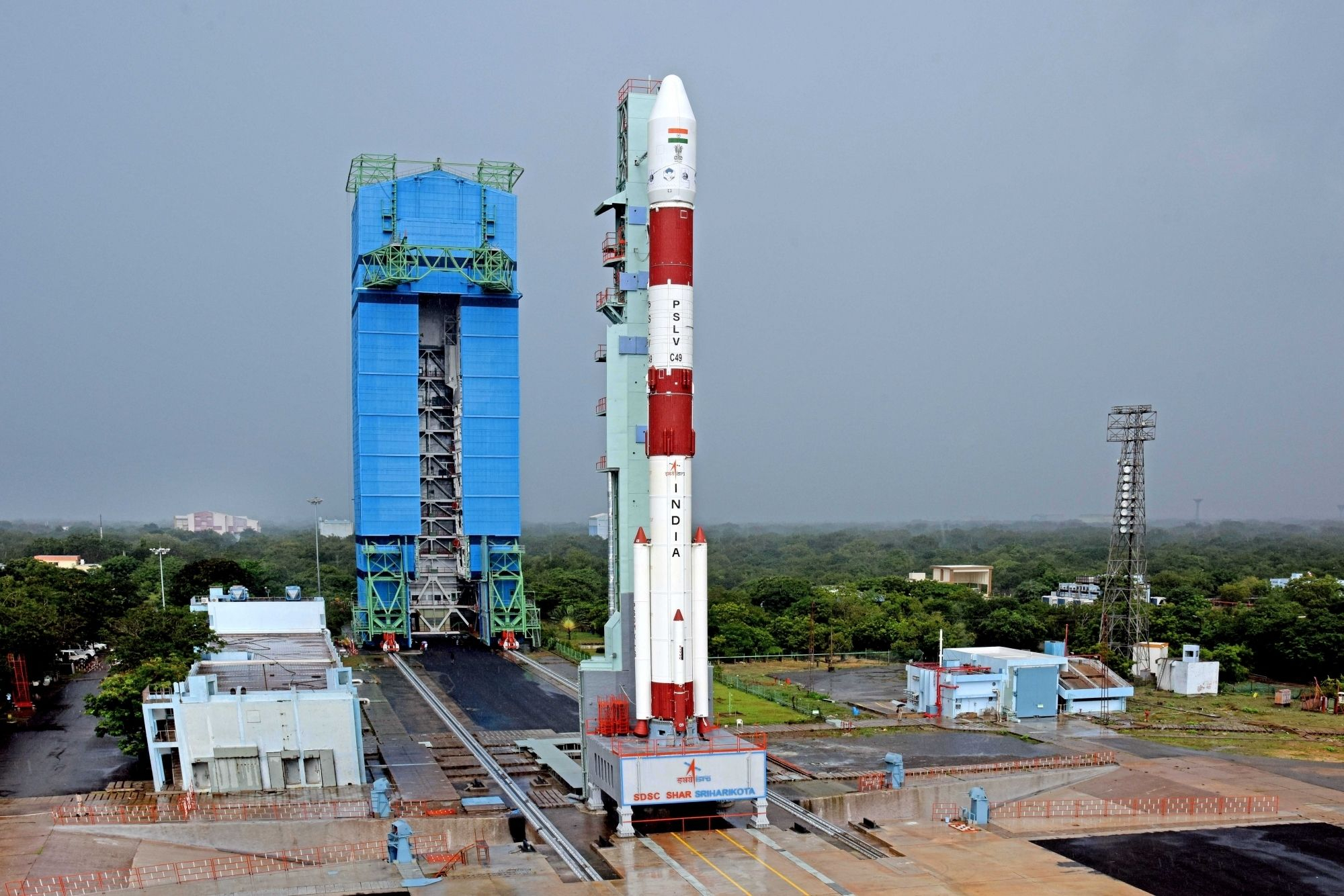
    The annual Leonid’s Meteor Shower has begun.

    Try this question from CSP 2014:

    Q.What is a coma, in the content of astronomy?

    (a) Bright half of material on the comet

    (b) Long tail of dust

    (c) Two asteroids orbiting each other

    (d) Two planets orbiting each other


    [wpdiscuz-feedback id=”8v5gmesm0l” question=”Please leave a feedback on this” opened=”1″]Post your answers here.[/wpdiscuz-feedback]

    What is Leonid Meteor Shower?

    • Meteor showers are named after the constellation they appear to be coming from.
    • The Leonids originate from the constellation Leo the Lion– the groups of stars that form a lion’s mane.
    • They emerge from the comet Tempel-Tuttle, which requires 33 years to revolve once around the Sun.
    • These meteors are bright and among the fastest moving– travelling at speeds of 71 km per second.
    • During this year’s showers, peaks of around 10 to 15 meteors are expected to be seen every hour.
    • The Leonid showers include fireballs– bright and large meteors than can last longer than average meteors, and “earthgazers”– meteors which appear close to the horizon with colourful and long tails.

    What is a meteor shower?

    • On its journey around the Sun, the Earth passes through large swathes of cosmic debris.
    • The debris is essentially the remnants of comets — great frigid chunks of matter that leave behind dirty trails of rocks and ice that linger long after the comets themselves have passed.
    • As the Earth wades through this cloud of comet waste, the bits of debris create what appears from the ground to be a fireworks display in the sky — known as a meteor shower.
    • Several meteor showers can be seen around the year. According to NASA, over 30 meteor showers occur annually and are observable from the Earth.

    Back2Basics:

    UPSC 2022 countdown has begun! Get your personal guidance plan now! (Click here)

  • Water Management – Institutional Reforms, Conservation Efforts, etc.

    Froth formation in Yamuna

    Note4Students

    From UPSC perspective, the following things are important:

    Prelims level: Froth Formation

    Mains level: Not Much

    The visuals of devotees taking a dip in the froth-filled waters of the Yamuna River sent chills down the spine of the residents of Delhi.

    What is Froth Formation?

    • This is a phenomenon that takes place on many lakes and streams.
    • Foam bubbles are produced when organic matter decomposes.
    • These foam-producing molecules have one end that repels water and another that attracts water and they work to reduce the surface tension on the surface of the water.
    • These foam bubbles are lighter than water, so they float on the surface as a thin film that gradually accumulates.

    What causes the froth?

    • The presence of phosphates and surfactants in untreated sewage from Delhi, Haryana and Uttar Pradesh is a major reason behind frothing.
    • While these two components comprise of 1 per cent, the remaining 99 percent is air and water.

    What are the sources of pollution that cause foam formation?

    • Untreated sewage may contain soap-detergent particles.
    • The other sources are industrial effluents, organic matter from decomposing vegetation, and the presence of filamentous bacteria.
    • The pollution from the sugar and paper industries in Uttar Pradesh also causes pollution in the Yamuna.

    What are its health hazards?

    • Short-term exposure can lead to skin irritation and allergies.
    • If ingested, these chemicals may cause gastrointestinal problems and diseases like typhoid.
    • Long-term exposure to heavy metals in industrial pollutants can cause neurological issues and hormonal imbalances.


    UPSC 2022 countdown has begun! Get your personal guidance plan now! (Click here)

  • Agricultural Sector and Marketing Reforms – eNAM, Model APMC Act, Eco Survey Reco, etc.

    Turmeric Cultivation in India

    Note4Students

    From UPSC perspective, the following things are important:

    Prelims level: Turmeric

    Mains level: Not Much

    Turmeric (Curcuma longa), native to India, has been studied extensively for its effects against viral diseases in recent decades, but the COVID-19 pandemic has renewed interest.

    About Turmeric

    • Turmeric (Curcuma longa) is used as a condiment, dye, drug and cosmetic in addition to its use in religious ceremonies.
    • India is a leading producer and exporter of turmeric in the world.
    • The top five turmeric-producing states of India in 2020-21 are Telangana, Maharashtra, Karnataka, Tamil Nadu and Andhra Pradesh.

    Climate and Soil

    • Turmeric can be grown in diverse tropical conditions from sea level to 1500 m above sea level.
    • It requires a temperature range of 20-35 C with an annual rainfall of 1500 mm or more, under rainfed or irrigated conditions.
    • Though it can be grown on different types of soils, it thrives best in well-drained sandy or clay loam soils with a pH range of 4.5-7.5 with good organic status.

    Varieties

    • A number of cultivars are available in the country and are known mostly by the name of locality where they are cultivated.
    • Some of the popular cultivars are Duggirala, Tekkurpet, Sugandham, Amalapuram, Erode local, Salem, Alleppey, Moovattupuzha and Lakdong.

    Preparation of land

    • The land is prepared with the receipt of early monsoon showers.
    • The soil is brought to a fine tilth by giving about four deep ploughings.
    • Planting is also done by forming ridges and furrows.

    Plantation

    • Whole or split mother and finger rhizomes are used for planting and well-developed healthy and disease-free rhizomes are to be selected.

    Why turmeric?

    • Post pandemic, turmeric is one of the fastest-growing dietary supplements.
    • The global curcumin market, valued at $58.4 million in 2019, is expected to witness a growth of 12.7 percent by 2027.
    • As the world’s largest producer, consumer and exporter of turmeric, India stands to gain from this.

    Global standing

    • India produces 78 per cent of the world’s turmeric.
    • The country’s turmeric production saw a near consistent growth since Independence till 2010-11 after which it started fluctuating.
    • The pandemic has given a boost to the crop, with the production witnessing a rise of 23 per cent.
    • Though the production and export of turmeric has risen, farmers have not benefitted from its pricing.

    Try this PYQ from CSP 2020:

    With reference to the current trends in the cultivation of sugarcane in India, consider the following statements:

    1. A substantial saving in seed material is made when ‘bud chip settlings are raised in a nursery and transplanted in the main field.
    2. When direct planting of setts is done, the germination percentage is better with single-budded setts as compared to setts with many buds.
    3. If bad weather conditions prevail when setts are directly planted, single-budded setts have better survival as compared to large setts.
    4. Sugarcane can be cultivated using settlings prepared from tissue culture.

    Which of the statements given above is/are correct?

    (a) 1 and 2 only

    (b) 3 only

    (c) 1 and 4 only

    (d) 2,3 and 4 only


    [wpdiscuz-feedback id=”0ncc9i9l5p” question=”Please leave a feedback on this” opened=”1″]Post your answers here.[/wpdiscuz-feedback]


    UPSC 2022 countdown has begun! Get your personal guidance plan now! (Click here)

  • Modern Indian History-Events and Personalities

    Life, work and legend of Adi Shankaracharya

    Note4Students

    From UPSC perspective, the following things are important:

    Prelims level: Adi Shankaracharya, Advaita Vedanta Philisophy

    Mains level: Indian Schools of Philosophy

    PM has unveiled a 12-foot statue of Adi Shankaracharya at Kedarnath, where the acharya is believed to have attained samadhi at the age of 32 in the ninth century.

    Adi Shankaracharya (788-820 AD)

    • Adi Shankaracharya was an Indian philosopher and theologian whose works had a strong impact on the doctrine of Advaita Vedanta.
    • He founded mathas, which are believed to have helped in the historical development, revival and propagation of his philosophy.
    • The story recounted today has been reconstructed from multiple Shankaravijayas (Conquests of Shankara) written over the centuries.

    Birth and death

    • He is said to have been born in Kaladi village on the bank of the Periyar, the largest river in Kerala.
    • He is believed to have attained samadhi at Kedarnath; however, Kanchi and Thrissur are also talked about as places where Adi Shankara spent his last days.

    His literary works

    • Adi Shankara is generally identified as the author of 116 works.
    • Among them the celebrated commentaries (bhashyas) on 10 Upanishads, the Brahmasutra and the Gita, and poetic works including Vivekachudamani, Maneesha Panchakam, and Saundaryalahiri.
    • He composed the Kanakadhara Stotram, following which there was a rain of golden amlas, which brought prosperity to the household.
    • It has also been claimed that Adi Shankara composed texts like Shankarasmrithi, which seeks to establish the social supremacy of Nambuthiri Brahmins.
    • His great standing is derived from his commentaries of the prasthanatrayi (Upanishads, Brahmasutra and Gita), where he explains his understanding of Advaita Vedanta.

    His philosophy: Advaita Vedanta

    • Advaita Vedanta articulates a philosophical position of radical nondualism, a revisionary worldview which it derives from the ancient Upanishadic texts.
    • According to this, the Upanishads reveal a fundamental principle of nonduality termed ‘brahman’, which is the reality of all things.
    • Advaitins understand brahman as transcending individuality and empirical plurality.
    • They seek to establish that the essential core of one’s self (atman) is brahman. It is pure non-intentional consciousness.
    • It is one without a second, nondual, infinite existence, and numerically identical with brahman.
    • This effort entails tying a metaphysics of brahman to a philosophy of consciousness.

    Do you know?

    There are six major schools of Vedic philosophy—Nyaya, Vaisheshika, Samkhya, Yoga, MÄ«māáčƒsā and Vedanta, and five major heterodox (sramanic) schools—Jain, Buddhist, Ajivika, Ajñana, and Charvaka.

    Shankara’s contested legacy

    • Custodians of the caste system cite from Shankara’s commentaries to justify the unequal and unjust social order.
    • It is argued that the Advaita Vedanta borrowed the categories of Buddhist thinkers and called him the Prachhanna Buddha (Buddha in disguise).
    • Sri Narayana Guru offered a radical reading of Advaita Vedanta to dismantle the theory and praxis of caste.

    His political appropriation

    • His works transcends the political boundaries of his time.
    • The mathas are believed to have established in Sringeri, Dwaraka, Puri, and Joshimath for the spread of Advaita Vedanta.
    • They are seen as custodians of Hinduism, and Shankara’s digvijaya (conquest) often interpreted as a near nationalistic project where faith, philosophy and geography are yoked together to imagine a Hindu India.

    Try this PYQ:

    Q. Which one of the following pairs does not form part of the six systems of Indian Philosophy?

    (a) Mimamsa and Vedanta

    (b) Nyaya and Vaisheshika

    (c) Lokayata and Kapalika

    (d) Sankhya and Yoga


    [wpdiscuz-feedback id=”3mjk4sylx4″ question=”Please leave a feedback on this” opened=”1″]Post your answers here.[/wpdiscuz-feedback]


    UPSC 2022 countdown has begun! Get your personal guidance plan now! (Click here)